

AAPOD2 Image Archives
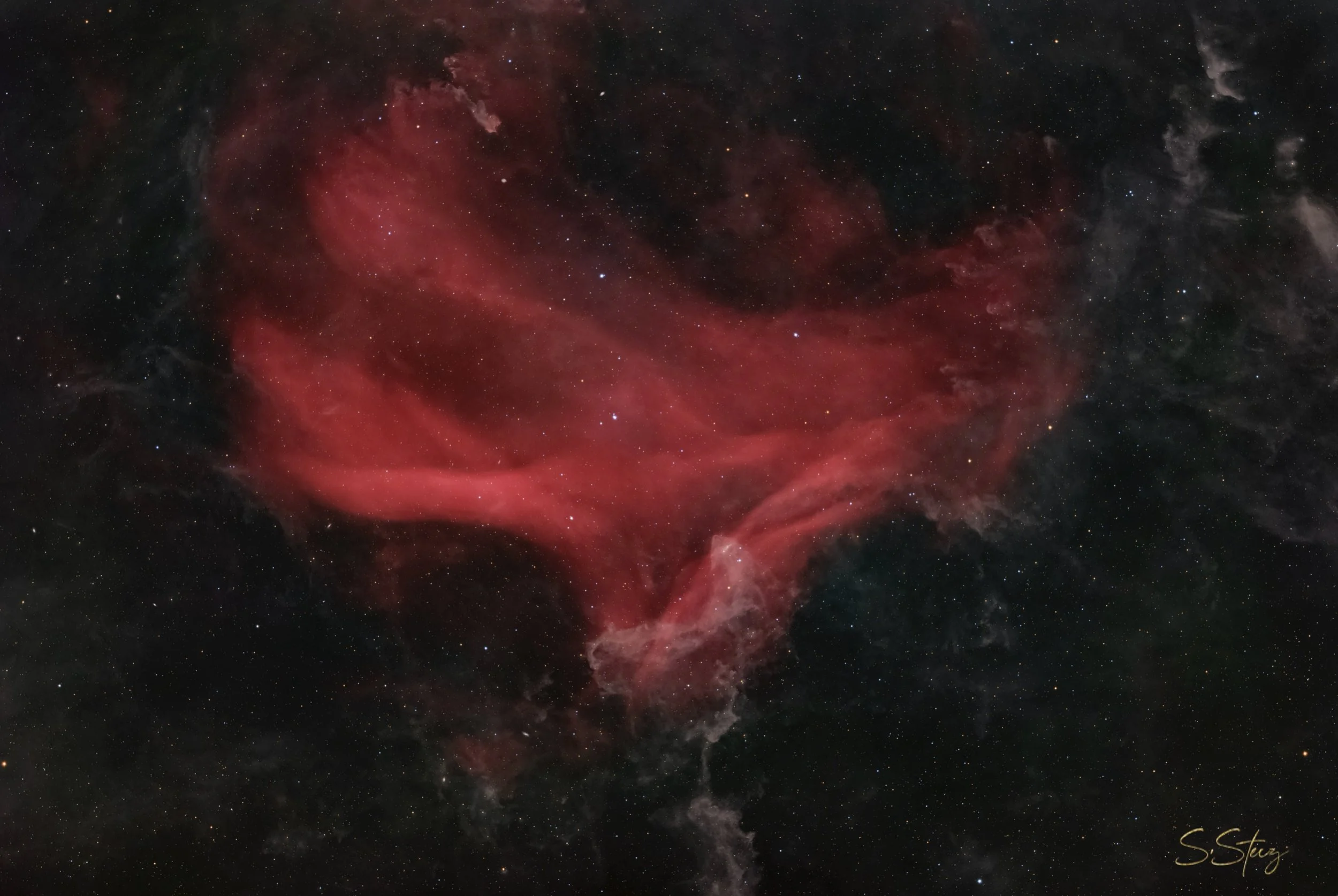
Veil of Lacerta LBN437
Also cataloged as LBN 437, this elegant cloud of glowing gas and dust is part of a large molecular complex in the constellation Lacerta. Often referred to as the “Veil of Lacerta” due to its flowing, gossamer-like appearance, the nebula spans several light years and is composed primarily of hydrogen alpha emission, shown here in rich red tones. Wispy dark filaments and faint reflection components weave through the field, adding depth to the otherwise diffuse structure.
LBN 437 lies at the edge of the Lacerta OB1 association, a region populated by young, hot stars that illuminate the surrounding interstellar medium. Though faint and often overlooked, this nebula rewards long exposures with a surprisingly intricate interplay of ionized gas and dark dust, delicately sculpted by stellar winds and radiation.
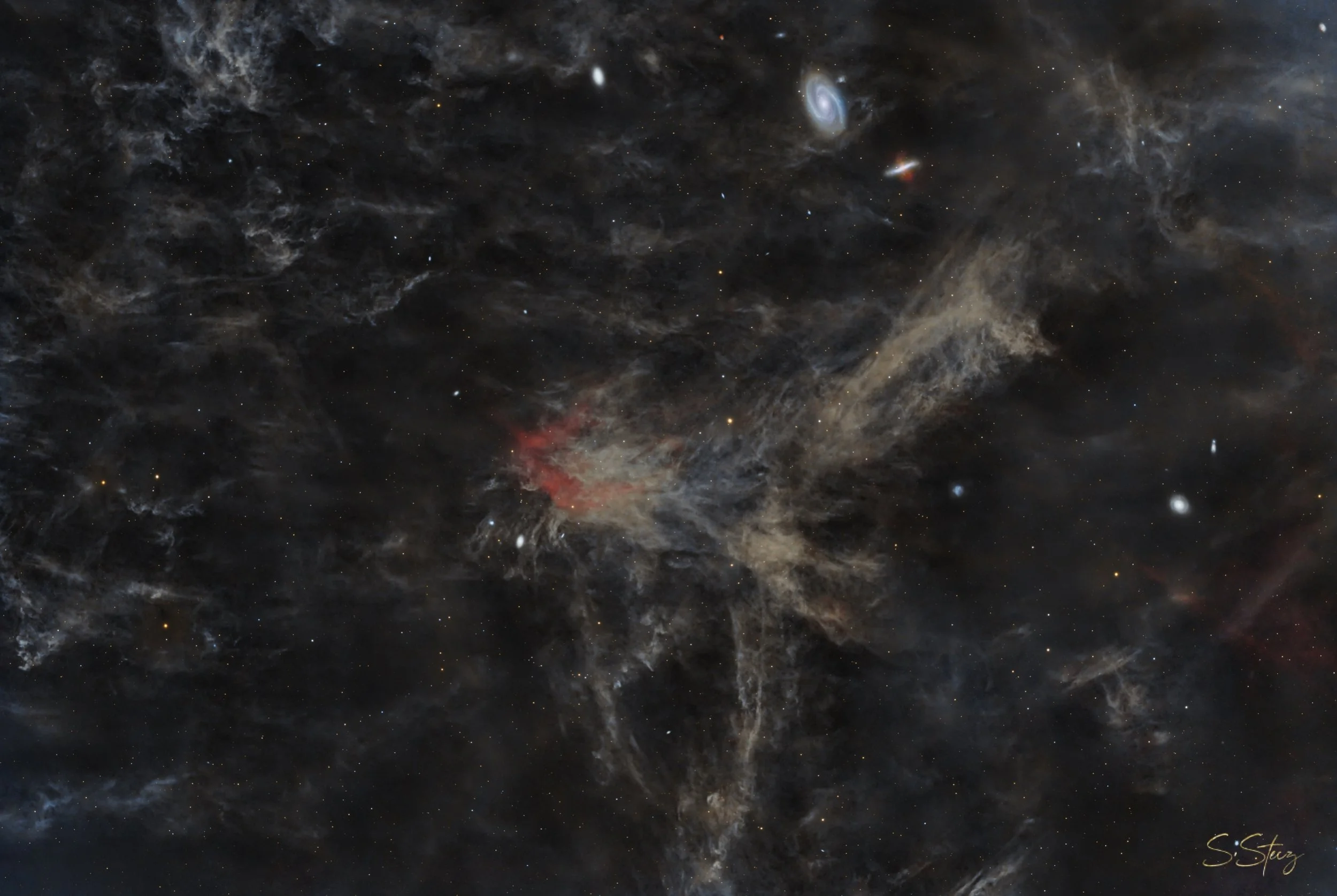
M81 & M82 in a Sea of Galactic Cirrus
This expansive wide-field view showcases the iconic galaxies M81 (top right) and M82 (below it) embedded in a rich tapestry of Integrated Flux Nebula (IFN) — faint, wispy clouds of dust within our own Milky Way, illuminated not by a single star, but by the collective glow of the galaxy itself.
M81, a grand-design spiral galaxy, lies about 12 million light-years away, while M82, its irregular, starburst companion, appears visibly disturbed — the result of a close gravitational encounter with M81. This interaction has triggered intense star formation and galactic winds, visible as red hydrogen filaments extending from M82’s core.
The remarkable depth of this image reveals not only the galaxies but the ghostly IFN structures that fill the space between stars, giving this field a dreamlike quality and a sense of three-dimensionality rarely seen in galactic imaging.
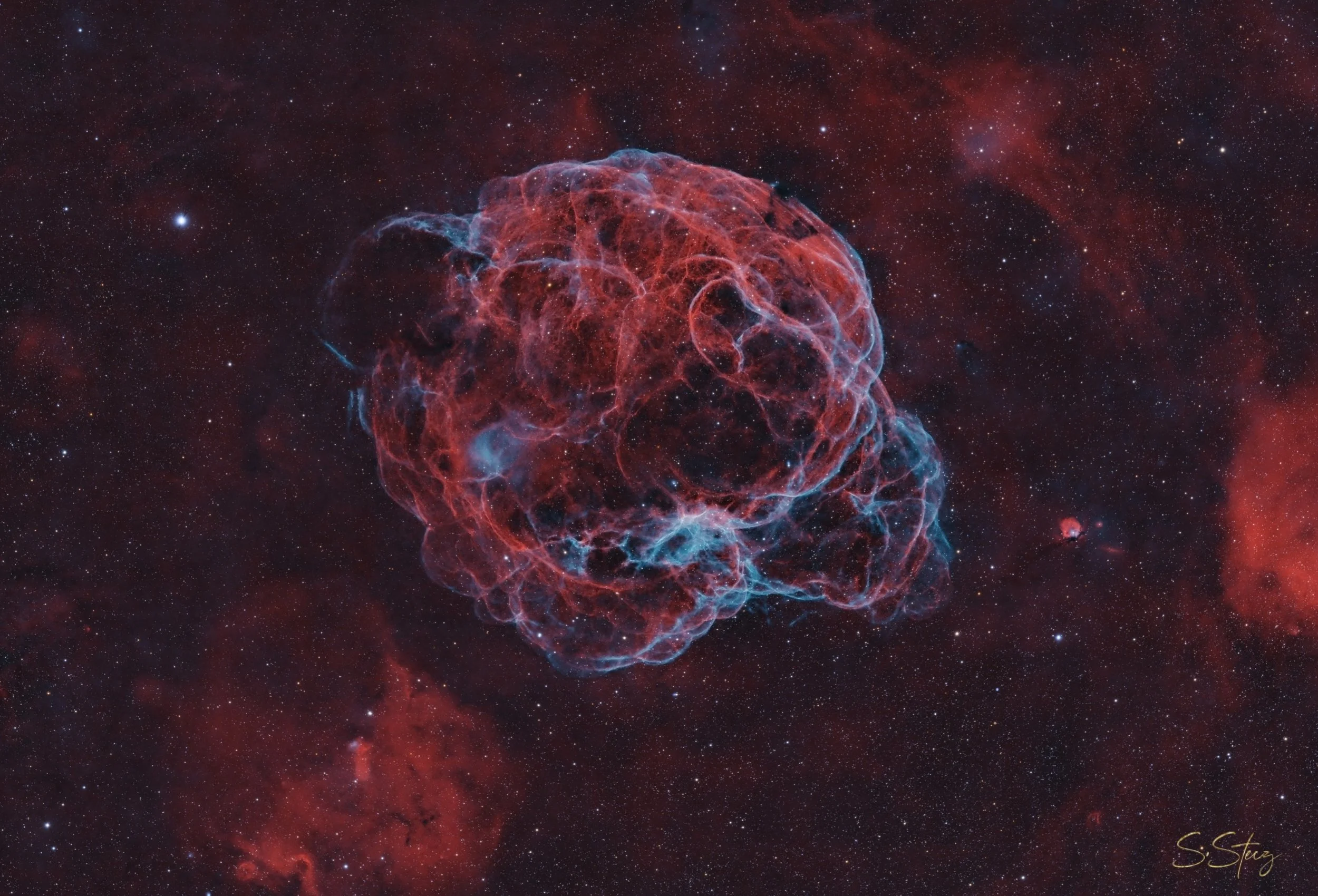
Sh2-240 Spaghetti Nebula
A delicate tangle of filaments drifts through the void in this ethereal portrait of Sh2-240, more commonly known as the Spaghetti Nebula. This vast supernova remnant, spanning nearly 150 light-years across, is the ghostly aftermath of a massive star that exploded approximately 40,000 years ago. Situated on the border between the constellations Taurus and Auriga, this faint and expansive structure is one of the largest supernova remnants visible from Earth, though its tenuous tendrils of ionized gas make it a challenge to observe.
Captured in the HOO palette, this image isolates the nebula’s intricate web of filaments using hydrogen-alpha and oxygen-III emissions. The deep red hues trace the remnants of the progenitor star’s outer layers, while the soft cyan glows highlight the presence of oxygen-rich shock waves sweeping through interstellar space. These delicate strands, shaped by the expanding shock front, weave an intricate cosmic tapestry that is slowly dispersing into the surrounding medium.
Despite its ghostly appearance, Sh2-240 continues to shape its environment, compressing nearby gas clouds and potentially triggering the birth of new stars. As this ancient stellar remnant gradually fades into the depths of time, it serves as a reminder of the relentless cycle of stellar death and rebirth that sculpts the universe.