
AAPOD2 Image Archives

IC 5068
When Nature makes watercolor painting, IC 5068, an emission nebula in Cygnus.
A rare look at IC 5068 in the constellation Cygnus. This often over looked nebula’s closest neighbors are the North American and Pelican nebulae. With banded wisps of dark dust falling across this cloud of ionized hydrogen makes this a very interesting target to capture.
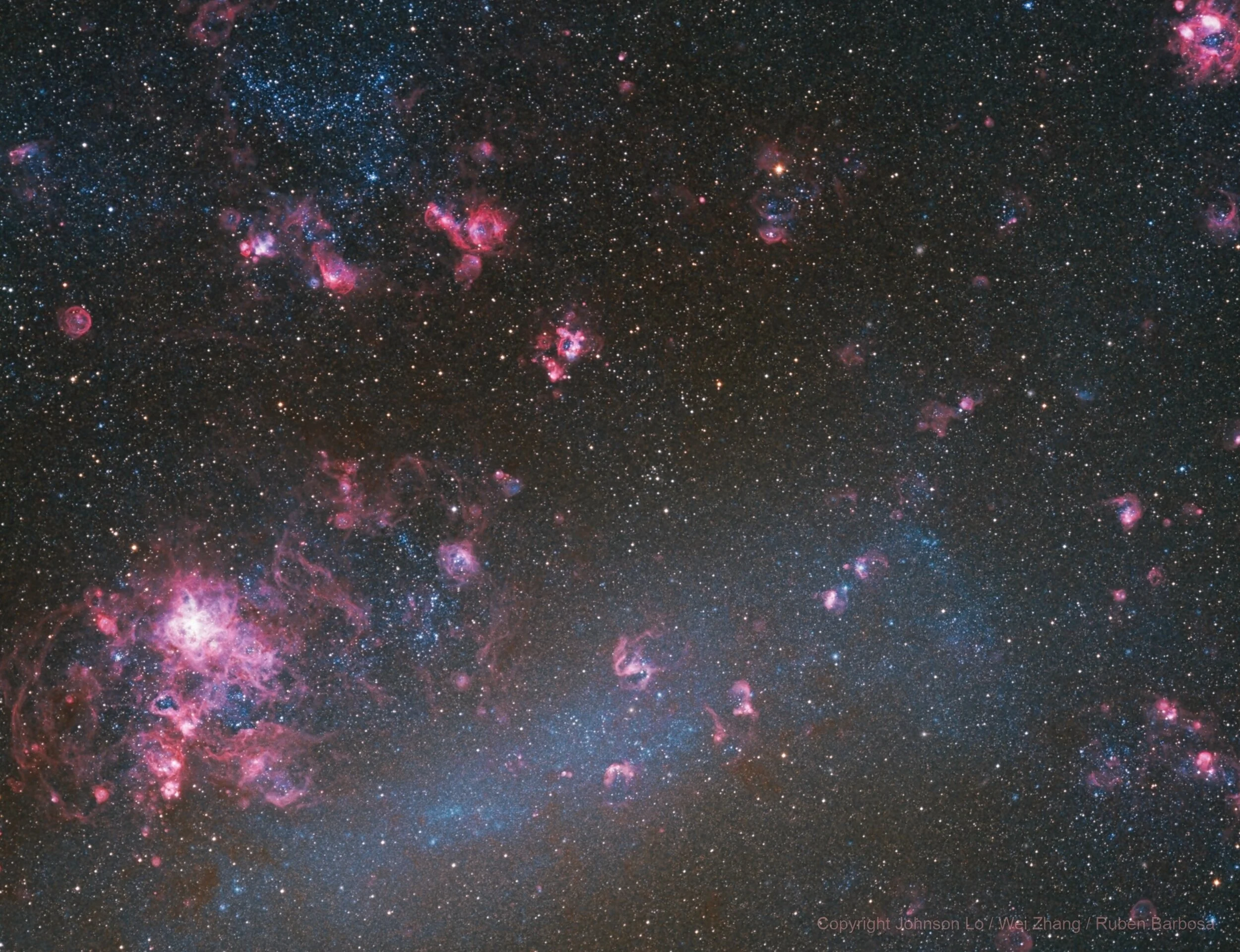
Large Magellanic Cloud
The Large Magellanic Cloud (LMC) is a satellite galaxy of the Milky Way. At a distance of 163,000 light-years, the LMC is the third-closest galaxy to the Milky Way, after the Sagittarius Dwarf Spheroidal and the putative Canis Major Dwarf Galaxy, lying close to the Galactic Center. The LMC has a diameter of about 14,000 light-years based on readily visible stars and a mass of approximately 10 billion solar masses, making it roughly 1/100 as massive as the Milky Way.
With a declination of about −70°, the LMC is visible as a faint "cloud" only in the Southern Celestial Hemisphere and from latitudes south of 20° N, straddling the border between the constellations of Dorado and Mensa, and appears longer than 20 times the Moon's diameter (about 10° across) from dark sites away from light pollution.

IC 405, IC 410 & IC417 - Nebulas in Auriga
One of the most beautiful paintings that our sky allows us to admire in photography.
In this image we can see IC405, a nebula that can only be admired well in photos, placed at 1630 light years from us and illuminated by a variable star, AE Aurigae. This star ionizes the gases of the nebula giving it the red color.
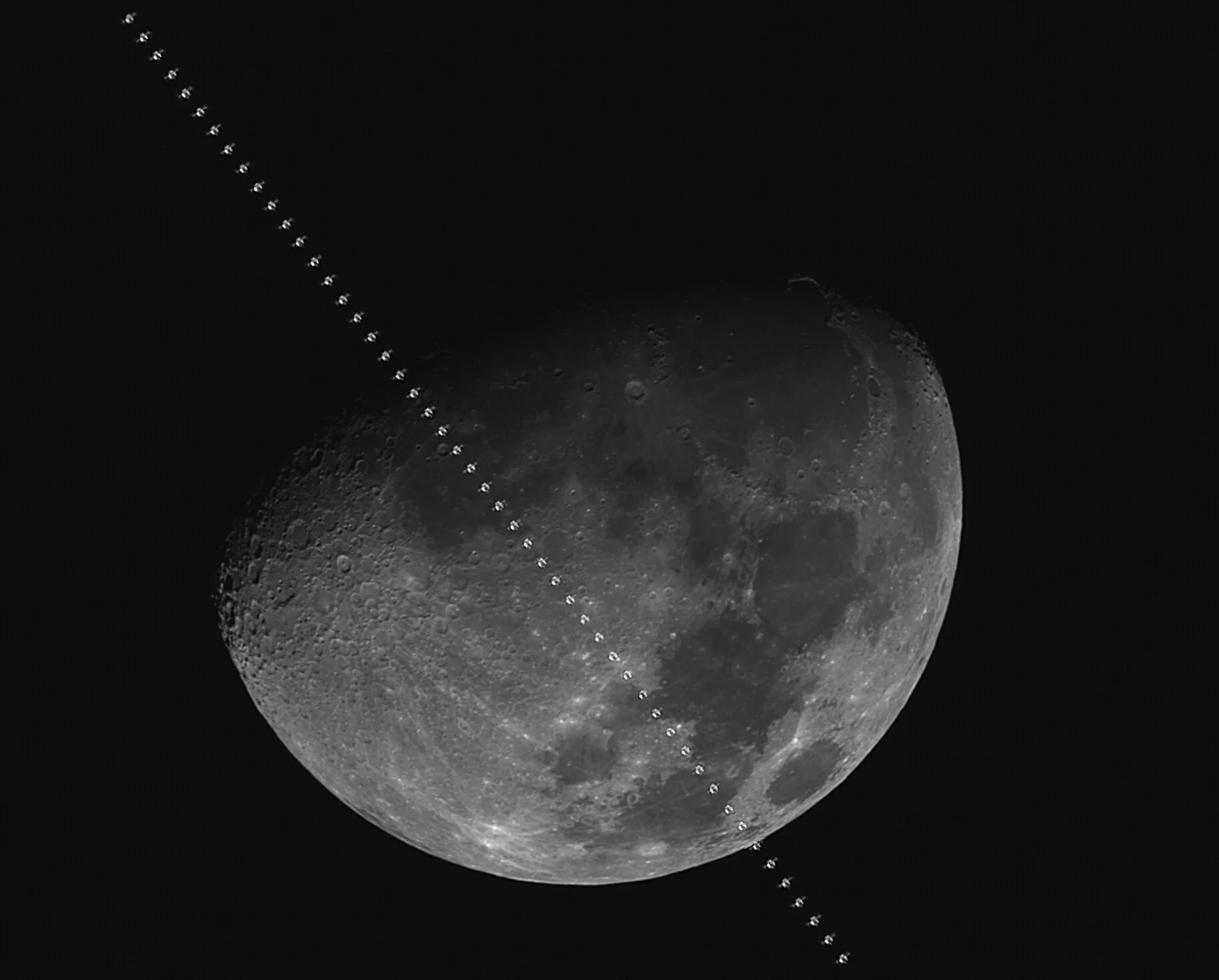
ISS transit over the Moon
(ISS) International Space Station transiting the Moon
Captured: April 3rd, 2020: 9.06 pm (GMT+2)
Tecnosky APO Triplet 80/480 FPL53
f/4.8
ZWO ASI294MC Pro @45fps

M63 The sunflower
The Sunflower galaxy was discovered in 1779 by the French astronomer Pierre Méchain and was the first of 24 objects that Méchain would contribute to Charles Messier’s catalog. The galaxy is located roughly 27 million light-years from Earth in the constellation Canes Venatici. It has an apparent magnitude of 9.3 and appears as a faint patch of light in small telescopes. The best time to observe M63 is during May.

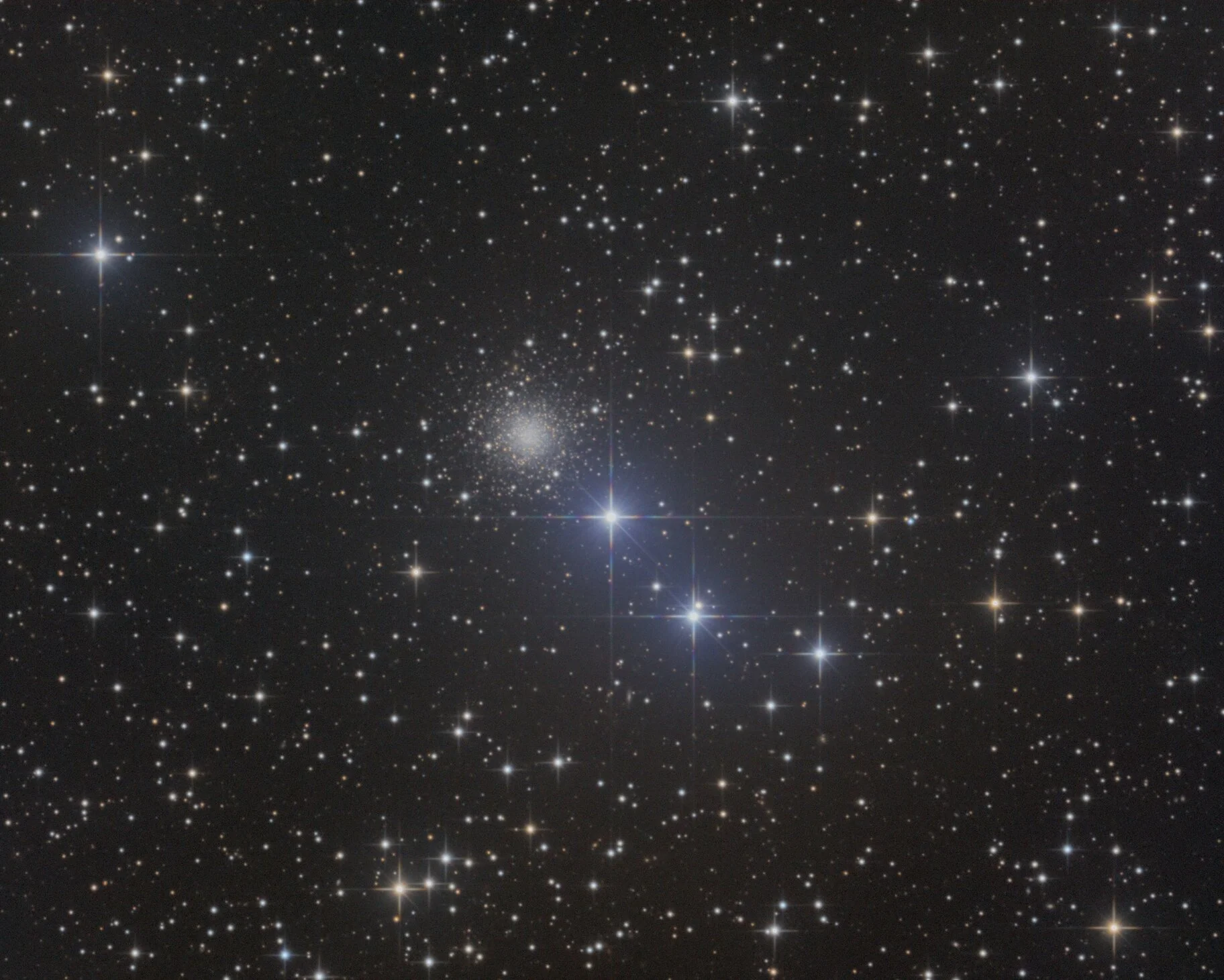
M13 (Messier 13 )
Messier 13, a globular cluster of hundreds of thousands of stars, in the constellation Hercules. It is around 24,000 light years from earth, and approximately 145 light years in diameter.
Imaged during a full moon.
Astrodon Blue: 12x300"
Astrodon Green: 15x300"
Astrodon Red: 15x300"
Astrodon Luminance: 71x300"
Total Integration: 9.4 hours
Captured on my dual rig in Spain.
Scopes: APM TMB LZOS 152 (6" aperture 1200mm focal length)
Copyright: Peter Goodhew
![Soul Nebula [IC 1848]](https://images.squarespace-cdn.com/content/v1/5debd4b16fcd7b02905712ff/1587991968158-T7Y4QUMS2B7GROINBWA4/this_is_final_soul_nebula.jpg)
Soul Nebula [IC 1848]
Located about 6,000 light-years from Earth, the Heart and Soul nebulae form a vast star-forming complex that makes up part of the Perseus spiral arm of our Milky Way galaxy. The Soul nebula is also known as the Embryo nebula, IC 1848 or W5.
![NGC 2024 [The Flame Nebula]](https://images.squarespace-cdn.com/content/v1/5debd4b16fcd7b02905712ff/1587915761772-NJ9VNMR5EUG94IXX6GZ3/n7F12bJVQ_aV_1824x0_LeGaXsse.jpg)
NGC 2024 [The Flame Nebula]
The Flame Nebula, designated as NGC 2024 and Sh2-277, is an emission nebula in the constellation Orion. It is about 900 to 1,500 light-years away.
Much of the glow results when the electrons and ionized hydrogen recombine. Additional dark gas and dust lies in front of the bright part of the nebula and this is what causes the dark network that appears in the center of the glowing gas.
Taken with the Astroqueyras RC500 and Apogee Alta U16000

Moonset under the Milky Way
The Observatory of Saint-Veran (French: Observatoire de Saint-Véran) is a French astronomical observatory located on the Pic de Château Renard in the municipality of Saint-Véran in the department of Hautes-Alpes in the French Alpes. At 2,930 meter altitude, it is one of the highest observatories in Europe.
The Observatory is managed by the French amateur astronomy association and was built in 1974 as a branch of the Paris Observatory.

NGC1999
Imaging telescope or lens:Astro-Physics RH305
Imaging camera:SBIG STXL 16200
Mount:Planewave L-500 L-500
Software:Maxim DL, Gimp
Frames:
Blue: 11x600"
Green: 12x600"
H-Alpha: 95x600"
Red: 12x600"
Integration: 21.7 hours
Copyright: Ruben Barbosa
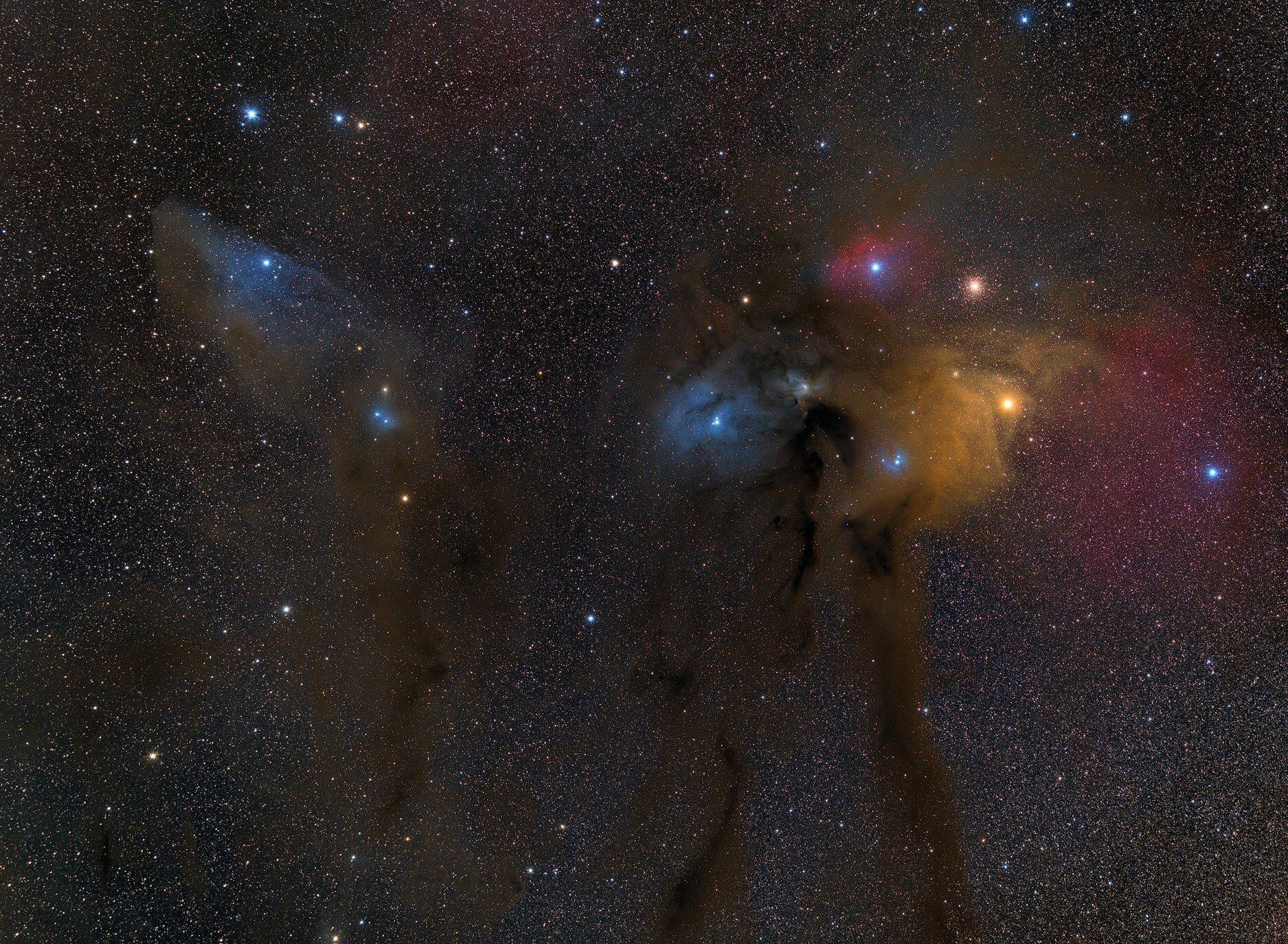
The Rho Ophiuchi Nebular Complex
The Rho Ophiuchi nebular complex is a gigantic cloud of stellar dust and gas located 460 light-years from Earth in the constellation Ophiuchus. It is one of the closest stellar nurseries to the our solar system and a favorite for astro-photographers using wide field equipment.
![Southern Pinwheel Galaxy [aka M83]](https://images.squarespace-cdn.com/content/v1/5debd4b16fcd7b02905712ff/1587248267968-TE5CTYA51AI73BDV8BLL/49784351817_6581c28f56_c.jpg)
Southern Pinwheel Galaxy [aka M83]
This beautiful image captures thousands of individual stars, star clusters and hundreds of supernova remnants in the spiral galaxy known as M83.
![Jewel Box Cluster [aka NGC 4755]](https://images.squarespace-cdn.com/content/v1/5debd4b16fcd7b02905712ff/1587247734864-36BEENC4QQ8J05JBUUHS/Jewel_PS1_CROP2_FULL.jpg)
Jewel Box Cluster [aka NGC 4755]
This is an image of NGC 4755, also known as the Jewel Box Cluster. It is an open cluster about 6,400 light years away in the constellation Crux. This cluster contains about 100 stars and is estimated to be about 10 million years old.

Hull nebula (aka NGC 3372)
The Hull nebula is cataloged under the reference NGC 3372, it covers approximately three degrees of the sky at the distance of 8800 years light, what corresponds to a diameter of 460 years light.
It can be observed in the bare eye.

Venus
Venus the second planet from the Sun and the third brightest object in Earth's sky after the Sun and Moon. It is sometimes referred to as the sister planet to Earth, because their size and mass are so similar. The surface of Venus is hidden by an opaque layer of clouds which are formed from sulfuric acid. The planet is named for Venus, the Roman goddess of love and beauty and is the second largest terrestrial planet.
On April 9, 2020 this beautiful image of Venus was taken the atmosphere is clearly visible and nice cloud shapes in the UV band can be seen.
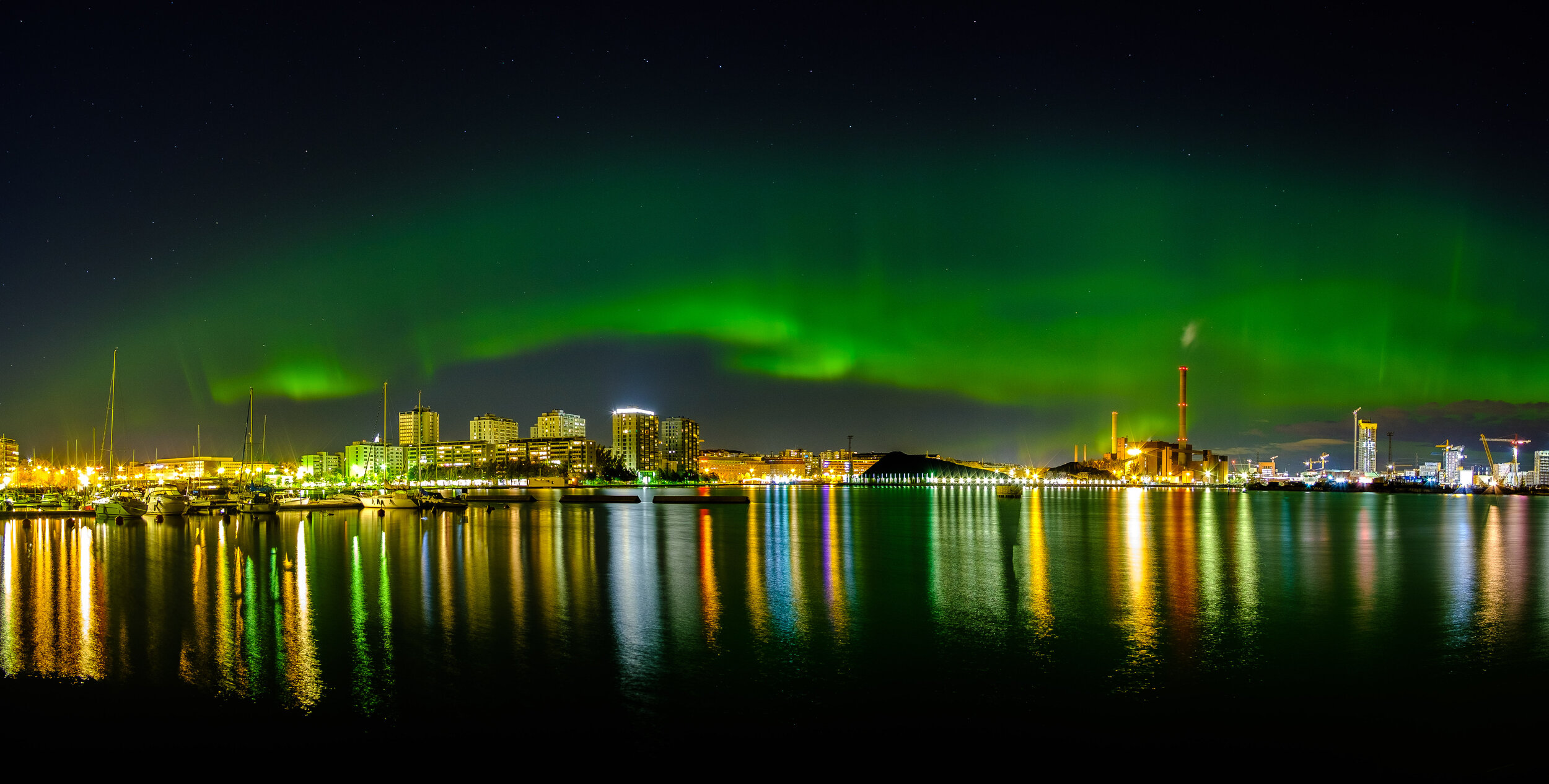
Northern lights over Helsinki
The Northern Lights, polar lights or aurora borealis as they are called are a once in a lifetime experience for many of us. The display of this astronomical phenomena can be experienced at places which are located at high latitude. They begin in the Earths atmosphere at altitudes from 60 to more than 250 miles—when charged particles from the sun become trapped in the Earth's magnetic field. The result is a colorful, dancing light show.
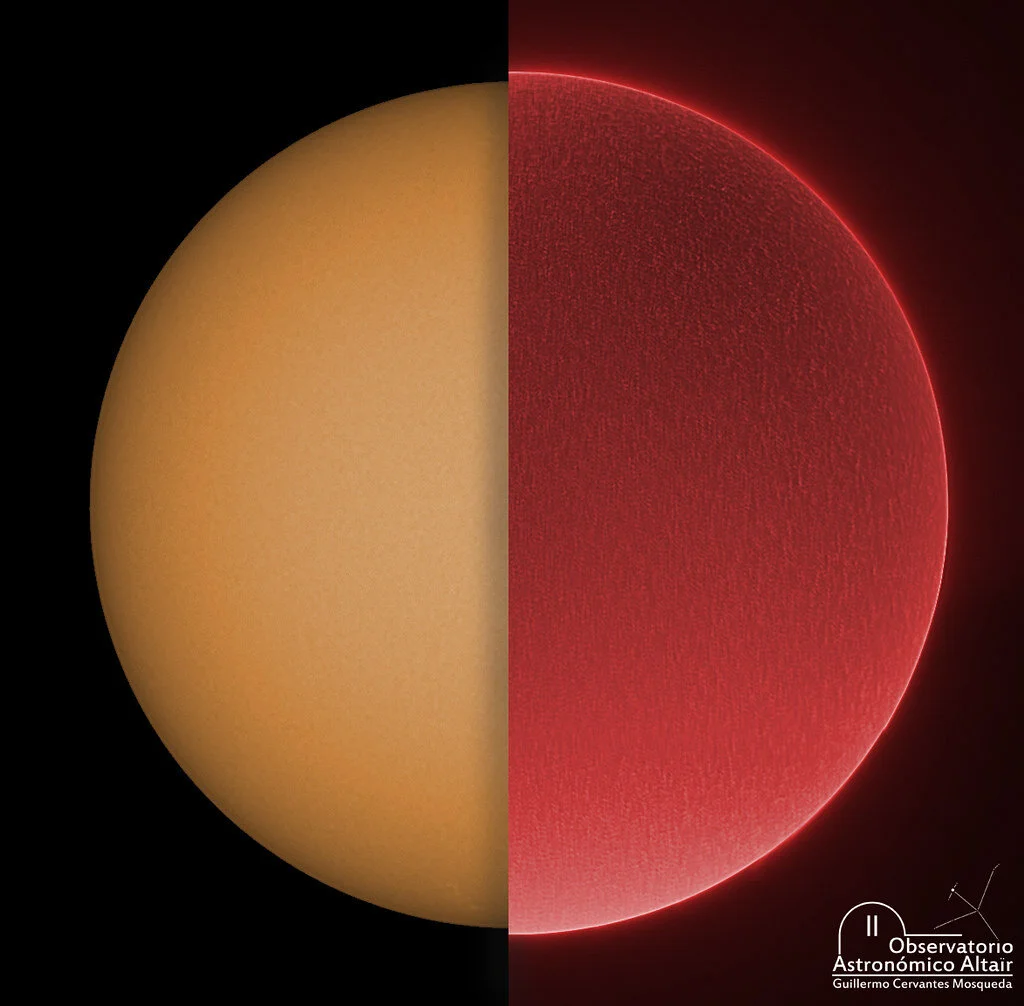
Chromosphere and Photosphere Composition
Chromosphere and Photosphere Composition April 9, 2020 "Meade 60
Herschel's Prism
Optolon L + Baader Solar Continuum
ZWO ASI120
Sky Watcher Star-Adventures
...............................................
Coronado PST
ZWO ASI120
Sky Watcher Star-Adventures

Frames: 1000
Frames Stack: 750
Firecapture
Autostakkert + Registax + Ps
Fifty Years Ago Today - Apollo 13 on the Iwo Jima
Fifty years ago on 17 April Robert Gillette happened to be in the right place at the right time, aboard the USS Iwo Jima, the Apollo 13 prime recovery ship.
In this image and other in this set, James Lovell is on deck minutes after arriving, with Rear Admiral Donald C. Davis, Commander of Task Force 130, the manned spacecraft recovery group.