

AAPOD2 Image Archives
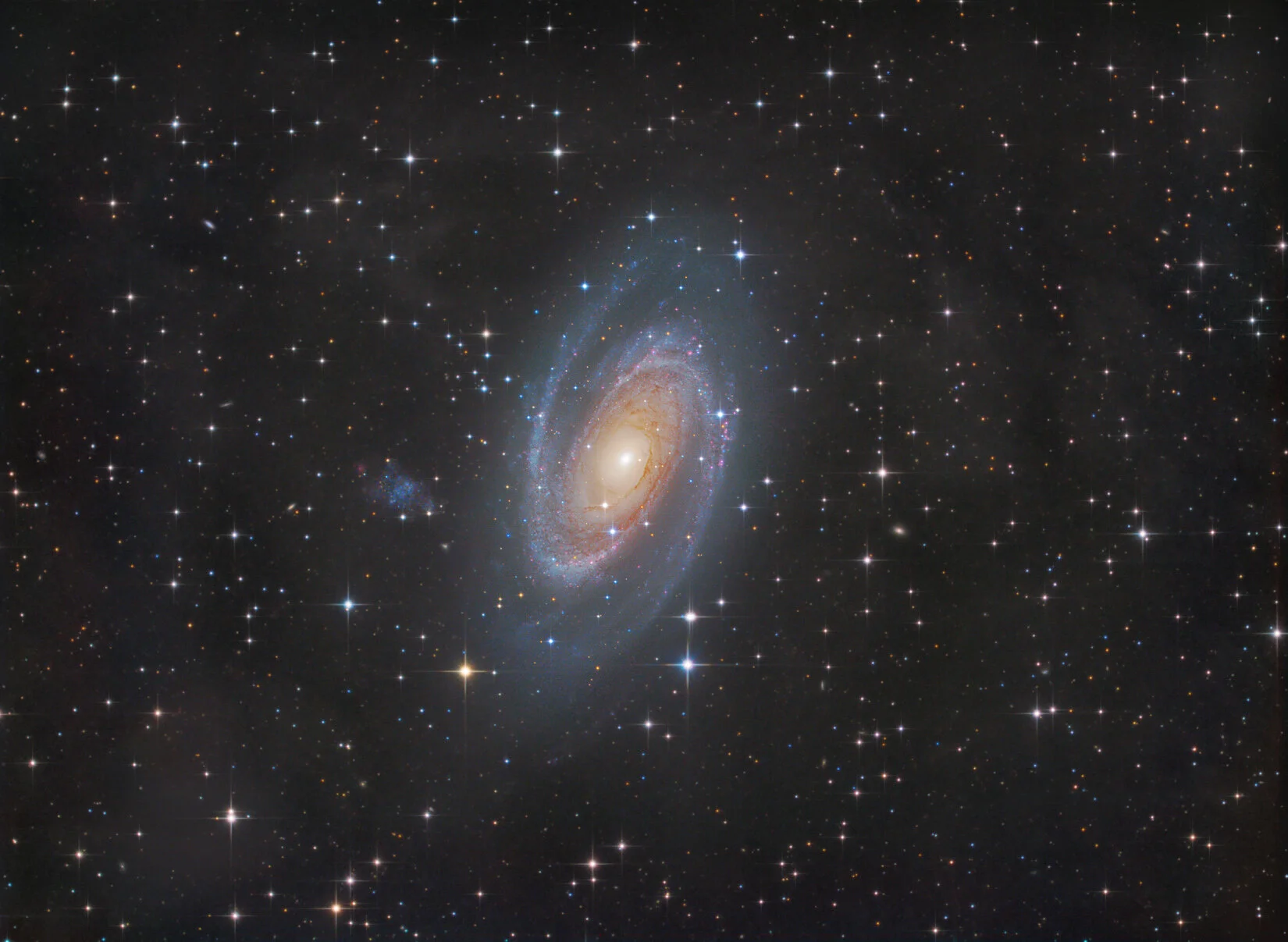
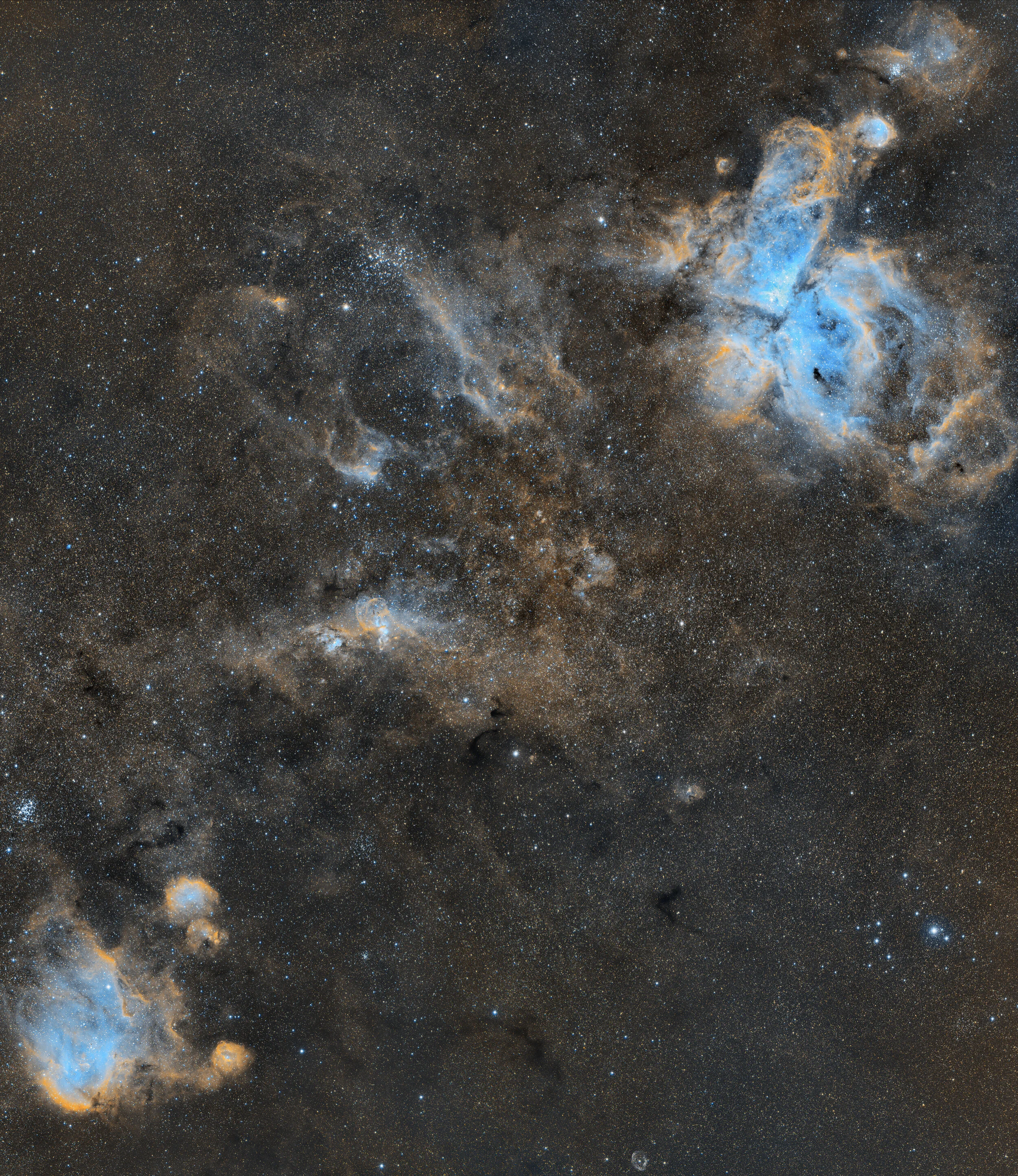
Eta Carinae & Running Chicken region
This has been the biggest (and most pleasurable) challenge of all. Make a mosaic using a narrow band from a wide region of the sky. It was almost two months using every good day to capture.
The biggest difficulty was being able to make the correct color adjustment of the background of the image without affecting the nebulae, I lost count of how many times I used DBE on Pix or redid the mosaic by the APP until I managed to reach this final…
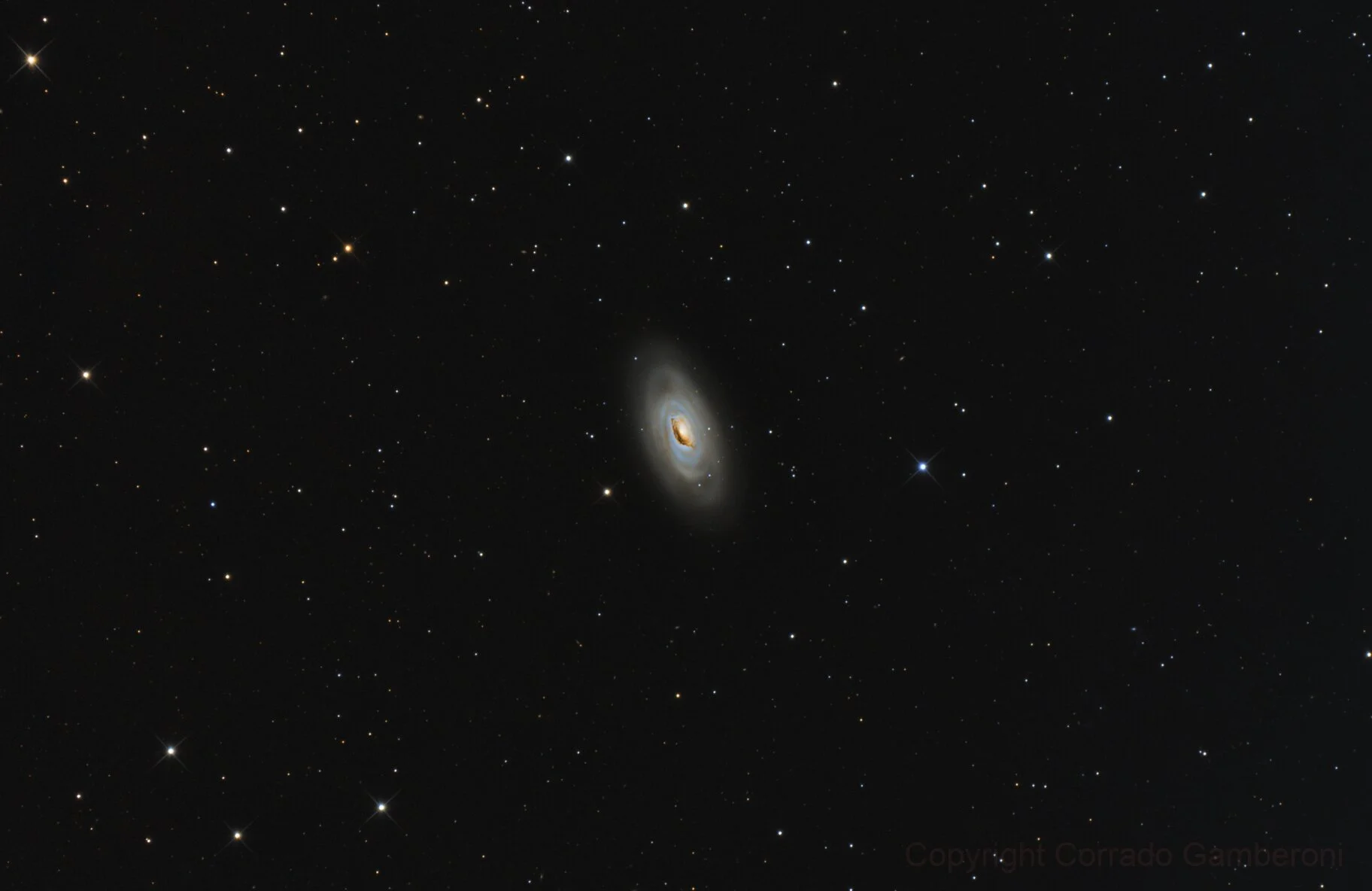
M64
17 million light years from us, in the Constellation of the Chioma of Berenice we find a bright and beautiful galaxy marked by the initials M64.
It is also called "Black Eye Galaxy" due to a vast area of dark dust that covers part of the central area.
The latest studies have shown that the peripheral part of the Galaxy rotates in the opposite direction of the nucleus, probably due to an "ancient" clash with a smaller galaxy captured by M64. This clash would have started to rotate the outer part of the galaxy in the opposite direction to the nucleus. These two areas that rotate in the opposite direction collide forming compressed "gas pockets" creating regions with an extremely intense star formation.
Imaging telescope or lens:Geoptik Formula 20 - Newton 200/1200
Imaging camera:Nikon D5100 full Spectrum Modded
Mount:Sky-Watcher EQ6 SynTrek
Guiding telescope or lens:Sky-Watcher 80/400 f5 acro
Guiding camera:QHYCCD5L-II-M
Filter:Optolong UV/IR Cut
Accessories:Explore Scientific HRCC Coma Corrector , Selfmade Peltier CoolingBox
Dates:15 Mar 2020 , 16 Mar 2020
Frames:
Optolong UV/IR Cut: 58x300" ISO200 -5C
Optolong UV/IR Cut: 39x600" ISO200 -5C
Integration: 11.3 hours
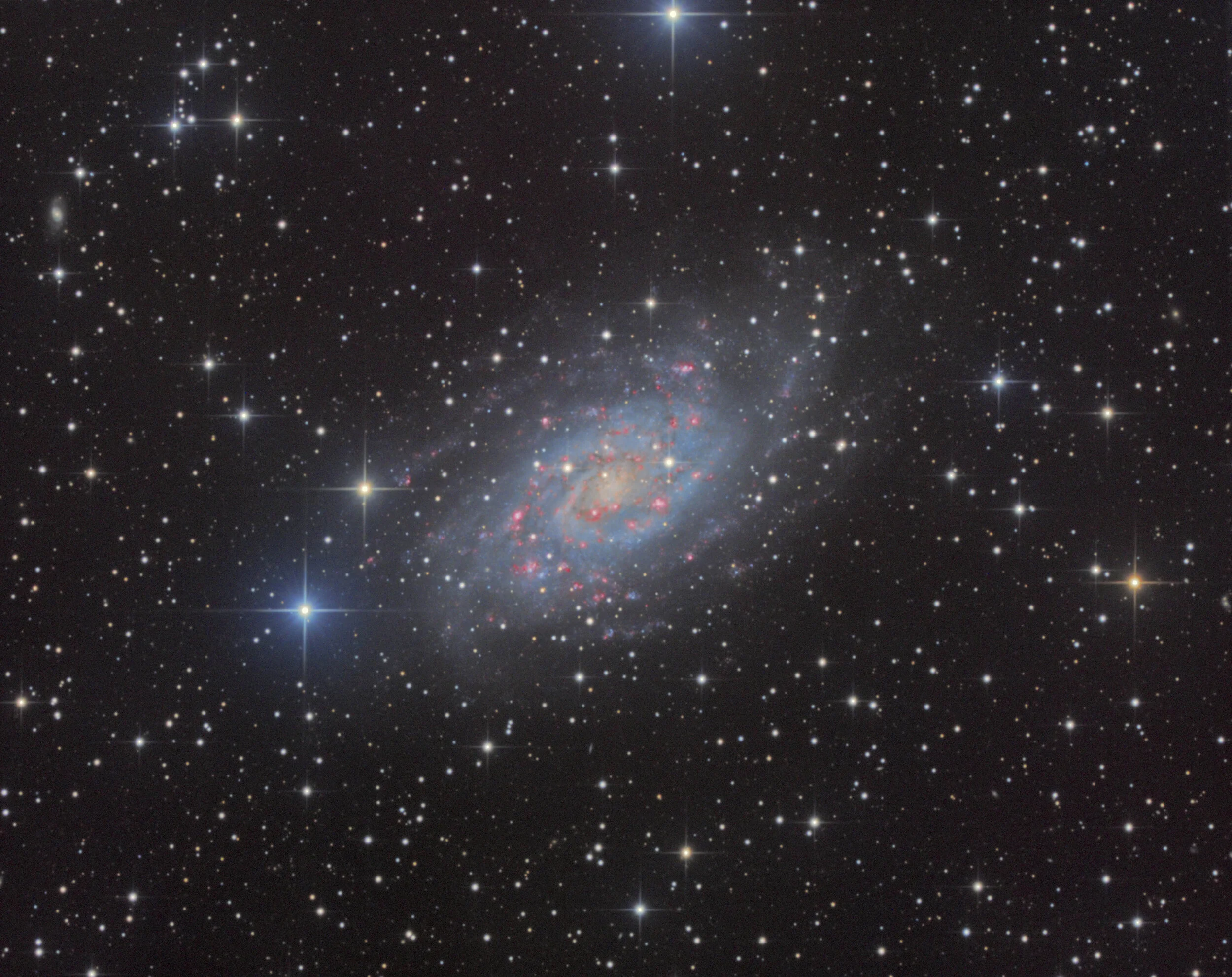
Ngc 2403
Instrument or lens: SkyWatcher 200/1000 BLACK DIAMOND Atik 460 EX Mono SkyWatcher NEQ6 Pro Goto Guidance ZWO OPTICAL DIVIDER Reducer / focal corrector SkyWatcher Coma Corrector II Astronomik RGB, Baader Ha 7nm, Astrnomik CLS-CC Access -s Astrnomik CLS-CCD: 104x300 "-10C bin 1x1Baader Ha 7nm: 140x300" bin 1x1 Astronomik RGB: 48x150 "bin 1x1 Integration: 22.3 Hours Darks: ~ 50Flats / PLU: ~ 11Bias / offset: ~ 1001Astrometry.net job AD: 7h 36 '52 "DEC center: + 65 ° 36' 10" Pixel scale: 0.468 arcsec / pixel Orientation: 179.532 degrees Field radius: 0.450 Source data: BackyardCopyright: Rémi Méré

M95 Spiral Galaxy
Messier 95, also known as M95 or NGC 3351, is a barred spiral galaxy located about 33 million light-years away in the zodiac constellation Leo. It was discovered by Pierre Méchain in 1781, and cataloged by fellow French astronomer Charles Messier four days later. It has around 40 billion stars.
Copyrigth: David Wills at PixelSkies, Spain www.pixelskiesastro.com
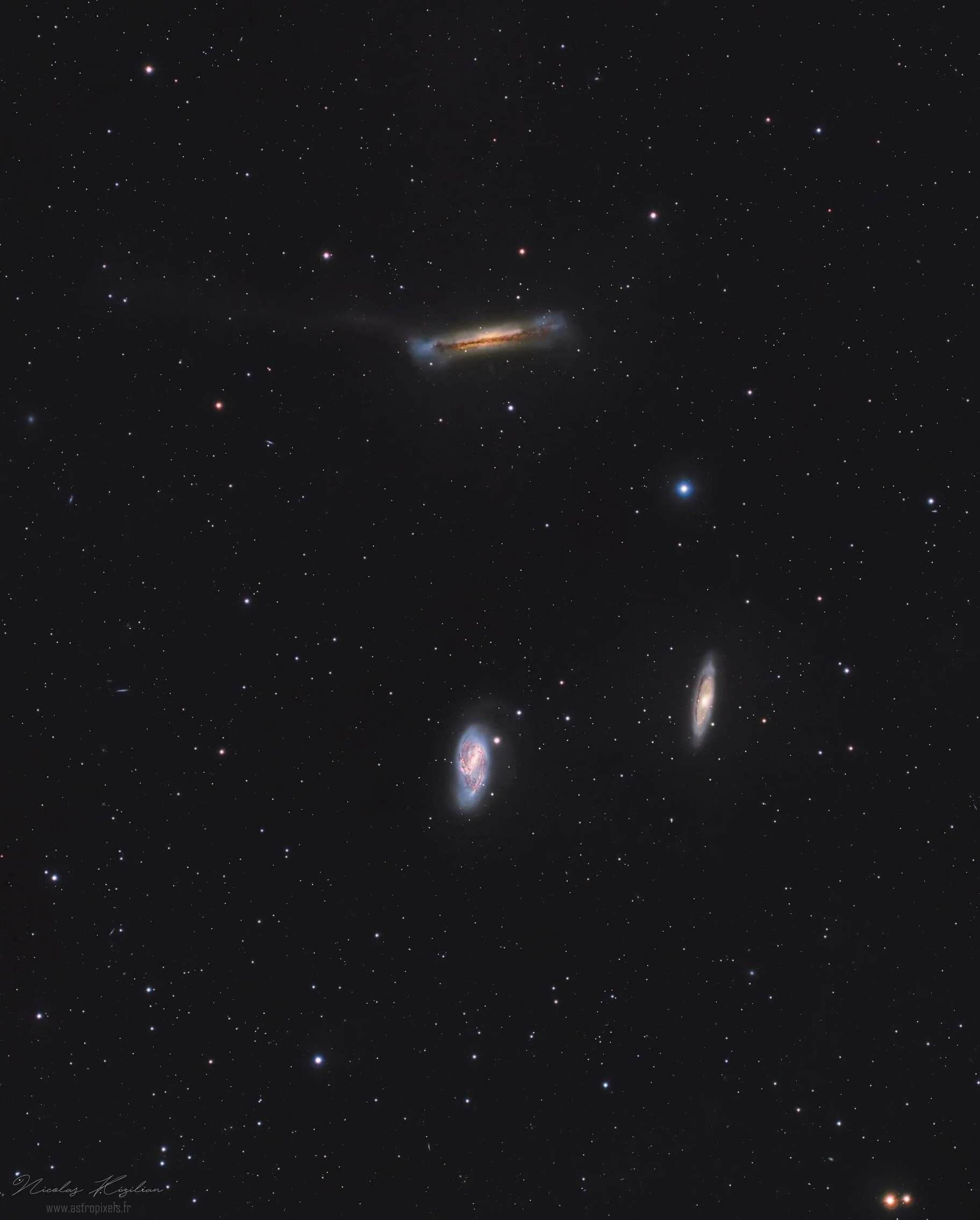
Cosmic Distancing: The Leo Triplet AKA M66
Even the cosmos is practicing “Social Distancing” The great classic of this time of year: Leo triplet, made from a backyard in the Paris region.
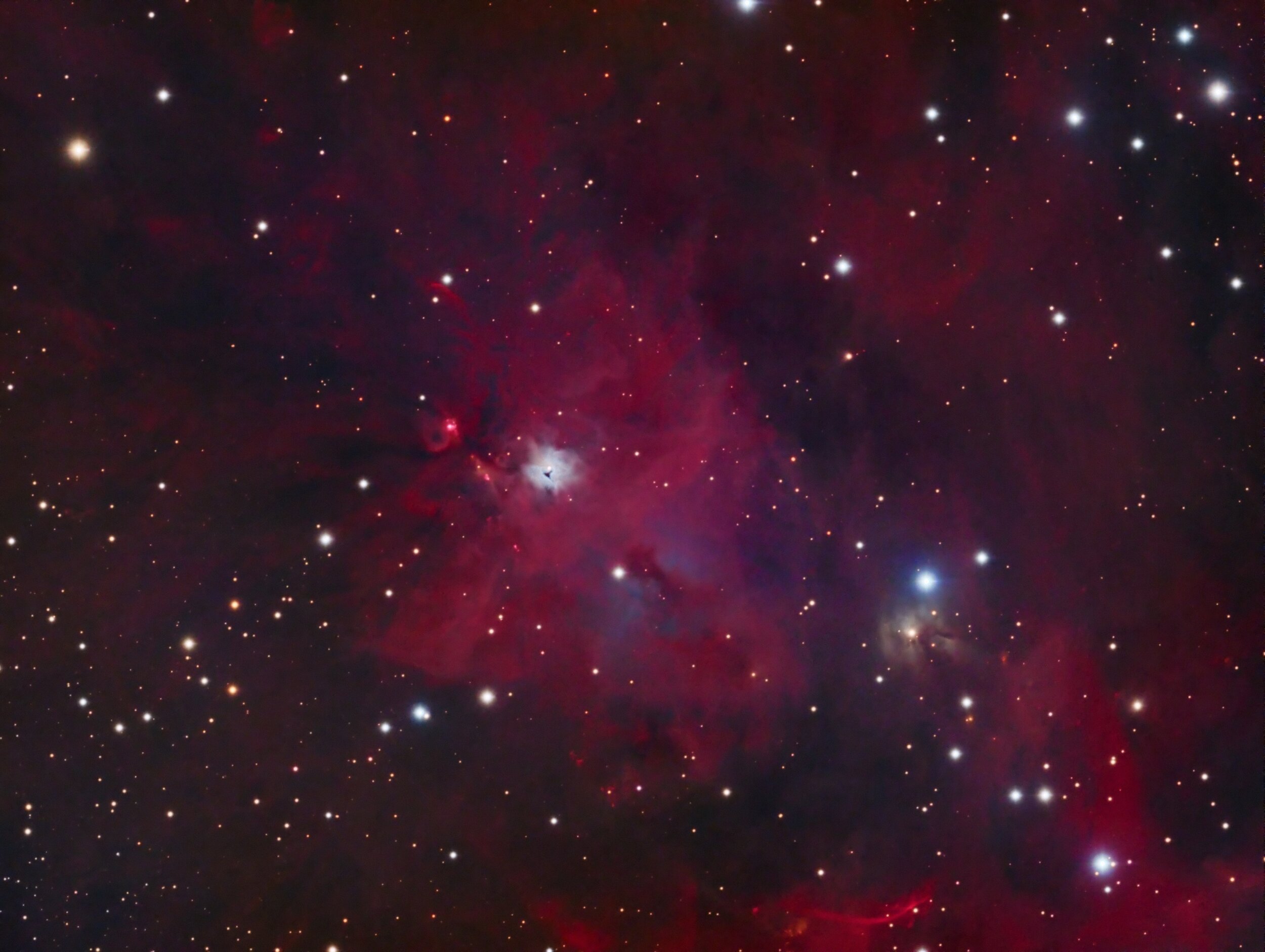
Reflection Nebula NGC 1999
Reflection nebula NGC 1999 in Orion. The small bluish patch of nebulosity with an inverted T at its center is enveloped within a much larger area of emission nebulosity in Orion. The nebula is illuminated by the variable star V380 Orionis which is visible right nest to the dark inverted T. This dark are is a source of much discussion and has been images by many of the great observatories.

SH2-205 Nebula
September 2018 / January 2020
Location: San Romualdo - Ravenna
Tecnosky AG70 / 350
ASA DDM60PRO with Autoslew and Sequence.
QSI 583wsi cooled CCD -20 - Unguided
RGB Astrodon Gen2 E-seriese Narrowband 3nm
HA-RGB: HA 32x15min, R 30x5min, G 30x5min, B 28x5min
Copyright: Cristina Cellini

NGC 3576 - The Statue Of Liberty Nebula in Hubble Palette
NGC 3576 is a minor nebula in the Sagittarius arm of the galaxy a few thousand light-years away from the Eta Carinae nebula. This nebula even received six different classification numbers. Currently, astronomers call the entire nebula NGC 3576. A popular nickname is "The Statue of Liberty Nebula" because of the distinctive shape in the middle of the nebula. The name was first suggested in 2009 by Dr. Steve Mazlin, a member of Star Shadows Remote Observatory (SSRO).

Worm Super Moon
The more northern tribes of the northeastern United States knew this as the Crow Moon, when the cawing of crows signaled the end of winter, explains NASA, on its website. Other northern names were the Crust Moon, because the snow cover becomes crusted from thawing by day and freezing by night, or the Sap (or Sugar) Moon as this is the time for tapping maple trees.
Worm supermoon and four towers of Madrid.
Composition seven shots:
Camera: Canon 7d mkII
Lens: 150-600 Tamron.
Copyright: German Penelas Perez
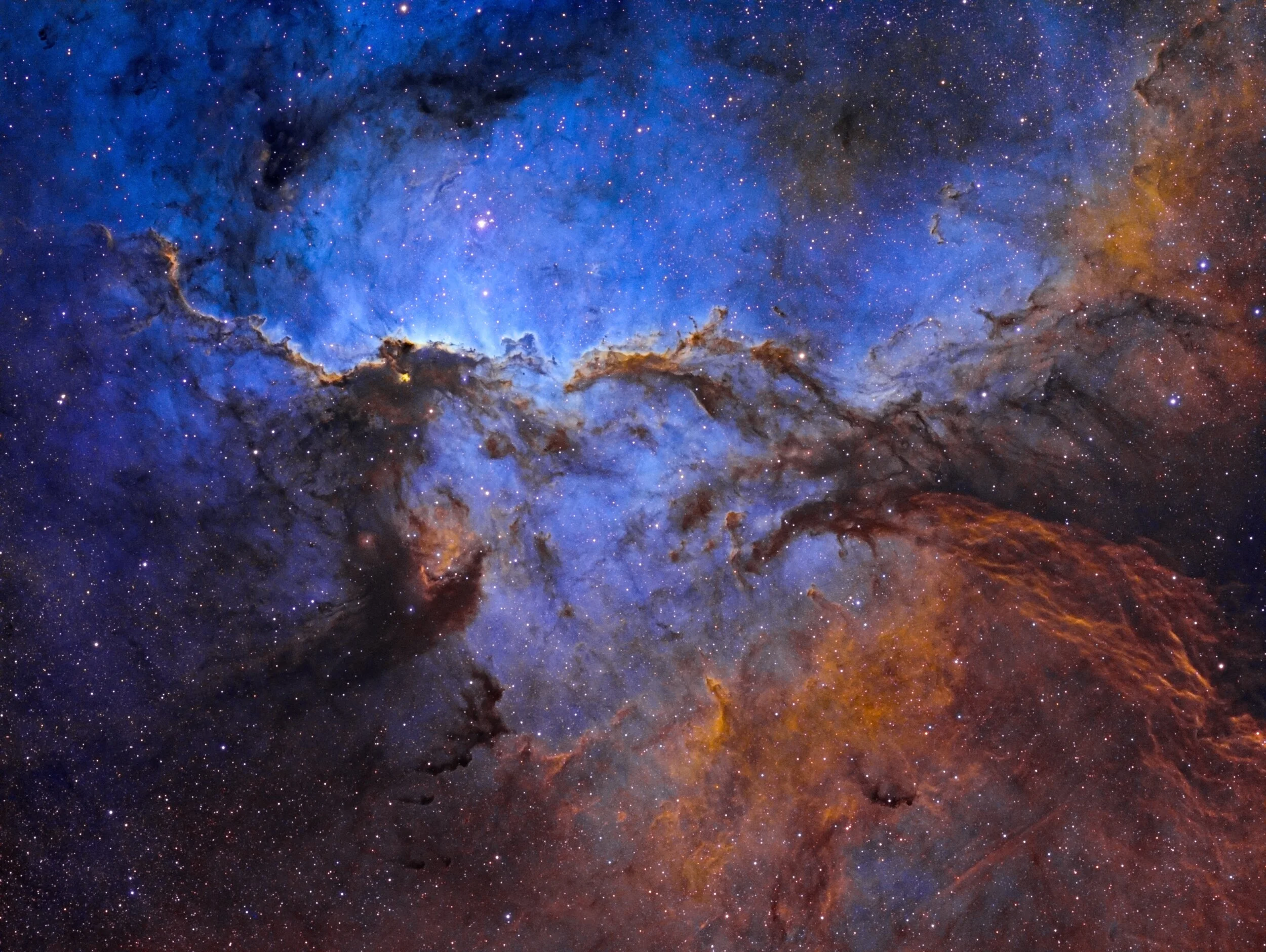
NGC6188 - Fighting Dragons of Ara
NGC 6188 is an emission nebula located about 4,000 light years away in the constellation Ara. The bright open cluster NGC 6193, visible to the naked eye, is responsible for a region of reflection nebulosity within NGC 6188. NGC 6188 is a star forming nebula, and is sculpted by the massive, young stars that have recently formed there – some are only a few million years old. This spark of formation was probably caused when the last batch of stars went supernova.

IC 405 (Caldwell31)
IC 405 (Caldwell31) is a diffuse nebula visible in the constellation of Auriga, located at 1630 light years from Earth. In its direction you can see AE Aurigae, a variable and mysterious star, according to some studies it would be a star born in the region of the Orion Nebula about 2.7 million years ago and then moved to the Milky Way from there.
IC 405 shines with the radiation received from AE Aurigae, which ionizes its gases (mainly hydrogen) and gives it a red color; the blue patches are instead due to the reflection of the blue light of the star on the dark dust. IC 405 appears to be connected with other nebulosity systems, in particular with IC 410, visible one degree to the southeast; in reality they are much more distant objects.
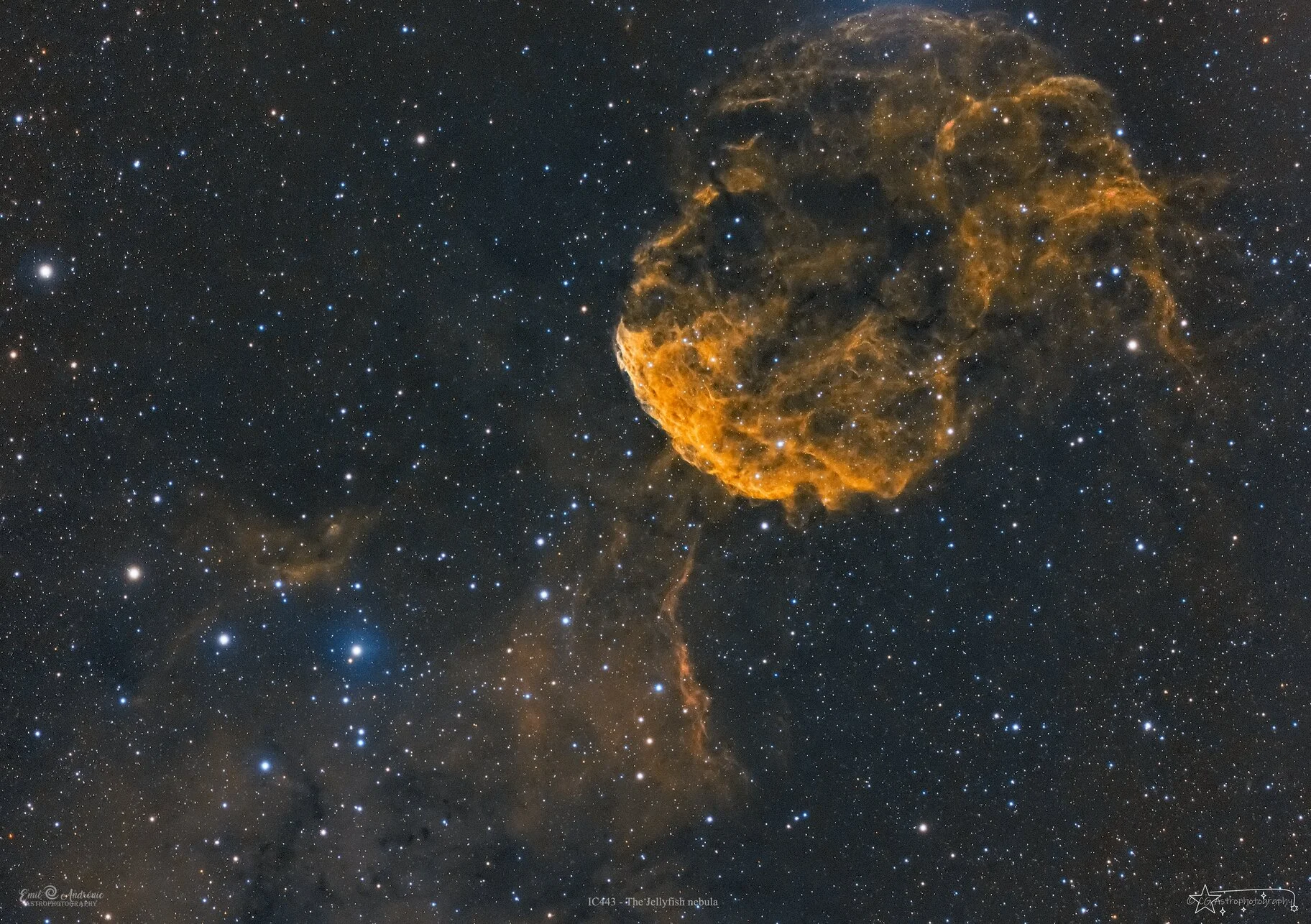
Jellyfish nebula in HaLRGB
IC 443 (also known as the Jellyfish Nebula and Sharpless 248 (Sh2-248)) is a Galactic supernova remnant (SNR) in the constellation Gemini. On the plan of the sky, it is located near the star Eta Geminorum. Its distance is roughly 5,000 light years from Earth.
IC 443 may be the remains of a supernova that occurred 3,000 - 30,000 years ago. The same supernova event likely created the neutron star CXOU J061705.3+222127, the collapsed remnant of the stellar core. IC 443 is one of the best-studied cases of supernova remnants interacting with surrounding molecular clouds.
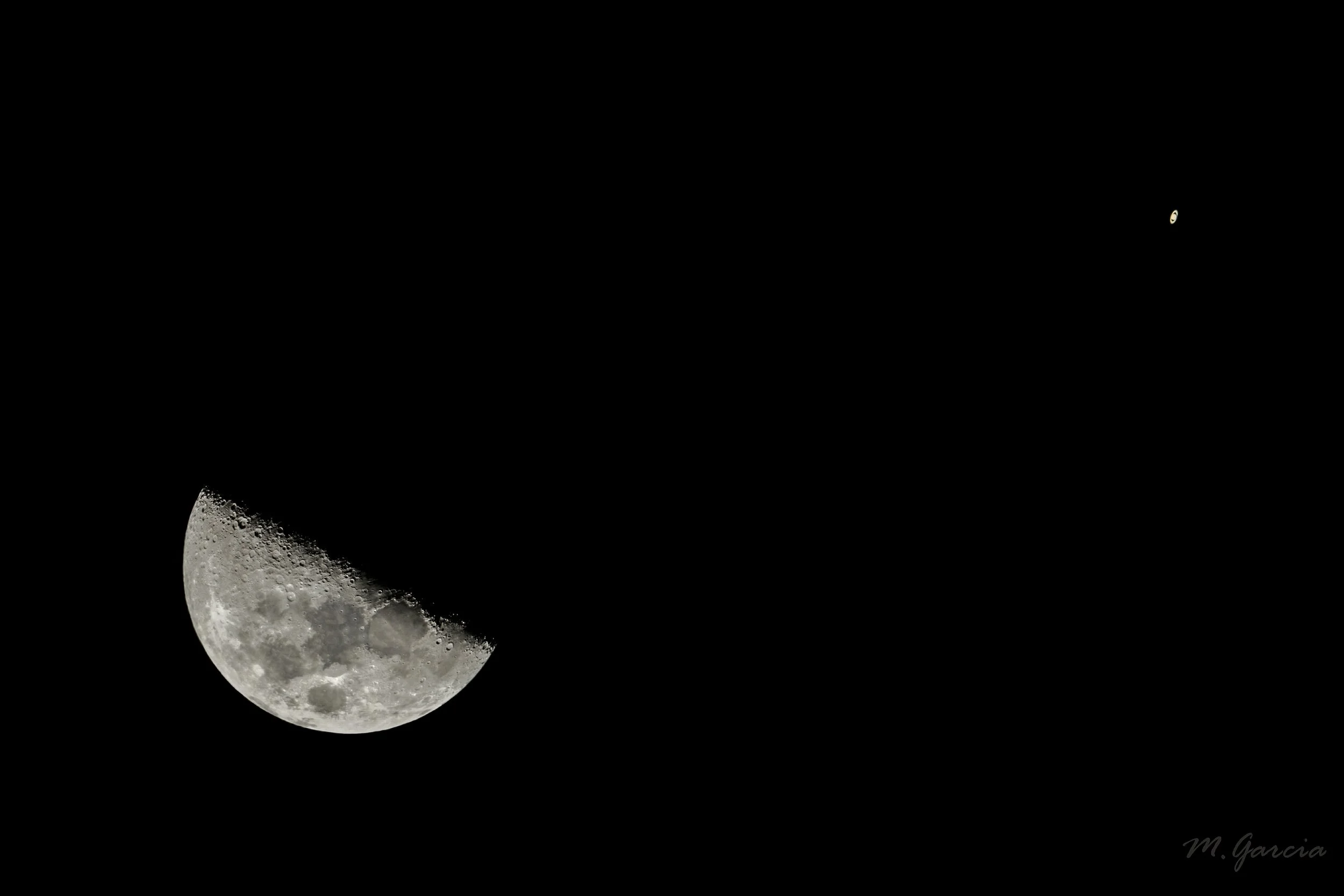
Moon and Saturn conjunction
Equipment:
Canon Eos 6d,
Skywatcher Newton pds 200/1000 f5, on Eq6r-pro mount.
Result of calibrating and stacking 50 images of 1 second integration.
Copyright: Miguel García

Solar Prominence
Capture duration = 51.89 Sec
Captured frames = 590
Capture frame speed = 11 Fps
Camera =The Imaging Source, DMK31AU03.AS
Telescope = LUNT LS100THa PT (Single Stack) / B1800 / Barlow 2X
Copyright: Peter Desypris

Kn 63 (Kronberger 63)
Kronberger 63 is a planetary nebula in the constellation of Orion . It was discovered by Austrian Mattias Kronberger who is a member of the amateur group Deep Sky Hunters.
It is very faint and thus rarely imaged. Indeed my searches have found only one other image, produced by the Chart32 team in Chile.
Imaging telescope or lens: APM Telescopes TMB - LZOS Apo refractor 152/1200
Imaging camera: QSI 6120wsg-8
Mount :10Micron GM2000HPS II
Guiding camera: Starlight Xpress Lodestar Autoguider X2
Filters: Astrodon Blue, Astrodon Green, Astrodon Red, Astrodon SII 5nm, Astrodon 5nm H-Alpha filter, Astrodon Lum, Astrodon OIII 3 nm
Resolution: 3686x2267
Frames: Astrodon 5nm H-Alpha filter: 26x1800" bin 2x2 Astrodon Blue: 21x300" bin 1x1 Astrodon Green: 20x300" bin 1x1 Astrodon OIII 3 nm: 48x1800" bin 2x2 Astrodon Red: 20x300" bin 1x1
Integration: 42.1 hours
Astrometry.net job: 3153960 RA center: 5h 42' 5" DEC center: +4° 42' 50" Pixel scale: 0.534 arcsec/pixel
Orientation: 6.400 degrees
Field radius: 0.321
Locations: e-Eye, Fregenal de la Sierra, Extramadura, Spain
Data source: Own remote observatory
Remote source: e-EyE Extremadura
Copyright: Peter Goodhew
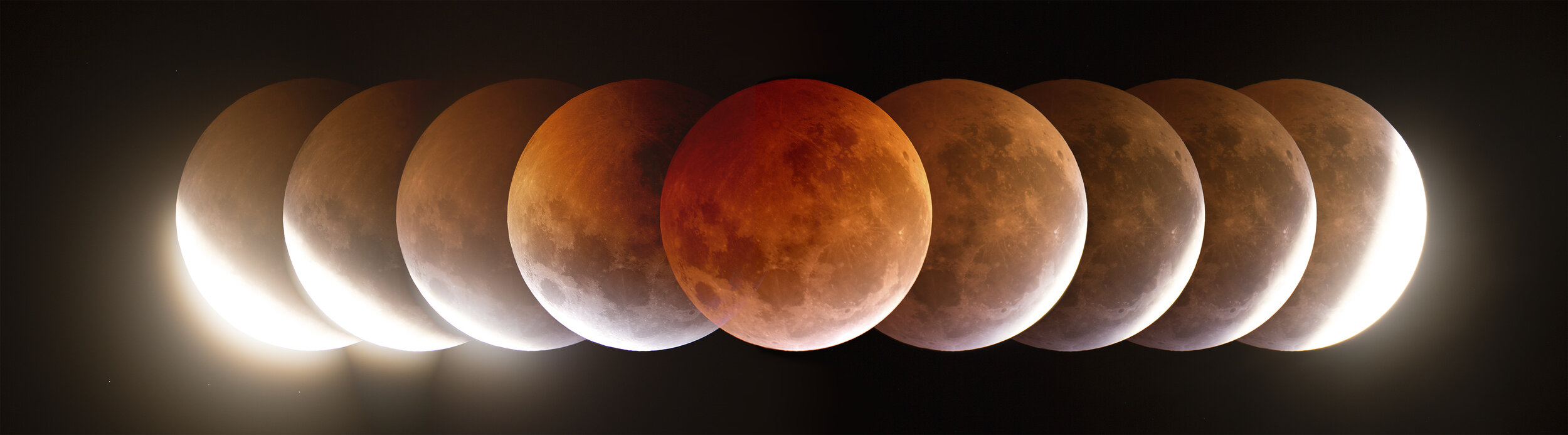
Lunar Eclipse (2019)
This is a sequence of the lunar eclipse 2019.
Santiago de Chile.
Reading from left to right, you can see how the Earth's shadow cone covers the lunar surface, until it is completely submerged in a reddish copper color. This particular color of lunar eclipses is due to the shadow cast by the sun on the earth, generating a scattering effect of the light refracted by its atmosphere.
Canon T6i
Telescope: Explore Scientific Triplet Aprochromatic Refractor ED 102 mm
Mount: IOptron iEQ 30 Pro
f/7
714 mm focal length
Multiple exposures: 1, 4 and 8 seconds
ISO 200 - 400
Software:
PIPP for align and Registax for stacking best frames.
Photoshop for sequence.
Copyright: Luis Rojas M.
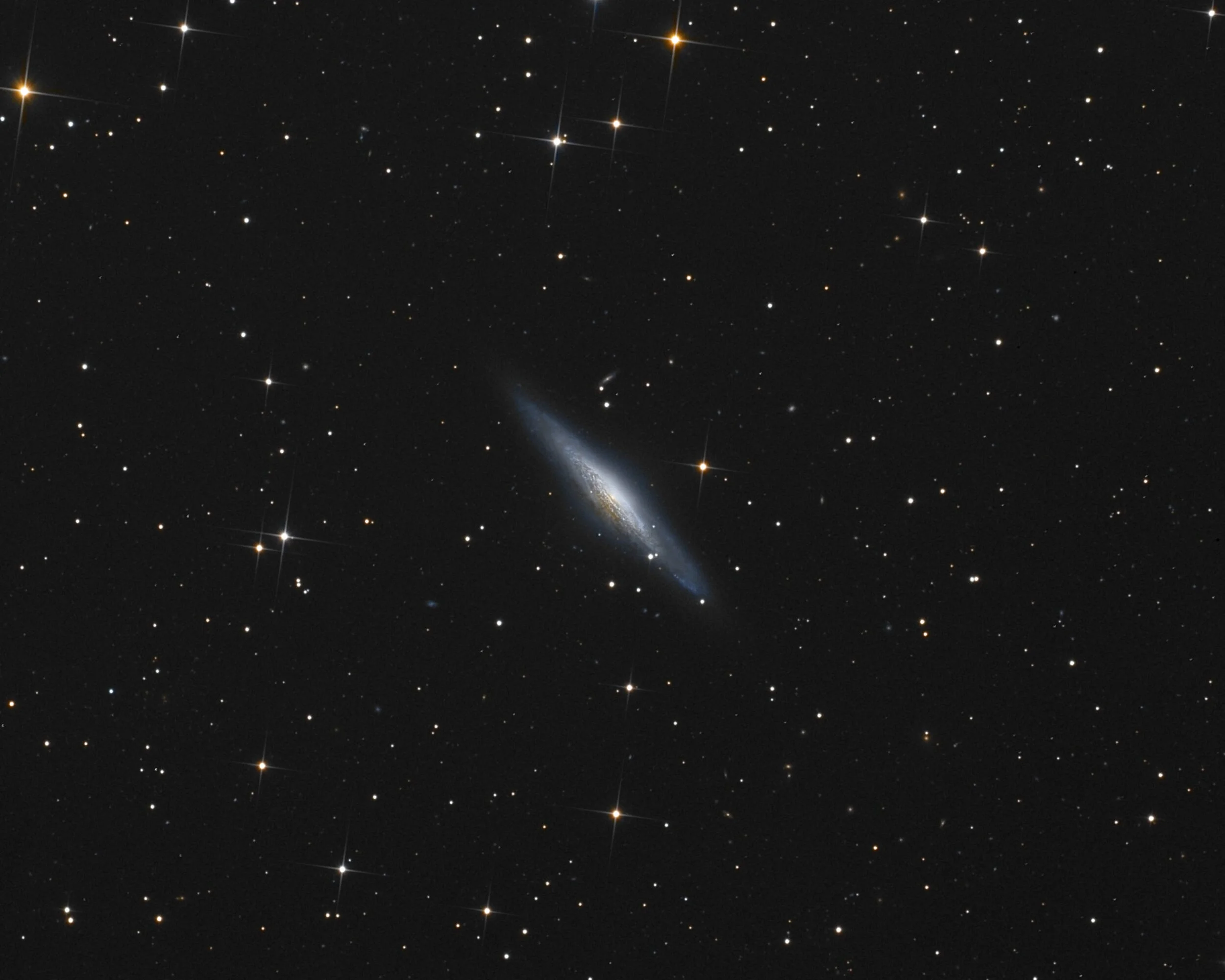
NGC2683
Instrument: UNC 254mm f / 4 Astrograph Telescope
Imager: QSI 540WSG CCD Camera at -25 °, Atik GPE Guidance
Exposure: 20 exposures of 300 sec at -25 ° in Luminance
Preprocessing: 8 Dark / 8 Flat / 8 Offset
Processing: Prism 10, Photoshop CS3
Notes First test of the new telescope
Description GNC 2683 is a spiral galaxy of type Sb located in the constellation of the Lynx, at a distance of 16 million light years. It has an apparent angular dimension of 9.3 'by 2.2' of angle. Its magnitude is 10.6.
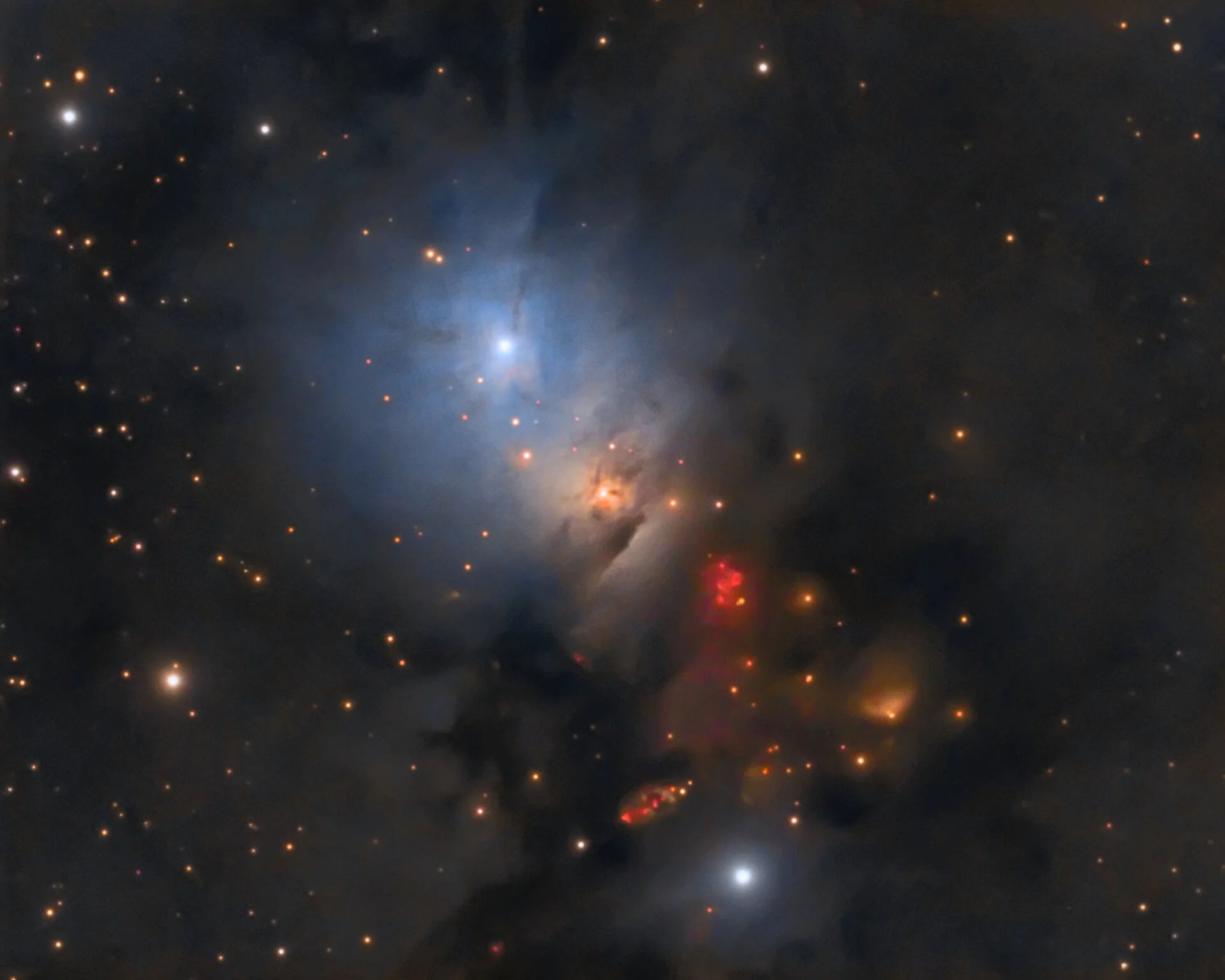
NGC 1333 Embryo Nebula
NGC 1333 Embryo Nebula in the constellation Perseus.
The NGC 1333 reflection nebula and its associated dark cloud L1450 (also known as Barnard 205) are located at the northern end of a degree-long, north-south ridge of CO emission in the Perseus region at the west side of a large cavity in the Perseus molecular cloud.
L-channel - 36 x 600 sec. bin 1x1;
R-channel - 25 x 600 sec. bin 1x1;
G-channel - 25 x 600 sec. bin 1x1;
B-channel - 25 x 600 sec. bin 1x1.
Total integration time - 18:30 hours.
My setup: Telescope 8" Celestron Schmidt-Cassegrain (SCT) CPC800 GPS (XLT) on the equatorial wedge, focal reducer Starizona 0.75x, Feq.= 1626mm, camera Starlight Xpress Trius SX694, SX mini filter wheel, filters Astrodon LRGB E-series gen.2 .
Capture and processing software: MaxIm DL6, PHD2, PixInsight, StarTools, Photoshop CC, Zoner photo studio 14.
North at the top.
Copyright: Boris Vladimirovich
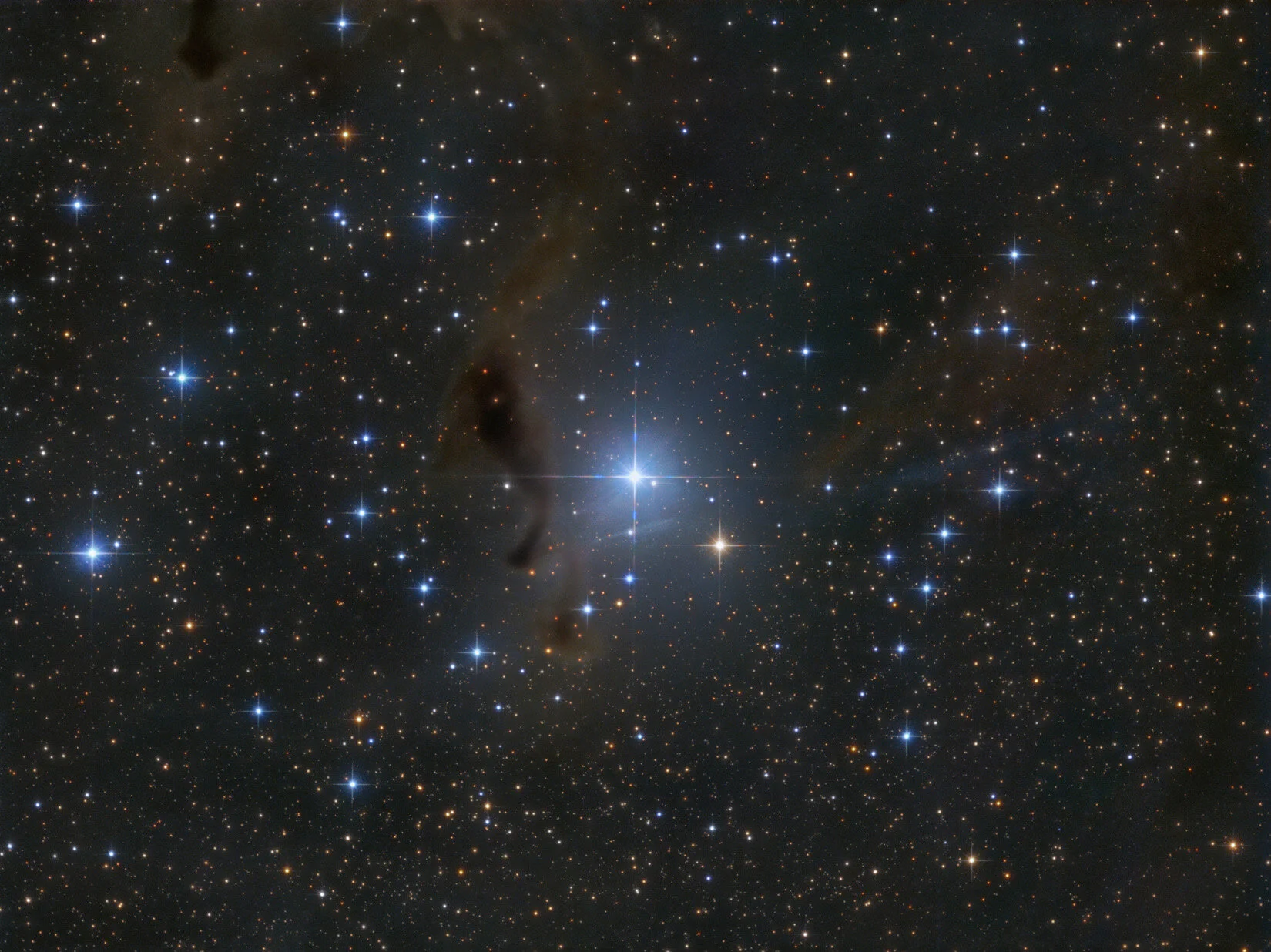
vdB 9 + LDN 1357
Telescope: 10" Lacerta Newton
Camera: SBIG ST8300M with Baader filters
Exposure times: L:102x8min RGB:16x8min each
Exposure time total:20h
Mount: 10Micron GM1000 HPS
Location. Erdweg/Germany
Date: 2018-10-10+11+12+13
Copyright: Michael Deger