
AAPOD2 Image Archives

NGC1999
Imaging telescope or lens:Astro-Physics RH305
Imaging camera:SBIG STXL 16200
Mount:Planewave L-500 L-500
Software:Maxim DL, Gimp
Frames:
Blue: 11x600"
Green: 12x600"
H-Alpha: 95x600"
Red: 12x600"
Integration: 21.7 hours
Copyright: Ruben Barbosa
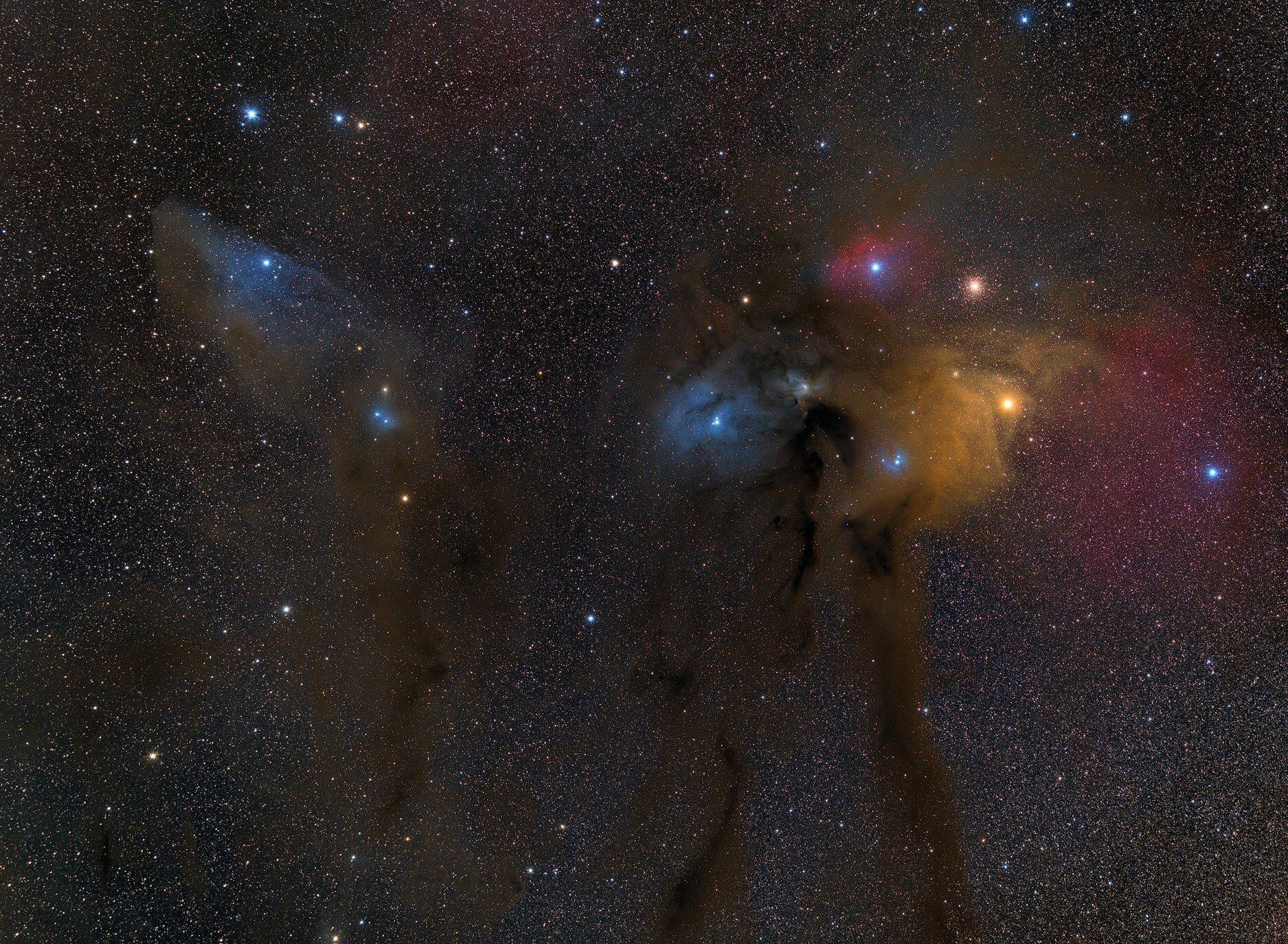
The Rho Ophiuchi Nebular Complex
The Rho Ophiuchi nebular complex is a gigantic cloud of stellar dust and gas located 460 light-years from Earth in the constellation Ophiuchus. It is one of the closest stellar nurseries to the our solar system and a favorite for astro-photographers using wide field equipment.
![Southern Pinwheel Galaxy [aka M83]](https://images.squarespace-cdn.com/content/v1/5debd4b16fcd7b02905712ff/1587248267968-TE5CTYA51AI73BDV8BLL/49784351817_6581c28f56_c.jpg)
Southern Pinwheel Galaxy [aka M83]
This beautiful image captures thousands of individual stars, star clusters and hundreds of supernova remnants in the spiral galaxy known as M83.
![Jewel Box Cluster [aka NGC 4755]](https://images.squarespace-cdn.com/content/v1/5debd4b16fcd7b02905712ff/1587247734864-36BEENC4QQ8J05JBUUHS/Jewel_PS1_CROP2_FULL.jpg)
Jewel Box Cluster [aka NGC 4755]
This is an image of NGC 4755, also known as the Jewel Box Cluster. It is an open cluster about 6,400 light years away in the constellation Crux. This cluster contains about 100 stars and is estimated to be about 10 million years old.

Hull nebula (aka NGC 3372)
The Hull nebula is cataloged under the reference NGC 3372, it covers approximately three degrees of the sky at the distance of 8800 years light, what corresponds to a diameter of 460 years light.
It can be observed in the bare eye.

Venus
Venus the second planet from the Sun and the third brightest object in Earth's sky after the Sun and Moon. It is sometimes referred to as the sister planet to Earth, because their size and mass are so similar. The surface of Venus is hidden by an opaque layer of clouds which are formed from sulfuric acid. The planet is named for Venus, the Roman goddess of love and beauty and is the second largest terrestrial planet.
On April 9, 2020 this beautiful image of Venus was taken the atmosphere is clearly visible and nice cloud shapes in the UV band can be seen.
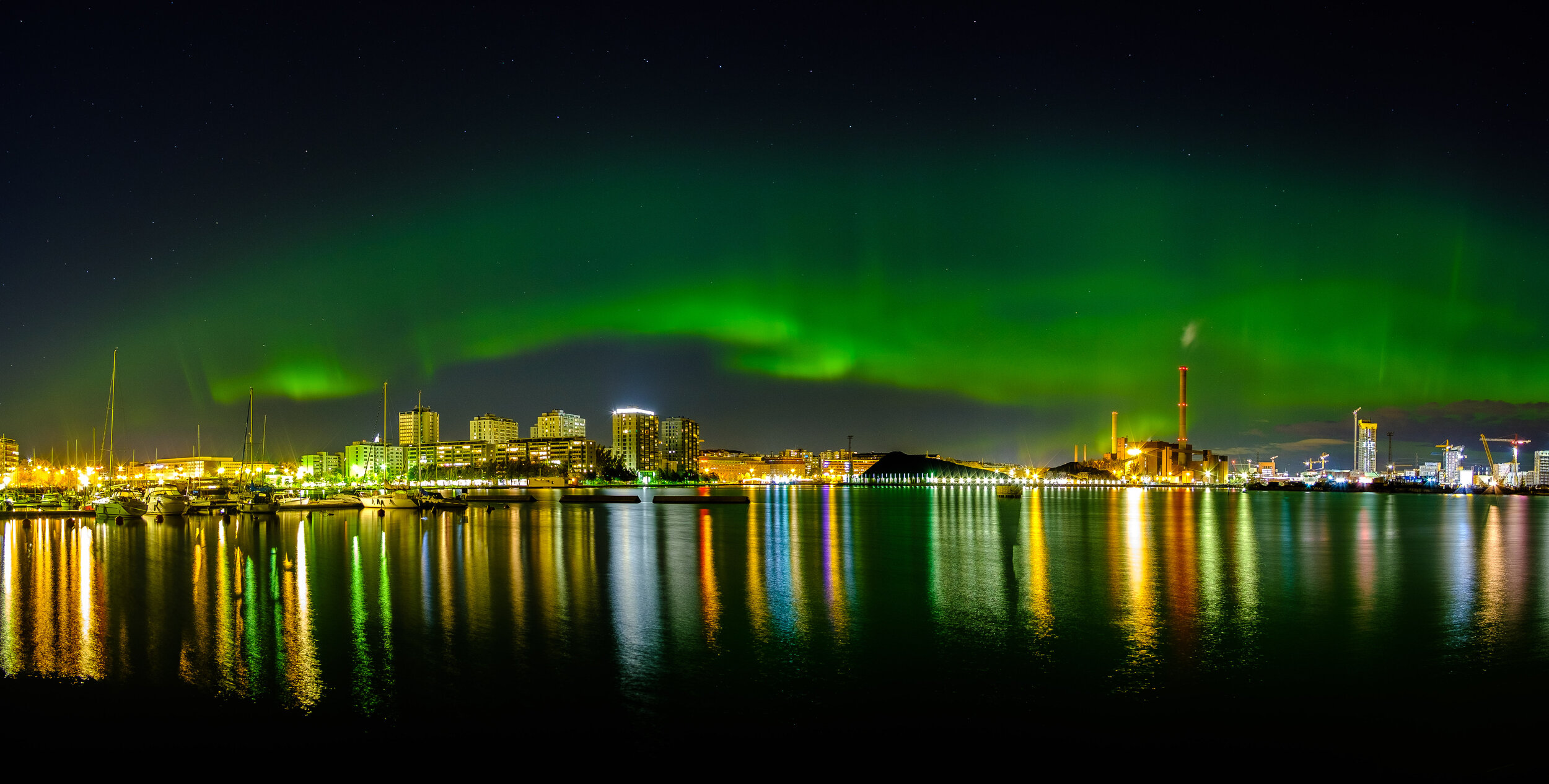
Northern lights over Helsinki
The Northern Lights, polar lights or aurora borealis as they are called are a once in a lifetime experience for many of us. The display of this astronomical phenomena can be experienced at places which are located at high latitude. They begin in the Earths atmosphere at altitudes from 60 to more than 250 miles—when charged particles from the sun become trapped in the Earth's magnetic field. The result is a colorful, dancing light show.
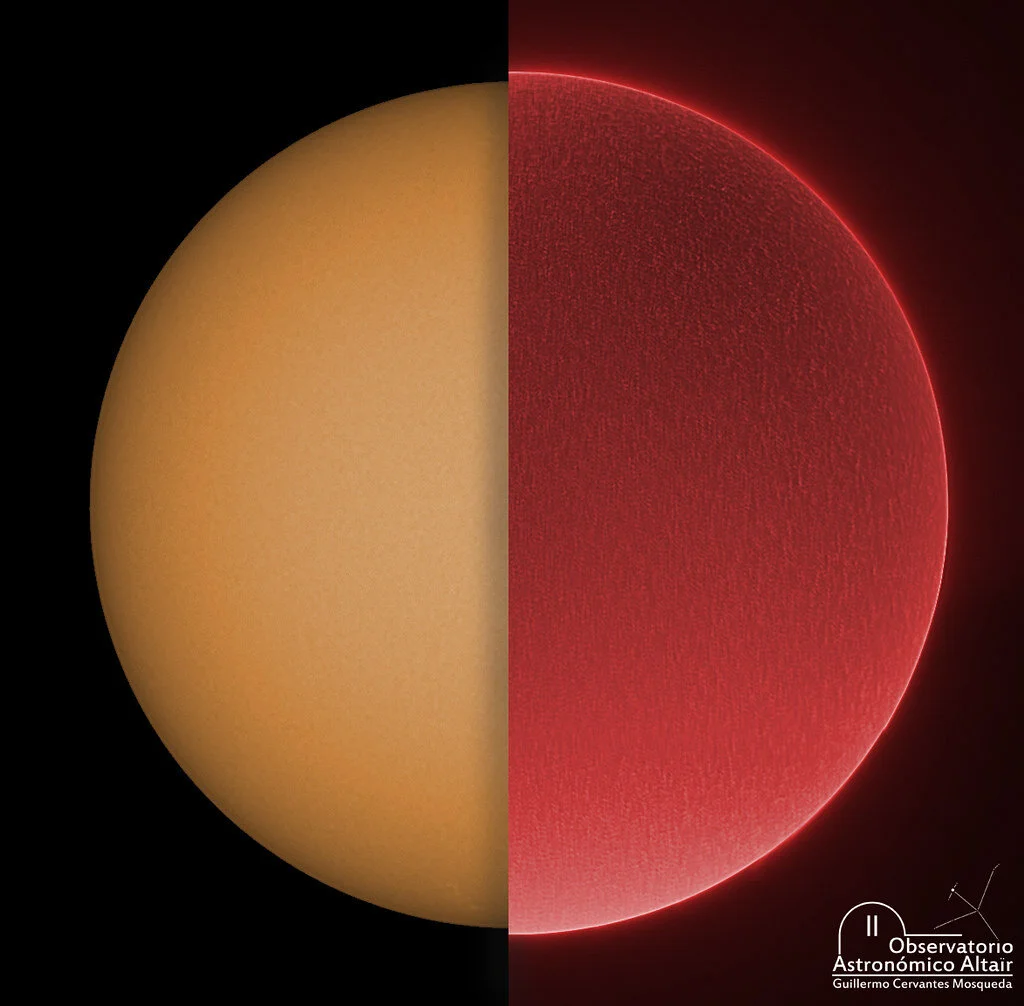
Chromosphere and Photosphere Composition
Chromosphere and Photosphere Composition April 9, 2020 "Meade 60
Herschel's Prism
Optolon L + Baader Solar Continuum
ZWO ASI120
Sky Watcher Star-Adventures
...............................................
Coronado PST
ZWO ASI120
Sky Watcher Star-Adventures

Frames: 1000
Frames Stack: 750
Firecapture
Autostakkert + Registax + Ps
Fifty Years Ago Today - Apollo 13 on the Iwo Jima
Fifty years ago on 17 April Robert Gillette happened to be in the right place at the right time, aboard the USS Iwo Jima, the Apollo 13 prime recovery ship.
In this image and other in this set, James Lovell is on deck minutes after arriving, with Rear Admiral Donald C. Davis, Commander of Task Force 130, the manned spacecraft recovery group.
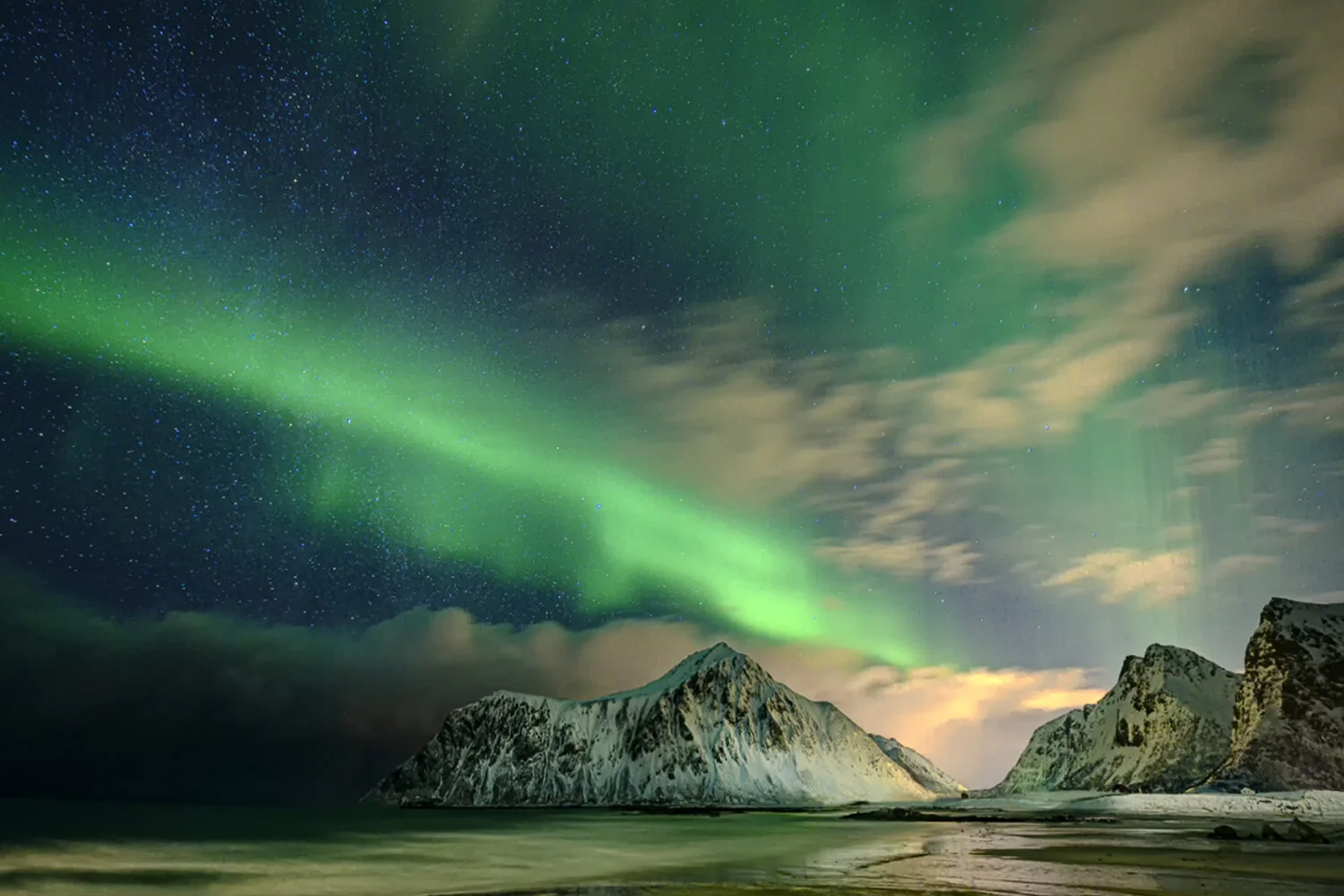
Green dance Over norway
Norway's peak season for the Northern Lights is between September and March, though that's to do more with the long, dark nights at this time of year rather than an increase in solar activity. Forecasting the Northern Lights means predicting solar activity, which is virtually impossible with our current technology. Timing is everything.
PLACE OF PHOTOGRAPHY
LOCATION: PLAYA DE SKAGSANDEN - LOFOTEN (NORWAY)
PHOTOGRAPHIC PARAMETERS
CAMERA: NIKON Z7 CAMARA
LENS: NIKOOR 14-24 F2.8
FOCAL: 14 MM
ISO: 800
SPEED: 30 S.
APERTURE: 2.8
TIME: 21:41
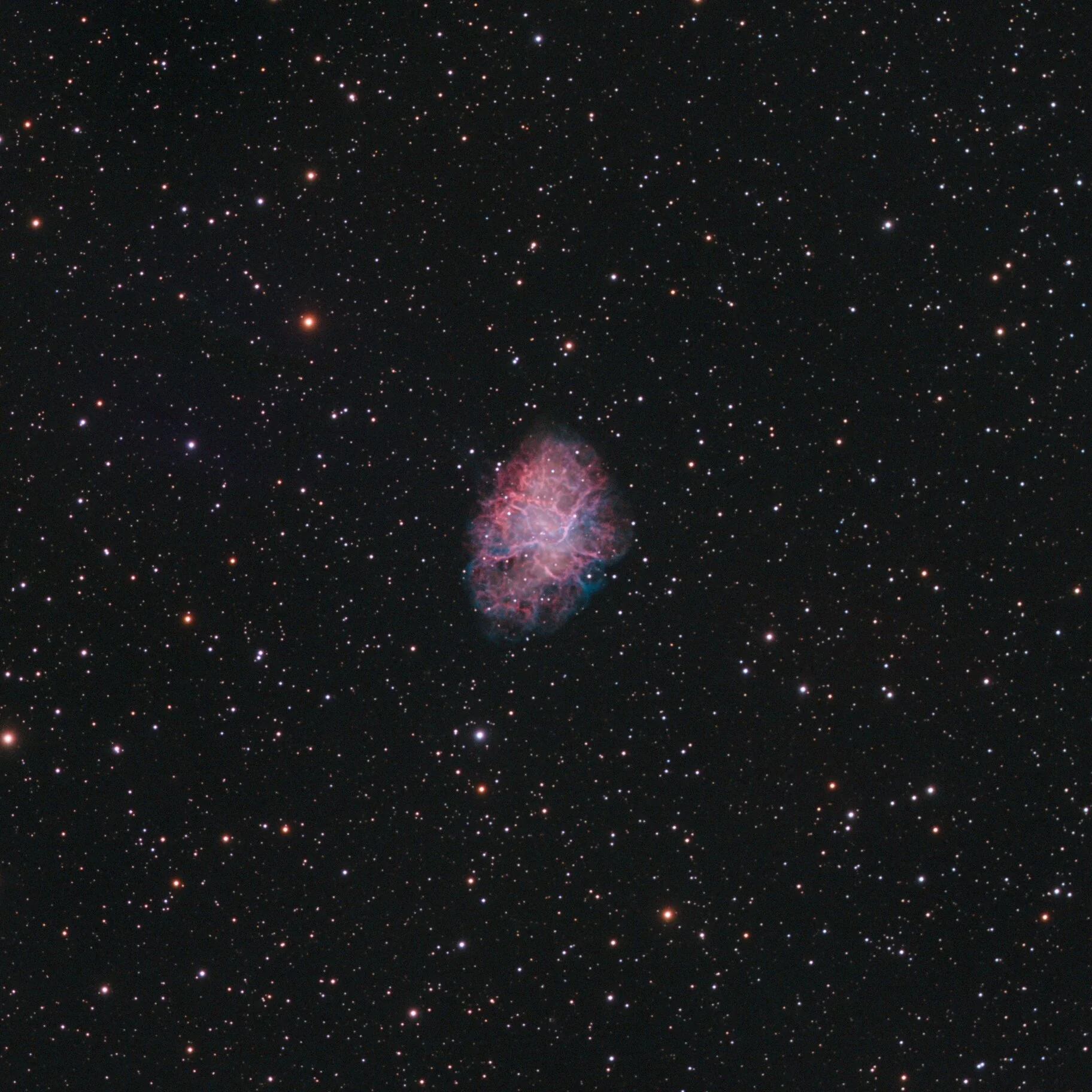
Crab Nebula : M1
A RGBHOO version of M1, Crab Nebula. Total integration time is 12 hours 19 minutes (R 2h 6m, G 2h, B 13m, Ha 4h 30m Oiii 2h 40m), image has been cropped.
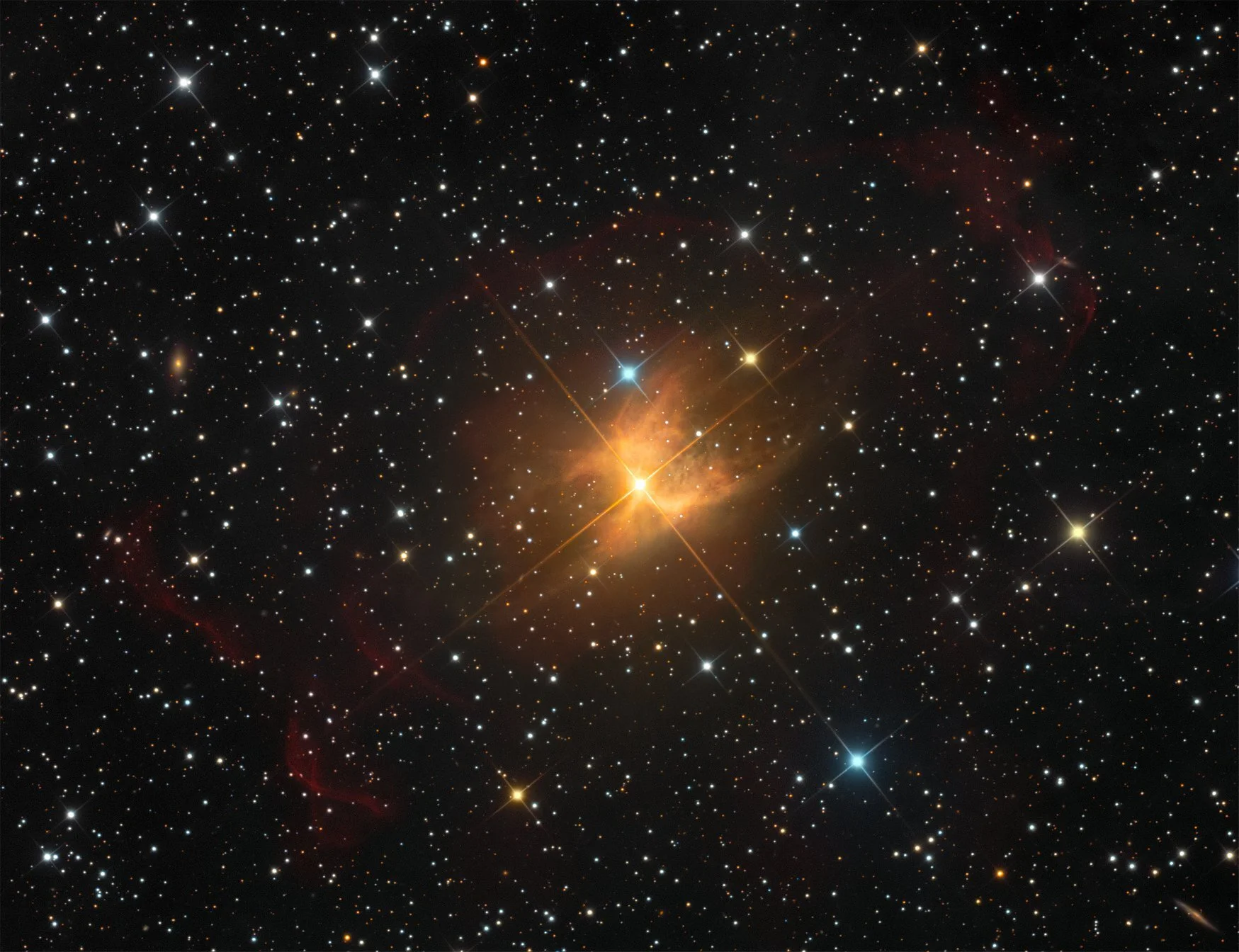
IC2220 - Toby Jug Nebula
Here is the Toby Jug Nebula imaged with the CDK17 in Chile (Obstech El Sauce).
While there are many images of this out there, few feature the outer Ha halo that was only recently discovered (I dont know how recent or who by).
The Ha is extremely faint and it took 21 hours at bin 2x2 to reveal what is shown here.
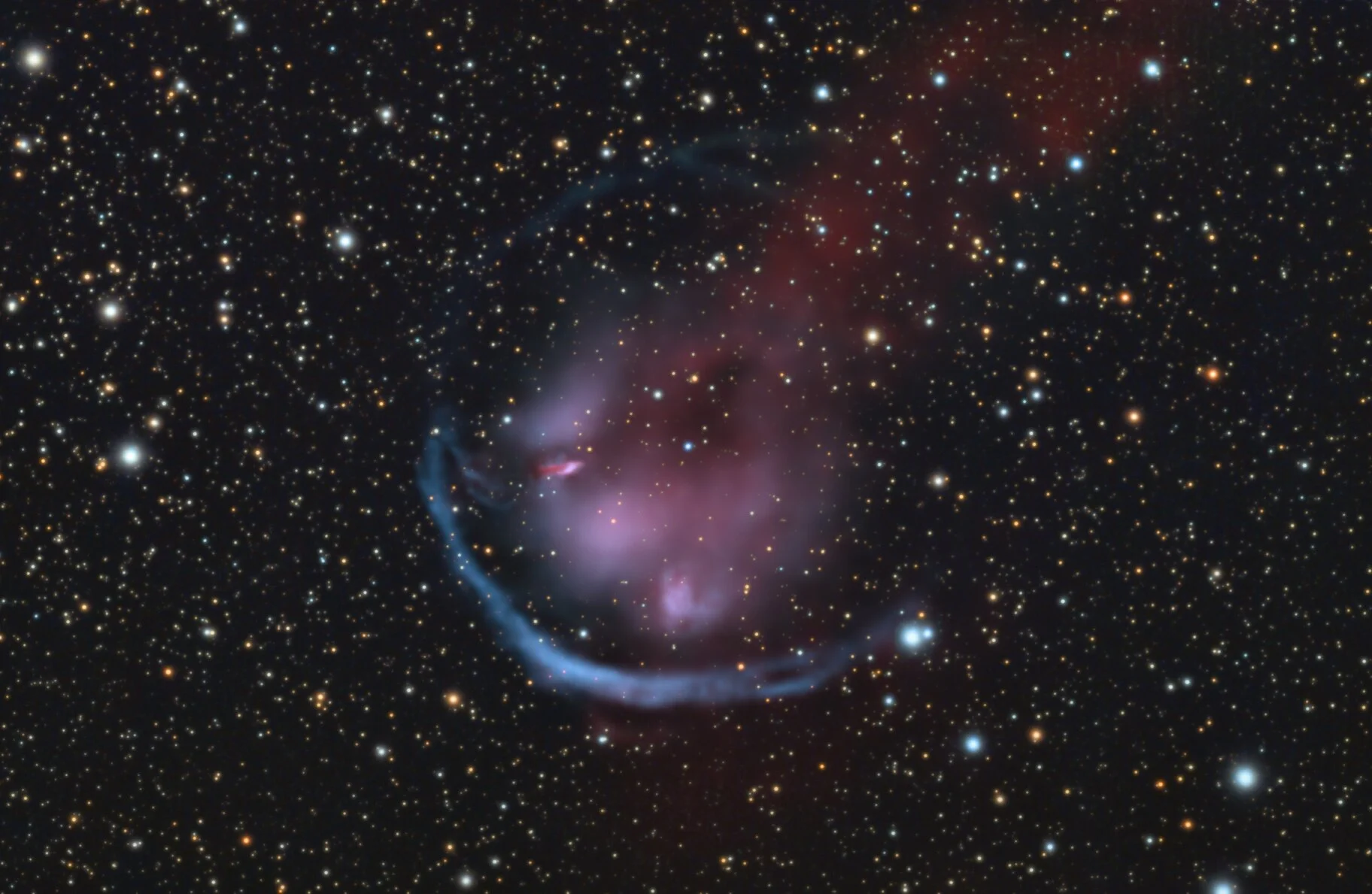
HFG 1
HFG 1 is a very old large, low-surface-brightness planetary nebula in Cassiopeia. It surrounds, and was produced by, a binary star system (V664 Cas) that is moving rapidly through our Galaxy. V664 Cas is comprosed of a white dwarf star and a large red giant. The two stars are very close and rotate around their common centre of gravity every 14 hours. The star system is moving towards the lower left of the image. As HFG 1 plows through the interstellar medium, a bluish bowshock is produced; and a red trail of gas is left behind in its wake.
EQUIPMENT USED
Twin APM TMB LZOS 152 refractors
10Micron GM2000 HPS mount
Twin QSI6120 CCD cameras
Astrodon filters
IMAGE CAPTURE
5nm H-Alpha: 33x1800 bin 2x2
3nm OIII: 35x1800 bin 2x2
Luminance: 11x600 bin 1x1
Red: 10x300 bin 1x1
Green: 10x300 bin 1x1
Blue: 10x300 bin 1x1
Total integration: 38.3 hours
Pixel scale: 0.533 arcsec/pixel
Field radius: 0.351 degrees
Capture dates: 15 October - 6 November 2019
Capture location: Fregenal de la Sierra, Spain
Copyright: Peter Goodhew
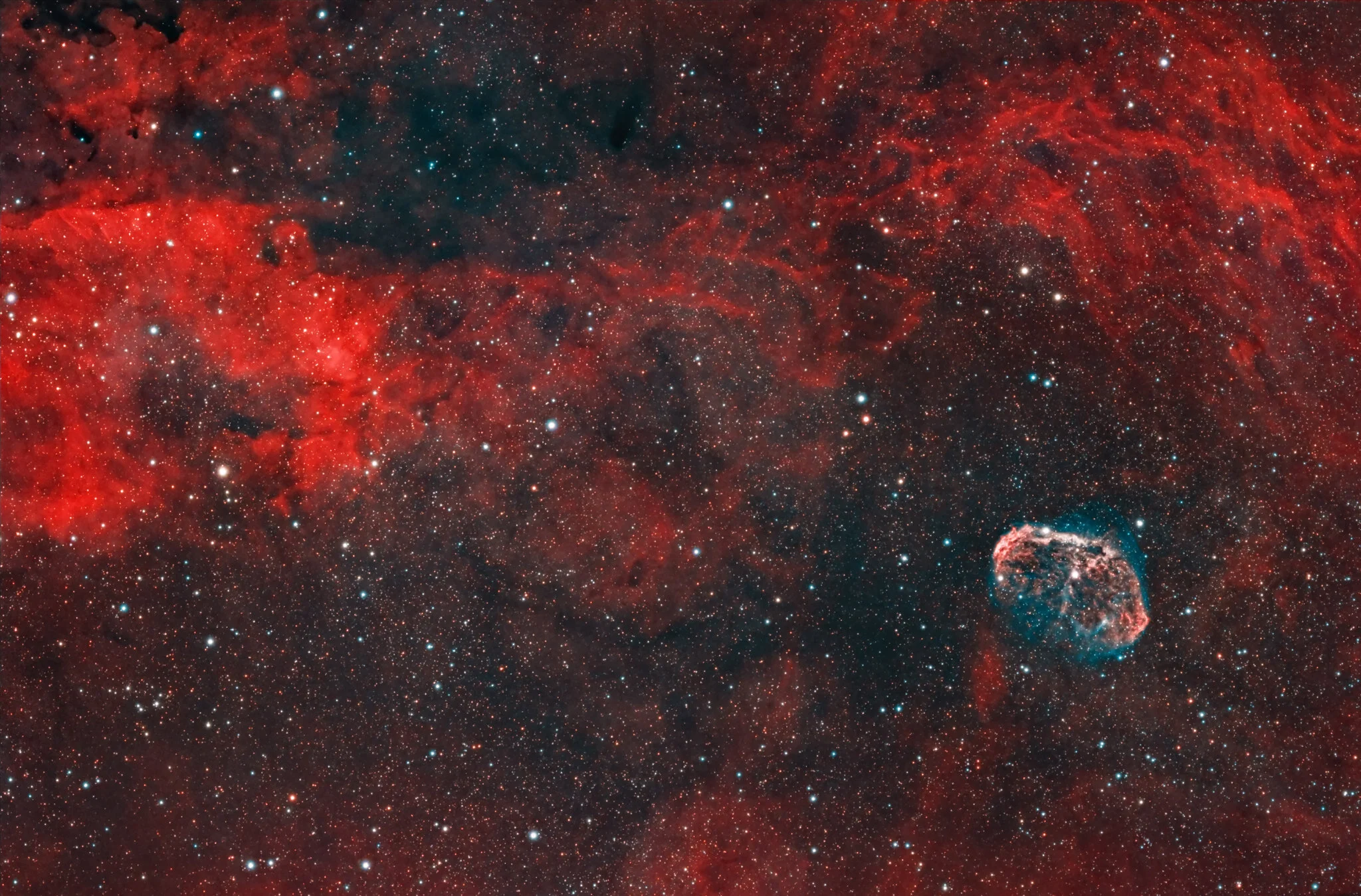
Crescent Nebula aka NGC6888
Triple shot combination in H Alpha, OIII and RGB late October 2019.
Crescent Nebula, NGC6888, remnant of an ancient supernova in the Swan constellation, just below the bright star Sadr.
Shooting on 29-9, 30-9, 02-10 from a 5.5 bortle sky
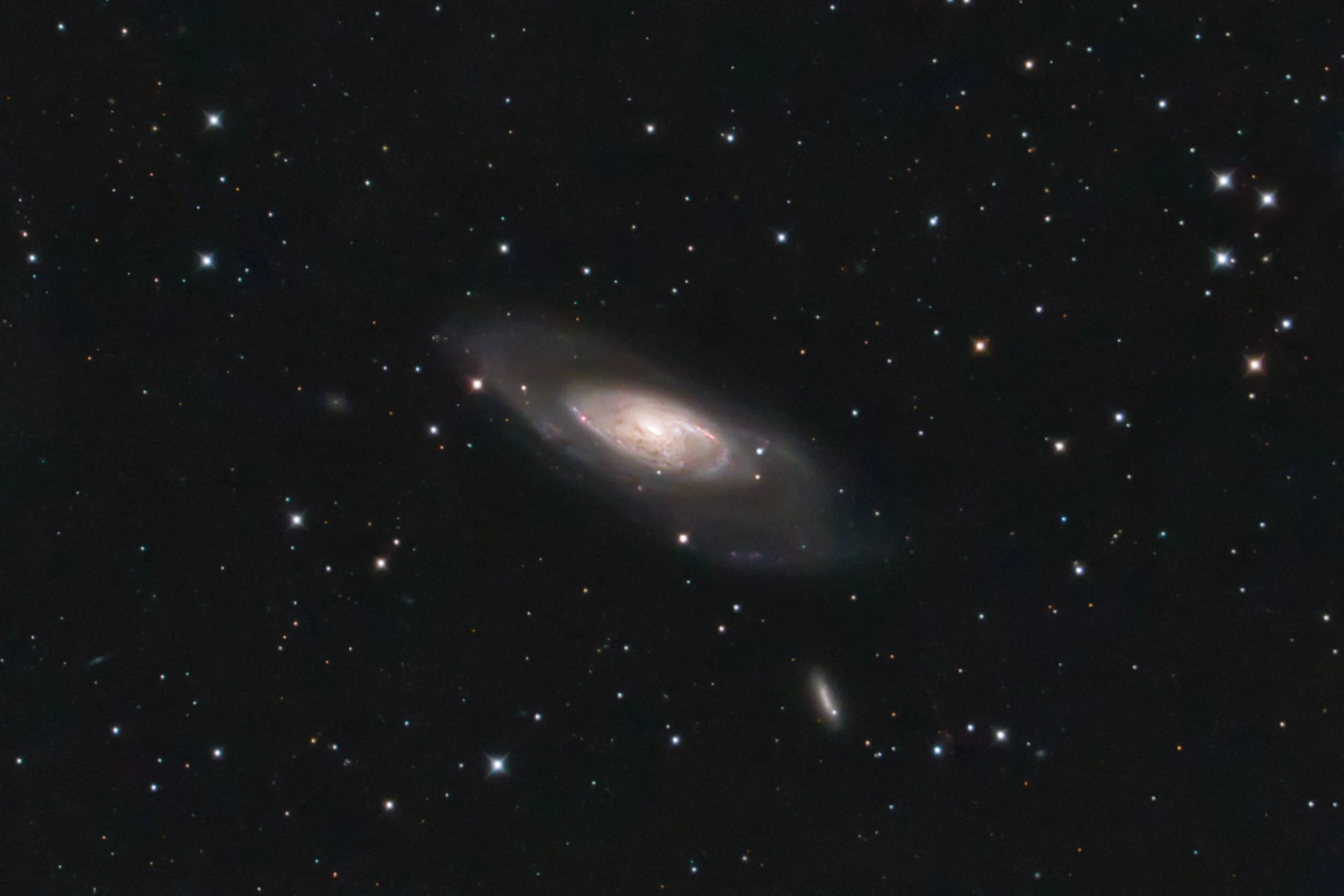
M106: in Canes Venatici
Discovered by Pierre Méchain in 1781, Messier 106 (M106) is a spiral galaxy located in the northern constellation Canes Venatici. The galaxy lies at a distance of 22 to 25 million light years from Earth. It has the designation NGC 4258 in the New General Catalogue.
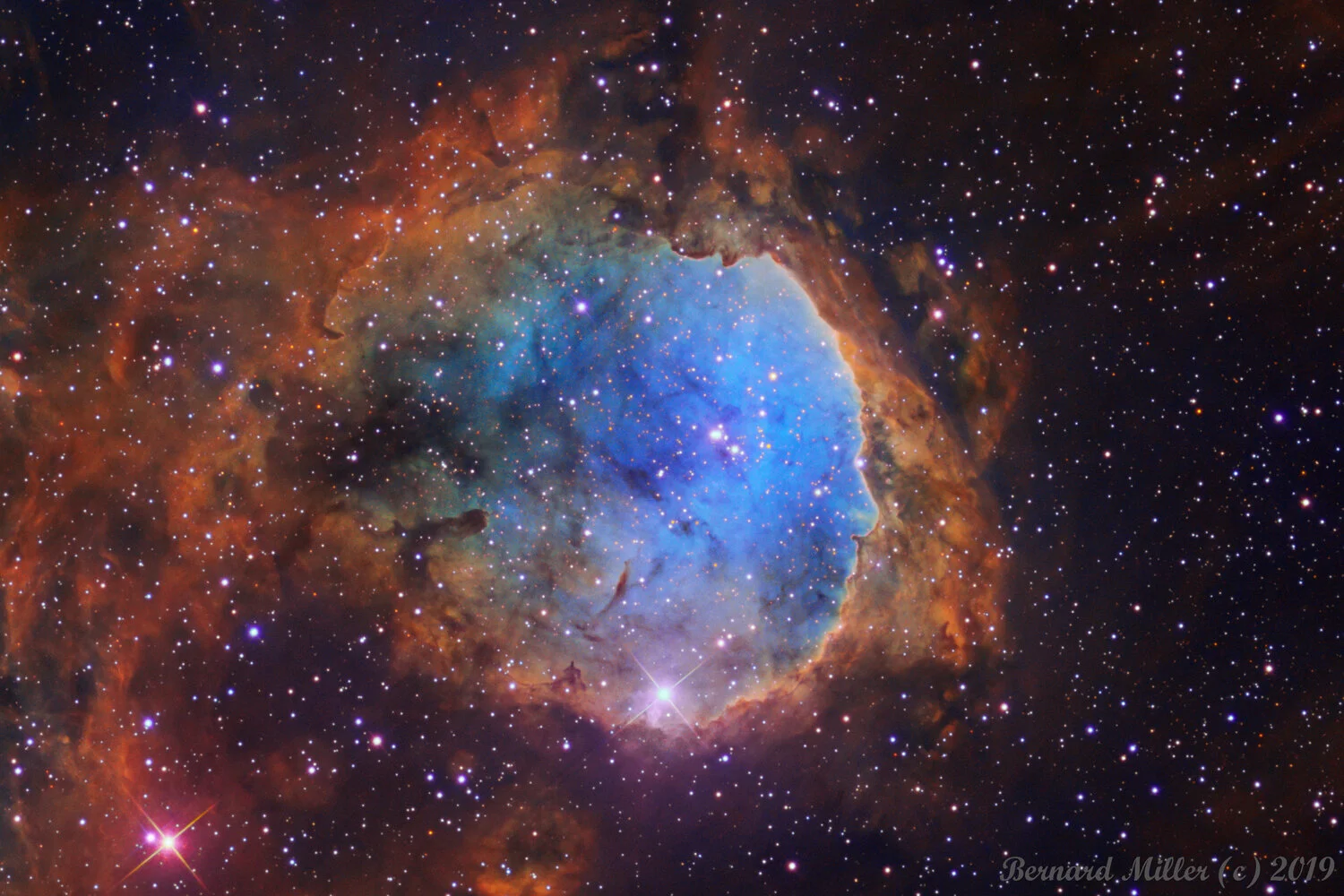
NGC 3324 The Gabriela Mistral Nebula
Copyright 2020 Bernard Miller
March 30, 2020
Location: New South Wales, AU
Telescope: RCOS 12.5 inch
Camera: SBIG STXL11002 with AOX
Mount: Paramount ME II
HA: 12x20 minutes (binned 1x1)
SII: 12x20 minutes (binned 1x1)
OIII: 12x20 minutes (binned 1x1)
RGB: 8x20 minutes each (binned 1x1)
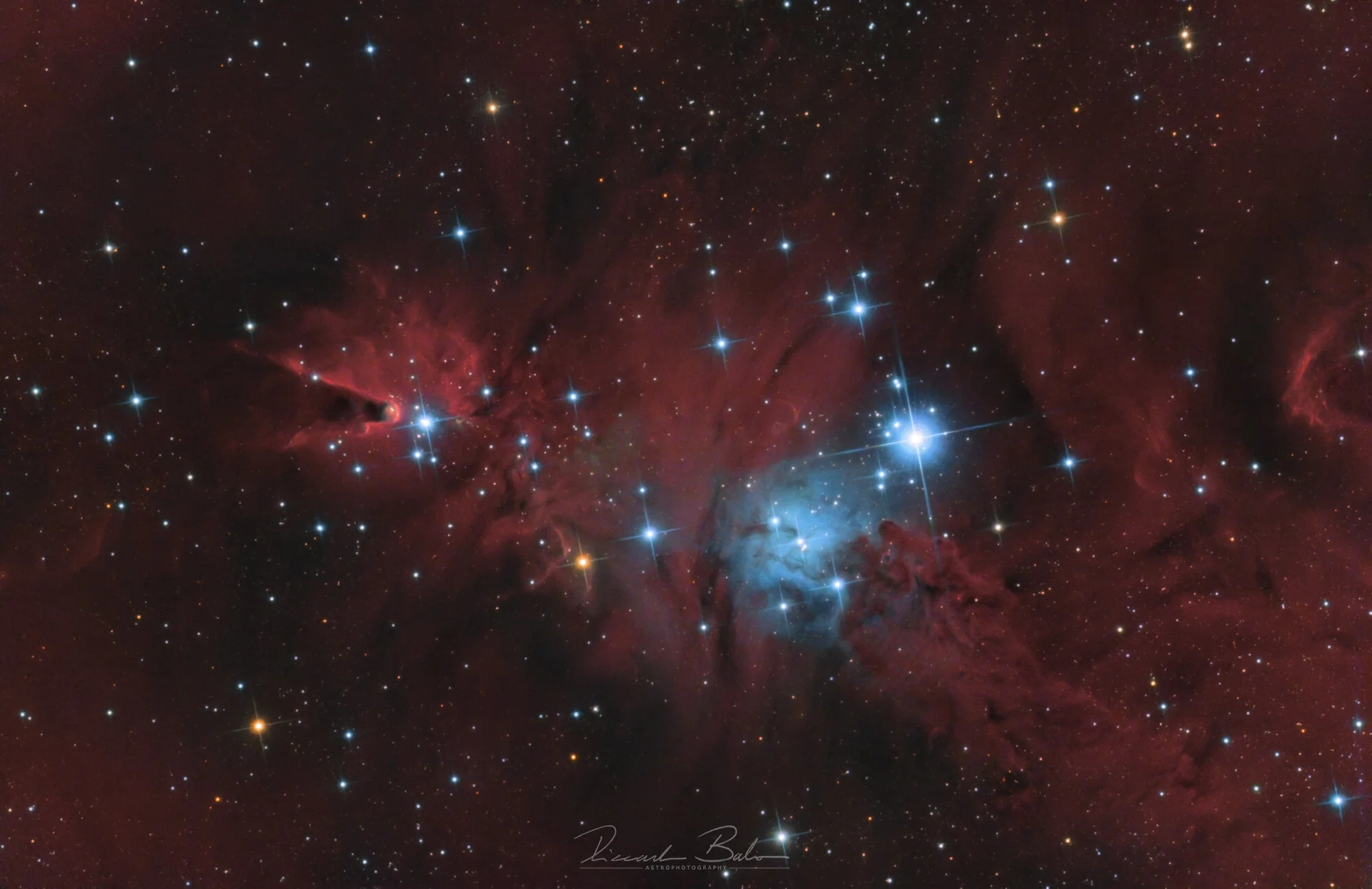
Cone Nebula Complex
This is an image of the brightest part of the Monoceros OB1 molecular complex, which include the Cone Nebula, the Christmas Tree Cluster and the Fur Fox Nebula. The image is an HaRGB composition, frames are taken under rural sky (sqm 20.5) with a reflex Canon 1000D mod. Baader, for a total exposure of 15h (6h RGB, 9h Ha).