

AAPOD2 Image Archives

Noctilucent cloud over Europe
On the 5th of July one could see beautiful NLC's over Europe. Here is a view from Vienna. Image was aquired with a Canon EOS 60D and very little post processing was done in Adobe Lightroom 6
Copyright: Benjamin Werner
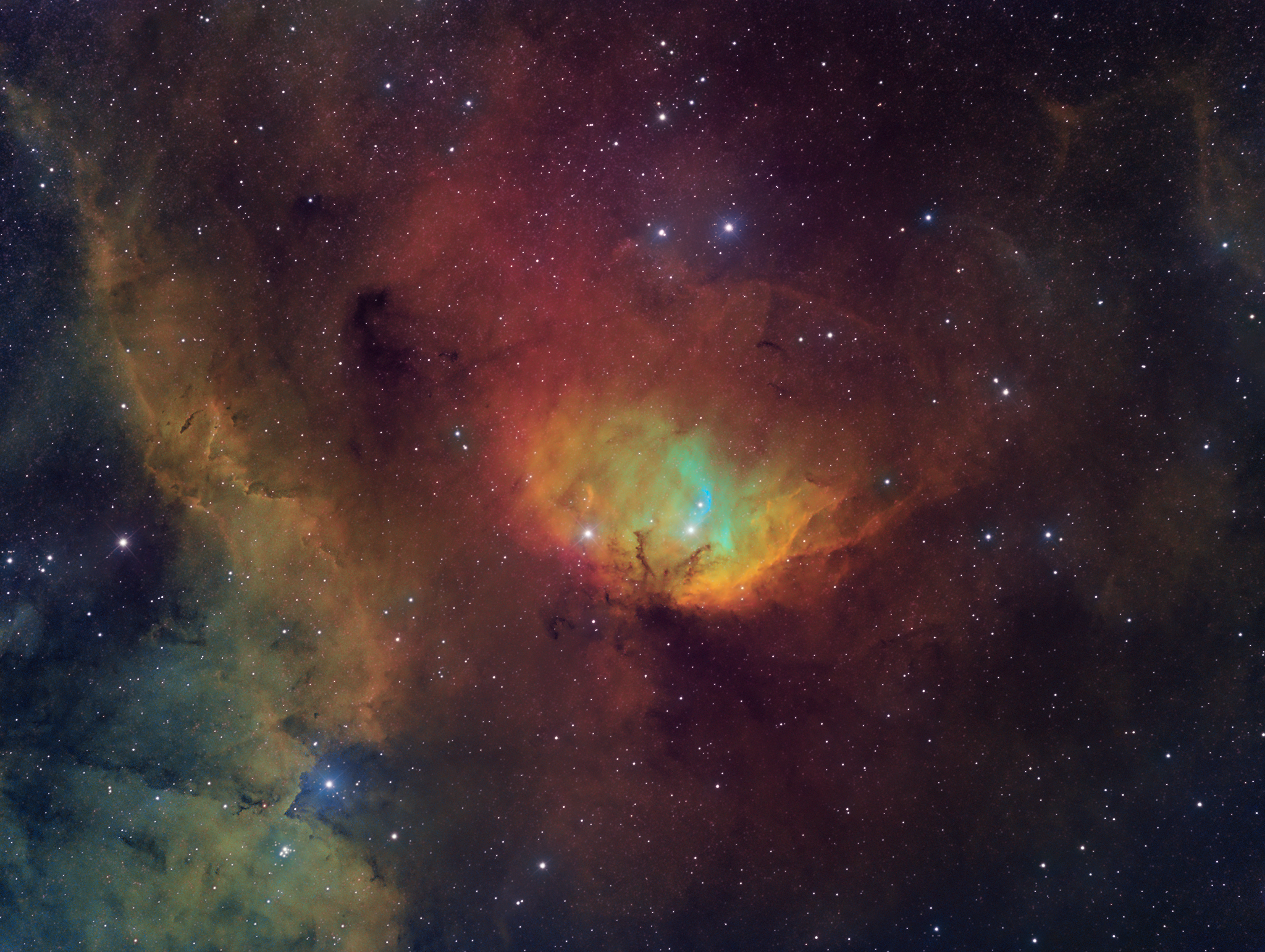
The Tulip Nebula Sh2-101
Image Description and Details:In a constellation rich in nebulae such as the Swan, there is an object commonly called the Tulip nebula. An incandescent cloud of interstellar gas and dust cataloged in 1959 by the astronomer Stewart Sharpless as Sh2-101.About 8,000 light years away from Earth, the ultraviolet radiation from the young stars on the edge of the Cygnus OB3 association ionizes and feeds the emissions of the Tulip Nebula.Near the center of the nebula there is a very bright star called HDE 227018, while in the upper right you can see an arch originating from Cygnus X-1, a microquasar, and from the star with which it shares a binary system. This is one of the most intense X-ray sources measurable from Earth, probably attributable to the presence of a black hole. Cygnus X-1 was in fact at the center of a bet between physicists Stephen Hawking and Kip Thorne, on the presence or absence of a black hole and ended in the 90s when the data reinforced the hypothesis of its existence.Shooting DataTulip Nebula Sh2-101 | Hubble Palette SHOSii 49x300'' | Ha 77x300'' | Oiii 56x300''Sky-Watcher 200/800 f/4 | AZEQ6-GT | QHY 163M | Optolong narrowband FiltersFrames captured between 26/29th of Jun 2020 from Carl Sagan Observatory in Maranello (Italy).Bortle 5 / SQM 19.65
COPYRIGHT: Luca Fornaciari

Comet C/2020 F3 NEOWISE
Comet C/2020 F3 NEOWISE rising over Plattsburgh, New York and the Champlain Valley. I woke up early this morning and trekked to a hilltop in the Adirondacks for this capture looking toward the East at sunrise. The comet was clearly naked eye and an amazing sight. I highly urge you to check it out. Right now it is in the early morning sky at sun rise but it will be working it’s way to the evening sky and toward Ursa Major later this month. I used a Canon T5i camera with a stock 75mm to 300mm lens on a fixed tripod, with an intervalometer. The first image is at 200mm focal length and the second wide field image is at 75mm.
COPYRIGHT: TJ Connolly

Jupiter Lum_IR_UV_CH4 Wavelengths Composite
Object Details:
Although I've been using various wavelengths for Deep Sky Objects (e.g. h-alpha, Oxygen III & Sulfur II), h-alpha for solar, and occasionally even 'narrowband' (e.g. DSO style) h-alpha filters for lunar and 'white-light' solar imaging (e.g. in an attempt to improve the seeing as longer wave-lengths tend to scatter less than shorter ones), I had not before tried any 'specialized' wavelength filters on the planets. Therefore, the attached composite is my first attempt to use such filters on Jupiter.
Starting with a 'normal visible' (luminance - IR/UV cutoff), from left the shots were taken using an Infrared, Ultraviolet, Methane and once again a Luminance filter. As is somewhat common, when utilizing 'specialized' filters, greyscale versions of each are included in the second row. Although Jupiter only reached an altitude of 26 degrees above our southern horizon and the seeing was fairly poor that evening, I was fortunate to catch the Great Red Spot while it was rotating on.
Generally speaking, when used on Jupiter the IR filter allows for greater penetration of the haze resulting in an enhanced contrast of small details; the UV enhances the cloud structures, while the methane (i.e. absorption) shows higher features in the Jovian atmosphere, with more methane appearing darker (and thus indicating lower) while little or no methane appears brighter (and thus indicates higher features in the atmosphere).
Image Details:
Taken by Jay Edwards at the HomCav Observatory on the morning of June 26, 2020. Being aware that the filters would attenuate the image, but not knowing to what degree, I kept the optical system used as 'photographically fast' as possible while still trying to maintain a reasonable focal length to provide some level of detail.
Therefore, the attached were shot at the prime focus of a (vintage 1970) 8-inch, f/7 Criterion newtonian reflector using an ASI290MC plaentary camera / autoguider. This scope is mounted on and tracked with a Losmandy G-11 running Gemini 2 control system.
Processed quickly using a combination of AS3, Reistax & PSP, given that these test shots turned out reasonably well, I'm looking forward to trying these filters again as we approach Jupiter's opposition next month, and if possible will add a barlow lens to increase the focal length / magnification.
Copyright: Jay Edwards
Solar Prominence
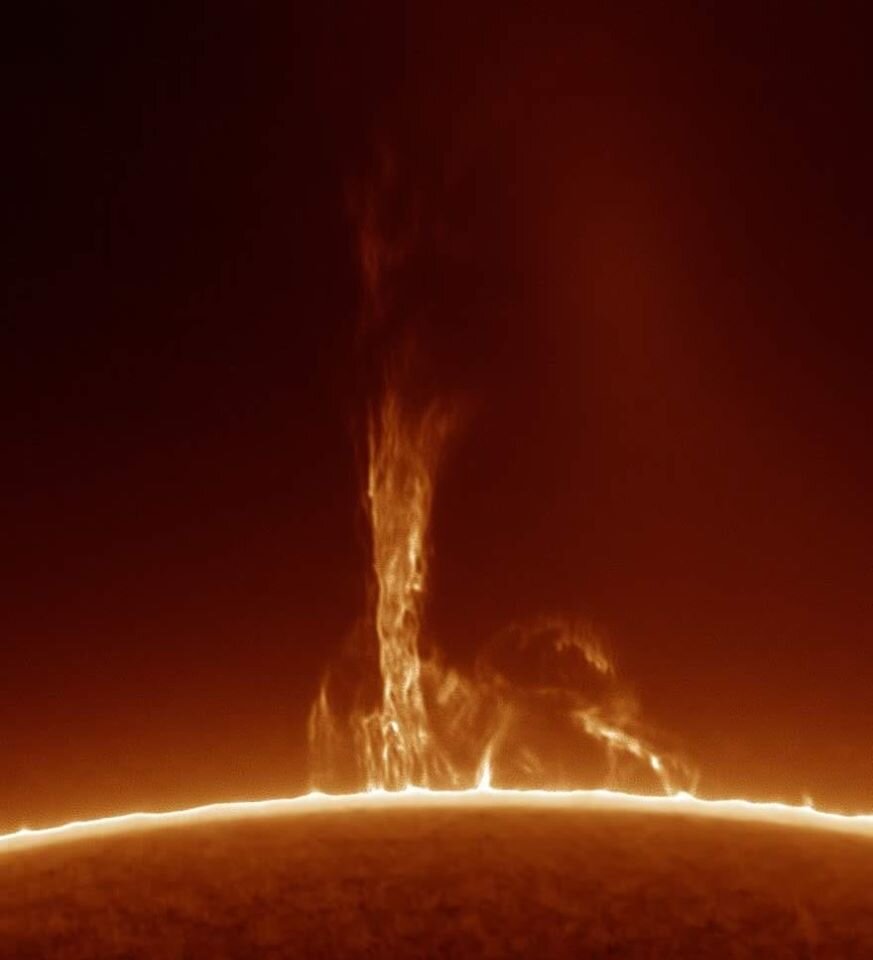
Small solar prominence which must be twice the size of the earth.
Orion ED80CF T
Daystar quark chromospere
ASI120MM-s
Copyright: Mathieu Varis
Cederblad 111 (Ced 111)
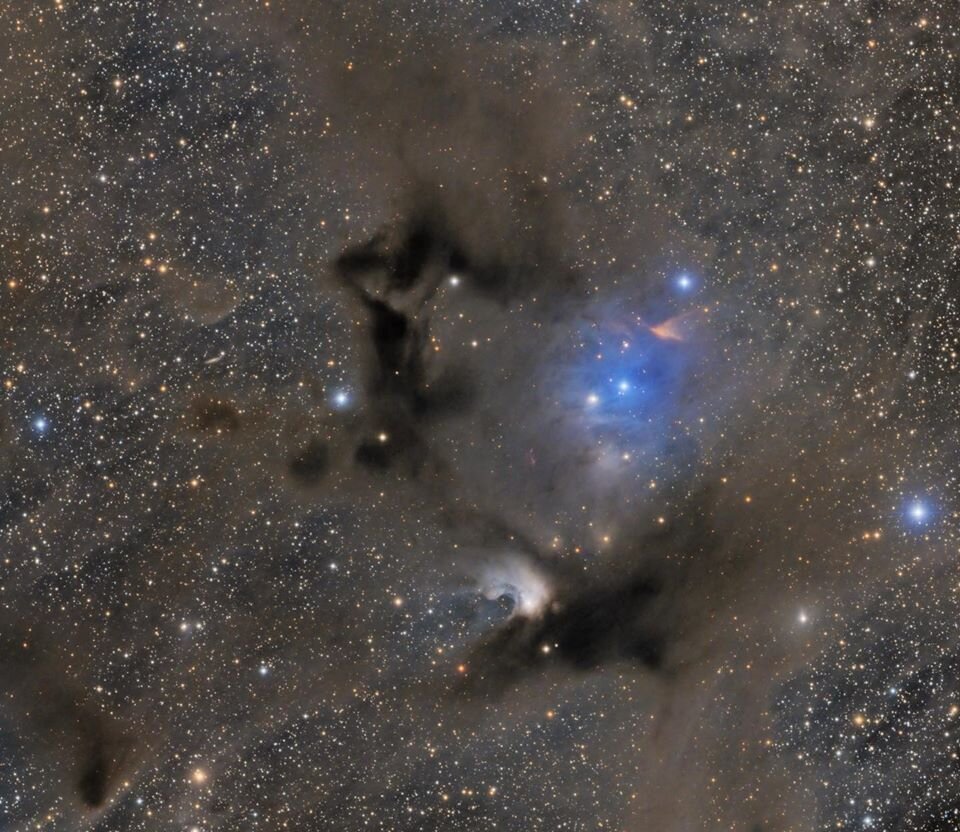
Cederblad 111 (Ced 111) is a blue reflection region in the southern constellation of Chamaeleon and is part of one of the closest (~550 light years) dark cloud complexes to the Sun. Ced 110 is the bright reflection in the lower portion of the image with the distinct bright arc. Both are part of Cha I dark cloud complex. The median age is estimated at ~2 Myr. The cloud complex is a stellar nursery and many new stars have been detected through their variability and H-a emission. The small, elongated, bright red objects at the center of the image are Hebrig-Haro objects (HH 49-50), which form from a collision between ionized jets of gas ejected from newly born stars and the surrounding cloud.
Imaging telescopes or lenses:Takahashi TOA-150
Imaging cameras:FLI ML16200
Mounts:Astro-Physics 1600 with Absolute Encoders
Filters: L , B , G , R
Integration: 16.7 hours
Copyright Good Astronomy

LDN1235 Dark Shark Nebula & PGC67671 Galaxy
Image Description and Details :
Observing sessions :22 Apr...27 May 2020
Site : QUART (Aosta Valley) Italy
Telescope : SharpStar AL 107-PH
Camera : Moravian G2-8300
Autoguiding : ZWO ASI 174MM-Mini (Mono)
Focal Reducer : TS Photoline 3" x0,79
Filters:
Optolong CLS-CCD 1,25" 61x600sec
Astronomik Deep-Sky CCD-R 51x360sec
Astronomik Deep-Sky CCD-G 37x360sec
Astronomik Deep-Sky CCD-B 49x360sec
Total Integration: 23,9h
Pocessed with PixInsight 1.8.8.5 and Photoshop 6
Copyright Information: Marco Stra
M100
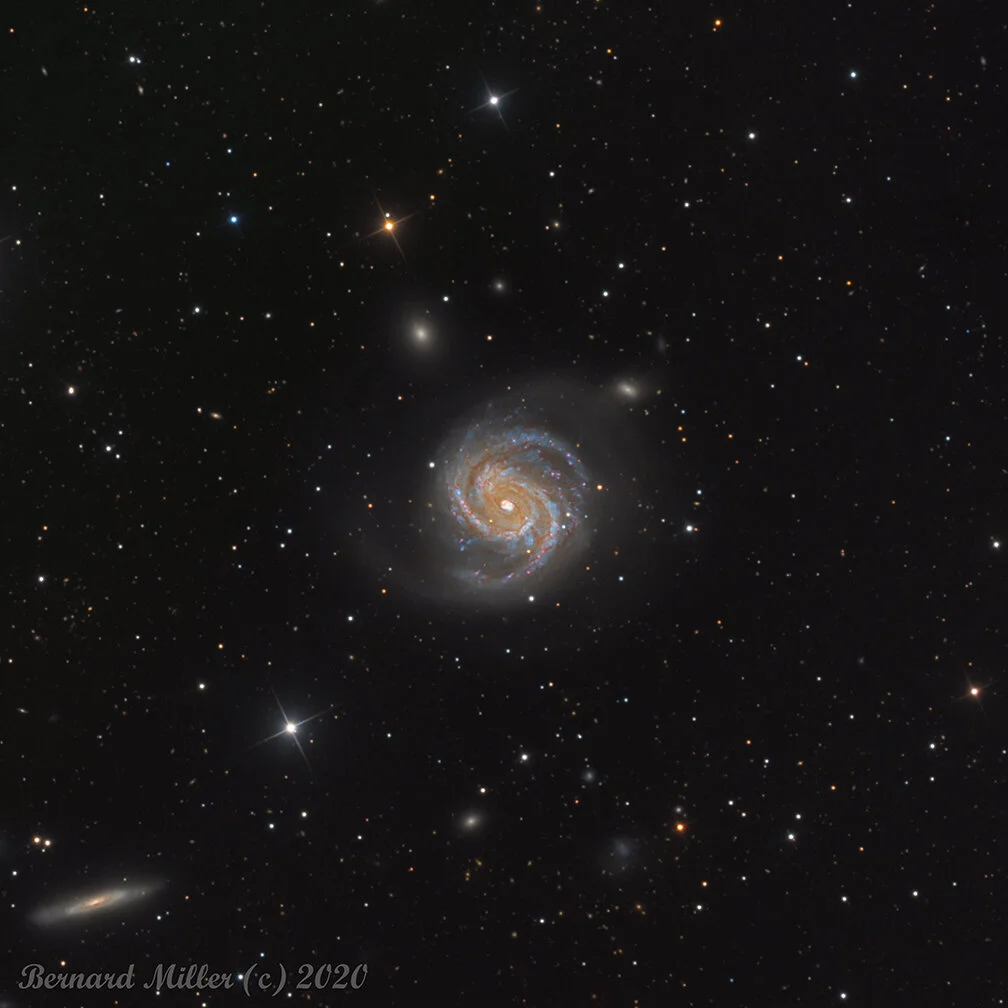
May 11 - June 17, 2020
Location: Dark Sky New Mexico
Telescope: Planewave CDK-17
Camera: FLI PL16803
Mount: Paramount ME
Luminance: 22x20 minutes (binned 1x1)
Red: 16x20 minutes (binned 1x1)
Green: 16x20 minutes (binned 1x1)
Blue: 18x20 minutes (binned 1x1)
Copyright: Bernard Miller
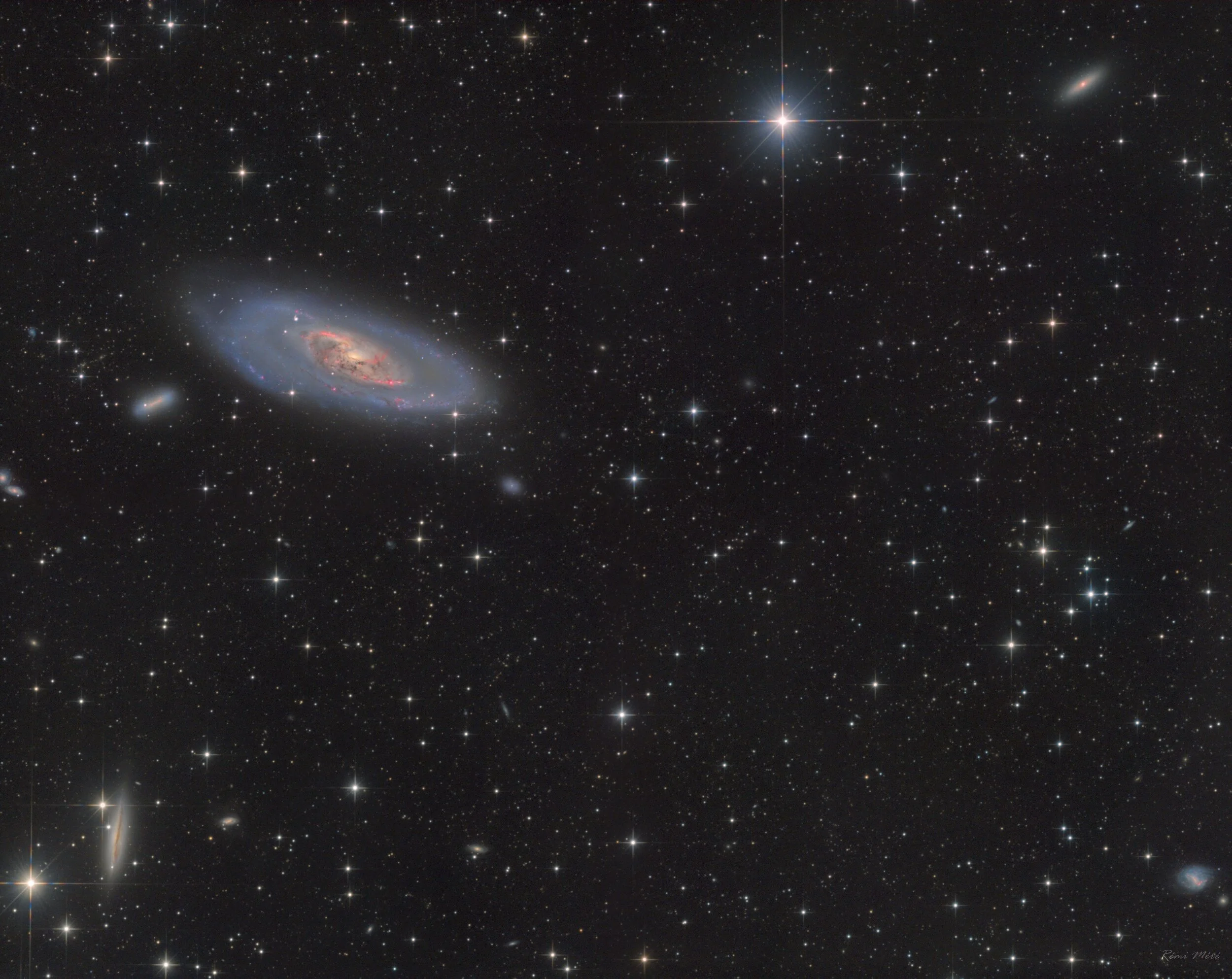
m106 on 4 panel mosaic
Image Description and Details:
Messier Galaxy: M106
Ngc: 4217_4226_4231_4232_4248_4288_4346 (medium galaxy) from left to right.
for pgc I prefer not to detail .. there are too many !!
Sgp sequence: (4 panels)
luminance (50x600s) x4 green (20x300s) x4
h-alpha (41x600s) x4 blue (20x300s) x4
red (20x300s) x4
Made in Mazières-en-Gâtine 79310, total photo time 80h40min.
Copyright: Rémi MERE
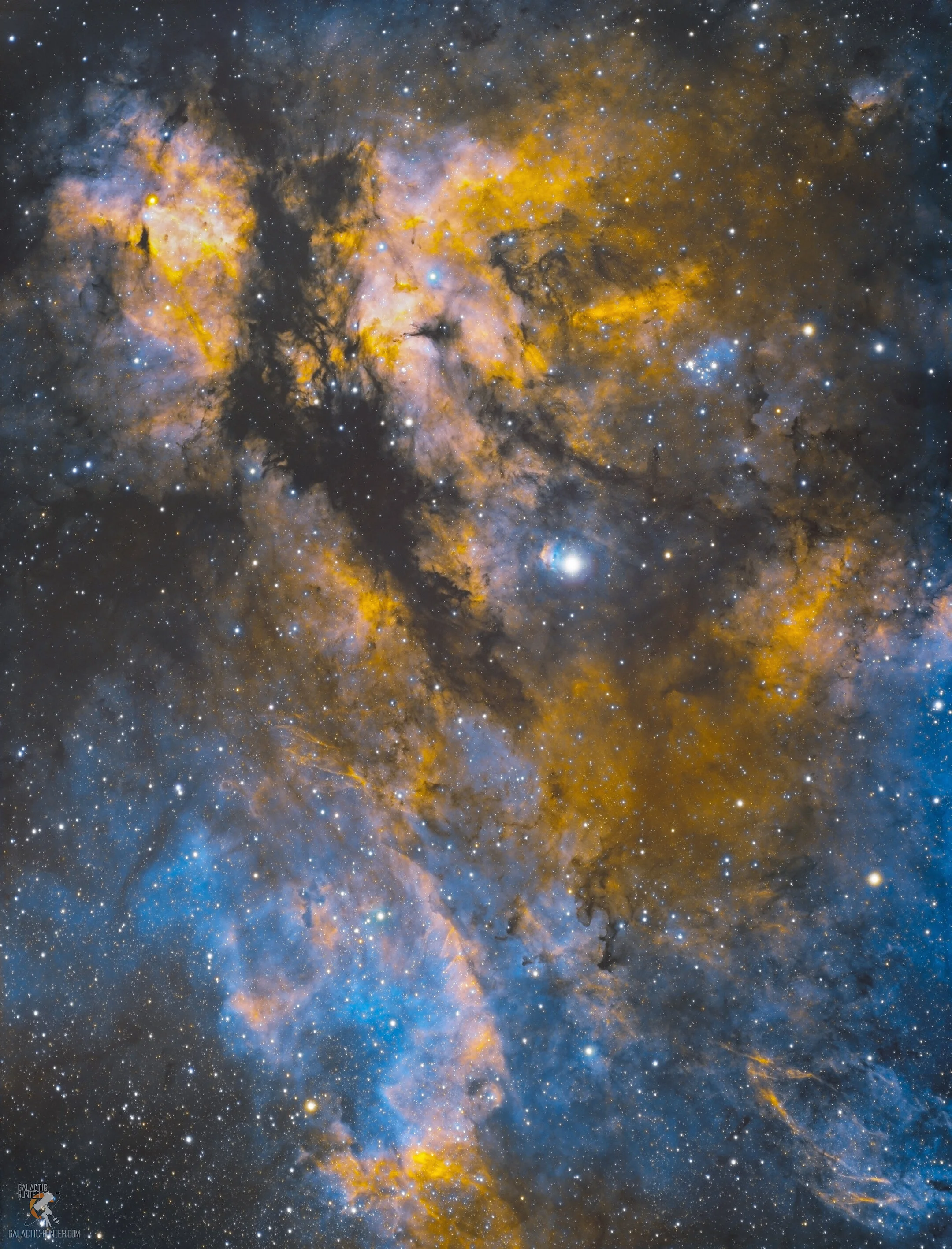
Butterfly Nebula in the Sadr Region
Image Description and Details :
Now that I finally have a backyard I decided to do my first “long” project, and chose the Sadr Region to do so as it is full of gases that look great in narrowband. Living in the heart of Las Vegas, light pollution is as terrible as it gets in my backyard and the lights from the neighbors don’t help either so I aimed for 40 hours of total exposure in HSO. I ended up with 41.15 hours in total.
The image shows the bright star Sadr (mag 2.2), and part of the "Sadr Region” that includes the Butterfly nebula. Known as IC 1318, the Sadr Region is located at the center of Cygnus’s cross asterism. We can see lots of interesting gas formation within the entire photograph.
Copyright: Antoine and Dalia Grelin - Galactic Hunter
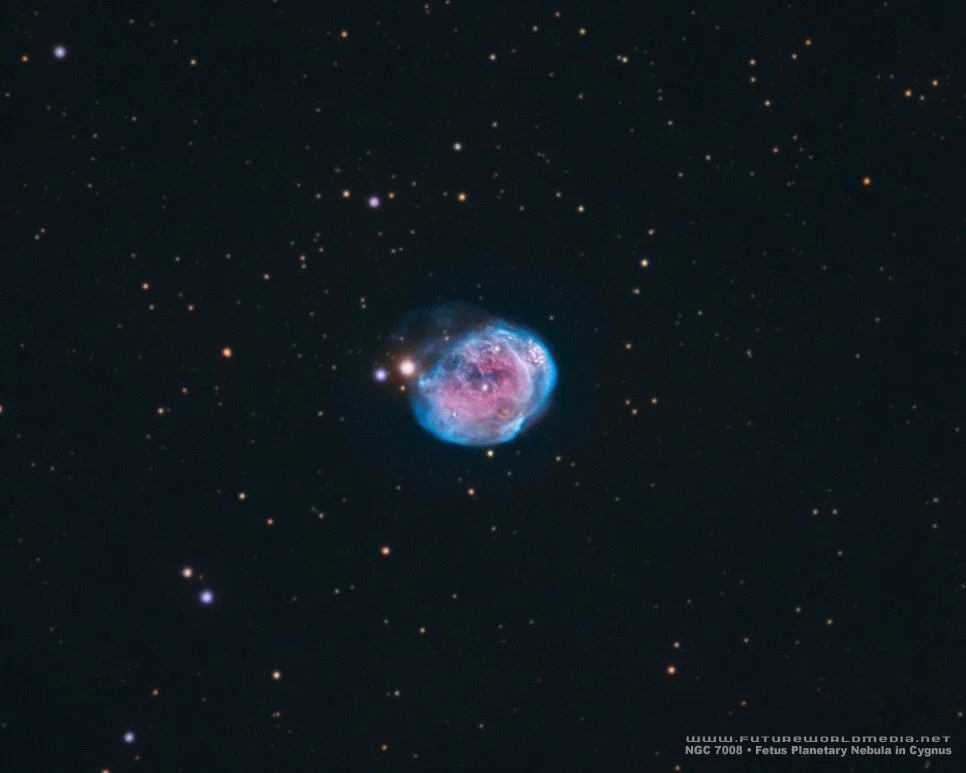
NGC 7008 Fetus Nebula
NGC 7008 Fetus Nebula in HaOIIIRGB
24.6 Hours of Integration Time
Bortle Dark-Sky Scale: 8.00
Imaging telescopes or lenses:Explore Scientific ED165CF FPL-53
Imaging cameras:ZWO ASI1600MM-PRO
Mounts:Astro-Physics Mach 1 GTO
Guiding telescopes or lenses:Orion 80mm Short Tube
Guiding cameras:Starlight Xpress Lodestar x2
Software:
Adobe Photoshop CS5.5 StarNet++ Sequence Generator Pro PixInsight
SkySafari Pro
PHD2
Filters:
Astronomik Deep-Sky B Astronomik Deep-Sky G Astronomik Deep-Sky R Astronomik Ha 6nm 1.25'' Astrodon OIII 3nm
Accessory:
Hotech 2" SCA Self-Centering Field Flattener QHYCCD PoleMaster ZWO 8x 1.25" Filter Wheel (EFW) MoonLite CFL 2.5" Large Format Focuser
NGC 7008 (PK 93+5.2), also known as the Fetus Nebula is a planetary nebula with a diameter of approximately 1 light-year located at a distance of 2800 light years in northern Cygnus. It was discovered by William Herschel in 1787, in Slough, England. NGC 7008 (H I-192) is included in the Astronomical League's Herschel 400 observing program.
Copyright: Douglas Struble
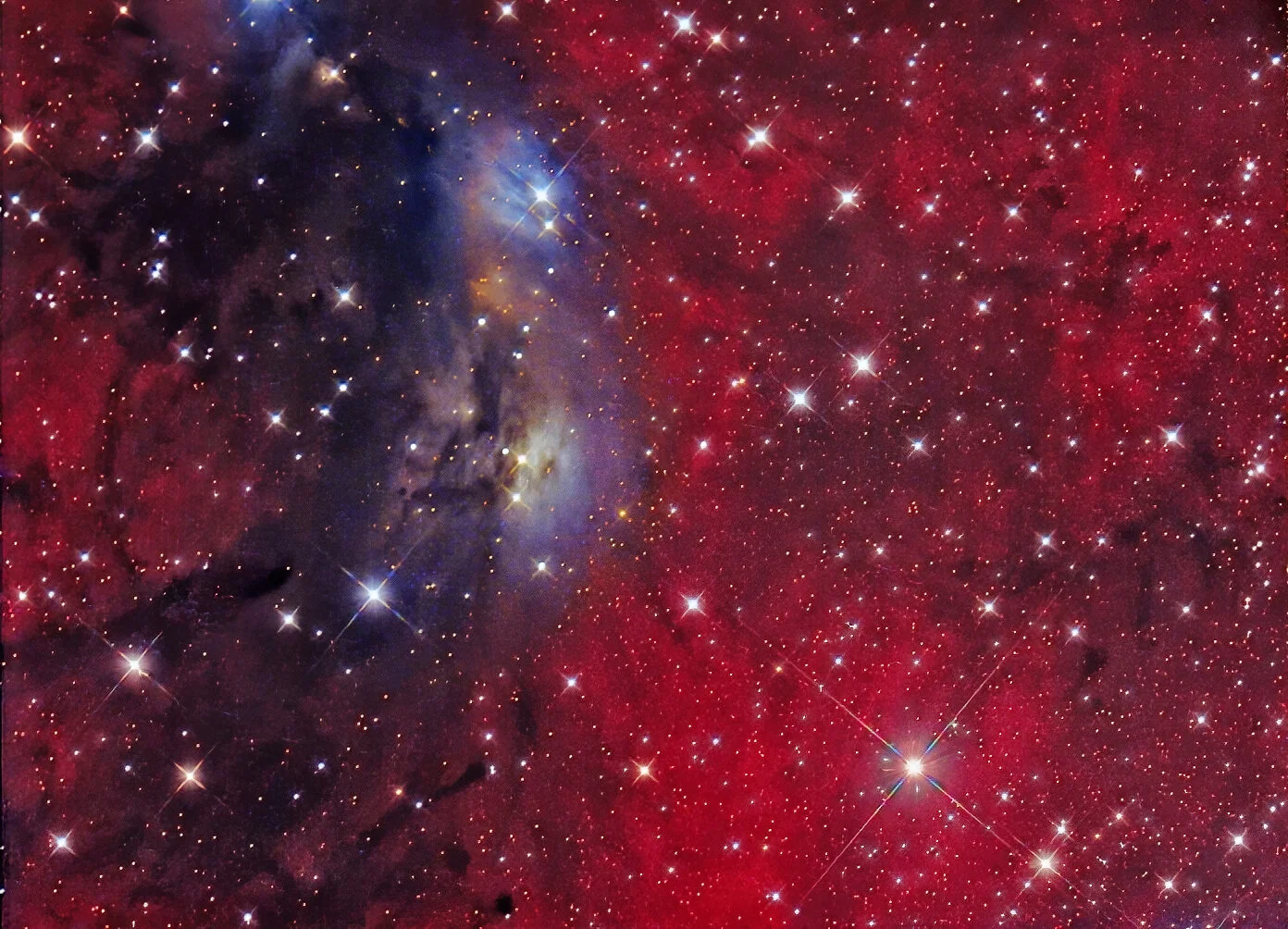
NGC 6914 - Bluebird Nebula
Image Description and Details :
NGC 6914 – the Bluebird Nebula – is a small but dramatic and complex reflection nebula in Cygnus. Captured with my StarlightXpress H9C and ASA 12-inch f/3.6 corrected astrograph. In this orientation, it resembles the profile of a bluebird.
Copyright: Robert Gillette

Moon occulting Venus
At 09:18 CET this morning the planet Venus was about to pass behind the Moon. Imaging this by daylight was a bit of a challenge, especially as the sun was nearby, but using a short exposure (1/100th second) and a red filter managed to capture the moment just before Venus disappeared. Image captured using my robotic telescope in Spain.
Copyright: Peter Goodhew
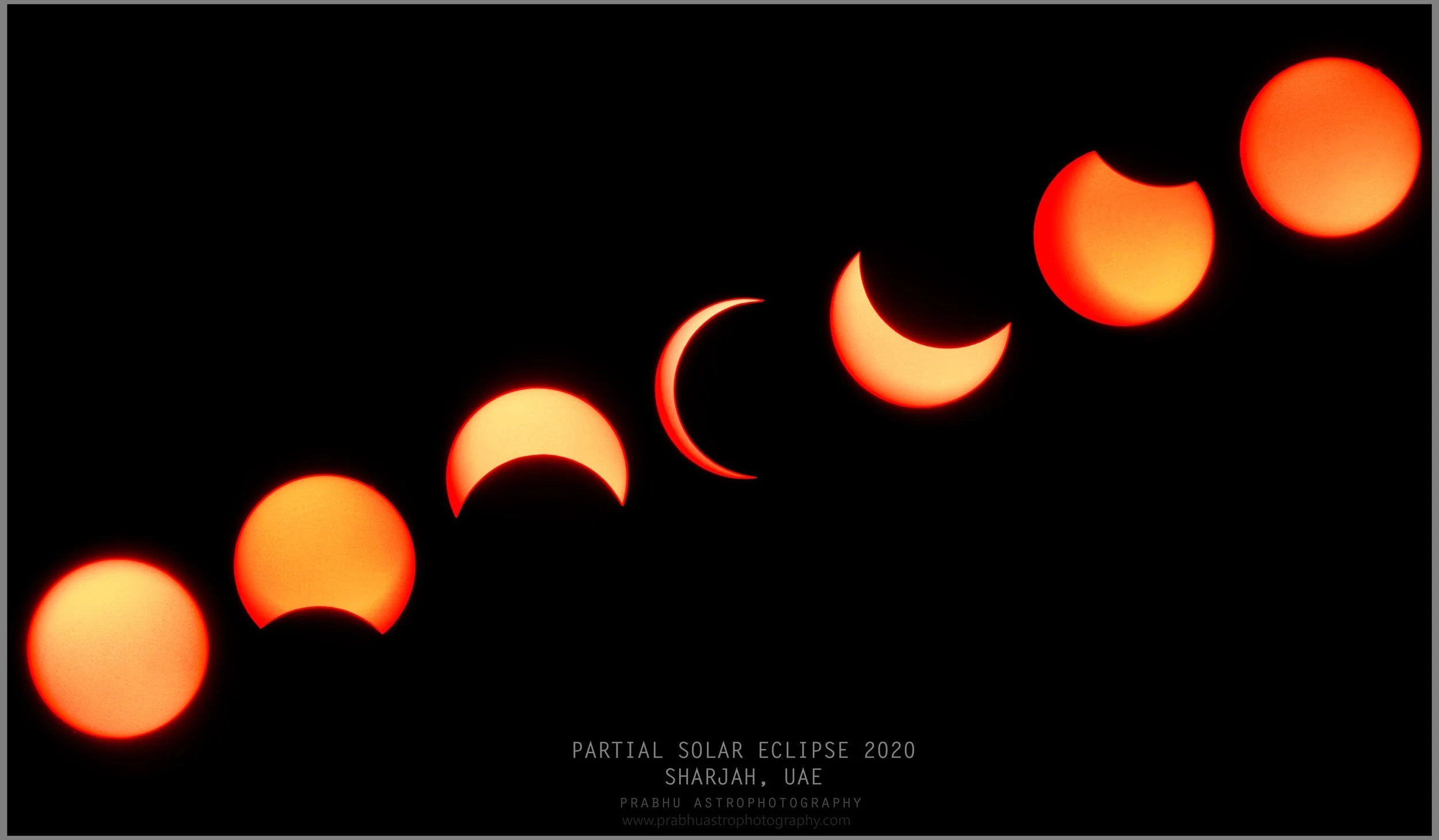
Partial Solar Eclipse 2020
Partial Solar Eclipse 2020 in Hydrogen-alpha with lots of solar prominences captured on the day of Summer Solstice. Click the link below to see the full resolution.
Esprit 80mm APO - Daystar quark chromosphere - UV/IR cut - Canon 6D - AZEQ6
Mleiha, UAE
Copyright: Prabhu S Kutti

Southern Pleiades (IC2602)
Living in the southern latitudes in Australia (35d south) we are very lucky to have access to many fine clusters and objects which are circumpolar providing plenty of opportunity to grab some data.
This image is of the Southern Pleiades (IC2602) an open cluster in the constellation of Carina. It is comprised of many very hot blue/white stars which are very prominent in the image. In the left of the frame you can see another compact open cluster, Melotte 101.
Data was captured at my private observatory. Equipment: Tak TSA 120 @ F5.6, QSI683 CCD, Skywatcher EQ8 mount. Captured LRGB data for a total of 3.9 hours exposure. As much of this data was captured during a busy moon period, I took approximately 120 subs for each filter @ 30" per sub.
Copyright: Rodney Watters
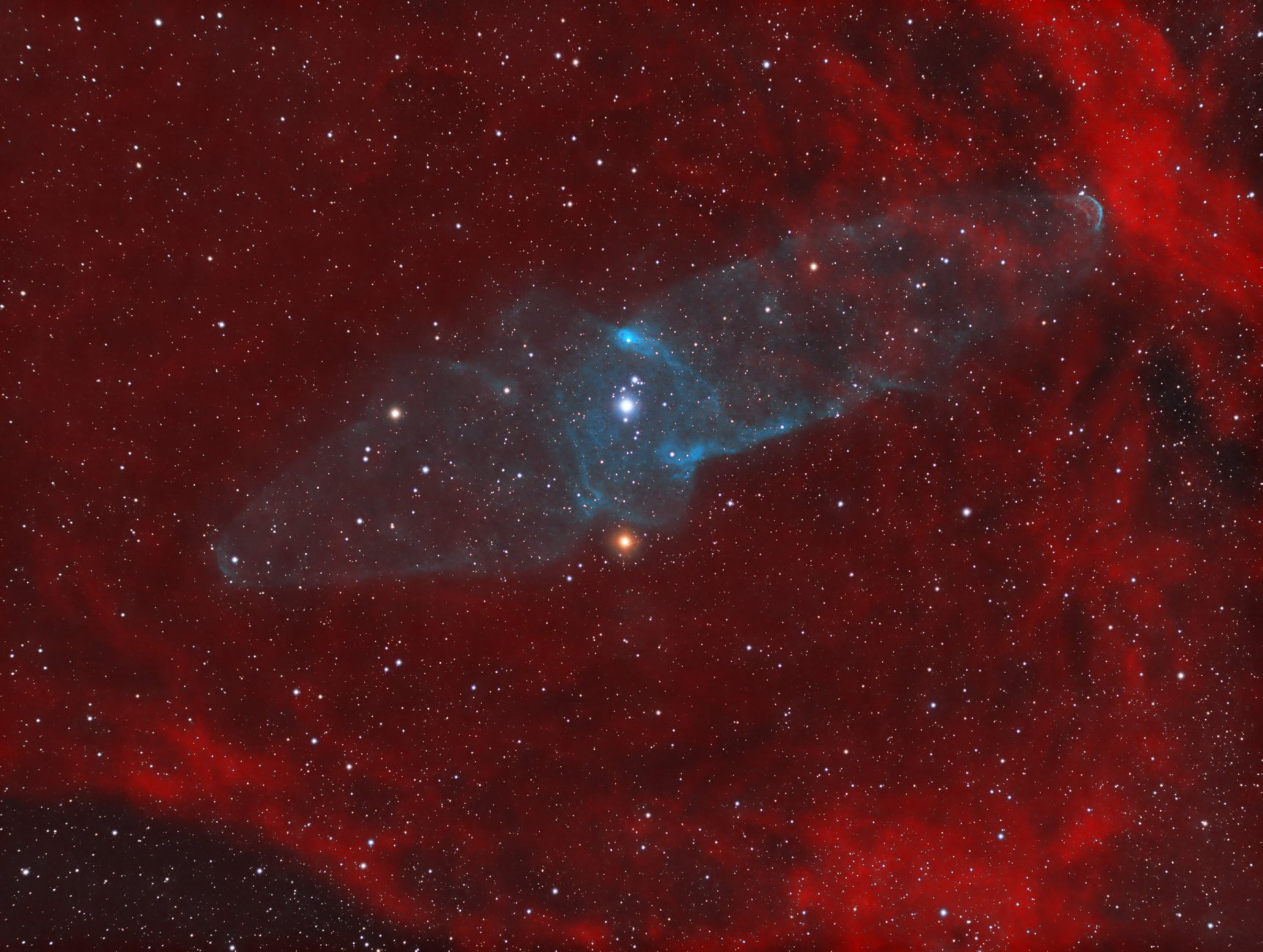
A Flying Bat (Sh2-129)
A Flying Bat (Sh2-129) with a Squid (Ou4) Inside?
I have been wanting to try this deep sky object for two years. It is quit interesting two objects for the prices of one. In reality I only have a portion of Sh2-129, the Flying Bat Nebula, which is a huge region of hydrogen gas represented by the red color captured with the Hydrogen gas filter (Ha). Located in Cepheus approximately 2,300 light-years away, Sh2-129 is a faint emission nebula and has been known about since at least the 1950's as a neighbor to IC 1396, the Elephant Trunk Nebula. I must admit, even after looking at widefield images of the Sh2-129, I see no resemblance to a Flying Bat. The Squid on the other hand does resemble a squid with it tentacles rapped up. The Squid Nebula (Ou4) is a relatively new discovery from 2011 by French astro-imager Nicolas Outters. It consists doubly ionized oxygen which gives it the green-blue color in contrast to the hydrogen. It may seem odd that this was not found until 2011 but there is a really good reason, it is really dim. I was taking 5-minute subs and while there was some nebulosity in the Ha region, there was nothing in OIII, not even a hint. If you are the type that likes to complete an object in one night, then this would not be a good choice.
Originally the Ou4 was thought to be a Planetary Nebula unrelated to Sh2-129, however, recent studies suggest it is within Sh2-129 and is bipolar outflow from a triple star system. The bright blue star in the center is the believed to be the source.
I wanted to get at least 15-hours and was able to get this done quicker than I anticipated due to unexpected clear weather. It worked out really well as we had a succession of clear nights when I was painting my garage floor anyway so conveniently left everything set up and just put a cover over it. This was one of the hardest things I have processed due the conflicting things going on. The Ha data was really strong and came out very well with hardly any processing. Not surprisingly, the OIII was very difficult to bring out and a lot of time was spent on it. StarNet was used to make separate starless Ha and OIII images which were combined to make a starless HOO image. The last part of the process was merging the RGB stars with the HOO starless image. This turned out be more difficult as the method I normally use for combining RGB stars with narrowband images didn't work well with the starless image so I used alternative method in PS described by Trevor Jones.
Camera: ZWO ASI1600MM-Pro
Telescope: Astro-Tech AT115EDT 115mm Refractor Telescope
Focal Reducer: AstroTech Field Flatterner/Focal Reducer
Mount: Orion Atlas Pro
Filter Wheel: ZWO EFW 8 x 1.25"
Filter: ZWO Ha, OIII, R, G, B
Focuser: ZWO EAF
Autoguiding: ASI120 Mini attached to an Agena 50mm Guide Scope/ZWO 60mm Guidescope
Exposure: Ha 150 x 300s, OIII 165 x 300s, R 45 x 60s, G 29 x 60s, B 29 x 60s
Processing: APT, NINA, PixInsight, Photoshop.
Copyright: Kurt Zeppetello
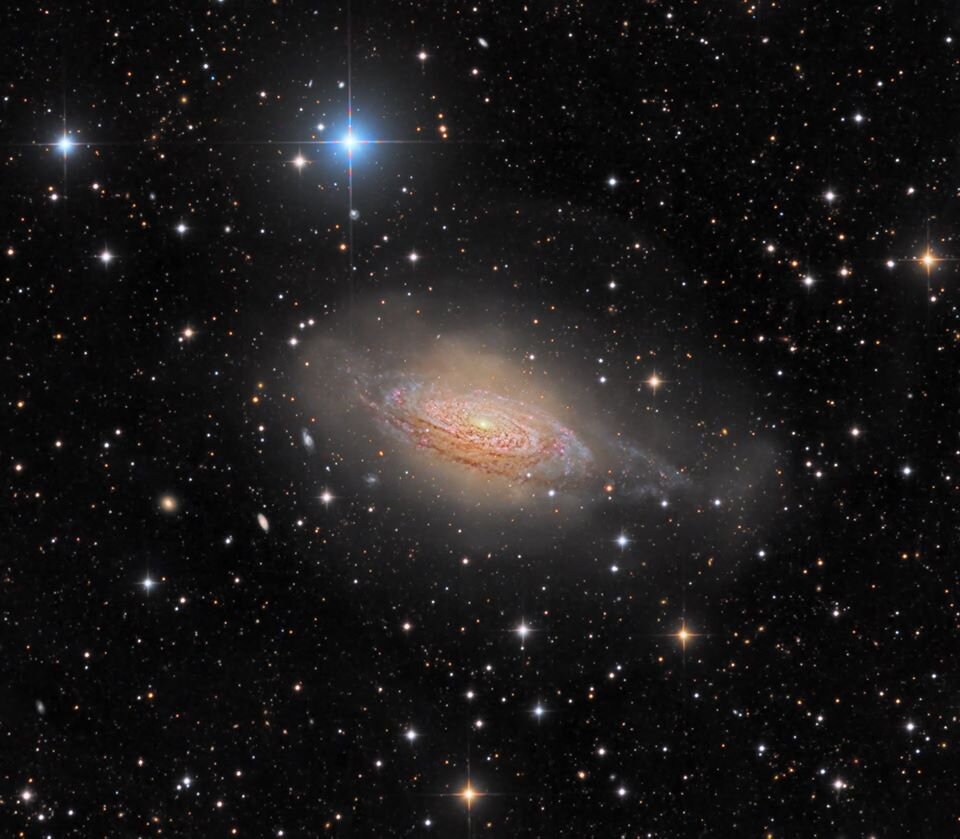
NGC 3521
NGC 3521 often termed the Bubble Galaxy is a flocculent intermediate spiral galaxy located around 35 million light-years away from Earth in the constellation Leo. It is a spiral galaxy with a trace of a bar structure , a weak inner ring , and moderate to loosely wound arm structure. The galaxy spans 50,000 light years which is approximately half that of our galaxy the Milky Way.
Imaged in LRGB H alpha on my Officina Stellare RiDK 500 telescope at El Sauce (Obstech) Atacama Desert, Chile.
15 hours Luminance, 11 hours Ha, 5 hours each RGB bin 2.
Copyright: Mike Selby
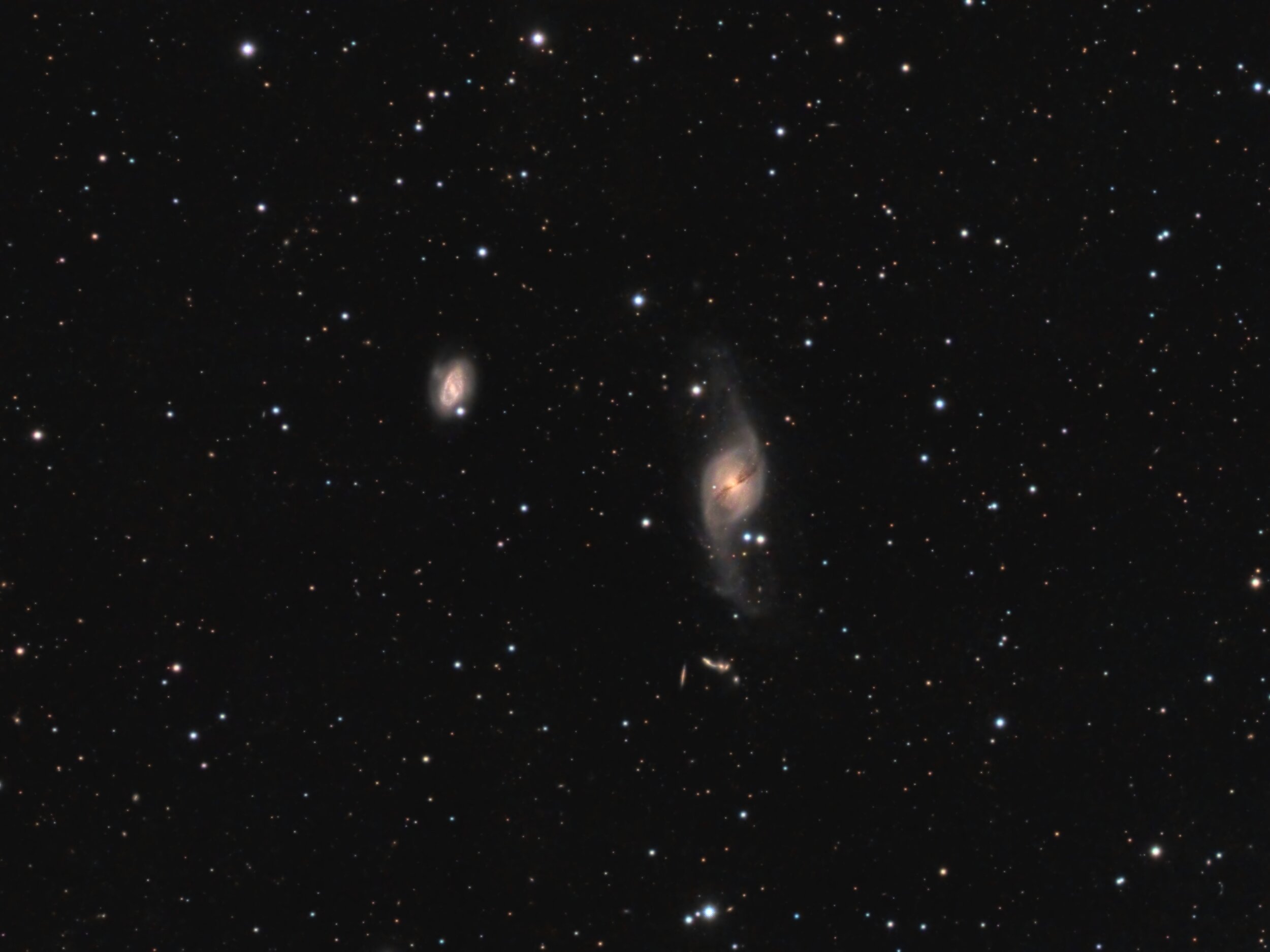
NGC 3718, NGC 3723, and Hickson 56
Christmas in June? No, just galaxy NGC 3718 making me think of that time of year. It's surrounded by other galactic treasures including Hickson Compact Group 56 and NGC 3729.
Acquisition, focusing, guiding and control of Paramount MX mount with TheSkyX. Focus with Optec DirectSync motor and controller. Automation with CCDCommander. Equipment control with PrimaLuce Labs Eagle 3 Pro computer. All pre-processing and processing in PixInsight. Acquired from my SkyShed in Guelph. No moon, average or better transparency, and average seeing. Data acquired April 2 – May 16, 2020.
Luminance: Sky-Watcher Esprit 150 f/7 refractor and QHY 16200-A camera with Optolong UV/IR filter
Chrominance: Takahashi FSQ-106 ED IV @ f/3.6 and QHY367C one-shot colour camera with Optolong L-Pro filter
Luminance: 139 x 10m = 1,390m
Chrominance: 289x 3m = 867m
Total: 37hr 37m
Copyright: Ron Brecher

One-Armed Spiral Galaxy - NGC 4725
Image Description and Details :
While most spiral galaxies, including our own Milky Way, have two or more spiral arms, NGC 4725 has only one. Here, the solo spira mirabilis seems to wind from a prominent ring of bluish, newborn star clusters and red tinted star forming regions. The odd galaxy also sports obscuring dust lanes a yellowish central bar structure composed of an older population of stars. NGC 4725 is over 100 thousand light-years across and lies 41 million light-years away in the well-groomed constellation Coma Berenices. Computer simulations of the formation of single spiral arms suggest that they can be either leading or trailing arms with respect to a galaxy's overall rotation. Also included in the frame, sporting a noticably more traditional spiral galaxy look, is a more distant background galaxy (text taken from NASA APOD).
Martin first imaged NGC 4725 with a CDK17/Apogee U16M but later returned to add very high quality luminance acquired with the same scope but with an SBIG STXL11002 and adaptive optics. That result is shown here, but reassembled and reprocessed using new techniques developed in Adobe Photoshop.
Copyright: Martin Pugh
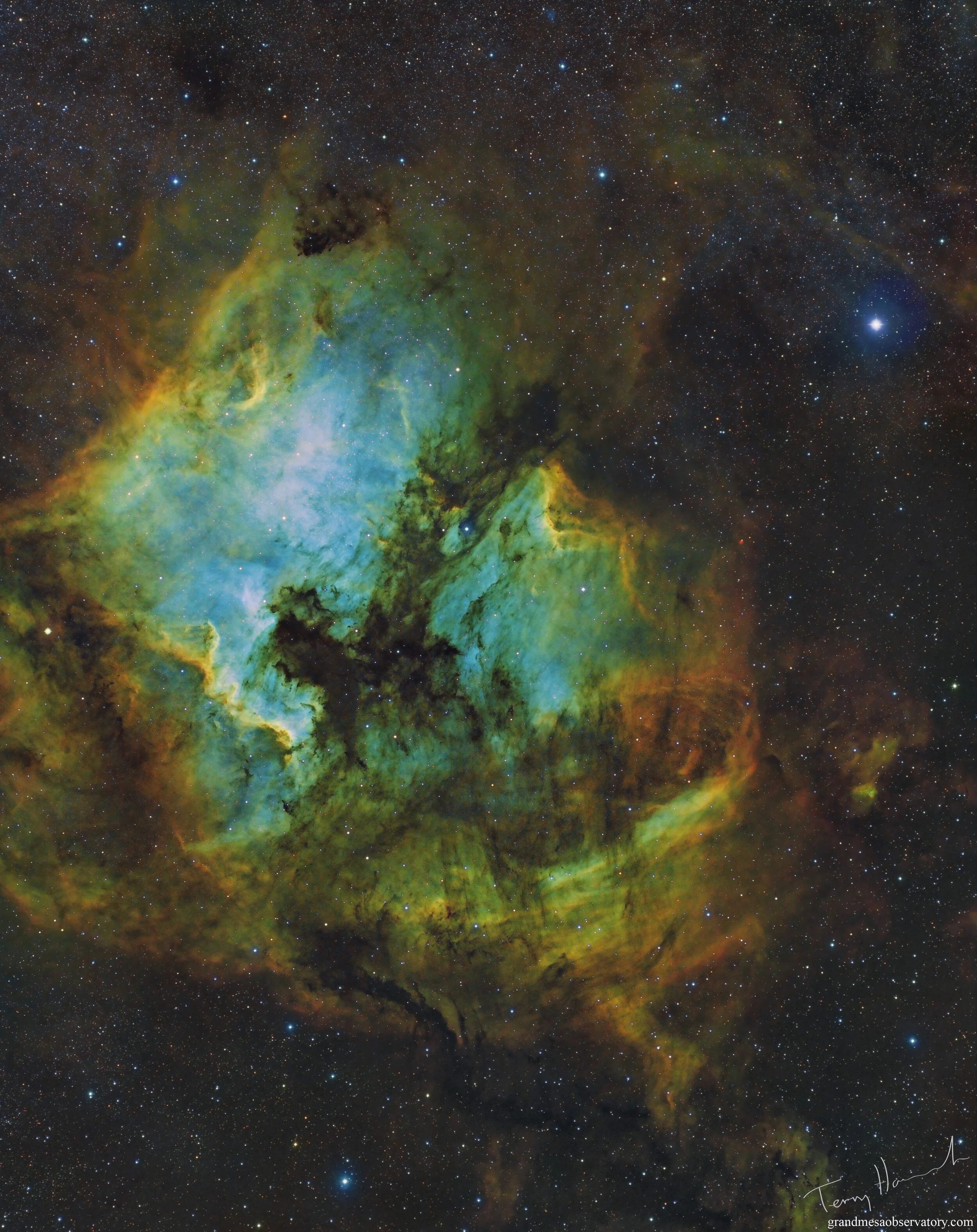
Cosmic Continent The Sequel (SHO)
Image Description and Details :
Several years ago I captured this beautiful region of Sky and called it “The Cosmic Continent”
Here is my latest Hubble Palette (SHO) version, a very wide view of The North America Nebula otherwise known as NGC7000 using data from Grand Mesa Observatory’s System 1a the William Optics Redcat together with a QHY16200A Monochrome CCD, this combination is giving a field of view of approximately 6 x 5 degrees
The William Optics Redcat with QHY16200A and its 7 position filter wheel is now available at Grand Mesa Observatory for subscription, see here for details.
https://grandmesaobservatory.com/equipment
In this Hubble Palette version the H-Alpha is mapped to green, SII is mapped to red and OIII is mapped to the blue channel. I removed the stars using Starnet and replaced them with the naturally colored stars from the broadband image, while the colors in this image are not the true colors, the narrowband filters used in the making of this Hubble Palette image reveal much more of the hidden gasses not visible in a broadband image.
Captured over 7 nights in May and June 2020 for a total acquisition time of 15 hours.
The North America Nebula (NGC 7000 or Caldwell 20) is an emission nebula in the constellation Cygnus that resembles the shape of North America and The Gulf Of Mexico. It lies at a distance of approximately 1800 light years away from us.
This image contains some very interesting areas such as The Cygnus Wall which is representative of Mexico and Central America, the nearby emission objects Pelican Nebula (IC5070) and the faint emission nebula IC5068
Technical Details
Captured and processed by: Terry Hancock
Location: GrandMesaObservatory.com Purdy Mesa, Colorado
May 5th, 20th, 21st, 25th, 29th, 31st, June 8th
HA 240 min 24 x 900 sec
OIII 255 min 25 x 900 sec
SII 225 min 23 x 900 sec
LRGB 180 min 9 x 300 sec
Filters by Chroma
Camera: QHY16200A
Gain 0, Offset 130 Calibrated with Flat, Dark and Bias Frames.
Optics: William Optics Redcat 51 APO @ F4.9
EQ Mount: Paramount MEII
Image Acquisition software Maxim DL6
Pre Processing in Pixinsight
Post Processed in Photoshop CC
Star Removal by Starnet
Copyright Information: Terry Hancock