

AAPOD2 Image Archives
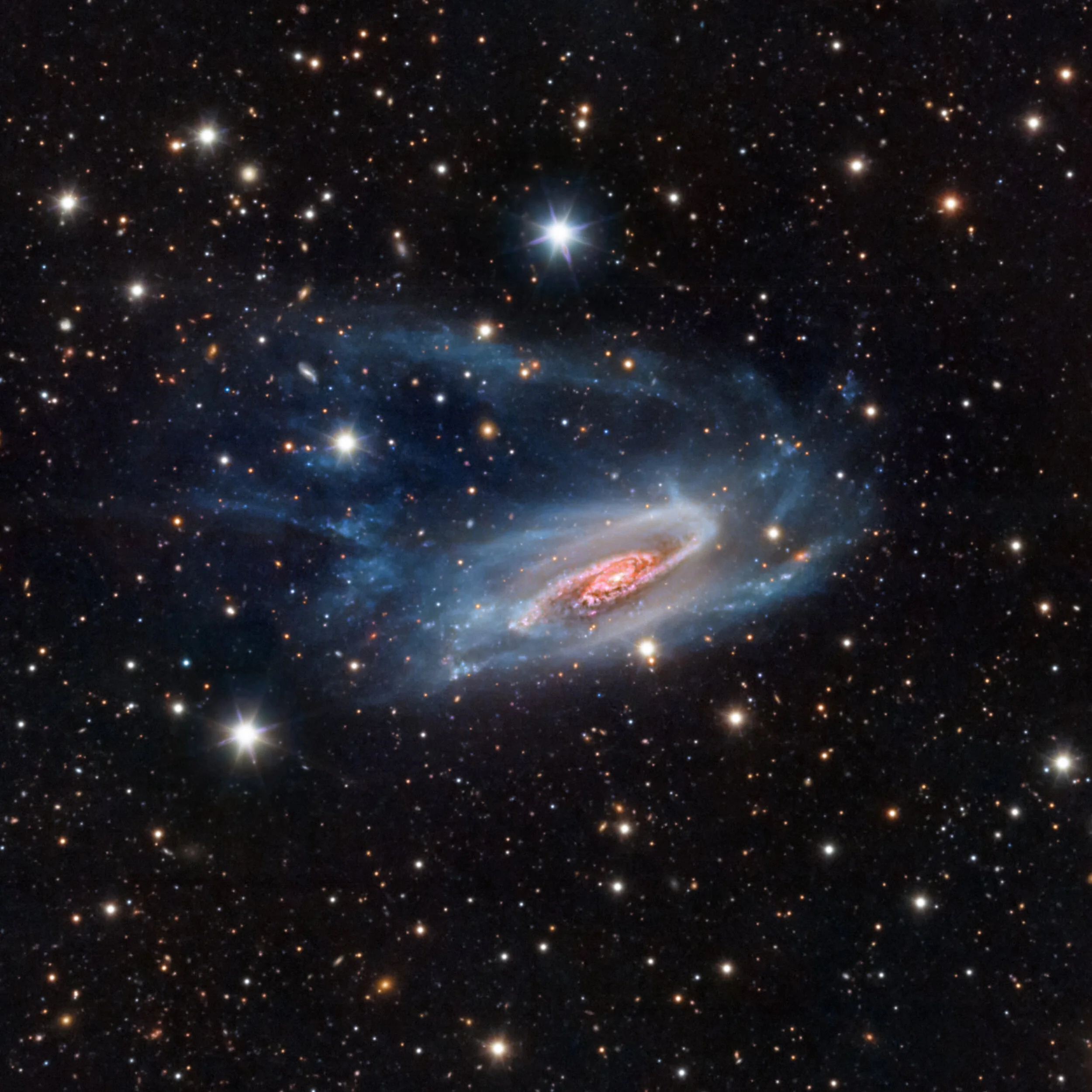
NGC 3981
Image Description and Details :
This is an image of NGC 3981. It is a spiral galaxy about 65 million light years away in the constellation Crater. Its windswept look is due to its outer arms being stripped away by an interaction with another galaxy. Telescope: ASA RC-1000AZ Camera: FLI PL16803 Mount: ASA Alt-Az Direct Drive Luminance: 33x20 minutes (binned 1x1)Red: 24x20 minutes (binned 1x1) Green: 20x20 minutes (binned 1x1) Blue: 25x20 minutes (binned 1x1)
Copyright: Bernard Miller
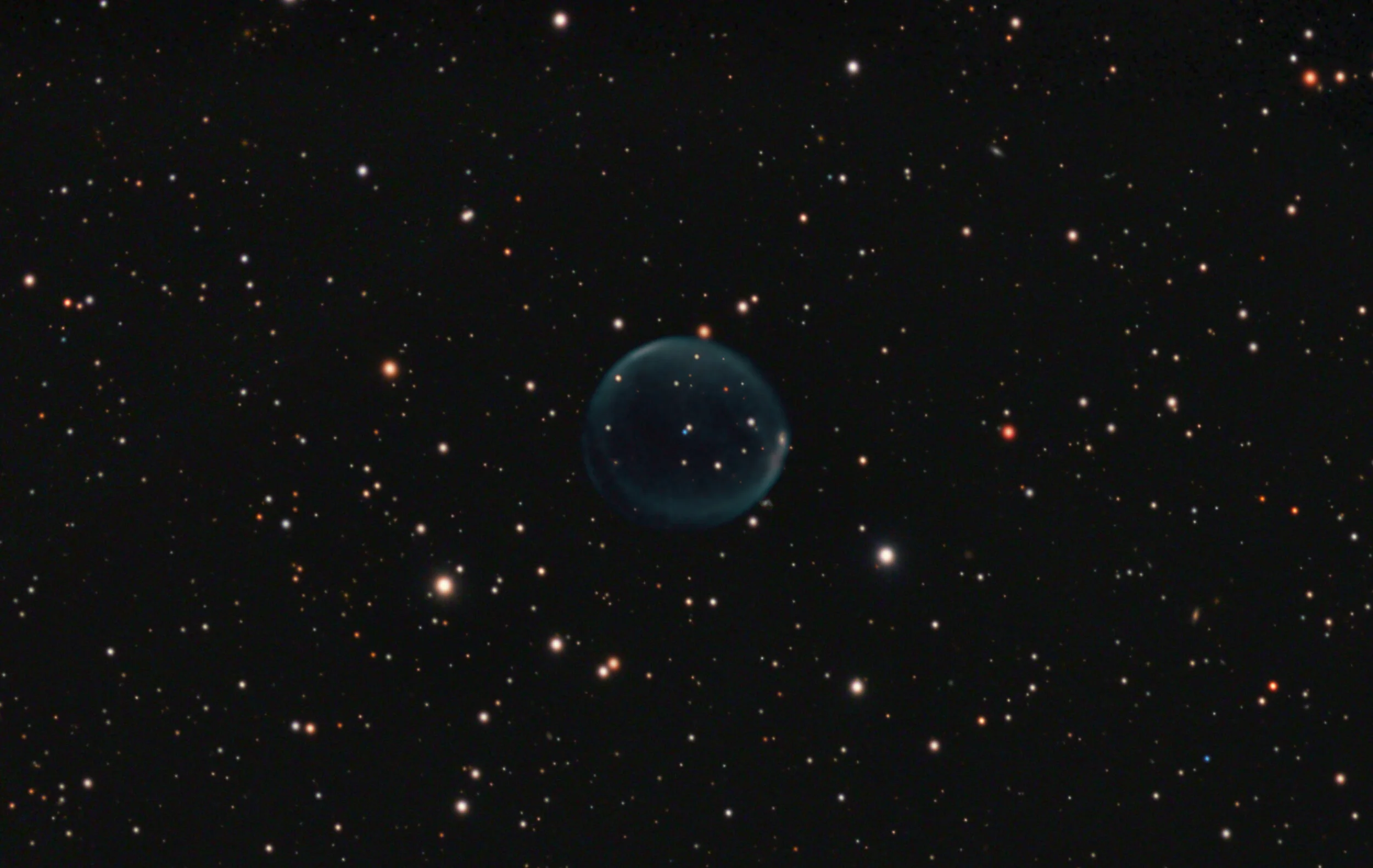
Abell 34
Image Description and Details :
Abell 34 - a large (290 arc seconds) but very faint planetary nebula about 2400 light years away in the constellation Hydra. It's western rim is accompanied by two tiny distant galaxies.Image captured on my dual rig in Spain.Scopes: APM TMB LZOS 152 RefractorsCameras: QSI6120wsg8Mount: 10Micron GM2000 HPSA total of 25.8 hours image capture (HaOIIILRGB)
Copyright: Peter Goodhew
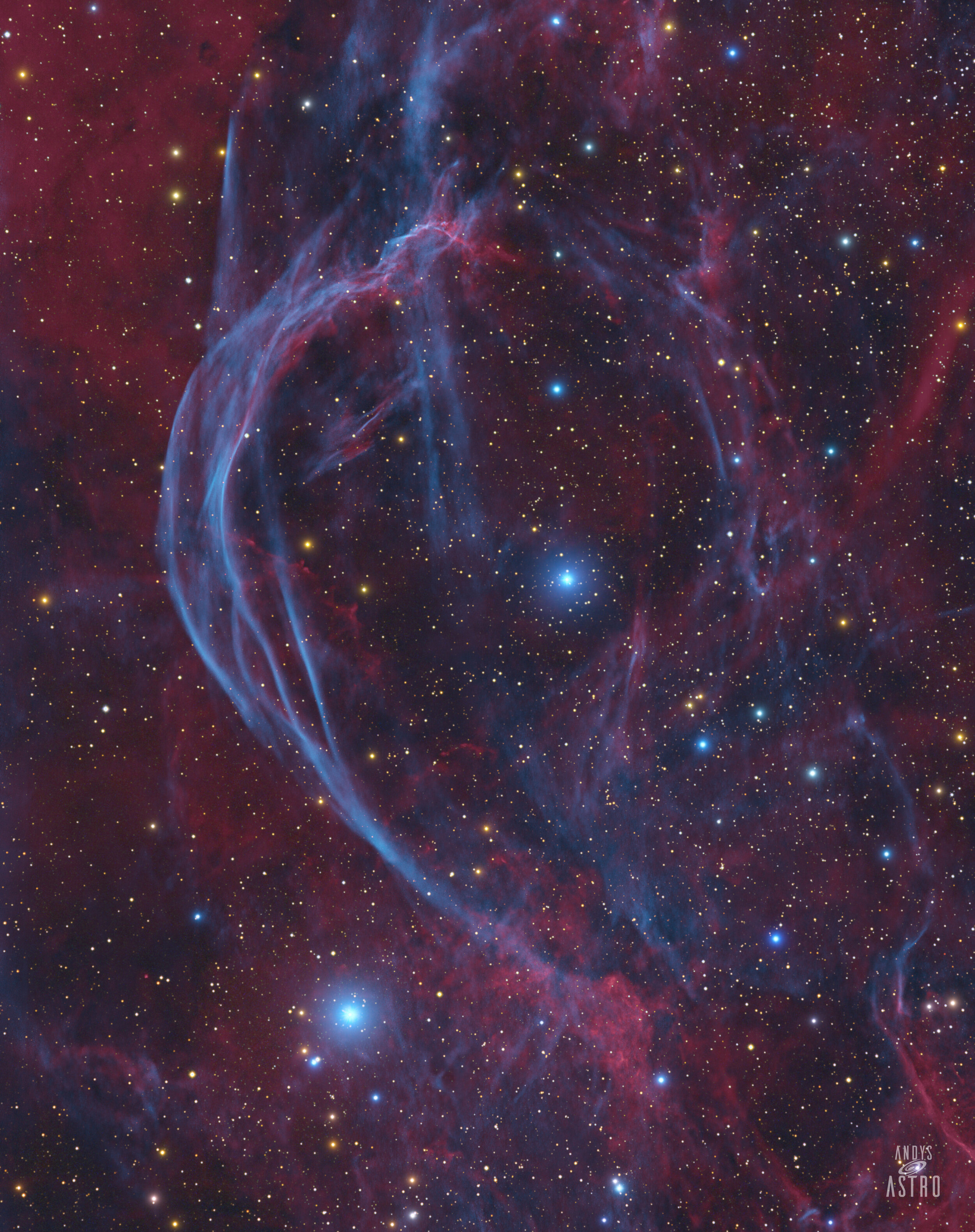
Blue Chilli Nebula
Image Description and Details :
Resembling a hot chilli these superheated blue tendrils of ionised oxygen are remnants of a spectacular supernova that occurred some 11,000 years ago.Located in Vela some 800 LY distant, this small isolated section of this vast region silhouetted against a background rich in Ha seemed worthy of attention it’s own right - as after an exhaustive search, there don’t appear to be any stand alone studies online of this beautiful waveform.Photographed over three nights from my light polluted suburban backyard in Melbourne, Australia. 🇦🇺Acquisition was made using Stellarmate on a Rpi4 Processed in App, PS CC 2021, Topaz NR Ai & Nik.Captured via Stellarmate- 15.0 Hrs HaO3RGB Average seeing, Bortle 5/6 skies.Telescope : Takahashi TOA130 Mount: Takahashi NJPCamera: QSI 6162 WSG8 Filters: Chroma Ha 5nm, Chroma O3 3nm Chroma RG&BProcessed in Astropixel Processor Topaz AI & Photoshop CC 2021
Copyright: Andy Campbell 2021
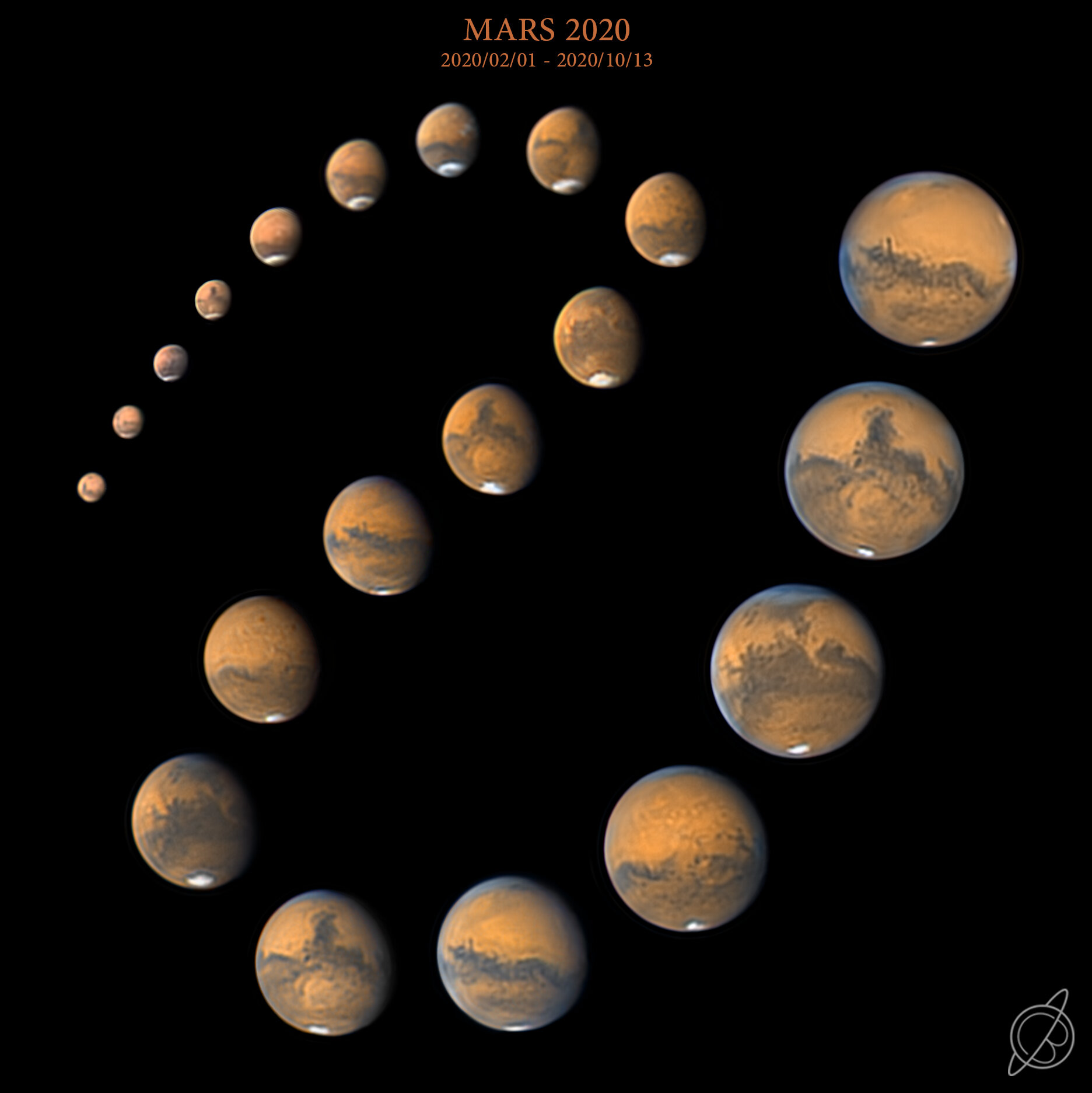
Mars: Progression to opposition
Image Description and Details :
A sequence of 20 images of Mars taken during 8 months that shows the changes of apparent size, ilumination and the southern polar cap of the red planet. From Santo Domingo, Dominican Republic.Equipment: Telescope Orion Skyquest XT8 Plus, Equatorial Platform, ZWO ASI120MC & ZWO ASI290MC, ZWO ADC, Celestron X-Cel 3x Barlow Lens.
Copyright: C. Báez
Widefield Auriga
Image Description and Details :
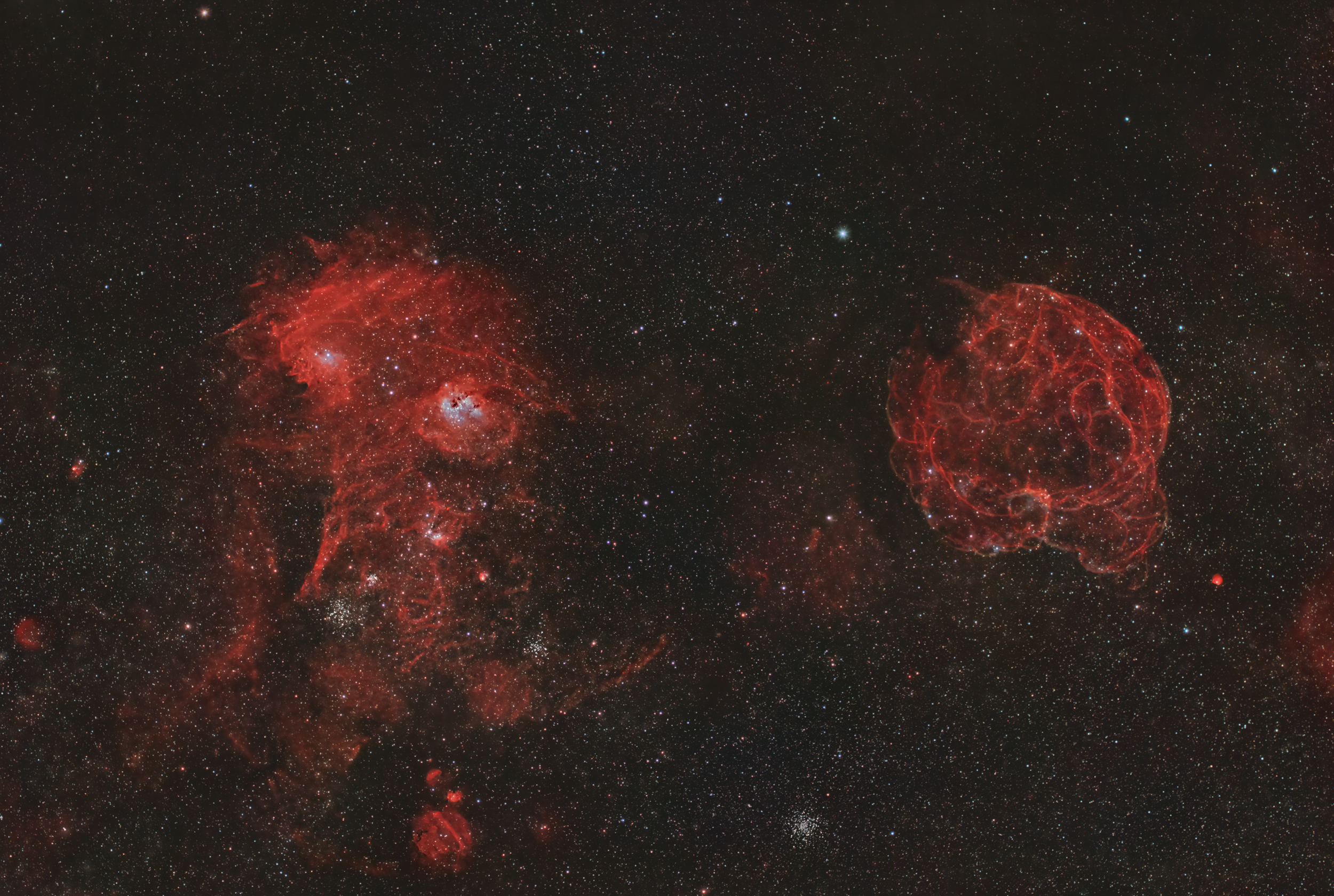
This was shot over the course of 18 nights, spanning 4 months (winter skies in Nashville aren't the greatest). The Canon lens was @ f/4.
The real challenge with this photo came from the Spaghetti Nebula (aka SH2-240, Simeis 147). It's incredibly dim and barely shows up in a single 20 minute sub, which is in stark contrast to brightness of the Flaming Star Nebula (IC 405, SH 2-229, or Caldwell 31) and Tadpoles Nebula (IC 410, NGC 1893). I had to process this as HDR so that they appeared to have the same brightness.
Imaging lens: Canon EF 85 mm f/1.8 USM
Imaging cameras: ZWO ASI2600MC Pro
Mounts: Sky-Watcher EQ6R-PRO
Guiding telescopes or lenses: ZWO Mini Guide Scope
Guiding cameras: ZWO ASI290MM Mini
Software: Pleiades Astrophoto PixInisight · Photoshop CC
Filters: Optlong L-eXtreme 2" · Optolong L-eNhance 2"
Accessory: ZWO AsiAir Pro
Dates:
Dec. 10, 2020, Dec. 11, 2020, Dec. 13, 2020, Dec. 18, 2020, Dec. 21, 2020, Dec. 22, 2020, Jan. 6, 2021, Jan. 13, 2021, Jan. 14, 2021, Feb. 4, 2021, Feb. 8, 2021, March 4, 2021, March 5, 2021, March 7, 2021, March 8, 2021, March 9, 2021, March 10, 2021, March 11, 2021
Frames:
Optolong L-Pro 2'': 40x15" (gain: 100.00) -10C bin 1x1
Optolong L-Pro 2'': 40x30" (gain: 100.00) -10C bin 1x1
Optolong L-Pro 2'': 40x60" (gain: 100.00) -10C bin 1x1
Optolong L-eNhance 2": 143x1200" (gain: 100.00) -10C bin 1x1
Optolong L-eXtreme 2": 56x1200" (gain: 100.00) -10C bin 1x1
Integration: 67.5 hours
Darks: ~40
Bortle Dark-Sky Scale: 8.00
Copyright: Jeffrey Horne
SNR 110.3 + 11.3, DeHt 5 and vdB 152
Telescope / Mount / Guiding
ASA 10" Astrograph, ASA 3" Wynne-Corrector (focal length 910mm)ASA DDM60, no guiding
Camera / Exposure
Canon 6D
73 x 10min
Moravian G3-16200, Astrodon filters
L 45 x 3min bin 2x2, 41 x 3min bin 2x2 Hα 2 x (21 x 20min) OIII 2 x (18 x 10min) bin 2x2
Total exposure time: 36h 28min
Processing
PixInsight, Fitswork, Photoshop
Notes
This image took me more than 7 years to create. The first time I shot with an unmodified Canon 6D in 2013. But was not satisfied with the data after I had the opportunity to process Frank Sackenheim's CCD data of the same object (here or on Frank's homepage). In 2018 I made attempts with luminance shots in 2x2 binning with a Moravian G3-16200 (due to the bigger sensor of the Canon 6D now as 2 panel mosaic), but I have not continued this project. In summer 2020 I found this old data again, added additional Luminance-data and new Halpha- and OIII-data and finally tried to create an image with these old and new data.
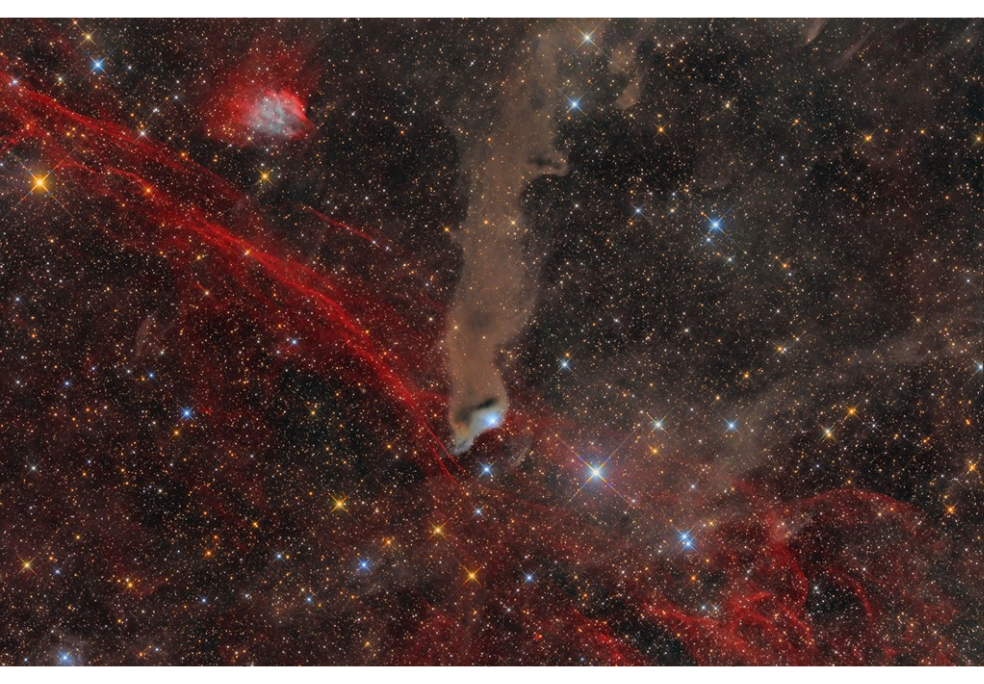
The red streakes crossing the image in diagonal direction are a small part of the huge supernova remnant SNR 110.3+11.3 in the constellation Cepheus. It is one of the nearest supernova remnants and only 1300 light years away from earth. These shocked molecular gas filaments were discovered and catalogued in 2001 by John Bally and Bo Reipurth.
Van den Berg (vdB) 152 is a blue reflection nebula that glows at the bottom of a dark Bok globule called Barnard 175. Near the edge of a large molecular cloud, interstellar dust in the region blocks most of the starlight behind it or scatter light from the embedded bright star giving parts of the nebula a characteristic blue color. Ultraviolet light from the star is also thought to cause a dim reddish luminescence in the nebular dust.
Embedded in the left side of the nebula is the Herbig Haro object HH 450, a jet emitted from a newly forming star.
Dengel-Hartl (DeHt) 5 is a HII- and OIII-region, maybe an ancient planetary nebula, ionized by the white dwarf WD 2218+706 (the blue star in the center of the nebula). Beverly Lynds catalogued the brighter part as LBN 538.
Copyright: Thomas Henne
A deep view of NGC 3521
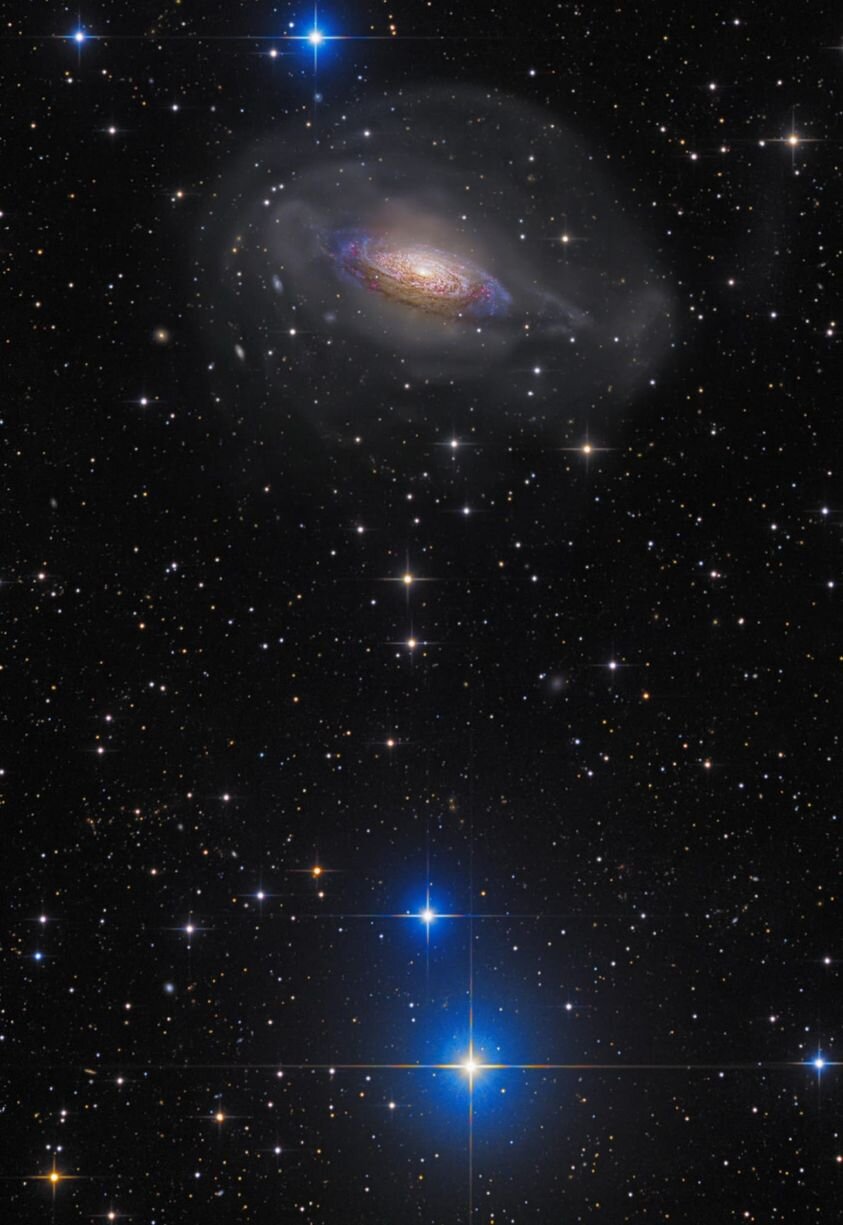
Gorgeous spiral galaxy NGC 3521 is a mere 35 million light-years away, toward the constellation Leo. Relatively bright in planet Earth's sky, NGC 3521 is easily visible in small telescopes but often overlooked by amateur imagers in favor of other Leo spiral galaxies, like M66 and M65. It's hard to overlook in this colorful cosmic portrait, (APOD)
***Processing Information till now this has been the most difficult object to process, i spent more than 20+hrs processing this galaxy, i used Photoshop,ccd stack and pixinsight,structure pulling was mainly done by layers and mask, as it was quite dim so combination of noise reduction and masking helped a lot , adding more tone to structure was done in Pixinsight thanks to dear friend marcel for some final color correction. Ps : the signal was way to faint so only option was these
All data shot from Remote observatory
technical Details : 16"F3.7 Dream Scope Astrograph, FLI PL16803 CCD,BadderLRGBha filters Around 291Mins of L 125mins of Red Green Blue 600sec X 6 Bin 2x2 halpha 11.85 hrs total LRGBha Data under Prestine Dark skies of New Mexico
Copyright: Utkarsh Mishra,Michael Petrasko,Muir Evenden
Messier 101
Image Description and Details :
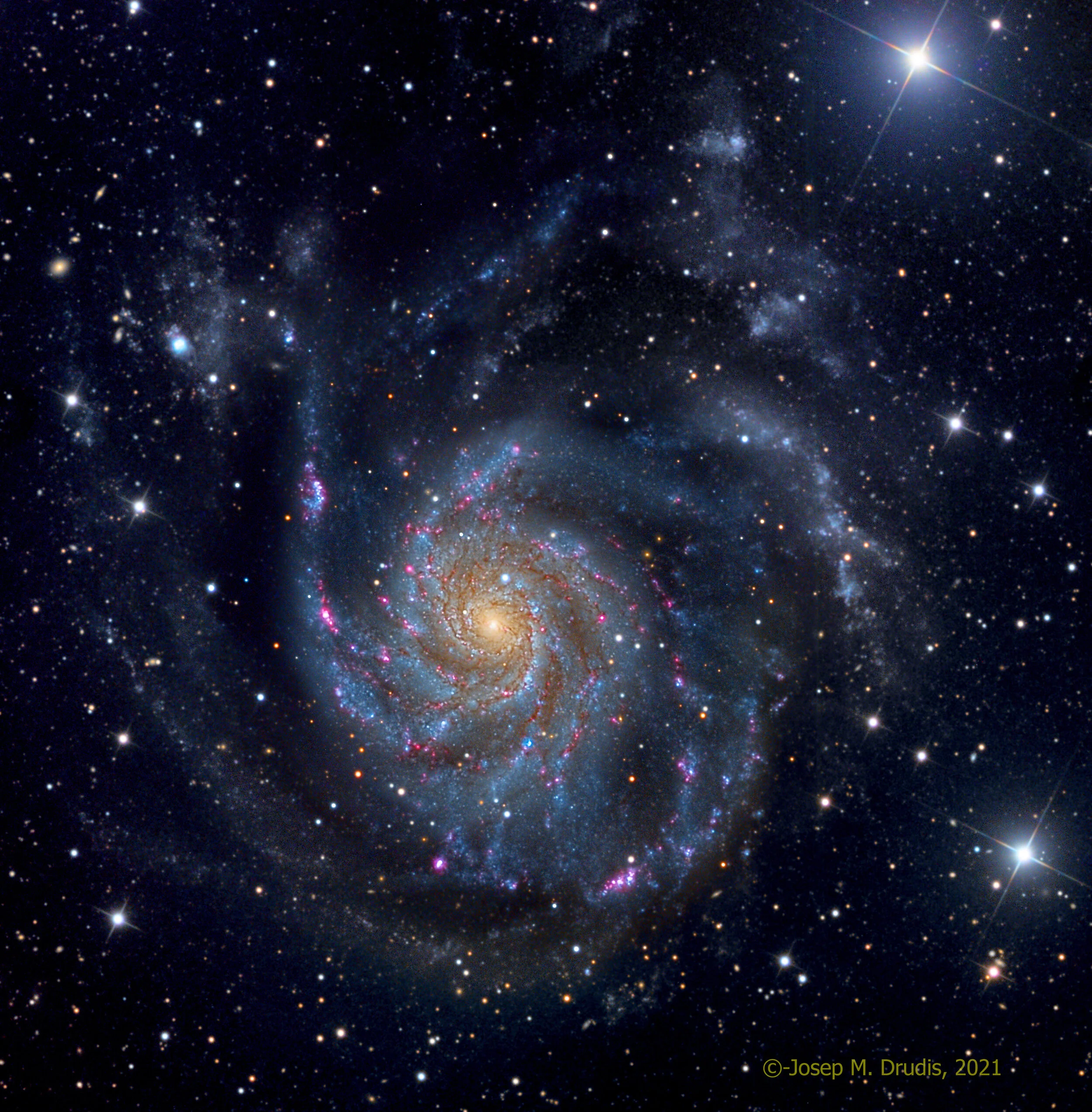
I know that M101 is a classic target, but it is so beautiful...
Telescope: 24 inch reflector; Camera: FLI PL16803. Total exposure: 19h 20 min: LHaRGB. Processing: CCDStack-Photoshop CC. Location: New Mexico
Copyright: Josep Drudis

CTB 1 - Abell 85 - LBN 576 in HOO
Image Description and Details :
Imaging telescopes or lenses: Explore Scientific 127mm ED TRIPLET APOImaging cameras: ZWO ASI1600MM Pro-CoolMounts: iOptron CEM60Guiding cameras: ZWO ASI290MM miniFocal reducers: Explore Scientific 0.7 Reducer/FlattenerSoftware: Adobe Photoshop CC · PixInsight 1.8.8 RipleyFilters: Chroma 3nm OIII · Chroma 3nm Ha · Astronomik LRGB 1.25"Accessory: ZWO EAF Electronic Auto Focuser · ZWO OAG · ZWO 8x 1.25" Filter Wheel (EFW)Dates:Oct. 14, 2020 , Oct. 15, 2020Frames:Chroma 3nm Ha: 32x600" (gain: 200.00) -10C bin 1x1Chroma 3nm OIII: 33x600" (gain: 200.00) -10C bin 1x1Astronomik LRGB 1.25": 90x30" (gain: 200.00) -10C bin 1x1Integration: 11.6 hoursDarks: ~43Flats: ~30Bias: ~100Avg. Moon age: 27.41 daysAvg. Moon phase: 5.33%Bortle Dark-Sky Scale: 4.00Temperature: 28.00Locations: UAE desert, Abu Dhabi, United Arab EmiratesData source: my own.
Copyright Information: Wissam Ayoub
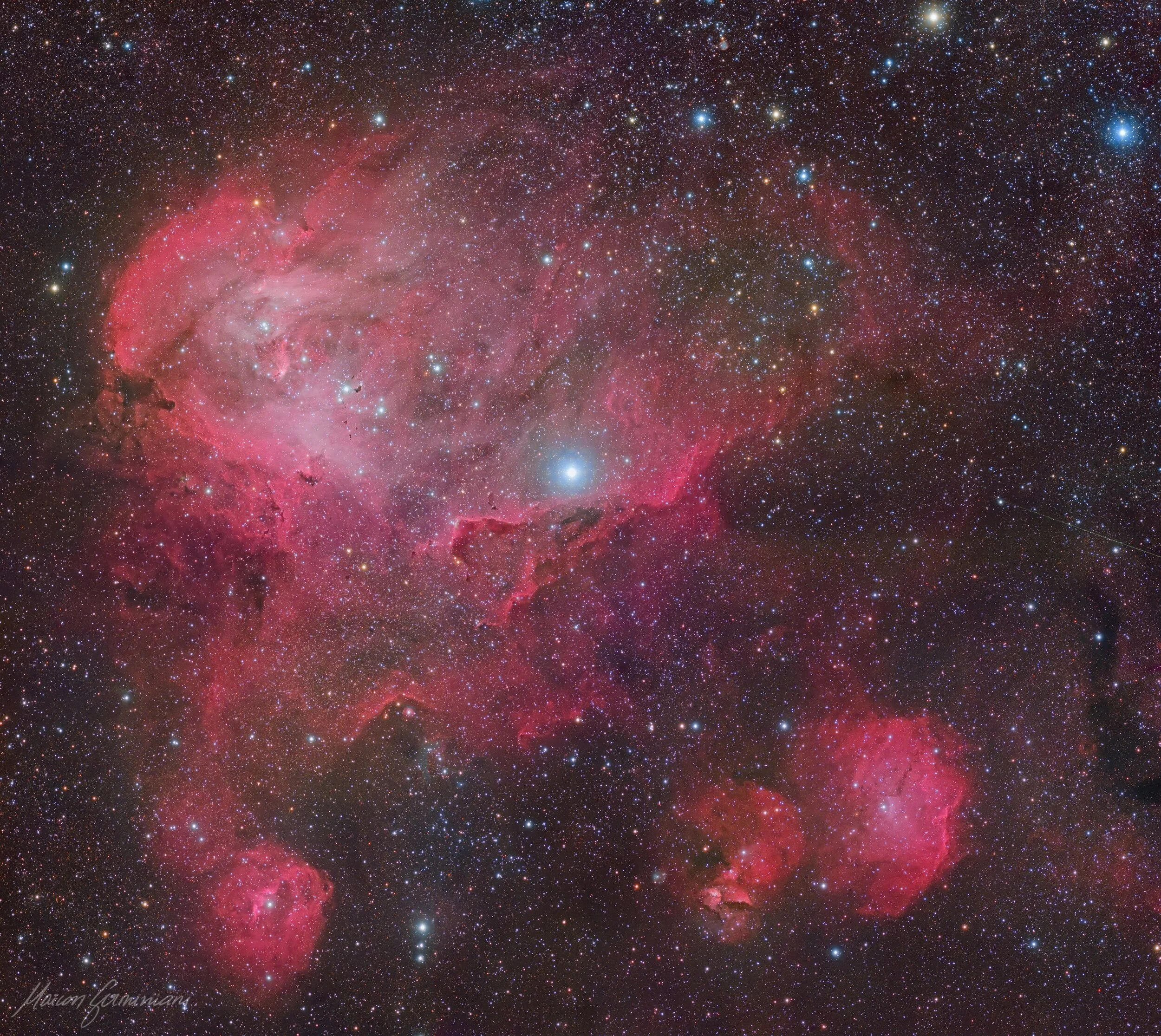
Running Chicken Nebula
Image Description and Details :
Taken from Brazilian skies on the nights of 13,14,15 of February 2021 (960´ minutes of total exposure time), this runaway chicken lies among two famous views: the Southern Cross and the Carina Nebula. Throughout this image the Running Chicken Nebula displays all it´s intricacy and so many shades of red. Gorgeous hydrogen alpha emissions. It is located about 6500 light years away in Centaurus.The dark globules in the center of the image are called Thackeray globules, after the South African astronomer Andrew David Thackeray, who first observed them in 1950. These regions, when viewed through infrared telescopes, reveal a stellar nursery, a region of star formation. A closer look shows that the larger dark globules are formed by two separate but overlapping parts, giving the impression of being one. These two clouds together have a mass equivalent to 15 times the mass of the Sun!Globules appear to be fractured due the hostile environment in which they are immersed. Since young and hot stars energize and heat up the emission nebula, the globules get dissipated by this harsh environment, preventing them from contracting and becoming massive stars.This remarkable celestial landscape spreads over an estimated field of 60,000 light years..[ Tech Specs ].The final image is the result of a four panel mosaic, each containing:H-Alpha: 30x300" (each panel)RGB: 6x300 (each channel and panel)Total Exposure Time: 960' minutes;.Telescope: TS115/632 (with reducer)Camera: ZWO ASI 1600mm ProFilters: HALPHA OPTOLONG 6,5nm / RGB AstrodonGuide: OAG QHY5LMount: CEM60Capture Softwares: APT, SKYTECH X, PHD GUIDINGProcessing software: Pixinsight | Lightroom.Image taken at Serra Alta, Santa Catarina (SC), Brazil
Copyright: Carlos `Kiko` Fairbairn, Maicon Germiniani and Gabriel R. Santos

NGC 2174/2175
Image Description and Details :
This picture is made in my remote observatory in Extremadure in spain (E-Eye) with my CDK 14" Planewave and its mount L-350. Sbig STX 16803 LRVBSHO. During the 26/12/2020 untill the 18/02/2021 Autoguding 3" and AOX use . 27h10 total. 7*600" in R, 7*600" in G,15*600" in B 28*1200" in Ha, 38*1200" in O3.Luminance is a synthetic picture issue from the stacking of all RGBHaO3.For all I use MaxPilot with the Sky X, and the Planewave interface.All the treatments are realised with PixInsights and Photoshop
Copyright: Dr Jean Olivier CAMMILLERI
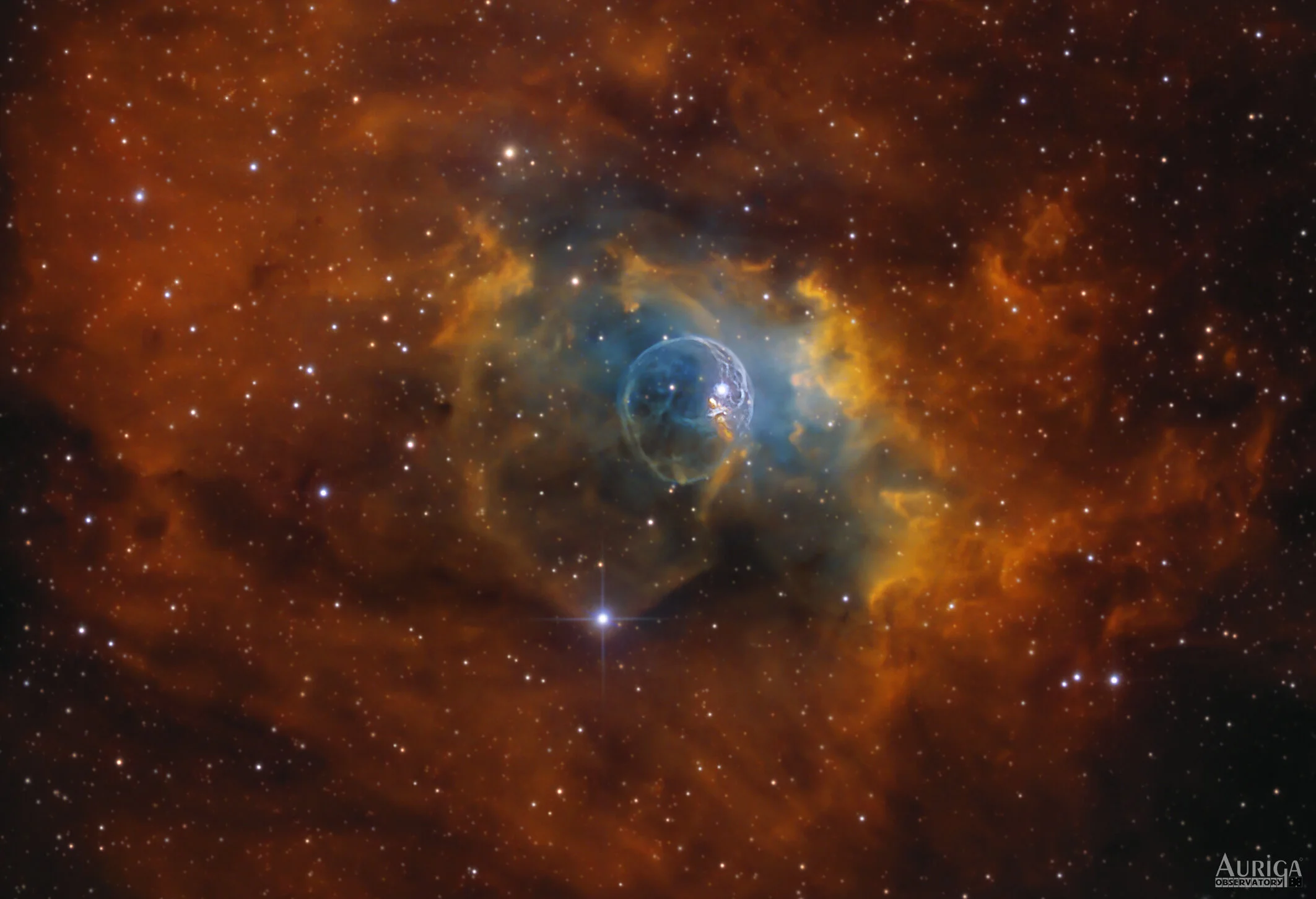
NGC 7635 the Bubble Nebula, SHORGB
Image Description and Details :
"Auriga" private Observatory - Russia - Moscow Region - Makeikha
Photo shooting: August - 14, 17, 18, 19, 20, 21, 22; September: 06, 11, 12; October - 10
Accumulation: 42.2 hours
Baader Planetarium H-alpha 1.25" CCD 7 nm: 121x600" bin 1x1
Baader Planetarium OIII 1.25" CCD 8.5nm: 71x600" bin 1x1
Baader Planetarium SII 1.25 CCD 8nm: 47x600" bin 1x1
Astronomik RGB 1.25" Type IIc: 47x180" bin 1x1
Telescope: SkyWatcher Quattro 8S
Shooting Camera: ZWO Optical ASI 1600-MM COOLED
Mount: SkyWatcher EQ 8 PRO Mount
Telescope Guide: SkyWatcher EvoGuide 50ED
Guide camera: ZWO ASI ZWO 120mm mini
Focus Reducer: Tele Vue Paracorr Type-2
Copyright: Sviatoslav Lips

Melotte 15
Image Description and Details :
Melotte 15 in the Heart of IC 1805.
William Optics FL132, WO GS61 guide, CGEM, Atik 460ex, ZWO mini, ZWO EFW, Astrodon NB 3nm Ha, Sii, Oiii filters. PHD2/SGP/Pixinsight/PS.
13 hours total exposure Bortle 9
Copyright: Alex Dean
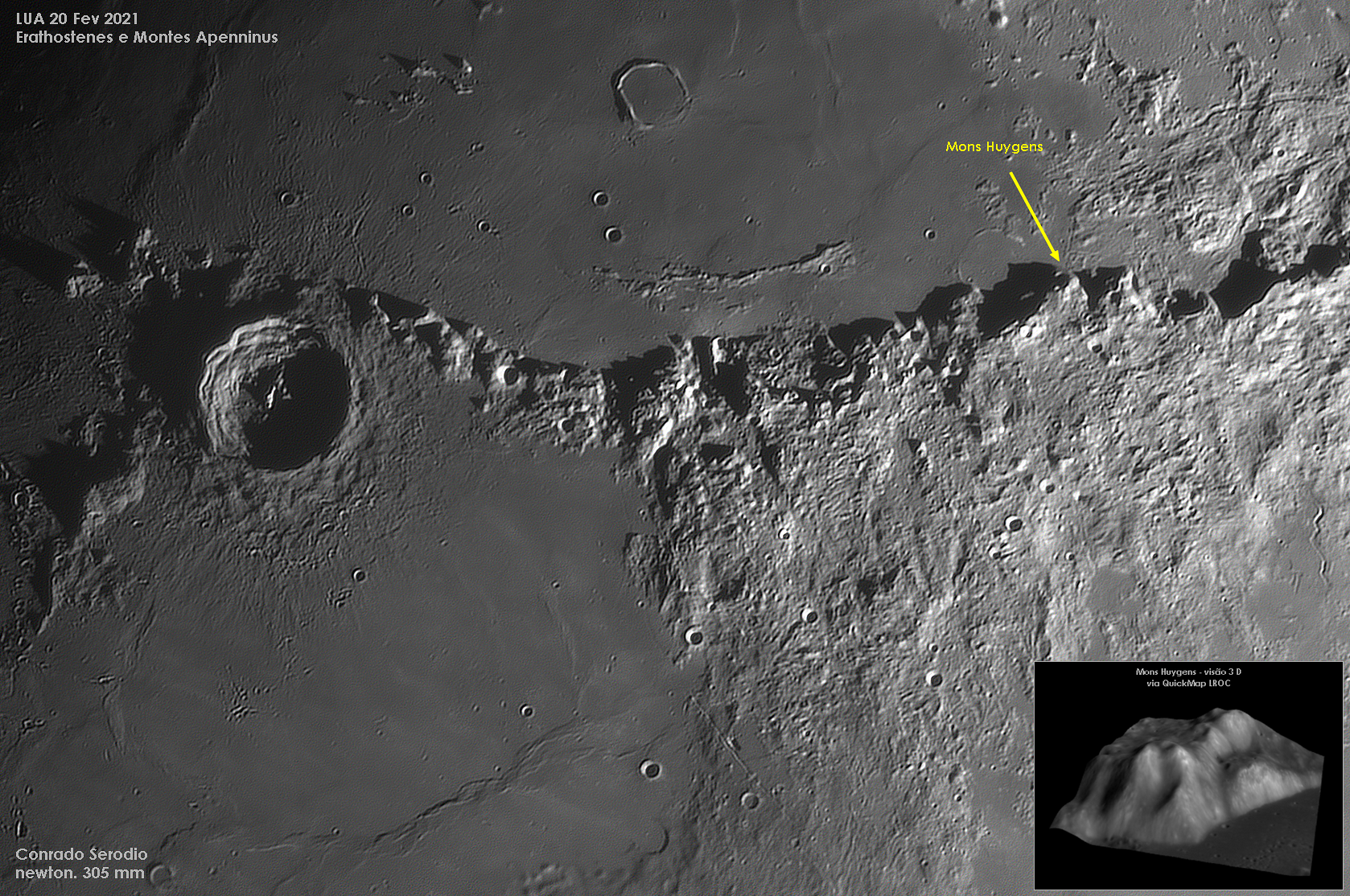
Moon Montes Apeninnus and Eratosthenes crater
Image Description and Details :
Registration on Feb. 20 of a set of interesting formations on the edge of the Mare Imbrium, starting with the Eratothenes crater (diam. 58 km, depth 3600 meters), where the mountain range of the Apeninnus Mountains begins, extending for 953 km formed by the rubble the great impact that created the Mare Imbrium. Apeninnus is home to some of the highest peaks on the visible face of the Moon, including Mons Huygens which according to the most recent and accurate assessments reaches 4950 meters.In the upper part of the image, it is also possible to observe a ghost crater Wallace, remnant of a crater formed in the Imbrian period (3.8 ~ 3.2 a.a.) that was filled by lava and formed edges located 400 meters above the surface.In the box, a perspective view (generated through QuickMap) of Mons Huygens.Tele GSO 305 mm @ f / 12, ASI290MM camera
Copyright: Conrado Serodio

Uranus and its Satellites Retrogradation Curve
Image Description and Details :
I present to you a study on the retrogradation curve of the planet Uranus and its satellites made from December 2020 to February 2021. Retrogradation, or retrograde movement, is the recoil that a celestial body seems to describe when observing it from distant stars. It took 8 nights to image the planet with 50 luminance images of 10 seconds each in bin1 + 20 RGB images of 2 seconds each in bin2 and after assembly, process and annotations of the positions of the planet by date I looked for the position of the satellites visible on these images. So on these images we can distinguish Oberon and Titania, and from time to time we see Umbriel.FPS: 10 fpsexpo: 100msGain: 500total image: 10,000Focal length: 5400Drizzle 3
Copyright: Georges Astrophotography
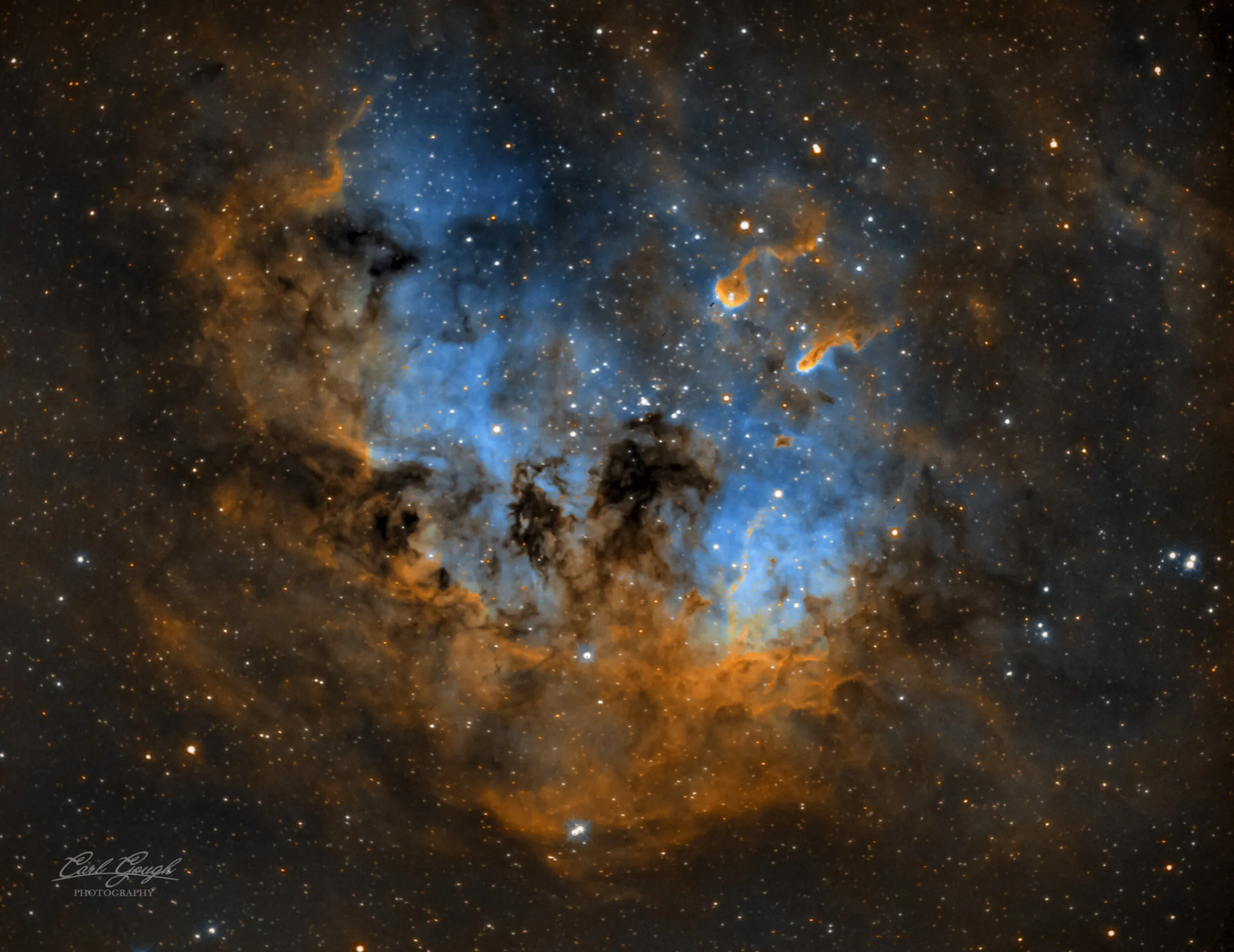
IC410 - The Tadpoles
Image Description and Details :
The Tadpole nebula or IC 410 is an emission nebula in the constellation Auriga. It lies approximately 12,000 light years from earth.
I don't believe its name needs any explanation, it's one of the few I can see immediately, and I've always struggled with most. This nebula reminds me of a line in one of my favorite songs. "We're just 2 lost souls swimming in a fish bowl". Of course Pink Floyd isn't everyone's thing!
equipment:
Orion RC 8" with CCD47
ZWO ASI 1600MM (-20, gain 139)
Altair 70mm guide scope and ZWO ASI 224 MC
Skywatcher EQ6-r
Integration:
HA - 67x 600 sec
OIII - 5x 600 sec
SII - 5x 600sec
Copyright: Carl Gough

A Sunflower in a Sea of Shattered Stars
Image Description and Details :
This image shows the galaxy M63, also known as the Sunflower Galaxy. What sets this galaxy apart from other spiral galaxies is its extensive halo and tidal stream. These streams often occur when a galaxy has a close encounter with a nearby satellite galaxy. The result is a big stream of remnants of the satellite galaxy.The image was taken throughout February(13.02, 18.02, 20.02, 22.02, 01.03.) and early March, party out of my backyard, party from a dark site, both located near Freiburg in Germany.The gear used was the following: Celestron RASA8, QHY183M, Skywatcher EQ6, TS-Optics LRGB filters. The exposures were mainly 90sec at Gain 0, though some had 60s subs because of the moon. Total integration time amounts to 25hours.Processing was mainly done in PixInsight, although I also used Adobe Photoshop and AstroPixelProcessor. The main challenge was to bring out all the faint dust without "blowing up" the stars and details, PixInsights multiscale processing certainly helped a lot in making that possible.
Copyright: Julian Shroff
With Your Heart and Your Soul
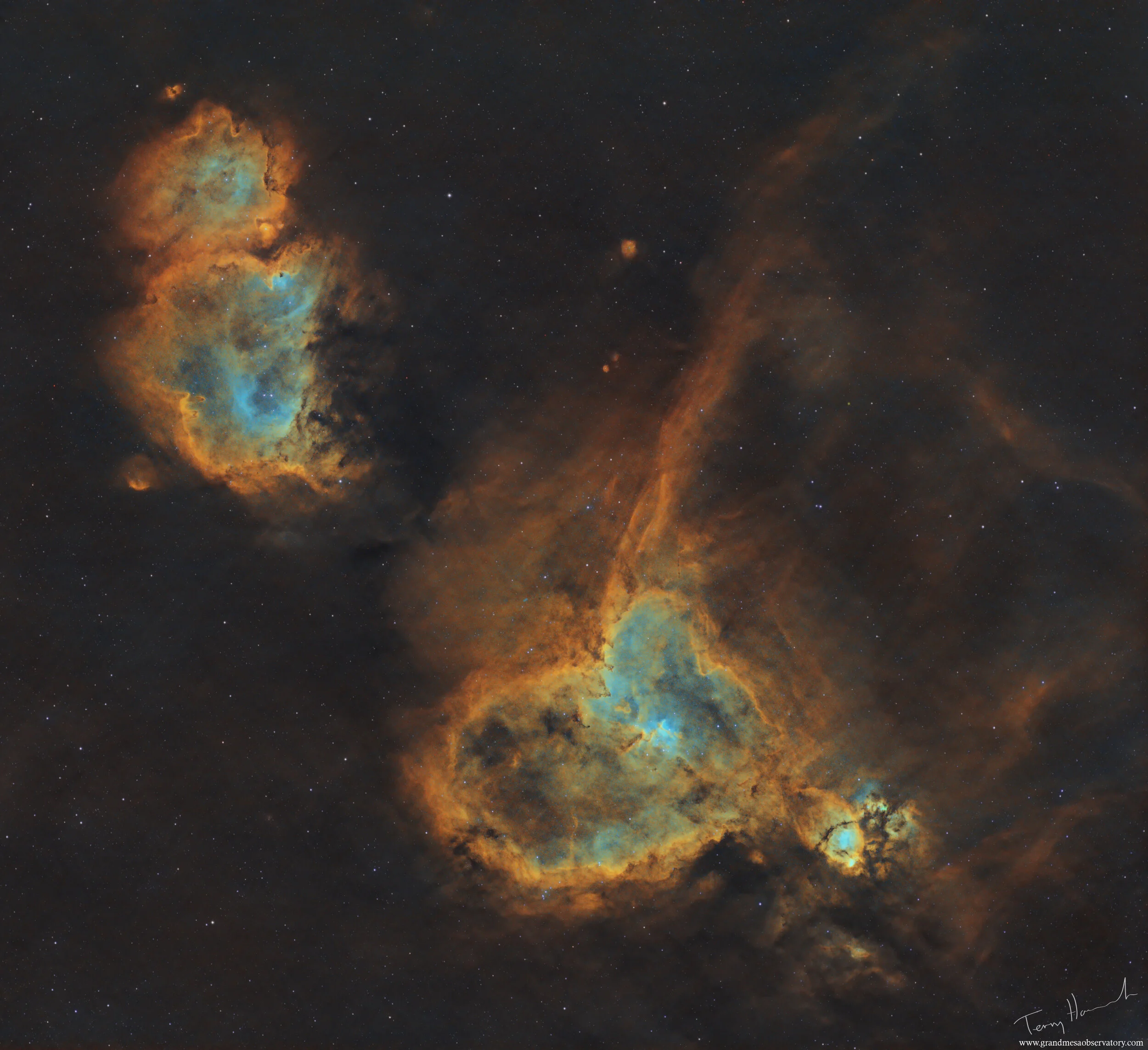
Here is my latest Hubble Palette (SHO) version, a very wide view of The Heart IC1805 and Soul Nebula IC1848 using data from Grand Mesa Observatory’s System 1a the William Optics Redcat together with a QHY16200A Monochrome CCD, this combination is giving a field of view of approximately 6 x 5 degrees, In this Hubble Palette version the H-Alpha is mapped to green, SII is mapped to red and OIII is mapped to the blue channel. Captured over 6 nights in 2020 and 2021 for a total acquisition time of 15.3 hours. 7000-7500 light-years distant in the constellation of Cassiopeia lie the emission nebulae colloquially known as the Heart and The Soul Nebulae. The gasses (mostly hydrogen) that comprise the nebulae are being ionized by the stars within the region and as a result, the gasses glow, much like a neon sign. The pressures exerted upon the material by the stars nearby are causing the material to become compressed. When enough of the gas becomes highly compacted, it triggers the birth of new stars. In effect, this is a beautiful snapshot of a multimillion-year process of an enormous cloud of dust and gas transforming itself into new stars. Technical Details Captured and processed by: Terry Hancock Location: GrandMesaObservatory.com Purdy Mesa, Colorado Sep 29th, Oct 14th, 16th, Nov 11th 2020, Jan 1st and 2nd 2021 HA 270 min 27 x 600 sec OIII 340 min 34 x600 sec SII 310 min 31 x 600 sec Filters by Chroma Camera: QHY16200A Gain 0, Offset 130 Calibrated with Flat, Dark and Bias Frames. Optics: William Optics Redcat 51 APO @ F4.9 EQ Mount: Paramount MEII Image Acquisition software Maxim DL6 Pre Processing in Pixinsight Post Processed in Photoshop CC Star Removal by Starnet
Copyright: Terry Hancock

Ou4 - Giant Squid
Image Description and Details:
A nebula, Ou4, that I find very pretty so at the beginning of July, I started to photograph it. It is carried out in hoorvb. until October I got 113 hours of exposure in order to prepare for this image.
OIII 200X900S
HA 260X600S
RVB 240X300S
Copyright Information: Rémi Méré