

AAPOD2 Image Archives
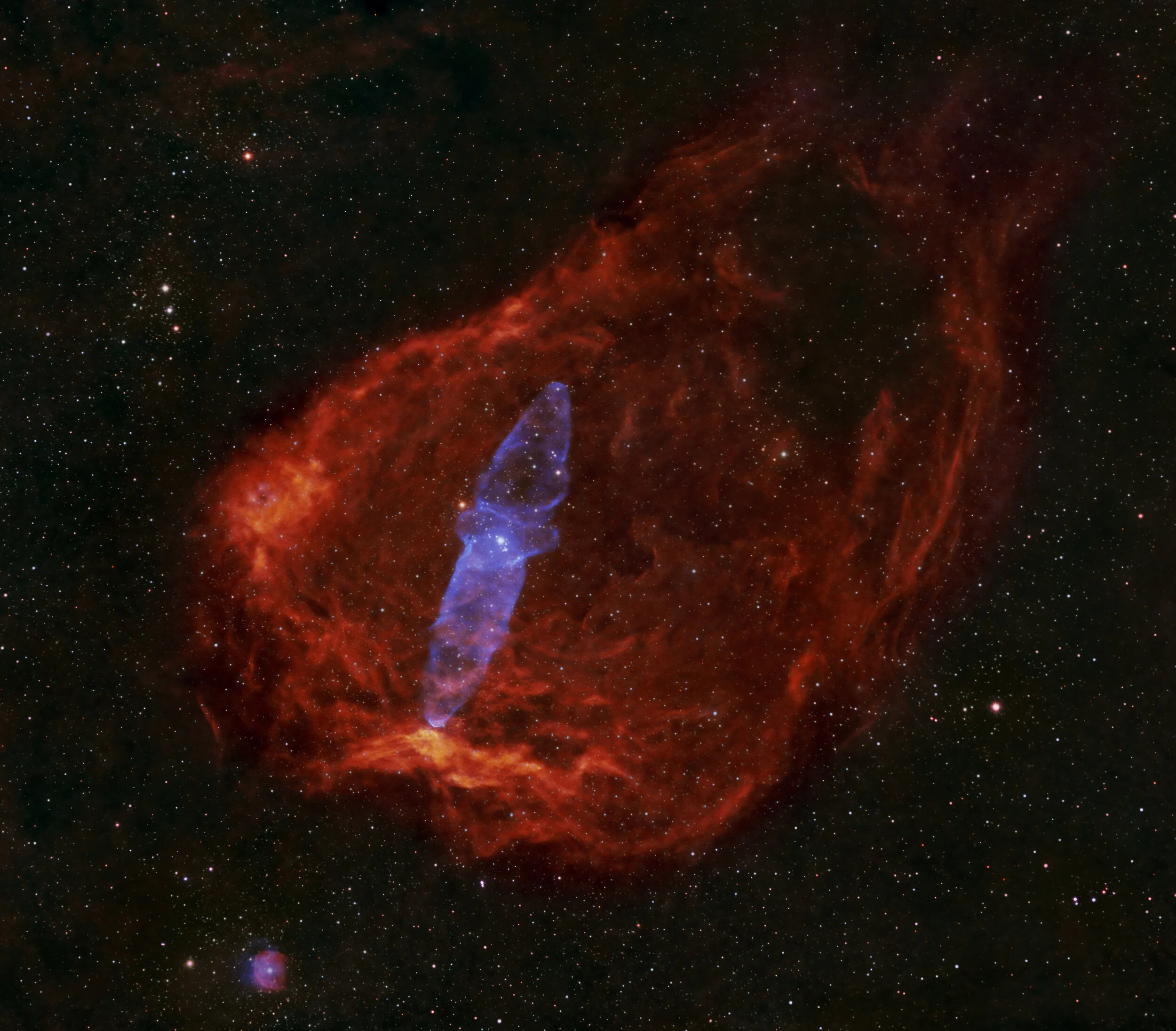
Sh2-129, Outters 4 and VdB140
Image Description and Details :
This is my first +20h long exposure during my first year of astrophotography. 270*300s of exposures in HA and OIII.
Equipment used: Nikon 200mm f2 lens, Chroma 3nm Ha+OIII filters, Asi1600mm camera and NEQ6 mount.
Location: Finland.
Copyright: Jarkko Järvinen
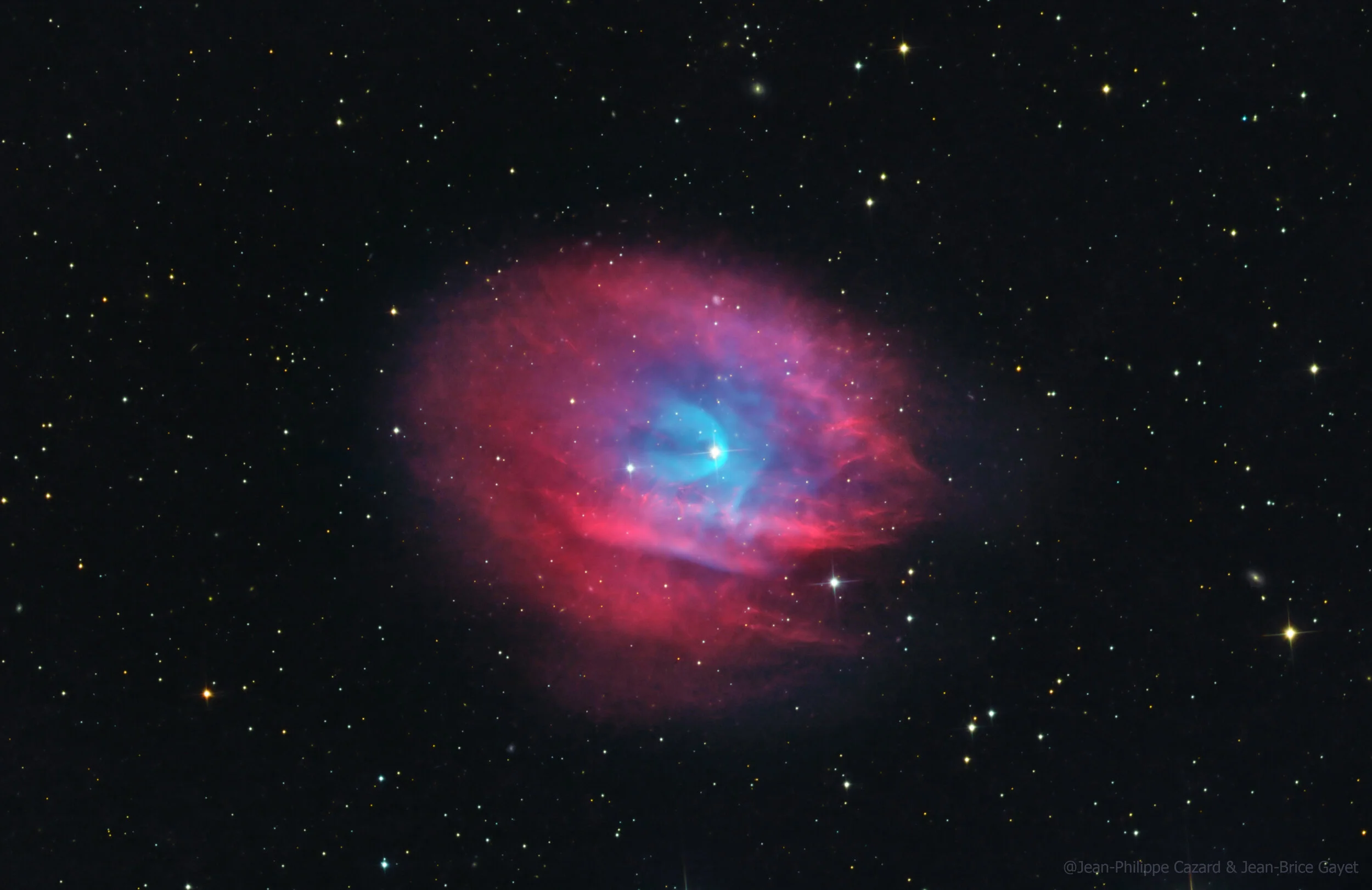
Abell 35 - a not-so-planetary nebula
Image Description and Details :
We are glad to propose you this beautiful picture of Abell 35 . It was taken with a Planewave CDK12.5 and a QHY600 M camera in Chile during several nights of january and february 2021. The resulting image is a mix of RGB band images for the stars and HO images for the nebula itself.As you are probably aware, Abell 35 still remains considered as PN on SIMBAD but Jacoby had already raised questions about its true nature as early as 1981. Recent studies (after Frew and Parker, PASA, 27, 129, 2010) conclude that the nebula is a Stromgren sphere in the ambient ISM, ionized by a hot DAO white dwarf companion of BD – 22º 3467 which has recently evolved from the PN phase. The system produces a strong wind, probably from the fast, rotating subgiant which interacts with the inner zone of the emission nebula to produce a dramatic parabolic bow-shock aournd BD – 22º 3467 that is strongly visible in the OIII narrowband datas.
Copyright: Team Astrochile, Jean-Philippe Cazard & Jean-Brice Gayet
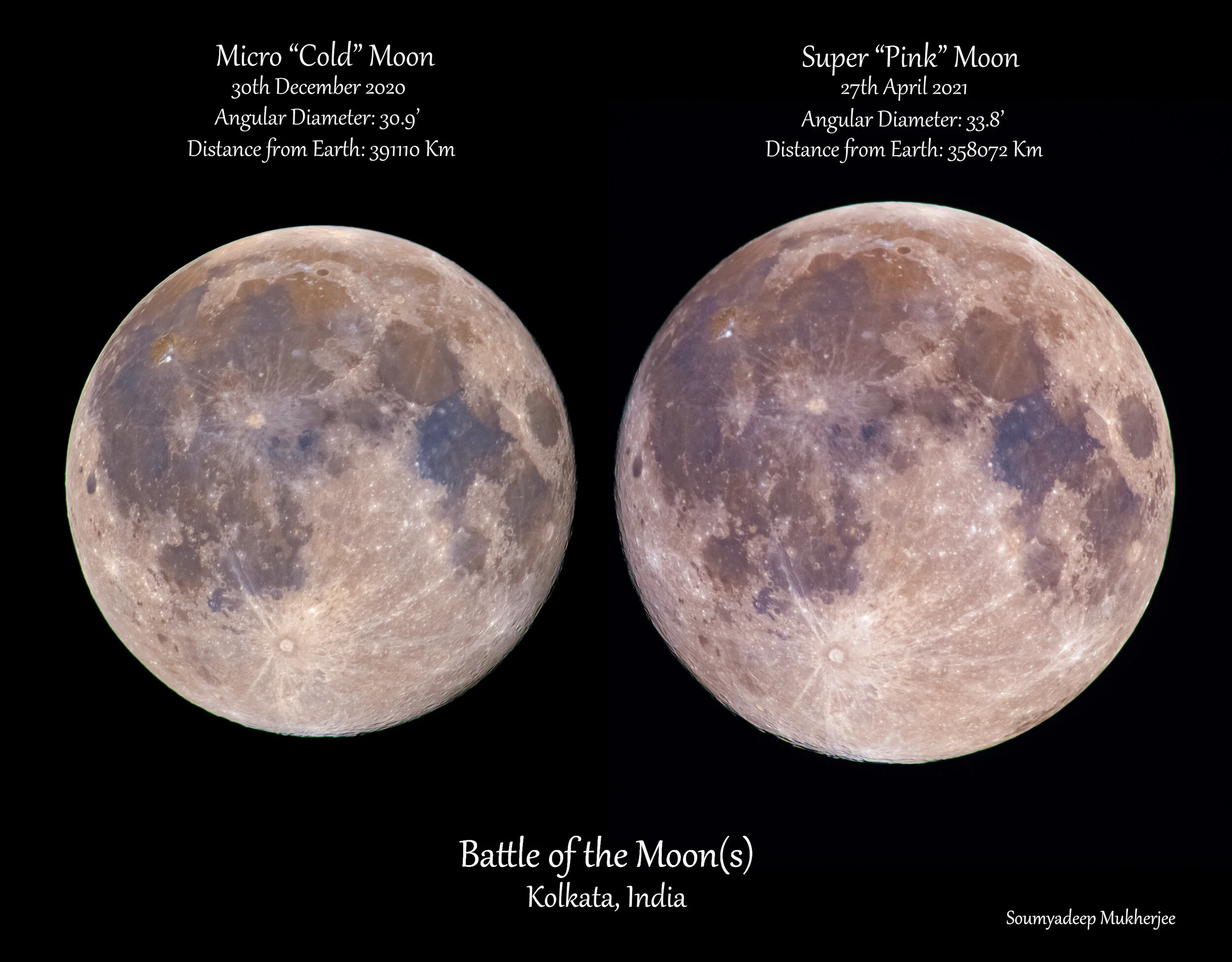
Battle of the Moons
Image Description and Details :
The image displays the angular size difference between a "super" moon and a "micro" moon. The micro moon is the Cold Moon of 2020 (captured on 30th December 2020) and the super moon is the Pink Moon of 2021 (captured on 27th April 2021). The super moon gets almost 10% bigger in the night sky due to its closer approach to Earth.Gear: Nikon D5600, Sigma 150-600cPost-processing: PIPP, Autostakkert, Adobe Camera Raw, PhotoshopCapture Date: 30th December 2020 and 27th April 2021Location: Kolkata, India
Copyright: Soumyadeep Mukherjee

The Gum 15 star formation region
Image Description and Details :
12.5" f/9 Quasar Ritchey Chretien, SBIG STL11000, Losmandy Tita9
Frames: Red: 10x600", Green: 9x600", Blue: 21x60", Lum: 74x600", total exposure: 16.1 horas
This richly detailed shows the star formation region Gum 15. This little-known object is located in the constellation of Vela (The Sails), some 3000 light-years from Earth. The glowing cloud is a stunning example of an HII region.
Copyright: Insight Observatory (Franck Jobard by Deep Sky Chile) / Ruben Barbosa

Banana Nebula - NGC 3199
NGC 3199 is an emission nebula in the constellation Carina. It is commonly known as the Banana Nebula and was discovered in 1826
Copyright: Albert Barr
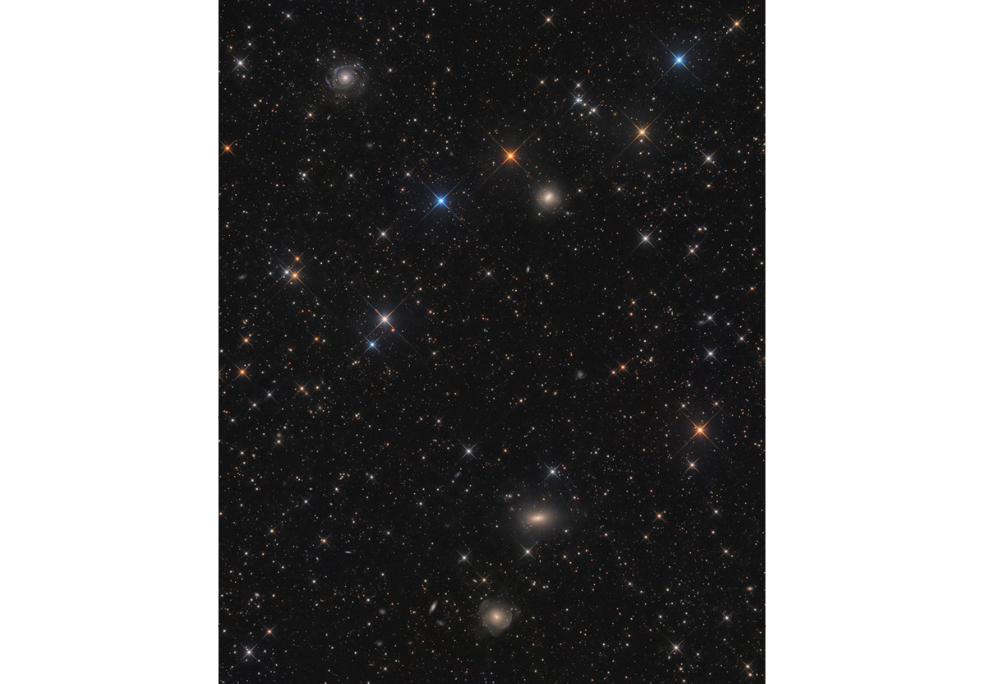
Distant Lights
Telescope / Mount / Guiding
ASA 10" Astrograph, ASA 3" Wynne-Corrector (focal length 910mm)
ASA DDM60, no guiding
Camera / Exposure
Moravian G3-16200, Astrodon filters
Lum 74 x 10min, R 24 x 5min bin2x2, G 24 x 5min bin2x2, B 27 x 5min bin2x2
Total Exposure time: 18h 35min
Processing
PixInsight, Fitswork, Photoshop
Notes
NGC 3642 is a spiral galaxy with an active galaxy core in constellation Ursa Major, about 75 Million light years away from our Milky Way. The galaxie belongs to the NGC 3642 group (also known as NGC 3610 group), a galaxy group that also includes the elliptical galaxies NGC 3610 and the lenticular galaxy NGC 3619.
The elliptical galaxy NGC 3613 and the barred spiral galaxy NGC 3625 are part of the NGC 3613 galaxy group. These two galaxy groups are considered associated.
Some of the galaxies, especially NGC 3619, seem to have one ore more tidal streams.
Copyright: Thomas Henne

Dragon ISS Docking Transit
Planned 2 weeks ago, 35KG equipment, about 300 KM by car, about 10 hours of time .. Everything only for 1 second!
Today's ISS Transit (April 25, 2021)
Equipment
DayStar Gemini, FlatCap
SharpStar 121SDQ
Rainbow RST-135
QHY174M
Baader D-ERF
TS 0,5 2" Reducer
Hinode Solar Guider
Software:
Sharpcap
AS3
Registax
PS, LR
Location: Einöd / Germany
Date: 04/25/2021 11:29 UTC+2
Copyright: Mehmet Ergün

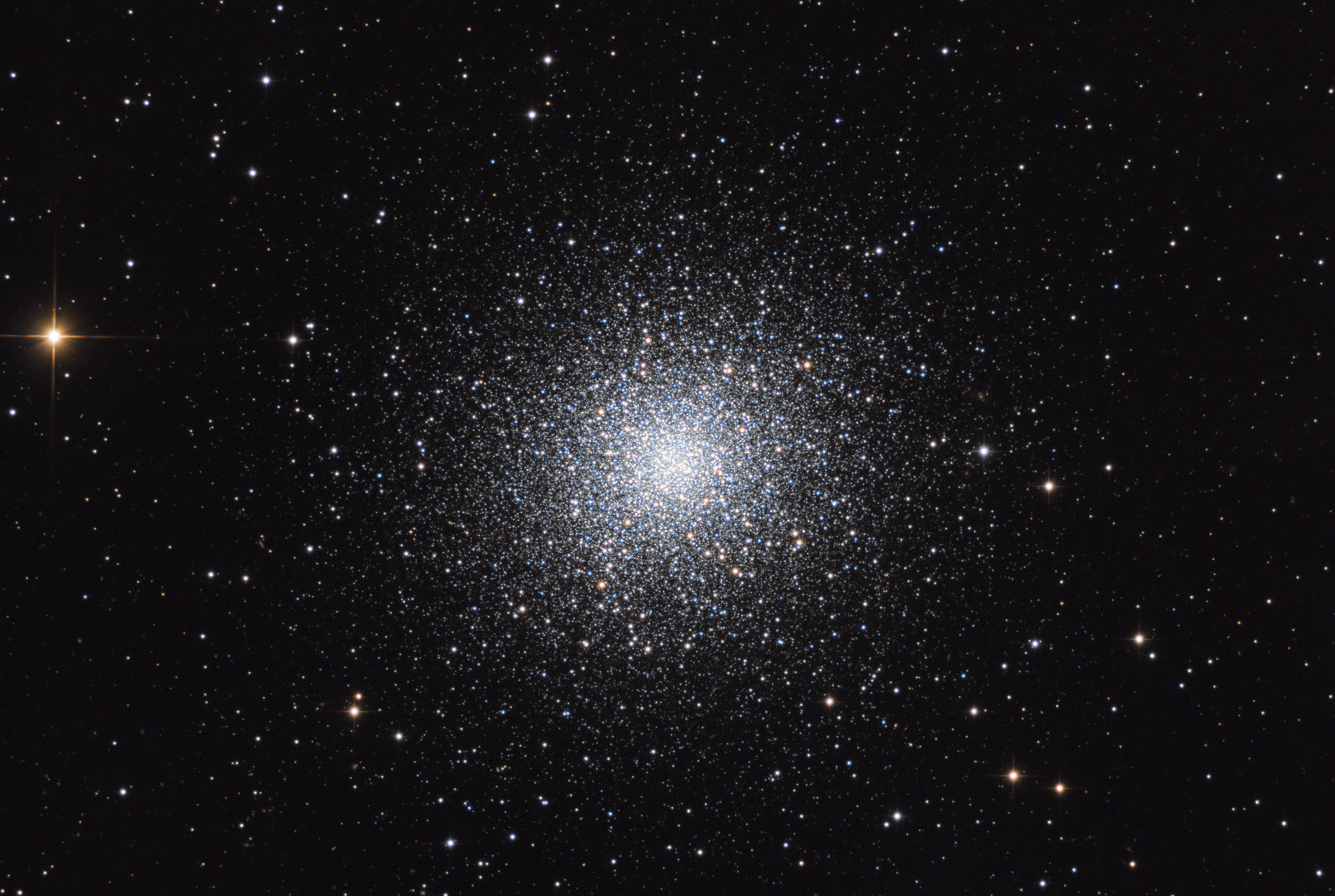

M82- The Cigar Galaxy
Image Description:
M82 is also known as the Cigar Galaxy for its elongated visual appearance, it is a starburst galaxy with a superwind. In fact, through ensuing supernova explosions and powerful winds from massive stars, the burst of star formation in M82 is driving the prodigous outflow of material. The filaments extend for over 10,000 light-years. Some of the gas in the superwind, enriched in heavy elements forged in the massive stars, will eventually escape into intergalactic space. Triggered by a close encounter with nearby large galaxy M81, the furious burst of star formation in M82 should last about 100 million years or so. M82 is 12 million light-years distant, near the northern boundary of Ursa Major.
Tech card:
Imaging telescope: Teleskop Service TS 10" RC.
Imaging camera: ZWO ASI294MM-Pro.
Mount: iOptron CEM60.
Guiding camera: ZWO ASI290MM mini.
Focal reducer: Teleskop Service CCD47 0.67x reducer for RC telescopes.
Accessory: ZWO ASIAIR Pro · ZWO OAG · ZWO 8x 1.25" Filter Wheel (EFW).
Frames:
Astrodon Gen2 E-Series Tru-Balance Lum: 20x180" (gain: 120.00) -15C bin 2x2.
Astrodon Gen2 E-Series Tru-Balance Red: 20x180" (gain: 120.00) -15C bin 2x2.
Astrodon Gen2 E-Series Tru-Balance Green: 18x180" (gain: 120.00) -15C bin 2x2.
Astrodon Gen2 E-Series Tru-Balance Blue: 20x180" (gain: 120.00) -15C bin 2x2.
Chroma 3nm Ha: 10x600" (gain: 200.00) -15C bin 2x2.
Total integration: 5.6 hours.
Darks: ~50.
Flats: ~30.
Flat darks: ~30.
Avg. Moon age: 26.66 days.
Avg. Moon phase: 9.26%
Bortle Dark-Sky Scale: 4.00.
RA center: 9h 55' 52"
DEC center: +69° 40' 56"
Pixel scale: 0.707 arcsec/pixel.
Orientation: -95.583 degrees.
Field radius: 0.150 degrees.
Imaging dates: April 8, 2021, April 9, 2021.
Imaging location: Abu Dhabi desert, UAE.
Copyright: Wissam Ayoub
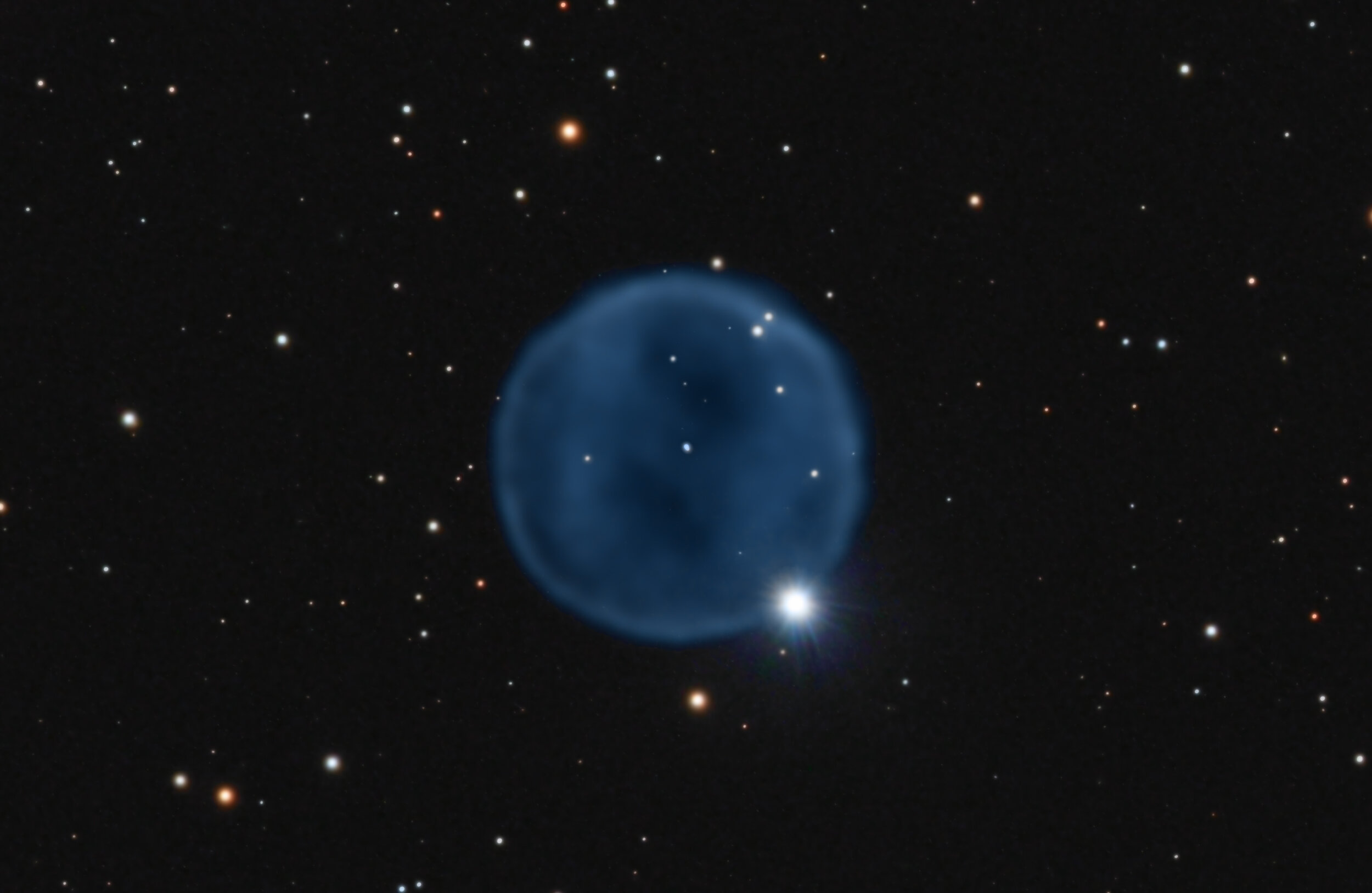
Abell 33 - The Diamond Ring Nebula
Image Description and Details :
Abell 33 is a spherical planetary nebula located 2700 light years away in the southern constellation of Hydra. It lies just behind the star HD 83535. The star HD 83535 is responsible for the "diamond ring" effect seen in the photograph.Image captured on my dual rig in Spain.Scopes: APM TMB LZOS 152 RefractorsCameras: QSI6120wsg8Mount: 10Micron GM2000 HPSA total of 6.4 hours image capture (OIIILRGB)
Copyright: Peter Goodhew
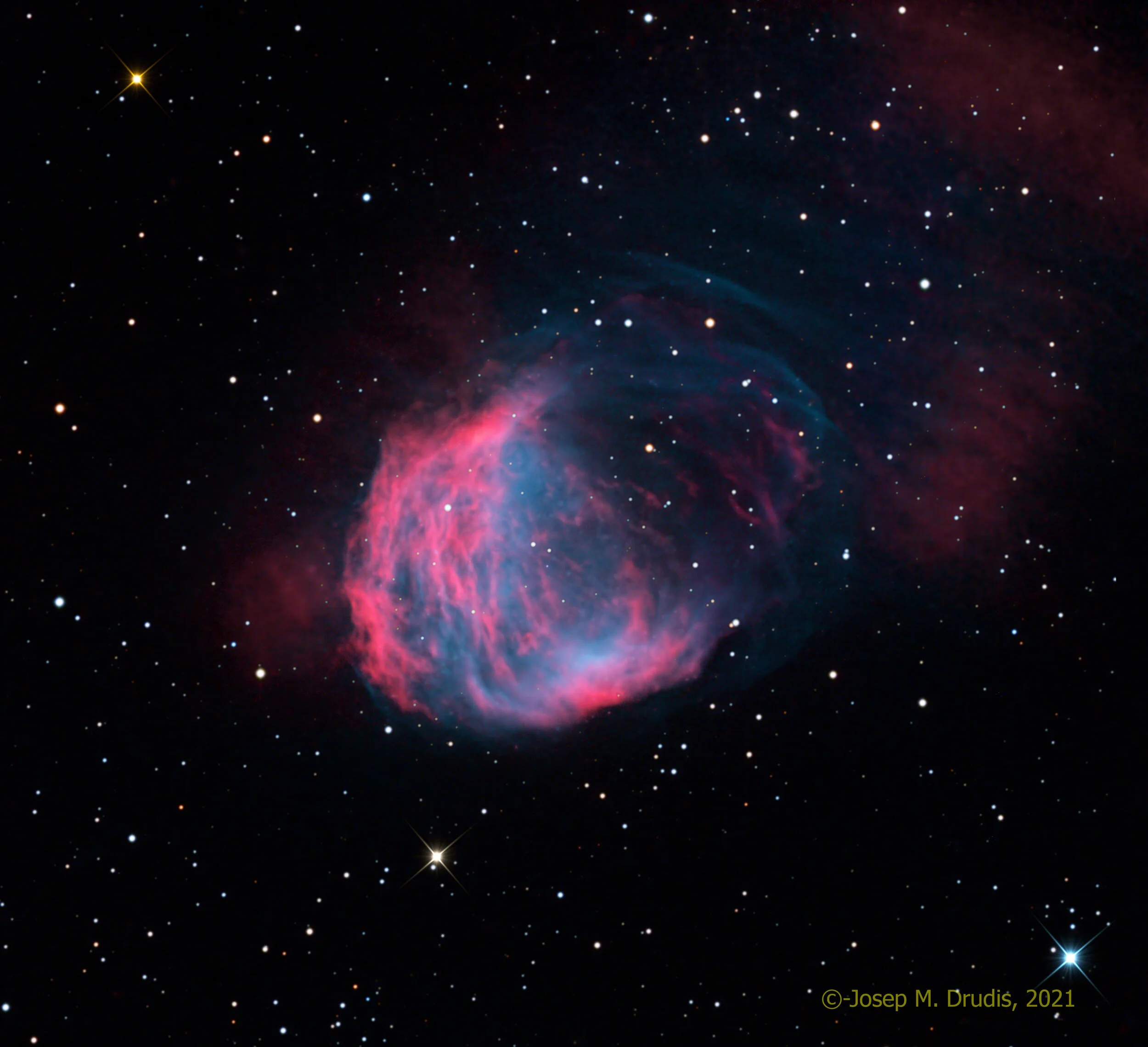
Abell 21, the Medusa Nebula
Image Description and Details :
Abell 21 is a planetary Nebula that was discovered and catalogued as such, in 1955, by George Abell. Abell 21 is a planetary Nebula that was discovered and catalogued as such, in 1955, by George Abell. This image was taken with narrowband filters (Ha, OIII and NII). NII was added because some planetaries have distinct NII signals. In this case, the NII emission was similar to the Ha emission. Total exposure 31h 40m. Telescope 24 inch f/6.5 reflector, located in NMSkies, Mayhill, New Mexico. Processing: CCDStack and Photoshop CC 2021.
Copyright: Josep Drudis
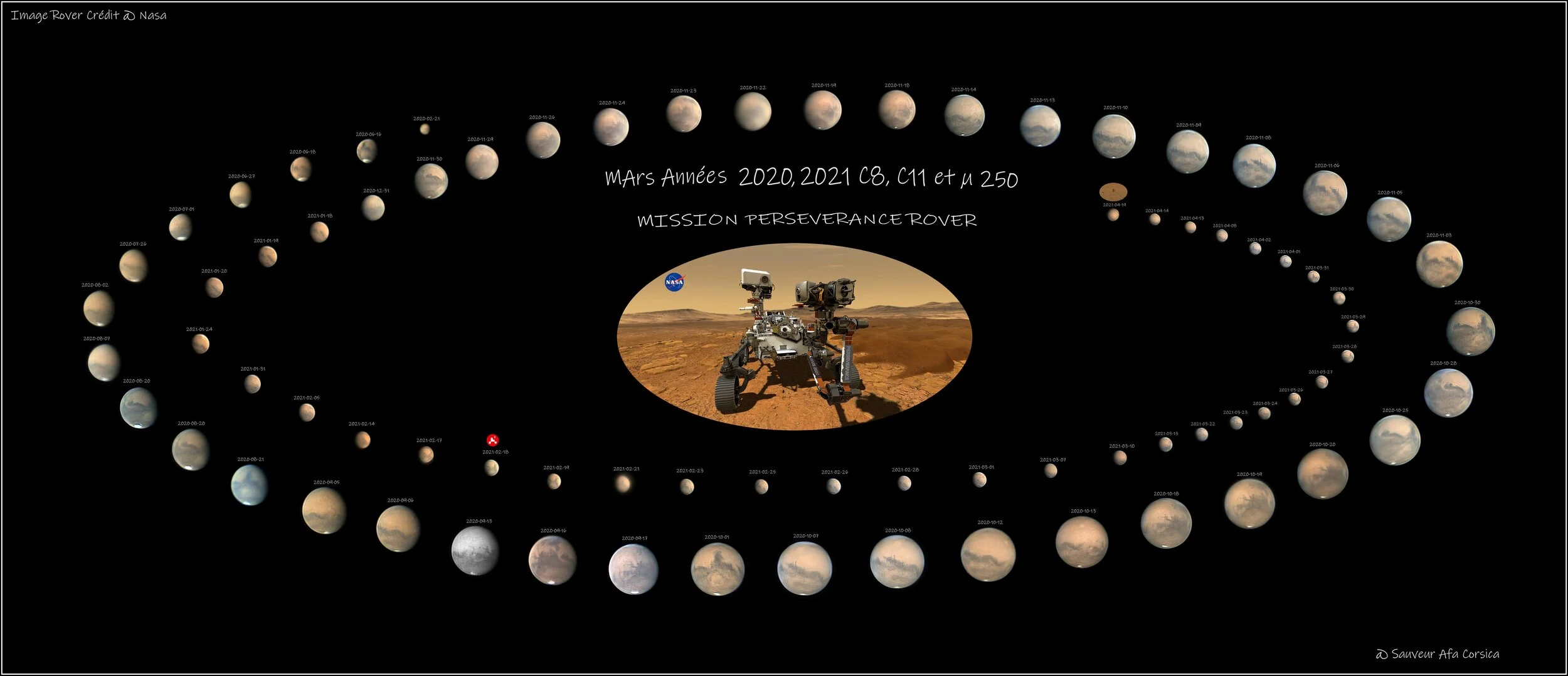
Mars season 2020 and 2021 Perseverance and Ingenuity
Image Description and Details :
My captures of Mars from my site in Afa Corsica (France) with a C8, a C11 and a Mewlon 250 Takahashi Website or Facebook Profile:
Copyright: Pedranghelu Sauveur and Nasa for the Rover
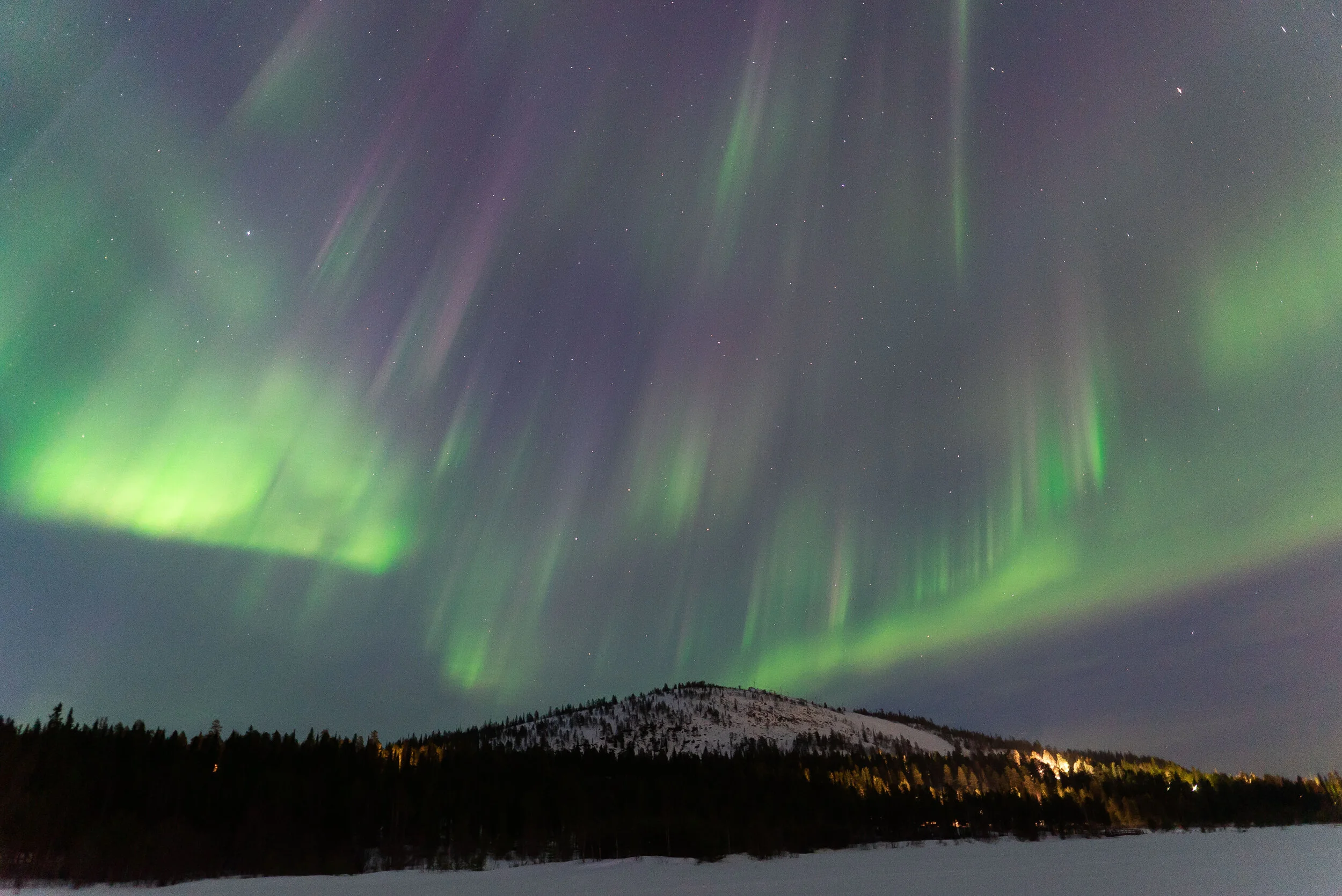
Grand Finale
Image Description and Details :
A huge auroral show right before the aurora season ends here in the arctic circle. This image was taken in Salla, Finland with Sony A7S and Sigma art 20mm f1.4. The hill on the picture is 478 meters tall sallatunturi (Salla fell).
Copyright: Dennis Lehtonen

Cosmic perspective : PN M97 & M108
Image Description and Details :
A classic of the spring sky: the duo of the galaxy M108 with the Owl planetary nebula (M97) in Ursa Major.M97 is 2000 LY away, while M108 is 32 millions LY away (16.000 times more distant).I completed the LRGB with exposures with Ha and especially OIII, in order to gain signal on M97: the much more faint outer ring of M97, not so often seen, is visible.Takahashi TSA102 - AZEQ6 - Atik Cameras AtikOne 6.0 - Filters Astronomik (6nm Ha / OIII)L : 36 x 600s bin1RGB : 3 x 24 x 300s bin 2Ha : 12 x 600s bin 1OIII : 18 x 600s bin 1 + 12 x 600s bin2Total : 19h3, 4 & 5 april 2021 - Fouras (France)Traitement : Pixinsight & Photoshop
Copyright: Jean-Baptiste Auroux
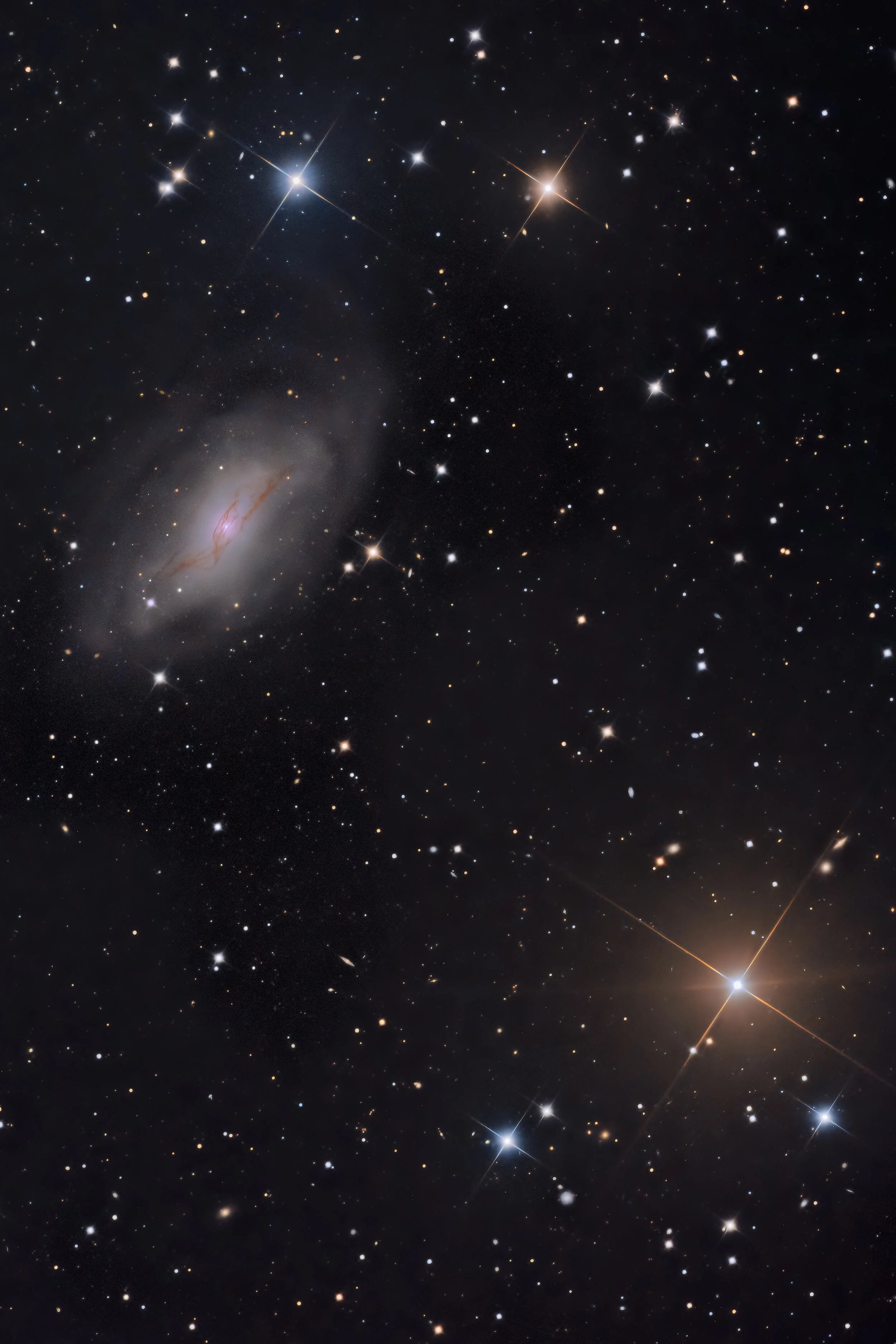
NGC 4753
Image Description and Details :
NGC 4753
L=460:R=360:G=330:B=360, total 25.2 hours
Telescope : Planewave CDK 17, Camera : SBIG STXL 11002 with AOX, Tracking : Paramount ME
Image capture : Martin Pugh
Image processing : Rocco Sung
Location : Observatorio El Sauce, Chile
Copyright: Rocco Sung & Martin Pugh
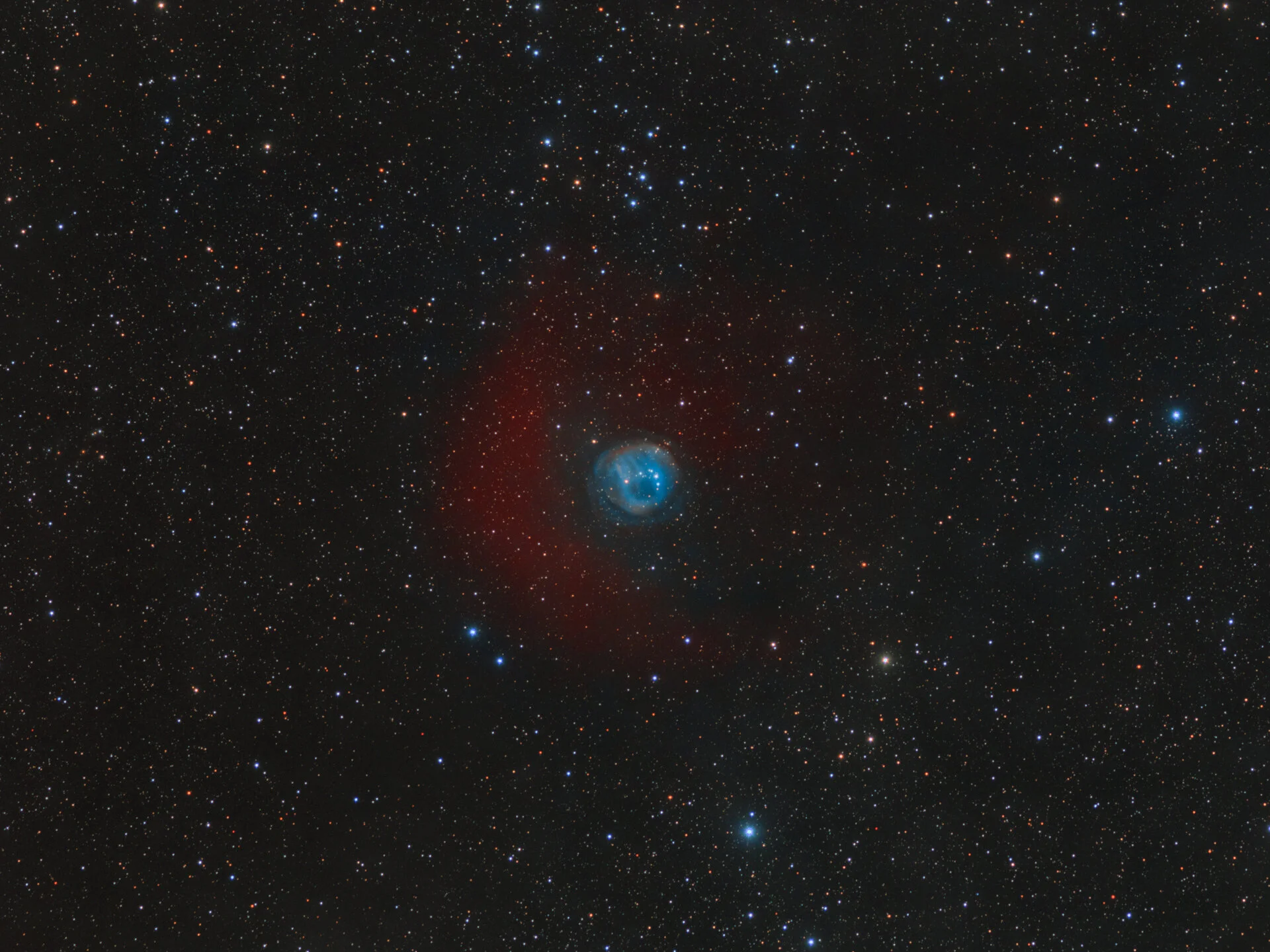
Hartl-Dengl-Weinberger 2
Image Description and Details :
This extremely faint planetary nebula was first discovered by an American astronomer Stewart Sharpless in 1959. He included it in his catalogue of HII regions with an identification Sh2-200. Later in 1983 it was included in the HDW catalogue of possible planetary nebulae by the astronomers Herbert Hartl, Johann Dengel and Ronald Weinberger. In 2017 spectra of this object was taken by other professional astronomers and this verified their observations, confirming that this was indeed a planetary nebula.Data is acquired from my own remote observatory in central Finland using SkyWatcher Esprit 100mm f/5.5, ZWO ASI1600MM-C, EQ6 guided with ASI224MC as finder-guider, Baader narrowband filters and TS Optics RGB filters.Ha: 36x300s, OIII 120x300s, R/G/B 10x120s each. Total integration time is 14 hours.
Copyright: © Ville Miettinen

b169 nebula
Image Description and Details :
b 169 fatta dai nebrodi il 12-08-2012
takahashi FSQ 106N su montatura NEQ6 e camera ccd SBIG STL 11.000 e guida remota sbig in fuoriasse
Luminanza 17 x 900sec bin 1
RGB 4 x 300 sec bin 2
cielo un pò lattiginoso e con umidità
SQM allo zenith circa 20,8
Copyright: Giuseppe Petralia
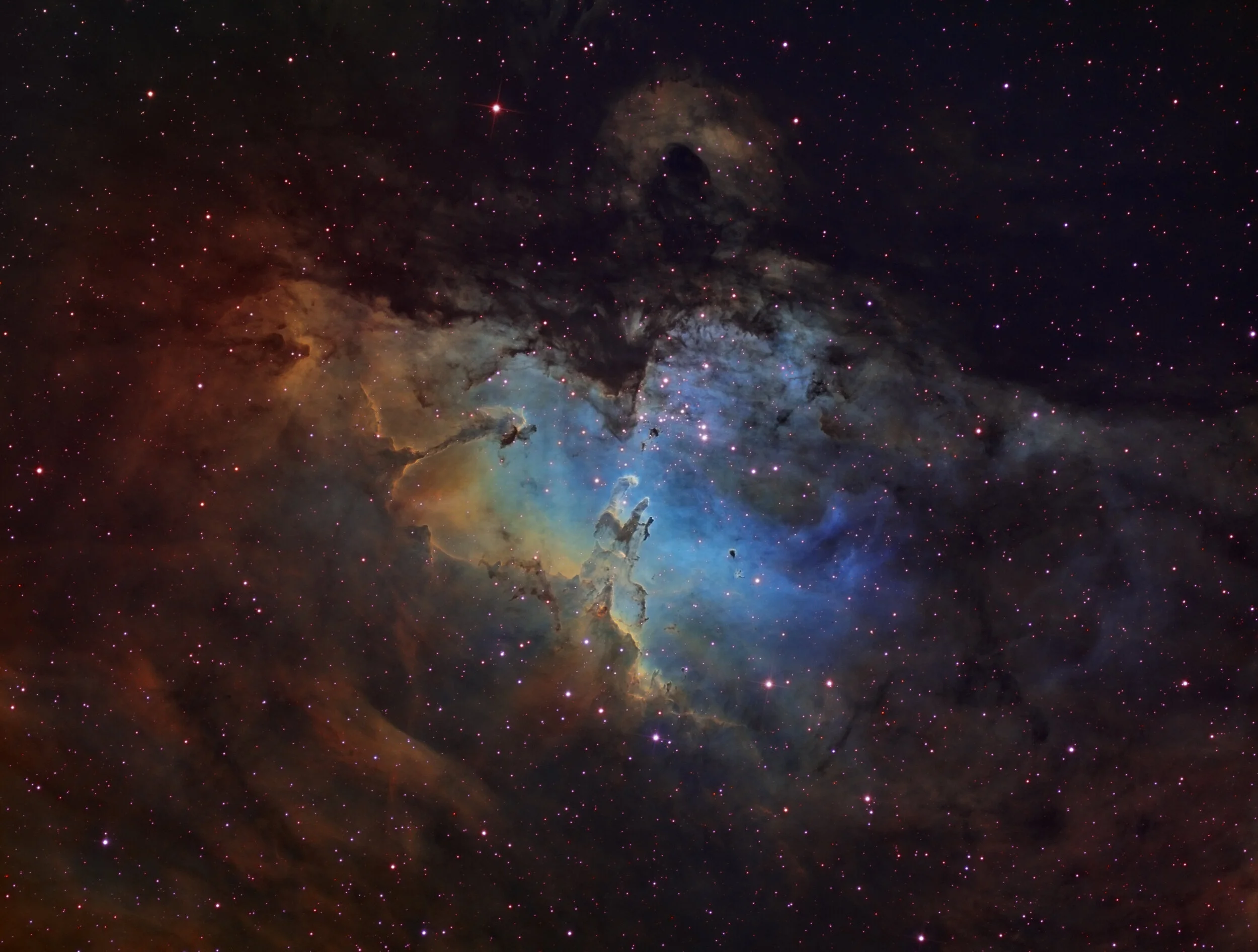
M16 and The Pillars of Creation (SHO)
Image Description and Details :
Imaged in my backyard in Córdoba City, Argentina, under skies bortle 9.
Main equipment: ZWO ASI 1600 mm-pro + SW Explorer 250pds + SW Coma Corrector 0.9x + EQ6-R-Pro + ZWO EAF + ZWO 7x2" EFW
Guide Equipment: starguider 60/240 mm, ZWO ASI 120mm mini
*Gain 139, -25 º C, Ha 7nm 2" Optolong, 85x180"
*Gain 139, -25 º C, Oiii-CCD 6.5 nm 2" Optolong, 80x180"
*Gain 139, -25 º C, Sii-CCD 6.5 nm 2" Optolong, 80x180"
100 Darks
100 Flats per filter
Polar Align: SharpCap 3.2
Acquisition: SGP 3.1
Processing: Pixinsight 1.8.8, PS
Copyright: Ariel L. Cappelletti

Abell 30
Image Details:
Abell 30 planetary nebula proved to be a very challenging target. It is super faint and even with over 64 hours of OIII alone, I had to really push the data hard. Furthermore being a binary dwarf system that somehow reignited, I really wanted to make sure I did not blow out the core; even the Hubble Telescope blew the core out through X-Ray imaging.
Abell 30 is a planetary nebula, that stage in the star’s life when the two winds are colliding, and the central star is lighting them up like a neon sign. The circular shape on the outside is the giant wind, expanding away in a spherical shell like a soap bubble (and also slightly brightened along the outer edge as it rams into the thin gas between stars). It’s actually rare to get a nearly perfect circular outer halo like that, so this is neat.But it’s those tendrils of gas on the inside that are so very interesting. What astronomers think happened here is that the dying star was reborn for a brief time. During the red giant stage, right above the core are layers of oxygen and carbon, then helium above that, and a very thin shell of hydrogen above that. The heat from below causes the hydrogen to fuse at a furious rate, creating more helium that drops down (helium is heavier than hydrogen, so it sinks). If enough helium builds up, it fuses into carbon and oxygen, but this creates a vast amount of energy very rapidly. It’s nearly an explosion, but astronomers (who love to use dull terminology to describe soul-shaking events) call this a very late thermal pulse.Thermal pulses usually occur several times in the star’s life while the outer layers are still being ejected. But this one happens pretty late, when the layers are already essentially gone. This blows out the remaining gas around the core, creating those tendrils near the star, and the gas is moving so rapidly that when it slams into the gas around it the shock waves generate X-rays (there’s probably magnetism involved too, because there always is, and it complicates things immensely).Since fusion is what powers a star, it’s fair to say that for a moment it was reborn. But at this point it’s more like a death rattle. We’re looking at the last gasp of a dying star.Incidentally, all this activity in Abell 30 is very recent! The outer halo red giant wind has been expanding for about 12,500 years (spectra reveal the expansion velocity of the gas, and we can measure how big it is and its distance to get the age), while the inner gas is only about 850 years old! Given that the star was billions of years old before it started dying, we really are seeing the last sliver of its life.
Abell 30 • A Reborn Planetary Nebula67.9 Hours of Integration TimeBortle Dark-Sky Scale: 8.00Imaging telescopes or lenses: Explore Scientific ED165CF FPL-53
Imaging cameras: ZWO ASI1600MM-PRO
Mounts: Astro-Physics Mach 1 GTO
Guiding telescopes or lenses: Orion 80mm Short Tube
Guiding cameras: Starlight Xpress Lodestar x2
Software: Photoshop CC · PHD2 · Sequence Generator Pro · PixInsight
Filters: Astronomik Deep-Sky B · Astronomik Deep-Sky G · Astronomik Deep-Sky R · Astronomik Ha 6nm 1.25'' · Astrodon OIII 3nm
Accessory: ZWO 8x 1.25" Filter Wheel (EFW) · QHYCCD PoleMaster · Hotech 2" SCA Self-Centering Field Flattener · MoonLite CFL 2.5" Large Format Focuser
Dates:March 6, 2021 , March 20, 2021 , April 2, 2021 , April 3, 2021
Frames:Astrodon OIII 3nm: 1905x120" (gain: 200.00) -20C bin 1x1Astronomik Deep-Sky B: 60x60" (gain: 0.00) -20C bin 1x1Astronomik Deep-Sky G: 59x60" (gain: 0.00) -20C bin 1x1Astronomik Deep-Sky R: 59x60" (gain: 0.00) -20C bin 1x1Astronomik Ha 6nm 1.25'': 42x120" (gain: 200.00) -20C bin 1x1
Integration: 67.9 hours
Copyright: Douglas J Struble