
AAPOD2 Image Archives
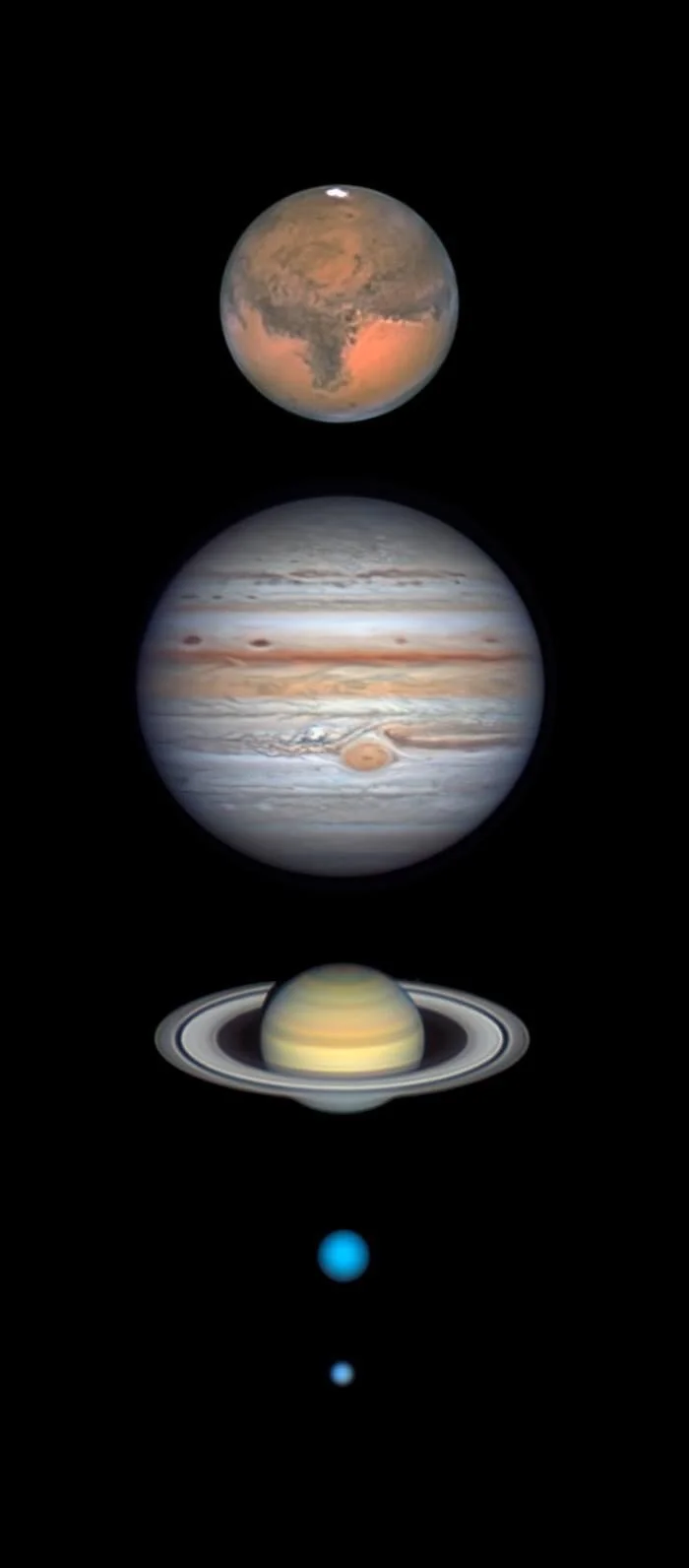
planetary tour
Grand tour of the outer planets from my backyard. Shot over the last 12 months with the fabulous Astro Physics 10" f/14.5 Mak-cass telescope and the QHY5III-462C color cmos camera. 37 degrees N. 100 ft el. Seeing can be very good at times.
Copyright: John Gleason
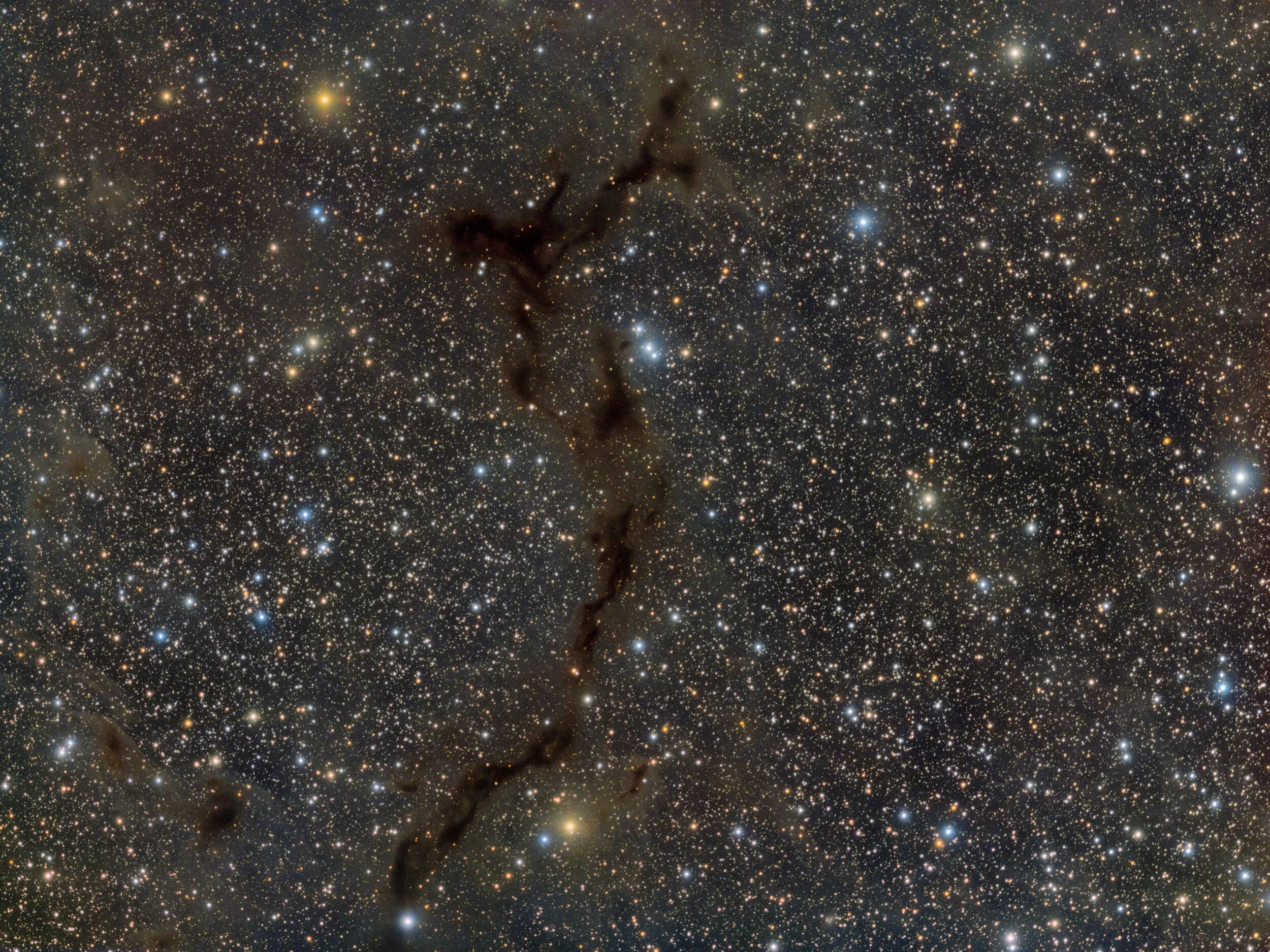
Barnard 150 - The Seahorse nebula
Image Description and Details : This dark nebula lies at a distance of 1200 light-years from Earth in the Constellation of Cepheus. Because the nebula is in the Milky Way's plane it stand outs from the background filled with colourful stars of our galaxy, a keen eye can also distinguish three separate dense dust cores that actually are star formation regions.
Taken from my self-made remote observatory in eastern Finland with SkyWatcher Esprit 100mm f/5.5, ZWO ASI1600MM-C, Losmandy G11 guided with ASI224MC as finder-guider, TS Optics LRGB filters.
L: 262x120s, R: 92x120s, G: 100x120s, B: 80x120s.
Total integration time is ~18 hours.
Copyright: © Ville Miettinen
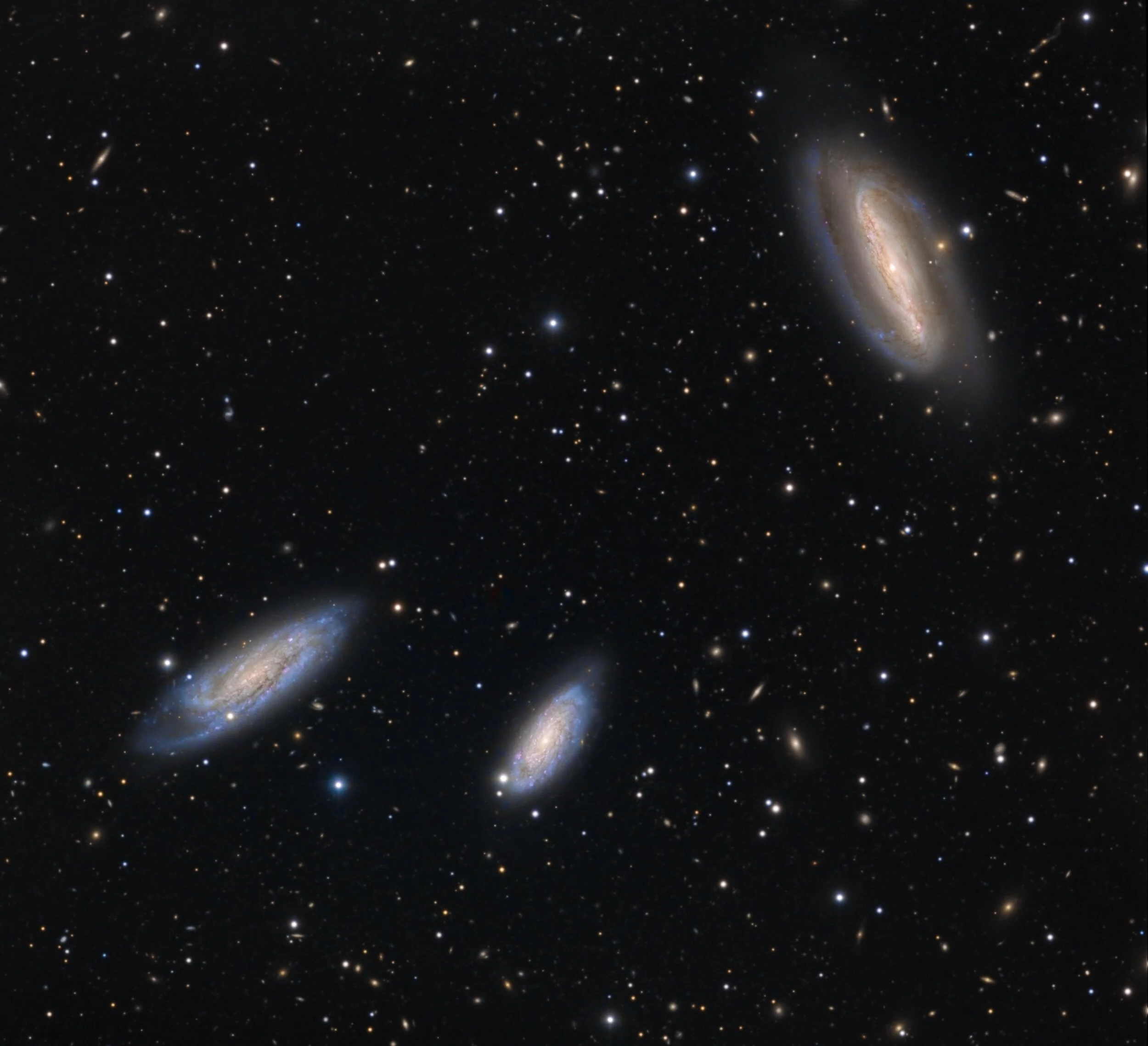
NGC 7582 NGC 7590 NGC 7599
Image Description and Details :
NGC 7582, 7590 and 7599 are an interacting group of galaxies situated 70 million light years away in the constellation of Grus.
Studies in indicate the existence of faint H I bridges between the galaxies.
NGC 7582 at the top right is the brightest galaxy of this trio. It is of interest as it exhibits the characteristics of both a starburst and a Seyfert II spiral galaxy. The starburst activity is quite intense but is localized to several regions.
In 1996 a study indicated that NGC 7582 appears to have two rather than a single nuclei indicating a merger with another galaxy sometime in the distant past.
Imaged in LRGB on our CDK 1000 at El Sauce, Obstech, Chile
Image Processing: Mike Selby
System Control Software : Voyager by Leo Orazi
Integration Time: L 16 hours 900s exp RGB 4 hours each 900s
Copyright: Mike Selby
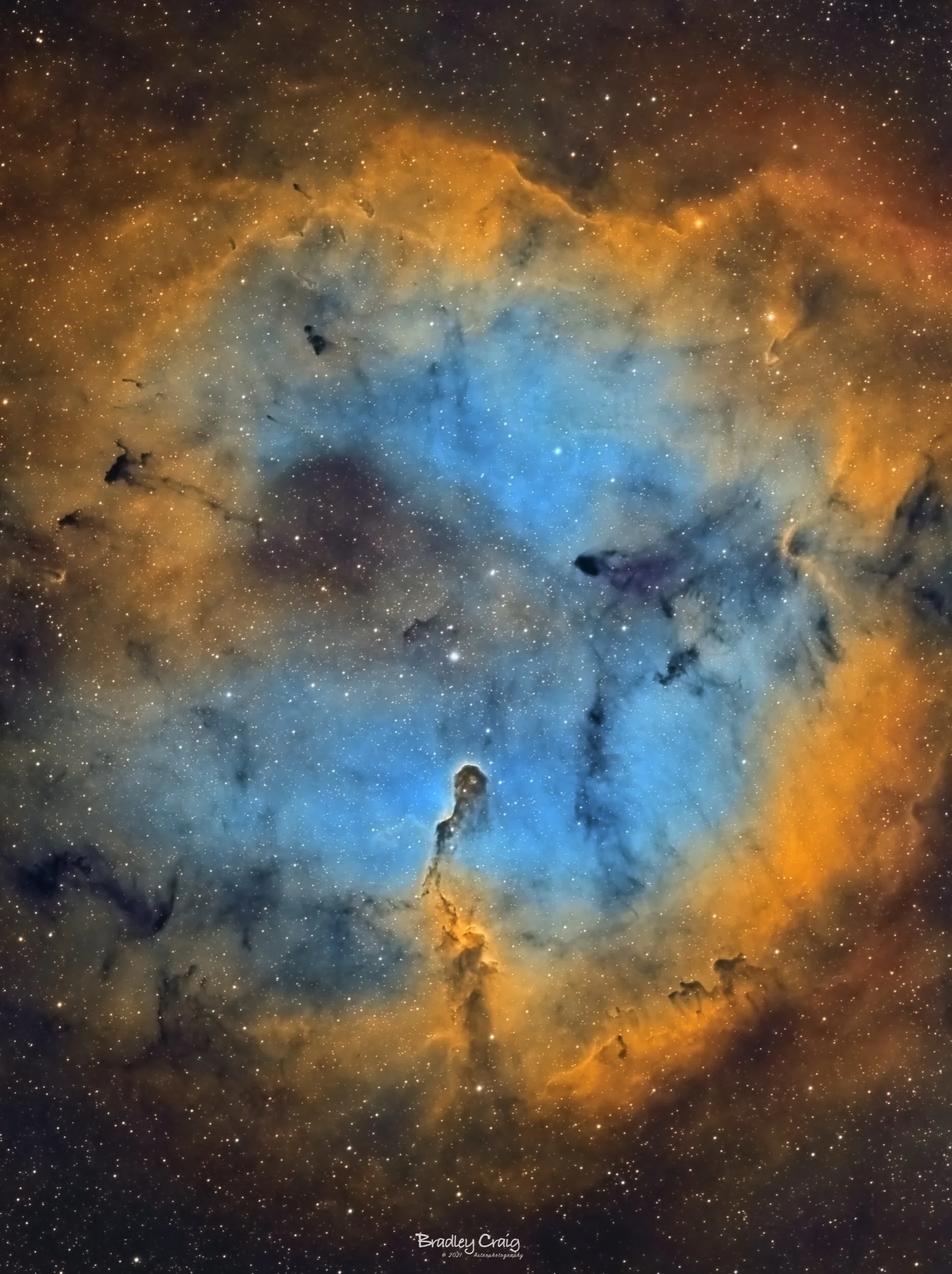
Ic 1396
Image Description and Details :
Imaging telescopes or lenses: William Optics Star 71mm APO f/4.9
Mounts: CEM60
Guiding telescopes or lenses: William Optics Star 71mm APO f/4.9
Guiding cameras: Starlight Xpress Loadestar X2
Software: PinInsight 1.8 · Main Sequence Software Sequence Generator · PHD2
Filters: Astrodon 36mm Tru-Balance E-Series Green · Astrodon 36mm Tru-Balance E-Series Red · Astrodon H-Alpha 3nm · Astrodon SII 3 nm · Astrodon OIII 3 nm · Astrodon 36mm Tru-Balance E-Series Blue
Accessory: Atik OAG · Moonlite High res stepper motor and Mini-V2 controller · Atik EFW2 Filter Wheel
Dates:Sept. 1, 2021 , Sept. 2, 2021 , Sept. 3, 2021 , Sept. 4, 2021 , Sept. 5, 2021 , Sept. 9, 2021
Frames:
Astrodon 36mm Tru-Balance E-Series Blue: 50x30" (25') -10C bin 1x1
Astrodon 36mm Tru-Balance E-Series Green: 50x30" (25') -10C bin 1x1
Astrodon 36mm Tru-Balance E-Series Red: 44x30" (22') -10C bin 1x1
Astrodon H-Alpha 3nm: 49x900" (12h 15') -10C bin 1x1
Astrodon OIII 3 nm: 6x900" (1h 30') -10C bin 1x1
Astrodon SII 3 nm: 23x900" (5h 45') -10C bin 1x1
Integration: 20h 42'
Avg. Moon age: 22.11 days
Avg. Moon phase: 13.72%
Bortle Dark-Sky Scale: 7.00
Astrometry.net job: 4987700
RA center: 21h 39' 16"
DEC center: +57° 32' 25"
Pixel scale: 3.170 arcsec/pixel
Orientation: 88.298 degrees
Field radius: 1.809 degrees
Resolution: 2460x3290
Locations: Backyard, Charlotte, NC, United States
Data source: Backyard
Copyright: Bradley Craig
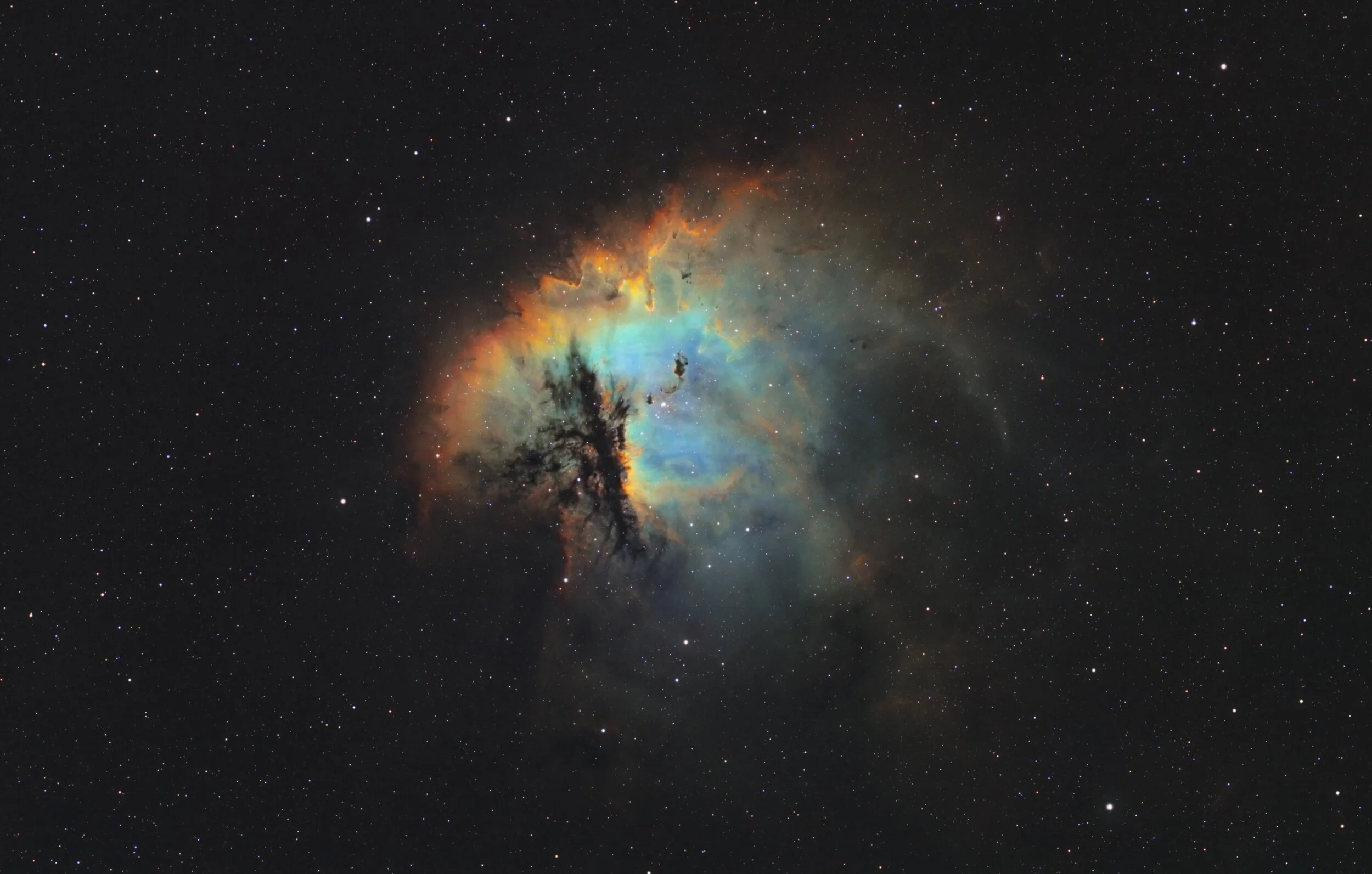
NGC281 Pacman Nebula
Image Description and Details : NGC281 Pacman Nebula
Taken in Montréal (Bortle 9)
Around 18h of exposure from 3 nights (the only 3 cleared nights in July/August and early September )
Chroma 3nm SHO
TSA102
QHY294MM
CEM70
Copyright: Jonathan Durand

Floating beauty
Image Description:
27-8-2021 Moon age: 18.8 days Moon phase: Waning Gibbous LEB - Bortle 7 class -Rig Details: Celestron EdgeHD 9.25 on CGX Baader UV/IR cut filter ZWO asi224mc TV 2.5x powermate SharpCap
Copyright: Omar S. Rajji
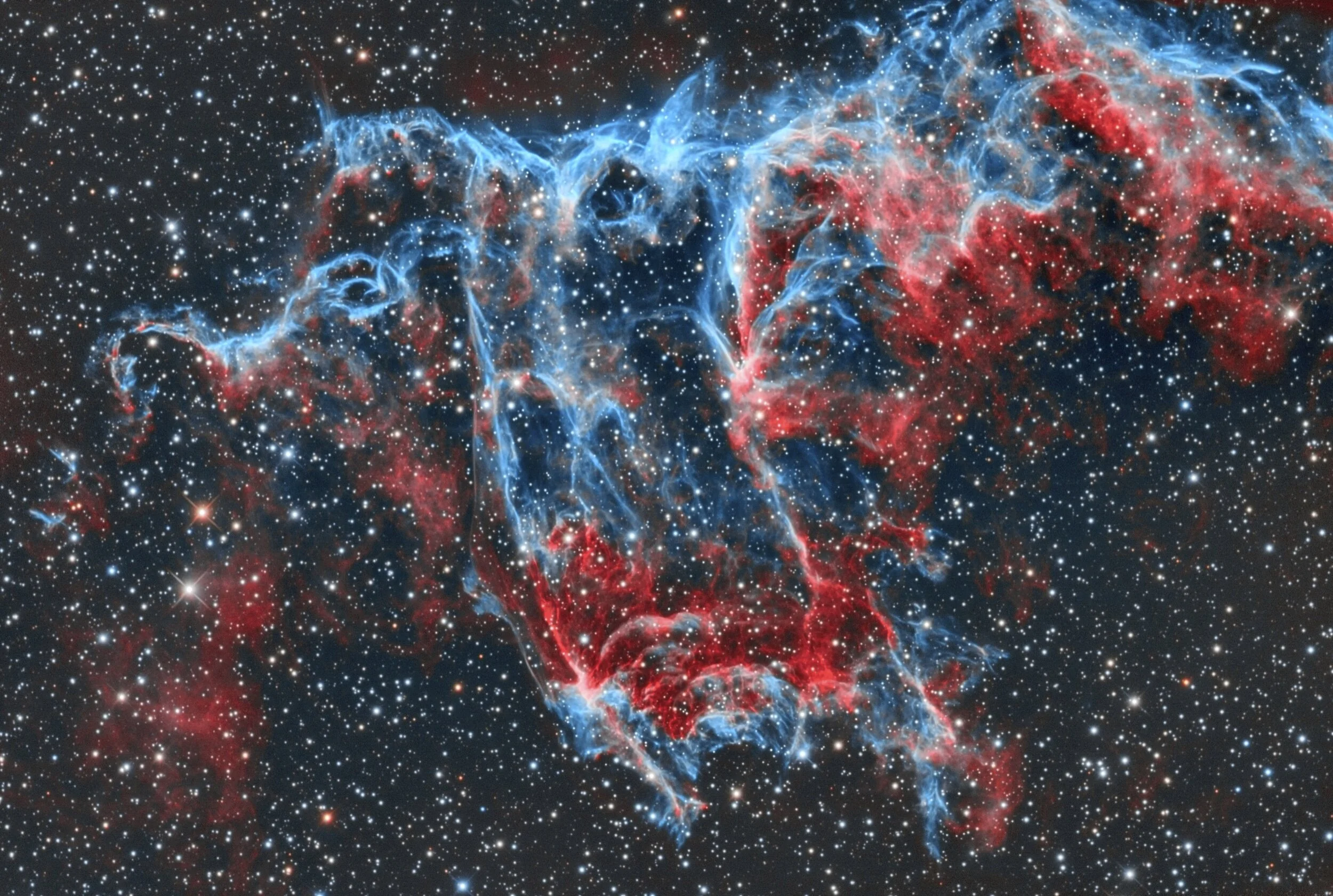
IC 1340 - THE BAT NEBULA
Image Description and Details : IC 1340, otherwise known as The Bat Nebula and Caldwell 33, is a beautiful portion of the Cygnus loop supernova remnant that reveals delicate wisps and filaments of nebulosity. Sadly, it is often overlooked because of the notoriety of three other portions of the Cygnus loop, namely the Veil Nebula, The Witch's Broom Nebula, and Pickering's Triangle. IC 1340 is the continuation of the Veil Nebula. The nebula lies approximately 1,500 light-years from Earth.
Imaging telescopes or lenses: GSO RC 8'' F/8 Carbon Fiber @ 1120mm
Imaging cameras: QHYCCD QHY 183M
Mounts: iOptron Cem70 and Sky-Watcher EQ6 Rowan belt mod
Guiding telescopes: GSO RC 8'' F/8 Carbon Fiber @ 1120mm
Guiding cameras: Imaging source dmk21au618
Focal reducers: astrophisics 0.67x
Software: Pleadies astro Pixinsight 1.8.8, KStars INDI/Ekos
Filters: Optolong Ha 7nm, IDAS LP2 v2, Optolong OIII 6.5nm 31mm, Baader LRGB 31mm
Accessory: QHY-CCD CFW2-7 31mm
Multiple exposure time has been used to obtain the best of details, for a total exposure time of about 59 hours.
HAlpha 222x600" -20C bin 1x1
Oiii 114x600" -20C bin 1x1
RGB: 36x300" -20C bin 1x1 / 12 subs for each filter
Copyright Information: Acquisition by Giuseppe Amante & Alessandro Pensato.
Pixinsight processing by Giuseppe Amante
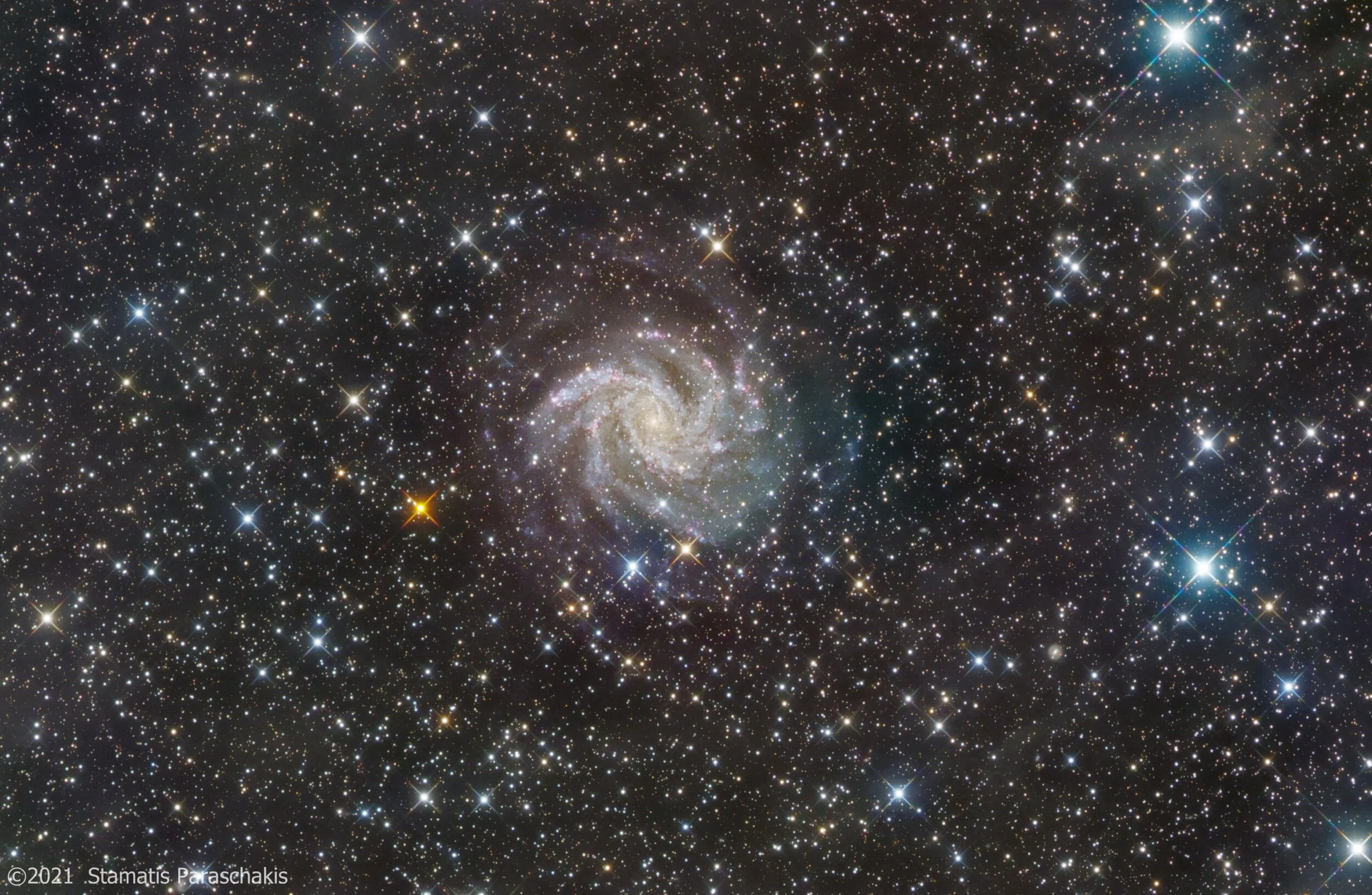
NGC 6946
Image Description and Details : Imaging telescope: LACERTA 200/800 Carbon FotoNewton Edition 2021
Imaging camera: QHYCCD QHY183M
Mount: SkyWatcher EQ6-R Pro
Guiding telescope: QHYOAG-LACERTA 200/800 Carbon FotoNewton Edition 2021
Guiding camera: ZWO 290MM Mini
Coma corrector: GPU Optics GPU Komakorrektor
Baader Planetarium B 1.25" CCD Filter: 50x210" (2h 55') (gain: 11.00) -15C bin 1x1
Baader Planetarium G 1.25" CCD Filter: 50x210" (2h 55') (gain: 11.00) -15C bin 1x1
Baader Planetarium Luminance 1.25": 400x90" (10h) (gain: 11.00) -15C bin 1x1
Baader Planetarium R 1.25" CCD Filter: 50x210" (2h 55') (gain: 11.00) -15C bin 1x1
Integration: 18h 45'
RA center: 20h 34' 41"
DEC center: +60° 8' 13"
Pixel scale: 0.620 arcsec/pixel
Orientation: 358.766 degrees
Field radius: 0.552 degrees
Location: Kalliopi, Lemnos, Greece
Copyright: ©2021 Stamatis Paraschakis
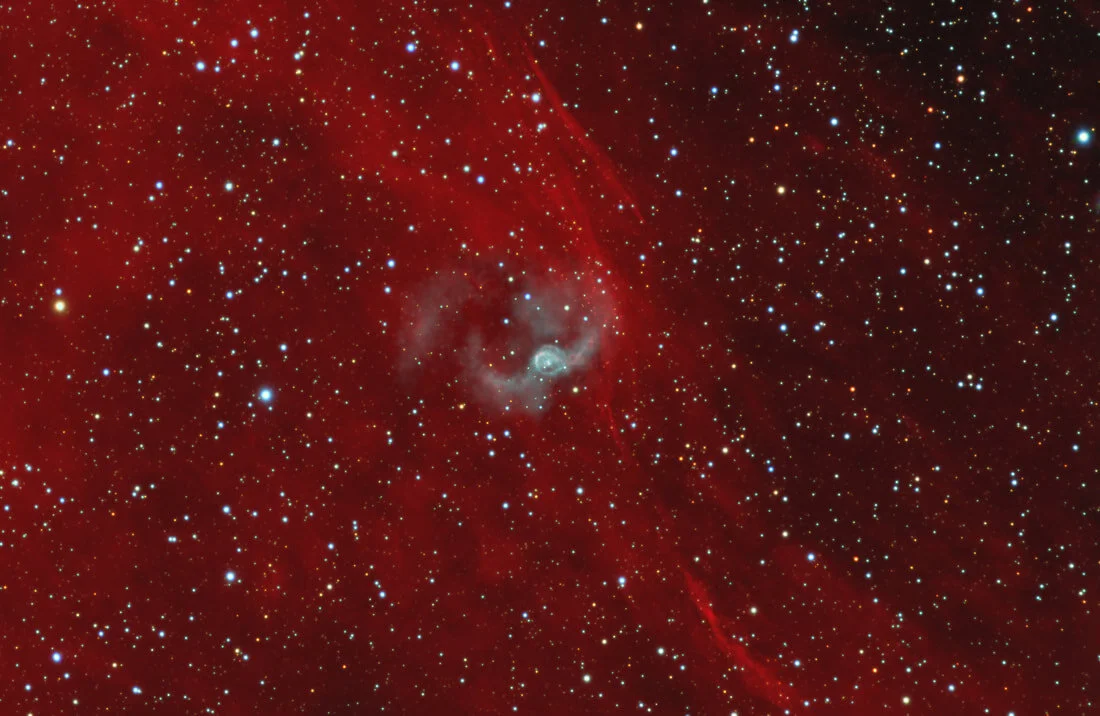
PM1-320
PM1-320 is a small planetary nebula in Cygnus, close to DWB 111, the Propeller Nebula.
It was discovered by Andrea Preite-Martinez in the 1980s.
I believe this to be the first deep high-resolution image of PM1-320.
The outer parts of the nebulosity are very faint, hence 56 hours of OIII integration.
HASH records it's size as 60 arc seconds.
TARGET
Nomenclature: PM1-320
Right Ascension: 20:10:33.6
Declination: +44:11:48.48
Size: 60.0 arc sec
Discovery: Andrea Preite-Martinez
EQUIPMENT USED
Twin APM TMB LZOS 152 refractors
10Micron GM2000 HPS mount
Twin QSI6120 CCD cameras
Astrodon filters
IMAGE CAPTURE
Blue: 10x300"
Green: 10x300"
Lum: 15x300"
Red: 10x300"
Ha: 103x900" bin 1x1
OIII: 226x900 bn 1x1
Total Integration: 86 hours
Pixel scale: 0.265 arcsec/pixel
Field radius: 0.368 degrees
Capture dates: 20 August-3 September 2021
Capture location: Fregenal de la Sierra, Spain
IMAGE PROCESSING
Pre-processing: CCDStack2
Post-processing: Photoshop CS2
Copyright: Peter Goodhew
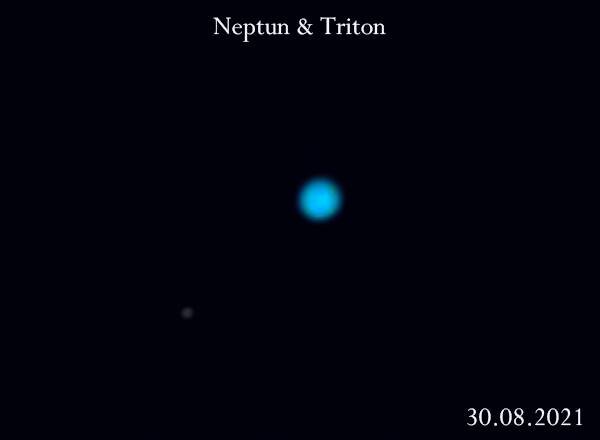
Neptune and Triton
Observations 30.08.2021 .The farthest planet from Earth Planet NEPTUNE (mag. +7.8, diam. 2.4 ") with Triton satellite (mag. +13.45 diam. 0.13"), capture by Omegon 304/1200 Barlow 5X Televue telescope, Zwo Asi 224 camera. Stak from 2000 framesThe planet is visible through a telescope in the constellation Aquarius, on September 16, 2021 being in opposition, the distance from Earth 4.3 billion km.30.08.2021 at 23:50
Copyright: Balint-Forro Eugen
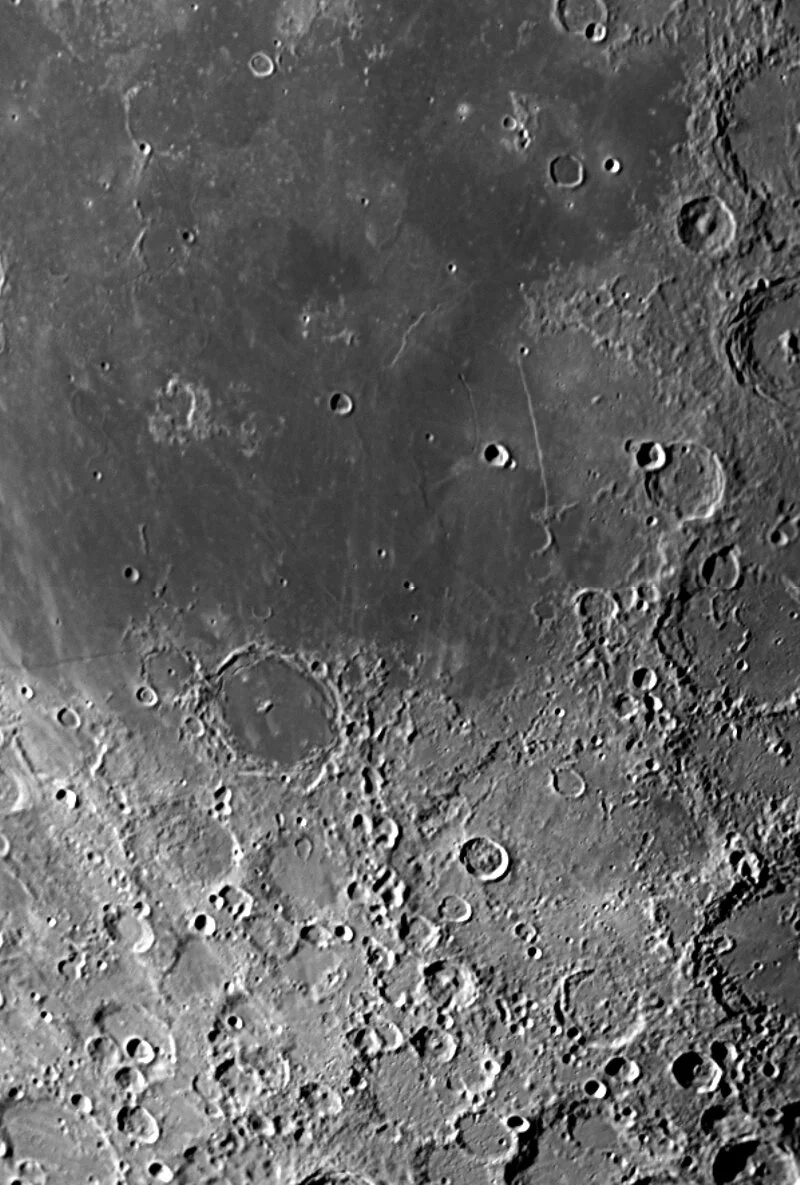
Rupes Recta - Prominent linear fault on the Moon and volcanic rille
Image Description and Details :
Rupes Recta is a linear fault on the Moon, in the southeastern part of the Mare Nubium. The name is Latin for straight cliff, although it is more commonly called the Straight Wall. This is the most well-known escarpment on the Moon, and is a popular target for amateur astronomers.
When the sun illuminates the feature at an oblique angle at about day 8 of the Moon's orbit, the Rupes Recta casts a wide shadow that gives it the appearance of a steep cliff. The fault has a length of 110 km, a typical width of 2–3 km, and a height of 240–300 m. Thus although it appears to be a vertical cliff in the lunar surface, in actuality the grade of the slope is relatively shallow.
To the west of this escarpment is the crater Birt, which is about 17 km in diameter. The Birt Rille is a slightly curved ~50 km long channel that starts and ends in a pit.
Telescope: Clestron 9.25 f/10
Reducer/corrector: No reducer
Filter: Baader UV-IR cut
Mount: Orion Atlas EQG
Camera: DMK 23U618
Exposure: 2000 frames @ 60fps x 2 images mosaic
Procesing: Autostakkert + Registax + PixInsight
Copyright: Astronomica.es - Jaime Fernández
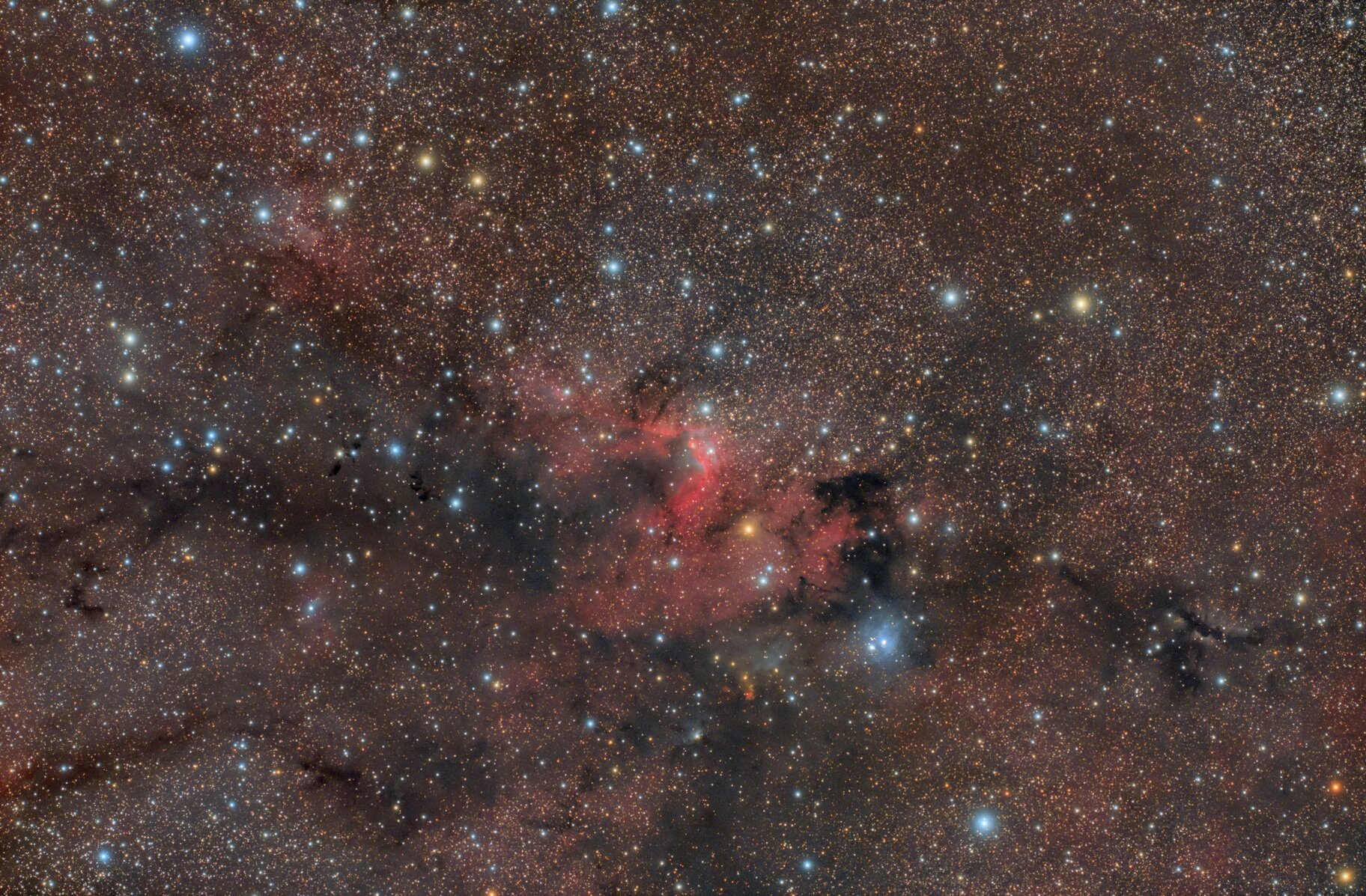
Sharpless -155 “Cave Nebula”
The Cave Nebula (Sh2- 155 or Caldwell 9) is an emission nebula of the Cepheus constellation.
It is a weak light nebula and very diffuse in a greater complex of nebula containing dark emission, reflection and nebulosity. It is located in the constellation of Cepheus and is about 2400 light years from Earth.
Acquisitions with NINA
344 x 300 s i.e. 28 H40
ASKAR 400 bezel
ASI200MC
SIRIL stacking
Pixinsight and Photoshop treatment
Copyright Fred Lamagat

NGC 6914 AND LDN 899
NGC 6914 is a nebula complex composed of emission and reflection nebula. It is located approximately 6 light-years from Earth in the Swan constellation.
You can also see two pretty little blue nebula.
Material:
- TS 107/00
- Rising clone 2600mc
- AZEQ time
Acquisition:
50 X300s to-15
Copyright: Emmanuel Tesnieres

Sharpless 132 - The Lion Nebula
Sharpless 132 is a very faint emission type nebula on the Cepheus/Lacerta border. It lies at a degree southeast of Epsilon Cep, and has a size of about 40 arc minutes.
Sh2-132 is located at about 10400 light years in the Perseus Arm of the Milky Way , in the region of Cepheus OB1, a large, bright OB association . The stars responsible for the ionization of its gases are very hot and massive; in particular, two Wolf-Rayet stars , known by the initials HD and HD 211 564 211 853 (the latter also having the initials WR 153), as well as a star of spectral class O8.5V and a dozen stars of class B.
Equipment used:
Eq6-R
AstroTech 106LE with upgraded Moonlite focuser
TSFlat 2" field flattener
ASI294MM Pro Cmos camera, cooled at - 15°C
8x1.25" ZWO USB filterwheel
Chroma 3nm 1.25" Ha, Oiii ans Sii filters
Qhyccd QHY5L-IIM guide camera
9x50mm finder-guider
Qhyccd Polemaster
Software used:
Eqmod, SGP - Sequence Generator Pro, PHD2, Stellarium with stellariumScope, SharpCap for polar alignment
Date: 01.06 to 15.07.2021
Location: Bushey, bortle 7
Ha: 80x300sec Bin 2x2, Gain 200 Offset 10
Oiii: 60x300sec Bin 2x2, Gain 200 Offset 10
Sii: 50x300sec Bin 2x2, Gain 200 Offset 10
Total integration time 15 hours and 50 minutes
Stacked in AstroPixel Processor and processed in Pixinsight and Photoshop CC 2021
Copyright: Emil Andronic

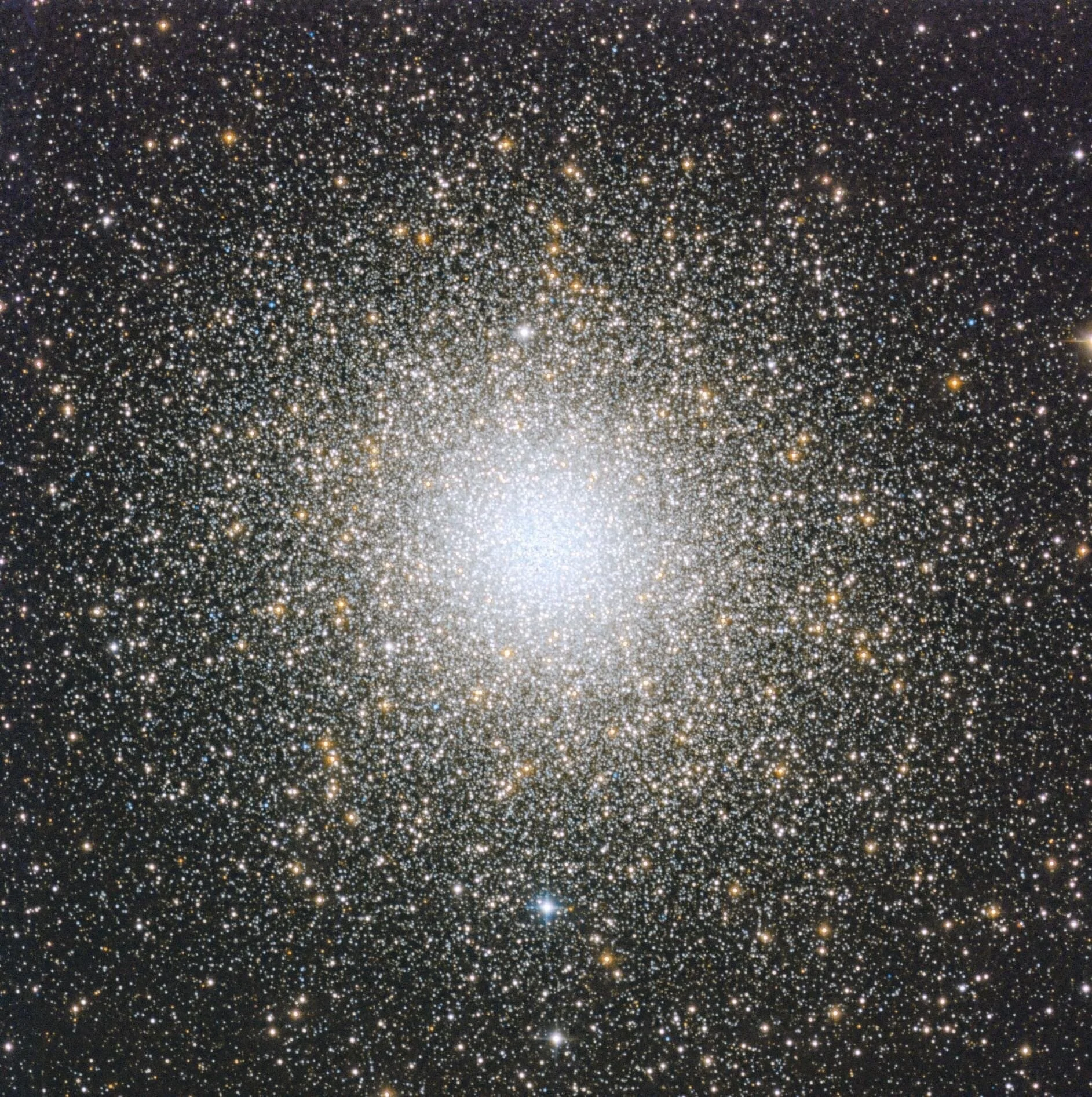
Ngc104
Here is 47 Tucanae, AKA NGC 104 from some time I booked on a telescope in Chile. It was harder than I thought it would be to process. This is a total of 1 hour and 40 minutes of exposure after I tossed 30 minutes of L due to 300s subs absolutely destroying the core of this. I wish I had done 2x more of R, G, and B rather than the 6x L. Still, it's a really cool looking glob!
Cooyright: Scotty Bishop
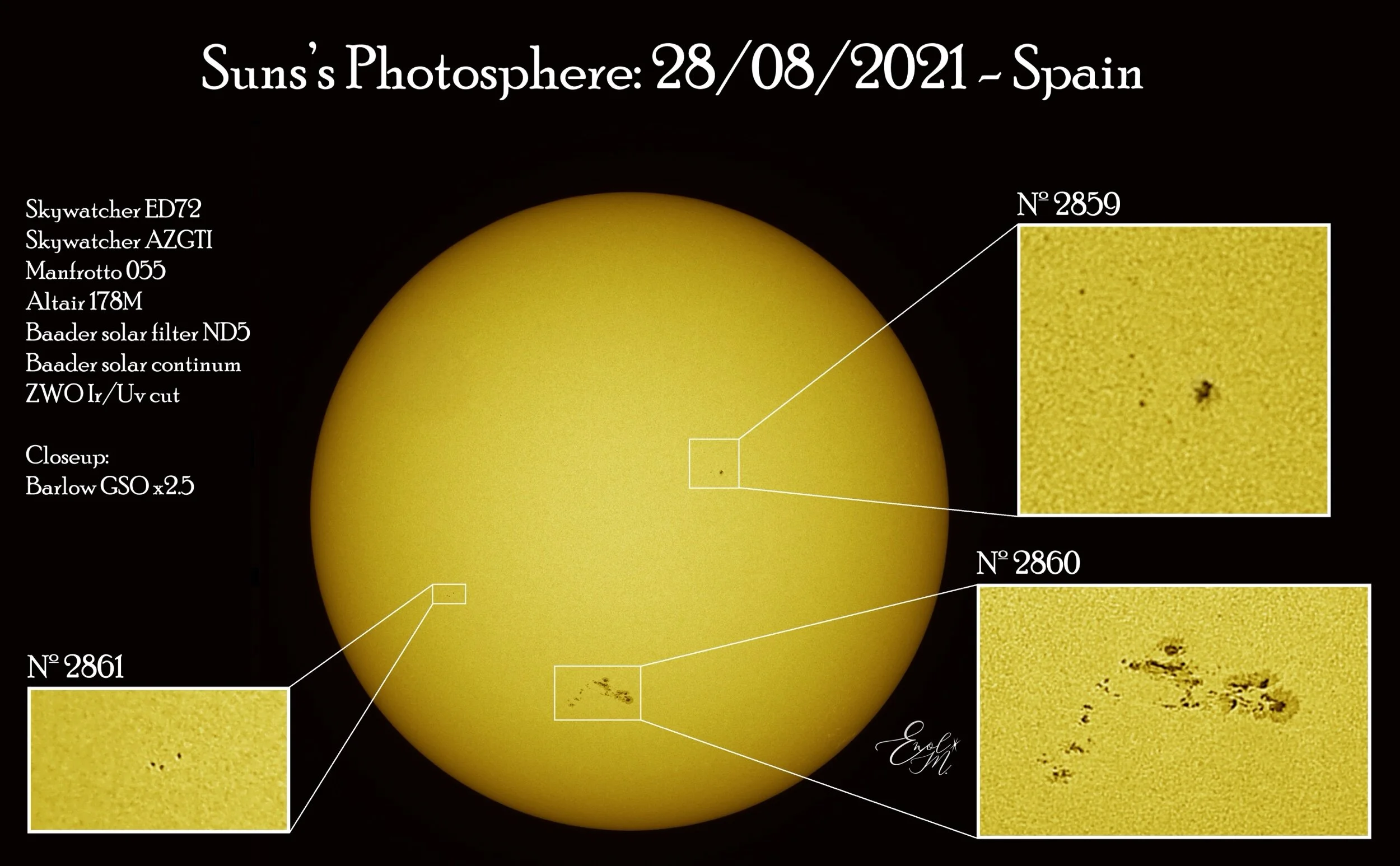
Sun's photosphere. From sunspot 2859 to 2861
Image Description and Details : It seems that the sun is coming back to life.
Right now there is a rather interesting group (2860), another with a small but decent spot with some umbra (2859) and a group of 3 small spots (2861). There are also some faculae already disappearing through the limbo.
Tube: SkyWatcher ED 72/420 with a Baader Astrosolar OD 5.0 filter.
Camera: Altair GPCAM 178M
Filters: Zwo IR/UV cut and Baader Solar Continuum
Mount: SkyWatcher AZGTI over a Manfrotto 055 tripod.
Barlow: GSO x2.5 on closeups.
Acquisition: 3 videos of 180" stack on AutoStakkert2! and processed with Astro Surface OMEGA and Fitswork 4. False color from monochrome data.
Copyright: Enol M.
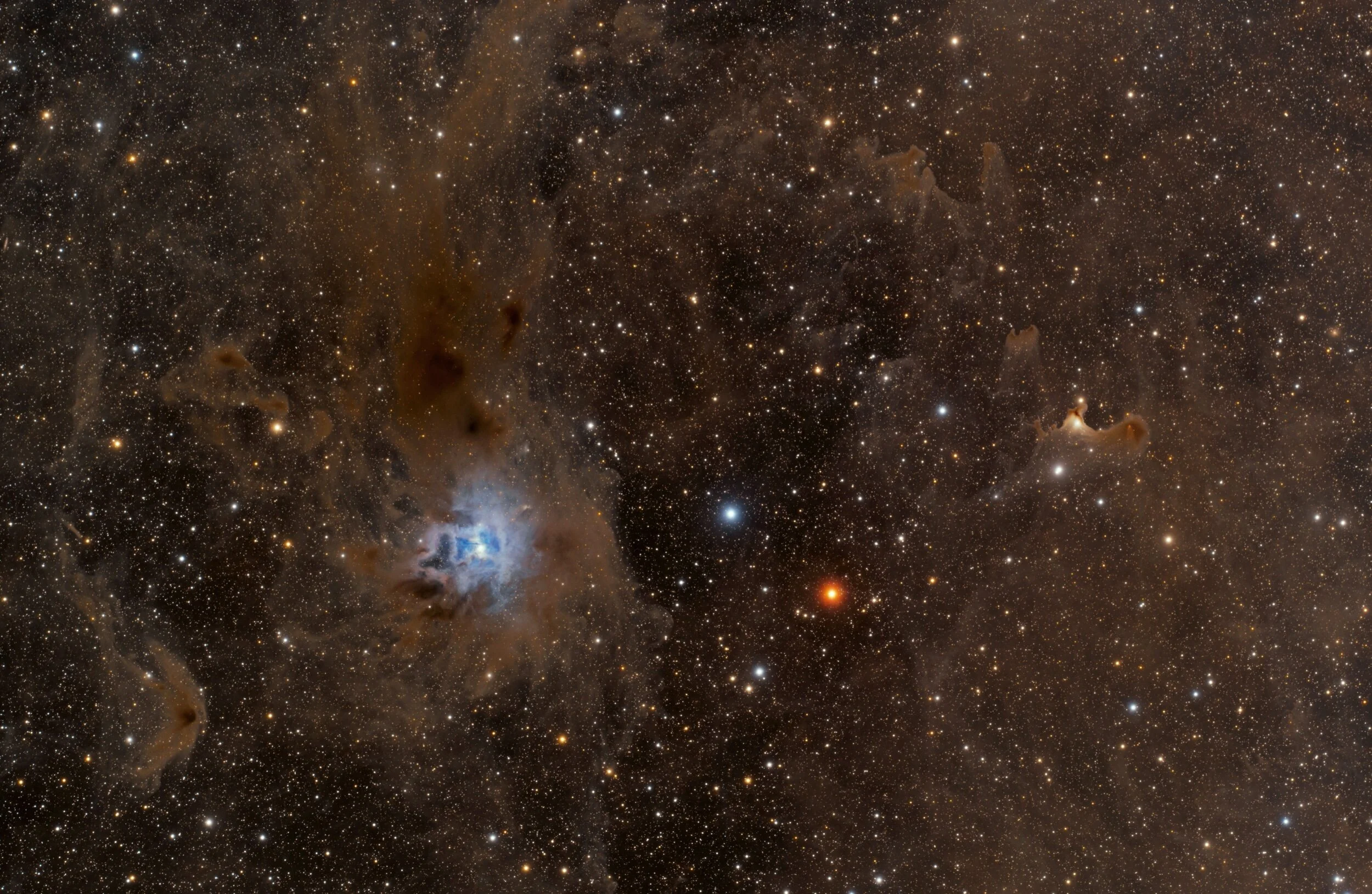
The Iris, the Ghost, and the Dark
Image Description and Details : Two popular long focal length targets, the Iris Nebula and the Ghost Nebula, share a field of chocolate colored dust in the constellation Cepheus. This 2 degree FOV captures both with plenty of room for the surrounding dark nebulae.
Captured over 4 nights in Goldendale Washington from Goldendale Sky Village and Sky View Acres. Both sites are Bortle 2.
Takahashi FSQ 106
QHY600M
Paramount MYT
Chroma Blue 2": 35x300" (2h 55') (gain: 56.00) -10C bin 1x1
Chroma Green 2": 32x300" (2h 40') (gain: 56.00) -10C bin 1x1
Chroma Luminance 2": 47x300" (3h 55') (gain: 56.00) -10C bin 1x1
Chroma Red 2": 31x300" (2h 35') (gain: 56.00) -10C bin 1x1
Integration: 12h 5'
Copyright:Kevin Morefield
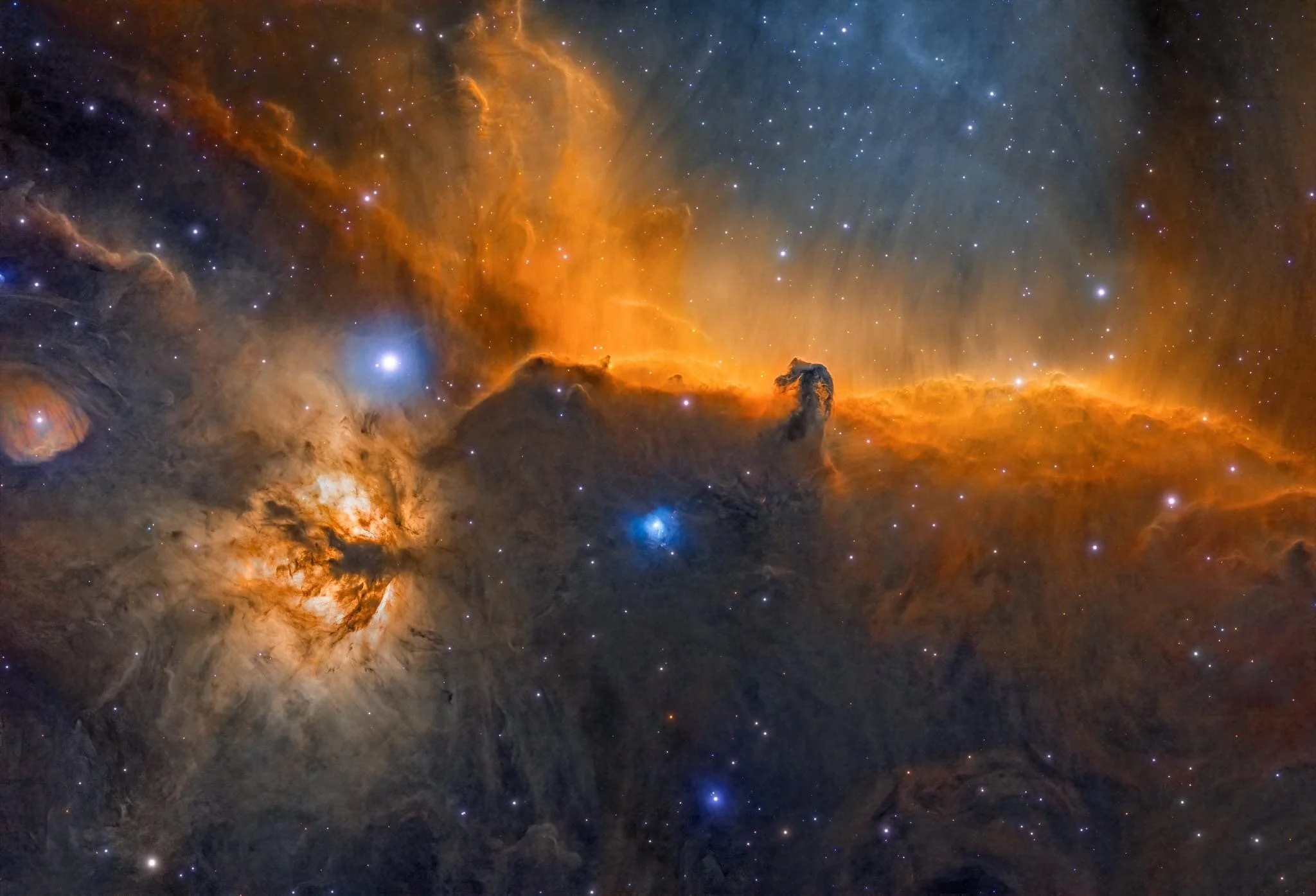
Horsehead and a Flame
The Horsehead is one of the most famous nebulae on the sky. The horse-head feature is dark because it is really an opaque dust cloud that lies in front of the bright emission nebula. Like clouds in Earth's atmosphere, this cosmic cloud has assumed a recognizable shape by chance. After many thousands of years, the internal motions of the cloud will surely alter its appearance. The emission nebula's color is caused by electrons recombining with protons to form hydrogen atoms. On the image left is the Flame Nebula that also contains filaments of dark dust. Just to the lower left of the Horsehead nebula is a blueish reflection nebulae that preferentially reflects the blue light from nearby stars.
Tech card:
Imaging telescope: Explore Scientific 127mm ED TRIPLET APO.
Imaging camera: ZWO ASI294MM-Pro.
Mounts: iOptron CEM60.
Guiding camera: ZWO ASI290MM mini.
Focal reducer: Explore Scientific 0.7 Reducer/Flattener.
Accessory: ZWO OAG · ZWO ASIAIR Pro · ZWO 8x 1.25" Filter Wheel (EFW).
Frames:
Chroma 3nm Ha: 12x600" (2h) (gain: 200.00) -20C bin 1x1.
Chroma 3nm OIII: 15x600" (2h 30') (gain: 200.00) -20C bin 1x1.
Chroma 3nm SII: 8x600" (1h 20') (gain: 200.00) -20C bin 1x1.
Total integration: 5h 50'
Darks: ~50.
Flats: ~30.
Flat darks: ~30.
Avg. Moon age: 19.61 days.
Avg. Moon phase: 75.53%
Bortle Dark-Sky Scale: 4.00.
RA center: 5h 41' 15"
DEC center: -2° 16' 1"
Pixel scale: 0.706 arcsec/pixel.
Orientation: -93.427 degrees.
Field radius: 0.983 degrees.
Imaging dates: Jan. 3 and 4, 2021.
Imaging location: Abu Dhabi desert, UAE.
Copyright: Wissam Ayoub
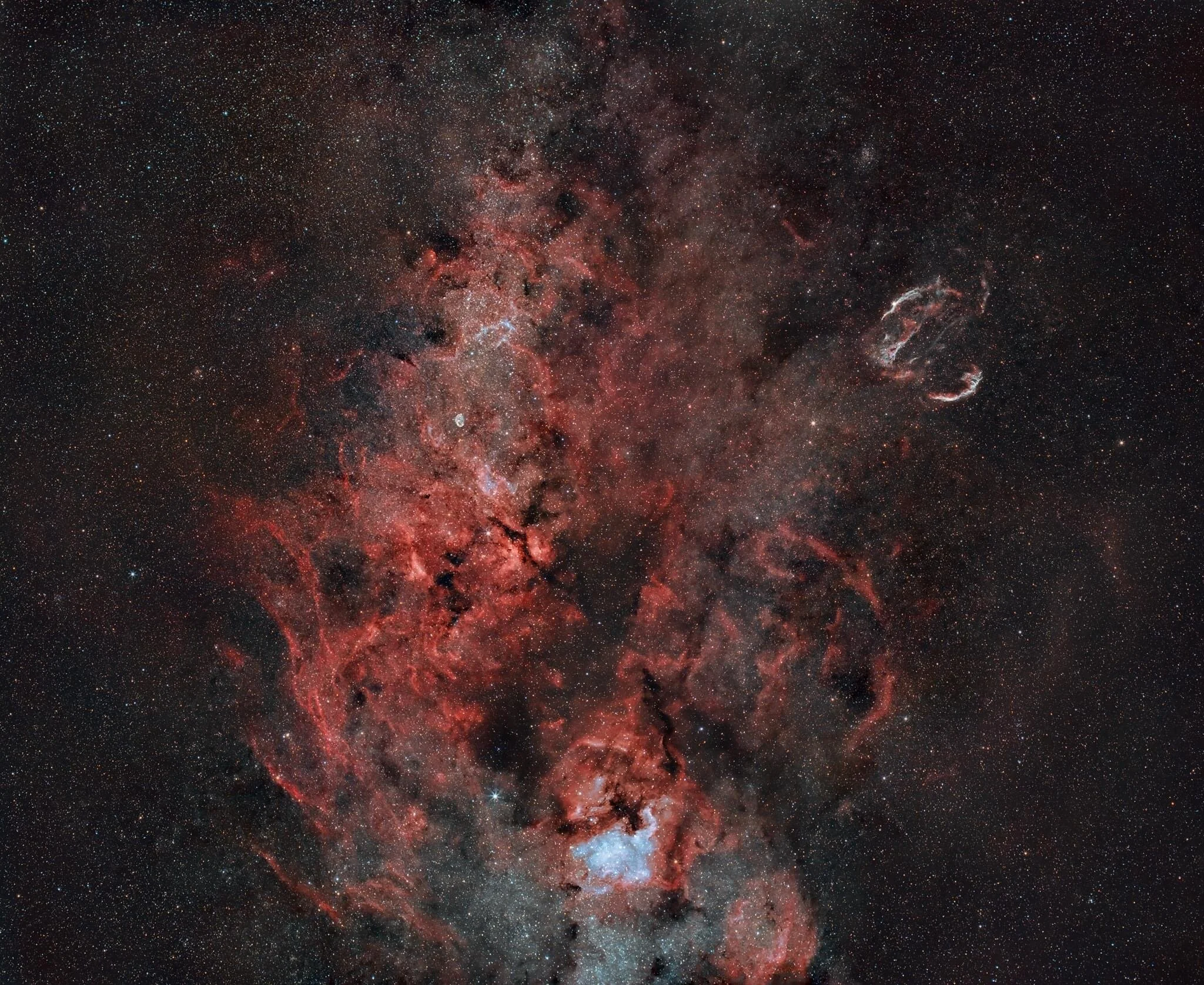
Flames of Cygnus
Image Description and Details : Imaging lens: Canon 50mm USM 1.4 @ f/4
Imaging camera: ZWO ASI2600MC Pro
Mount: Sky-Watcher EQ6R-PRO
Guiding telescope: ZWO Mini Guide Scope
Guiding camera: ZWO ASI290MM Mini
Software: Aries Productions Astro Pixel Precessor, Pleiades Astrophoto PixInisight, ZWO ASIAir Pro, Photoshop CC
Filters: Optolong L-eXtreme 2", Optolong L-Pro 2'', Optolong L-eNhance 2"
Accessory: ZWO ASIAir Pro
Dates: June 20, 2020, June 21, 2020, Aug. 2, 2021, Aug. 3, 2021, Aug. 4, 2021, Aug. 5, 2021, Aug. 8, 2021, Aug. 10, 2021, Aug. 11, 2021
Frames:
Optolong L-Pro 2'': 80x90" (2h) (gain: 100.00) -5C bin 1x1
Optolong L-eNhance 2": 17x1200" (5h 40') (gain: 100.00) -5C bin 1x1
Optolong L-eNhance 2": 36x600" (6h) (gain: 100.00) -5C bin 1x1
Optolong L-eXtreme 2": 80x1200" (26h 40') (gain: 100.00) -5C bin 1x1
Integration: 40h 20'
Darks: ~40
Flats: ~40
Flat darks: ~40
Bortle Dark-Sky Scale: 8.00
Locations: Backyard, Nashville, TN, United States
Copyright: Jeffrey Horne