

AAPOD2 Image Archives
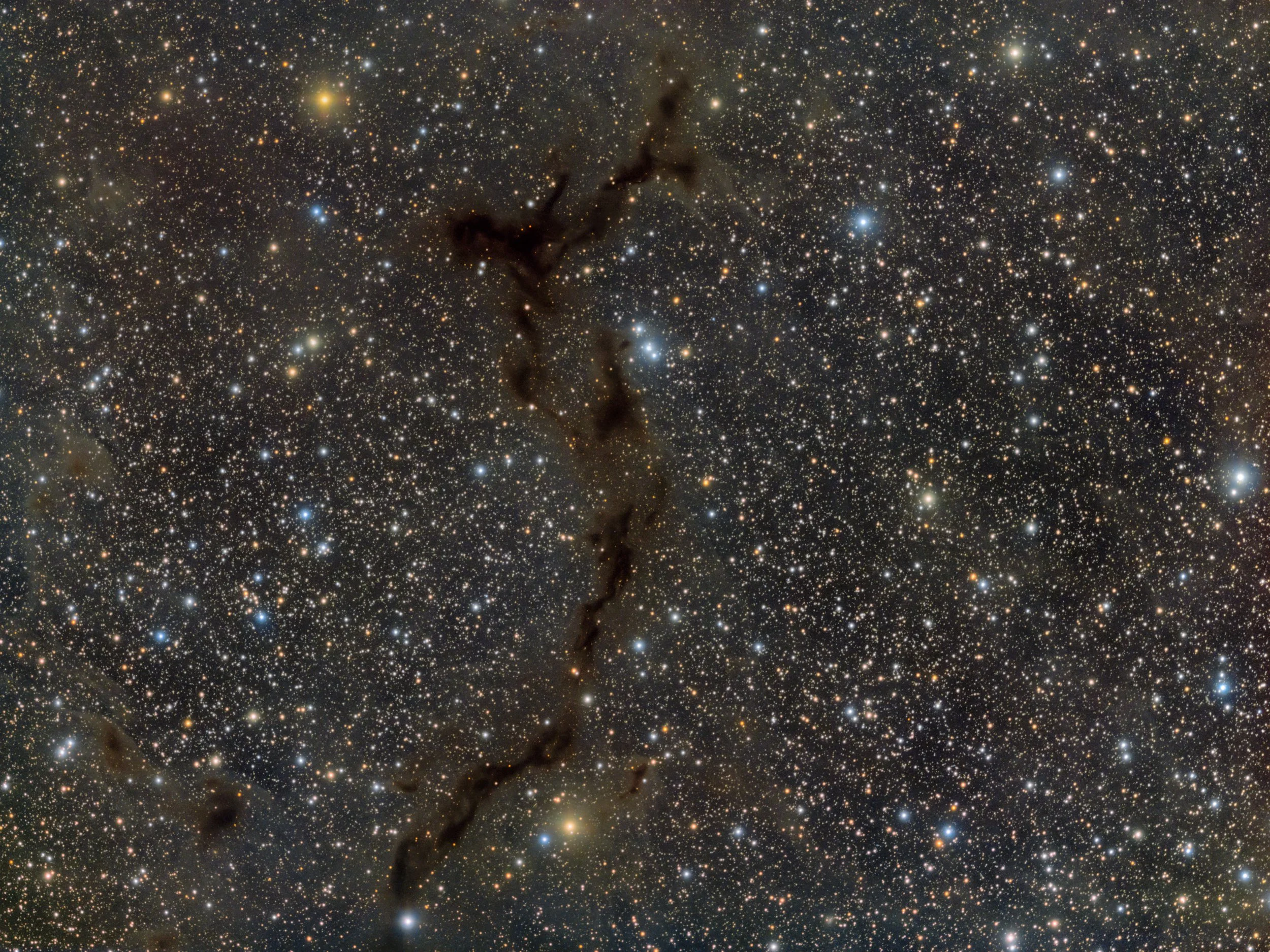
The Seahorse Nebula
Image Description and Details : This dark nebula lies at a distance of 1200 light-years from Earth in the Constellation of Cepheus. Because the nebula is in the Milky Way's plane it stand outs from the background filled with colourful stars of our galaxy, a keen eye can also distinguish three separate dense dust cores that actually are star formation regions.
Taken from my self-built remote observatory in Finland with SkyWatcher Esprit 100mm f/5.5, ZWO ASI1600MM-C, Losmandy G11, guided with ASI224MC as finder-guider, TS Optics LRGB filters.
L: 262x120s, R: 92x120s, G: 100x120s, B: 80x120s.
Total integration time is ~18 hours.
Copyright: © Ville Miettinen
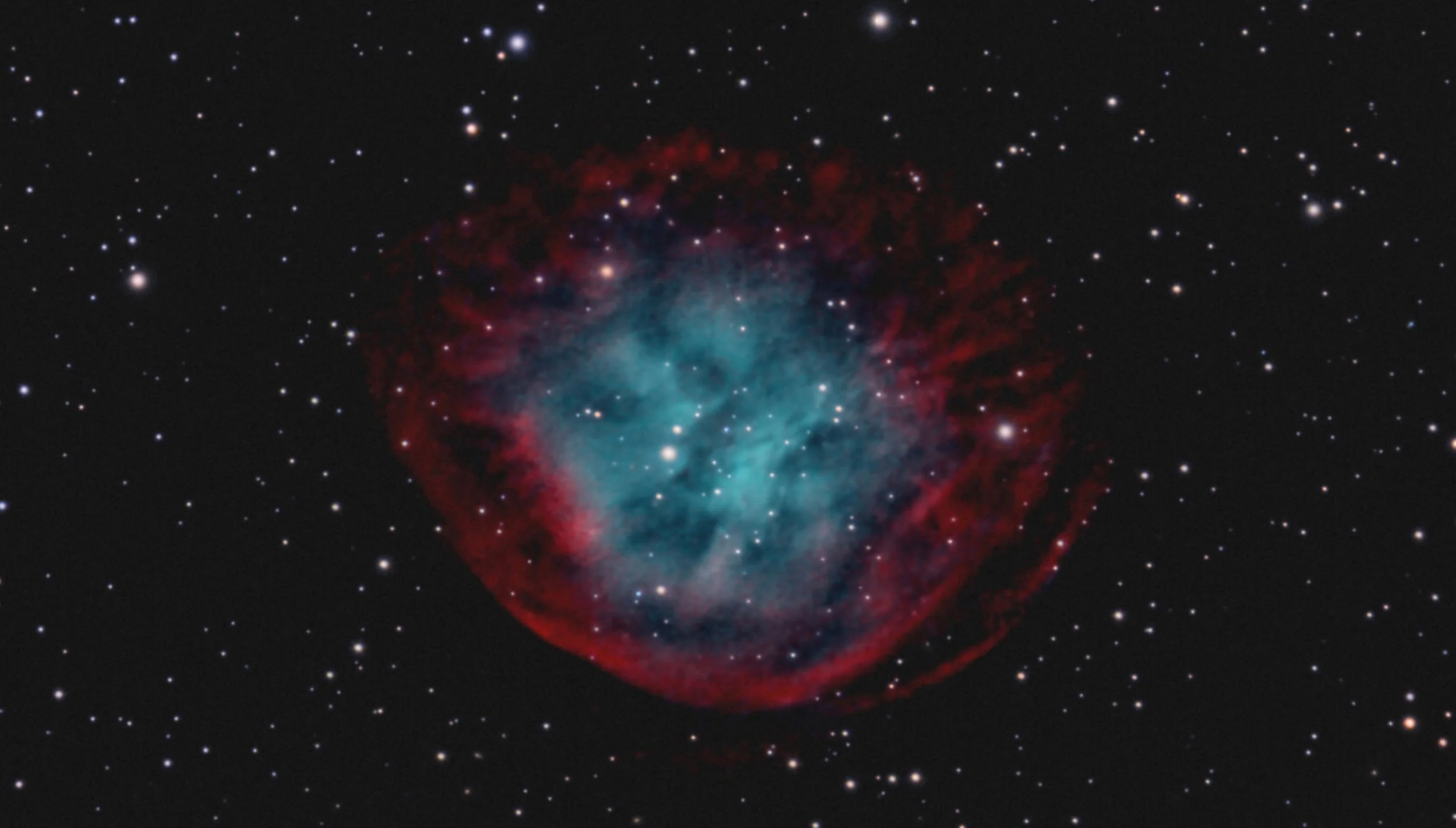
Abell 31
Image Description and Details : Abell 31
An evolved planetary nebula in the constellation Cancer. It is estimated to be 2,000 light years from Earth.
TARGET
Nomenclature: Abell 31
Right Ascension: 08:54:13.20
Declination: +08.53.53.02
Size: 970 arc secs
EQUIPMENT USED
Twin APM TMB LZOS 152 refractors
10Micron GM2000 HPS mount
Twin QSI6120 CCD cameras
Astrodon filters
IMAGE CAPTURE
Blue: 10x300"
Green: 24x300"
Red: 27x300"
Ha: 76x900" bin 1x1
OIII: 76x900" bin 1x1
Total Integration: 43 hours 5 minutes
Pixel scale: 0.531 arcsec/pixel
Field radius: 0.357 degrees
Capture dates: 28 February - 9 March 2022
Capture location: Fregenal de la Sierra, Spain
IMAGE PROCESSING:
CCDStack2 and Photoshop CS2
Copyright: Peter Goodhew
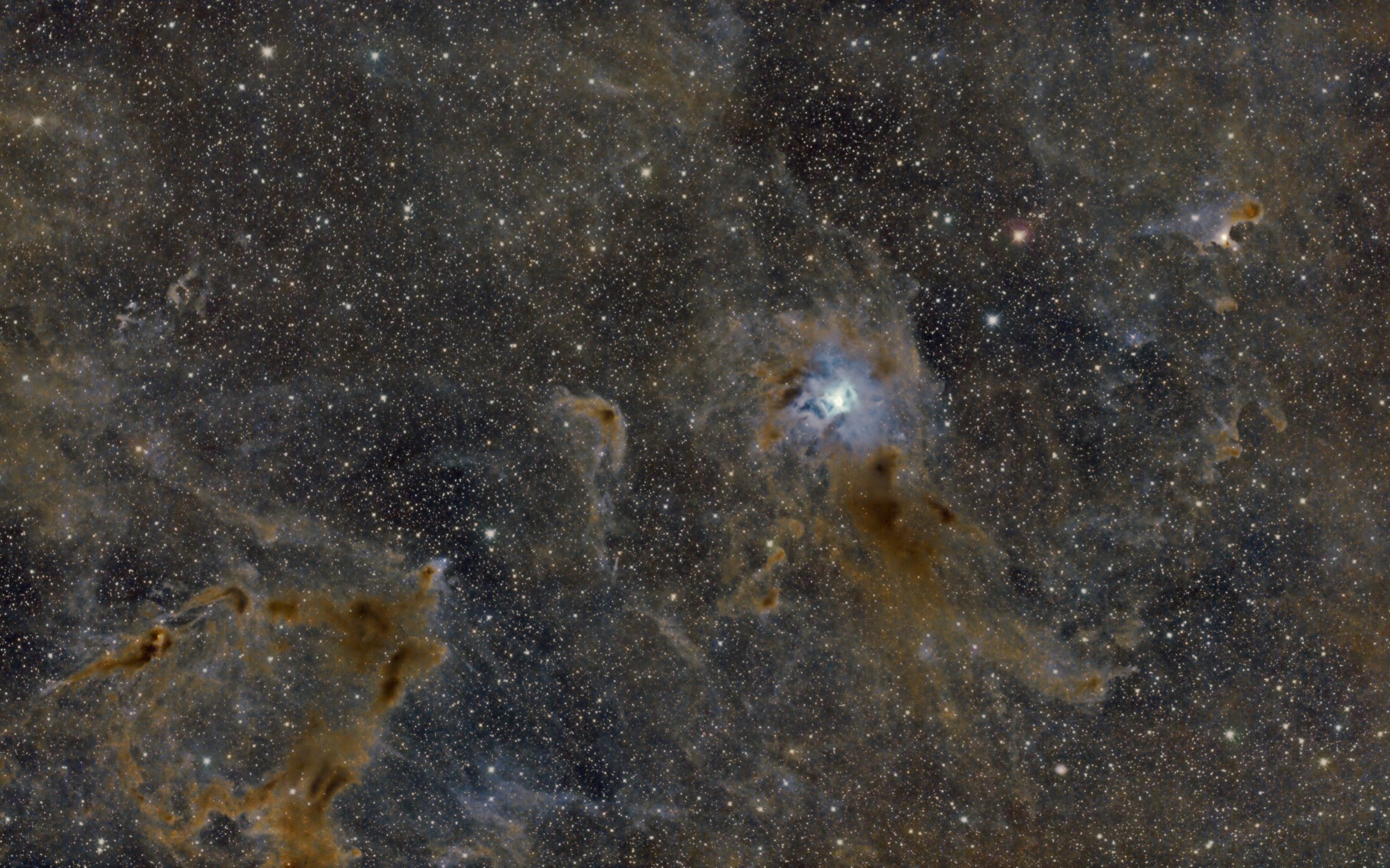
Iris Nebula wide field
Image Description and Details : Image Description and Details : NGC7023 - SH2-136 - LBN475 - LBN468
Takahashi Espilon 130D
Canon 6Da
SkyWatcher EQ6-Pro
intégration: 230x180" (11h 30')
Copyright: Thierry BOUFFLET

Markarian's chain & IFN
Image Description and Details : Reworking of a previous photo highlighting the NFI that characterizes the cluster of the Virgin.
The IFN (Integrated Flux Nebulae) are huge systems of very faint and faint filaments nebulae predominantly not illuminated belonging to the high Galactic latitudes of the Milky Way.
The most extensive system of this type extends along all the northern constellations of the northern celestial hemisphere reaching even the Polar star.
These nebulae have in common the fact that they are not illuminated by a single star but by all the stars of the Milky Way in the vicinity.
Their visibility is conventionally divided between very Bright (those close to M81 and M82), Medium, Faint (weak, as in the case of the Markarian's chain) and dim (poor).
The IFN present in the Markarian cluster is however rather surprising both for its distance from the galactic plane and for its relative brightness although defined as very poor in the details.
Copyright: Giambattista Rizzo
NGC 2841 | A Galaxy Headed For Retirement
Image Description and Details : Having lost most of its star forming hydrogen clouds, NGC 2841 is domintated by mature yellow and red stars. Several encircling rings of dust can just be seen here about doubling the apparant diameter of the otherwise 8' disk. Extreme stretches also show a very faint arm trailing off to the right. This arm might suggest some galacitc interaction, but that seems at odds with such a lack of star formation. Maybe the interaction was a long time ago or very limited? The Ha data I shot confirms the lack of HII emissions.
41 total hours about half in Luminance. A super luminance was used with the RGB masters to try and tease out the outer rings. My Bortle 3 site may be at the limit to capture these. My FHWM cut off was over 3" to keep integration time high. To add sharpness to the galaxy detail I did a second Luminance with a 2.4" cutoff and blended that with a mask.
Planewave CDK14, Planewave L-350, QHY600M
Copyright: Kevin Morefield
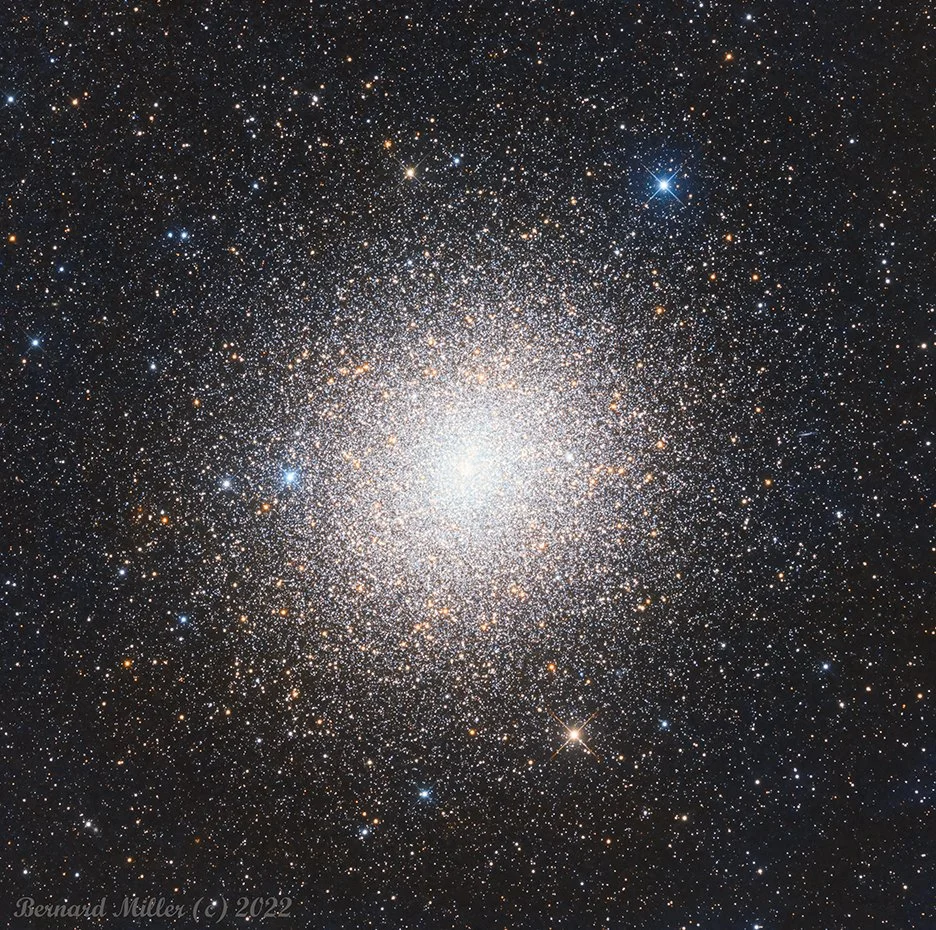
47 Tucanae
Image Description:
Location: Rio Hurtado, Chile
Telescope: ASA 500N
Camera: FLI PL16803
Mount: ASA DDM85
Red: 7x10 minutes (binned 1x1)
Green: 6x10 minutes (binned 1x1)
Blue: 7x10 minutes (binned 1x1)
Copyright 2022 Bernard Miller

4 dust monsters
During our stay at the observatory, I had a little bit left at the end of the night after our collaboration, so I took the opportunity to take a walk in this dusty area of the sky that had been watching me for a while. I was able to shoot it properly during this moonless weekend.
I really wanted to highlight this epic fight scene between 4 dust monsters, LDN 1228, LBN 550, LBN 552 and LBN 555, that's why I went with this diagonal framing to make it look like one takes over in this battle.
I also wanted to respect the natural colors which I find really beautiful and which accentuate this duality with the bluish and orange hues like ice and fire.
Shot on February 3, 27 and 28, 2022.
Takahashi FSQ106 EDX4 with 645-QE super reducer
Asi 2600MM Pro
Antlia LRGB filters
Eq6r-pro
Altaïr 60/225 guide + asi 290mm mini
L: 130x300''
R - G -B: 25x300'' per filter
Stars: 90x15'' per filter
Bortle sky 4
Acquired: N.I.N.A + Phd2
Processing: Siril + PixInsight + Photoshop
Copyright: Yann Sty

Bergkirchli
In February, I spent a two week skiing vacation in Arosa, Switzerland. Repeated snowfall made for some of the best snow conditions in years. The drawback was that I only got one clear night for astrophotography during my entire stay.
I decided to spend that night at the Bergkirchli (Mountain Chapel). Built in 1493, one year after Kolumbus discovered America, the chapel is the oldest building of Arosa. I found that it aligns nicely with the Winter Milky Way and Orion.
EXIF
Canon EOS Ra
Sigma 28mm f/1.4
IDAS NBZ filter
iOptron SkyTracker Pro
Sky:
Two panel vertical panorama, each a stack of 20x 30s @ ISO800, f/2, unfiltered + 6 x 120s @ ISO3200, f/1.4, filtered
Foreground:
Stack of 3 x 30s @ ISO400, f/11 during blue hour.
Copyright: Ralf Rohner

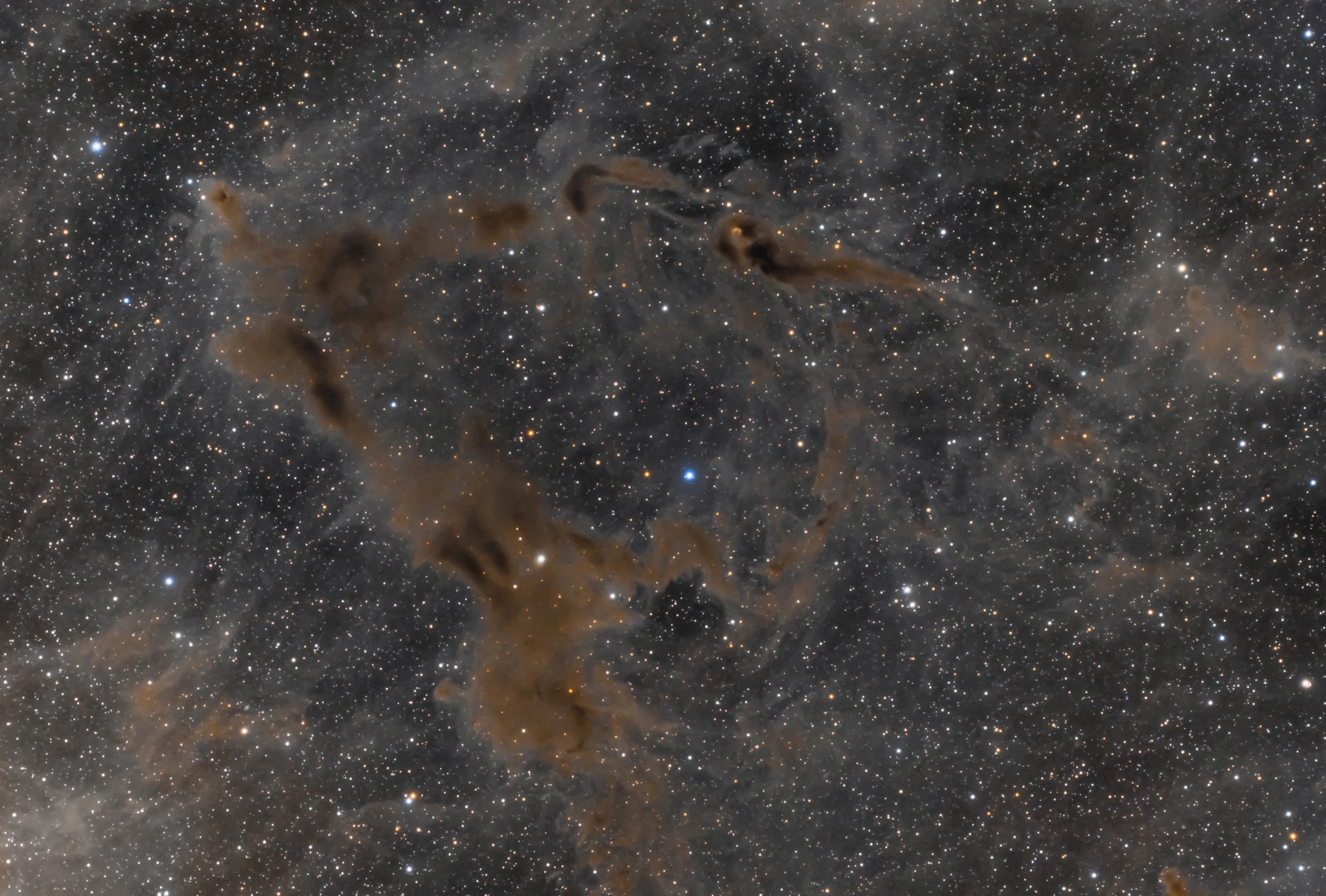
Gyulbudaghian nebula
I share with you my last take, it is an area that contains several dark nebulae, LDN1158, LDN1157, LDN1148 and LDN1155 among others, an object also called the Gyulbudaghian nebula, named after the Armenian astronomer Armen Gyuldubaghian who discovered it in 1977.
Acquisitions: 26h
March 7,8,9 and 10
L 207x300 - R 36x300 - V 36x300 - B 36x300
Materials:
Takahashi FSQ 85 EDX Takahashi Flattener 1.01x
ZWO ASI294MM Pro Camera
Mount Ioptron cem70
Astrodon Tru-Balance E-Series Gen 2 LRGB Filters
ZWO OAG Off Axis Guider and ZWO ASI290MM
ZWO asianair pro
Calibration: Siril 1.0.0-rc2
Pre-processing/processing: PixInsight and Photoshop
Copyright: Christophe Vergnes
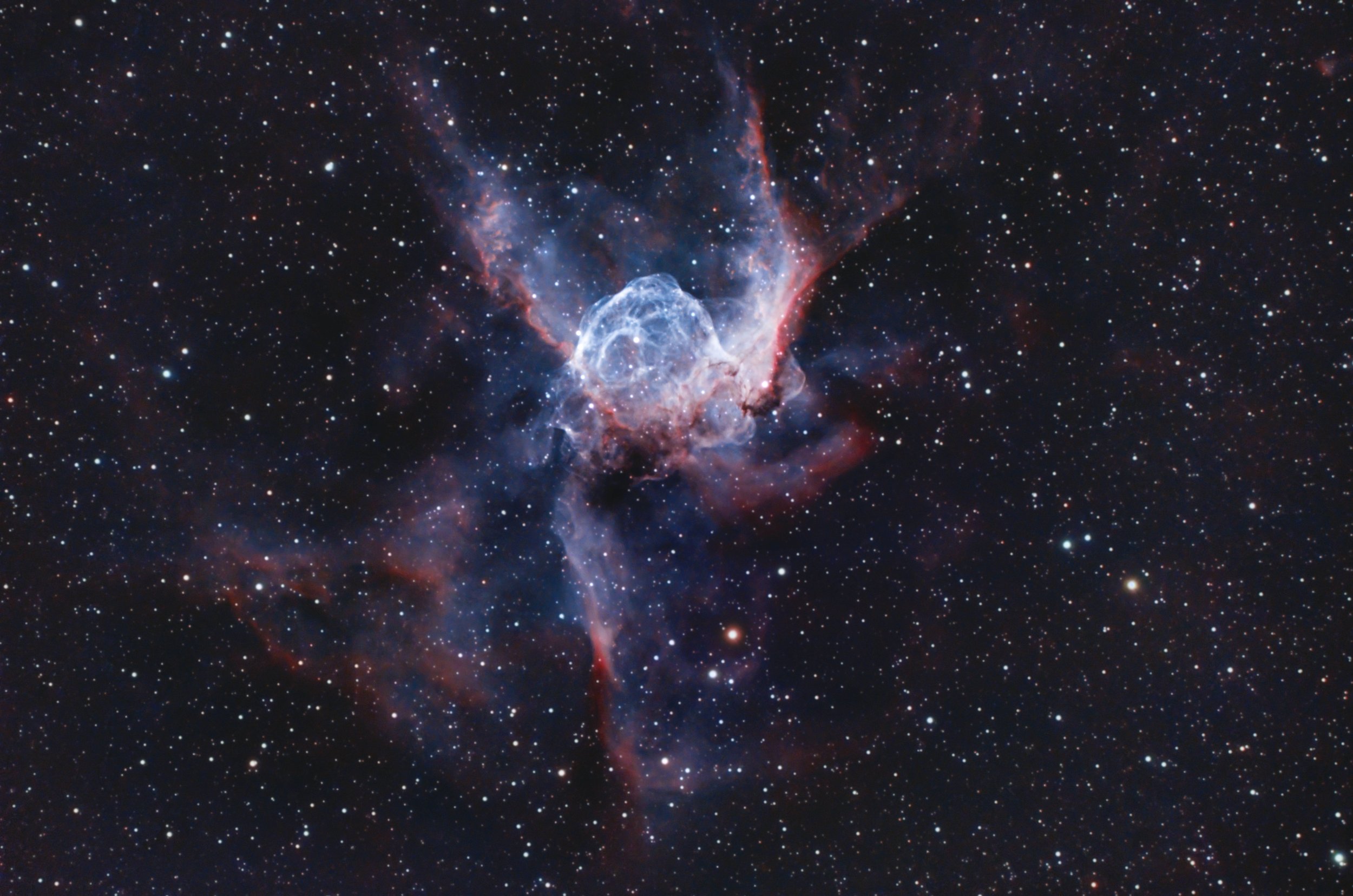
Thor's Helmet - NGC 2359
Image Description and Details :
Thor's Helmet - NGC 2359 Thor's Helmet, an emission nebula ~11,960 light years away, is in the constellation Canis Major. The central star is the Wolf-Rayet star WR7, a star thought to be in a brief pre-supernova stage of evolution. Acquisition: Location: Queen Creek, AZ Bortle 7 Date: 2022-02-26 - 2022-03-11 Lights (Dithered, Cooled 0°C, Gain 100): 199 x 180s Darks: 25 Flats: 25 Dark Flats: 25Hardware: Camera: ZWO ASI 2600MC PRO Scope: Celestron EdgeHD 11" Focal Reducer: Celestron 0.7x Focuser: Prodigy Microfocuser Guide Camera: Unguided Guide Scope: Unguided Mount: GM2000 HPS II Filter: Optolong L-EnhanceSoftware: SGP Pixinsight PhotoshopProcessing: Stacked in Pixinsight (WBPP, SubframeSelector, DrizzleIntegration) Pixinsight (DCrop, ABE, PhotometricCC, EZDenoise, EZSoftStretch, EZStarReduction, StarNet2)) Gradient removal using GradientXterminator Camera Raw Filter in Photoshop AstroFlat Pro Color/Levels Adjustments
Copyright: James Hawks
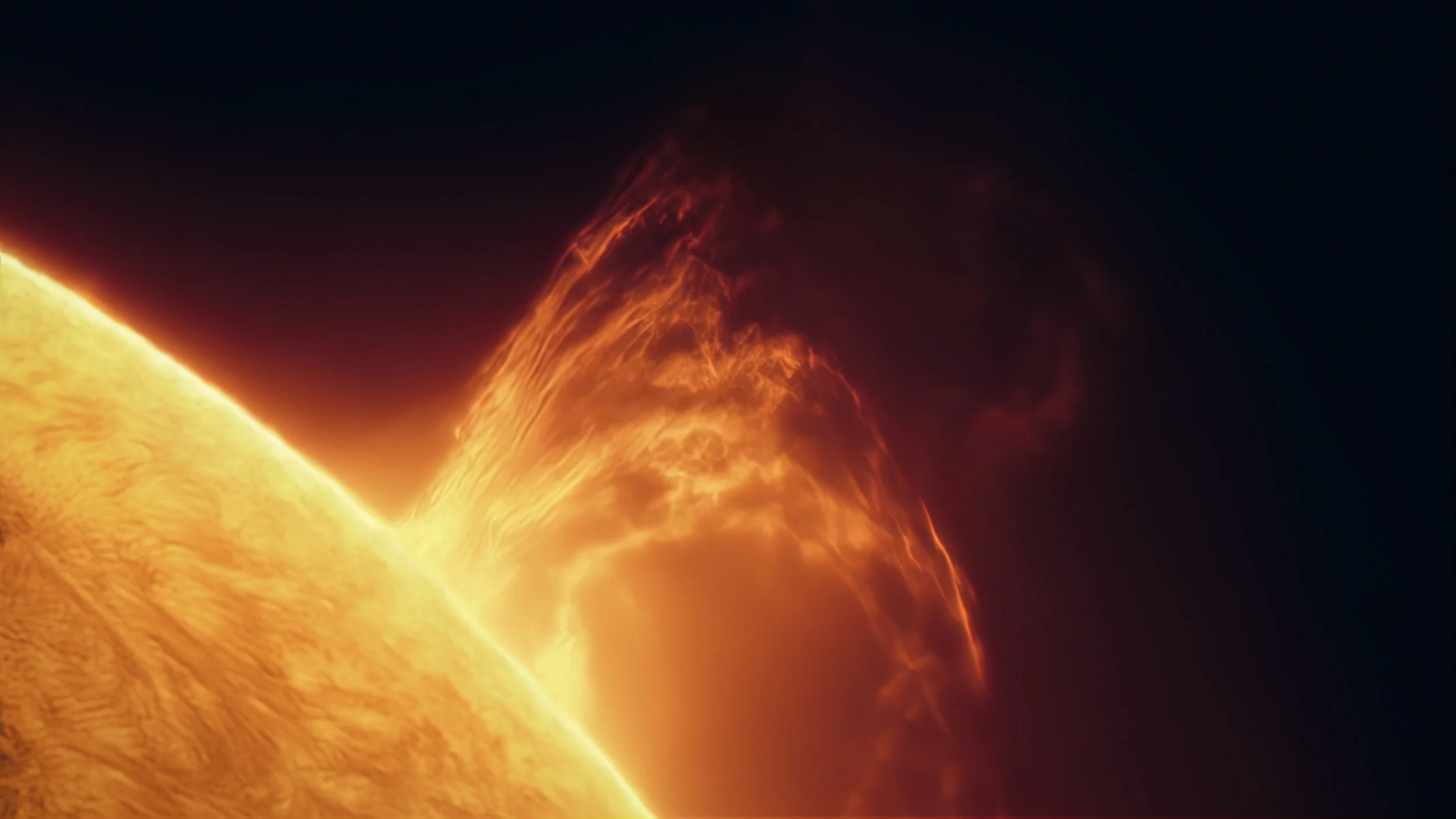
The Sun is Boss
Image Description and Details : Captured from Perth Western Australia, using a Skywatcher 127 Maksutov, with an IR/UV Cut filter covering the objective lens,
and a Daystar Quark Chromosphere Solar filter before the camera.
Approx 1500mm F/L.
Composite of two separate exposures.
Lower exposure for the Suns Chromosphere, slightly higher exposure for the Prom.
Incidently, the main prom size reaches out roughly 180,000km. you can see a faint afterburn which continues for approx another 80,000km.
Measurements based on suns diameter and curvature, derived from a full disc image of this event.
Copyright: Copyright: David Gray
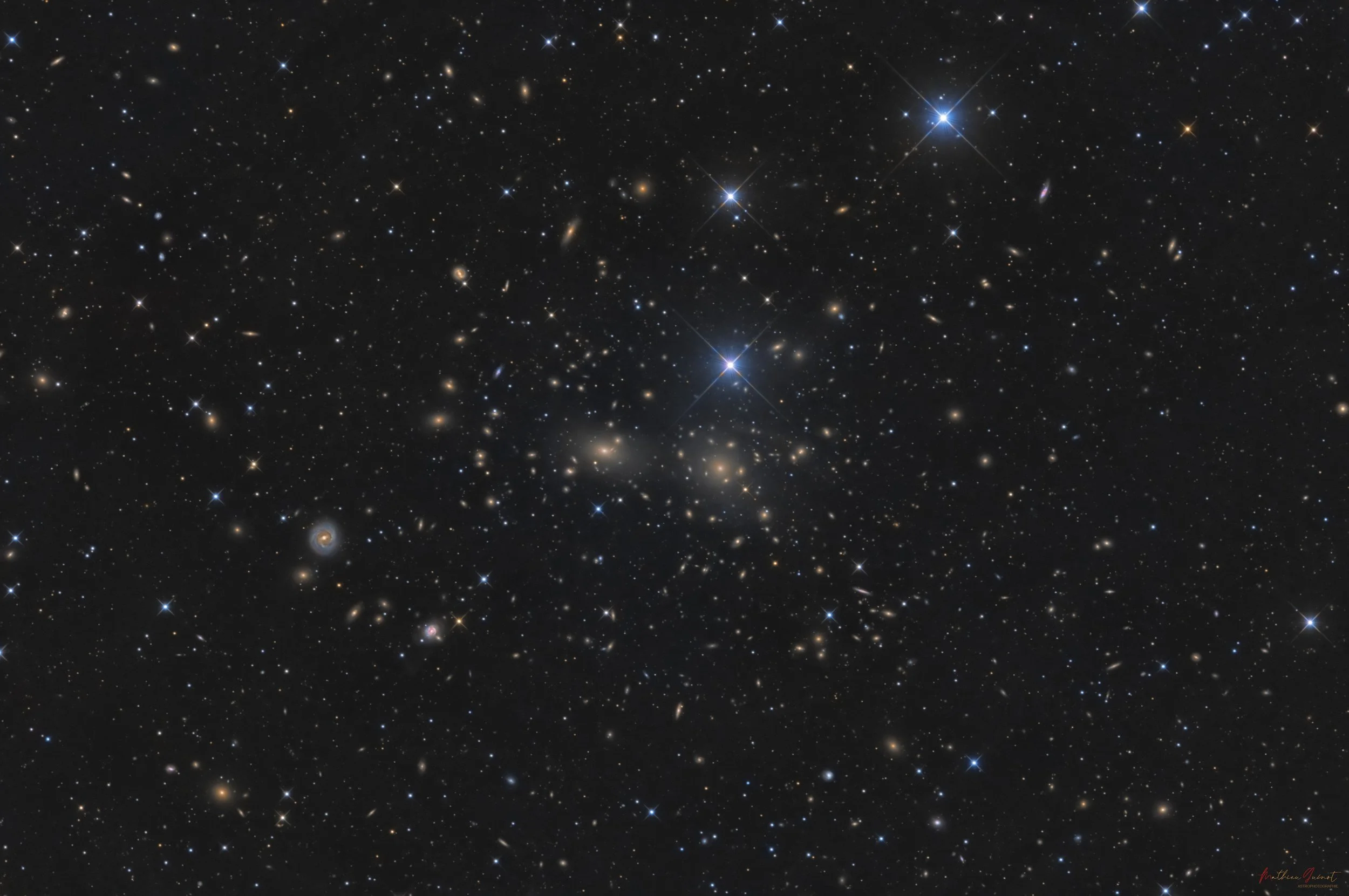
Abell 1656 The Coma Cluster
Image Description and Details :
The fantastic Coma Cluster (Abell 56) located 330 millions light-years away in Coma Berenice contains over 1000 identified galaxies. Along with the Leo Cluster (Abell 1367), it is one of the two major clusters comprising the Coma Supercluster.The central region is dominated by two supergiant elliptical galaxies : NGC4874 and NGC4889, and as is usual for clusters of this richness, the galaxies are overwhelmingly elliptical, with only a few spirals of younger age near the outskirts of the cluster.I wanted to capture this object for a long time and I'm glad I could do it from my downtown Bortle 6-7 sky.Newton 250mm f/4 on IOPTRON CEM70 mountCamera ZWO ASI2600mm + Antlia LRGB filters23h50 exposures in February and March 2022 from my backyard.L : 232 x 300sRGB : each 18x300sProcessed with Pixinsight and Photoshop
Copyright: Mathieu Guinot
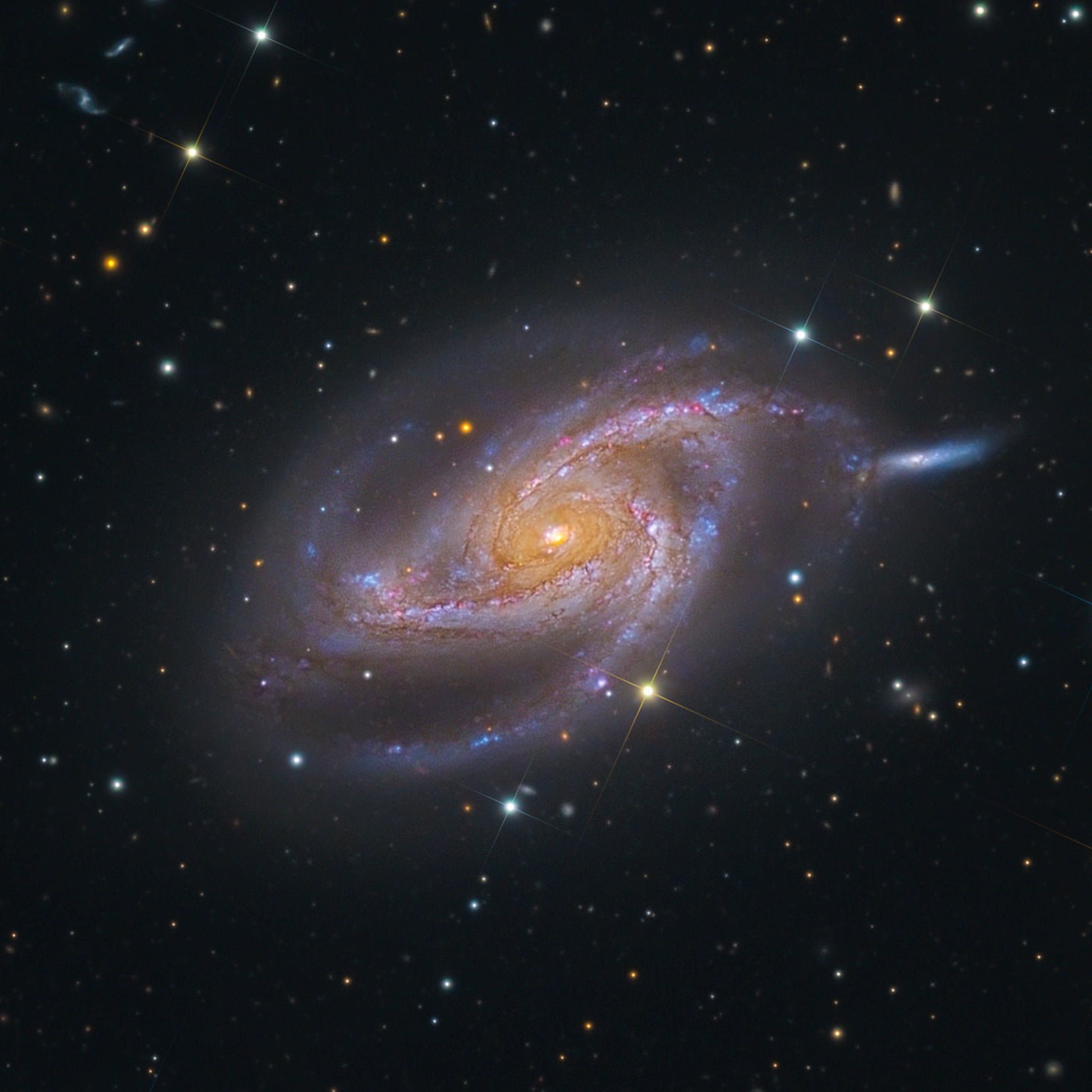
NGC 5054 “Gem in Virgo”
NGC 5054 is a beautiful spiral galaxy in the Virgo constellation. The galaxy is small in the field of view at an apparent 4×2’. The galaxy has an irregular shape with two of the arms bending back around the galaxy. This small but relatively bright galaxy and allows a reasonable amount of detail and color to come through. This is amazing when you consider that the light from this galaxy has been travelling for 82 million years towards us. The dust lanes are quite evident, as are the star forming areas of the two major spiral arms. These are within the bluish regions of the arms. Its irregular shape suggests a possible interaction in the past.
The background is littered with hundreds of small galaxies. You can go to website to see wider version.
Imaged in LRGB on a Planewave CDK 1000 at El Sauce, Obstech, Chile
Integration Time: 28 hours
Copyright: Mark & Mike
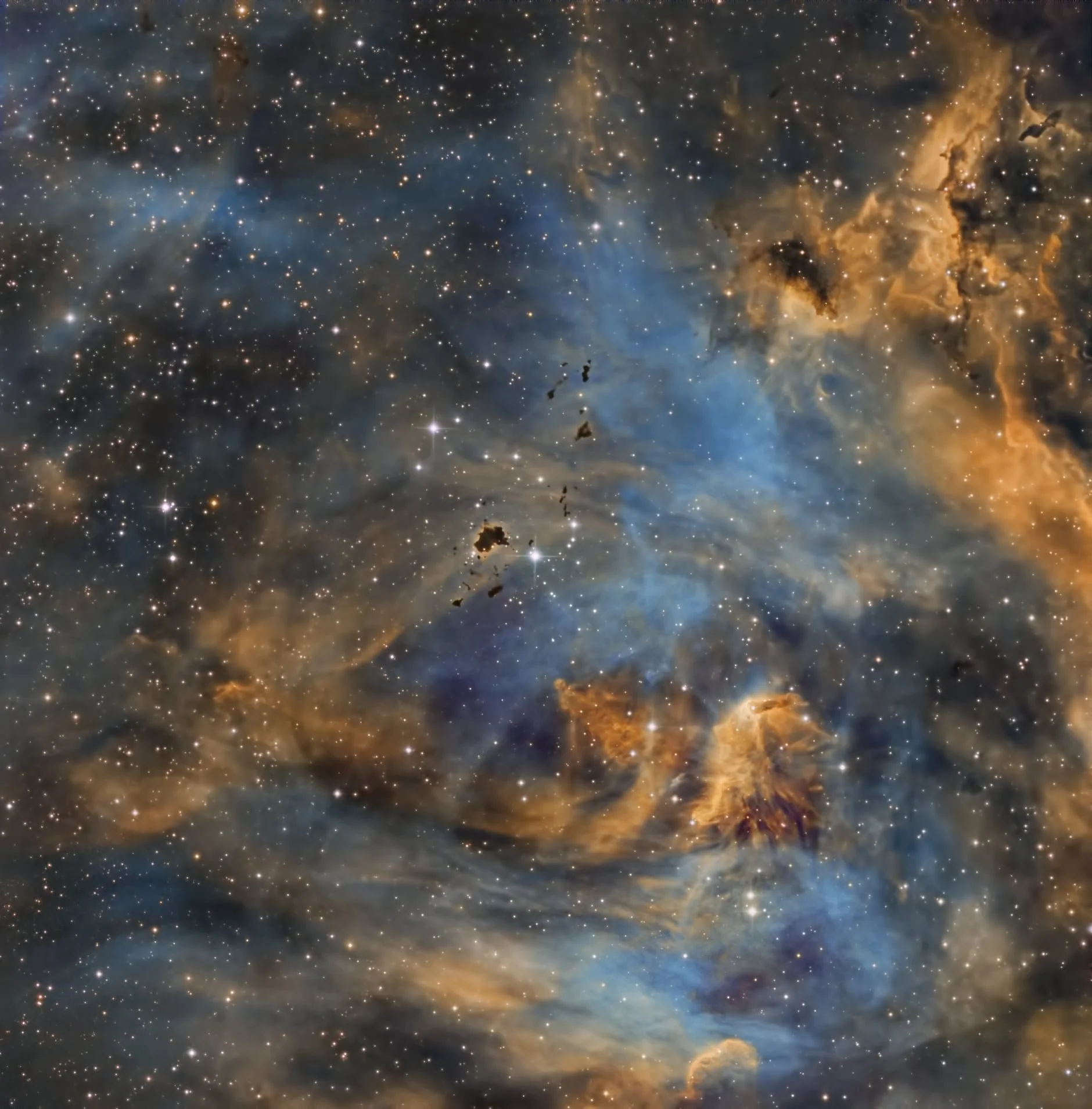
Running Chicken Nebula
The Lambda Centauri Nebula or the λ Centauri Nebula, is an open cluster with an associated emission nebula found in the constellation Centaurus Narrowband image of IC 2948. Data courtesy of Telescope live.
Telescope CHI-1 Planewave CDK-24 Camera FLI ProLine PL9000 Location Location El Sauce Observatory, Rio Hurtado, Chile Date of observation Date of observation 25-12-2021 Filters Filters Astrodon 3nm narrowband
Processing PixInsight & PS
Copyright: Paul Swift

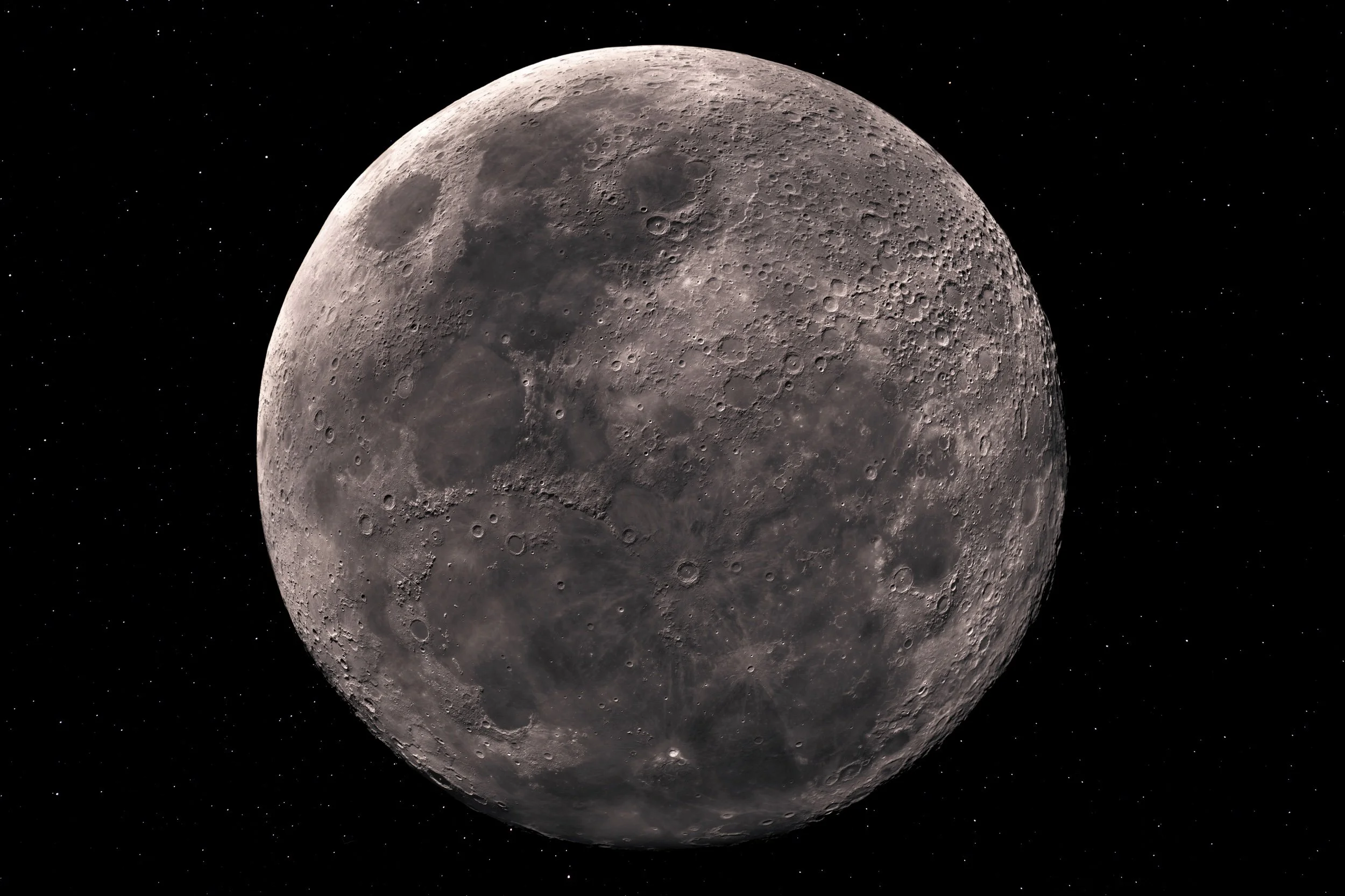
Is this close enough for you?
Image Description and Details : This ultra high resolution of the full moon was constructed using a total of 1530 individual photos captured during all consecutive phases of the moon from new moon to full. The resulting single image measures a whopping 165,000 megapixels, (50,000 x 33.000 pixels).
The assembly of the final images took over 300 hours to stitch together to piece together this one single image.
Imaged from Perth, Western Australia using ...
Skywatcher 12@ Dobsonian Goto Telescope
2x Barlow lens
ZWOasi 183mc Camera
A video presentation with description of several major craters can be found on the above link.
Copyright:: David Gray
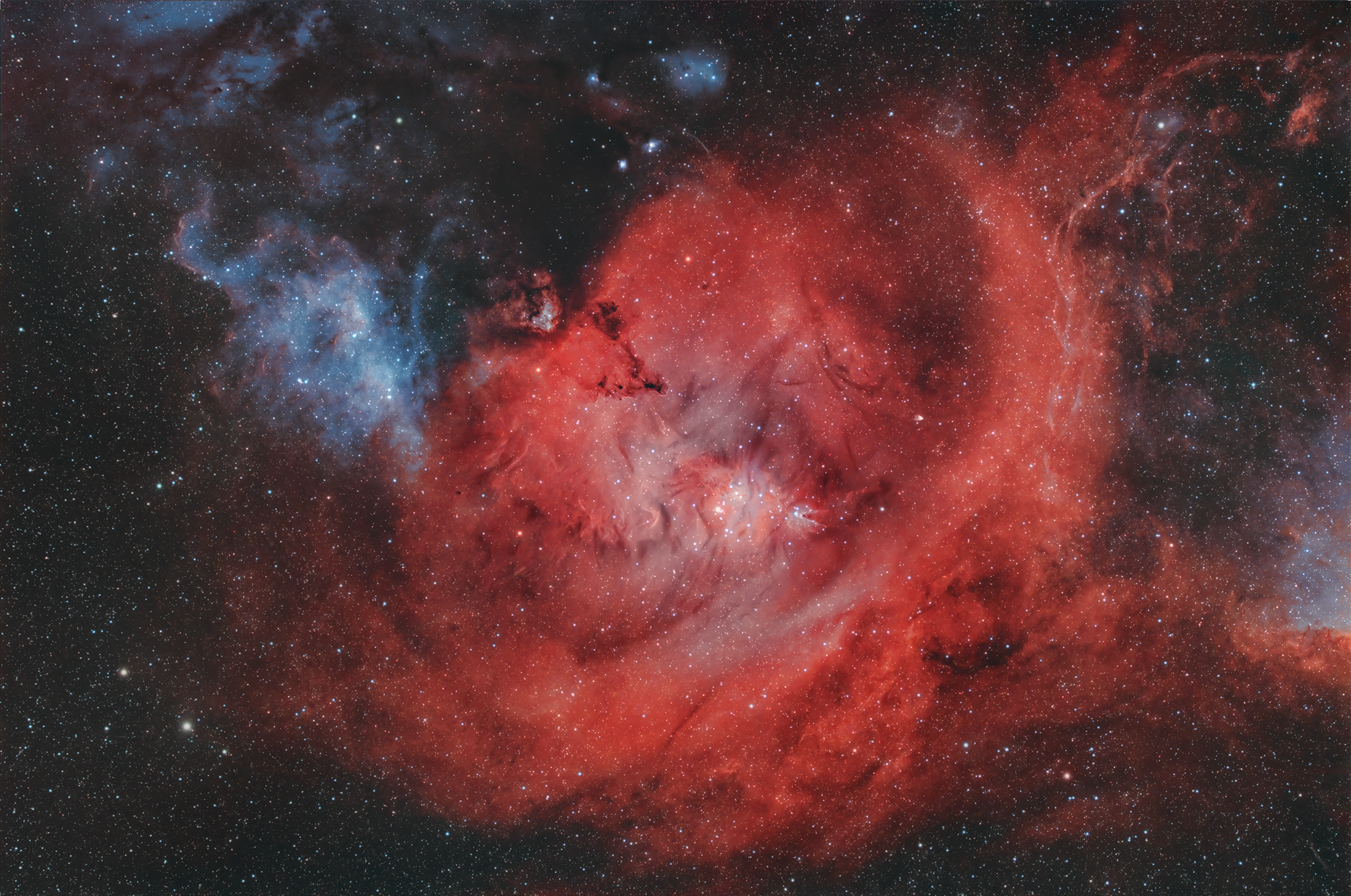
The Horn of Monoceros
Image Description and Details : The Horn of Monoceros: 102 hours of exposure over 29 nights.
There is so much nebulosity in this region that I just couldn’t stop piling on data to see what would be revealed.
I hope you enjoy this image as much as I enjoyed creating it!
Details:
Imaging Telescope: TPO Ultrawide 180
Imaging Camera: ZWO ASI2600MC Pro
Mount: Sky-Watcher EQ6R-PRO
Filters:
Astronomik L3 UV-IR Blocking Filter 2"
Optolong L-eXtreme 2"
Accessories:
ZWO AsiAir Pro
Guiding Telescope: ZWO Mini Guide Scope
Guiding Camera: ZWO ASI290MM Mini
Frames:
Astronomik L3 UV-IR Blocking Filter - 2": 350x5" (29' 10") (gain: 100.00) -10C
Optolong L-eXtreme 2": 759x480" (101h 12') (gain: 100.00) -10C
Integration: 101h 41' 10"
Darks: 50
Flats: 50
Flat darks: 50
Copyright: Jeffrey Horne

NGC 2736 The Pencil Nebula in Narrowband HOO
Image Description and Details : NGC 2736 The Pencil Nebula is a gorgeous deep space object in the constellation Vela. Moving at roughly 644,000 kmh it is thought to have been formed from a shock wave of the larger Vela Supernova Remnant. It resides about 815 light-years away.
This target was shot using narrowband filters to create an HOO-palette image. 75 x 600s sub-frames were shot over 4 nights for a total integration time of about 12.5 hrs.
Skywatcher 10" f4 Newtonian 250P
Skywatcher F4 Aplanatic Coma Corrector
Skywatcher NEQ6 Pro Hypertuned by Astronomy Academy Perth
Primaluce Sesto Senso2 Electronic Focuser
ZWO ASI2600MM Pro Cooled Camera
ZWO Off Axis Guider
ZWO ASI290MM Mini Guide Camera
ZWO Electronic Filter Wheel
Antlia 3nm Narrowband Ha and Oiii 36mm unmounted filters
Rollon rolloff modified shed observatory
Bortle 5
Data acquisition software: NINA Astronomy Software
Processing software: PixInsight and Photoshop CC
Copyright: Carlos Taylor
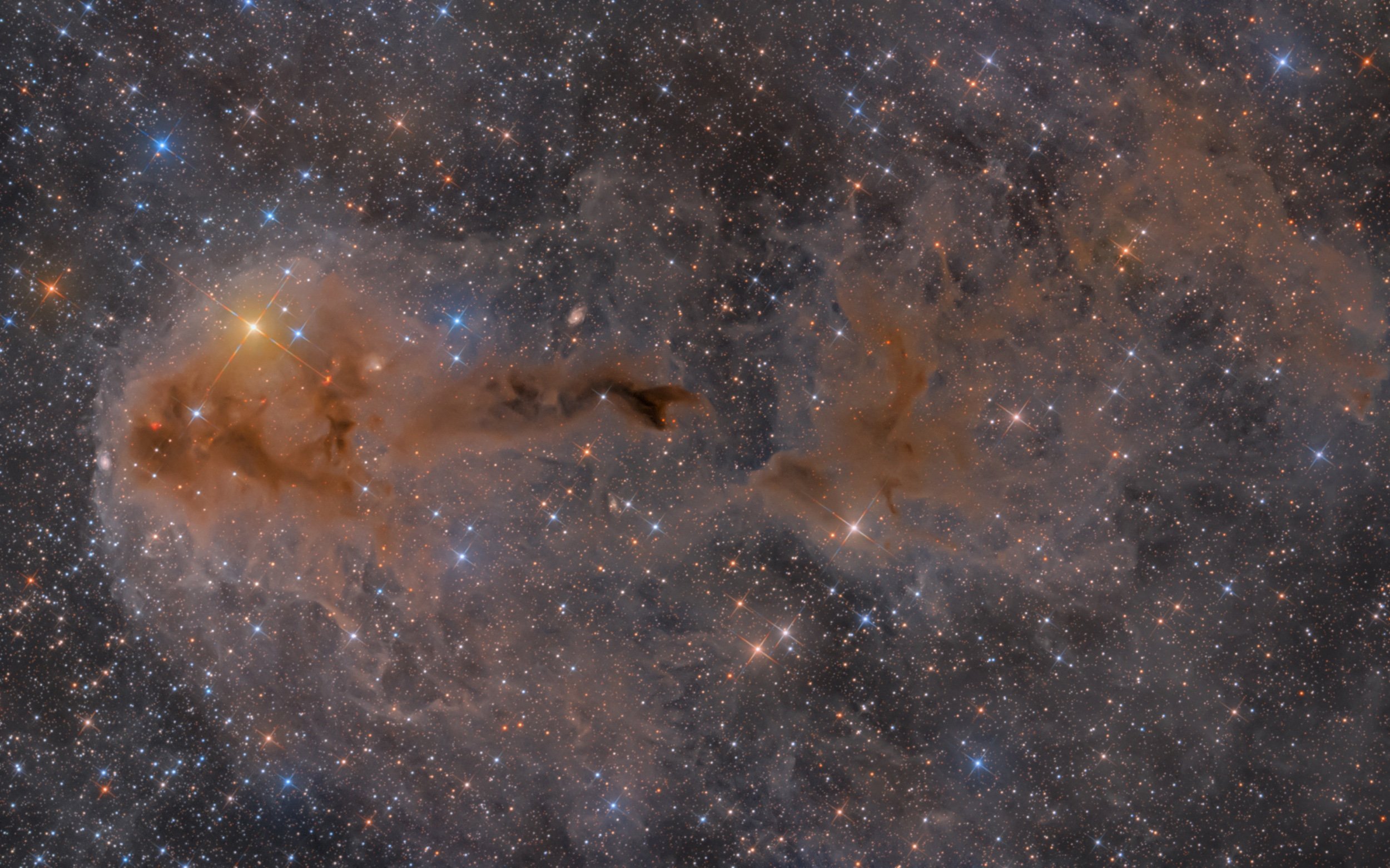
The Rotten Fish Nebula (LDN1251)
Image Description and Details : LDN 1251 is a complex nebula in the constellation Cepheus, containing reflective dust and gas. Its nickname is the Rotten Fish Nebula. The acronym "LDN" refers to Lynd's Catalog of Dark Nebulae.
LDN 1251 is quite close to us, about 1,000 light years away.
When the light (emitted or reflected) of this nebula "left" to hit my photographic sensor, Robert II "the Pious" was king of France. William the Conqueror had just built the Tower of London and the Vikings arrived on Canadian soil.
🔭: ASA Newton 254/950 F3.6
⚙️: Paramount MyT
📷: ZWO ASI2400MC
🕶: IDAS LPS-P3
🎯: Skywatcher Evostar72ED + ASI290MM mini
💻: TheSkyX pro, NINA, PHD2, AstroPixel Processor, PixInsight, Photoshop
⏱: 27h20' (164 x 300”)
🌍: Lorraine, France
📆: Over 3 nights : February 25,26,27 2022
Copyright: Thomas LELU