

AAPOD2 Image Archives
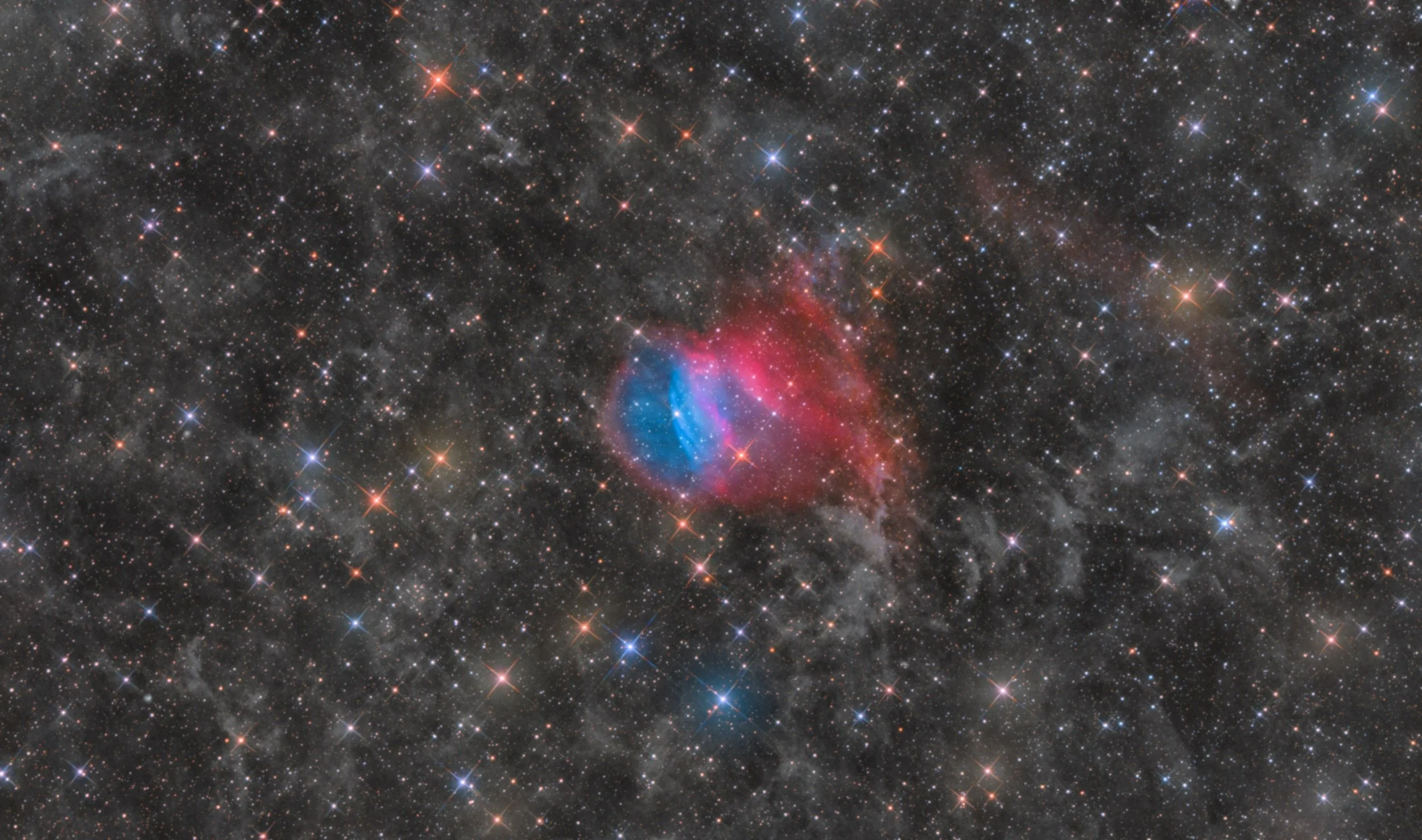
SH2-174 : Valentine Rose Nebula
Image Description and Details : While waiting for the galaxy season to pass, I tried my hand at growing roses with this nebula.
I took the opportunity to exceed my exposure time record with more than 100 hours on this target. There are about 70h of HaOIII dualband filter and 30h of RGB.
The image processing was really difficult. I would like to have more details in Ha but I'll settle for this version which I like all the same.
Sh2-174 is an unusual ancient planetary nebula. A planetary nebula is created when a low-mass star blows off its outer layers at the end of its life. The core of the star remains and is called a white dwarf. Usually the white dwarf can be found very near the center of the planetary nebula. But in the case of Sh2-174 it off to the left. (It is the blue star near the center of the blue gas). This asymmetry is due to the planetary nebula's interaction with the interstellar medium that surrounds it.
🔭: ASA Newton 254/950 F3.6
⚙️: Paramount MyT
📷: ZWO ASI2400MC à -10°C + rotateur Artesky
🕶: IDAS LPS-P3
🎯: Skywatcher Evostar72ED + ASI290MM mini
💻: TheSkyX pro, NINA, PHD2, AstroPixel Processor, PixInsight, Photoshop
⏱: 105h25′ (205 x 600” and 285 x 900")
🌍: Lorraine, France
📆: Over 14 nights : March-April 2022
Copyright: Thomas LELU
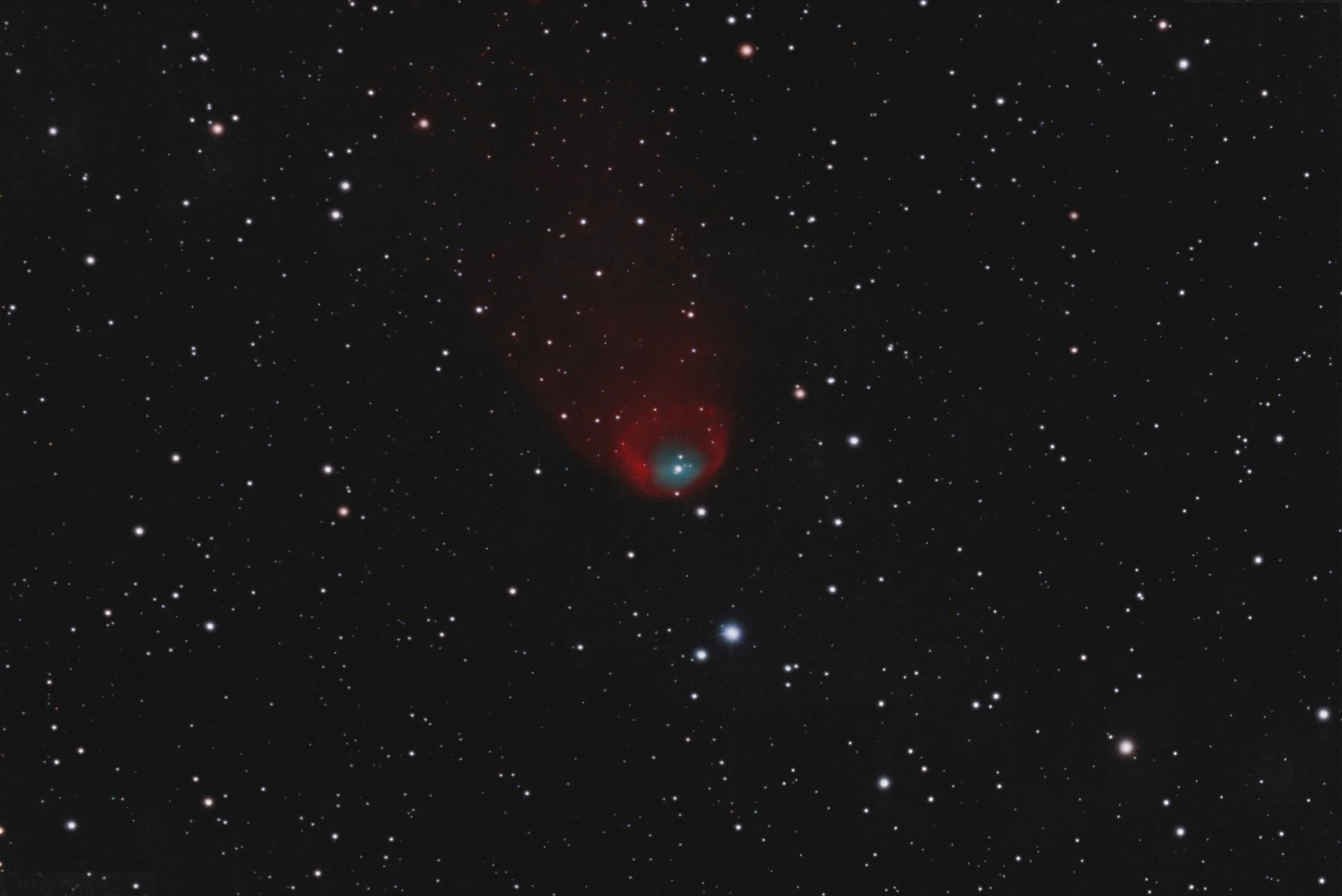
Kohoutek 1-6
Image Description and Details :
Kohoutek 1-6 (K 1-6) is an evolved low-surface brightness planetary nebula in the constellation Draco. It is an asymmetric planetary nebula with a binary central star. It has an approximate size of 198 arc seconds and is around 3,000 light years from Earth. It was discovered by Czech astronomer Luboš Kohoutek in 1962. It has a bow-shock structure which is attributed to interaction with the interstellar medium (ISM).I could only find one other image of this online - captured by the Capella Observatory in 2019. Image captured on my remote dual rig at Fregenal de la Sierra in Spain between 20 April and 3 May 2022.Scopes: APM TMB LZOS 152 RefractorsCameras: QSI6120wsg8Mounts: 10Micron GM2000 HPSA total of 56 hours 45 minutes image capture (HaOIIIRGB)
Copyright: Peter Goodhew
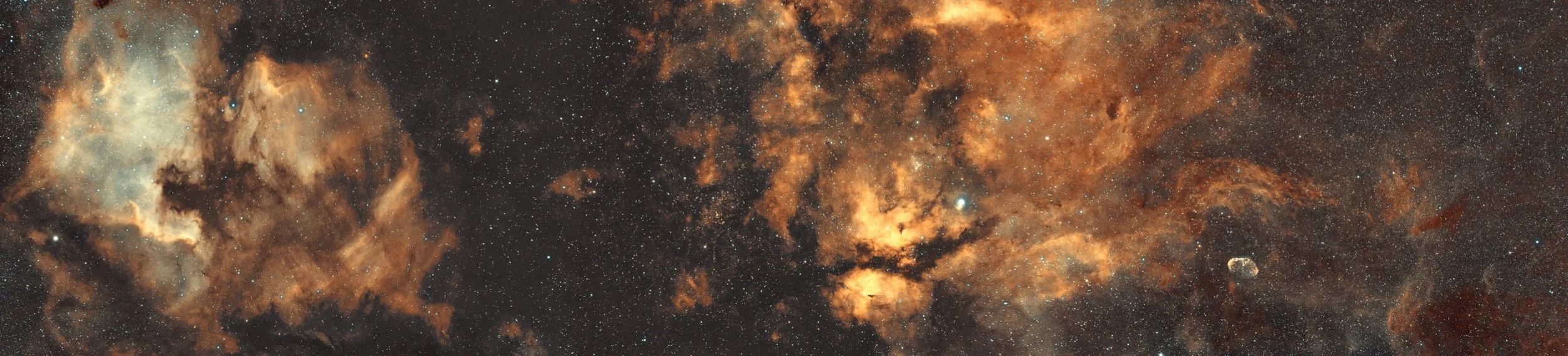
From North America to Crescent (Mosaic)
Image Description and Details : Three panel mosaic of the central region of Cygnus constellation. From left to right, in order of appareance, the North America Nebula (NGC 7000), the Pelican Nebula (IC 5070), the Butterfly Nebula (IC 1318), the Crescent Nebula. At the bottom right, some molecular clods and dark nebulae.
Framing was planned with the software NINA, the single subs stacked with DeepSkyStacker, and the panels merged with Astropixelprocessor. Processing with Pixinsight and Photoshop.
Gear and technical data:
Samyang 135 @ f/4
QHY183C
Optolong L-enhance filter
30 subs x 3 panels x 180s
Copyright: Antonio Grizzuti
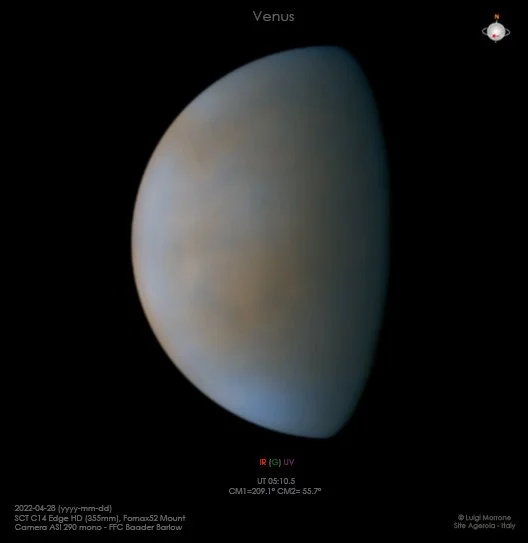
Venus Bicolor
Image Description and Details : My first Venus images of this elongation taken in the early morning under quite good seeing conditions. Interesting cloud features in the infrared and ultraviolet band can be seen
Setup:C14 Edge HD, Fornax52 mount, ASI 290mono, FFC Badder Barlow, IR1000-1050nm, Baader UV320-380nm, Astronomik IR807nm
Agerola-Amalfitan Coast-Italy
Copyright: luigi morrone
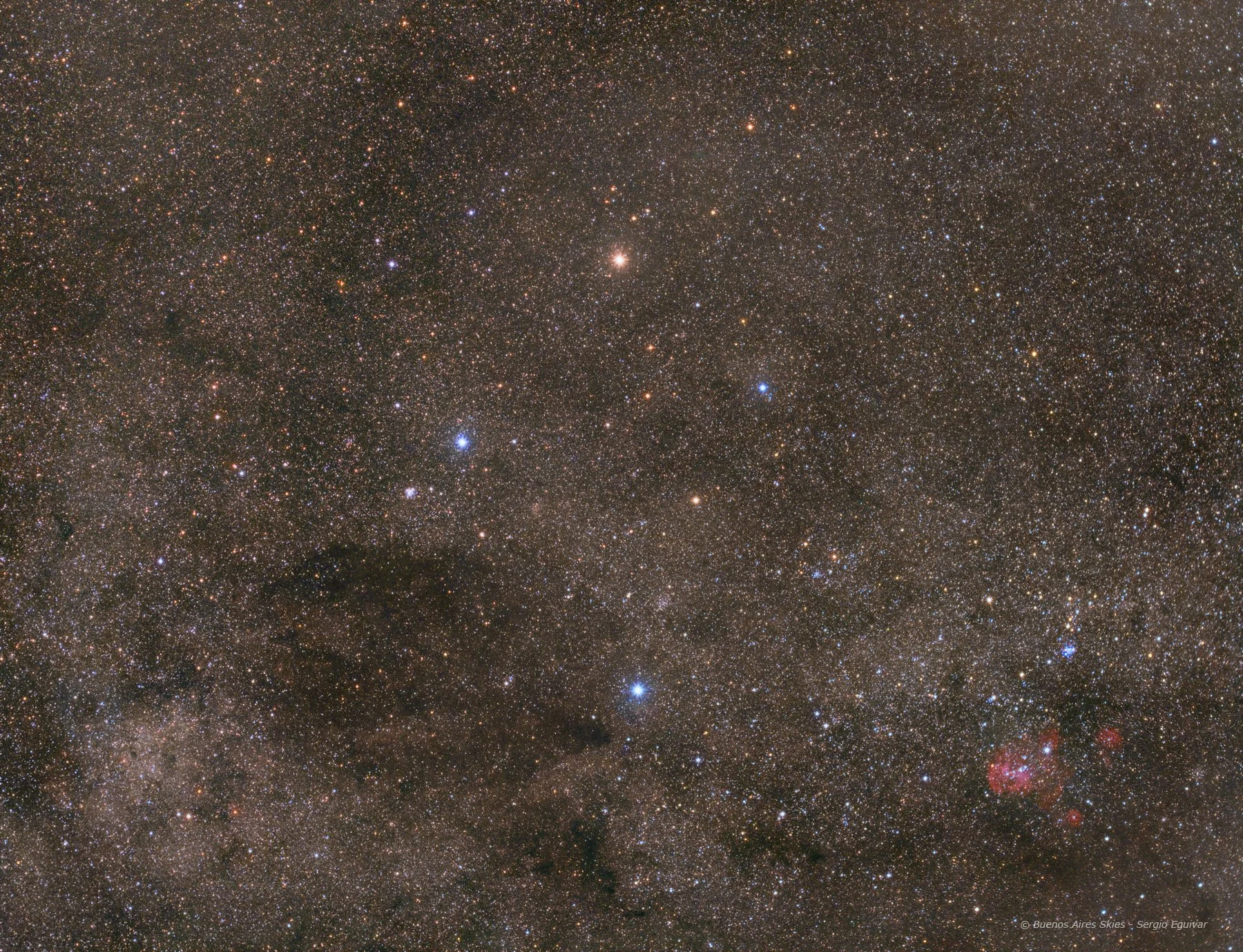
Southern Cross
Image Description and Details : One of the most iconic constellation of the southern hemisphere. It lies on the southern end of the Milky Way. Even though it is the smallest of all 88 modern constellations, Crux is among the most easily distinguished as its four main stars each have an apparent visual magnitude brighter than +2.8. It has attained a high level of cultural significance in many Southern Hemisphere states and nations.
Taken from Buenos Aires Suburbs, Argentina, using Canon 50mm f 1,8 lens, QSI 583WS, NEQ6, Baader filters. LRGB (40,40,40,40)
Copyright: Sergio Eguivar
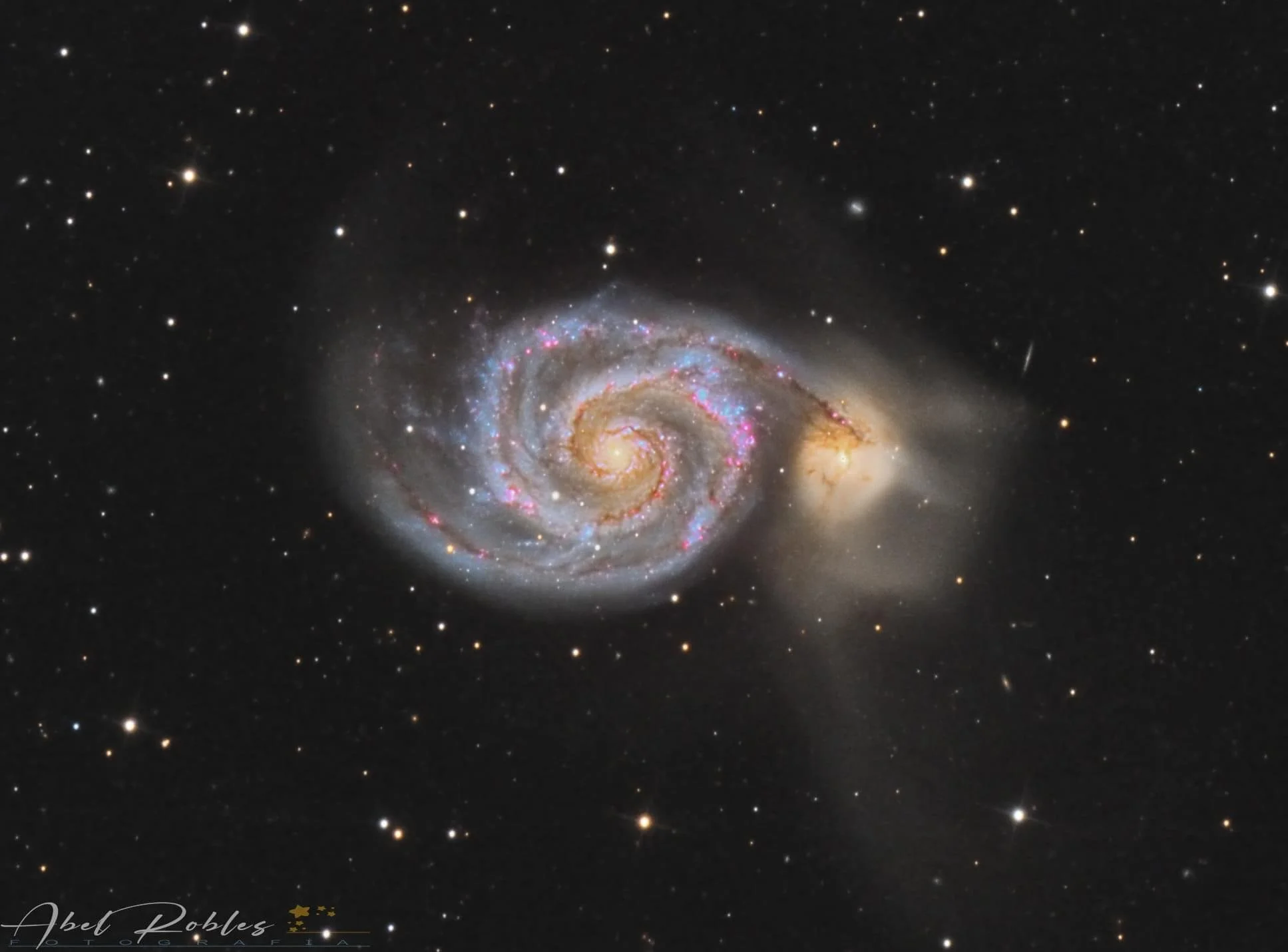
M51 Whirlpool Galaxy
Object Messier 51, or Ngc 5194 the known Swirl Galaxy, is a spiral type, is in full collision interacting with another galaxy by the force of gravity attracted among each other.
It is located about 23 million light years from Earth 🌏 in the constellation Canes Venatici.
Team used;
Telescope 🔭 Newton 200/1000 modified
Camera; Zwo ASI1600mm+EFW 7x2"
filters; Baader 2" L-RGB
Mounting; Skywatcher Eq6r-pro
Guide; Ts60/240mm+ZwoAsi462mc
Self-focus; Rb-focus Merlin prototype
Smarbox; Gaius Rb-focus
Rb-focus carbon fiber spider
Noctua fan.
Capture details;
Date; 24/April/2020
Captures; Mallorca
Sky Class; Bortle 4
25x180s L -15°
22x180s R -15°
22x180s. G. - 15°
22x180s B -15°
15x180s Ha - 15°
30 ~ Darks
25 ~ Flats
5h 18" of full integration
Sequence done with NINA, assisted with Ascom Eqmod, Phd2, Image calibration, stacked and processed with Pixinsight 1.8 Repley, signed on Ps2022
copyright: Abel Borrasca
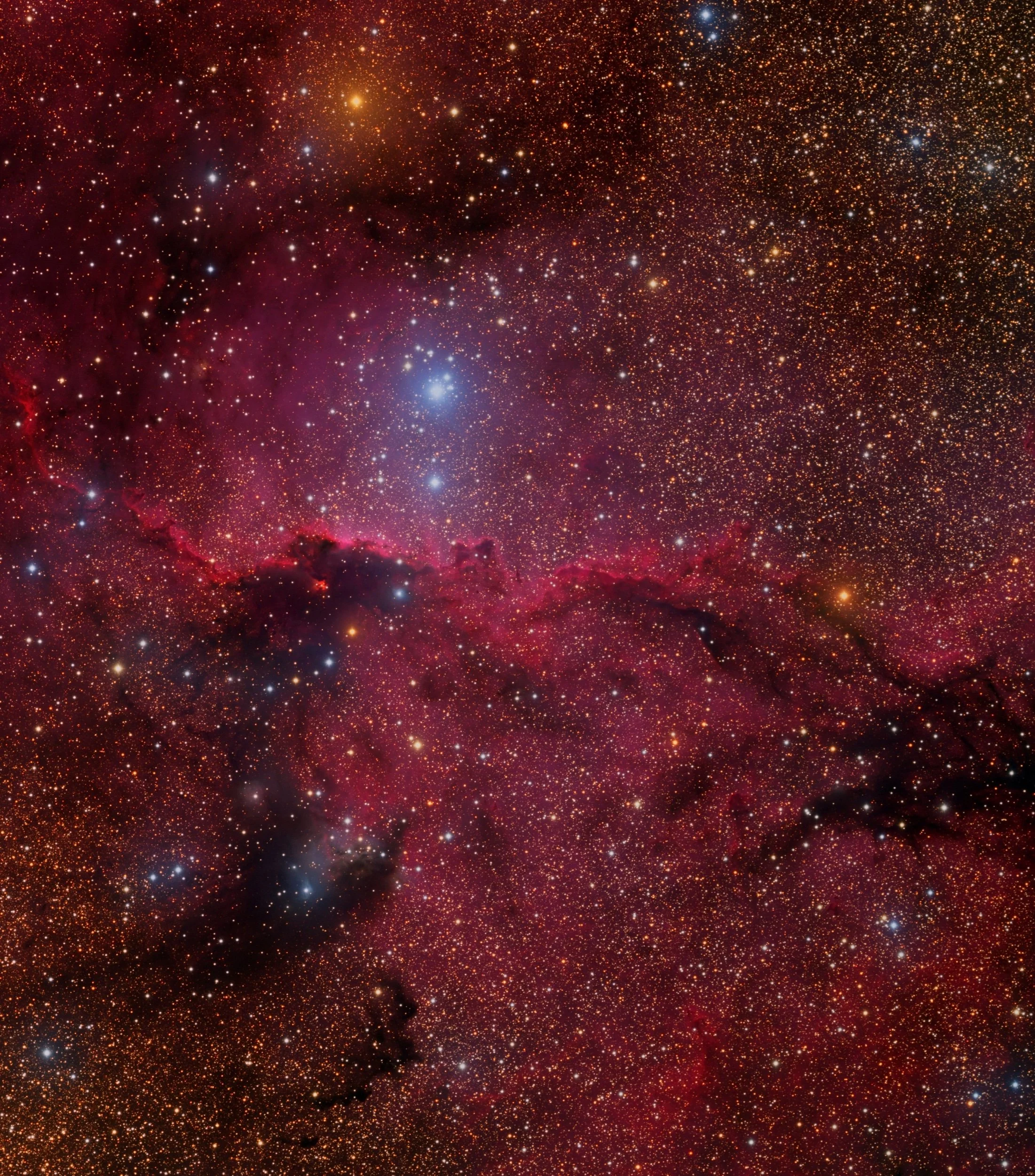
The Dragons of Ara (NGC6188)
Image Description and Details : Takahashi TOA-150, FLI ML16200, Astro-Physics AP1600 with Encoders
Frames: Red: 24x900", Green: 14x900", Blue: 19x900", Lum: 24x900", Integration: 20h 15'.
Dark shapes with bright edges winging their way through dusty NGC 6188 are tens of light-years long. The emission nebula is found near the edge of an otherwise dark large molecular cloud in the southern constellation Ara, about 4,000 light-years away.
Copyright: Deep Sky West Remote Observatory / Ruben Barbosa
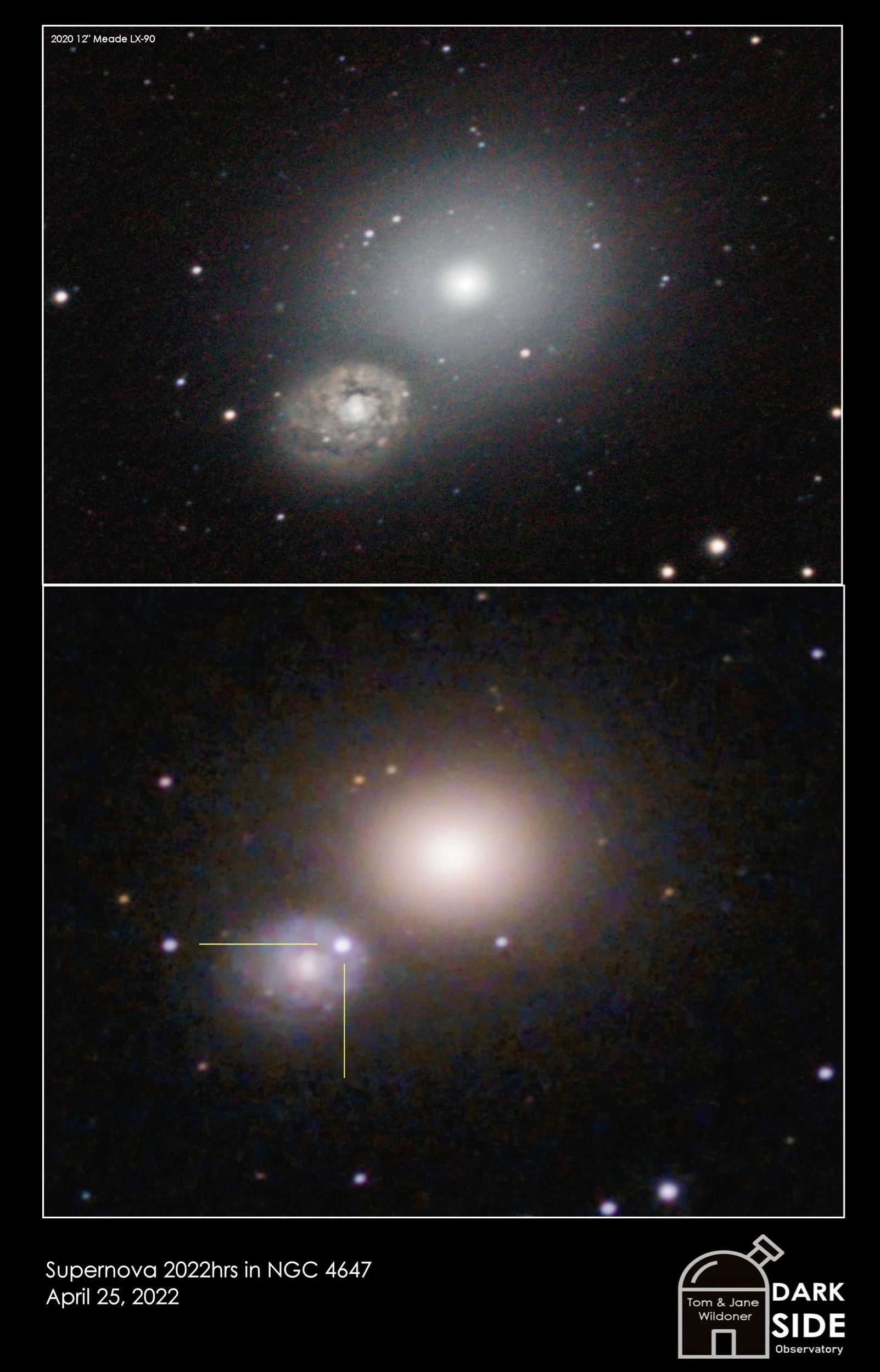
Supernova 2022hrs in NGC4647
Image Description and Details : Here is a quick view of a new supernova located in the galaxy NGC4647 and discovered by Koichi Itagaki on April 16, 2022. At the time of imaging it was at magnitude 12.6. The comparison image on the top was taken using my 12” Meade LX-90 back in 2020. The large elliptical galaxy next to NGC4647 is Messier 60 (M60), they form a pair known as ARP116 and are interacting with each other.
Tech Specs: Orion 8" f/8 Ritchey-Chretien Astrograph Telescope, Celestron CGEM-DX pier mounted, ZWO ASI290MC and ASI071MC-Pro, ZWO AAPlus, ZWO EAF, 48 x 60 seconds at -10C plus darks and flats, BIN2,, processed using PixInsight and DSS. Image Date: April 25, 2022. Location: The Dark Side Observatory, Weatherly, PA, USA (Bortle Class 4).
Copyright: Tom Wildoner/The Dark Side Observatory

Elephant's Trunk Nebula in Cepheus - IC1396
Image Description and Details : The Elephant's Trunk Nebula (Catalogued IC 1396)is a massive emission nebula in the constellation Cepheus.
Shot in narrow band over two weeks.
Imaging locations: Ireland (Dublin City and Carndonagh Co. Donegal)
Equipment and Exposures:
Scope: WO 61mm
Camera: ZWO 1600MM PRO
Mount: Skywatcher HEQ5
Filters: ZWO 7nm Ha/Sii, 3nm Oiii Chroma
Exposures: 94x10m Ha / 76x10m Sii / 113x10m Oiii(3nm)
Software: Astro Pixel Processor for stacking, Pixinsight for processing and Photoshop for final touches.
Blend: HSO
Copyright: Copyright: Martin McCormack
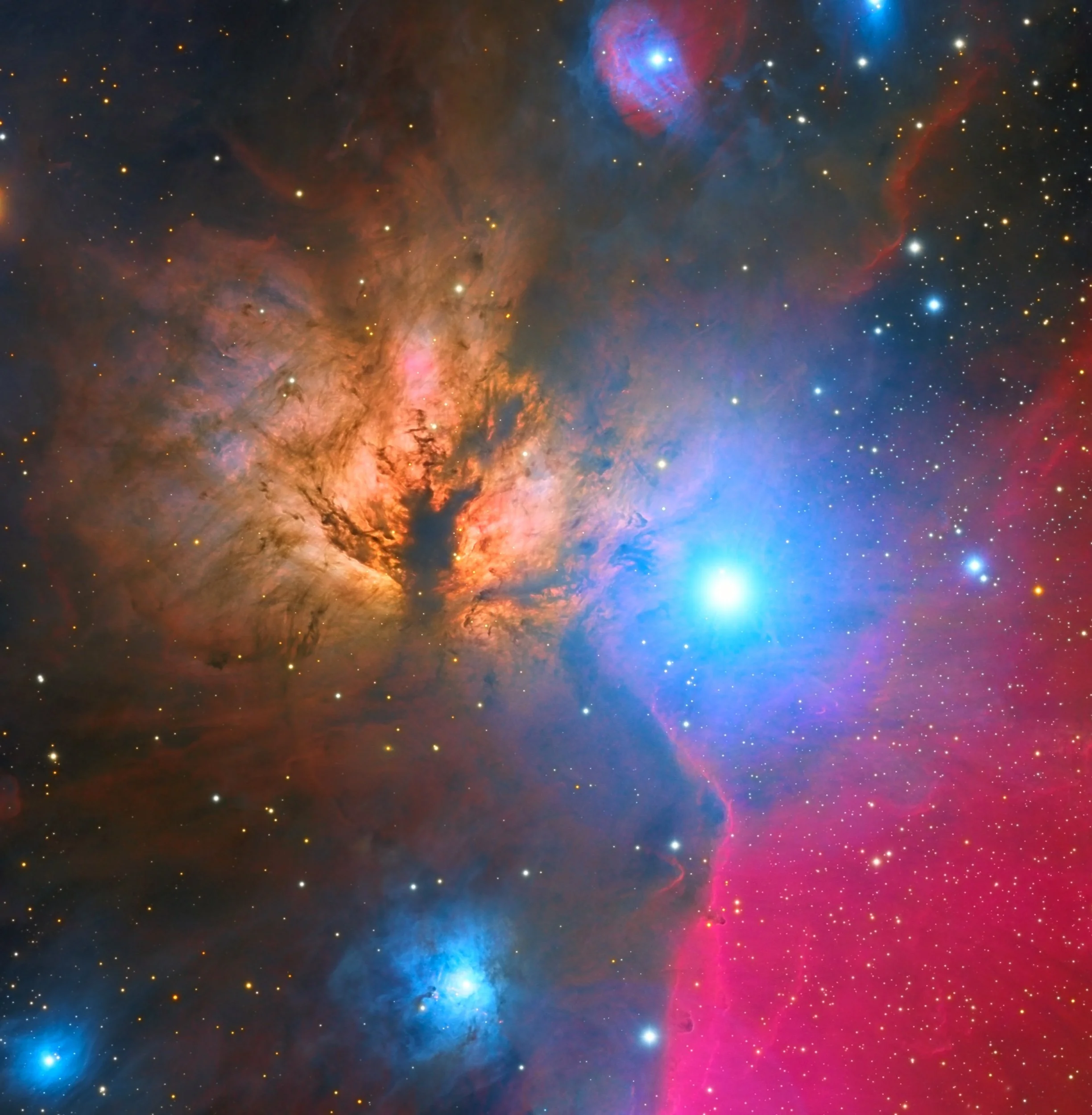
NGC 2024 - Flame Nebula
Image Description and Details : NGC 2024, also known as the Flame Nebula, this nebula is located in the Orion constellation, although we can also see part of the IC 434 nebular complex and some objects such as NGC 2023 just below or IC 435 in the lower left corner. The choice of this frame is intended to see this nebula as a burning tree lying on a field of hydrogen and dust, but if we look closely we can see that there are several layers of gas and dust shaping this nebula. The star that floods the image with light is Alnitak, the easternmost star in Orion's belt, only 1400 light years away from us.
Equipment:
Telescope TEC 180FL - Camera SBIG STXL-16200
Mount Paramount ME II
Filter set Astrodon LRGB Tru-Balance E-Series Gen 2 50mm.
Accessories:
Starizona Microtouch Autofocuser, Feathertouch Motorized Focuser, SBIG filter wheel STXL-FW8G, Drew buster controler.
Data:
H-Alpha: 21x1800" -20C bin 1x1
Luminance: 48x300" -20C bin 1x1
Blue: 32x600" -20C bin 1x1
Green: 17x600" -20C bin 1x1
Red: 19x600" -20C bin 1x1
Total integration time: 25,8horas.
Copyright: Alberto Pisabarro, Jim & Linda Powell

Statue Of Liberty Nebula in SHO
Image Description and Details : This imagem was taken from a country town in south of Brazil during an almost full moon with narrowband filters (8h20min of total integration divided in frames of 150s, 40 in Ha, 30 in Sii and 30 in Oiii). The telescope used was a Askar FRA400 with 400mm of focal distance F5.6 and the Mount a Ioptron CEM26. I am a begginer and this imagem made me proud! Processed in Pixinsight and Photoshop.
Copyright: Martin Konrat
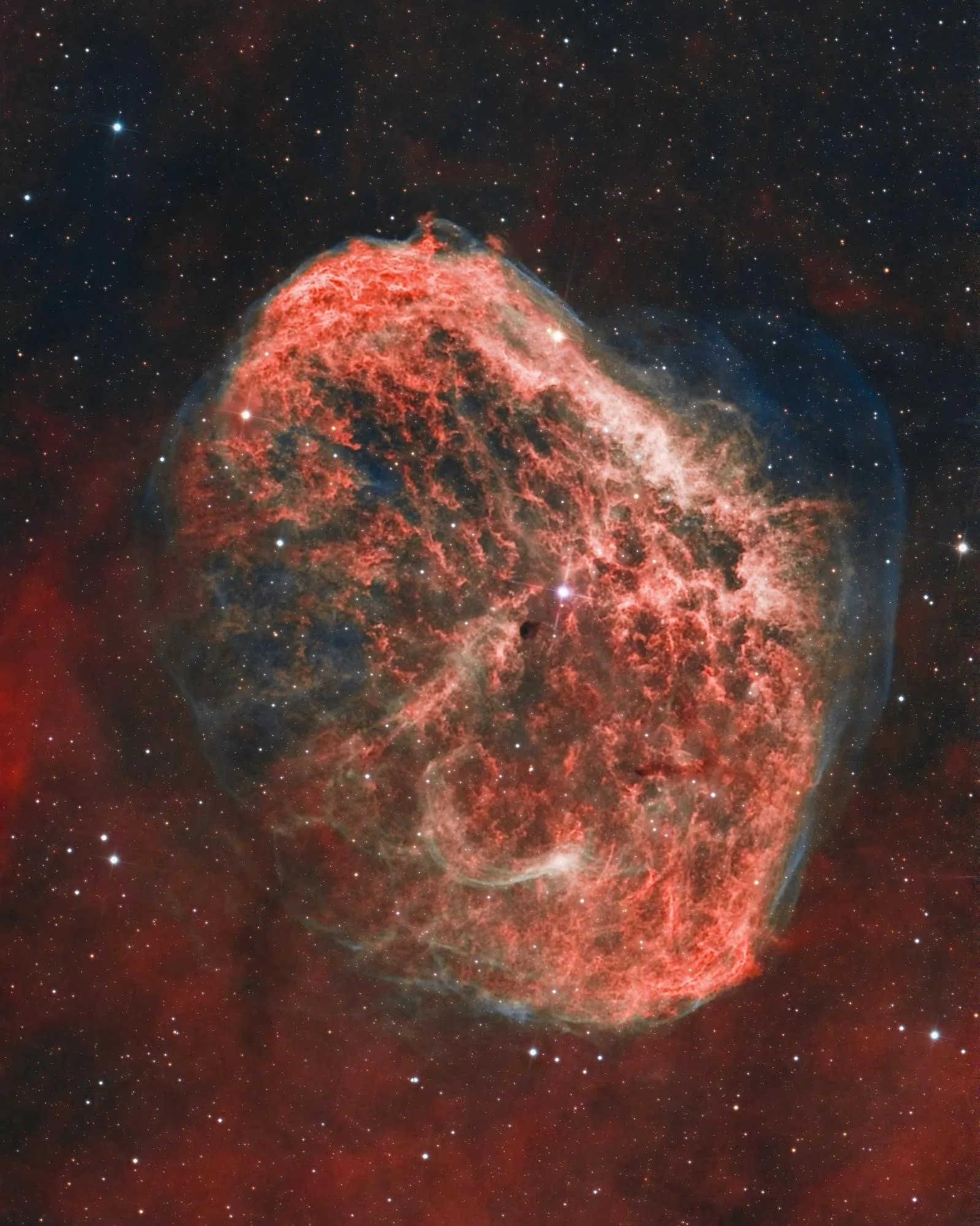
Crescent nebula
The rich field of beautiful summertime targets within our Milky Way is starting to creep into view in the early hours of the morning. I decided to wake up at 3 AM to capture an image of the Crescent Nebula. This is the finest detail I've ever been able to capture of it, including both the ionized hydrogen and the faint outer ionized oxygen shell. A Wolf-Rayet star at its core shed these materials when it expanded into its red giant phase hundreds of thousands of years ago, and now its intense stellar radiation is ionizing these outer shells and making them glow...like a giant brain in the sky! :)
Copyright: Alex Hawkinson
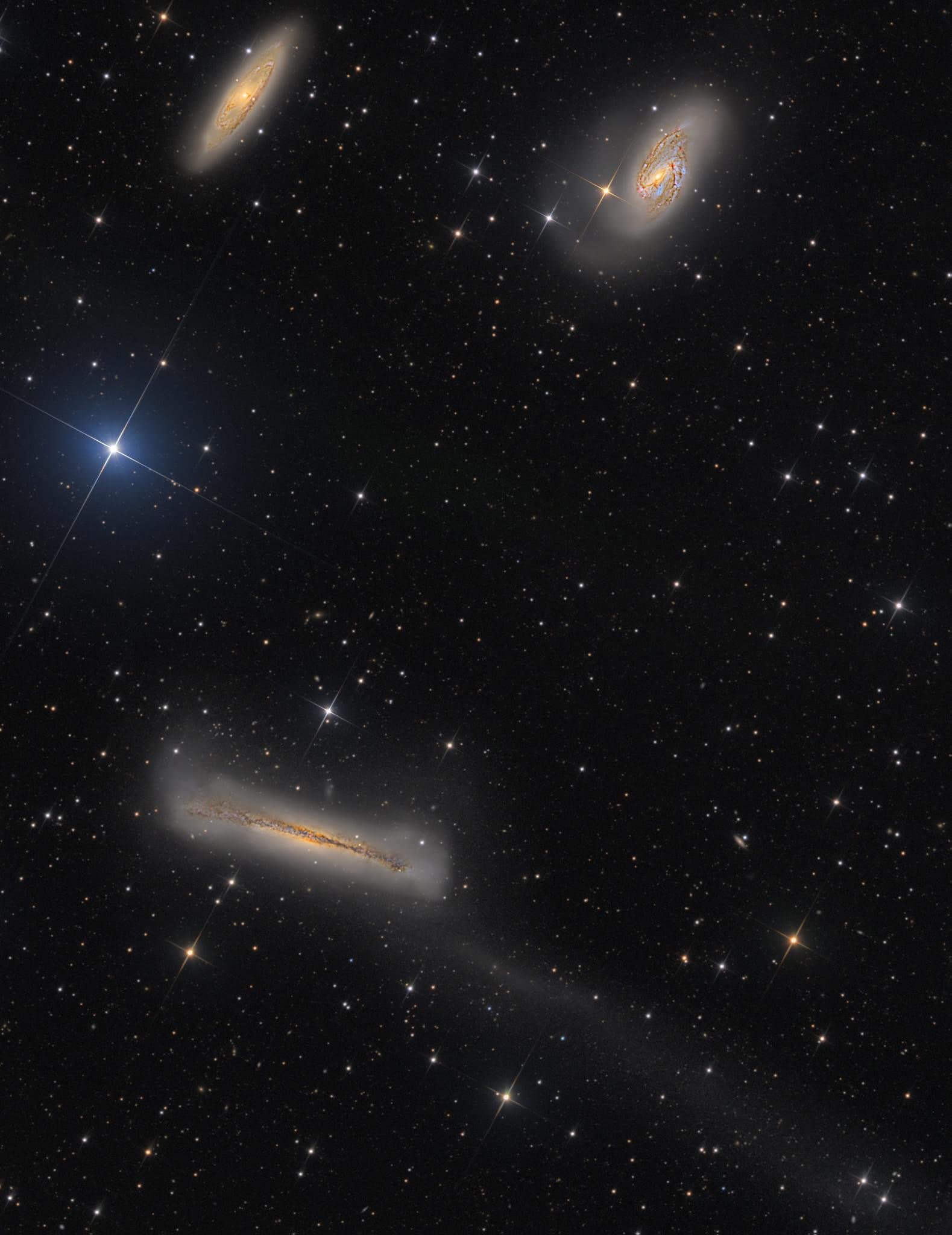
Leo triplet
The Leo Triplet, or the M66 Group, is a group of interacting spiral galaxies located in the northern constellation leo. The group consists of the galaxies Messier65, Messier 66 and NGC 3628 also known as the Hamburger Galaxy.
16"f3.7 dream scope astrograph 16803 CCD New Mexico 5x300sec Lum 5X300sec Red 5X300sec Green 5X300sec blue 1x1
Image credit copyright : Michael Petrakos Muir Evenden, Utkarsh Mishra
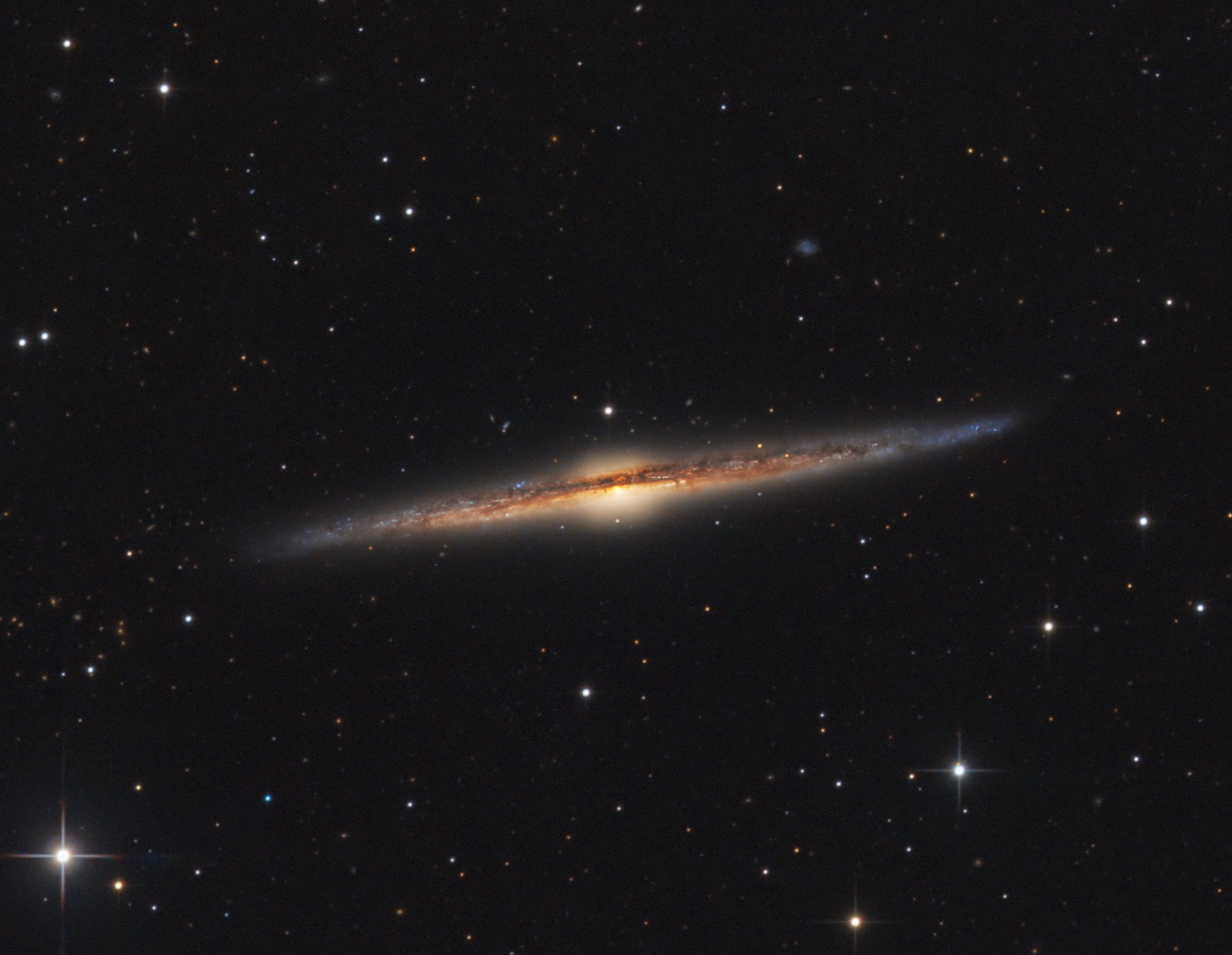
NGC 4565 Needle Galaxy
Image Description and Details : NGC 4565 is an edge-on spiral galaxy in the constellation Coma Berenices. It is one of the most beautiful galaxies in the northern sky. We exposed the raw data in 7 nights in our observatory in a double setup. It was 10.5 hours in total.
Our (Wilhelm Michael Kasakow & Olaf Guillaume) garden observatory is in Germany, near the French and Luxembourg borders. Through the countryside we have a Bortle 4 Sky
For the recordings we used two Lacerta-Newton 10"/f4 at 1000mm focal length with MGEN-3 guiding and two ASI1600MM cameras with Baader-LRGB filter.
The image processing was done with PixInsight and Photoshop CS6
Copyright: Copyright: Kasakow/Guillaume
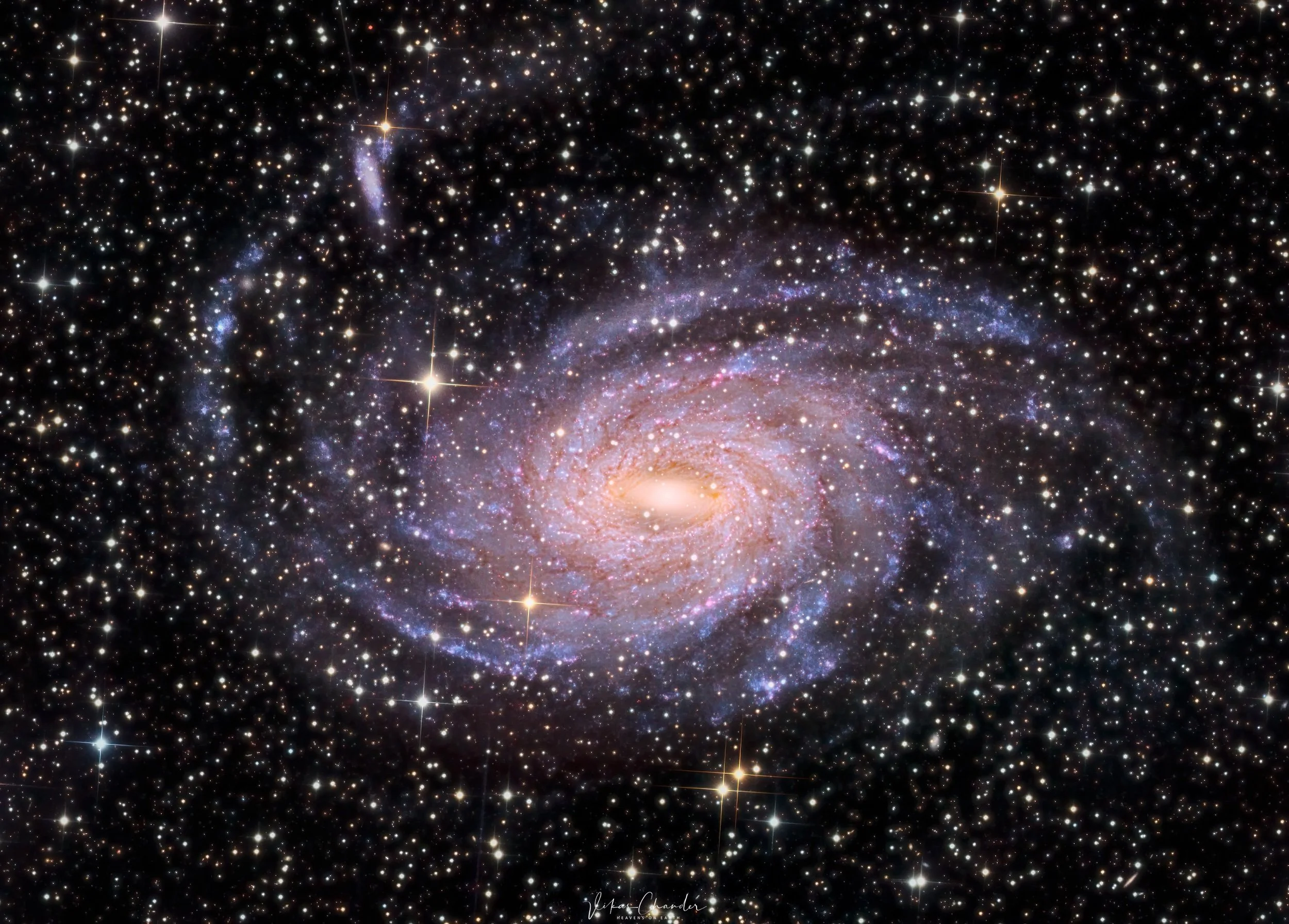
NGC 6744
Image Description and Details : NGC 6744 is the big brother and similar to our own Milky Way, with a disk stretching 175,000 light-years across. A small, distorted companion galaxy is located nearby, which is similar to our galaxy's Large Magellanic Cloud. This companion, called NGC 6744A, can be seen as a blob in the main galaxy's outer arm, at upper left. The galaxy is situated in the constellation of Pavo at a distance of about 30 million light-years. It is one of 50 galaxies observed as part of the Hubble Space Telescope’s Legacy ExtraGalactic UV Survey (LEGUS), the sharpest, most comprehensive ultraviolet-light survey of star-forming galaxies in the nearby Universe, offering an extensive resource for understanding the complexities of star formation and galaxy evolution.
Telescope : Planewave CDK17 f6.8
Camera : SBIG STXL 11002
Mount : Software Bisque Paramount ME
Focal length : 2939mm
Fov : 42 x 29 arcmins
Image Scale : 0.63 arcsec/pixel
Observatory : El Sauce Chile
Filters: HaLRGB
L 22x20m R 15x20m G 15x20m B 16x20m
H 15x30m
Integration: 30h10m
RA: 19h 09m 38s
Dec : -63° 51′ 03″
Copyright: vikas chander
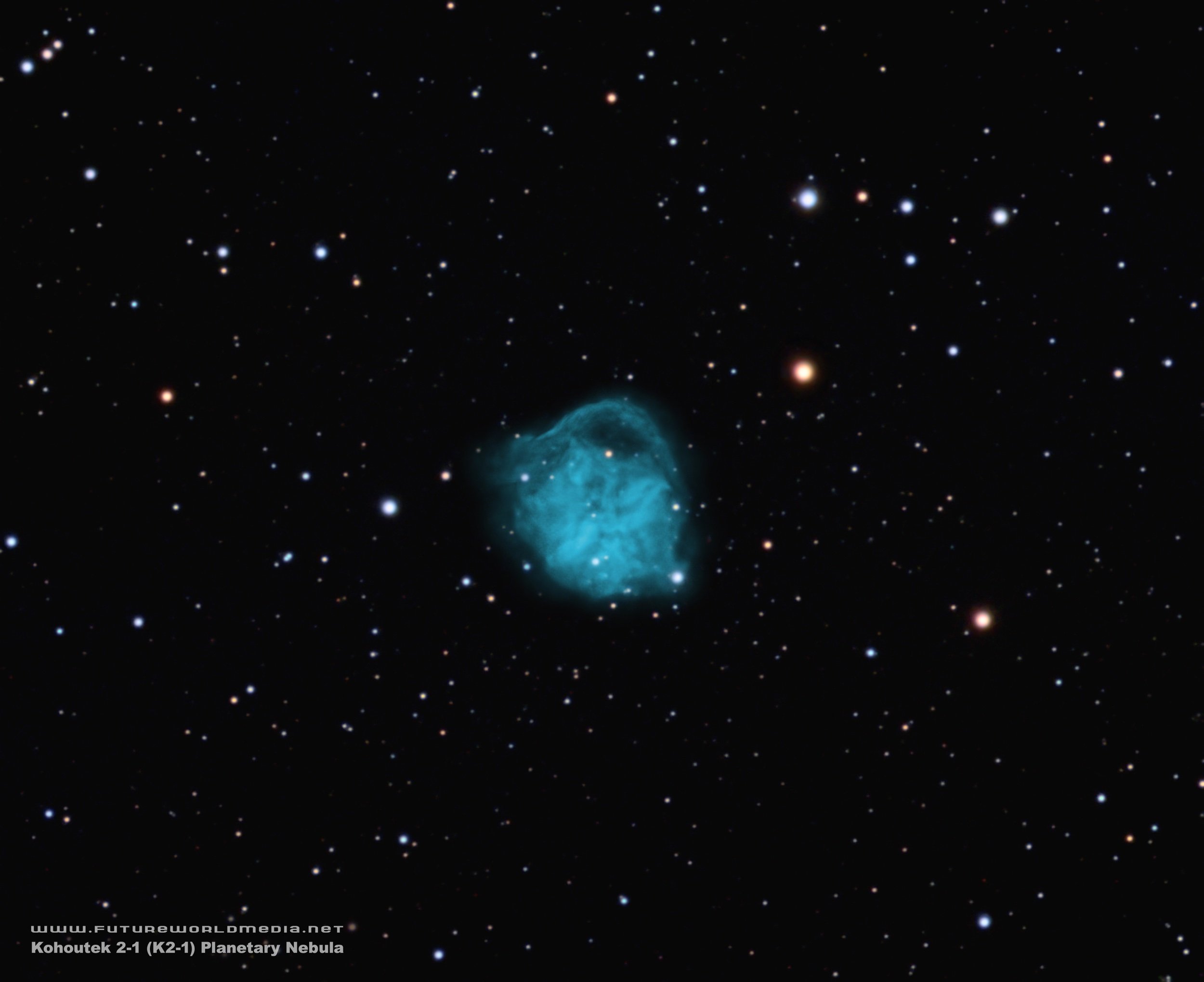
Kohoutek 2-1 (K2-1) Planetary Nebula
Image Description and Details : I started capturing this January 9th of this year and just finished capturing last week. It's been a rough winter as usual for capturing and given my light pollution, I had a heck of a time pulling out the detail in the OIII. My friend Peter captured some Ha, but there is not a lot there so I decided given my limited nights of clear skies, I would just hammer the OIII.
In 1963 while examining the POSS plates, Kohoutek came across a number of new nebulae, most of which he was able to identify as planetary nebulae. These were published in the bulletin of the Czech Astronomical Institute Circular in 1963 as BAICz14. However, in the case of some of the objects he discovered he was not able to confirm their type. Over the years this object has been variously catalogued as an irregular galaxy (UGCA 100), a bright nebula (LBN 809) or even a reflection nebula (DG 50). SIMBAD classifies this object as a diffuse nebula with notes saying it is not a galaxy or a planetary nebula. This is somewhat odd as the current professional planetary nebula (HASH) database classifies it as a true planetary nebula. In the discovery paper Kohoutek remarks on a blue star near the centre of the nebula at about 18th mag which could be the central star.
Kohoutek 2-1 is 3700 light years away in the constellation Auriga. It has a size of 115x126 arc sec and is predominantly OIII. It has a mean surface brightness of 24.1 mag/arc sec.
Copyright: © Douglas J Struble

IC1848 Soul Nebula
Image Description and Details : IC1848 Soul Nebula.
Soul nebula IC1848, narrowband processed. The stars are forming in the soul of the Queen of Ethiopia. More specifically, in a star-forming region called Soul Nebula can be found in the constellation Cassiopeia, a constellation Greek mythology identified as the arrogant wife of a king who has long ruled the lands around the top river Nile. the Soul nebula contains several open clusters of stars, an intense radio source known as W5 and huge bubbles formed by winds from massive young stars. Located about 6,500 light-years away, the Soul Nebula spans about 100 light years.
Technical data:
Remote Observatory "FarLightTeam"
Team: Jesús M. Vargas, Bittor Zabalegui,José Esteban, Marc Valero.
Telescope: Takahashi FSQ106 ED 530mm f/5
CCDs: QSI683 wsg8
Filters: Baader Planetarium - Halpha-SII-OIII
Mount: 10Micron GM1000 HPS
Imaging Software: Voyager
Processing Software: PixInsight-AstroPixelProcessor
Imaging Data:
Captured through 12 December 2021 to 21 February 2022, ( Fregenal de la Sierra ) Badajoz, Spain.
Image composed of a Mosaic of 2 tiles:
Ha: 94x1200"
SII-OIII: 147x1200"
Darks, flats, bias
Copyright: Remote Observatory "FarLightTeam"
Team: Jesús M. Vargas, Bittor Zabalegui,José Esteban, Marc Valero
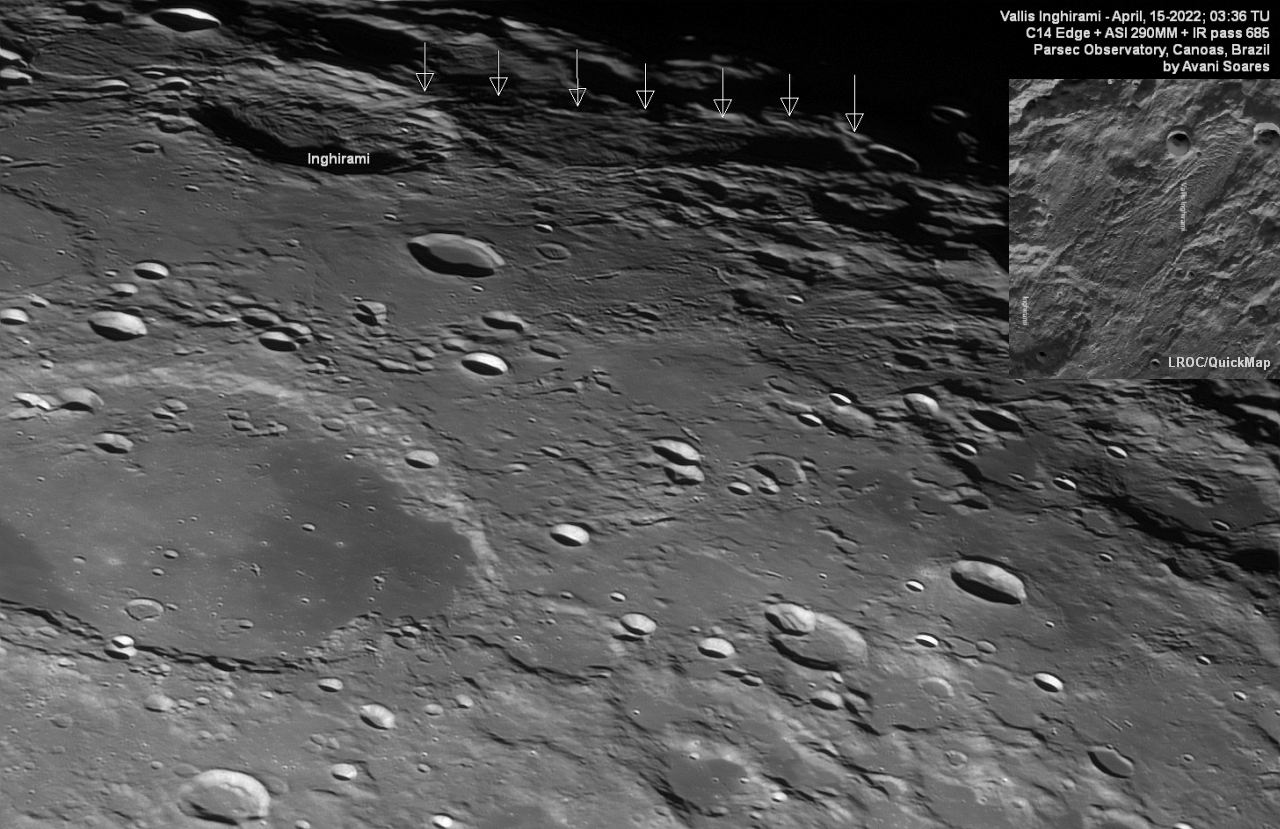
Vallis Inguirami
Image Description and Details : Vallis Inghirami
Inghirami (91km) and Vallis Inghirami (145km), can only be well observed in favorable librations of west longitude. In this particular photo, the libration was 6.56º.
The crater and vallis appear to have suffered a landslide. Online reading reveals that this surface was formed by the molten material ejected from the Mare Orientale formation. The molten ejecta exploded in the Inghirami Valley and splashed onto the crater floor and then solidified.
Note that the terraces at Vallis, reminiscent of glacial crevasses, are aligned with gradient and sloping flow, implying that they were formed in a liquid state. Second, the crater ruptured in two places in the northwest, carrying the flow of ejecta that covered the crater floor.
Also Vallis Inguirami is on the famous Lunar 100 list created by my friend Chuck Woods with the number 97.
Almost all telescope users are familiar with French comet hunter Charles Messier's catalog of diffuse objects. Messier's 18th-century listing of 109 galaxies, clusters, and nebulae contains some of the largest, brightest, and most interesting deep-sky treasures visible from the Northern Hemisphere. It's no wonder that observing all M objects is considered a virtual rite of passage for amateur astronomers.
But the night sky offers an object bigger, brighter and more visually captivating than anything on Messier's list: the Moon. However, many backyard astronomers never go beyond the astro-tourism stage to acquire the knowledge and understanding necessary to truly appreciate what they are seeing, and how magnificent and amazing it really is. Perhaps that's because after identifying some of the moon's most visible features, many hobbyists don't know where to look next.
The Lunar 100 list is an attempt to provide Moon lovers with something similar to what deep sky observers enjoy with the Messier catalogue: a selection of telescopic sights to spark interest and improve understanding. It features a selection of the 100 most interesting regions, craters, basins, mountains, channels and domes on the Moon. It is a challenge for observers to find and observe them all and, more importantly, to consider what each feature tells us about lunar and Earth history.
Lunar Anatomy 100
Objects in Lunar 100 are arranged from easiest to view to most difficult. This is more systematic than the random approach that produced the Messier list. In fact, just knowing the Lunar 100 number of a feature gives you an idea of how easy or challenging it will be to see. For example, the Moon itself is L1, while L2 is the cinereous light and L3 is the light/dark dichotomy between the lunar highlands and maria ("seas"). I'd be surprised if anyone reading this couldn't tick those off the list right now. Objects with higher numbers are smaller, less visible, or positioned closer to limbo, making them more difficult to locate and visualize.
I invite you to use Lunar 100 to guide your explorations of the Moon (https://en.wikipedia.org/wiki/Lunar_100).
Source: Refreshing Views Observatory, Marc Radice / Lunar 100, Chuck Woods, Sky & Telescope, GarySeronik / Wikipedia
Adaptation: Avani Soares
Copyright: Astroavani
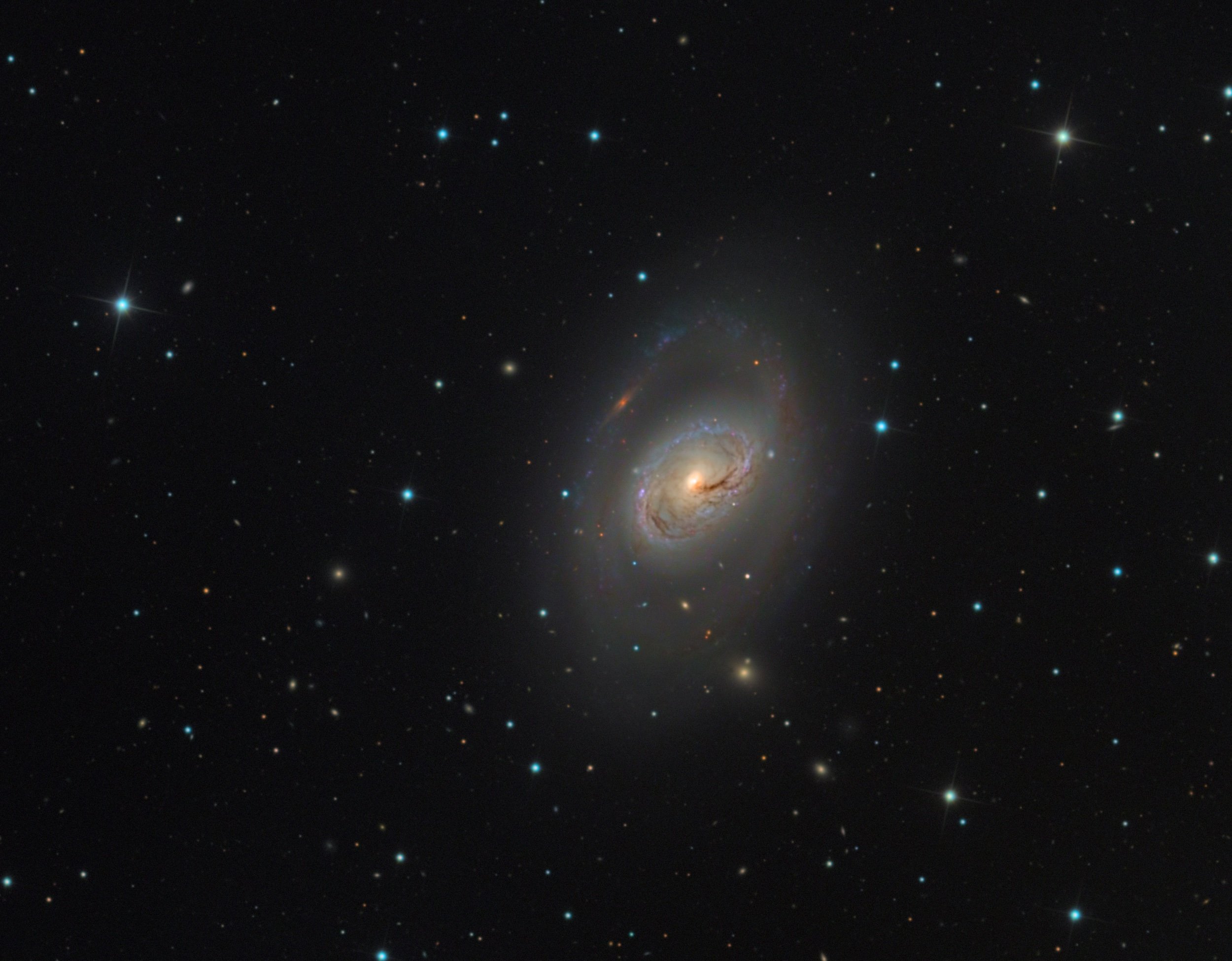
M96 The Elusive 2MFGC 8391
Image Description and Details : M96 is a lovely distrurbed spiral about 31 million ly distant. The most interesting feature to me is the needle galaxy 2MFGC 8391 we see through the arm of M96. This needle is the spitting image of NGC 891 but more distant at about 150 ly away. M96 appeared to me initially as a one-arm galaxy but is described as a double barred spiral.
Astrodon Blue: 31x31" (16' 1") (gain: 25.00) -10°C bin 1x1
Astrodon Green: 24x600" (4h) (gain: 25.00) -10°C bin 1x1
Astrodon Luminance: 61x600" (10h 10') (gain: 25.00) -10°C bin 1x1
Astrodon Red: 27x600" (4h 30') (gain: 25.00) -10°C bin 1x1
Integration total 18h 56' 1"
Planewave CDK14, Planewave L-350, QHY600M
Copyright: Kevin Morefield