

AAPOD2 Image Archives
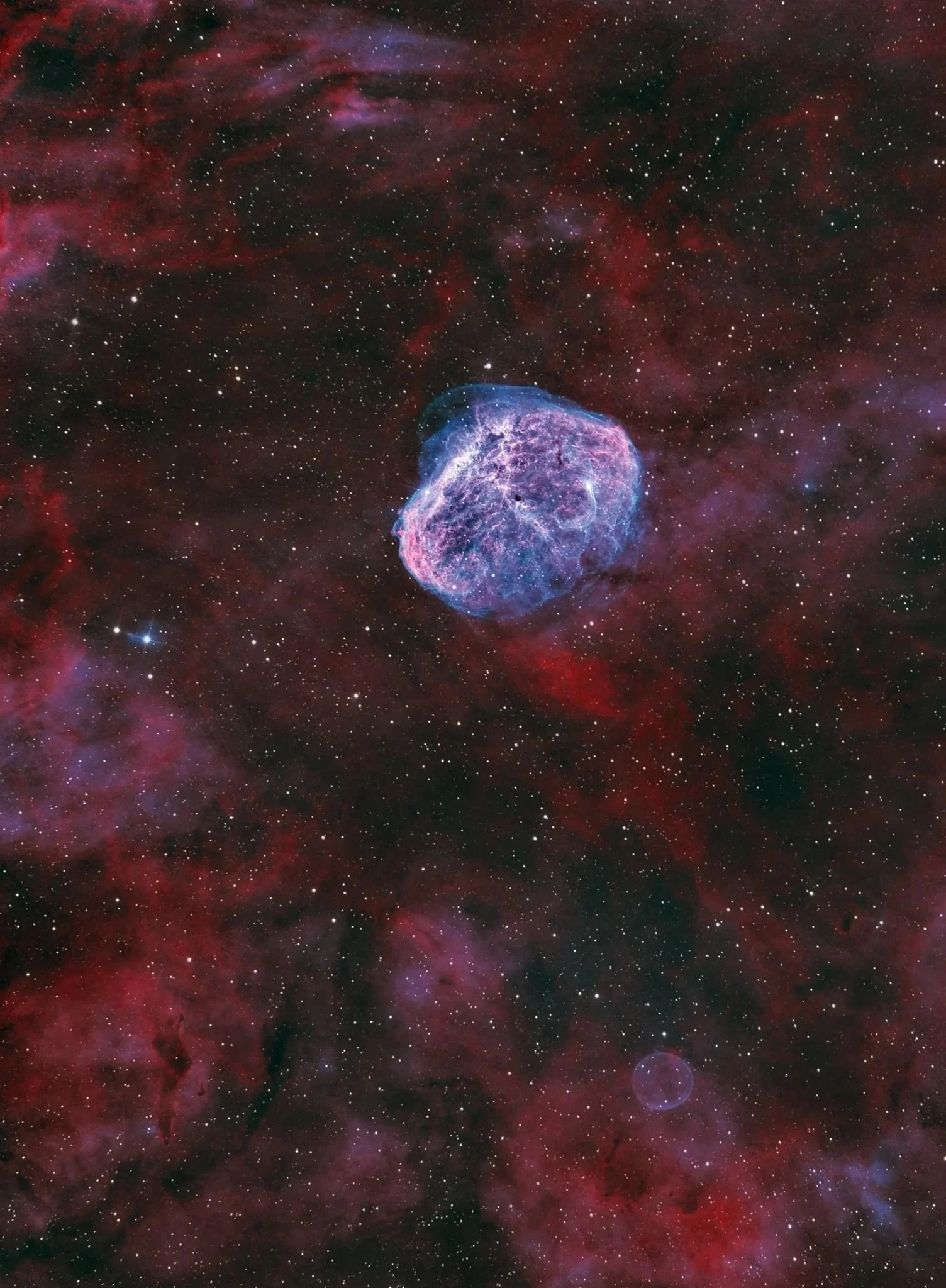
The Crescent Nebula and The Soap Bubble in HOO
Equipment:
ASI2600MM-Pro, Optolong 2" 3nm SHO filters, Orion 8" f4 newt, Skywatcher Quattro CC, Skywatcher EQ6R-Pro
Image Details:
Ha-60x300s, gain 100, -10c
OIII- 60x300s, gain 100, -10c
Total integration: 10 hrs
Acquired in NINA, Processed in Pixinisghit and Photoshop
Copyright: Tommy Lease
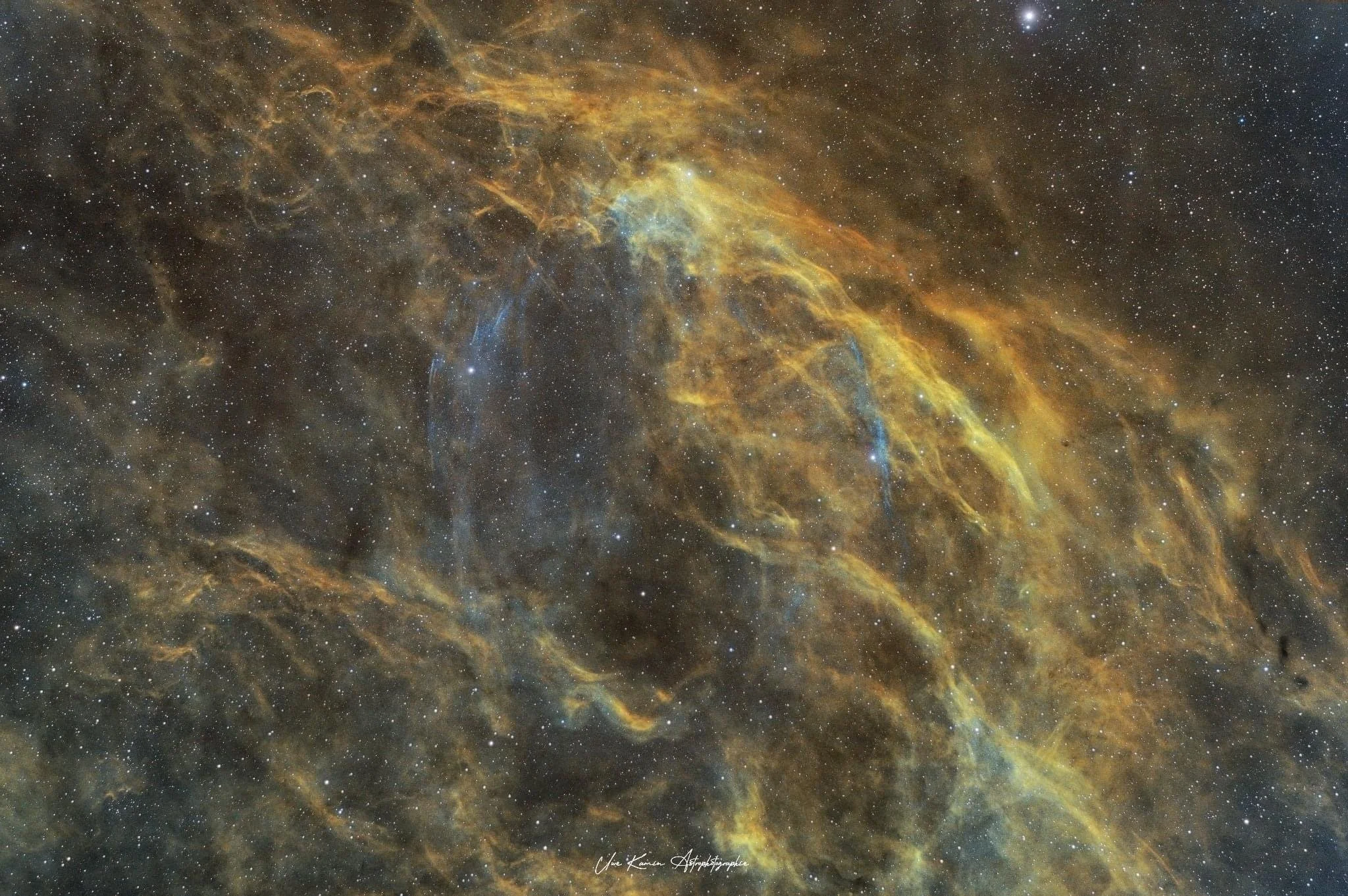
W63 (SNR G82.2+5.3) into Swan
Image Description: W63 is a weak Supernova remnant in the cirrus of the Swan nebula complex. With a 95X65 minute arc size, the name W63 comes from the Gart WESTERHOUSE catalogue.
It is near LBN 325, the large nebula at the top of the image.
15h20 total exposure
Including 34 of Ha
38 from o3 and
20 in S2
TS 86/464 quadruplet APO astrograph glasses
Televue reducer x0.80
Focal 371mm at F 4.3
EQ6 Pro Mounts
Self-driving glasses Williams Optics WO66 366mm
Camera Starshoot Autoguider
Image ZWO ASI2600MM Pro
ZWO Filter Wheel 7*36MM
Baader Filter L, R, V, B, S2, Ha and O3
Sky Quality 19.95
Magnitude CLASS 5 Bortle
SGP SEQUENCE GENERATOR PRO, SIRIL et UWE ASTRO TOOLS
Copyright: Uwe Kamin
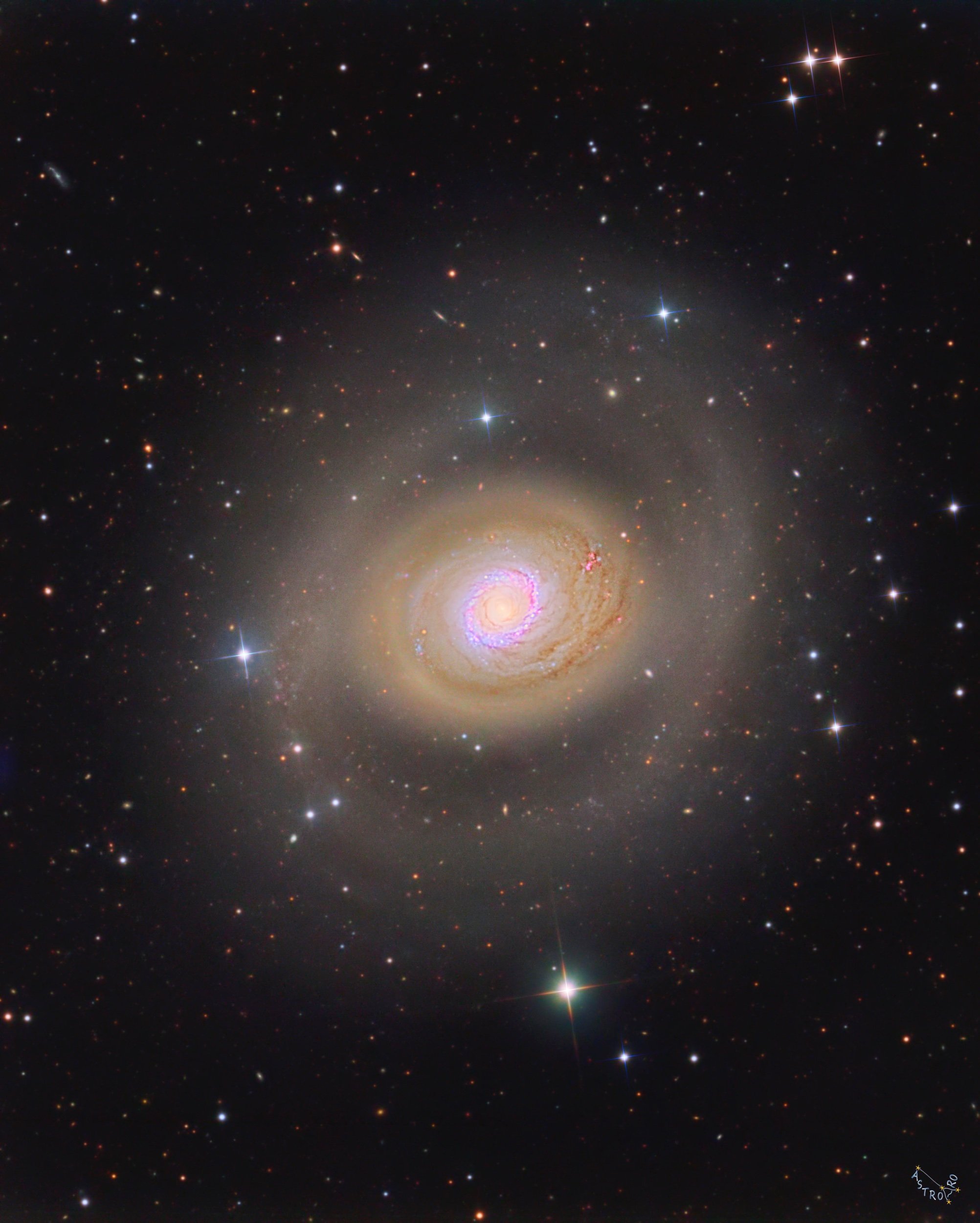
Galaxy M94
Image Description and Details : Galaxy M94 or Ngc 4736 is located about 14 million light years away in the constellation of the Hounds. The M94 galaxy is certainly one of the most beautiful galaxies observable in the spring sky. NGC 4736 was discovered by the French astronomer Pierre Méchain in 1781. Messier 94 is thought to have a diameter of 30,000 to 50,000 A.L. corresponding to its main nucleus. Beyond this, a much fainter looking halo extends another few tens of thousands of A.L. This picture was taken in Alentejo (South Portugal) in Remote de France by Team ARO from 04/07/22 to 05/08/22. Astrosib 400/3200 telescope on DDM 85 ASA mount. Camera Moravian G3 16200. Lum=89X5'. R,G,B=80x5' each Ha=18x20' each Total=33.41H Pixinsight-Photoshop processing
Copyright: Team ARO
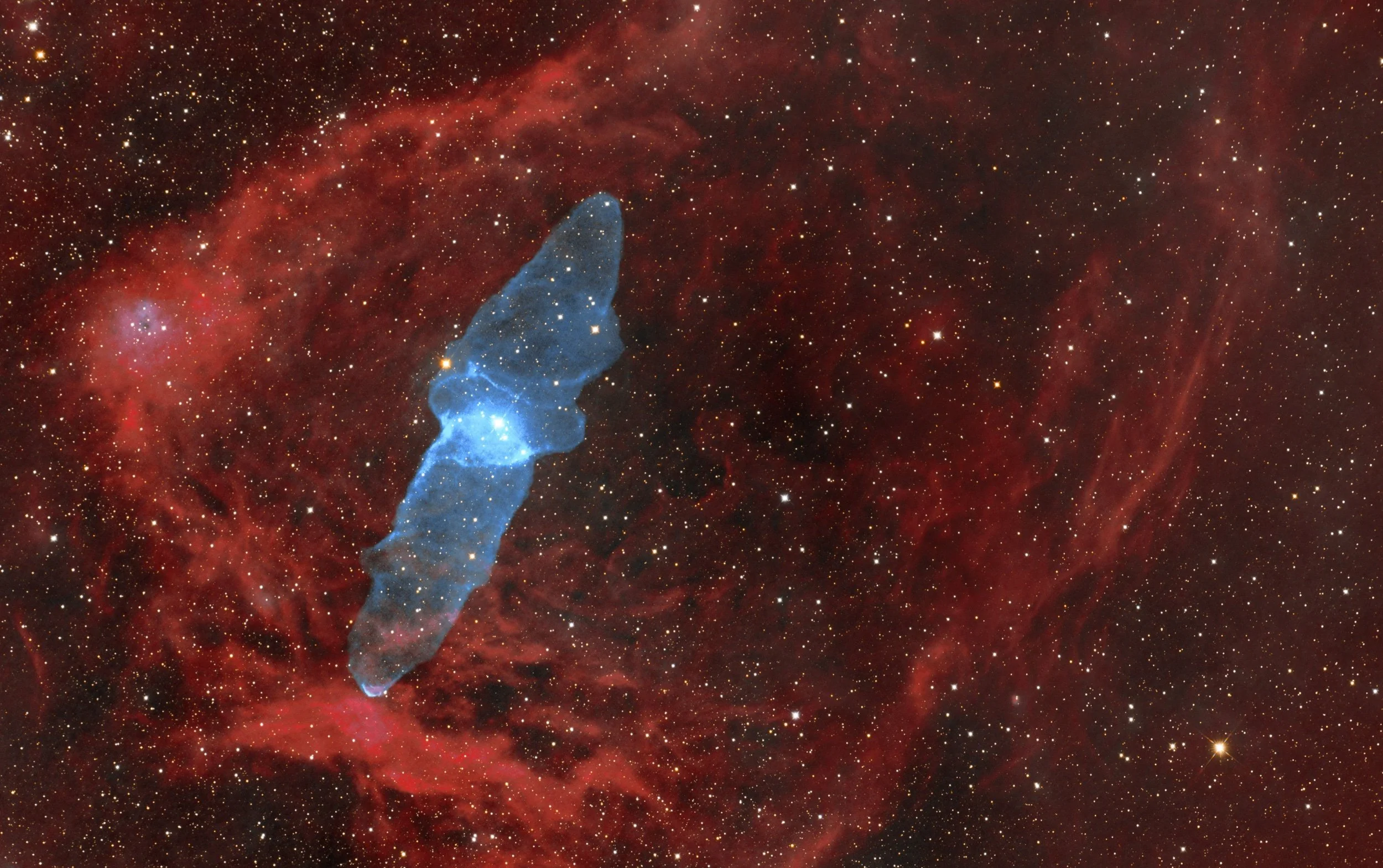
Squid nebula OU4 - Flying Bat nebula SH2 129 - HOO version
Image Description and Details : Takahashi Espilon 130D RisingCam Mono & Color SkyWatcher EQ6-Pro H : 36 x 600s O: 139 x 600s RVB: 40 x 180s intégration: 31h
Copyright: Thierry BOUFFLET
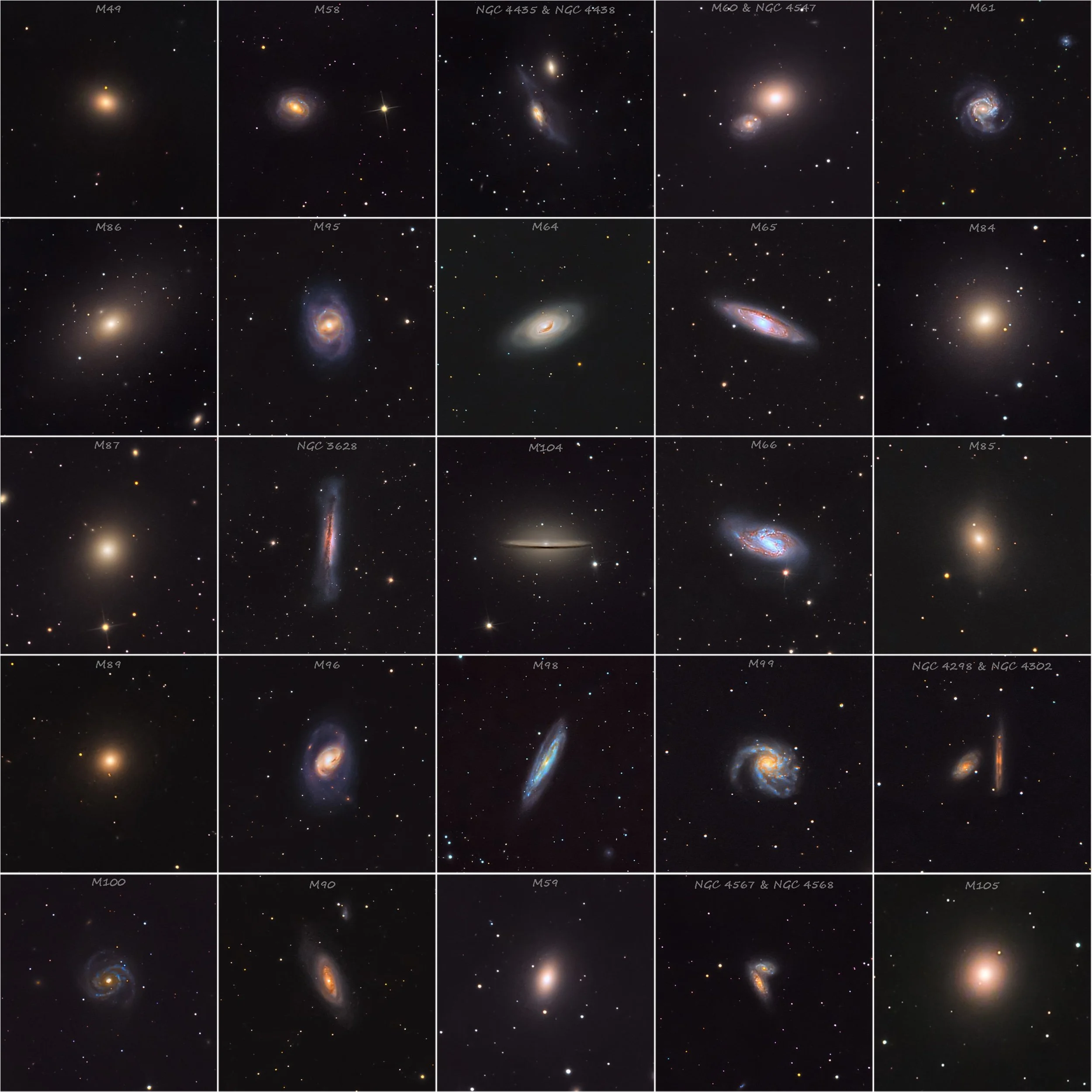
Galaxy season 2022
Image Description and Details : In recent months, and more precisely from March 19th to June 5th, I have concentrated on shooting the portion of the sky between the constellations of Leo, Virgo and Coma Berenices. This is a very rich field of galaxies from the Leo Triplet to the Virgo Cluster, some very small, some larger that show interesting details and others that appear as a simple wad of light with the brightest core in the center. In total, I acquired about 77 hours of signal to compose 17 images in which I could count (thanks to the annotations of Pixinsight), in addition to the 21 subjects belonging to the Messier catalogue that were my main subjects, 44 galaxies belonging to the NGC catalogue (New General Catalogue), 29 belonging to the IC catalogue (Index Catalogue) and 760 remote galaxies belonging to the PGC catalogue (Principal Galaxies Catalogue). I close my first galaxy season with this composition of the main galaxies captured, namely the 21 cataloged by Messier and others in the NGC catalogue, including the Hamburger Galaxy, the Markarian's Eye and the Siamese Twins. Konus 200/1000 @960mm, f4.8 Qhy168c Eq6r Pro Optolong L_Pro and SvBony CLS filters Kstars/ekos, APP, Pixinsight, PS
Copyright: Massimo Di Fusco
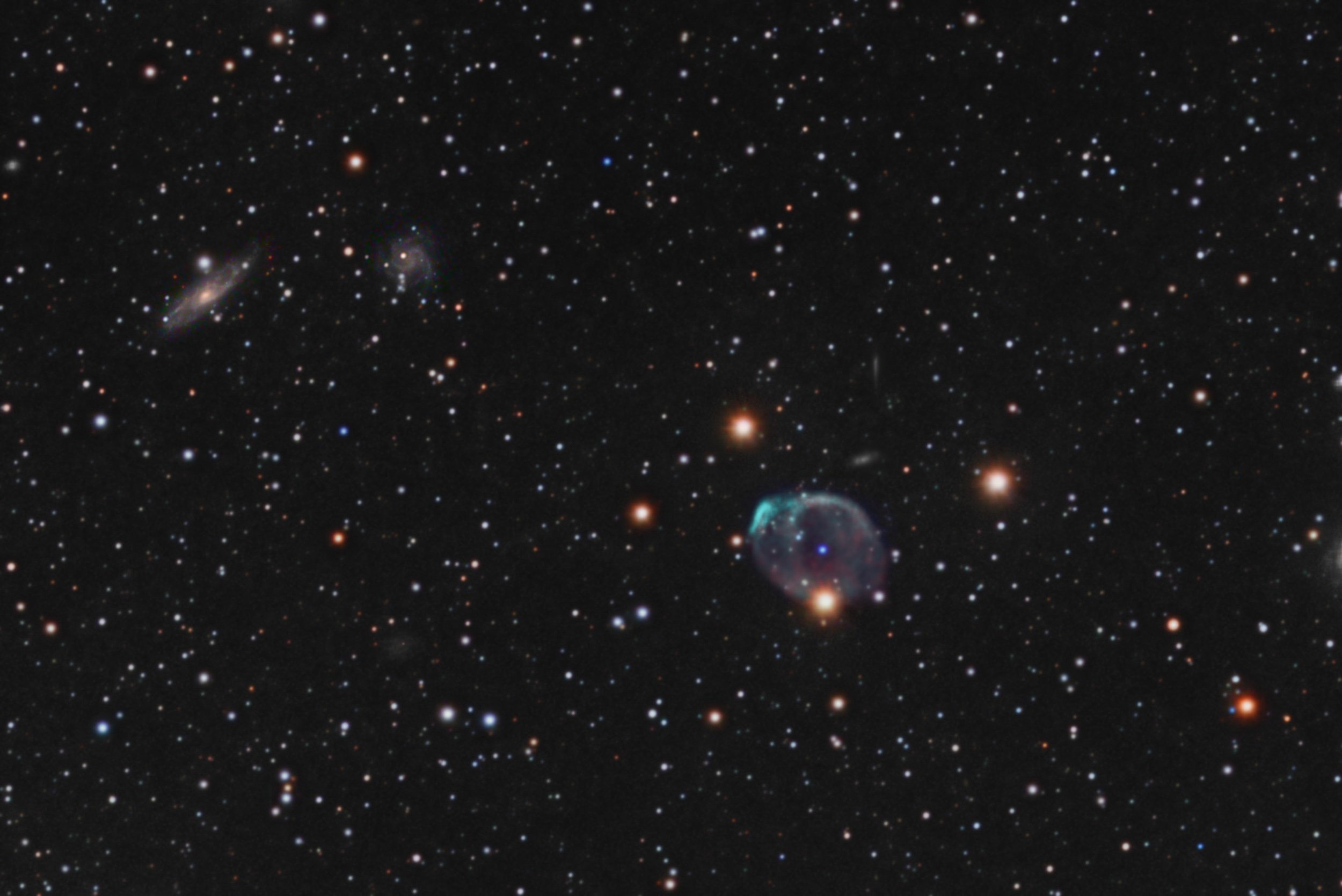
DeHt 2
Image Description and Details : DeHt 2 is a faint (mag 14.9) planetary nebula in Ophiuchus. It is estimated to be 6000 to 10,000 light years from Earth. It was discovered in 1979 by J. Dengel, H. Hartl and R. Weinberger. The mag 13.5 spiral galaxy at upper left is UGC10943, located about 115 million light years away. Image captured on my remote dual rig at Fregenal de la Sierra in Spain between 13 May - 8 June 2022. Scopes: APM TMB LZOS 152 Refractors Cameras: QSI6120wsg8 Mounts: 10Micron GM2000 HPS A total of 68 hours 30 minutes (HaOIIILRGB)
Copyright: Peter Goodhew
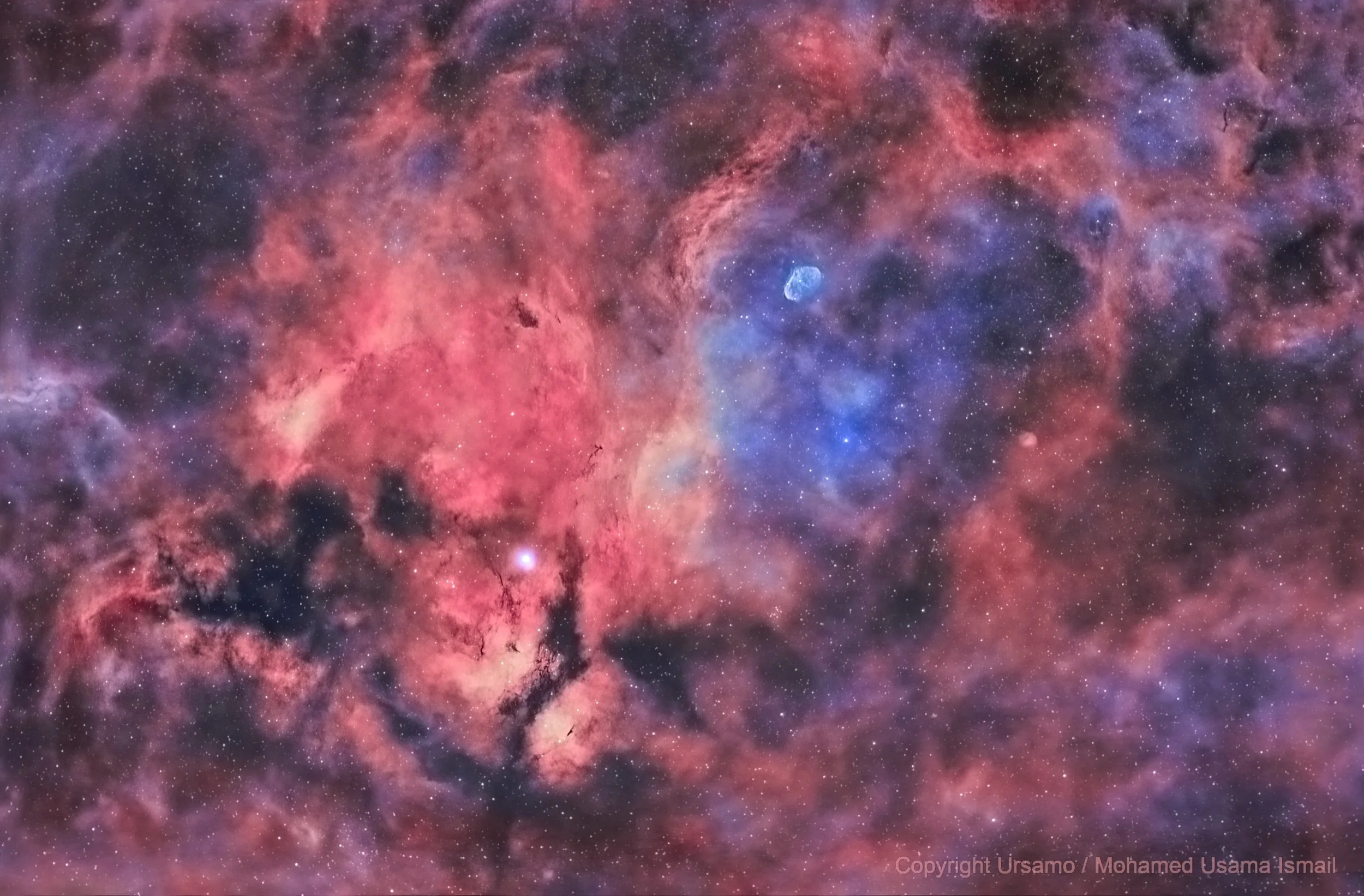
Narrowband Butterfly nebula dancing in Cygnus area
Image Description and Details : Here you can see the beautiful Butterfly Nebula and crescent Nebula in their colourful outfit
Copyright: Mohamed Usama Ismail / Ursamo Astrophotography
Equipment:
Imaging Lens ,Canon 135mm f2.0 L
Imaging Camera ,Canon 80D (Stock)
Mount ,Sky-Watcher Star Adventurer
Date: June 21, 2020 · April 10, 2021
Frames: 25x120" Oiii/95x180" Ha
Location: Egypt
Copyright: Copyright: Mohamed Usama Ismail / Ursamo Astrophotography
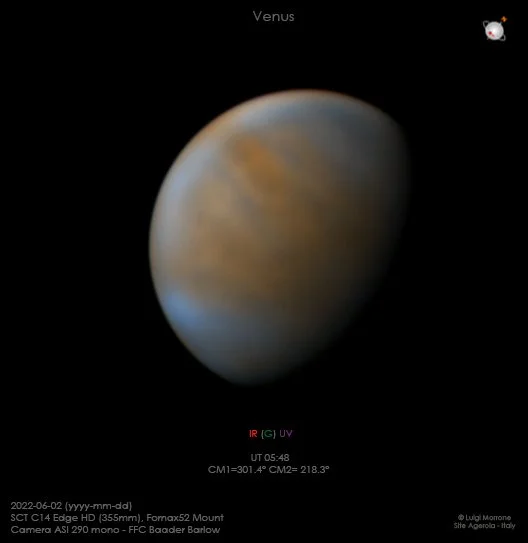
Venus Bicolor
A new set of images taken under good seeing conditions. Interesting cloud features in the Infrared and Ultraviolet band can be seen.
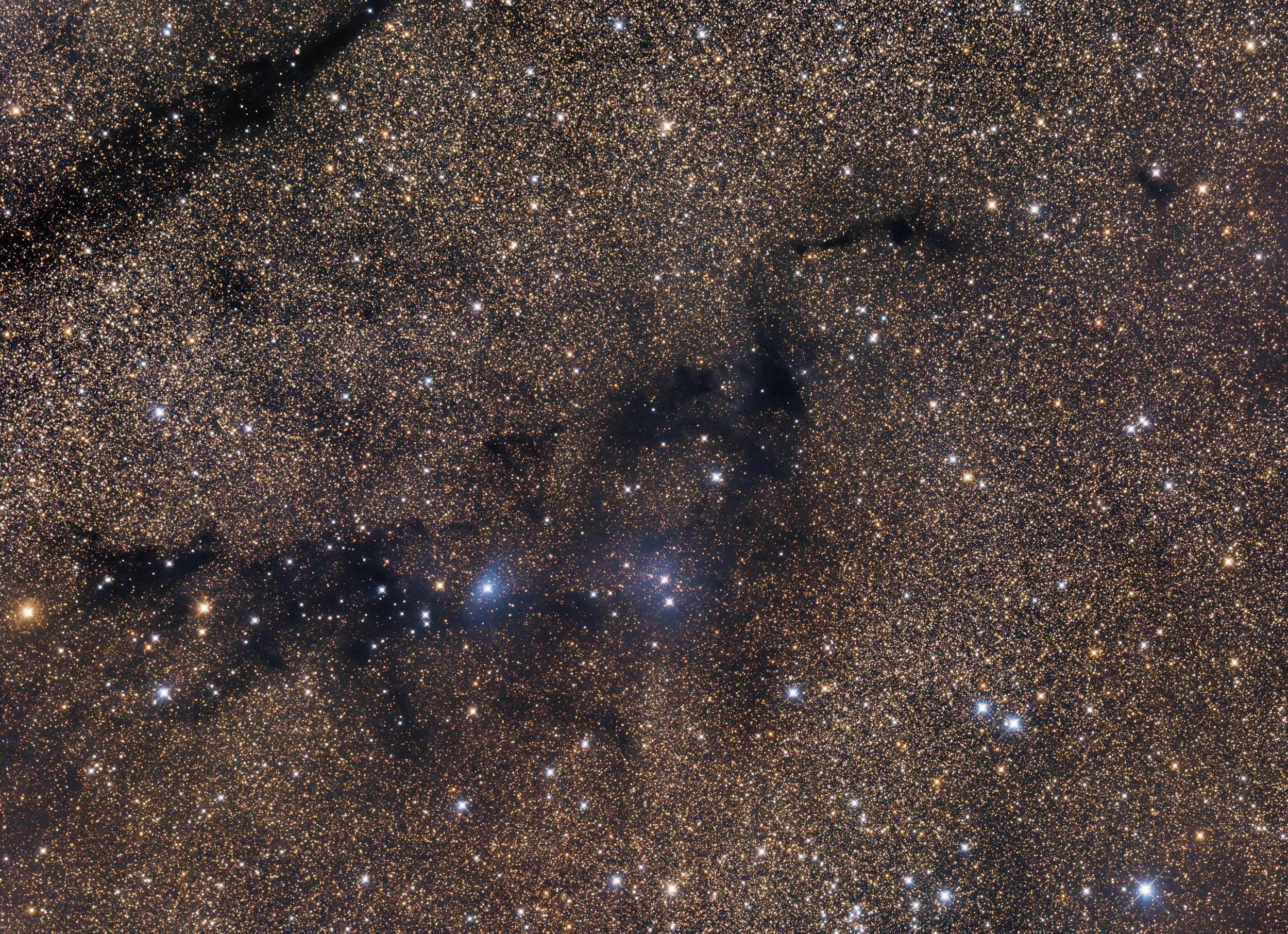
vdB 126 and LBN 134 among LDN 769 (Racing Sea Horse!)
The dark nebulae LDN 673 (left) and LDN 684, located at 600 light-years in the constellation of Aquila.
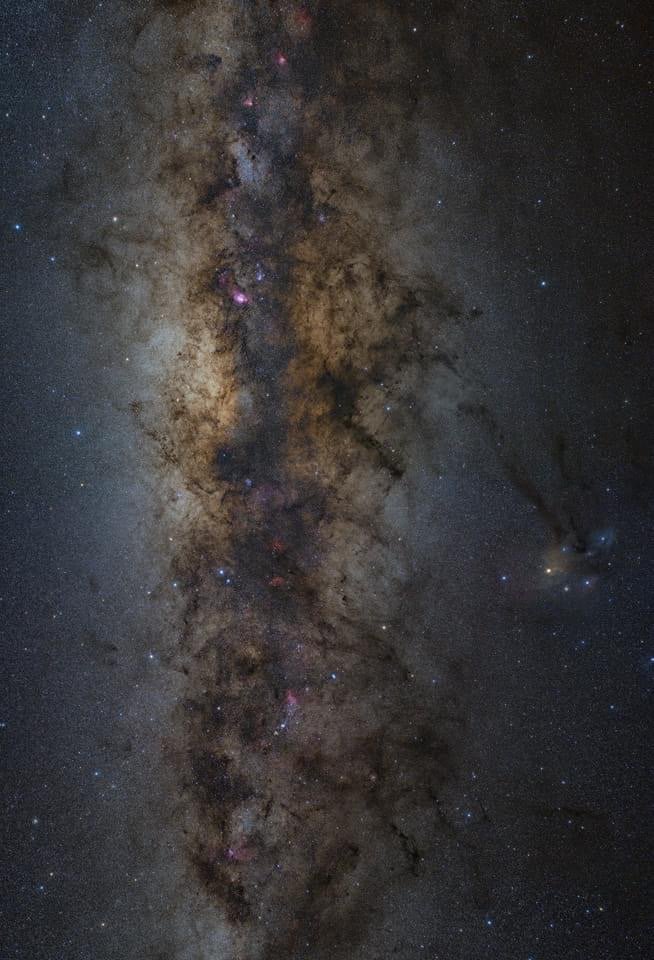
From the Sky of the Kalahari
Canon 6d /40 mm lens, two panels, about two minute 1600 iso.
Copyright: Alessandro Bares

Photogenic Saturn
Image Description and Details : Saturn on 18th August 2021. This is a substantially south up view. The seeing was excellent throughout the night of capture. The conditions allowed resolution of finest details on the planet's cloud tops. The Encke Division could be seen in the Blue images, which is unusual. The Maxwell Gap in the C Ring is also well resolved, especially in the colour image. OTA: C14 Edge HD Camera: ZWO ASI 174MM Filters: Chroma RGB Barlow: Tele Vue 3X Frames: 42,000 Frame rate: 47 fps Exposure time: 20ms Focal length: 13.5m
Copyright: Niall MacNeill
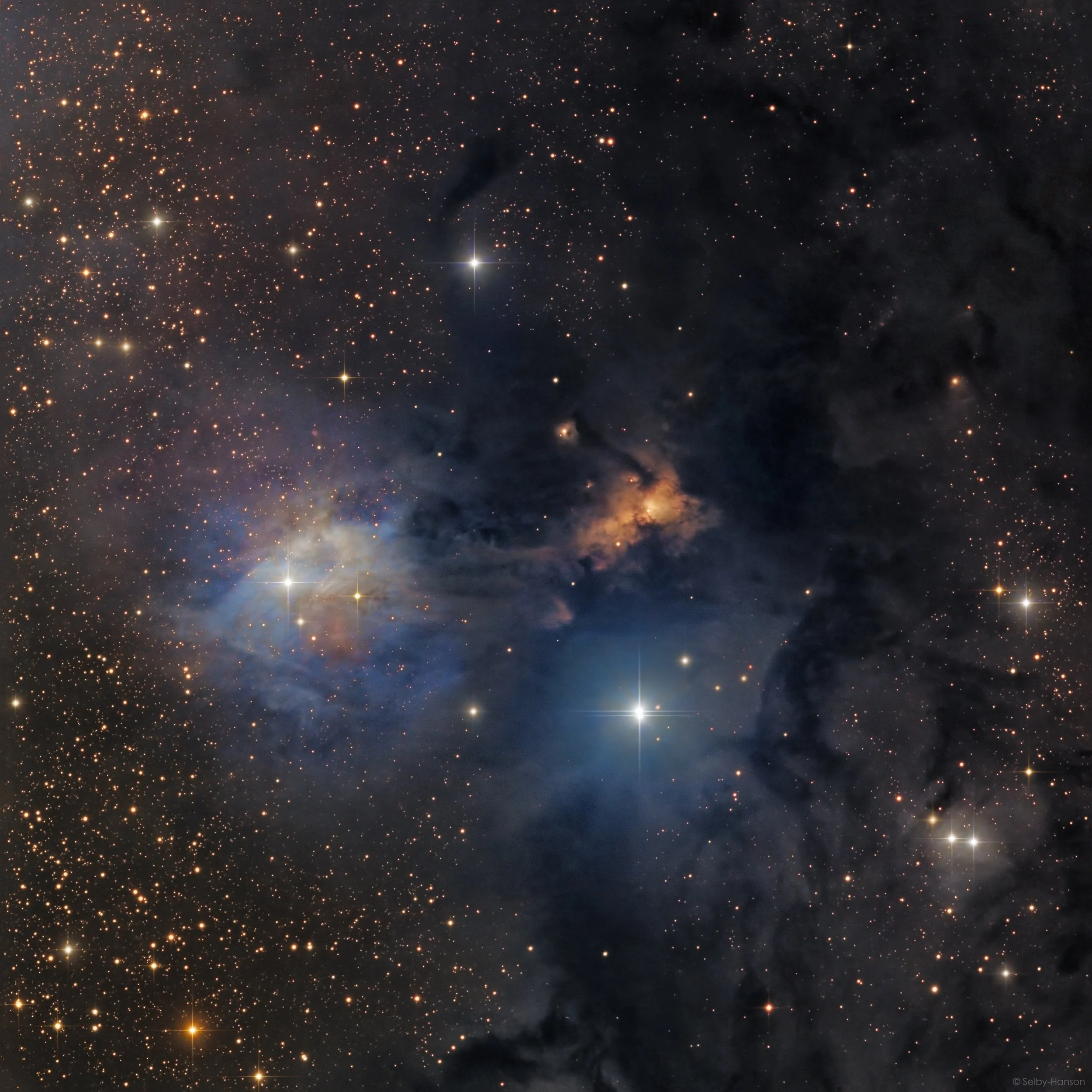
VDB 123 and Serpens Reflection Nebula
Image Description and Details : VDB 123 is a reflection nebula in Serpens embedded in the Serpens Dark Cloud. It is illuminated by HD 170634 a magnitude 9.75 blue star.
Standing out in contrast to VDB 123 is a bright region of orange nebulosity, the Serpens reflection nebula.
Imaged in LRGB on our PlaneWave CDK 1000 at Observatorio El Sauce, Chile.
Image Processing: Mike Selby and Mark Hanson
Integration Time: L 16 hours RGB 5.5 hours each.
Copyright: Mike Selby/Mark Hanson
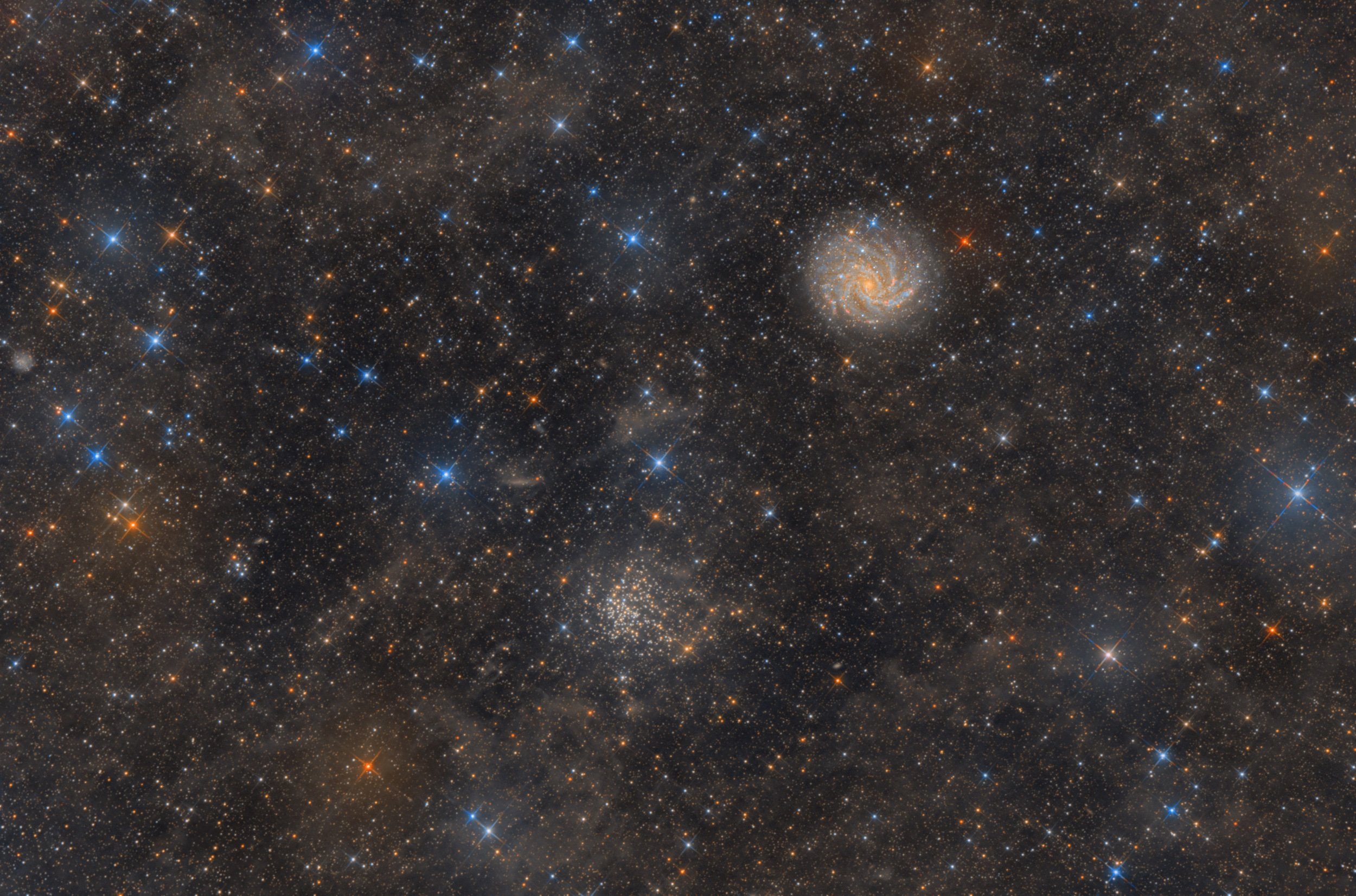
NGC 6946: The Fireworks Galaxy and its open cluster
Image Description and Details : Rare are the spiral galaxies that we see exactly from the front. The spiral galaxy NGC6946 located in the constellation Cepheus is about 10 million light-years away.
She hides behind the curtain of stars formed by the Milky Way which crosses the constellation of Cepheus. Its orange central bulb is made up of old stars while the blue
young star clusters dominate in the spiral arms. Red reveals the presence of areas where stars are born.
The activity is so inetnse that one calls this galaxy, the galaxy of the fireworks.
When the light from this galaxy began its journey to strike my photographic in May 2022, the human line appeared (Sahelanthropus tchadensis) on Earth.
The galaxy is accompanied by an open cluster NGC6939 located in the lower right. Much closer to us than the galaxy (4000 light years), its age has been revealed between 1.0 and 1.3 billion years!
🔭: ASA Newton 254/950 F3.6
⚙️: Paramount MyT
📷: ZWO ASI2400MC à -10°C + rotateur Artesky
🕶: IDAS LPS-P3
🎯: Skywatcher Evostar72ED + ASI290MM mini
💻: TheSkyX pro, NINA, PHD2, AstroPixel Processor, PixInsight, Photoshop
⏱: 19h50' (119 x 600”)
🌍: Lorraine, France
📆: Over 4 nights : 3 may 2022 · 6 may 2022 · 9 may 2022 · 21 may 2022
Copyright: Thomas LELU
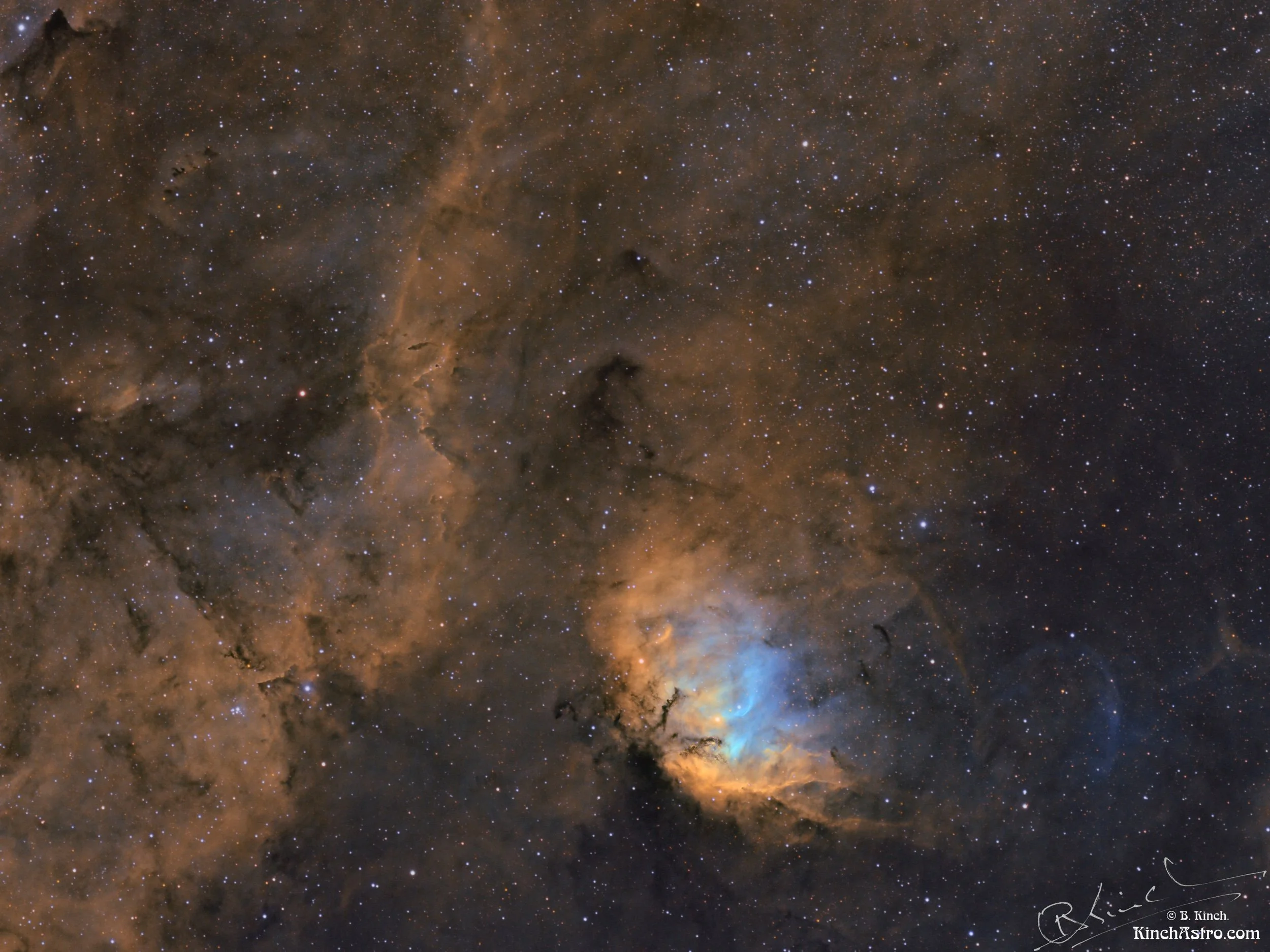
Sh2-101
Image Description and Details : Sharpless 101 (Sh2-101) is a H II region emission nebula located in the constellation Cygnus. It is sometimes also called the Tulip Nebula because it appears to resemble the outline of a tulip when imaged photographically. It was catalogued by astronomer Stewart Sharpless in his 1959 catalogue of nebulae. It lies at a distance of about 6,000 light-years (5.7×10¹⁶ km; 3.5×10¹⁶ mi) from Earth.
Sh2-101, at least in the field seen from Earth, is in close proximity to microquasar Cygnus X-1, site of one of the first suspected black holes. Cygnus X-1. The companion star of Cygnus X-1 is a spectral class O9.7 Iab supergiant with a mass of 21 solar masses and 20 times the radius of the Sun. The period of the binary system is 5.8 days and the pair is separated by 0.2 astronomical units. The black hole has a mass of 15 solar masses and a Schwarzschild radius of 45 km. A bowshock is created by a jet of energetic particles from the black hole as they interact with the interstellar medium can be seen as an arc (bluish) to the right of the "Tulip".
Imaging telescope: Takahashi FSQ130ED
Imaging camera: ASI 2600MM
Mount: Takahashi EM 400 Temma 2M
Guiding telescope: Takahashi FS60CB
Guiding camera: QHY CCD QHY 5 II
Focal Extender / Reducer: None
Capture Software: Sequence Generator Pro, PHD 2
Processing Software: Astro Pixel Processor, PixInsight, Topaz DeNoise, Photoshop
Filters (50mm): Astrodon Ha (3nm), Astrodon SII (3nm) & Astrodon OIII (3nm)
Accessories: SeleTEK2 controlling Robofocus Focuser, ATIK EFW3
Dates: 29th May 2022
Frames:
Astrodon Ha 9 x 10'
Astrodon SII 9 x 10'
Astrodon OIII 9 x 10'
Total integration = 4 Hours 30 Mins
Copyright: Brendan Kinch
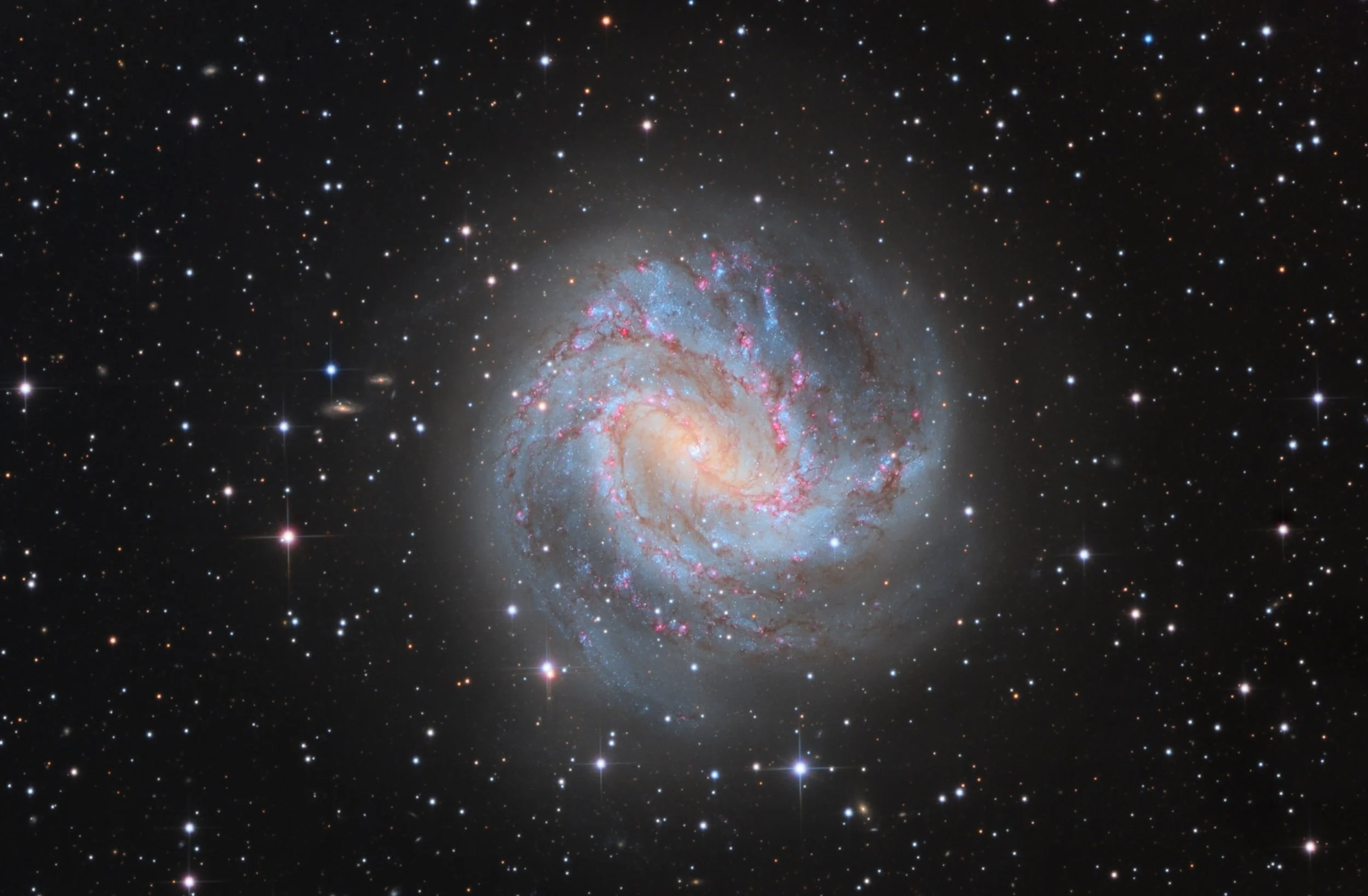
M83 the Southern Pinwheel
Image Description and Details : From ATRIA observatory with DeepSkyChile in Chile: ATRIA Team composed of 6 members : Olivier, Fabien , Frédéric . David , Julien , and myself ;-) Total exposure : 38h09' Red 48 subs@420s -15°C gain high Green 22 subs@300s -15°C gain high Blue 23 subs@300s -15°C gain high Light 576 subs@180s -15°C, gain high
Copyright: Arnaud PEEL

The Fighting Dragons of Ara, NGC 6188
Image Description and Details : “Torches blazed and sacred chants were praised. As they start to cry, hands held to the sky. In the night, the fires are burning bright.” - Number of the Beast, Iron Maiden 06 May 2022: The Fighting Dragons of Ara, NGC 6188 COOLEST NEBULA NAME EVER!! I didn’t even know this existed until too late in the season last year so when it came around recently I HAD to get this one. Can you see the Dragons? Yeah, you can! Wicked! Taken from my backyard in Perth, Western Australia over two night in May 2022. Skywatcher Evostar 80ED HEQ5, belt mod ZWO ASI2600MM (gain 100, -10C) SVbony 30mm guide scope ZWO ASI120MM-mini guide scope FILTERS: ZWO Ha 7nm (51x 300s) Antlia Oiii 3nm (45x 300s) Baader RGB (50x 30s)
Copyright: Christopher Boyd
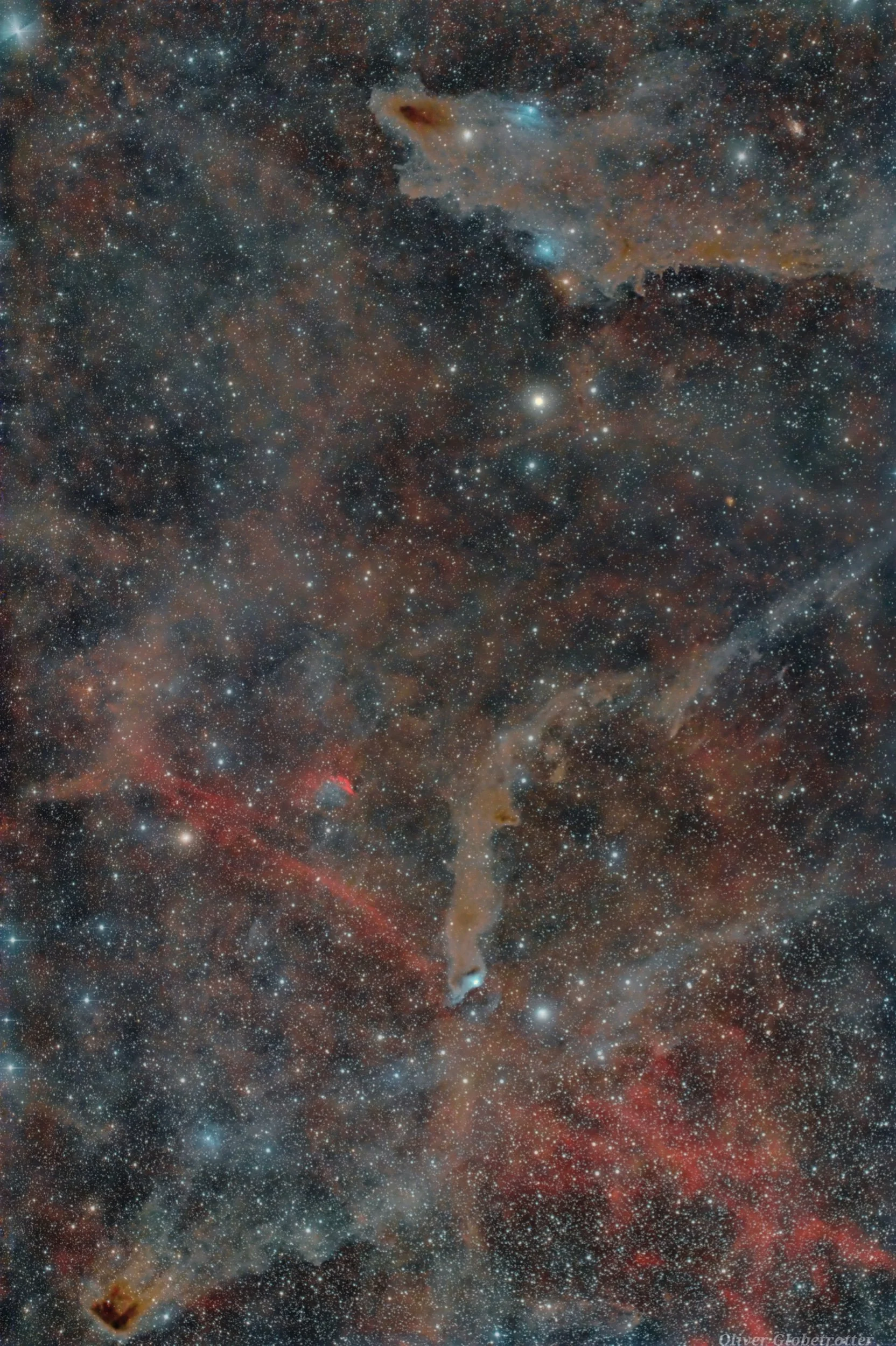
Ldn 1235 & VDB 152
Image Description and Details:
Here is the last image made with the new Askar 600 scope and the 6d gun! Staying 1 week in Aveyron with the astronomical association I was able to test my new askar 600 telescope, with reducer, I go to 420mm focal length and an aperture of f3.9! Formerly I had a Newton 150 750, f4 it changes bcp! Here is a small image made on Cepheus, if it's done it's over! Here is ldn 1235 the shark and vdb 152 the magic bean from dragon ball z!! Askar 600 with reducer f3.9 Heq5 pro goto Canon 6d iso 1600 defiltered by Photomax Lacerta mgen 3 svbony 60/240 Brutes 100 x 300'' 30 dof Siril, pixinsight, photoshop
Copyright: Olivier Bernard

occultation vénus by moon
Image Description and Details : I have taken this picture on Réunion Island, I used my C11 with asi224mc. the phenomenon was very low, 10 degrees above the horizon only. I had to prepare my shooting location well, between roofs, relay antenna and palm trees.
Copyright: Quentin Gineys
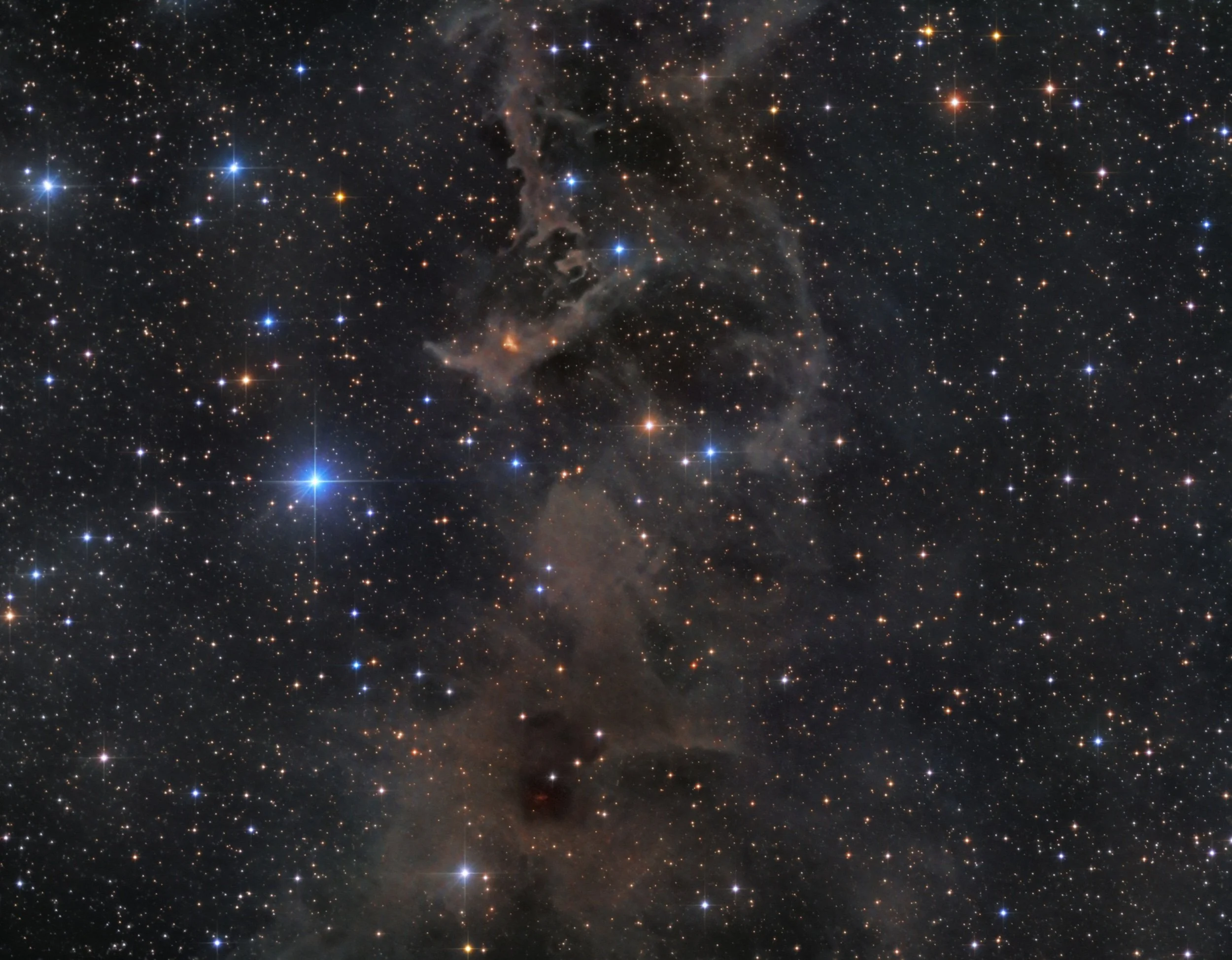
LBN 552 + LDN 1228
Image Description and Details : LBN 552 and LDN 1228 are molecule clouds in the constellation Cepheus. LBN 552 contains a unique orange reflection nebula, which is catalogued as RNO 129. This molecule clouds are considered the weakest in the Lynds Bright Nebula catalog. Telescope: 4,5" Newton Camera: SBIG ST8300M with Baader filters Exposure times: L: 36x10min RGB: 8x5min each Exposure time total:8h Mount: 10Micron GM1000 HPS Location. Erdweg/Germany Date: 2021-05-04+05
Copyright: Copyright: Michael Deger
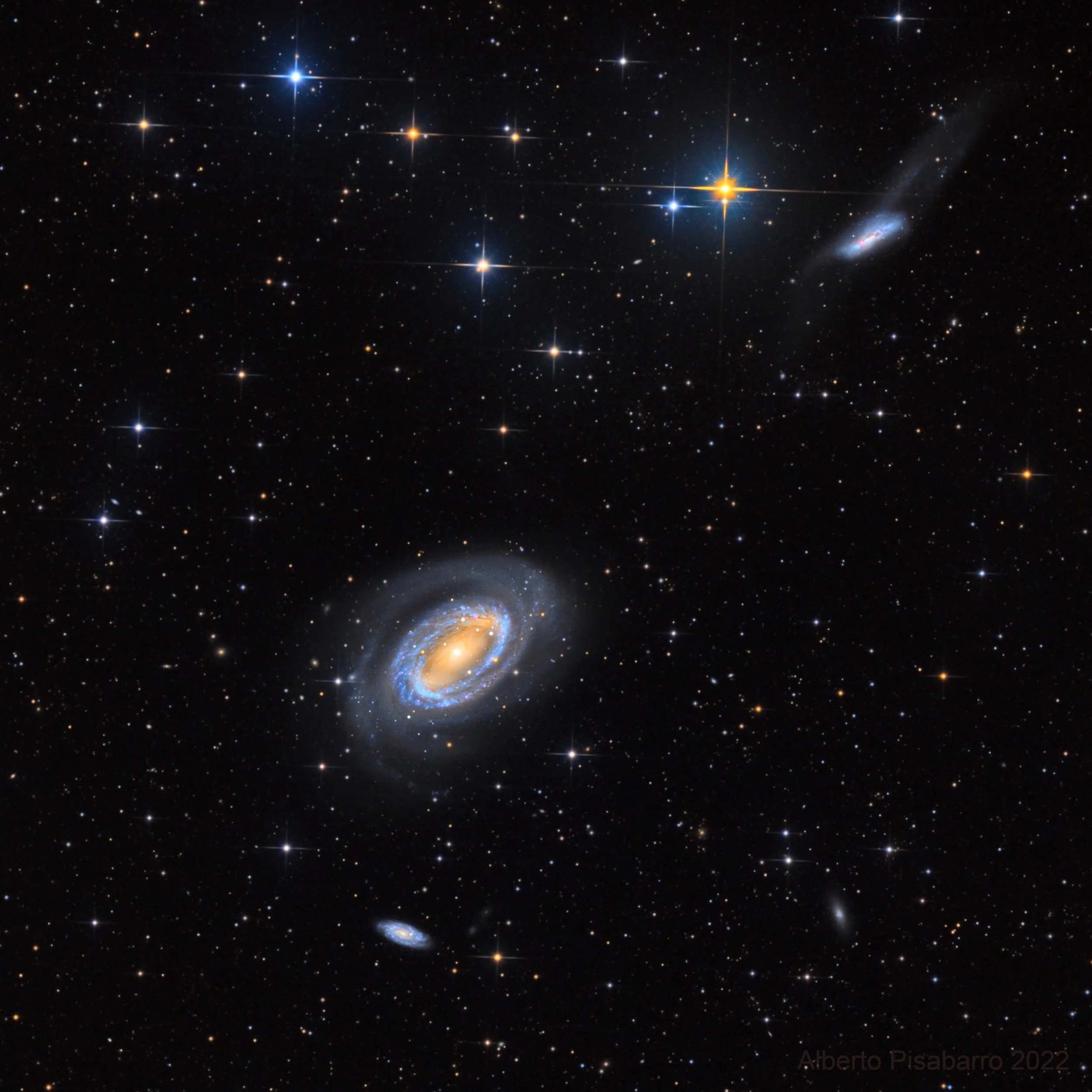
NGC 4725 & Company - Trio of Galaxies in the Berenices Coma
Image Description: Today I want to share with you the image of a trio of galaxies that are located in the Berenices Hair.
NGC 4725 is a mid-sized galaxy located in the constellation Coma Berenices. This galaxy isn't as well known as others but with a class 10 magnitude it's worth visiting, curious to see that it only has a spiral arm, which also gives the feeling of squeezing the core of NGC 4725.
NGC4747 is a rather peculiar galaxy, in this image we can see it in the upper right, the shape reminds me of a bird flying over the beautiful island NGC 4725. This galaxy shows symptoms of having had some kind of gravitational interaction, that look like the wings of a bird could be tidal currents, therefore it is considered that NGC 4747 is one of the galaxies companion to NGC 4725, the whole gravitational ction between both and has distorted the spiral structure NGC 4747
Copyright: Alberto Pisabarro