

AAPOD2 Image Archives
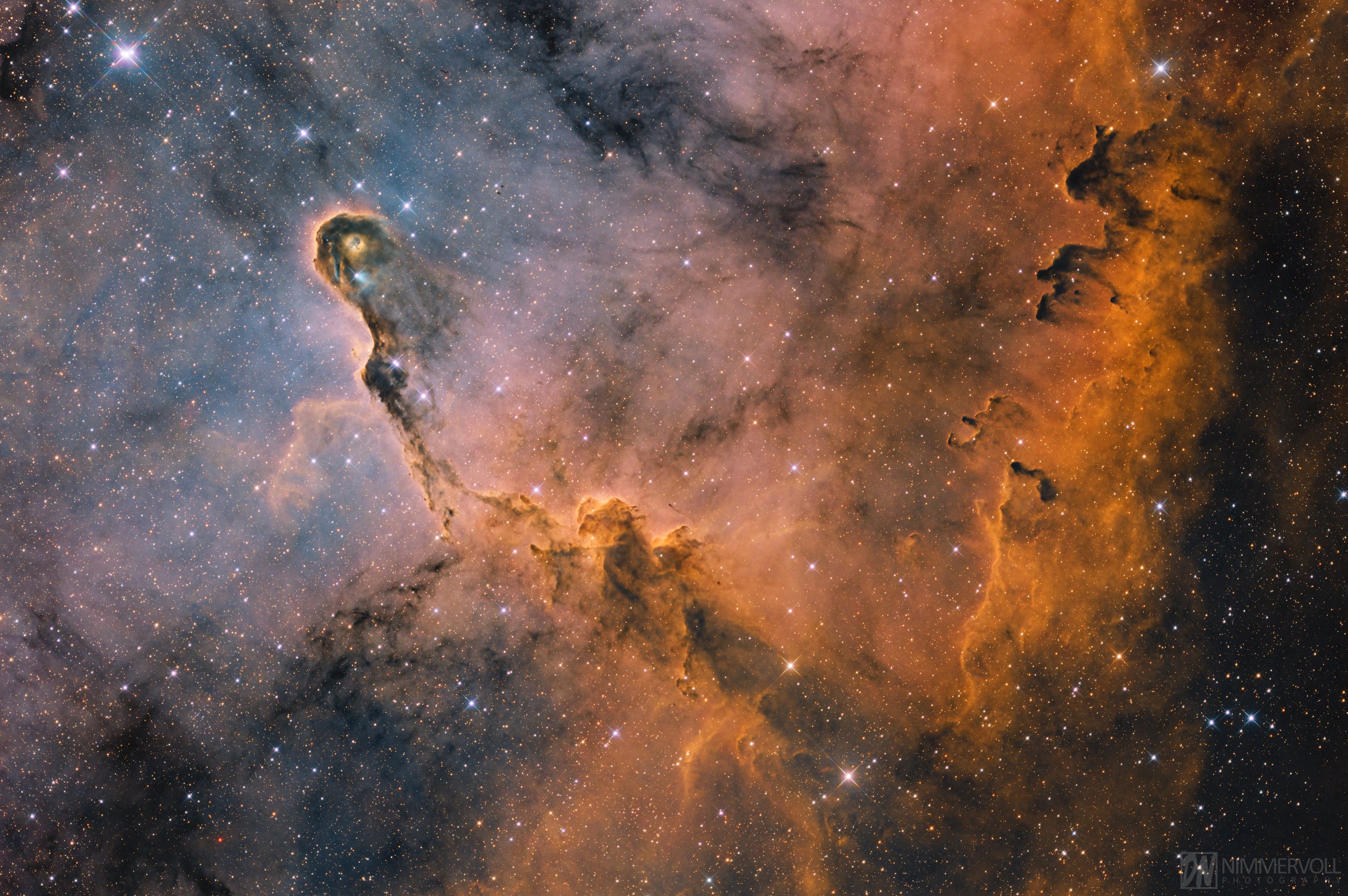
IC 1396
IC 1396 is a stunning emission nebula located in the constellation Cepheus. The bright central star, HD 206267, ionizes the surrounding gas, causing it to glow in brilliant hues of red and blue. The nebula's distinctive shape, often referred to as the "Elephant Trunk," is created by dense columns of gas and dust that shield the nebula's interior from the ionizing radiation. The trunk of the elephant is also a site of ongoing star formation, with several young stars visible within the structure. IC 1396 is a beautiful example of the ongoing processes of stellar birth and death in our galaxy.
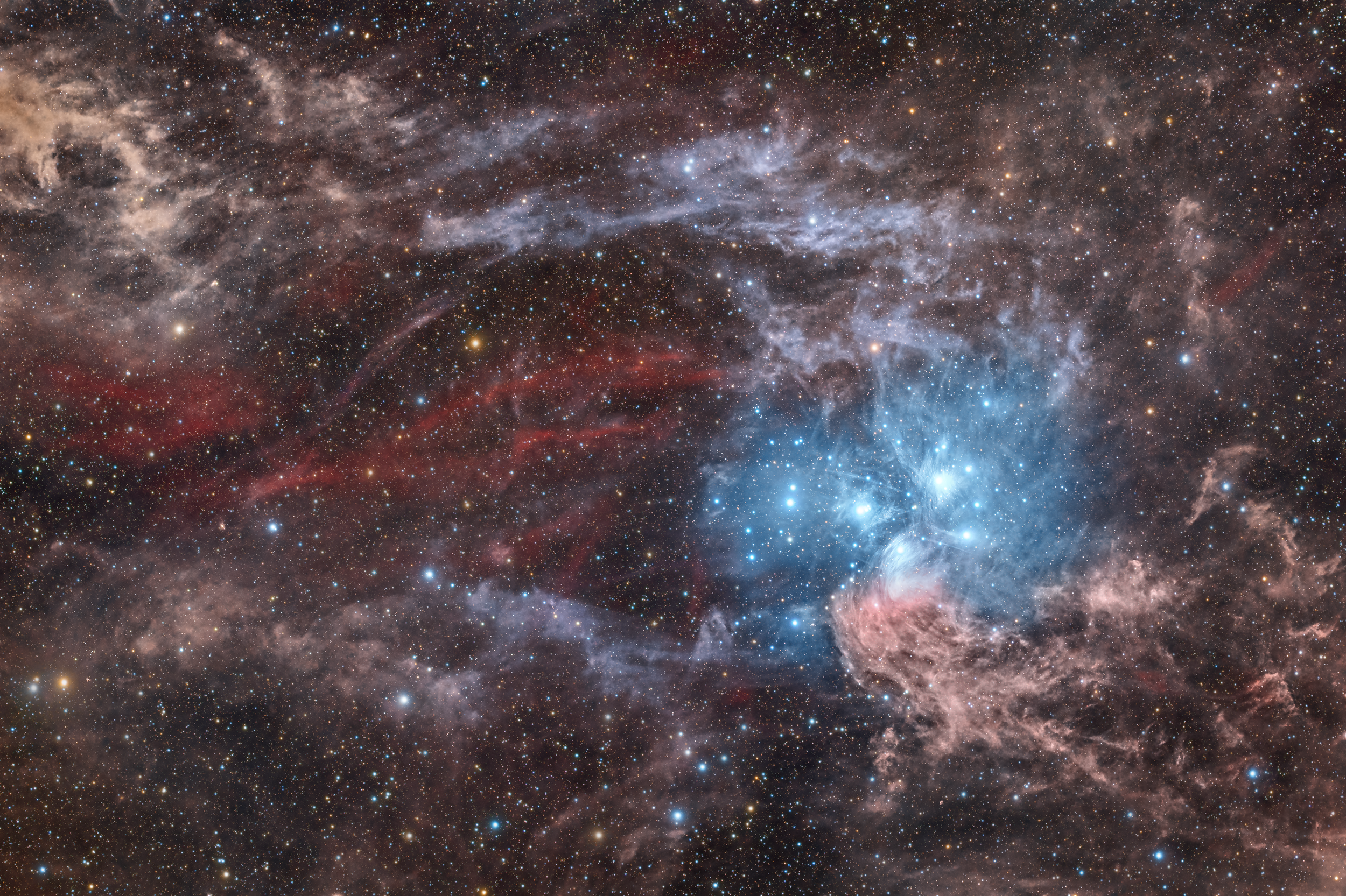
M45 (Pleiades) in HOORGB
Image Description and Details : M45 (Pleiades) in HOORGB, 98 hours taken over the course of 19 nights.I've wanted to take this picture for a couple of years, but whenever I could get to my dark sky site, it was cloudy. The stars finally aligned (literally) and I was able to get a good amount of RGB data from my dark sky site this winter.During my research for taking this photo, I noticed that some images had small amount of faint Hydrogen Alpha immediately around M45, so I figured I'd pile on some HA data for my wide field image and see if any more hydrogen would present itself...I was pleasantly surprised to find some wispy streams of hydrogen that I'd never seen before, right outside of the star cluster.The RGB data was taken from my dark sky site in Bone Cave, TN. The narrowband data was taken from my backyard in Nashville, TN.Imaging details:Imaging Telescope: TPO UltraWide 180 f/4.5 Imaging Camera: ZWO ASI2600MC Pro Mount: Sky-Watcher EQ6-R Pro Filters:Baader Fringe Killer 2"Optolong L-eXtreme 2" Accessories: ZWO ASIAIR Plus, ZWO EAFSoftware: Adobe Photoshop, Aries Productions Astro Pixel Processor (APP), Pleiades Astrophoto PixInsightGuiding Telescope: ZWO 30mm Mini Guider ScopeGuiding Camera: ZWO ASI290MM Mini Dates:Nov. 18, 2022, Nov. 19, 2022, Nov. 20, 2022, Nov. 21, 2022, Nov. 22, 2022, Nov. 23, 2022, Nov. 28, 2022, Nov. 30, 2022, Dec. 12, 2022, Dec. 15, 2022, Dec. 16, 2022, Dec. 17, 2022, Dec. 18, 2022, Dec. 19, 2022, Dec. 20, 2022, Dec. 23, 2022, Dec. 24, 2022, Dec. 25, 2022, Dec. 27, 2022, Jan. 1, 2023Frames:Baader Fringe Killer 2": 538×240″ (35h 52′) (gain: 100.00) -10°COptolong L-eXtreme 2": 467×480″ (62h 16′) (gain: 100.00) -10°CTotal Integration: 98h 8′Darks: 60Flats: 60Flat darks: 100
Copyright: Copyright: Jeffrey Horne
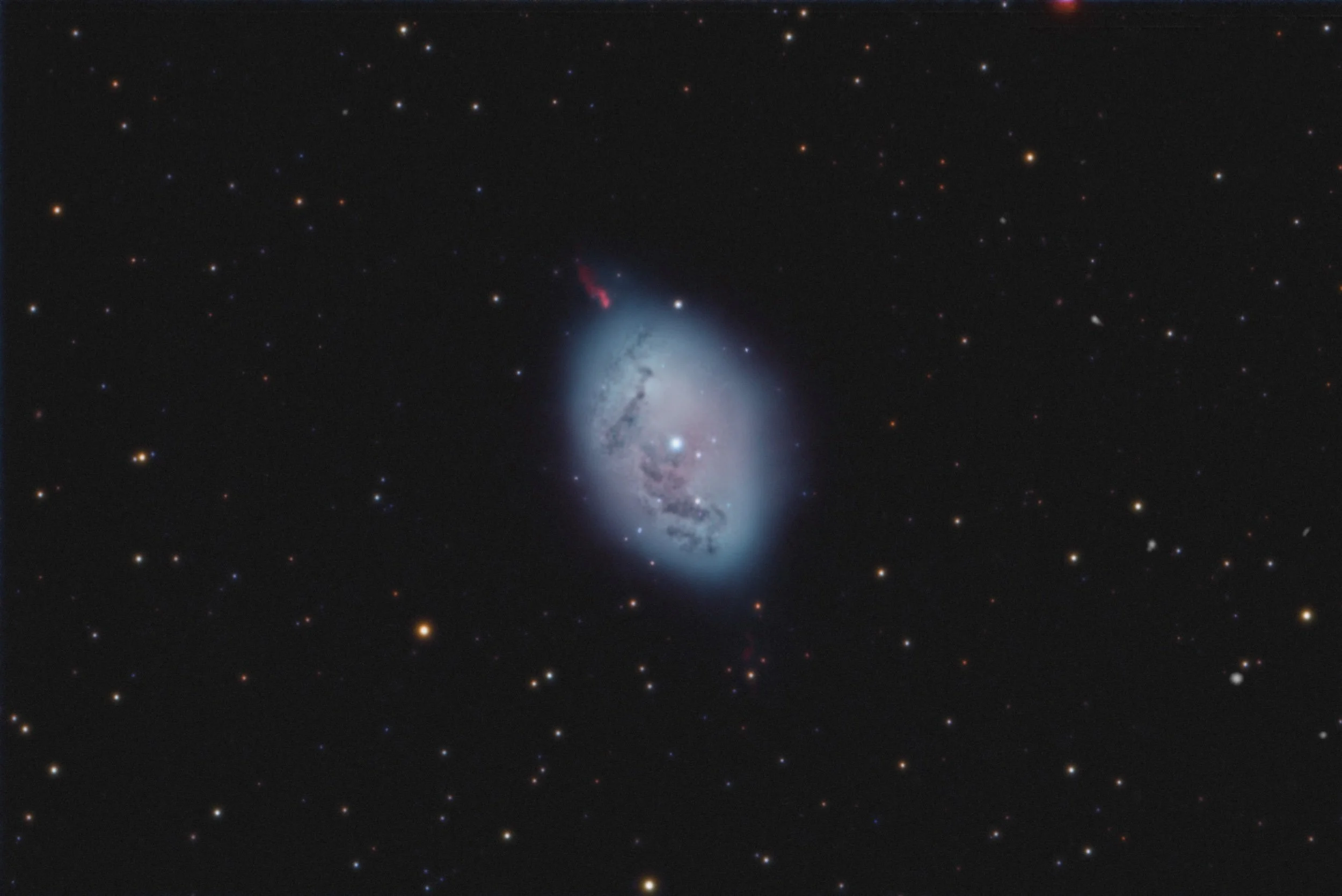
NGC 1360
Image Description and Details : NGC 1360, also known as the Robin's Egg Nebula, is a planetary nebula in the Fornax constellation. It is estimated to be between 1200 and 1800 light years from Earth.
Scopes: APM TMB LZOS 152 Refractors and Celestron C14 Edge HD
Cameras: QSI6120wsg8 and ZWO ASI6200MM Pro
Mounts: 10Micron GM2000 HPS and 10Micron GM3000 HPS
A total of 35 hours 30 minutes (HaOIIIRGB)
More information at
Copyright: Copyright: Peter Goodhew, Sven Eklund
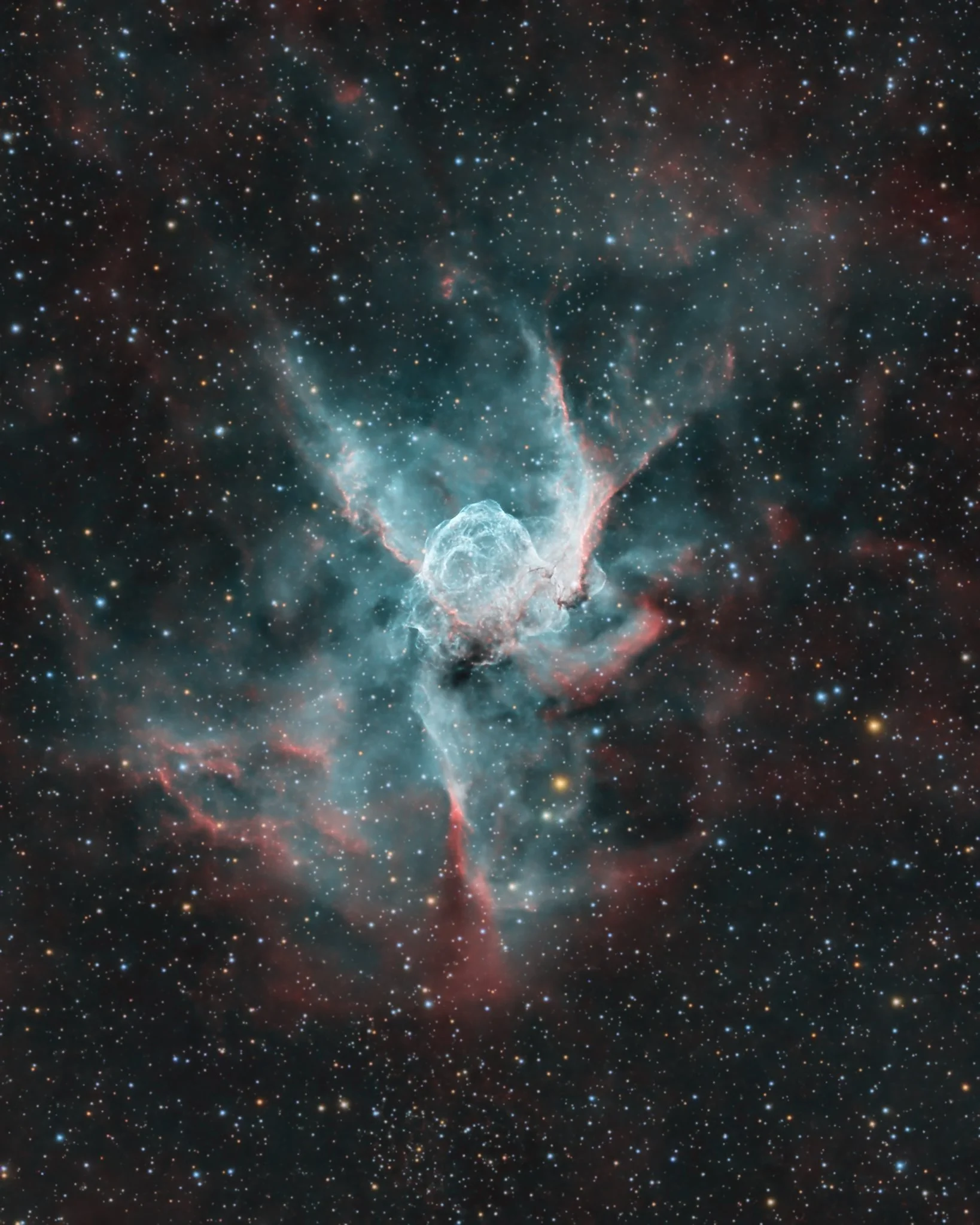
Thors helmet
Image Description and Details : Integration time: ~12 hrs of Hydrogen, Oxygen and RGB data from my Bortle 4/5 backyard
Telescope: Skywatcher Esprit 120 ED APO
Imaging Camera: ZWO ASI 294MM Pro
Guiding: Starfield 50mm guide scope with ZWO ASI290MM guide camera
Filter: Optolong Ha, Oiii and RGB filters
Mount: Skywatcher EQ6R-Pro
Calibration: Flats and flat darks
Hardware Control: ASIAIR Pro, Pegasus Power Box, ZWO EAF and EFW
Processing: The selected images were pre-processed and processed using Pixinsight.
Copyright: Jason Dain 2023
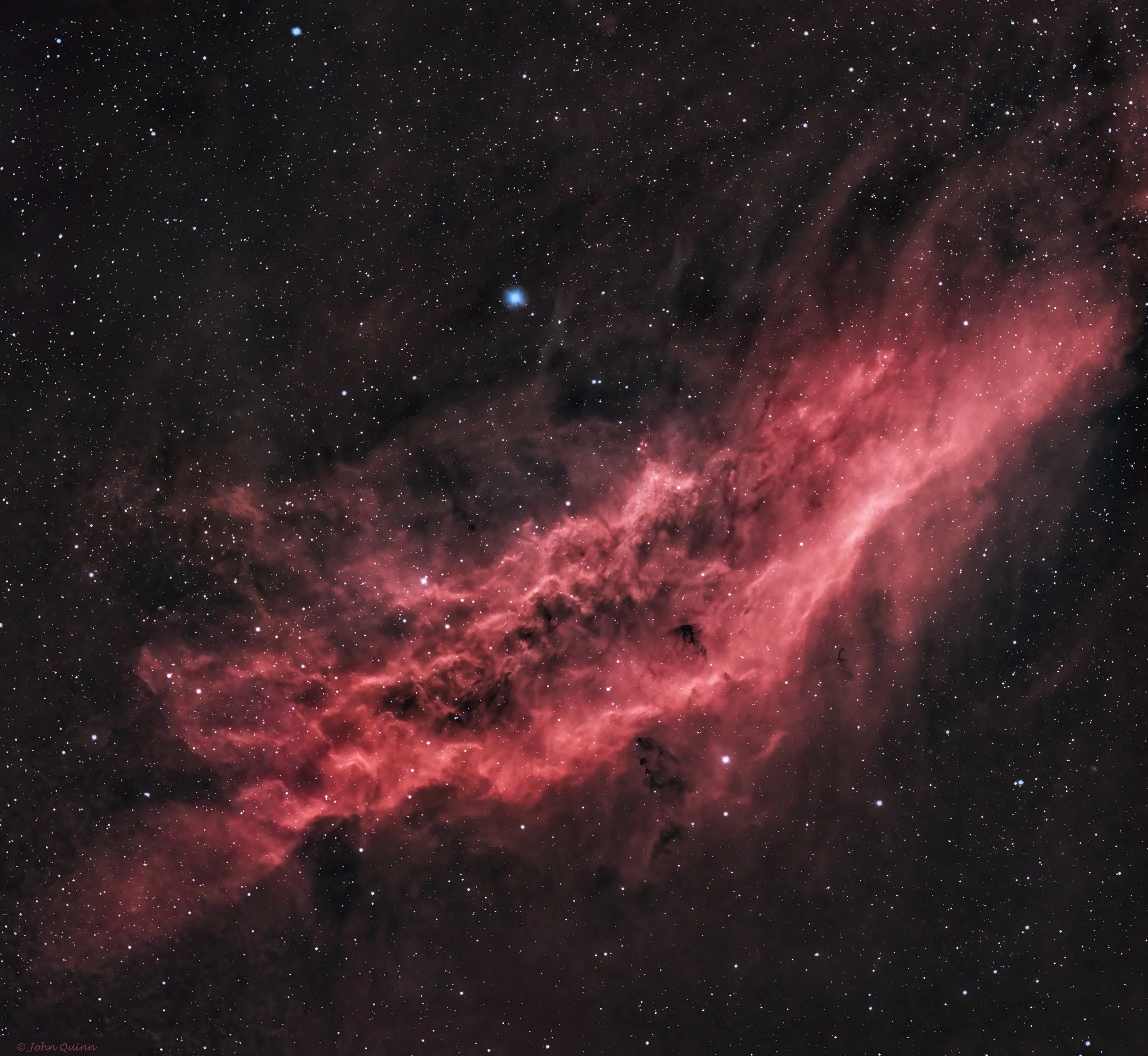
California nebula
Image Description and Details : NGC 1499 and IC 2005 combine to make up what is known as the California Nebula due to its long and narrow outline. About 1000 light years from Earth, this emission (primarily hydrogen alpha and beta) nebula is at least partially energized by the bright massive star above it in this image (Xi Persei with a total luminosity estimated at 263,000 times that of our sun).
RASA 8, ASI071 MC PRO, EQ6-R PRO, ASIAIR PRO, Radian Triad Ultra, about 26 cumulative hours, Bortle 6
Copyright: John Quinn
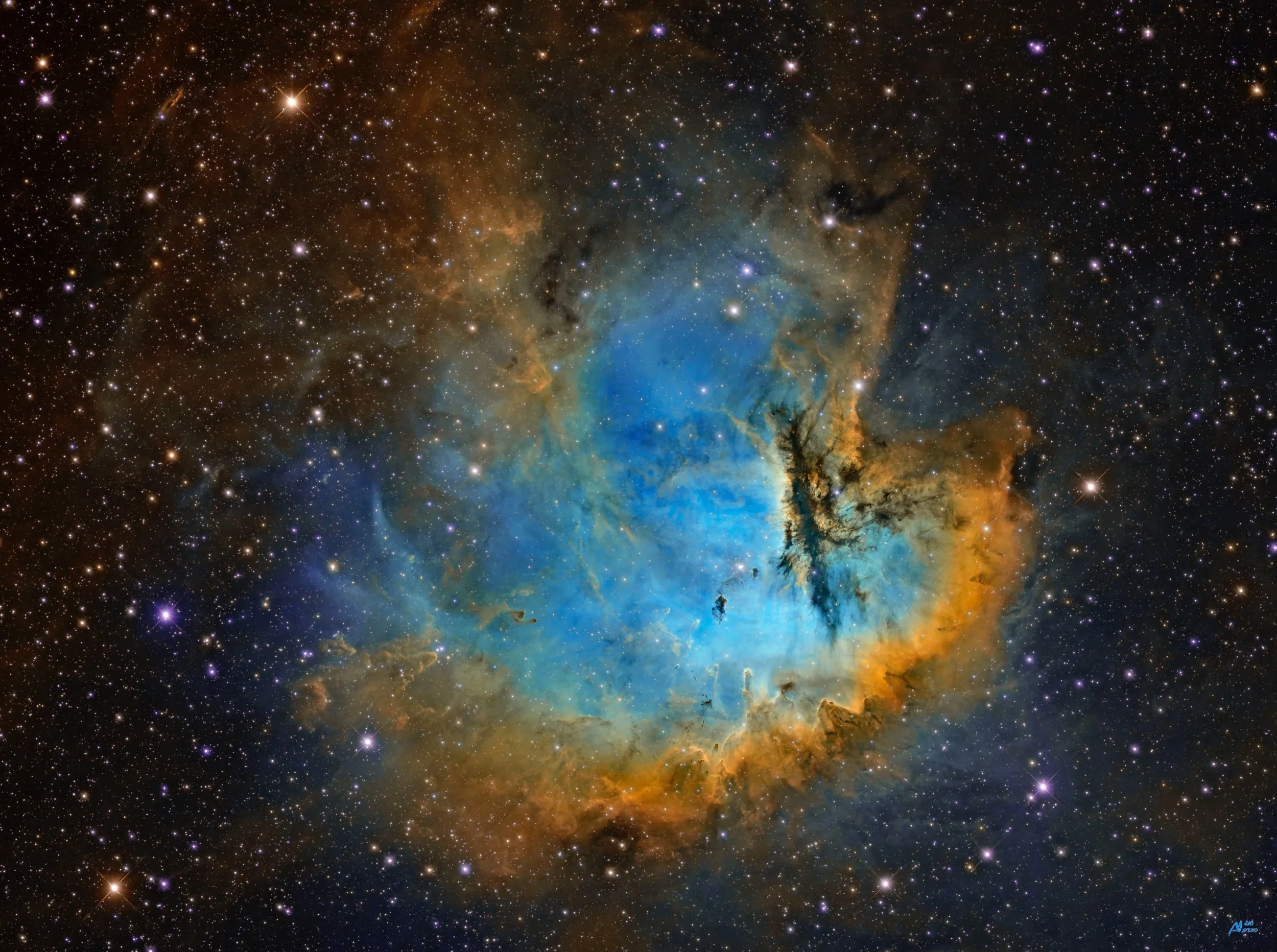
Ngc281
Image Description and Details : NGC 281 is a HII region located about 10 000 light-years from Earth in the constellation Cassiopeia. With a diameter of about 100 light-years, it is part of the Perseus Arm. It includes or is close to the open cluster IC 1590, the double star HD 5005 and several Bok globules. It is visible through an amateur telescope in areas where the night sky is sufficiently dark. It is sometimes unofficially called the Pacman Nebula because of its coincidental resemblance to the eponymous hero of the arcade game Pac-Man.
This emission nebula was discovered by the American astronomer Edward Barnard in 1881.
Photo taken in Normandy France.
Equipment: Newton Skyvision 250/900 (F/D 3,6) on Skywatcher EQ8 mount, ZWO Asi 6200MM camera
36 H in S,H,O
Copyright: Francis Bozon
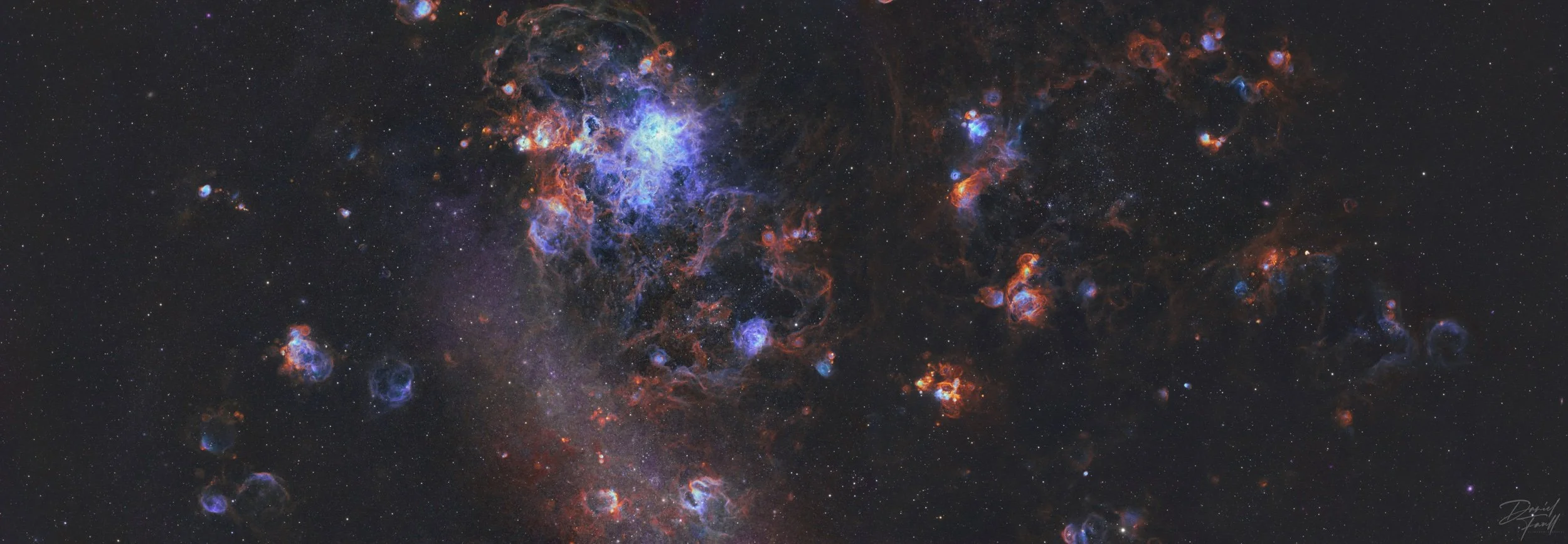
NGC 2030 - The Tarantula Nebula
Image Description and Details : A huge celestial furnace of star production, located outside our galaxy in the Large Magellanic Cloud.
Just over 75 hours of integration using narrowband filters were used to create this 2 panel mosaic.
William Optics RedCat51
ZWO ASI294MMPro
Skywatcher NEQ-6 Pro
Taken from Perth, Western Australia
Copyright: Daniel Faull
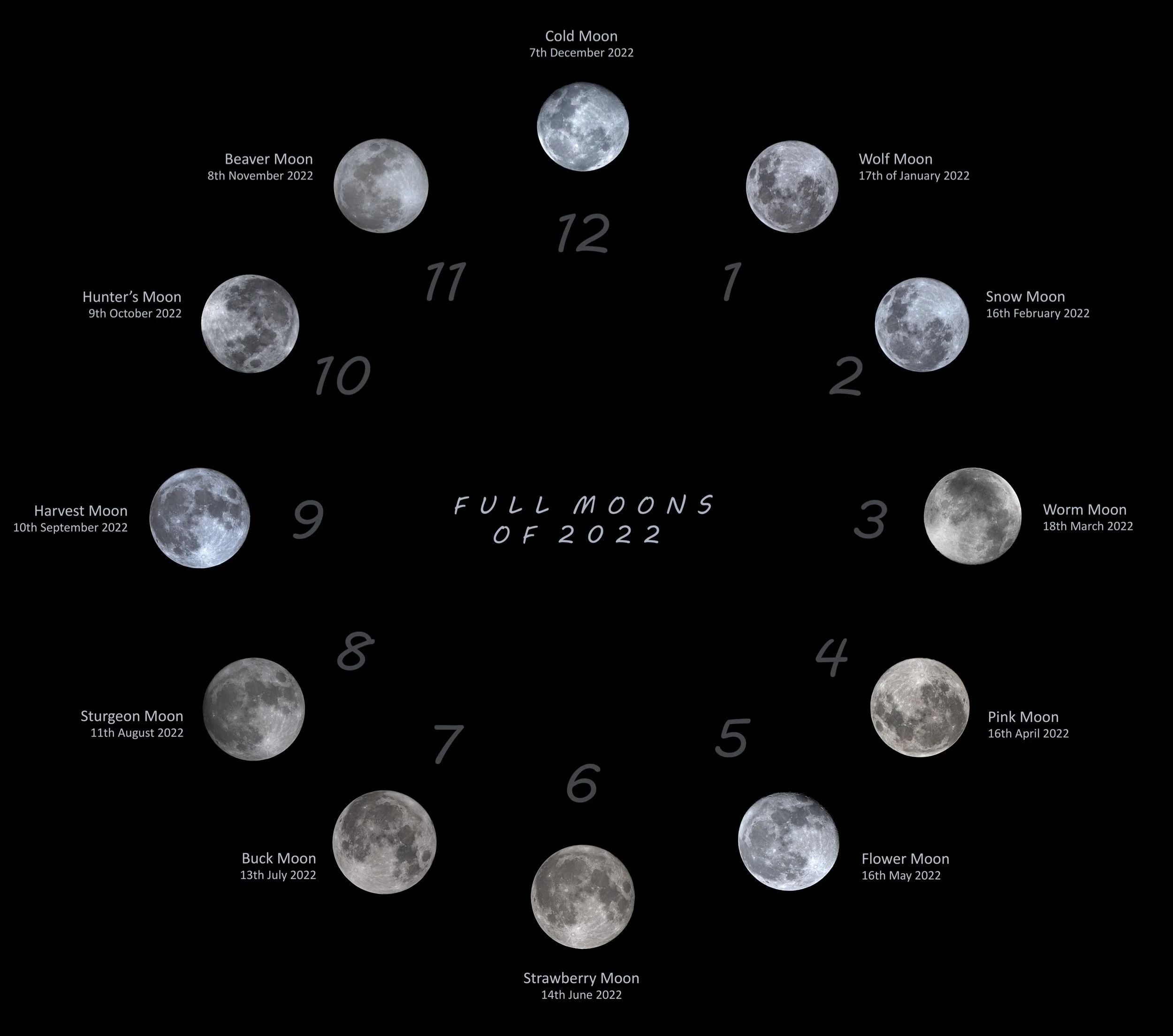
Moon O'Clock
Image Description and Details : The first Full Moon of 2023 is in the sky tonight opposite the Sun at 23:08 UTC. Big and beautiful, the Moon at its brightest phase should be easy to spot. Still, for quick reference images captured near the times of all the full moons of 2022 are arranged in this dedicated astro-imaging project from Sri Lanka, planet Earth. The day, month, and a traditional popular name for 2022's twelve full moons are given in the chart. The apparent size of each full moon depends on how close the full lunar phase is to perigee or apogee, the closest or farthest point in the Moon's elliptical orbit. Like the 2022 Wolf Moon at the 1 o'clock position, tonight's Full Moon occurs within a about two days of apogee. But unlike in 2022, the year 2023 will have 13 full moons that won't all fit nicely on the twelve hour clock.
Copyright: Niveth Kumar
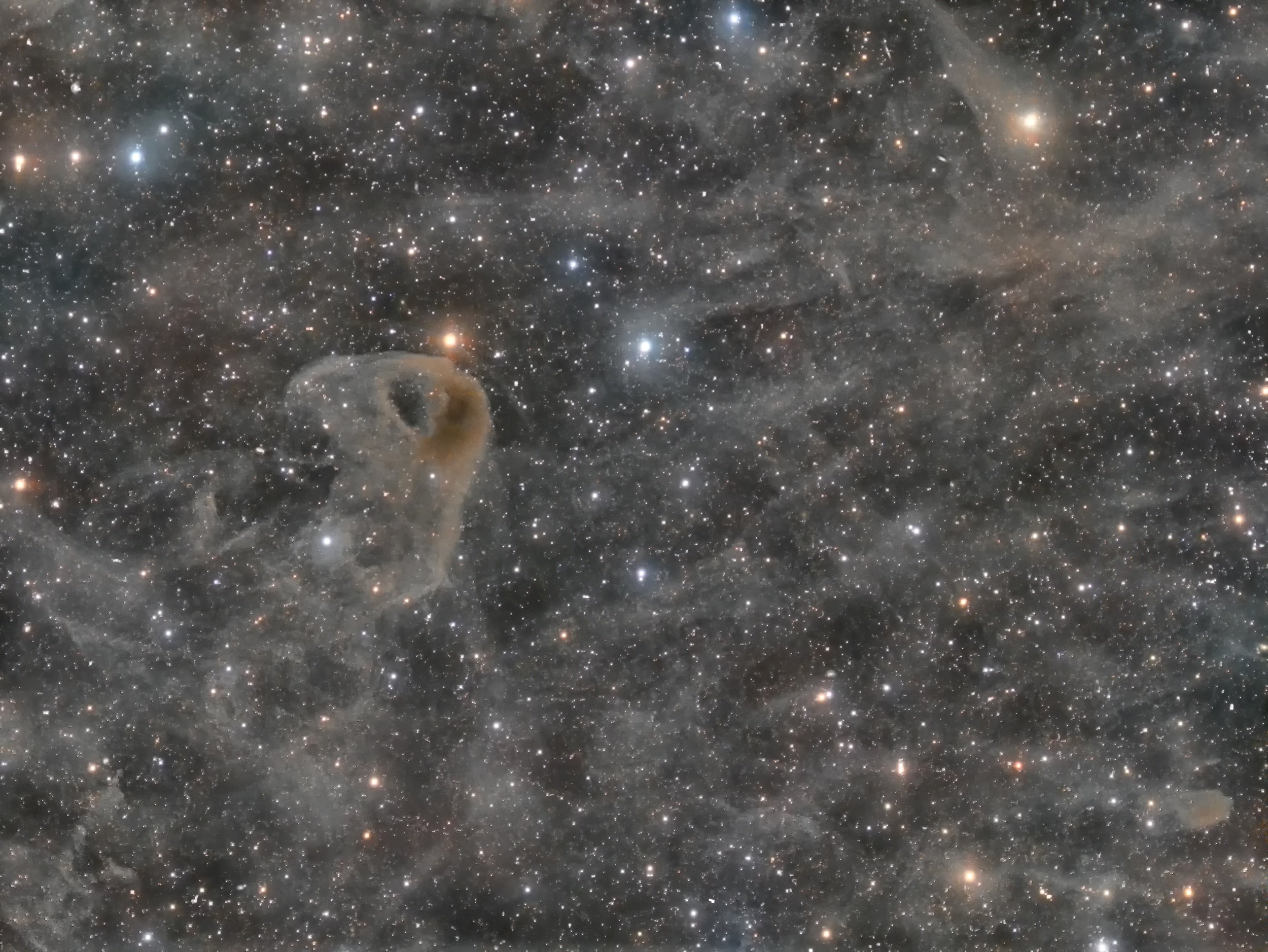
The baby eagle
Image Description and Details : Fotografía realizada desde los cielos de Extremadura (spain)
Esprit-100
OrionAtlas-EqG
L-200x180.Rgb-90x180
Copyright: Ángel González Gordillo
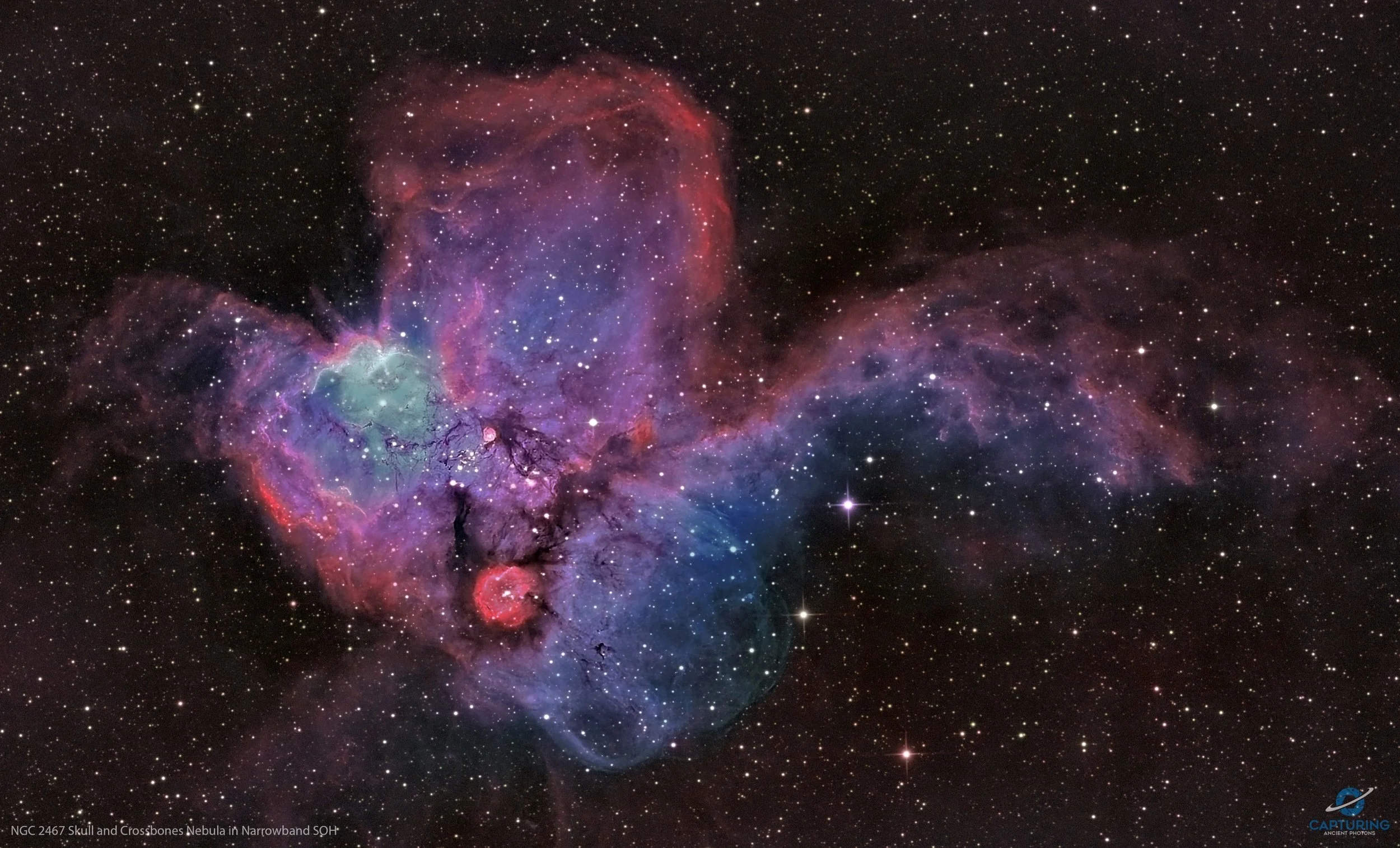
NGC 2467 Skull and Crossbones Nebula
Image Description and Details : NGC 2467 or the Skull and Crossbones Nebula is an active stellar nursery lying in the southern constellation of Puppis located around 17,000 light-years away from Earth.
56 x 600s SOH subs shot @0C spread across 4 nights for a total integration time of about 9.5hrs
Equipment used:
Skywatcher 10" f4 Newtonian 250P
Skywatcher F4 Aplanatic Coma Corrector
Skywatcher NEQ6 Pro Hypertuned by Astronomy Academy Perth
ZWO ASI2600MM Pro Cooled Camera
Primaluce Sesto Senso2 Electronic Focuser
William Optics Uniguide 50/200mm guidescope
ZWO ASI290MM Mini Guide Camera
ZWO Electronic Filter Wheel
Antlia Pro 36mm unmounted filters
Rollon rolloff modified shed observatory
Bortle 5
Data acquisition software: NINA Astronomy Software
Processing software: PixInsight and Photoshop CC
Copyright: Capturing Ancient Photons
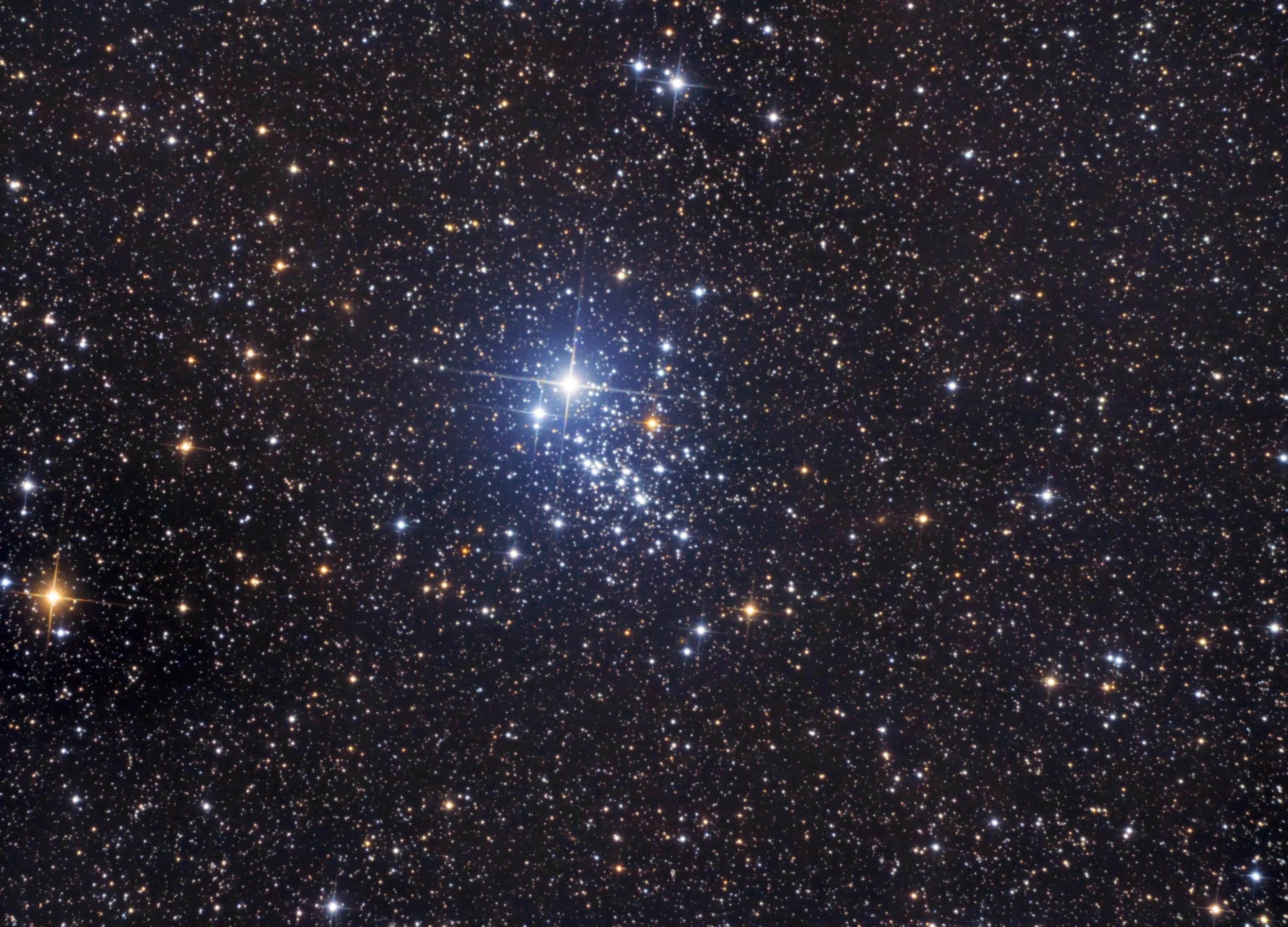
Owl cluster
Image Description and Details : Here’s some space gems 💎 the open star cluster NGC 457 also known as the owl cluster, it is an open star cluster 7,900 light away from the sun. It has an estimated age of 21 million years.
Taken Northwest Missouri September 30-2022 at the Backyard country observatory, using a Orion 8 inch f3.9 newtonian astrograph, with a coma correcter. Canon 60d unmodified, autoguider orion starshoot 60mm guide scope, all on a celestron AVX mount.
5 hours of 3 minutes subs RAW exposures, ISO-1250
Processing. Pixlinsight dynamic crop, dynamic background ext, non linear stretch in histrogram tran, NoiseXTerminator, BlurXTerminator, added luminous mask experimental transformation, star mask using the morphology trans for star reduction, added a luminous mask used curves, for saturation’s,
Photoshop: levels, selective color.
Copyright: Jared Bowens
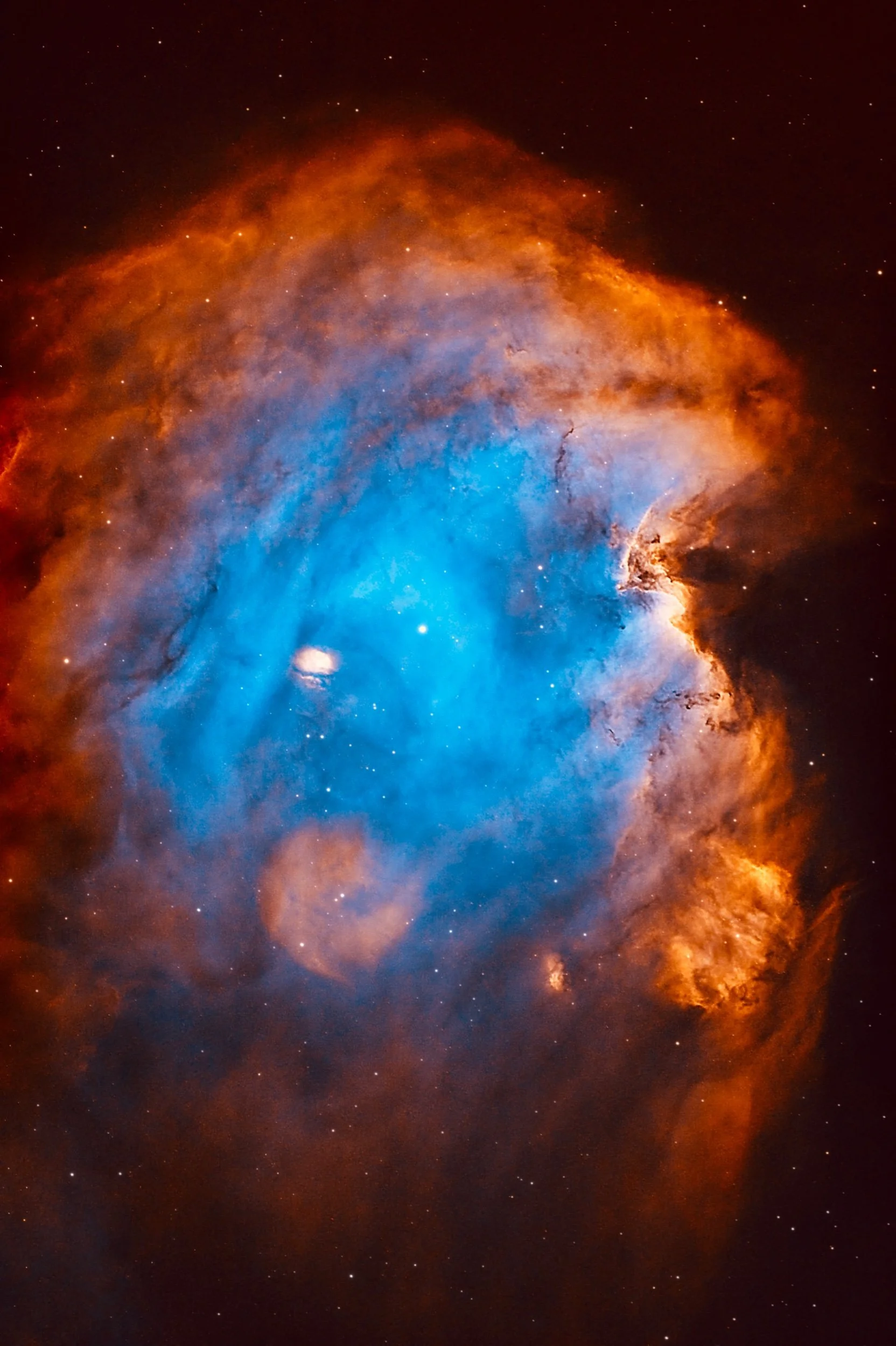
Monkey Head Nebula
Image Description and Details : NGC 2174 / Sh2-252 - The Monkey Head Nebula, located about 6,400 light-years away in the constellation Orion.
Celestron 11” Edge HD with .7x reducer at f7. Celestron OAG with 174mm guide camera, CEM 70 mount, ZWO 2600 mm pro, ASIAIR pro+, ZWO 7 x 36mm EFW, ZWO EAF, 5 min subs shot with Chroma 3nm filters in SHO palette. 9 hours total. Processed in Pixinsight. Shot from my backyard, bortle 8.
Copyright: Richard McInnis
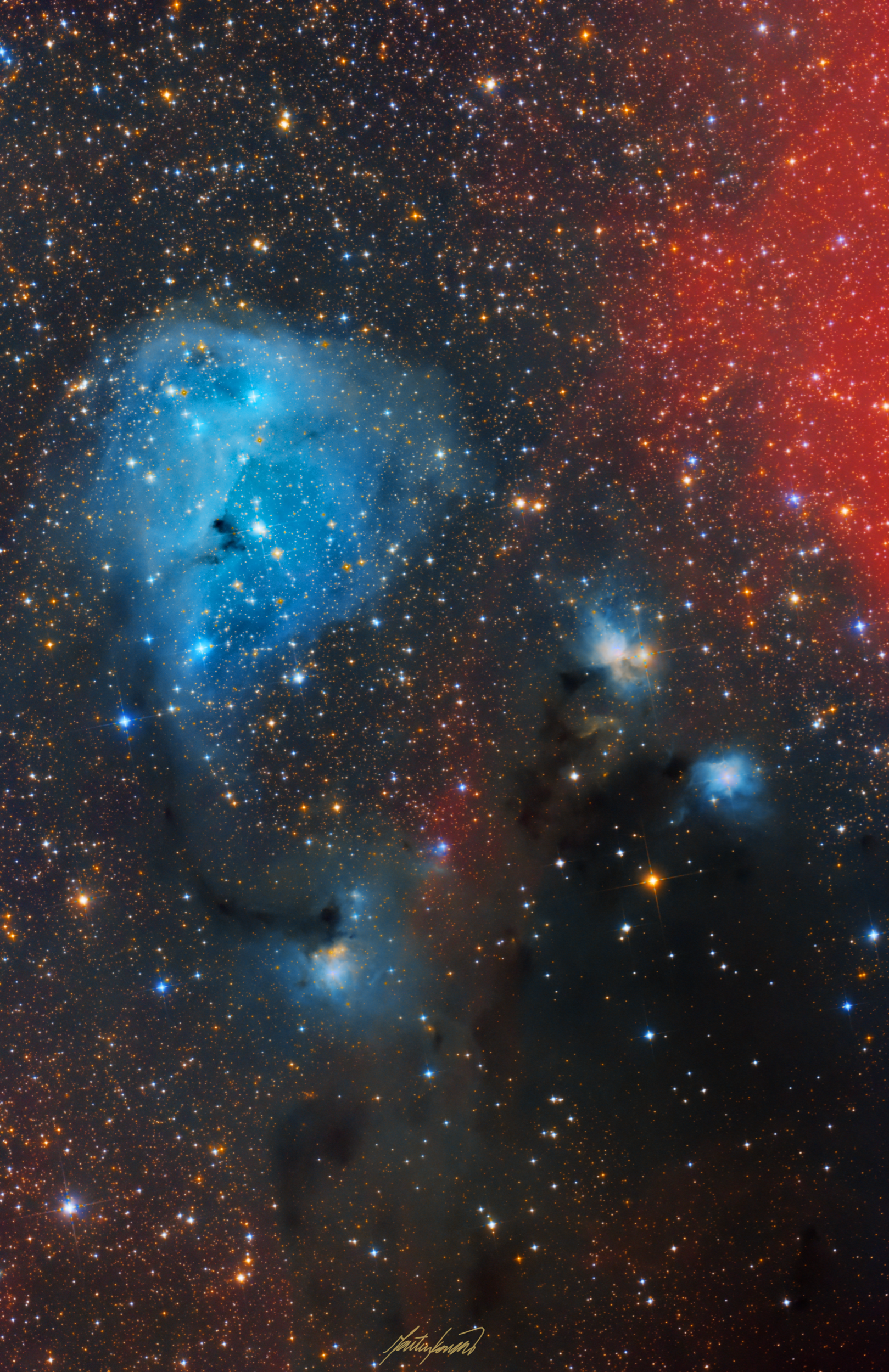
Ic447
Image Description and Details : IC447, Reflection Nebula in Monoceros. RGB + Duo narrowband OSC.
🗓 December, 28th to 30th. 2022
📍 Giruá, RS, Brazil. Bortle 4.
🔭 FotonAstro Astropipe 200MM F4 Newtonian Astrograph / AM5 Eq Mount
📷 asi2600mc camera
🕶 No Filter / Antlia ALP-T duo narrowband
- 113 x 180s (5,65h) No Filter (built in uv/ir asi2600mc)
- 32 x 300s (2,66h) with antlia duo narrowband filter
🧑💻 pixinsight, photoshop
Copyright: Martin Konrat
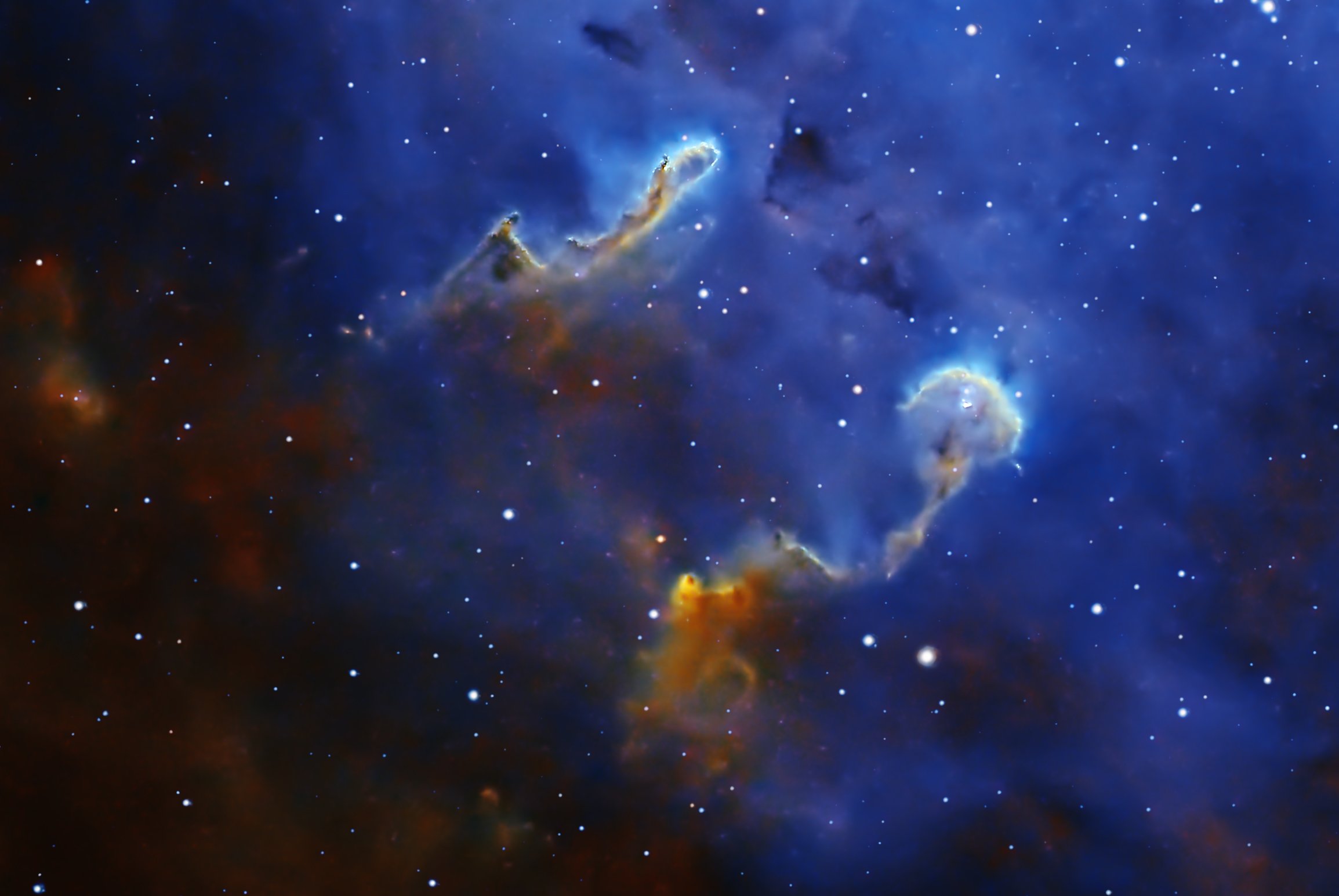
Sim 129 & 130 - The Tadpoles
Image Description and Details : This image was rather a surprise to me. I started shooting it last year and managed to scratch out a few more hours of data on it earlier this month. It's part of a much wider field, but when I zoomed in on the two objects that give the nebula its name, I was pleasantly surprised at the detail that came through.
The Tadpoles Nebula (I'll post the wide field in a day or two), designated IC 410, hosts a star cluster catalogued as NGC 1893. That cluster contains a number of very young, hot stars that formed in the larger nebula three million years ago and they have been busy sculpting the surrounding gasses with hot stellar winds ever since resulting in the two beauties in this shot designated Sim 129 (left) and Sim 130 (right).
The two tadpoles are each about 10 light years in length and are likely the source of ongoing star formation.
Details: Celestron EdgeHD 1100 telescope; 10Micron GM1000 HPS mount; ZWO ASI6200MM camera; Chroma 3nm narrowband filters; 18hrs exposure time.
Copyright: the Accidental Astronomers
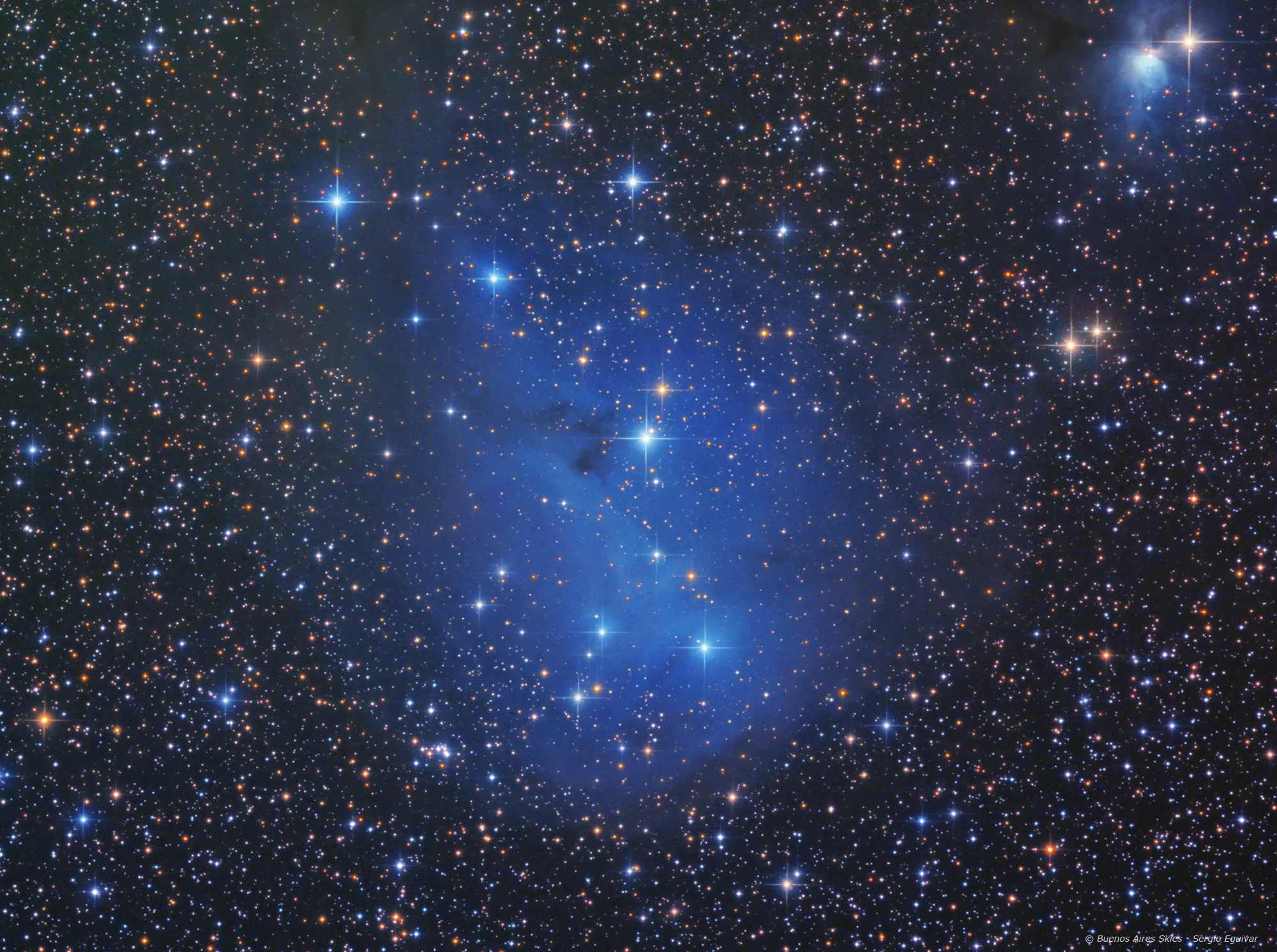
IC 447, Reflection Nebula in Monoceros
IC 447 is a reflection nebula located in the constellation Monoceros. A reflection nebula is a cloud of dust and gas that reflects the light of nearby stars, giving it a glowing appearance. IC 447 is thought to be illuminated by the light of the young, hot star HD 45677, which is located near the center of the nebula.
An interesting feature of IC 447 is that it contains a number of protostars, which are stars that are still in the process of forming. The presence of these protostars suggests that IC 447 is an active site of star formation.
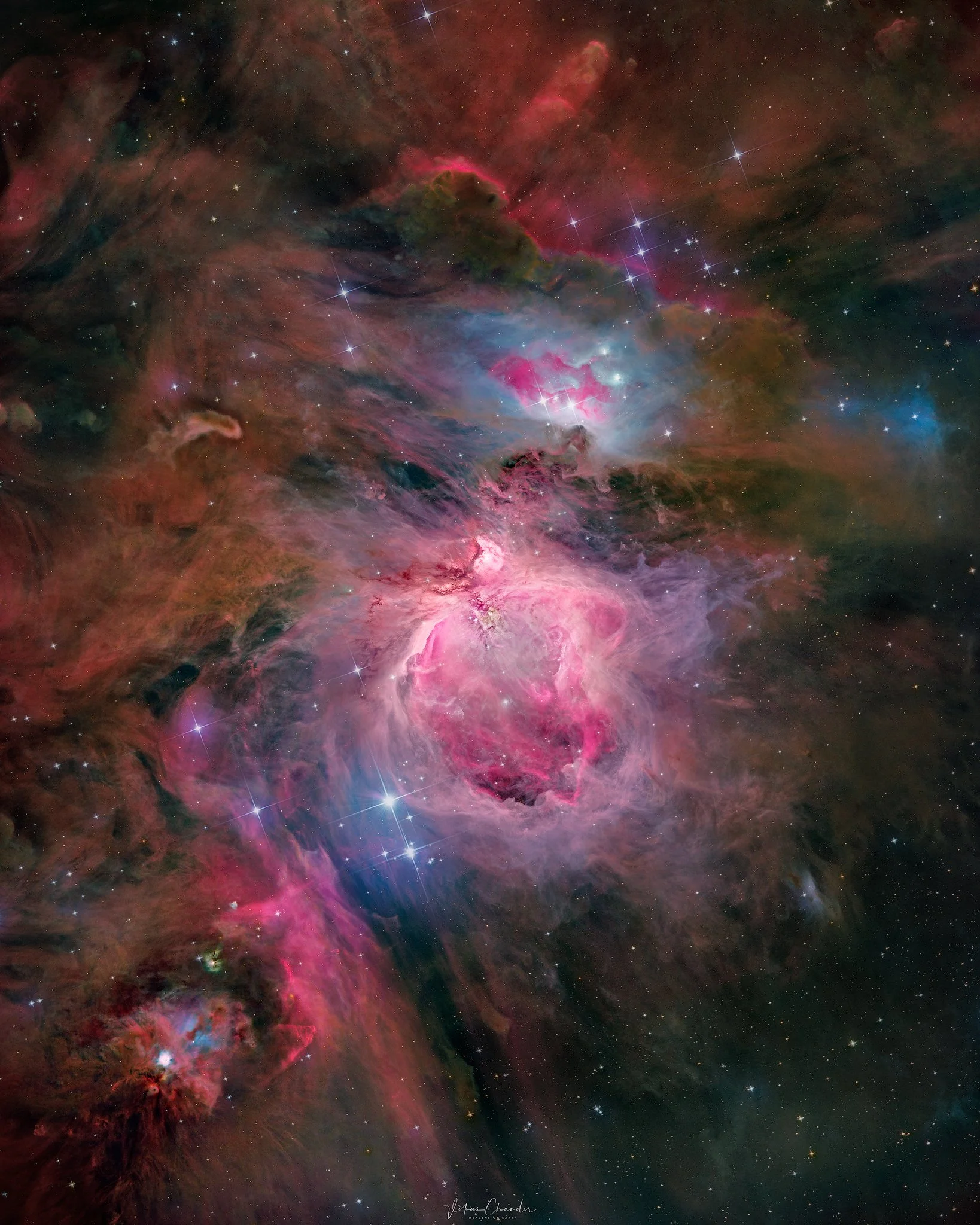
Orion
The Orion Nebula is a vast and colorful cloud of gas and dust located in the constellation Orion. It is one of the most famous and easily recognizable nebulae in the sky, and is often referred to as the "Great Nebula in Orion" or the "Orion Nebula Cluster".
Difficult to process but done well here, is the Orion Nebula Trapezium, a group of four young hot stars located within the center of the Nebula. The stars, which are known as Theta-1 Orionis A, B, C, and D, are some of the most massive and luminous stars in the Orion Nebula, and are thought to be less than a million years old.
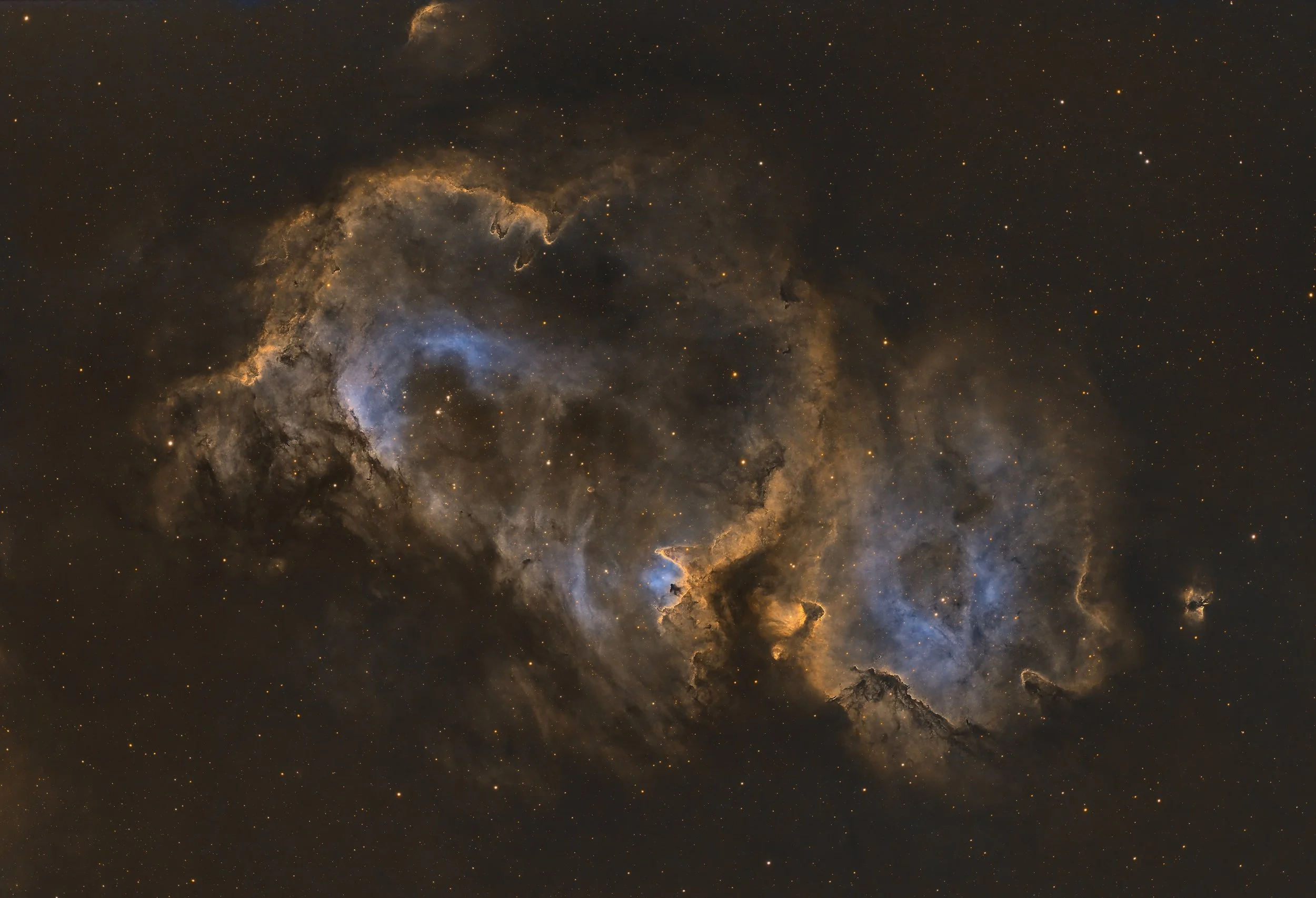
Soul Nebula
The Soul Nebula, also known as the Embryo Nebula and designated as IC 1848, is a large emission nebula located in the constellation Cassiopeia. It is about 7,000 light-years away from Earth
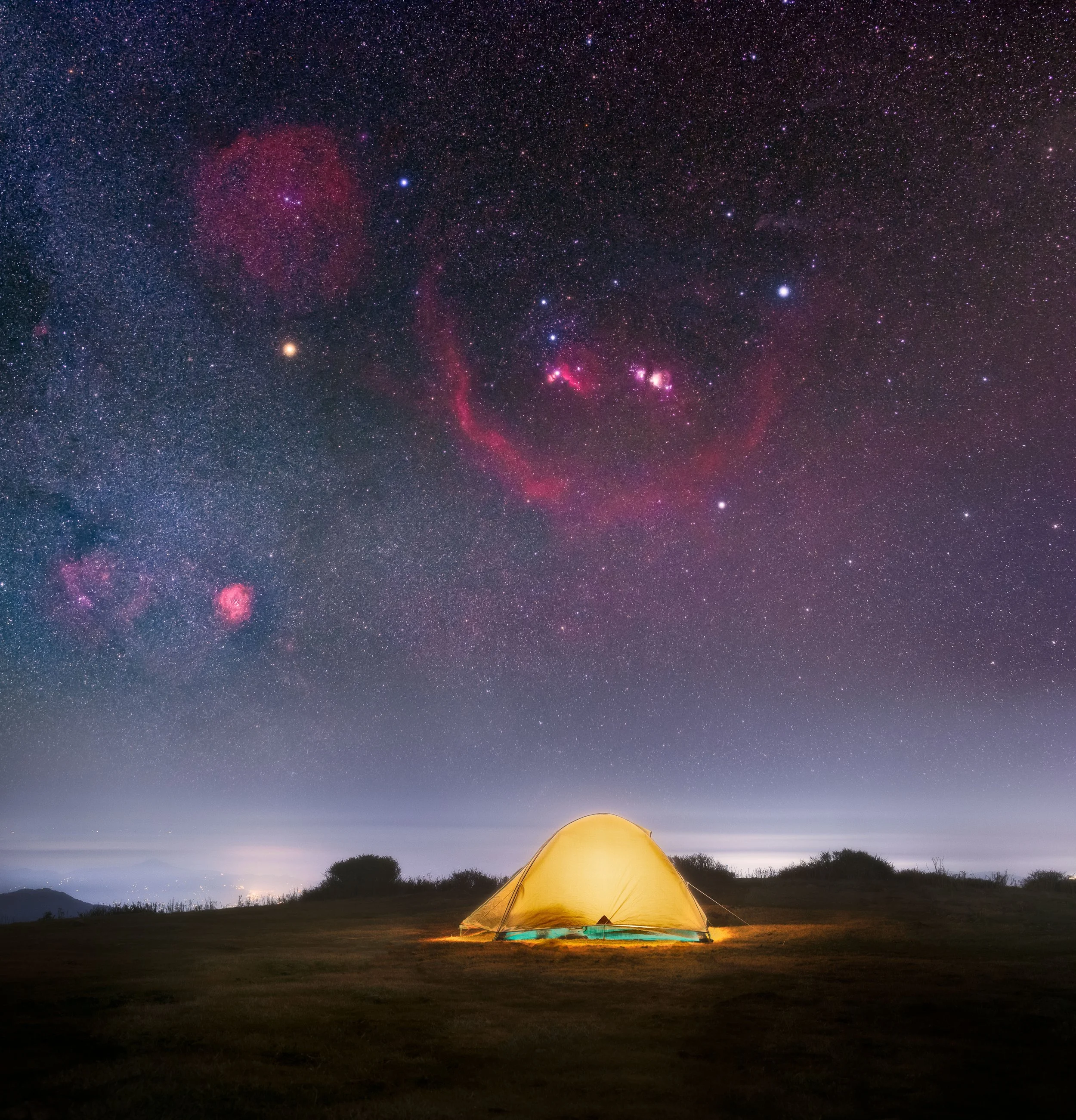
Orion Rising
The Orion Complex is a group of stars and nebulae located in the constellation Orion. Seen here rising over a beautiful campsite. It’s an interesting region for astronomers because it contains a number of bright, young stars that are still in the process of forming. These stars are surrounded by clouds of gas and dust, which are the remnants of the material that originally formed the stars.
The Orion Complex is home to several famous nebulae, including the Great Orion Nebula (aka M42), a spectacular example of a region where new stars are being born. The Orion Complex is a popular target for amateur and professional astronomers because it is visible with the naked eye and contains a wealth of great targets.

NGC 1232 in LRGB
Observations of NGC 1232 have shown that it contains a significant amount of gas and dust, which is thought to be the raw material for star formation. The galaxy also has a number of young, bright blue stars, which are thought to be less than a few hundred million years old.
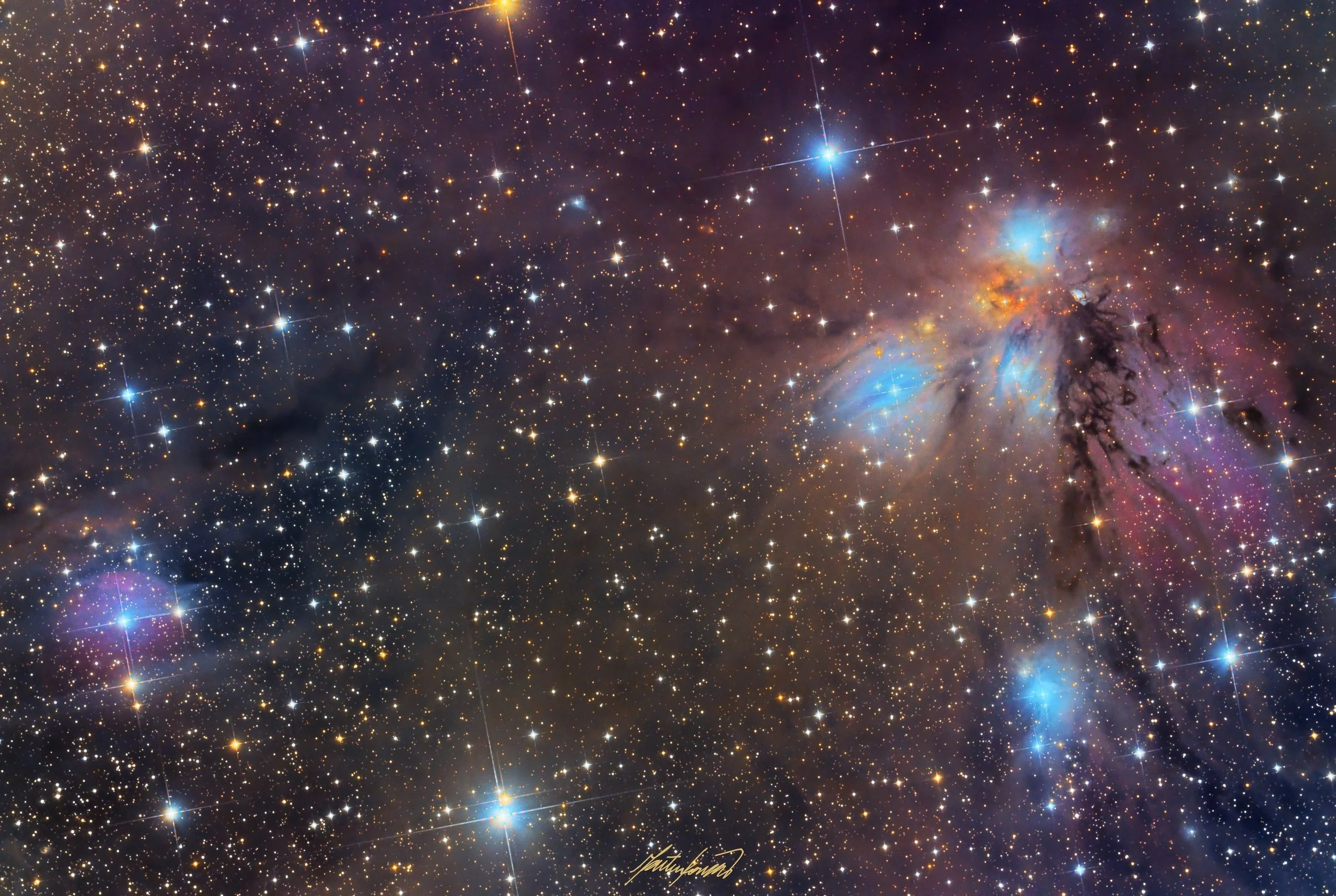
The Angel Nebula
NGC 2170 is a reflection nebula located in the constellation Monoceros. Reflection nebulae are clouds of dust and gas that reflect the light of nearby stars, giving them a blue or blue-white appearance. NGC 2170 is illuminated by a group of hot, young stars located just outside the nebula. These stars are thought to be less than a few million years old, making them some of the youngest known in the Milky Way galaxy.