

AAPOD2 Image Archives
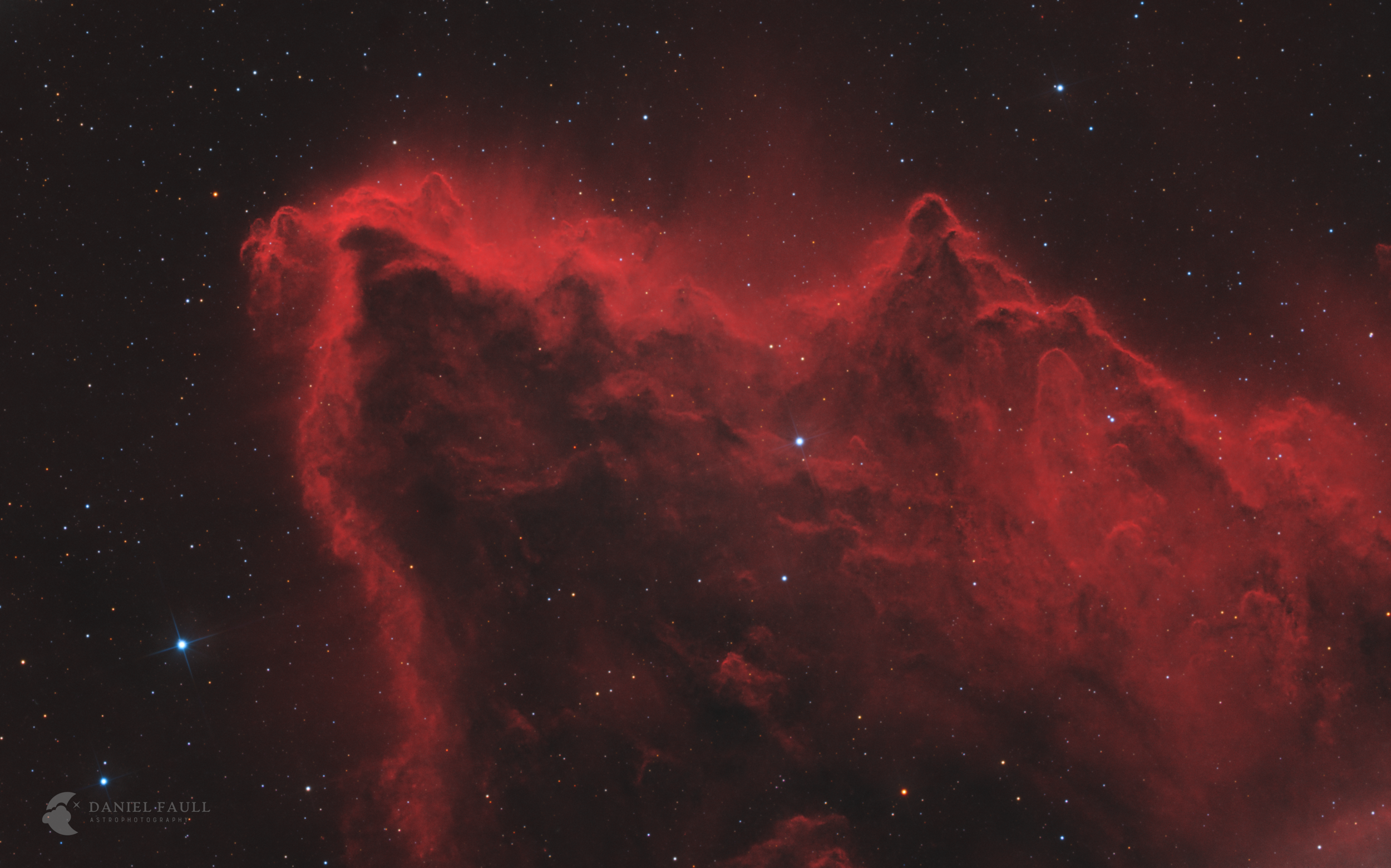
Hydrogen Mountains - BBW 56
BBW 56, also known as Barnard 56, is a dark nebula located in the constellation Ophiuchus. Dark nebulae like BBW 56 are dense clouds of dust and gas that obscure the light of stars behind them, creating striking silhouettes against the backdrop of the Milky Way. BBW 56 appears as a prominent dark patch against the starry sky, characterized by its intricate tendrils and filaments.
This dark nebula serves as a reminder of the vast and complex structures present in our galaxy, highlighting the interplay between light and shadow in the cosmos. While dark nebulae may appear devoid of light, they play a crucial role in the formation of stars and planetary systems, acting as the birthplaces of new celestial objects. By studying dark nebulae like BBW 56, astronomers gain valuable insights into the processes of star formation and the evolution of galaxies, deepening our understanding of the universe's rich tapestry.

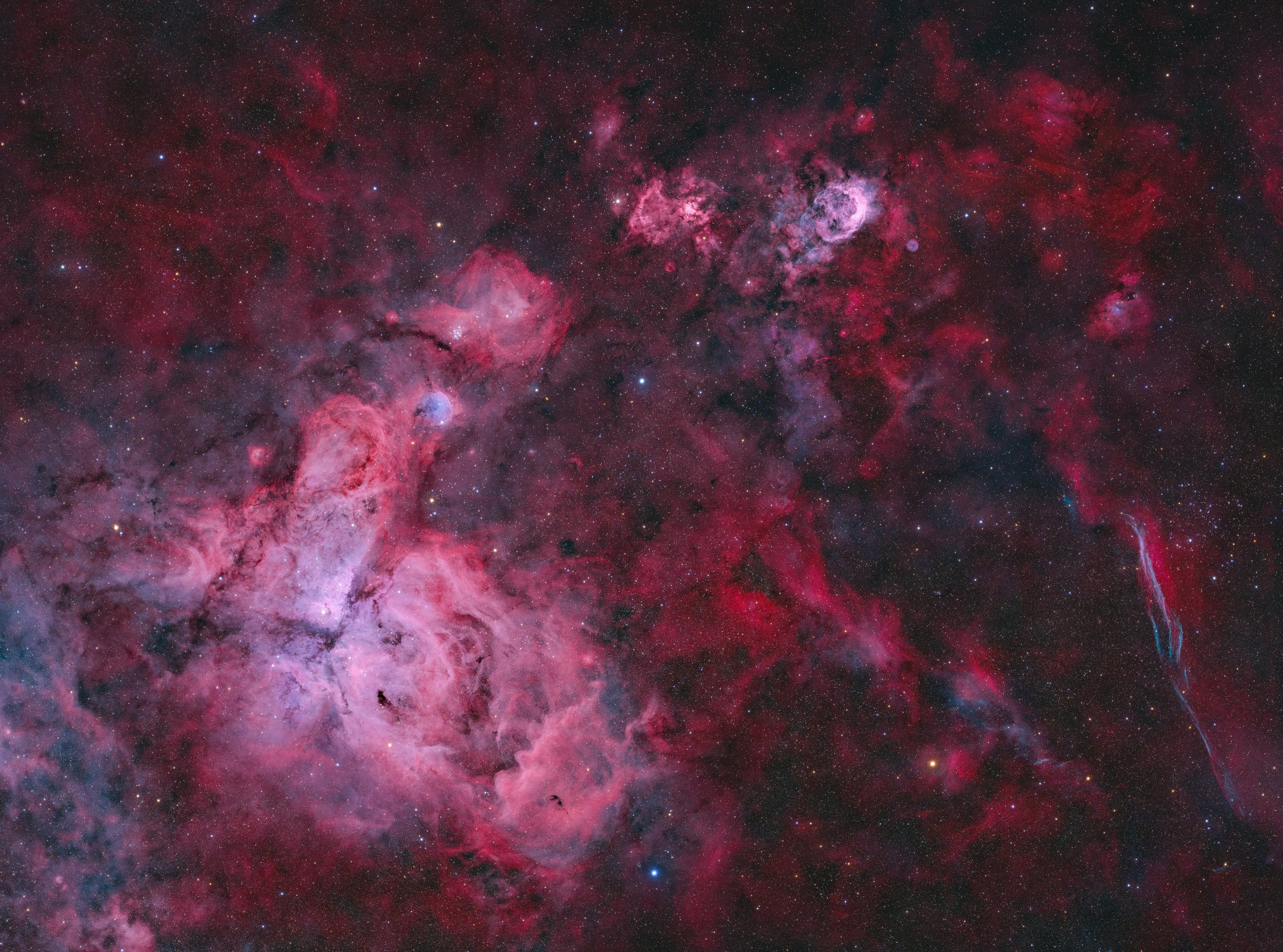
A 152h Deep Exploration of the Carina Nebula and its Surroundings in High Resolution
The Carina Nebula, a sprawling cosmic vista nestled in the southern skies, stands as one of the most magnificent star-forming regions in our galaxy. Located in the constellation Carina, this celestial masterpiece spans over 300 light-years across, teeming with vibrant clouds of gas and dust illuminated by the intense radiation from young, massive stars. At the heart of the nebula lies Eta Carinae, a stellar behemoth prone to violent outbursts, and a cluster of brilliant stars known as the Trumpler 14 and Trumpler 16 clusters. The intricate filaments and pillars within the Carina Nebula, sculpted by the forces of stellar winds and radiation pressure, evoke a sense of cosmic grandeur and wonder.
As one of the largest and most luminous nebulae in the night sky, the Carina Nebula serves as a natural laboratory for studying the processes of star formation and stellar evolution. Within its sprawling expanse, we uncover the secrets of how massive stars shape their surroundings, triggering the birth of new stars and sculpting the landscape of the cosmos. From its dazzling star clusters to its ethereal tendrils of gas and dust, the Carina Nebula stands as a testament to the beauty and complexity of the universe, inviting us to explore and unravel its mysteries.
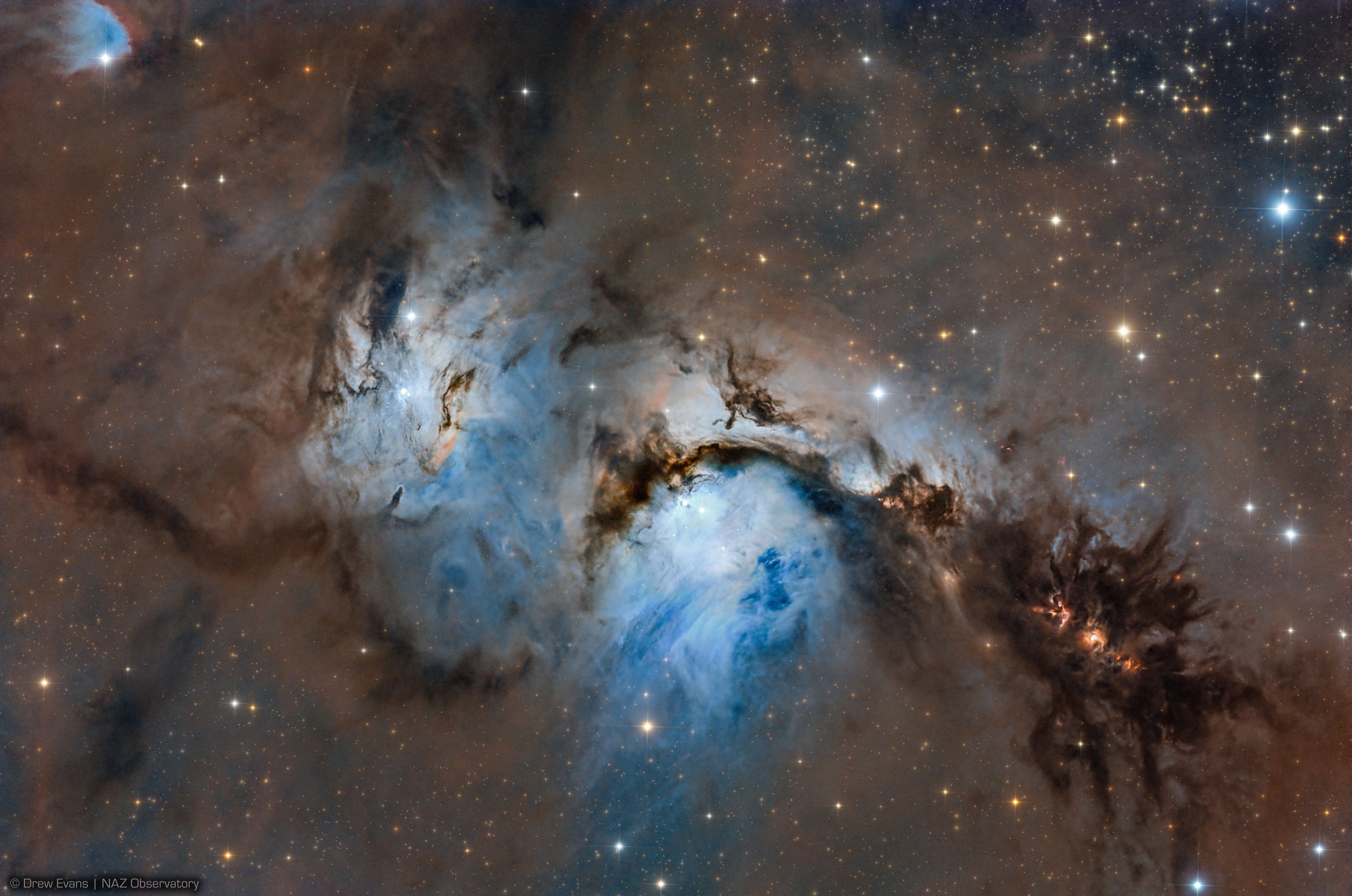
M78 (NGC 2068)
M78, a reflection nebula situated in the constellation of Orion, captivates us with its ethereal beauty and celestial significance. Located approximately 1,600 light-years away from Earth, this nebula is illuminated by the light of young, hot stars embedded within its dusty embrace. Its distinctive bluish glow emanates from the scattering of starlight by interstellar dust grains, creating a mesmerizing spectacle against the dark backdrop of space.
M78 is a prominent member of the Orion Molecular Cloud Complex, a vast region of gas and dust where new stars are born. Within its wispy tendrils lie stellar nurseries, where dense clouds of gas collapse under their own gravity to form newborn stars. M78 serves as a celestial laboratory, offering us valuable insights into the processes of star formation and the interplay between young stars and their natal environments. As a beacon of cosmic evolution, M78 continues to inspire exploration and discovery, inviting us to peer into the depths of the universe and unravel its mysteries.
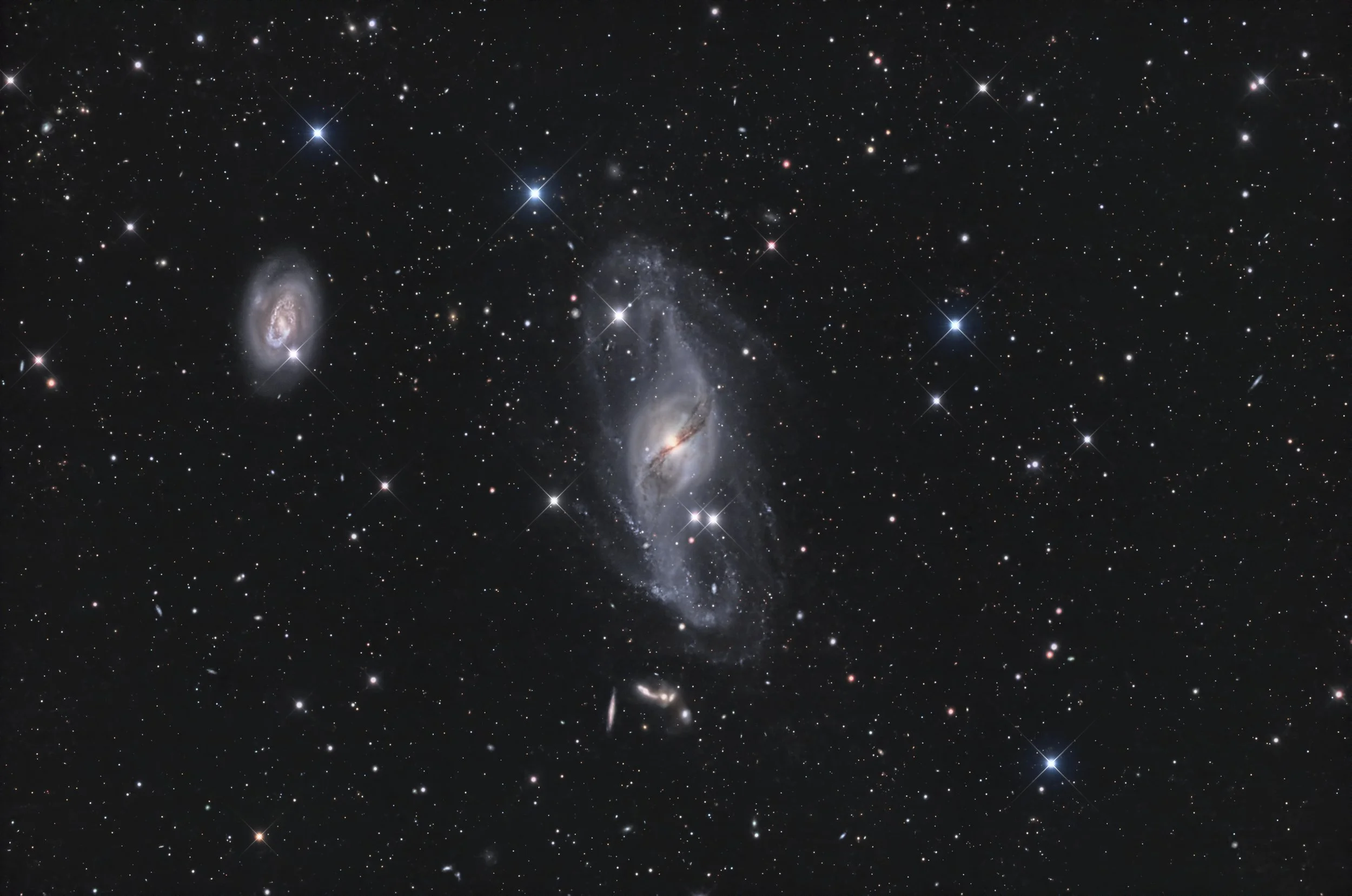
NGC3718
NGC 3718, a captivating spiral galaxy nestled in the constellation Ursa Major, offers us a glimpse into the intricate dance of cosmic forces shaping our universe. Located approximately 52 million light-years away from Earth, this galaxy presents a striking appearance, with its warped and twisted disk hinting at gravitational interactions with neighboring galaxies.
One of the most notable features of NGC 3718 is its prominent tidal tail, a stream of stars and gas extending outward from the galaxy's main body. This elongated structure, forged through gravitational interactions with nearby galactic companions, offers valuable insights into the dynamics of galactic encounters and the transformative effects they impart on the involved galaxies. NGC 3718 stands as a testament to the dynamic nature of the cosmos, where gravitational tugs and cosmic collisions sculpt the majestic tapestry of the universe.
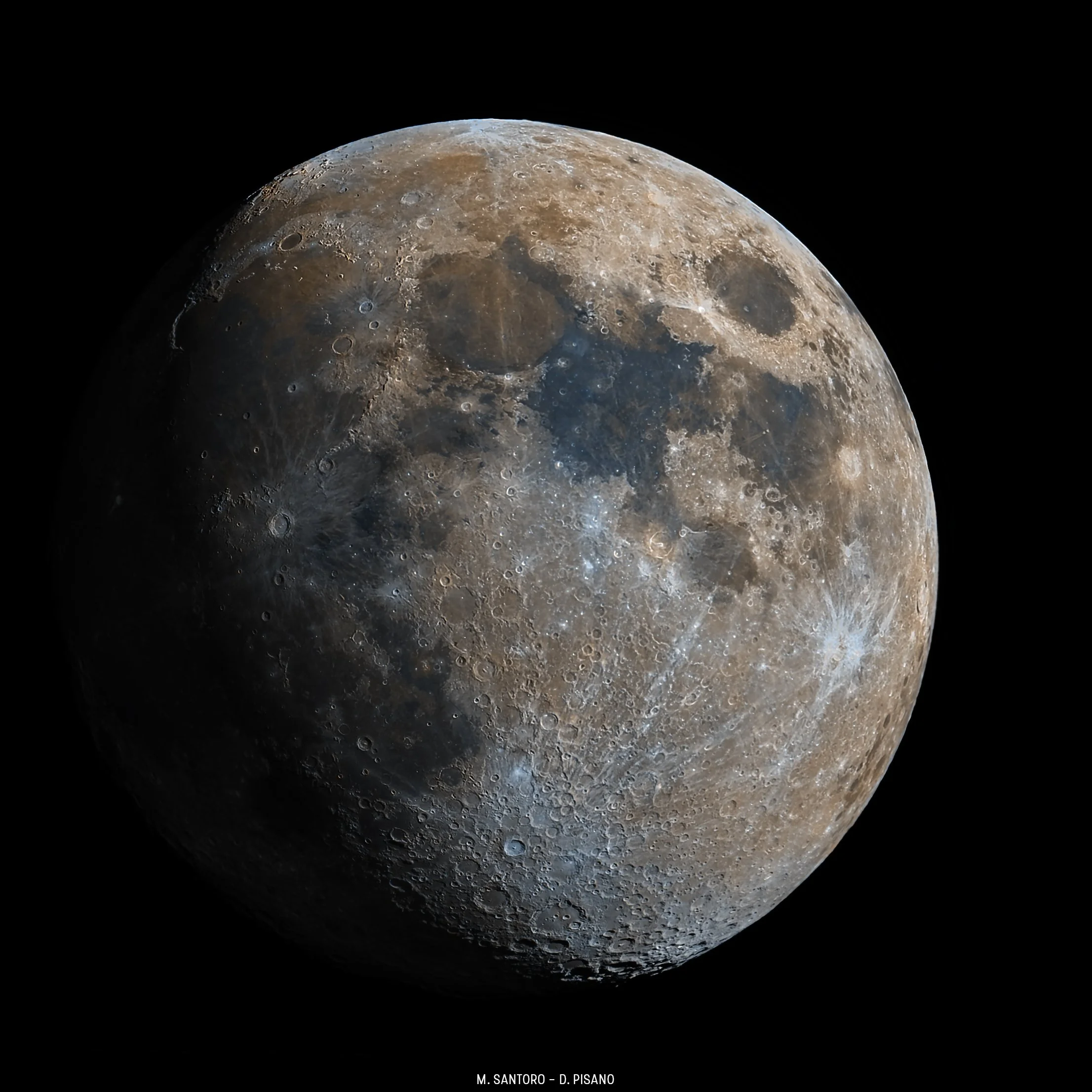
The Moon - March 2024
The Moon, Earth's faithful celestial companion, presents an ever-changing visage as it journeys through its phases. Along the terminator—the dividing line between light and shadow—lies a captivating region where the rugged lunar landscape meets the stark contrast of darkness. Here, the interplay of light and shadow reveals intricate details of lunar features, from towering mountains to expansive plains, casting dramatic silhouettes against the lunar surface.
At the terminator, where the Sun's rays graze the lunar landscape at a shallow angle, the terrain becomes a canvas for the interplay of light and shadow, offering us a prime opportunity to explore the Moon's topography in exquisite detail. Craters, mountains, and valleys stand out in stark relief, their features accentuated by the contrasting illumination along the terminator. This region serves as a window into the Moon's geological history, offering insights into the processes that have shaped our celestial neighbor over billions of years. As the Moon waxes and wanes, the terminator shifts, unveiling new vistas and unveiling the mysteries of our lunar companion with each passing phase.

ATLAS - the unexpected Supernova Remnant G209.8-8.2 in Orion
Supernova Remnant G209.8-8.2, nestled within the sprawling constellation of Orion, stands as a testament to the cataclysmic events that shape the cosmos. Born from the explosive death of a massive star, this remnant carries the echoes of a stellar demise, scattering its remnants across the cosmic landscape. As the shockwave from the supernova blast continues to propagate through space, it interacts with the surrounding interstellar medium, creating intricate patterns of gas and dust that trace the remnants of the progenitor star.
Spanning across vast expanses of space, Supernova Remnant G209.8-8.2 offers astronomers a glimpse into the turbulent aftermath of a supernova explosion. Its intricate structure, shaped by the forces of stellar winds and interstellar dynamics, provides valuable insights into the life cycle of stars and the processes that govern the evolution of galaxies. Studying this remnant allows scientists to unravel the mysteries of stellar explosions, shedding light on the origins of heavy elements and the energetic phenomena that shape the universe. As it graces the night sky with its celestial presence, Supernova Remnant G209.8-8.2 stands as a reminder of the dynamic and ever-changing nature of the cosmos.
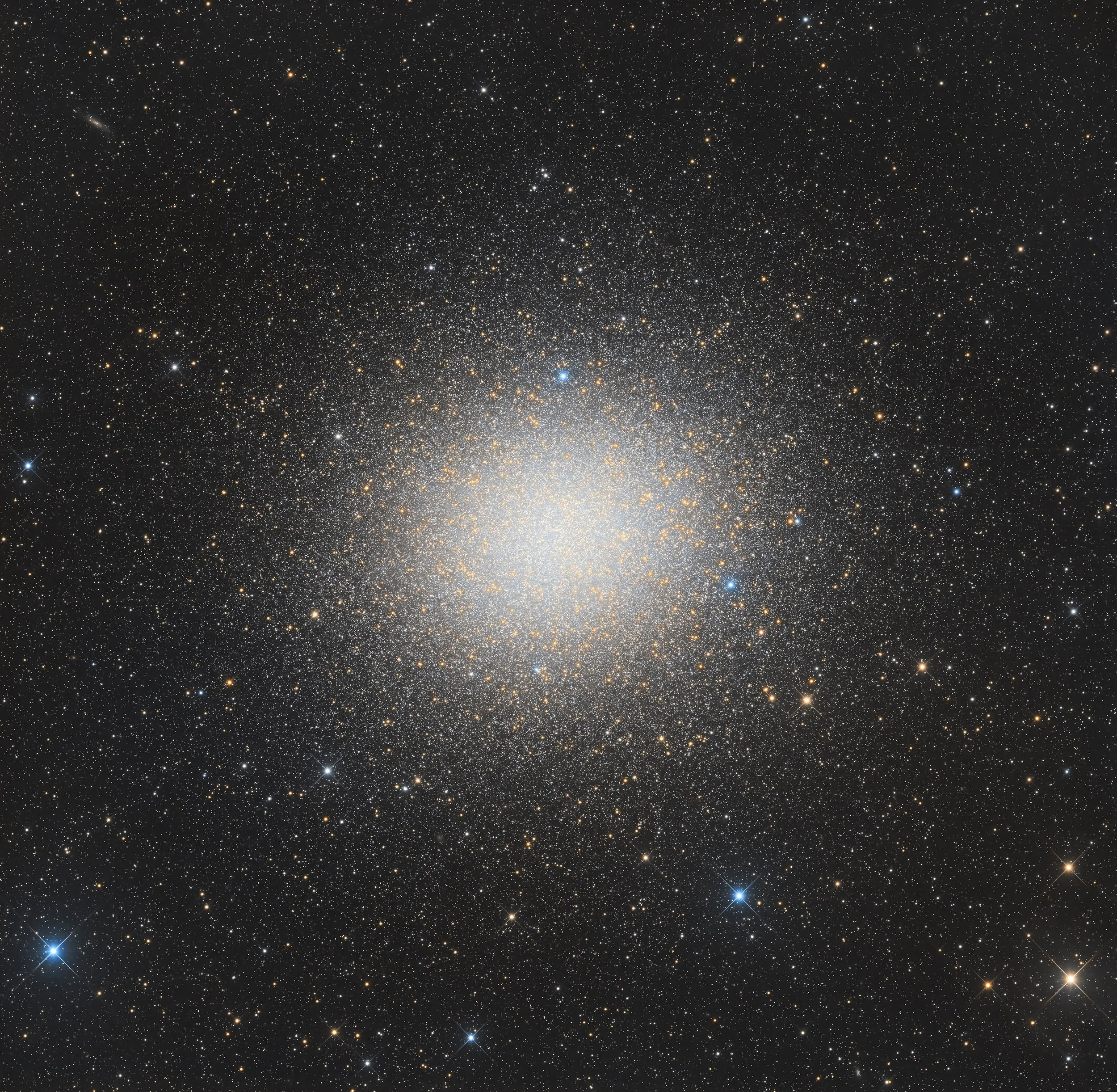
Omega Centauri
Omega Centauri, also known as NGC 5139, stands as one of the most magnificent globular clusters in the night sky. Located in the constellation of Centaurus, this stellar ensemble is a sight to behold, boasting millions of stars densely packed together in a spherical formation. With its dazzling brilliance and intricate structure, Omega Centauri captivates observers and astronomers alike, offering a window into the ancient history of our galaxy.
As one of the largest and most massive globular clusters in the Milky Way, Omega Centauri holds valuable clues about the formation and evolution of galaxies. Its dense core, known as a stellar nucleus, harbors a multitude of stars in close proximity, while its outer regions extend across vast distances, spanning tens of thousands of light-years. With its diverse population of stars, including red giants, blue stragglers, and variable stars, Omega Centauri presents a treasure trove of astronomical phenomena waiting to be explored. Studying this remarkable globular cluster provides insights into the dynamics of stellar populations, the gravitational interactions within galactic systems, and the processes that shape the cosmic landscape. As it graces the southern skies with its splendor, Omega Centauri serves as a beacon of inspiration and discovery, inviting observers to marvel at the wonders of the universe.

STOP ON THE COSMIC WAY Comet 12P-pons-brooks
Captured in this wide-field frame, this image showcases the celestial ballet featuring Comet Pons-Brooks (12P), the Andromeda Galaxy (M31), the Triangulum Galaxy (M33), the Moon, and Jupiter. Against the backdrop of the night sky, Comet Pons-Brooks graces the scene as it journeys through the solar system, leaving a trail of wonder in its wake. The majestic Andromeda Galaxy, our neighboring spiral galaxy, and the Triangulum Galaxy, another member of our cosmic neighborhood, adorn the heavens with their spiral arms and stellar glow.
Adding to the cosmic spectacle, the Moon and Jupiter make their presence known, further enhancing the beauty of the scene. With its cratered surface illuminated by the Sun, the Moon serves as a familiar anchor in the night sky. Meanwhile, Jupiter, the largest planet in our solar system, shines brightly with its distinct bands of clouds and swirling storms. Together, these celestial objects offer a captivating glimpse into the vastness of the universe, reminding us of the interconnectedness of cosmic phenomena and the wonders that await exploration beyond our own world.
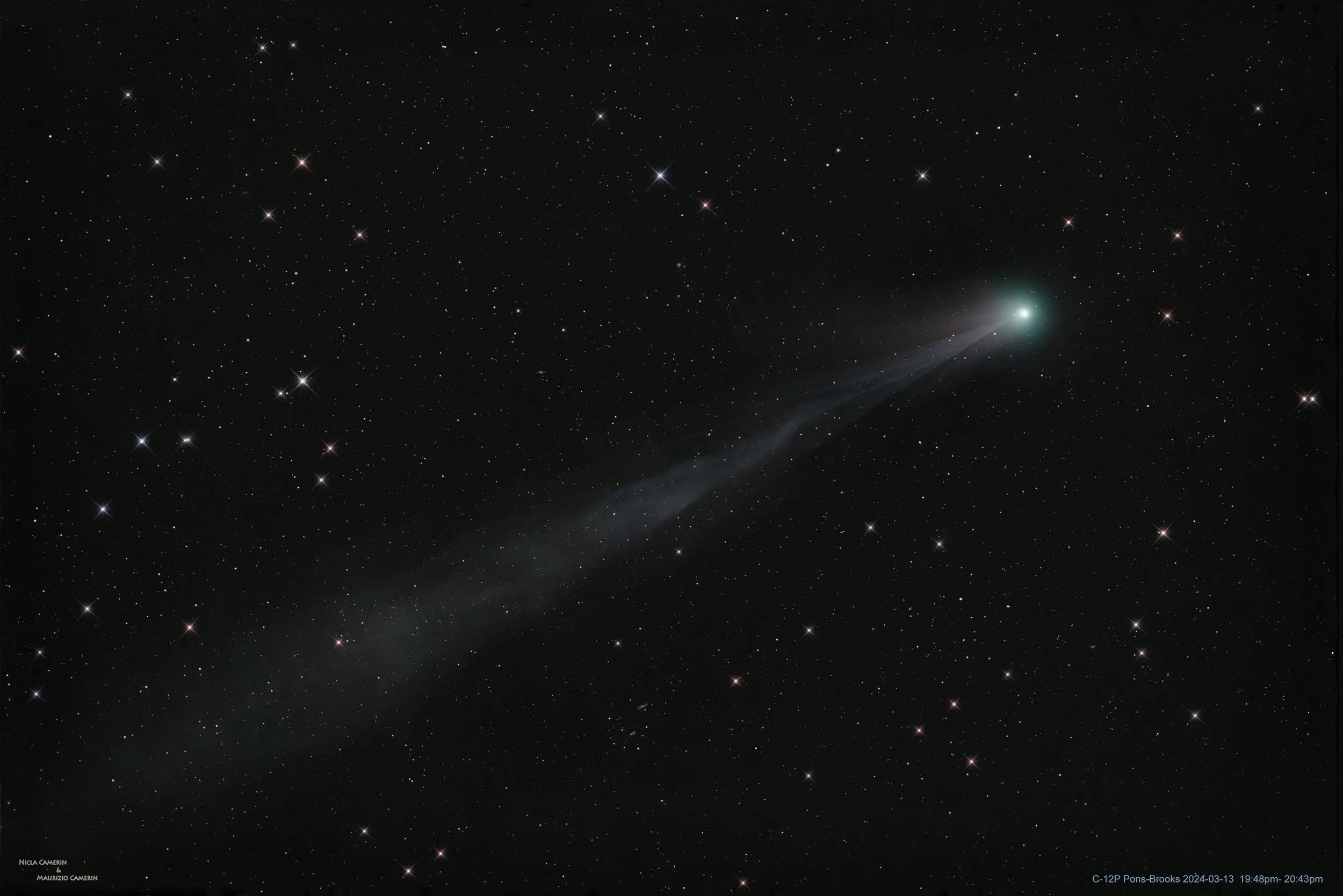
12P/Pons–Brooks March 13 2024
Discovered independently by Jean-Louis Pons and William Robert Brooks, Comet Pons-Brooks graces the night sky as a transient visitor from the outer reaches of our solar system. As it journeys along its elliptical orbit around the Sun, the comet illuminates the heavens with its glowing coma and distinctive tail, captivating observers with its celestial dance. Comets like Pons-Brooks are ancient remnants from the early days of the solar system, composed of icy materials, dust, and organic compounds. Studying these comets provides valuable insights into the conditions and processes that prevailed during the formation of our cosmic neighborhood.
The appearance of Comet Pons-Brooks offers a rare opportunity for astronomers and skywatchers alike to witness a dynamic celestial phenomenon. By studying its trajectory, composition, and behavior, scientists can unravel the mysteries of cometary evolution and better understand the role of these icy bodies in shaping the history of our solar system. As Pons-Brooks graces our skies with its luminous presence, it serves as a reminder of the dynamic nature of our cosmic environment and the ongoing interplay between celestial forces that govern the movements of objects in space.
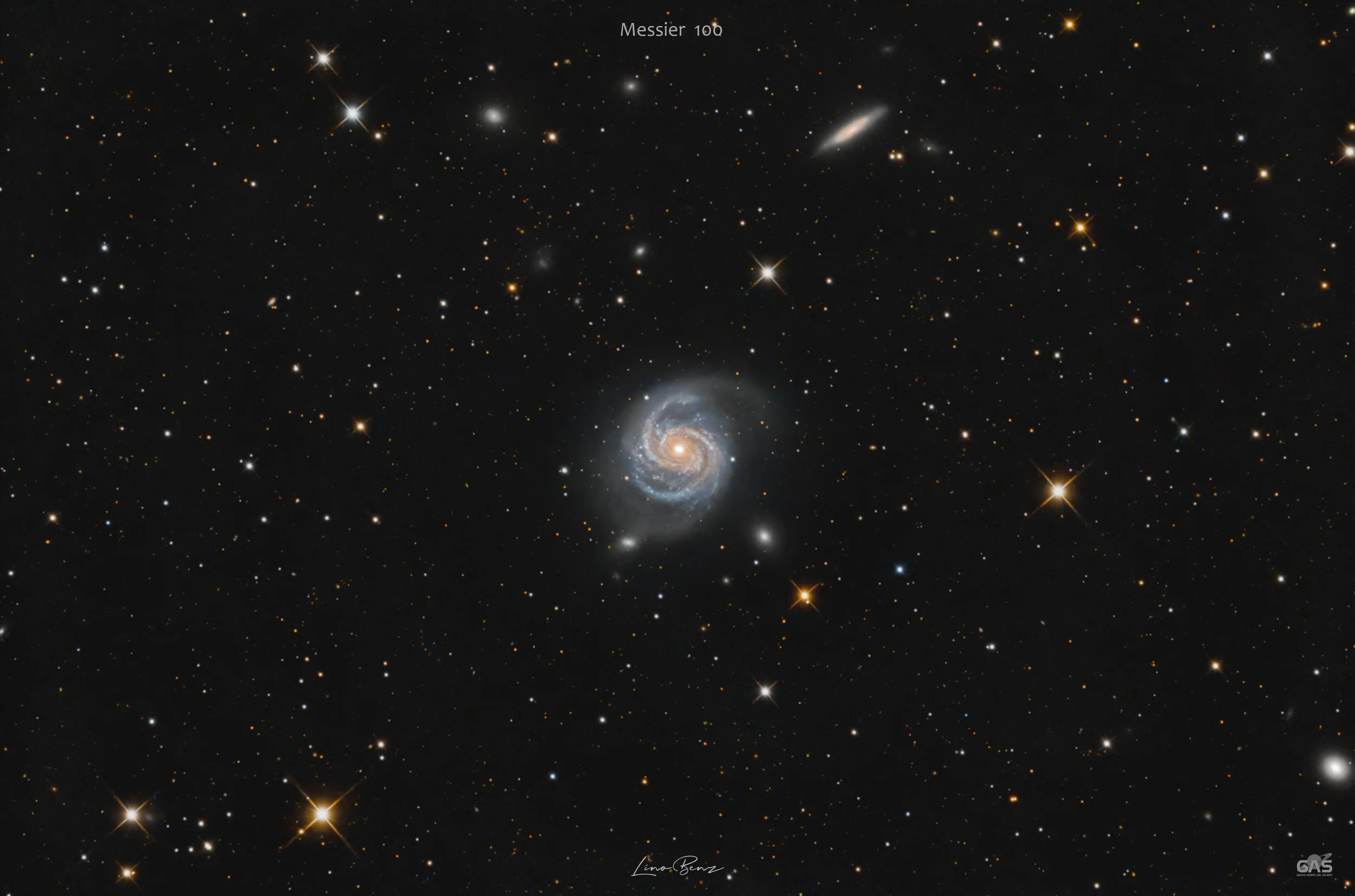
Messier 100
Located in the constellation Coma Berenices, M100 is a grand design spiral galaxy approximately 55 million light-years away from Earth. With a diameter spanning over 100,000 light-years, it is one of the largest and brightest members of the Virgo Cluster of galaxies. M100 exhibits prominent spiral arms filled with young, hot stars, as well as dark dust lanes that trace the galaxy's structure. Its bright nucleus harbors a supermassive black hole, which is believed to play a crucial role in regulating the galaxy's growth and evolution.
Originally discovered by Pierre Méchain in 1781, M100 is celebrated for its exceptional beauty and rich astrophysical significance. It serves as a key object of study for astronomers seeking to understand the processes driving the formation and evolution of spiral galaxies. Through detailed observations and analysis, researchers have uncovered a wealth of information about M100's stellar population, star formation activity, and overall structure, contributing to our broader understanding of galactic dynamics and cosmology. As a captivating cosmic gem nestled within the vastness of the universe, M100 continues to inspire and intrigue observers with its timeless allure.
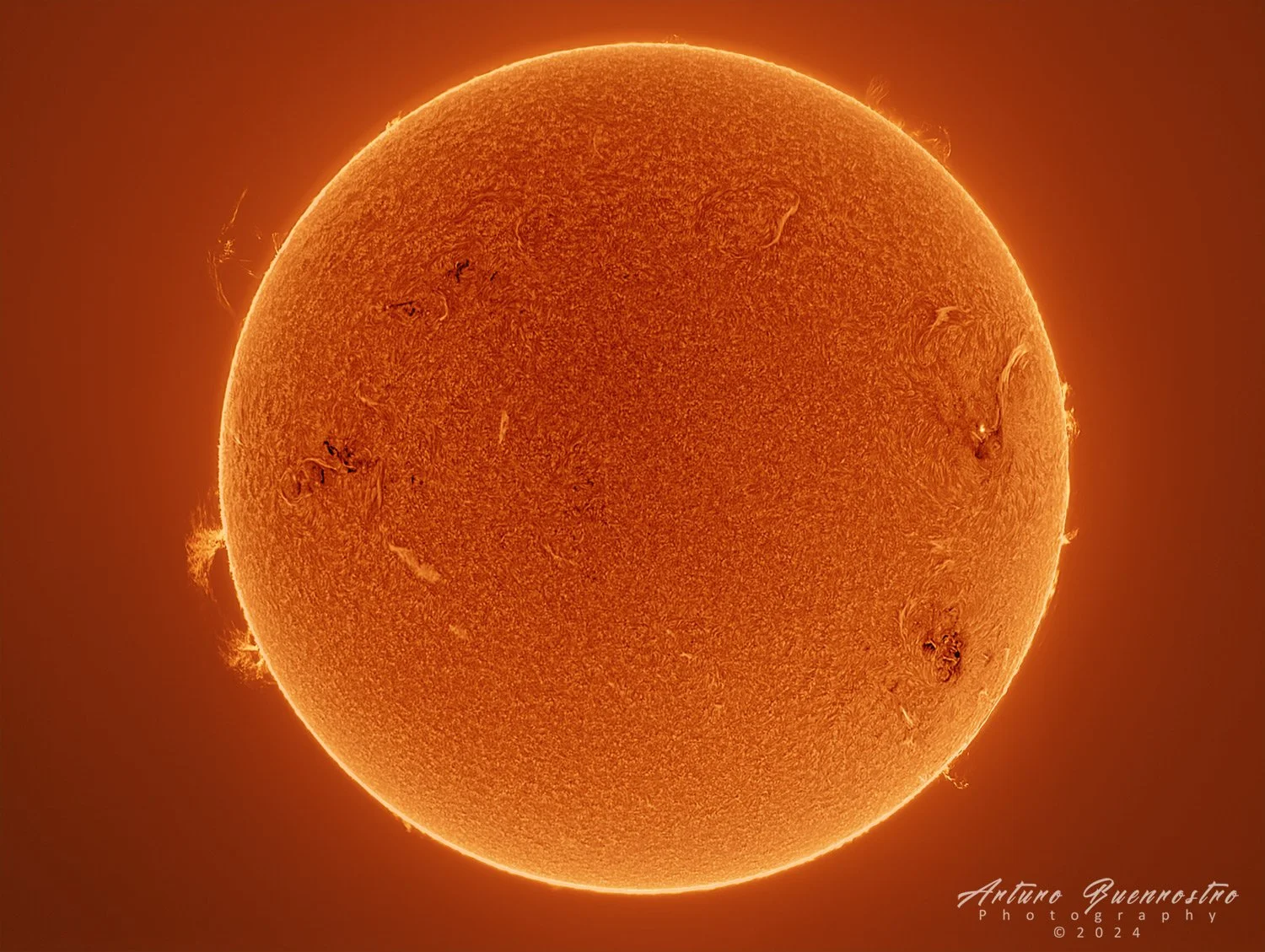
Before the eclipse
At the heart of our solar system, the Sun reigns supreme, illuminating and nurturing the planets that orbit around it. As a G-type main-sequence star, the Sun is a vast sphere of superheated plasma, primarily composed of hydrogen and helium. Its immense gravity holds the solar system together, while its radiant energy fuels life and drives the dynamic processes of our planet.
With a diameter of about 1.4 million kilometers (870,000 miles), the Sun is approximately 109 times larger than Earth, yet it appears as a relatively small, bright disc in our sky due to its vast distance of about 93 million miles (150 million kilometers) from Earth. Despite its seemingly tranquil appearance, the Sun is a dynamic and ever-changing celestial body, marked by features such as sunspots, solar flares, and coronal mass ejections. These phenomena are driven by the Sun's complex magnetic field, which interacts with its hot, turbulent outer layers known as the corona.
This image of the Sun was captured just 20 days before the solar eclipse of 2024, adding a poignant context to its portrayal. Taken with specialized solar observation equipment and precise imaging techniques, this photograph offers a glimpse into the Sun's intricate surface features and dynamic activity. It serves as a reminder of the Sun's ongoing role in shaping our world and the celestial events that capture our collective imagination.
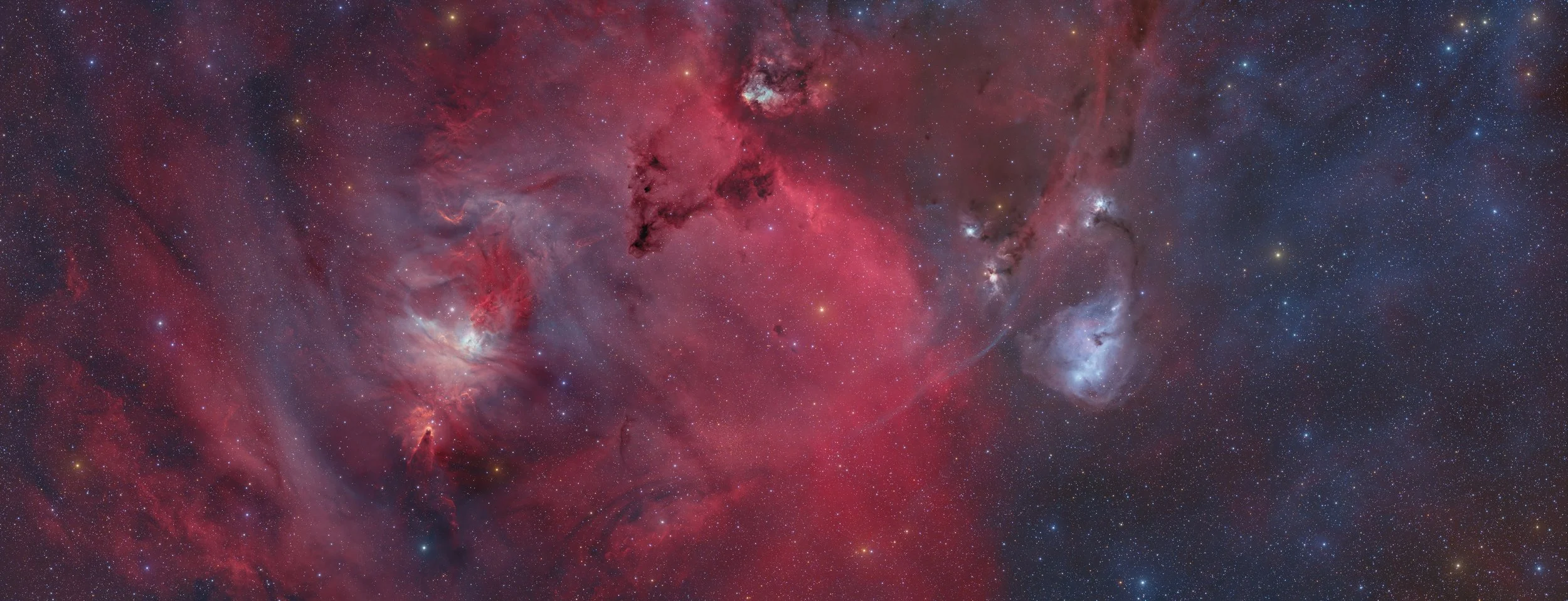
northern tip of the Monoceros constellation
In the vicinity of Dreyer's Nebula, also known as NGC 2264, lie several other notable celestial objects, including the Cone Nebula and the Christmas Tree Cluster. While Dreyer's Nebula itself is a reflection nebula illuminated by the star S Monocerotis, the Cone Nebula is an adjacent dark nebula that appears as a distinctive cone-shaped feature against the backdrop of interstellar space. Nearby, the Christmas Tree Cluster, or NGC 2264, is a young stellar cluster embedded within a diffuse emission nebula, adding to the visual richness of the region.
Though these objects may vary in size and appearance, they collectively contribute to the captivating beauty of the cosmic landscape in this part of the sky. Together, they offer astronomers and stargazers a glimpse into the dynamic processes of star formation and interstellar sculpting, showcasing the intricate interplay between stars, gas, and dust in the vast expanse of the universe.

IC405 Ha-S2 narrowband
In the depths of the night sky lies the striking emission nebula known as IC 405, or the Flaming Star Nebula. Illuminated by the energetic radiation of its central star, AE Aurigae, this cosmic spectacle dazzles with vibrant hues of red and blue. The intricate tendrils of gas and dust stretch across the heavens, sculpted by the fierce stellar winds and intense radiation emanating from AE Aurigae. As hydrogen alpha and sulfur emissions interplay within the nebula, they create a captivating tapestry of light and shadow, offering astronomers a glimpse into the dynamic processes of star formation and stellar evolution.
IC 405 is a testament to the cosmic interplay between stars and the interstellar medium, where massive stars sculpt their surroundings while simultaneously seeding the cosmos with new generations of stellar offspring. As we behold the beauty of the Flaming Star Nebula, we are reminded of the intricate dance of creation and destruction that unfolds throughout the cosmos, shaping the vast tapestry of the universe with its celestial wonders.
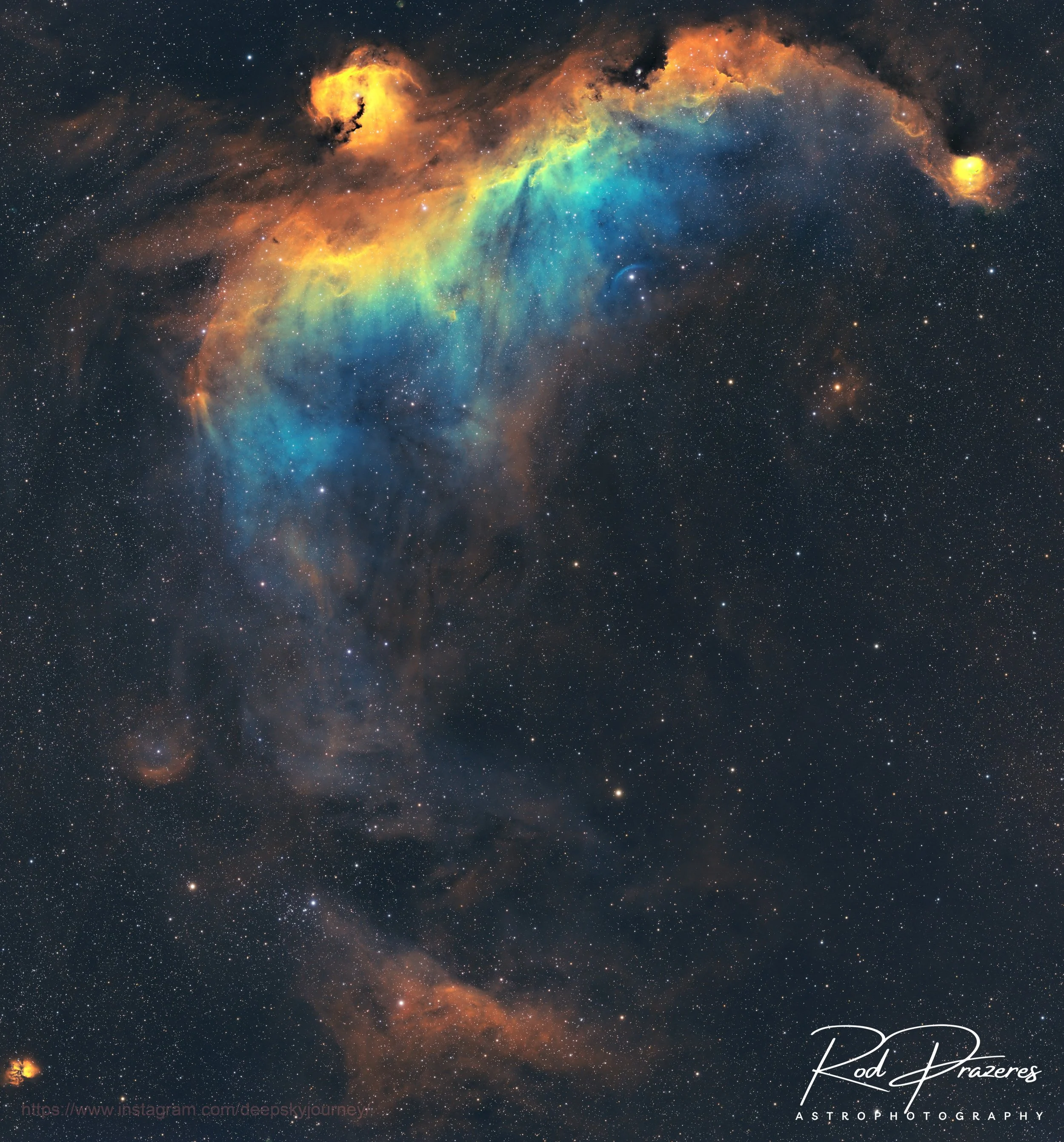
Spectrum of Creation: The Rainbow Hues of The Seagull Nebula
In the cosmic expanse of the Monoceros constellation, the Seagull Nebula, or IC 2177, unfurls its majestic wings, captivating observers with its ethereal beauty. At its core, a brilliant young star illuminates the surrounding nebulous material, sculpting intricate patterns of light and shadow that resemble the graceful wings of a seabird in flight.
Within this celestial realm, stars are born from collapsing clouds of gas and dust, while aging stars shed their outer layers in dazzling displays of cosmic recycling. As astronomers peer into the depths of the Seagull Nebula, they uncover the secrets of stellar birth and evolution, offering insights into the intricate dance of creation and destruction that shapes the cosmos.

Bluis Centaurus A
In the depths of the cosmos, nestled within the constellation of Centaurus, lies the enigmatic galaxy known as Centaurus A, or NGC 5128. This celestial behemoth, shrouded in mystery and intrigue, offers a glimpse into the tumultuous dance of cosmic forces that shape the universe.
At the heart of Centaurus A lies a supermassive black hole, its insatiable appetite devouring surrounding matter and unleashing powerful jets of radiation into the cosmos. These jets, spanning thousands of light-years, paint a vivid portrait of the galaxy's dynamic nature, as it engages in a cosmic battle against the forces of gravity and entropy.
But Centaurus A is more than just a spectacle of cosmic violence. Embedded within its intricate structure are clues to the galaxy's turbulent past, including evidence of past collisions and mergers with smaller galaxies. These cosmic cataclysms have left behind a trail of stellar debris and gas, sculpting Centaurus A into the awe-inspiring sight we behold today.

Lunar encounter in French Alps
In the early hours of Wednesday, January 31, an extraordinary rendezvous unfolded between the Moon and the majestic Aiguille de Baude. As the first rays of dawn graced the summit of Aiguille de Baude, the Moon, ever the elusive companion, began its silent retreat, casting fleeting shadows across the rugged landscape.

Orion over Austrian Alps
In this captivating landscape image captured at Jägersee, Austria, the iconic constellation of Orion and the ethereal arc of Barnard's Loop adorn the velvety canvas of the night sky, casting their celestial glow over the rugged silhouette of the Austrian Alps. Amidst the towering peaks and mirrored waters of Jägersee, the celestial ballet unfolds, merging the timeless beauty of the cosmos with the earthly grandeur of the natural landscape.
The constellation of Orion, with its distinctive pattern of stars, including the bright trio of Orion's Belt, serves as a beacon in the night, guiding the observer's gaze toward the cosmic wonders beyond. Barnard's Loop, a vast emission nebula stretching across the heavens, adds an ethereal touch to the scene, its delicate tendrils of gas and dust weaving a tale of cosmic creation and stellar evolution.
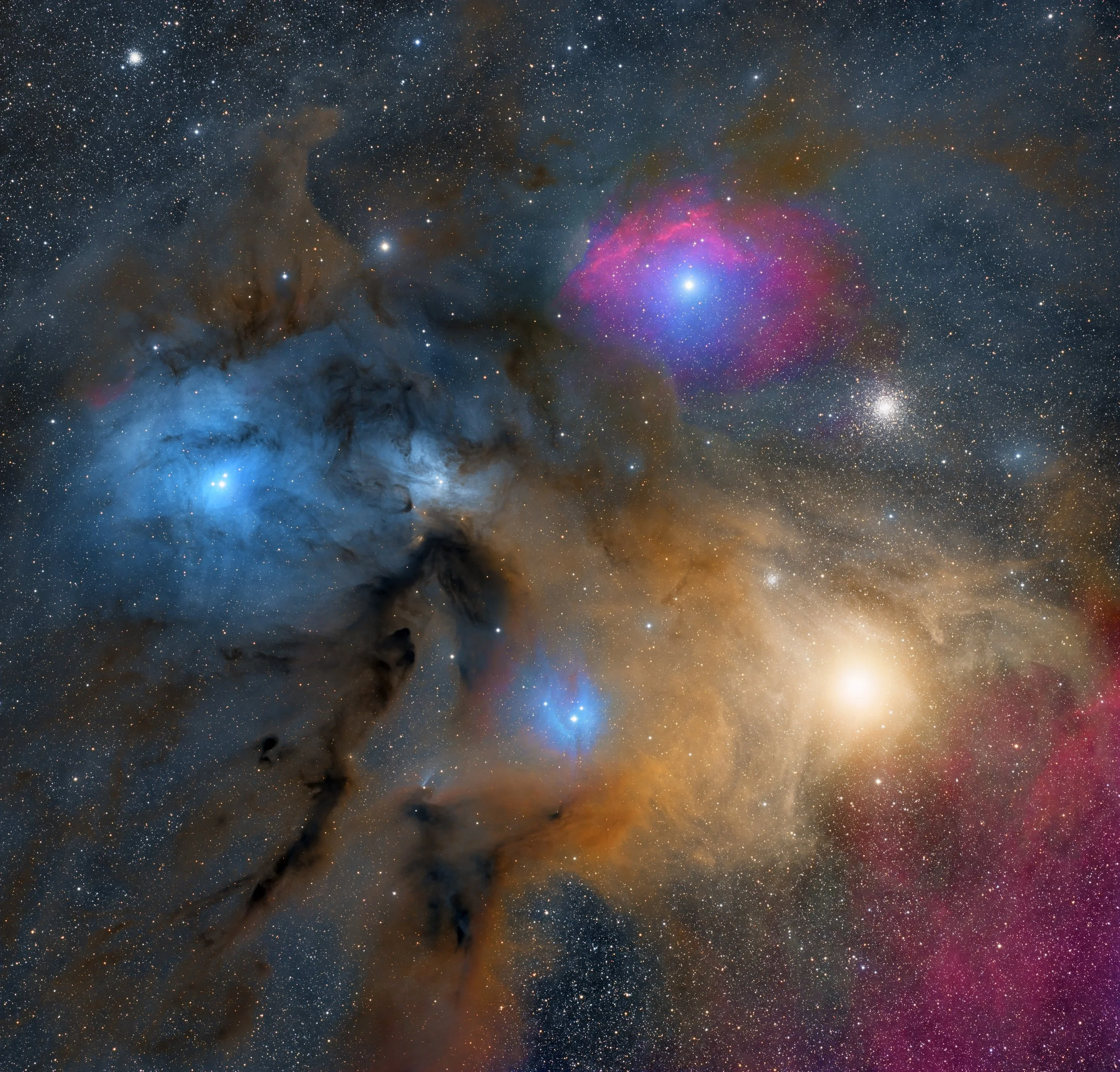
The Rho Ophiuchi Cloud Complex
The Rho Ophiuchi Cloud Complex, nestled within the constellation of Scorpius, unfolds as a sprawling cosmic tapestry of gas, dust, and stellar nurseries. Named after the prominent star Rho Ophiuchi that illuminates its midst, this complex of interstellar clouds offers astronomers a captivating glimpse into the process of star formation and the dynamics of the galactic ecosystem.
Stretching across vast expanses of space, the Rho Ophiuchi Cloud Complex presents a rich array of celestial phenomena, including reflection nebulae, dark nebulae, and young stellar objects. Within its ethereal embrace, dense clouds of gas and dust give birth to new stars, while the intense radiation from nearby luminous stars illuminates the surrounding nebulae with a warm, otherworldly glow.