

AAPOD2 Image Archives
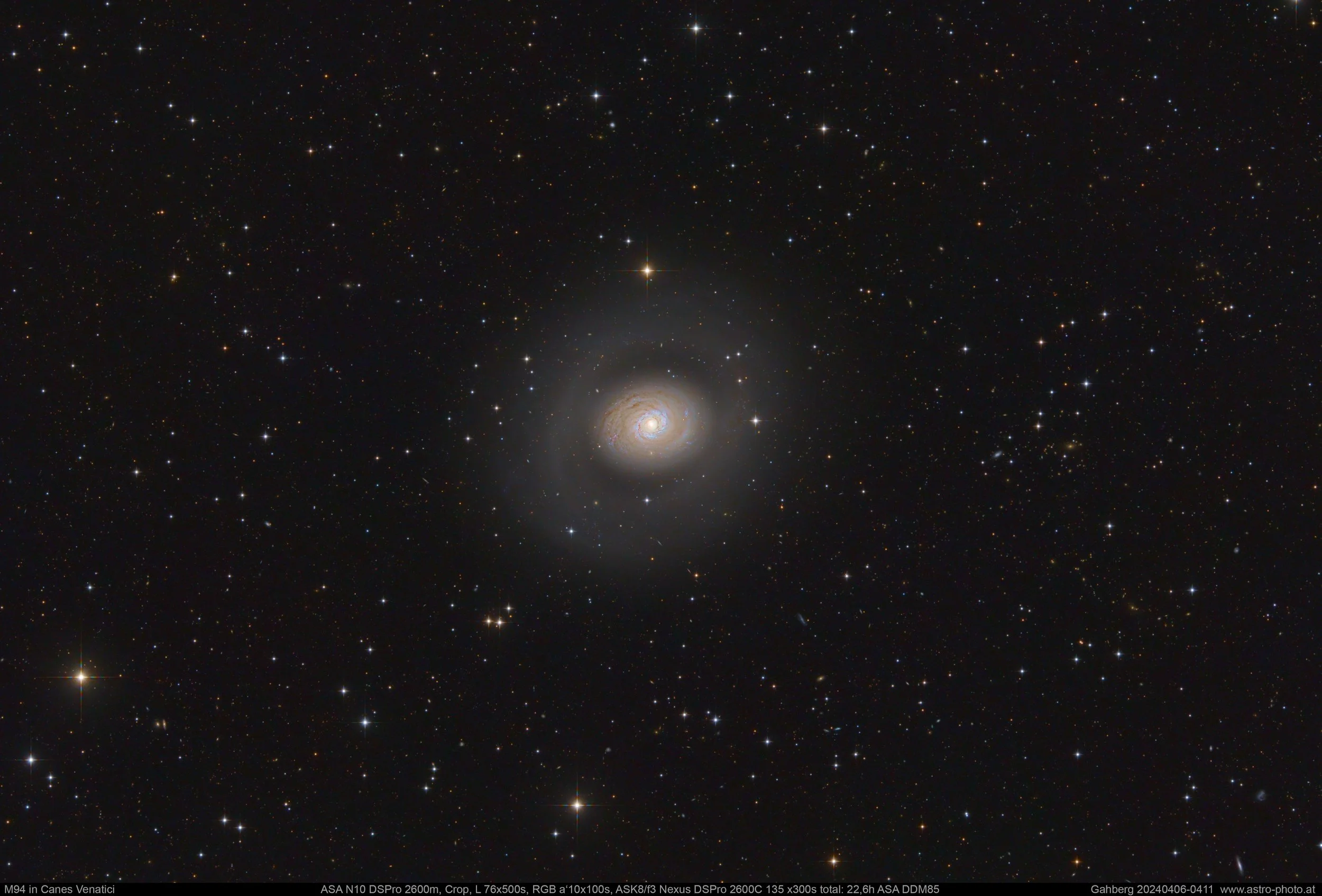
M94 in Canes Venatici
NGC 4736, commonly known as M94, is a stunning spiral galaxy located in the constellation Canes Venatici. This galaxy, situated about 16 million light-years from Earth, features a unique ring structure that sets it apart from other spiral galaxies. The bright inner ring is an area of intense star formation, a phenomenon driven by the galaxy's central bar structure which funnels gas towards the core. This ring of young, hot stars gives M94 its distinctive appearance and makes it a popular target for astronomers and astrophotographers alike.

Hades SNR
The Hades Supernova Remnant (SNR), an impressive testament to amateur astronomy, is the third largest SNR ever discovered by non-professionals. This massive structure, located in the constellation Auriga, spans an incredible region of the sky and serves as a profound reminder of the violent stellar events that shape our universe.
Characterized by intricate filaments and diffuse clouds of gas, the Hades SNR reveals the remnants of a colossal supernova explosion that occurred thousands of years ago. The faint yet expansive nature of this SNR made it a challenging target to detect, underscoring the dedication and skill of the amateur astronomers who brought it to light. Their discovery adds a significant piece to the puzzle of our galaxy's history, illustrating the critical contributions of amateur astronomers to the field of astrophysics.
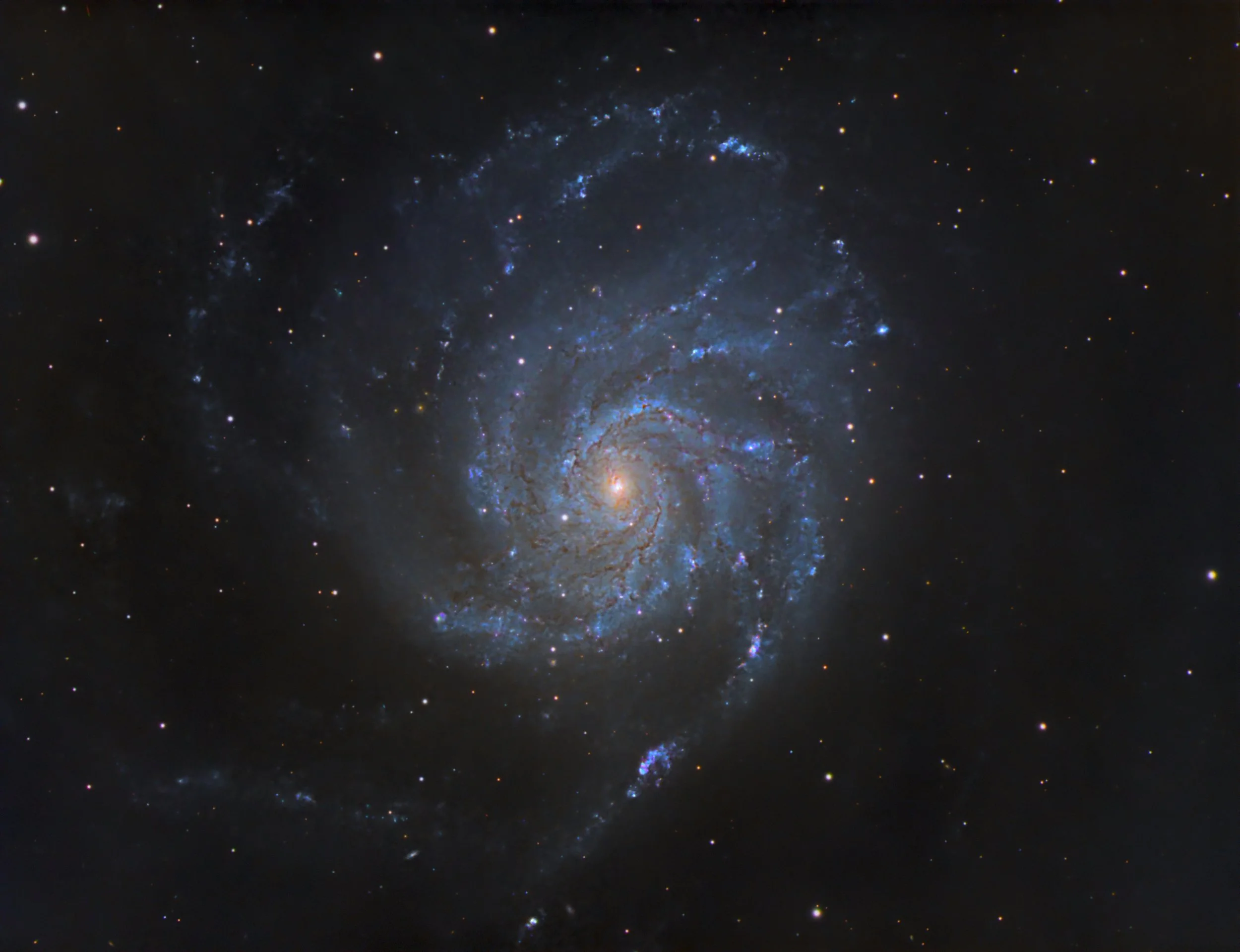
M101 in LRGB
Messier 101 (M101), also known as the Pinwheel Galaxy, is a grand-design spiral galaxy located approximately 21 million light-years away in the constellation Ursa Major. With a diameter of about 170,000 light-years, it is nearly twice the size of the Milky Way. M101's well-defined spiral arms are rich in star-forming regions, evidenced by the numerous HII regions that dot its structure. These regions are massive clouds of hydrogen gas that glow brightly due to the ionizing radiation from young, hot stars within them.
An interesting aspect of M101 is its asymmetrical shape, which is likely the result of gravitational interactions with its neighboring galaxies. This interaction has caused a distortion in its spiral arms, making them appear uneven. Additionally, M101 has a high surface brightness, making it a favorite target for amateur astronomers. Despite its beauty and prominence, M101's distance from Earth means that observing its finer details requires a telescope with good resolution and light-gathering capabilities.
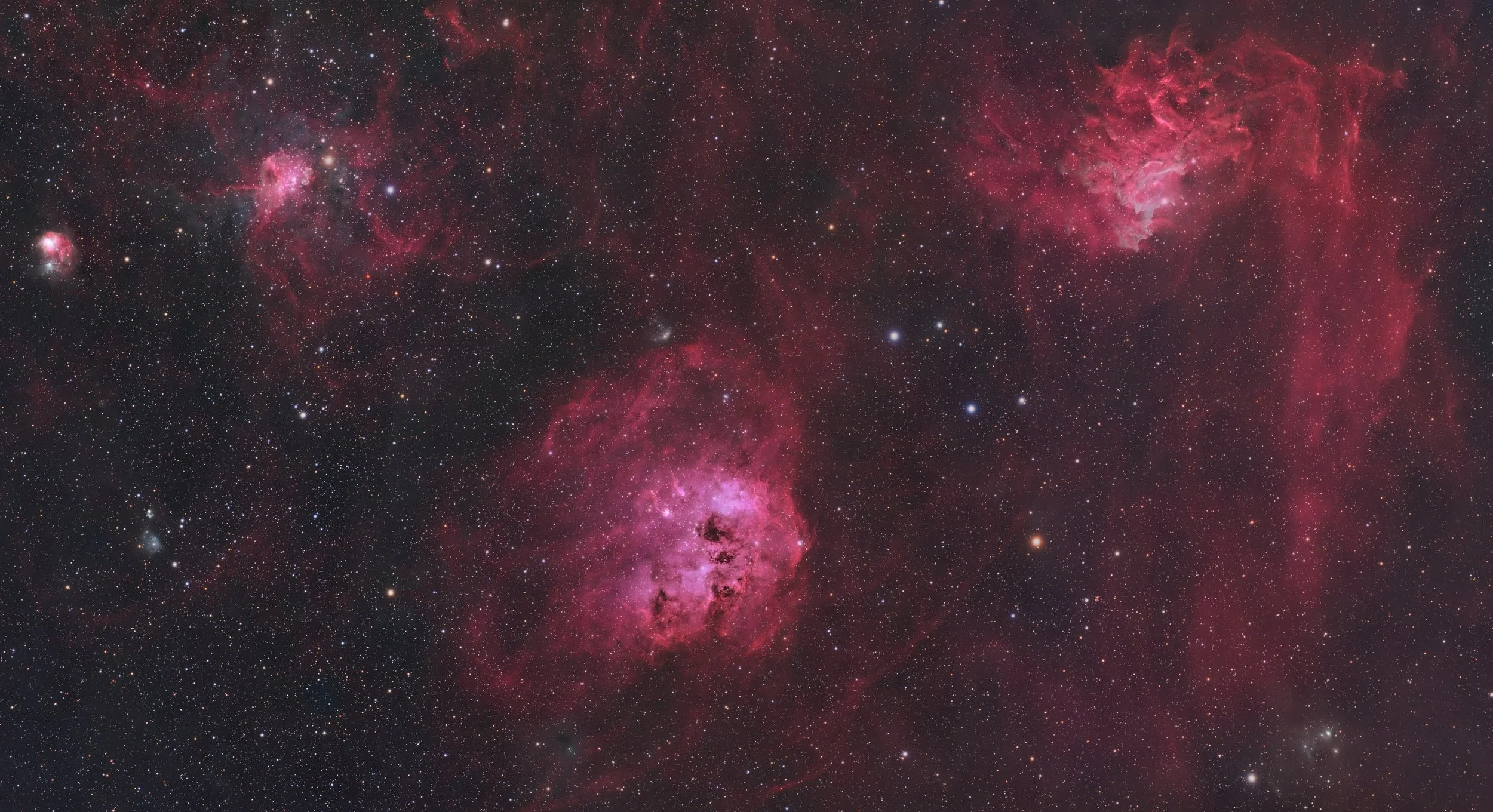
IC 417, IC 410 & IC 405. Three-panel mosaic in HaLRGB
This three-panel mosaic showcases the intriguing nebulae IC 417, IC 410, and IC 405, captured in HaLRGB. These emission nebulae are located in the constellation Auriga and present a stunning array of colors and structures.
IC 417, often referred to as the Spider Nebula, lies approximately 10,000 light-years from Earth. It features a cluster of young stars known as Stock 8, whose intense radiation ionizes the surrounding gas, creating the nebula's characteristic glow.
IC 410, also known as the Tadpoles Nebula, is located about 12,000 light-years away. It contains the open star cluster NGC 1893, which energizes the nebula. Notably, IC 410 includes two striking "tadpole" structures, which are dense regions of gas and dust being sculpted by stellar winds and radiation.
IC 405, the Flaming Star Nebula, is roughly 1,500 light-years from Earth. It is illuminated by the variable star AE Aurigae, which is believed to have been ejected from the Orion Nebula region millions of years ago. The interaction of AE Aurigae's intense light with the surrounding hydrogen gas creates a spectacular emission and reflection nebula, exhibiting striking red and blue hues.
Together, these nebulae form a vibrant tapestry of star formation and cosmic activity, offering a vivid glimpse into the dynamic processes shaping our galaxy.
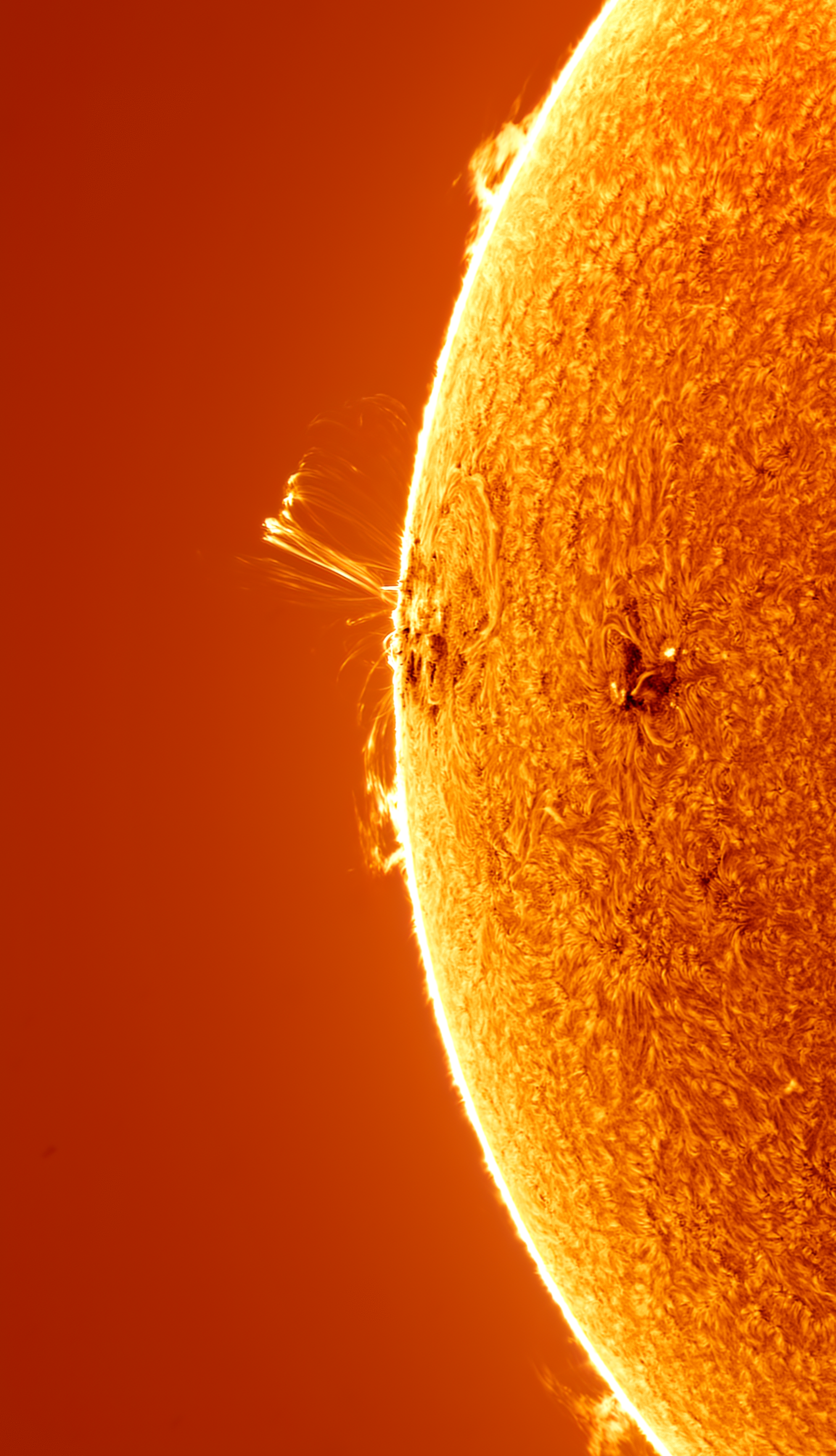
Loop prominences
On May 13, 2024, an extraordinary solar event was captured, featuring active region AR3664. This sunspot region was responsible for a massive solar storm that generated auroras visible as far south as South Florida. Such displays are exceptionally rare at these latitudes, making the event a significant occurrence for both professional and amateur astronomers.
The image also showcases a beautiful loop prominence, a spectacular feature that was visible using an H-alpha filter. Loop prominences are large, glowing loops of plasma that extend from the Sun's surface, following magnetic field lines. These prominences provide a stunning visual representation of the Sun's magnetic activity and are key to understanding solar dynamics and space weather phenomena.
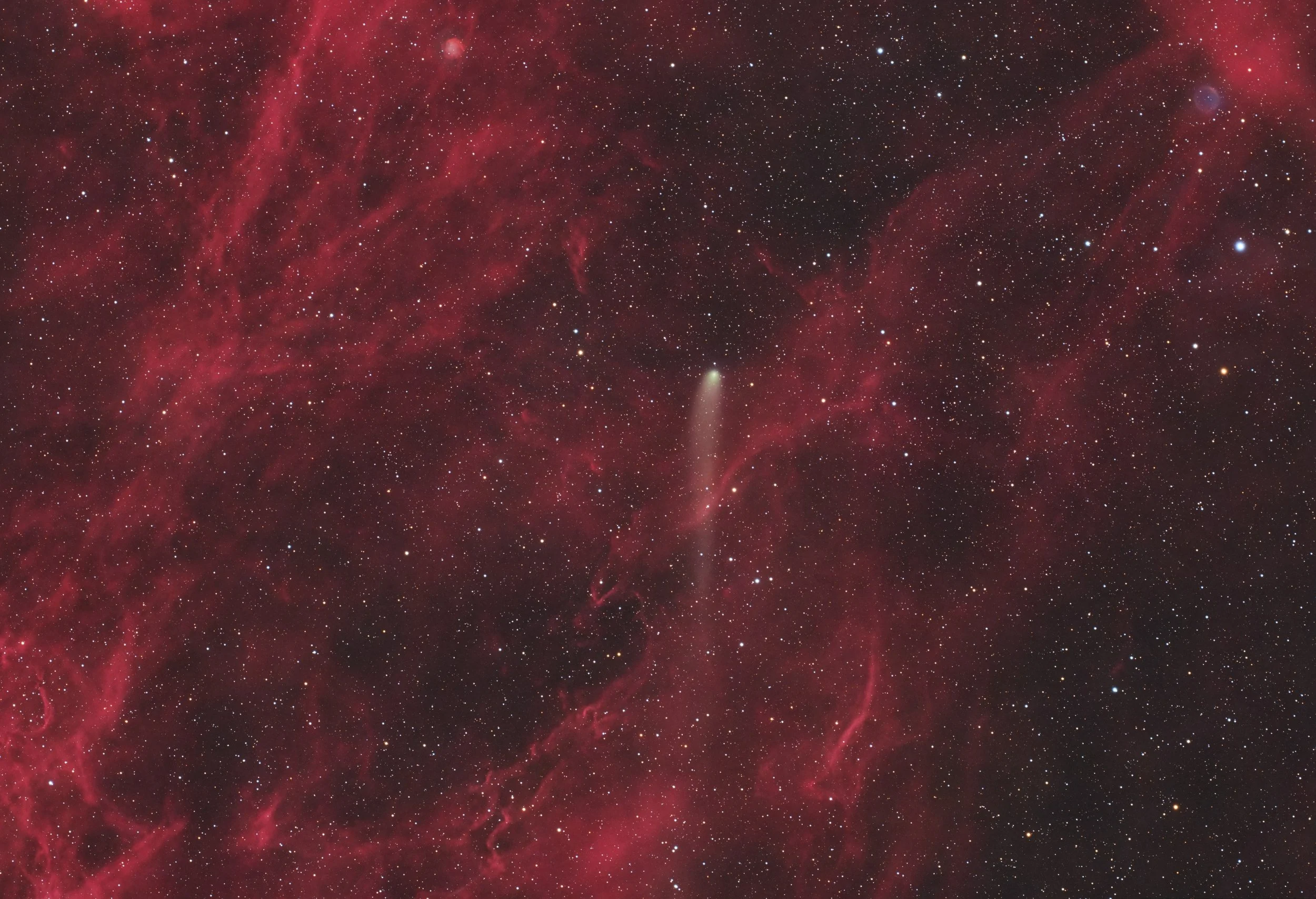
Comet C/2021 S3 (Panstarrs) in Cygnus
Comet C/2021 S3 (PANSTARRS) is a long-period comet that was discovered by the Pan-STARRS survey on September 27, 2021. The comet's highly elliptical orbit takes it from the distant reaches of the solar system into the inner solar system, where it becomes visible from Earth. As it approaches the Sun, the comet's icy nucleus heats up, causing it to shed gas and dust and form a glowing coma and often a tail that points away from the Sun.
One of the notable features of C/2021 S3 (PANSTARRS) is its brightness, which has allowed for detailed observations and photography by both professional and amateur astronomers. The comet's composition provides insights into the early solar system, as it is made up of primordial materials that have remained largely unchanged since the solar system's formation. Observations of the comet's behavior and its interactions with solar radiation help scientists understand the physical and chemical processes that occur in these distant celestial visitors.
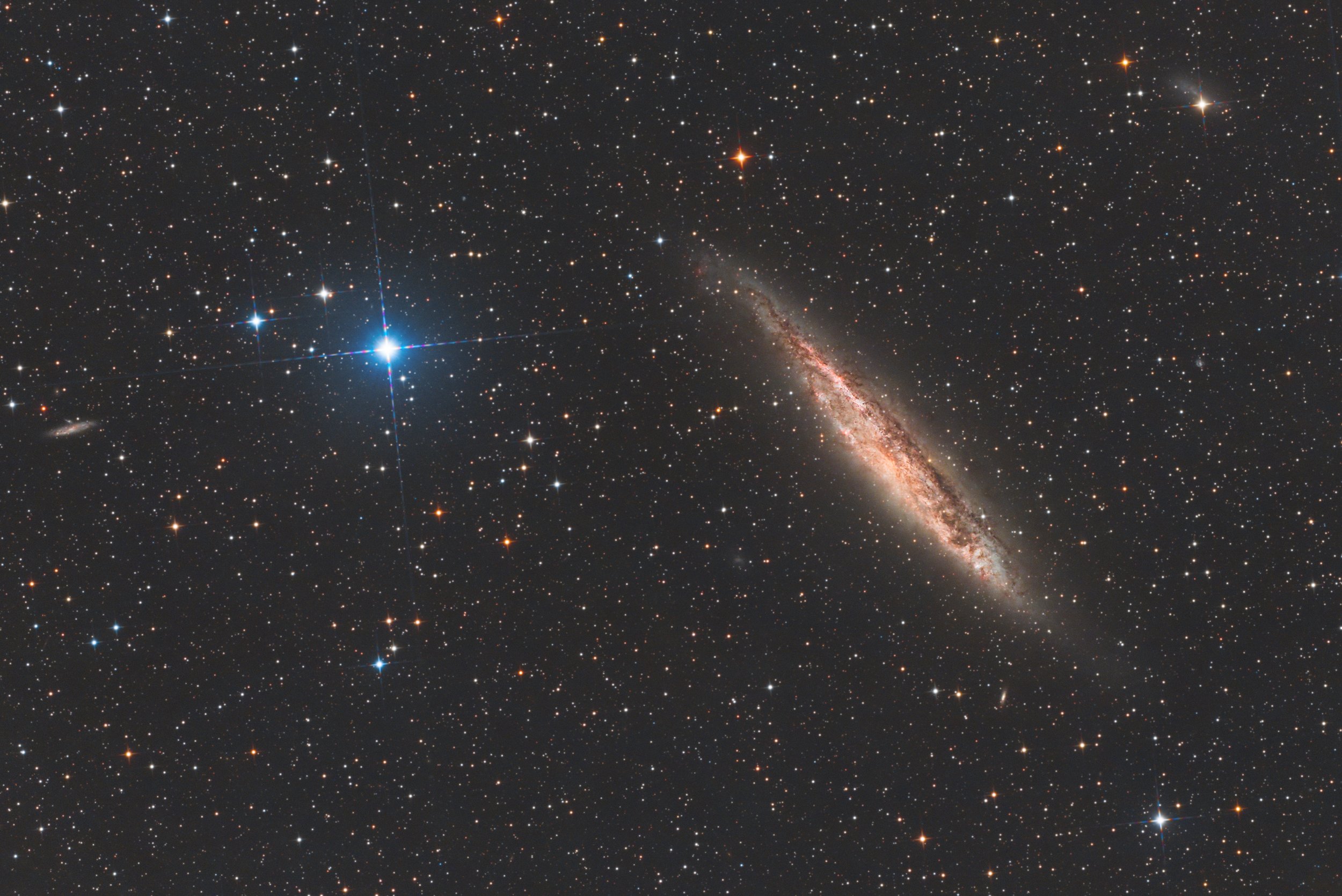
NGC 4945-Barred Spiral Galaxy in Centaurus
NGC 4945 is a striking barred spiral galaxy located approximately 13 million light-years away in the constellation Centaurus. It is one of the brightest galaxies in the Centaurus group and is notable for its prominent bar structure and extensive, well-defined spiral arms. The galaxy's edge-on orientation provides a spectacular view of its elongated shape and central bulge.
NGC 4945 is also of significant interest to astronomers because of its active galactic nucleus (AGN), which harbors a supermassive black hole. This black hole is a source of intense X-ray emissions, making NGC 4945 one of the brightest X-ray galaxies in the sky. The presence of the AGN suggests high levels of activity and energetic processes occurring in the galaxy's core, offering valuable opportunities for studying the dynamics of black holes and their influence on their host galaxies.
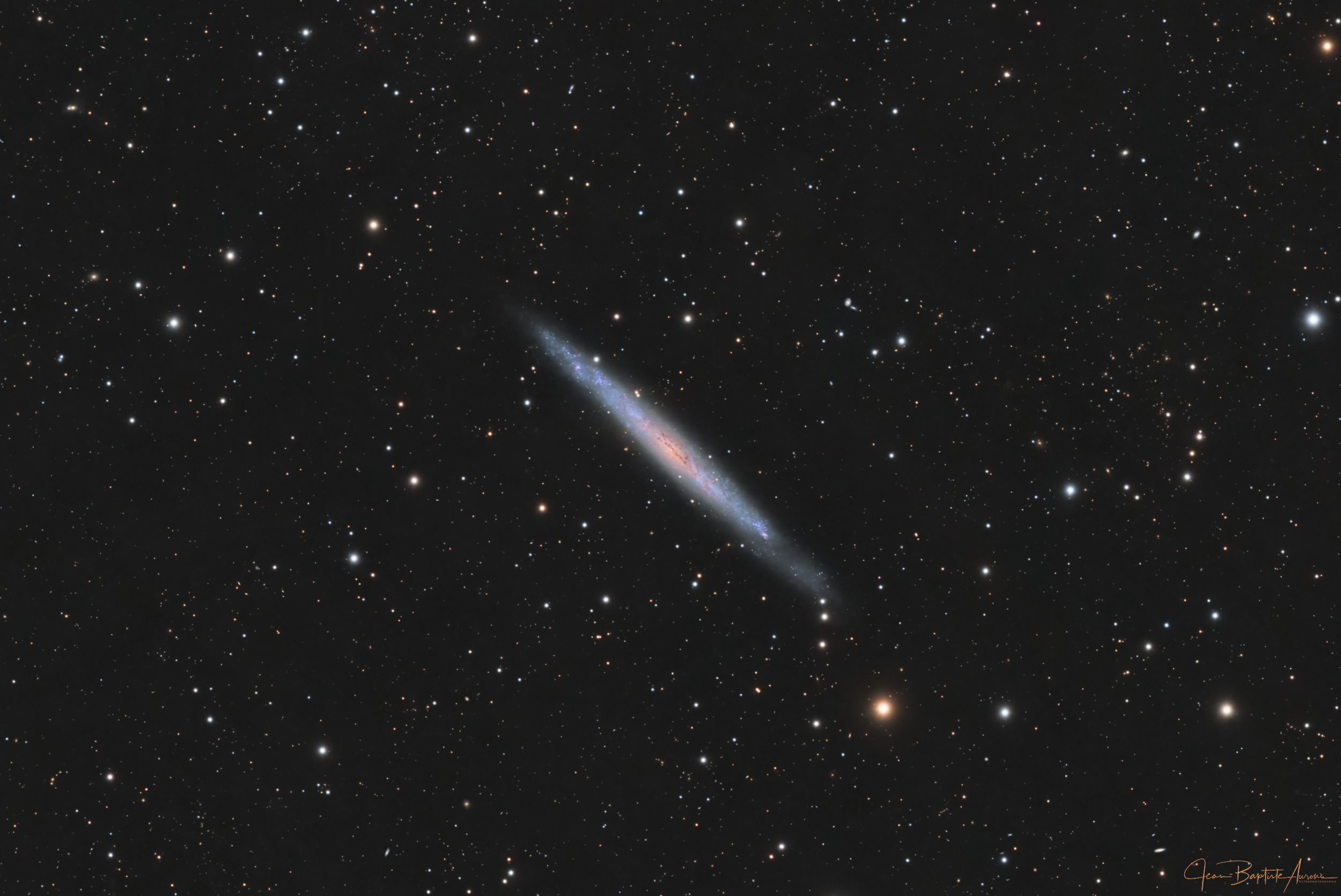
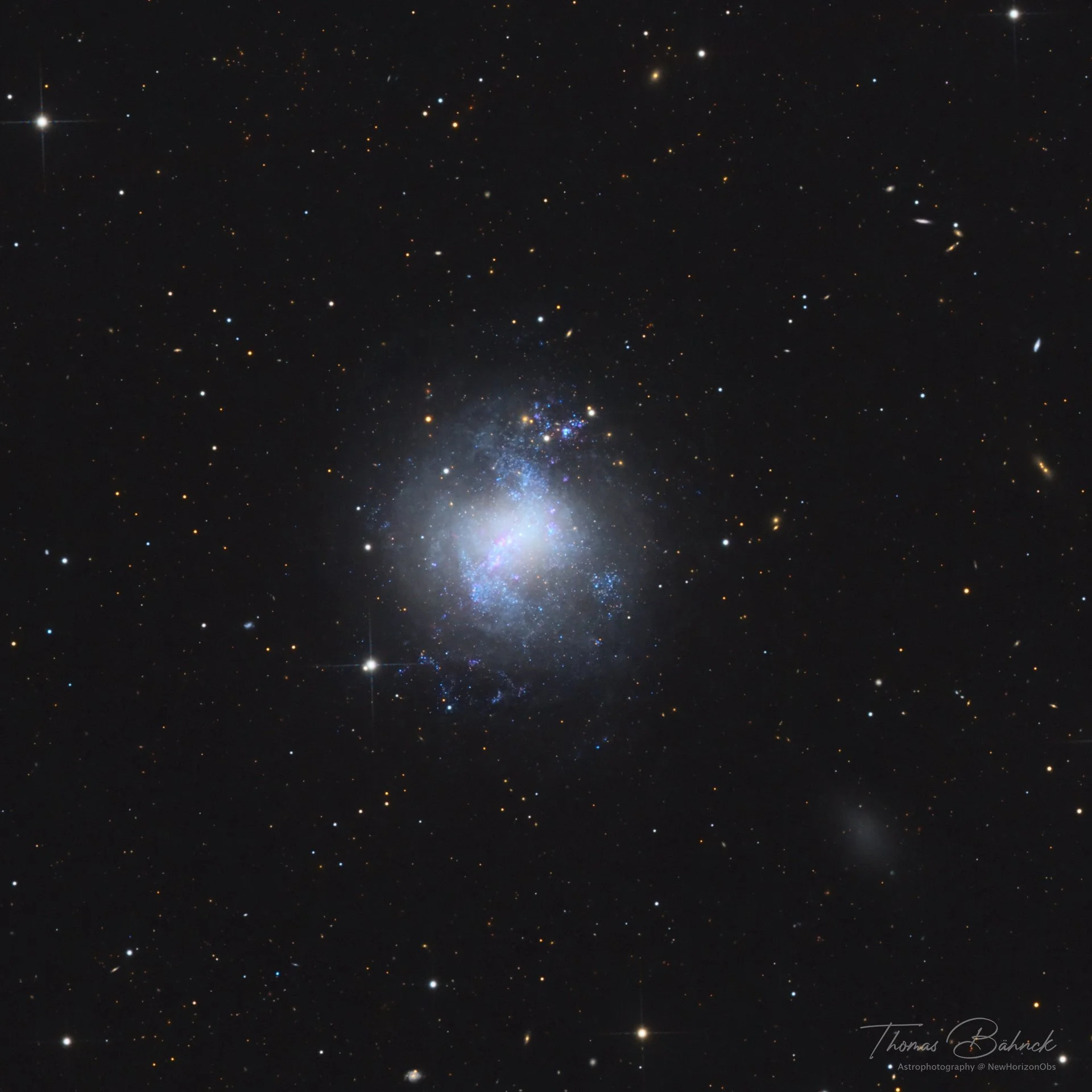
NGC 4214 - irregular galaxy in Canis Venatici
NGC 4214 is an irregular galaxy located in the constellation Canes Venatici, approximately 10 million light-years from Earth. This galaxy is characterized by its chaotic structure, lacking the defined spiral arms or elliptical shape seen in more regular galaxies. NGC 4214 is a prolific star-forming region, with numerous bright star clusters and massive young stars scattered throughout its irregular form.
One of the notable features of NGC 4214 is its large H II regions, where intense star formation is occurring. These regions are illuminated by the ultraviolet light from young, hot stars, causing the surrounding hydrogen gas to glow brightly. Observations have revealed that NGC 4214 contains both young and old stellar populations, making it an excellent laboratory for studying the processes of star formation and galactic evolution. The galaxy's irregular shape and active star-forming regions provide valuable insights into the dynamics and history of irregular galaxies.
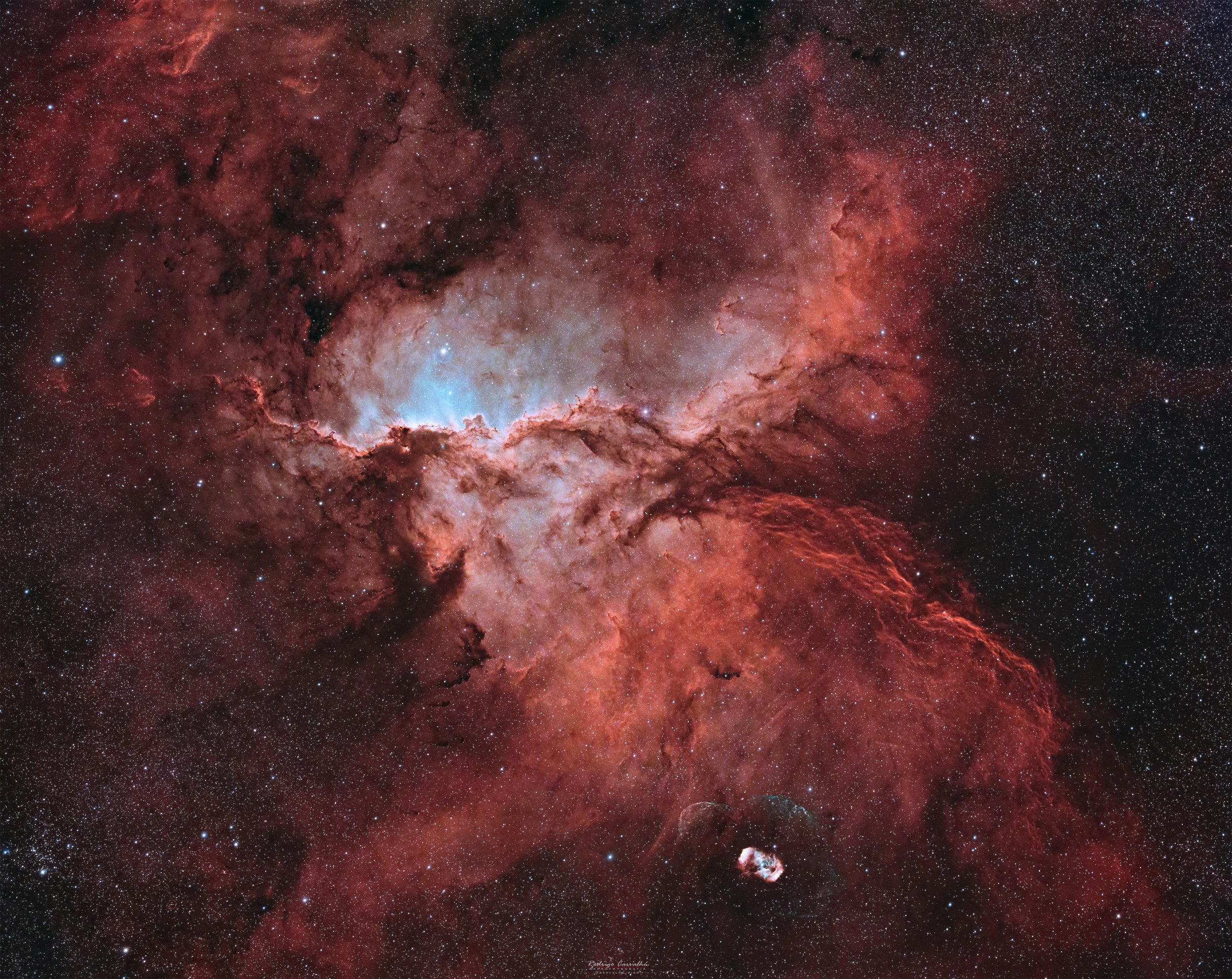
Dragons of Ara
The Fighting Dragons of Ara, also known as NGC 6188, is a striking emission nebula located in the constellation Ara, approximately 4,000 light-years away from Earth. This nebula gets its dramatic name from the visually striking shapes formed by its dark dust lanes and glowing gas, resembling two dragons engaged in combat. The region is rich in hydrogen gas, which is ionized by the intense ultraviolet radiation from nearby young, massive stars, causing it to glow brightly in red and pink hues.
NGC 6188 is situated near the open star cluster NGC 6193, whose hot, young stars are responsible for illuminating the nebula. This star-forming region is part of the larger Ara OB1 association, a group of young, massive stars that have recently formed from the same molecular cloud. The interplay between the intense radiation from these stars and the surrounding gas and dust creates a dynamic and evolving landscape, offering astronomers a spectacular view of stellar birth and the complex interactions within nebulae. The intricate structures and vibrant colors of the Fighting Dragons of Ara make it a favorite target for astrophotographers and a valuable object of study for understanding star formation processes.
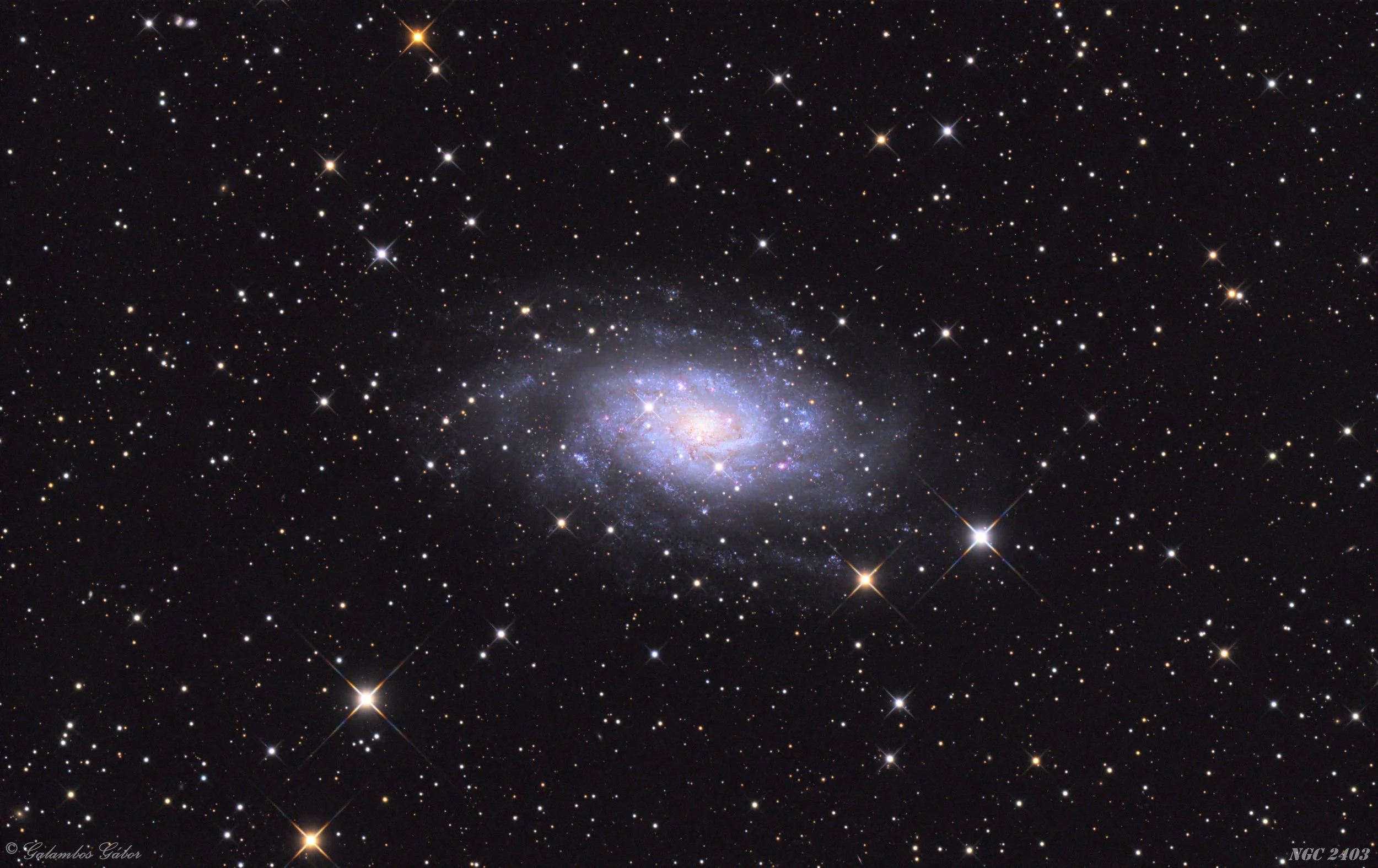
NGC 2403 spiral galaxy
NGC 2403 is a prominent spiral galaxy located in the constellation Camelopardalis, approximately 10 million light-years from Earth. As a member of the M81 Group, NGC 2403 shares similarities with the nearby Andromeda Galaxy (M31), including its spiral structure and rich star-forming regions. This galaxy is noted for its numerous H II regions, which are large clouds of ionized hydrogen where new stars are born, making it a vibrant and active site of stellar formation.
One of the most striking features of NGC 2403 is its well-defined spiral arms, which are adorned with clusters of young, hot stars and bright nebulae. These features make NGC 2403 an excellent subject for studying the processes of star formation and the dynamics of spiral galaxies. Additionally, NGC 2403 has been the site of several supernovae, most notably SN 1954J and SN 2004dj, providing valuable data on the life cycles of stars and the chemical enrichment of galaxies. Its relative proximity and brightness allow astronomers to study its properties in great detail, enhancing our understanding of spiral galaxy evolution.

GALAXY NGC4395 IN CANES VENATICI
NGC 4395 is a unique and intriguing galaxy located in the constellation Canes Venatici, approximately 14 million light-years from Earth. Unlike many well-known galaxies, NGC 4395 is classified as a low surface brightness galaxy and lacks the prominent spiral arms that characterize more typical spiral galaxies. Its diffuse and irregular appearance makes it an interesting subject of study, particularly for understanding the variety of galactic structures and formations in the universe.
One of the most remarkable features of NGC 4395 is its low-mass central black hole, estimated to be around 10,000 times the mass of the Sun. This black hole is one of the smallest supermassive black holes known, providing valuable insights into the lower end of the supermassive black hole mass spectrum and its impact on the host galaxy. NGC 4395 also exhibits active galactic nucleus (AGN) activity, emitting X-rays and ultraviolet light, which offers a unique opportunity to study the relationship between black holes and galaxy formation in environments with minimal stellar activity.
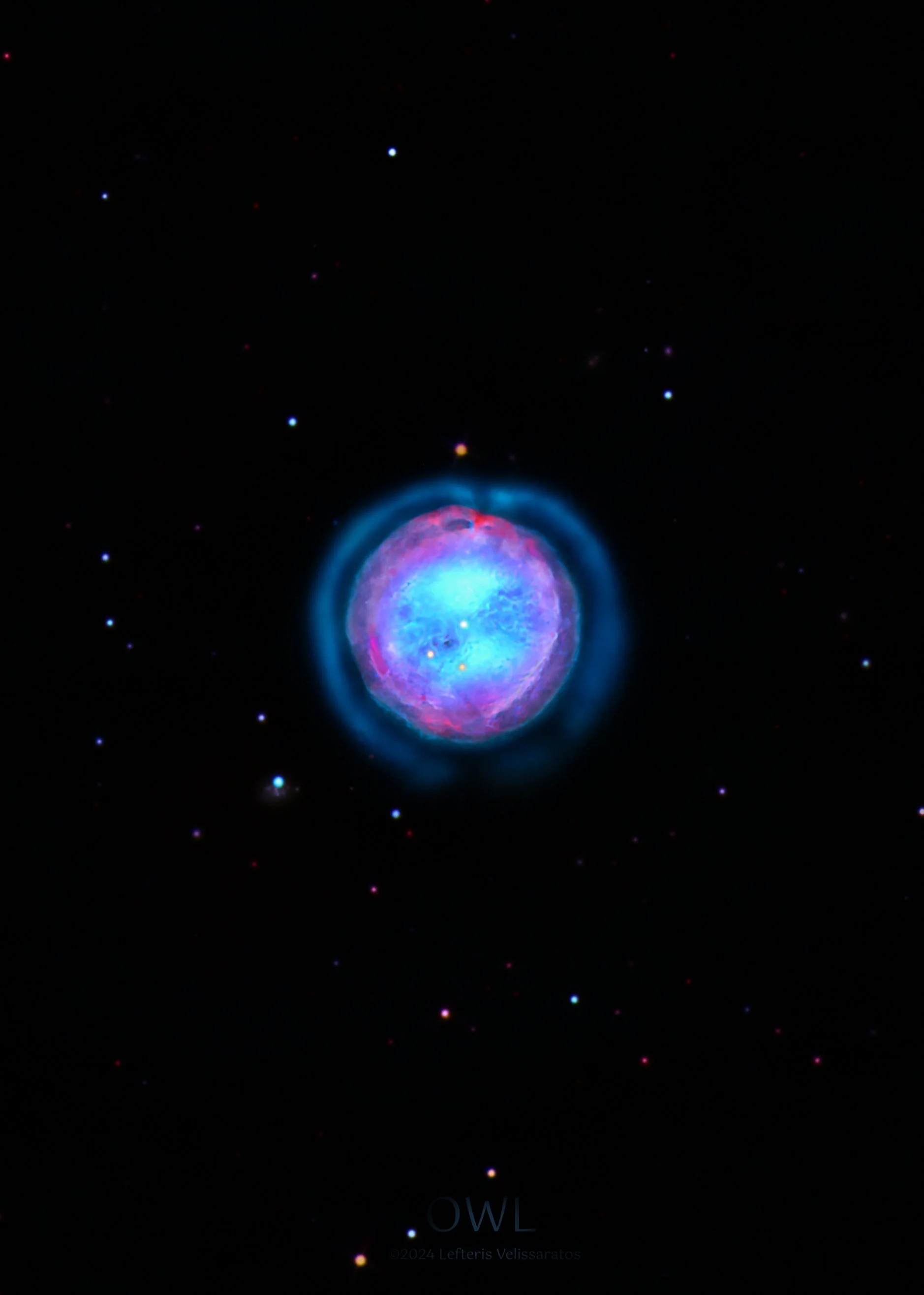
The OWL Extended Version
The Owl Nebula, also known as Messier 97 (M97), is a captivating planetary nebula located in the constellation Ursa Major, approximately 2,030 light-years from Earth. Named for its resemblance to an owl's face, with two dark circular features resembling eyes, M97 is one of the more complex and studied planetary nebulae. This nebula represents the final stages of a star similar in mass to our Sun, which has expelled its outer layers, leaving behind a hot, dense white dwarf at its center.
M97 spans about 3.4 light-years in diameter and is notable for its intricate structure and varying emission lines, which provide insights into the composition and dynamics of the ejected material. The "eyes" of the Owl Nebula are believed to be regions with less dense gas, allowing us to see deeper into the nebula. Observations in various wavelengths, including optical and infrared, have revealed details about the chemical abundances and physical conditions within M97, offering valuable clues about the processes involved in the late evolutionary stages of stars.
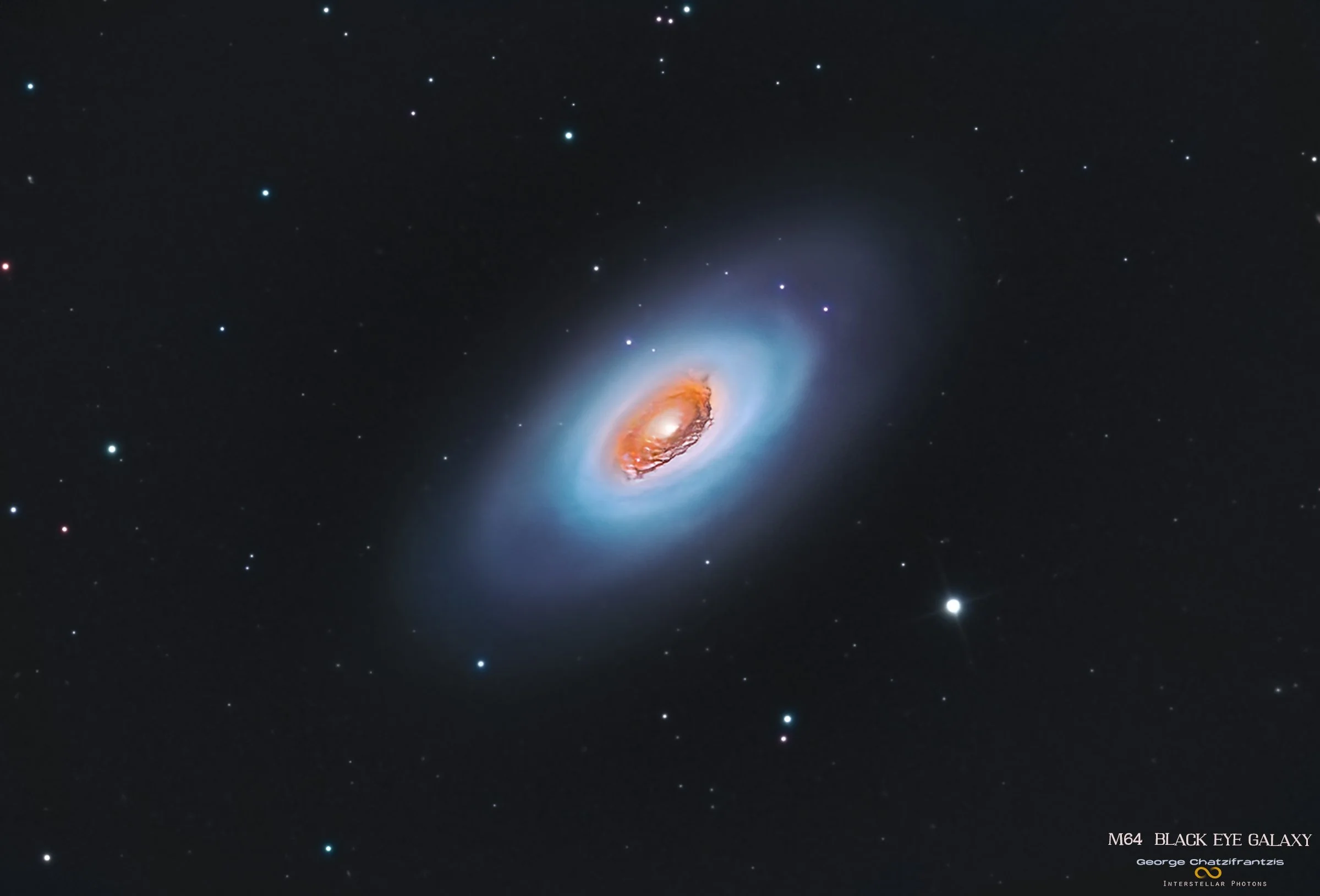
M64 Black Eye Galaxy
M64, commonly known as the Black Eye Galaxy, is a striking spiral galaxy located approximately 17 million light-years away in the constellation Coma Berenices. It earns its evocative nickname from the prominent dark dust lane that obscures part of its bright nucleus, creating the appearance of a cosmic black eye. This galaxy is particularly notable for its unusual internal dynamics, with the outer regions rotating in the opposite direction to the inner regions, suggesting a past galactic merger or interaction.
The Black Eye Galaxy is a site of active star formation, particularly in the regions around the dark dust lane. Observations reveal a rich mix of young, hot stars and older stellar populations, providing valuable insights into the processes of galactic evolution and star formation. The contrasting regions of darkness and light within M64 make it a visually captivating and scientifically intriguing object for both amateur and professional astronomers.
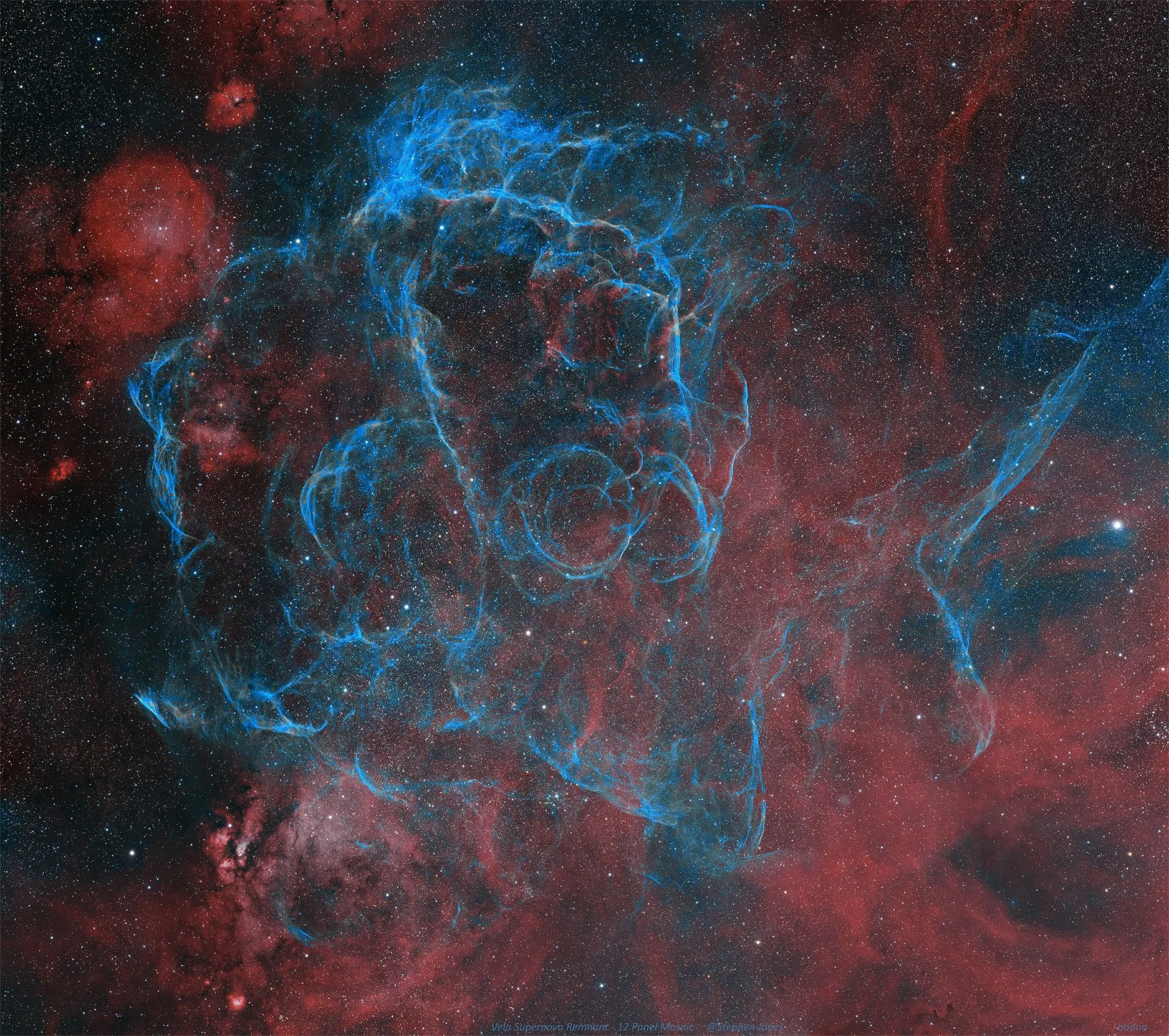
12 Panel Mosaic of Vela Supernova Remnant
Embark on a scientific exploration of the Vela Supernova Remnant through this stunning 12-panel mosaic capturing its intricate details and expansive reach. This cosmic masterpiece, born from the remnants of a stellar explosion, spans a vast portion of the sky, showcasing its complex structure and dynamic interplay with the surrounding interstellar medium.
Each panel of this mosaic offers a glimpse into different regions of the Vela Supernova Remnant, revealing filaments, shockwaves, and intricate patterns of glowing gas and dust. With meticulous attention to detail, this mosaic provides astronomers and enthusiasts alike with a deeper understanding of the supernova's aftermath and its ongoing evolution over thousands of years.

Northern Lights over the Po Valley
Aurora week continues! Indeed, the mesmerizing Northern Lights graced the Po Valley following a powerful solar storm this weekend. This rare event brought the captivating aurora borealis to an area not typically associated with such celestial displays, adding an extra layer of awe and wonder to the night sky above the valley.
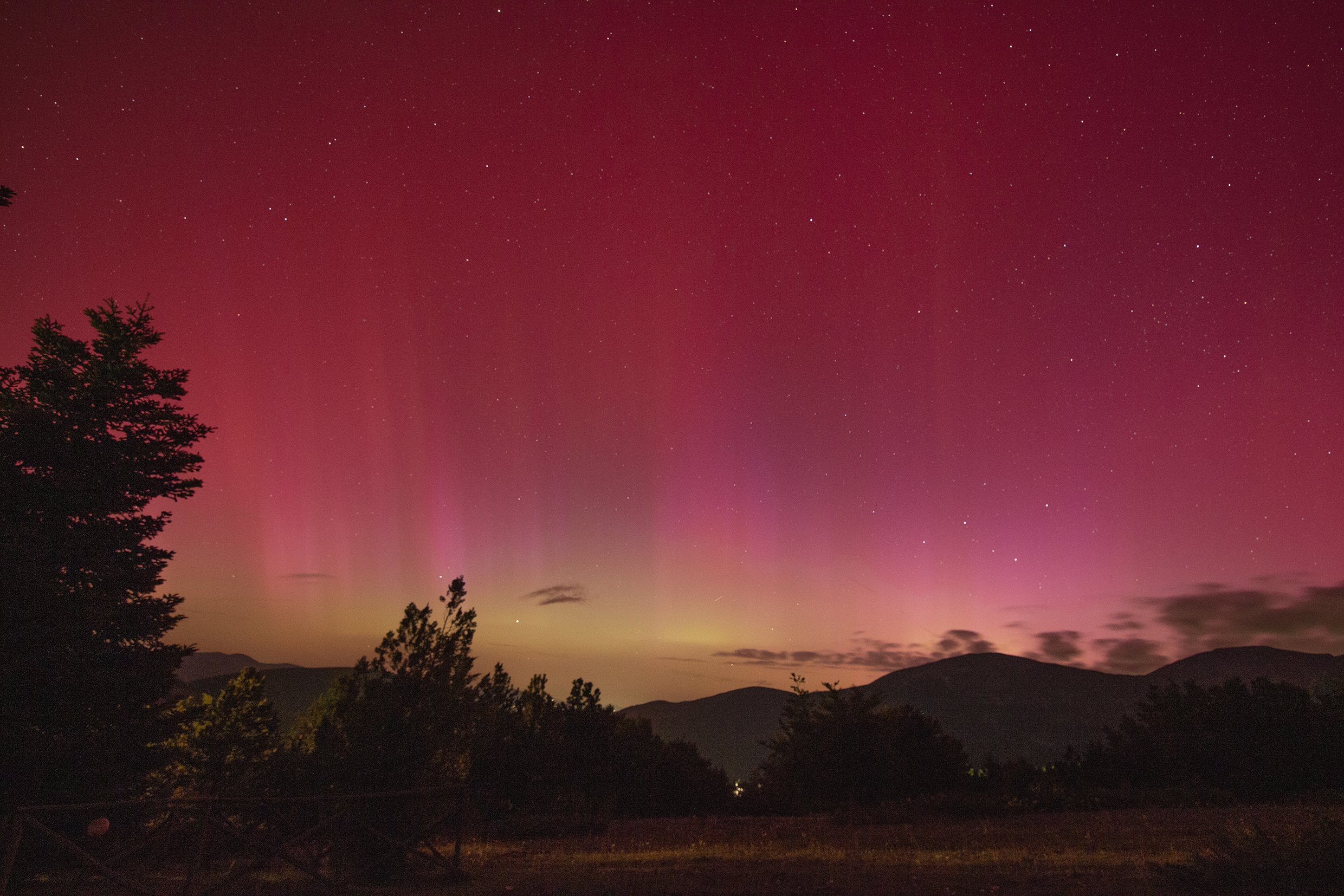
Aurora Borealis Frontignano di Ussita ITALY
In the typically serene skies of Frontignano di Ussita (MC), the appearance of a sudden and spectacular Aurora Borealis is a rare and remarkable event. Against this backdrop, the captivating display of lights painted a vivid tapestry across the heavens. The moment was skillfully captured using a tripod-mounted Canon EOS 600D camera paired with a Samyang 14mm lens, with a 15-second exposure at ISO 800, immortalizing the ephemeral beauty of the aurora in the night sky.
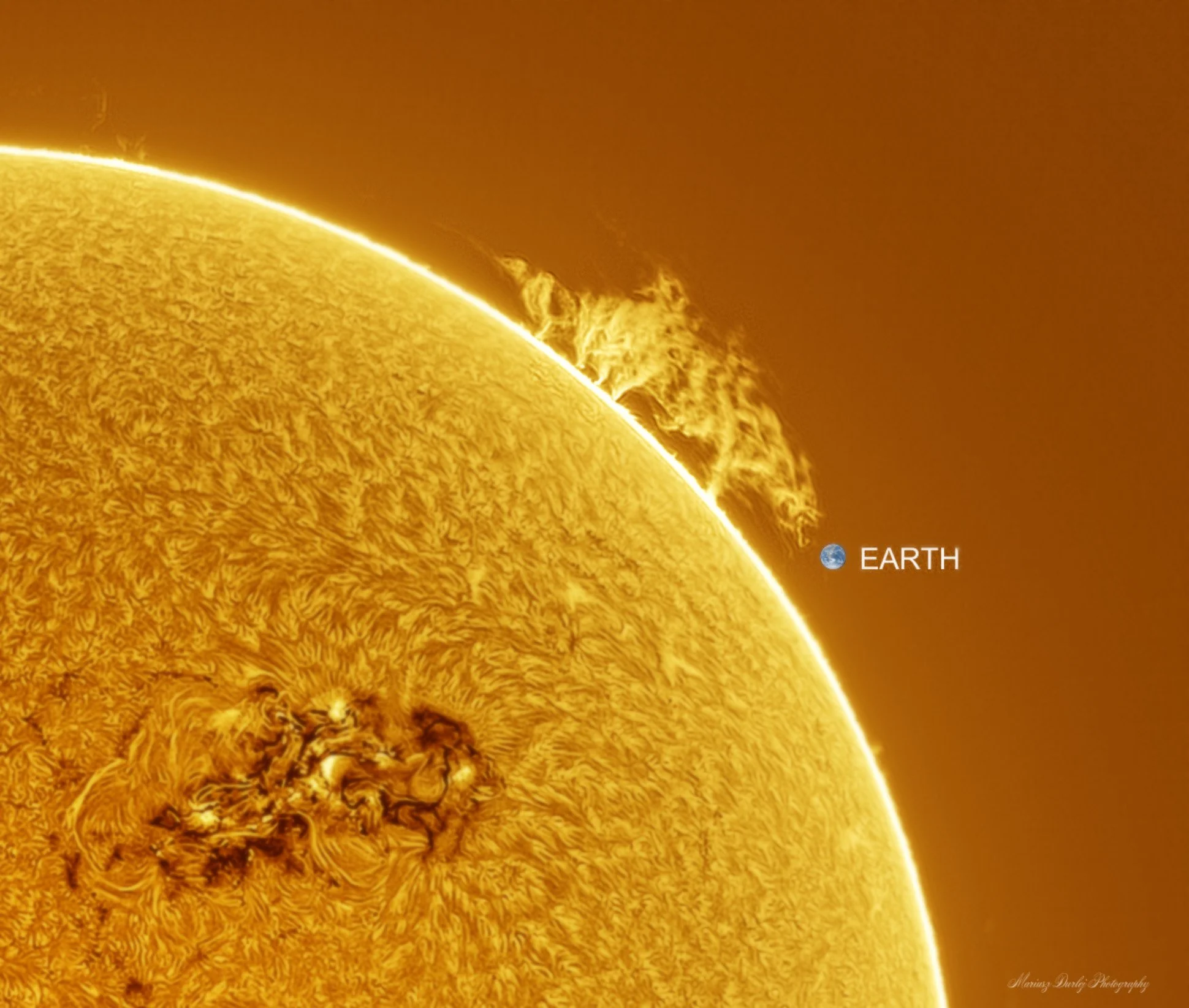
Sun with sunspot 3664 and solar prominences
Captured amidst the vast expanse of space, the Sun shines as a radiant sphere of light and energy, showcasing intricate details of its dynamic surface. Amidst the swirling maelstrom of solar activity, Sunspot 3664 emerges as a LARGE darkened blemish on the Sun's photosphere, signifying regions of intense magnetic activity. These sunspots are cooler areas on the Sun's surface, caused by concentrated magnetic fields inhibiting the flow of heat, creating a stark contrast against the surrounding brilliance.
Accompanying this celestial display are solar prominences, towering arcs of plasma that extend high above the Sun's surface, reaching heights of tens of thousands of kilometers. These fiery tendrils of ionized gas, sculpted by the Sun's magnetic field, mesmerize observers with their graceful dance across the solar limb. As the Sun rotates and evolves, these prominences continually shift and change, providing astronomers with valuable insights into the Sun's dynamic behavior and the nature of its magnetic environment. Through careful observation and scientific inquiry, we continue to unravel the mysteries of our nearest star, the life-giving Sun, and its profound influence on the cosmos.
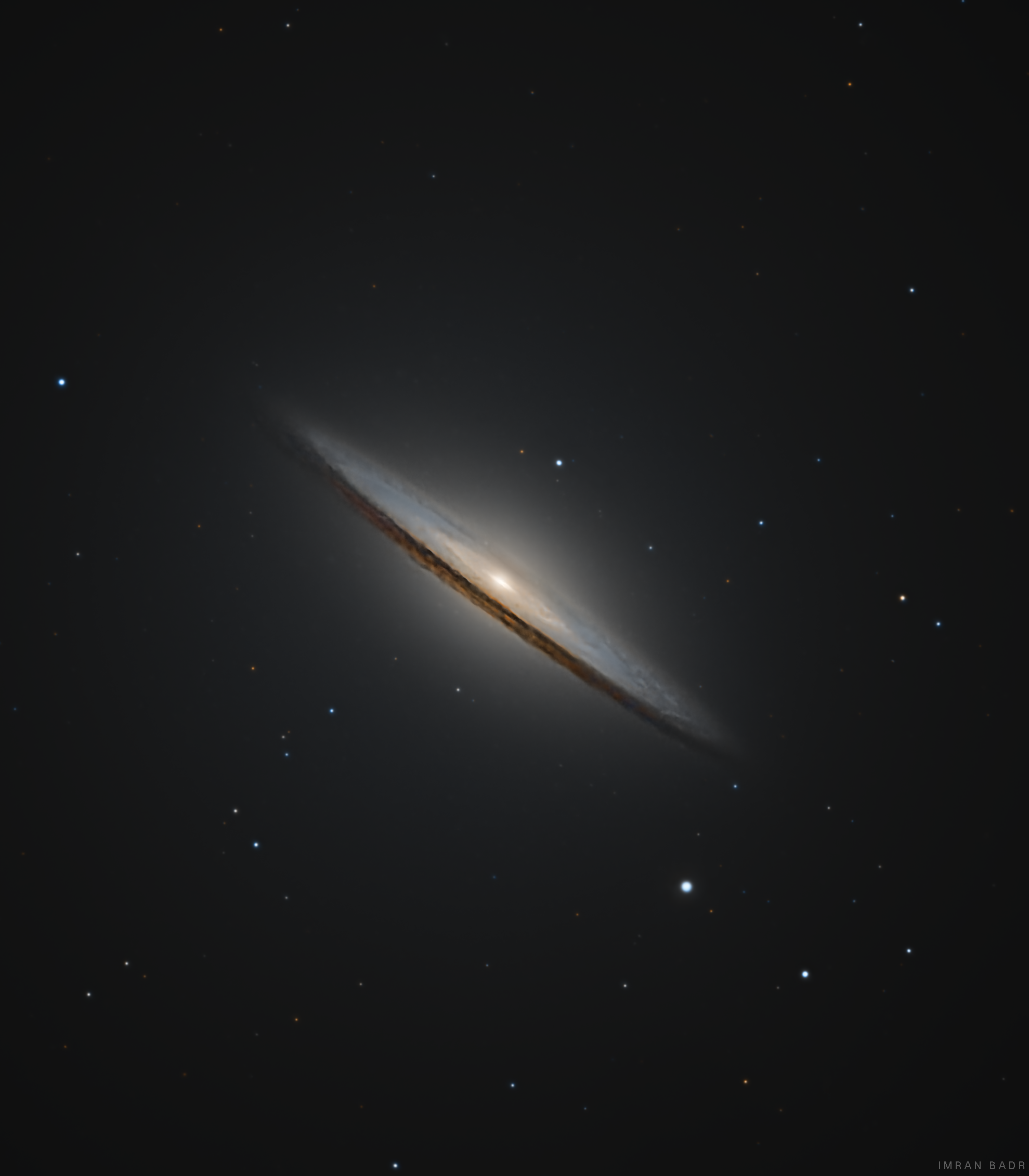
The magnificent Sombrero galaxy (M104)
The Sombrero Galaxy, also known as Messier 104 or M104, stands as a celestial marvel in the constellation Virgo, captivating astronomers and stargazers alike with its distinctive appearance. This stunning spiral galaxy boasts a prominent dark dust lane that bisects its bright central bulge, resembling the brim of a sombrero hat, from which it derives its name. Located approximately 28 million light-years away from Earth, M104 spans about 50,000 light-years in diameter, making it one of the most massive galaxies in the nearby universe.
Its striking appearance is further accentuated by a vibrant halo of globular clusters, open clusters, and young blue stars that adorn its spiral arms, contributing to its overall grandeur. While its central bulge harbors a supermassive black hole, which is estimated to be about 1 billion times the mass of the Sun, the Sombrero Galaxy continues to intrigue scientists with its intricate structure and evolutionary history. Through the lens of telescopes and the wonders of astrophotography, M104 offers a glimpse into the cosmic ballet of galaxies, inspiring awe and curiosity about the mysteries of the universe.
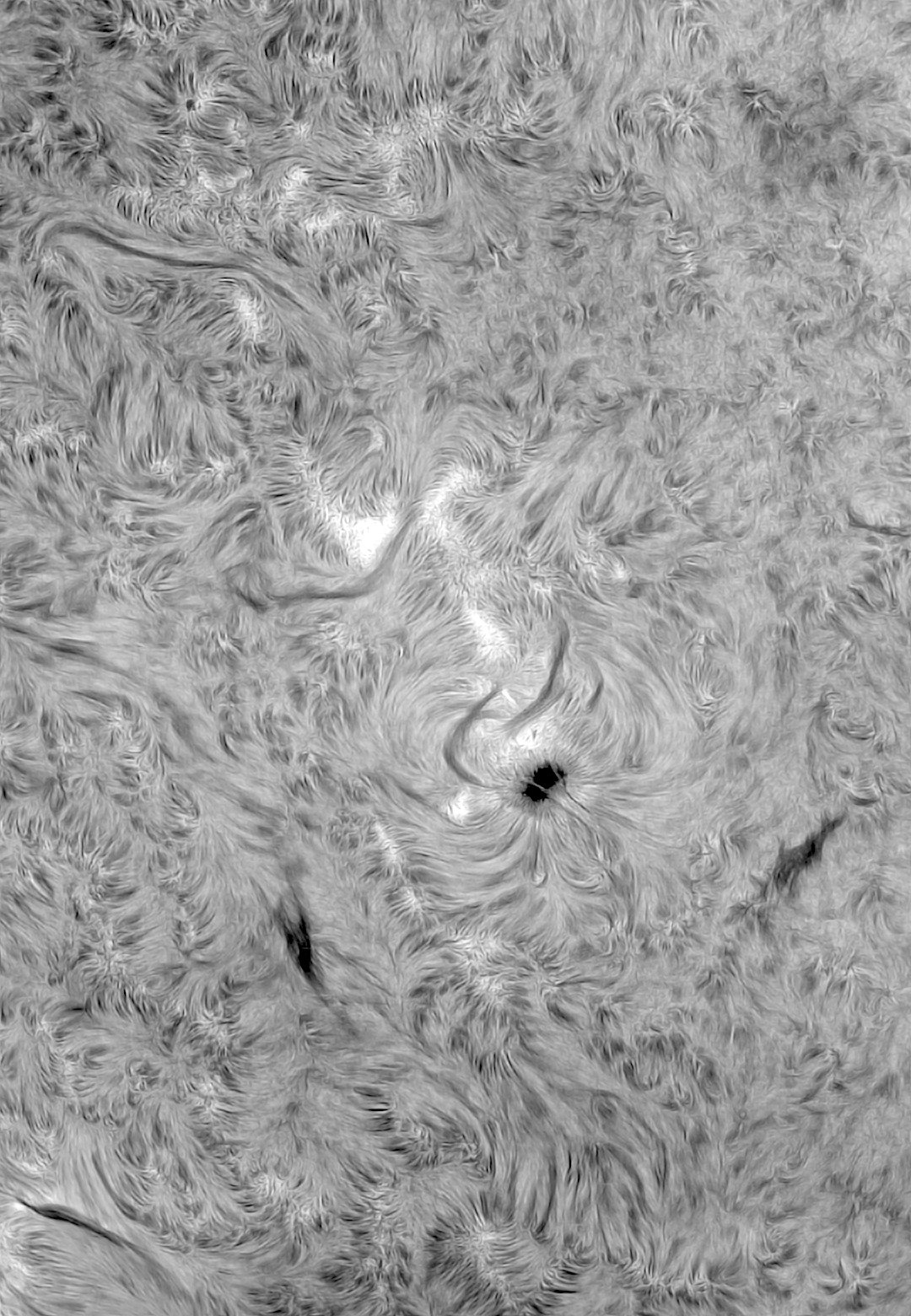
SUN
On May 6, 2024, at 10:30 a.m., a captivating glimpse of the solar photosphere was captured, revealing intricate details of our nearest star's surface. The photo showcases the dynamic and ever-changing nature of the Sun, with prominent features such as sunspots, granules, and faculae dotting its fiery surface.
Sunspots, dark regions caused by intense magnetic activity, stand out against the brighter background of the photosphere. These cooler areas are often associated with increased solar activity and can persist for days or even weeks before fading away. Meanwhile, granules, small cellular structures that form as hot plasma rises and cools on the Sun's surface, create a textured appearance reminiscent of a bubbling cauldron. Interspersed among these granules are faculae, bright patches that indicate regions of enhanced magnetic activity and are often found near sunspots. This mesmerizing image offers a glimpse into the dynamic and complex nature of our Sun, reminding us of its vital role in sustaining life on Earth while captivating our imagination with its celestial beauty.