

AAPOD2 Image Archives
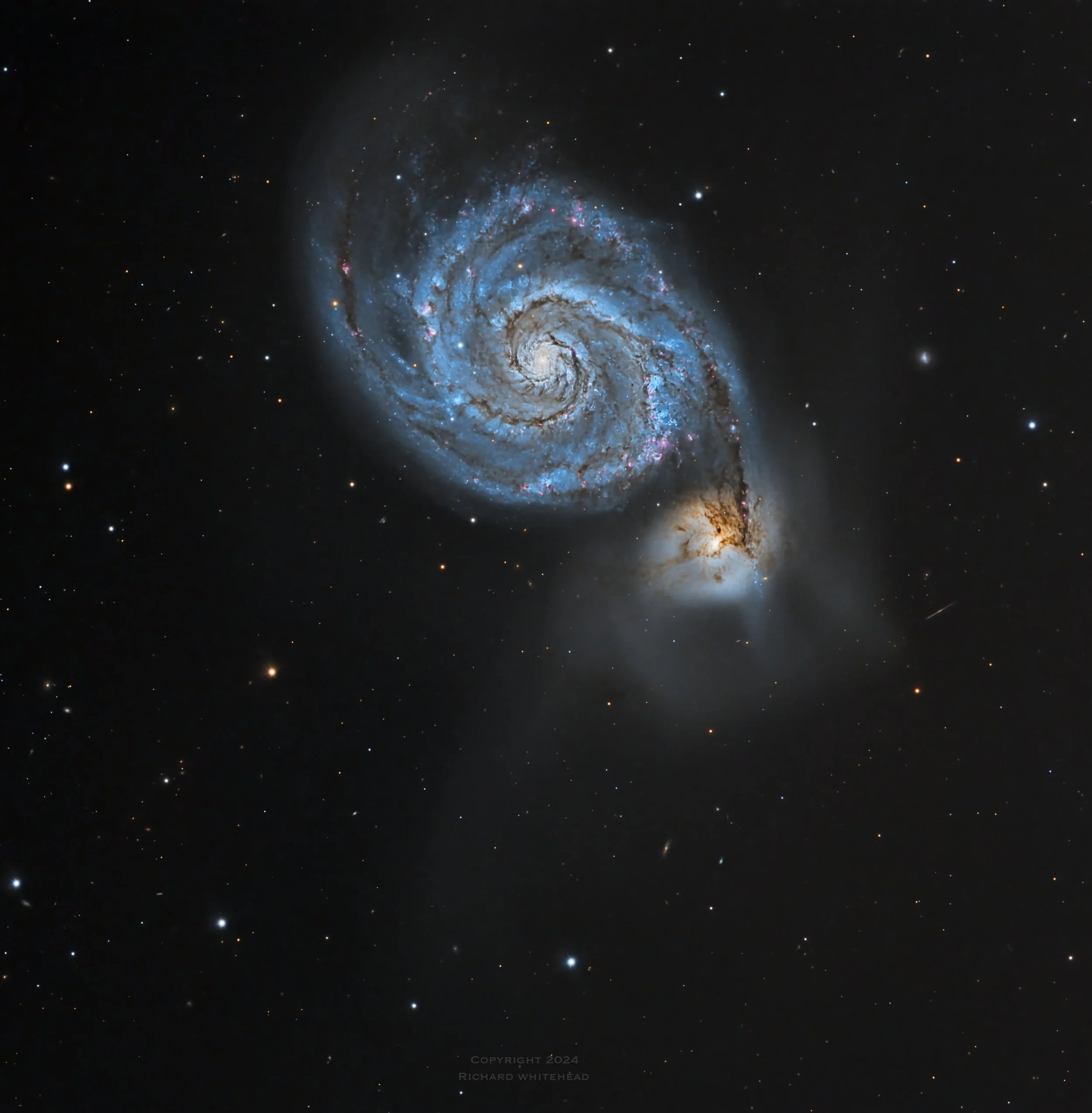
M51 and distant background Galaxies
The iconic whirlpool galaxy, M51, takes center stage in this stunning astrophotograph, surrounded by a backdrop of distant background galaxies. Located approximately 23 million light-years away in the constellation Canes Venatici, M51 showcases its spiral arms adorned with bright knots of star formation and intricate dust lanes. Its gravitational influence is evident as it interacts with smaller companion galaxies, creating tidal tails and triggering bursts of new stellar activity.
Amidst the serene expanse of space, the faint glimmers of distant background galaxies add depth to the cosmic tapestry. Each speck of light represents a distant island universe, billions of light-years away from our own Milky Way galaxy. Together, they form a breathtaking vista of celestial splendor, inviting viewers to contemplate the vastness of the cosmos and the interconnectedness of galaxies across the universe.
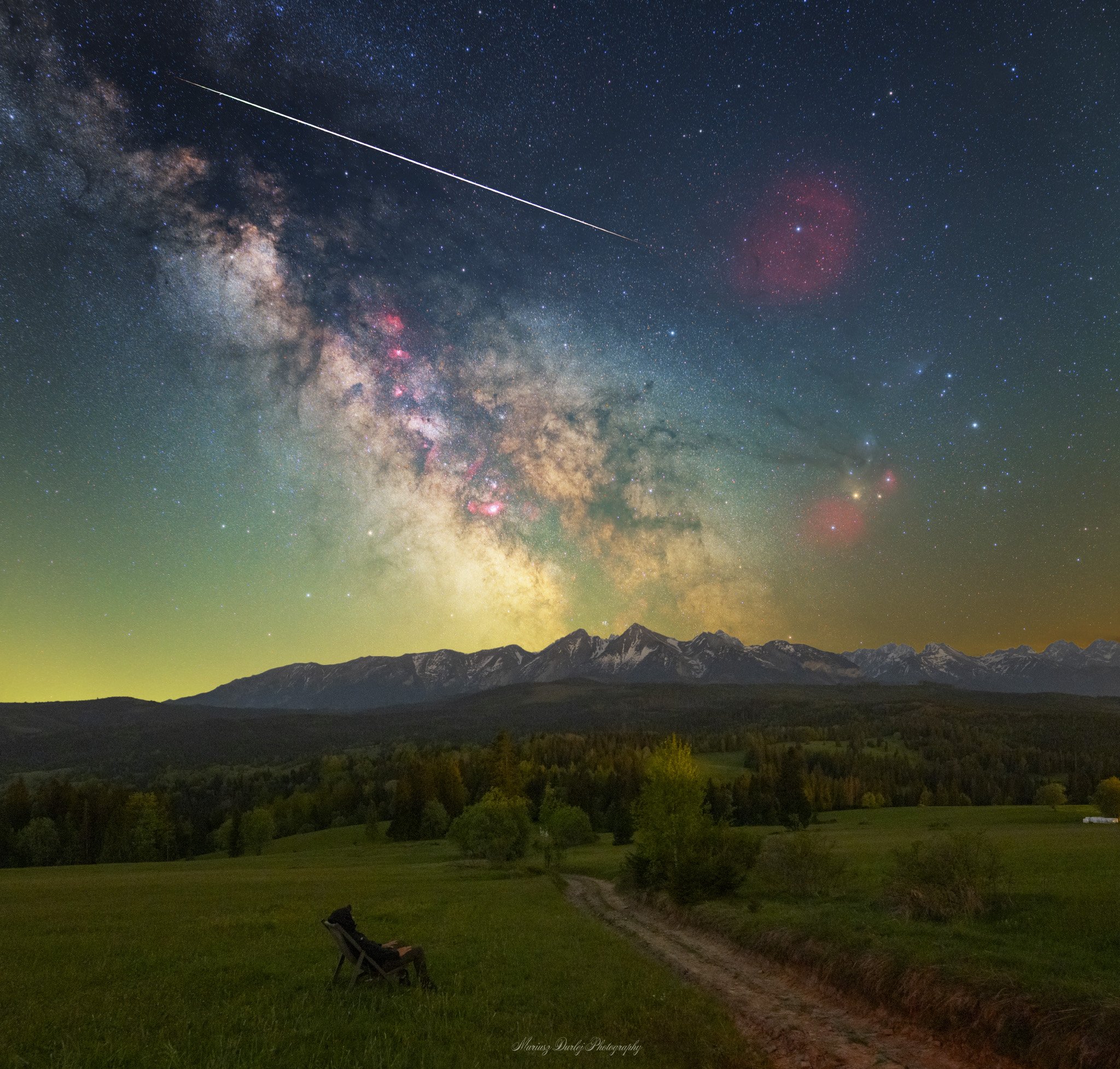
Fireball over the Bielskie Tatra Mountains
A spectacular fireball streaks across the night sky above the Bielskie Tatra Mountains, leaving a trail of brilliance in its wake. This captivating scene captures the fleeting yet mesmerizing beauty of a meteor as it blazes through Earth's atmosphere. The Bielskie Tatra Mountains provide a dramatic backdrop for this celestial spectacle, their rugged peaks standing in stark contrast to the serene night sky.
As the fireball illuminates the darkness, it serves as a reminder of the dynamic and ever-changing nature of our universe. Meteor showers like this one offer astronomers and enthusiasts alike the opportunity to witness the remnants of cosmic debris interacting with our atmosphere, creating dazzling displays of light. Moments like these inspire wonder and curiosity, encouraging us to gaze skyward and contemplate the mysteries of the cosmos.

The Grand Spiral Galaxy M100 (NGC 4321)
M100, also known as NGC 4321, stands as a majestic example of a grand spiral galaxy, nestled within the constellation Coma Berenices. With its sweeping spiral arms and bright core, M100 exhibits intricate patterns of star formation and stellar activity across its vast expanse. Spanning approximately 107,000 light-years in diameter, M100 ranks among the largest galaxies in the Virgo Cluster, a rich cluster of galaxies located some 55 million light-years away from Earth.
As one of the brightest members of the Virgo Cluster, M100 offers astronomers a wealth of insights into the dynamics of galactic evolution. Its spiral arms are adorned with regions of intense star formation, where massive stars are born from the gravitational collapse of dense molecular clouds. Additionally, M100 harbors a supermassive black hole at its center, whose gravitational influence shapes the galaxy's structure and influences its surrounding environment. By studying galaxies like M100, astronomers gain valuable knowledge about the processes driving the formation and evolution of galaxies throughout the universe.

Badwater Salt Flats Milky Way reflection
The Badwater Basin in Death Valley National Park, California, is renowned for its stunning salt flats, which become a mesmerizing canvas under the starry night sky. In this captivating image, the Milky Way casts its radiant glow over the vast expanse of the salt flats, creating a mirror-like reflection on the shimmering surface below.
As one of the lowest points in North America, the Badwater Basin offers an ideal vantage point for observing the Milky Way's celestial spectacle. The reflection of the Milky Way in the shallow pools of water left behind by occasional rain showers adds an ethereal quality to the scene, enhancing the otherworldly beauty of the landscape. This striking image serves as a reminder of the extraordinary wonders that can be found in the natural world, inviting viewers to marvel at the beauty of the cosmos and the Earth's own remarkable features.

M13 Hercules' Diamonds
M13, also known as the Great Globular Cluster in Hercules, is one of the most remarkable objects in the northern sky. Situated in the constellation Hercules, this globular cluster is a densely packed sphere of hundreds of thousands of stars held together by gravity. Its compact core shines brilliantly, while its outer regions extend in a vast halo of fainter stars.
Located approximately 22,200 light-years away from Earth, M13 is one of the brightest and largest globular clusters visible from the Northern Hemisphere. Its age is estimated to be around 12 to 13 billion years old, making it one of the oldest known objects in the Milky Way galaxy. Studying M13 provides astronomers with valuable insights into the formation and evolution of globular clusters, offering a window into the early history of our galaxy.
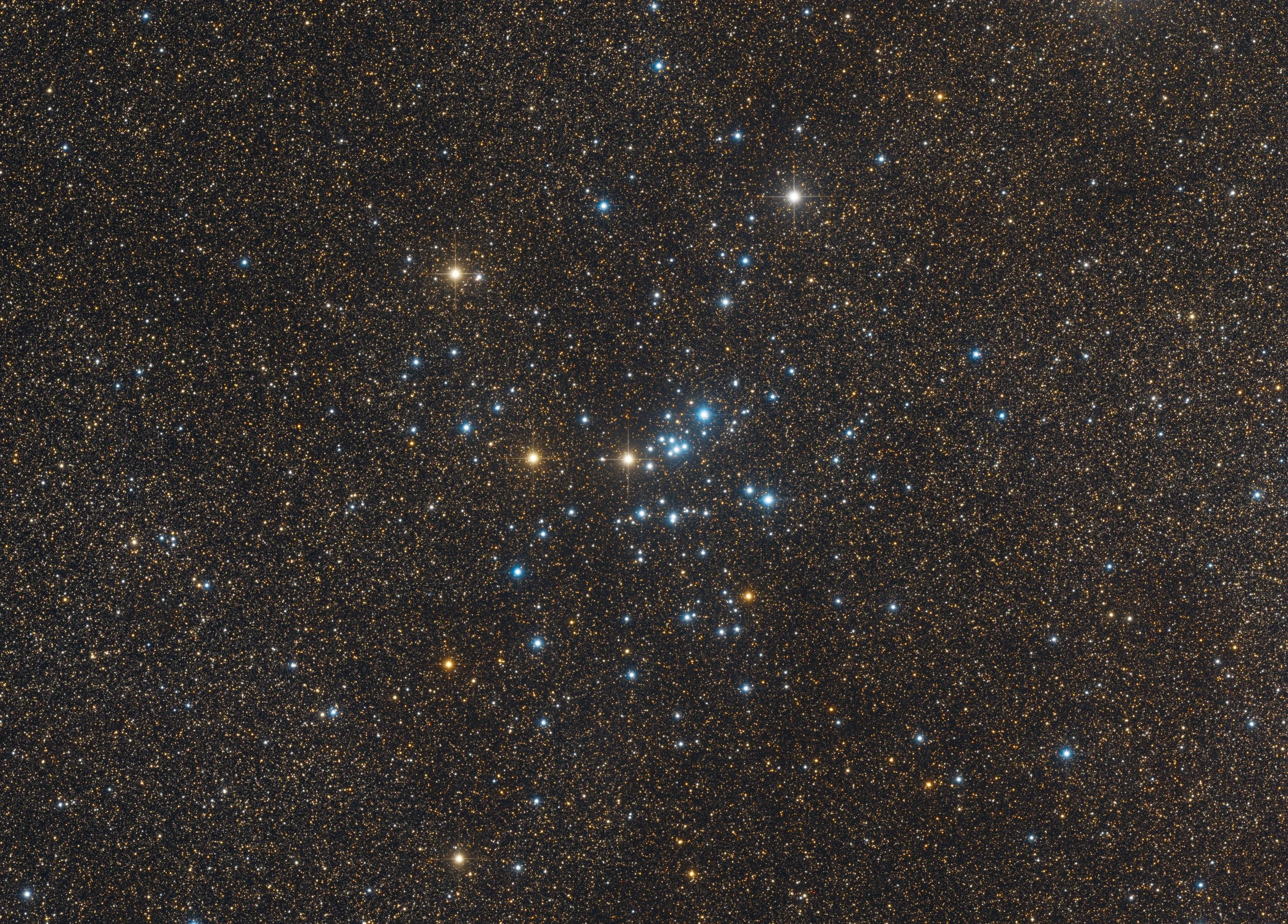
M 25 - bright and colorful stars in front of a sea of stars
M25, also known as the IC 4725 open cluster, is a dazzling assembly of stars situated in the constellation Sagittarius. This cluster shines brightly against the backdrop of the Milky Way, appearing like a jewel in the night sky. Comprising hundreds of stars, M25 presents a breathtaking display of stellar diversity, with stars of various colors and magnitudes dotting its celestial canvas.
The cluster's proximity to the galactic plane makes it immersed in a sea of stars, enhancing its visual appeal and creating a mesmerizing tapestry of light. With its rich concentration of stars and intricate patterns, M25 offers astronomers and stargazers alike a captivating glimpse into the beauty and complexity of our galaxy.
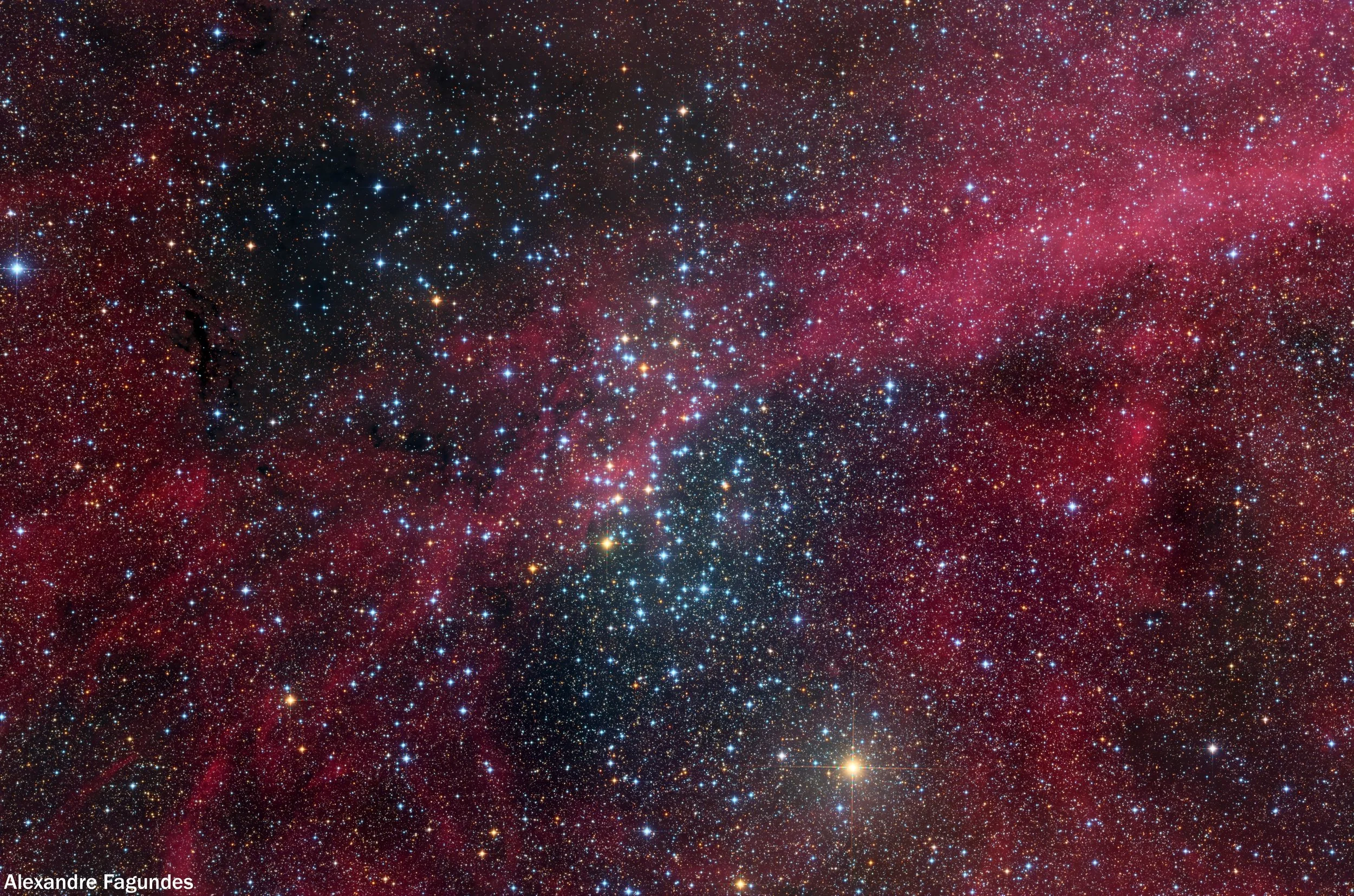
Wishing Well Cluster (NGC 3532)
Discover the Wishing Well Cluster, also known as NGC 3532, a dazzling open star cluster located in the constellation Carina. This celestial gem is situated approximately 1,300 light-years away from Earth, nestled within the rich star fields of the southern sky.
NGC 3532 earned its charming moniker due to its resemblance to a well filled with stars, evoking a sense of wonder and imagination. With an estimated age of around 300 million years, this cluster boasts a diverse population of stars, ranging from hot, young blue stars to cooler, older yellow and red giants. Its radiant glow and stellar diversity make NGC 3532 a captivating sight for stargazers and astronomers alike, offering a glimpse into the vibrant tapestry of the cosmos.
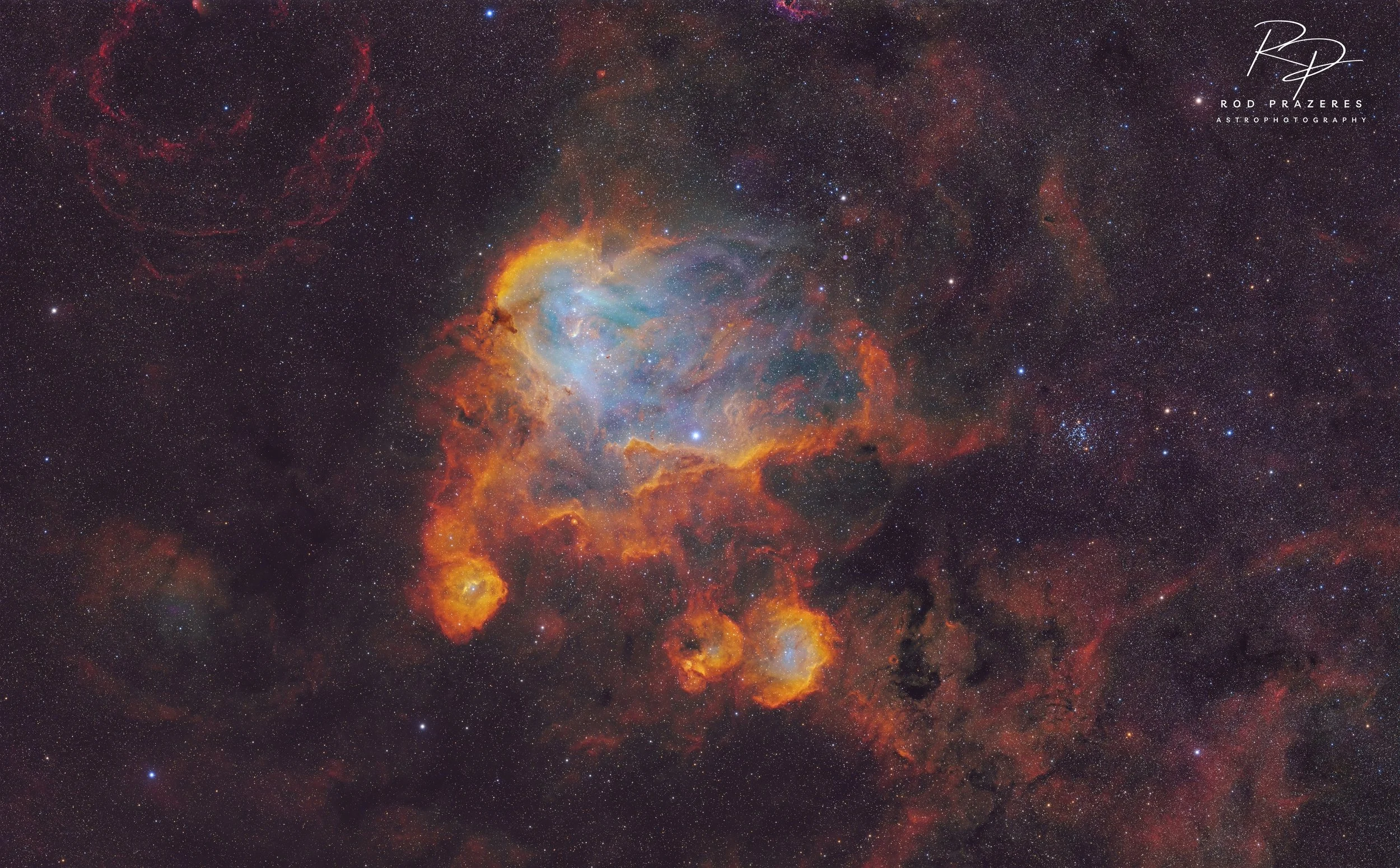
"Radiant Canopy": The Lustrous Realms of the Running Chicken Nebula
The Running Chicken Nebula, formally known as IC 2944, is a star-forming region located in the constellation Centaurus. Resembling a chicken running through space, this striking nebula is a vibrant tapestry of gas and dust, illuminated by the intense radiation of young, hot stars nestled within its midst. Stretching across approximately 100 light-years, IC 2944 is part of a larger complex of star-forming regions in the Centaurus OB association.
This captivating nebula is a prime example of the dynamic processes shaping our universe, where stellar winds and radiation from massive stars sculpt the surrounding gas clouds, giving rise to intricate structures and fostering the birth of new stars. Its distinct appearance has earned it a place among the most iconic and visually stunning objects in the southern sky, captivating astronomers and stargazers alike with its celestial charm.
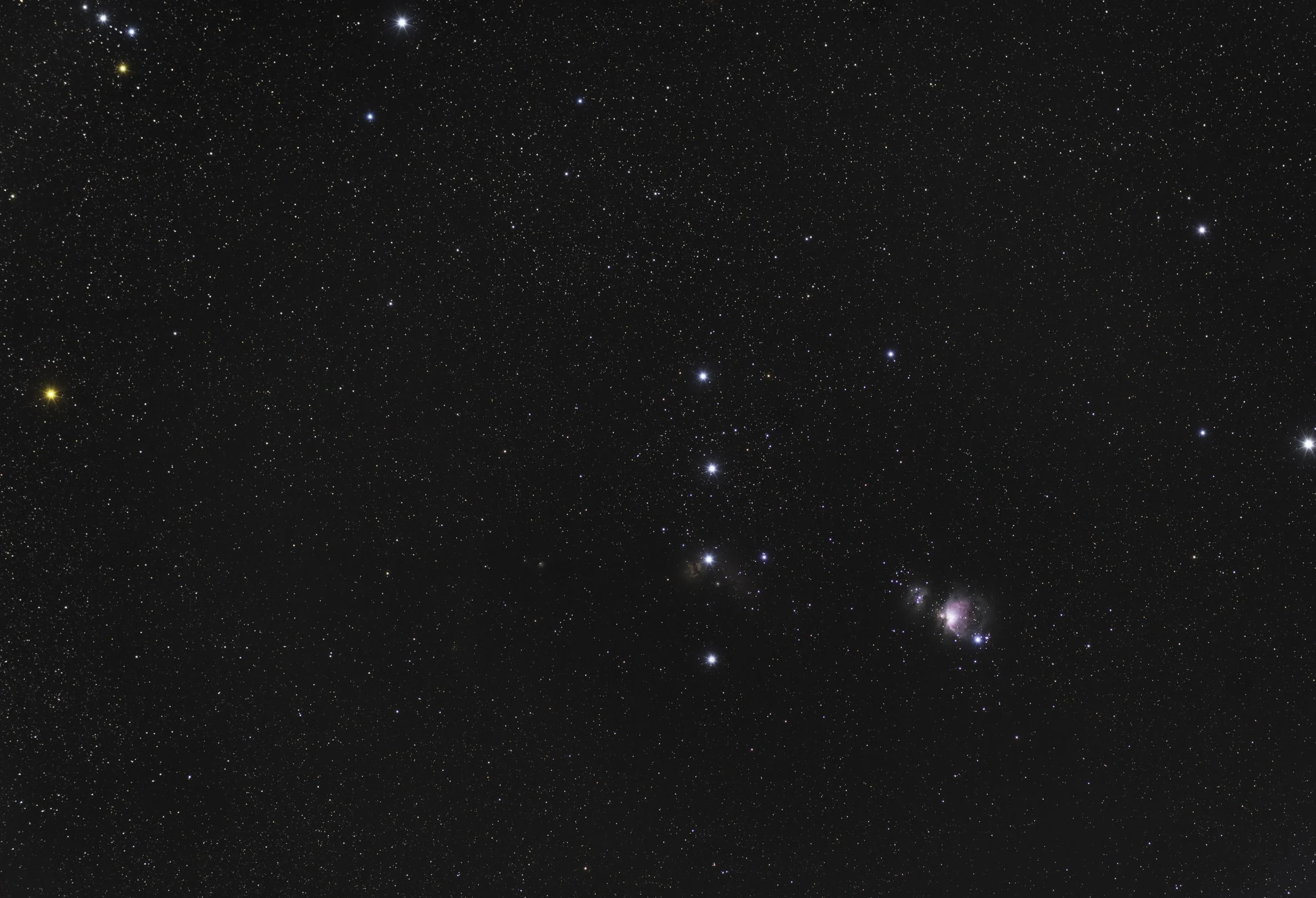
Orion Delta
Armature Astronomers have made an astonishing discovery in the Orion constellation. After minutes of careful observation, a fourth star has been detected within Orion's famous belt, joining the familiar trio of bright stars. This newfound addition has sent shockwaves through the astronomical community, challenging our understanding of stellar formation and constellation dynamics.

ngc 4565
Meet NGC 4565, an impressive galaxy residing in the constellation Coma Berenices, approximately 42 million light-years away from Earth. This magnificent spiral galaxy is known for its striking edge-on orientation, resembling a cosmic needle piercing through the fabric of space.
NGC 4565 showcases a prominent dust lane that runs along its equatorial plane, creating a dramatic silhouette against the backdrop of the cosmos. Its elongated shape and intricate structure make it a favorite target for amateur and professional astronomers alike. With its distinct appearance and immense size, NGC 4565 stands as a testament to the grandeur and complexity of the universe.

THE TOBY JUG NEBULA IC2220
Discover the enigmatic Toby Jug Nebula, also known as IC 2220, a captivating reflection nebula nestled within the cosmos. Named for its striking resemblance to an old English drinking vessel, this celestial gem offers a fascinating spectacle in the night sky.
IC 2220 is illuminated by the red giant star HD 65750, which lies within its confines. The nebula's distinctive orange hue sets it apart from other reflection nebulae, adding to its allure. Located amidst the stellar tapestry of the southern skies, IC 2220 stands as a testament to the intricate interplay of light and matter in the cosmos.
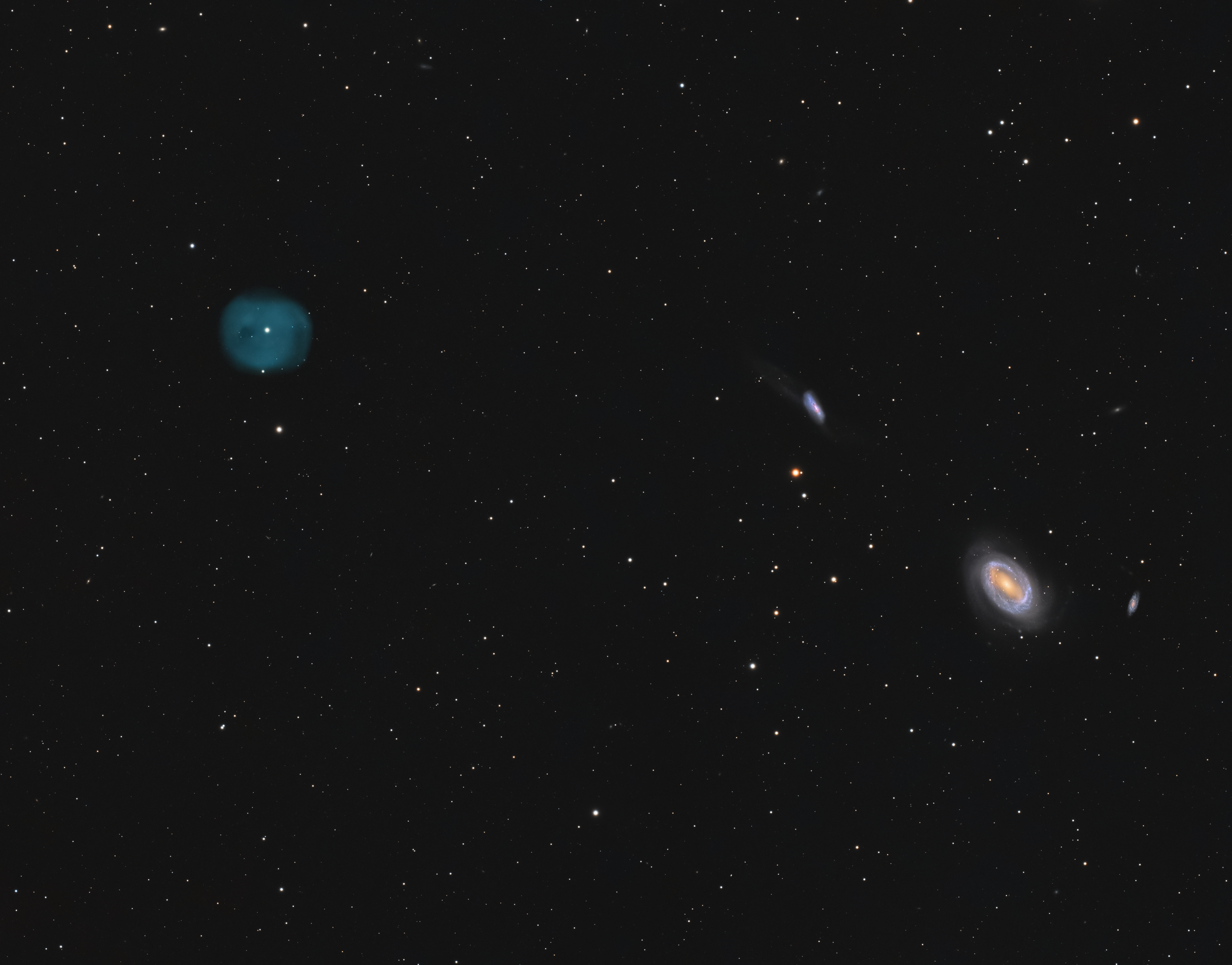
LoTr 5 to NGC 4725 - A Two Panel Mosaic
ourney through the celestial wonders from LoTr 5 to NGC 4725, traversing a vast expanse of the cosmos captured in a captivating two-panel mosaic. Delve into the intricate details of distant galaxies, star clusters, and nebulae that adorn the cosmic landscape.
In this expansive mosaic, LoTr 5 and NGC 4725 emerge as focal points of cosmic beauty. LoTr 5, a lesser-known object, shares its celestial space with NGC 4725, a magnificent spiral galaxy. Each panel reveals a unique glimpse into the mysteries of the universe, inviting viewers to contemplate the vastness and complexity of the cosmos.
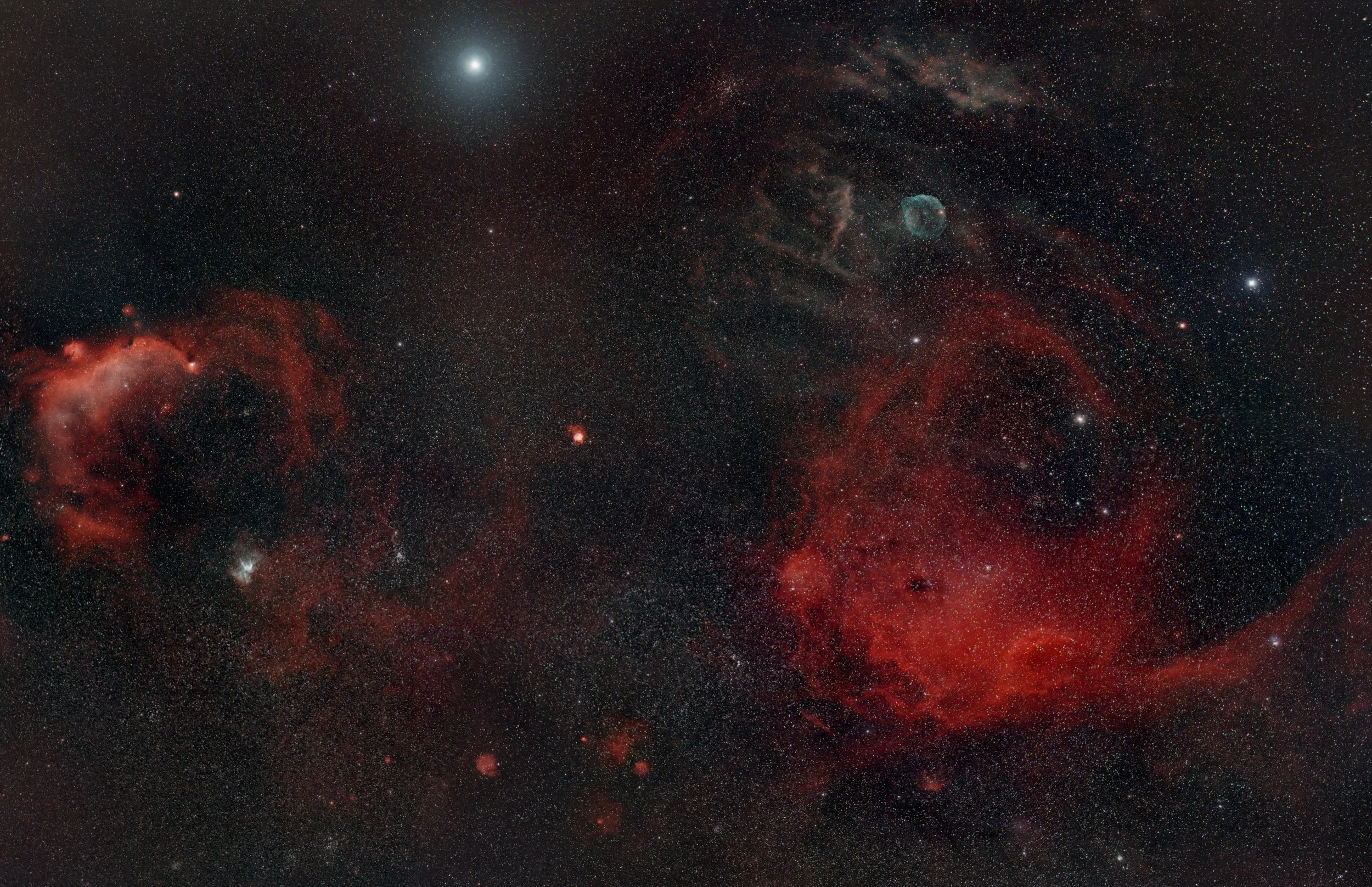
Sirius and surrounding
Spanning the expansive canvas of the night sky, this wide-field image captures the grandeur of the Canis Major constellation in all its celestial splendor. From the dazzling brilliance of Sirius, the brightest star in the night sky, to the intricate beauty of the Dolphin Head nebula, Thor's Helmet, and the Seagull Nebula, the scene is a breathtaking tapestry of cosmic wonders.
In this sweeping panorama, the celestial landscape unfolds with an array of celestial objects, each telling its own story of stellar evolution and cosmic phenomena. Against the backdrop of the cosmos, the constellation of Canis Major reveals its treasures, inviting observers to gaze upon the vastness of space and marvel at the mysteries that lie beyond.

Star Trails at Pangong, Lake
In a mesmerizing display of celestial motion, star trails adorn the night sky over Pangong Lake, casting their radiant arcs against the tranquil waters below. Situated amidst the rugged terrain of the Himalayas, Pangong Lake serves as a pristine canvas for capturing the timeless dance of the cosmos.
The concentric trails of stars, painted by Earth's rotation, weave a tapestry of light that reflects the eternal rhythm of the universe. Against the backdrop of Pangong's serene waters, this celestial spectacle evokes a profound sense of wonder and awe, inviting contemplation of the boundless mysteries that lie beyond the confines of our world.
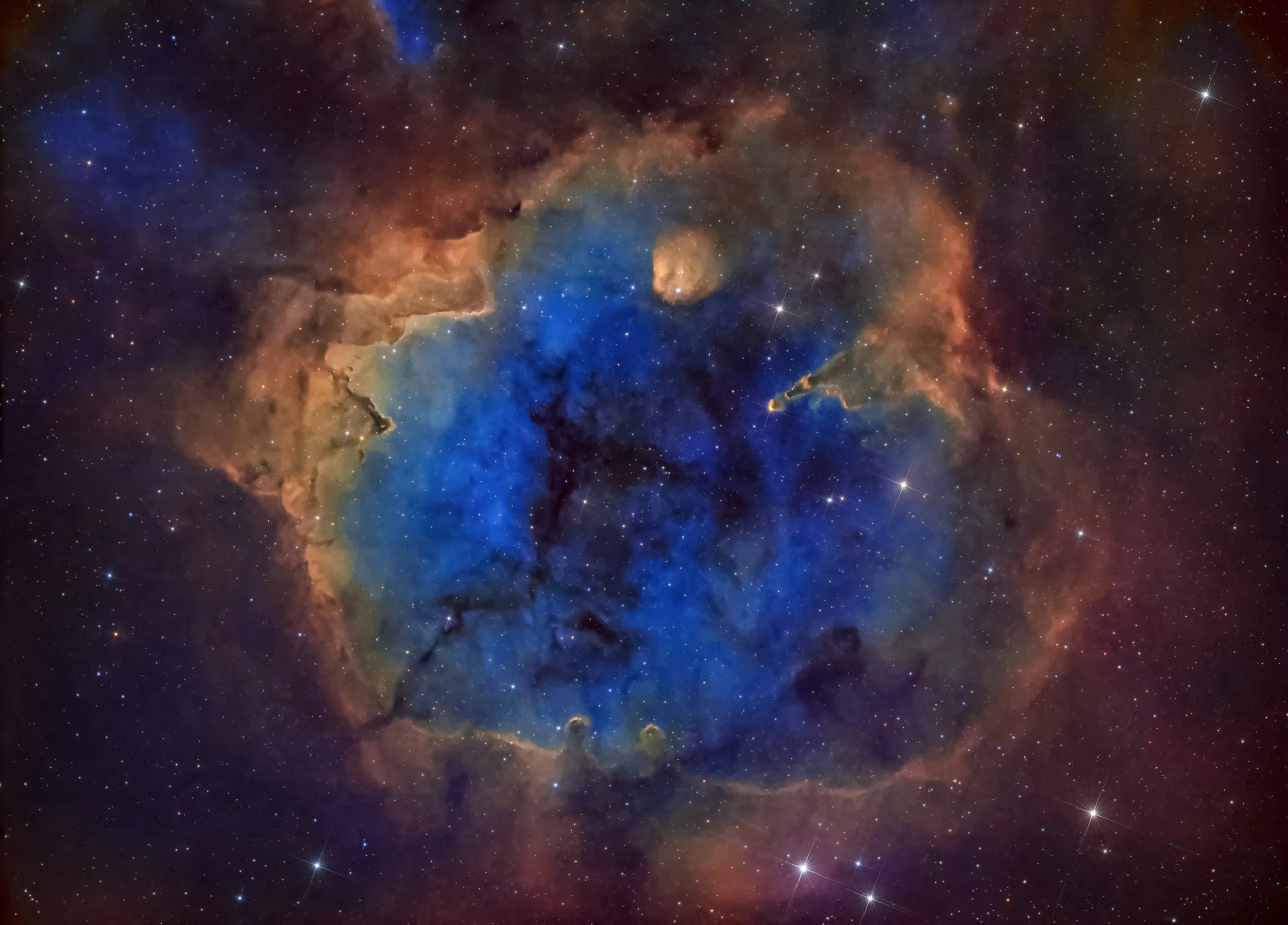
SH2-284 in SHO with RGB stars
Captured in a mesmerizing SHO palette with vibrant RGB stars, SH2-284 stands as a testament to the dynamic interplay of cosmic forces within our galaxy. This emission nebula, also known as the Wolf-Rayet nebula, showcases intense regions of ionized hydrogen, sulfur, and oxygen, painted against the backdrop of a rich stellar tapestry.
Enveloped in the intricate tendrils of ionized gas, SH2-284 harbors regions of stellar birth and death, offering astronomers a window into the tumultuous processes shaping the cosmos. The juxtaposition of the nebula's luminous hues with the brilliance of surrounding stars provides a captivating visual narrative of the cosmic drama unfolding in the depths of space, inviting contemplation of the universe's awe-inspiring complexity.
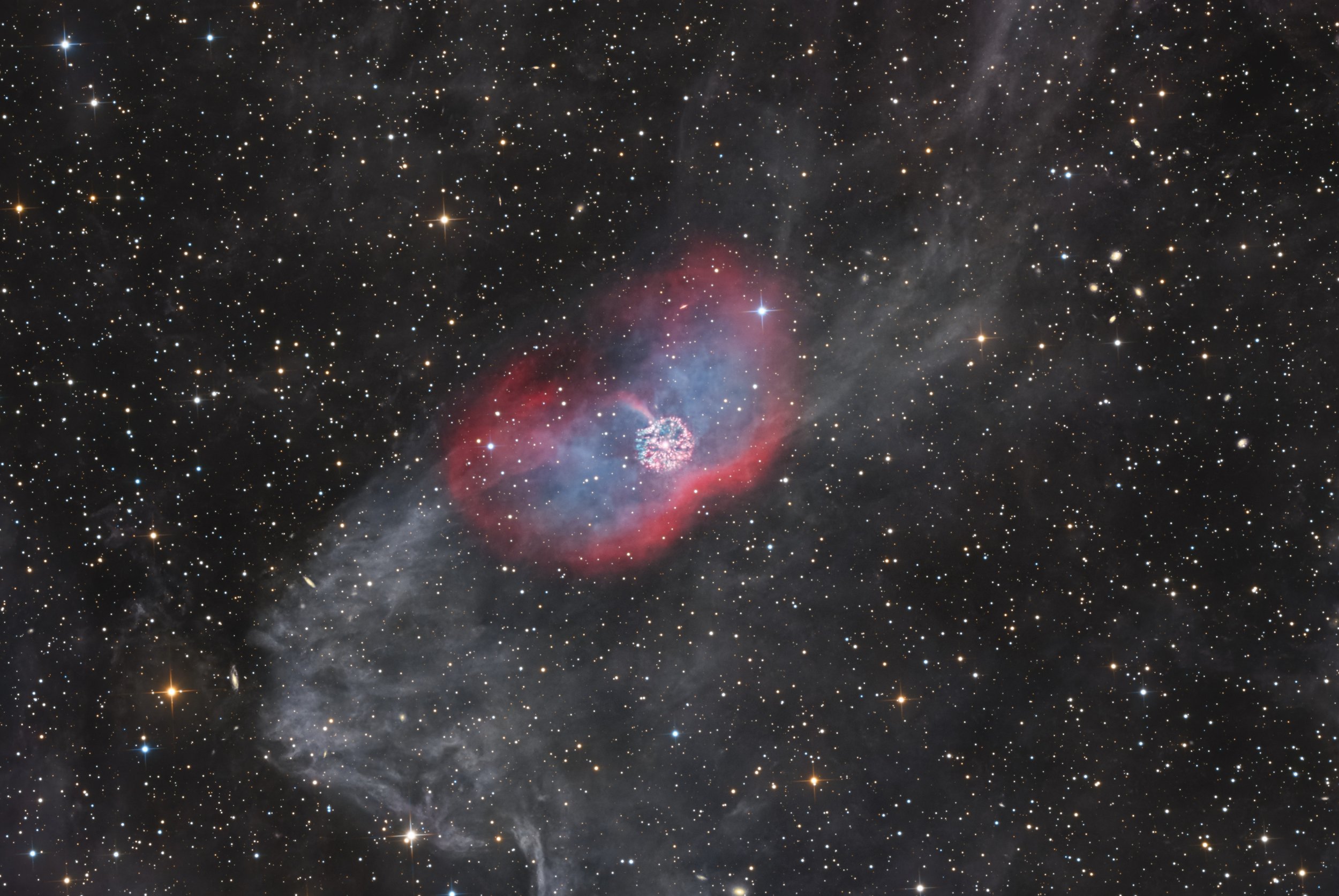
A deep dive into GK Persei's hidden planetary nebulae
GK Persei, also known as Nova Persei 1901, is a cataclysmic variable star system located in the constellation Perseus. This celestial object is famous for its historical outburst in 1901 when it briefly became one of the brightest stars in the sky. The remnants of this event include a fascinating planetary nebula, shrouded in the surrounding interstellar material.
This remarkable image of GK Persei's hidden planetary nebula showcases the intricate details of its structure, achieved through an unprecedented integration time of 265 hours. This extensive observation period, the longest ever conducted on GK Persei, has unveiled the subtle nuances of the nebula's morphology, highlighting intricate filaments and regions of ionized gas.
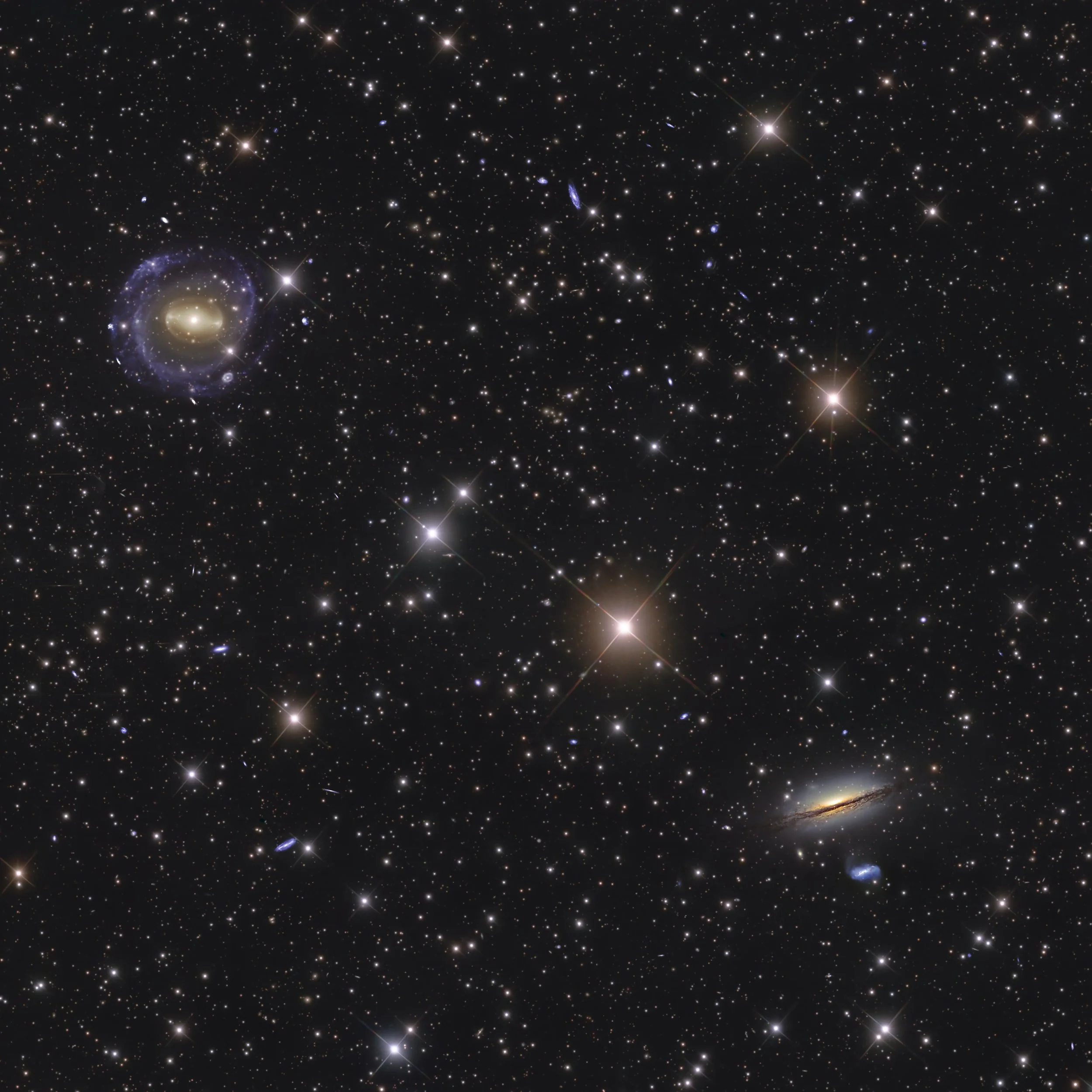
NGC 5078 & NGC 5101
NGC 5078 and NGC 5101 are two captivating galaxies located in the constellation Hydra. NGC 5078 is an edge-on spiral galaxy, characterized by its flattened disk structure and prominent dust lanes that obscure part of its starlight. It exhibits a bright central bulge surrounded by a diffuse stellar halo, making it an intriguing object for astrophotography and scientific study. NGC 5101, on the other hand, is a barred spiral galaxy with a distinctive central bar structure that extends through its disk. It showcases intricate spiral arms adorned with regions of star formation, adding to its visual allure and scientific significance.
Both galaxies offer astronomers valuable insights into the processes of galaxy formation and evolution. Studying their morphology, stellar populations, and dynamics can provide clues about the underlying mechanisms driving the formation of stars and the assembly of galaxies over cosmic time. Additionally, the proximity of these galaxies allows for detailed observations and analyses, contributing to our broader understanding of the universe's vast tapestry of celestial objects.
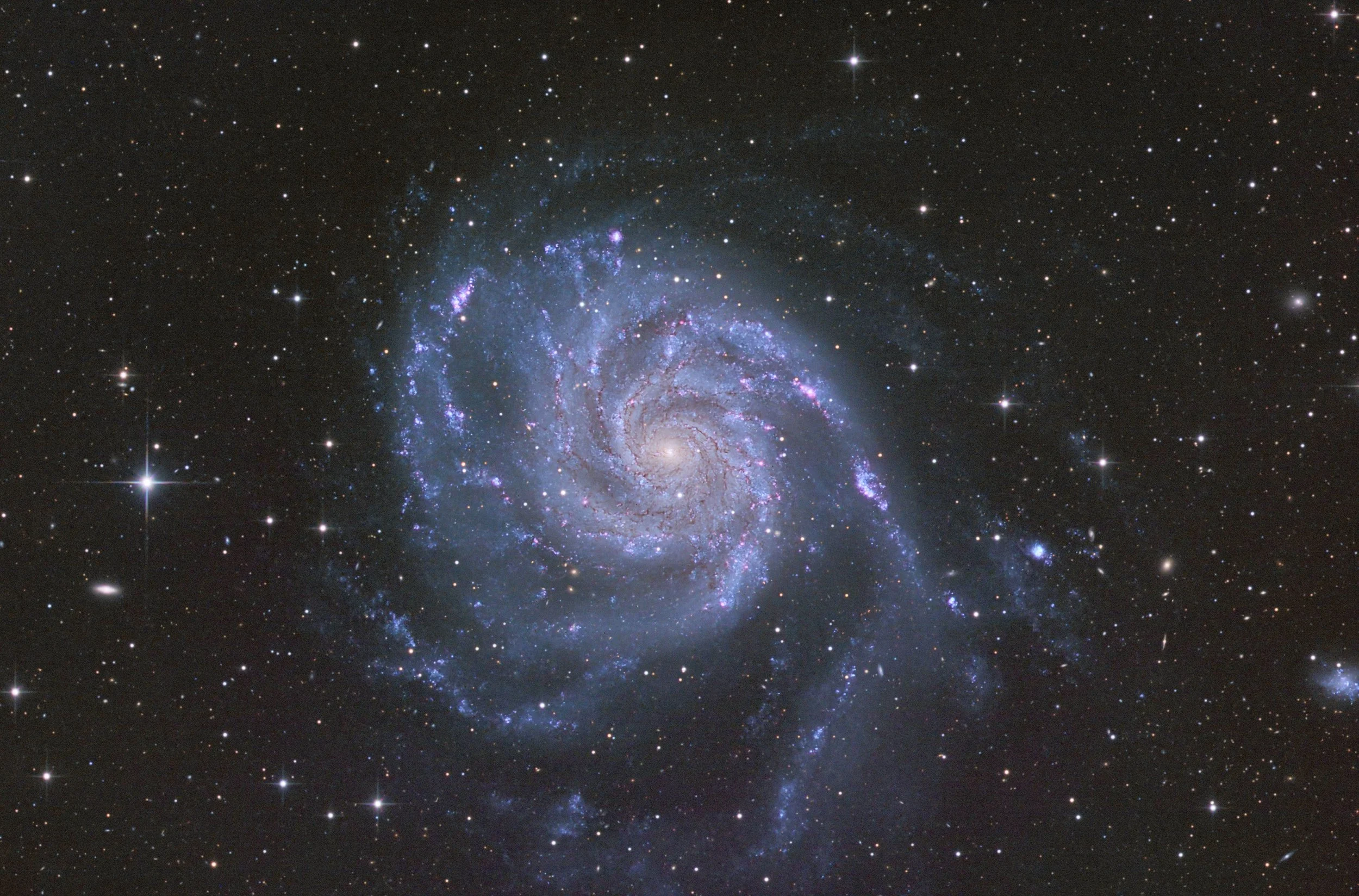
M101
M101, also known as the Pinwheel Galaxy, is a majestic spiral galaxy located in the constellation Ursa Major. Situated about 21 million light-years away from Earth, M101 is one of the largest and brightest spiral galaxies in the sky, spanning approximately 170,000 light-years in diameter. Its spiral arms are adorned with clusters of young, hot stars, bright nebulae, and dark lanes of interstellar dust, creating a captivating tapestry of celestial beauty.
This stunning galaxy has been the subject of numerous astronomical studies due to its proximity and striking appearance. It hosts a high rate of supernova activity, making it an excellent laboratory for studying stellar evolution and galaxy dynamics. M101 offers astronomers valuable insights into the formation and evolution of spiral galaxies, enriching our understanding of the cosmos.
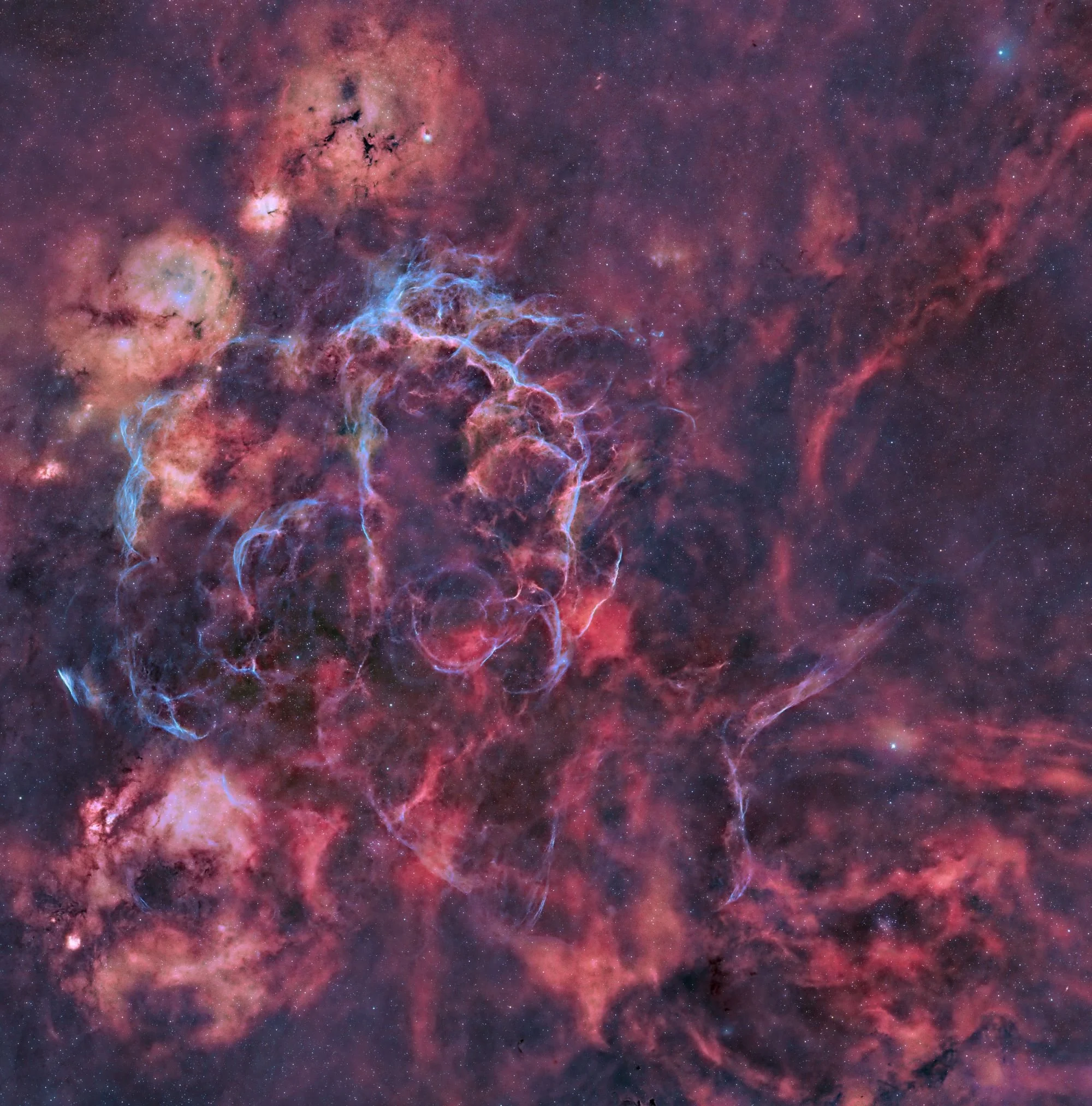
Vela (XYZ) 12 tiles
Embark on a scientific exploration of Vela, a sprawling constellation in the southern sky, with this impressive 12-tile mosaic capturing its celestial wonders. Vela, Latin for "the sails," is rich in astronomical treasures, including stellar nurseries, supernova remnants, and intricate star clusters.
This mosaic offers a panoramic view of Vela's diverse cosmic landscape, showcasing its vibrant tapestry of gas clouds, young stars, and remnants of stellar explosions. Each tile in the mosaic reveals a unique aspect of Vela's celestial splendor, providing astronomers with valuable insights into the processes shaping the evolution of stars and galaxies.
From the delicate filaments of the Vela Supernova Remnant to the glittering jewels of star clusters nestled within its embrace, this mosaic offers a window into the rich tapestry of cosmic phenomena that populate the constellation of Vela. Through meticulous observation and data processing, astronomers unravel the mysteries of Vela, shedding light on the intricate interplay of forces that govern the universe.
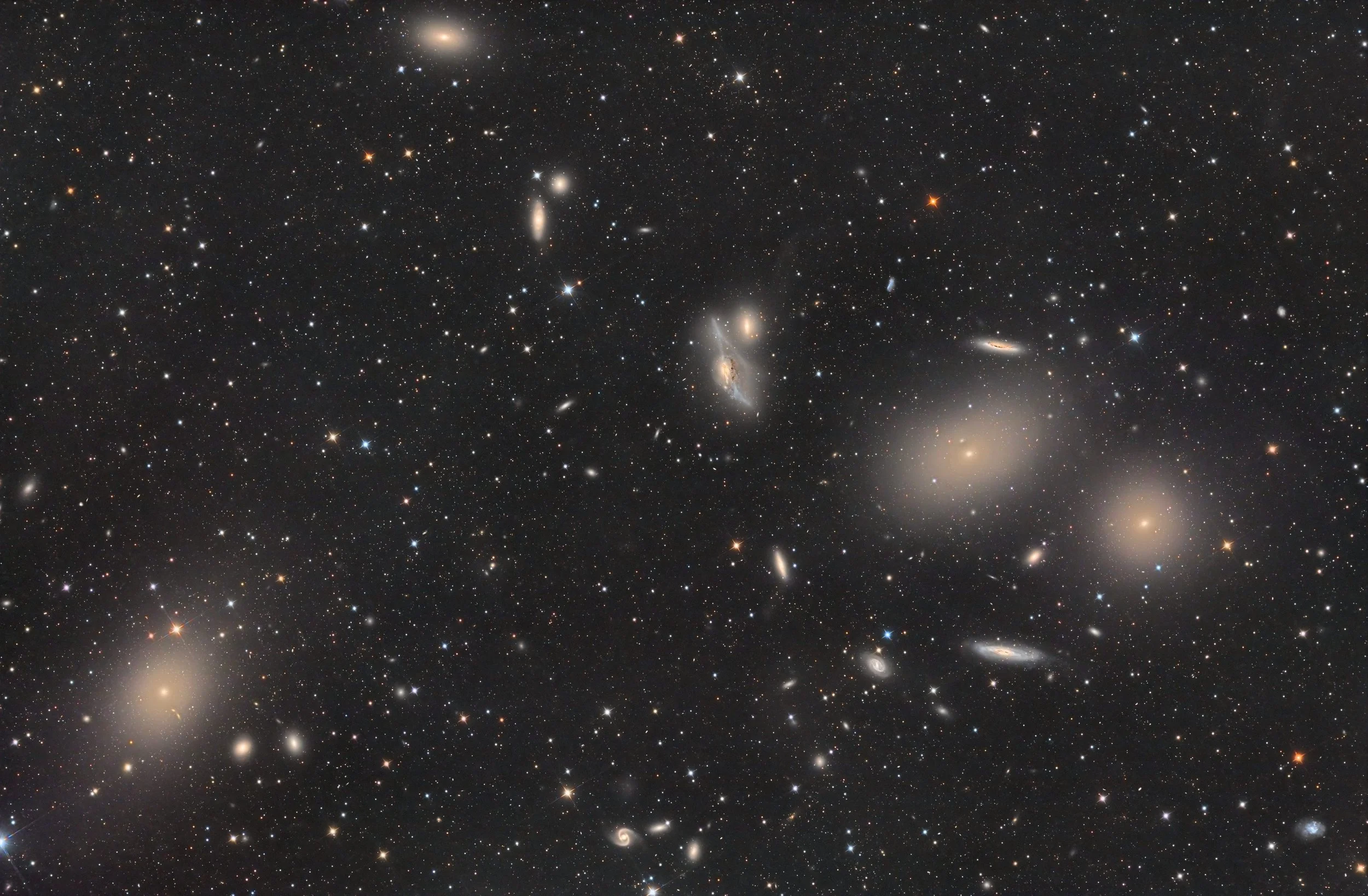
The Markarian Chain
The Markarian Chain, a striking arrangement of galaxies, stretches across the Virgo constellation, forming a captivating celestial chain. This cosmic spectacle is a visual treat for astronomers and stargazers alike, showcasing a diverse collection of galaxies bound together by gravity.
At the heart of the Markarian Chain lies the Virgo Cluster, one of the richest galaxy clusters in the nearby universe. This cluster hosts hundreds of galaxies, ranging from massive ellipticals to intricate spirals and irregulars. The Markarian Chain itself is composed of numerous interacting and merging galaxies, their gravitational dance shaping the evolution of the cosmic landscape.