

AAPOD2 Image Archives

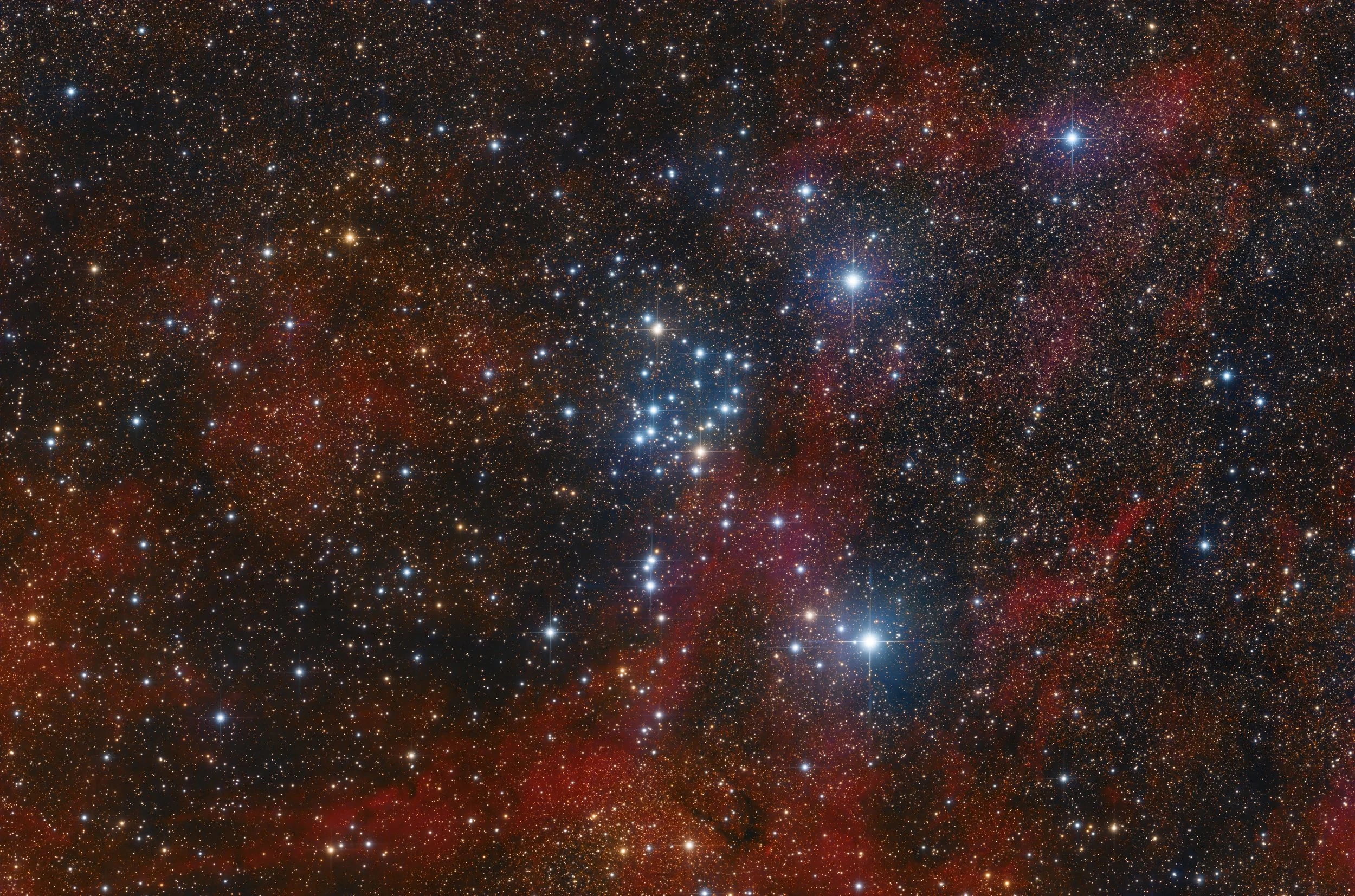
Open clusters in a colorful environment (NGC 6281)
NGC 6281 is an open cluster located in the constellation Scorpius. This cluster is a rich and bright group of stars, easily visible with small telescopes and even binoculars under good conditions. NGC 6281 lies approximately 5,500 light-years from Earth and has an apparent magnitude of 5.4, making it one of the more prominent open clusters in the night sky.
The cluster consists of a diverse array of stars, with many different magnitudes and colors, adding to its visual appeal. Observing NGC 6281, one can appreciate the beauty and complexity of star formation and the dynamics of stellar clusters. The cluster's relatively dense population of stars provides an excellent opportunity for both amateur and professional astronomers to study stellar evolution and the properties of young star clusters.
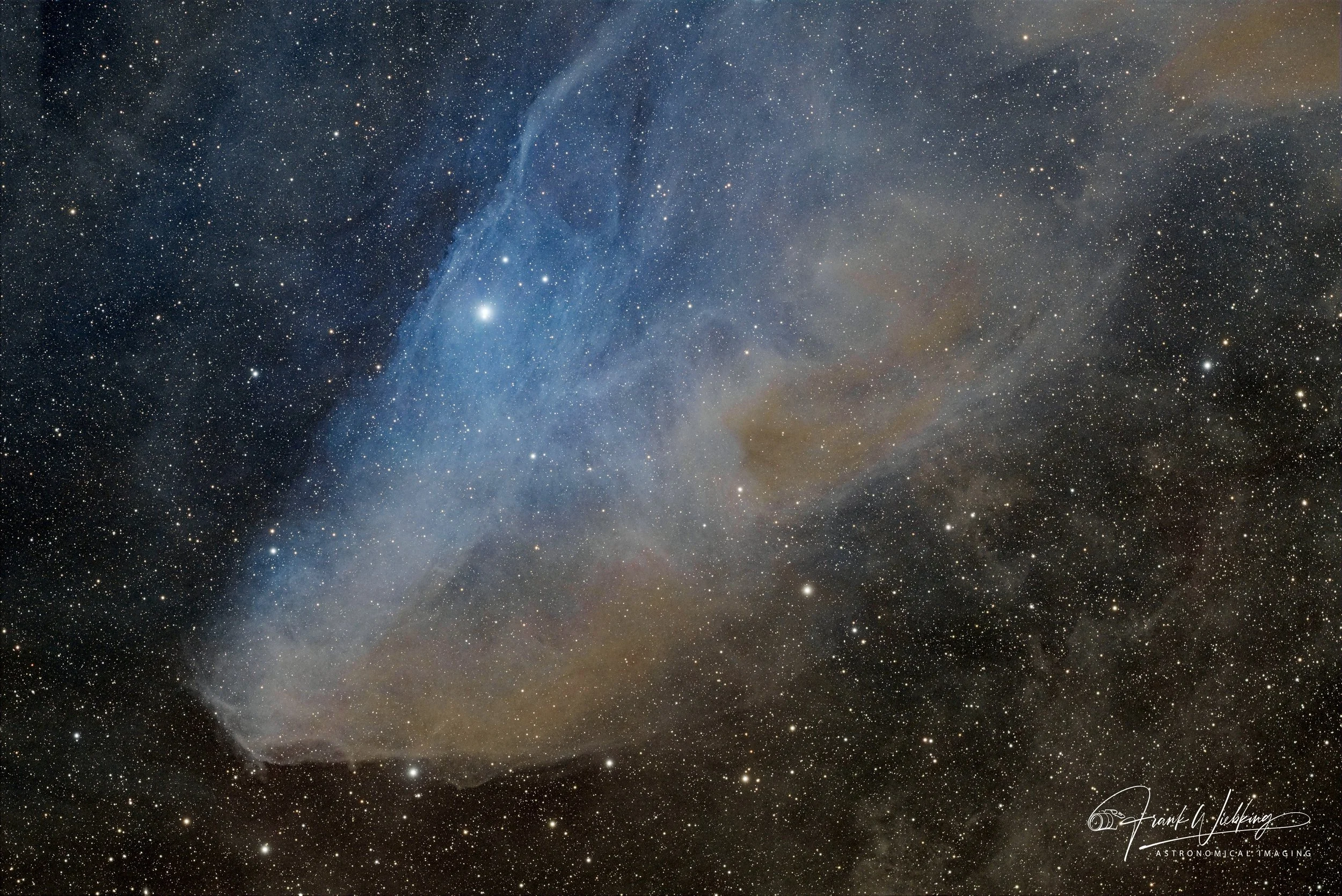
IC 4592 Blue Horsehead Nebula
IC 4592, commonly known as the Blue Horsehead Nebula, is a reflection nebula located in the constellation Scorpius. The nebula's blue coloration is primarily due to the light from the nearby star Nu Scorpii reflecting off the dust particles within the nebula. This celestial feature is part of a larger complex of dark and reflection nebulae, making it a fascinating target for astrophotographers and astronomers alike.
The Blue Horsehead Nebula is situated approximately 400 light-years from Earth. Its intricate structures and the striking contrast between the blue reflection nebula and the surrounding dark nebulae create a visually stunning image. Observing and photographing IC 4592 requires dark skies and good equipment, but the result is a breathtaking view of this beautiful cosmic region.

M51 widefield
Messier 51, commonly known as the Whirlpool Galaxy, is a spiral galaxy located in the constellation Canes Venatici, at a distance of 31 million light-years. It was discovered by French astronomer Charles Messier on October 13, 1773, while observing a comet. Years later, in 1781, Messier's disciple, Pierre Méchain, discovered M51's companion, which they named M51B. M51 Whirlpool Galaxy.
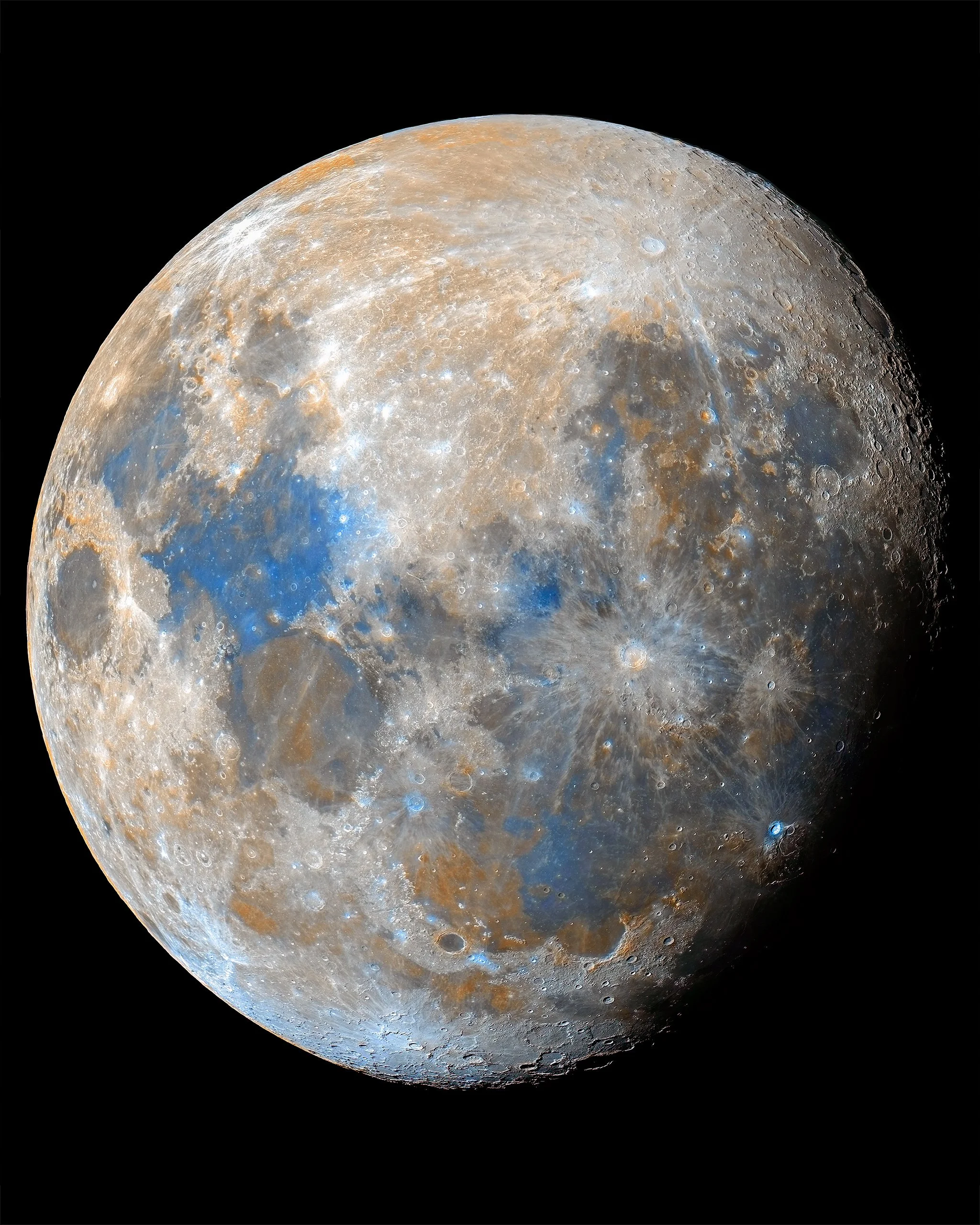
Selenochromatic almost Full Moon
This image presents the Moon in a selenochromatic view, enhancing the colors to better showcase the differences in soil compositions across its surface. By exaggerating the natural hues, this technique highlights variations in mineral content and soil types that are not visible to the naked eye. The dark basaltic plains, known as lunar maria, appear in shades of blue and gray, indicating high levels of titanium and iron.
In contrast, the highlands, which are rich in anorthosite and calcium, show up in brighter colors, often with a reddish or orange tint. This enhanced color view provides valuable insights into the geological history of the Moon, revealing the complex processes that have shaped its surface over billions of years. Through these subtle differences, scientists can better understand the Moon's composition and the impact history of the lunar surface.

Conquest of the Moon - 55 Years
This photo highlights the regions and dates of the six manned landings on the Moon, with special emphasis on the location of the first manned landing carried out by Apollo 11. The historic landing site of Apollo 11, where Neil Armstrong and Buzz Aldrin first set foot on the lunar surface on July 20, 1969, is marked prominently. This site, known as Tranquility Base, remains a symbol of human achievement and exploration.
In addition to Apollo 11, the photo also marks the locations of the subsequent Apollo missions: Apollo 12 at the Ocean of Storms (November 1969), Apollo 14 at the Fra Mauro highlands (February 1971), Apollo 15 at Hadley Rille (July 1971), Apollo 16 at the Descartes Highlands (April 1972), and Apollo 17 at the Taurus-Littrow valley (December 1972). Each landing site is a testament to the advancements in space technology and the bravery of the astronauts who ventured into the unknown.

NGC6604 and Sh2-54 HOO
This breathtaking image showcases NGC 6604 and the Sh2-54 nebula in the HOO (H-alpha, Oxygen III) palette. NGC 6604 is an open cluster situated in the constellation Serpens, home to numerous hot, young stars that illuminate the surrounding nebulosity.
Sh2-54, the associated emission nebula, is a rich tapestry of ionized gas glowing under the intense ultraviolet light from the stars of NGC 6604. The HOO palette brings out the intricate details and contrast within the nebula, highlighting the regions of hydrogen and oxygen emissions. This image not only captures the vibrant beauty of this stellar nursery but also provides insight into the processes of star formation and the dynamic interactions between young stars and their birth clouds.

The Other Witch's Broom 2-Panel Mosaic
This stunning 2-panel mosaic captures the southern part of the supernova remnant G65.3+5.7, also known as "The Other Witch's Broom." The intricate filaments and delicate structures of this remnant are beautifully highlighted in this image.
Supernova remnants like G65.3+5.7 are formed from the explosive death of massive stars, leaving behind these complex and ethereal structures. The wispy tendrils of gas and dust in this image are remnants of the original star's outer layers, now interacting with the surrounding interstellar medium. This mosaic provides a detailed view of the southern section of this vast and intricate cosmic structure, showcasing the beauty and complexity of the aftermath of stellar explosions.

M81-M82. Potential new discovery of stellar tidal tail in M82
This detailed image of the galaxies M81 and M82 reveals a potential new discovery: a faint stellar tidal stream to the left of M82. Captured with a total exposure time of 231 hours, this image showcases the intricate details and interactions within this galaxy pair.
The stellar tidal stream, a faint and newly observed feature, hints at the dynamic and tumultuous past of M82. These streams are often remnants of gravitational interactions and mergers, providing valuable insights into the evolutionary history of galaxies. The long exposure time has allowed for the delicate and faint structures to emerge, making this image a significant contribution to our understanding of these iconic galaxies.

Saturn, Titan & Rhea 16/07/2024 - A magic show in the Sky
This stunning image of Saturn showcases not only the intricate details of the gas giant's rings but also the fascinating dynamics of its moons. You can distinctly see features on Titan, Saturn's largest moon, including some of its surface details. Additionally, the shadow of Rhea is visible transiting across Saturn's disk, adding depth and dimension to the scene.
What makes this image particularly remarkable is the precise moment captured where Titan is transiting within the shadow cast by Saturn's rings. This celestial alignment provides a rare and captivating view, highlighting the intricate dance of Saturn's moons and the complex interplay of light and shadow within this majestic planetary system.
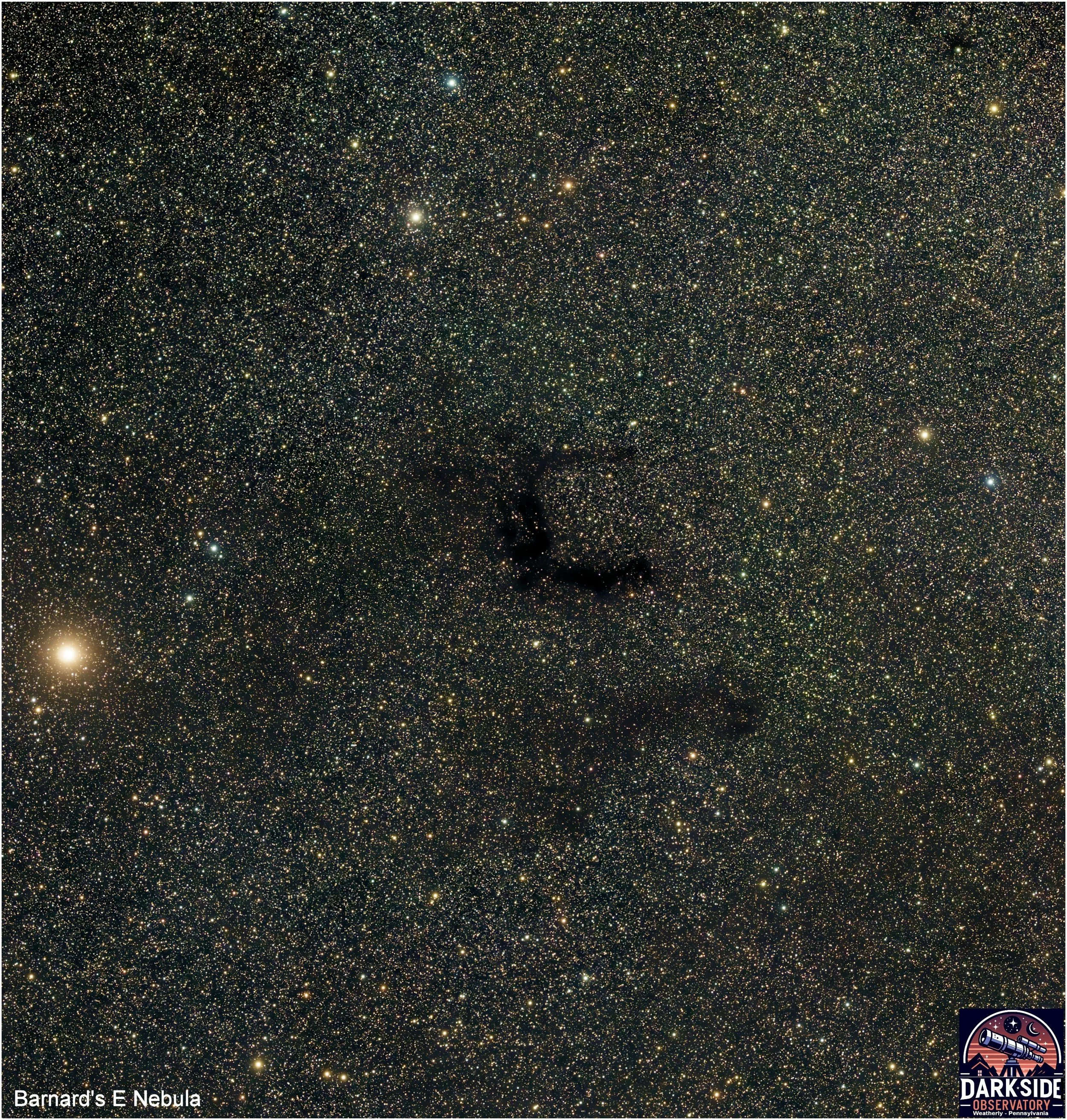
Dark Nebula - Barnard’s E Nebula
Barnard 142 and 143, often referred to as "Barnard's E," are striking examples of dark nebulae located in the constellation Aquila, around 2,000 light-years from Earth. These nebulae, cataloged by the American astronomer E.E. Barnard, appear as dark patches against the dense star field of the Milky Way, obscuring the light from the stars behind them with their thick dust clouds.
The dense star field surrounding Barnard 142 and 143 accentuates the contrast of these dark nebulae, making them prominent features in the night sky. The intricate structures within these nebulae highlight the complex nature of interstellar dust clouds, providing a fascinating study for both amateur and professional astronomers.

Helix Nebula - NGC 7293
The Helix Nebula (NGC 7293), often referred to as the "Eye of God," is a stunning example of a planetary nebula located in the constellation Aquarius. Positioned around 650 light-years from Earth, it is one of the closest and most well-studied planetary nebulae. This image captures the intricate details of the Helix Nebula, showcasing its complex structure formed by the expelled outer layers of a dying star.
The nebula's striking appearance, with its delicate, filamentary structures and vibrant colors, is the result of ionized gas illuminated by the central hot white dwarf. The Helix Nebula offers a glimpse into the future of our own Sun, providing a beautiful yet poignant reminder of the life cycle of stars.

Ptolemy's Cluster in LRGB (M7 or NGC 6475)
Ptolemy's Cluster, also known as M7 or NGC 6475, is a magnificent open cluster located in the constellation Scorpius. This image showcases the cluster in stunning LRGB, highlighting the rich, colorful expanse of stars. The dense star field is truly unbelievable, with countless stars packed closely together, creating a mesmerizing tapestry of light.
Among the myriad stars, the prominent blue stars of Ptolemy's Cluster stand out vividly. These hot, young stars are a defining feature of the cluster, illuminating the surrounding space with their intense brightness. Observing M7 offers a breathtaking view of one of the sky's most beautiful star clusters, a brilliant assembly of stellar youth set against the deep backdrop of the cosmos.
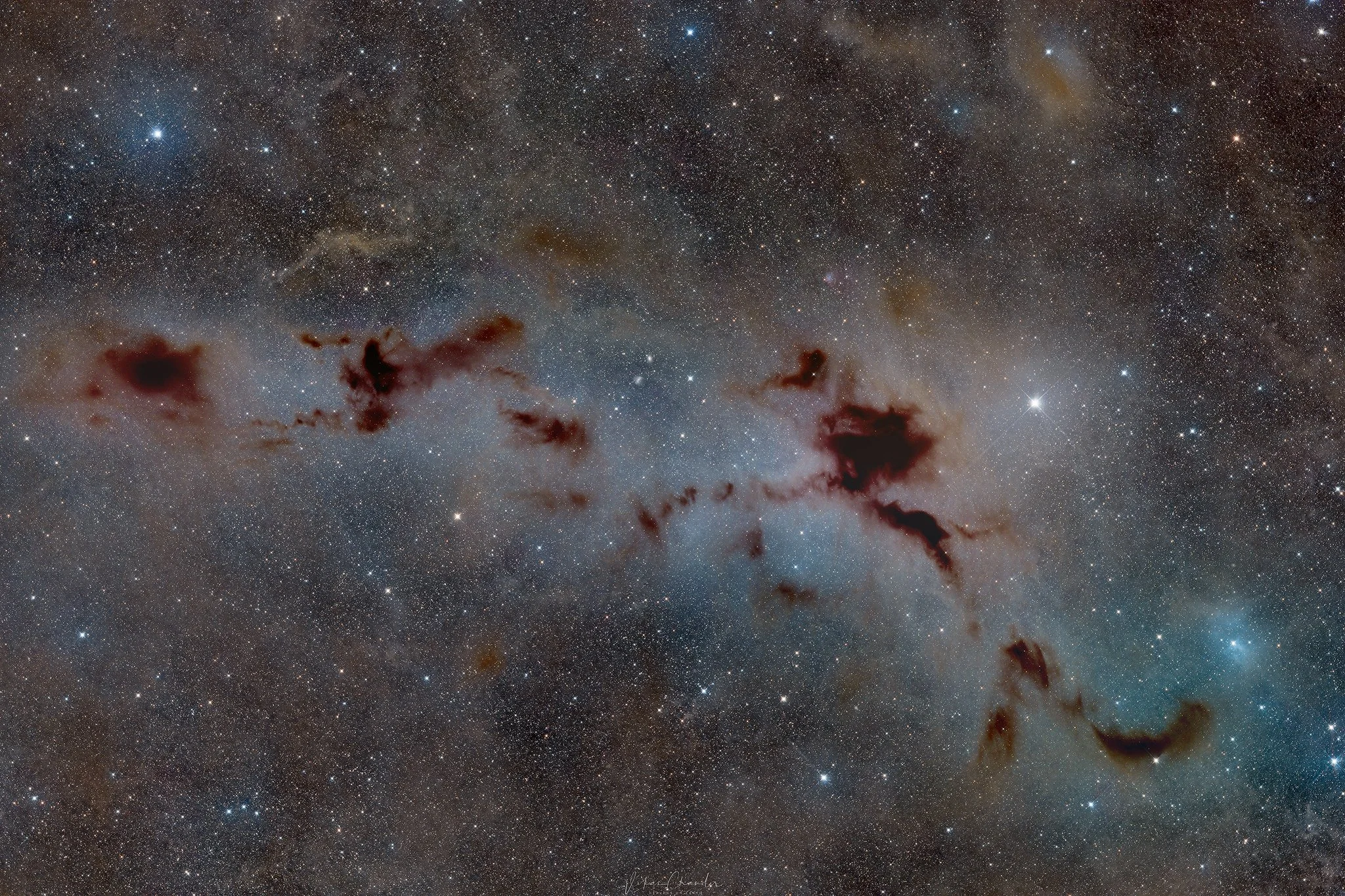
Sl7 Dark Nebula
SL7 is a dark nebula, a region of space so dense with interstellar dust that it obscures the light from stars and other objects behind it. Located in the Milky Way, dark nebulae like SL7 are fascinating to astronomers because they are the birthplaces of stars. These dense molecular clouds provide the raw materials for star formation, with gravity pulling the gas and dust together until nuclear fusion ignites a new star.
In this image, the dense, dark silhouette of SL7 stands out against the backdrop of the Milky Way, blocking the light from more distant stars. The intricate structures and variations in density within the nebula are visible, offering a glimpse into the complex processes at play in these stellar nurseries. Observing and studying dark nebulae like SL7 helps astronomers understand the early stages of star formation and the conditions that lead to the birth of stars and planetary systems.
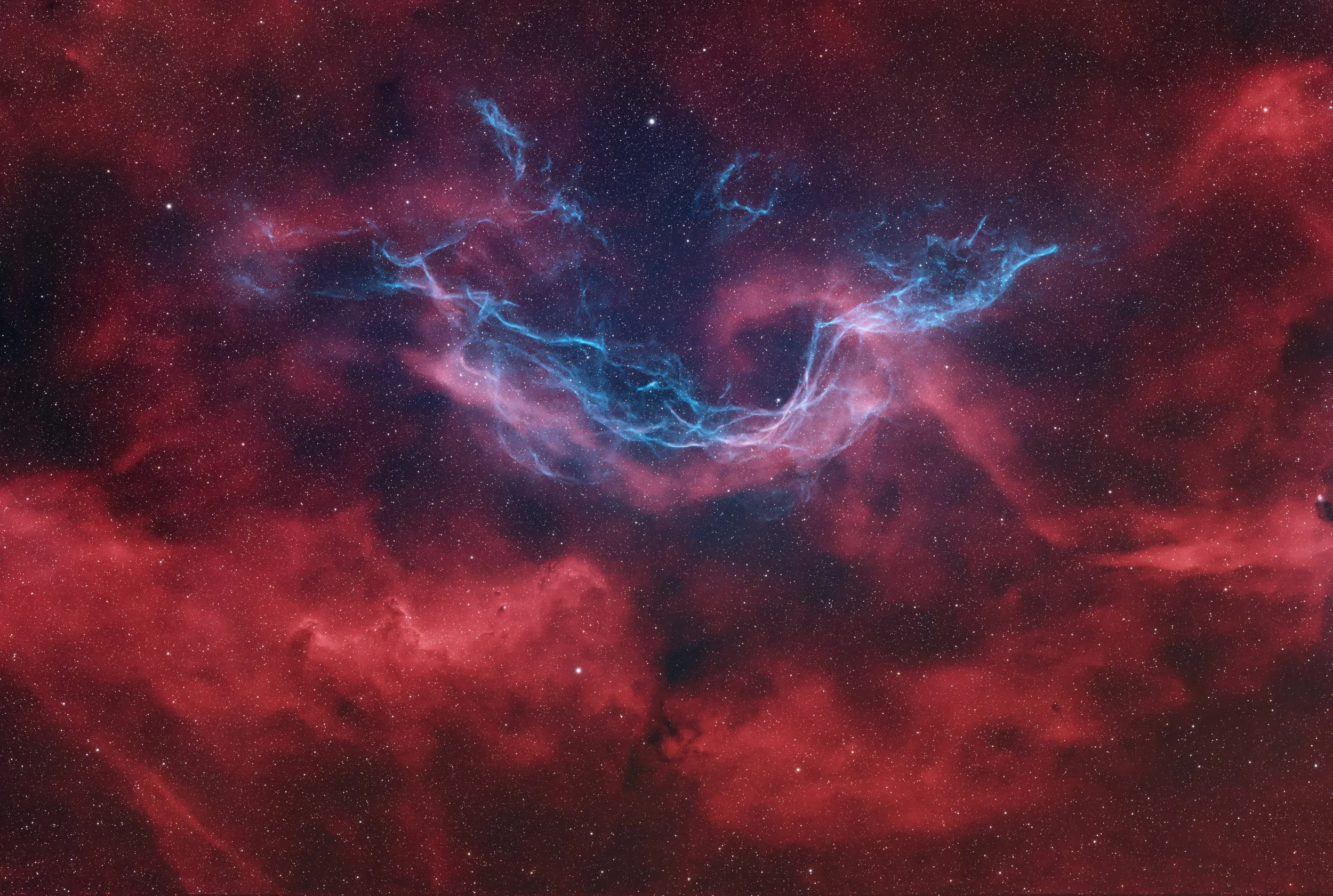
SNR G304.4-3.1 Supernova Remnant in the constellation Musca
SNR G304.4-3.1 is a supernova remnant located in the constellation Musca, within the vicinity of the Theta Muscae multiple star system, approximately 7400 light years from Earth. This fascinating object is the aftermath of a stellar explosion, providing a glimpse into the cataclysmic events that shape the cosmos. The intricate structures within the remnant are a testament to the powerful forces unleashed during the supernova, which continue to interact with the surrounding interstellar medium.
Captured over a total integration time of 36 hours and 37 minutes, this image was taken using Ha, OIII, and RGB filters under the pristine Bortle 2.0 skies of Desierto Cósmico, Atacama, Chile. The resulting composite reveals the delicate interplay of hydrogen and oxygen emissions, with vivid colors highlighting different elements and processes within the remnant. The location's exceptionally dark skies allow for a detailed and deep view of this celestial wonder, emphasizing the ethereal beauty and scientific significance of supernova remnants in our galaxy.

M41 (The Little Beehive Cluster)
Messier 41 (M41), also known as the Little Beehive Cluster, is an open star cluster located in the constellation Canis Major, about 2,300 light-years from Earth. This cluster is comprised of approximately 100 stars, including several red giants and numerous white dwarfs. Spanning about 25 light-years in diameter, M41 is estimated to be around 190 million years old, making it relatively young in astronomical terms. The cluster is easily visible to the naked eye under dark skies and provides a rich field of stars for telescopic observation.
In this image, M41 is complemented by the glow of hydrogen-alpha (Hα) emissions in the background, highlighting the interstellar medium surrounding the cluster. The Hα emissions, caused by the ionization of hydrogen atoms, add a vivid red backdrop to the scene, enhancing the visual appeal of the cluster. This combination of star cluster and nebula provides a stunning contrast between the hot, young stars of M41 and the cooler, diffuse gas of the surrounding nebula, offering a glimpse into the dynamic processes at play in our galaxy.
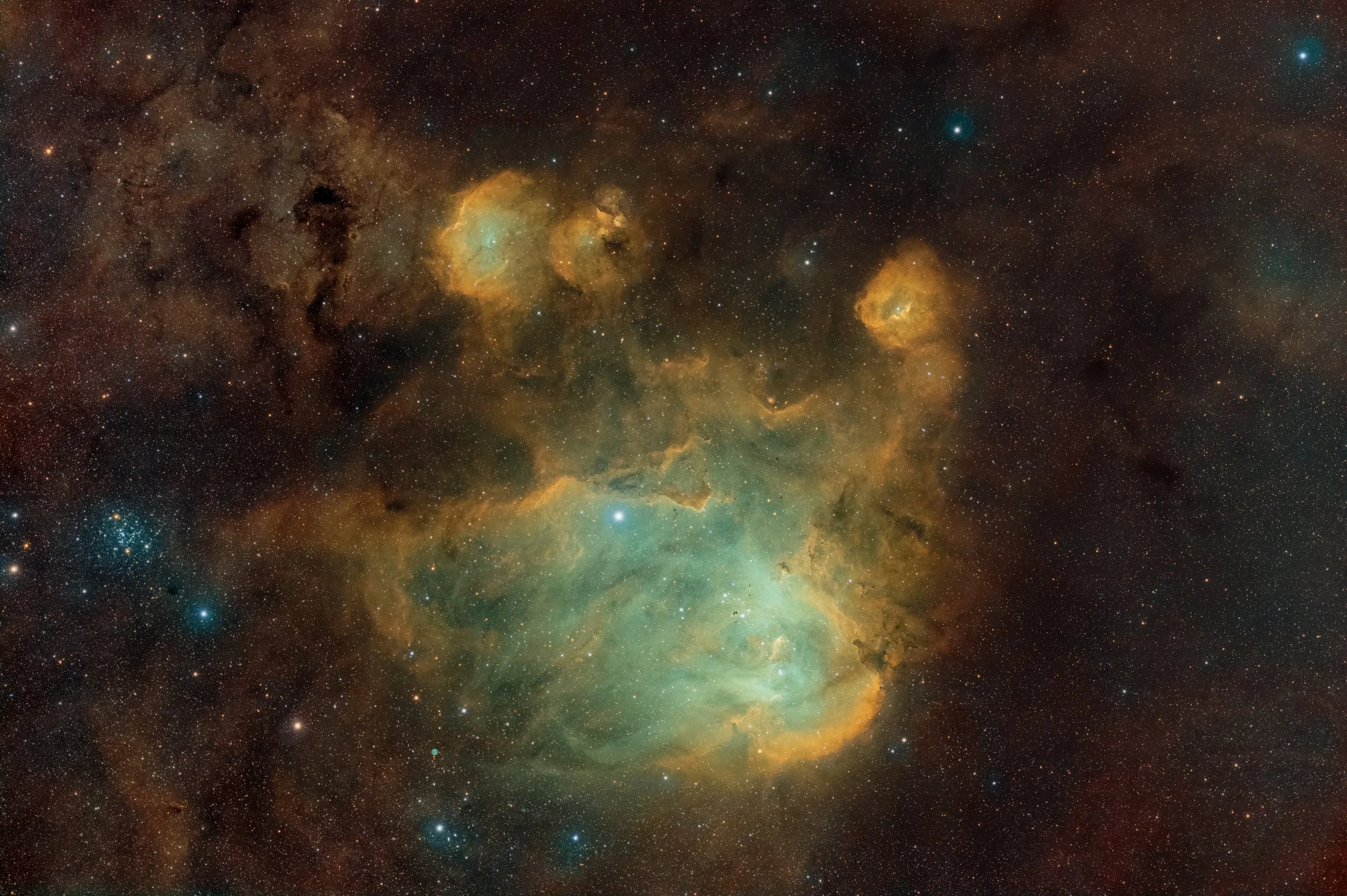
The Running Cicken Nebula
The Running Chicken Nebula, also known as IC 2944, is a stunning emission nebula located in the constellation Centaurus, approximately 6,500 light-years away from Earth. This nebula is notable for its bright, glowing hydrogen gas, which is ionized by the intense ultraviolet radiation from nearby young, hot stars. The region is rich in star formation, with numerous young stars and protostars embedded within the nebula. One of the most striking features of IC 2944 is the presence of Bok globules—dense, dark clouds of gas and dust that are potential sites of future star formation.
IC 2944's nickname, the Running Chicken Nebula, comes from the shape of the nebula, which some observers liken to a running chicken. The complex structure of the nebula, with its bright emission regions and dark dust lanes, makes it a favorite target for both amateur and professional astronomers. Its location in the southern sky provides a unique and spectacular view for observers in the Southern Hemisphere.
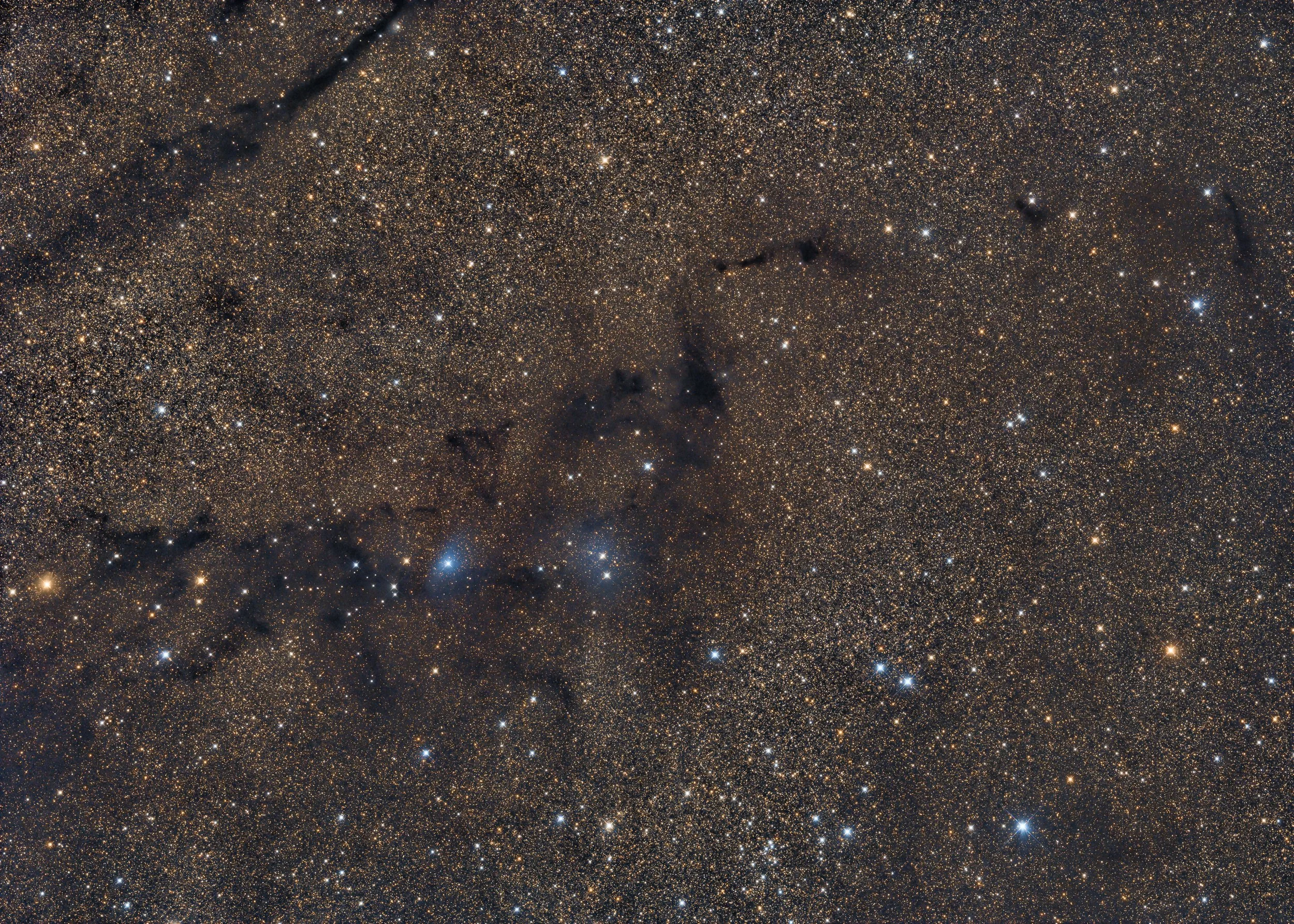
LDN 769 / vdB 126 and NGC 6793 - Bejewelled Dust Monsters
LDN 769, vdB 126, and NGC 6793 are part of a fascinating region in the night sky. LDN 769, a dark nebula, obscures the light from the stars behind it, creating a striking silhouette against the backdrop of the Milky Way. Dark nebulae like LDN 769 are composed of dense clouds of gas and dust, which block visible light and are often sites of future star formation.
Adjacent to LDN 769, vdB 126 is a reflection nebula that glows with the light of nearby stars, scattering the light and giving it a distinctive blue hue. NGC 6793, an open star cluster, completes this celestial trio. These clusters contain young, hot stars that illuminate their surroundings, creating a vibrant contrast with the dark nebulae. Together, these objects showcase the dynamic and diverse nature of our galaxy's interstellar medium.