

AAPOD2 Image Archives
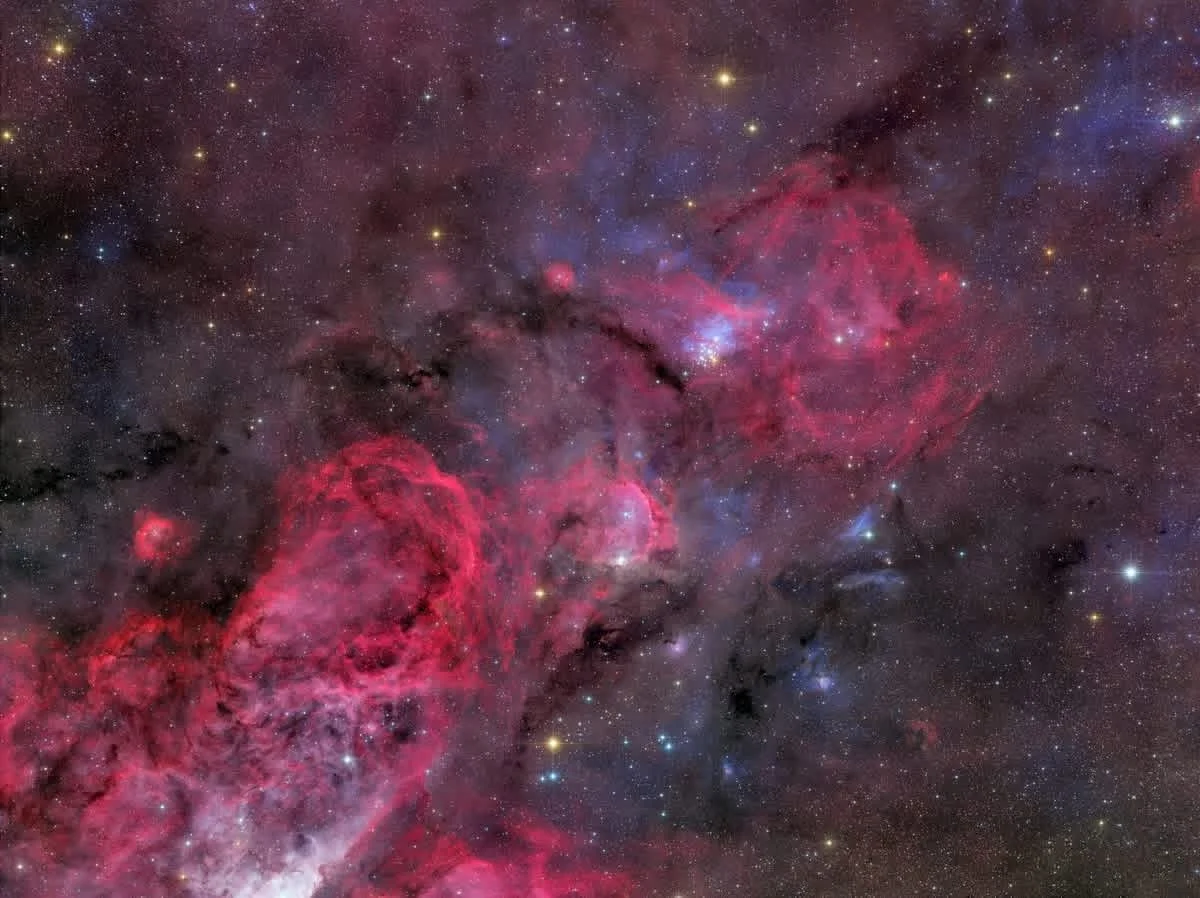
From NGC3324 to 3293
From 3324 to 3293
Here is another one from the ASA600 Ultrawidefield. I was always fascinated by this region obove the Eta Carina nebula as it is so colorful and has a lot of interresting objects like WR23 the Gabriella Mistral nebula the cluster NGC3293 and lots of relection nebulosity.
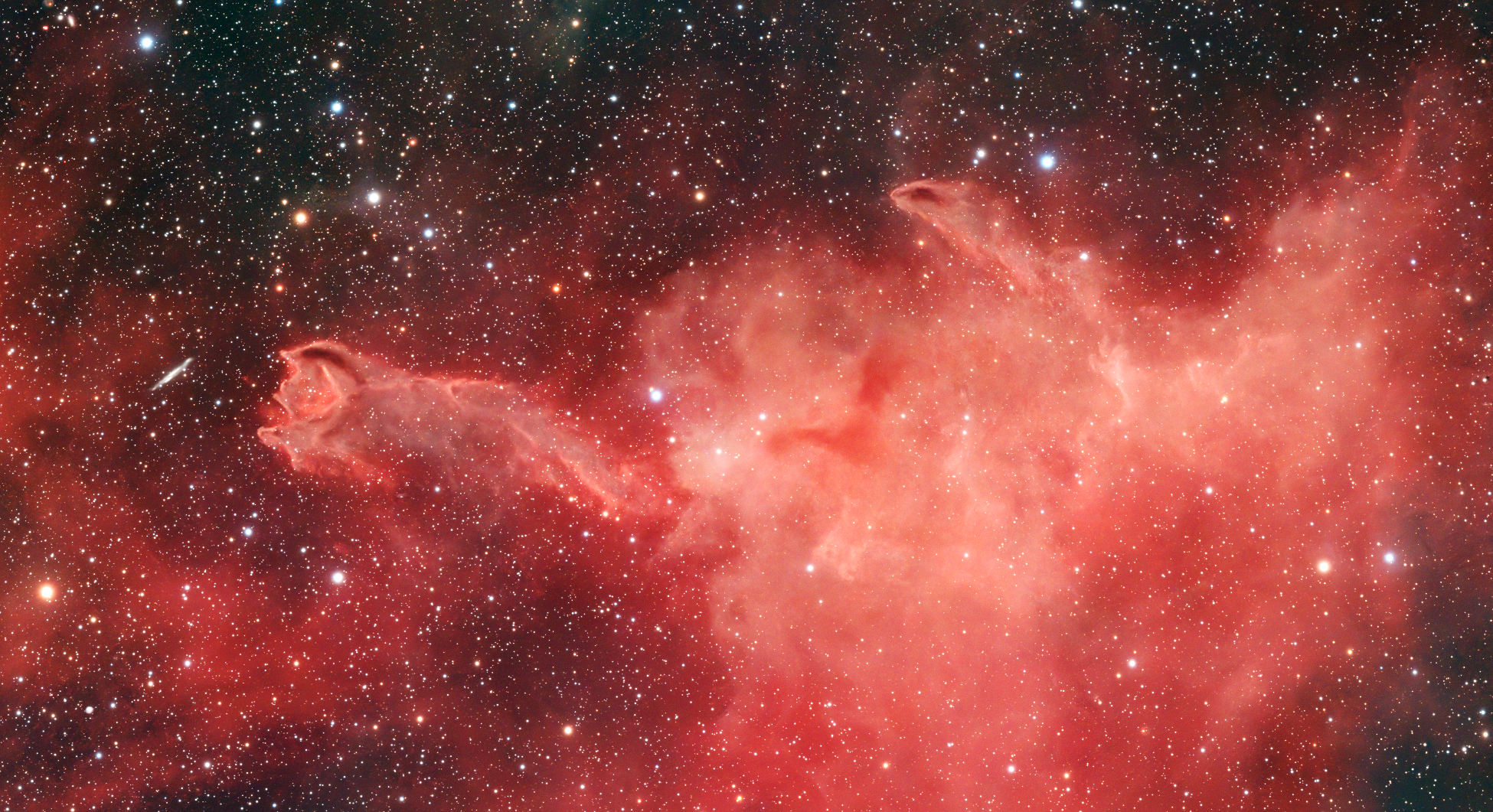
CG4 and Gum Nebula - The World Eater
The striking cometary cloud CG4 drifts along the edge of the vast Gum Nebula, one of the largest known emission nebulae in the sky. Located in the southern constellation Vela, CG4 is part of a population of small, dense clouds known as cometary globules—compact knots of gas and dust shaped by intense radiation and stellar winds from nearby massive stars. Its rounded “head” and long streaming tail give it the appearance of a cosmic comet, earning it the popular nickname “God’s Hand.” The dense head of the globule spans about 1.5 light-years across, while its faint tail stretches for several light-years through surrounding interstellar space.
The Gum Nebula itself is an enormous shell of glowing hydrogen gas spanning hundreds of light-years, likely created by ancient supernova explosions and the winds of massive stars. Radiation from these energetic stars sculpts nearby clouds like CG4, compressing their dense cores while gradually eroding their outer layers. Inside some cometary globules, gravity may trigger the collapse of gas to form new stars, meaning these sculpted structures can become small stellar nurseries. CG4 therefore represents a fascinating snapshot of cosmic interaction—where powerful stellar forces shape delicate clouds and may ultimately spark the birth of new suns within the sprawling environment of the Gum Nebula.
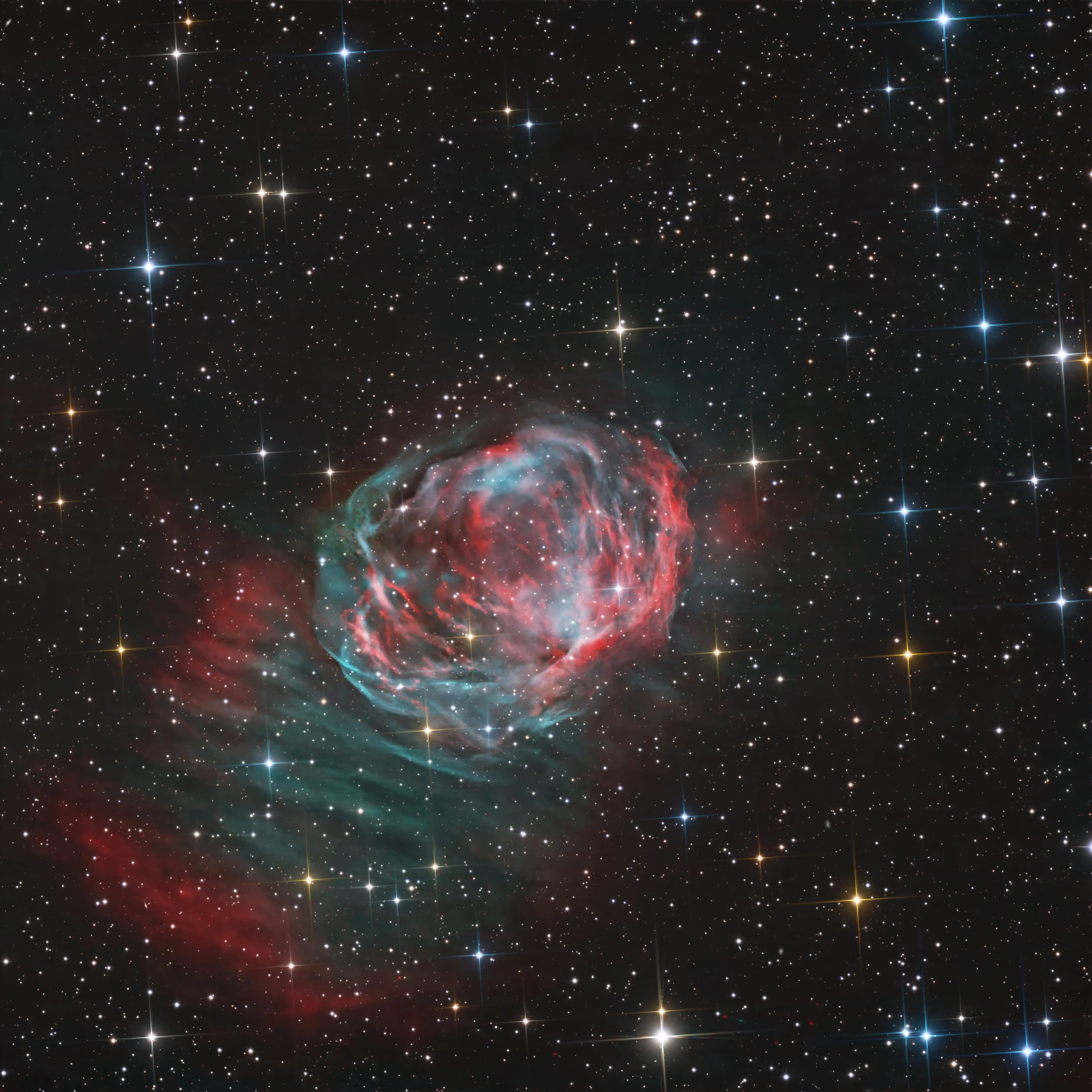
Abell 21 The Medusa Nebula - Not Your Everyday PN
The ghostly Abell 21, often called the Medusa Nebula, drifts through the constellation Gemini about 1,500 light-years from Earth. Its nickname comes from the delicate network of glowing filaments that resemble the serpentine hair of the mythological Medusa. These intricate strands trace the expanding shell of gas expelled by a dying Sun-like star thousands of years ago. Because the nebula has grown so large over time—spanning nearly four light-years across—its light is extremely faint, making it a challenging but rewarding target for deep-sky imaging.
The wispy structure of Abell 21 reveals the complex interaction between the expanding stellar debris and the surrounding interstellar medium. Shock waves and turbulence stretch the gas into twisting filaments that glow softly in hydrogen and oxygen emission. At the center lies the faint stellar remnant, a hot white dwarf whose intense ultraviolet radiation energizes the surrounding gas and keeps the nebula shining. Over the next tens of thousands of years, the Medusa Nebula will continue to dissipate into space, gradually mixing its enriched material back into the galaxy and contributing to the raw ingredients for future generations of stars and planets.
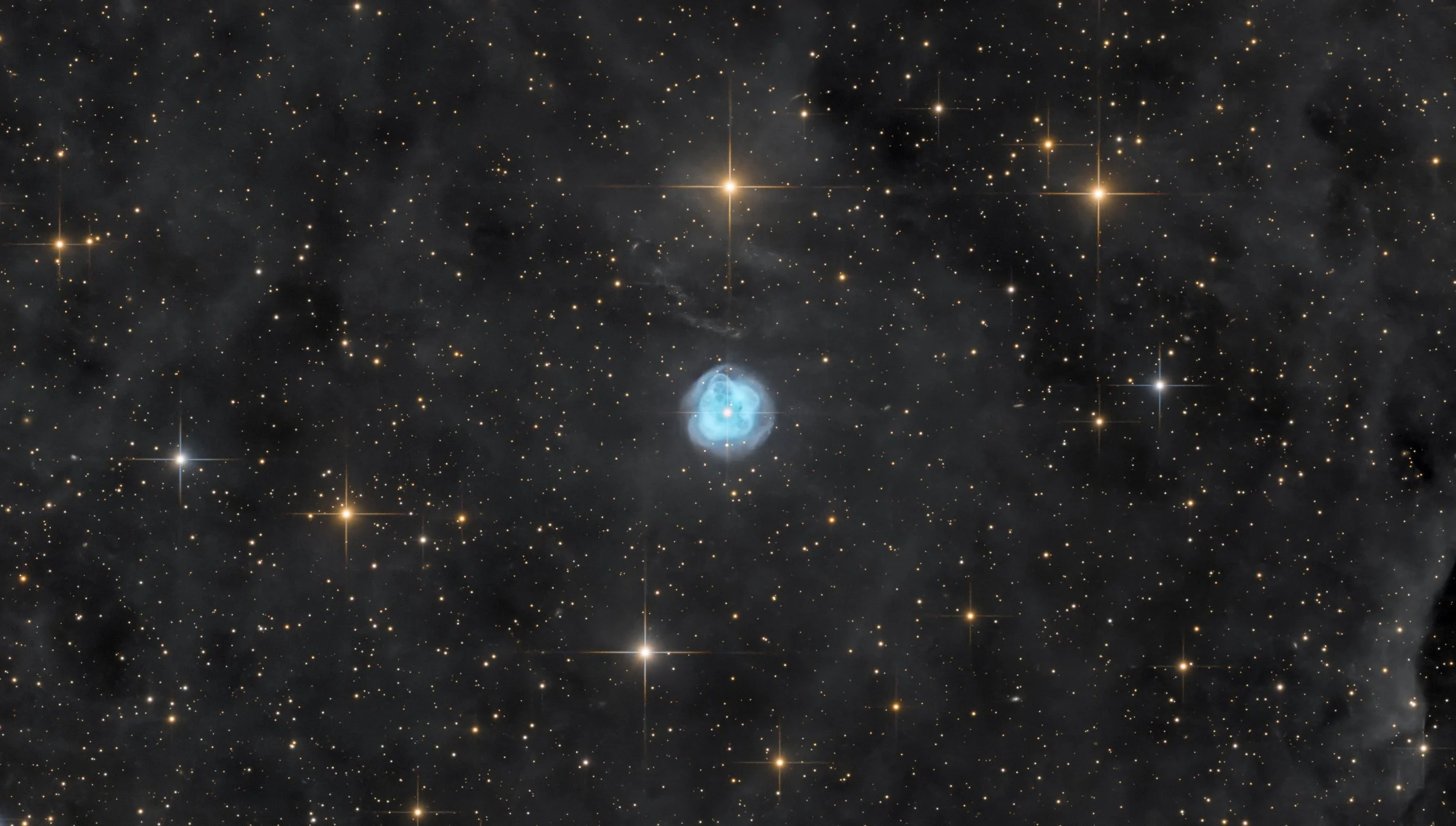
The Crystal Ball Nebula aka. NGC1514
4
The delicate glow of NGC 1514 shines from the constellation Taurus, about 1,500 light-years from Earth. Often called the Crystal Ball Nebula, it appears as a soft, spherical shell of gas surrounding a bright central star. The nebula was discovered in 1790 by William Herschel, who was surprised to find a hazy cloud surrounding what looked like an ordinary star—one of the earliest hints that some stars are embedded within glowing nebulae. Today we understand that NGC 1514 is a planetary nebula, the expanding outer atmosphere of a dying Sun-like star that has shed its outer layers into space.
At the center lies a remarkable stellar system containing two stars locked in a close binary orbit. Their interaction likely shaped the nebula’s unusual structure, including faint rings and delicate shells of gas stretching outward for several light-years. Ultraviolet radiation from the hot stellar remnant energizes the expanding material, causing it to glow in subtle shades of blue and green from ionized oxygen and hydrogen. Though planetary nebulae represent a brief phase in stellar evolution lasting only tens of thousands of years, objects like NGC 1514 reveal how dying stars recycle enriched material back into the galaxy—material that may one day become part of new stars, planets, and perhaps even life.
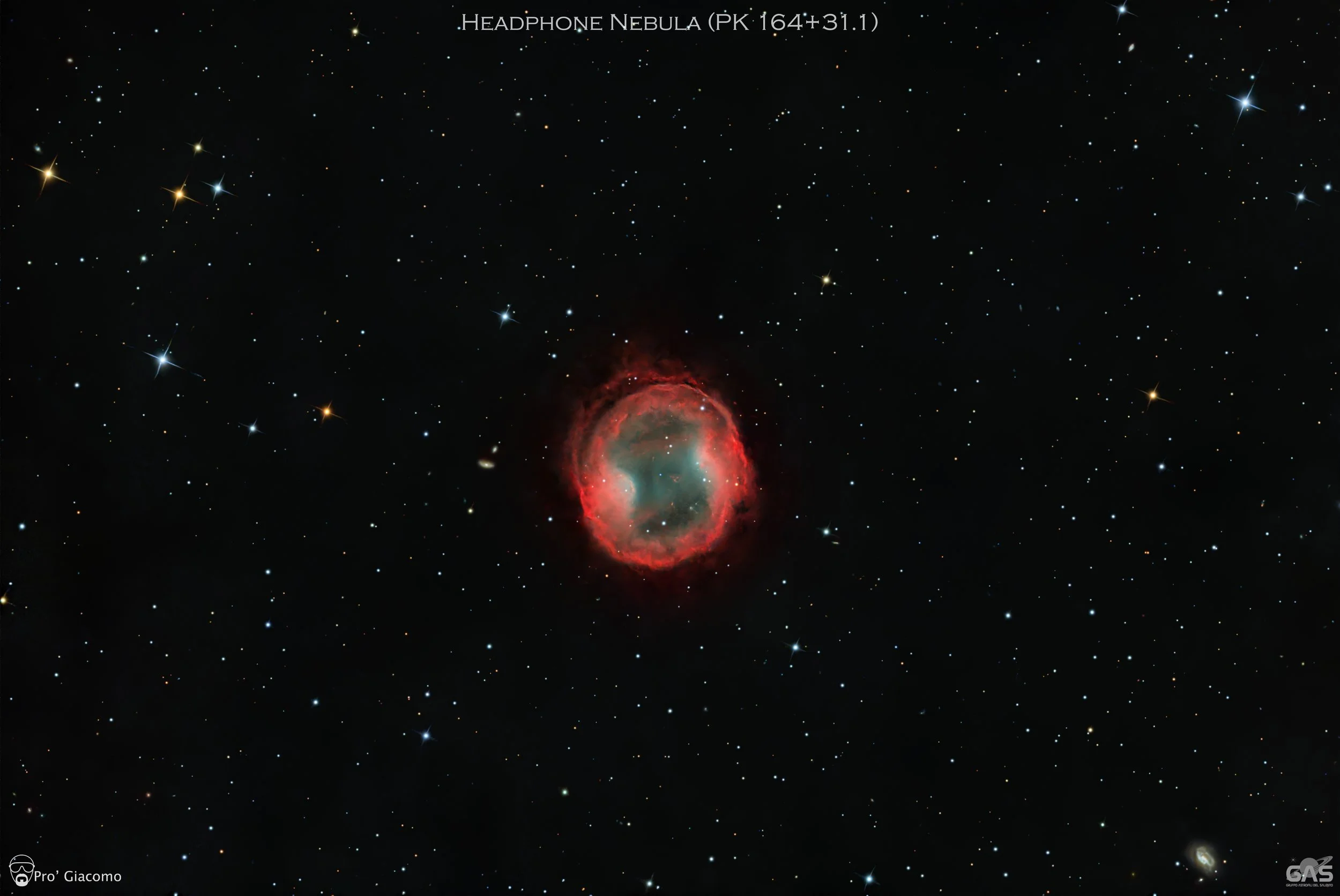
Headphone Nebula (PK 164+31.1)
The Headphone Nebula, also cataloged as PK 164+31.1, is an enormous and extremely faint planetary nebula located in the constellation Lynx. Spanning nearly four light-years across, this ghostly shell of gas represents the final stages of a dying Sun-like star. Its nickname comes from the nebula’s symmetrical arcs of glowing gas, which resemble the shape of a pair of headphones surrounding a faint central star. Because its expanding gas has spread over such a large region of space, the nebula’s surface brightness is very low, making it a challenging but rewarding target for deep astrophotography.
The delicate structure of the Headphone Nebula traces material that was expelled thousands of years ago as the aging star shed its outer layers. Ultraviolet radiation from the hot stellar remnant now excites the expanding gas, causing it to glow faintly in hydrogen and oxygen emission. Over time, the nebula will continue to disperse into interstellar space, enriching the galaxy with heavier elements created inside the star during its lifetime. Objects like the Headphone Nebula illustrate the quiet but profound fate awaiting many stars, including our own Sun billions of years from now.
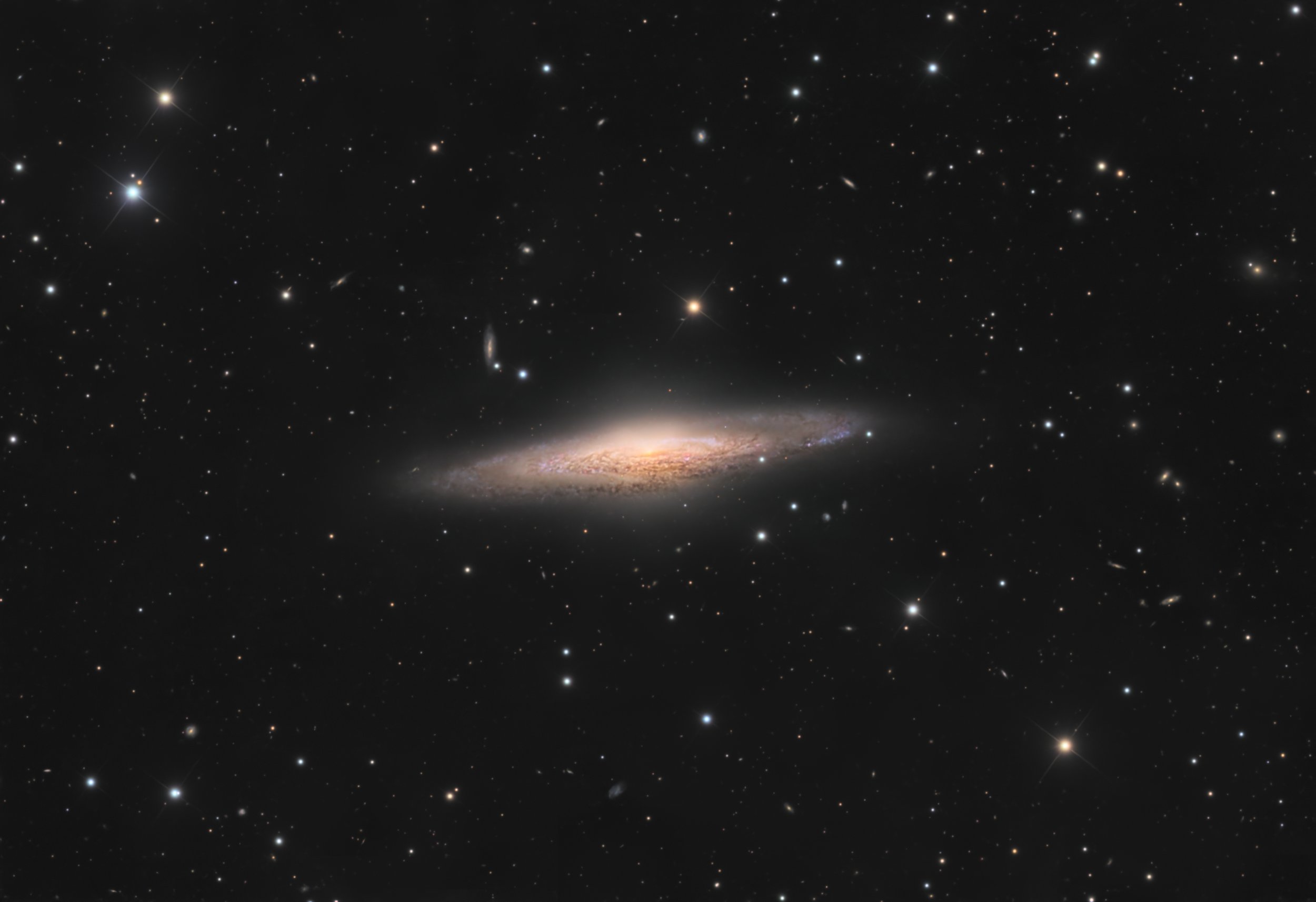
NGC 2683
Seen almost perfectly edge-on from our vantage point in the constellation Lynx, NGC 2683 is a striking spiral galaxy often nicknamed the UFO Galaxy because of its sleek, lens-shaped appearance. Located roughly 20–25 million light-years away, the galaxy’s thin disk is threaded with intricate lanes of dark interstellar dust that slice across its bright central bulge. From this perspective, the galaxy’s spiral structure is mostly hidden, but the flattened stellar disk and warped dust patterns reveal the dynamic processes shaping its stars and gas.
Unlike many nearby spirals, NGC 2683 appears relatively isolated, with no obvious large companion galaxies disturbing its structure. This quiet environment allows astronomers to study how spiral galaxies evolve when left largely undisturbed by gravitational interactions. Streams of faint gas extend above and below the disk, hinting at energetic processes such as supernova-driven winds that push material into the galaxy’s halo. Viewed edge-on, NGC 2683 offers a dramatic cross-section of a spiral galaxy, highlighting the layered structure of stars, gas, and dust that make up these vast island universes.