

AAPOD2 Image Archives
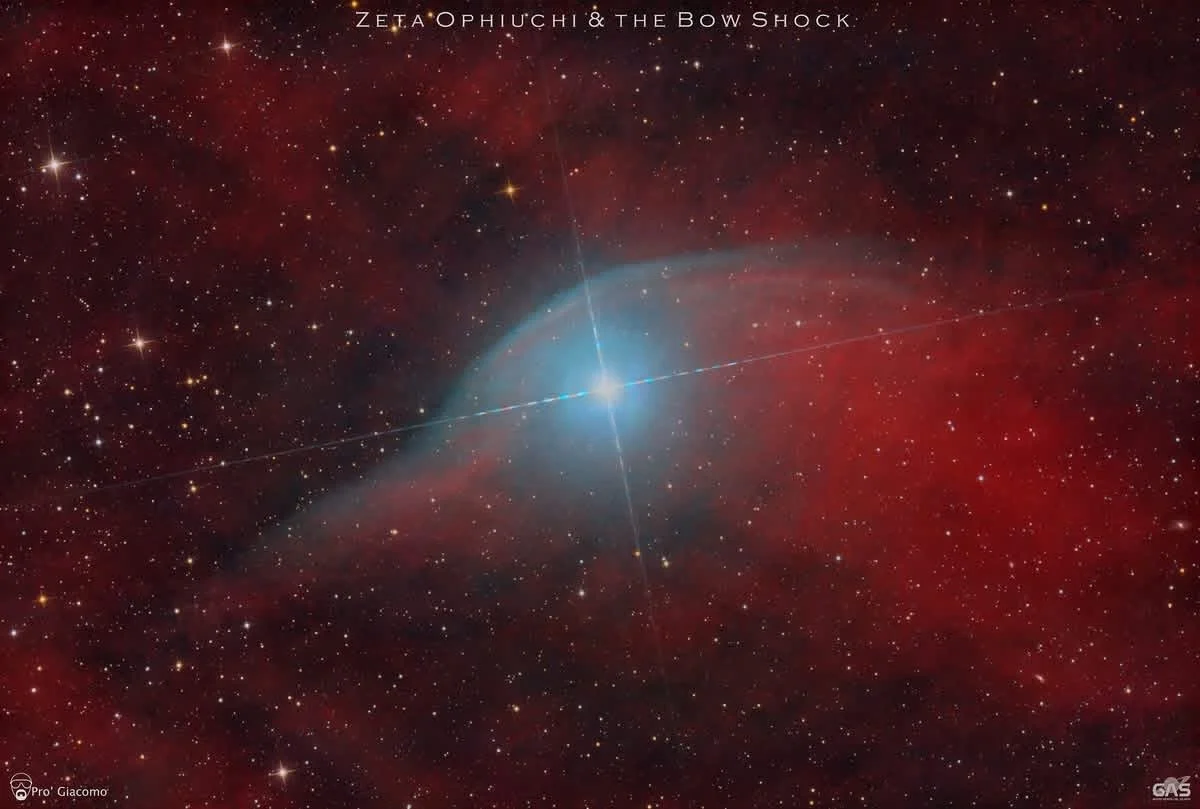
Zeta Ophiuchi & the Bow Shock
Zeta Ophiuchi & the Bow Shock
Zeta Ophiuchi is the third brightest star in the constellation Ofiucus; with magnitude +2.54, it is a main sequence blue star located 440 light years from Earth, with a mass 20 times greater than that of the Sun.
Like the stars of its class, it emits matter through large amounts of stellar winds, at a speed of 1600 km/s. Part of this interstellar material is ionized by star radiation, resulting in the Sh2-27 emission nebula.
Zeta Ophiuchi is a star from a complex past, likely expelled from her birthplace by a powerful star explosion.
Previous observations have shown that Zeta Ophiuchi was once in a close orbit with another star, before being ejected at about 160,000 kilometers per hour when this companion was destroyed by a supernova explosion over a million years ago.
The Zeta Ophiuchi leak produces this kind of shock wave called bow shock due to its strong stellar wind that precedes it, compressing and heating the dusty interstellar material and modeling the compression wave.
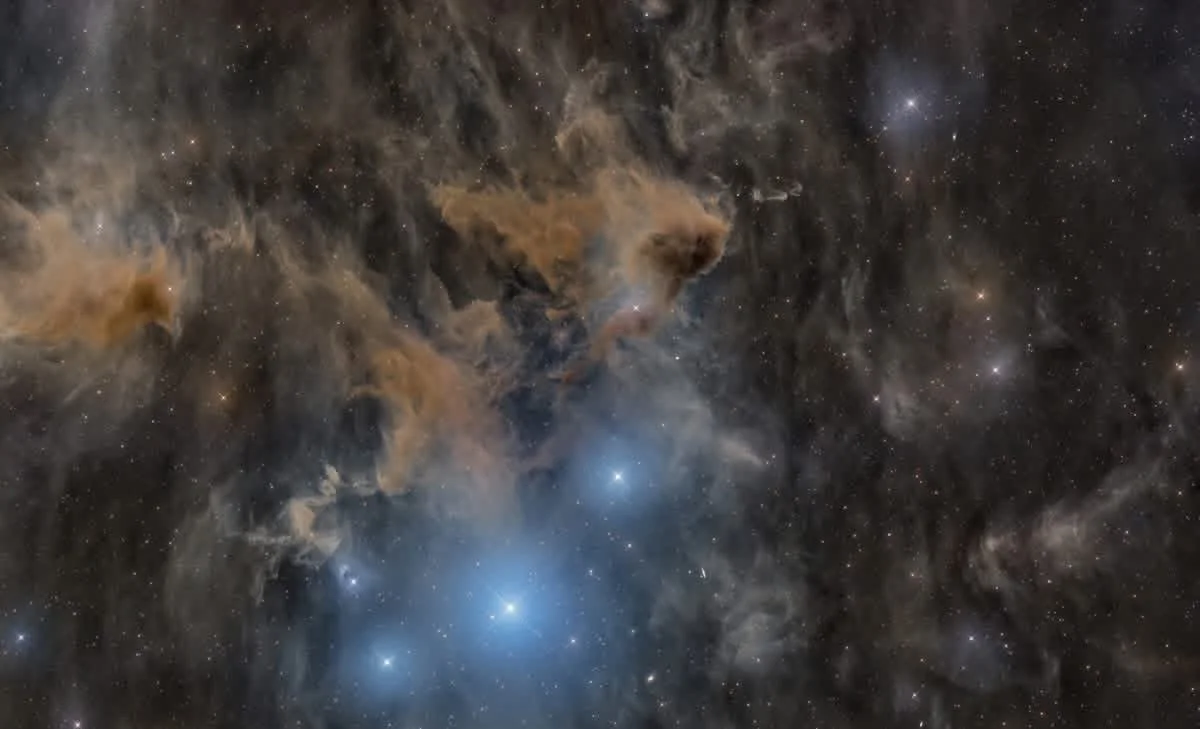
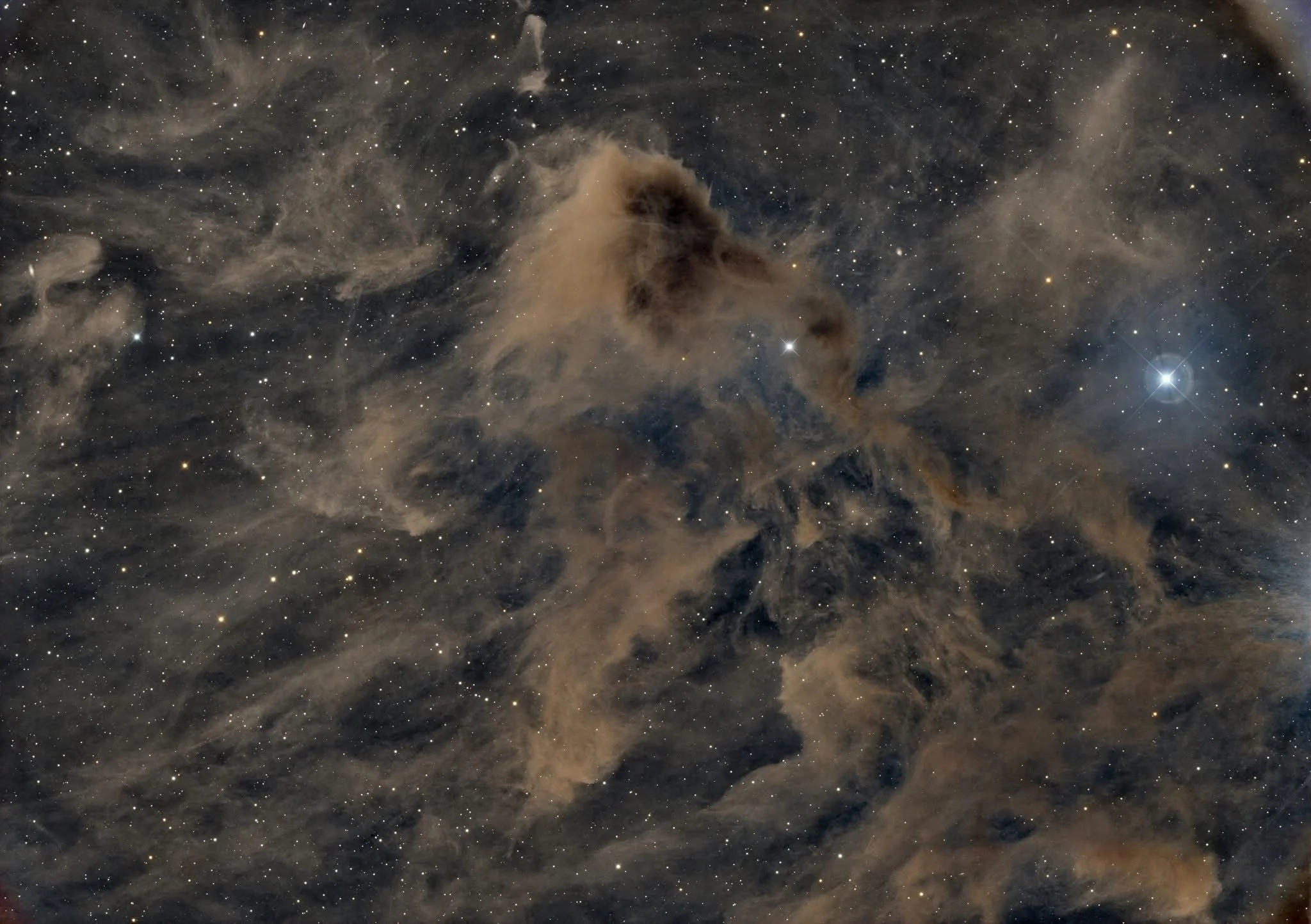
LDN134
The stunning complex LDN 134 – LDN 169 – LDN 183, along with the faint glowing nebulae LBN 10-11-15, lies near the constellations of Libra and Ophiuchus, around 325–340 light-years from Earth. These are among the closest interstellar clouds to us.
Dark nebulae are immense clouds of gas and dust that block the light of background stars, creating dramatic cosmic shadows. Despite spanning only a few light-years, this compact region offers a fascinating glimpse into the cold interstellar medium.
One of the highlights is LDN 183, an extremely cold cloud (~10K) where future low-mass stars may eventually form.
Bright stars from Serpens, including μ Serpentis and β Serpentis, shine through and around the clouds, enhancing the incredible depth and contrast of this celestial landscape.
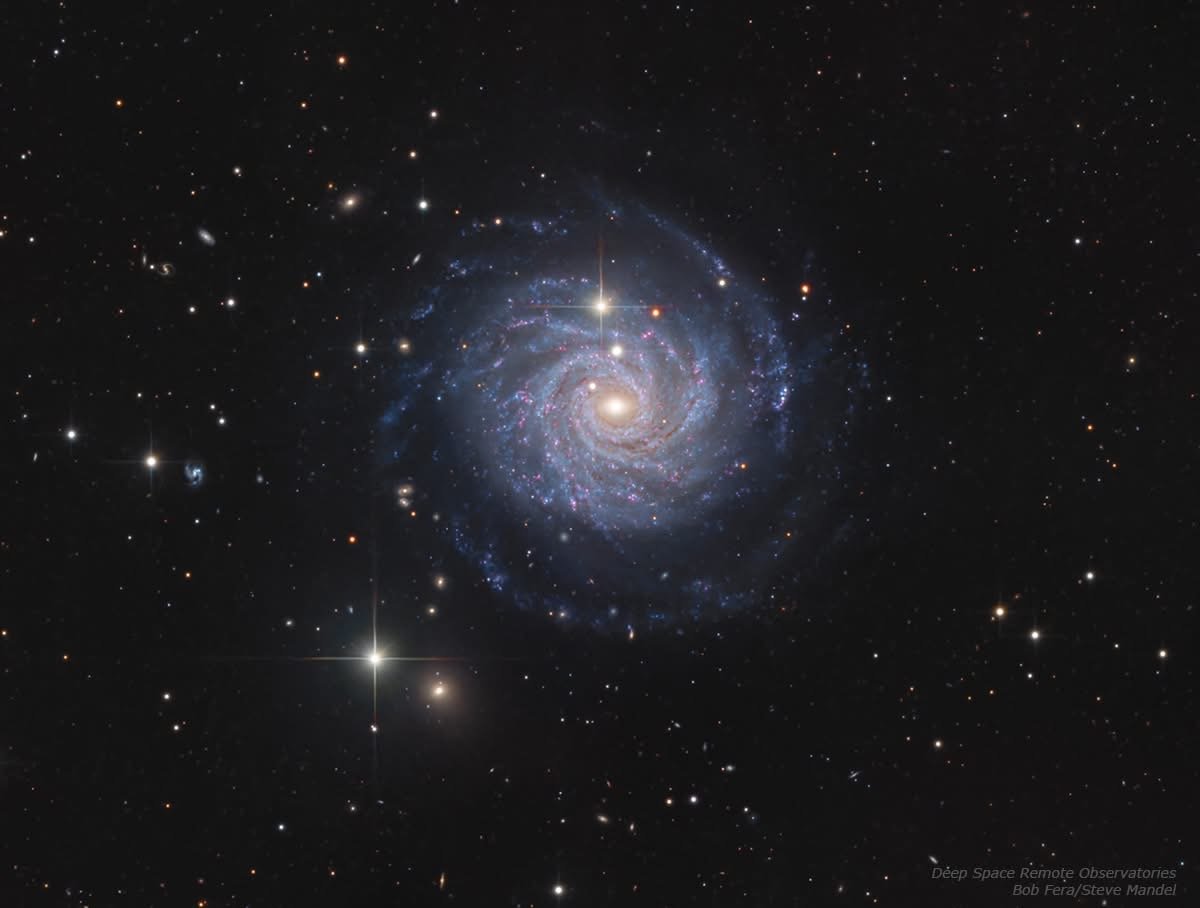
NGC 3344 - Spiral Galaxy in Leo Minor
In the quiet northern constellation of Leo Minor lies NGC 3344, a graceful face-on spiral galaxy about 25 million light-years from Earth. Its delicate, tightly wound arms sparkle with clusters of young blue stars while a faint inner ring encircles the glowing core, giving the galaxy a layered appearance that has earned it the nickname “Sliced Onion Galaxy.” Though smaller than the Milky Way, NGC 3344 is rich in star formation and offers astronomers an unusually clear view of spiral structure thanks to its near-perfect orientation toward Earth.
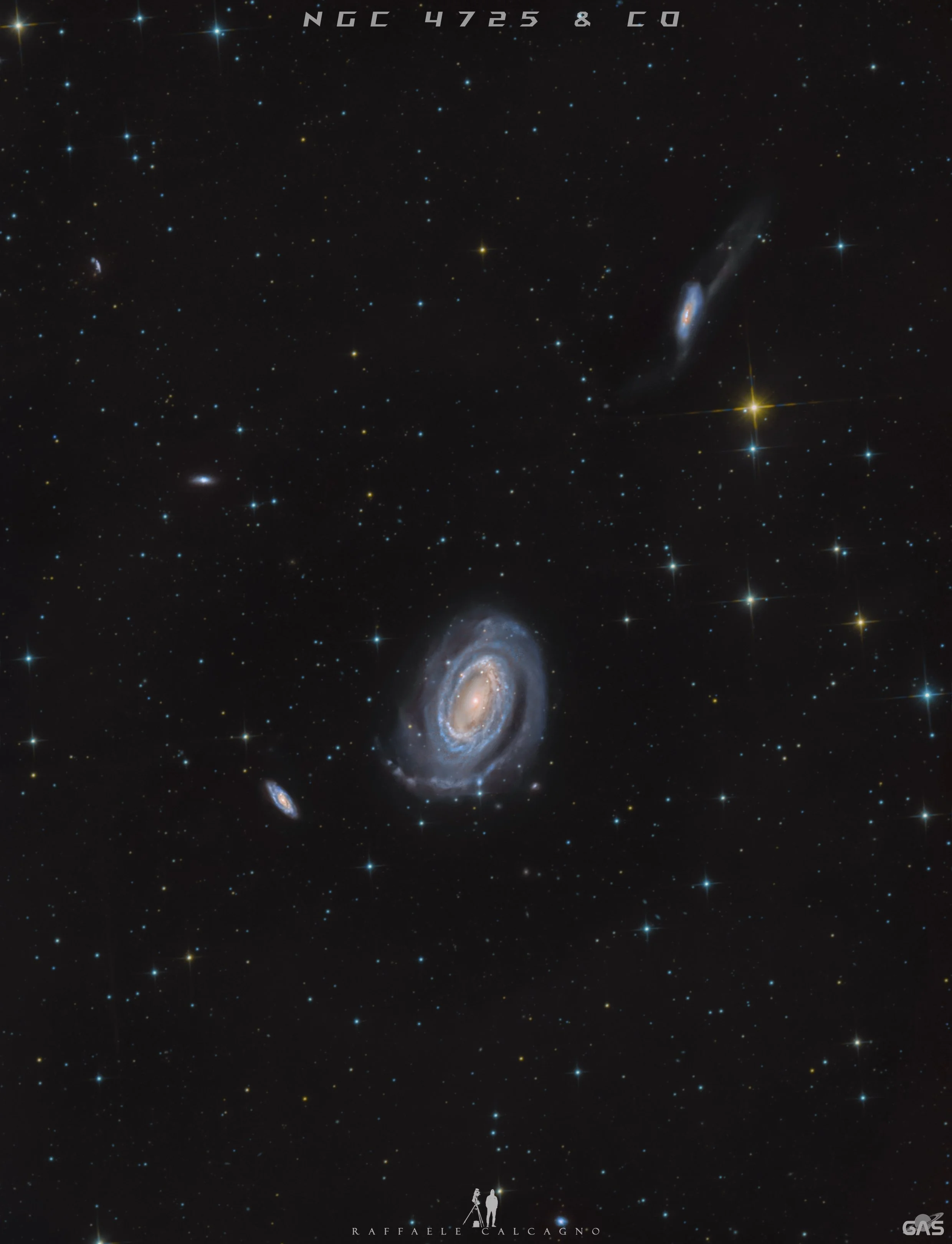
NGC 4725 & CO.
In this image the protagonist is NGC 4725, a barred spiral galaxy in the constellation Coma Berenices, about 40 million light-years away from us. Its structure features a single well-defined spiral arm. The shot also shows other galaxies in the NGC 4725 Group, including NGC 4712 at the bottom, a lenticular galaxy, and NGC 4747 at the top, an irregular galaxy. NGC 4725 hosts an active gala
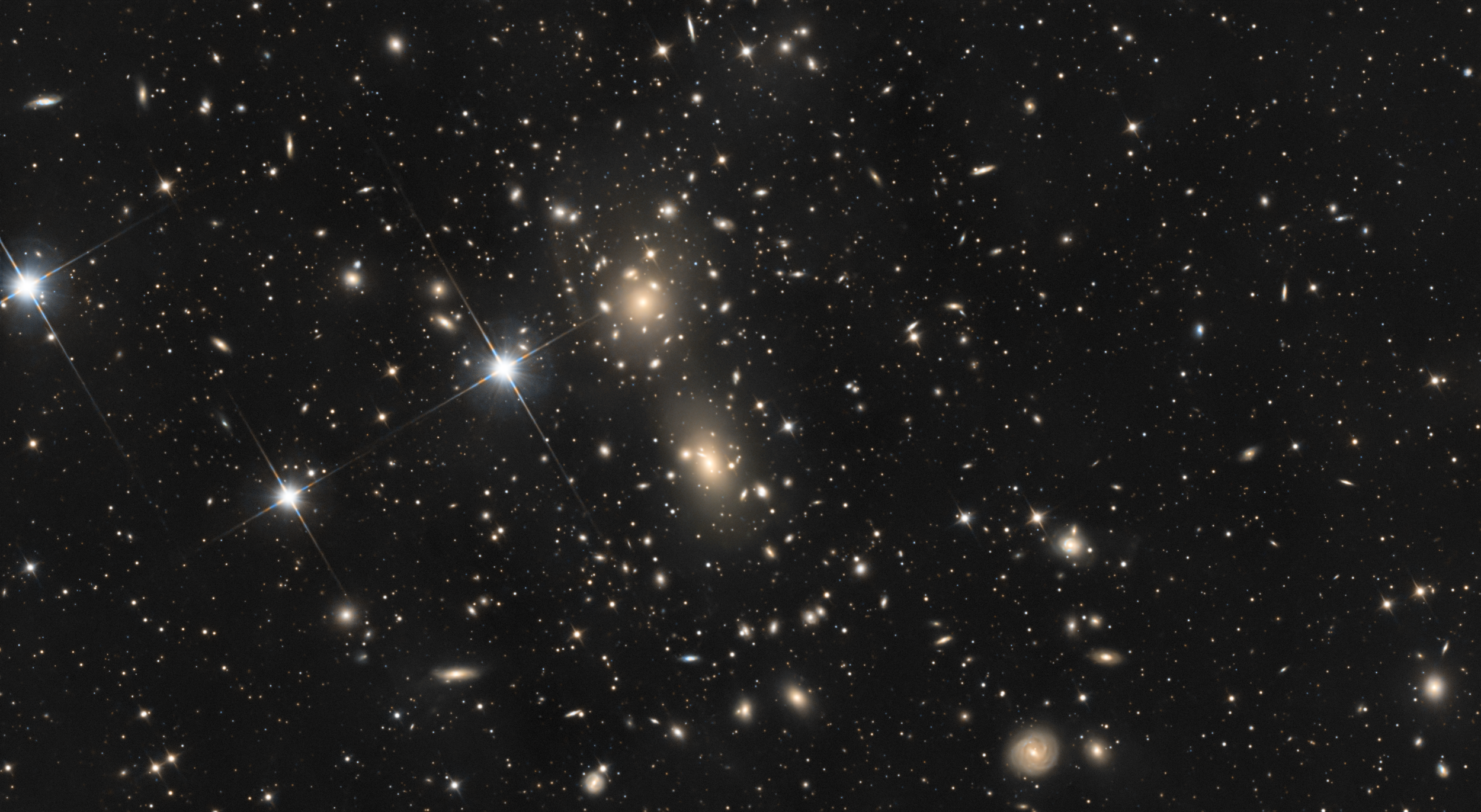
Abel 1656
2 paragraph snippet for aapod2 on Abel 1656
Known as the Coma Cluster, Abell 1656 is one of the richest galaxy clusters in the night sky, containing more than 1,000 identified galaxies packed into a region over 20 million light-years wide. Located roughly 320 million light-years away in the constellation Coma Berenices, this immense gathering of galaxies is dominated by giant elliptical systems such as NGC 4874 and NGC 4889, surrounded by countless smaller galaxies scattered across the frame like distant islands of light.
Abell 1656 also played a major role in the discovery of dark matter. In the 1930s, astronomer Fritz Zwicky studied the motions of galaxies within the cluster and found they were moving far too quickly to be held together by visible matter alone.
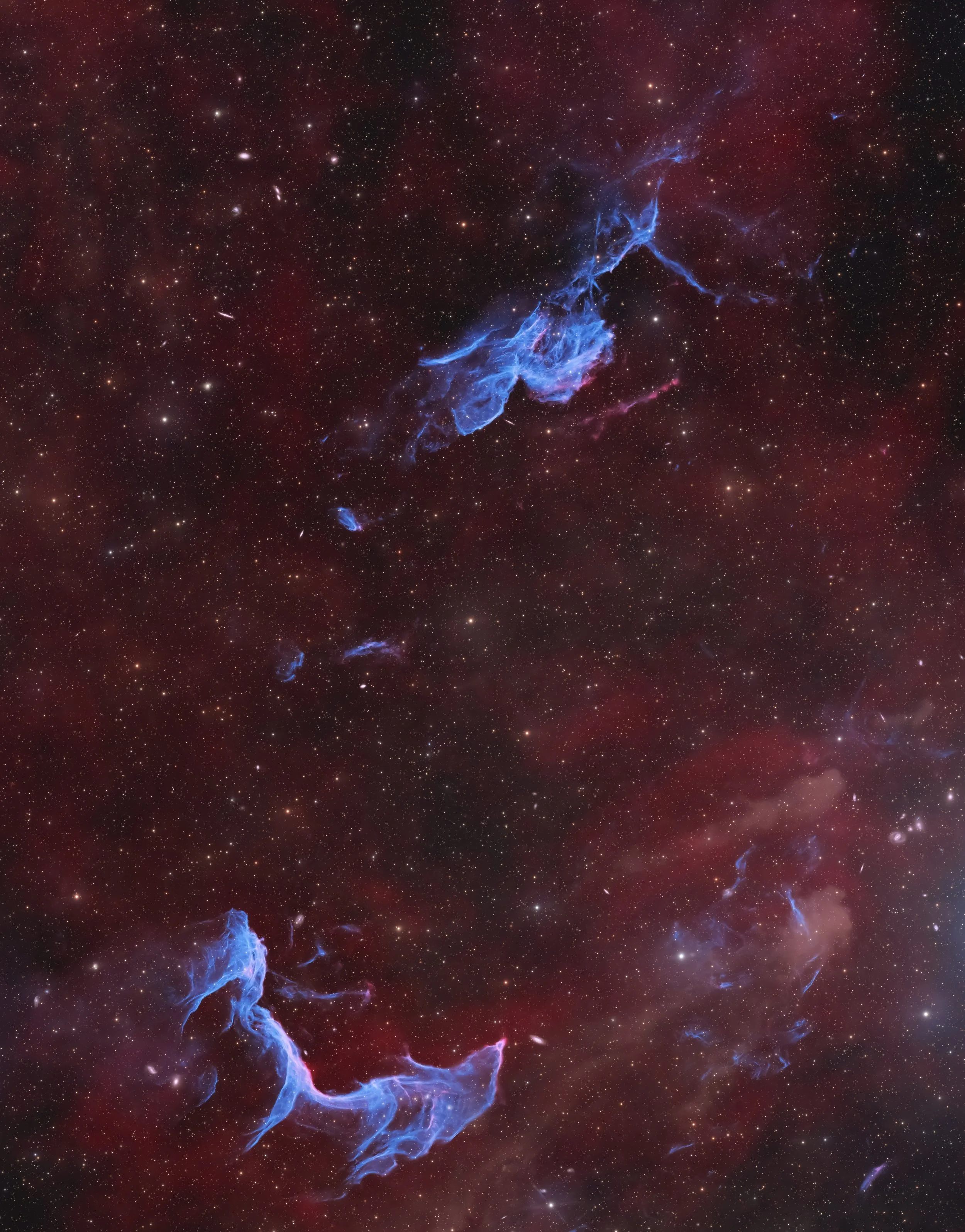
SNR G296.5 + 10.0 and New PN discovery LMoBoTo 1
G296.5+10.0, often nicknamed the “Siren Nebula”, is a large and extremely faint supernova remnant located in the southern skies. Shaped by the shockwave of a stellar explosion interacting with the surrounding interstellar medium, its delicate filaments and fragmented shell reveal the violent aftermath of a star that ended its life thousands of years ago.
LoTr 5
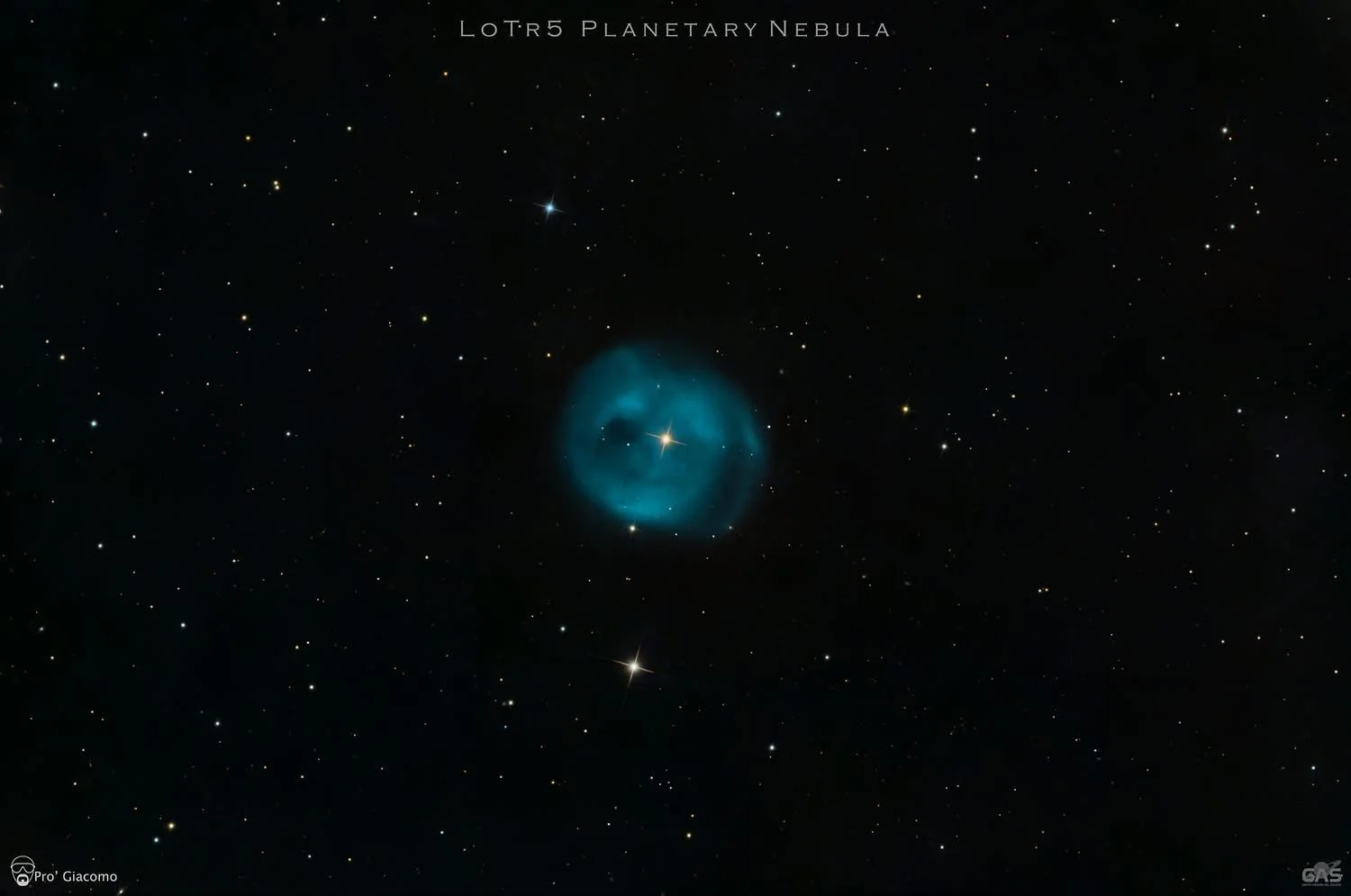
LoTr 5
The nebula, more commonly referred to as LoTr 5, short for Longmore-Tritton 5, was discovered in 1980 by AJ Longmore and SB Tritton, who found it on photo slabs taken at the Schmidt telescope in the UK.
This is a large and weak planetary nebula in the constellation of Chioma di Berenice, about 1,650 light years away
In 2018 it had the highest galactic latitude of any known planetary nebula, located only 1.5 degrees from the galactic North Pole.
LoTr 5 is one of the largest known planetary nebulae, with a radius of 1.8 light years, emits mainly light at a wavelength of 500.7 nm, corresponding to a double ionized oxygen line.
It is noted that LoTr 5's central system has been binary since 1983. At the centre is an evolutionary G-type star (IN Comae Berenices) which is often classified as a giant or subgiant star, as well as an O-type hot-white subnana or dwarf that is responsible for ionization of the nebula.
NGC 6946 - The Fireworks Galaxy
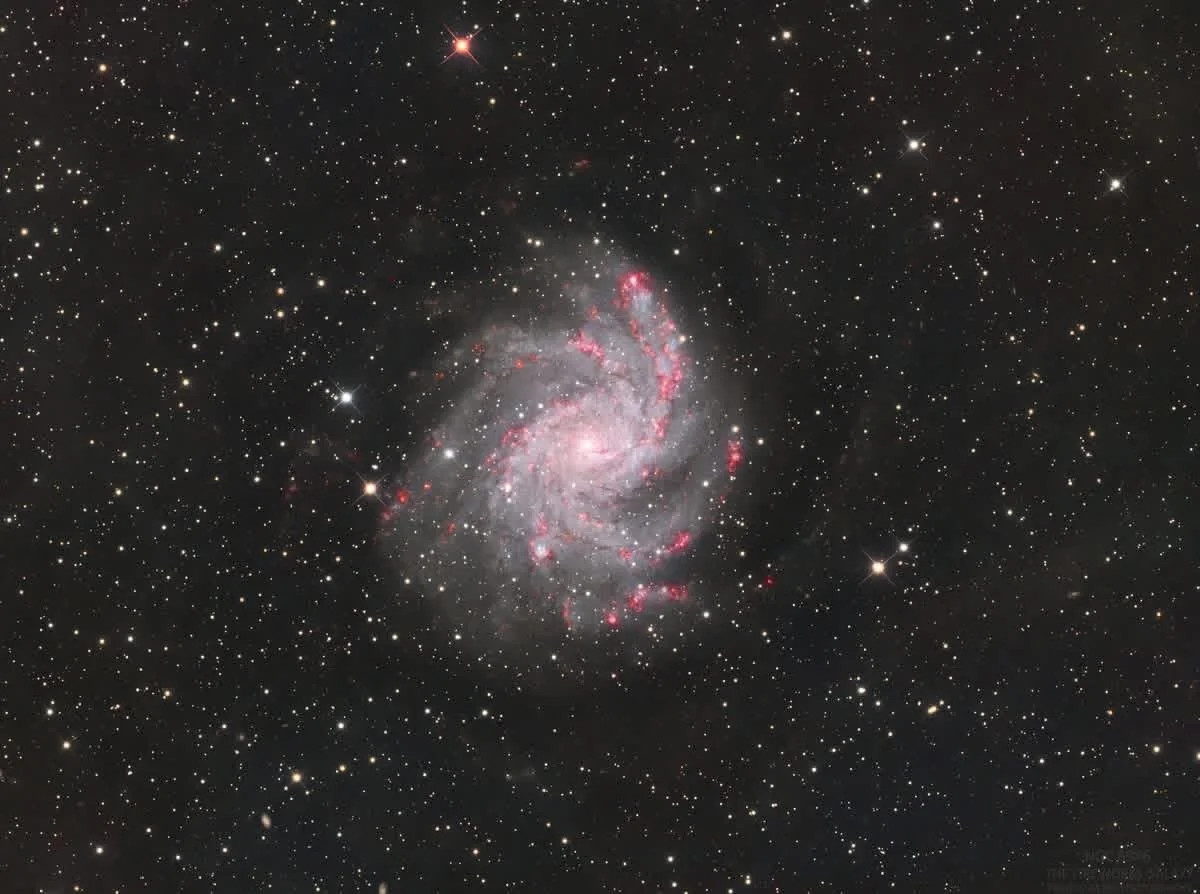
NGC 6946 is a face‑on intermediate spiral galaxy lying about 25 million light‑years away, positioned along the border of Cepheus and Cygnus. Although partially dimmed by Milky Way dust, its structure remains striking: a compact, bright nucleus, loosely wound spiral arms, and abundant gas and dust that fuel vigorous star formation. The galaxy’s inner regions show evidence of a double‑barred structure that channels material toward the core, supporting its classification as an active starburst system. Over the past century, astronomers have recorded ten supernovae exploding within its disk, an unusually high number for a single galaxy. These repeated stellar detonations, combined with its energetic star‑forming activity, are the reason NGC 6946 earned the nickname the Fireworks Galaxy. It also hosts unusual features such as the Red Ellipse, dark nebulous lanes, and the enigmatic Hodge’s Complex, making it one of the most dynamic and intriguing nearby spirals
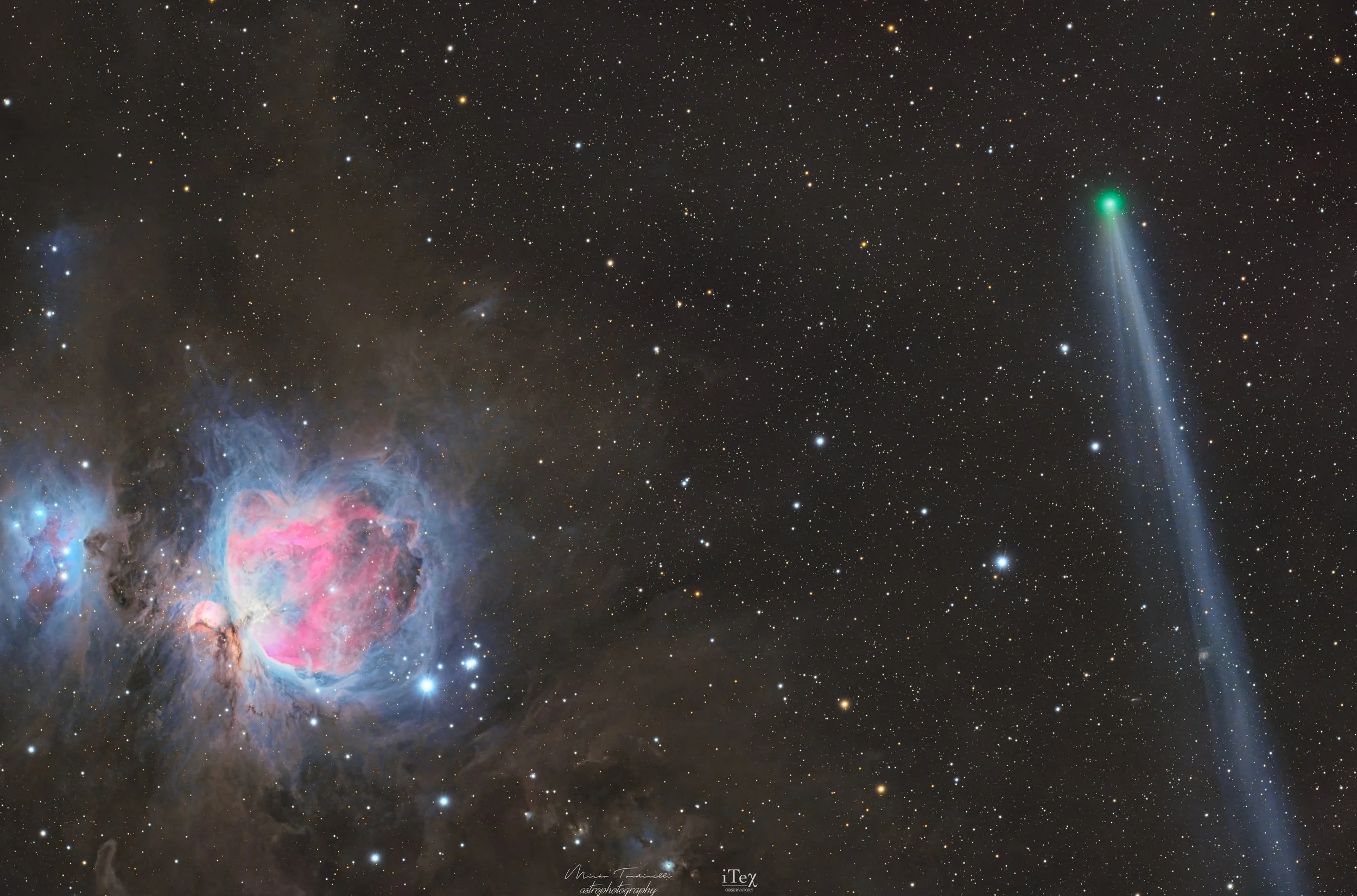
The comet encounters the Orion Nebula
Comet C-2025 R3 (PANSTARRS) quickly intersected with the magnificent M42 Nebula
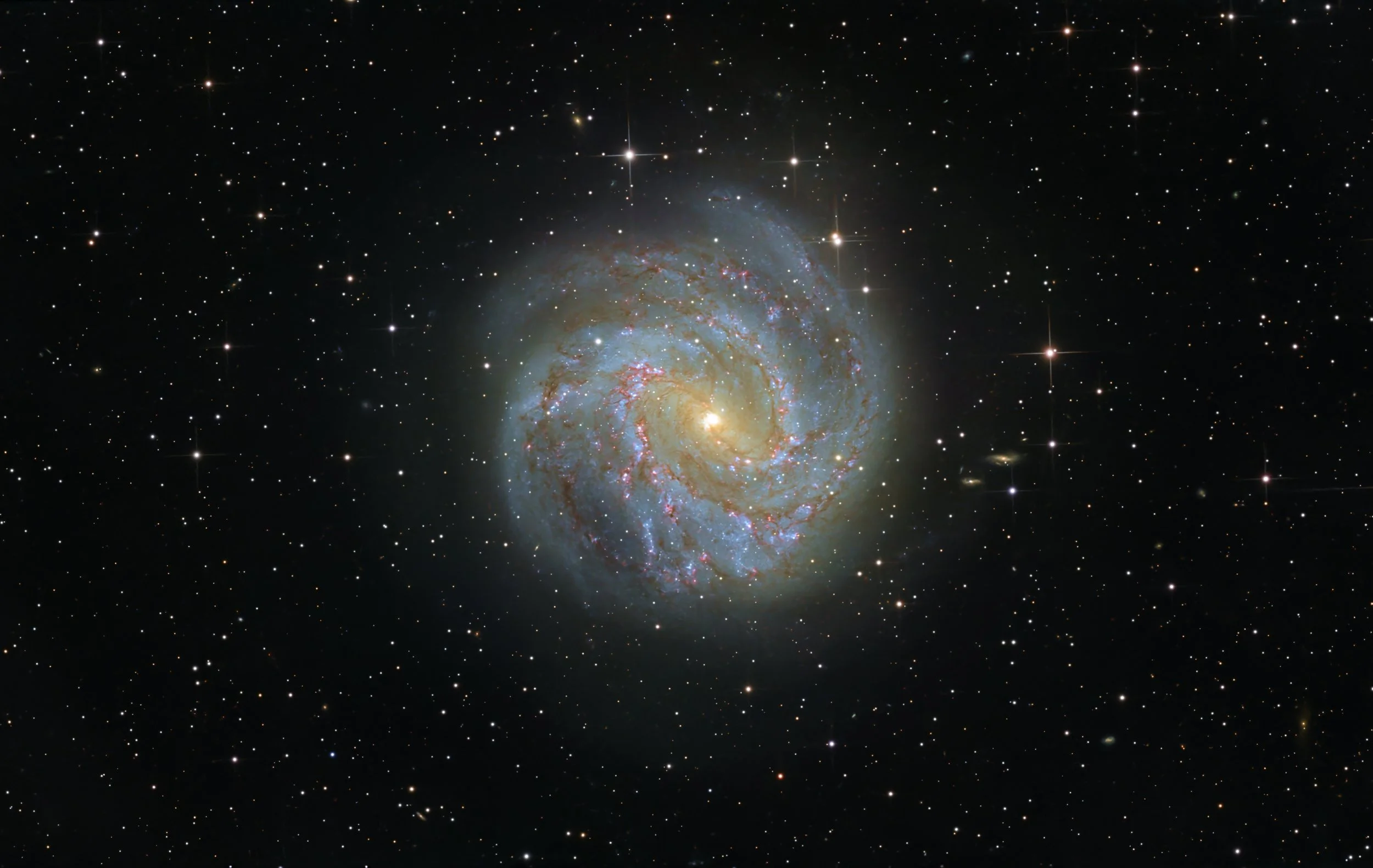
M83 Southern Pinwheel Galaxy
Messier 83, often called the Southern Pinwheel Galaxy, is one of the most photogenic and technically rewarding spiral galaxies in the southern sky. Located approximately 15 million light-years away in the constellation Hydra, it serves as a premier example of a barred spiral galaxy viewed nearly face-on. M83 is celebrated for its well-defined spiral arms, which are heavily populated by vibrant HII regions (magenta-hued star-forming nebulae) and clusters of young, blue stars. The central bar structure is prominent, funneling gas toward the nucleus and fueling an intense "starburst" of activity. Deep imaging often reveals a complex network of dark dust lanes that weave through the inner core and out into the expansive, sprawling arms.