

AAPOD2 Image Archives
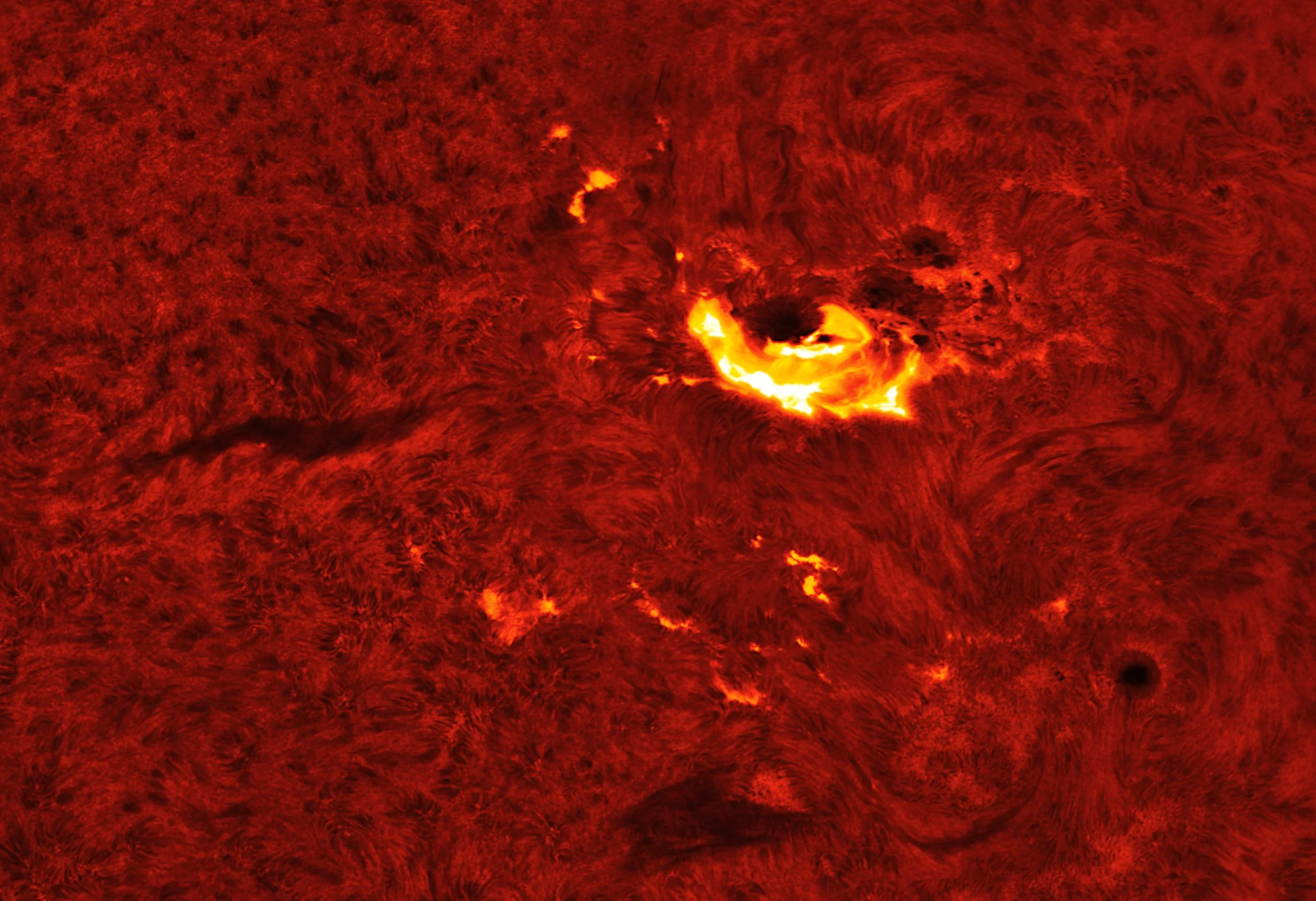
X5.16 Class Flare
On November 12, 2025, the Sun unleashed an X5.16-class flare, the most powerful of the year and the sixth most energetic event of the current solar cycle. Captured here at 10:08 UTC, precisely at the peak of its emissions in the H-alpha line, the image reveals the immense outburst erupting from the solar surface. This flare originated from a highly active sunspot region that continues to generate intense coronal mass ejections (CMEs).
The blast’s charged particles struck Earth’s magnetic field roughly a day later, sparking brilliant auroras visible as far south as South Florida, an exceptionally rare sight for the region. Skywatchers across North America and Europe reported vivid red and green curtains of light sweeping across the horizon, a dramatic reminder of our Sun’s dynamic power as Solar Maximum approaches.
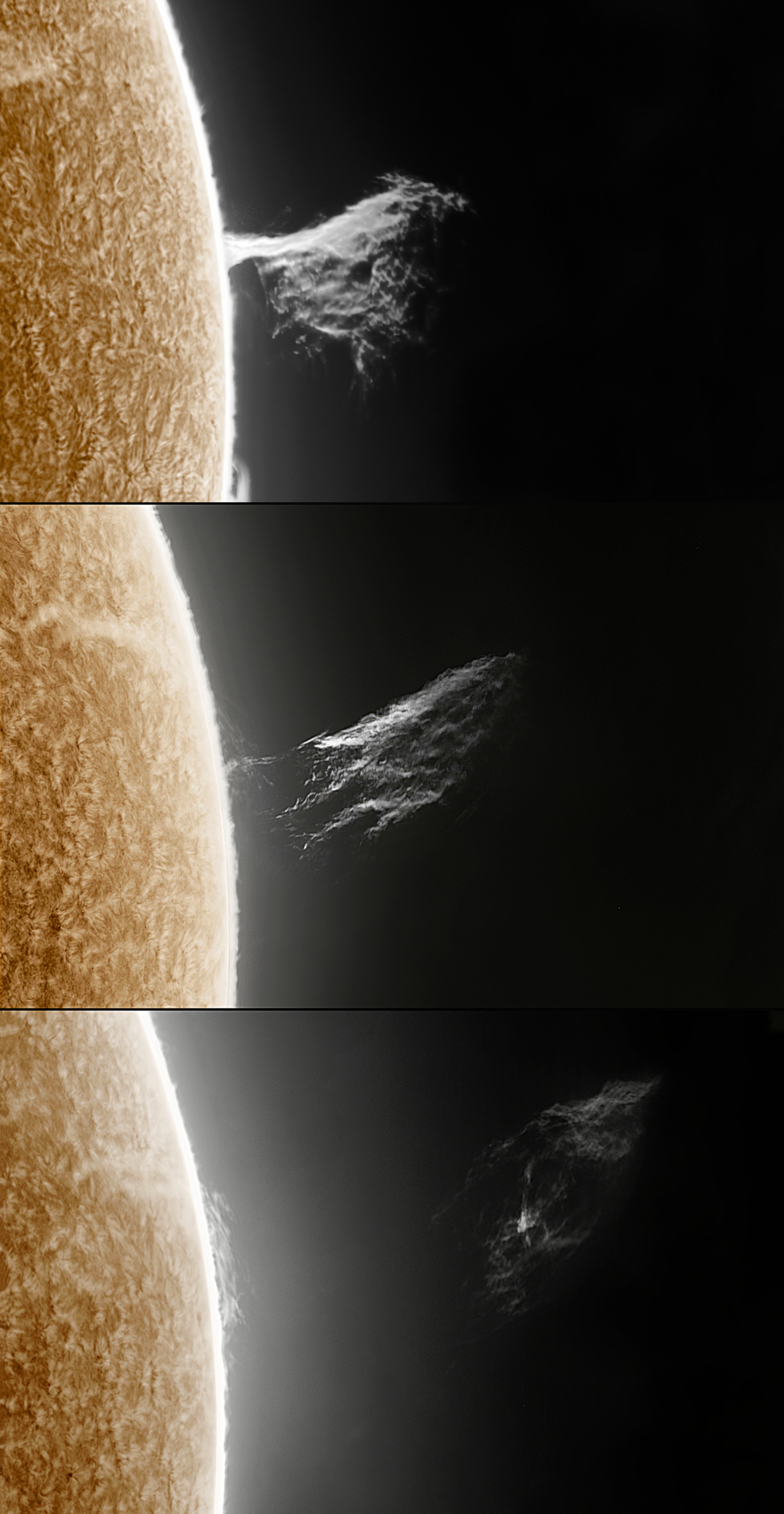
Colossus CME
A dramatic evolution of a massive solar prominence that erupted from the Sun’s limb. Towering over 300,000 kilometers above the chromosphere, this colossal plasma structure offered a vivid display of solar activity and dynamic magnetic forces at work.
The image sequence documents three key stages of the event:
• June 28, 05:47 UTC – The prominence appeared stable, resembling a massive, tree-like arch rising from the solar surface.
• June 29, 06:02 UTC – The structure began to stretch and detach, signaling the start of an outbound eruption.
• June 29, 16:56 UTC – The prominence had fully lifted away from the Sun, transforming into a faint, wispy cloud as it rapidly disintegrated and expanded into the heliosphere.
This event likely culminated in a Coronal Mass Ejection (CME), sending charged particles into space at incredible speeds. It's a powerful reminder of the Sun’s ever-changing, dynamic nature.
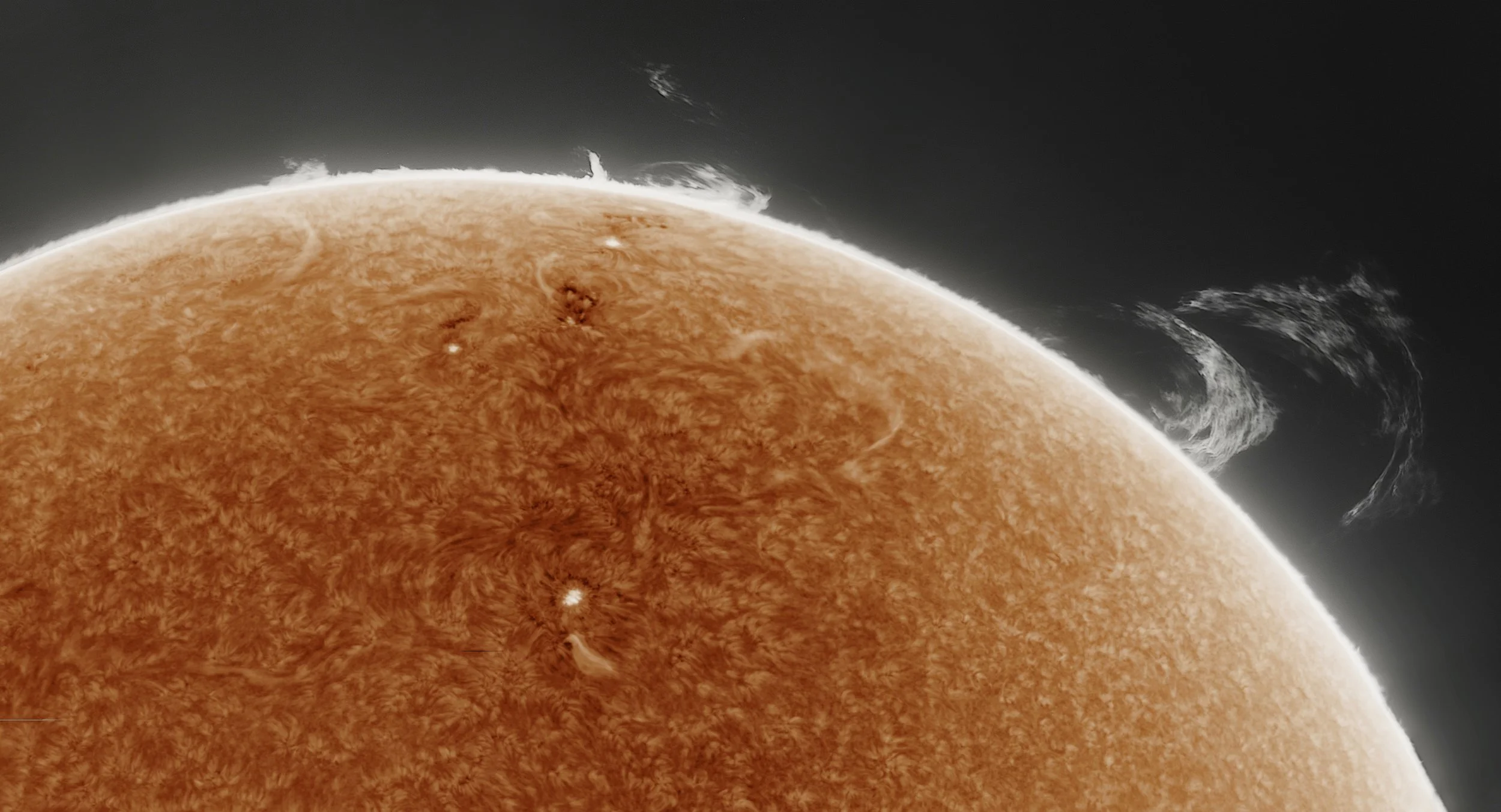
Great Coronal Mass Ejection
This high-resolution view captures the dynamic edge of the Sun in H-alpha light, revealing spectacular prominences arcing above the solar limb. These luminous plasma structures, suspended by magnetic fields, extend tens of thousands of kilometers into space. The twisting motion seen in the large prominence at upper right suggests a complex and active magnetic field structure.
Two active sunspot regions are also visible on the solar disk, their bright plages and dark cores surrounded by swirling chromospheric filaments. These sunspots are regions of intense magnetic activity and often serve as the source of solar flares and coronal mass ejections. The solar chromosphere, rendered here in rich detail, displays the textured pattern of spicules and fibrils that dominate its surface.
Captured on June 12, 2025, at 07:45 UTC using a dedicated solar telescope with an H-alpha filter, this image provides a dramatic look at our star's constantly changing face.

The Sun after its maximum
This captivating mosaic of the Sun, composed of five meticulously aligned panels, offers a glimpse of our star as it begins to settle into a quieter phase following its solar maximum. The intricate textures of the solar surface, including active regions, sunspots, and swirling plasma, are captured in extraordinary detail. The dynamic chromosphere reflects the Sun’s immense power, even as it transitions to a more subdued state in its 11-year solar cycle.
What better way to celebrate the start of a New Year than by looking at the cosmic powerhouse that sustains life on Earth? Just as the Sun begins its gradual decline in activity, the arrival of January invites us to reflect on cycles of change and renewal in our own lives.
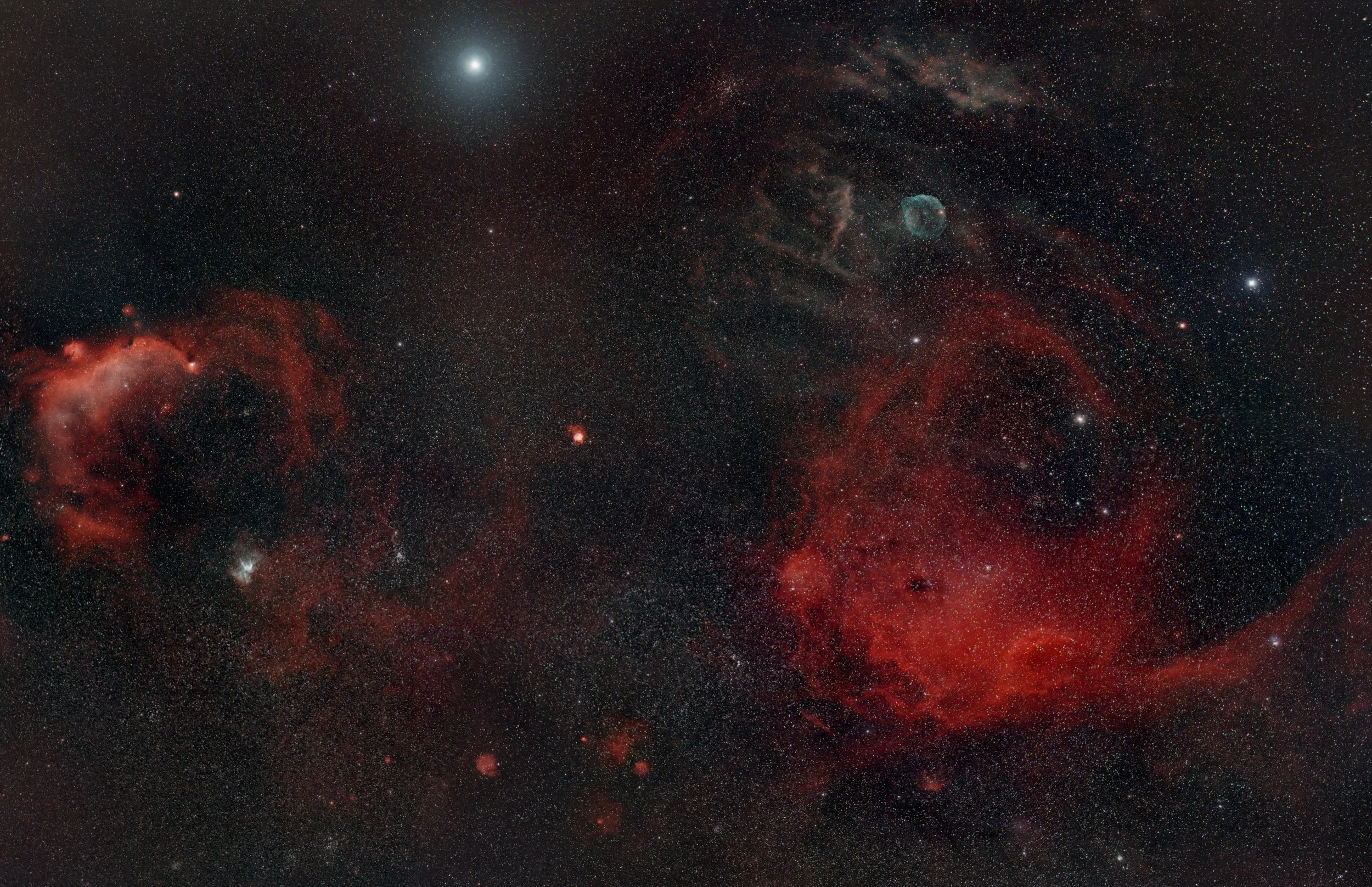
Sirius and surrounding
Spanning the expansive canvas of the night sky, this wide-field image captures the grandeur of the Canis Major constellation in all its celestial splendor. From the dazzling brilliance of Sirius, the brightest star in the night sky, to the intricate beauty of the Dolphin Head nebula, Thor's Helmet, and the Seagull Nebula, the scene is a breathtaking tapestry of cosmic wonders.
In this sweeping panorama, the celestial landscape unfolds with an array of celestial objects, each telling its own story of stellar evolution and cosmic phenomena. Against the backdrop of the cosmos, the constellation of Canis Major reveals its treasures, inviting observers to gaze upon the vastness of space and marvel at the mysteries that lie beyond.
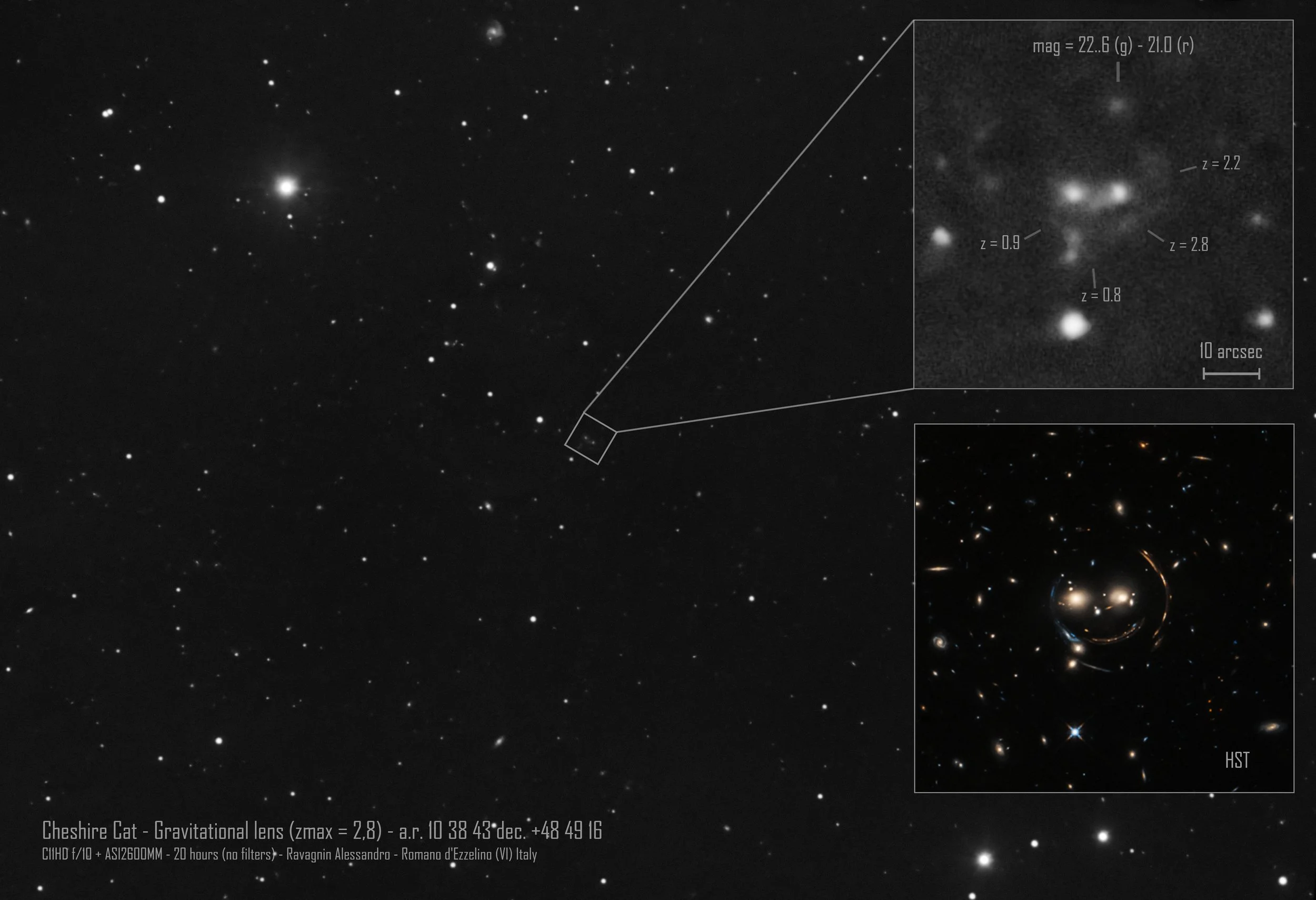
Cheshire Cat (gravitational lens)
The Cheshire Cat Gravitational Lens is a result of a cosmic dance between massive objects, where the gravitational pull of a foreground galaxy acts as a cosmic magnifying glass, bending and distorting the light from a more distant galaxy located behind it. This gravitational lensing phenomenon creates a captivating optical illusion reminiscent of the elusive grin of the Cheshire Cat.
The Cheshire Cat Gravitational Lens introduces observers to the concept of gravitational lensing—a gravitational phenomenon predicted by Einstein's theory of general relativity. This celestial cat's grin serves as a visual reminder of the profound influence of gravity on the paths that light takes through the vast expanse of space.
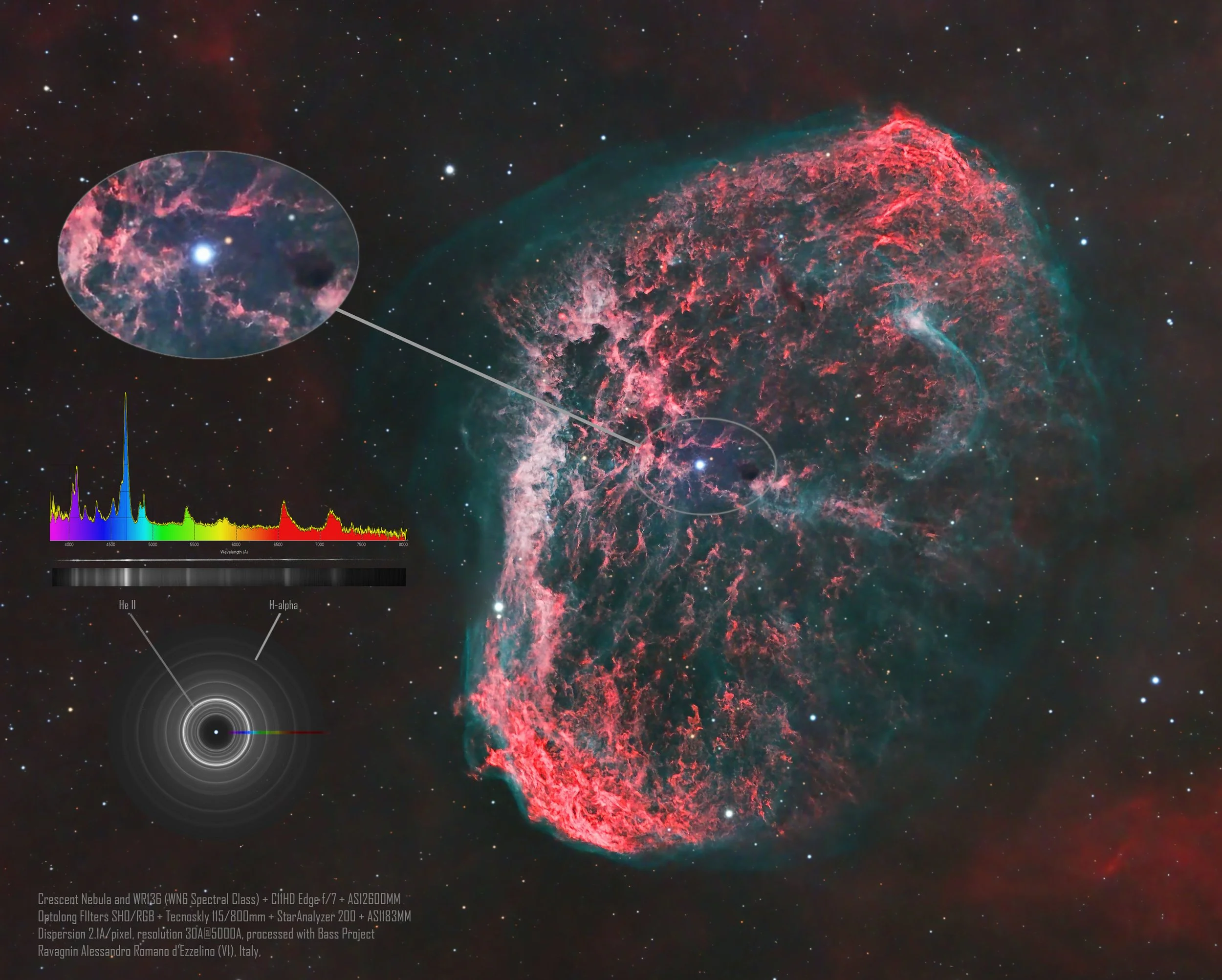
The Crescent nebula and its central star WR136
Wolf-Rayet stars are evolved, massive stars that have shed their outer layers, revealing a hot and dense core. WR 136 is no exception, displaying strong stellar winds that propel material into space. These winds create a nebula around the star, contributing to the surrounding interstellar environment.
The binary nature of WR 136 adds another layer of interest. The companion star, which is not a Wolf-Rayet star, orbits the primary star, influencing its evolution and contributing to the dynamics of the system.
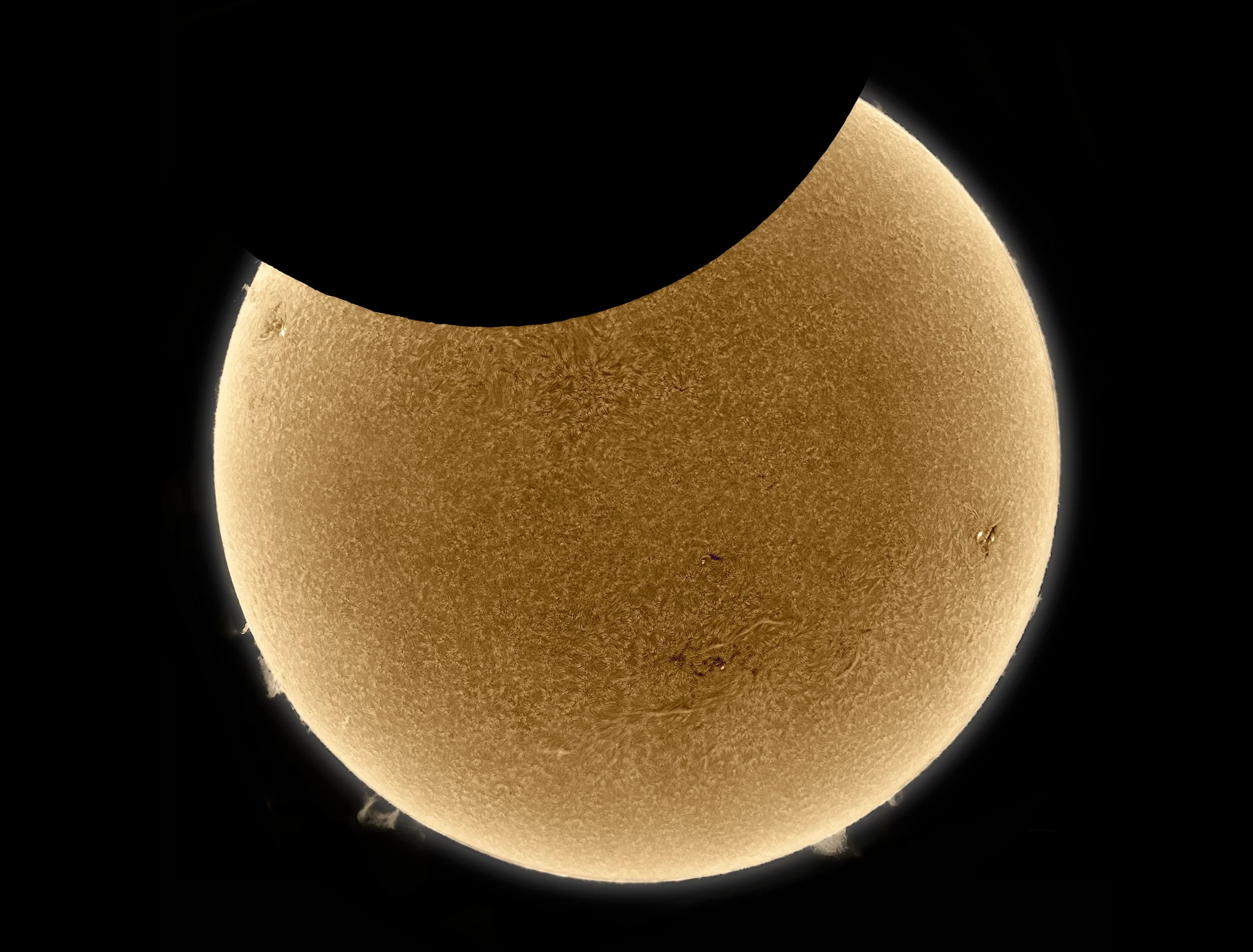
Partial solar Eclipse of the Sun
In that great journey of the stars through space, about the mighty, all-directing Sun, the pallid, faithful Moon, has been the one companion of the Earth.
A Solar Eclipse: Ella Wheeler Wilcox - 1850-1919