

AAPOD2 Image Archives
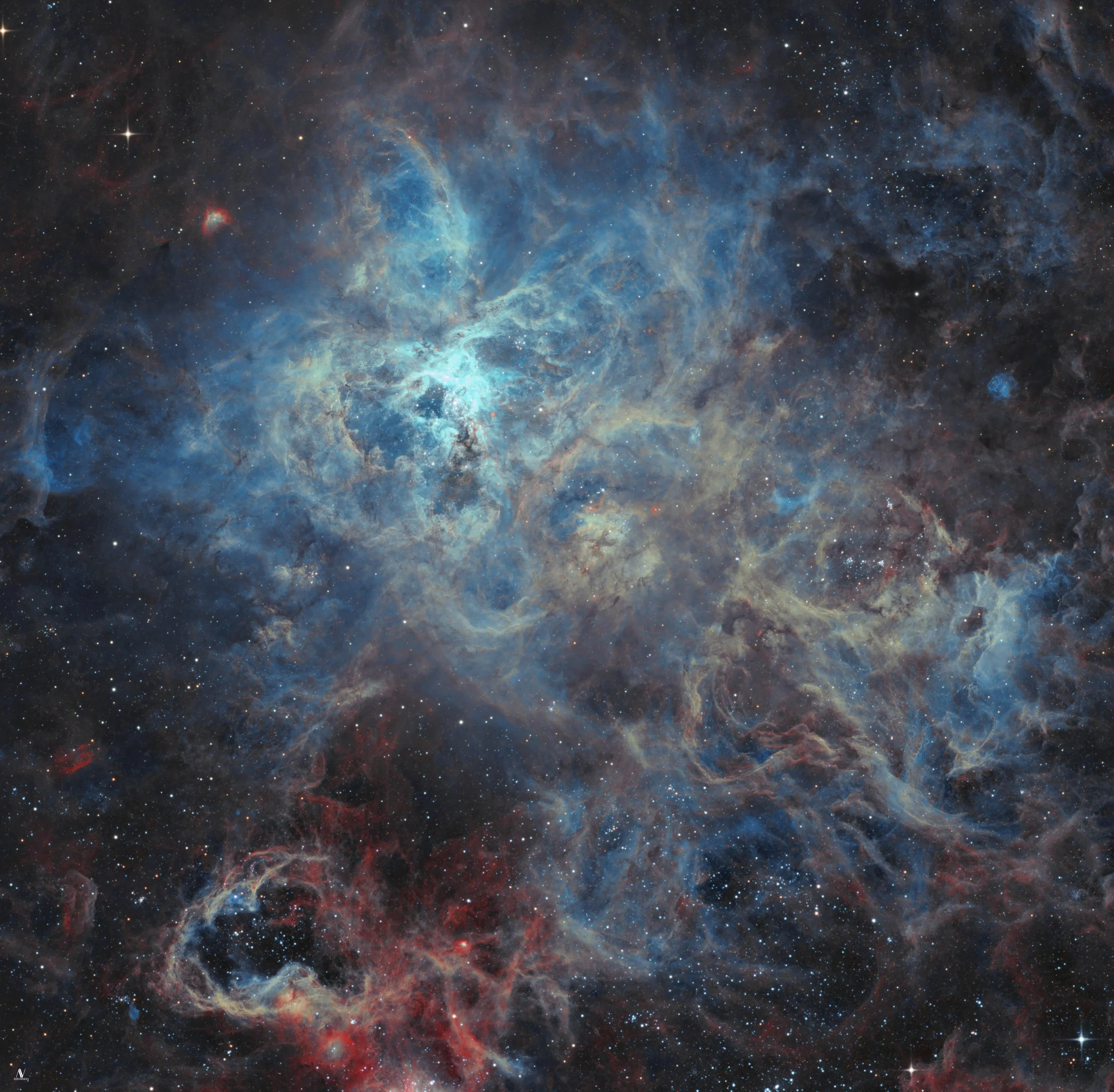
NGC 2070 – The Heart of the Tarantula Nebula
NGC 2070 is the dense, energetic core of the Tarantula Nebula, the most active star-forming region in the Local Group of galaxies. Located within the Large Magellanic Cloud roughly 160,000 light-years away, this region is dominated by the massive young star cluster R136, whose intense ultraviolet radiation ionizes the surrounding hydrogen and oxygen gas. The result is a complex network of glowing filaments, cavities, and shock fronts sculpted by stellar winds and radiation pressure from some of the most massive stars known.
Rendered here in an HOO-based palette with additional RGB contribution, ionized hydrogen traces vast turbulent clouds while doubly ionized oxygen highlights the hottest and most energetic structures near the cluster core. Dark dust lanes weave through the luminous gas, marking regions where future stars may still be forming. Captured from Obstech in Chile, this image reveals NGC 2070 not as a single object, but as a dynamic ecosystem where stellar birth, feedback, and destruction unfold on truly galactic scales.
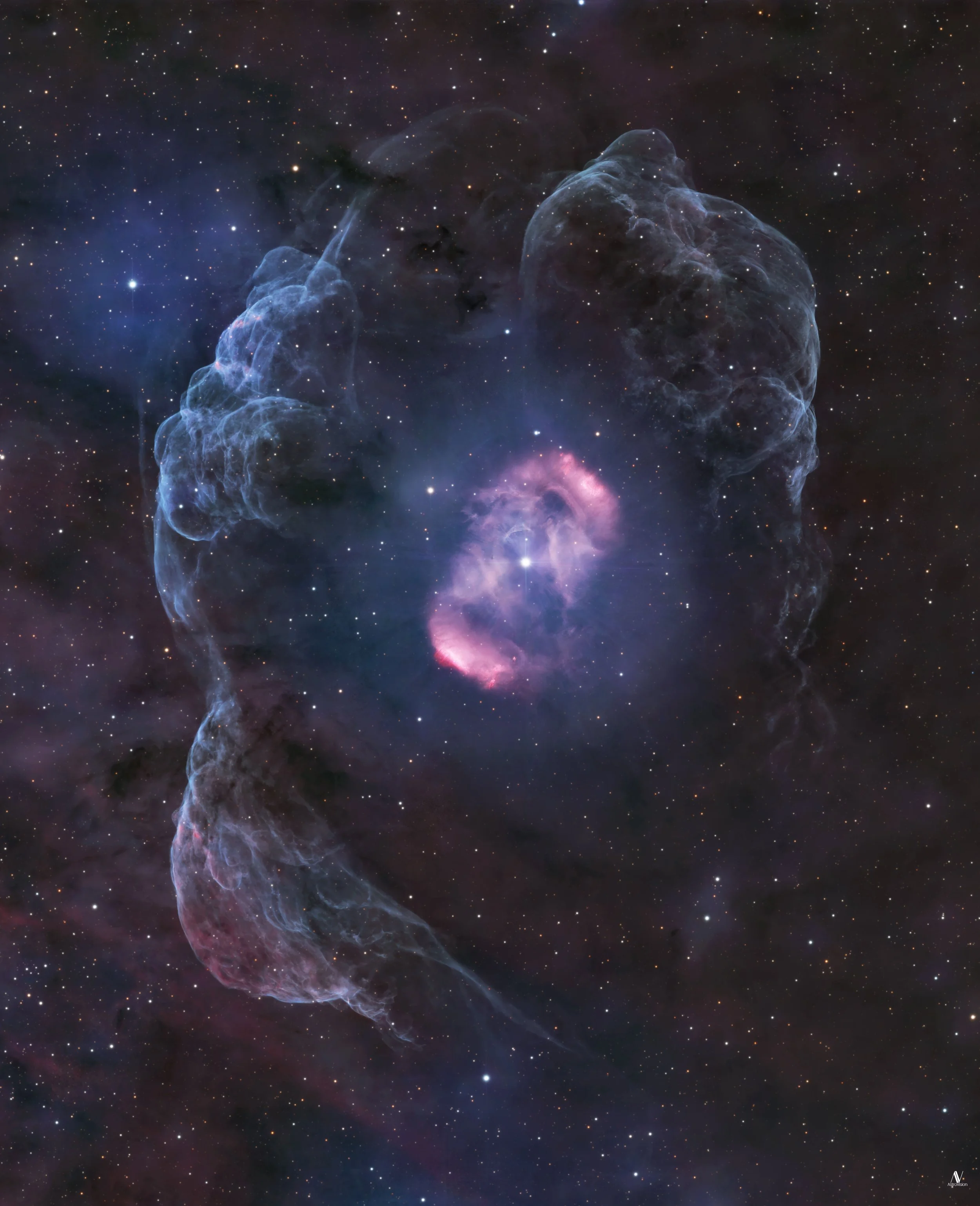
Ngc 6164 and Ngc 6165
Nestled 4,200 light-years away in the southern constellation Norma (historically La Règle), the paired emission nebulae NGC 6164 and NGC 6165 stretch outward from the massive O-type star HD 148937, forming a striking bipolar structure reminiscent of a cosmic flame or dragon’s breath. The brighter, compact central region is enveloped by faint, curving tendrils of ionized gas, which are sculpted by powerful stellar winds and past mass ejections.
The surrounding nebulosity likely resulted from HD 148937 undergoing unstable outbursts during its short, turbulent lifetime. At the heart of the image, hydrogen-alpha emission glows in magenta hues, while oxygen-rich filaments shimmer in shades of blue, revealing the complexity of this rarely imaged stellar outflow. Deep, narrowband exposures and refined processing were required to capture the delicate structure and faint outer arcs of this extraordinary object.
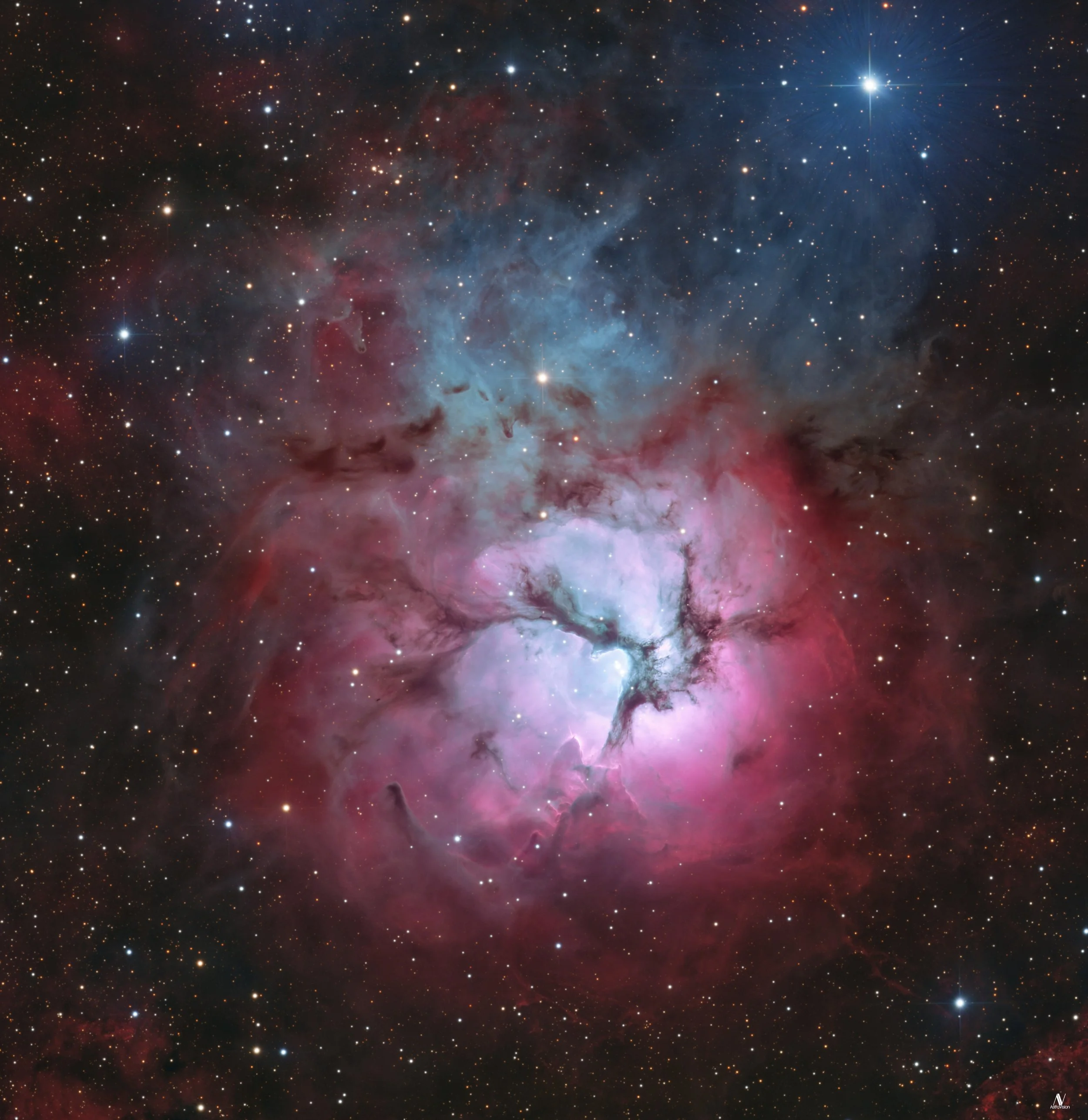
The Trifid Nebula in 81 Hours
The Trifid Nebula, also known as M20, is a rare combination of emission, reflection, and dark nebulae located in the constellation Sagittarius. This deep view reveals the intricate structure of the nebula, including the red glow of ionized hydrogen gas (Hα), the bluish reflection from nearby starlight, and the dense dust lanes that divide its bright core into three lobes. These dust lanes are responsible for the nebula’s common name, derived from the Latin word trifidus, meaning "divided into three lobes."
Captured with a total of 81 hours of exposure in Hα, RGB, and [OIII] filters, this image showcases both the rich star field of the Milky Way and the dynamic processes at play in this active star-forming region. Newborn stars within the nebula irradiate the surrounding gas and dust, triggering additional waves of star formation and sculpting the surrounding material into dramatic shapes.