
AAPOD2 Image Archives
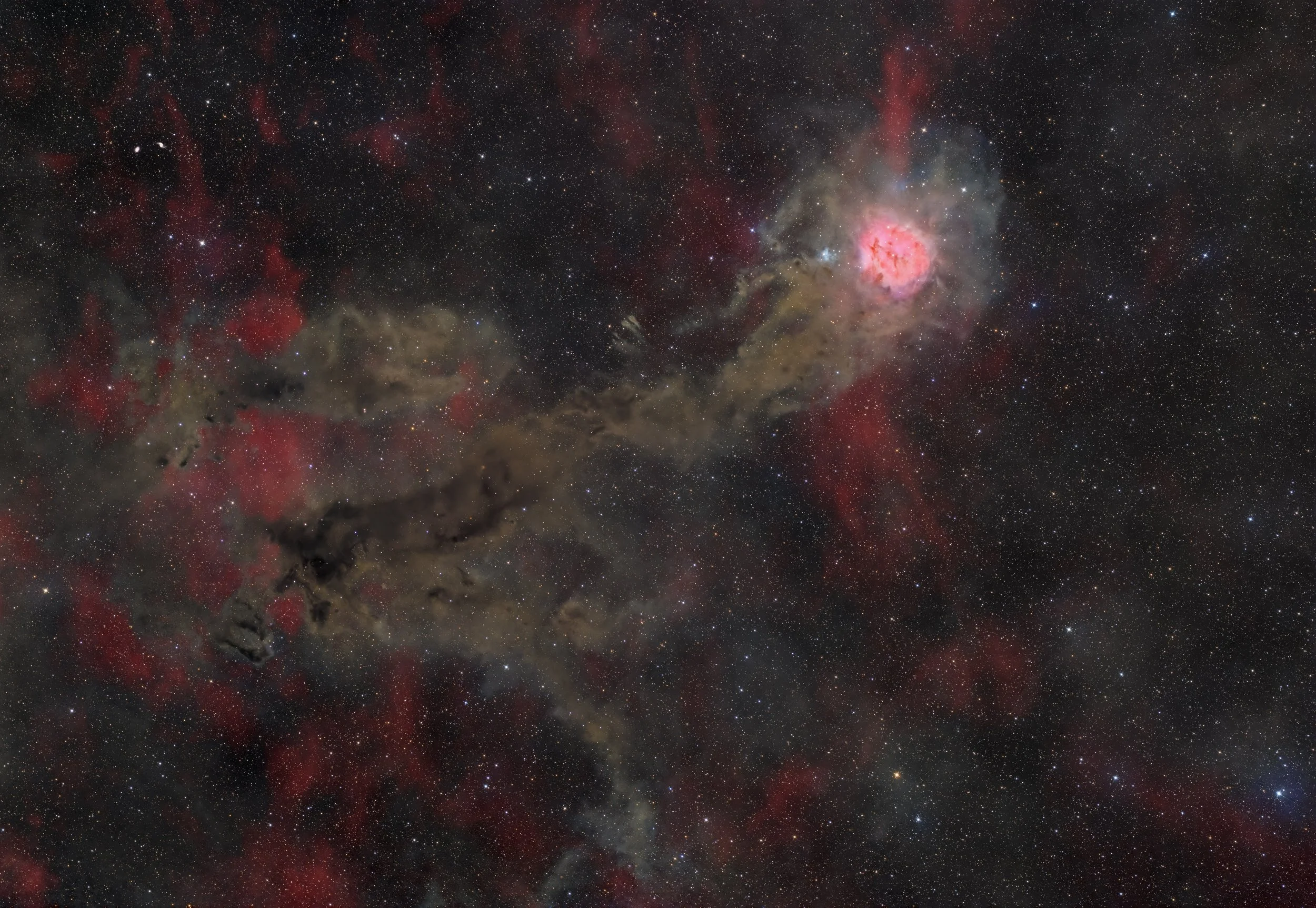
Ic 5146 HA RGB - The cocoon nebula
Located approximately 4,000 light-years away in the constellation Cygnus, IC 5146—famously known as the Cocoon Nebula—presents a striking cosmic display of emission, reflection, and absorption nebulae. Glowing softly at the end of a long dark dust cloud, this star-forming region shines with vibrant pinkish-red Hydrogen-alpha emissions surrounding a central cluster of young stars.
Captured over 11 hours of exposure using a broad-band RGB and dual-band narrowband filter setup, this image beautifully highlights the intricate dark dust lanes trailing into the dense, star-filled cosmic backdrop.
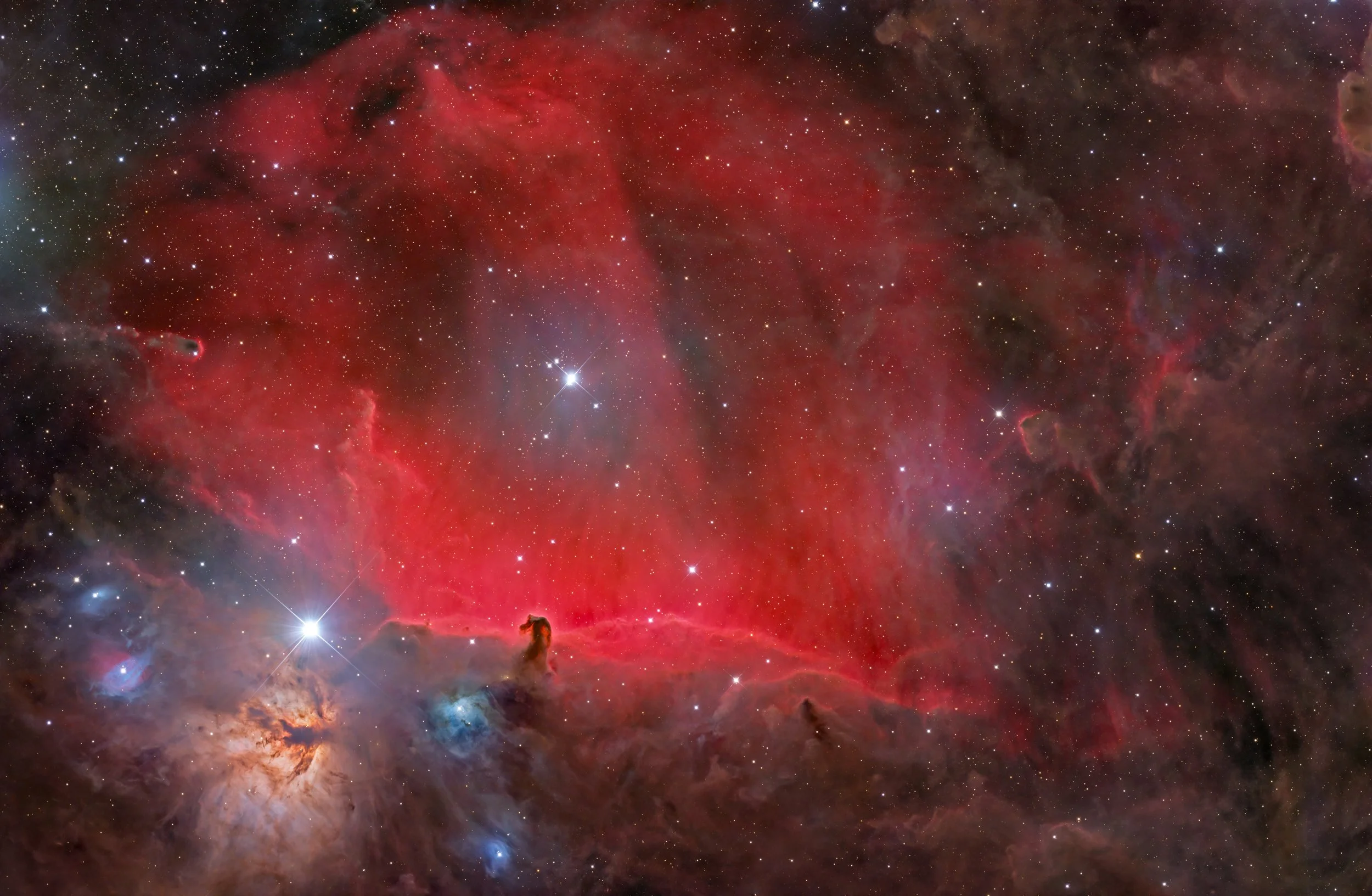
The Horsehead in Hydrogen Light (IC 434)
Rising from the glowing curtain of IC 434, the iconic Horsehead Nebula (Barnard 33) appears here in a detailed Ha-RGB composition that blends narrowband hydrogen-alpha with natural color stars and dust. Located about 1,300 light-years away in Orion, this dense knot of cold molecular gas is silhouetted against the ionized hydrogen emission behind it, creating one of the most recognizable profiles in the night sky. The bright star Sigma Orionis, part of a young OB association, provides much of the ultraviolet radiation that excites the surrounding hydrogen, causing the deep crimson glow that defines this vast emission region.
Beneath the Horsehead lies NGC 2023, a luminous blue reflection nebula powered by the hot star HD 37903, while intricate lanes of interstellar dust weave through the wider field. The Ha-RGB approach enhances faint hydrogen structures while preserving stellar color, revealing delicate shock fronts, wispy filaments, and subtle gradients within the nebula. Together, these elements showcase an active stellar nursery where radiation, gravity, and dust interact to sculpt the cloud, offering both a scientifically rich and visually striking portrait of ongoing star formation.
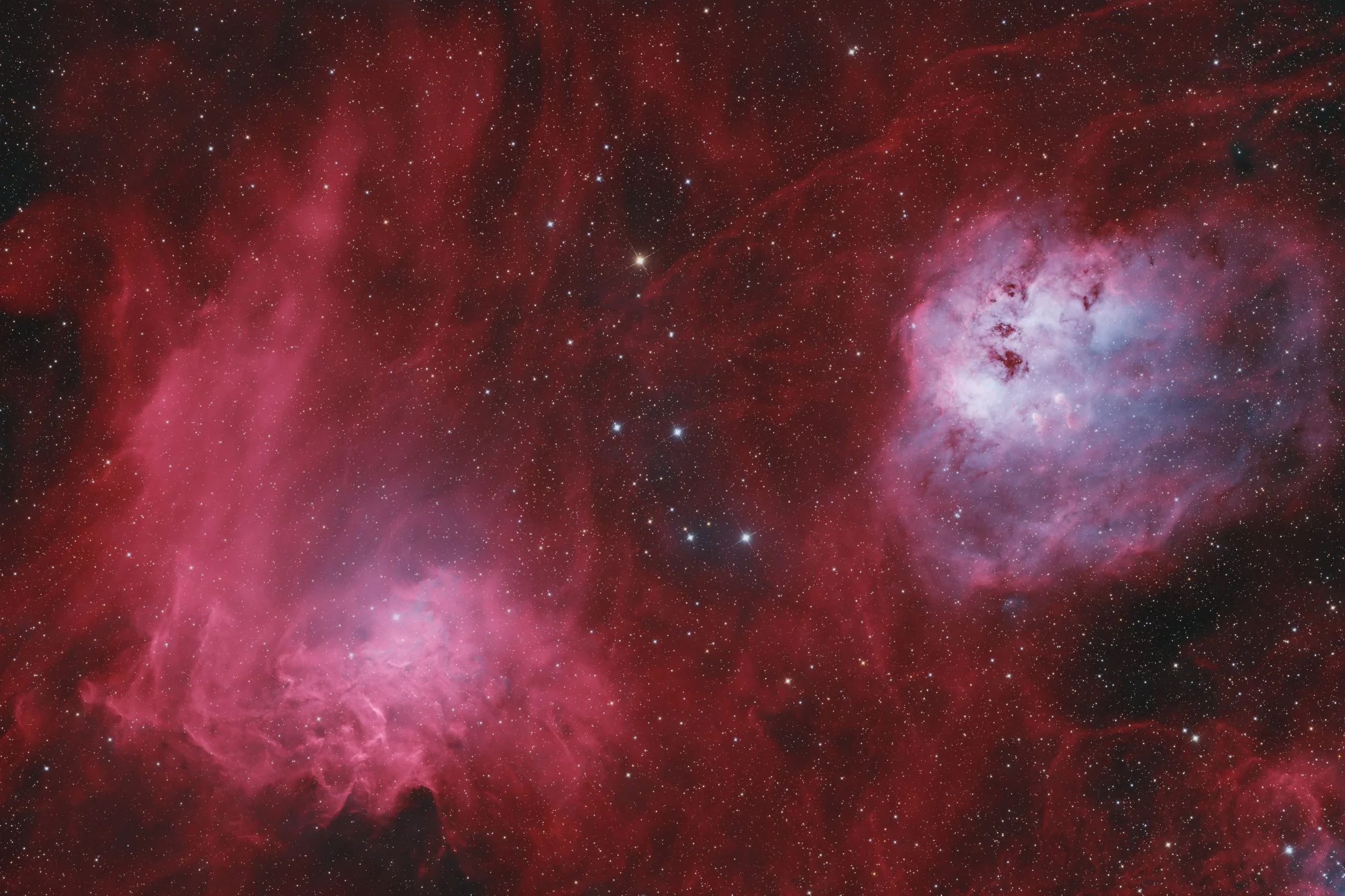
IC 405 and IC 410 in Auriga
The Flaming Star Nebula (IC 405, left) and the Tadpole Nebula (IC 410, right) form one of Auriga’s most dynamic emission-reflection pairings. IC 405 glows in deep hydrogen emission shaped by the powerful ultraviolet radiation of the runaway O-type star AE Aurigae. Its delicate blue tones come from reflected starlight scattering off fine dust, while the surrounding crimson gas creates sweeping filaments that look almost fluid as they drift across the field. To the right, IC 410 reveals a brighter, more compact core where newly formed stars energize surrounding hydrogen. Embedded dark lanes and sculpted billows of gas give the nebula its textured appearance.
Across the frame, both nebulae are set inside a richly glowing hydrogen complex threaded with faint dust. The contrast between the soft, wispy emission of IC 405 and the denser, more structured glow of IC 410 highlights two different stages of stellar feedback shaping the same interstellar cloud. Together they form a dramatic portrait of star formation, radiation, and the turbulent processes that continually reshape the Milky Way’s nearby star-forming regions.