
AAPOD2 Image Archives
the Helix Nebula in Unprecedented Depth
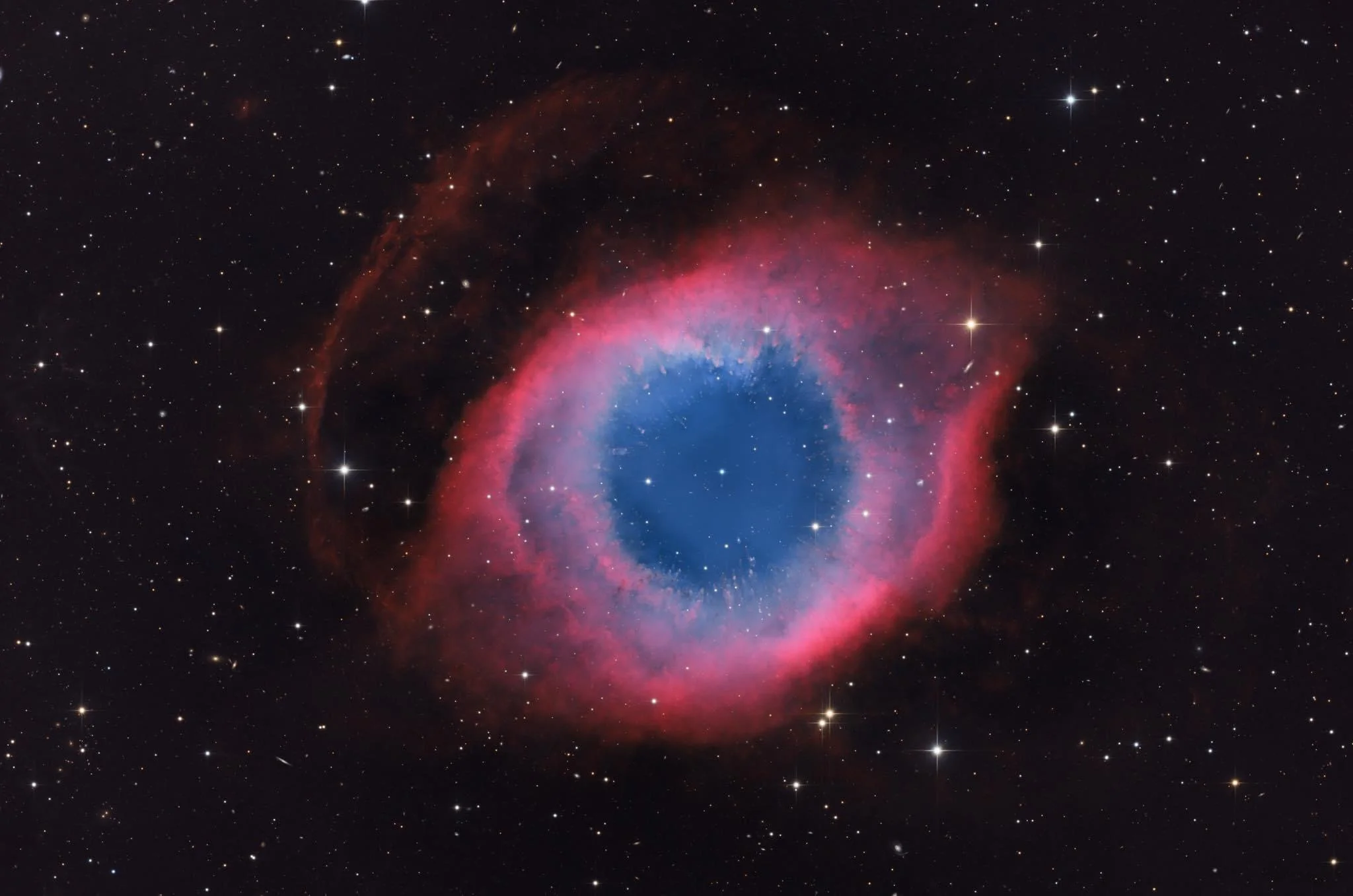
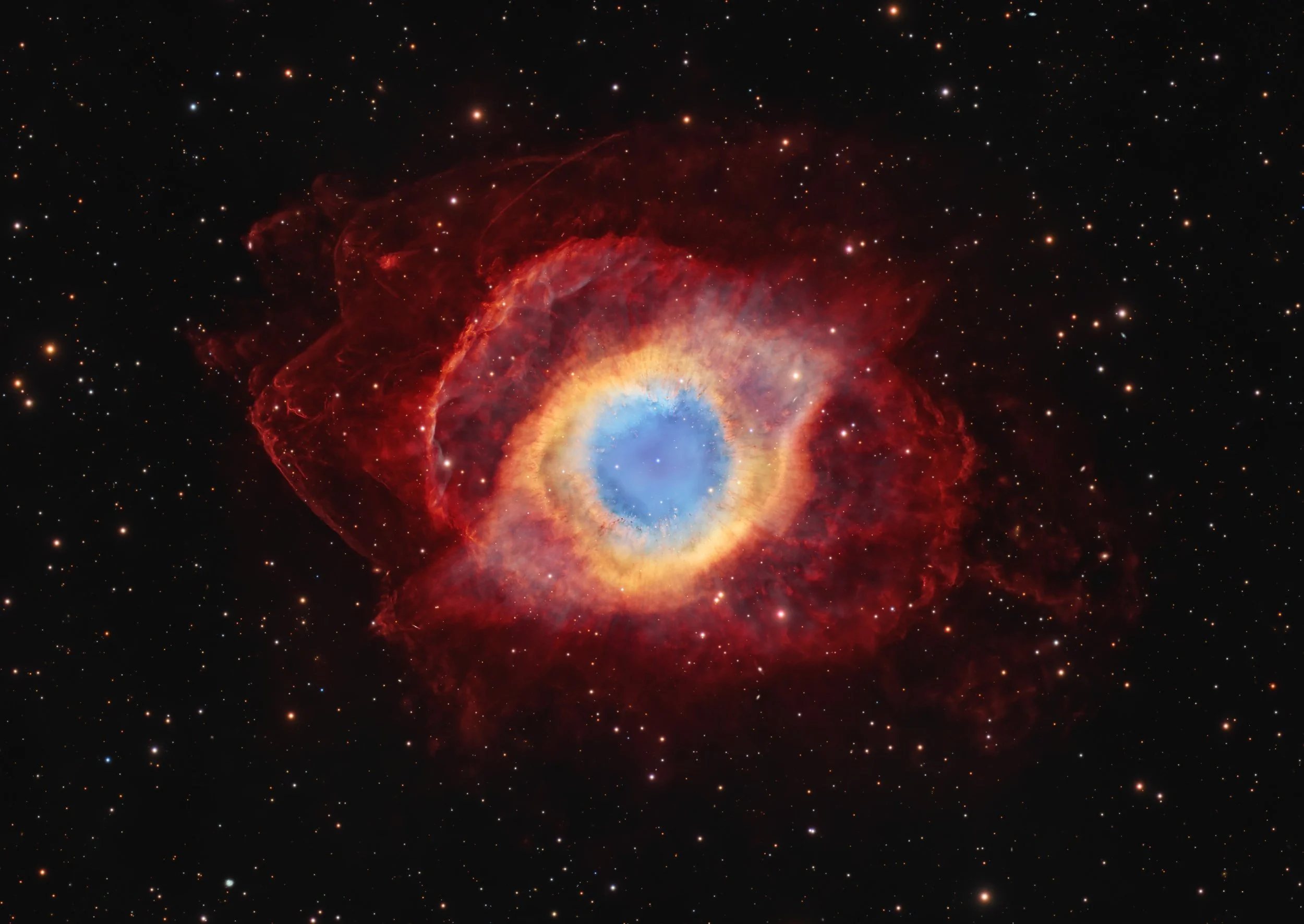
This extraordinary 670-hour integration of the Helix Nebula reveals the full complexity of one of the closest known planetary nebulae to Earth. Located about 650 light-years away in the constellation Aquarius, the Helix is the expanding outer envelope of a Sun-like star in its final stages of evolution. The luminous blue core traces highly ionized oxygen gas energized by the hot central white dwarf, while the golden inner ring and surrounding crimson structures highlight hydrogen and sulfur emissions sculpted by stellar winds and radiation.
The exceptional depth of this integration exposes extremely faint outer extensions rarely recorded in such clarity, including wispy filaments and asymmetric halos that map the nebula’s interaction with the surrounding interstellar medium. RGB data were carefully processed to preserve natural star colors and reveal background galaxies scattered across the field, while narrowband data were layered in a custom SHO palette inspired by the Hubble Space Telescope image of the Helix. The result is both scientifically revealing and visually immersive, capturing the fragile, expanding remains of a star not unlike our own Sun’s distant future.
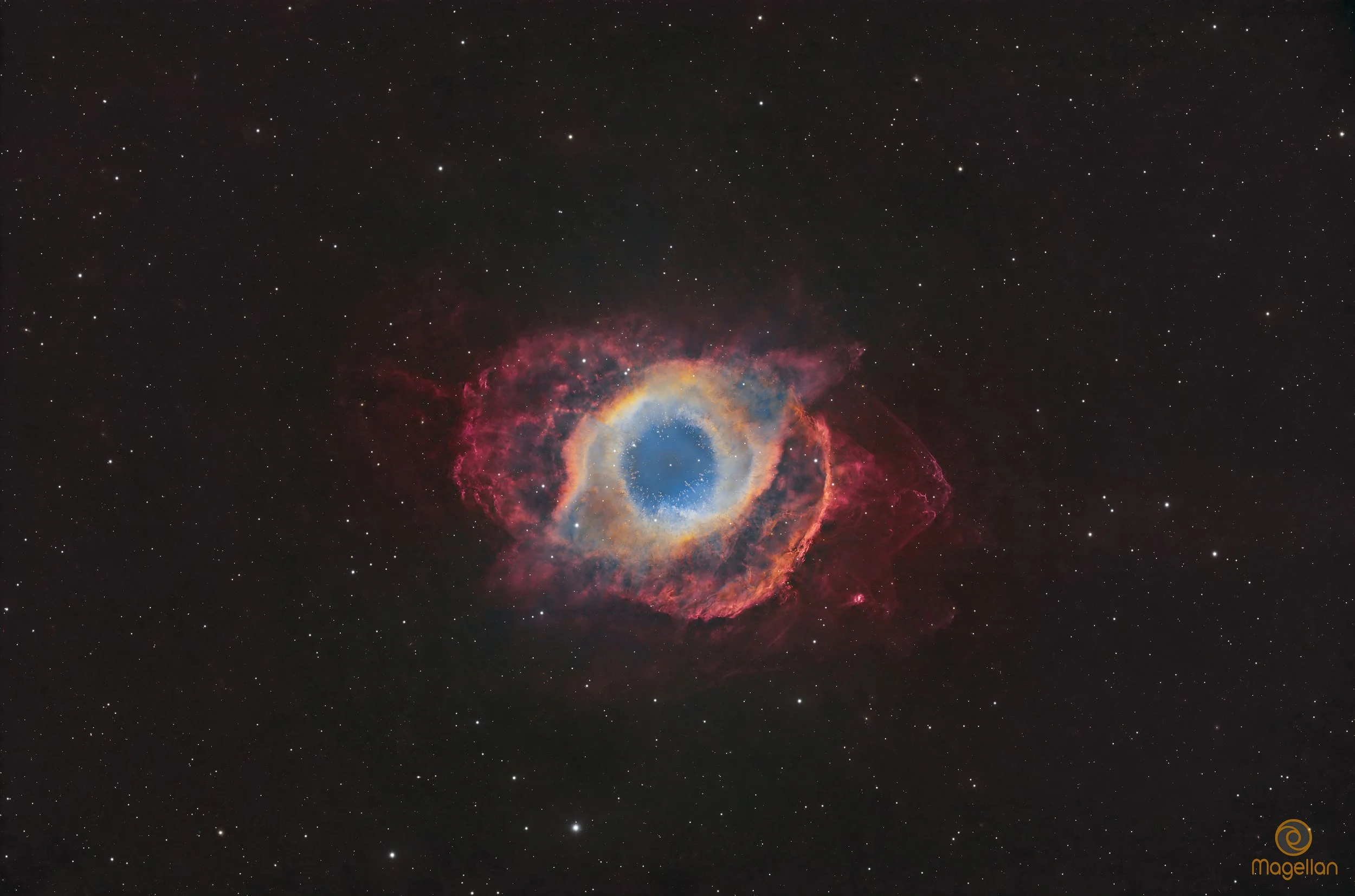
Deep View of the Helix Nebula
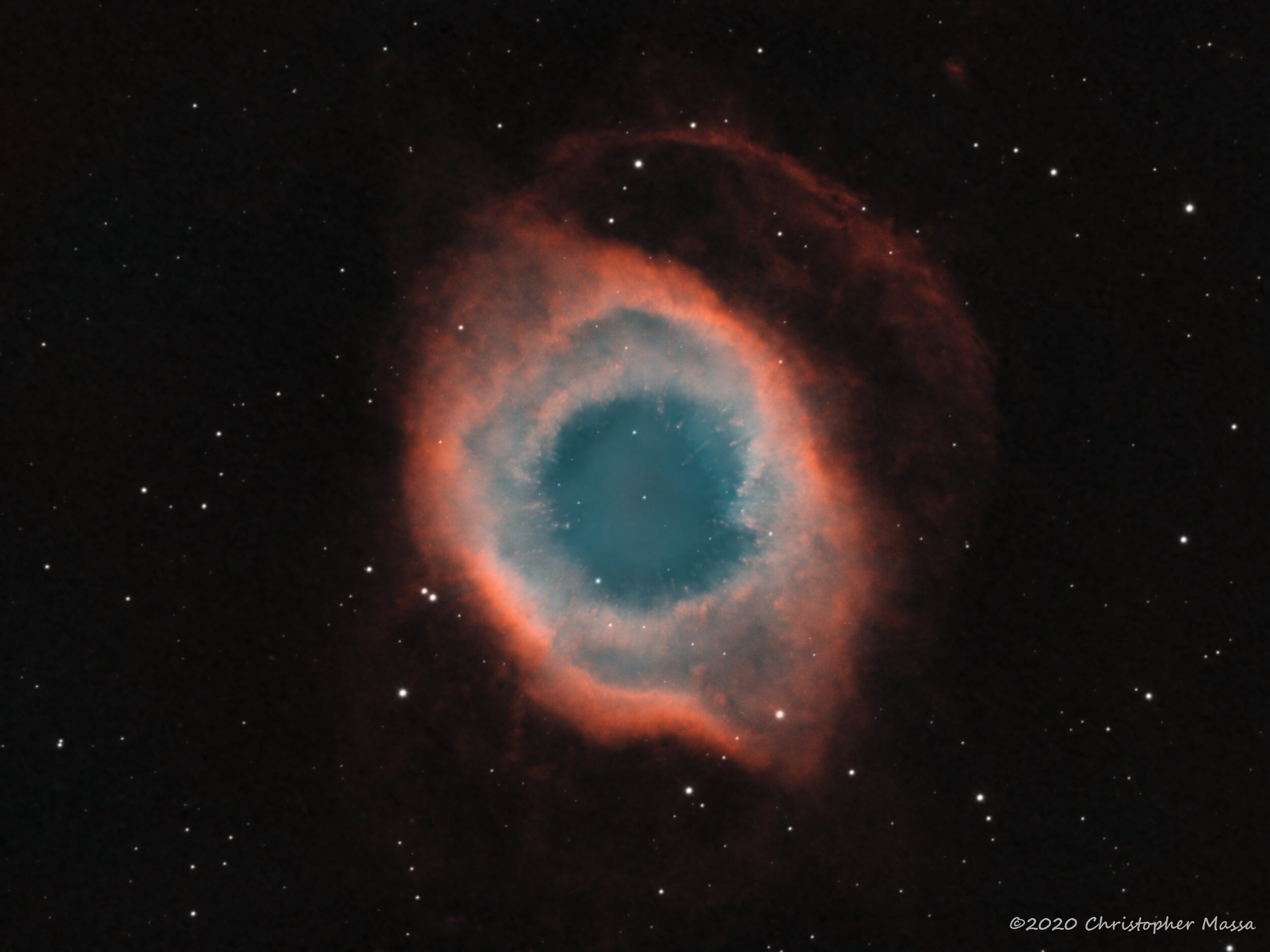
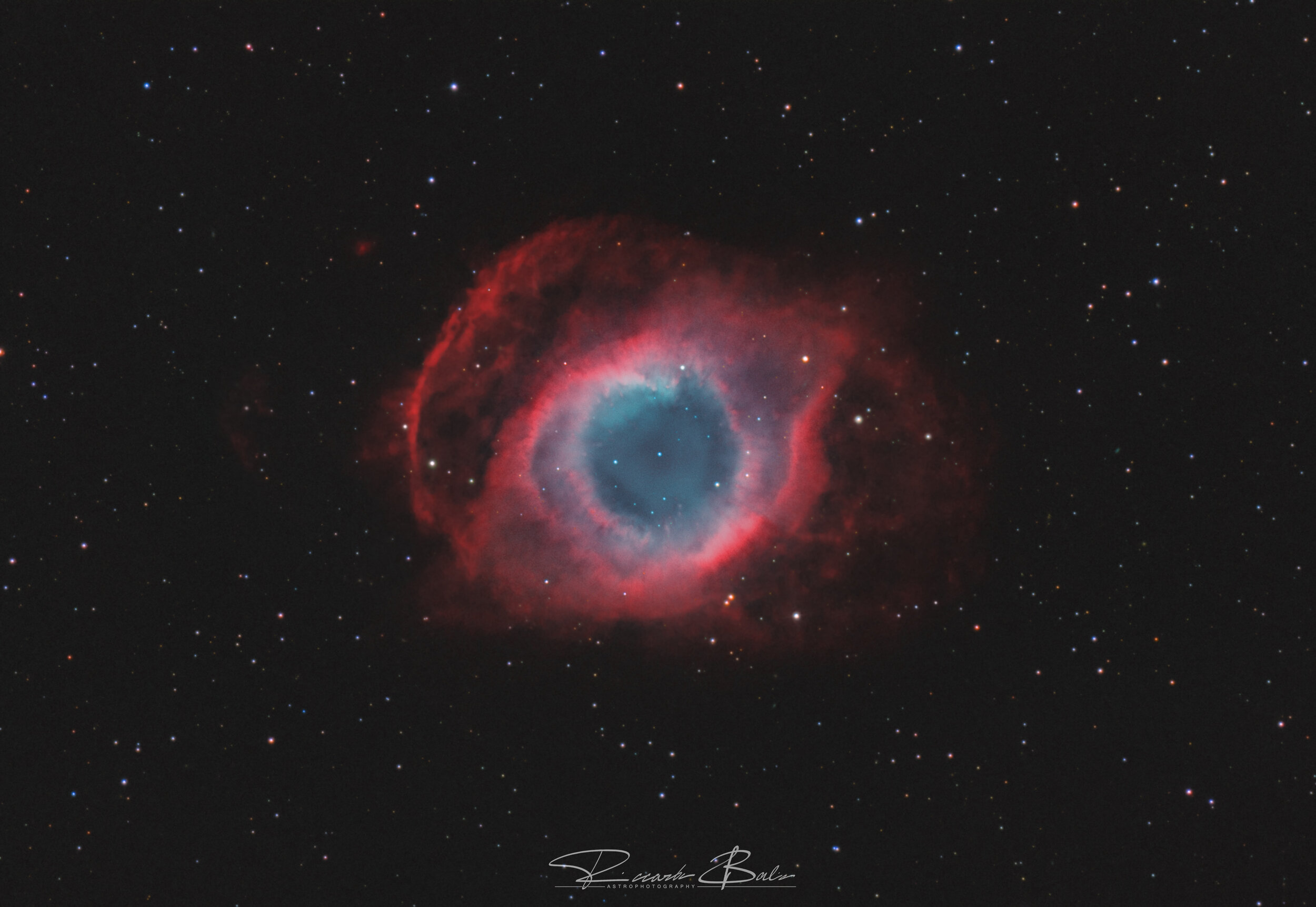
NGC 7293, better known as the Helix Nebula, is a planetary nebula located approximately 655 light-years away in the constellation Aquarius. Often nicknamed the “Eye of God” for its shape, the Helix represents the final stages in the life of a Sun-like star, as it sheds its outer layers into space. The exposed stellar core, a white dwarf, remains at the center, illuminating the surrounding gases in vivid emission.
This image is a deep and highly detailed view composed of more than 115 hours of integration: 289 exposures in H-alpha, 186 in SII, 180 in OIII (each 600 seconds), and shorter RGB exposures to preserve color fidelity. The resulting composite reveals intricate filaments of ionized gas and the faint outer halo, rarely captured in such clarity. The contrast between the bright inner ring and the extended tendrils of gas adds striking dimensionality to this iconic object.