

AAPOD2 Image Archives
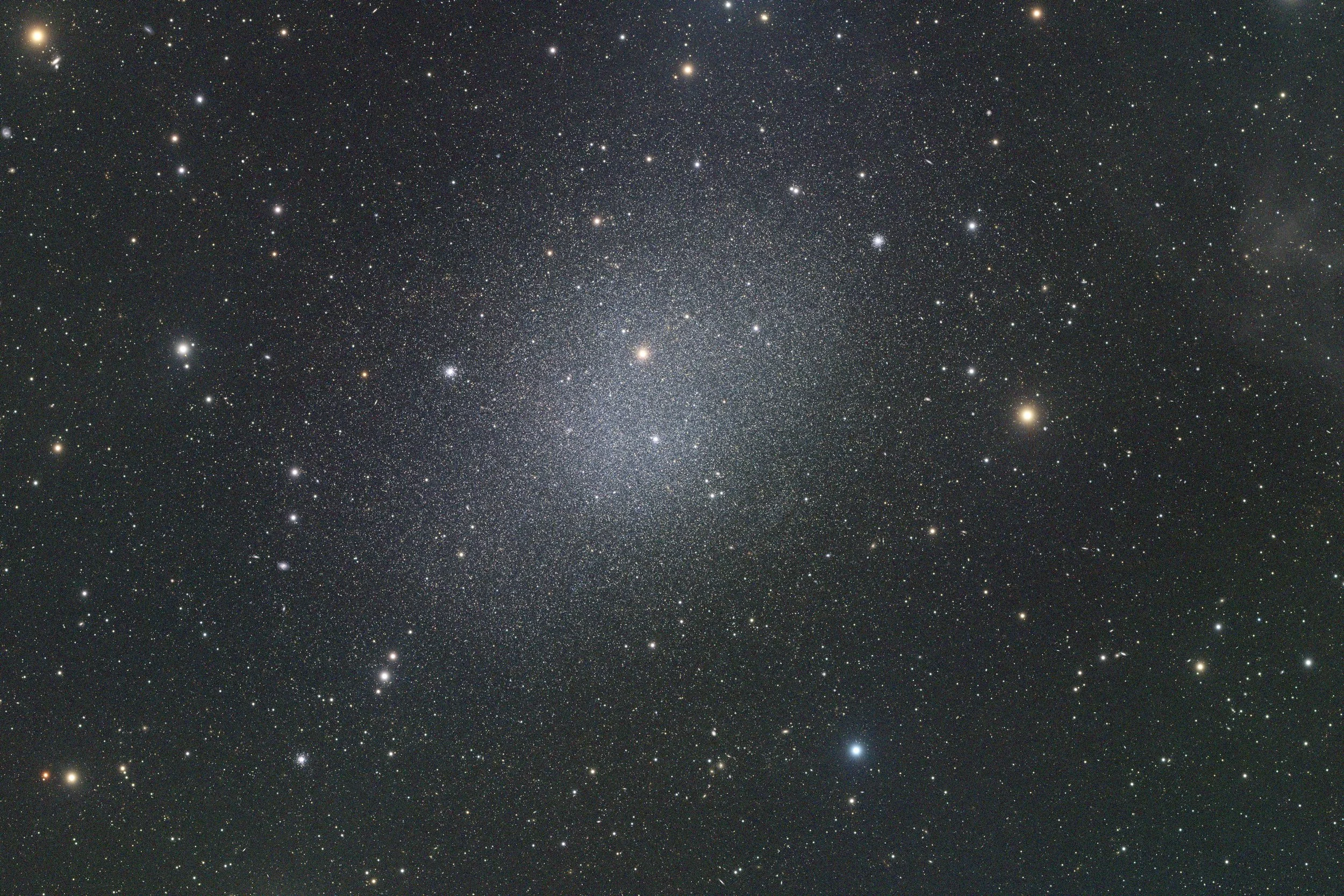
The Fornax Dwarf Spheroidal galaxy
The Fornax globular clusters are a collection of six bound star clusters located within the Fornax Dwarf Spheroidal Galaxy (dSph), a satellite galaxy of the Milky Way located approximately 460,000–530,000 light-years away in the constellation Fornax.
Despite the galaxy's low overall density and low total mass, its globular cluster population is unusually rich.
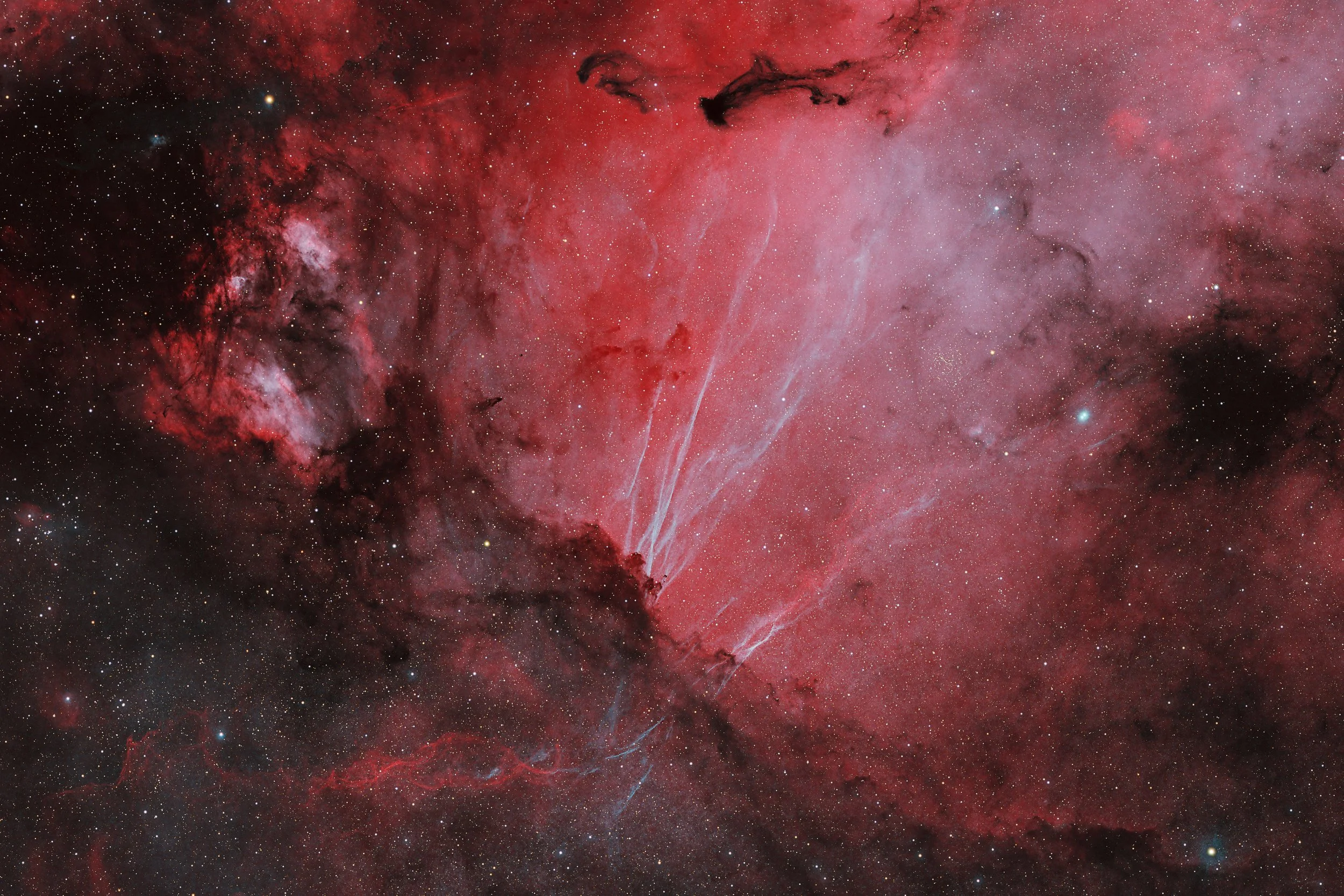
SNR G013.3-01.3 and its long, tightly grouped, glowing filaments
Tangled in the crowded starfields near M24 in Sagittarius, SNR G013.3-01.3 showcases delicate, tightly grouped ribbons of glowing interstellar gas. Swept up and heated by an expanding supernova shockwave, these faint filaments offer a vivid window into the dramatic lifecycle of massive stars.
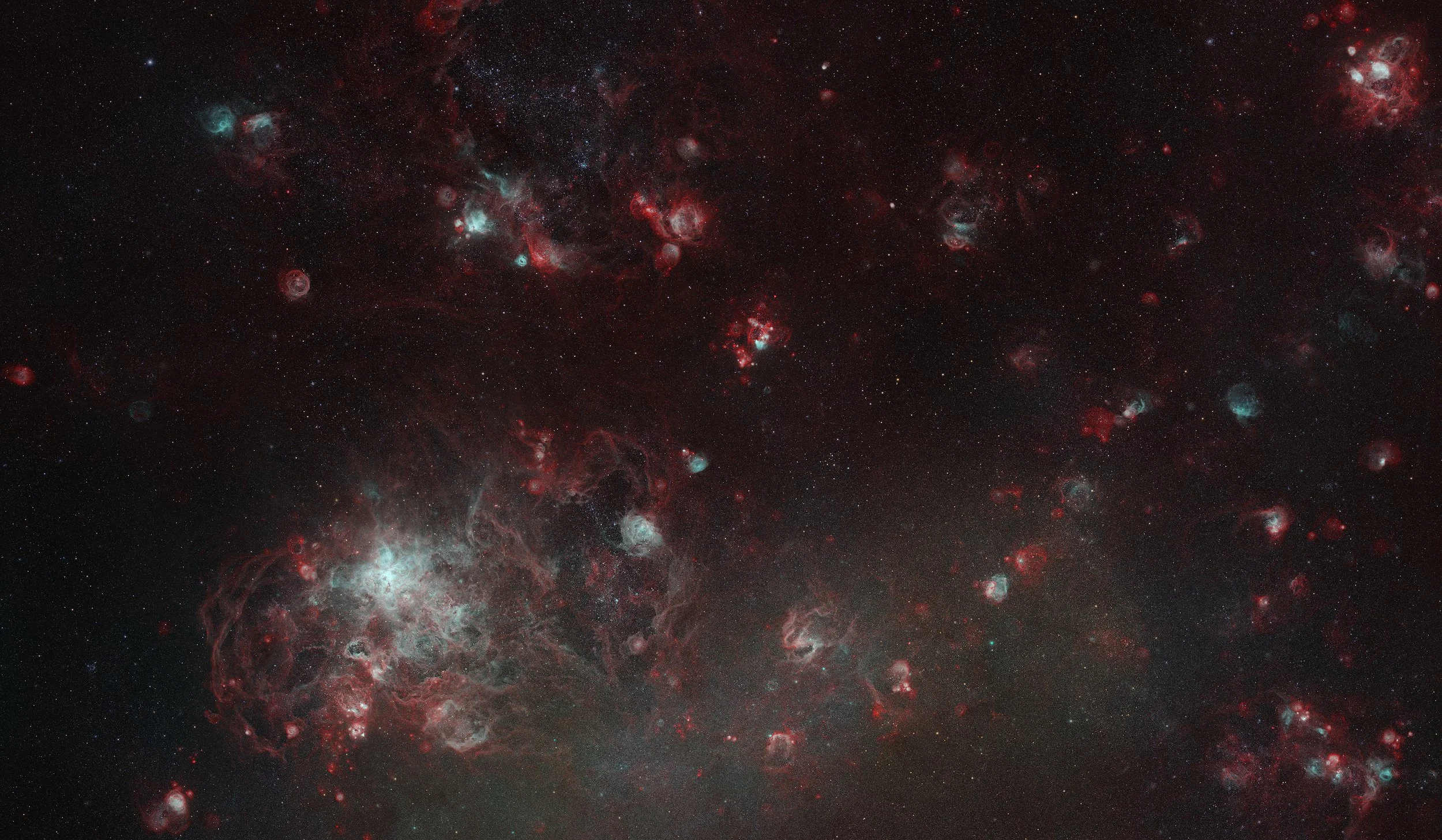
Starbirth and Shockwaves in the Large Magellanic Cloud
This expansive mosaic reveals a rich tapestry of nebulae scattered across the Large Magellanic Cloud, a satellite galaxy of the Milky Way located about 160,000 light years away. Dominated by glowing hydrogen emission in red and oxygen emission in cyan, the scene highlights vast star forming complexes, filamentary shells, and compact knots sculpted by intense ultraviolet radiation and stellar winds. Many of these structures trace the life cycles of massive stars, from deeply embedded nurseries to energized bubbles carved by young star clusters and supernova activity.
Captured as a 10 panel mosaic, the image combines deep narrowband and broadband data to balance scientific detail with natural star color. The strong H alpha signal maps ionized hydrogen gas heated by newborn stars, while OIII emphasizes regions of higher excitation shaped by powerful radiation and shocks. Together, these layers offer a wide field view of the dynamic interstellar medium within the Large Magellanic Cloud, showcasing how gravity, radiation, and stellar feedback continuously reshape this neighboring galaxy.
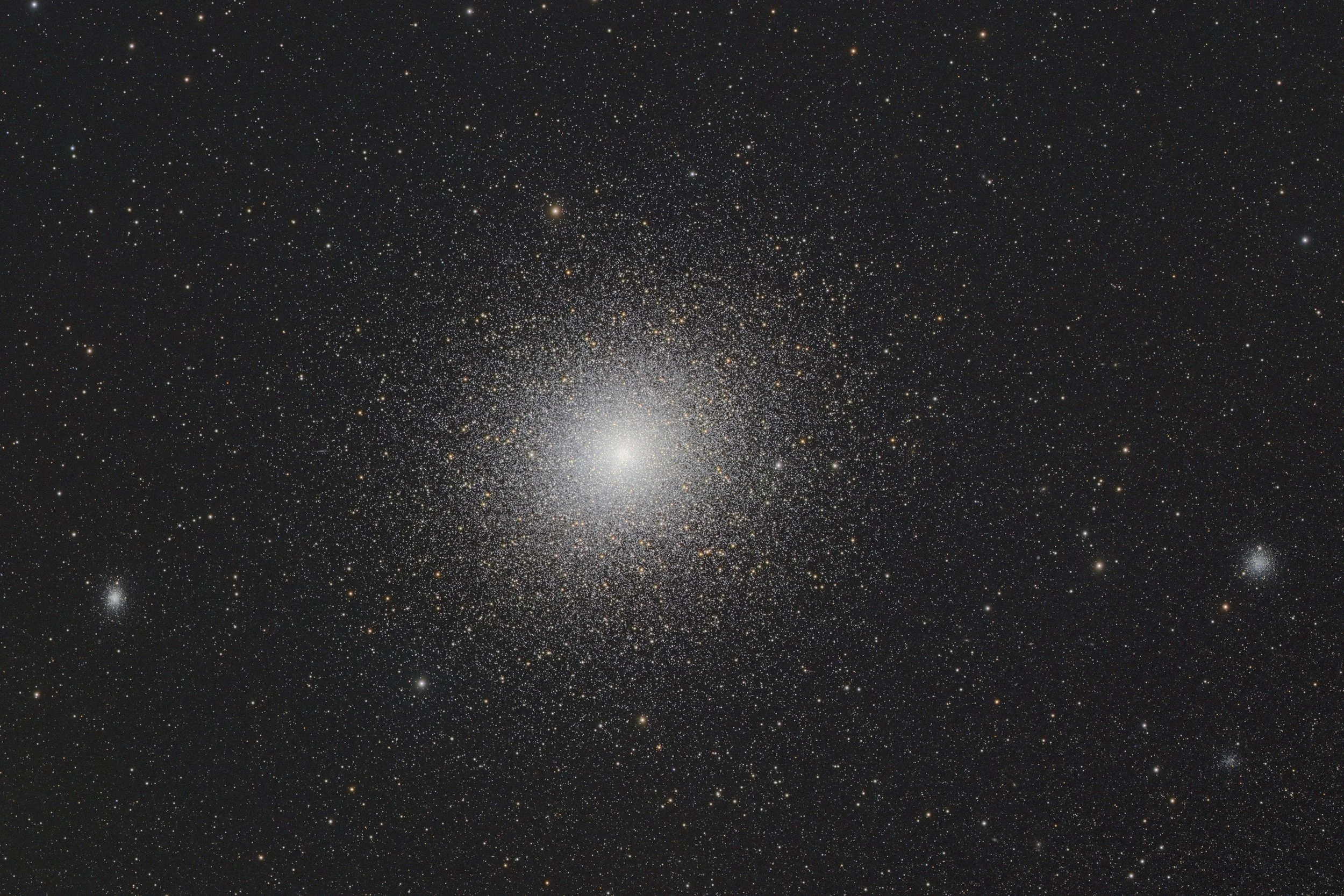
47 Tucanae and Beyond
This wide-field image showcases 47 Tucanae (NGC 104), one of the brightest and most massive globular clusters in the Milky Way, rising over the dark skies of Warrumbungle National Park, Australia. Located about 13,000 light-years away in the constellation Tucana, 47 Tuc contains millions of ancient stars densely packed into a luminous core that shines with a golden hue.
Surrounding the cluster are countless more distant stars and galaxies, offering a striking sense of scale between our galaxy’s halo and the deep cosmic background. The remarkable sharpness of this image reveals faint globulars and background galaxies, hinting at the vast structures that lie far beyond the Milky Way’s stellar outskirts.
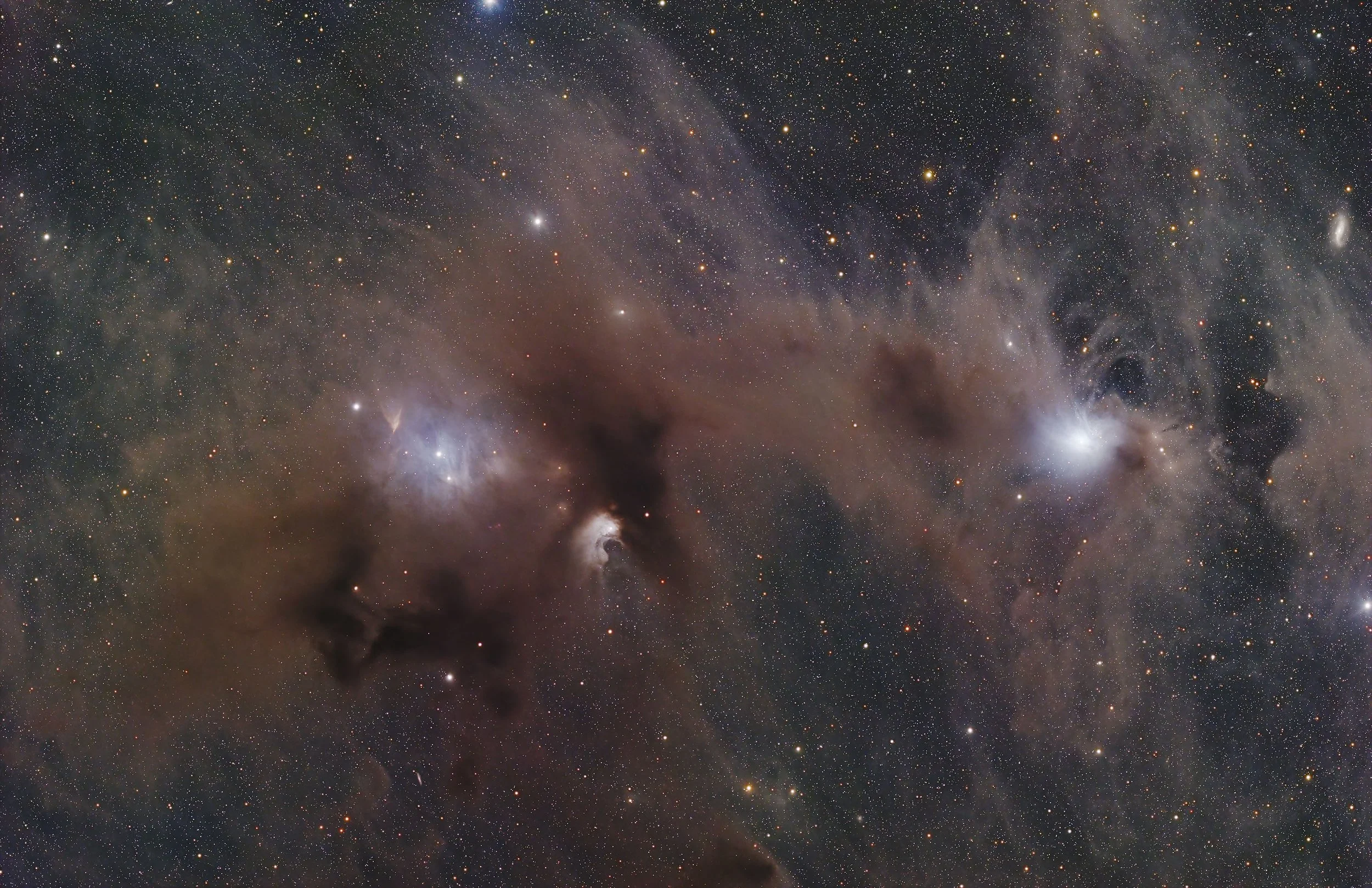
Star Formation and Dust in the Chamaeleon Complex
The Chamaeleon Complex is a rich star-forming region located approximately 450 to 650 light-years away in the southern constellation Chamaeleon. This wide-field image captures several of its most photogenic features, including dark molecular clouds, reflection nebulae, and young stellar objects. The region is known for its active stellar nurseries and intricate interstellar dust structures.
To the right lies the barred spiral galaxy NGC 3620, situated at a distance of 59 million light-years. Just left of it is IC 2631, a reflection nebula illuminated by the hot star HD 97300. To the left side of the field is Cederblad 111, which glows with a characteristic blue hue as starlight scatters off fine dust particles. Embedded within Ced 111 are Herbig-Haro objects HH 49 and HH 50—bright shock fronts formed by jets of gas from young stars interacting with surrounding material. Just beneath Ced 111 is the dark nebula GN 11.07.3, notable for its deep reddish tones and lack of a clearly identifiable illuminating source.