

AAPOD2 Image Archives
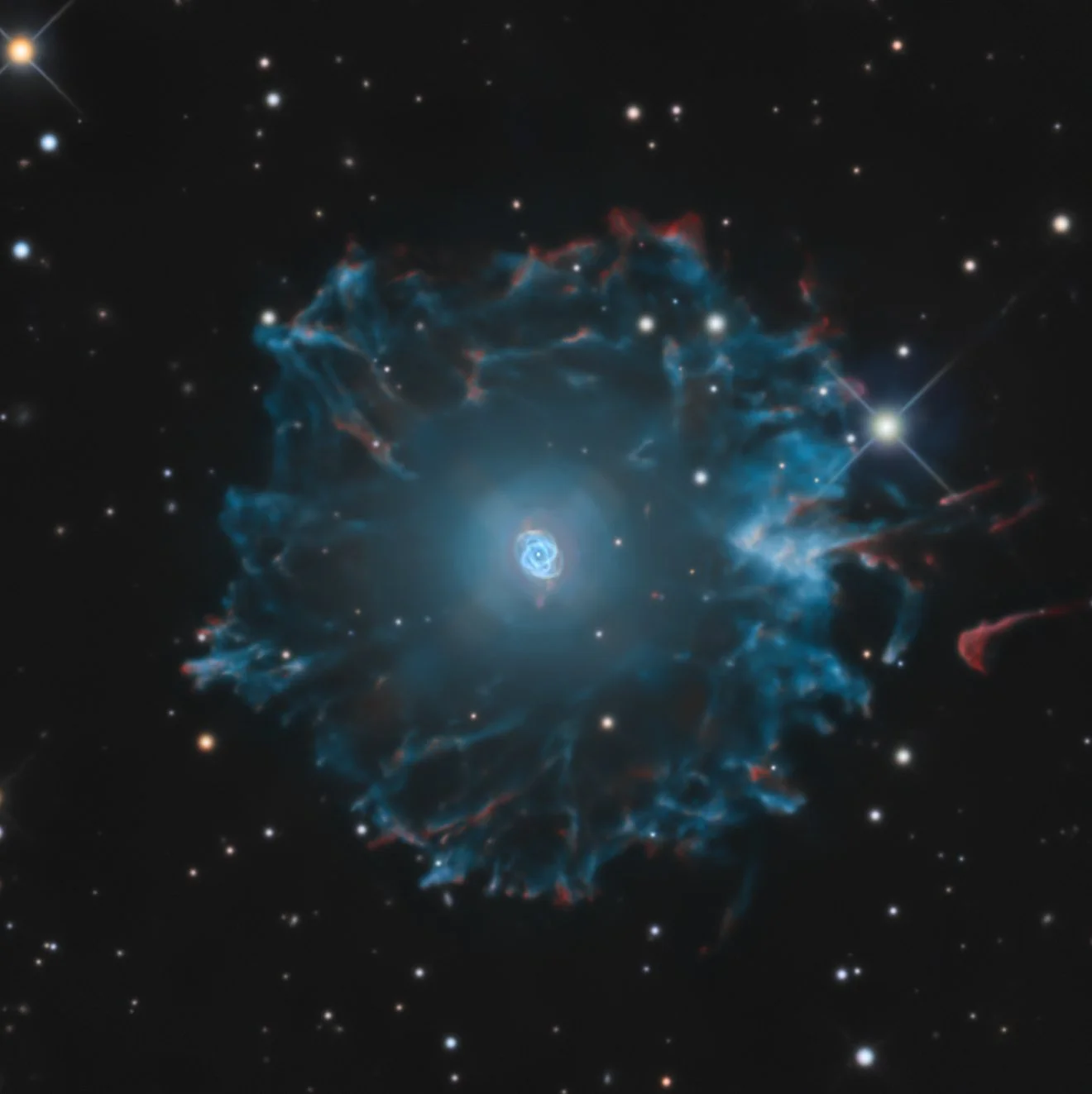
NGC 6543 Cat's eye nebula
NGC 6543, better known as the Cat’s Eye Nebula, is one of the most complex planetary nebulae known. Located about 3,000 light-years away in the constellation Draco, it marks the final evolutionary stage of a Sun-like star. The nebula’s bright inner region, shaped by powerful stellar winds, reveals intricate concentric shells, knots, and jets, all sculpted by the dying central star. Surrounding this core are faint outer halos, remnants of earlier mass ejections stretching across several light-years.
This image captures extraordinary detail in the Cat’s Eye structure, thanks to a combination of long narrowband exposures and high-resolution lucky imaging. Hydrogen-alpha, Oxygen III, and broadband color data reveal the blue-green glow of doubly ionized oxygen and the soft red emission of hydrogen, tracing the nebula’s layered complexity against a field of distant stars.
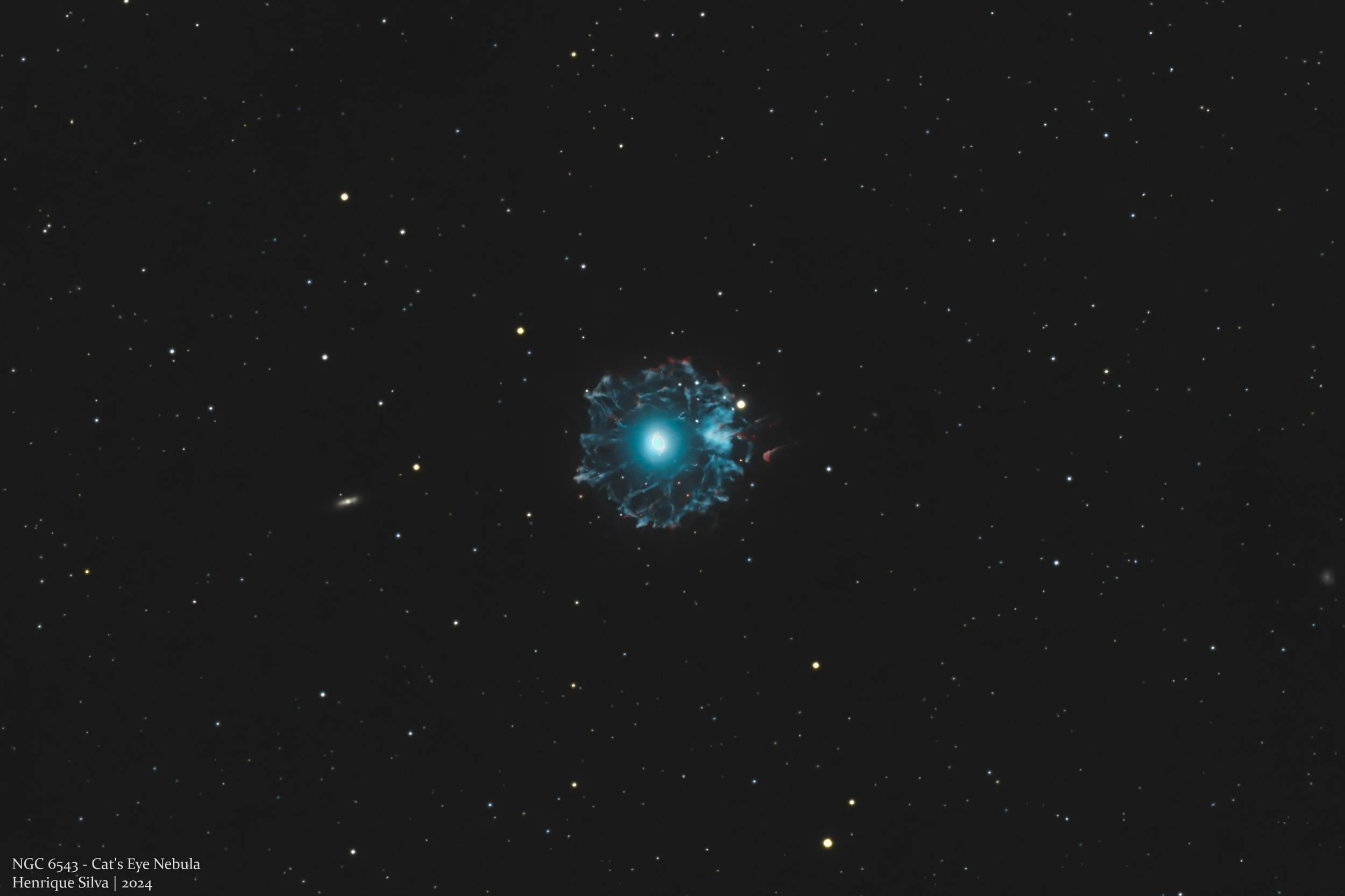
NGC 6543 - Cat's Eye Nebula
NGC 6543, commonly known as the Cat's Eye Nebula, is a striking planetary nebula located in the constellation Draco, approximately 3,300 light-years from Earth. This nebula is one of the most complex planetary nebulae known, featuring intricate structures including concentric shells, jets, and knots of high-density gas. The central star, a dying red giant, has shed its outer layers, creating the glowing shell of ionized gas visible in detailed telescopic images.
The Cat's Eye Nebula is particularly noted for its rich array of colors, which are caused by different types of ionized gases. For example, the blue-green hues are from oxygen, while the reddish tones come from hydrogen and nitrogen. This nebula serves as a key object of study for understanding the end-of-life stages of medium-sized stars and the complex processes involved in the creation of planetary nebulae.