
AAPOD2 Image Archives
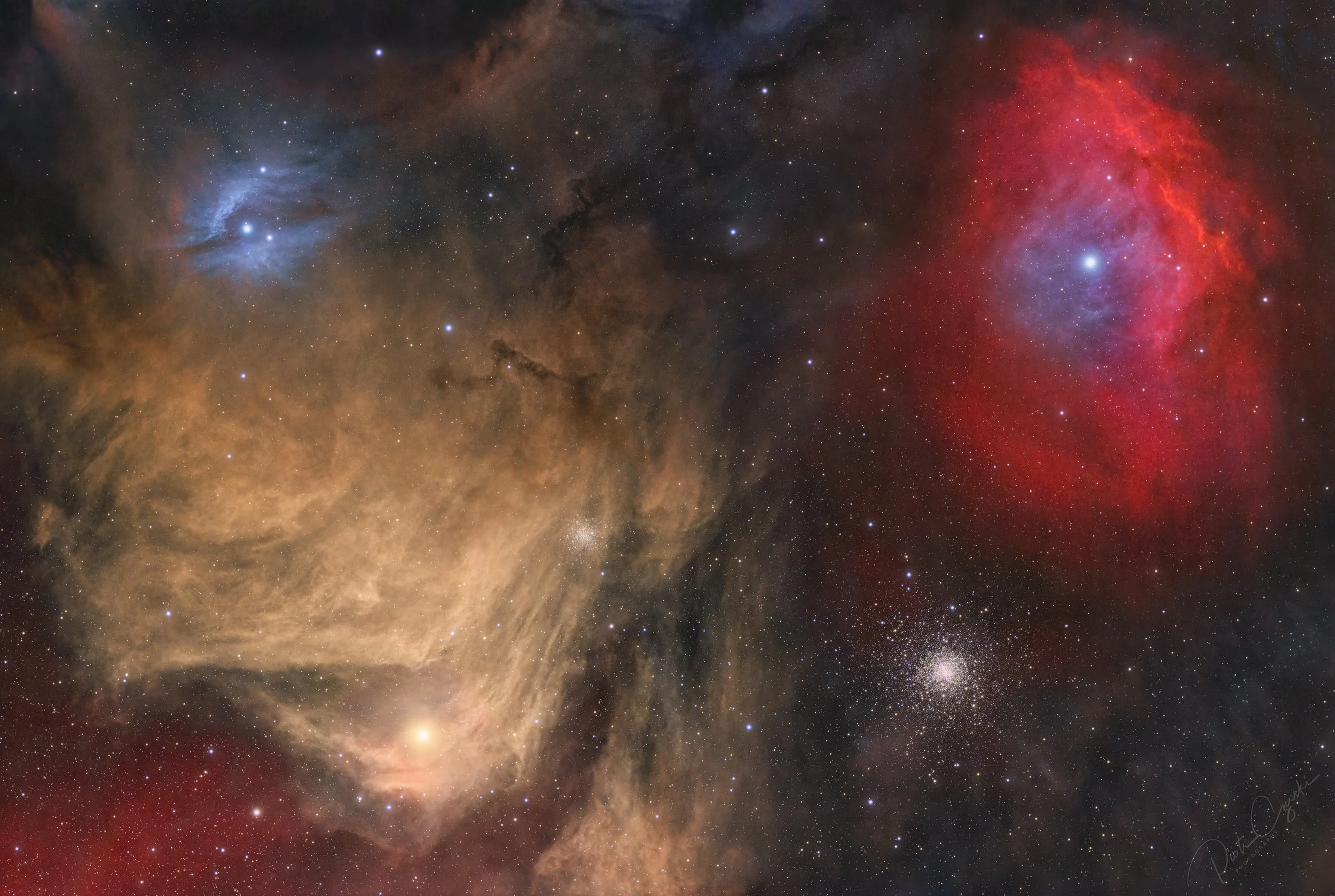
The Dusty Heart of Scorpius
A vibrant mosaic of interstellar dust and glowing starfields, the dusty heart of Scorpius centers on the majestic supergiant Antares. Golden reflection nebulae cast a warm glow across intricate cosmic dust lanes, anchored nearby by the ancient stellar swarm of the Messier 4 (M4) globular cluster. Surrounding blue and red emission clouds frame this active cosmic nursery, illustrating one of the most colorful regions in the night sky.
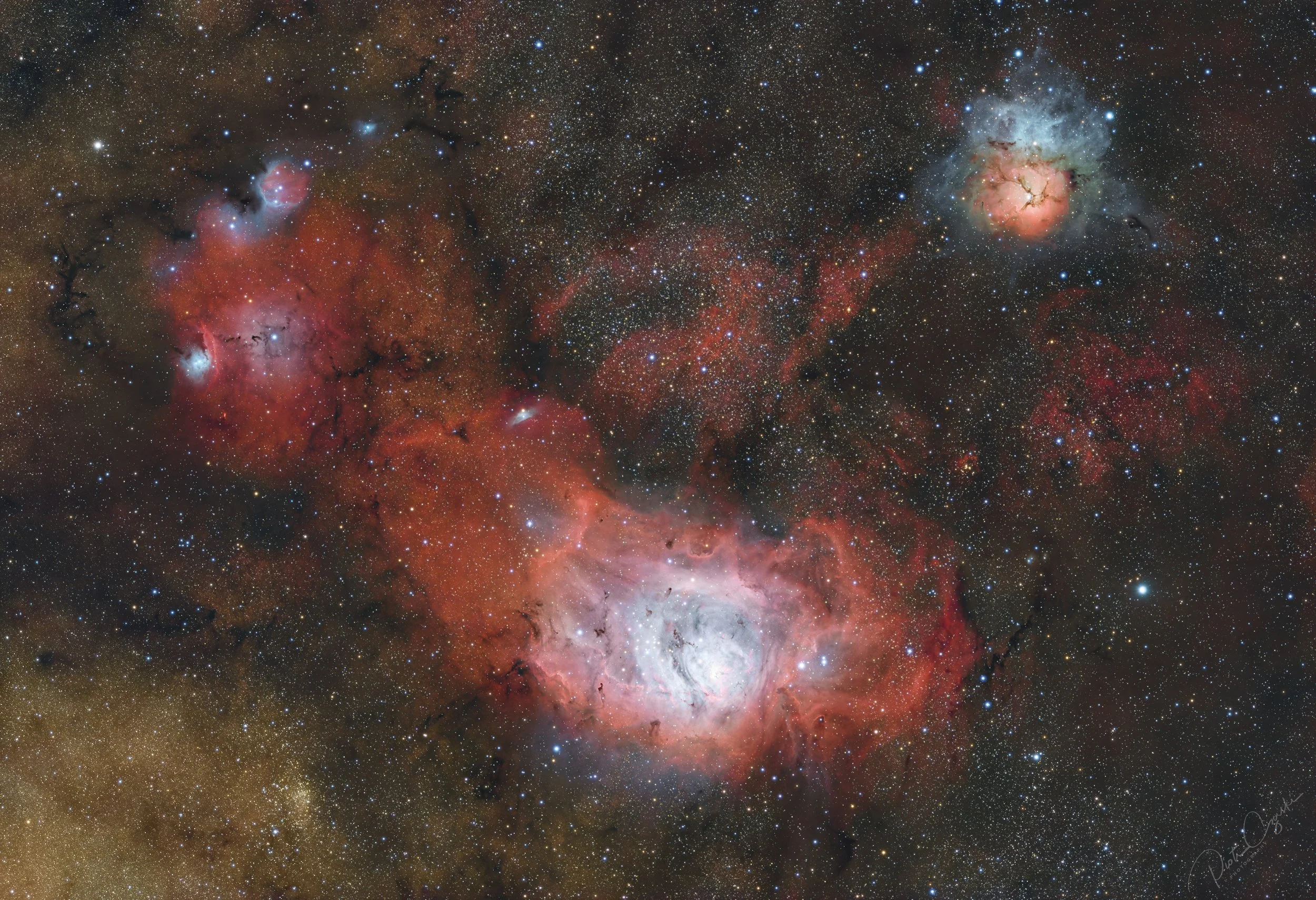
Lagoon and companion from Bortle 0 sky
Under the pristine, ultra-dark skies of the Rooisand Desert Ranch in Namibia, photographer Piotr Czerski captured this breathtaking view of the magnificent Lagoon Nebula (M8) and its cosmic companion. Remarkably, this incredibly rich and detailed view was achieved with only two hours of total integration time, entirely without the use of filters—a testament to the pristine Bortle 0 conditions of the southern desert. Utilizing an Askar 103 APO telescope with a 0.6x reducer and a ZWO ASI 2600MC Pro camera, the shot beautifully resolves the glowing, intricate gas clouds and dark dust lanes of this classic stellar nursery in spectacular clarity.
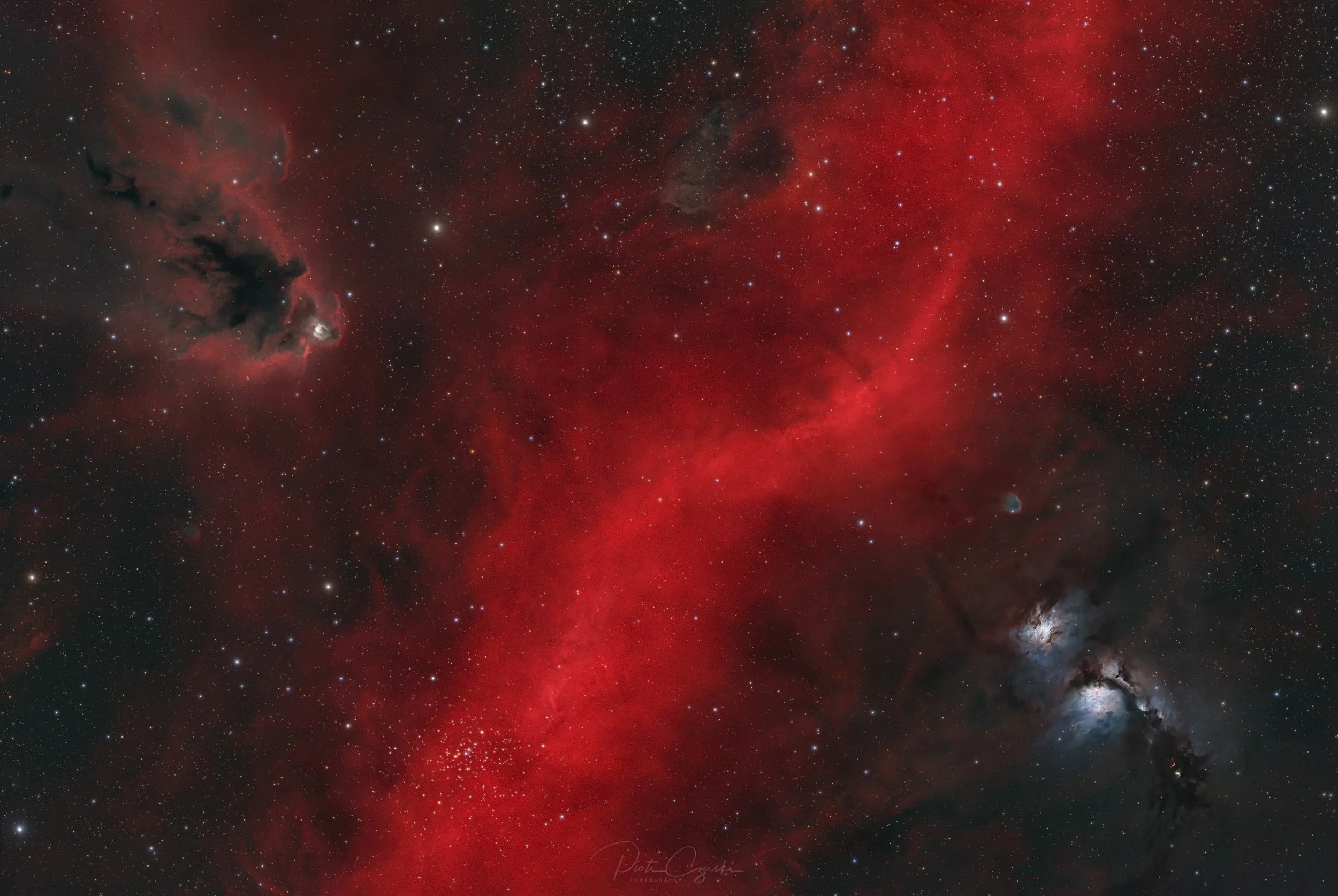
Dust and Glow Along Barnard’s Loop | HaRGB
Barnard’s Loop is a vast arc of glowing hydrogen that curves through the Orion Molecular Cloud Complex, stretching for hundreds of light-years across one of the most active star forming regions in the nearby Milky Way. In this HaRGB rendering, the loop’s ionized hydrogen stands out in deep crimson, revealing the shock fronts and ultraviolet illumination produced by massive young stars in Orion’s OB associations. The bright emission traces where stellar radiation and winds energize the surrounding interstellar medium, carving out cavities and sweeping gas into long, filamentary shells.
Embedded within this glowing backdrop are pockets of dense dust and molecular gas, including the dark nebula LDN 1622 and the reflection nebula M78, which shines blue as starlight scatters off fine dust grains. These contrasting structures show different phases of the same stellar nursery, from cold, star forming clouds to regions already cleared and ionized by newborn suns. Together, they illustrate how gravity, radiation, and turbulence shape the Orion region into a dynamic landscape of both obscuring dust and radiant gas.
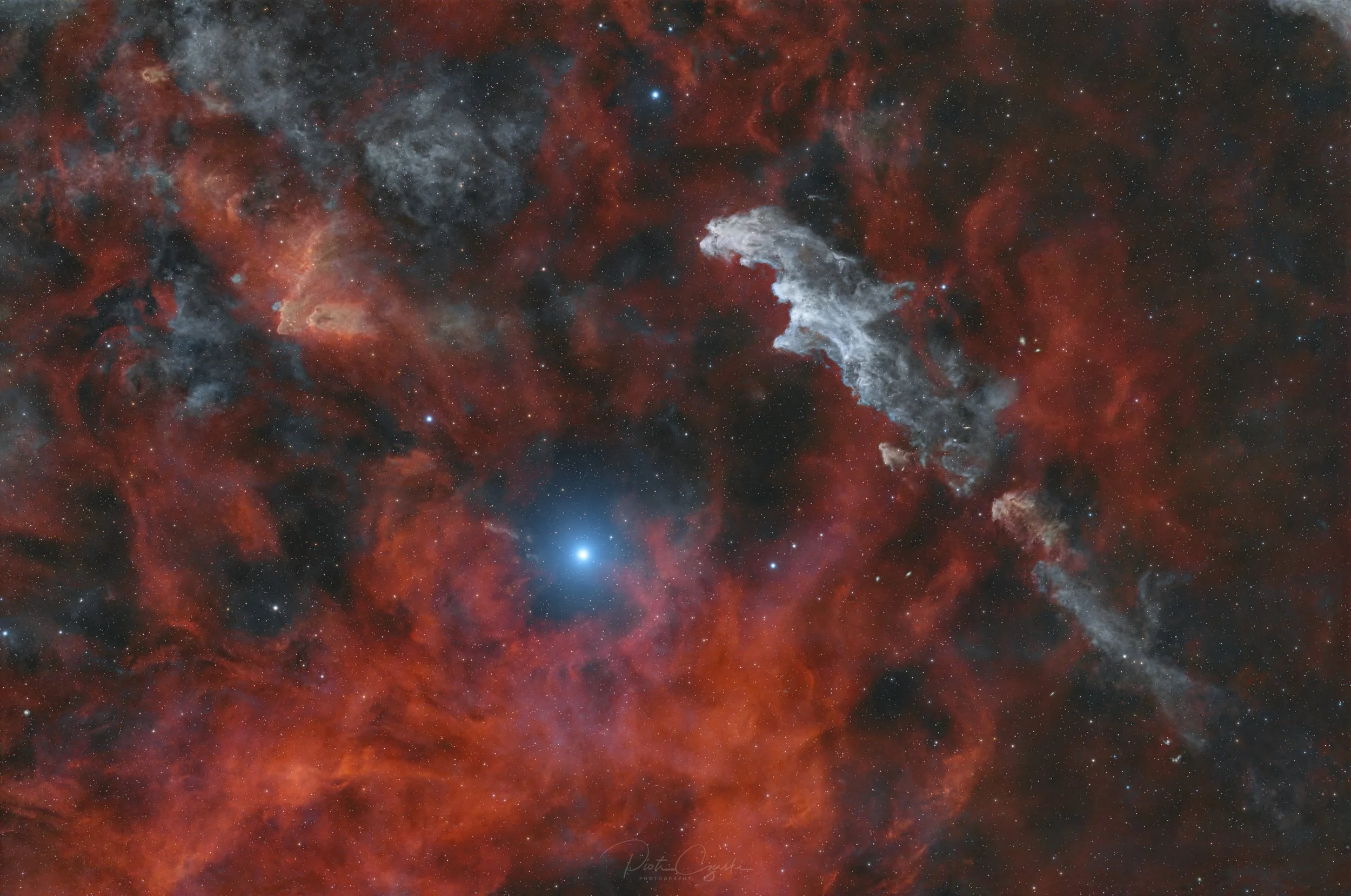
The Witch Head and the Surrounding Molecular Clouds
The Witch Head Nebula, IC 2118, appears in this deep wide field view as a delicate blue reflection nebula illuminated by starlight from Rigel, just beyond the frame in Orion. Rather than glowing from its own emission, the nebula’s fine dust grains scatter the intense light of this nearby supergiant, giving the region its ghostly blue appearance against the surrounding star field.
Extended integration reveals a subtle tapestry of faint Hα emission interwoven with dark dust clouds across the background, structures that are often lost in shorter exposures. These features trace the interaction of gas, dust, and radiation within the Orion Molecular Complex, offering a quiet but detailed look at how massive stars shape their surrounding interstellar environment.

The Andromeda Galaxy: Extended Dust and Hα Emission
The Andromeda Galaxy, cataloged as M31, stretches across this wide field along with its companions M32 and M110. The long dust lanes that cut through its disk appear sharply defined, while an extended halo of faint particulate material surrounds the galaxy and blends into the background. Careful processing brings out subtle hydrogen alpha regions that trace knots of star formation and hint at the dynamic activity within Andromeda’s spiral arms.
Combining broadband and narrowband data reveals both the classic structure of M31 and the diffuse outer features that are often lost in shorter exposures. The satellite galaxies stand out with their own distinct profiles, adding depth and balance to the frame. This view offers a detailed look at our nearest major galactic neighbor and the complex environment that surrounds it.
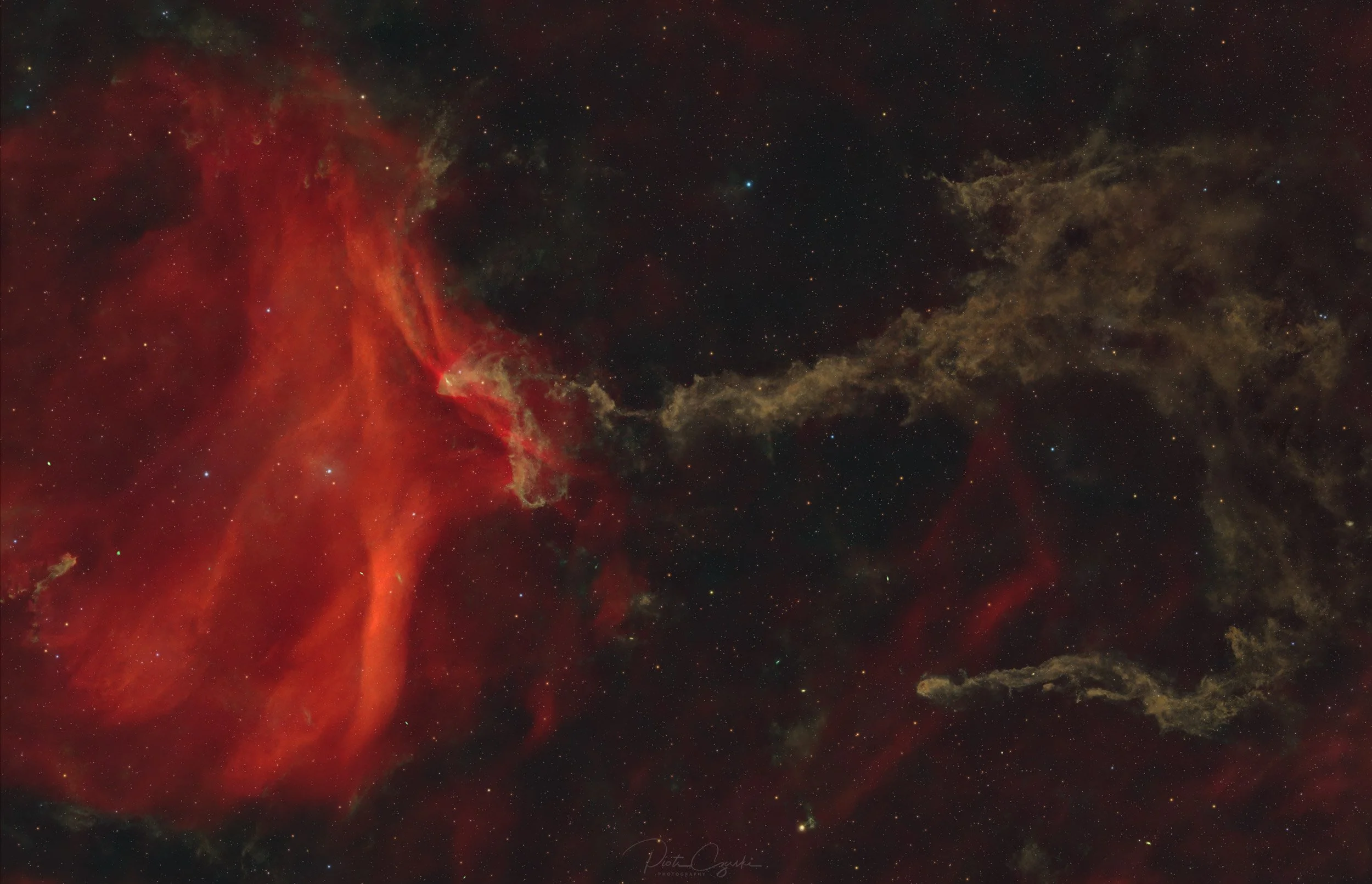
The Great Lacerta Nebula & Dust | HaRGB
The Great Lacerta Nebula lies hidden within a rarely imaged region of the northern sky, where glowing hydrogen clouds meet dense interstellar dust. The vibrant red emission marks zones of ionized hydrogen gas, while the golden-brown filaments trace cold molecular material sculpted by stellar winds and radiation.
This wide-field view, rendered in HaRGB, highlights the complex structure of the nebula’s environment, showing how star formation and interstellar turbulence weave together to create one of Lacerta’s most intricate cosmic landscapes.

The Veil Nebula - A Wider Context
In this expansive wide-field portrait, the Veil Nebula’s delicate filaments emerge from the remnants of a massive star that exploded thousands of years ago. Ionized hydrogen glows deep crimson, while oxygen-rich shock fronts appear in cyan, tracing the intricate structure of this ancient supernova remnant. Surrounding the nebula, a rich tapestry of interstellar gas and dust is illuminated, revealing the turbulent environment in the Cygnus constellation.
Captured from Zabriskie Point in Death Valley, the image places the Veil Nebula within its broader cosmic neighborhood, showing how its wispy arcs are embedded in vast clouds of hydrogen that span the region. The combination of high-resolution detail and wide framing offers a rare glimpse of both the remnant’s fine structure and its larger-scale relationship with the Milky Way’s glowing star-forming regions.