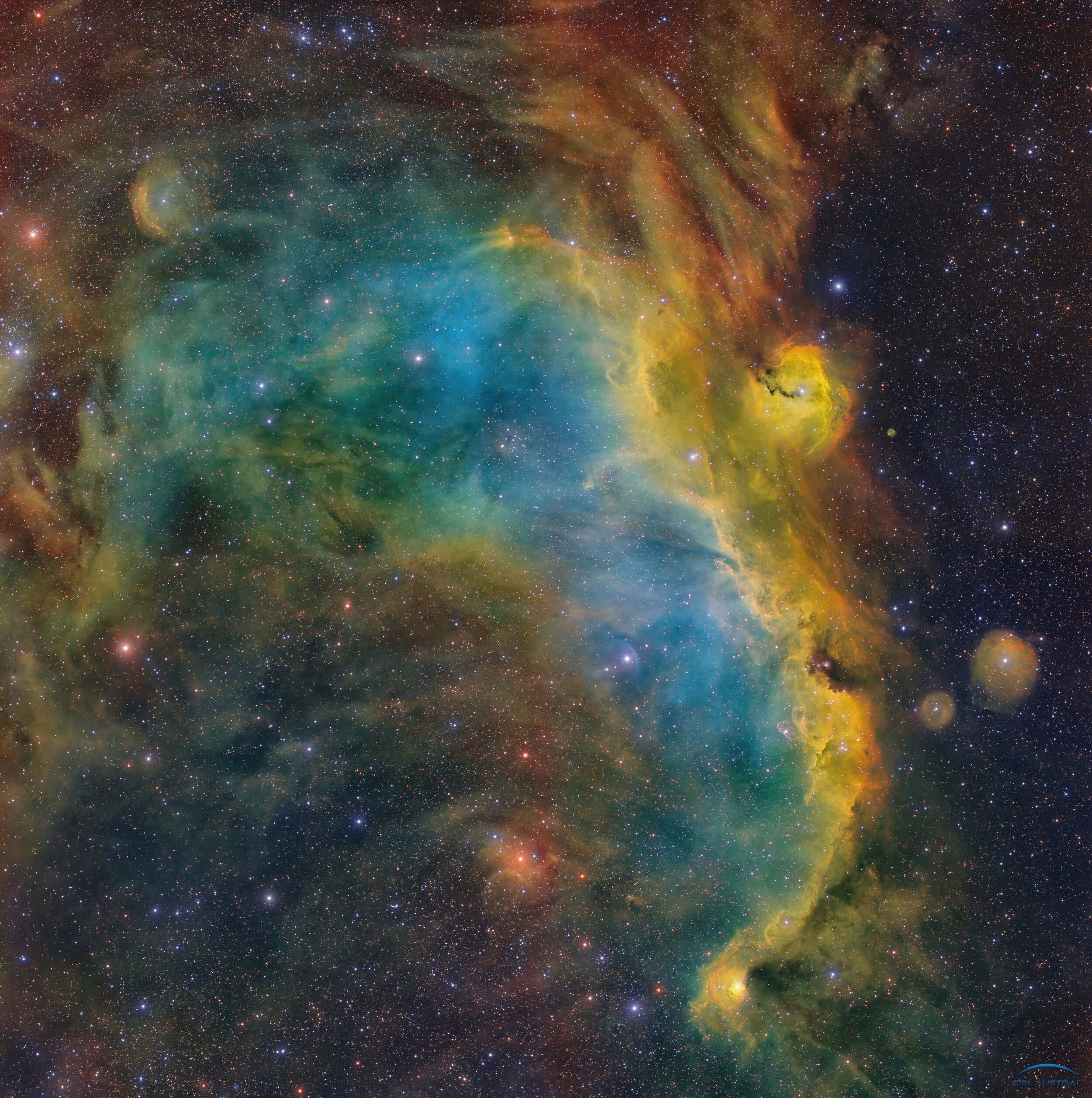

AAPOD2 Image Archives
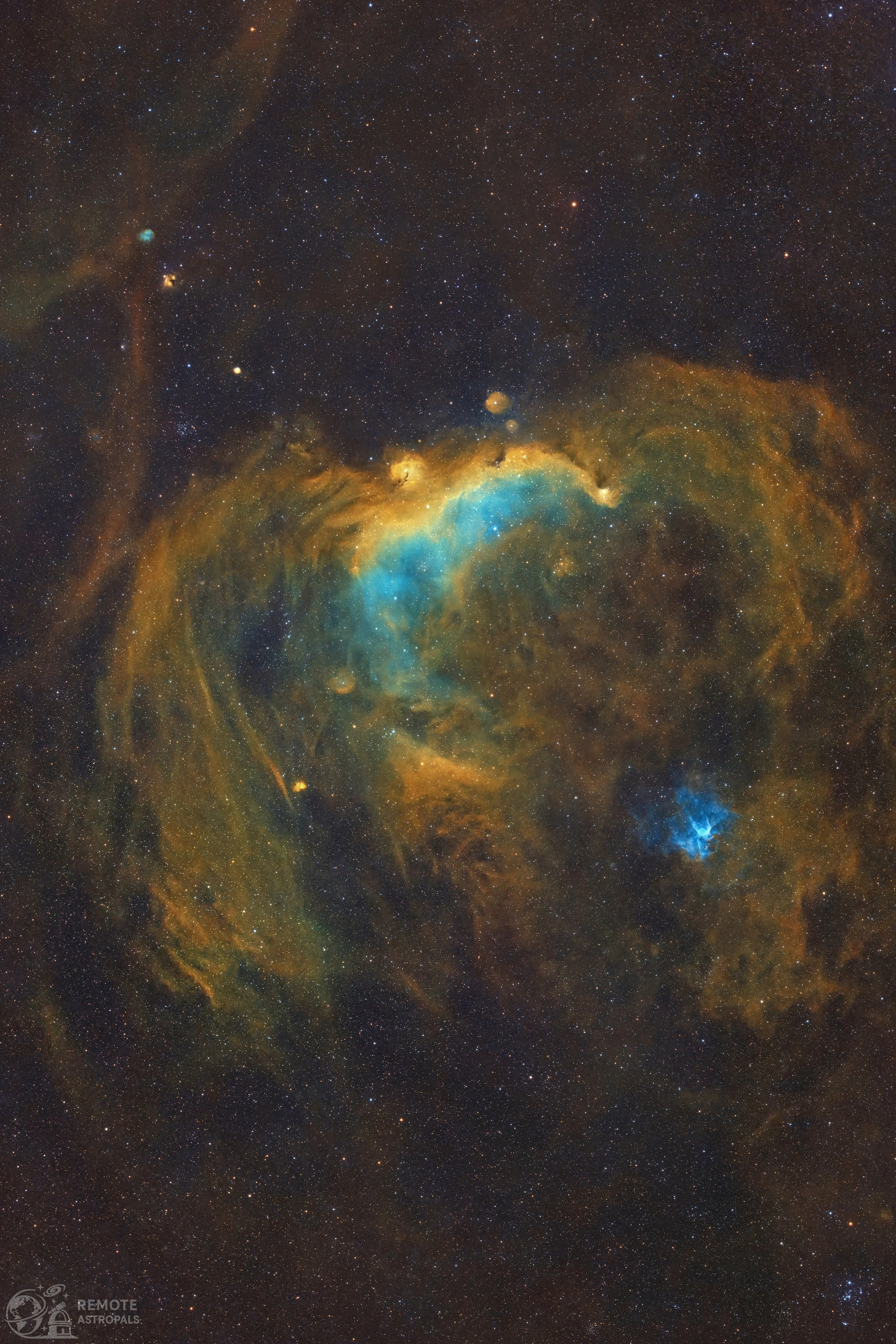
The Phoenix rising from its ashes (IC 2177 – The Seagull Nebula)
IC 2177, commonly known as the Seagull Nebula, is a vast complex of ionized hydrogen, dust, and young stars located along the border of the constellations Monoceros and Canis Major, roughly 3,800 light-years from Earth. The dominant emission arises from hydrogen gas energized by ultraviolet radiation from massive, recently formed stars embedded within the nebula. These stars sculpt the surrounding material into sweeping arcs and filaments, giving rise to the nebula’s wing-like appearance.
In this view, the glowing hydrogen clouds are interwoven with dark dust lanes that trace the colder, denser regions of the interstellar medium. Bright knots and compact blue regions mark active star-forming zones, while the broader, faint structures reveal how stellar winds and radiation gradually reshape the nebula over millions of years. The interplay of destruction and creation within IC 2177 makes it a striking example of how star birth emerges from the remnants of earlier generations.
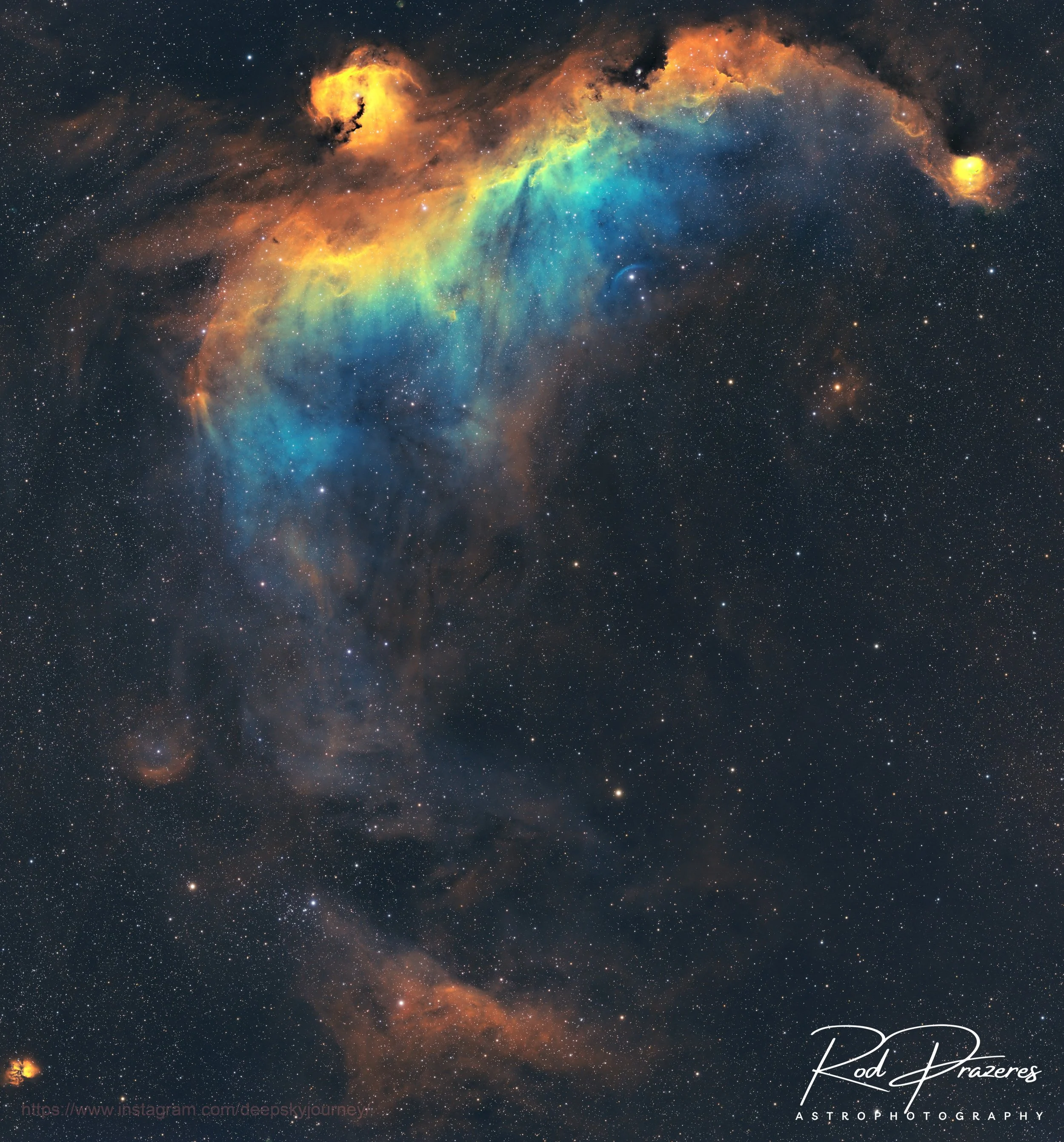
Spectrum of Creation: The Rainbow Hues of The Seagull Nebula
In the cosmic expanse of the Monoceros constellation, the Seagull Nebula, or IC 2177, unfurls its majestic wings, captivating observers with its ethereal beauty. At its core, a brilliant young star illuminates the surrounding nebulous material, sculpting intricate patterns of light and shadow that resemble the graceful wings of a seabird in flight.
Within this celestial realm, stars are born from collapsing clouds of gas and dust, while aging stars shed their outer layers in dazzling displays of cosmic recycling. As astronomers peer into the depths of the Seagull Nebula, they uncover the secrets of stellar birth and evolution, offering insights into the intricate dance of creation and destruction that shapes the cosmos.

Soaring Birds
This image shows the rising Seagull Nebula soaring high above Mt. Druesberg in central Switzerland.
The Seagull Nebula is an emission nebula on the borders of the constellations of Monoceros and Canis Major. Its location 10 degrees below the celestial equator puts it rather low for northern hemisphere observers, which may be the reason why it is not as famous as other nebula that rise higher during the night.
For deepscapes however, a deep space object needs to hug the horizon, which makes the Seagull Nebula a perfect target.
Despite careful planning, the resulting image contains a big surprise: The Seagull Nebula is not that splendid bird with a bright body and wispy wings and tail you can see in this deep image. I didn't even know that these structures exist. What is known as the Seagull Nebula is just the bright body part that remotely resembles a soaring bird on its own - it is the bird in a much bigger, more detailed bird! How awesome!
EXIF
Canon EOS 6D, astro-modified
ZWO ASI 1600MM Pro
Canon EF 70-200mm f/2.8 @ f/4
Baader Ultra Narrowband H-alpha and Olll filters
Modified Skywatcher AZ-GTI mount, controlled with ASIair
Sky:
Canon EOS 6D @ 200mm:
26 x 60s @ ISO1600 for RGB
ZWO ASI 1600MM Pro @ 96mm (to match the 200mm full frame FOV)
20 x 300s H-alpha @ Gain 200
10 x 300s Olll @ Gain 200
Foreground:
8 x 90s @ ISO1600
Copyright: Ralf Rohner