

AAPOD2 Image Archives
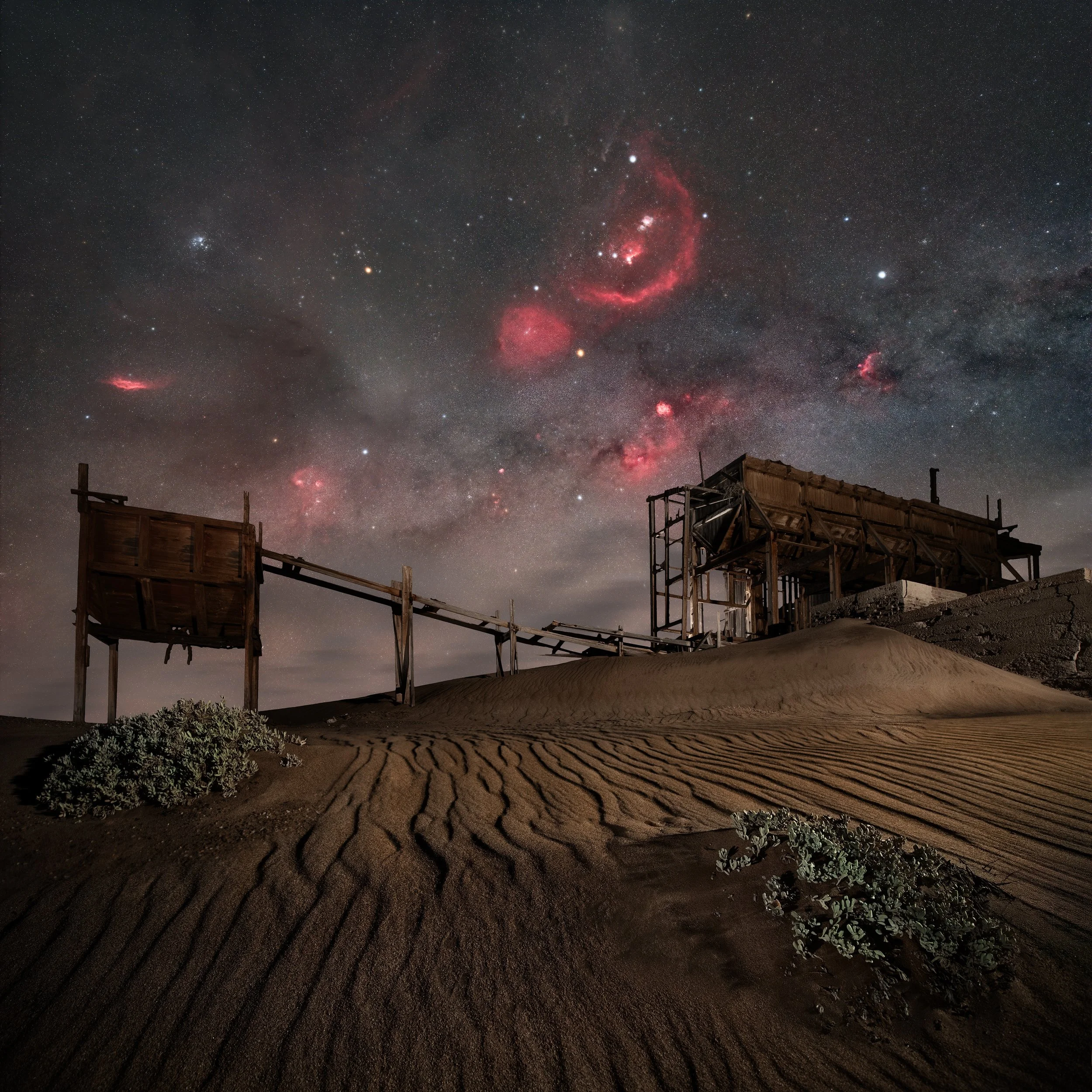
The Diamonds of Bogenfels
Location (was image taken with remote scope?): Namibia.
Image Description and Details: The mining ghost town of Bogenfels lies in the Sperrgebiet in South West Namibia. Sperrgebiet translated from German means the restricted area. The Sperrgebiet is an active diamond mining zone and one risks getting shot if not having the proper credentials and permits to enter the area. In times past the German colonizers had set up diamond mining towns and what we see here is a decrepit washing plant in which diamonds were separated from the soil they were excavated from. The diamonds on the ground are since long gone but the ones in the skies above, remain.
Resolved in the sky we see clockwise, from the Pleiades Star Cluster to the Taurus asterism with its dust clouds, and on to the Witch head Nebula. The distinctive Orion Molecular complex with the Horsehead nebula and the Barnard’s loop take center stage.
The Seagull Nebula appears further right before we loop back to the Rosette and Christmas tree Nebula and onward to the Flaming star Nebula before completing the circle at the California Nebula. Whew!
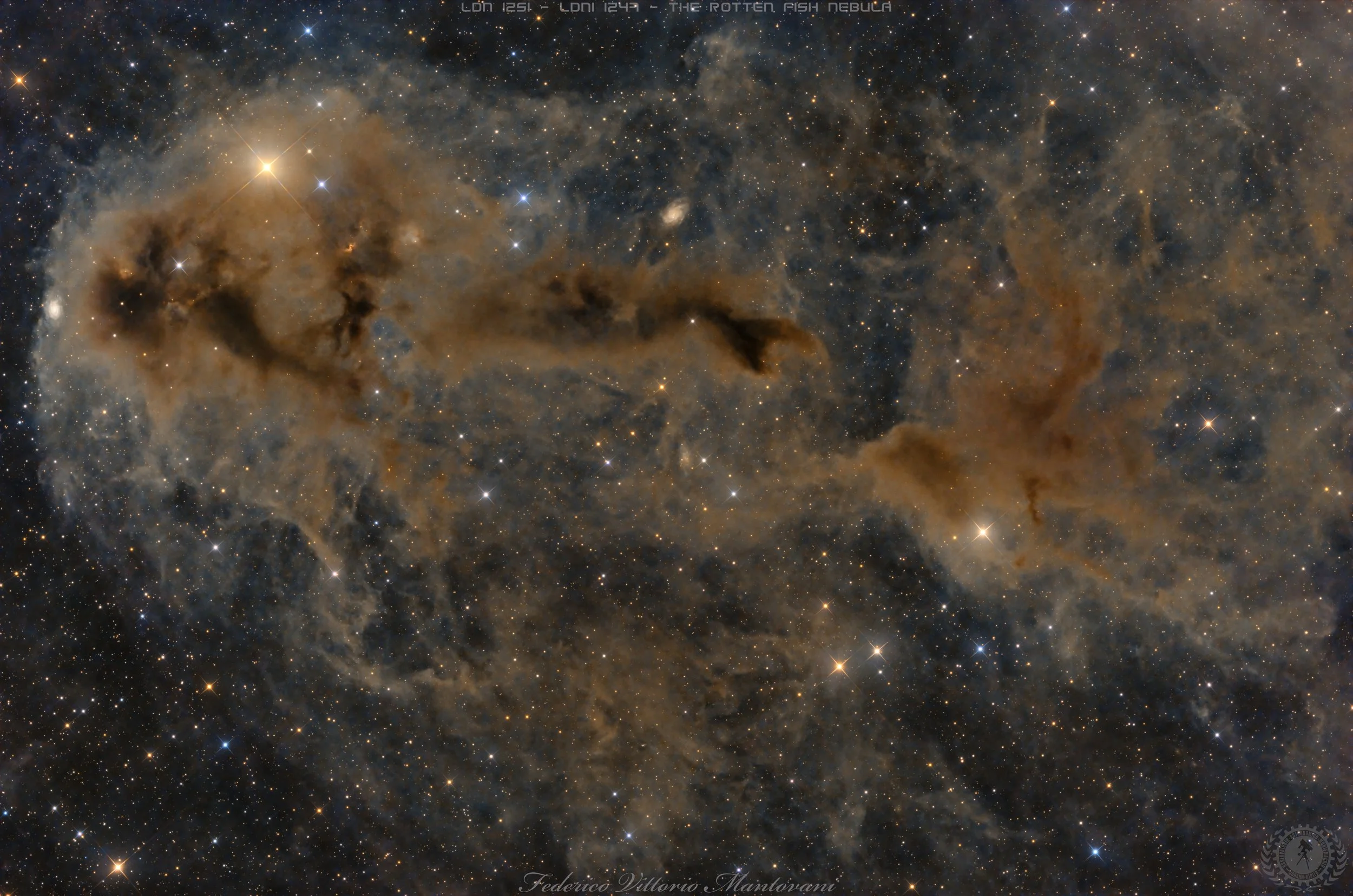
LDN 1251 - LDN 1247 THE ROTTEN FISH NEBULA
NGC 5189, also known as the Rotten Fish Nebula, is a striking planetary nebula located about 3,000 light-years away in the constellation Musca. Its name comes from its unusual, fish-like shape, with twisted lobes resembling a decaying skeleton. Unlike many planetary nebulae, NGC 5189 has a complex, asymmetrical structure, possibly shaped by magnetic fields, rotation, or interactions with a companion star. This makes it one of the more intricate and visually captivating nebulae. The nebula is formed by the ejected outer layers of a dying star, now a hot white dwarf, which ionizes the surrounding gas, causing it to glow.
Despite its vast size of 2,000 light-years across, the Rotten Fish Nebula remains faint and requires telescopic observation. It resides in the Musca star-forming region, an area rich in young stars and gas, highlighting the contrast between the ongoing stellar activity around it and the aging star at its core. NGC 5189 provides valuable insights into the final stages of stellar evolution and the processes behind the formation of planetary nebulae.
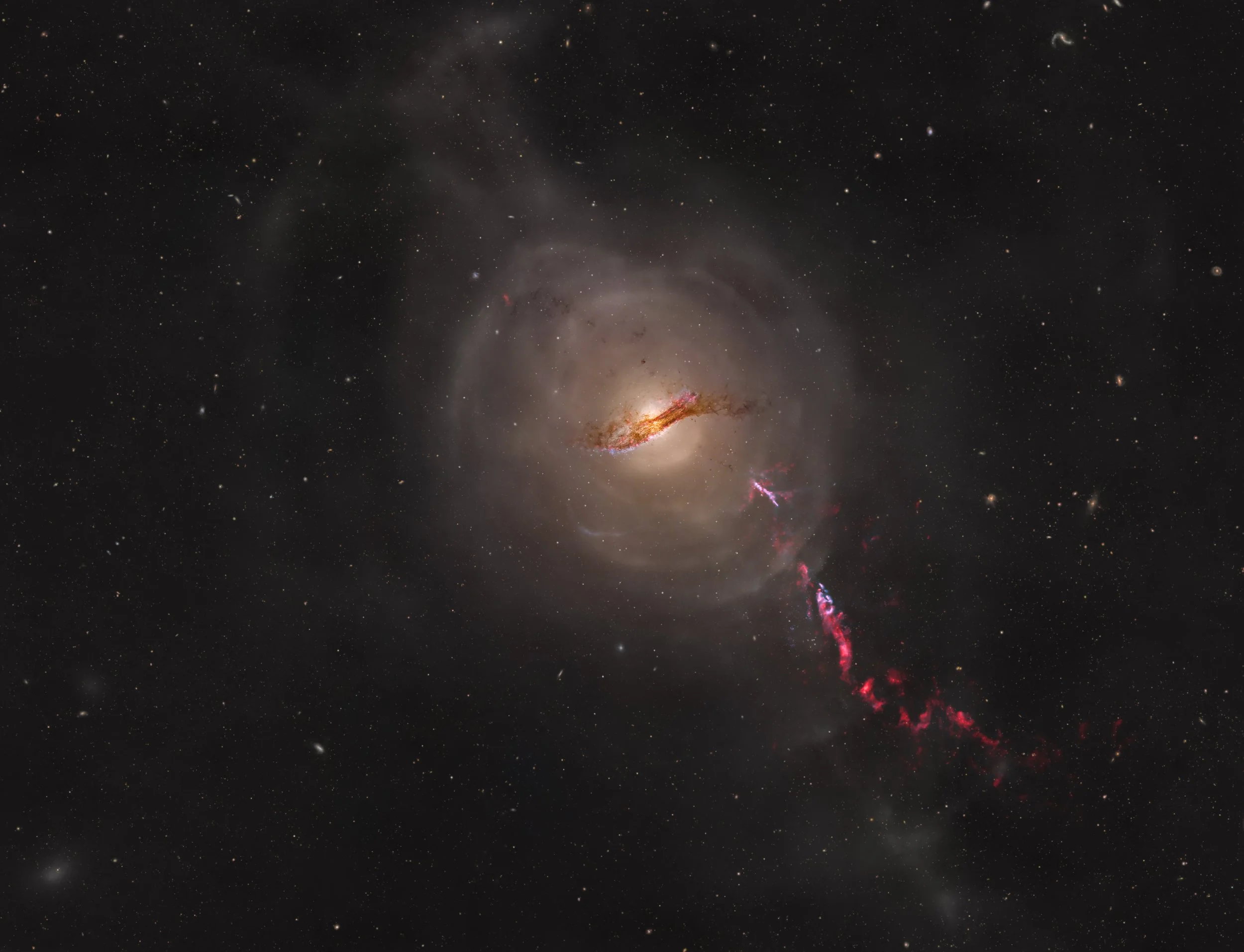
Centaurus A: Extreme Deep Field - 321 Hours
This ultra-deep, high-resolution image of Centaurus A (NGC 5128) was created using data collected over ten years, from 2013 to 2024, with my homebuilt telescope. There are no stars in this image — every single point of light is either part of the Centaurus A system or a distant background galaxy or quasar!
This work is a continuation of my Centaurus A "Extreme Deep Field" project, now with a larger field of view (FOV) and significantly more data — 321 hours in total, including 126 hours of narrowband H-Alpha and OIII.
In 2013 I gathered 120 hours of data on Centaurus A and processed the then deepest image ever obtained of this magnificent galaxy, showing several structures not revealed by amateurs before. I updated and re-processed the image in 2014 and 2018, including adding H-Alpha data to highlight the impressive emission structures triggered by the relativistic jet from the supermassive central black hole. This current image is a major update, now just over 10 years after my initial ultra-deep image was completed.
Several unique features are visible:
The full extent of H-Alpha and OIII filaments associated with the relativistic black hole jets:
The inner and outer Northern (bottom) jet shows many faint details not previously imaged
The Southern (top) jet is visible as a small red blob in the 10 o'clock position (first detected optically in my earlier 2013 image)
The complete shell structure of the halo, showing both the faint outer shells and brighter inner ones
A distinct blue arc, a remnant stellar stream from a dwarf galaxy absorbed by Centaurus A
1108 of the known globular clusters orbiting the galaxy
Countless distant background galaxies and quasars
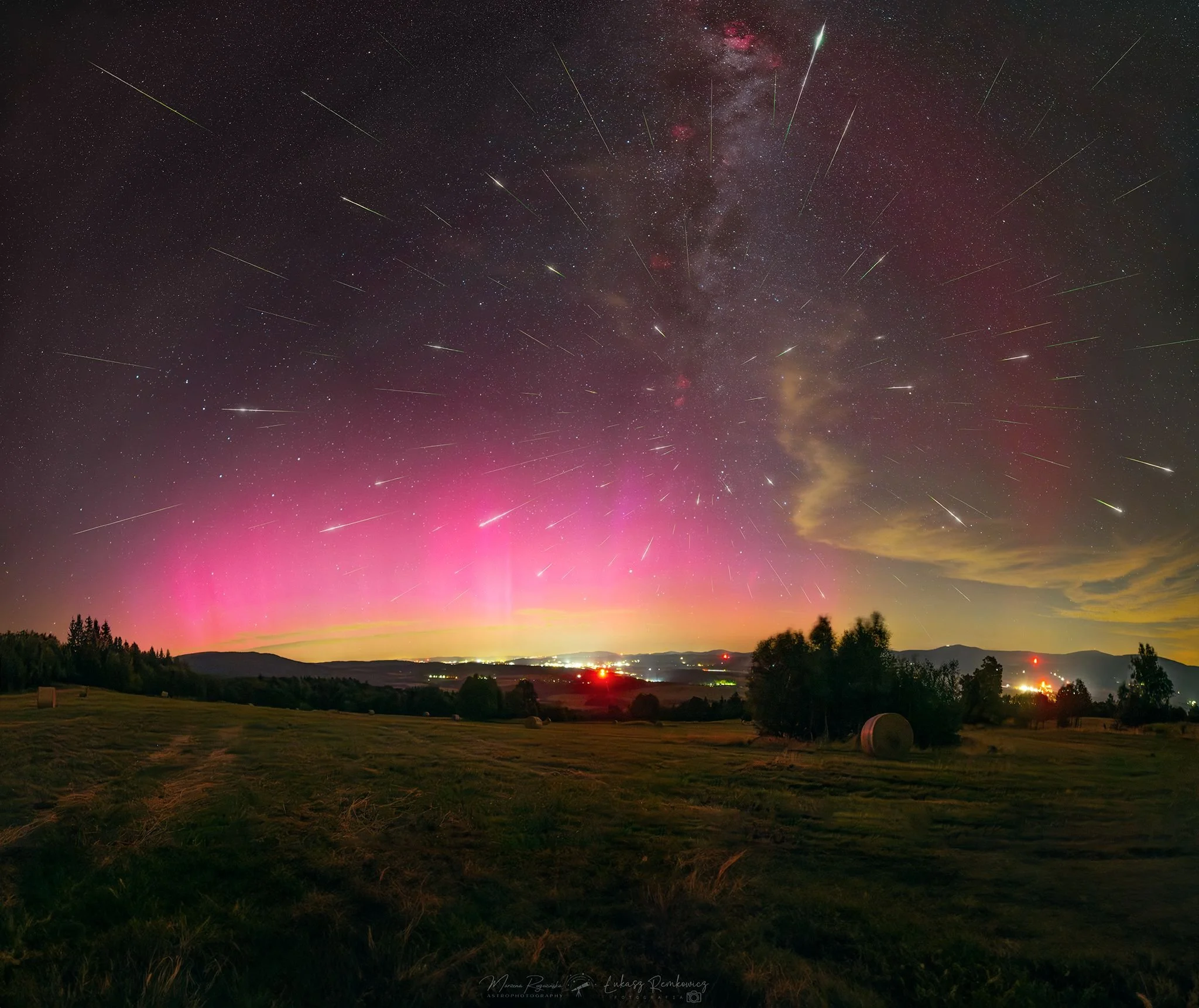
Perseids 2024 maximum
This breathtaking mosaic showcases the pinnacle of the Perseid meteor shower at its peak from August 12th to 13th, alongside meteors captured over five consecutive nights between August 8th and 13th. To craft this cosmic masterpiece, an astonishing 14,000 frames were recorded across five photographic setups, with approximately 150 meteor trails carefully selected for inclusion.
Adding to the celestial wonder, the image also features the ethereal aurora borealis glowing in dynamic green and purple hues, complemented by the extremely rare Stable Auroral Red (SAR) arc—a phenomenon rarely seen or photographed. Unlike traditional auroras, SAR arcs appear as faint, stable, reddish arcs caused by low-energy electrons interacting with the ionosphere, far above the Earth's surface. This makes their inclusion in this mosaic an extraordinary achievement.
The mosaic also captures the serene beauty near Śnieżnik’s rugged mountainous landscapes under pristine dark skies, highlighting the interplay between Earth’s natural wonders and the cosmic spectacle above.

What Fortunes Do You See Gazing into the Crystal Ball Nebula (NGC1514)
The Crystal Ball Nebula (NGC 1514), located in the constellation Taurus, is a mesmerizing planetary nebula formed from the ejected outer layers of a dying star. At its heart lies a binary star system, with the central star—a bright, hot white dwarf—illuminating the surrounding shells of gas and creating the nebula's ethereal glow.
What makes NGC 1514 particularly striking is its unique appearance: instead of the typical spherical shape of many planetary nebulae, it exhibits a complex structure of overlapping shells and filaments. These features result from the interactions between the stellar winds of the central stars and the surrounding interstellar medium.
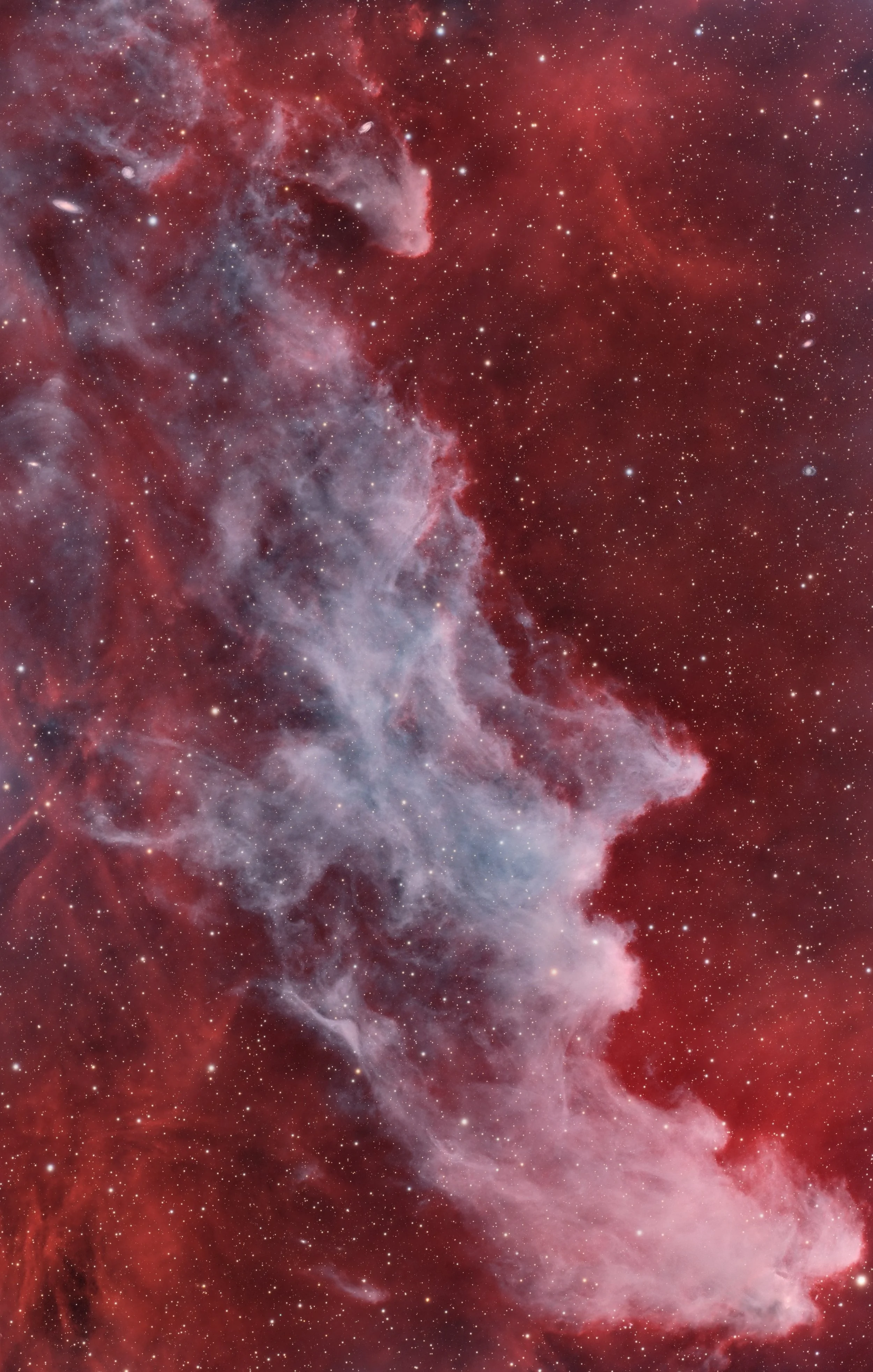
The Witch Head Nebulae
The Witch Head Nebula (IC 2118), a faint reflection nebula situated in the constellation Eridanus, reveals its ghostly visage in this exceptional capture. Located approximately 900 light-years from Earth, the nebula’s distinctive shape resembles the profile of a cackling witch, a fitting tribute to its name. This cosmic apparition glows due to starlight reflected off interstellar dust, primarily illuminated by the nearby supergiant star Rigel in the constellation Orion.
The nebula’s bluish hues are a result of light scattering—shorter blue wavelengths are scattered more efficiently by the dust particles, a phenomenon similar to why Earth’s sky appears blue. Surrounding the Witch Head are subtle wisps of molecular clouds, hinting at the nebula’s dynamic and evolving environment.
Captured from the pristine skies of the Atacama Desert, this image takes full advantage of the location’s Bortle 1 conditions, highlighting the intricate textures and delicate structures of this elusive celestial object.
The Witch Head Nebula stands as a stunning reminder of the interstellar artistry woven into the fabric of our universe, showcasing the interplay of starlight and dust against the backdrop of infinite space.
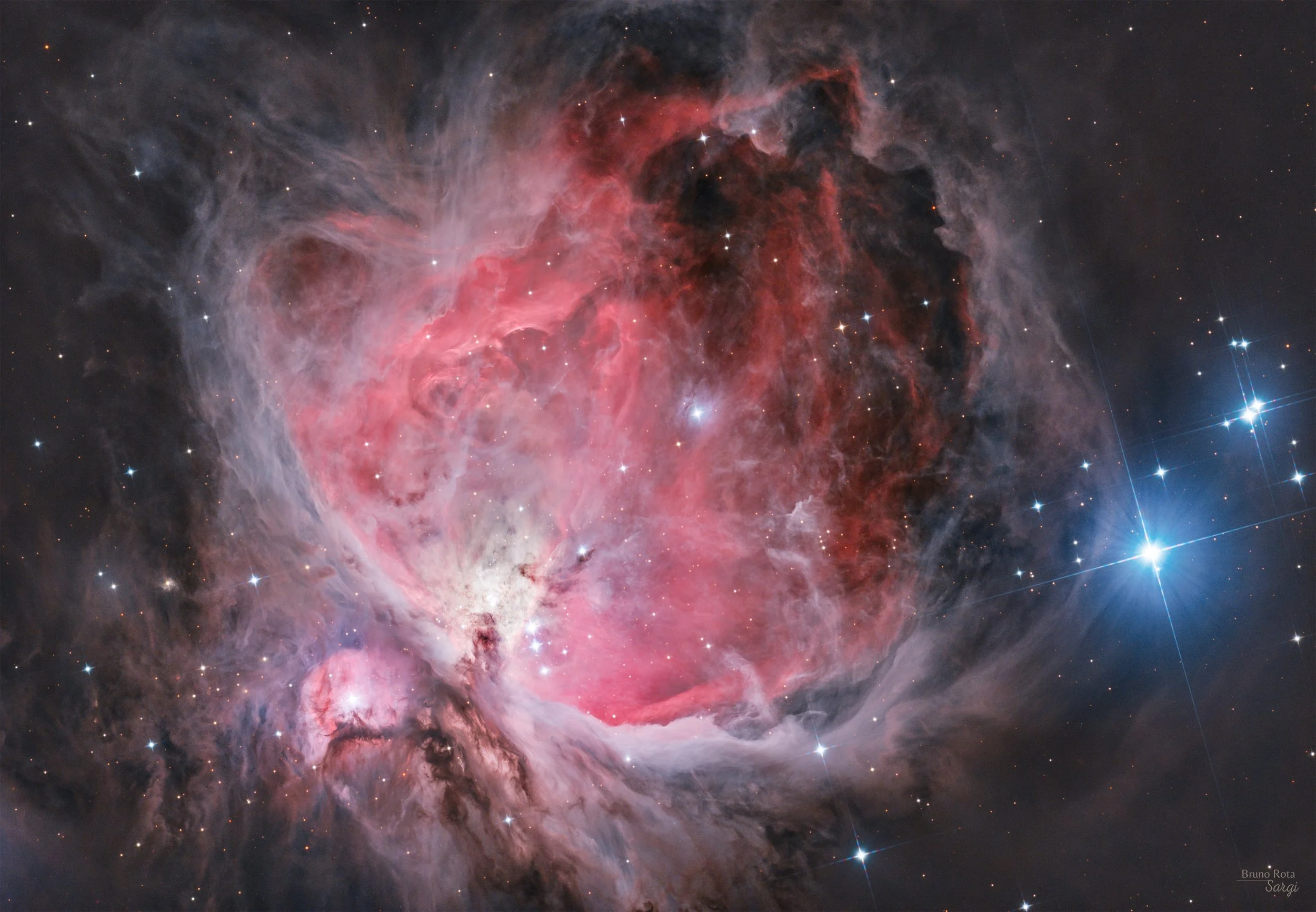

Rho Ophiuchi cloud complex
Captured from the pristine dark skies of Tivoli Astrofarm in Namibia, this stunning image of the Rho Ophiuchi Cloud Complex showcases one of the most colorful and dynamic regions of the night sky. Located at an estimated distance of about 140 parsecs (460 light-years), this interstellar masterpiece is among the closest star-forming regions to our Solar System.
This complex hosts a variety of nebulae, including emission, reflection, and dark nebulae, creating a vibrant interplay of colors and textures. The golden hues surrounding Antares, the heart of the constellation Scorpius, contrast with the electric blue of reflection nebulae and the inky black of dark clouds, highlighting the diverse cosmic phenomena within this region.
To achieve this breathtaking composition, the photographer combined data from two focal lengths, each meticulously capturing this field for 3 hours. The layering of perspectives allows for an exquisite balance of resolution and field of view, bringing out intricate details in the dust lanes and the subtle glow of starlight scattered by cosmic particles.
The Rho Ophiuchi Cloud Complex is a celestial jewel box, revealing the beauty of stellar nurseries and the interplay of light, dust, and gas that shape the galaxy. Observing and imaging this region is a dream for astronomers and astrophotographers alike, offering a vivid window into the wonders of the universe.
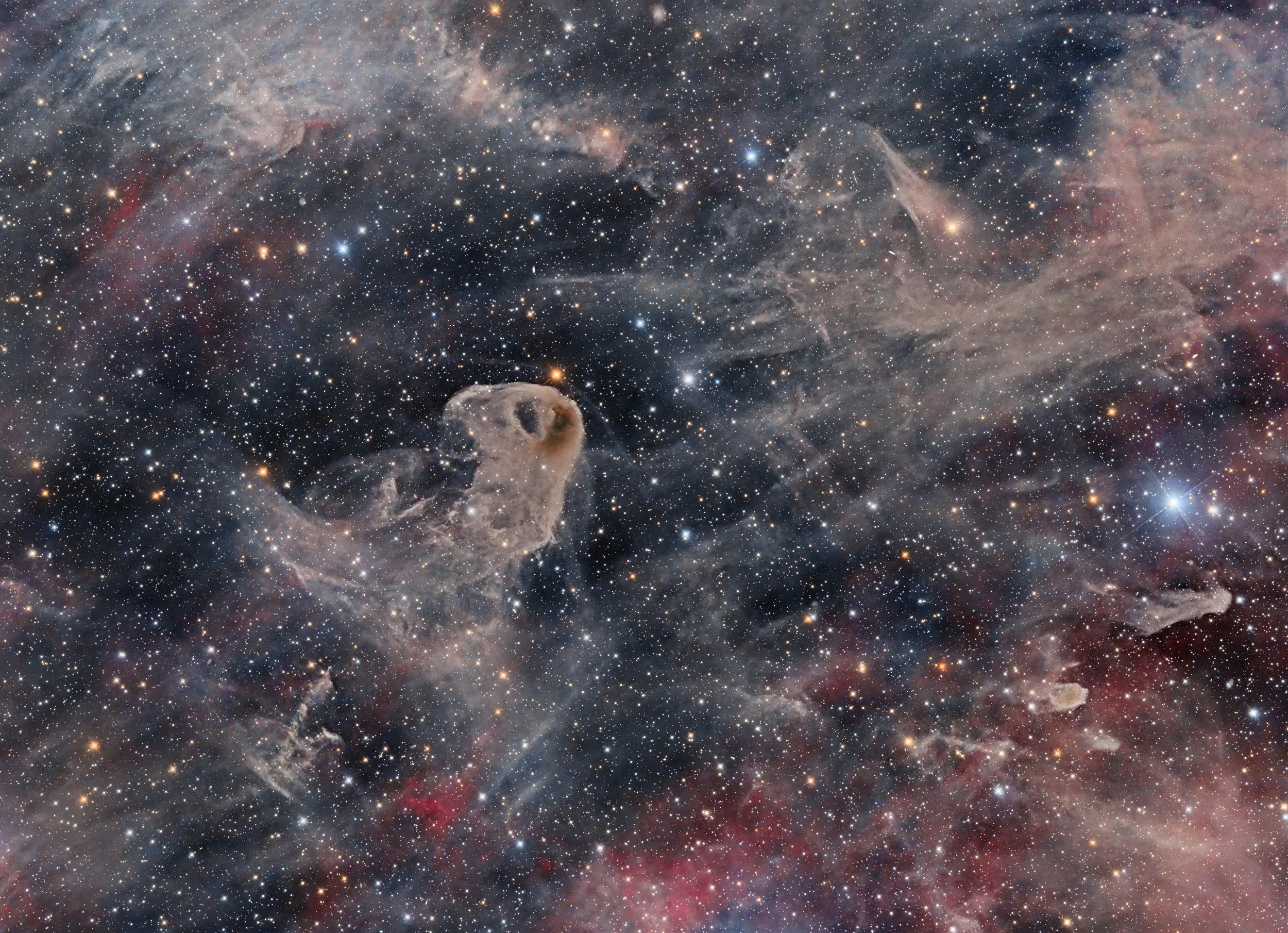
LBN 777 - The Baby Eagle Nebula
Nestled within the Taurus Molecular Cloud, LBN 777, also affectionately called the Baby Eagle Nebula, is a stunning interplay of reflection and dark nebulae located approximately 450 light-years away. Its delicate, sweeping arcs of dust and faintly glowing regions evoke the image of a young eagle with its wings partially spread, soaring quietly through interstellar space.
This nebula is part of a larger complex of molecular clouds in Taurus, a region renowned for active star formation. The faint glow visible in the nebula comes from starlight scattered off fine dust grains, while darker regions obscure the light from stars beyond, creating a striking contrast. The intricate shapes within LBN 777 owe their origin to the turbulent forces of stellar winds, radiation pressure, and gravity that sculpt the dust and gas into intricate structures.
Photographing this elusive target requires patience and skill, as its faint features demand long exposure times under dark skies. Using broadband filters to capture the reflection components and narrowband techniques to emphasize subtle hydrogen emissions helps bring out the nebula’s texture and depth.
The Baby Eagle Nebula is a quiet but poignant reminder of the cosmic forces at work in our galaxy. Its beauty lies in its understated elegance, captivating the imagination of those who seek its faint wings in the night sky.
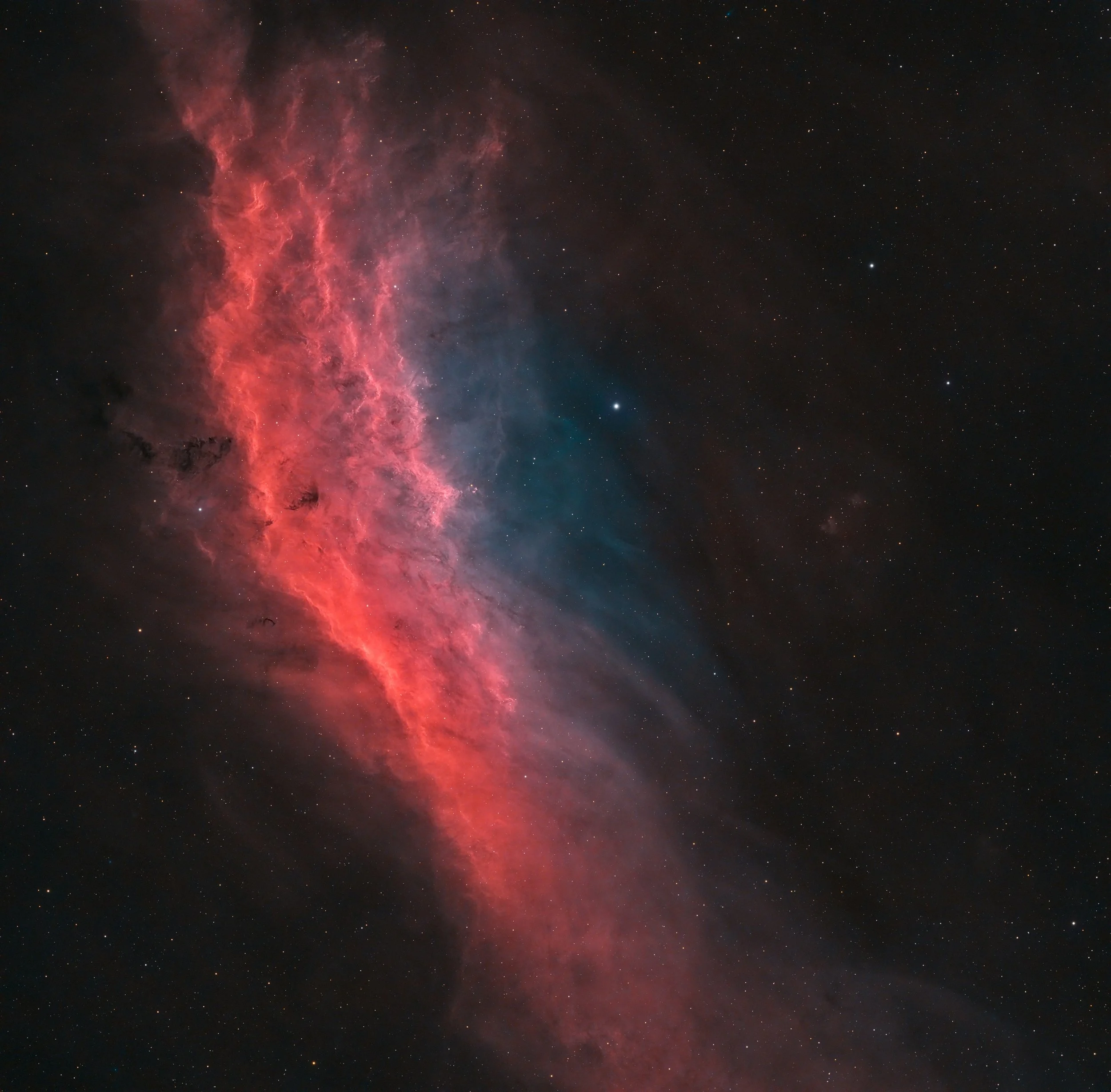
The California Nebula
The California Nebula, named for its resemblance to the shape of the U.S. state, is an iconic emission nebula located in the constellation Perseus, about 1,000 light-years away. Spanning nearly 100 light-years, this massive cloud of ionized hydrogen glows predominantly in deep red hues due to the influence of nearby star Xi Persei, an exceptionally hot and bright O-type star. The intense ultraviolet radiation from Xi Persei energizes the nebula's hydrogen gas, causing it to emit the characteristic red light of H-alpha.
This nebula is particularly intriguing because of its elongated structure and dynamic interplay of light and shadow, created by regions of interstellar dust that obscure parts of its glowing gas. It’s an active region of the sky, rich with complex textures and fine details that are brought to life in narrowband imaging, especially with H-alpha filters.
Astrophotographers and astronomers alike are drawn to the California Nebula for its striking appearance and its position within a star-rich field of the Milky Way. Although faint to the naked eye, it is a treasure for imaging enthusiasts who can reveal its full splendor under dark skies with long exposures.
A celestial homage to Earth’s own geography, the California Nebula is a timeless subject that captures the imagination and beauty of the universe.
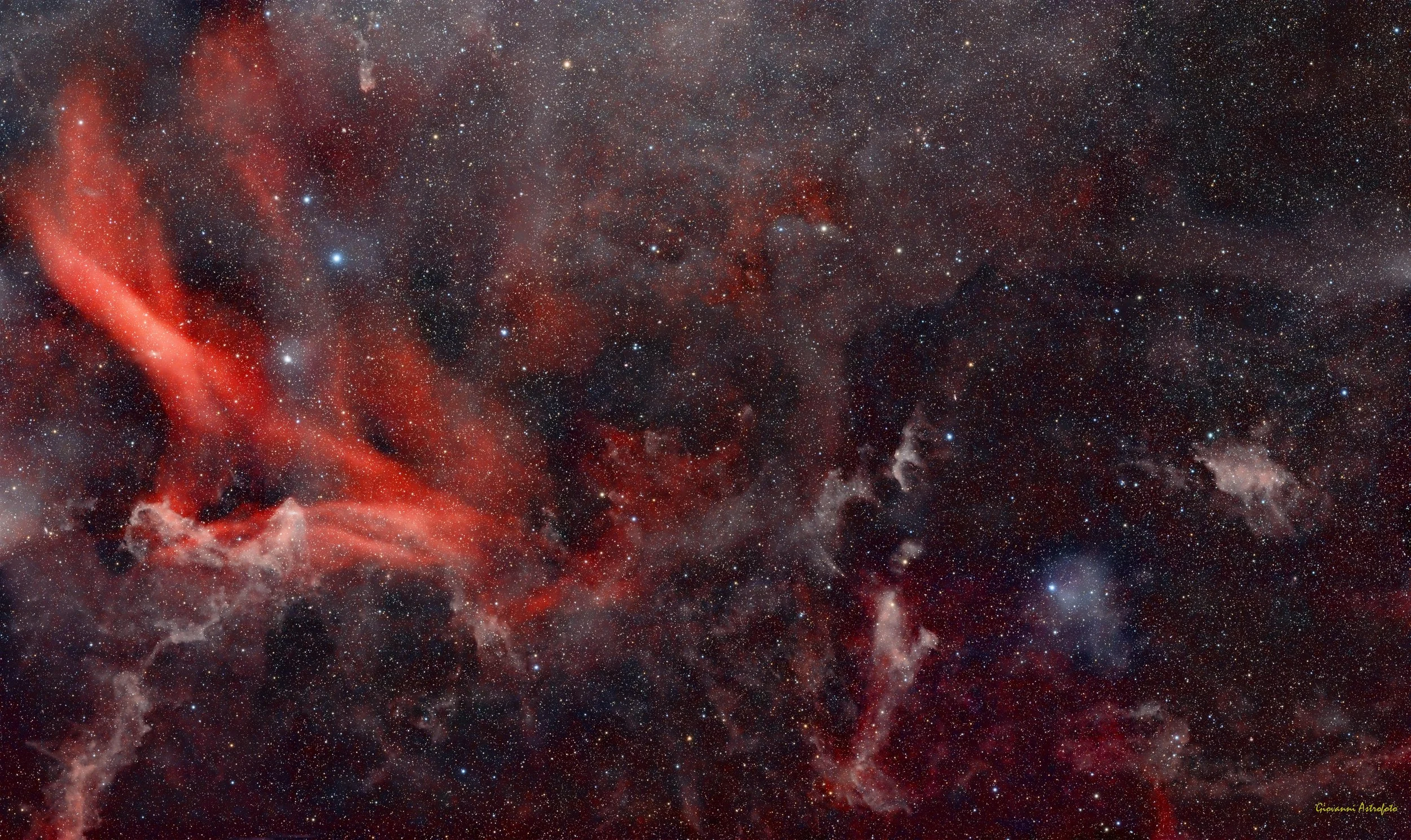
Mosaic of a part or Lacerta constellation
This mosaic reveals a stunning portion of the constellation Lacerta, the "Lizard," in unprecedented detail. Composed of 2,000 individual frames, each exposed for 300 seconds, this masterpiece represents over 187 hours of imaging effort. The ambitious project began in August 2024, culminating in a breathtaking view that showcases the intricate structures hidden in this often-overlooked region of the sky.
Lacerta lies along the Milky Way's path, offering a rich field of stars, faint nebulae, and interstellar dust. Within this mosaic, subtle hydrogen-alpha emissions thread through the star-studded background, hinting at vast molecular clouds and star-forming regions. The meticulous planning and stitching together of such an expansive image highlight the depth of dedication and artistry in astrophotography.
Despite its relatively small size, Lacerta is home to fascinating celestial objects, including open star clusters and dark nebulae. This mosaic celebrates the quiet beauty of the constellation, revealing features that are often too faint to see in smaller fields of view.
The immense time and effort poured into capturing this mosaic reflect not just a passion for the stars but also the unyielding curiosity that drives exploration of the cosmos. A true testament to the art of long-term astrophotography.
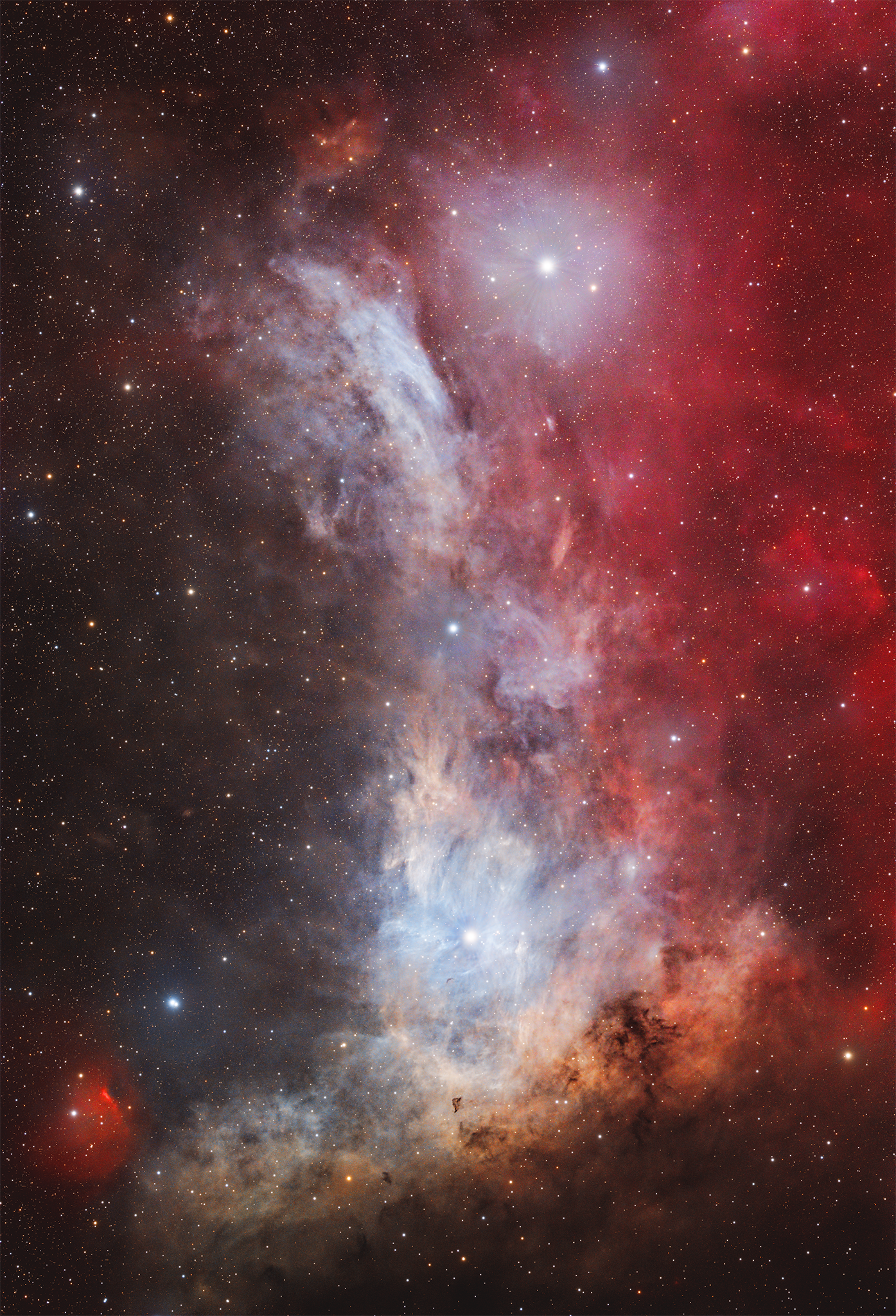
The Space Waterfall (vdB14 and vdB15) in HaLRGB
Captured under the pristine Bortle 3 skies of Northern Spain, this striking image showcases the stunning vdB 14 and vdB 15, an enchanting reflection nebula pair often referred to as the Space Waterfall. The nebulae reside in the constellation Camelopardalis, a lesser-known yet fascinating region of the northern sky, located approximately 900 light-years away from Earth.
vdB 14 and vdB 15 are illuminated by nearby stars, which lend them their bluish hue. These stars reflect light off the surrounding interstellar dust, creating the glowing veils seen in this image. The nebulae are part of a vast molecular cloud complex that also contains darker patches of cosmic dust, seen as silhouetted regions against the surrounding star field.
This wide-field image combines data from hydrogen-alpha (Ha) and LRGB channels, expertly processed to bring out the rich interplay of light and shadow. The Ha signal highlights faint hydrogen emissions within the nebulosity, adding depth and contrast to the scene. The "waterfall" effect arises from the structured filaments of dust and gas, cascading through the field of view and giving the nebula its poetic nickname.
Located in a remote observatory in Northern Spain, this region's dark and stable skies provide the perfect setting for capturing such faint and intricate cosmic features. The image captures not only the beauty of vdB 14 and vdB 15 but also the elegance of the wider cosmic canvas, with a wealth of faint stars and distant galaxies completing the scene. A reminder of the endless wonders waiting to be explored in the quieter corners of our galaxy.

Andromeda Galaxy (M31)
This image of the Andromeda Galaxy (M31) was captured from Rudka Wieś, located in the Masuria region of Poland, on August 29th and 30th, 2024. Known as one of the most iconic and closest spiral galaxies to our own Milky Way, Andromeda lies about 2.5 million light-years away. The image showcases the grandeur of M31, with its sweeping spiral arms and bright, dense core, highlighting the beauty of a galaxy that is on a collision course with the Milky Way in several billion years.
The process behind this image is a two-night effort, with RGB data being collected on the first night. A total of 100 frames were taken, each lasting 180 seconds, to capture the galaxy's visible light in red, green, and blue wavelengths. The second night focused on capturing the hydrogen signal from the galaxy’s interstellar medium, utilizing an L-Ultimate filter. This filter allowed for a clearer image of the emission nebulae within the galaxy, highlighting regions of star formation in its spiral arms. For this, 20 frames, each 600 seconds long, were acquired.
Taken under relatively dark skies in Rudka Wieś, a location that offers a good balance of dark-sky conditions, this image beautifully showcases the Andromeda Galaxy, not only in its full grandeur but also in the intricate details of its star-forming regions, making this capture a testament to both the beauty of the cosmos and the power of modern amateur astrophotography.
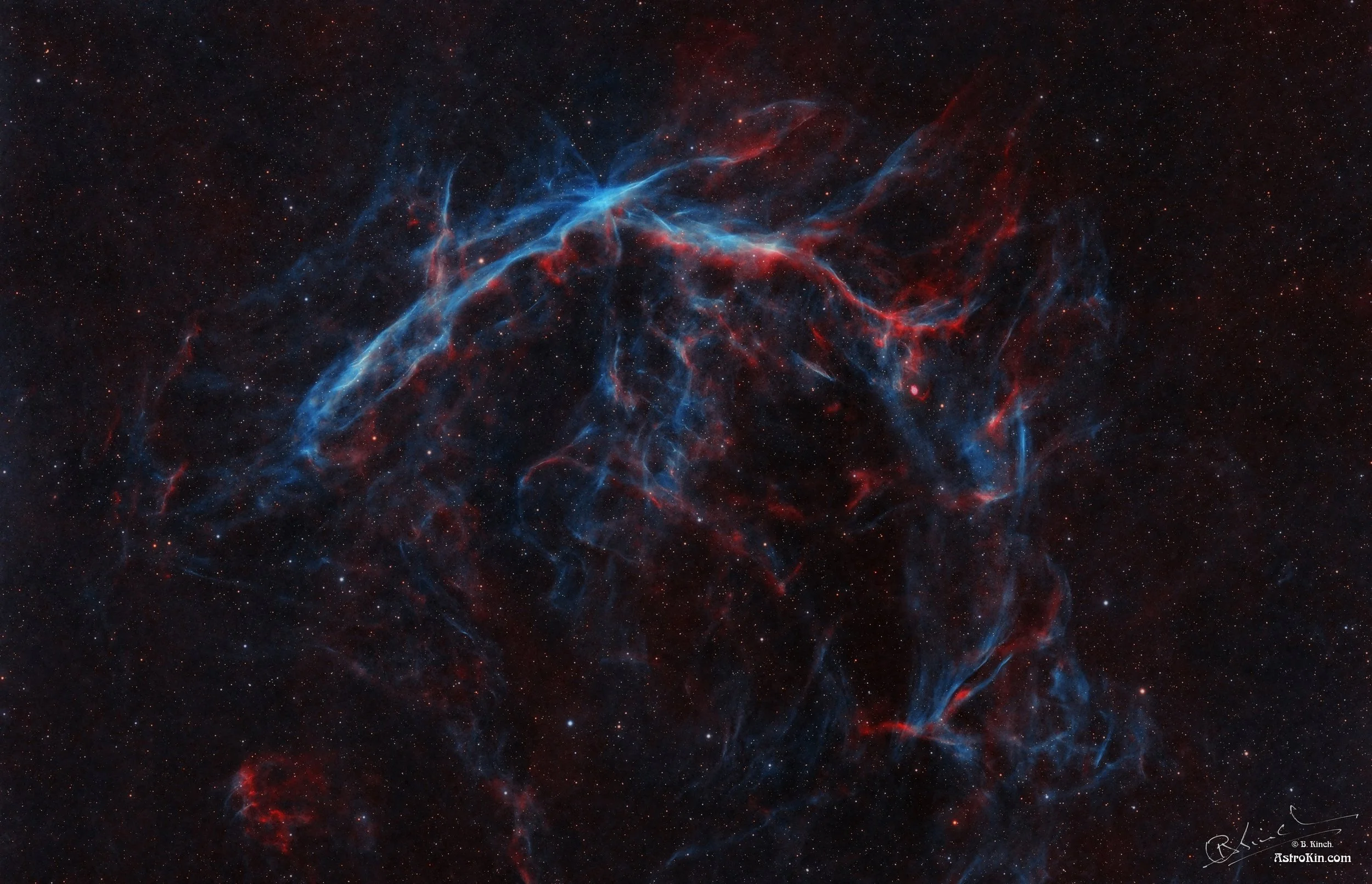
CTA 1
This fascinating image captures CTA 1, a vast and faint supernova remnant in the constellation Cepheus. Thought to have been formed by a supernova explosion around 10,000 years ago, CTA 1 spans a wide region approximately 4,600 light-years from Earth. This supernova remnant is an elusive target for astrophotographers due to its dim luminosity and diffuse structure, making it a remarkable sight when imaged in such detail.
The designation "CTA 1" comes from the California Institute of Technology's (Caltech) first radio source catalog, published in 1960. While often collectively referred to as G119.5+10.2, this expansive remnant also includes substructures cataloged as G119.5+9.8 and G119.5+10.0, highlighting its complex morphology.
Adding a striking contrast to the ethereal backdrop of CTA 1 is the planetary nebula NGC 40, prominently visible near the center-right of the image. Often nicknamed the Bowtie Nebula, this bipolar planetary nebula glows brightly as the central dying star sheds its outer layers, creating a stunning interplay of structure and color.
This image showcases the celestial interplay of endings and beginnings: the diffuse remains of a supernova explosion, which seeded the cosmos with elements for future star formation, juxtaposed with the beautiful remnants of a star nearing the end of its life. It’s a rare and mesmerizing look at Cepheus' hidden treasures.
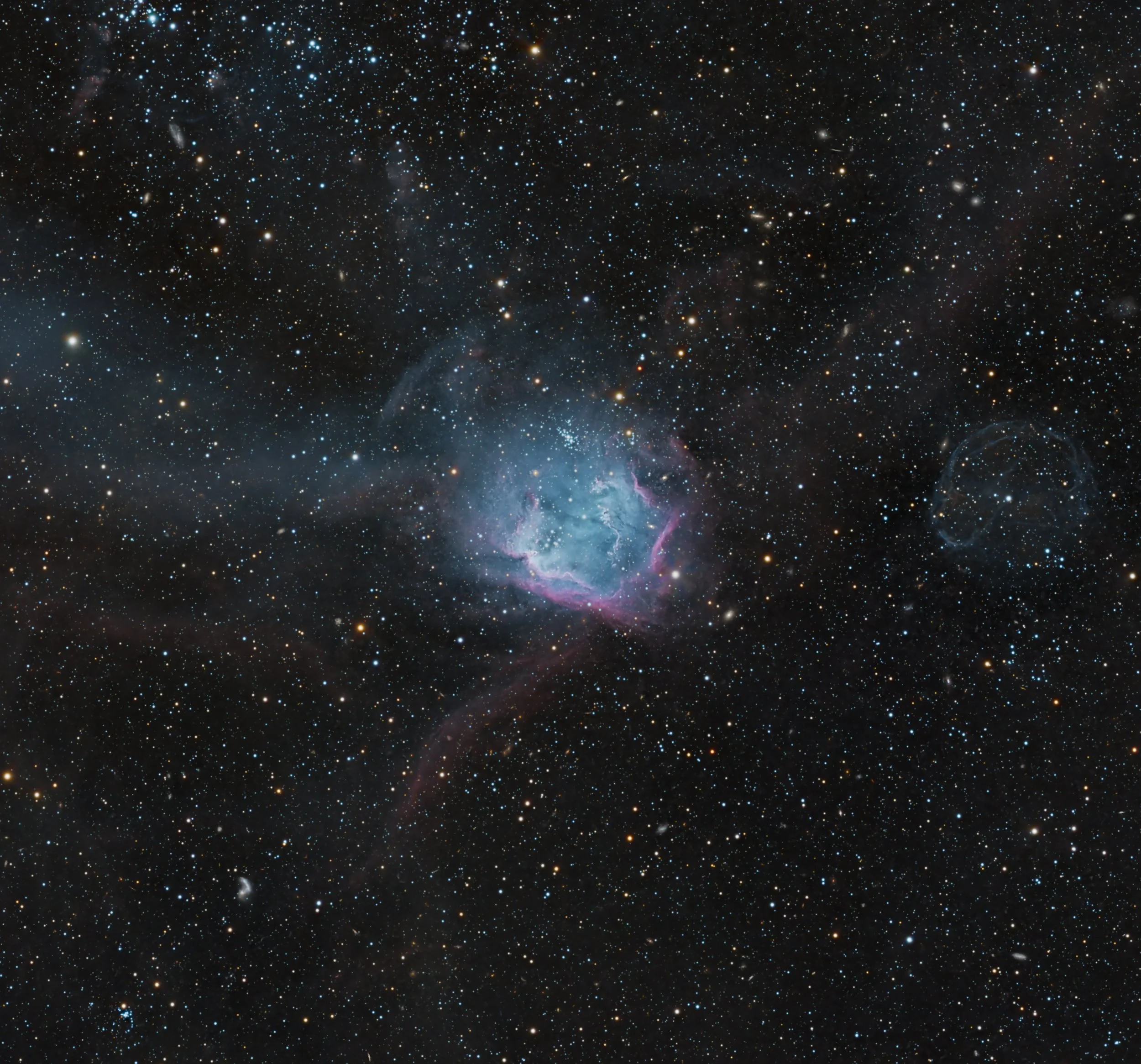
NGC 602
NGC 602 is a striking open cluster nestled within the Small Magellanic Cloud (SMC), a satellite galaxy of the Milky Way located some 200,000 light-years away. This vibrant cluster, surrounded by the emission nebula N90, is illuminated by young, massive stars that have recently formed within the dense clouds of gas and dust. The intense ultraviolet radiation from these hot stars sculpts and ionizes the surrounding material, creating a dynamic, glowing environment rich with cosmic activity.
There is what appears to be a faint planetary nebula, possibly identified as SMC-B Bru 2-165, nestled within this stellar nursery. Planetary nebulae represent the final stages in the life cycle of medium-sized stars, where the outer layers are ejected, leaving a hot, dense core.
The SMC itself offers a unique window into stellar evolution, given its low metallicity and proximity. Capturing such delicate and rare features in this image highlights the interplay of star formation, destruction, and the rich tapestry of phenomena present within this neighboring galaxy.

A deep view into the "Ghost of Cassiopeia"
Deep in the constellation Cassiopeia, a spectral figure haunts the night sky: the aptly named Ghost of Cassiopeia. This striking nebula, cataloged as IC 63, is located about 550 light-years away, in the cosmic backyard of the bright star Gamma Cassiopeiae.
The Ghost's ethereal glow is the result of radiation from Gamma Cassiopeiae, an unstable B-class star that shines thousands of times brighter than the Sun. This radiation energizes the surrounding hydrogen gas, causing it to fluoresce in a reddish hue typical of H-alpha emissions. Meanwhile, the nebula's bluish wisps are created by interstellar dust reflecting Gamma Cassiopeiae's intense starlight, giving it a haunting, ghost-like appearance.
IC 63 is a reflection-emission nebula, where both processes—light reflection and gas ionization—occur in tandem. Its structure is shaped by stellar winds and radiation pressure, carving out delicate tendrils and intricate layers in the interstellar medium.
This nebula is not merely a visual delight but also a dynamic region, where the effects of stellar radiation sculpt the surrounding environment. While its ghostly appearance makes IC 63 a popular astrophotography target, its proximity and interaction with Gamma Cassiopeiae offer astronomers insights into the interplay between massive stars and their surrounding gas clouds.
Under dark skies and with the right equipment, the Ghost of Cassiopeia can be revealed in all its spectral glory, a haunting reminder of the transient beauty of the cosmos.
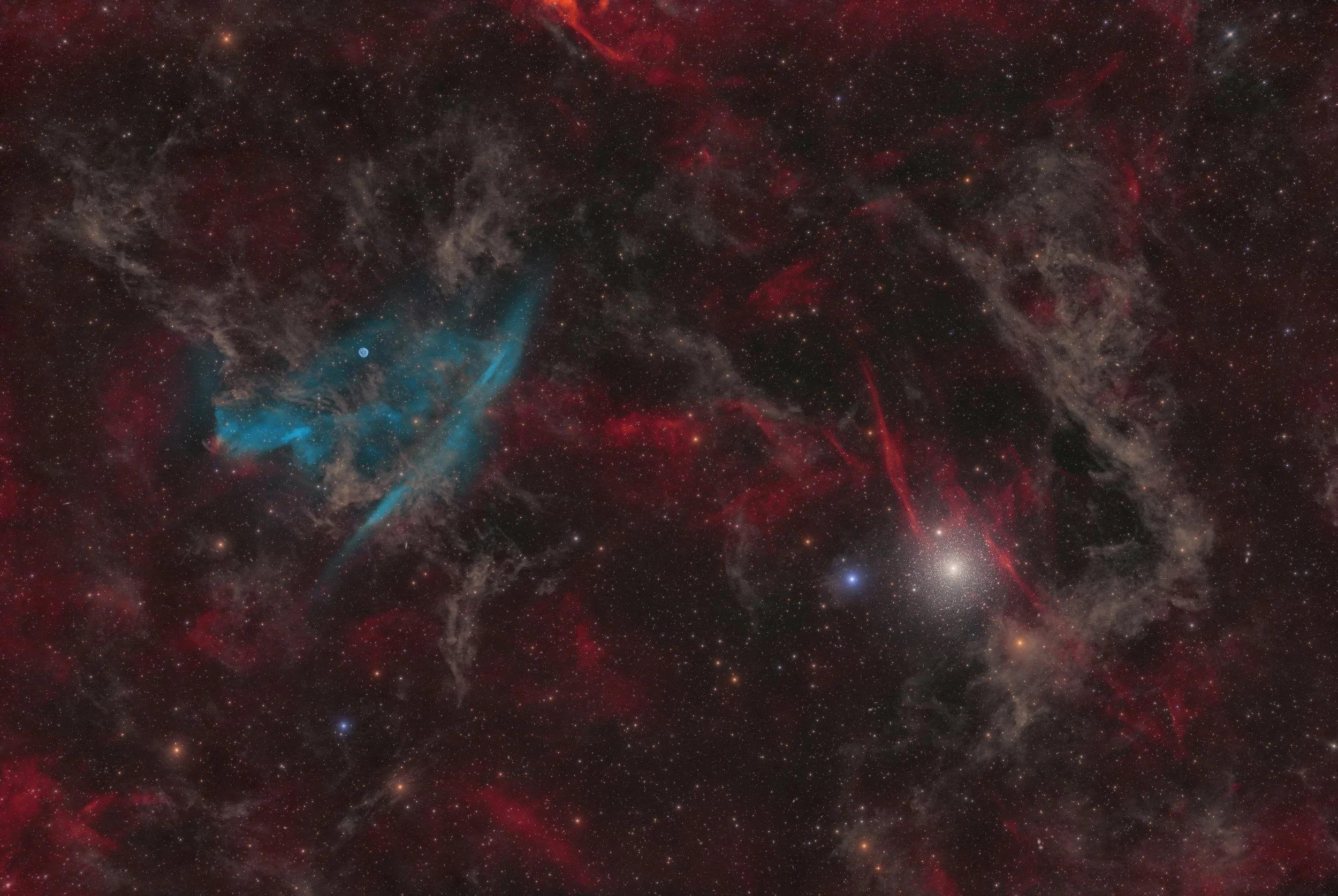
NGC 7094 and its new feature
This wide-field view reveals an extraordinary blend of cosmic objects, each contributing to the visual and scientific richness of the image.
M15, one of the densest globular clusters in the Milky Way, glitters with the light of hundreds of thousands of stars tightly packed into a spherical shape. Located about 33,000 light-years away, its dense core may harbor a rare intermediate-mass black hole, making it a subject of ongoing research.
NGC 7094, a planetary nebula, is a stellar remnant left behind by a Sun-like star nearing the end of its life. Its central white dwarf illuminates the nebula with ultraviolet radiation, sculpting the surrounding gases into intricate shapes.
The [O III] Zone, an unexpected discovery in this image, spans a large region and glows with a faint greenish-blue hue, characteristic of doubly ionized oxygen. The nature of this halo is a mystery—potentially a remnant of ancient stellar outflows or interstellar shockwaves.
Adding to the beauty, the image is interlaced with crimson hydrogen-alpha emissions and cosmic dust clouds, which create a vivid backdrop. These elements highlight the interplay of old and new: ancient star clusters, dying stars, and the raw materials for future stellar generations.
This image serves as a testament to the power of wide-field astrophotography, revealing not only familiar objects but also uncovering hidden phenomena awaiting deeper exploration. It’s a reminder that even well-known regions of the sky still hold secrets to be discovered.
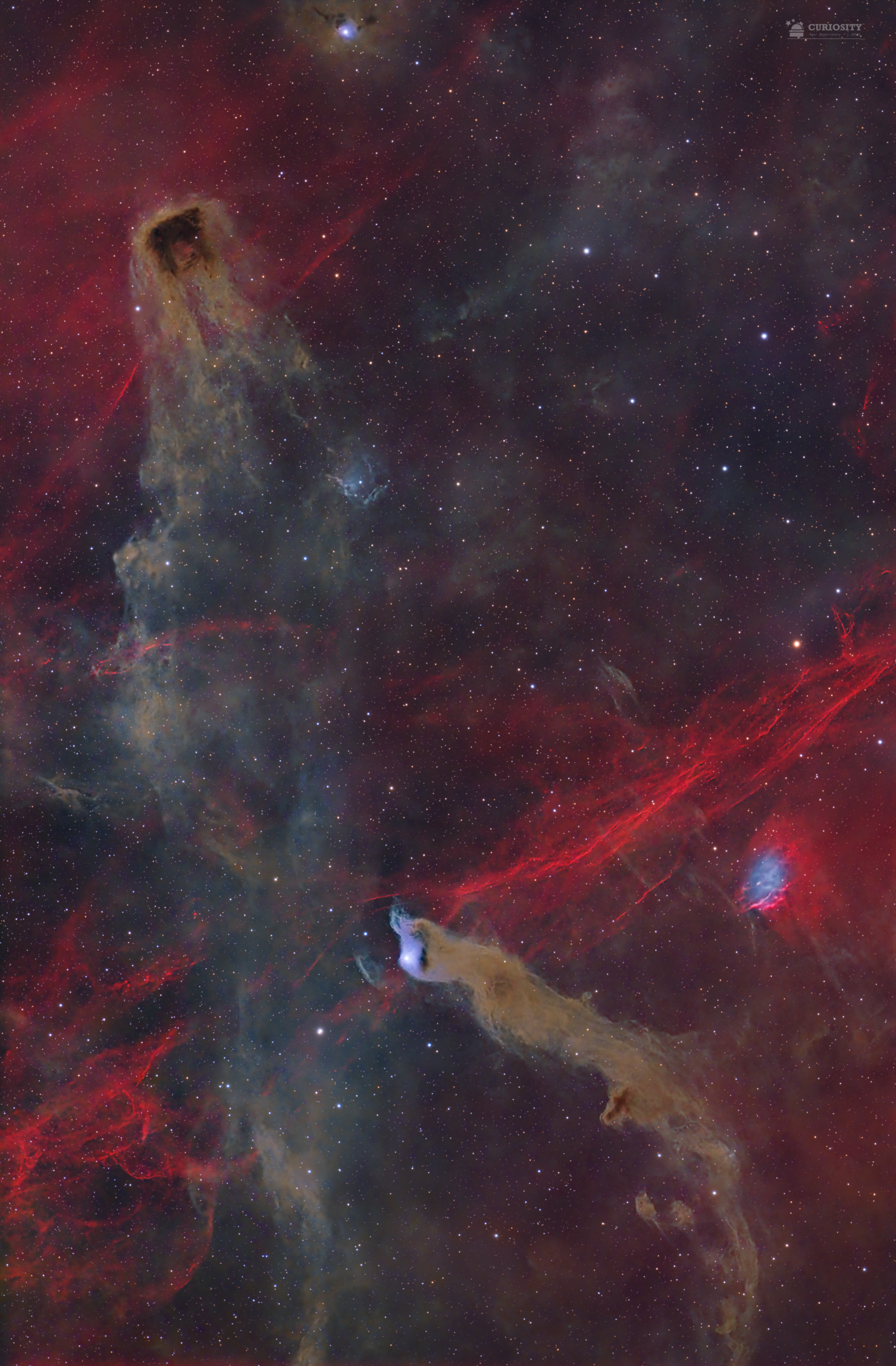
The Wolf's Cave and the Toast Nebula
This remarkable region in the constellation Cepheus showcases a tapestry of astrophysical phenomena, where stars and interstellar matter come together to create a scene of cosmic artistry. Each of these designations represents distinct features within a vast complex of gas and dust, woven into the fabric of our galaxy.
VdB 152, also known as Ced 201, is a faint reflection nebula perched at the tip of an elongated dark nebula. It gleams with a ghostly blue hue as it reflects the light from nearby stars, offering a stark contrast to the surrounding inky darkness.
LDN 1221 is part of a dense dark nebula obscuring background starlight, forming intricate, sinuous shapes that add depth and mystery to the region.
LBN 534 and LBN 538 are large, faint emission nebulae that provide the backdrop, glowing faintly in hydrogen-alpha emissions, highlighting the presence of ionized gas.
This area is a rich hunting ground for amateur and professional astronomers alike. The interplay of light and shadow reveals the ongoing processes of star formation, with dark filaments of dust punctuated by the glow of emerging stars. The complex structures speak to the dynamic interactions between gravity, stellar winds, and radiation.
Imaged under the pristine skies of a dark-sky location, this celestial mosaic serves as a reminder of the quiet yet awe-inspiring forces that shape the universe. In Cepheus, beauty and complexity converge in an astronomical masterpiece.
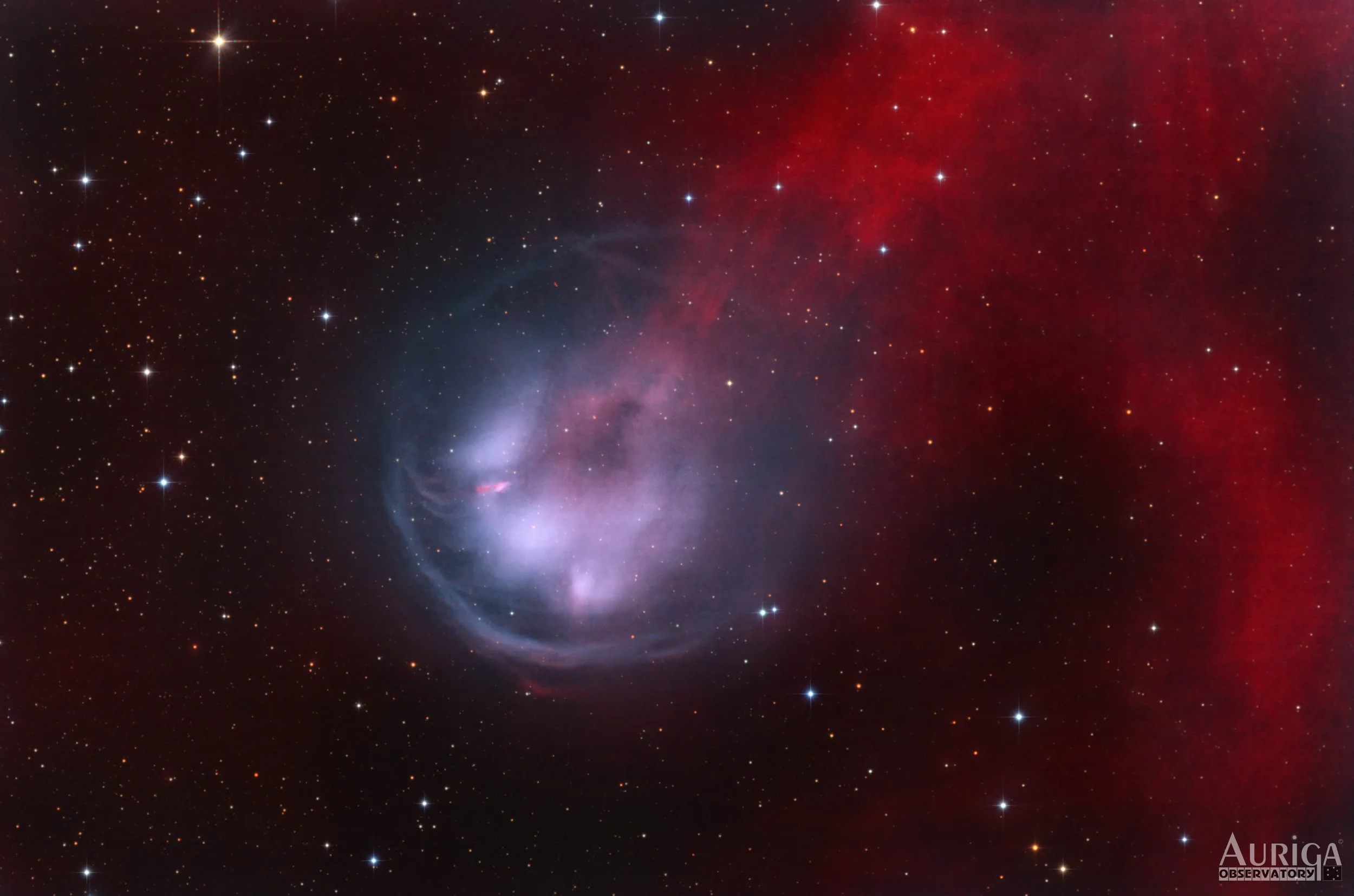
HFG1 | PK 136+05 "Breath of the Heavens"
HFG1, also cataloged as PK 136+05, is a planetary nebula located in the constellation Cassiopeia. This peculiar object stands out due to its fascinating interaction with the interstellar medium, resulting in an intricate and extended structure that captivates astronomers and astrophotographers alike.
HFG1 was first cataloged in 1982 by Heckathorn, Fesen, and Gull (hence the name "HFG"). It surrounds the binary system V664 Cas, consisting of a white dwarf and a companion star. The pair’s movement through space at high velocity creates a spectacular bow shock, leaving behind a faint, elongated tail stretching over 1.5 degrees across the sky. This interaction produces a striking visual effect, with the bright planetary nebula at its center trailing a wispy, comet-like wake of gas and dust.
This celestial marvel is a late-stage planetary nebula, where material ejected during the dying star’s red giant phase is illuminated by the remaining hot core. The faint surrounding structures are best observed through narrowband filters, particularly in H-alpha and OIII, revealing its intricate details and contrasting colors.
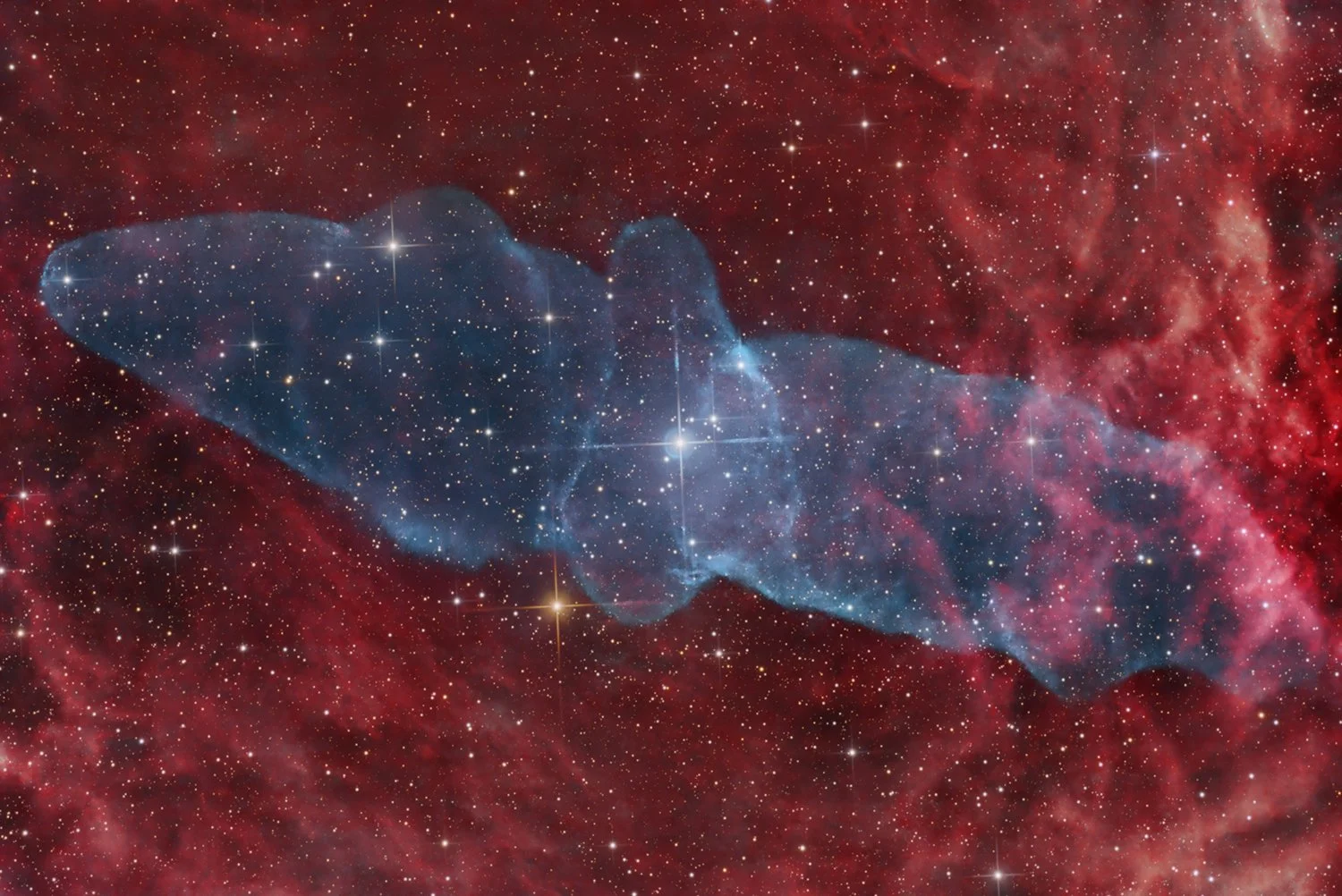
Squid Nebula Sh2-129
The Squid Nebula, also known as Sh2-129 or Ou4, is one of the most enigmatic and striking deep-sky objects. Located in the constellation Cepheus, this faint emission nebula spans an astonishing three degrees of the sky—roughly six times the diameter of the full moon. It was first discovered in 2011 by French astrophotographer Nicolas Outters.
What makes the Squid Nebula so extraordinary is its ghostly, bipolar shape, which appears embedded within the larger Sh2-129 region, known as the Flying Bat Nebula. The nebula glows predominantly in the OIII wavelength, giving it a bluish hue that contrasts dramatically against the surrounding H-alpha emission of Sh2-129.
Astrophysicists speculate that Ou4 may represent an enormous outflow of material ejected from a triple star system at its center, potentially linked to a massive stellar wind or an ancient supernova event. However, its true origins remain a subject of ongoing study.