

AAPOD2 Image Archives
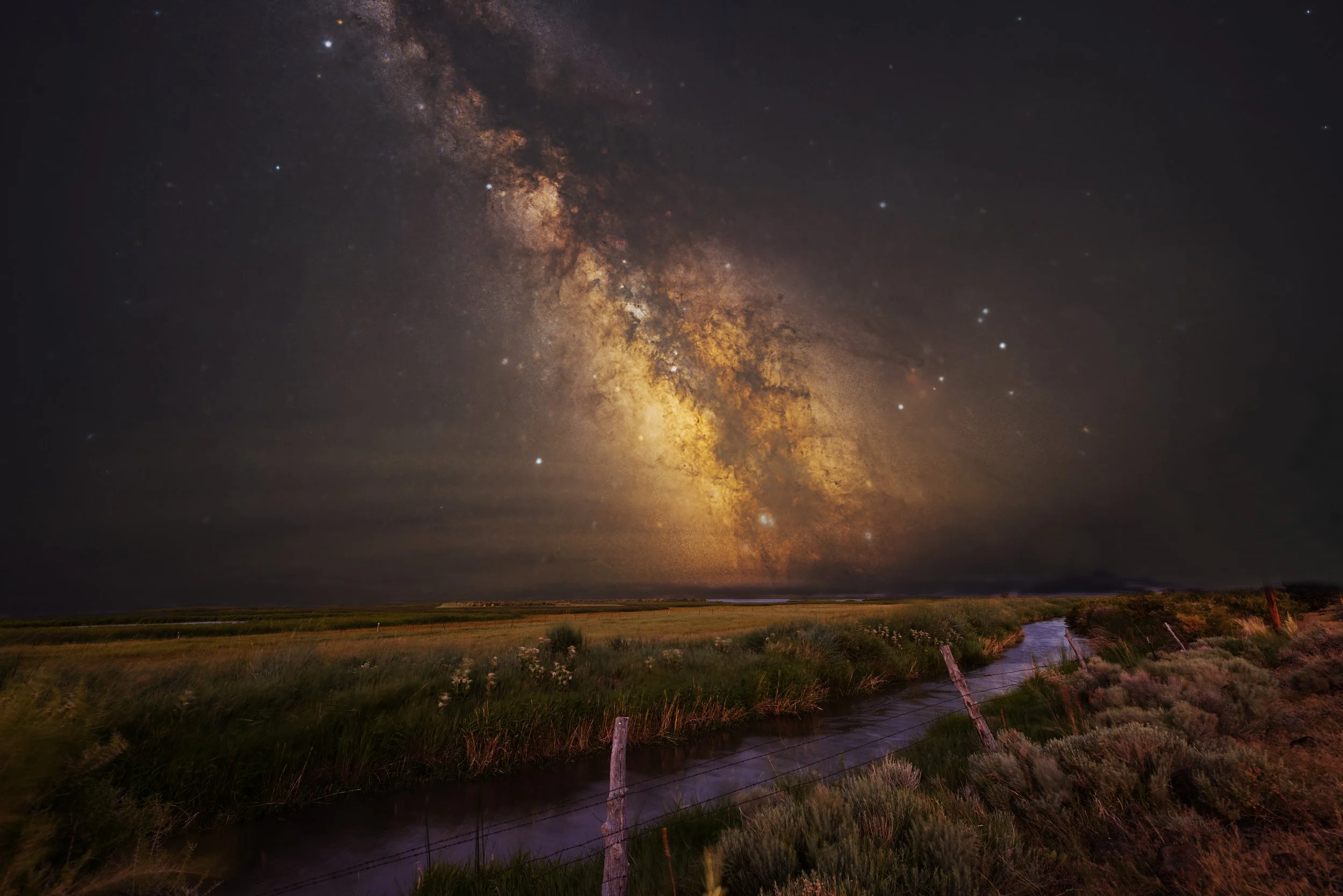
Milky Way core from the Oregon Outback
Captured from the pristine shores of Crump Lake near Plush, Oregon, this striking image showcases the brilliant, structure-rich core of our Milky Way galaxy slicing through the night sky. The horizon glows faintly against the 2.5 million acres of the Oregon Outback—the largest contiguous Dark Sky Sanctuary in the lower 48 states. Using a tracked, multi-exposure sequence, astrophotographer Dave Doctor beautifully reveals the intricate lanes of cosmic dust and distant starlight that are perfectly preserved by some of the darkest, most pristine night skies left on Earth.
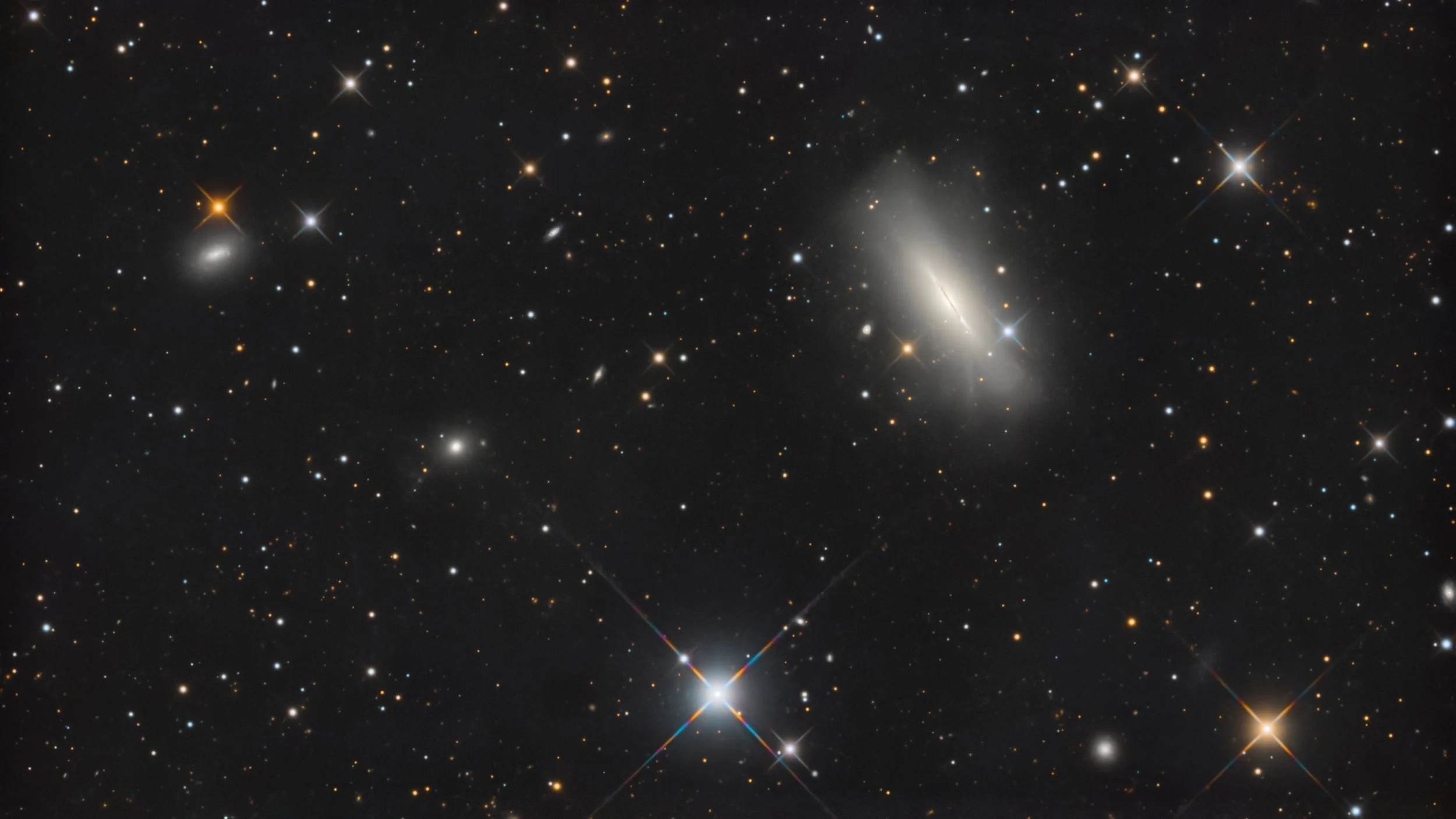
NGC 5866 - Dust and Light
Often referred to as the Spindle Galaxy (and historically associated with the catalog designation Messier 102), this striking lenticular galaxy lies roughly 44 million light-years away in the northern constellation Draco, viewed nearly exactly edge-on from our perspective.
Lenticular galaxies represent a transitional phase in galactic evolution, possessing a disk like a spiral galaxy but lacking the prominent, star-forming spiral arms. Instead, NGC 5866 features a vast, complex dust disk that divides its bright stellar populations. This 13.8-hour total integration capture reveals not only the intricate details of that bisecting dust lane but also hints at the galaxy’s faint outer halo and a scattering of much more distant, background galaxies drifting in the deep cosmos beyond.
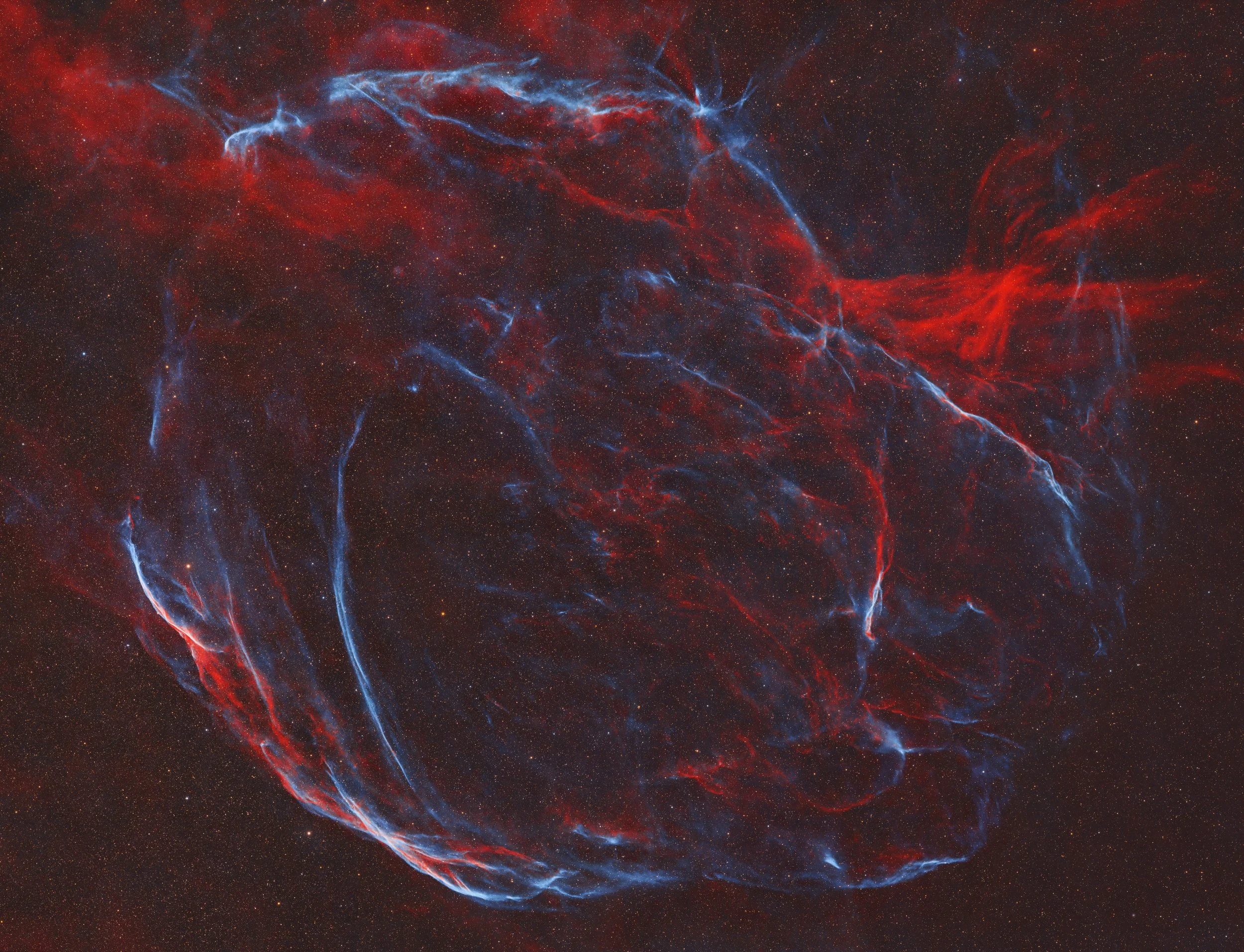
SNR G65.3+5.7 (Little Veil Nebula)
This high-resolution HOO narrowband composite maps the low-surface-brightness filaments of the Galactic supernova remnant SNR G65.3+5.7 in the constellation Cygnus. Captured from Huércal de Almería, Spain, the sprawling structure required a demanding 2 x 4 spatial mosaic (8 tiles total) integrated under highly variable atmospheric conditions. Due to the exceptionally low photon flux of the target, data acquisition was executed using 2×2 binning to optimize the signal-to-noise ratio SNR, accumulating 50 exposures in Hydrogen-Alpha and 50 exposures in Oxygen-III per individual tile.
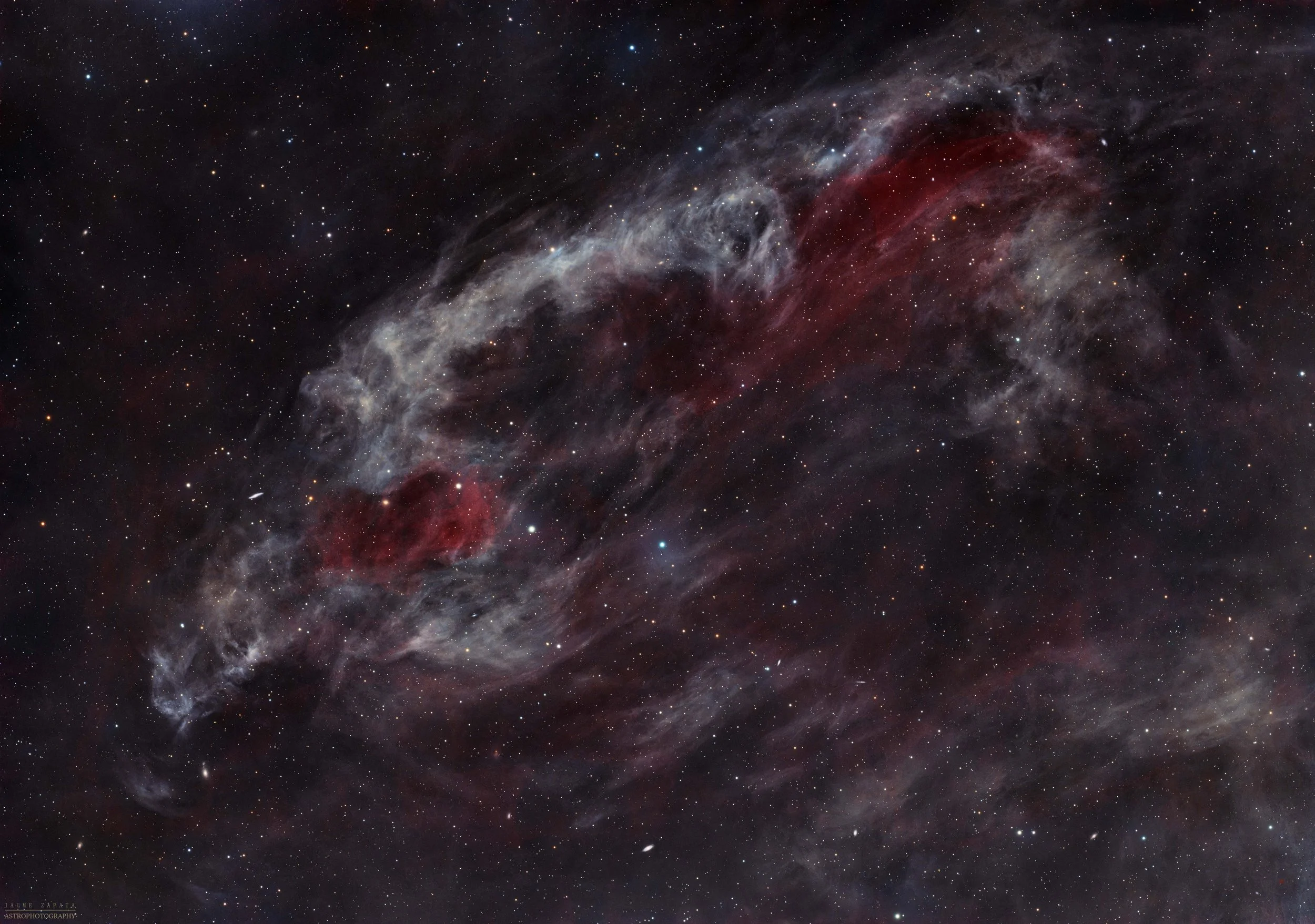
Mandel-Wilson 5 - The Hook Nebula
Mandel-Wilson 5 (The Hook Nebula) is a faint, rarely imaged reflection and emission nebula complex situated within a highly obscured region of the interstellar medium (ISM). To delineate its diffuse structures from the overwhelming cosmic background, this dataset combines broad-band LRGB data with narrow-band Hydrogen-alpha filtering. The addition of the narrow-band data successfully maps the delicate ionization fronts and localized excitation of atomic hydrogen, revealing a complex network of gas filaments weaving through the embedded interstellar dust clouds.
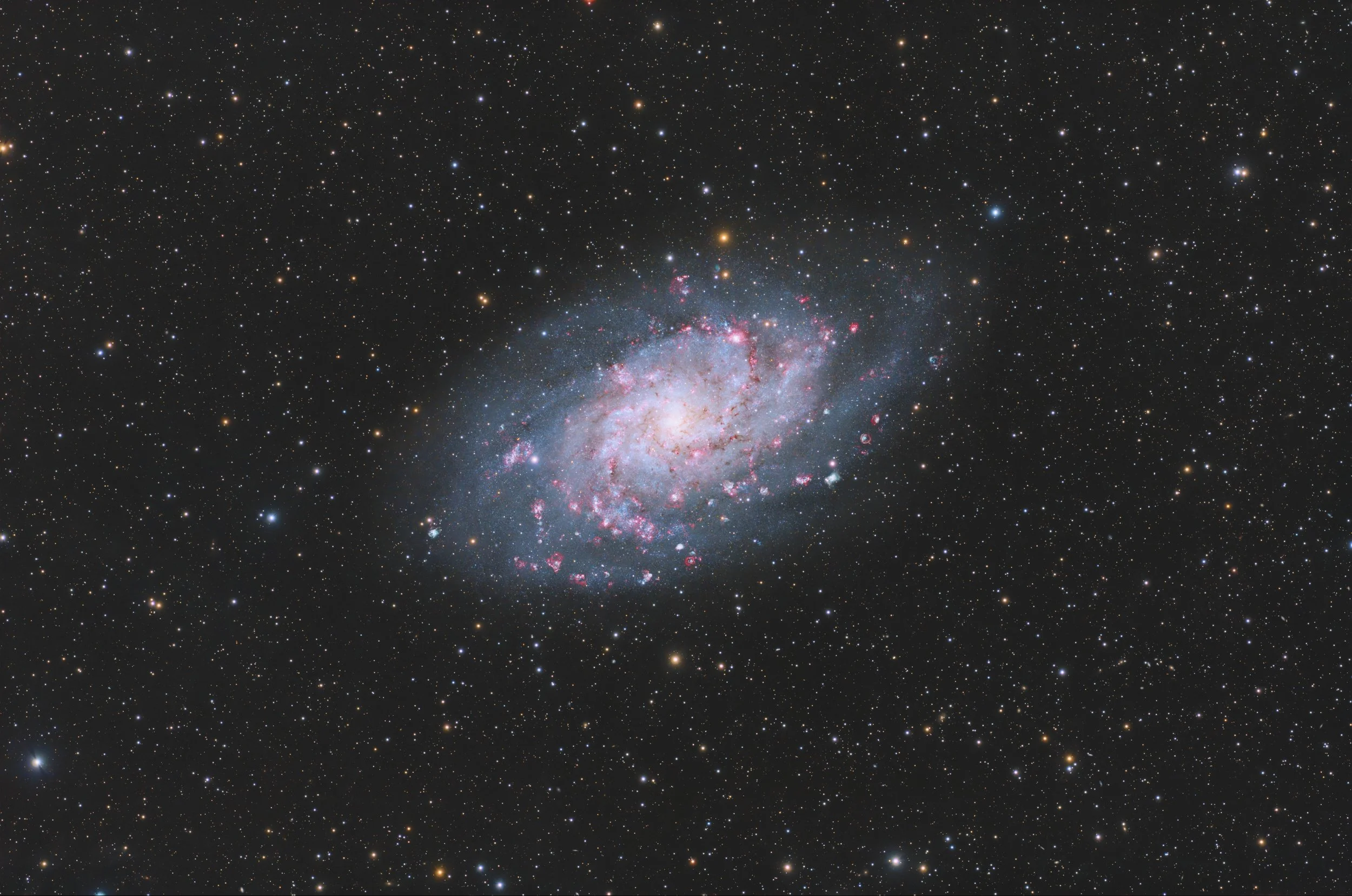
M33, the Triangulum Galaxy
Sprawling across the northern constellation Triangulum, Messier 33 is the third-largest member of our Local Group of galaxies, situated roughly 2.9 million light-years from Earth. Famously known as the Triangulum Galaxy, it holds the distinction of being one of the most distant celestial objects visible to the unaided eye under exceptionally dark skies. This deep 22.3-hour composite telescopic exposure reveals the galaxy's internal structure and high rate of star formation by blending broadband RGB data with specialized narrowband filtration. The resulting image highlights a magnificent abundance of glowing emission nebulae and HII regions, which are massive stellar nurseries rich in ionized hydrogen gas that trace M33's loosely wound spiral arms and showcase the raw materials fueling its next generation of stars.
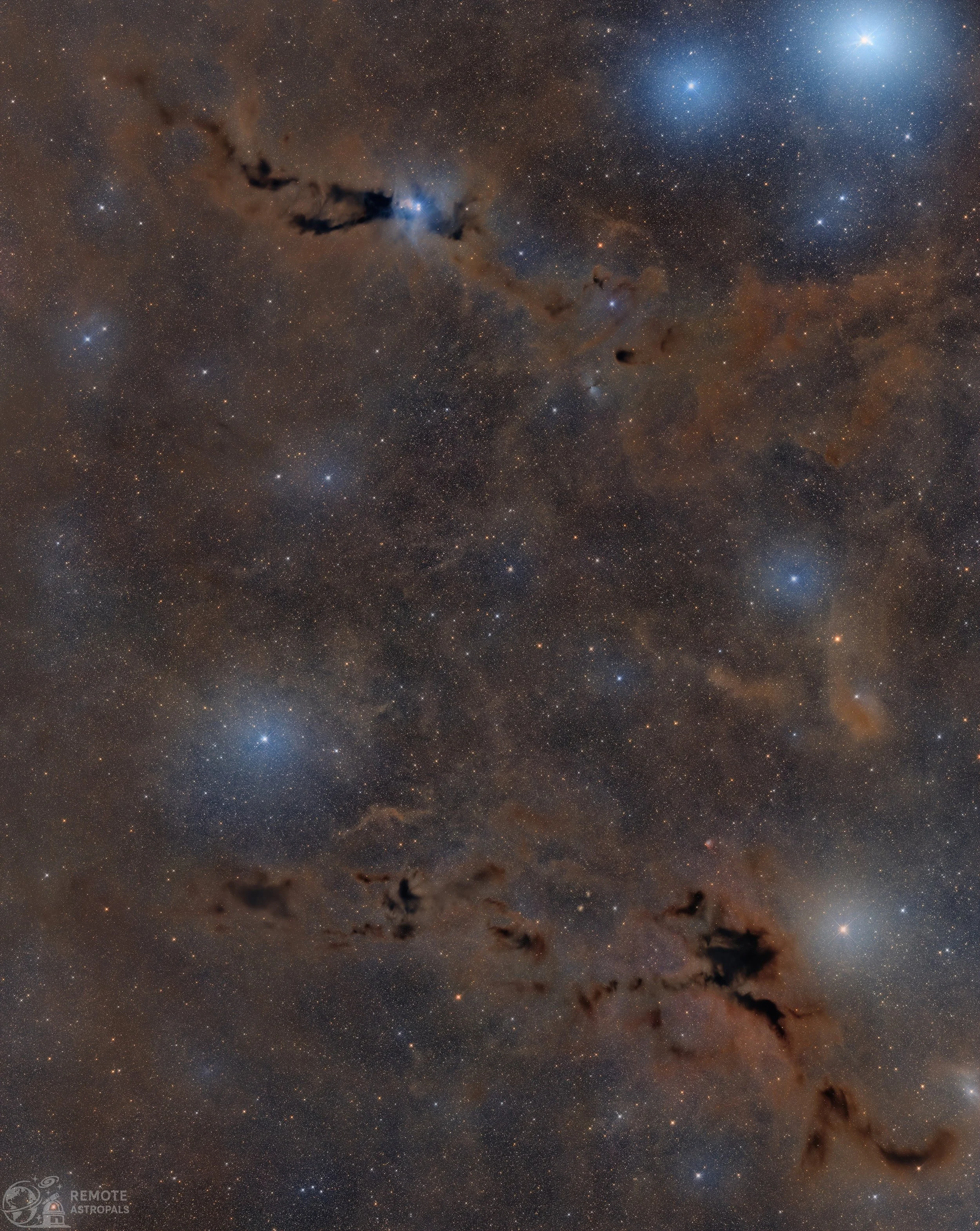
Bernes 149 and surrounding - Molecular cloud Lupus 3
Moving away from bright emission structures, this field enters a quieter deep-sky landscape defined by the subtle interaction between starlight and cosmic dust. At its heart lies Bernes 149, a delicate blue reflection nebula illuminated by the hot, young stars HR 5999 and HR 6000, whose energetic light scatters off fine interstellar grains. However, the true depth of the image is revealed in the surrounding Lupus 3 molecular cloud, a vast stellar nursery of brown, grey, and near-opaque black dust lanes cutting sharply across a dense background of Milky Way stars. Capturing this broadband target requires a delicate processing touch to balance the low-contrast, three-dimensional dusty veils against a crowded star field without letting bright stellar halos overwhelm the scene.
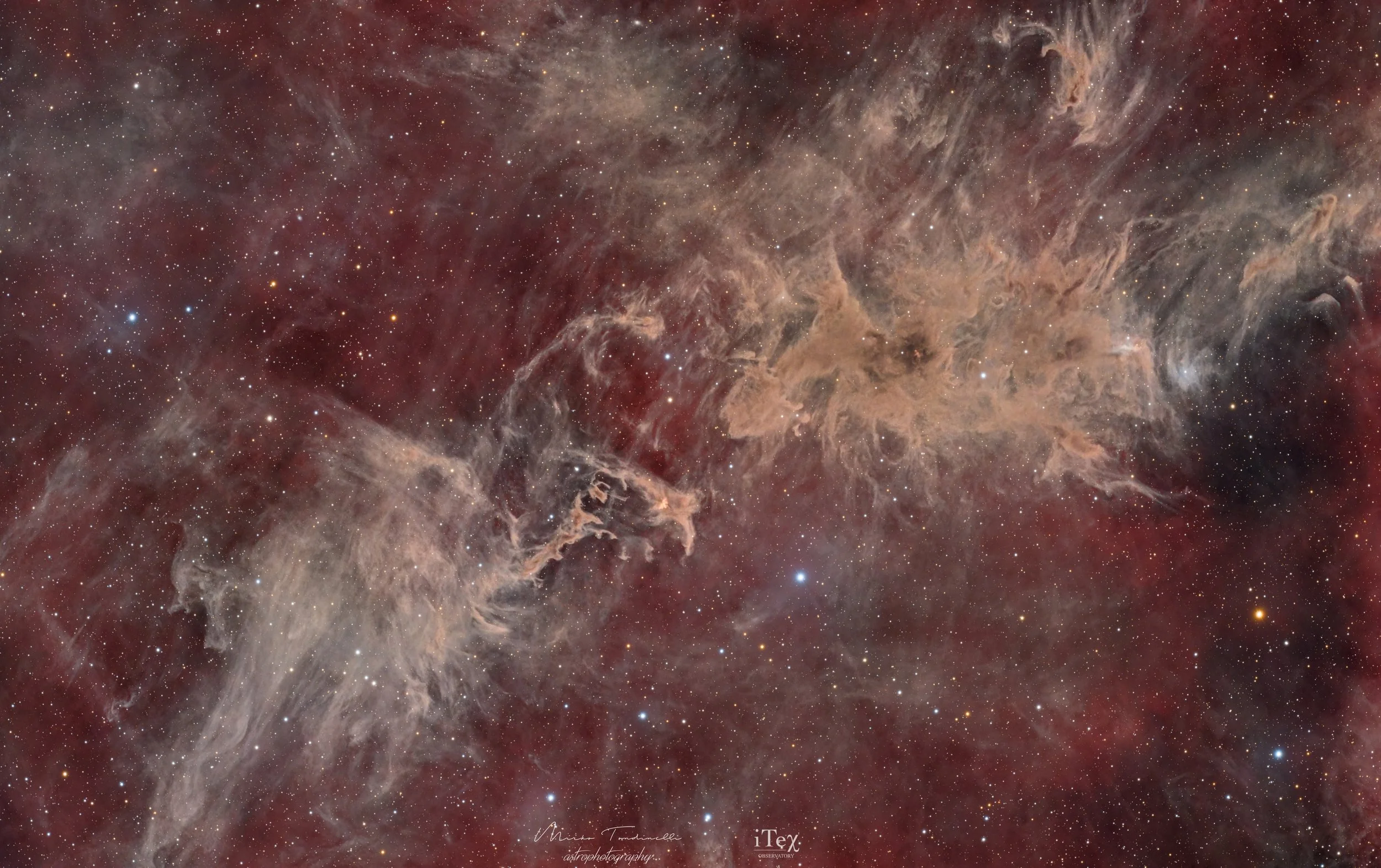
LDN 1228 Lrgb & HaLrgb
LDN 1228 (Lynds Dark Nebula 1228) is a complex and fascinating dark nebula located within the constellation Cepheus. This intricate system of interstellar dust and molecular gas is located approximately 600 light-years from Earth and is positioned in the immediate vicinity of the north celestial pole, just 11 degrees from Polaris.
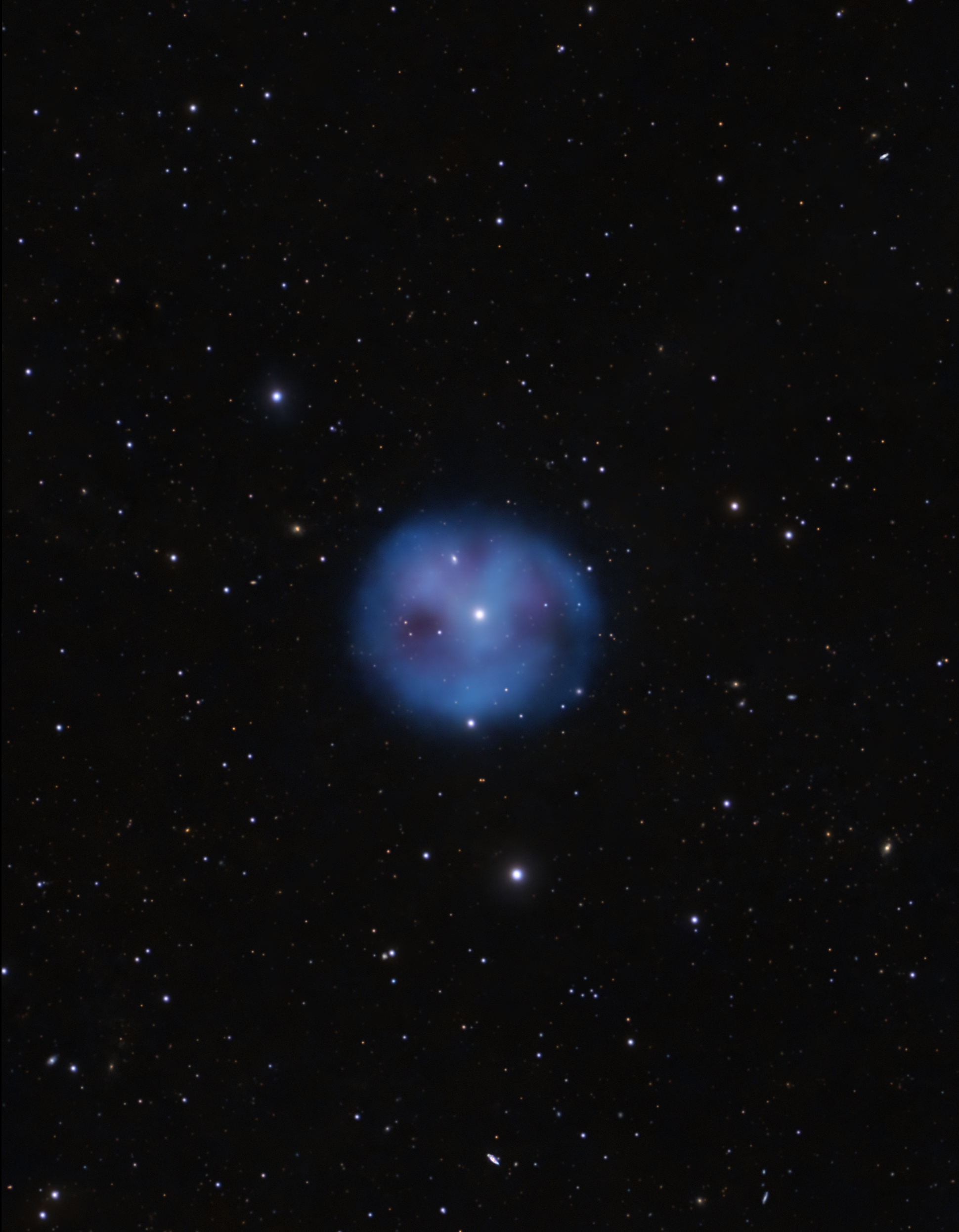
PN LoTR 5 in Coma Berenices
A stunning 40-hour deep-sky capture of the planetary nebula LoTr 5 in the constellation Coma Berenices, captured by Stefan Thrun from the North Sea coast of Germany. This impressive image combines data from 2023 with freshly gathered $OIII$ details from the spring of 2026, utilizing a 130 mm Triplet Apo and a ZWO ASI2600MM Pro camera to reveal the delicate, glowing structures of this elusive cosmic target.
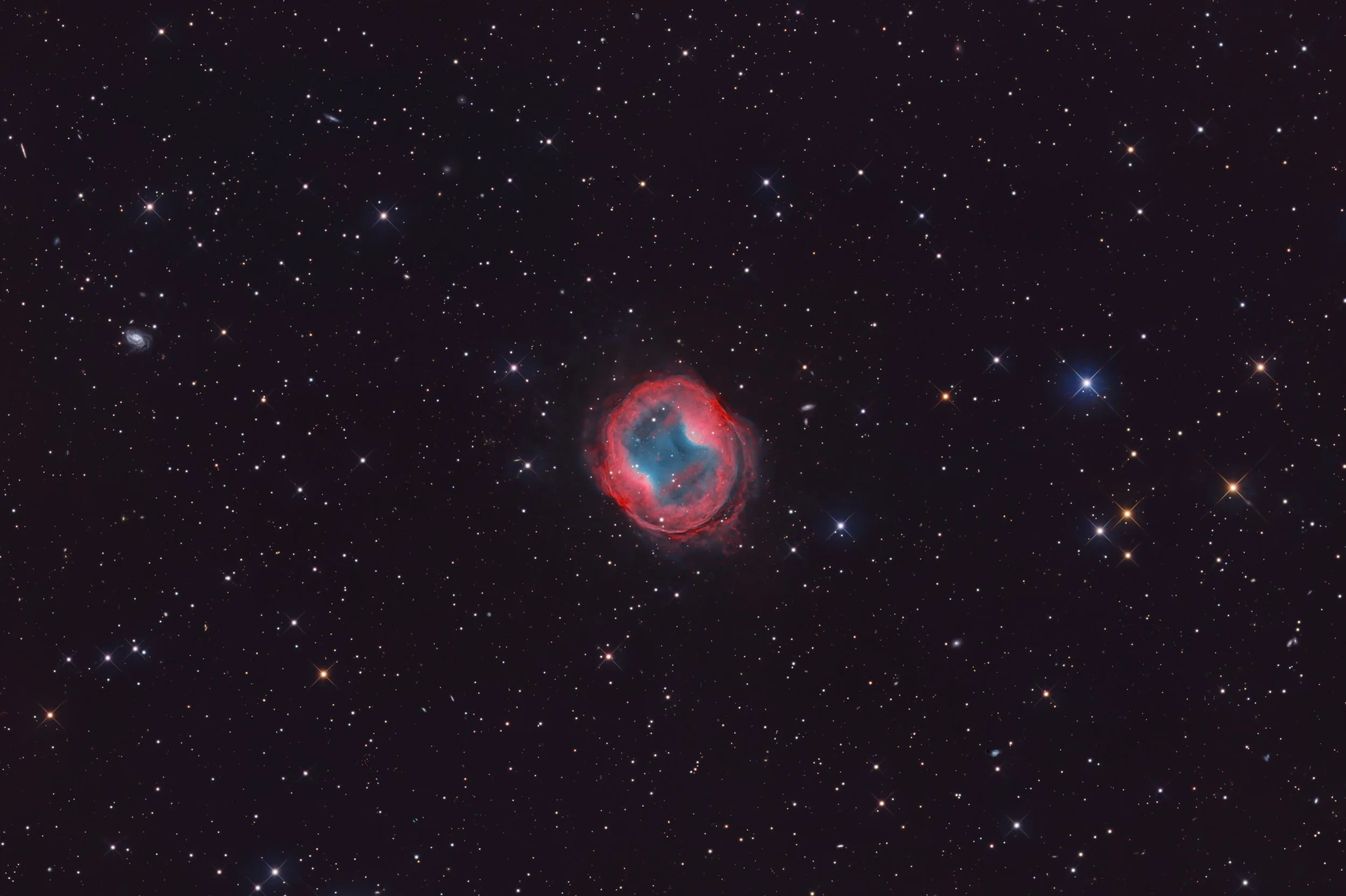
The Headphone nebula
Floating like a cosmic ghost in the constellation Lynx, the Headphone Nebula (Jones-Emberson 1) is a remarkably faint and ancient planetary nebula. Captured here in stunning detail by Alcino Sousa using deep narrowband filters, the intricate bi-polar shells of hydrogen and oxygen gas reveal why this ethereal remnant of a dying star earned its melodic nickname.
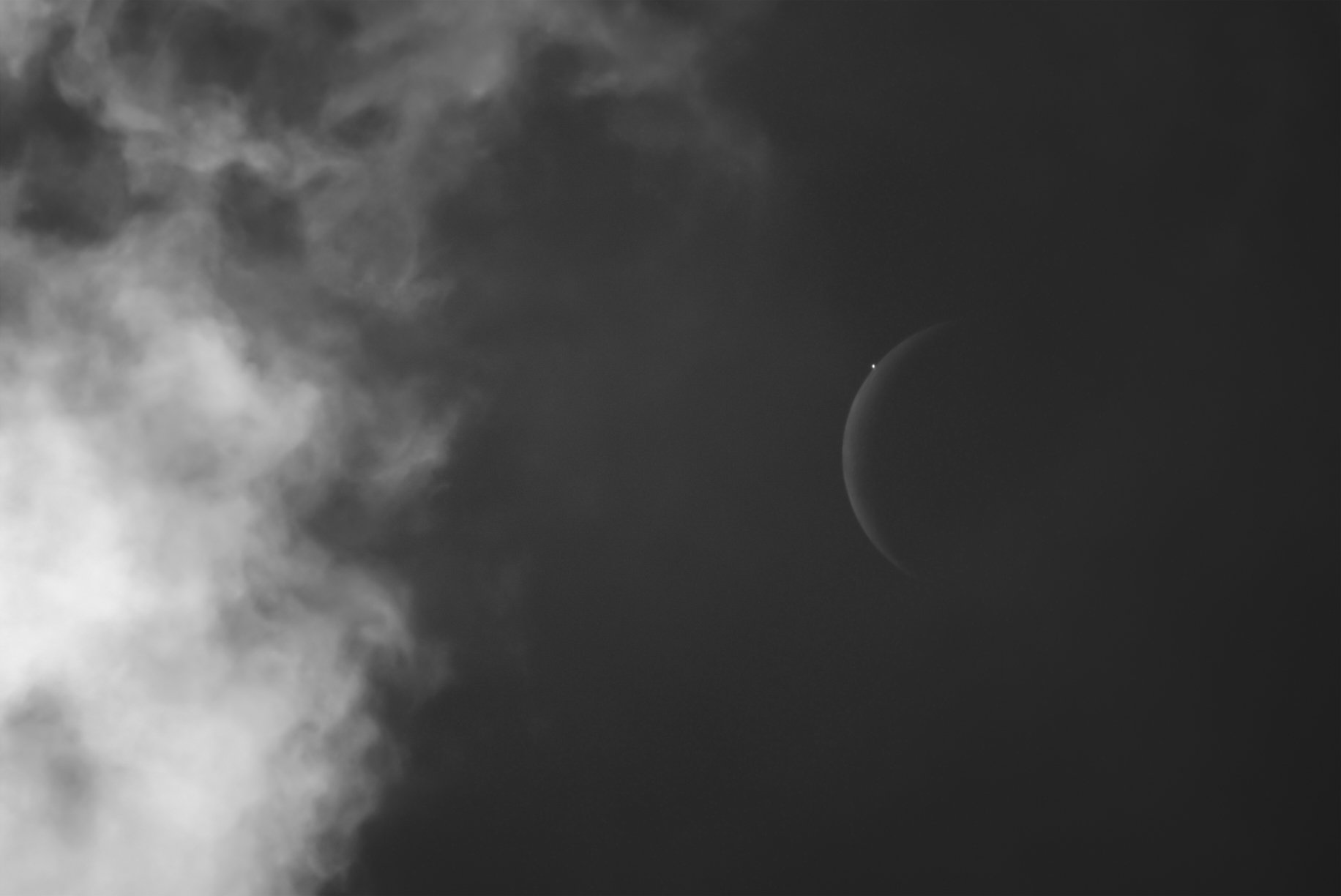
The Occultation of the Moon and Venus with Clouds
In a dramatic display of cosmic hide-and-seek, this striking black-and-white capture freezes a fleeting celestial alignment. An occultation—where one celestial body passes in front of another from our perspective—is always a captivating sight, but here, Earth’s own atmosphere adds a layer of moody artistry.
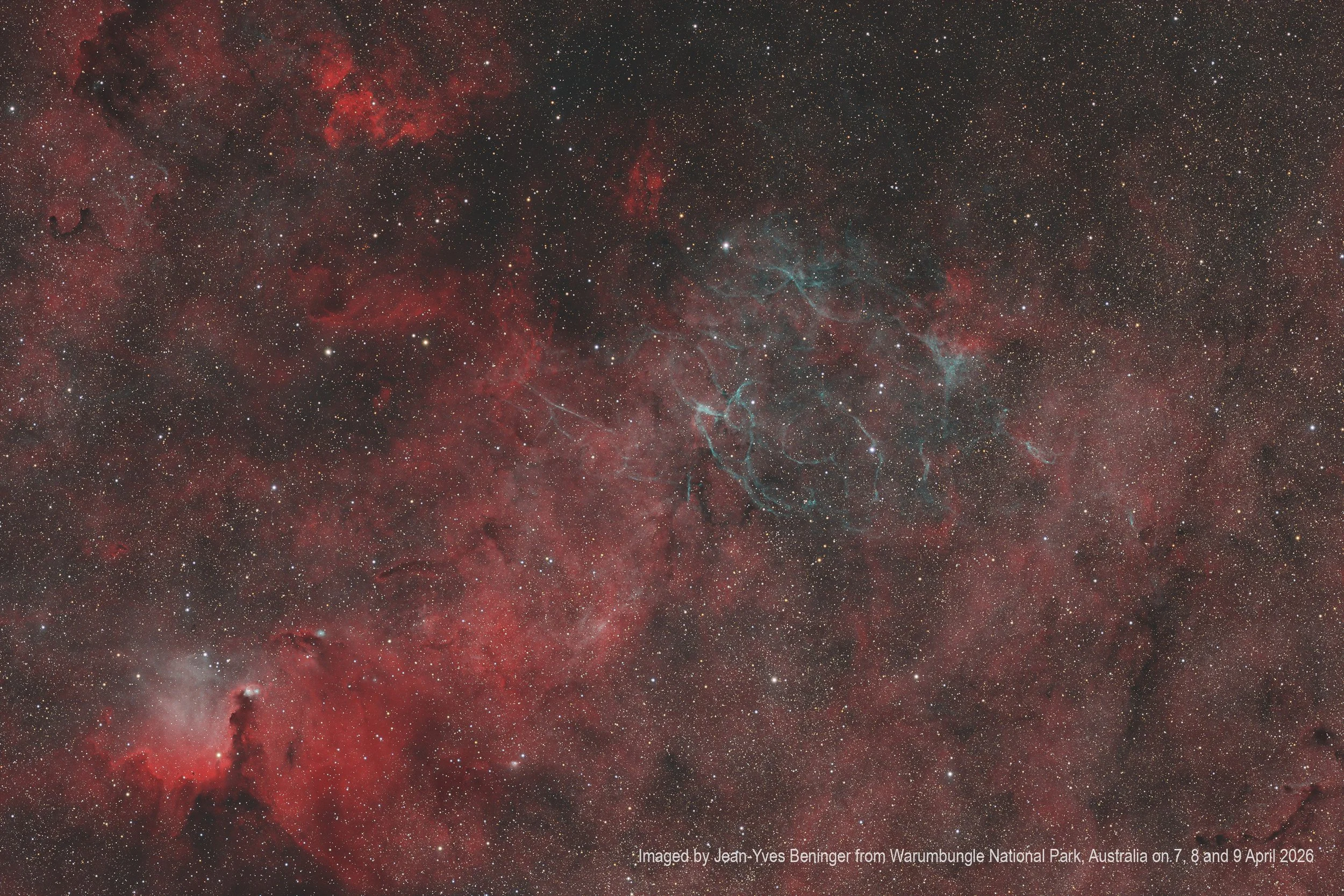
Suspected unknown Supernova Remnant imaged in Cederblad 122 in the constellation Centaurus
This suspected unknown SNR is located in the optical vicinity of Tycho 8994-4005 (RA 13h14mn44.39s and Dec -63deg34”51.7”) in the region of Centaurus / Crux, close to the Coalsack dark nebula and appears in my images acquired on 9 April 2026 early morning through an OIII filter for a total of 4 hours 10 minutes ( Integration of 25 images of 10 minutes single exposure.)
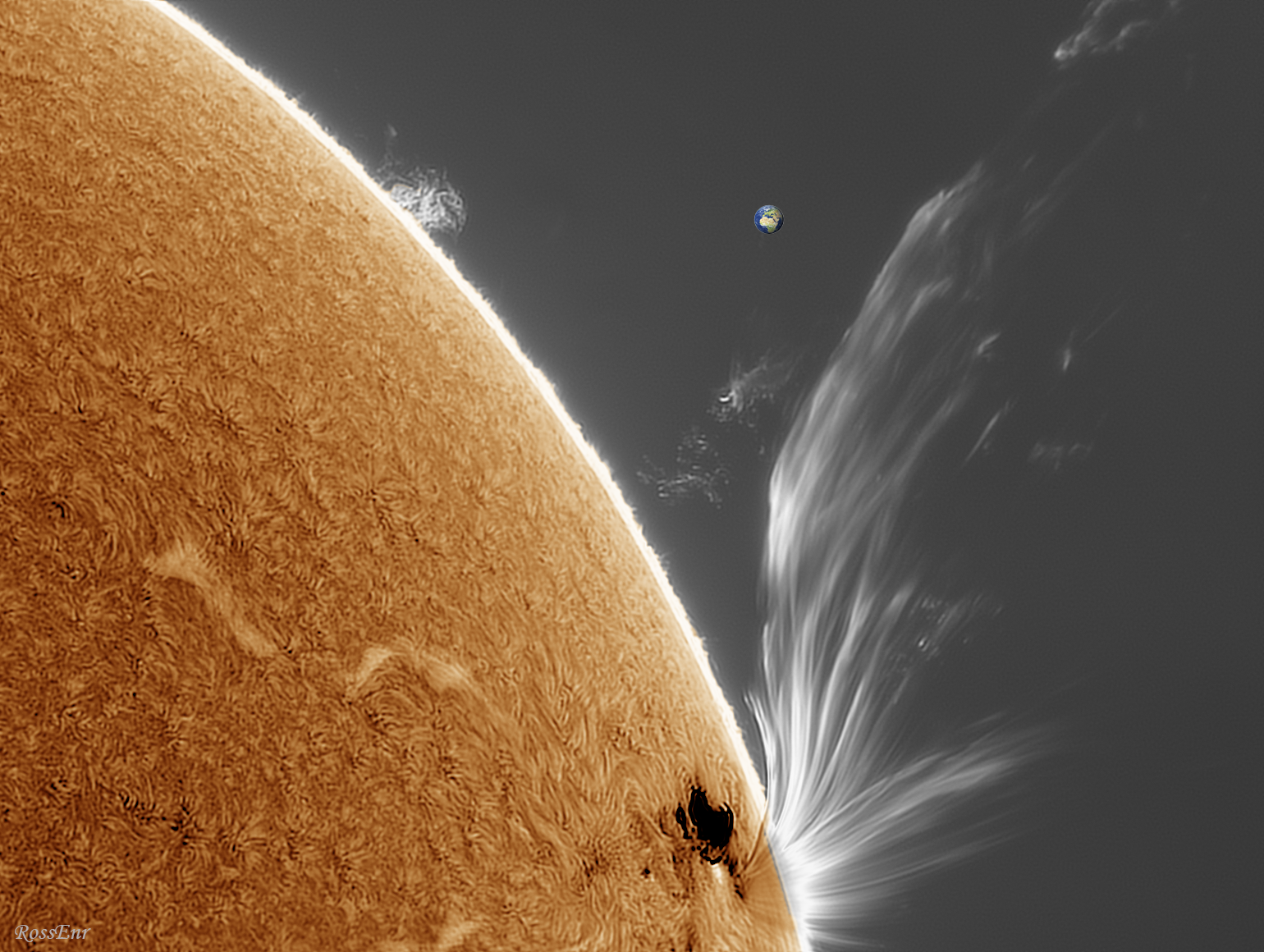
Boom... a powerful solar flare breaks the silence!
The active region AR 4419 has just produced another X-ray flare, this time reaching X2.52. The suddenly hyperactive sunspot region continues to rotate as it approaches the northwest limb.
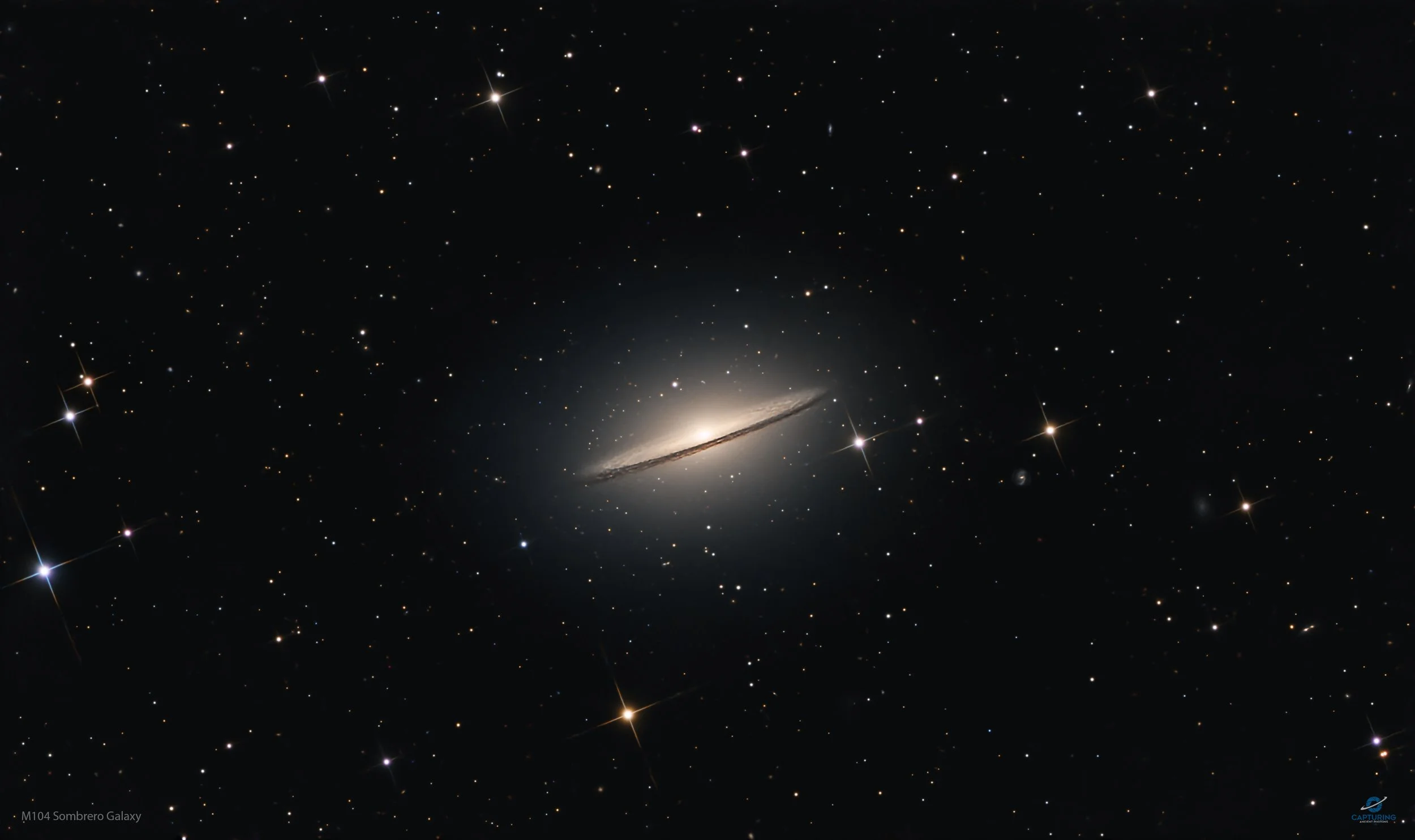
M104 Sombrero Galaxy
The Sombrero Galaxy, cataloged as M104, is one of the most recognizable galaxies in the night sky. Located about 31 million light-years away in the constellation Virgo, it is distinguished by its brilliant central bulge and the prominent dark dust lane that encircles its disk, giving it the appearance of a wide-brimmed Mexican hat. Although often classified as a spiral galaxy, M104 exhibits characteristics of both spiral and elliptical galaxies, making it an intriguing object for astronomers studying galactic structure and evolution. Its luminous core contains billions of ancient stars packed tightly around a supermassive black hole estimated to contain roughly a billion times the mass of our Sun.
Beyond its striking appearance, the Sombrero Galaxy offers a rich laboratory for exploring the life cycles of stars and the assembly of galaxies. The dark band slicing across its bright halo is composed of cold dust and gas, the raw ingredients for future star formation, while its vast population of globular clusters suggests a dynamic history shaped by mergers and interactions over cosmic time. Deep images reveal the galaxy's expansive stellar halo extending far beyond its familiar silhouette, highlighting the immense scale of this island universe. M104 stands as a reminder that even the most elegant objects in the cosmos are shaped by billions of years of change, growth, and gravitational influence.
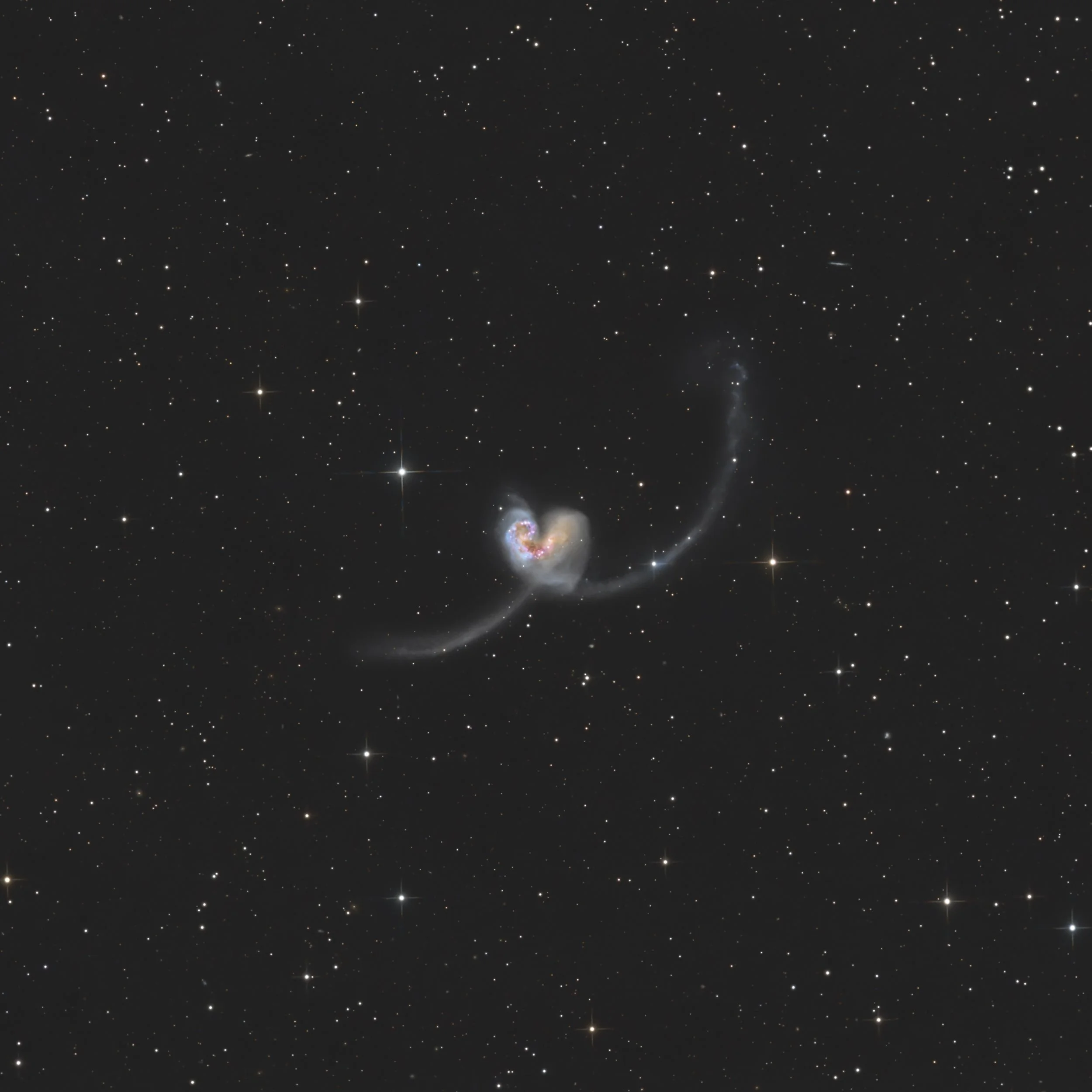
The Antennae Galaxies - NGC 4038 and 4039
The Antennae Galaxies are among the most spectacular objects in the deep sky. Located about 45 million light-years away in the constellation Corvus, they are the result of an ongoing collision between two spiral galaxies, known as NGC 4038 and NGC 4039.
Their nickname comes from the long, luminous structures shaped like antennae that extend on either side of the system. These “antennae” are actually tidal tails, formed by the intense gravitational interaction between the two galaxies. As they draw closer, their stars, gas, and dust are violently disturbed, creating these stretched and elegant shapes.
This galactic collision does not occur in total chaos: stars rarely collide directly due to the enormous distances between them. However, clouds of gas are strongly compressed, triggering intense star formation activity. The Antennae Galaxies thus act as a true cosmic laboratory where thousands of new stars are born, often grouped into very bright stellar clusters.
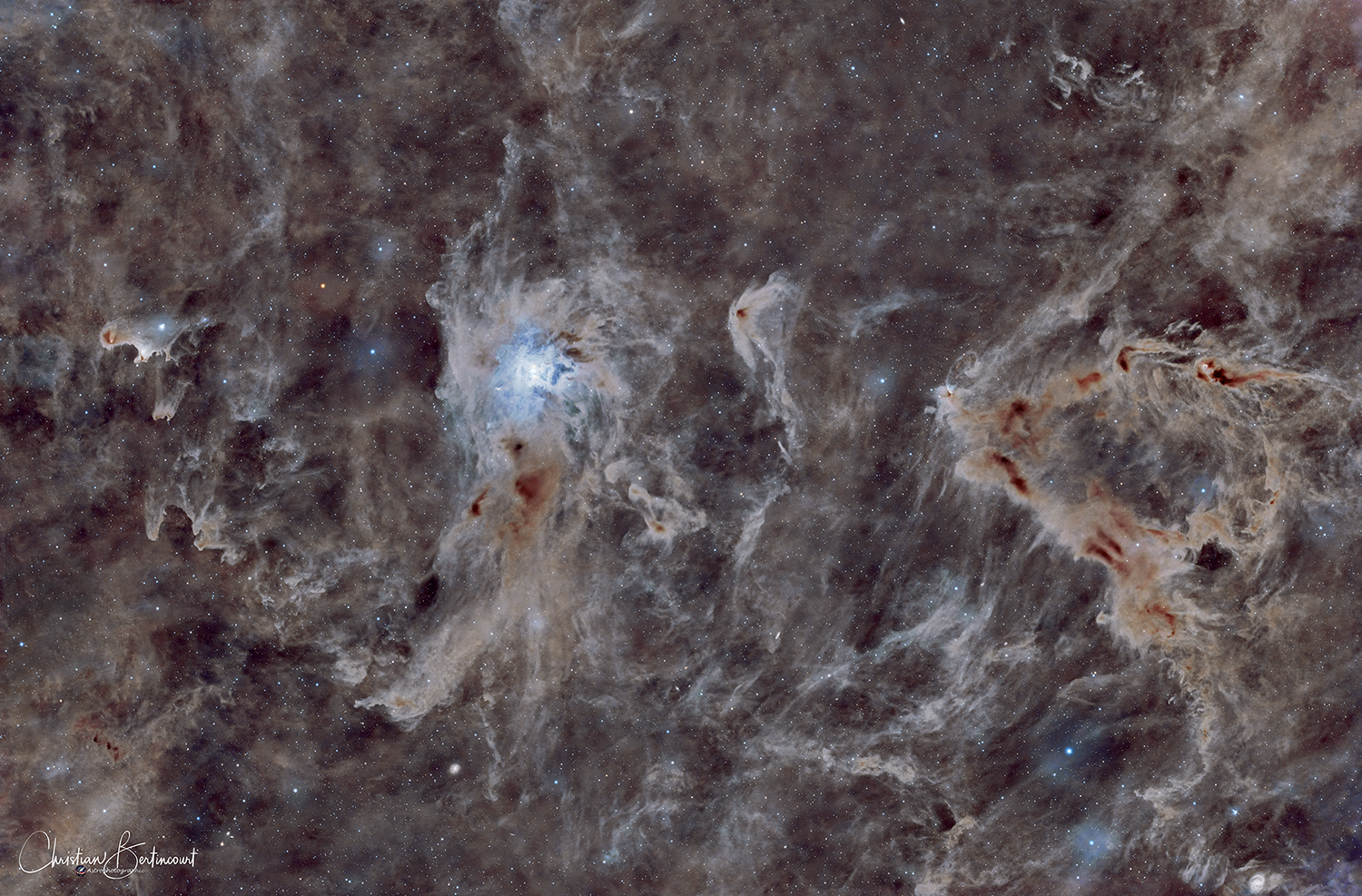
NGC 7023
The Iris Nebula, cataloged as NGC 7023, blooms within the northern constellation Cepheus as one of the sky's most striking reflection nebulae. Unlike emission nebulae that glow from ionized gas, the Iris shines because fine grains of cosmic dust scatter and reflect the light of the hot young star HD 200775 at its center. The nebula's delicate blue hues arise through the same process that gives Earth's daytime sky its color, with shorter wavelengths of light scattered more efficiently by microscopic dust particles. Surrounding the bright core, intricate filaments of dark dust weave through the scene, revealing the complex structure of the interstellar medium from which stars are born.
Located roughly 1,300 light-years from Earth, the Iris Nebula offers a glimpse into the transitional relationship between stellar birth and the environments that nurture it. The central star's energetic radiation is gradually sculpting and dispersing the very cloud from which it formed, carving cavities and illuminating hidden textures within the dust. Deep exposures unveil faint brown and golden dust clouds extending far beyond the familiar blue petals, exposing a rich tapestry of cosmic material that bridges the gap between reflection nebula and dark molecular cloud. The result is a celestial portrait that combines scientific insight with extraordinary beauty, capturing a fleeting stage in the ongoing cycle of stellar evolution.
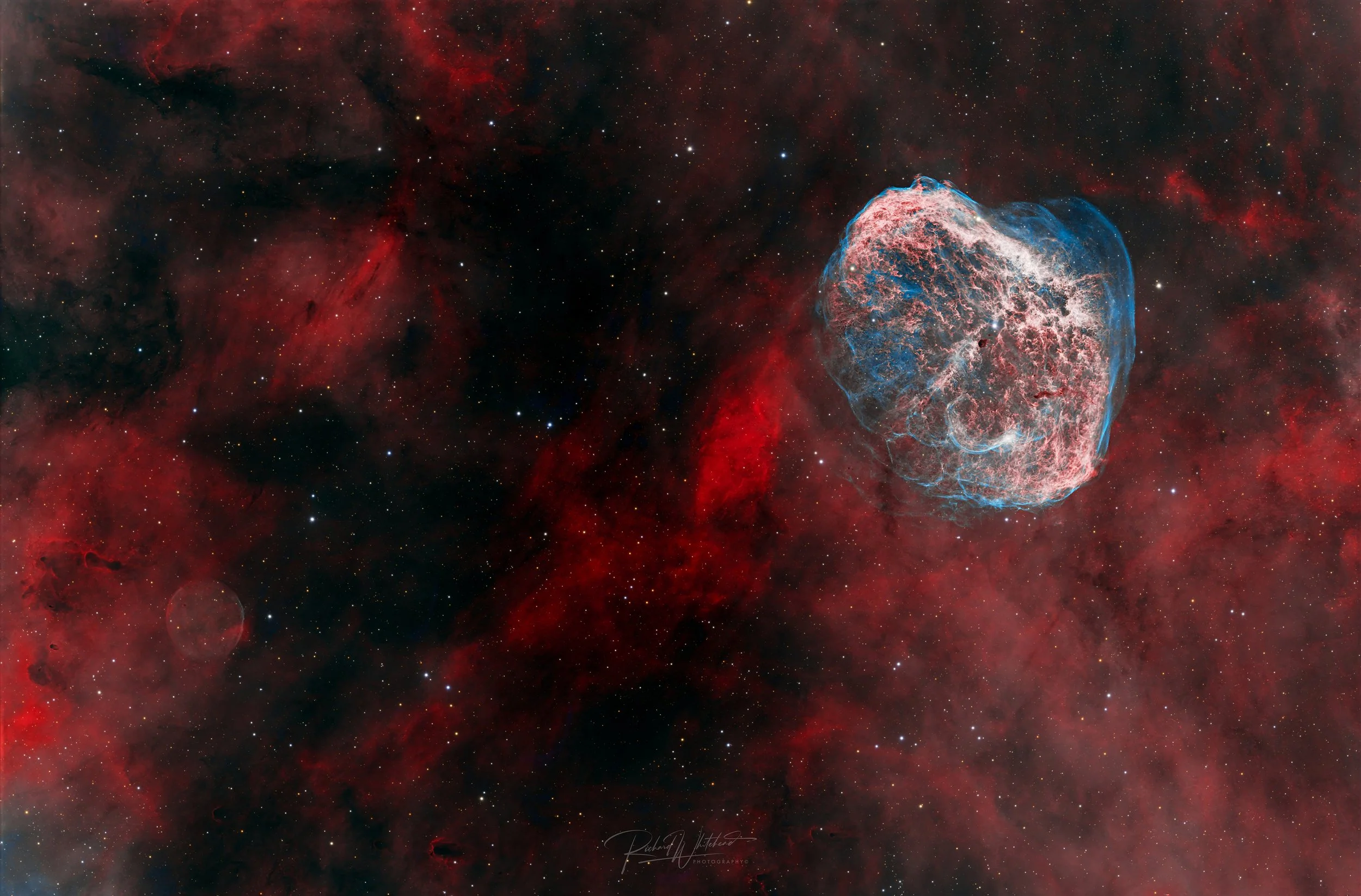
The Crescent and the Soap Bubble
The Crescent and the Soap Bubble: An incredible cosmic widefield showcasing the iconic wind-blown emission shell of the Crescent Nebula (NGC 6888) alongside the elusive, perfectly spherical planetary nebula known as the Soap Bubble, captured beautifully by Richard Whitehead.
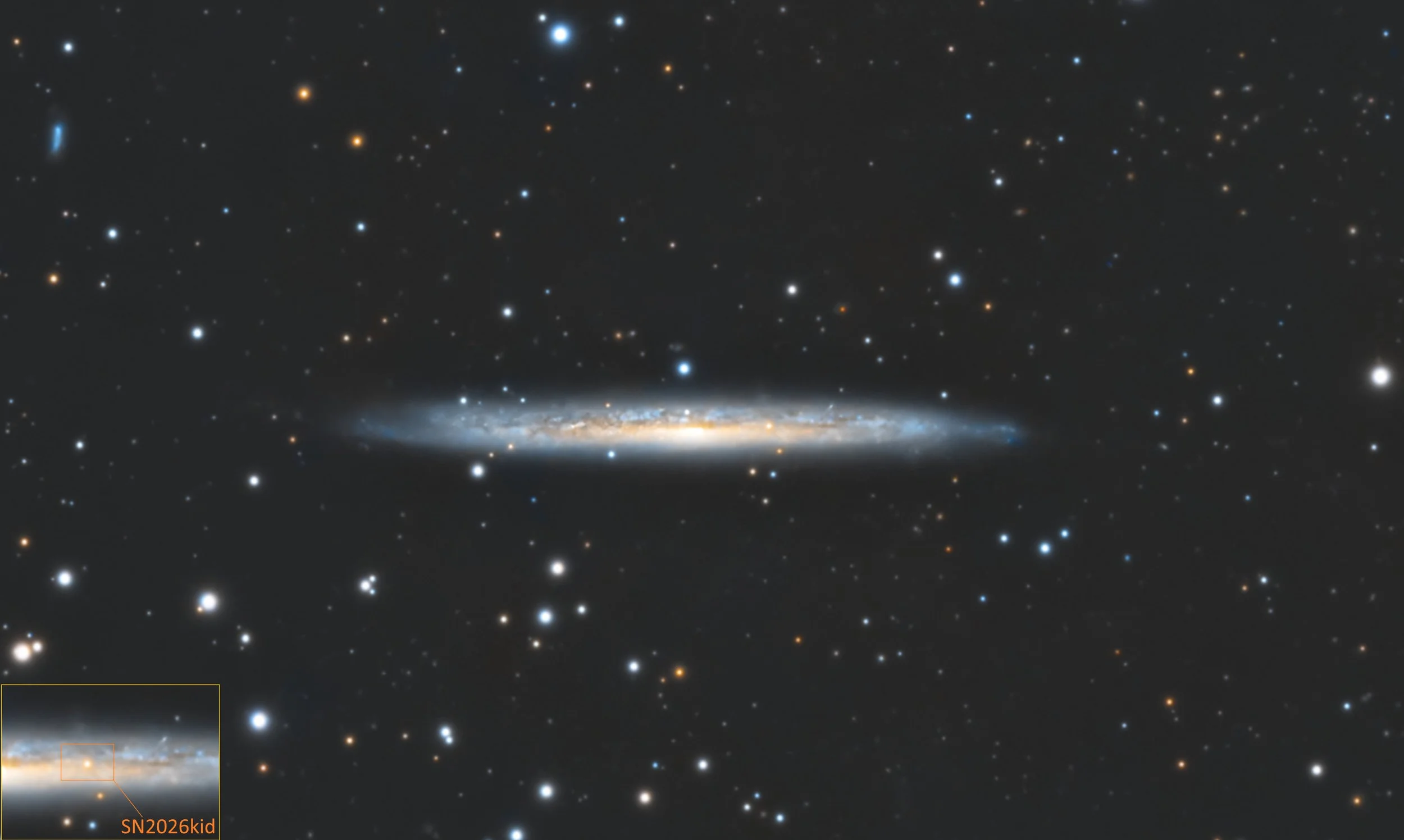
NGC 5907 – Knife Edge Galaxy & Supernova SN 2026kid
NGC 5907 – Knife Edge Galaxy & Supernova SN 2026kid: A cosmic portrait featuring the striking edge-on spiral galaxy NGC 5907 alongside the brilliant flare of supernova SN 2026kid, captured beautifully by Sandu Val Cosmin.
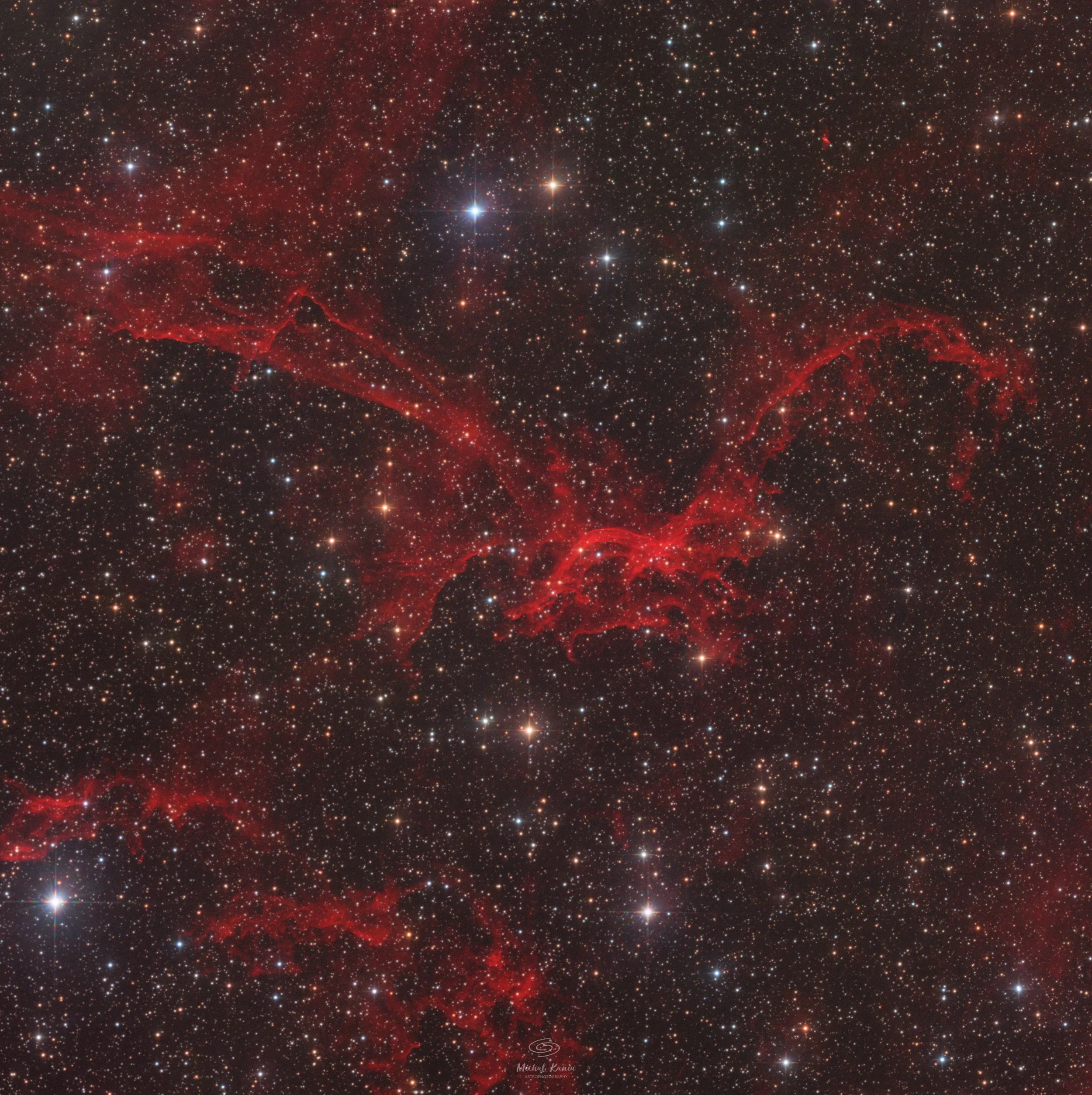
Sh2-114 Flying Dragon in HaRGB
Sh2-114 Flying Dragon in HaRGB: A cosmic portrait featuring the faint and highly complex HII emission nebula Sh2-114 in Cygnus alongside the tiny quadrupolar planetary nebula Kronberger 26, captured beautifully by Michał Kania.
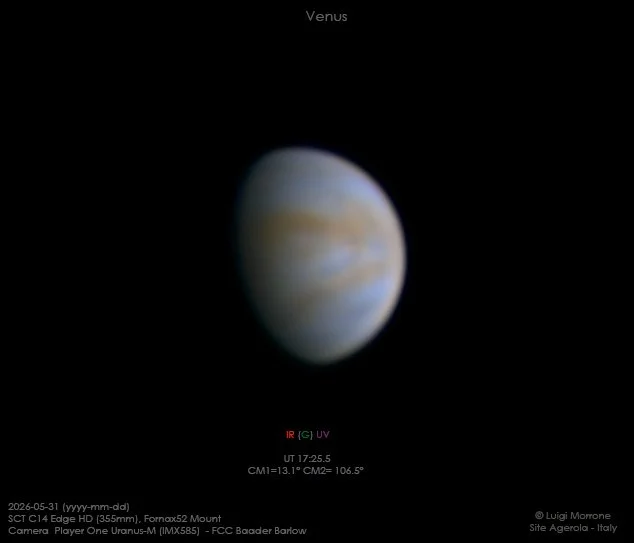
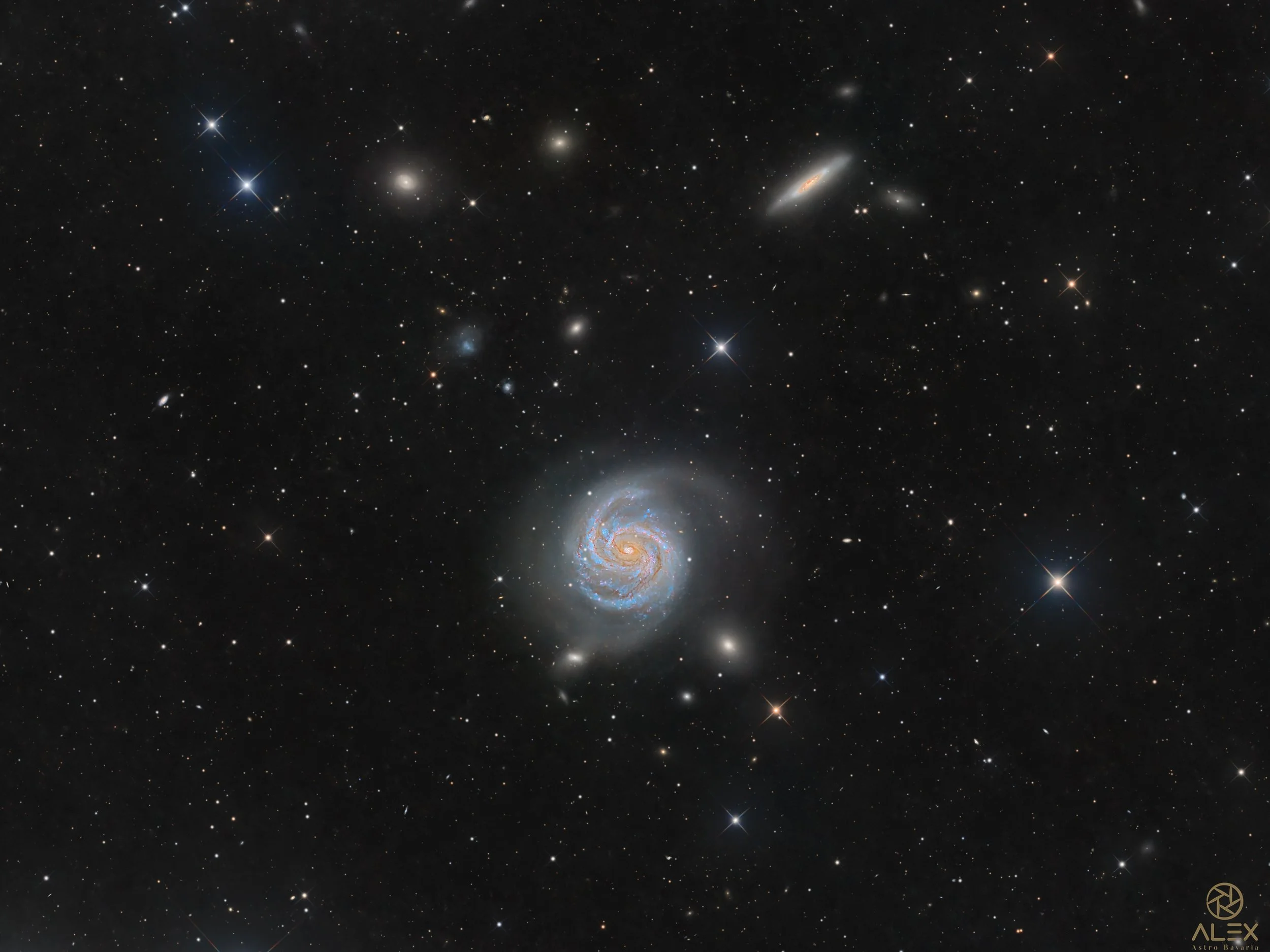
Messier 100
Known as the Blowdryer Galaxy, M100 is a magnificent grand design spiral galaxy located approximately 55 million light-years away in the direction of the constellation Coma Berenices. As one of the brightest members of the Virgo Cluster, its elegant spiral arms are lined with clusters of hot, young blue stars, glowing pink hydrogen regions, and intricate lanes of dark interstellar dust. These sweeping structures trace waves of star formation moving through the galaxy's disk, where gas clouds are compressed and transformed into new stellar generations. At its core lies a compact central bulge surrounding a supermassive black hole, hidden beneath layers of densely packed stars.
M100 has played an important role in modern astronomy beyond its visual beauty. Observations of Cepheid variable stars within the galaxy by the Hubble Space Telescope helped refine one of the first highly accurate measurements of the expansion rate of the universe, contributing to our understanding of the cosmic distance scale. It has also hosted several observed supernovae, offering astronomers valuable opportunities to study stellar death and galactic evolution. Detailed images of M100 reveal not only the graceful symmetry of a classic spiral galaxy, but also the dynamic processes that continue to shape it across millions of years.