

AAPOD2 Image Archives
![NGC 6888 and WR 134 widefield [HOO]](https://images.squarespace-cdn.com/content/v1/5debd4b16fcd7b02905712ff/1658630975836-EOV12WMSPLD4Y88Z7VQB/Crescent%26WR-134_lowres.jpeg)
NGC 6888 and WR 134 widefield [HOO]
Image Description and Details : In the summer months we can capture the wonderful nebulae region in the constellation Cygnus. In this frame the beautiful Crescent nebula and the material from the hot star WR 134 with their surroundings can be seen in full glory. The image is a combination of Ha data and Oiii data. The data was captured from the backyard in the Netherlands. Equipment: - Sky-Watcher HEQ5 PRO - William Optics Redcat 51 - ZWO ASI294MM PRO bin1x1 - ZWO ASI120MM Mini - ZWO EFW 8 x 31/1.25" - Astronomik 6nm Narrowband filters SHO Acquisition: 13.3 Hours - HA: 80 x 300s - OIII: 80 x 300s
Copyright: Sven van Veen
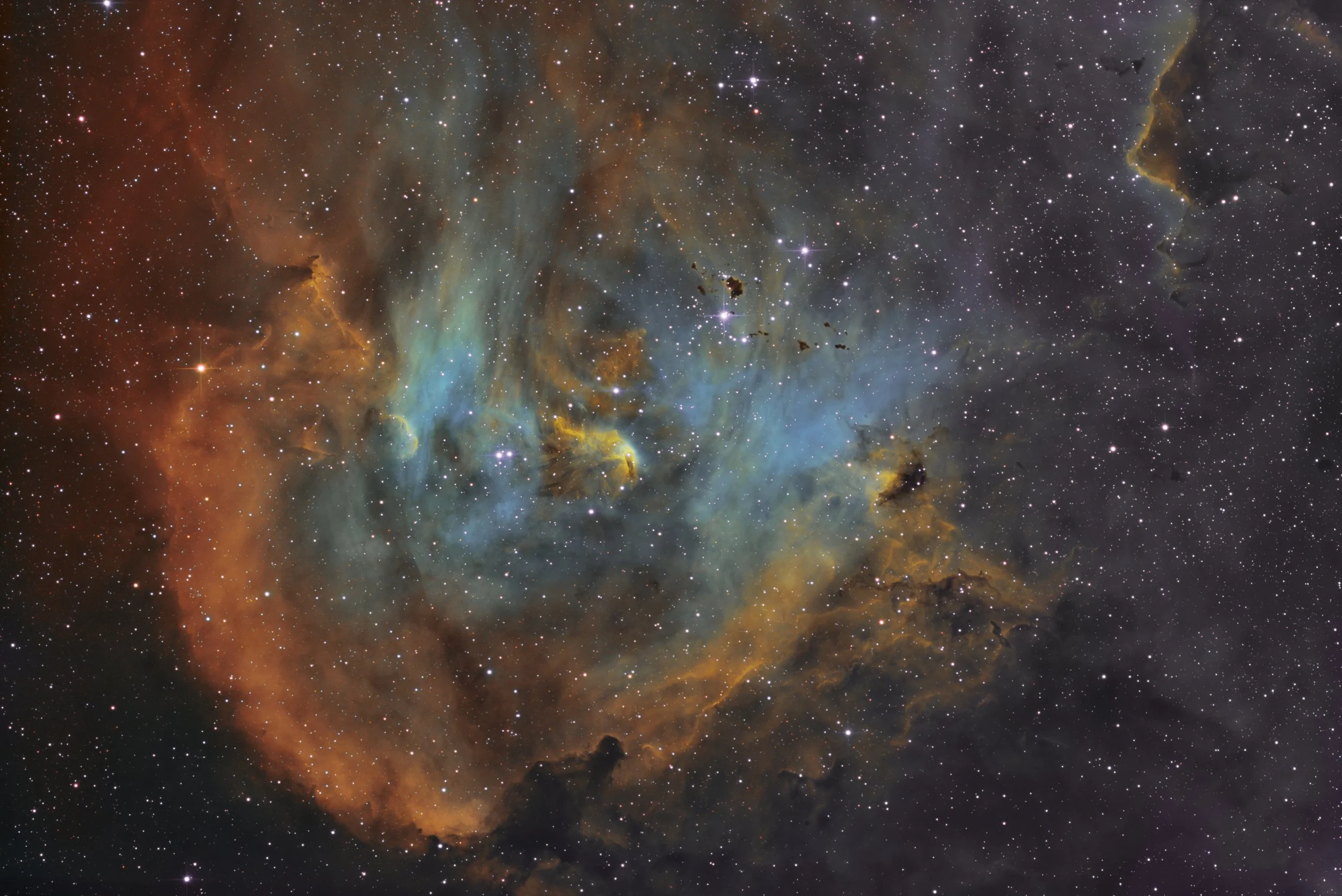
Ic2944
Image Description and Details : Camara principal : ZWO ASI 294MM Pro Camara guia : ZWO ASI174MM mini Telescopio guia : Starguider 60/240 Filtros : Optolong 1.25" - Ha - OIII - SII Telescopio : Sky-Watcher 250 PDS Newton Montura : Ioptron Cem 70 Programas : Sharcap, PHD2, Pixinsight, photoshop, Sequence generator pro Lugar : Santiago de Chile Escala de cielo : Bortle 9 Detalle de adquisicion: Ha : 100x180" (5hr)(gain;120) - 20C bin 2x2 OIII : 60x180" (3r)(gain;120) - 20C bin 2x2 S2 : 60x180" (3Hr)(gain;120) - 20C bin 2x2
Copyright: Juan Pablo Moraga Coloma
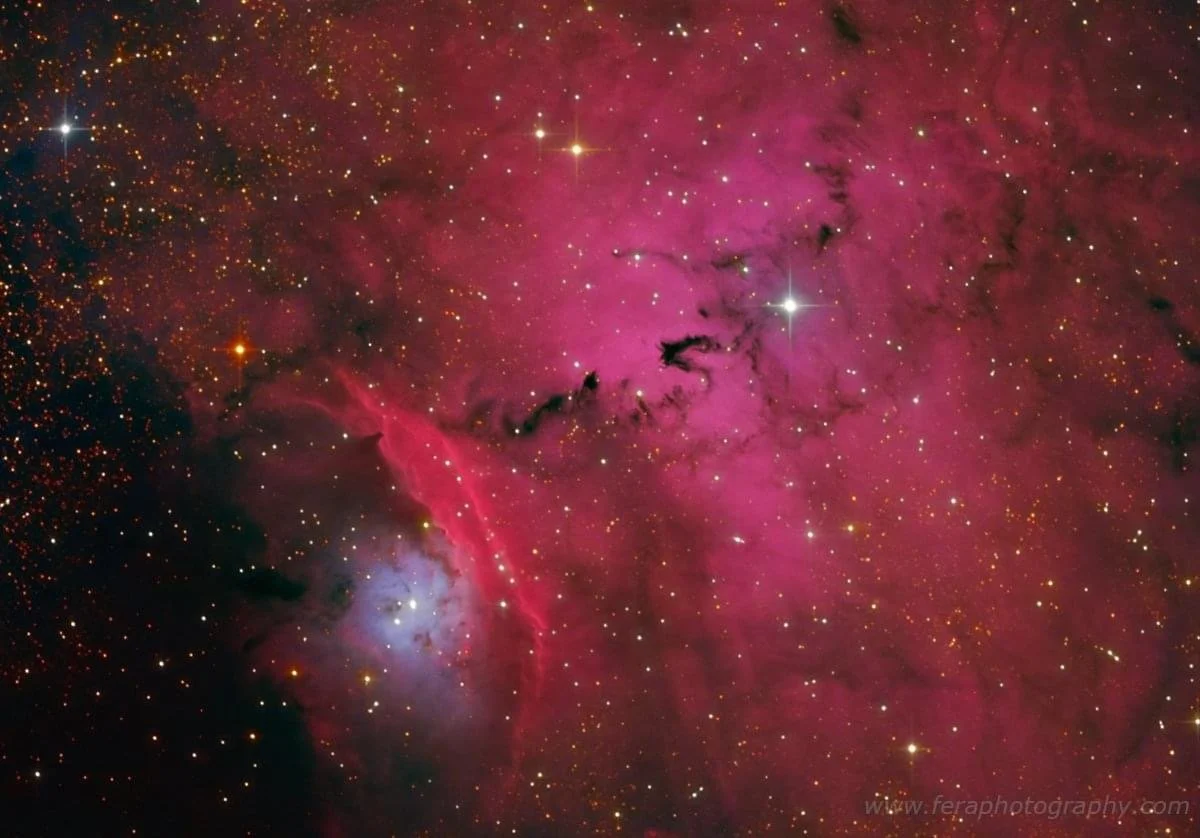
NGC 6559
image Details:
PlaneWave CDK-20 20" f/7.7 Astrograph
PlaneWave L-500 Mount
QHY600M CMOS Camera
Total exposure: HaLRGB 11.9 hours
Sierra Remote Observatories
June 2022
Data acquisition by Eric Coles
Image processing by Bob Fera
This image presented some interesting processing challenges, but I'm pretty happy with how it came out. Big shout-out to Russ Croman and his Photoshop plugins, which were invaluable to getting this one done!
Copyright: Bob Fera
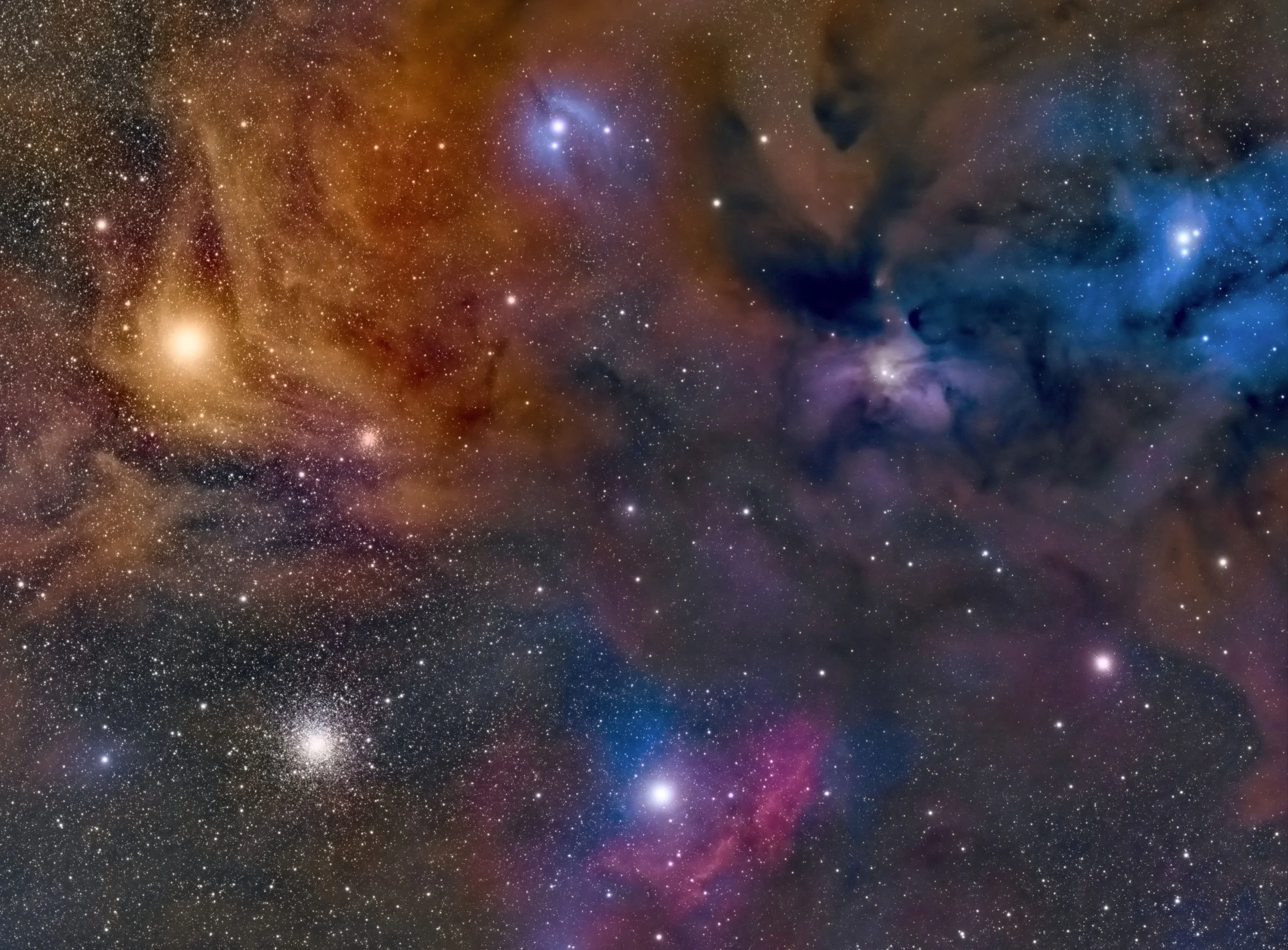
Rho Ophiuchi molecular clouds complex mosaic
Image Description and Details : The main goal of this project was to capture the exceptional, extremely colorful, gigantic region enclosing the emission, reflection and dark nebulae around stars named Rho Ophiuchi, Antares and Alniyat, as well as neighboring objects (M4 globular cluster and others). This region is commonly referred as Rho Ophiuchi Molecular Clouds Complex in the astronomical literature. The nebulae have very intensive colors depending on the ionized and molecular gas composition (yellow-orange and reddish colors) or due to the visible light reflexion (blue colored nebulae). Dark nebulae does not transmit much light due to the presence of interstellar dust. This region covers a gigantic region on the night sky compared to many other deep space objects and is located on the border of the Scorpius and Ophiuchus constellations. A total length of 8 Full Moons could be placed side-by-side on the wider, horizontal side of this mosaic. The high dynamic range of colors and contrast in each panel, as well as the size of each file (few gigabytes due to the high resolution) resulted in complex and unusually long computer processing procedures. This 4-panel mosaic is produced by combining the integrated data collected using two different telescopes (Askar FRA400 and William Optics FLT-91) in the last two years. The same astronomic camera (ZWO ASI294 MM Pro with thermoelectric cooling) and same dichroic broad-range filters (Chroma RGB set) were used. Total integration time is on average 4.5 hours per panel. Imaging sessions required a total of 7 car trips to two different locations (Rudine near Skopje and Radibush near Kriva Palanka) spanning driving around 800 km. Difference in the telescopes focal length (280 and 432 mm) and changes in the atmospheric conditions between different nights impose real processing challenge. Technical details Telescope: William Optics Fluorostar 91 and Fla t6AIII focal reducer/flattener (fl=432 mm). Imaging camera: ZWO ASI294MM Pro. Guiding camera: ZWO ASI174MM Mini via ZWO OAG;. Guiding and acquisition control: AsiAir Plus. Mount: iOptron CEM40EC. Filters: Chroma (RGB). Frames: Red: 124x180" (6h 12') (gain: 120.00) -15°C bin 1x1; Green: 128x180" (6h 24') (gain: 120.00) -15°C bin 1x1; Blue: 121x180" (6h 3') (gain: 120.00) -15°C bin 1x1. Total integration of the mosaic: 18h 39m. Integration per panel: 4h 40m. Dates: June 4, 2021 · June 8, 2021 · July 6, 2021 · May 24, 2022 · June 2, 2022 · June 27, 2022 · July 4, 2022.
Copyright: Sasho Panov
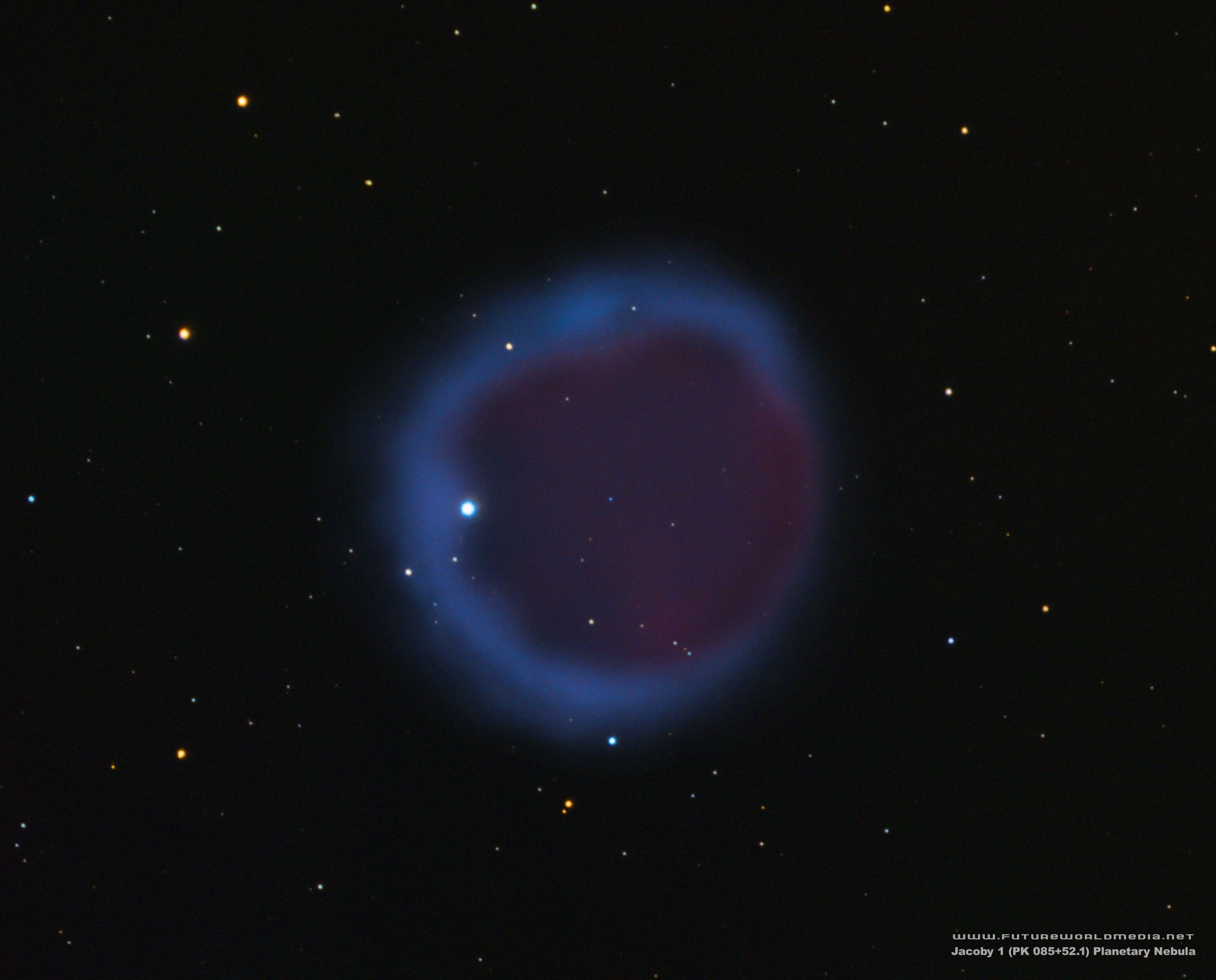
Jacoby 1 • Coffee Stain Planetary Nebula
Image Description and Details : This is one of the hardest deep space objects I have ever processed. I was well past diminishing returns in the amount of integration time I captured for my poor bortle 8 skies. I started capturing this April of this year; four months ago. It was even more challenging than the squid nebula; Ou4. While Jacoby 1 has only a designation name, I decided to call it the coffee stain planetary nebula for obvious reasons. Jacoby 1 lies within the Bootes constellation. It was discovered in 1995 by George Jacoby. It's amazing given how faint it is that he was able to discover it in the first place.
Copyright: © Douglas J Struble
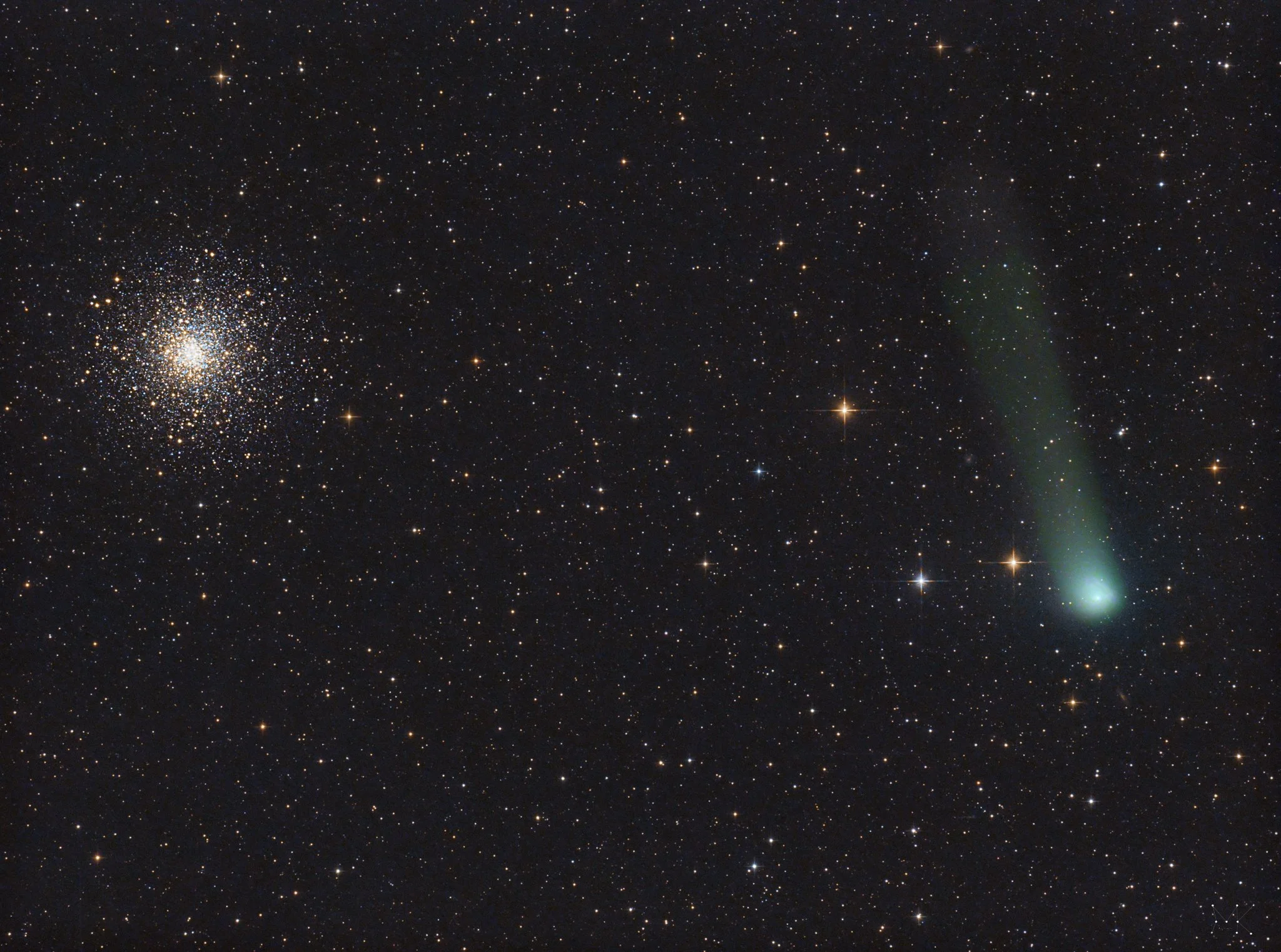
C/2017 K2 (PANSTARRS) meets Messier 10
Image Description and Details : Comet C/2017 K2 (PANSTARRS) passing the globular cluster Messier 10 in constellation of ophiuchus. Distance at time of recording was 270 Mio. km from earth. I captured the image from my Garden at Schwabach (Bavaria), Germany at Bortle 5 Class. Equipment: Telescope: Skywatcher 150/750 PDS Mount: Skywatcher EQ5-Pro Camera: QHY163C (Gain 120, Offset 50, -15°C) Guiding: ZWO ASI 120 MC-S, PHD2 Recordingsoftware: N.I.N.A Exposure: 60 x 60s Lights Total exposure time: 1 Hous 50 Darks, 30 Flats, 30 Darkflats Stacking: Astropixelprocessor Image Editing: Adobe Photoshop, Adobe Lightroom
Copyright: Michael Kraus
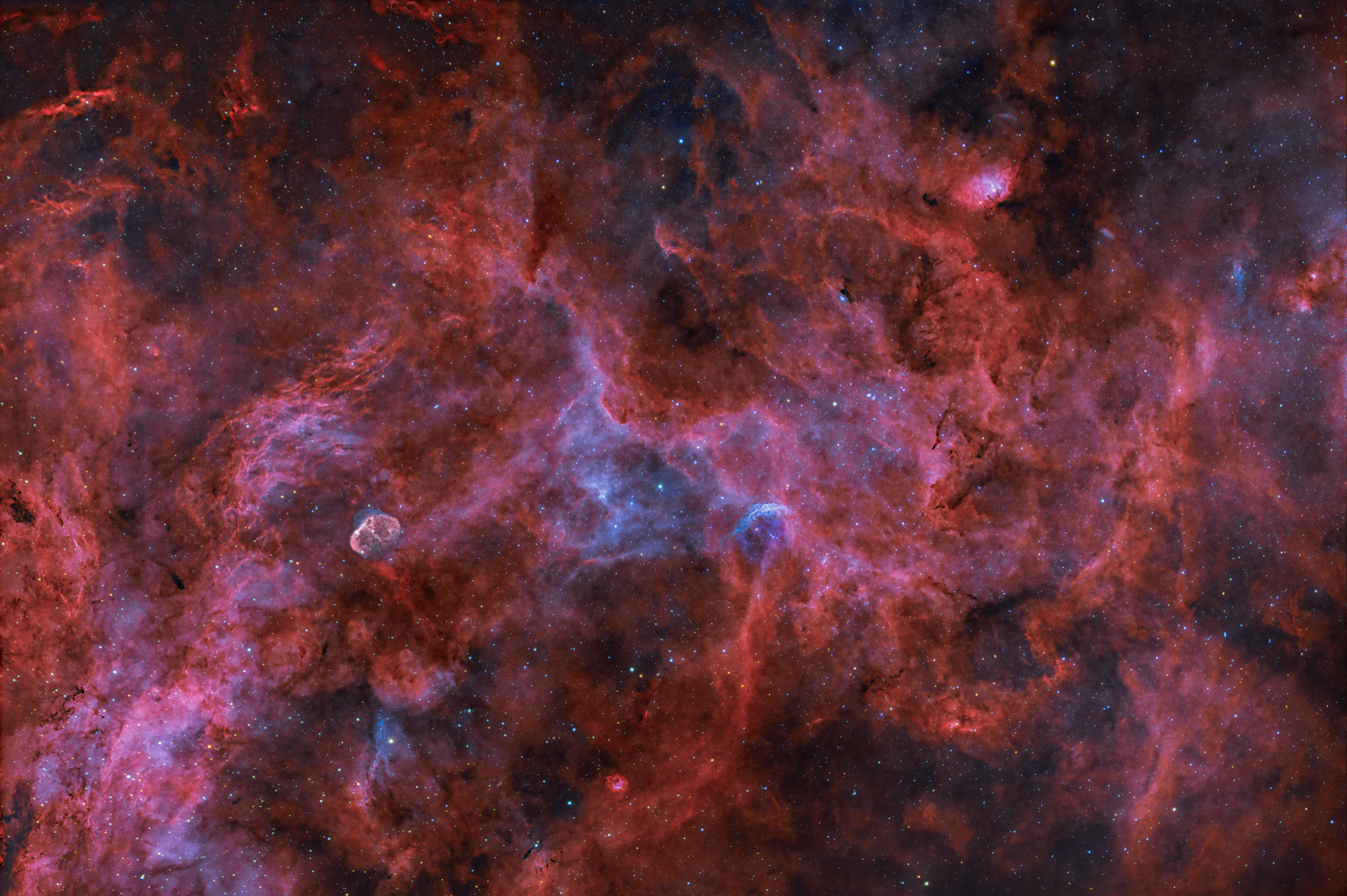
The Heart of the Swan
Image Description and Details : The Heart of the Swan. I hope you enjoy this image as much as I enjoyed making it! 73.5 hours of exposure over the course of 19 nights. Imaging Telescope: TPO UltraWide Imaging Cameras: ZWO ASI2600MC Pro Mount: Sky-Watcher EQ6-R Pro Filters: Astronomik L-3 Luminance UV/IR Block, Optolong L-eXtreme 2" Accessories: ZWO ASIair + Guiding Telescope: ZWO 30mm Mini Guider Scope Guiding Camera: ZWO ASI290MM Mini Astronomik L-3 Luminance UV/IR Block: 200x5" (16' 40") (gain: 100.00) -10°C Optolong L-eXtreme 2": 550x480" (73h 20') (gain: 100.00) -10°C Integration: 73h 36' 40" Darks: 60 Flats: 100 Flat darks: 100 Bortle Dark-Sky Scale: 8.00
Copyright: Jeffrey Horne
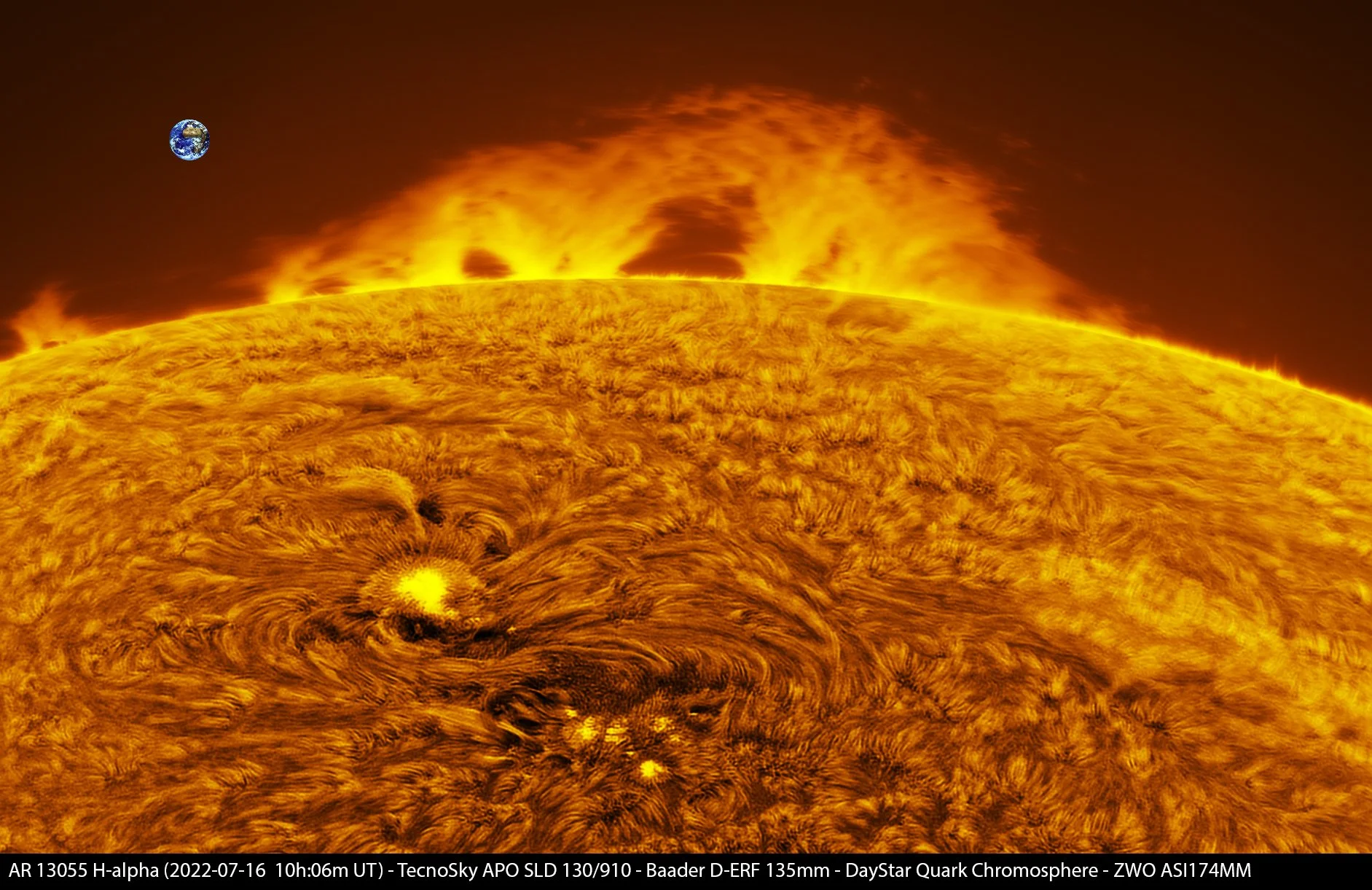
Huge solar prominence
Image Description and Details : Huge solar prominence; the active region 13055 is visible on the disk. The image of the Earth was inserted for comparison. Setup: Tecnosky APO SLD 130/910, Baader D-ERF 135mm, DayStar Quark Chromosphere and ZWO ASI174MM camera.
Copyright: Salvo Lauricella
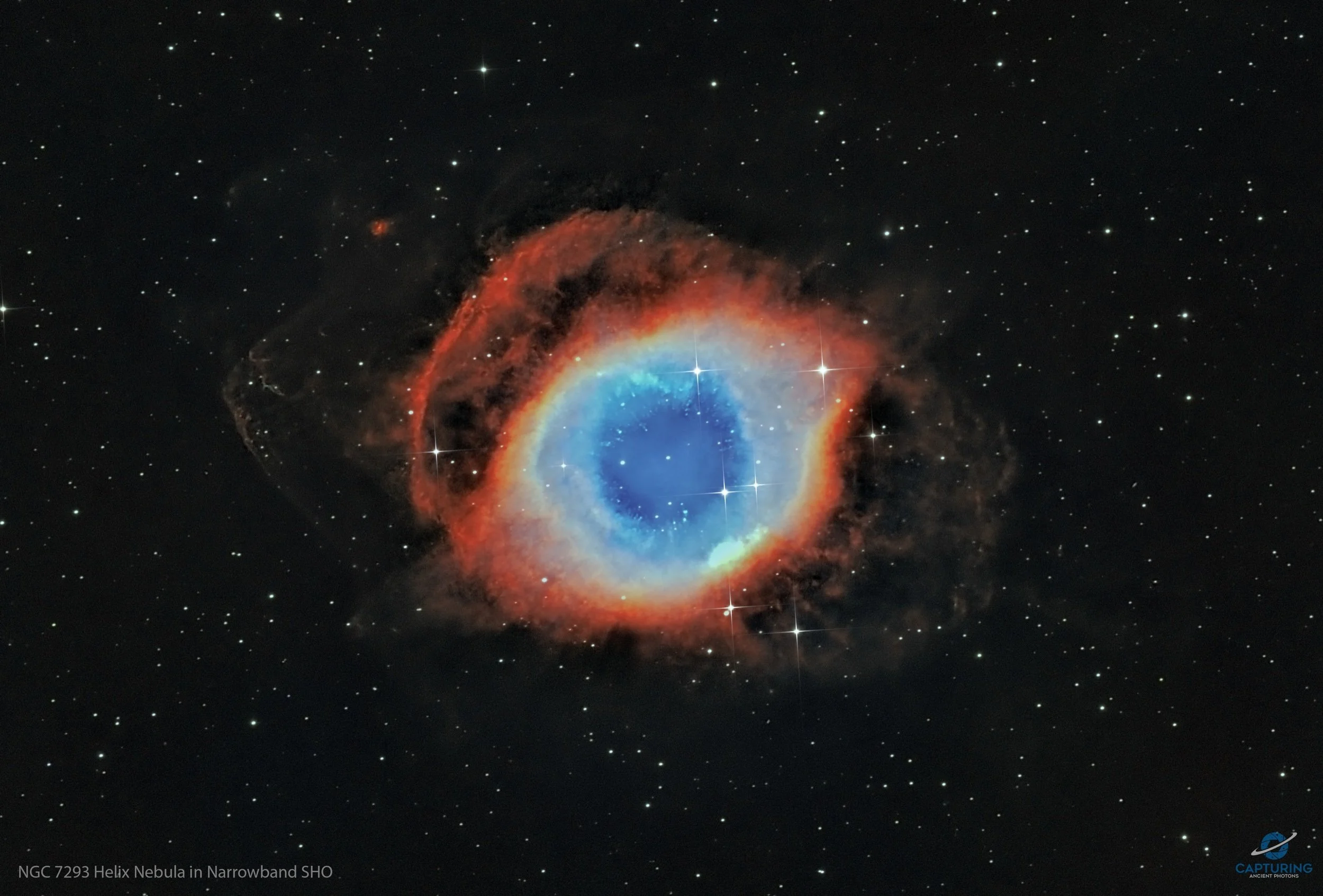
The Helix Nebula
Image Description and Details : NGC 7293 or more commonly known as the Helix Nebula or Eye of God or Eye of Sauron is a planetary nebula formed by the expanding shell of glowing gas around a dying low-mass star. It is located in the constellation Aquarius and is about 650 light years away with a diameter of about 2.5 light-years. 37 x 20min SHO subs shot @-10C taken over 4 nights for an integration time of about 12.5 hours. Equipment used: Skywatcher 10" f4 Newtonian 250P Skywatcher F4 Aplanatic Coma Corrector Skywatcher NEQ6 Pro Hypertuned by Astronomy Academy Perth ZWO ASI2600MM Pro Cooled Camera Primaluce Sesto Senso2 Electronic Focuser William Optics Uniguide 50/200mm guidescope ZWO ASI290MM Mini Guide Camera ZWO Electronic Filter Wheel Antlia Pro 36mm unmounted filters Rollon rolloff modified shed observatory Bortle 5 Data acquisition software: NINA Astronomy Software Processing software: PixInsight and Photoshop CC
Copyright: Capturing Ancient Protons
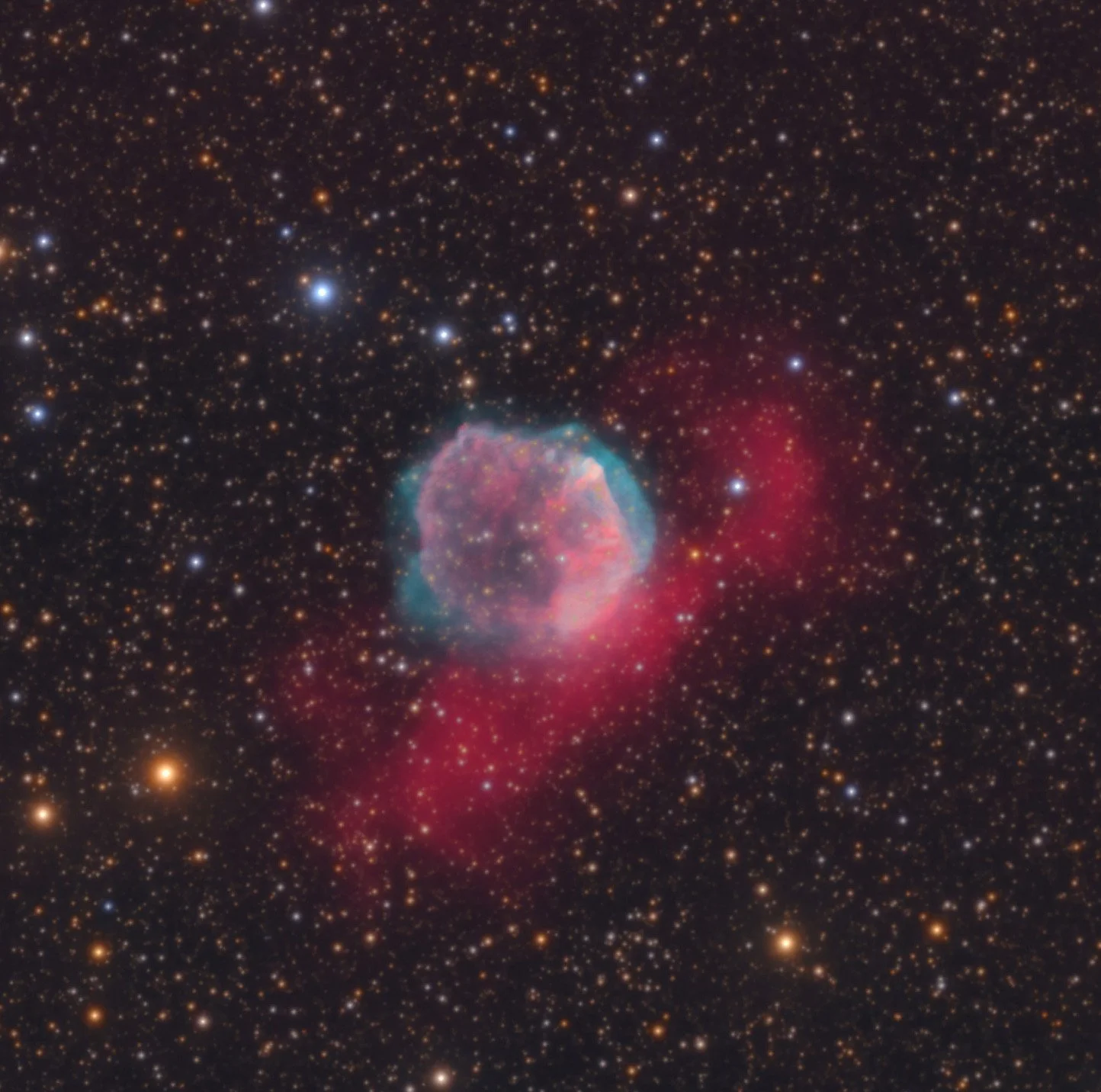
Strottner-Drechsler 16
Image Description and Details : NEW DISCOVERY: Strottner-Drechsler 16 is a new candidate of a planetary nebula in the constellation Aquila. It was discovered by the German-French team of Marcel Drechsler and Xavier Strottner in 2020 and has the catalogue designation StDr 16 / PNG 039.1-04.5. This photo, taken in collaboration with Sven Eklund from Sweden and processed by Marcel Drechsler from Germany, is the first ever taken of this faint object. Typical for planetary nebulae is a compact envelope of H-alpha and OIII surrounding a tiny white dwarf. Coordinates: 19:18:50.58 + 03:27:20.82 Constellation: Aquila Size: 2.4 arcminutes This was a joint data capture project with my good friend Sven Eklund, with data captured on both my dual rig of 6" refractors and his C14 EdgeHD - all located at Fregenal de la Sierra in Southern Spain. Data captured between 21-26 June 2022. Scopes: APM TMB LZOS 152 Refractors and Celestron C14 Edge HD Cameras: QSI6120wsg8 and ZWO ASI1600MM Pro Mounts: 10Micron GM2000 HPS and iOptron CEM120 A total of 103 hours 25 minutes (HaOIIIRGB)
Copyright: Copyright: Peter Goodhew, Sven Eklund, Marcel Drechsler, Xavier Strottner
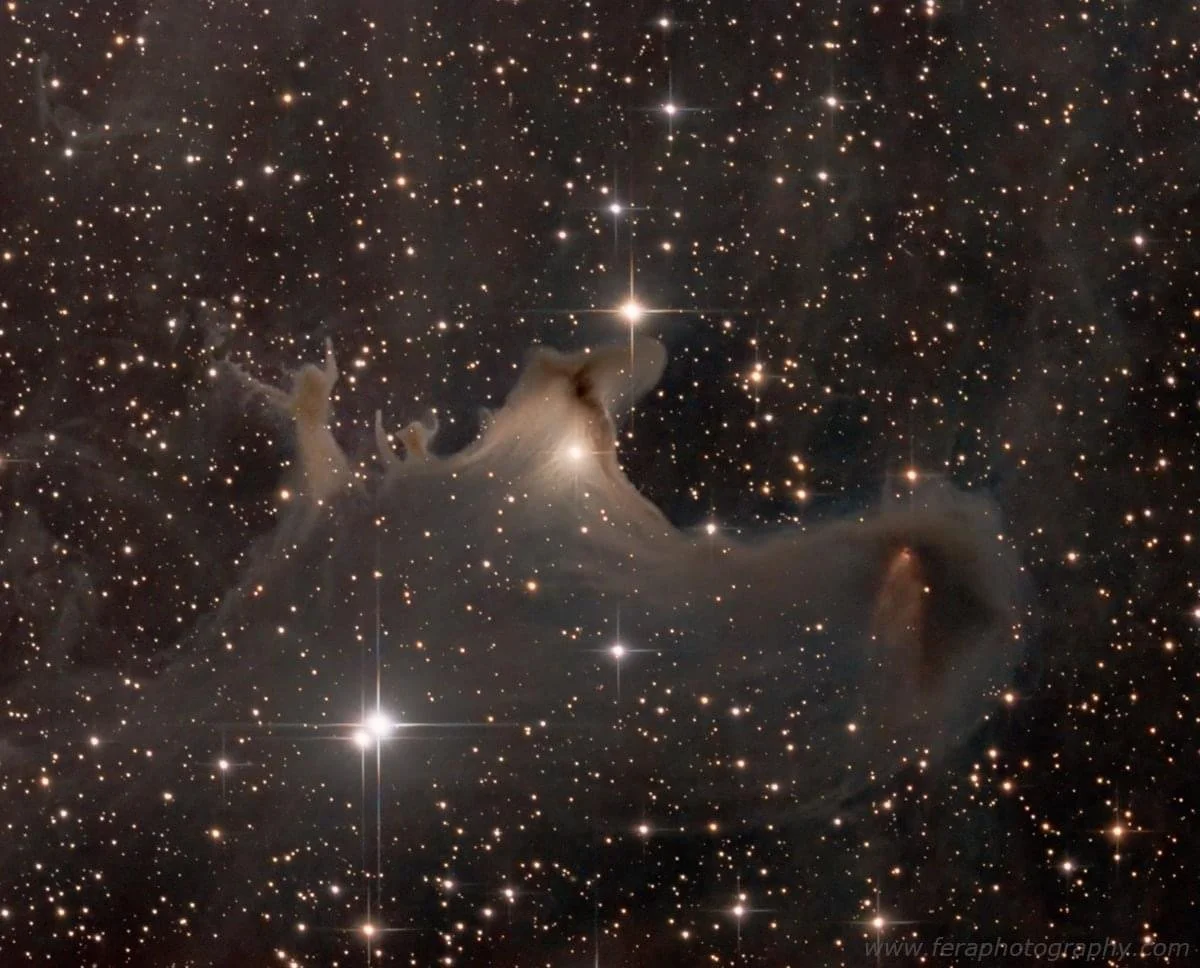
van den Bergh 141
The Ghost Nebula - Reflection Nebula in Cepheus
PlaneWave CDK-20 20" f/7.7 Astrograph
PlaneWave L-500 Mount
QHY600M CMOS Camera
Total exposure: LRGB 9.25 hours
Sierra Remote Observatories
June 2022
Data acquisition by Eric Coles
Image processing by Bob Fera
vdB141 is an eerie-looking cloud of dust and gas that's reflecting the light of nearby stars.
Copyright: Bob Fera
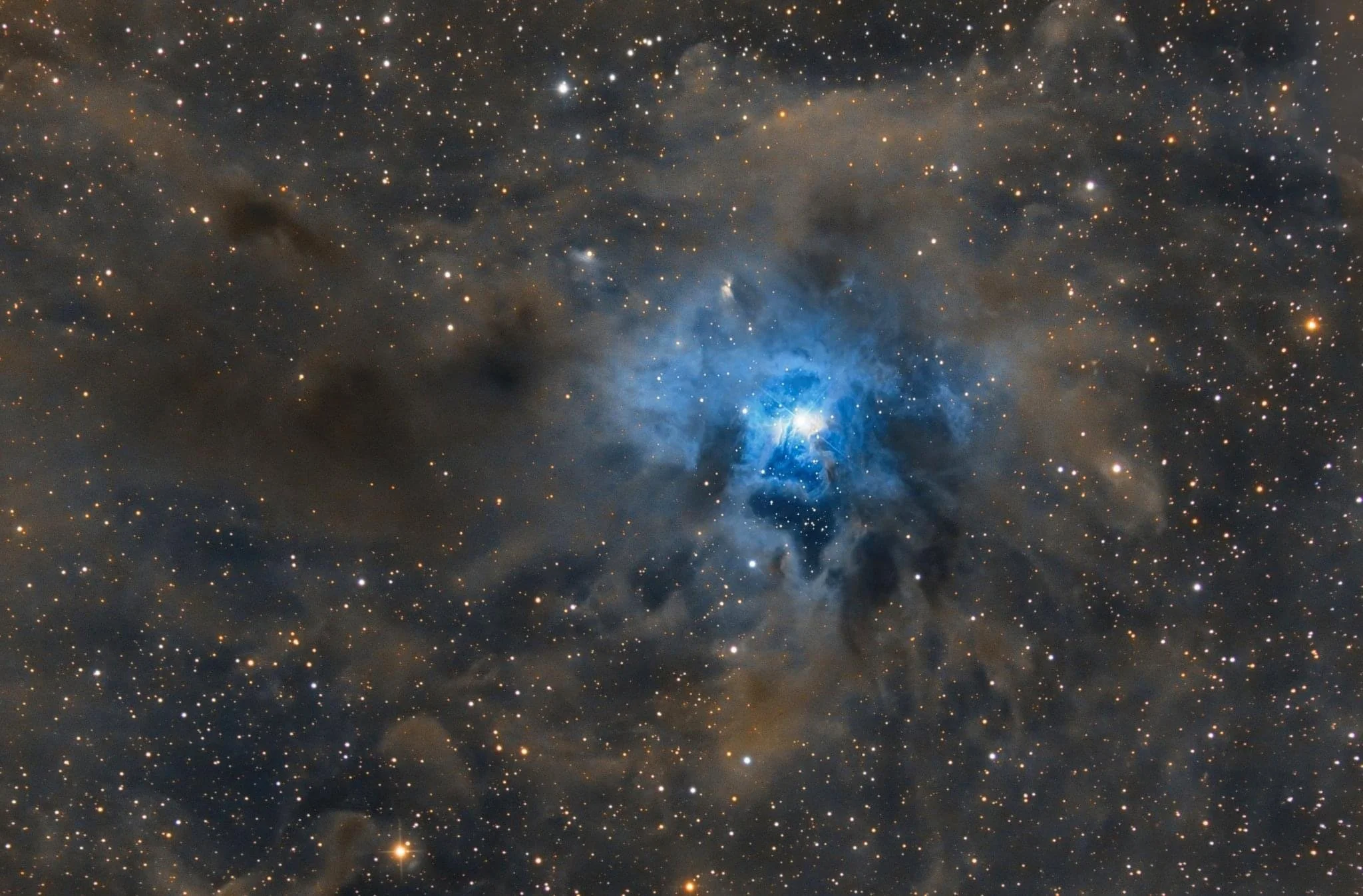
Iris nebula
Four astrophotographers, 6 telescopes, 5 cameras and 129 hours of data. This is a collaboration image. We pooled our data and processed in PixInsight... the Iris Nebula in Cepheus.
Telescopes:
• Starfield Optics 8" Astrograph
• Skywatcher Esprit 100mm Refractor
• Explore Scientific 127mm CF Refractor
• OGS/RCOS R-C 10"
• Meade RCX 10"
• Skywatcher Esprit 150mm Refractor
Cameras:
• QHY268M
• QHY268C
• Atik 11000
• QSI683
• QHY16200A
Filters:
• Optolong L-R-G-B
• Astrodon E series L-R-G-B
• Astrodon True Balance L-R-G-B
Total integration time:
• 129 hours
Data acquired from:
• Kitchener, Ontario, Canada
• Guelph, Ontario, Canada
• New Mexico, USA
• Sanborn, NY, USA
Processed in PixInsight
Copyright: Shawn Nielsen / Warren A. Keller / Ron Brecher / Peter Proulx
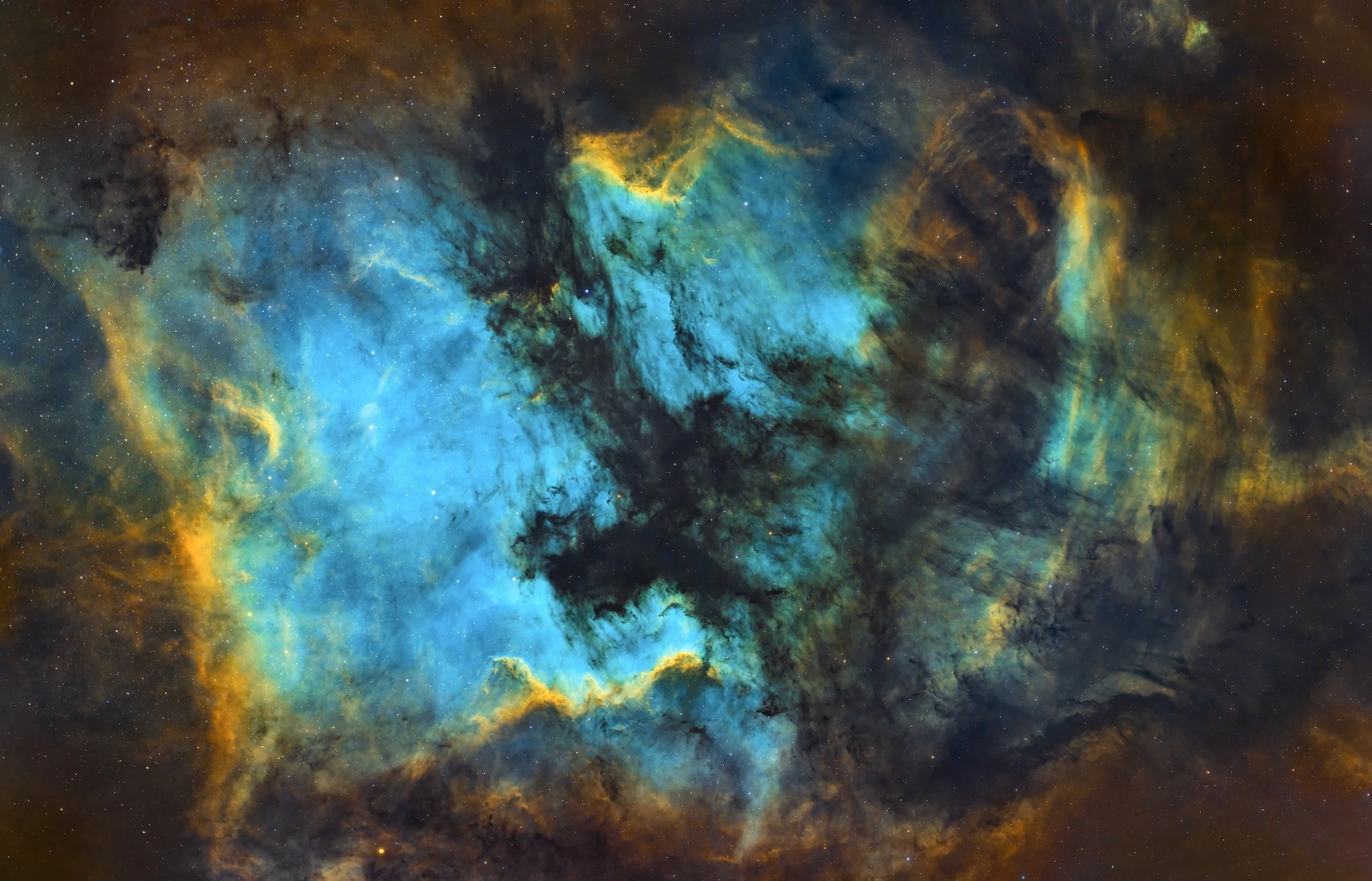
NGC7000 and IC5070
Image Description and Details : 15 hours on NGC7000/IC5070 from the backyard with a 75mm refractor and QHY600MM! My first attempt at this target a few years ago was terrible so I couldn't wait to shoot it again. Spent 3 nights, one for each narrowband filter, and am happy with the result despite it being "only" 15 hours total.
Copyright: Antoine Grelin www.galactic-hunter.com
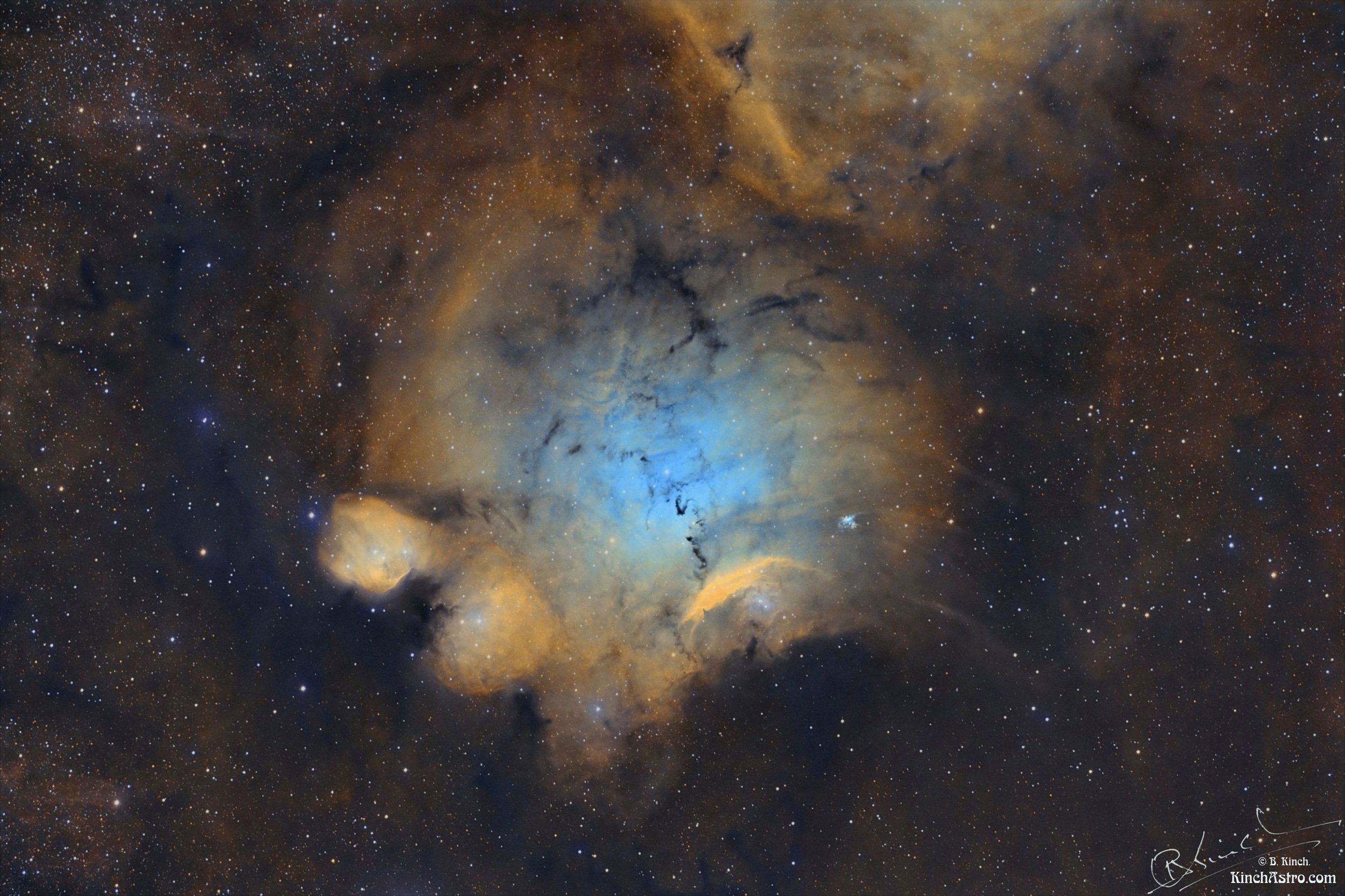
IC 4685
Image Description and Details : IC4685 can be found in the constellation of Sagittarius, very close to and often shown as part of the Lagoon Nebula. This area is rarely imaged on its own because of the more common photographic targets of M8 (Lagoon) and M20 (Trifid) being much more dominant in this area. The estimated distance is about 4000 light years away. The area of the image contains both emission and reflection nebulae and the open star cluster NGC 6546. Imaging telescope: Takahashi FSQ106ED Imaging camera: QSI 6120i Mount: Takahashi EM 400 Temma 2M Guiding telescope: QHY Mini Guide Scope Guiding camera: QHY CCD QHY 5L II Focal Extender / Reducer: 0.73X Capture Software: Sequence Generator Pro, PHD 2 Processing Software: Astro Pixel Processor, PixInsight, Topaz DeNoise, Photoshop Filters (1.25"): Astrodon SII 5nm, Ha 5nm & OIII 5nm Accessories: ATIK EFW2, SeleTEK2 controlling Robofocus Focuser. Dates: 27th Jun - 10th July 2022 Frames: Astrodon SII 12 x 15' Astrodon Ha 12 x 15' Astrodon OIII 20 x 15' Total integration = 11 Hours
Copyright: Brendan Kinch
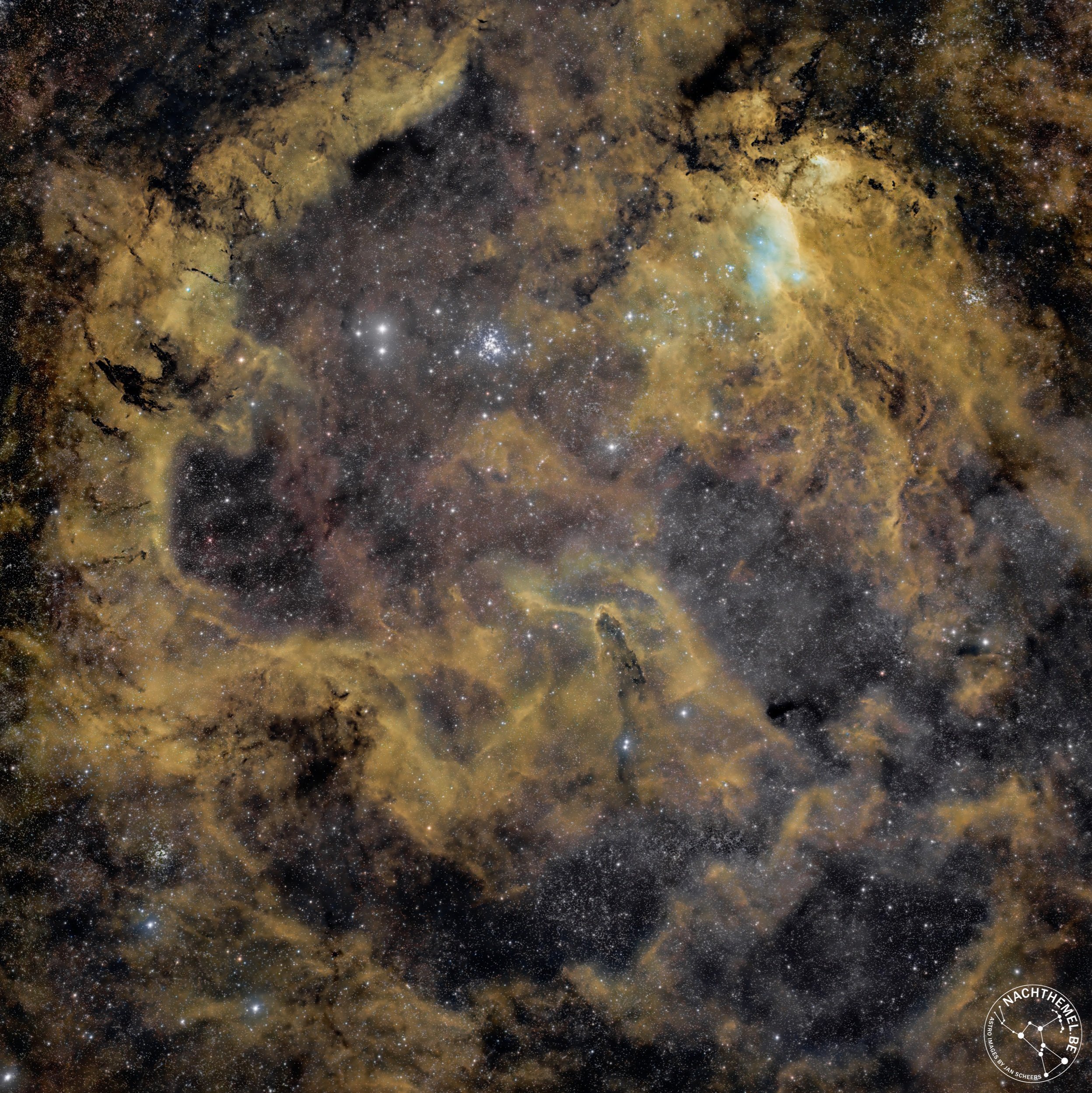
RCW 113: a beautiful H II-region in Scorpius
Image Description and Details : RCW 113, also called Gum 55, is a huge emission nebula (H II-region) in the constellation Scorpius, located in the neighboring Sagittarius Arm of the Milky Way. Its core ionising open cluster NGC 6231 is part of young, bluish stars known as the Scorpius OB1 association. This Sco OB1 association contains many star-forming areas with young, energetic stars of spectral class O & B. In this field of view other interesting deep sky objects are visible. The two bright stars to the left of NGC 6231 are zeta1 and zeta2 Scorpii. The Prawn Nebula (upper right, with blue hues), also known as IC 4628, is an emission nebula around 6,000 light-years from Earth. To the right of IC 4628 there is another open cluster NGC 6242. The Wolf or Fenrir Nebula (SL-17), @ 10 o’clock position in this image, is a dark nebula of dust and gas hiding the background stars. The Dark Tower (SFO 82) is the prominent bright-rimmed cometary globule, about 1.5 degrees away from NGC 6231 and Zeta Scorpii. The shape of this massive structure of cosmic dust resembles a dark tower emerging from the star field background. Most of these objects lie at a distance between 5,300-6,000 light-years from Earth. Image acquired with the Takahashi FSQ-106ED refractor and FLI PL16803 camera from Telescope Live in Heaven's Mirror Observatory, Australia. Total integration time: 300 minutes SHO: 10 sub-frames of 600s with each narrowband filter (SII, H-alpha and OIII). Dataset Telescope Live. Processing with Astro Pixel Processor, Photoshop CC with AstroPanel Pro, Astronomy Tools, Topaz Sharpen AI and NoiseXTerminator plug-ins.
Copyright: Jan Scheers
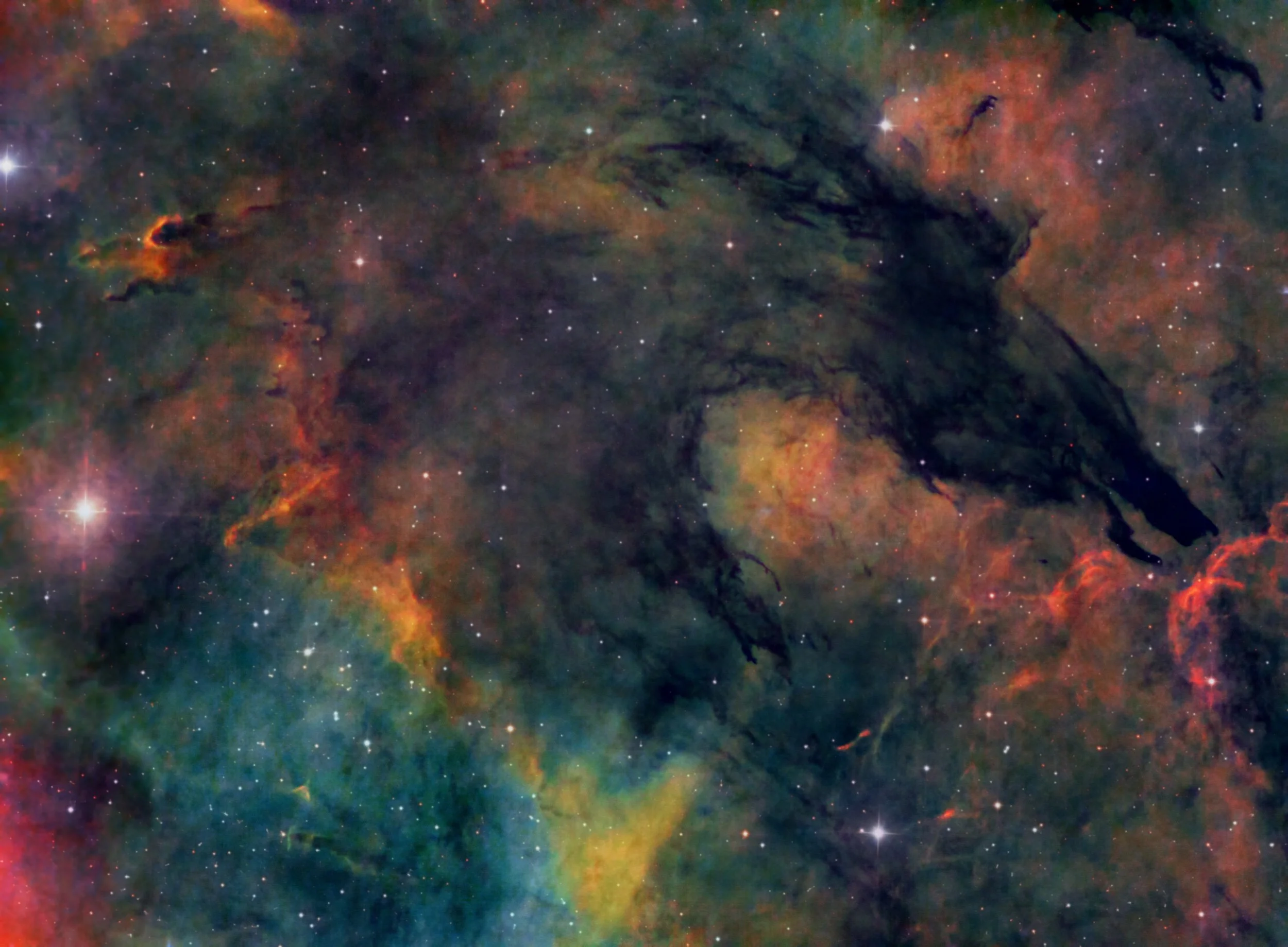
SL-17 The Dark Wolf Nebula
Image Description and Details : SL17 ( Sandqvist and Lindroos 17) is located in the constellation of Scorpius around 6,230 light years away. It’s a star forming region dominated by hydrogen emissions but also the very dark nebula which resembles a wolf and blocks out the stars beyond it. Sidereal Trading CF 10" Newtonian Reflector F5 ZWO ASI1600mm pro Skywatcher EQ6-R Astrodon 3nm Ha, Sii & Oiii 180 x 240s, Astrodon RGB 44 x 120s Shot from 22nd May 2022 through to 6th July 2022 Total Integration: 13hr 28min
Copyright: Anne-Maree McComb
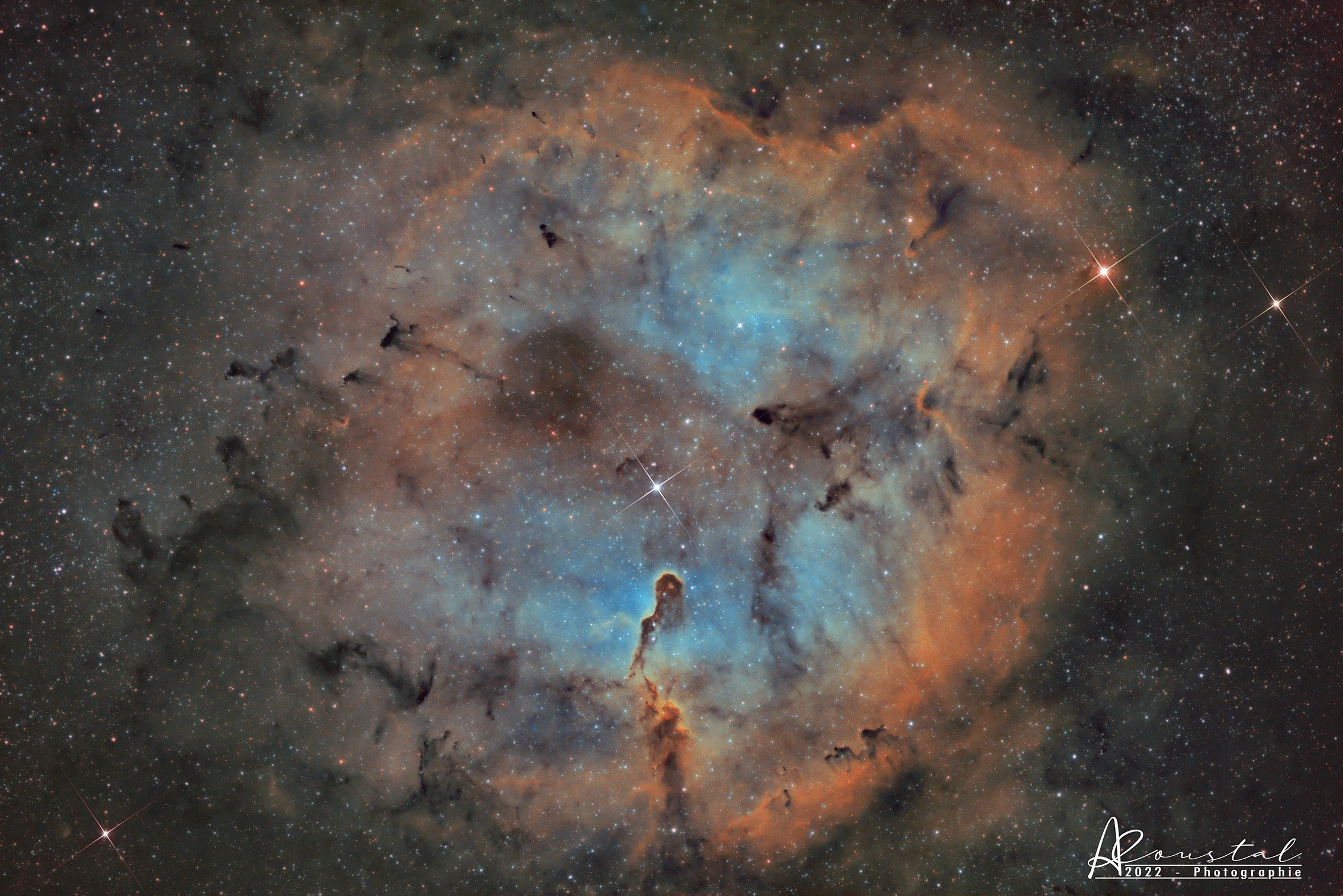
IC 1396 the Elephant Trunk
Image Description and Details : Camera ZWO - ASI 2600 MM Pro Refractor TS 76 x 342 EDPH Skywatcher EQ8 Filter Antlia 3nm pro HA : 20 x 300s B1 S2 : 6 x 300s B1 O3 : 20 x 300s B1 Sky bordle 8 Personal observatory Pixinsight - Uwe AstroTools
Copyright: COUSTAL Eric
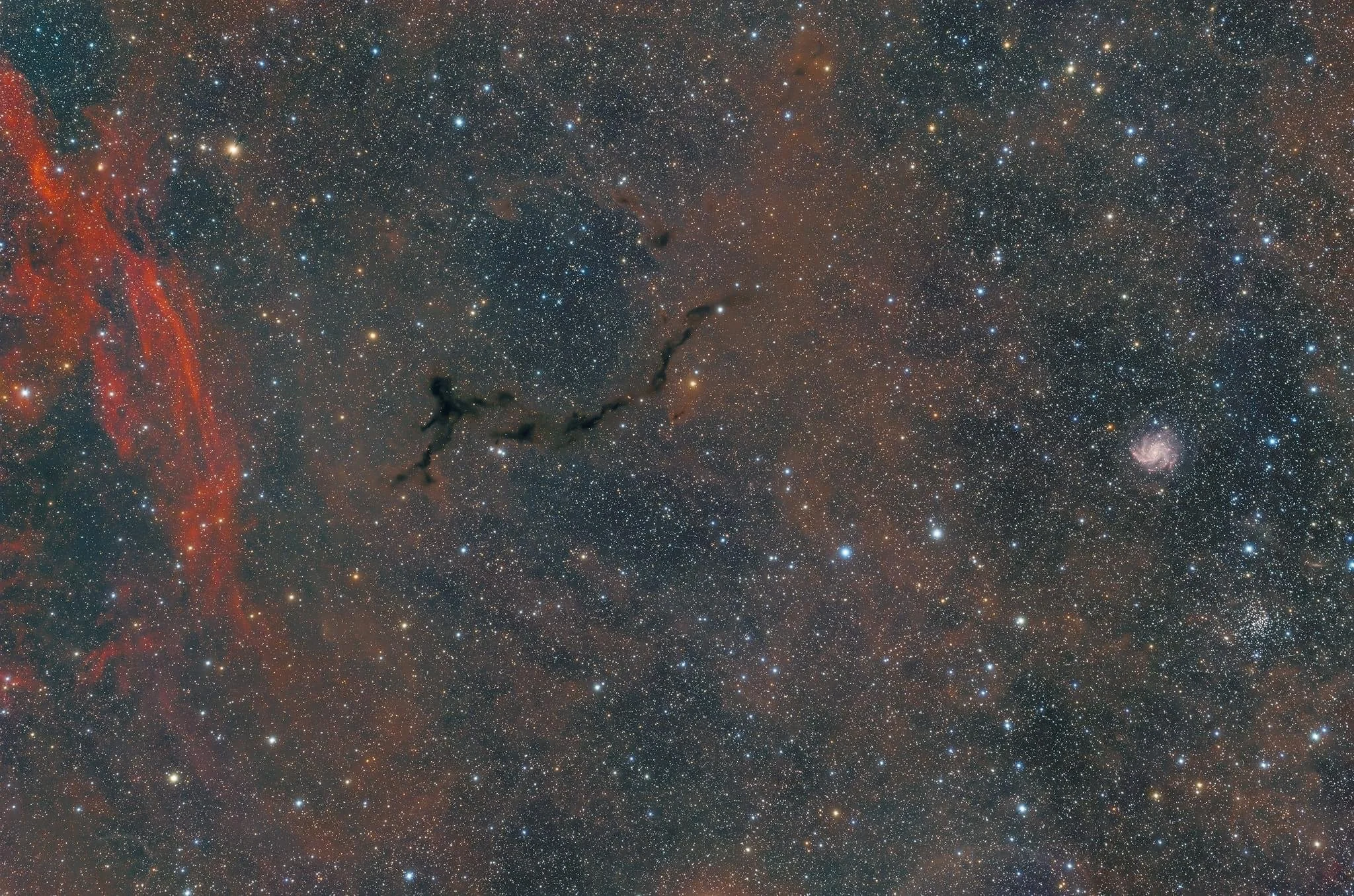
Barnard 150
Image details:
This is Barnard 150 is a dark nebula visible in the constellation Cepheus. It is also known as the Hippocampus Nebula due to its shape.
Also in this image is Galaxy NGC 6946, nicknamed the Firework Galaxy, is a spiral galaxy seen almost face-on. Straddling the Cygnus and Cepheus constellations, as well as the NGC693 cluster.
Details:
Takahashi fsq-85-EDX
ZWO ASI2400MC-PRO camera
ZWO ASI290mm guide cam
Ioptron CEM70 mount
ZWO Asiair pro
IDAS NBZ Filters
Pixinsight - astro pixel processor - photoshop
Integration: 15h35
Copyright: Christophe Vergnes
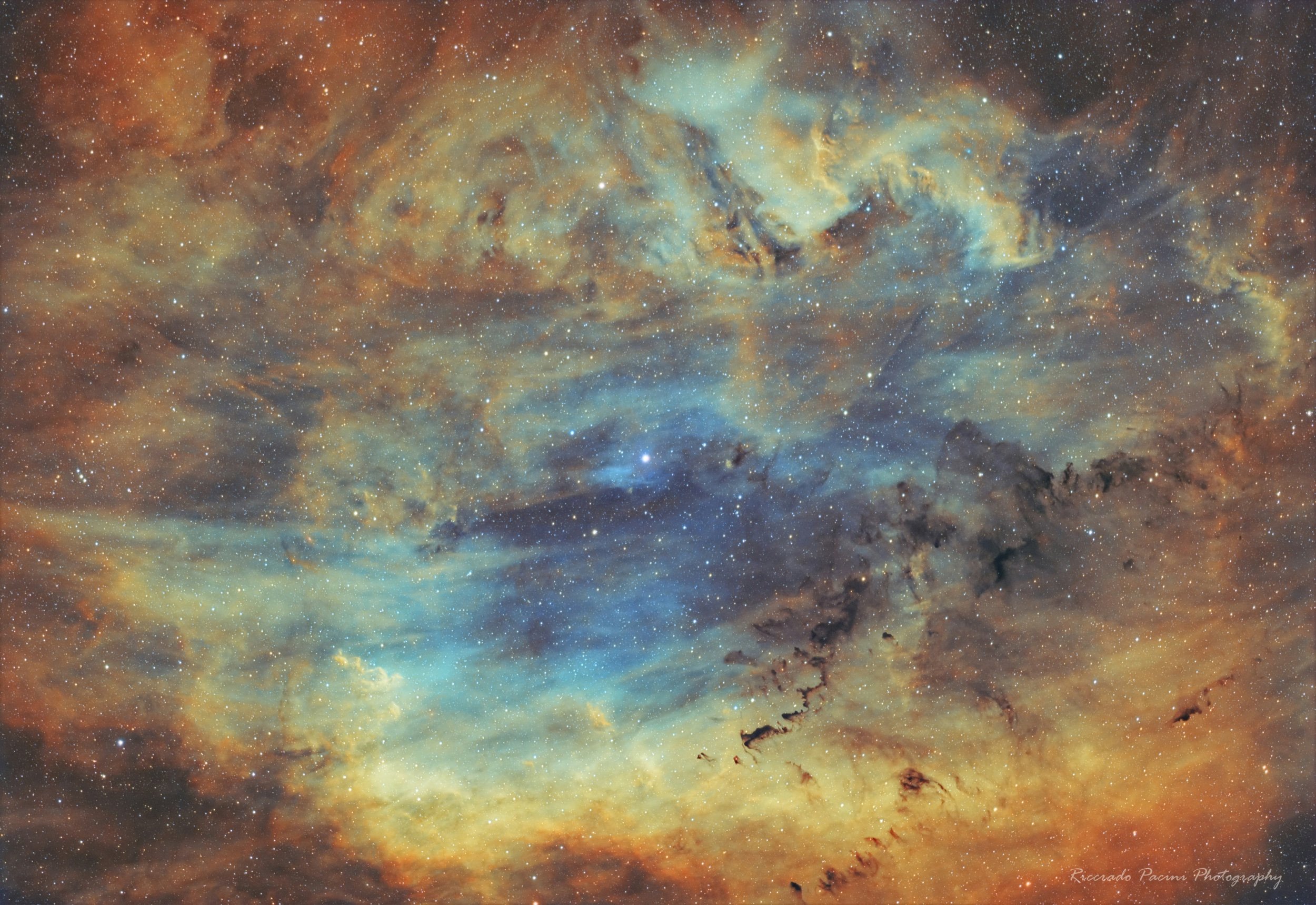
The clamshell nebula
Image Description and Details : The clamshell nebula in Cygnus Sh2-119 Is a large complex of emission nebulae in the constellation Cygnus. The bright star at the center is 68 Cygni, a 5th magnitude star responsible for ionizing the surrounding gas. Estimated tonbe 2200 light-years from Earth. This image is the result of 4 night during which I collected 24h of data Using ultranarrowband filter From bortle 9 backyard 96 x 300sec exposure for each filter Gain 121 tenp. -5°C 40 dark calibration files 20 flat calibration file per filter per session
Copyright: Riccardo pacini
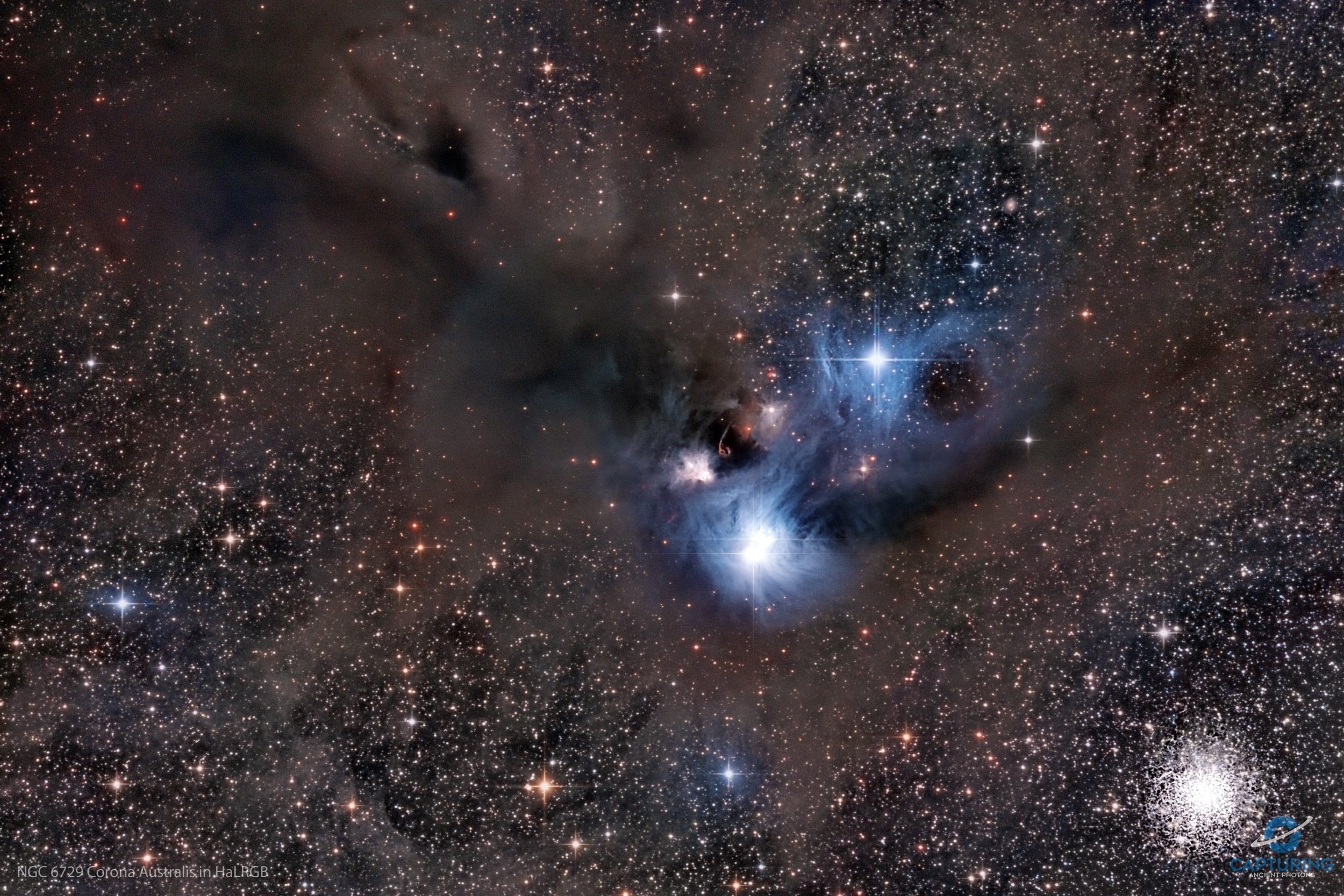
NGC 6729 Corona Australis in HaLRGB
Image Description and Details : NGC 6729 is a reflection/emission nebula (star-forming region) located some 424 light-years away in the constellation of Corona Australis (The Southern Crown). It is part of one of the closest stellar nurseries to Earth. The Corona Australis Molecular Cloud is a dusty dark molecular cloud just north of one of its two brighter stars Beta Coronae Australis. Within it are stars at the earliest stages of their lifespan. 7 x 10min Ha and 85 x 5min RGB subs @-10C were taken over 5 nights for a total integration time of about 8.3 hrs. Equipment used: Skywatcher 10" f4 Newtonian 250P Skywatcher F4 Aplanatic Coma Corrector Skywatcher NEQ6 Pro Hypertuned by Astronomy Academy Perth ZWO ASI2600MM Pro Cooled Camera Primaluce Sesto Senso2 Electronic Focuser William Optics Uniguide 50/200mm guidescope ZWO ASI290MM Mini Guide Camera ZWO Electronic Filter Wheel Antlia Pro 36mm unmounted filters Rollon rolloff modified shed observatory Bortle 5 Data acquisition software: NINA Astronomy Software Processing software: PixInsight and Photoshop CC
Copyright: Capturing Ancient Photons