

AAPOD2 Image Archives

SH2-240: the spaghetti nebula
Simeis 147, affectionately known as the "Spaghetti Nebula" or cataloged as Sharpless 2-240, unfold a mesmerizing spectacle. This expansive supernova remnant bears witness to the cataclysmic death throes of a massive star, which, in a bygone era, expelled its outer layers into the interstellar medium. Its ethereal strands of ionized gas and dust, intricately shaped by the forces of the explosion, weave a captivating narrative of cosmic destruction and rebirth.
Approximately 3,000 light-years from Earth, Simeis 147 spans a considerable region of the celestial canvas. Its moniker, the "Spaghetti Nebula," is a fitting tribute to the nebula's intricate filaments and wisps that dance across the vast expanse. This image reflects a harmonious blend of scientific exploration and artistic finesse, capturing the delicate intricacies of a celestial spectacle that bears the indelible mark of stellar evolution.
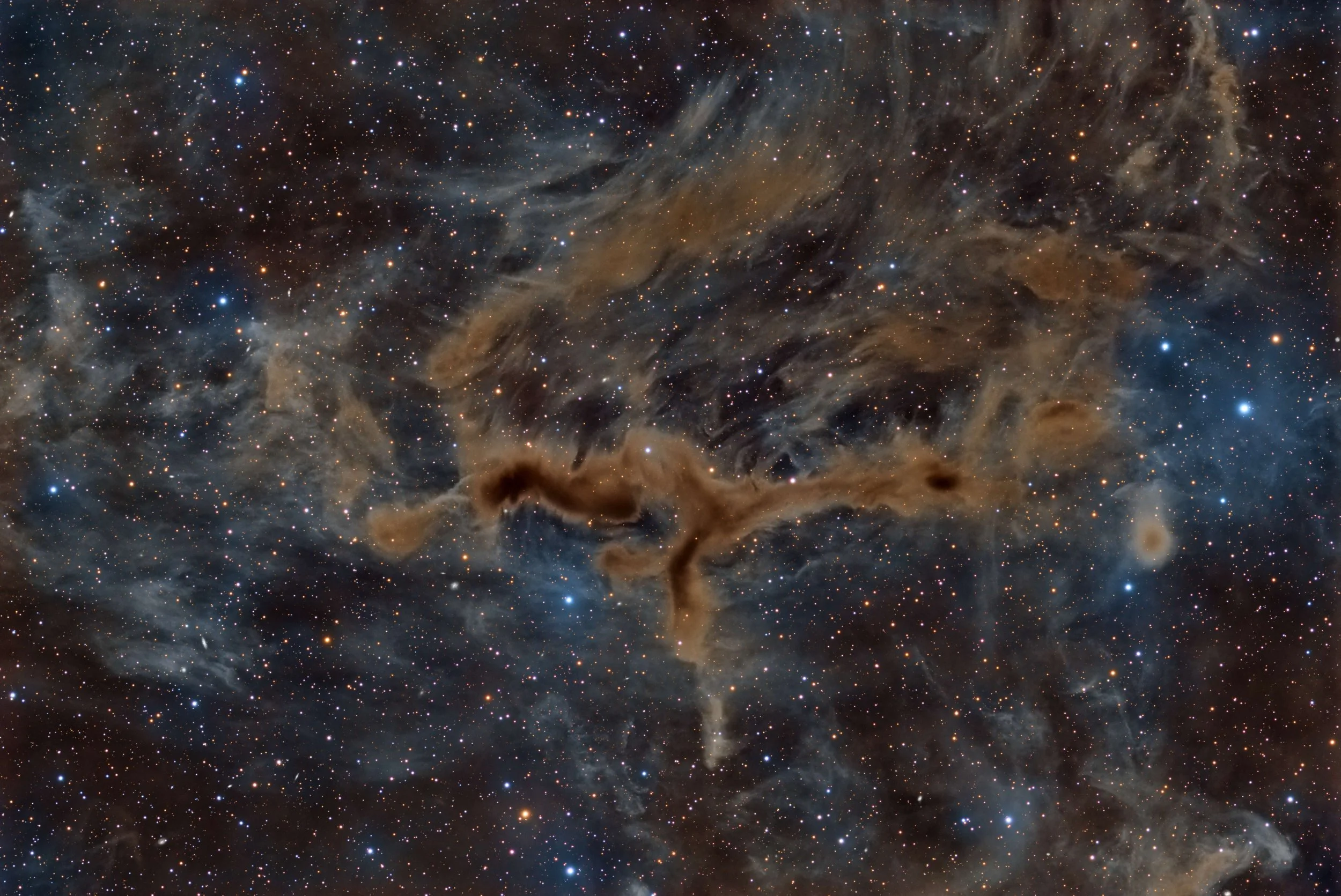
LBN 603 LDN 1295 and 1296
Amidst the celestial expanse in the constellation Cassiopeia, the elusive LBN 603 reveals itself as a faint nebula, delicately positioned between the Pacman Nebula and the Andromeda Galaxy. Garnering LDN catalog category 6, denoting its status among the most subtle cosmic entities, this ethereal nebula imparts a sense of celestial mystery from its location approximately 410 light-years away. Woven into this astronomical image are 38 hours of luminance data and 22 hours of RGB data, unraveling the nuanced details of LBN 603 and portraying its celestial choreography alongside cosmic companions.
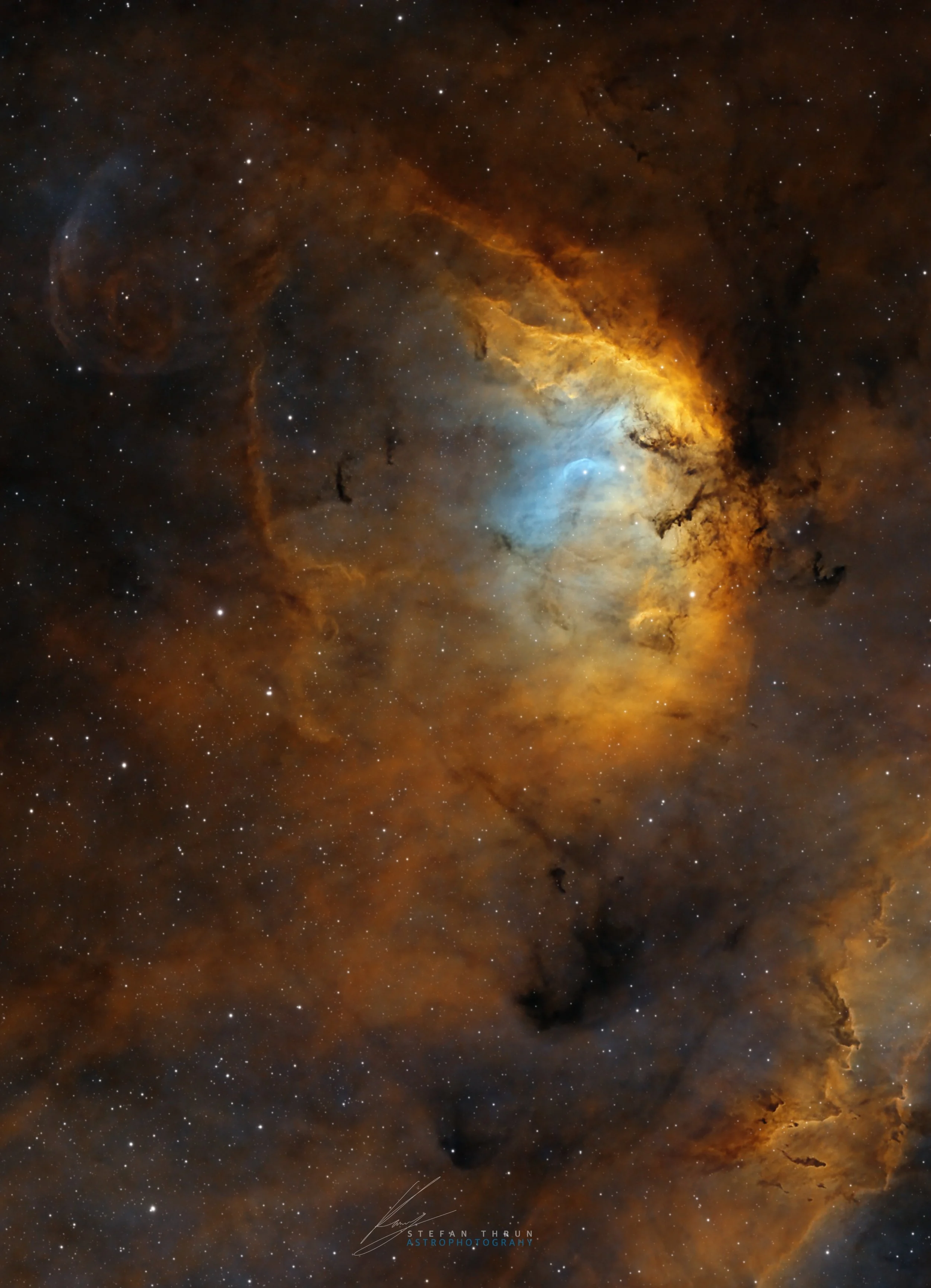
The Tulip Nebula
In the cosmic expanse, this image unveils the Tulip Nebula, a celestial gem captured in the classic Hubble palette. Revered in the Sharpless catalog by Steward Sharpless in 1959, this emission nebula graces the Swan constellation from a distance of approximately 6000 light-years. Two slender dark clouds, reminiscent of a tulip's silhouette against the backdrop of a red HII region, bestow the nebula its poetic moniker. Hovering slightly above the tulip, a striking pair of stars illuminates the scene—one radiating a yellowish glow, slightly larger, and the other a whitish brilliance, subtly smaller. The yellow-hued star, HDE 226868, unveils the cosmic enigma of Cygnus X-1, the first confirmed black hole, discovered in 1972, sparking a renowned bet between Stephen Hawking and Kip Thorne. This intricate tapestry of the Tulip Nebula and Cygnus X-1, residing at a distance of 6197 light-years, narrates the intertwined tales of stellar birth and the cosmic abyss, casting a spellbinding allure upon the cosmos.
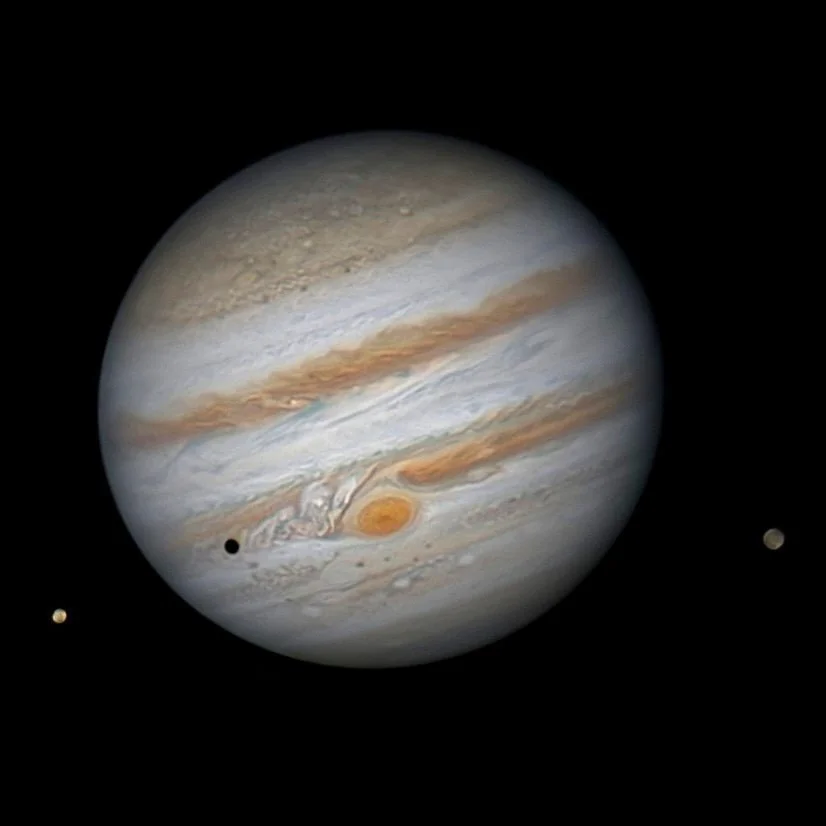
Jupiter Io & Ganymede - The dance of the satellites
In a remarkable celestial configuration, this image captures the intricate dance of Jupiter and its moons Io and Ganymede, along with the captivating phenomenon of a shadow transit and the prominent Great Red Spot (GRS). Taken during a brief interval of atmospheric stability, the image attains exceptional resolution, revealing the atmospheric features and dynamic interactions within Jupiter's turbulent atmosphere. The synchronized ballet of these celestial bodies unfolds against the backdrop of the gas giant's swirling cloud bands, offering a glimpse into the complex dynamics of our solar system's largest planet.

Northern Lights over Tromso
This captivating scene documents the aftermath of an eventful week of auroral activity of Northern Lights. Positioned atop a mountain, in Tromso, and driven by celestial curiosity, the photographer seizes the opportunity to create a panoramic masterpiece, capturing the residual auroral glow gracefully aligning with the fjord below.
This skillfully crafted image not only immortalizes the ephemeral beauty of the Northern Lights, a dazzling result of charged particles from the Sun interacting with Earth's magnetic field and atmosphere, but also harmoniously merges scientific fascination with the artistic essence of astrophotography.
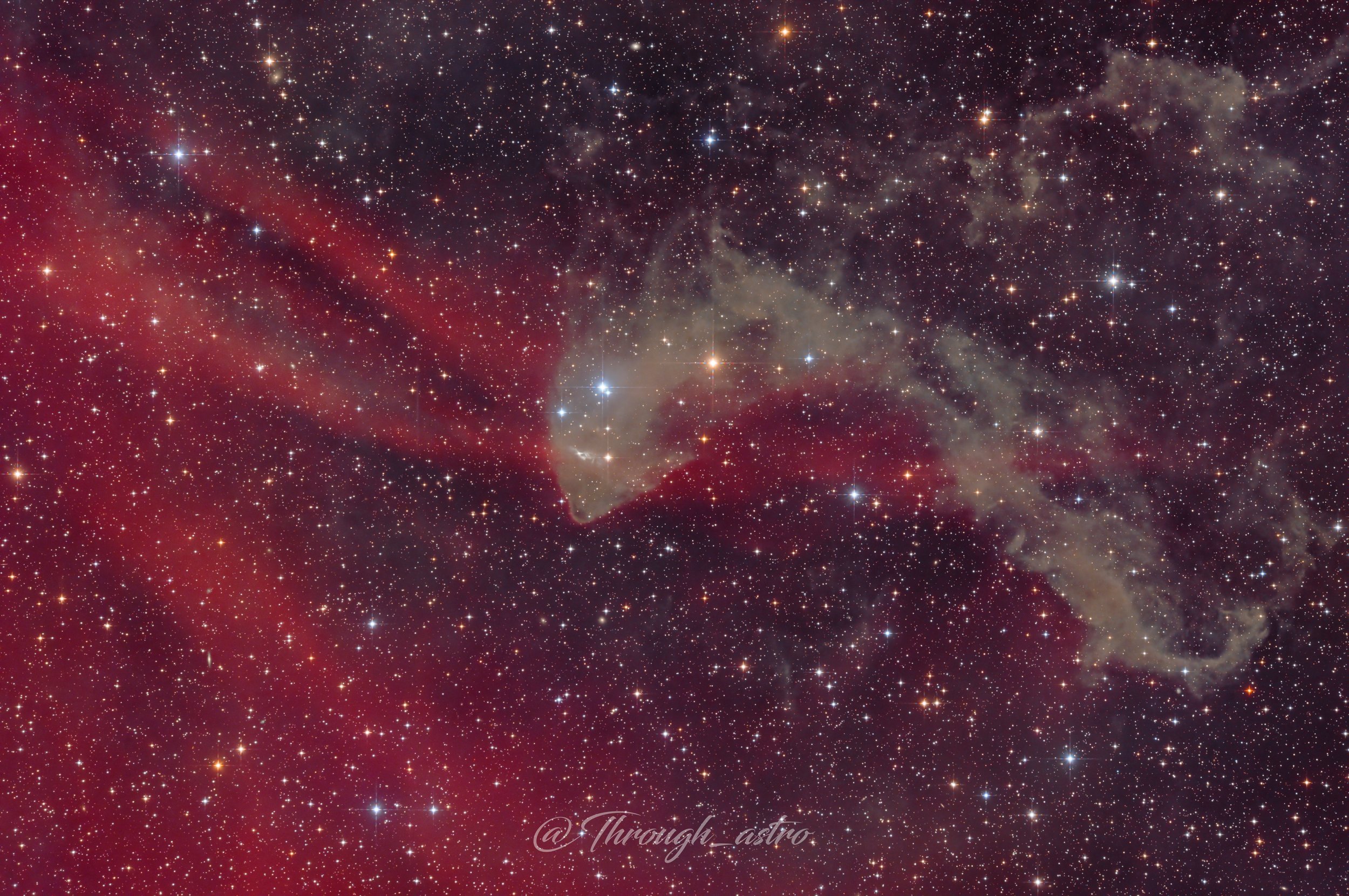
Gecko on the red curtain (LBN 437)
The "Gecko Nebula" is an informal and creative name given to a specific region within the larger LBN (Lynds Bright Nebula) catalog. Specifically, it is often associated with LBN 437, a molecular cloud complex located in the constellation Cepheus.
The name "Gecko Nebula" likely arises from the visual resemblance of dark lanes and structures within the nebula to the patterns on a gecko's skin or the shape of a gecko. Such creative names are often used by amateur astronomers and astrophotographers to make celestial objects more memorable or to highlight interesting features within them.
While the term "Gecko Nebula" is not an official astronomical designation, it reflects the enthusiasm and creativity within the astronomy community. If you're interested in observing or learning more about the Gecko Nebula (LBN 437), it's worth checking astrophotography forums, astronomy websites, or sky observation guides for images and additional information shared by enthusiasts.
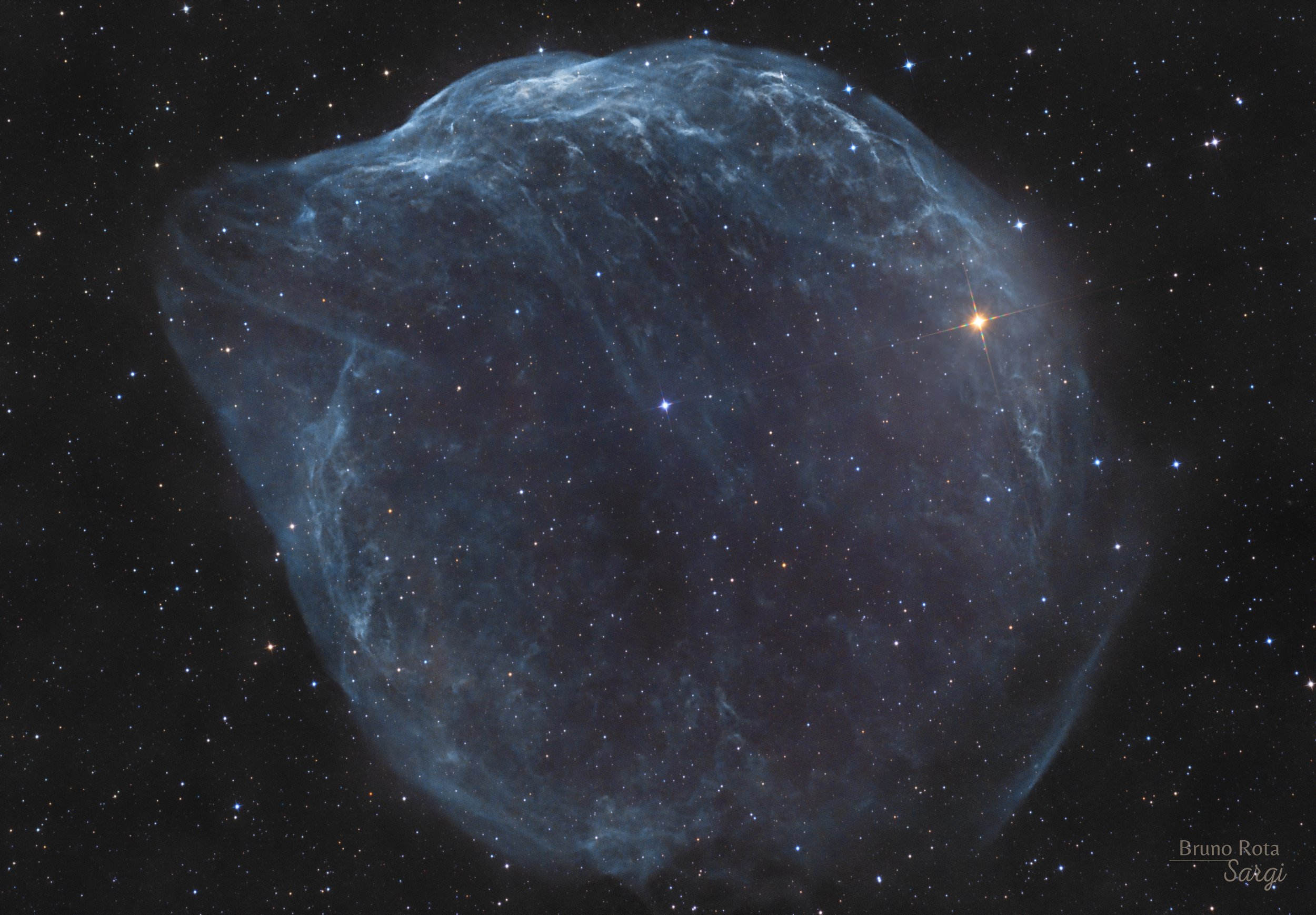
The Dolphin Nebula (SH2-308)
The Dolphin Nebula, also known as Sh2-308, is an emission nebula situated in the constellation Cassiopeia. This striking nebula gets its name from its appearance, as the arrangement of gas and dust creates the visual impression of a dolphin leaping through space.
Sh2-308 is illuminated by the bright, massive star HD 313571, which is at the heart of the nebula. The radiation and stellar winds from this central star interact with the surrounding interstellar material, causing it to glow in various colors. The nebula's intricate structures, shaped by the powerful forces at play, make it a captivating target for both visual observation and astrophotography.
Studying the Dolphin Nebula provides astronomers with insights into the processes of massive star formation, the dynamics of ionized gas in space, and the interactions between stars and their cosmic surroundings. As an aesthetically pleasing celestial object, the Dolphin Nebula serves as a reminder of the beauty and complexity inherent in the vast reaches of our Milky Way galaxy.
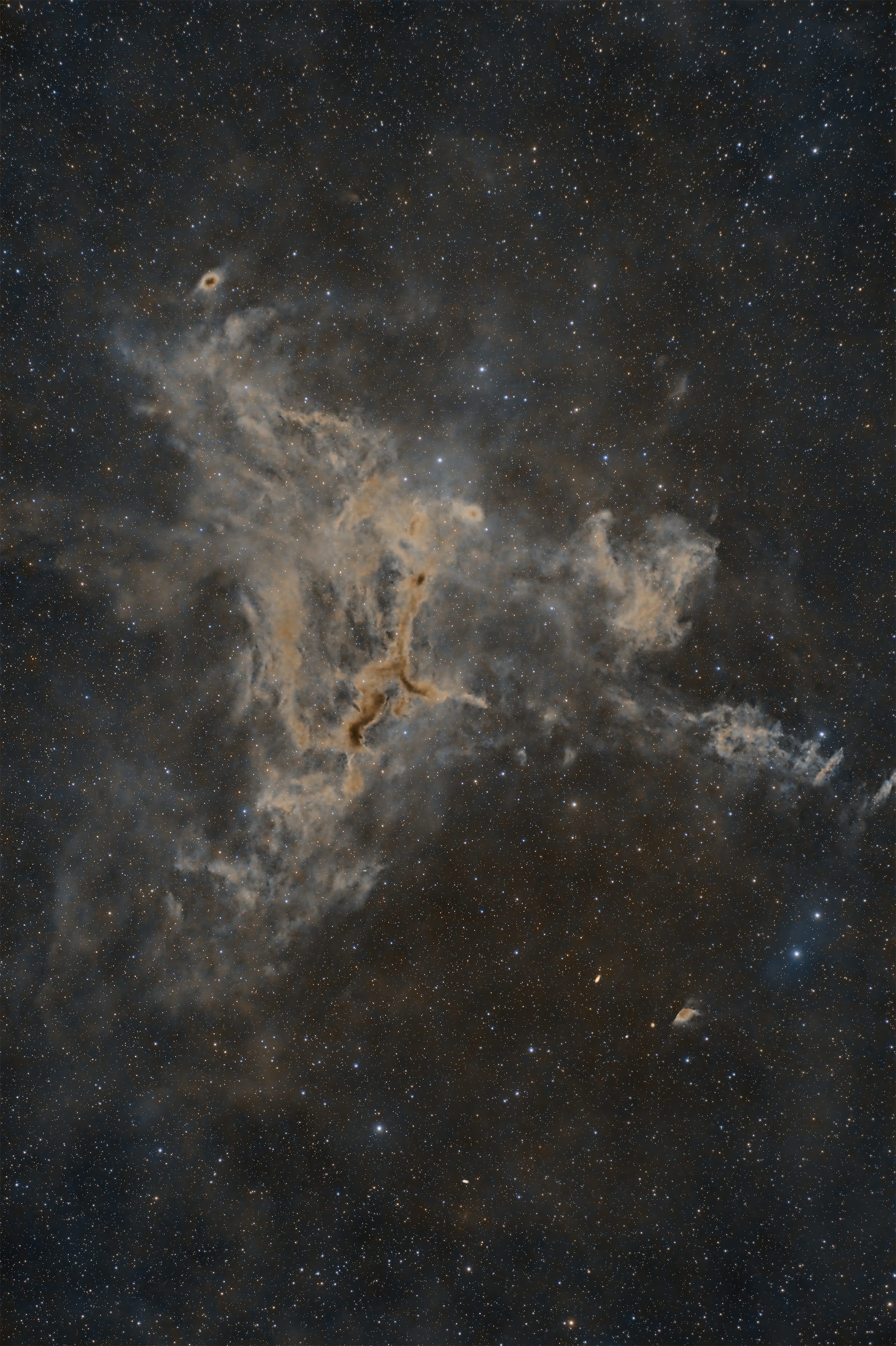
LBN 603
LBN 603, or Lynds Bright Nebula 603, is a molecular cloud complex located in the constellation Cepheus. It is part of a region rich in interstellar material, including dust and gas. LBN 603 is often associated with star-forming activities, as the dense molecular clouds serve as nurseries for the birth of new stars.
This nebula is not as well-known as some other celestial objects, but it represents a fascinating area for scientific exploration. Astronomers study regions like LBN 603 to better understand the processes of star formation, the dynamics of molecular clouds, and the complex interactions occurring within our galaxy. While not as visually striking as some other nebulae, LBN 603 plays a crucial role in the ongoing cycle of stellar birth and evolution in the vast cosmic landscape.

M77: Cetus A
Cetus A, also known as NGC 1052, is a prominent elliptical galaxy situated in the constellation Cetus. This galaxy is classified as an active galaxy, hosting a supermassive black hole at its center. The presence of an active galactic nucleus contributes to Cetus A being a strong source of radio waves.
Cetus A exhibits distinctive features, including a large envelope of gas and dust that extends beyond the visible boundaries of the galaxy. This material is thought to be associated with ongoing interactions or mergers with smaller galaxies, contributing to the dynamic and complex nature of Cetus A.

Entangled pair of stars WeBo 1 suitably caught in Heart Nebula IC1805, with Melotte 15
Melotte 15 is a young and energetic cluster, with its hot, massive stars illuminating the surrounding nebula, creating a visually stunning celestial display. The region is a popular target for astrophotographers and astronomers interested in studying the dynamics of star formation and the interplay between stars and the surrounding interstellar medium.
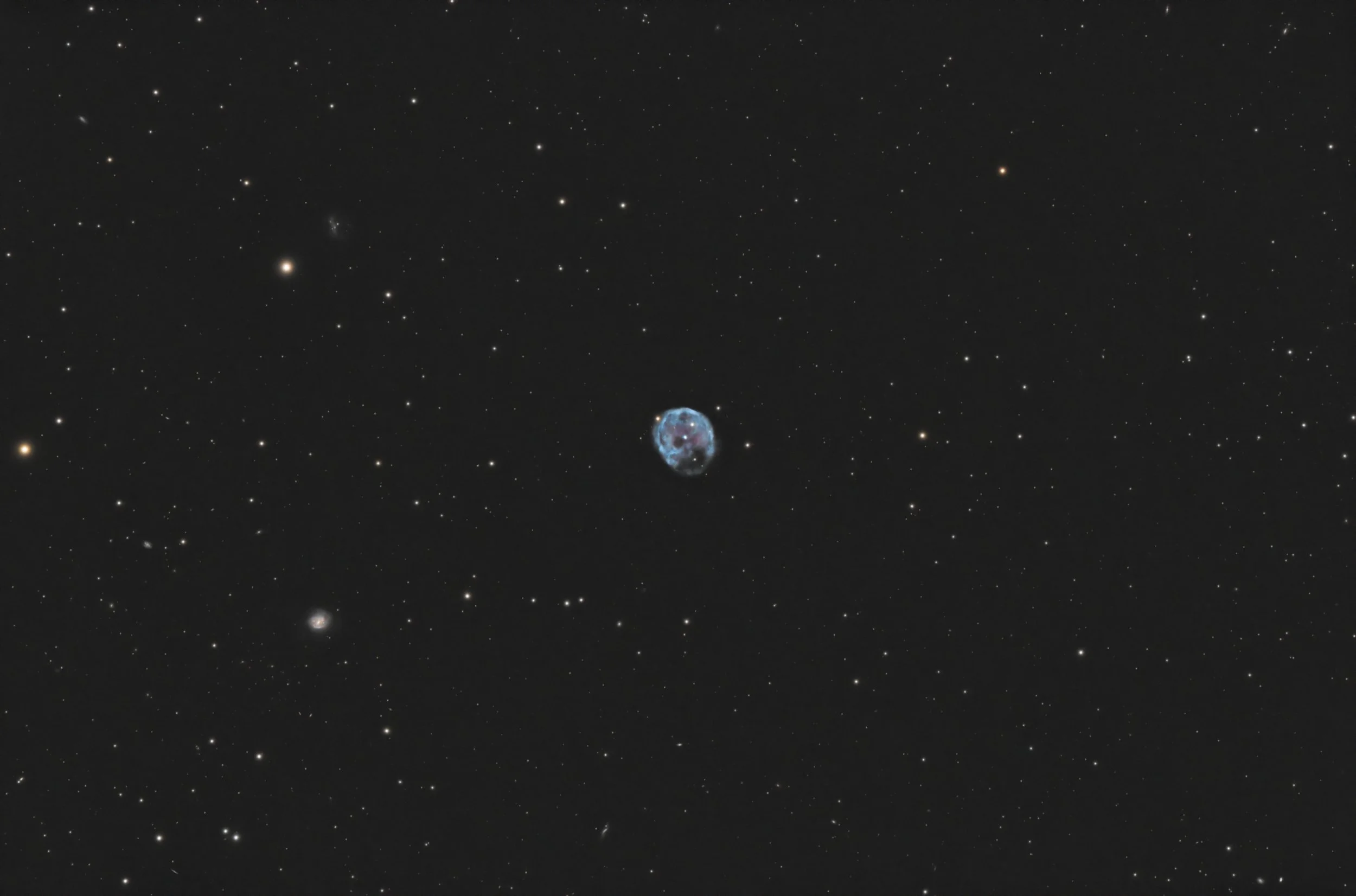
NGC 246 - Skull nebula
NGC 246, famously known as the "Skull Nebula," derives its popular name from its distinctive appearance, resembling a human skull or a spooky visage when observed in certain conditions. This nebula is an open cluster embedded in a cloud of interstellar gas and dust, located in the constellation Cetus.
The Skull Nebula, designated as Caldwell 56, showcases intricate details when viewed through telescopes equipped with narrowband filters that enhance the contrast of the nebula's features. It's important to note that the perception of a skull-like shape is often subjective and depends on factors such as the observer's imagination and the quality of the observing conditions.
NGC 246 stands out not only for its captivating appearance but also for its scientific significance, offering astronomers valuable insights into the processes of star formation, interstellar dust, and the life cycle of open star clusters within our Milky Way galaxy.
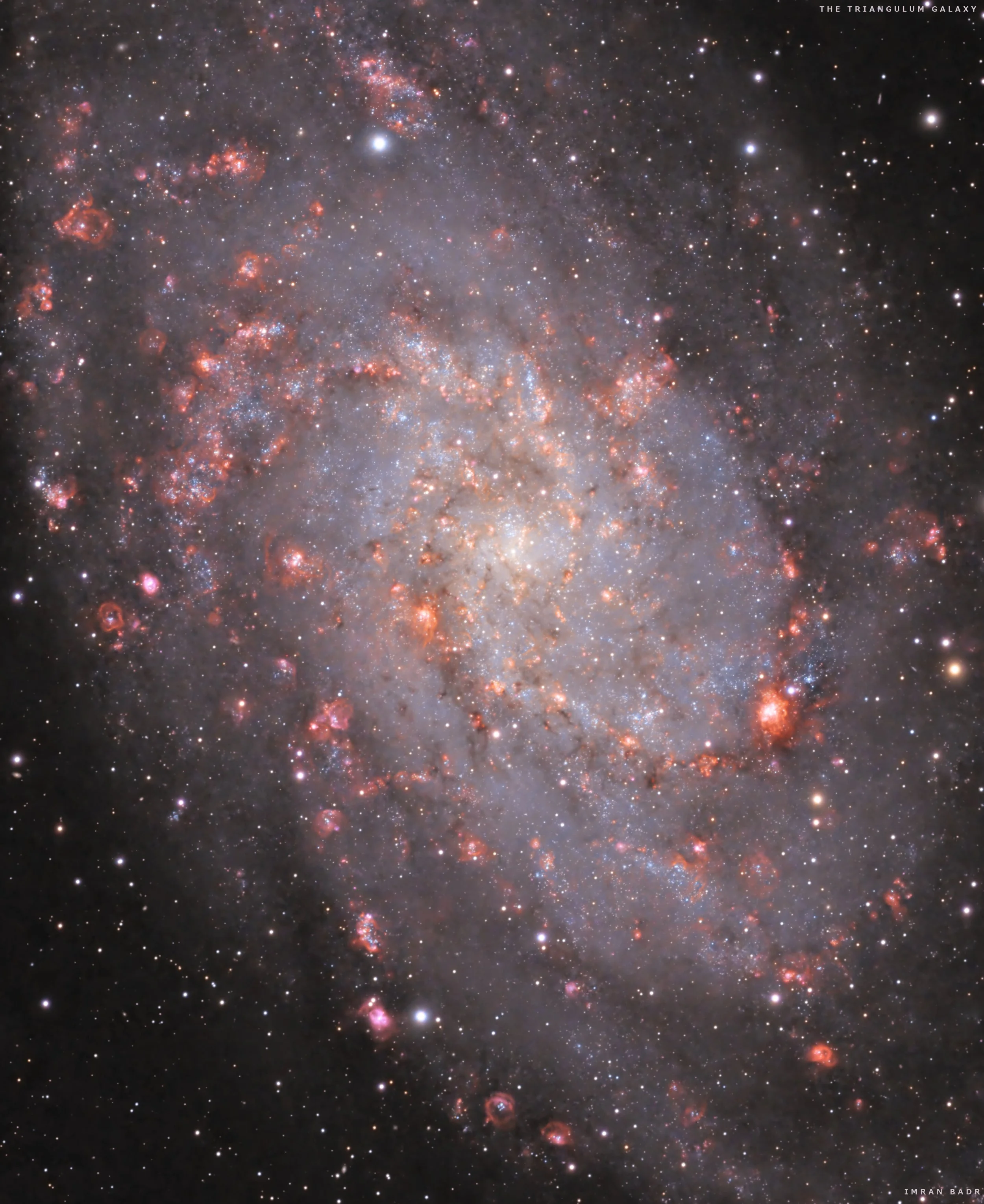
The Triangulum Galaxy - M33
M33, also known as the Triangulum Galaxy, doesn't have a widely recognized alternative name like some other celestial objects. However, it is occasionally referred to simply by its Messier catalog number, M33. As the third-largest galaxy in our Local Group, after the Milky Way and Andromeda, M33 is a spiral galaxy located in the constellation Triangulum.
It is a popular target for amateur astronomers due to its relatively large size and proximity, making it visible in dark skies with binoculars or a small telescope. The Triangulum Galaxy is a fascinating object of study, providing insights into the dynamics and evolution of spiral galaxies.
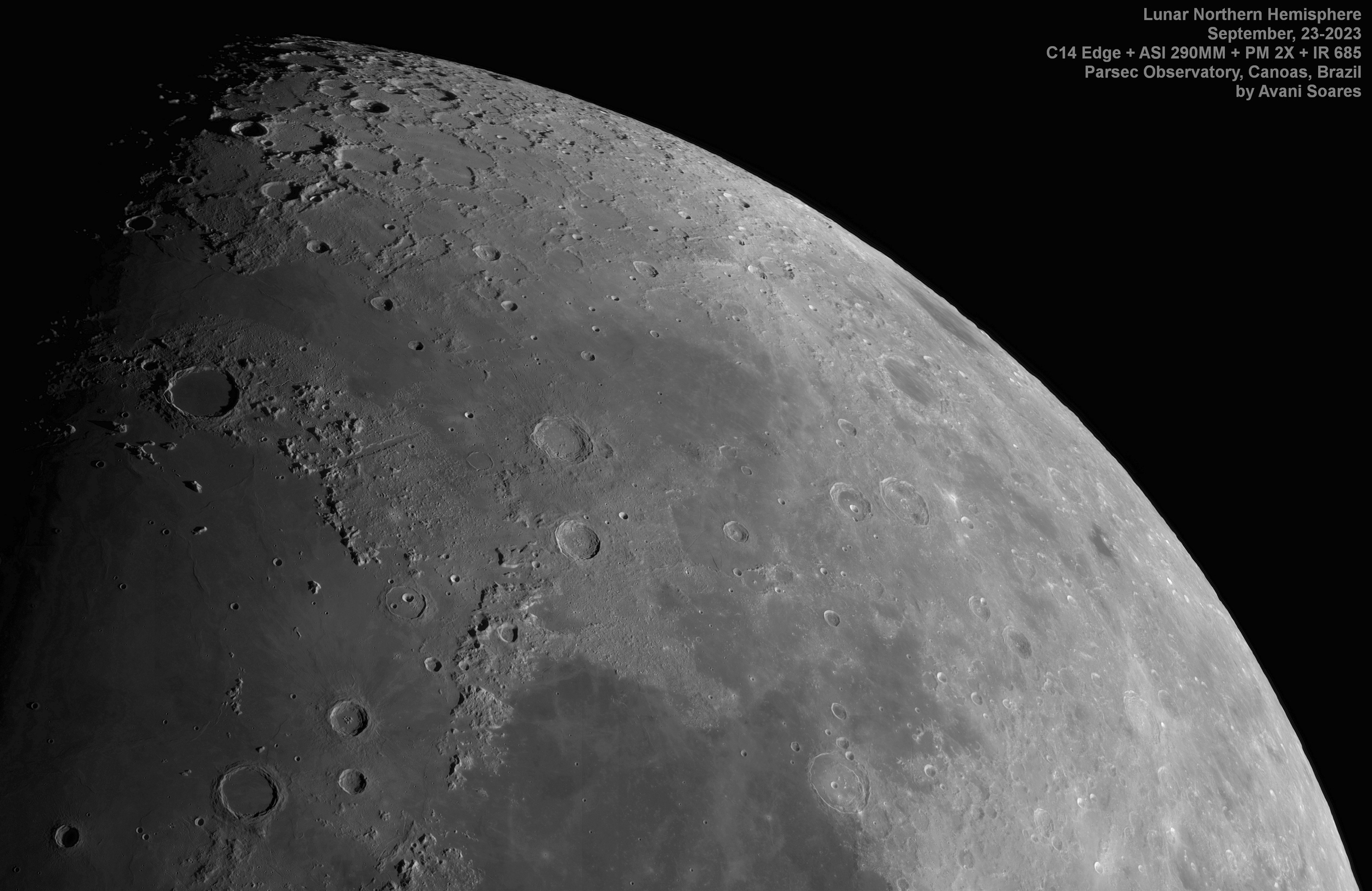
Lunar Northern Hemisphere
The northern hemisphere of the Moon is often referred to as the "Lunar Northern Highlands" or simply the "Lunar North." This region is characterized by rugged terrains, highlands, and numerous impact craters. Some notable features within the lunar northern hemisphere include the expansive plains of Mare Frigoris, the prominent craters Plato and Archimedes, and the rugged terrain of the Montes Caucasus and the Montes Alpes mountain ranges. The lunar north provides a diverse and visually compelling landscape for lunar observers and researchers alike.
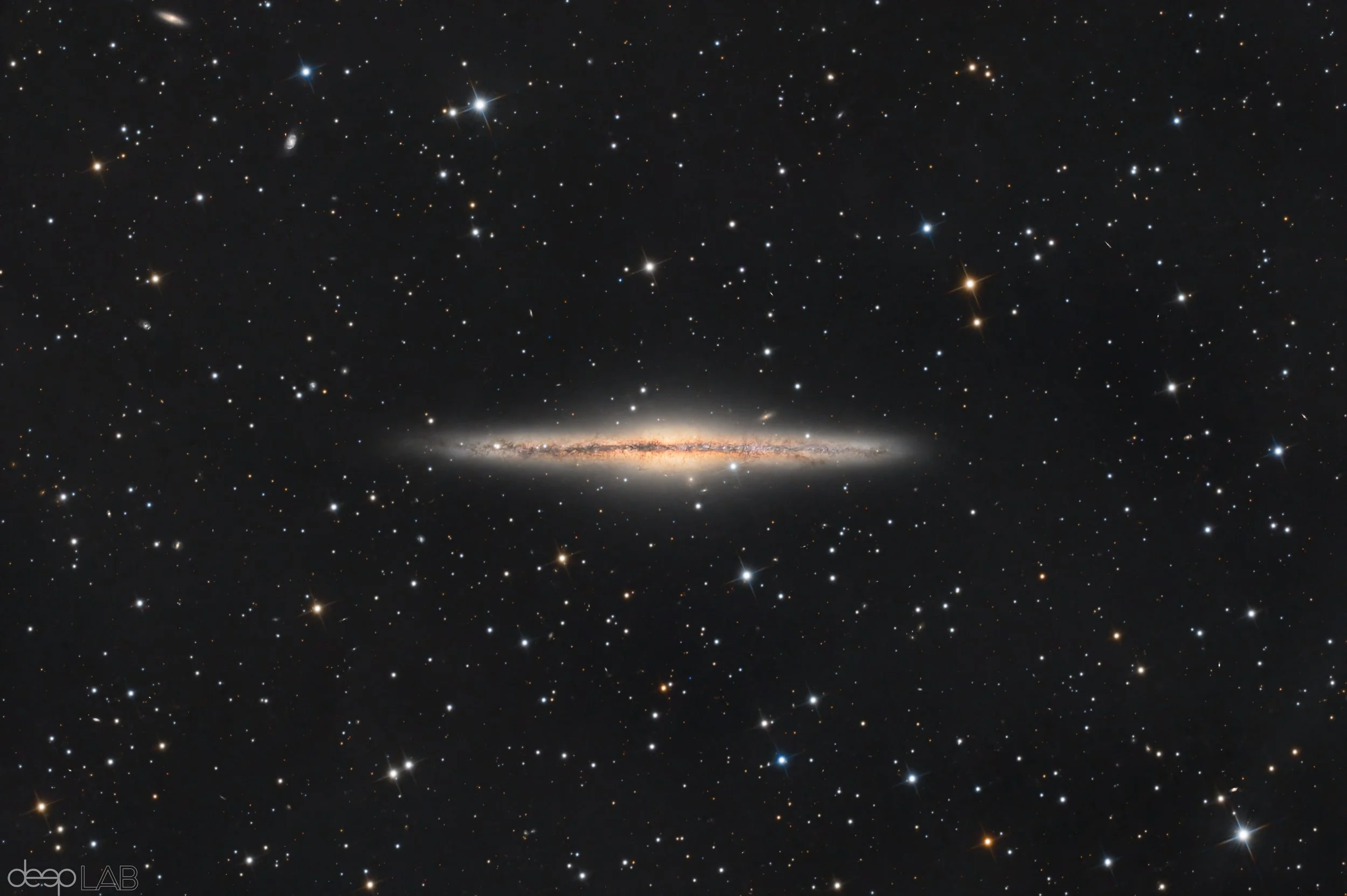
NGC 891 - THE SILVER SLIVER GALAXY - ANDROMEDA CONSTALLATION
What makes NGC 891 particularly captivating is its orientation, presenting a stunning edge-on view that allows astronomers to study its structure in great detail. The dust lanes within the disk of the galaxy are prominently visible, creating a dark band that bisects the bright stellar background. This feature provides a unique perspective for investigating the distribution of stars, gas, and dust within the galaxy.
NGC 891 is considered a member of the NGC 1023 group, a small galaxy group in the Local Supercluster. Its proximity and orientation make it an excellent target for astrophotography and scientific observation. The study of galaxies like NGC 891 contributes to our understanding of the processes shaping the evolution of spiral galaxies and the vast cosmic structures in which they reside.
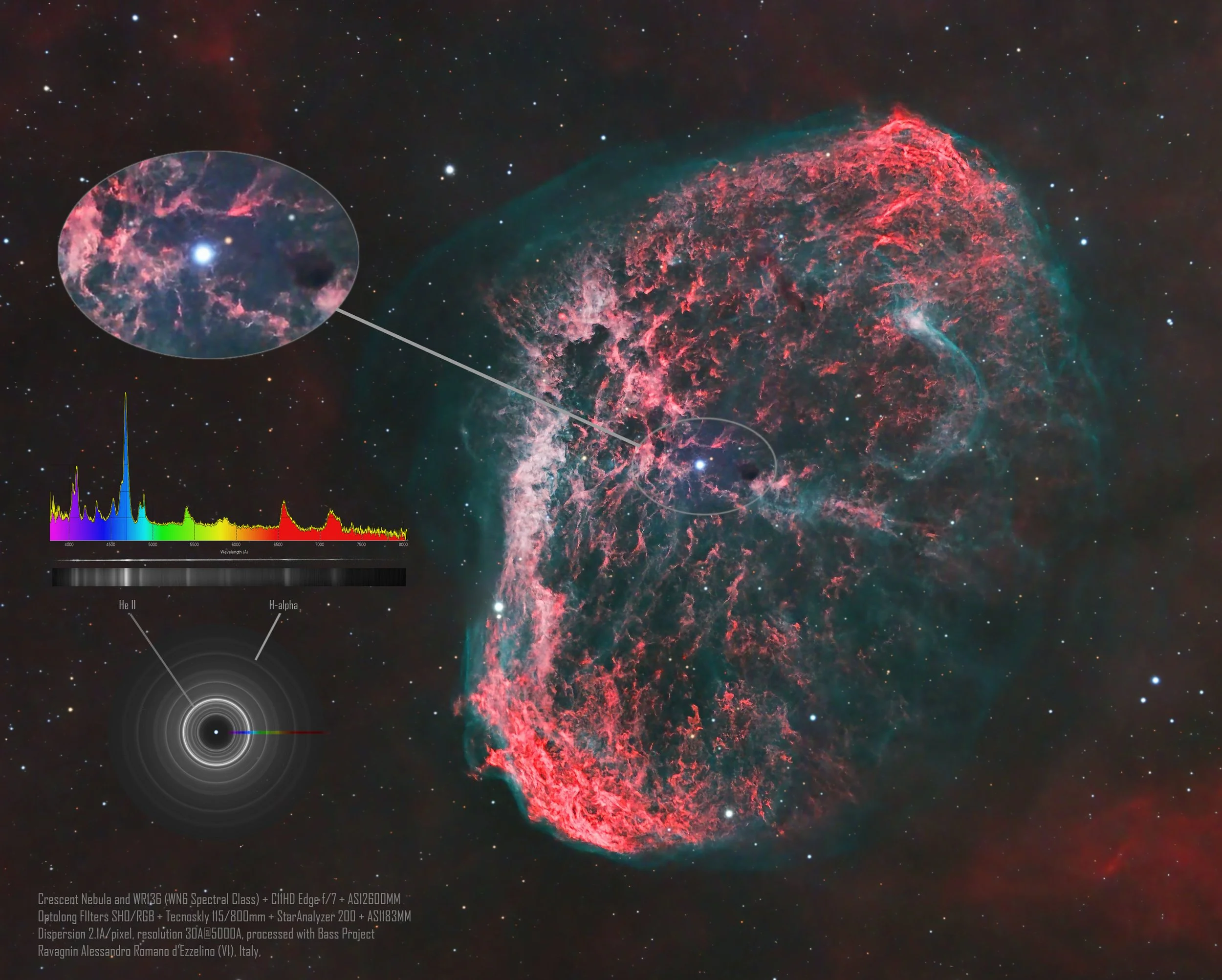
The Crescent nebula and its central star WR136
Wolf-Rayet stars are evolved, massive stars that have shed their outer layers, revealing a hot and dense core. WR 136 is no exception, displaying strong stellar winds that propel material into space. These winds create a nebula around the star, contributing to the surrounding interstellar environment.
The binary nature of WR 136 adds another layer of interest. The companion star, which is not a Wolf-Rayet star, orbits the primary star, influencing its evolution and contributing to the dynamics of the system.
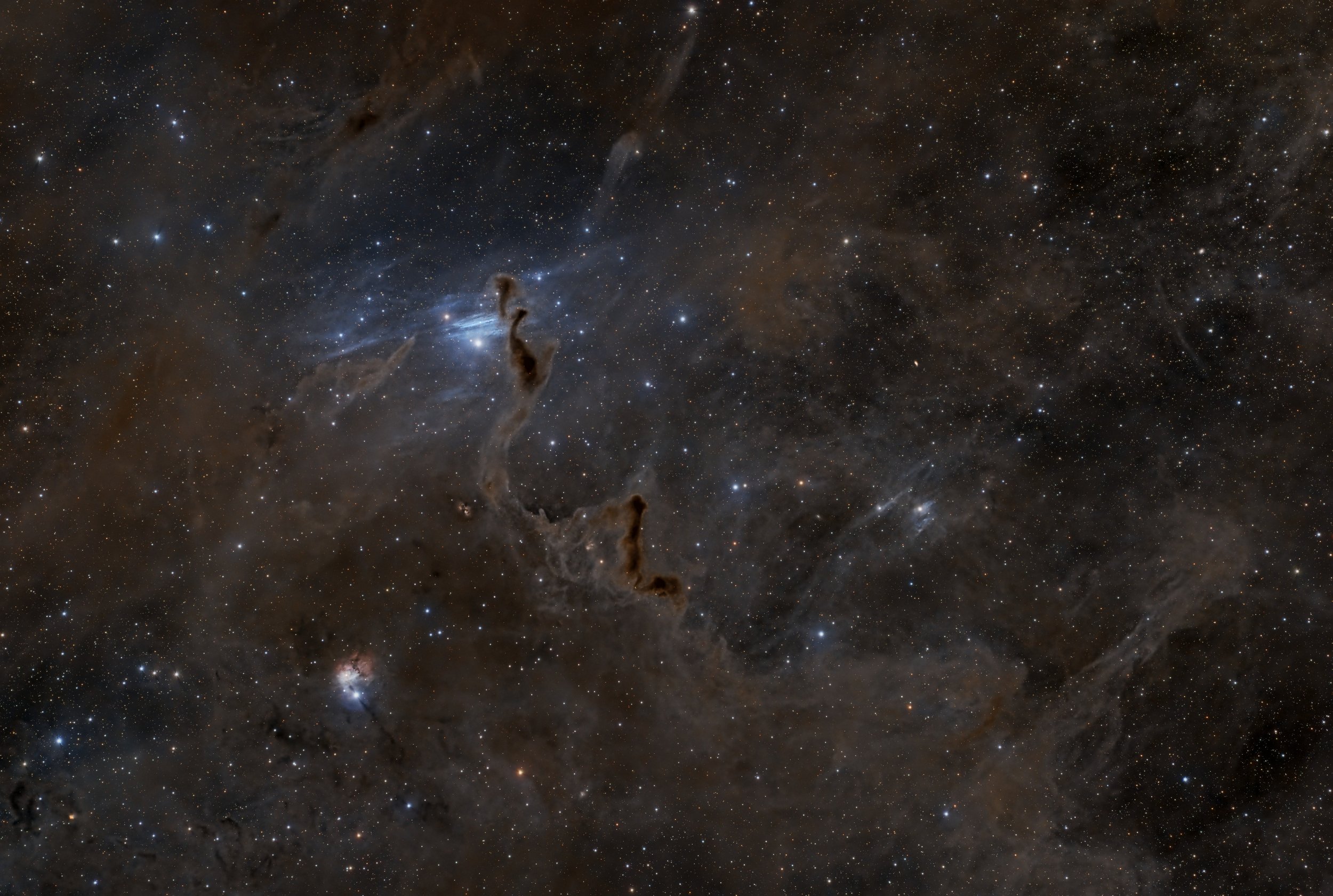
The helping hand nebula
This cosmic expanse includes LDN 1355, LDN 1357, LDN 1358, as well as Van den Bergh (VdB) 7 and VdB 9.
LDN 1355, LDN 1357, and LDN 1358 are dark nebulae, consisting of dense interstellar dust that obscures the background starlight. In contrast, VdB 7 and VdB 9 are reflection nebulae. These nebulae do not emit their own light but instead reflect the light of nearby stars, illuminating the surrounding gas and dust.
The presence of these dark and reflection nebulae in the vicinity of the Helping Hand Nebula adds further complexity and beauty to the cosmic landscape, providing astronomers with a rich field for exploration and study of the interstellar medium.
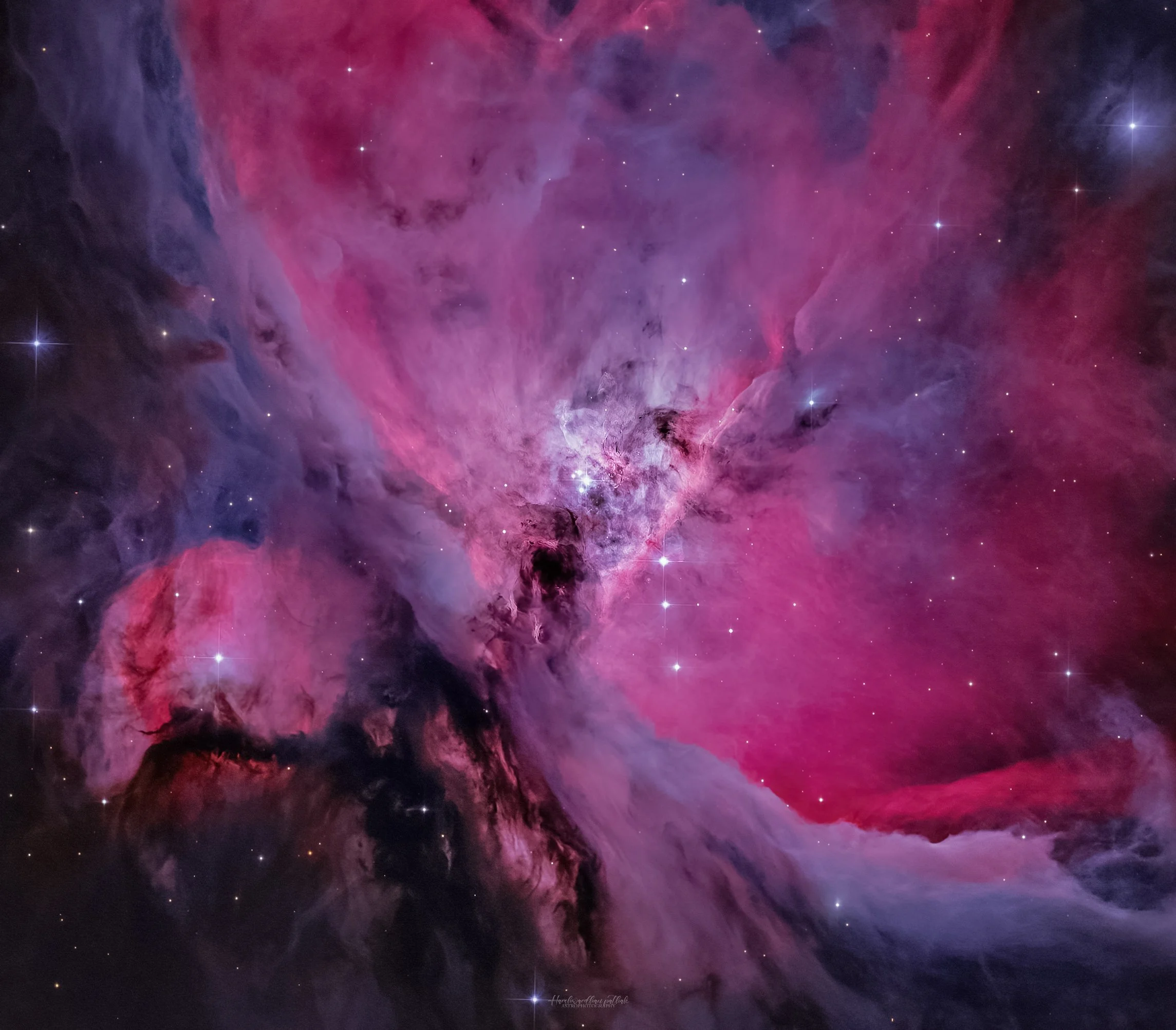
Core Of Orion Nebula
This image offers an intimate view into the core of the Orion Nebula, a stellar nursery located in the sword of the iconic Orion constellation. Captured through Planewave CDK24 and FLI PL 9000 ccd camera, the image reveals a tapestry of luminous gas and dust, illuminated by the energetic radiation of newborn stars. At the heart of this celestial forge, the Trapezium Cluster, a grouping of hot, massive stars, dominates the scene, sculpting the surrounding nebula with their intense stellar winds and radiation. The intricate details captured in this image not only showcase the breathtaking beauty of the Orion Nebula but also provide astronomers with valuable insights into the processes of star formation and the dynamic interplay of young stellar systems.

Solar disk movement
In this dual-image sequence captured through TS 80 ED F/7, Lunt 1.25" Solar wedge, Baader Solar Continuum, Baader UV/IR Cut, used to observe the discernible movement of the solar disk over a span of two days. The first image serves as a celestial timestamp, capturing the solar features at the beginning of this brief period, while the second image, taken 48 hours later, provides a snapshot of the Sun's altered landscape. Notable shifts in sunspot positions and prominence activities become apparent, offering a tangible illustration of the Sun's rotational dynamics. This observational study not only showcases the immediate changes on the solar surface but also presents an opportunity for solar physicists to analyze the Sun's rotational patterns and magnetic field evolution within this concise timeframe
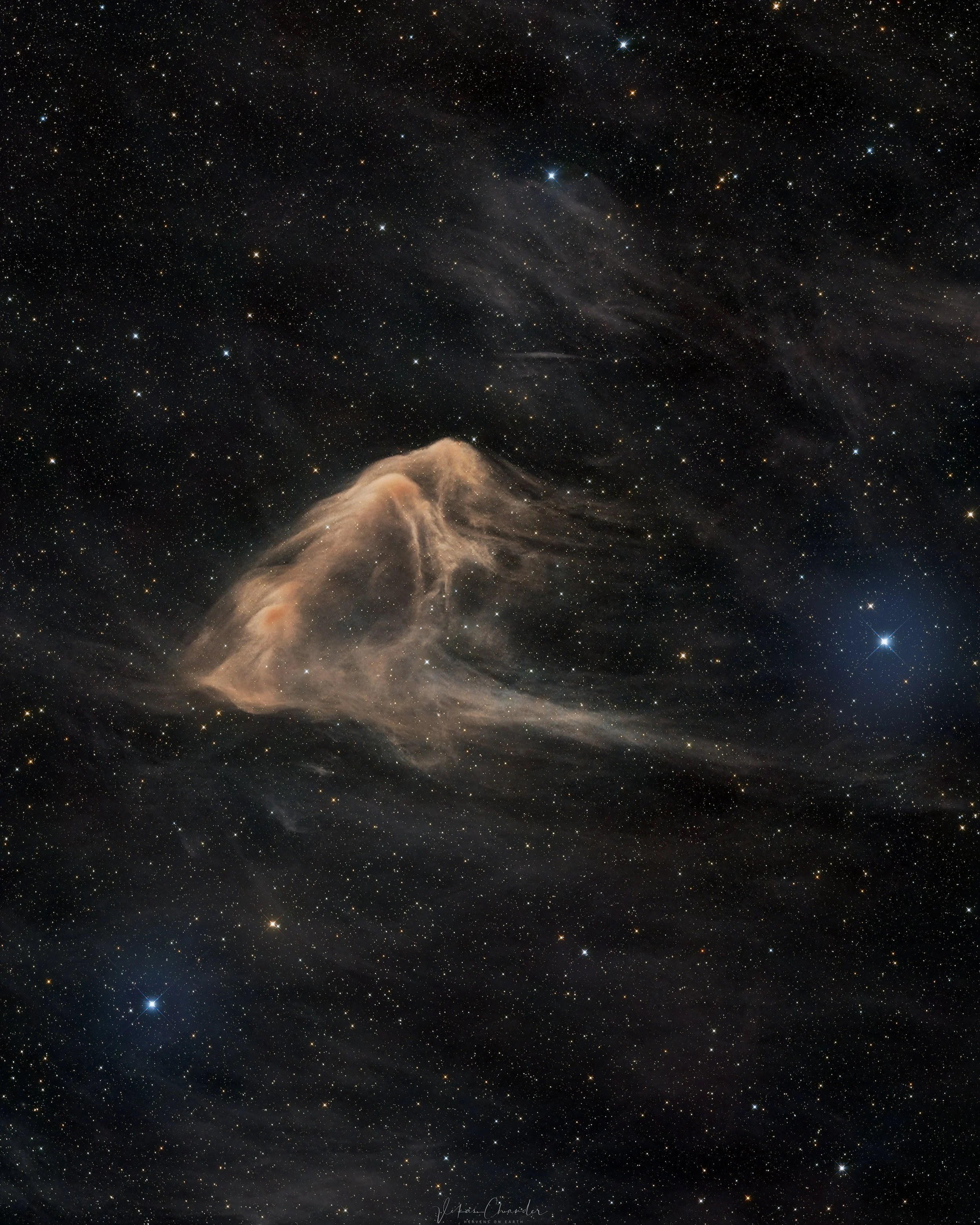
The Sting Ray Nebula
The Sting Ray Nebula, also known as Hen 3-1357, is a young planetary nebula located in the direction of the southern constellation Ara. What makes this celestial wonder particularly intriguing is its unique shape, resembling the graceful wings of a stingray. Formed from the outer layers of a dying star that has shed its material into space, the nebula showcases intricate patterns of ionized gas and dust, illuminated by the central, hot remnant of the star. The Sting Ray Nebula is relatively young on astronomical timescales, providing astronomers with a valuable opportunity to study the early stages of planetary nebula formation. Its captivating structure and youthful appearance make it a compelling subject for amateur astronomers and a source of scientific fascination in the exploration of stellar evolution.
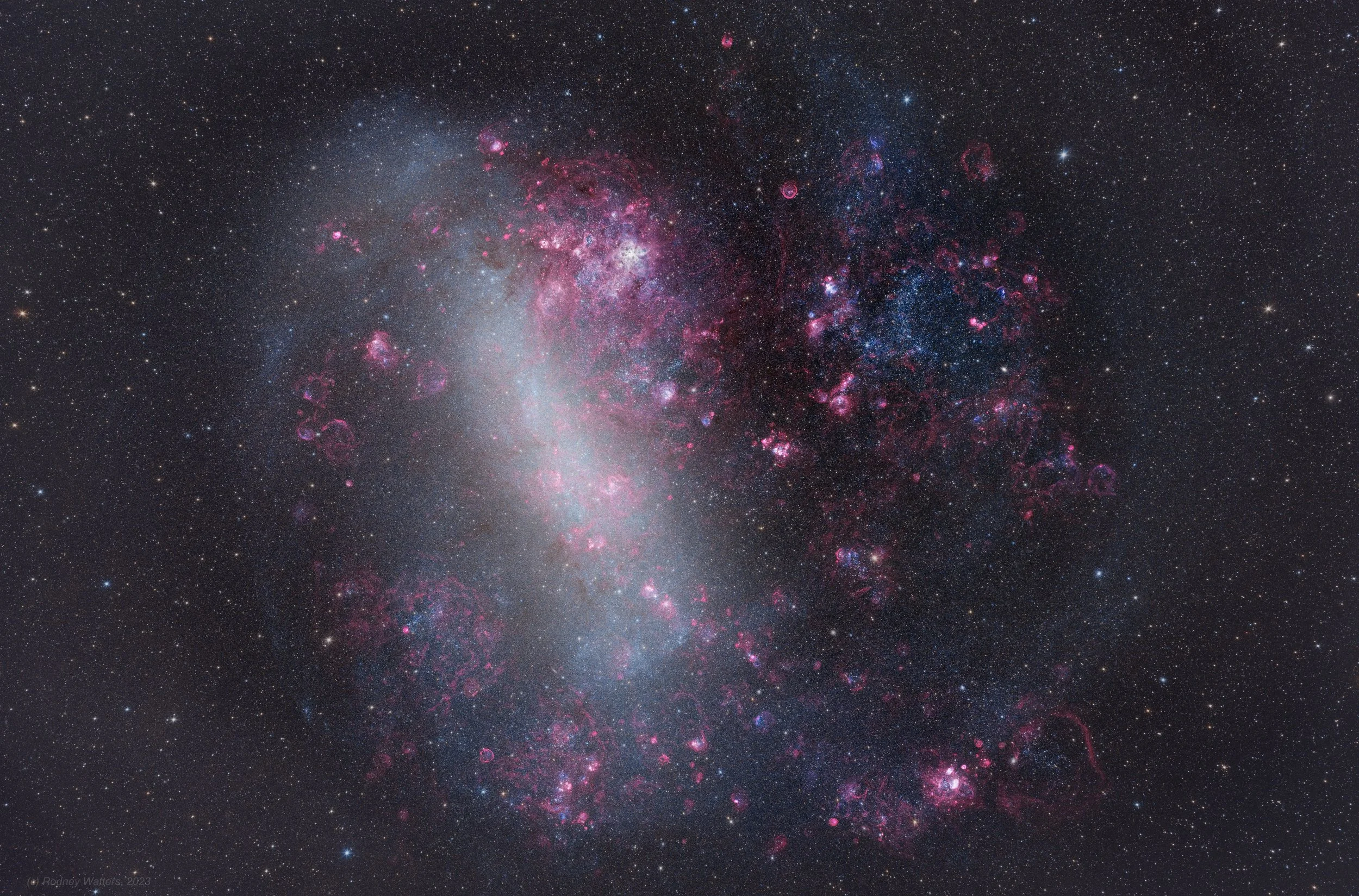
Large Magellanic Cloud - RGB_Ha
In this captivating snapshot of the Large Magellanic Cloud (LMC), one of our Milky Way's neighboring galaxies, we're offered an amateur astronomer's perspective on the cosmic tapestry. The image, featuring a blend of red, green, blue, and hydrogen-alpha filters, unveils the intricate dance of stars and gas clouds within the LMC. Vibrant hues highlight the stellar life cycle, with older stars and dusty regions appearing in reds, and younger, hotter stars in blues and greens. This image provides a unique view of the LMC's celestial wonders, inviting us to appreciate the beauty of our galactic neighbor through the lens of dedicated stargazers.