
AAPOD2 Image Archives
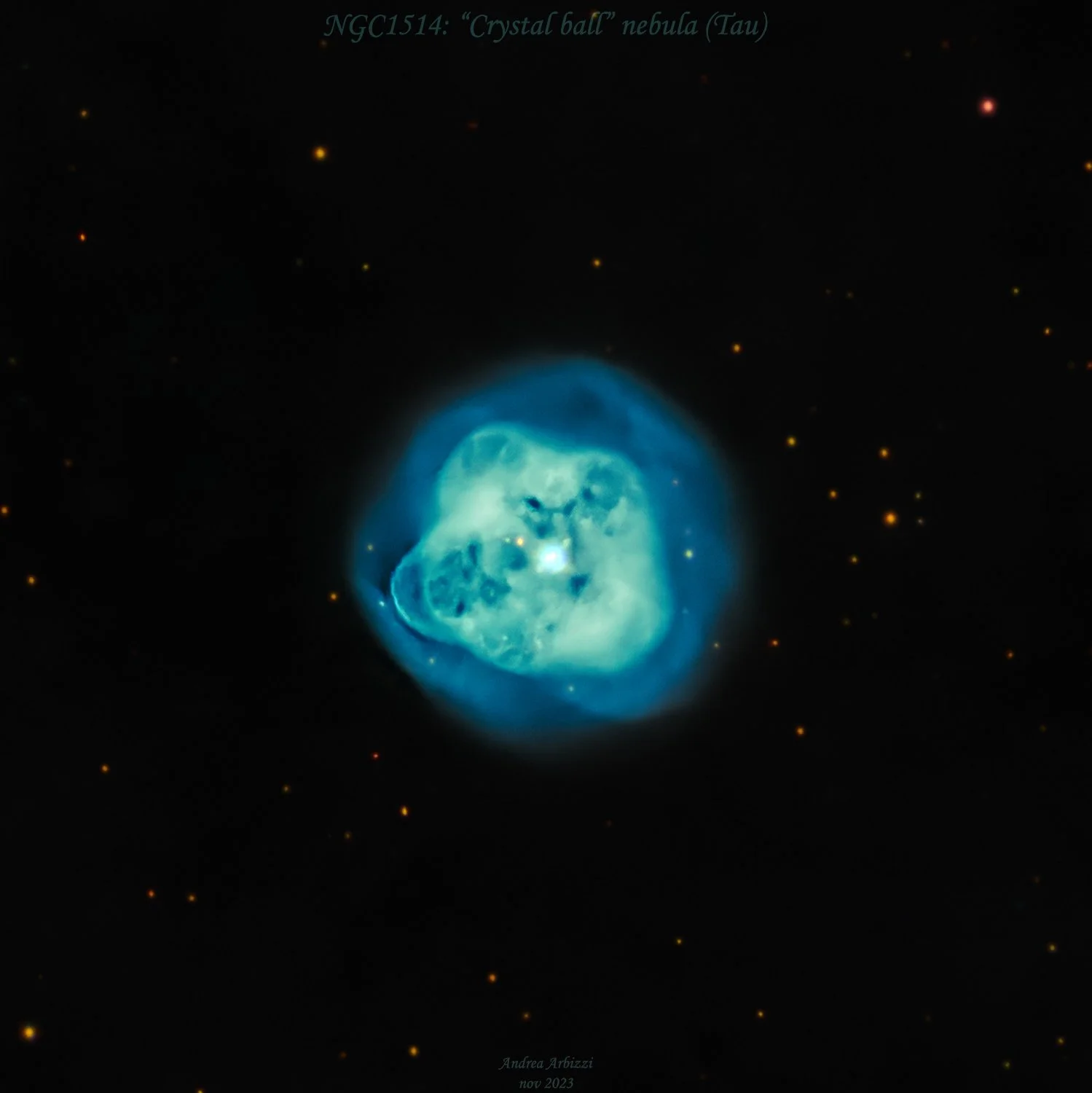
"Crystal Ball" nebula: AKA NGC1514
NGC 1514, located in the constellation Taurus, is a planetary nebula distinguished by its intricate and captivating structure. Also known as the "Crystal Ball Nebula," it was discovered by William Herschel in 1790. The nebula is formed from the outer layers of a dying star expelled into space, creating a visually striking and complex cosmic display. At the heart of NGC 1514 lies a binary star system, contributing to the nebula's unique morphology. The interplay of ionized nitrogen, hydrogen, and oxygen within the nebula's composition adds to its visual allure, making NGC 1514 a fascinating subject for astronomical observation and study.
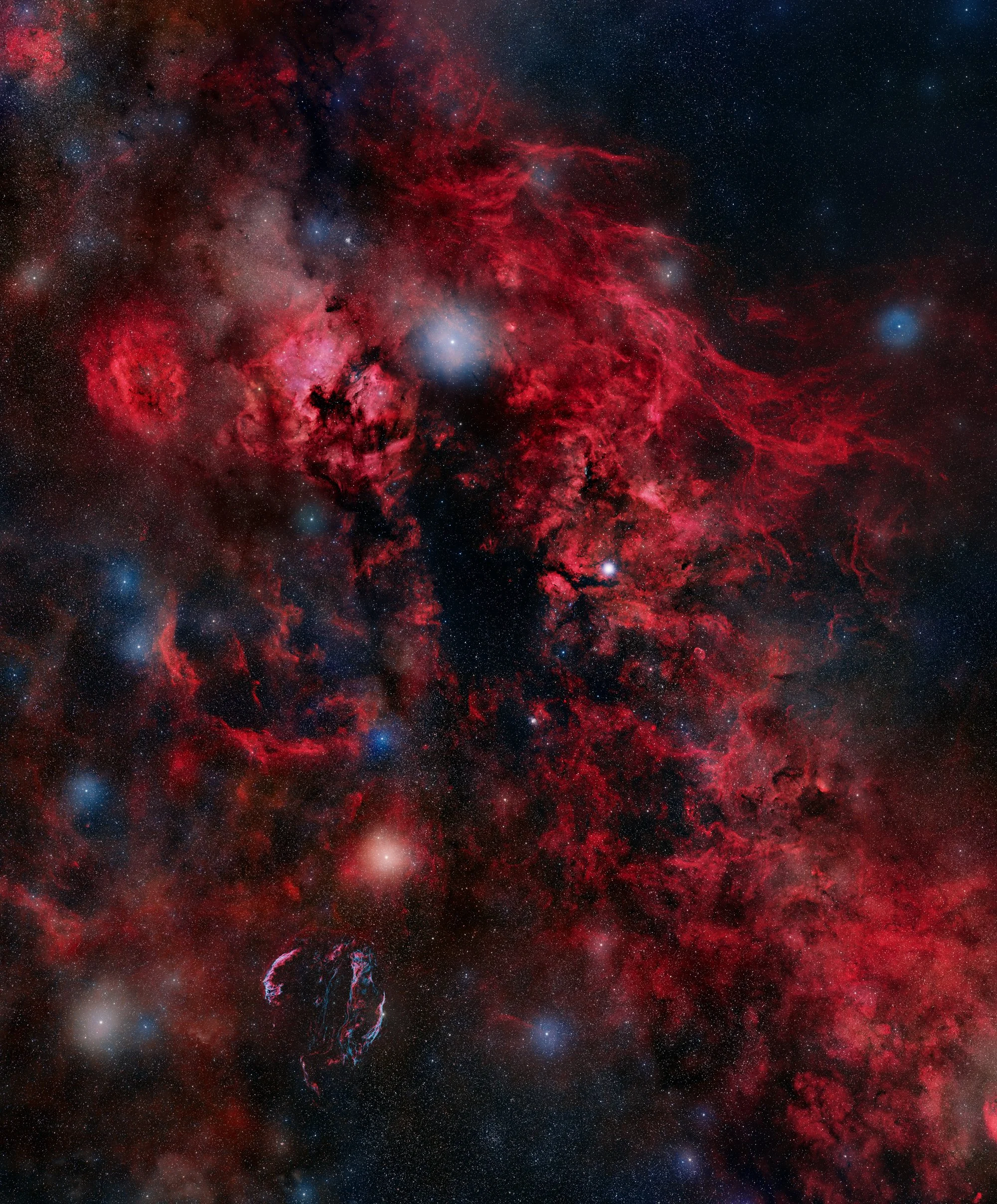
Cygnus
This expansive super wide-field image provides a breathtaking view of the Cygnus region, immersing viewers in the cosmic symphony of this celestial expanse. Crafted using luminance (L), red, green, blue (RGB), and hydrogen alpha (Ha) filters, this LRGBHa composition accentuates the diverse and intricate features that define Cygnus. The Veil Nebula, can also be seen (lower left ) a testament to a stellar explosion millennia ago, against the vast backdrop of the Cygnus constellation.
The Ha data enriches the image, unveiling the subtle glow of ionized hydrogen amidst the stellar tapestry. The RGB channels bring to life the natural hues of stars and interstellar dust, creating a vibrant and captivating panorama that extends far beyond the immediate vicinity of the Veil Nebula. The Cygnus region takes center stage, with its prominent stars, dark nebulae, and cosmic clouds weaving together in a harmonious display.
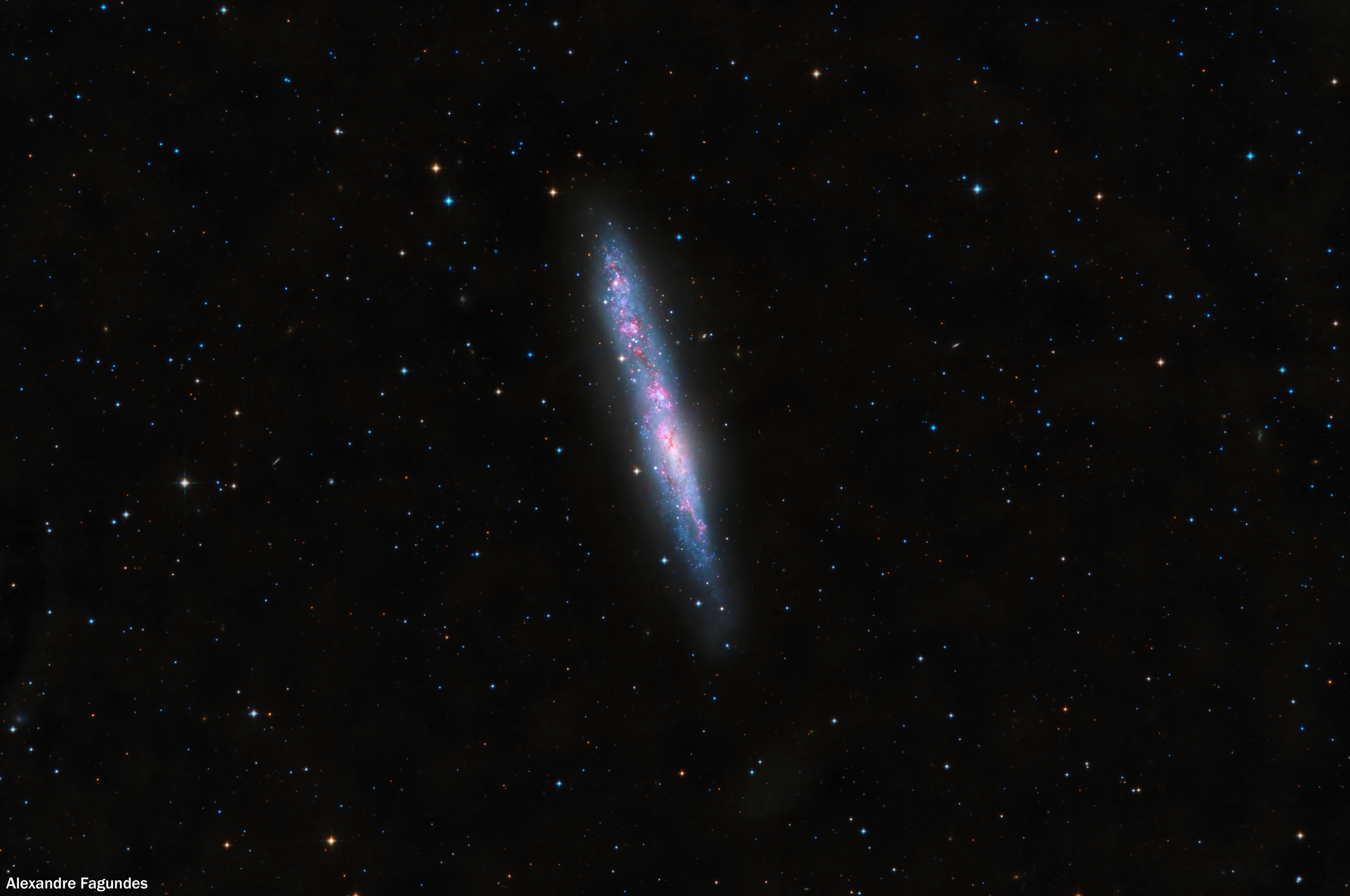
NGC 55 in LHaRGB
Situated in the Sculptor constellation, NGC 55 boasts a rich scientific history, having played a crucial role in advancing our understanding of galactic evolution. Notably, it is one of the nearest galaxies beyond the Local Group, providing astronomers with a unique opportunity to study its features in greater detail. As we explore this galactic masterpiece, NGC 55 emerges not only as a captivating subject for scientific inquiry but also as a key player in the ongoing narrative of cosmic exploration.
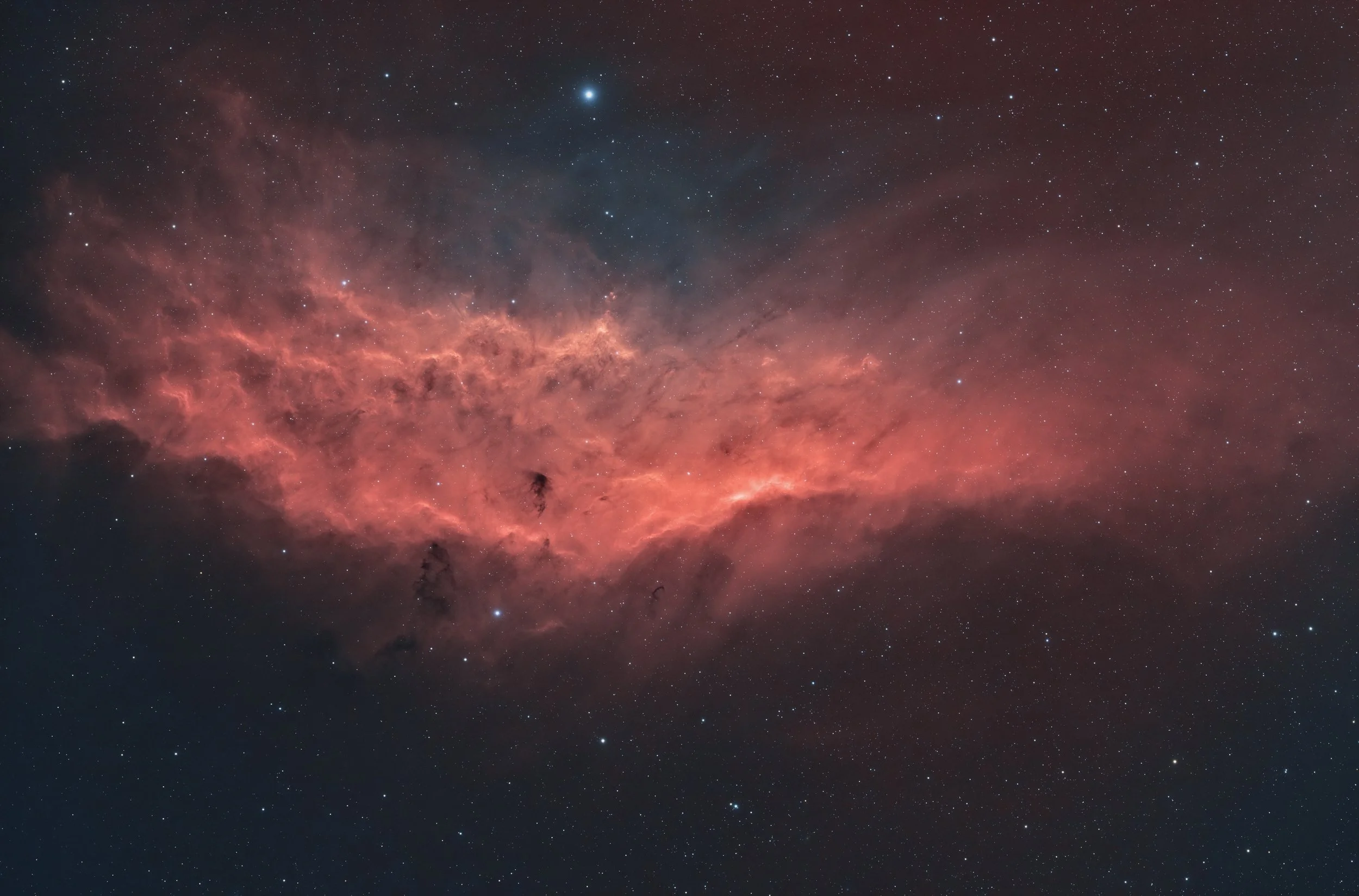
Image Title: Perseus Star Cradle
This bi-color image of the California Nebula is produced by combining data from two specific wavelengths: Hydrogen Alpha (Ha) and doubly ionized Oxygen (OIII). The red hues represent areas rich in ionized hydrogen (Ha emissions), indicative of regions with active star formation. The bluish-green tones correspond to OIII emissions, revealing areas with doubly ionized oxygen. This data aids astronomers in studying the nebula's chemical composition, ionization processes, and the influence of massive stars on its structure. The application of Ha and OIII imaging allows for a more detailed understanding of the dynamic astrophysical processes at play within this interstellar cloud located in the Perseus Arm of our Milky Way galaxy.

Horsehead Nebula (HaRGB)
In this HaRGB composite image, the Horsehead Nebula is depicted through a lens that combines data from Hydrogen Alpha, Red, Green, and Blue channels. This scientific rendering unveils essential details of the nebula's structure and composition. The hydrogen alpha emissions, represented in red, provide insight into the regions of ionized hydrogen gas, often associated with areas of intense star formation. Meanwhile, the RGB channels offer a glimpse into the distribution of dust and gas, showcasing the interplay of light and matter in our galactic neighborhood. The Horsehead Nebula, a dark nebula silhouetted against a background of glowing hydrogen, serves as a natural laboratory for studying the intricacies of cosmic evolution and the processes shaping stellar birth and development within our Milky Way.
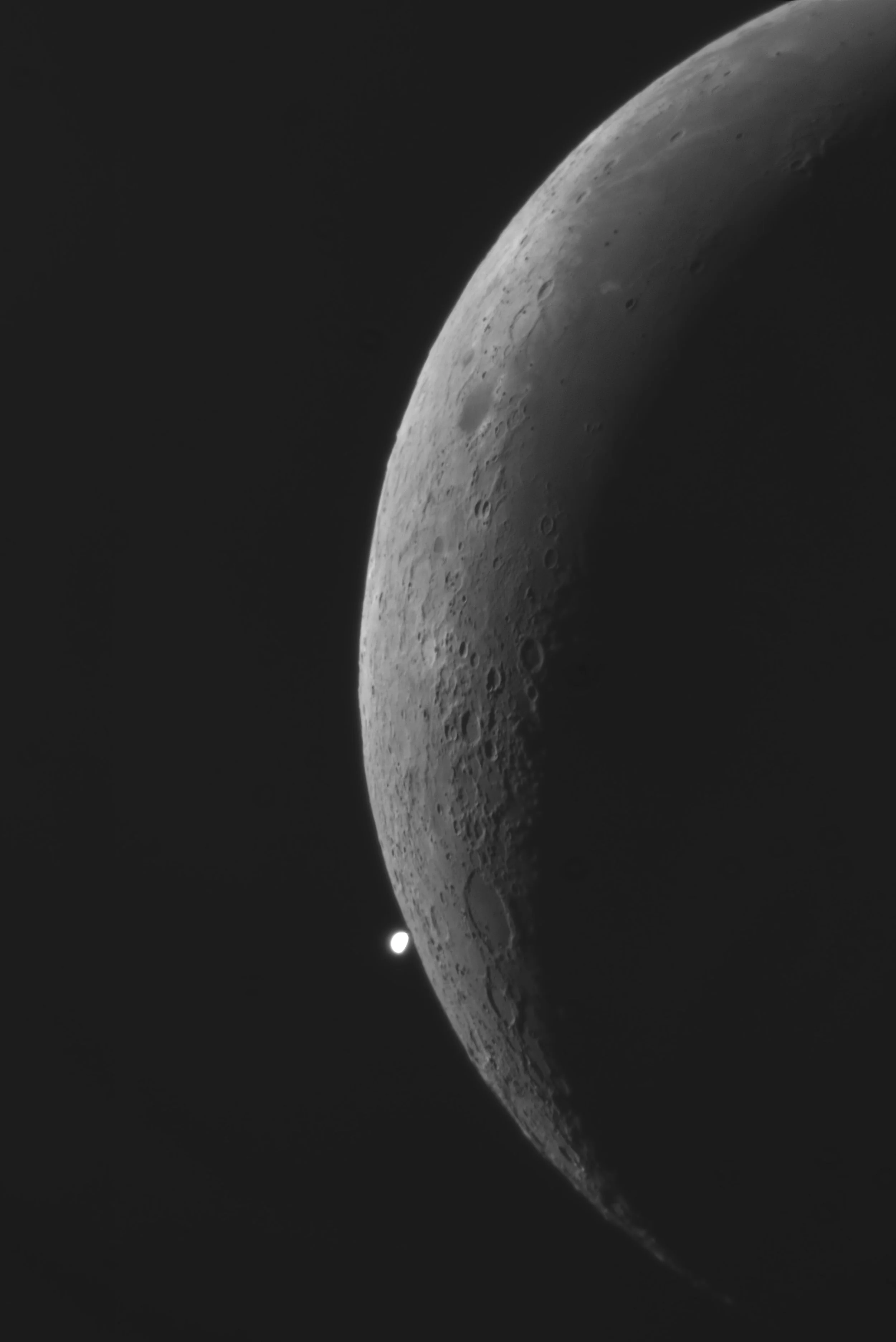
Conjunction of the Moon and Venus
The crescent Moon delicately partners with the radiant brilliance of Venus, creating a captivating scene against the dark canvas of space. Illuminated by the soft glow of moonlight, this celestial rendezvous not only showcases the celestial bodies' luminous beauty but also highlights the intricate dynamics of their gravitational interplay. Such astronomical phenomena serve as a reminder of the celestial wonders that unfold regularly above, inviting us to marvel at the harmonious dance of celestial neighbors in our night sky.
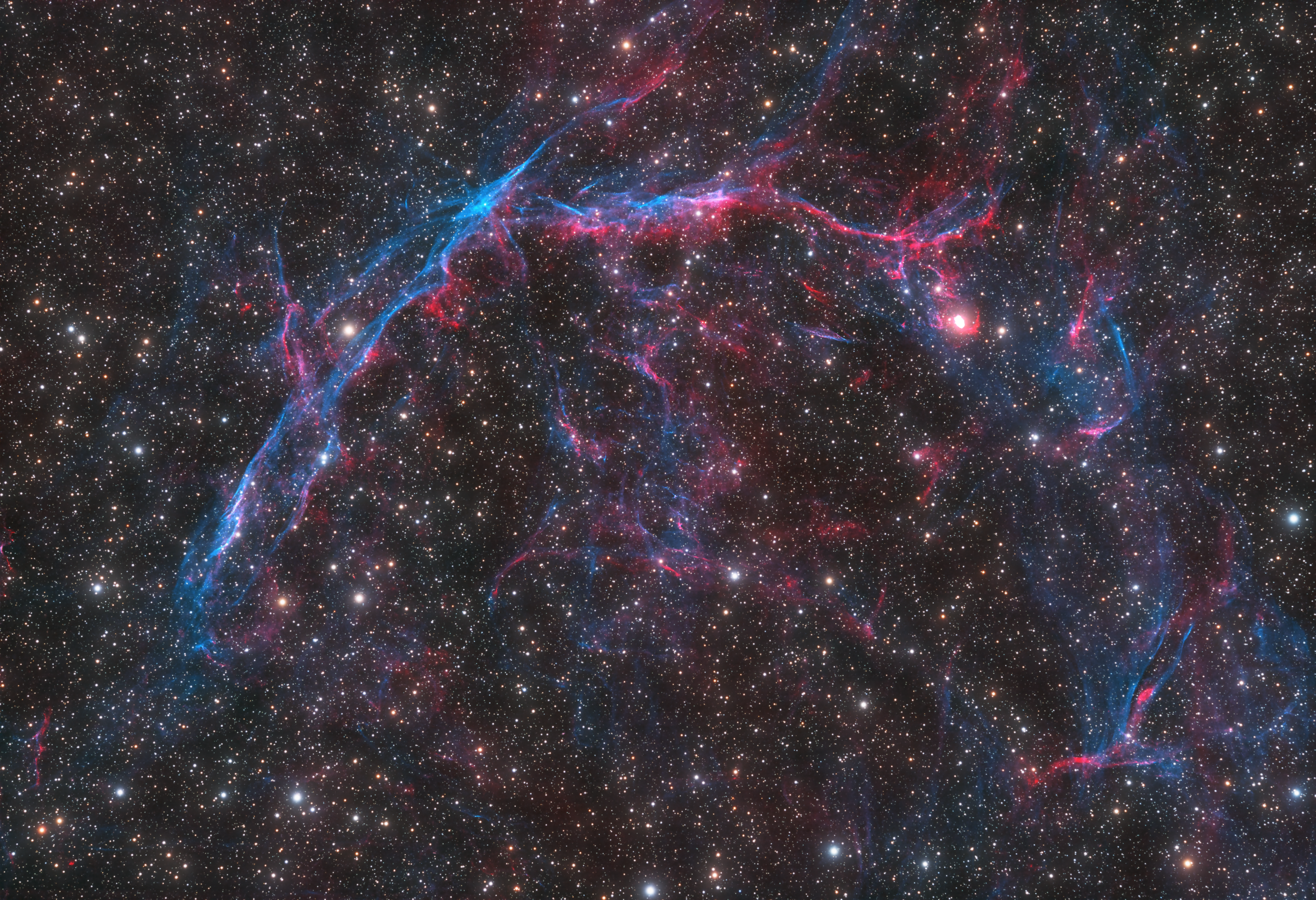
CTA 1
In the vast canvas of the cosmos, CTa-1 emerges as a captivating stellar composition, inviting us to explore the wonders hidden in the depths of space. This celestial entity, nestled in the astral realms, unfolds its cosmic dance, captivating astronomers and stargazers with its intricate interplay of light and shadow. While the specifics of CTa-1 may elude casual observers, its radiant display serves as a testament to the mesmerizing beauty concealed within the cosmic tapestry. As we peer into the celestial depths, CTa-1 reminds us that the universe, with its countless narratives, continues to unveil its mysteries, offering a glimpse into the poetic allure that adorns the night sky.
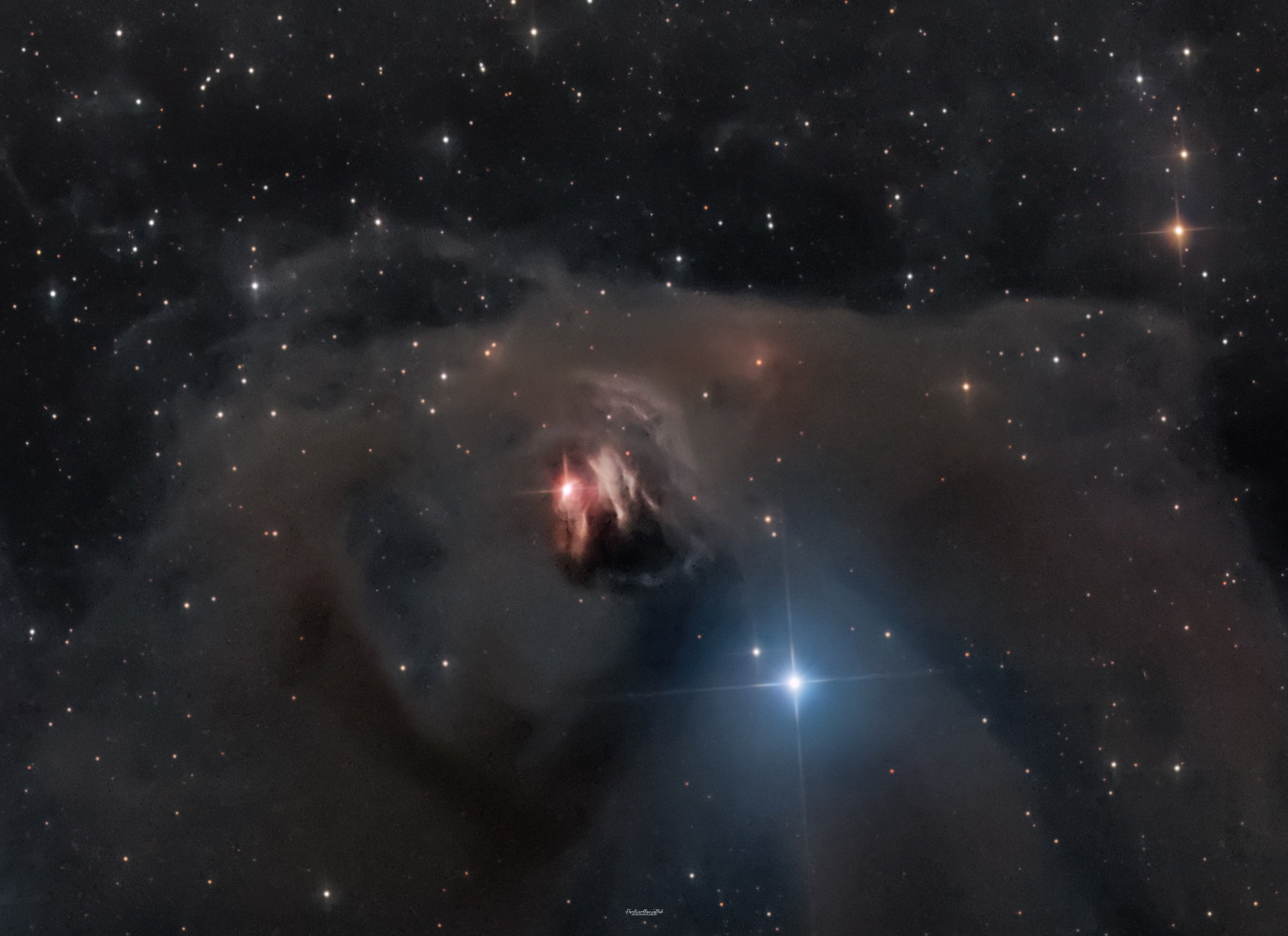
Hind's Variable Nebula
Image Description and Details: least photographed object.The Hind Nebula(Herbig-Haro object), prototypical example is the variable star T Tauri, visible as the bright orange star near the image center. The orange star centered in this remarkable telescopic sky view is T Tauri, prototype of the class of T Tauri variable stars. Surrounding T Tauri is a dusty yellow cosmic cloud named the Hind's Variable Nebula (NGC 1555/1554).
Total Exposure: 9Hours 45minutes
Equipment Details: Telescope: Planewave CDK24
Camera: QHY 600M Pro
Filters: Astrodon LRGB
Mount: Mathis MI-1000/1250
Copyright: Credit & Copywrite: Harshwardhan Pathak/Telescope live

The Core of the Lagoon Nebula
Image Description and Details: The Lagoon Nebula is a giant interstellar cloud in the constellation Sagittarius. It is classified as an emission nebula and as an HII region.
It was discovered by Giovanni Hodierna before 1654 and is one of only two star-forming nebulae faintly visible to the eye from mid-northern latitudes. Seen with binoculars, it appears as a distinct cloud-like patch with a definite core. Within the nebula is the open cluster NGC 6530.
- Exposure: 6h55m.
- Acquisition: Image data acquired remotely using the Telescope Live CHI-1 telescope.
- Processing: PixInsight & Adobe Photoshop.
Equipment Details: - Optics: Planewave CDK24.
- Camera: QHY600M CMOS.
- Filters: Astrodon SHO.
Copyright: Credit & Copyright: Chris Willocks / Telescope Live.
Name: Christopher Willocks
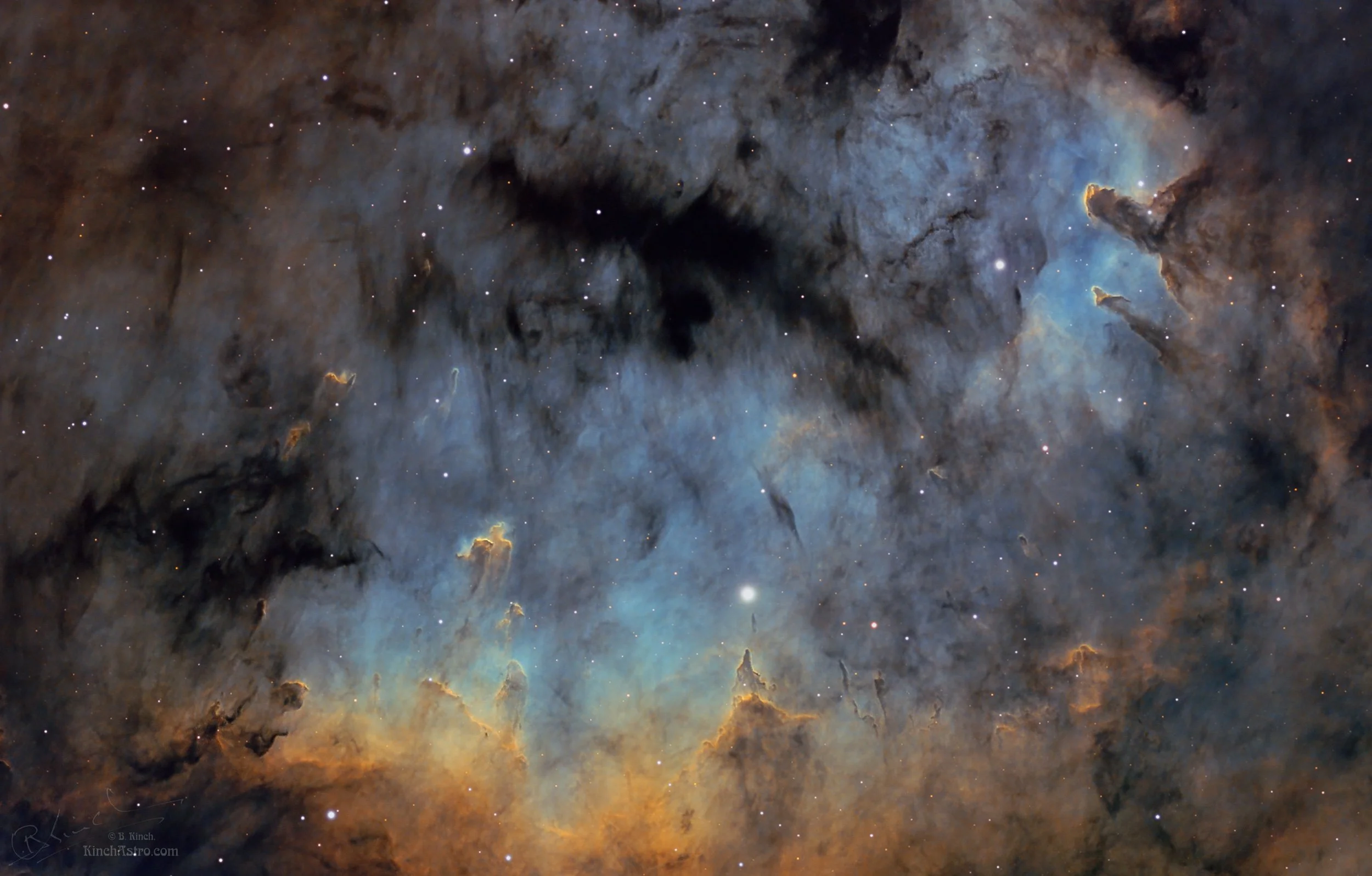
Pillars of NGC 7822
Image Description and Details: NGC 7822 is a young star forming complex in the constellation of Cepheus. The complex encompasses the emission region designated Sharpless 171, and the young cluster of stars named Berkeley 59. The complex is believed to be some 800–1000 pc distant with the younger components aged no more than a few million years. The complex also includes one of the hottest stars discovered within 1 kpc of the Sun, namely BD+66 1673, which is an eclipsing binary system consisting of an O5V that exhibits a surface temperature of nearly 45,000 K and a luminosity about 100,000 times that of the Sun. The star is one of the primary sources illuminating the nebula and shaping the complex's famed pillars of creation-type formations
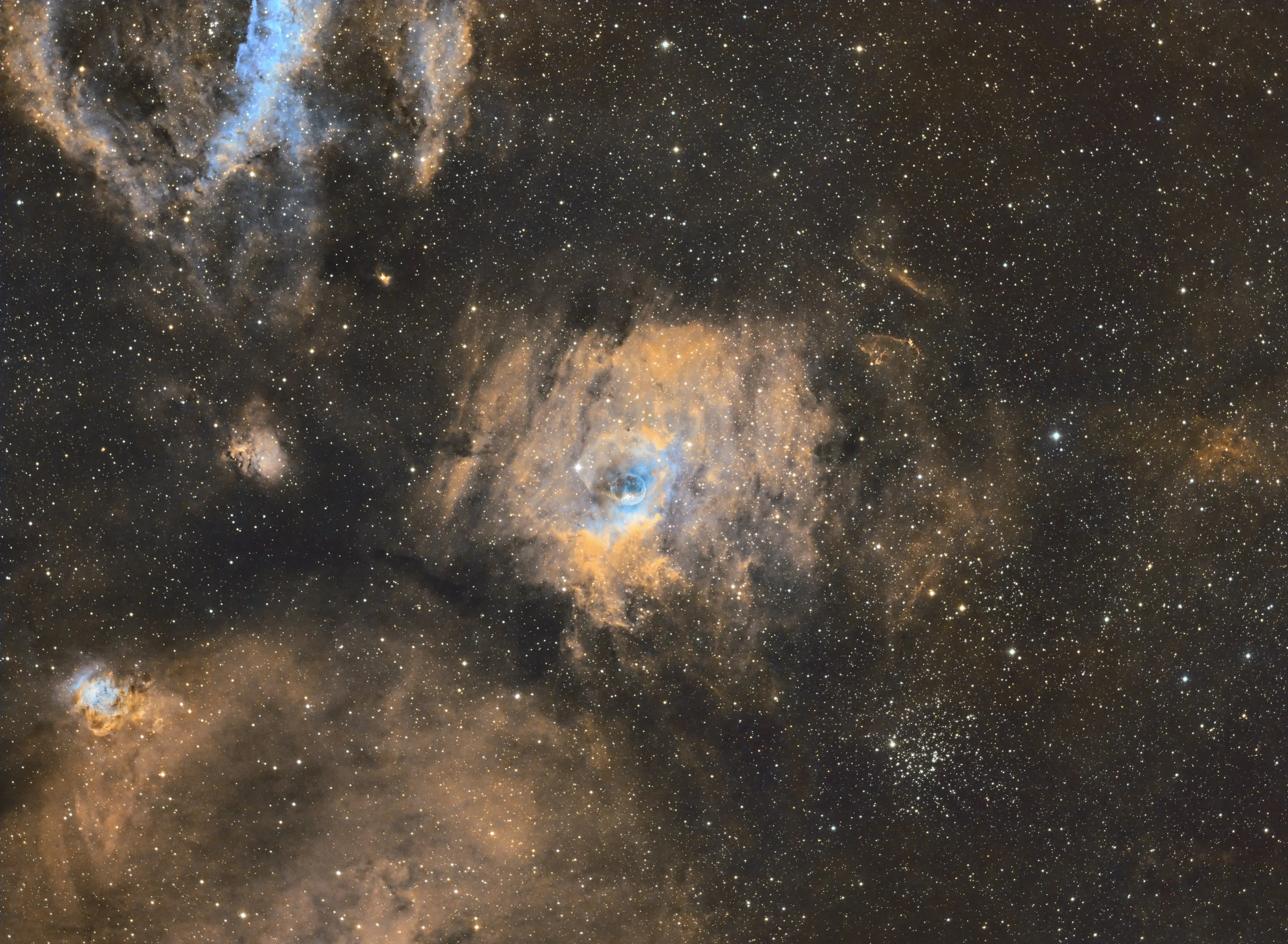
NGC 7635
NGC 7635, also known as the Bubble Nebula, is a striking emission nebula located in the constellation Cassiopeia. This cosmic beauty gets its name from the bubble-like structure created by the stellar wind from the massive, young, and luminous star at its center, SAO 20575. The intense radiation and powerful stellar winds from this central star interact with the surrounding interstellar medium, sculpting the nebula's delicate and intricate features.
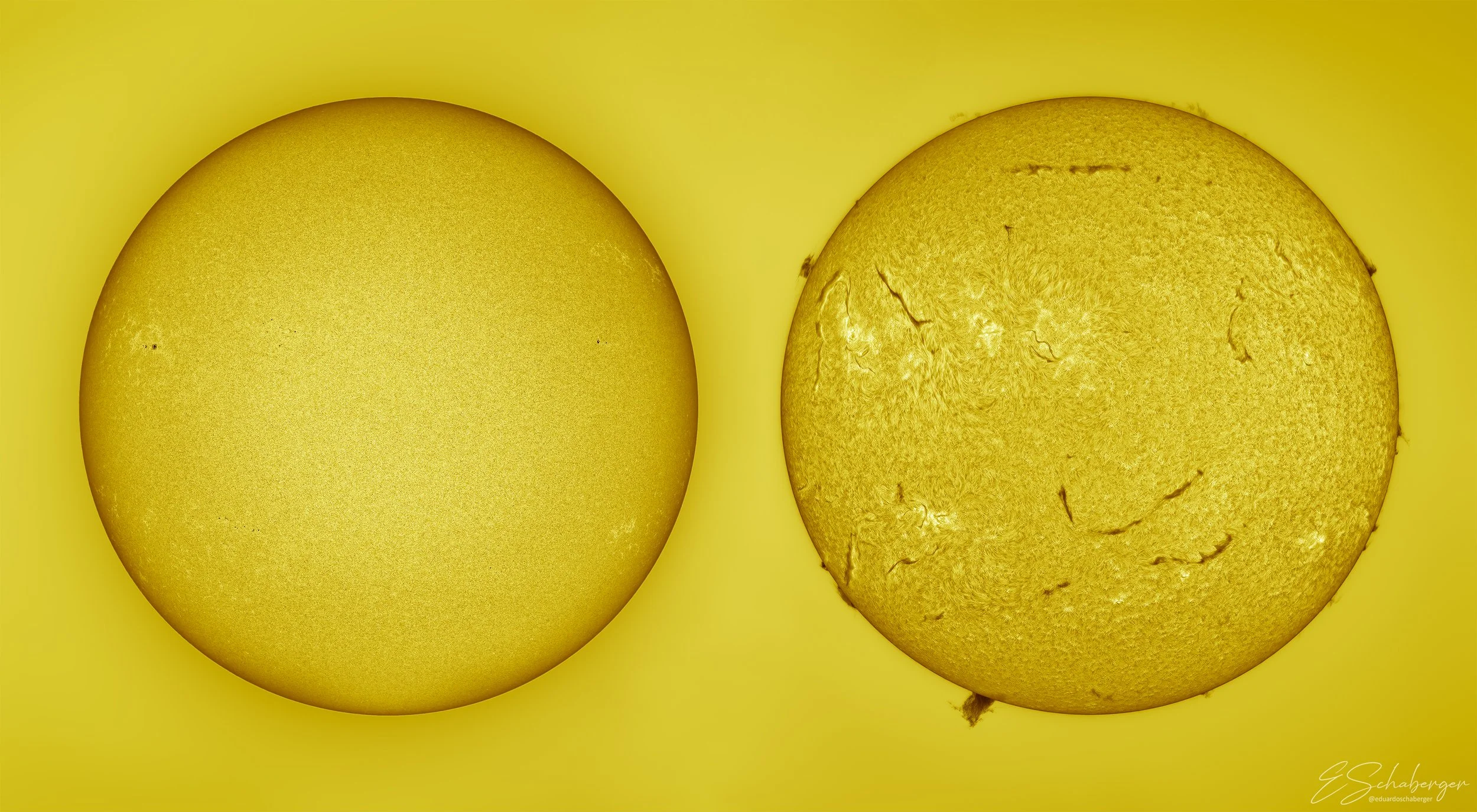
Small sunspots, large filaments (WL vs Ha)
In this composite view of the Sun, the image on the left, taken using a white light filter, provides a detailed look at the visible surface, or photosphere, revealing granular structures and sunspots that mark regions of complex magnetic activity. Sunspots are cooler areas created by strong magnetic fields inhibiting the transport of heat from the solar interior, appearing as dark blemishes on the solar surface.
On the right, the image captured with a Hydrogen-Alpha (Hα) filter unveils the chromosphere's dynamic features, showcasing solar prominences that tower over the Sun's limb. These prominences, composed of cooler plasma suspended in magnetic loops, offer a captivating glimpse into the intricate magnetic phenomena occurring on the solar surface.
Solar prominences can erupt in dramatic events known as solar flares, releasing intense bursts of energy and charged particles into space. These flares, often accompanied by coronal mass ejections (CMEs), can have significant impacts on our space environment, potentially affecting satellite operations and terrestrial communication systems.
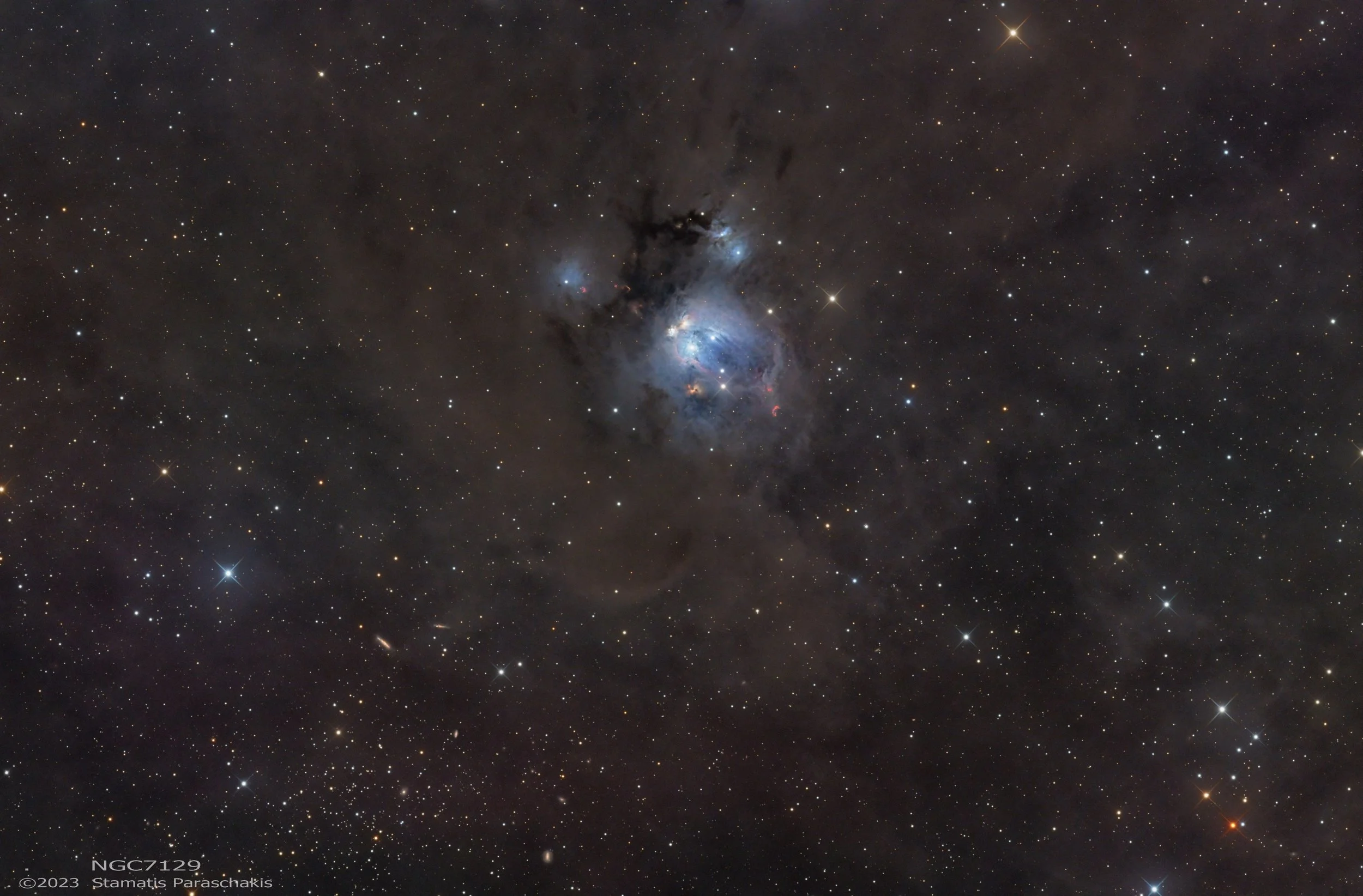
NGC7129
NGC 7129 is a reflection nebula located in the constellation Cepheus. This stellar nursery is known for its intricate and captivating structures, which are illuminated by the light of newly formed stars within its vicinity. The nebula's striking appearance is primarily due to the scattering of starlight by fine dust particles in the interstellar medium.
NGC 7129 offers astronomers a unique opportunity to study the process of star formation and the dynamics of young stellar clusters. By examining the properties of the stars within the nebula and analyzing its molecular composition, researchers can gain insights into the conditions and mechanisms that govern the birth and evolution of stars. The study of NGC 7129 contributes to our broader understanding of the fundamental processes that shape the formation of stars and planetary systems, shedding light on the intricate interplay between radiation, matter, and gravity in the cosmos.
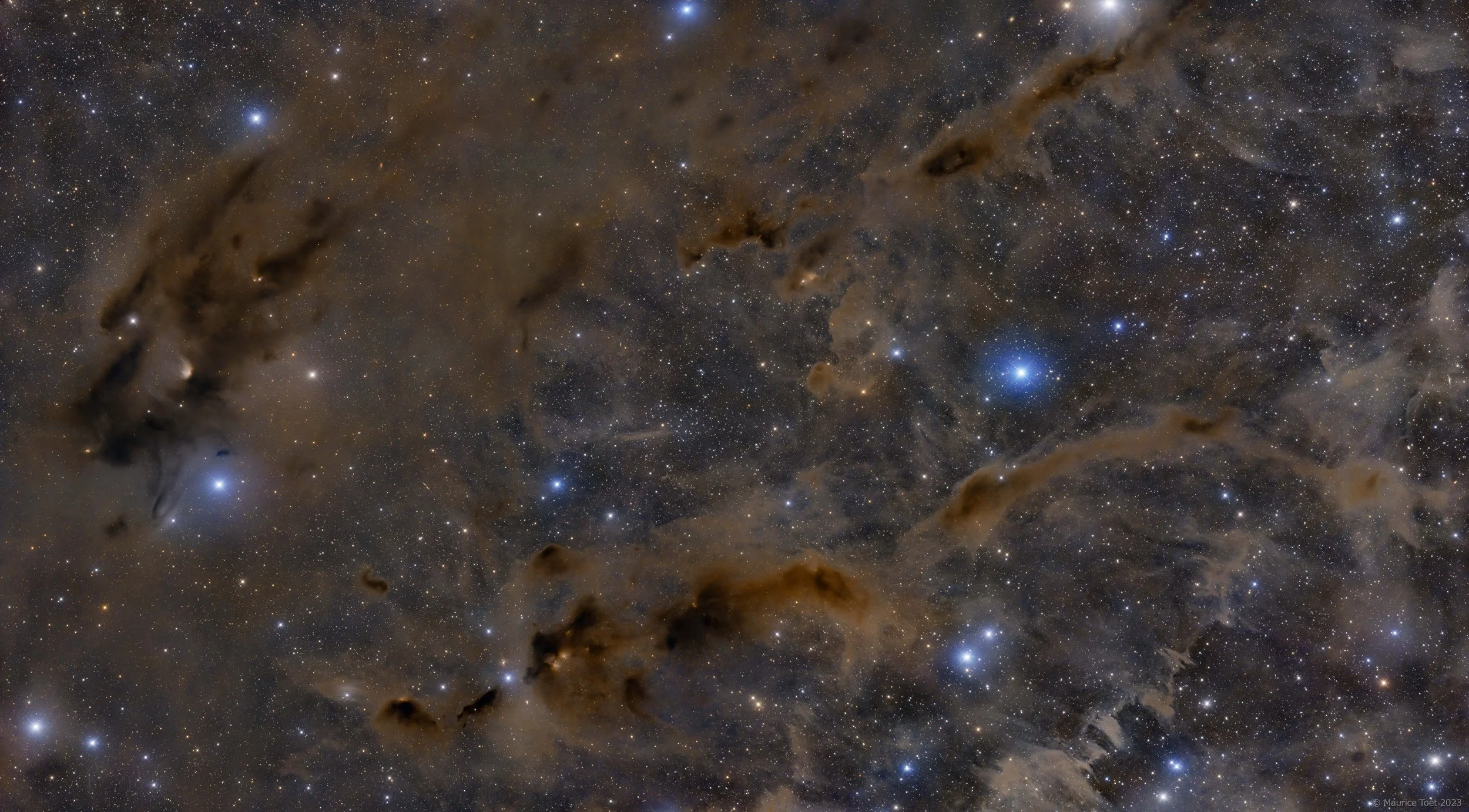
Taurus Molecular Cloud (TMC-1)
TMC-1, or the Taurus Molecular Cloud-1, is a dense interstellar cloud located in the constellation Taurus. This cold and dark molecular cloud is of particular interest to astronomers as it represents an environment where new stars may eventually form. TMC-1 is known for its rich abundance of molecular compounds, including carbon-bearing molecules such as carbon monoxide (CO) and carbon dioxide (CO2), as well as organic molecules like cyanopolyynes.
The study of TMC-1 provides valuable insights into the initial conditions and processes that govern star formation within molecular clouds. By analyzing the chemical composition and physical properties of TMC-1, researchers can better understand the intricate interplay between gravity, magnetic fields, and turbulence, which ultimately lead to the gravitational collapse and birth of new stars. TMC-1 serves as a natural laboratory for studying the early stages of stellar evolution and the complex chemistry that underlies the formation of planetary systems and the building blocks of life in the cosmos.
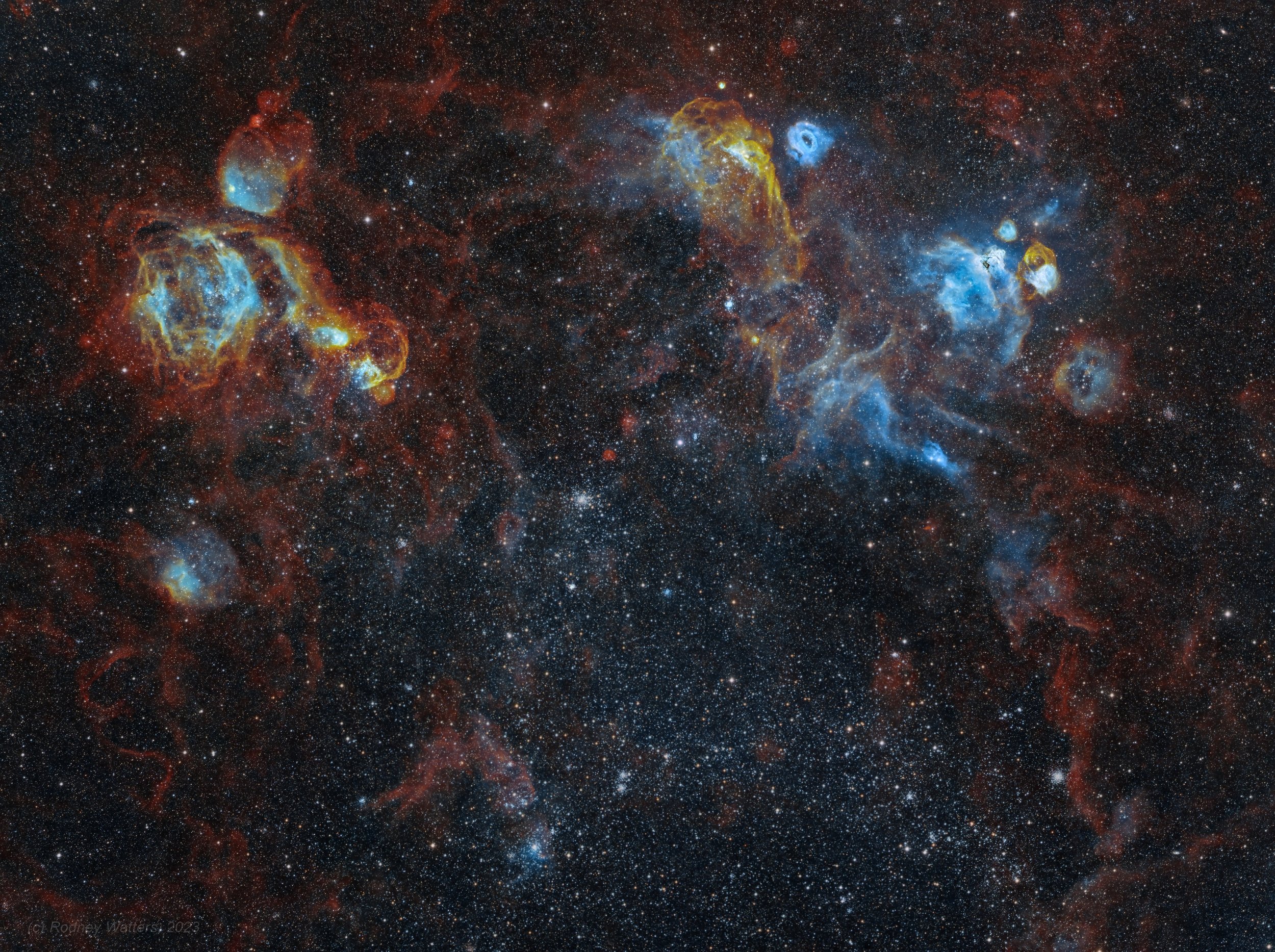
NGC 2004 et. al. Narrowband
NGC 2004 offers astronomers a unique opportunity to study the formation and evolution of stars in an environment characterized by intense stellar radiation and energetic outflows. By analyzing the properties of the stars within the cluster, researchers can gain insights into the processes of star formation, stellar evolution, and the dynamics of stellar populations in a region of active star formation. The study of NGC 2004 contributes to our broader understanding of the mechanisms governing the birth and development of stars in the diverse and dynamic cosmic landscapes of our universe.
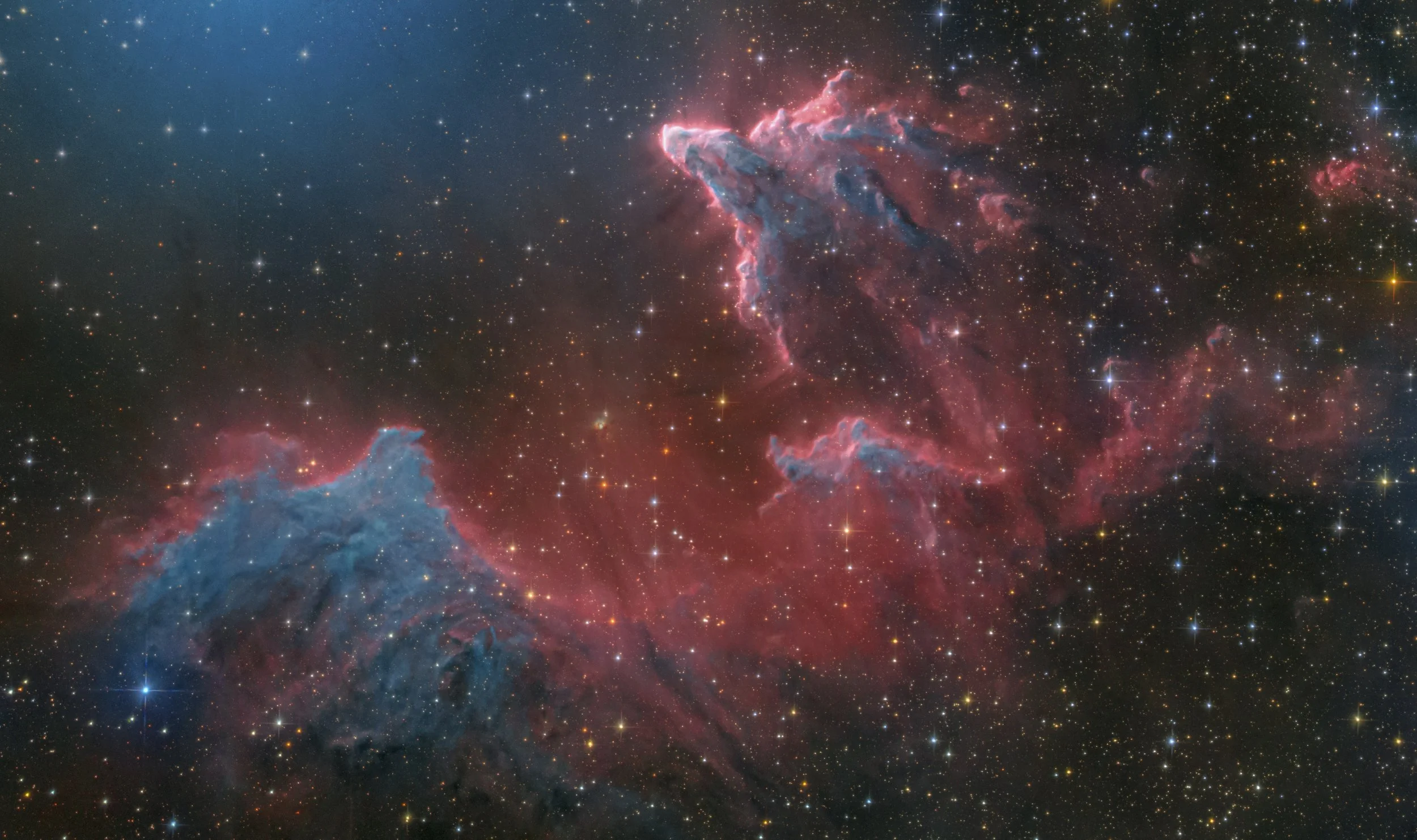
IC 59 and IC 63 - Ghost of Cassiopeia
IC 59 and IC 63, collectively known as the Ghost of Cassiopeia, are a pair of faint reflection nebulae situated in the constellation Cassiopeia. These nebulae are primarily illuminated by the light of Gamma Cassiopeiae, a variable star with a powerful stellar wind. IC 59 and IC 63 owe their ghostly appearance to the scattering of starlight by dust particles in the interstellar medium, giving them a wispy and ethereal aspect.
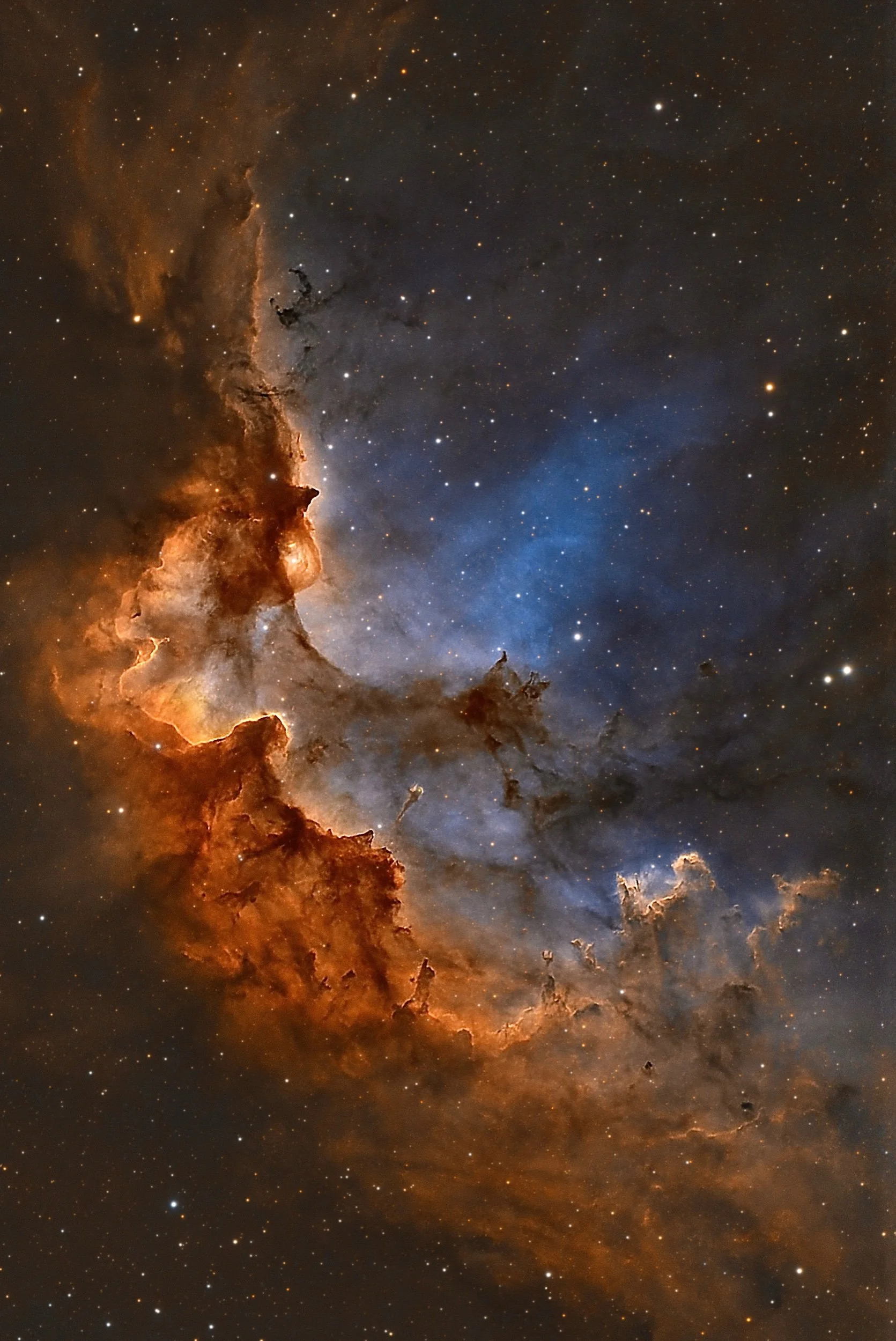
NGC 7380 - The Wizard Nebula
Image Description and Details: NGC 7380/ SH2 142 - The Wizard Nebula, is an open cluster of stars still embedded in the nebula out of which it formed. The stars are estimated to be about 4 million years old. The cluster is about 8,000 light years away in the constellation Cepheus.
Dusts in Cassiopeia
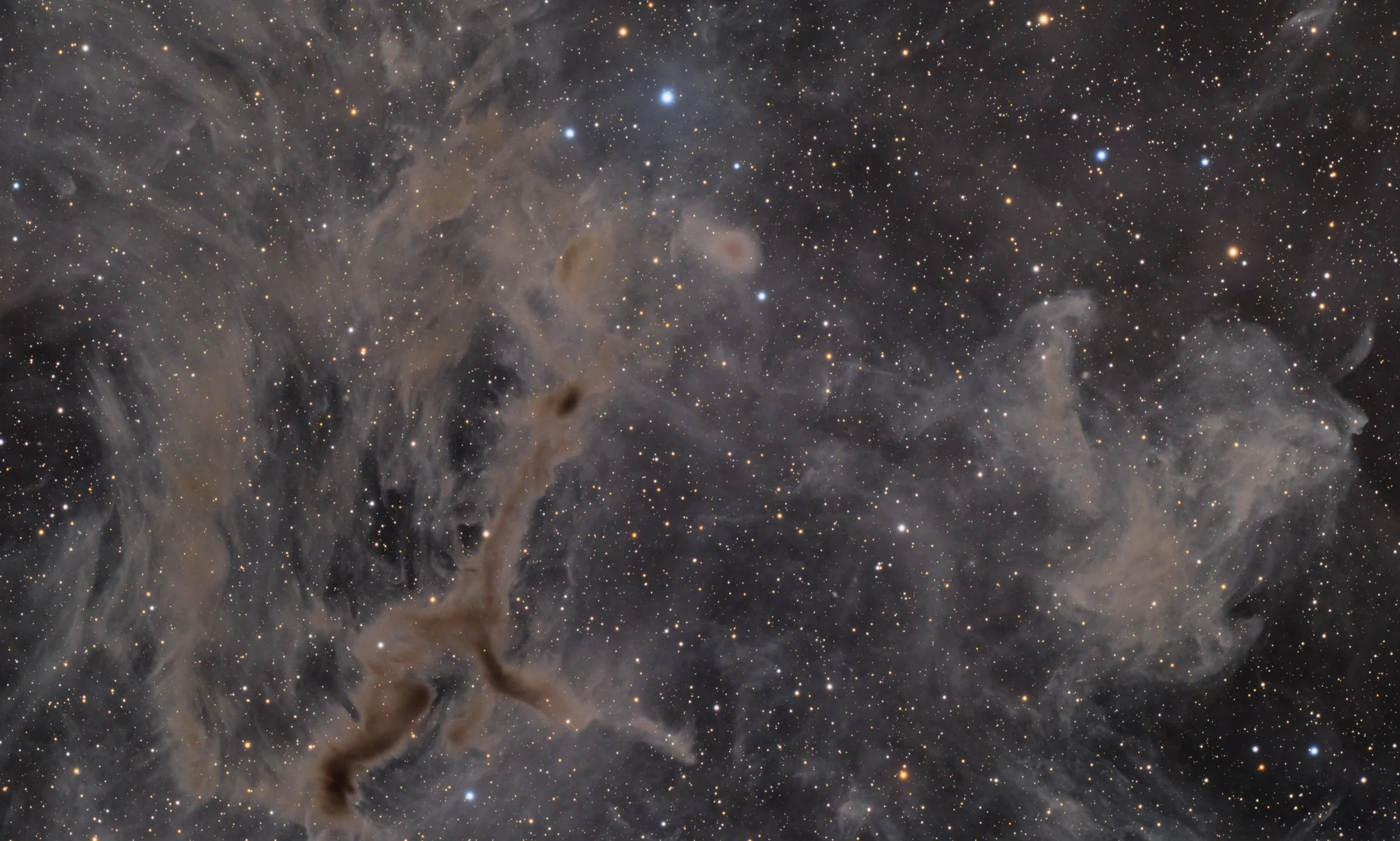
Image Description and Details: Southeast of the star Shedar, there is a vast molecular nebula area. LBN 603, LDN 1295, LDN1296, and TGU H809 are part of it and as well as others not shown. LBN603 is the 603rd object in the Lynds Bright Nebulae (LBN) Catalog, and the Lynds brightness scale of 1 (brightest) to 6 (dimmest) has this one at a 6. This was captured over a couple nights in October.

Partial Lunar Eclipse 28-29 October 2023
It was the last Lunar eclipse of the year and I tried to capture it successfully. As soon as it starts entering the umbral region, a dark shadow starts overlapping the moon and making it look like a "Bitten Biscuit." As the Umbral eclipse starts, the bands slowly turn orangish red and the shadow starts overtaking the brightness the Moon until it gets fully covered. The eclipse has no such effect on human beings as the rumours and superstitions roam around. The events of nature are meant to be enjoyed together.
SH2-119. The clamshell nebula
Location: Castillejar, Andalusia, Spain
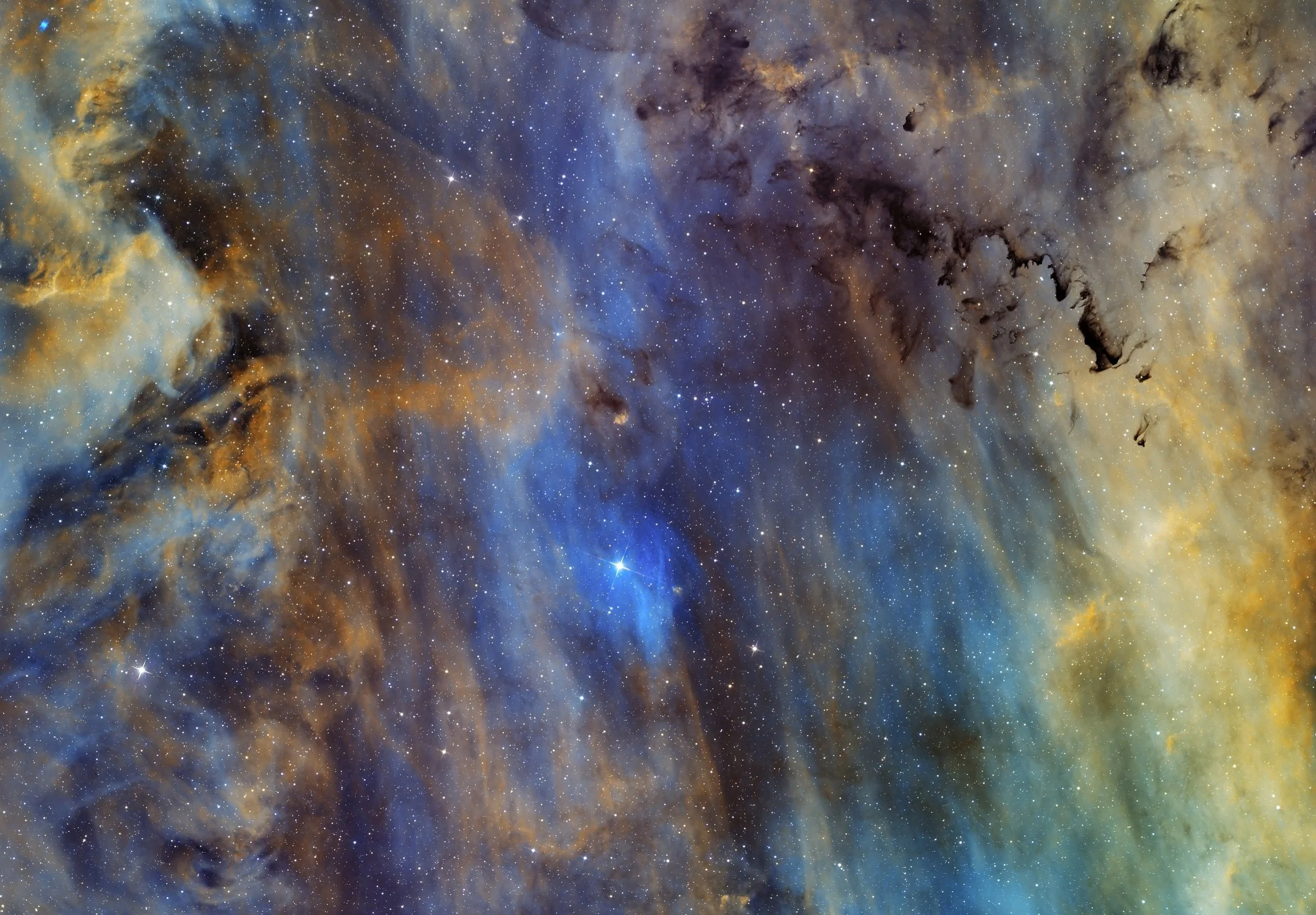
Image Description and Details: 2200 years ago, when the photons of light left this nebula to reach us, the Earth was definitely another place. The cosmic time machine, the telescope, this time was pointed towards the constellation Cygnus, more precisely towards Sh2-119. Gas and dust envelop the main star, 68-Cygni being mostly responsible for the ionization of the gas around it. This ionization makes the gases all colored at different wavelengths, from blue to green, passing through all shades of brown and orange. The dark nebula filaments above contrast strongly with both the glow of the nebula and the rich field full of stars in the background. These filaments are clouds containing mostly gas (hydrogen and helium) and a minimal fraction of dust (about 1%), responsible for the appearance of the cloud. These dusts, although minimal, absorb the light, making the nebula completely dark. Sh2-119 is a celestial signature of an ancient explosion that released gas and dust into the universe, forming new stars and planets. The silk effect of the nebula makes us think of a white colored pillow in a bed of stars, but, among that dust, stars and planets are forming in the most violent and destructive processes.