

AAPOD2 Image Archives

IC 5148 (Spare Tyre Nebula) Planetary Nebula
IC 5148, also known as the Spare Tyre Nebula, graces the cosmic stage in this captivating astrophotograph rendered in RGB (Red, Green, Blue) colors. Situated in the constellation Grus, this planetary nebula unveils its intricate details through a mosaic of stellar emissions and cosmic interactions.
The image showcases the nebula's inner regions with emissions predominantly in red, capturing the essence of ionized hydrogen. This region marks the culmination of a Sun-like star's life, shedding its outer layers to form the nebula's intricate structure. The interplay of green and blue hues, emanating from the surrounding oxygen-rich shells, offers a visual narrative of the star's complex death throes.
The Spare Tyre Nebula's distinct morphology, resembling a spare tire or donut, is a testament to the intricate interplay of stellar winds, radiation, and the surrounding interstellar medium.

The Seven Sisters
M45, commonly known as the Pleiades or the Seven Sisters, presents a captivating celestial panorama with distinctive blue hues in astrophotographs. The dominant reason behind this intense blue appearance lies in the interstellar dust surrounding the stars within the cluster. As starlight passes through this cosmic dust, it undergoes a process known as Rayleigh scattering.
Rayleigh scattering, more commonly associated with why the Earth's sky appears blue during the day, occurs when short wavelengths of light (such as blue) scatter more effectively than longer wavelengths (such as red). In the case of the Pleiades, the blue light from the stars is scattered by the intervening interstellar dust, resulting in the cluster's pronounced blue coloration when captured through astrophotography.
This scattering phenomenon not only contributes to the distinct visual beauty of the Pleiades but also serves as a valuable astrophysical tool for astronomers. By studying the extent of this scattering, scientists can gain insights into the distribution and properties of the intervening interstellar material, providing a deeper understanding of the cosmic environment surrounding this iconic star cluster.

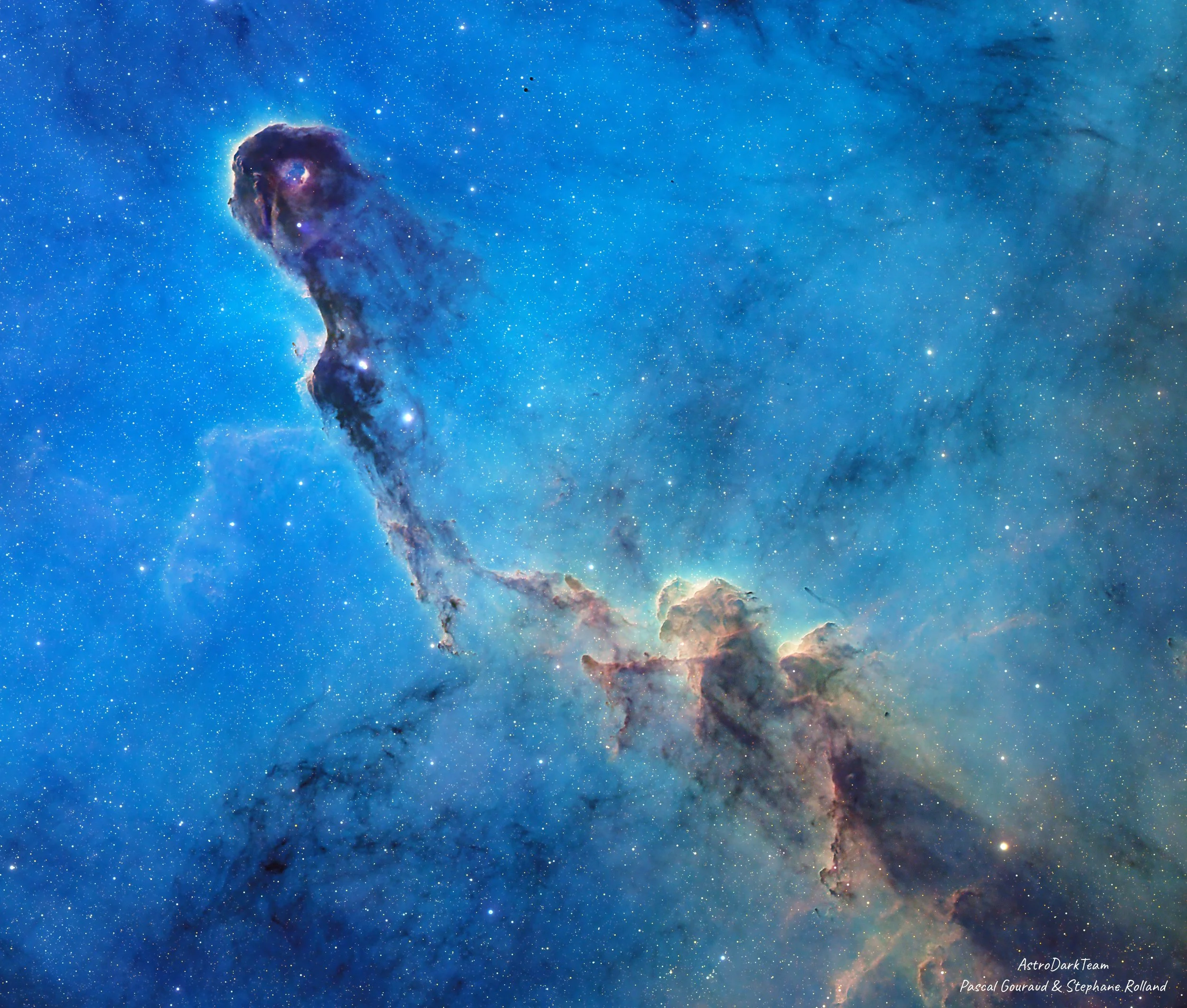
Elephant's Trunk Nebula in SHO with RGB stars - IC 1396A
Nestled within the expansive star-forming region IC 1396 in the Cepheus constellation, the Elephant's Trunk Nebula, denoted IC 1396A, emerges as a captivating celestial structure. This elongated globule of dense dust and gas has earned its moniker due to its striking resemblance to an elephant's head and trunk at visible wavelengths, where a dark, shadowy region is surrounded by a luminous, winding rim. Positioned approximately 2,400 light-years from Earth, the nebula offers a unique insight into the intricacies of star formation and the interplay of cosmic forces within the vast expanse of IC 1396.
Lesser-known fact: The Elephant's Trunk Nebula is a prominent site for ongoing research, with astronomers studying its molecular content and magnetic fields to deepen our understanding of the complex processes shaping stellar birth and evolution in this captivating corner of the universe.
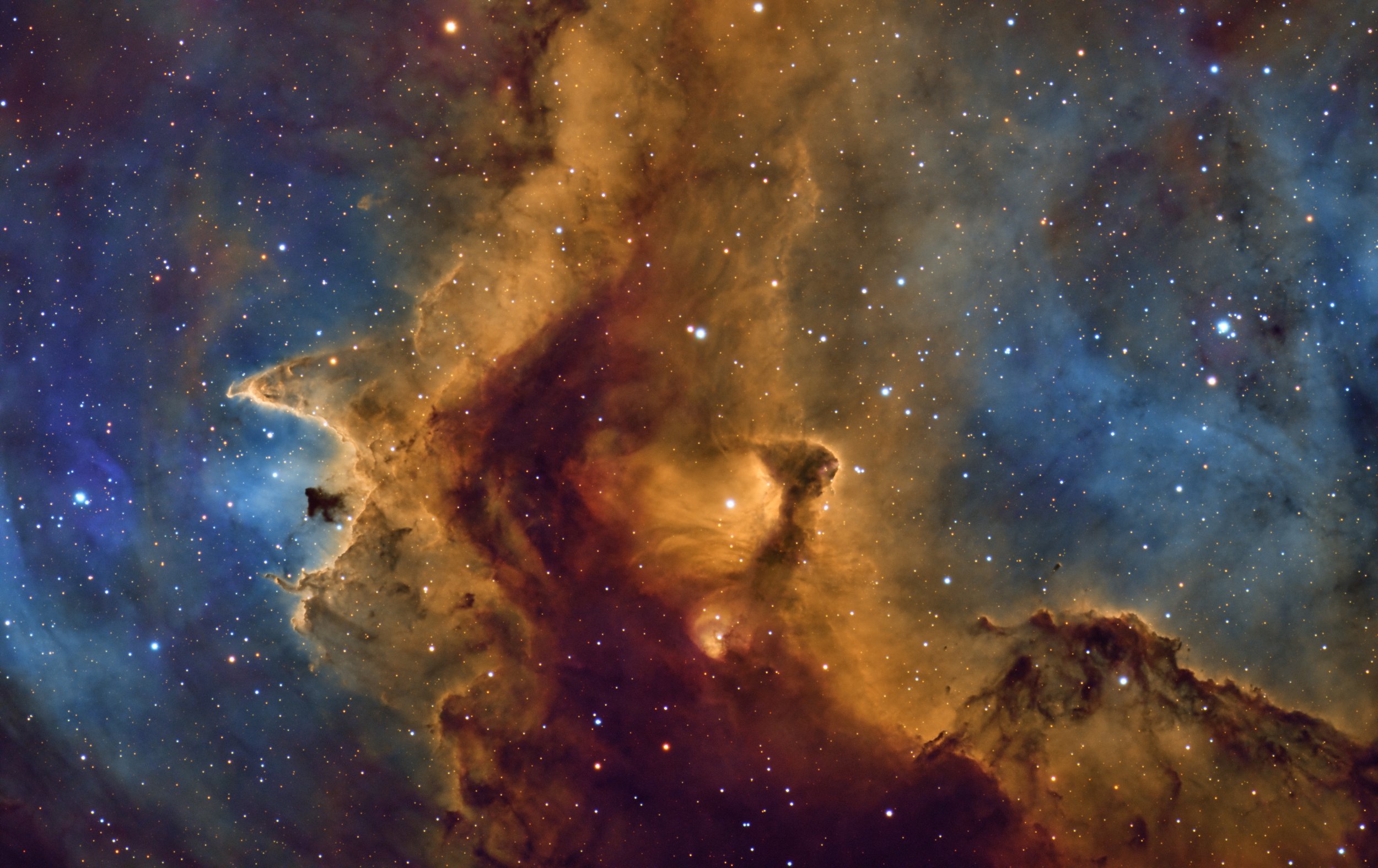
IC 1871
IC 1871 reveals its intricate details through the specialized SHO (Sulfur, Hydrogen, Oxygen) narrowband palette. Using narrowband filters, the image unfolds the cosmic tapestry of ionized gases within IC 1871. The sulfur, hydrogen, and oxygen emissions, represented by distinct colors, expose the nebula's composition and the energetic processes at play. Situated against the backdrop of the cosmos, IC 1871 becomes a stellar subject for both aesthetic appreciation and scientific exploration, offering astronomers a closer look at the nebula's chemical makeup and the astrophysical phenomena shaping its luminous features.

Sh2-223 and Sh2-224 - 2 Panel Mosaic
In this two-panel mosaic of Sh2-223 and Sh2-224 reveals a dynamic interplay of ionized gases and stellar nurseries. Captured through a meticulous blend of imaging data, this celestial composition showcases the radiant hues of hydrogen alpha emissions, portraying the energized regions where massive stars shape their surrounding nebulae. Positioned within the Milky Way, these emission nebulae offer astronomers valuable insights into the ongoing processes of star formation and the sculpting forces of interstellar space.
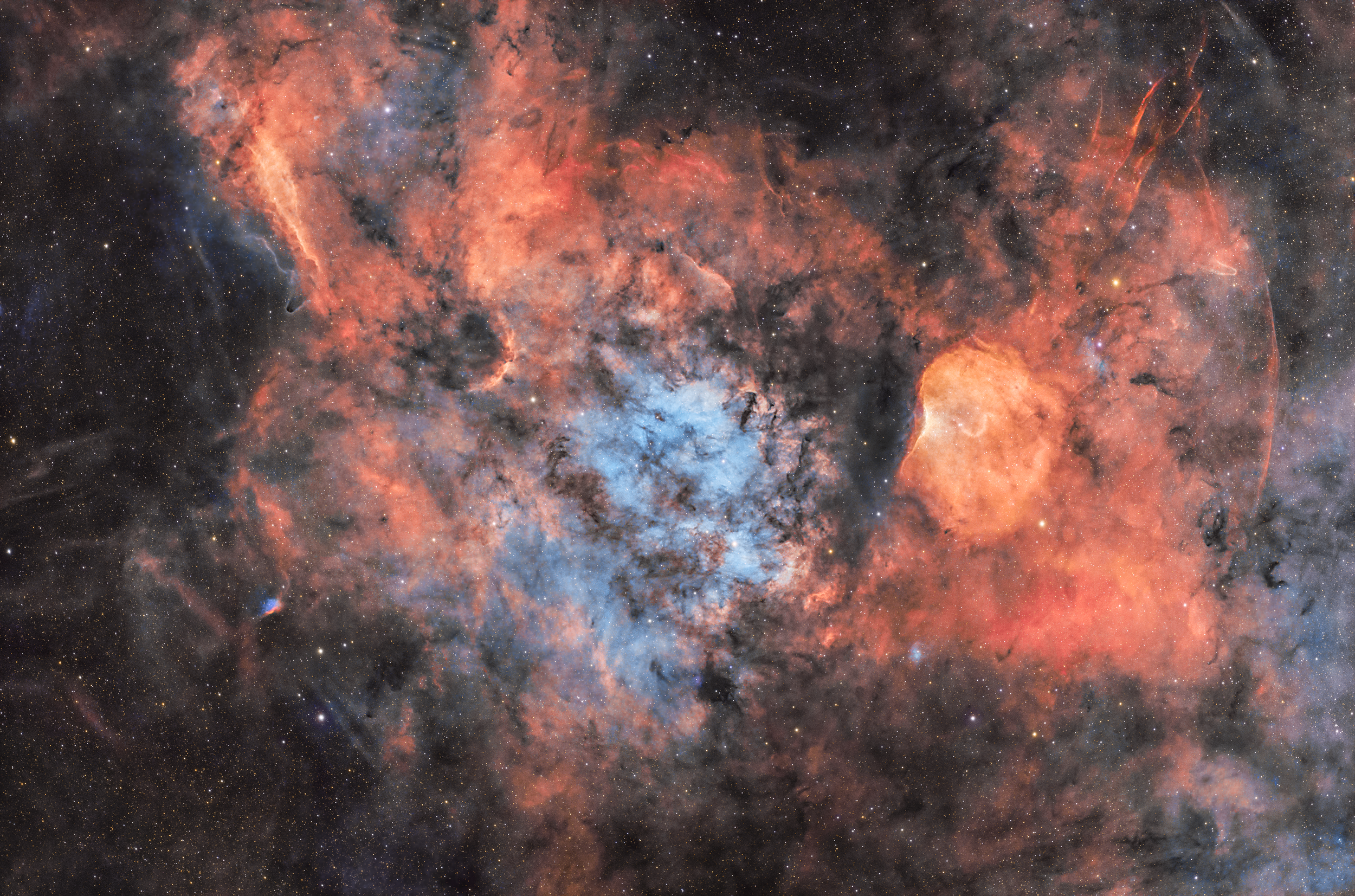
The Left Arm of Cepheus (287 hrs)
This area of Cepheus doesn't get a lot of attention. There's no Elephant Trunk nebula, no Bat or Squid nebula, no Wizard nebula, no Iris Nebula. So naturally, I wanted to take some time and get a really deep integration on it, to try for a unique view.
Maybe the most interesting thing in this photo is the small blue blob of Oiii (with a sharp Ha/Sii arc) that's about 20% over from the left side of the image, and about a third of the way up from the bottom. At some point during data acquisition, the Oiii just started showing up. I thought it was dust in my imaging train, but after re-taking my flats, the Oiii was still there. Jaša Rebula was able to figure out that the area had been cataloged as supernova remnant Te 12….
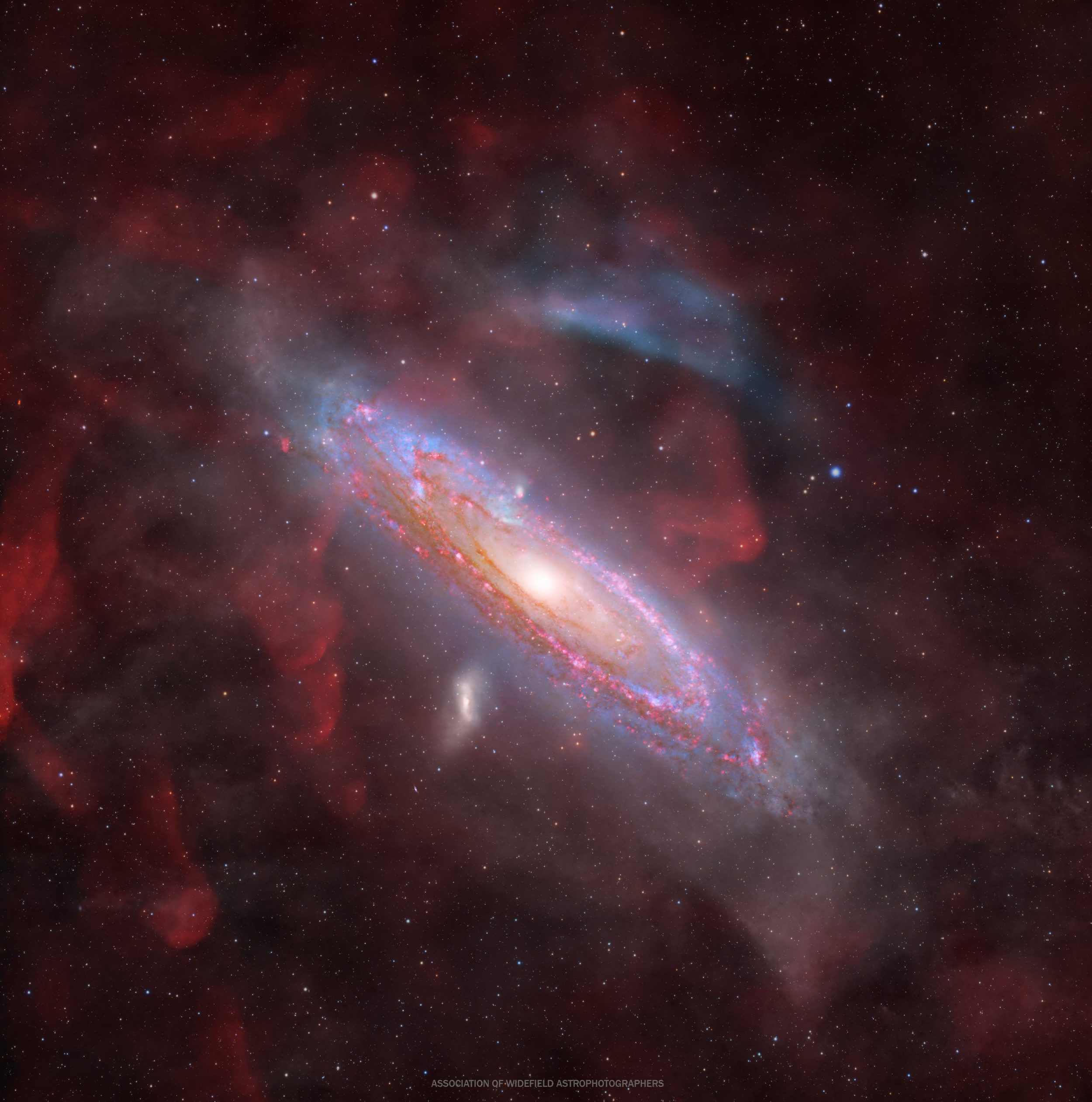
M31 and Surrounding Features
We would like to submit the attached image as a candidate for this competition. We are a small community of astrophotographers with similar equipment who collaborate on different projects; we coined the name “Association of Widefield Astrophotographers” because of the wide field of view that our budget gear provides. The image is a 100 hour project with data from 6 different contributors. It features the famous Andromeda Galaxy, (M31) and its extensive outer halo. Our deep broadband integration also revealed faint IFN structures surrounding the galaxy. The 87 hours of narrowband data …

Geminid bolides
Captured by a the lens of a DSLR at Millstätter See, Kärnten, Austria, this Geminids meteor fireball exhibits its blazing descent through Earth's atmosphere. The meteor, likely originating from debris shed by asteroid 3200 Phaethon, leaves a distinctive smoke trail in its wake. This image not only documents the annual Geminids meteor shower but also offers a scientific glimpse into the meteor's composition and dynamics. The lingering smoke trail is a result of the meteoroid's interaction with the atmosphere, as its high-speed entry causes ablation and ionization, releasing visible particles. This visual record provides astronomers valuable data to understand the physical properties of meteors and their atmospheric interactions during these celestial events.

The Small Magellanic Cloud
The Small Magellanic Cloud (SMC), a celestial jewel in the southern hemisphere, graces the night sky with its ethereal presence. Nestled among the distant stars, this dwarf irregular galaxy, a satellite of our Milky Way, captivates astronomers and stargazers alike. With an approximate distance of around 200,000 light-years, the SMC unveils a tapestry of stellar marvels, from sprawling nebulae to clusters of newborn stars. Its unique position allows astronomers to study cosmic phenomena with a distinct perspective, offering insights into the evolution of galaxies and the interplay of celestial forces.
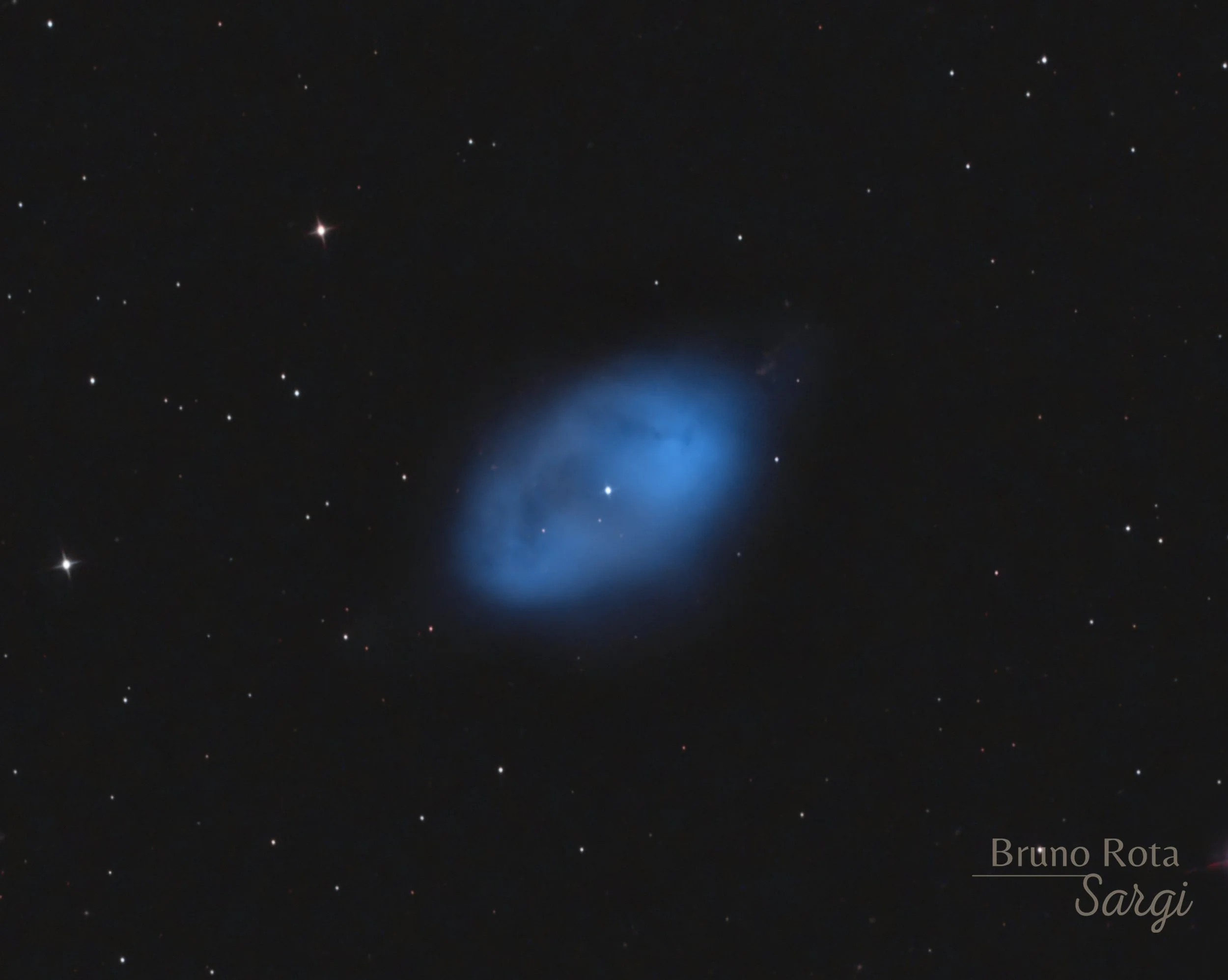
Robin's Egg Nebula (NGC 1360)
NGC 1360, positioned in the constellation Fornax, unfolds as a planetary nebula, offering a unique astronomical insight into the final stages of stellar evolution. Located approximately 2,000 light-years away, this celestial object showcases a symmetrical structure, characterized by the luminous emission of ionized gases. The central star, concealed within the nebula's brilliance, represents a stellar remnant undergoing a transformative phase, shedding its outer layers into the interstellar medium.

LBN 923 Region
In this image, the enigmatic LBN 923 reveals its celestial poetry through the lens of a Hydrogen Alpha (Ha) Luminance Enhanced RGB (RGB) image. The specialized Ha filter delves into the essence of ionized hydrogen, capturing the nebula's intricate features. Enhanced by the meticulous integration of luminance and color data using the LRGB technique, LBN 923 unfolds its cosmic dance with mesmerizing detail. Approximately [insert distance if available] light-years away, this astroimaging endeavor not only paints a visual symphony of interstellar gases but also presents a scientific exploration into the nebula's composition and dynamic processes, inviting viewers to marvel at the celestial wonders embedded in the cosmic fabric.
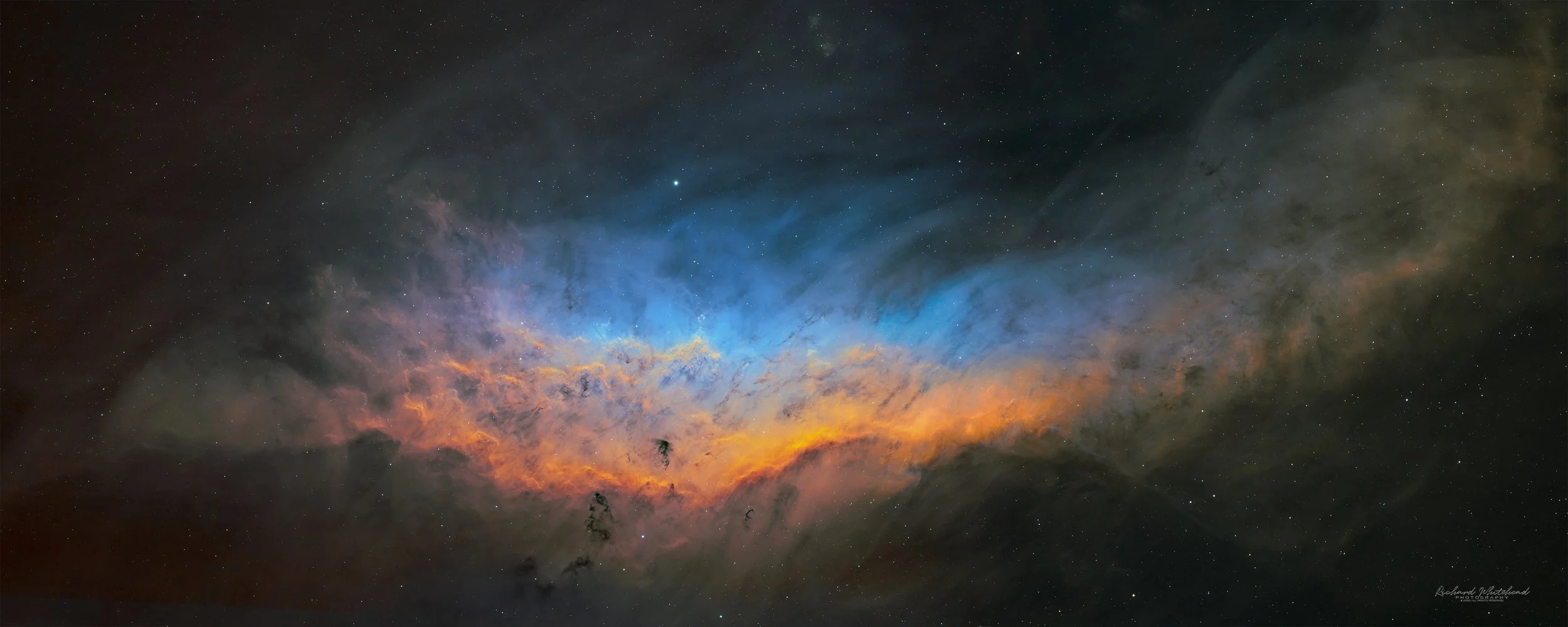
The California Nebula
The California Nebula unfolds its vibrant hues in a stunning narrowband image. Captured through specialized filters, this rendition highlights the nebula's intricate details in sulfur, hydrogen, and oxygen wavelengths. Located in the constellation Perseus, approximately 1,000 light-years away, the California Nebula takes on a mesmerizing appearance, resembling the iconic U.S. state it is named after. This astrophotographic endeavor, utilizing the SHO (Sulfur, Hydrogen, Oxygen) narrowband technique, unveils the complex interplay of gases and dust, offering a glimpse into the dynamic processes shaping the nebula's cosmic landscape.

ngc 1333
In the serene realms of the Perseus constellation, NGC 1333 emerges as a stellar masterpiece, a reflection nebula adorned with the cosmic glow of youthful stars. This celestial oasis, situated within the Perseus Molecular Cloud, serves as a stellar nursery, where the interstellar medium births new generations of luminous orbs. Approximately 1,000 light-years from Earth, NGC 1333 captivates with its ethereal hues and intricate structures, crafted by the interplay of starlight and surrounding dust. This cosmic portrait not only illuminates the beauty of NGC 1333 but also invites contemplation of the ongoing celestial ballet, where the cosmic dance of creation unfolds in the heart of the Perseus constellation.
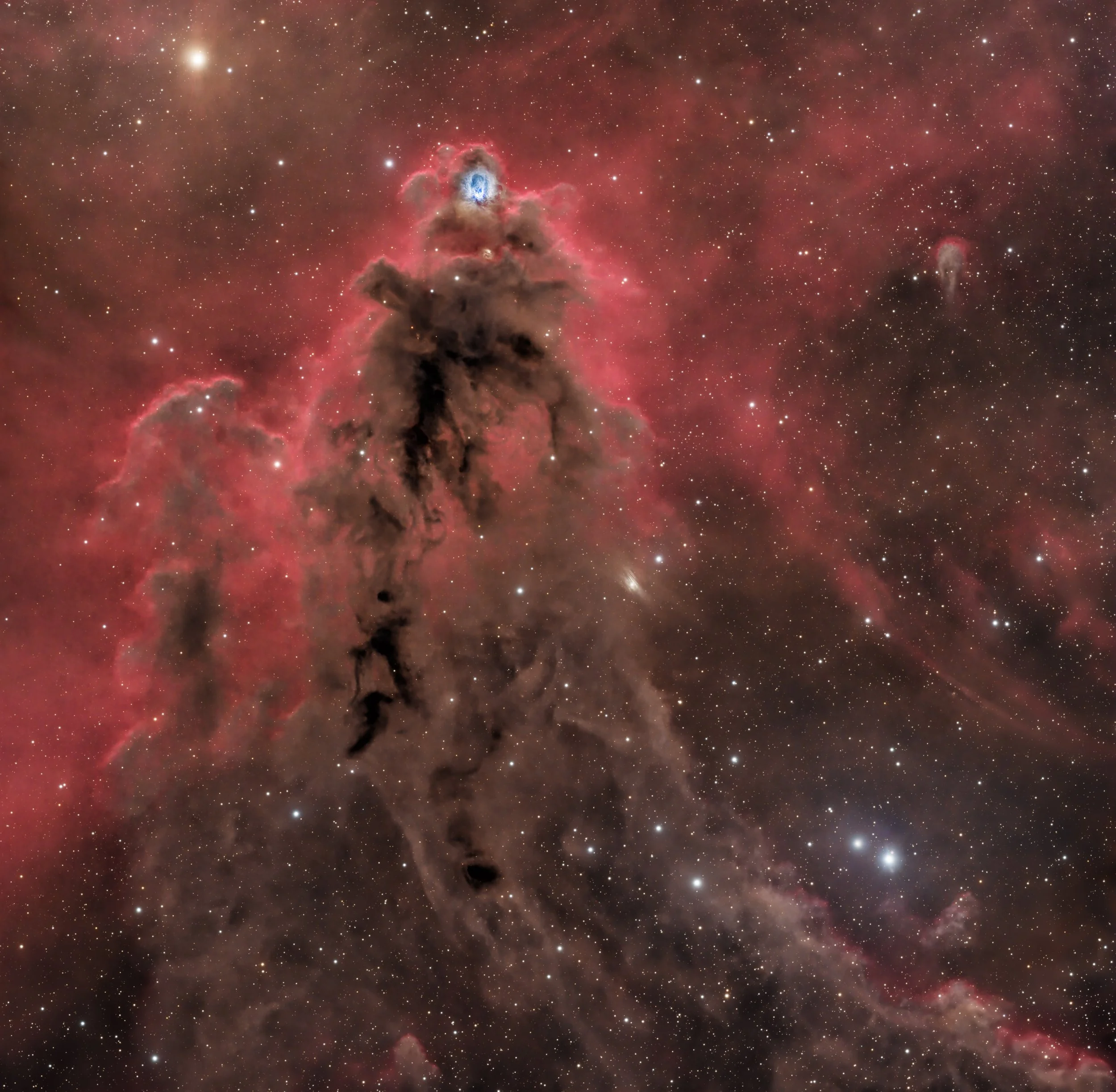
LDN 1622 - The Boogeyman Nebula
In the celestial theater of the Orion Molecular Cloud Complex, LDN 1622 unveils itself as The Boogeyman Nebula, a captivating cosmic enigma draped in interstellar shadows. Aptly named, this dark nebula weaves a mysterious narrative against the stellar backdrop of the Orion constellation. Approximately 500 light-years distant, The Boogeyman's sinuous tendrils and veiled features evoke a sense of otherworldly intrigue, inviting viewers to contemplate the delicate interplay of light and shadow in the cosmic realm. Shrouded in cosmic mystery, LDN 1622, The Boogeyman Nebula, embodies the spirit of exploration, beckoning us to confront the celestial unknown and unlock the secrets hidden within its cosmic embrace.
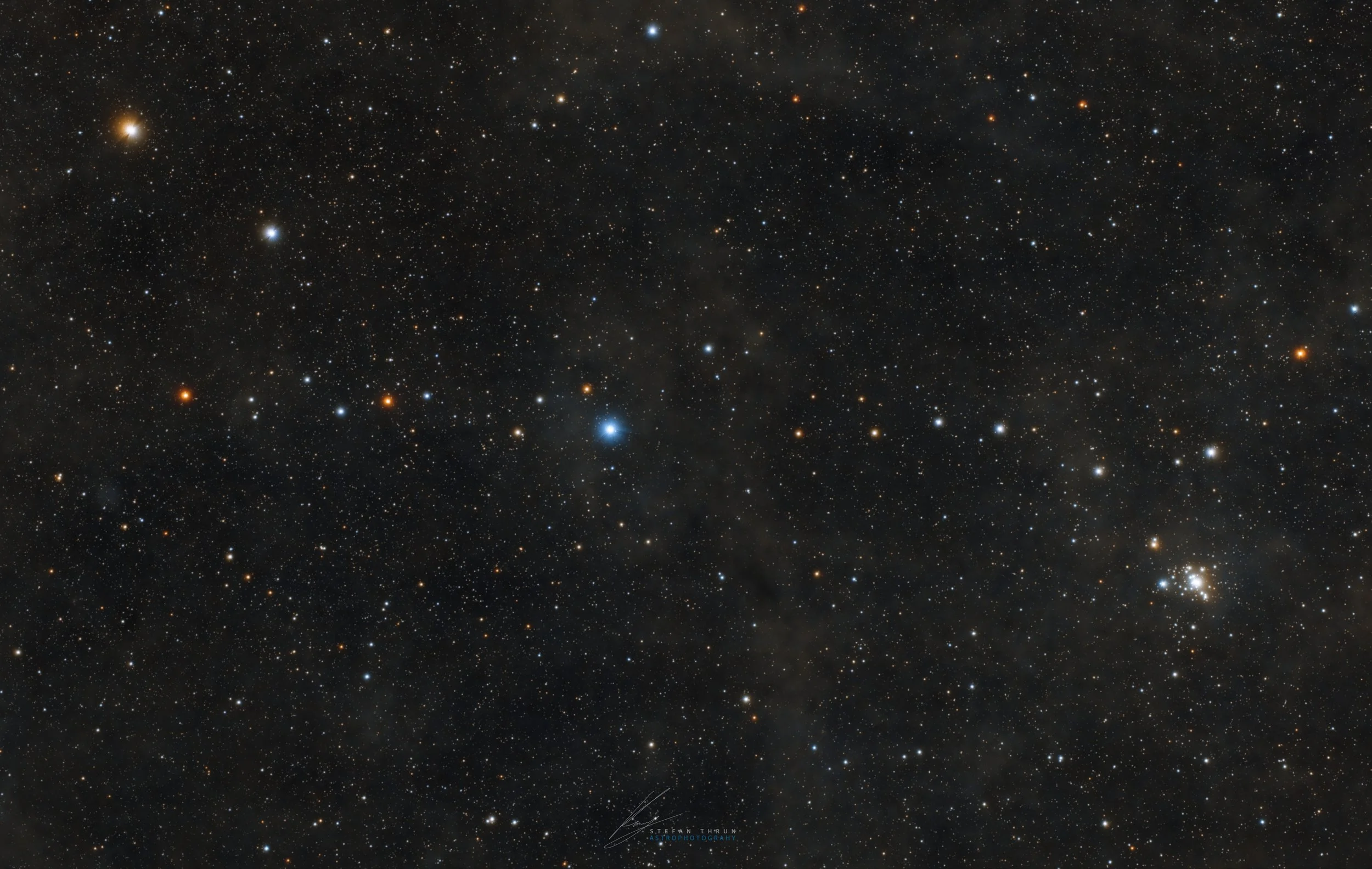
Kembels Cascade
Kemble's Cascade, an awe-inspiring asterism residing in the constellation Camelopardalis, unfolds a celestial symphony of more than 20 stars. This stellar ensemble, discovered by Father Lucian Kemble, forms an intricate pattern as if nature itself orchestrated a cascading string of cosmic pearls. Though not gravitationally bound, these stars create a captivating visual alignment, offering a dazzling display against the cosmic tapestry. Kemble's Cascade becomes a testament to the captivating beauty that can be found in the seemingly random distribution of stars across the vast expanse of our galaxy. This asterism, a stellar gem in the night sky, invites observers to appreciate the intricacies and chance alignments that make the cosmos an endless source of wonder.
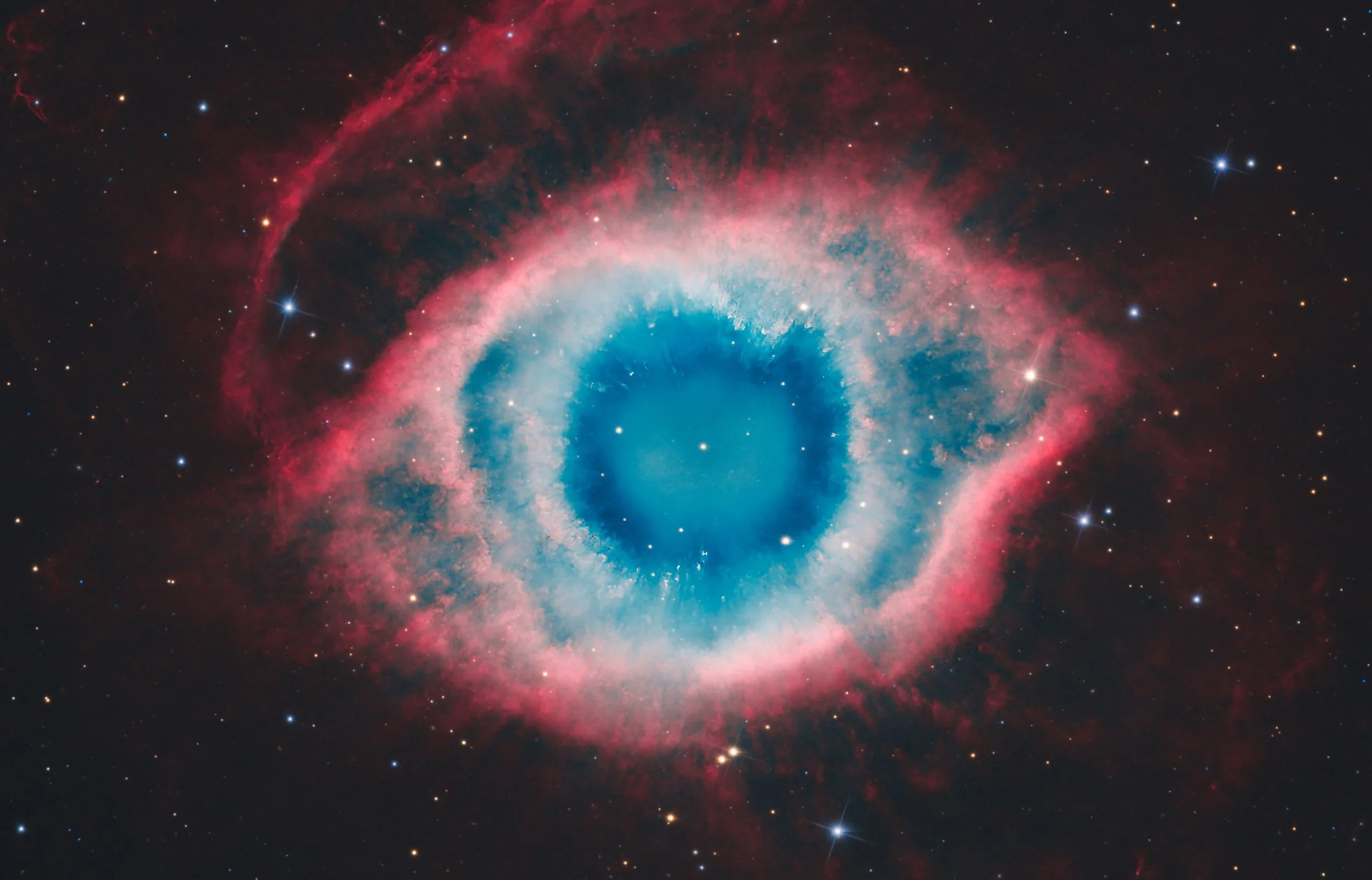
The Helix Nebula in HOORGB
The Helix Nebula, situated in the Aquarius constellation, offers a unique insight into the final stages of stellar evolution. This planetary nebula is formed as a dying sun-like star expels its outer layers, revealing a complex structure of ionized gases and intricate dust patterns spanning approximately 2.5 light-years. Through observations made with [insert telescope and camera details], the image captures the distinct chemical compositions present in the nebula. At the center of this astronomical phenomenon lies a faint, diminishing star, marking the eventual transition into a white dwarf. The Helix Nebula stands as a crucial celestial laboratory, allowing scientists to study the chemical enrichment of the interstellar medium and the mechanisms governing the transformation of stars at the end of their life cycles.
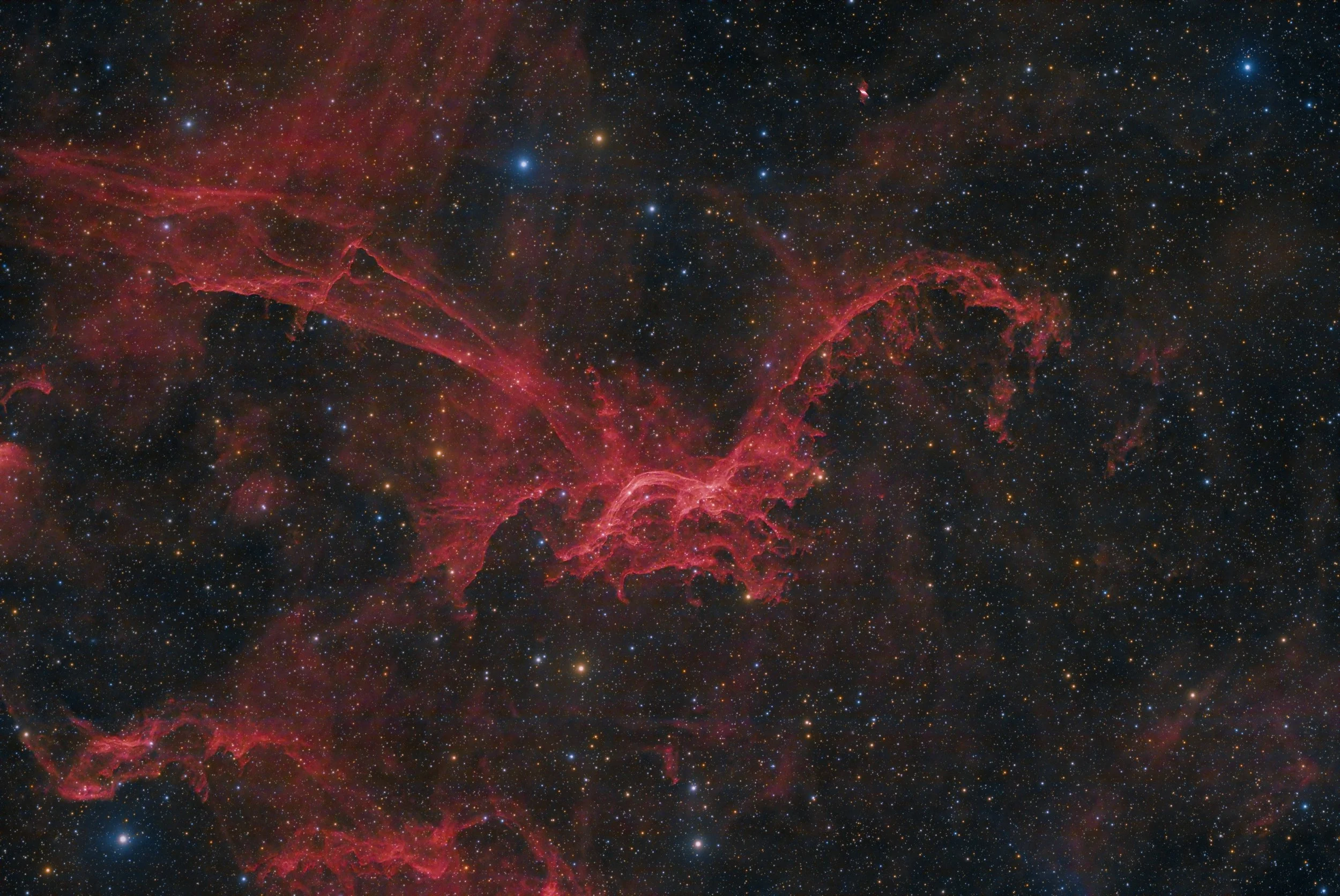
The Flying Dragon Nebula
Behold the ethereal beauty of the Flying Dragon Nebula, a stellar nursery set against the cosmic canvas. This captivating region, officially cataloged as IC 1396, showcases billowing clouds of gas and dust sculpted by the winds and radiation from young, massive stars at its core. The evocative shapes within this celestial masterpiece resemble the outstretched wings of a mythical dragon, giving the nebula its evocative name. Imaged through the lens of 130mm refractor, the resplendent hues of ionized hydrogen and other elemental gases paint a mesmerizing portrait of ongoing star formation. As we delve into the intricate details of this celestial dragon's lair, we witness the transformative forces that shape the cosmos, inviting contemplation of the profound interplay between matter, energy, and the relentless march of time.

The Spider and The Fly
In the cosmic theater of the Milky Way, the enigmatic duo of the Spider and The Fly Nebula emerges as a captivating celestial narrative. This intriguing region, formally designated IC 417 and IC 416, showcases a complex interplay of dust and gas in the constellation Auriga. The Spider Nebula, IC 417, takes its name from the intricate web-like structure of dark dust lanes that spans the nebula, while its companion, The Fly Nebula (IC 416), adds to the cosmic drama. These stellar nurseries, situated approximately 10,000 light-years away, bear witness to the birth of new stars within their dense clouds of hydrogen gas. The delicate hues emanating from the nebulae, painted by the energetic radiation of newborn stars, infuse the scene with an ethereal glow.
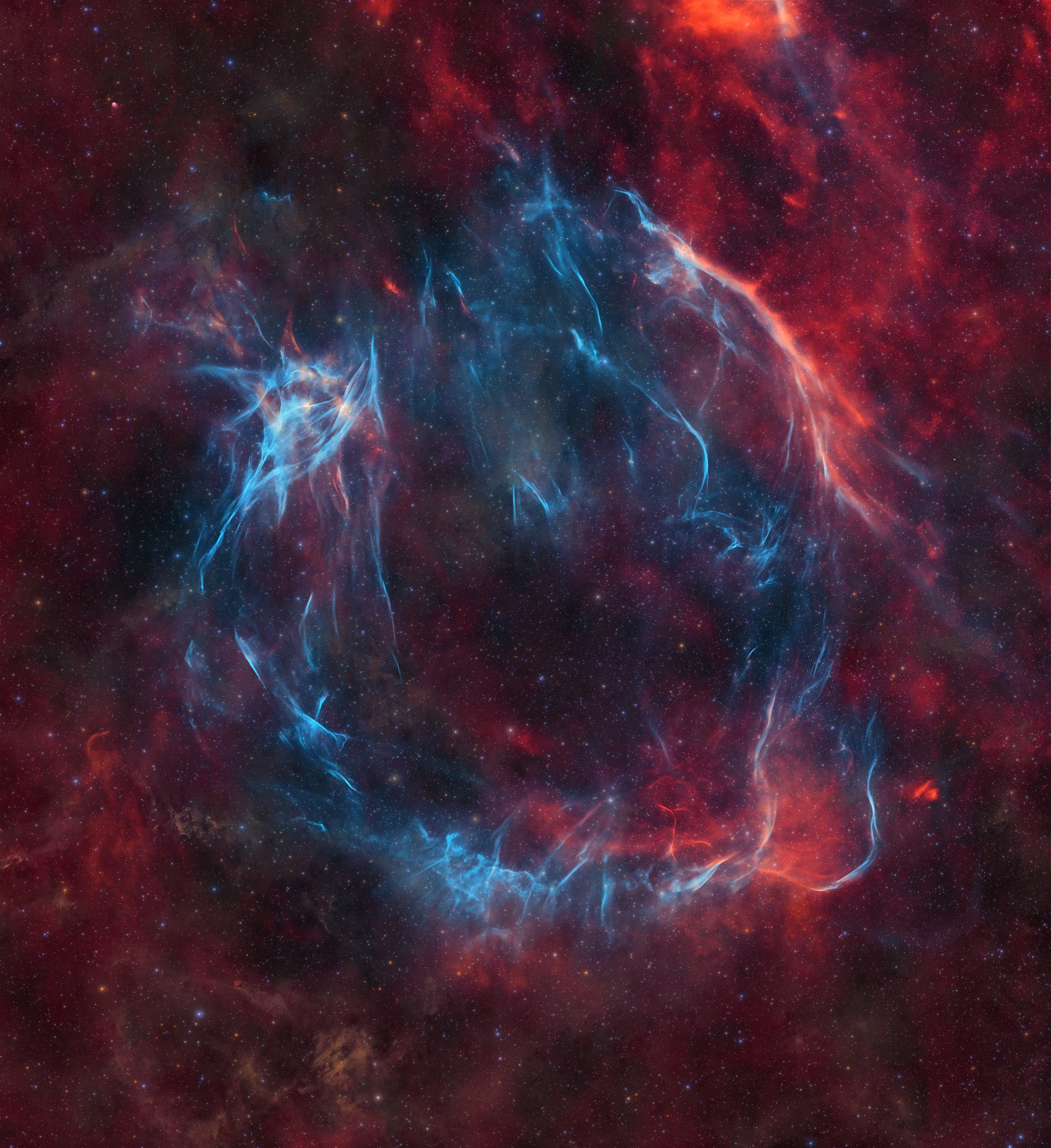
Supernova remnant G107.5-5.2. — the Nereides nebula in Cassiopeia
In this celestial masterpiece, we peer into the aftermath of stellar cataclysms through the lens of the cosmos. Supernova remnants, such as the captivating G107.5-5.2, bear witness to the explosive demise of massive stars, unleashing unimaginable energies that ripple through the fabric of space. These remnants, like ghostly echoes of celestial fireworks, exhibit intricate structures of ionized gas and dust, adorned with vibrant hues that tell the tale of elemental creation. Each remnant is a cosmic crucible, where the remnants of an exploded star mix and mingle, seeding the cosmos with the building blocks of new generations of celestial bodies. As we explore the remnants of these stellar explosions, we unravel the dynamic forces that shape our galactic landscape and gain a profound glimpse into the majestic cycles of stellar life and death.