

AAPOD2 Image Archives

Wolfs Den Nebula
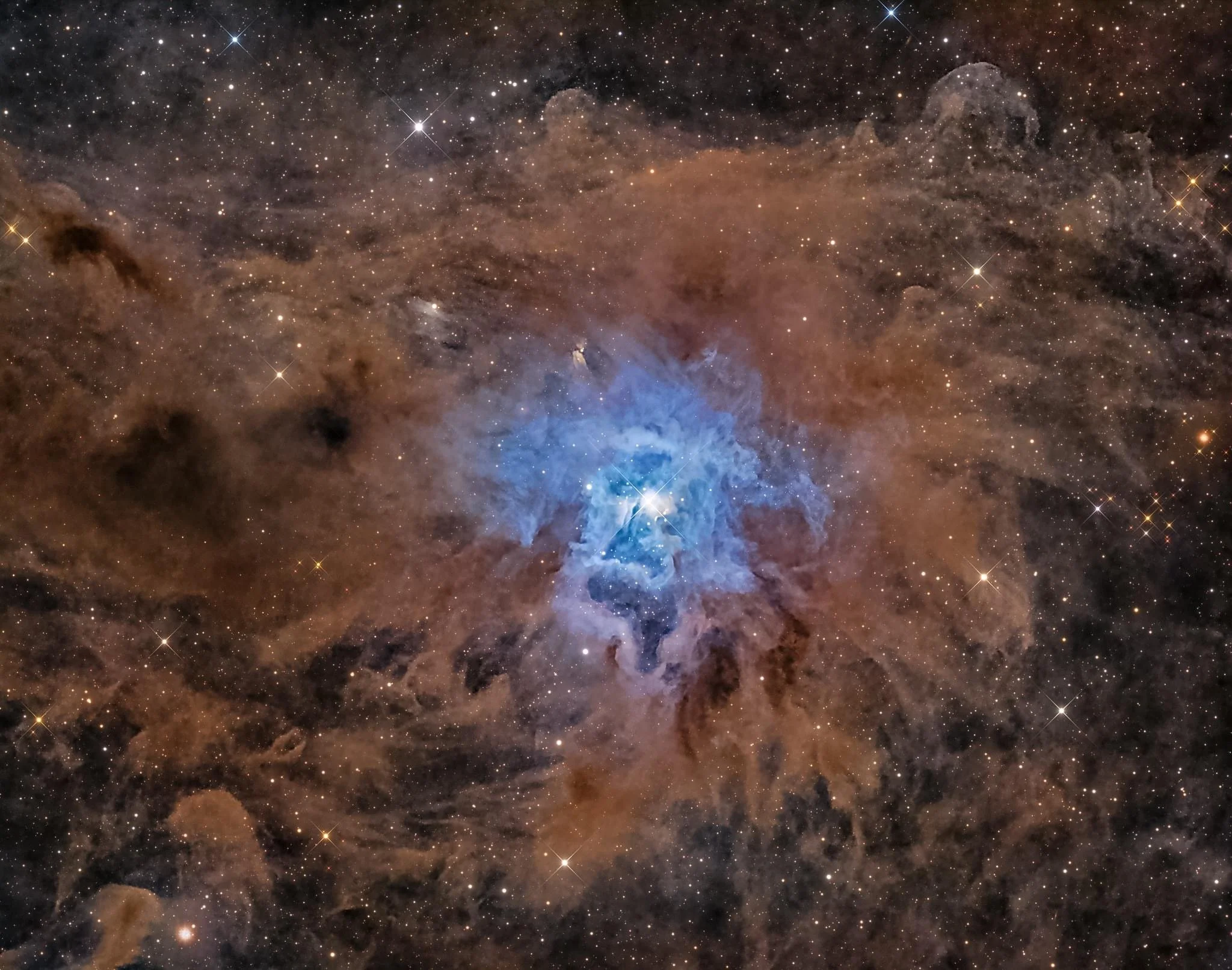
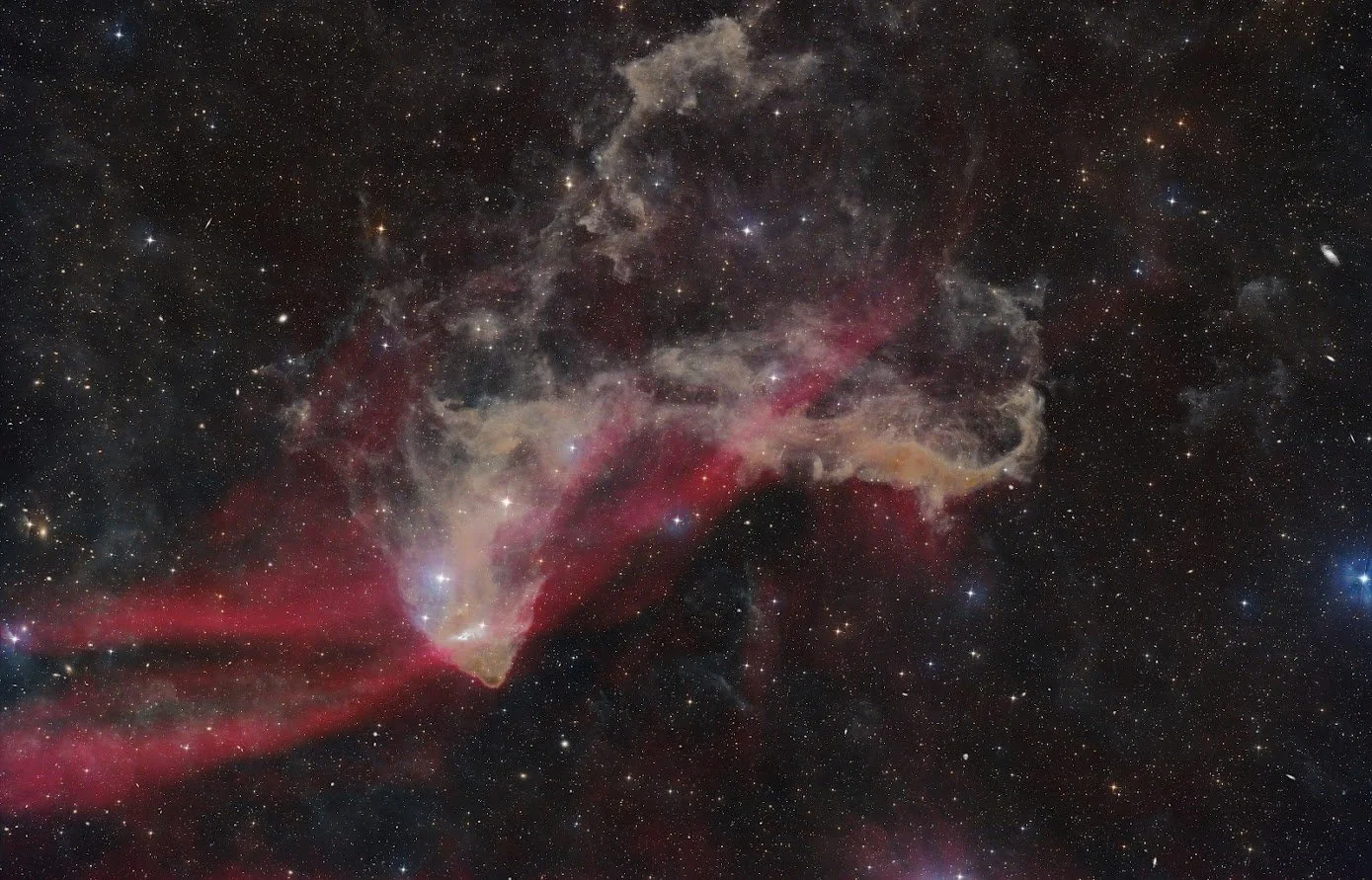
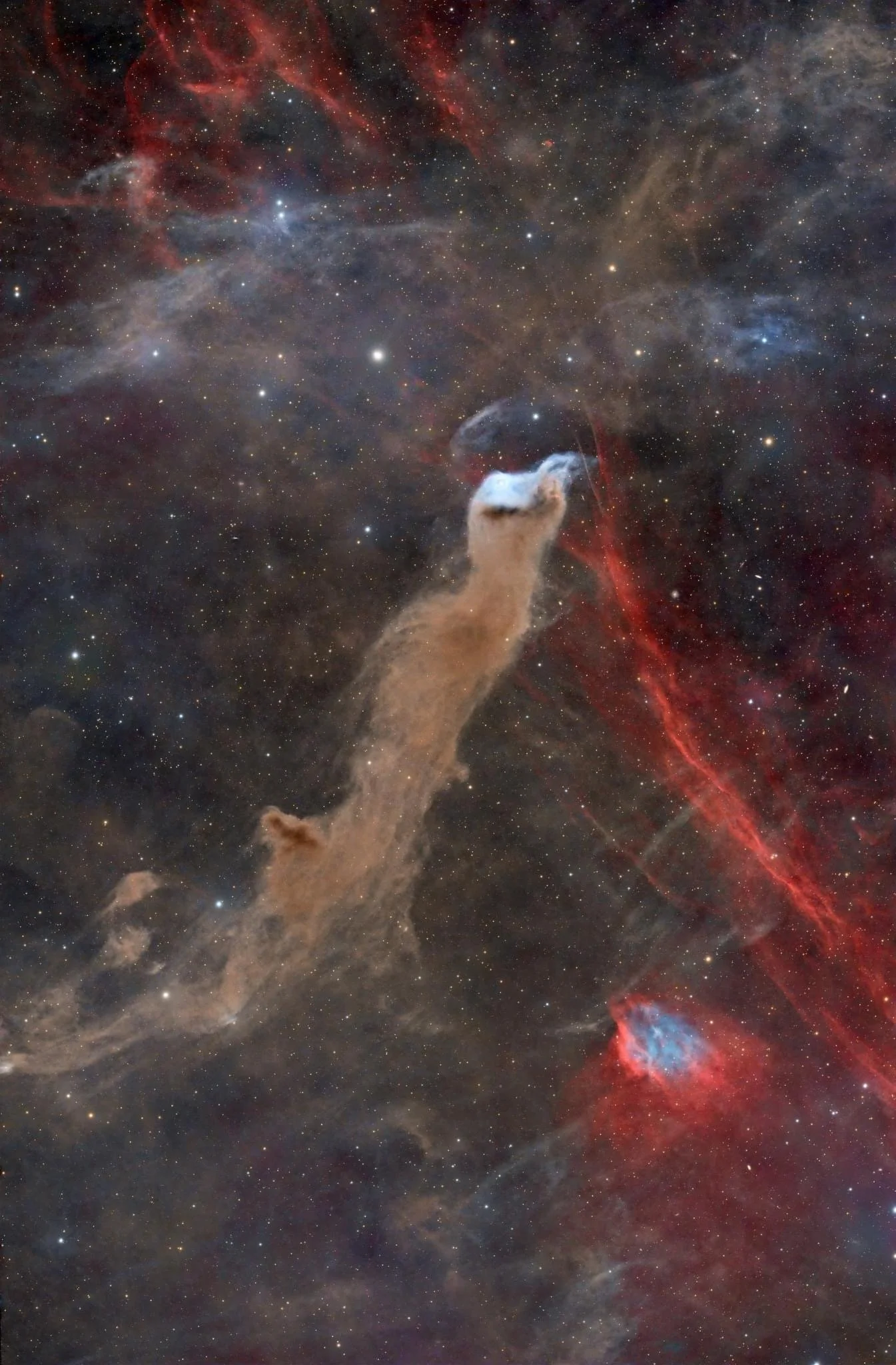
The Wolf’s Den Nebula
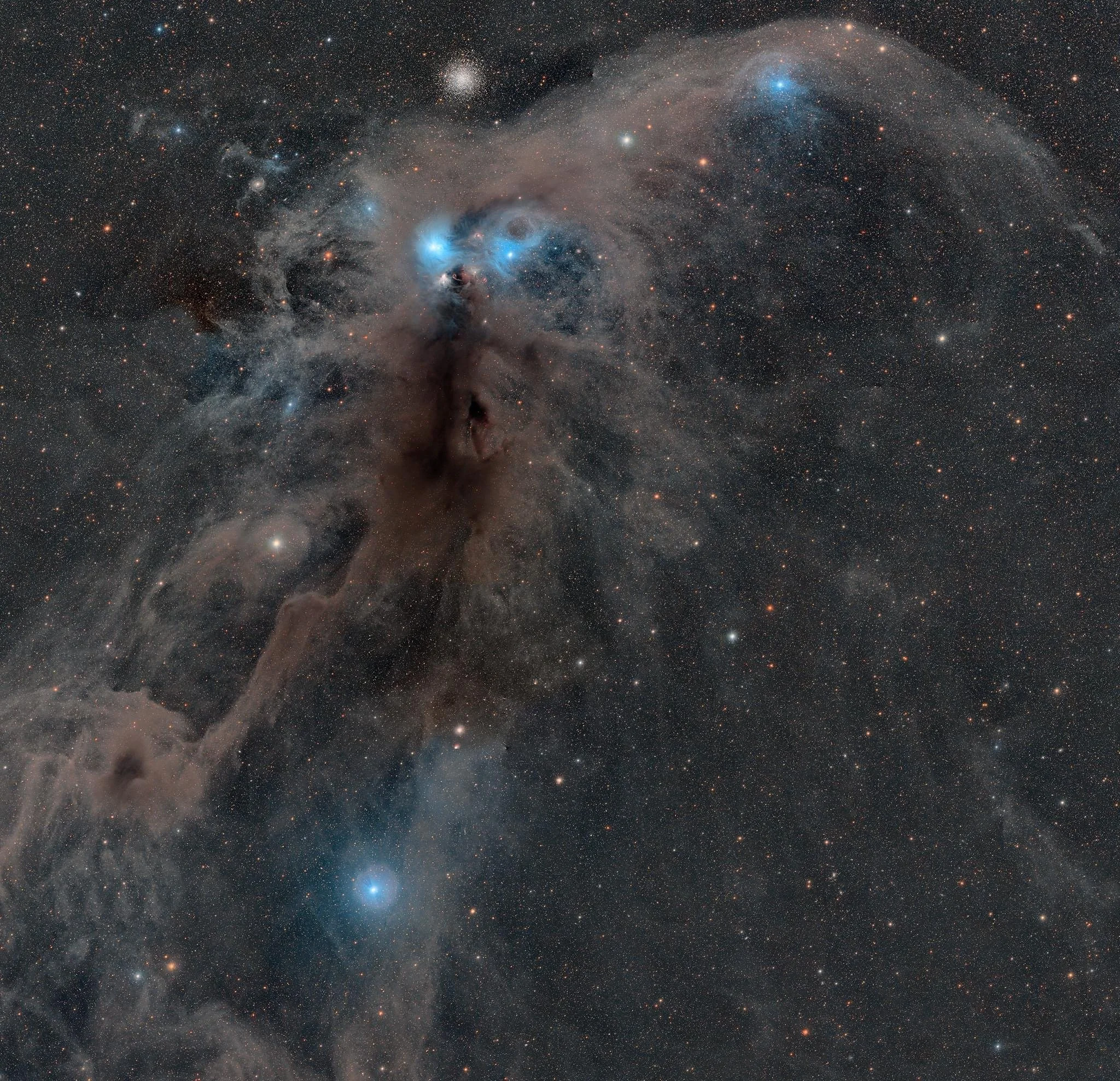
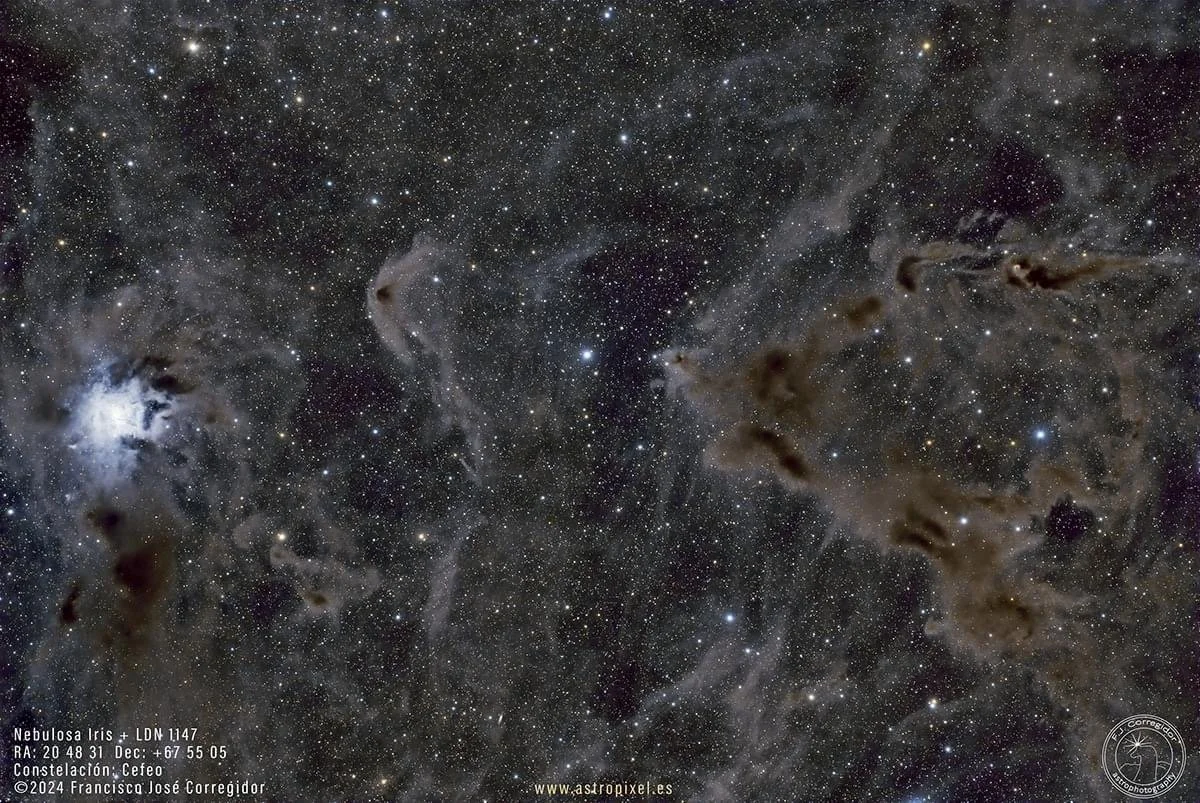
This image, shot during May to July 2024, shows a heavily crowded are in constellation Cepheus, with a blend of several nebula types. In the center, pillars of dust create a wormlike structure called LDN 1217, which ends in a bluish reflexion nebula (VdB 152). In the background, more dark nebulas can be seen, in some parts being lit by hot blue giants stars. In this area, it partially blocks the red light coming from the Ha strands farther away, which impairs the sense of perspective.

IC-5076 LRGB
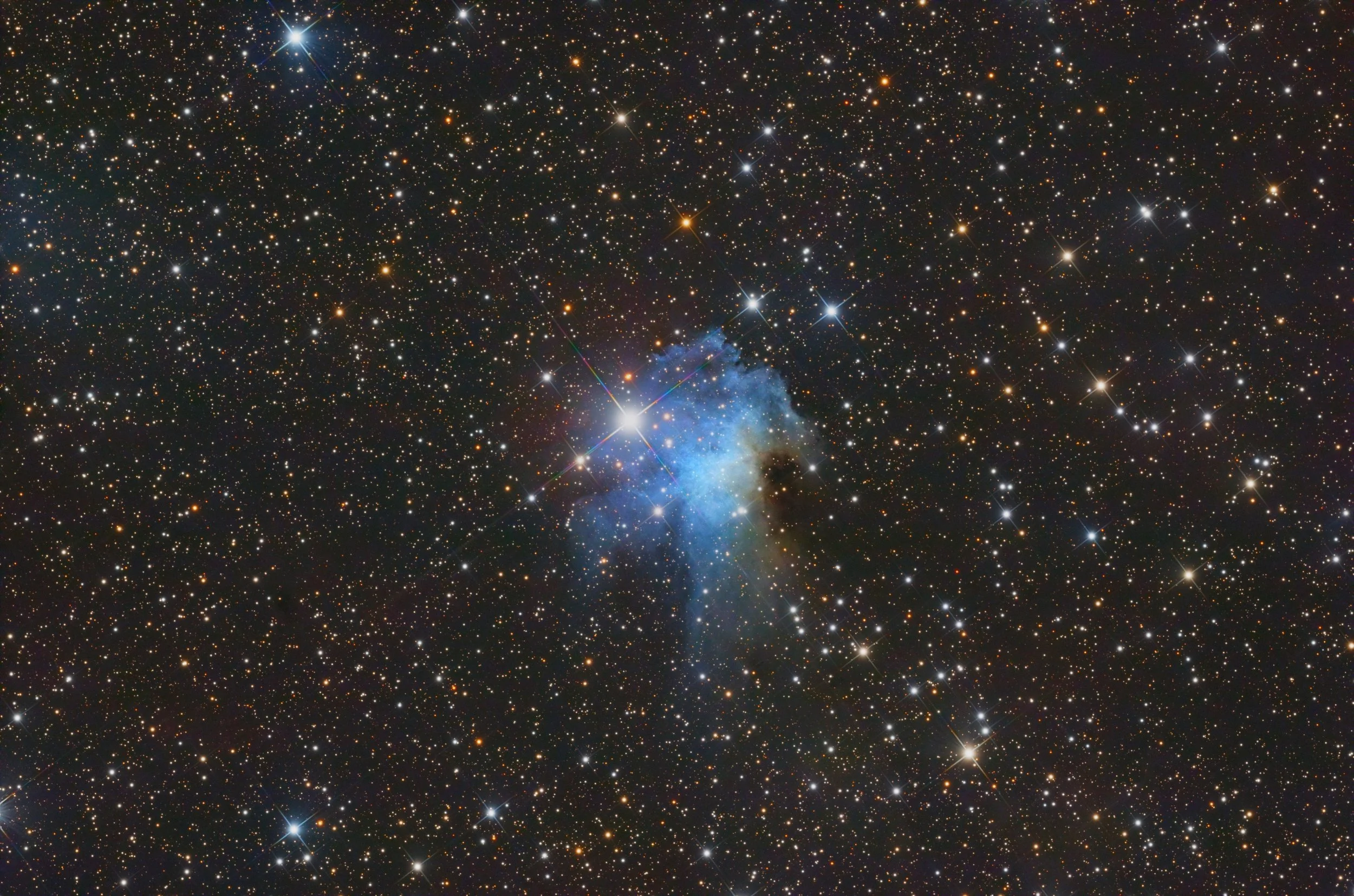
IC 5076 is a reflection nebula located in the constellation Cygnus, about 2,000 light-years from Earth. This nebula shines due to the light from nearby stars reflecting off its dust particles, rather than emitting light on its own. IC 5076 is surrounded by a rich star field typical of this region of the Milky Way, contributing to its striking appearance.
The LRGB imaging technique used here combines luminance (L) with red (R), green (G), and blue (B) color data to produce a vibrant, detailed image. The reflection nebula appears as a faint, bluish cloud, contrasting with the brighter stars that populate the background. The interplay between the dust and the starlight creates an ethereal view, highlighting the delicate structures within IC 5076.

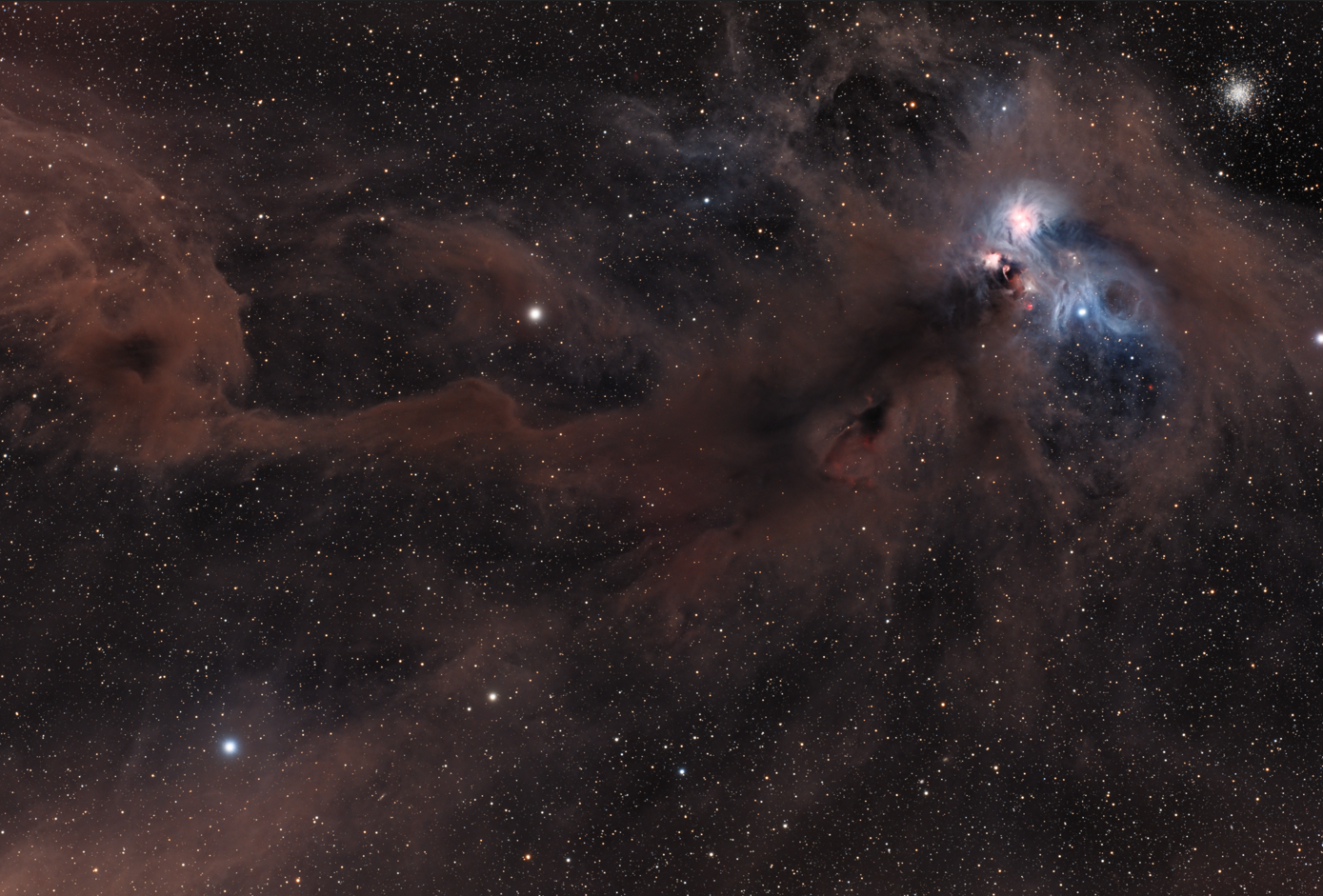
LDN673 Dark nebula
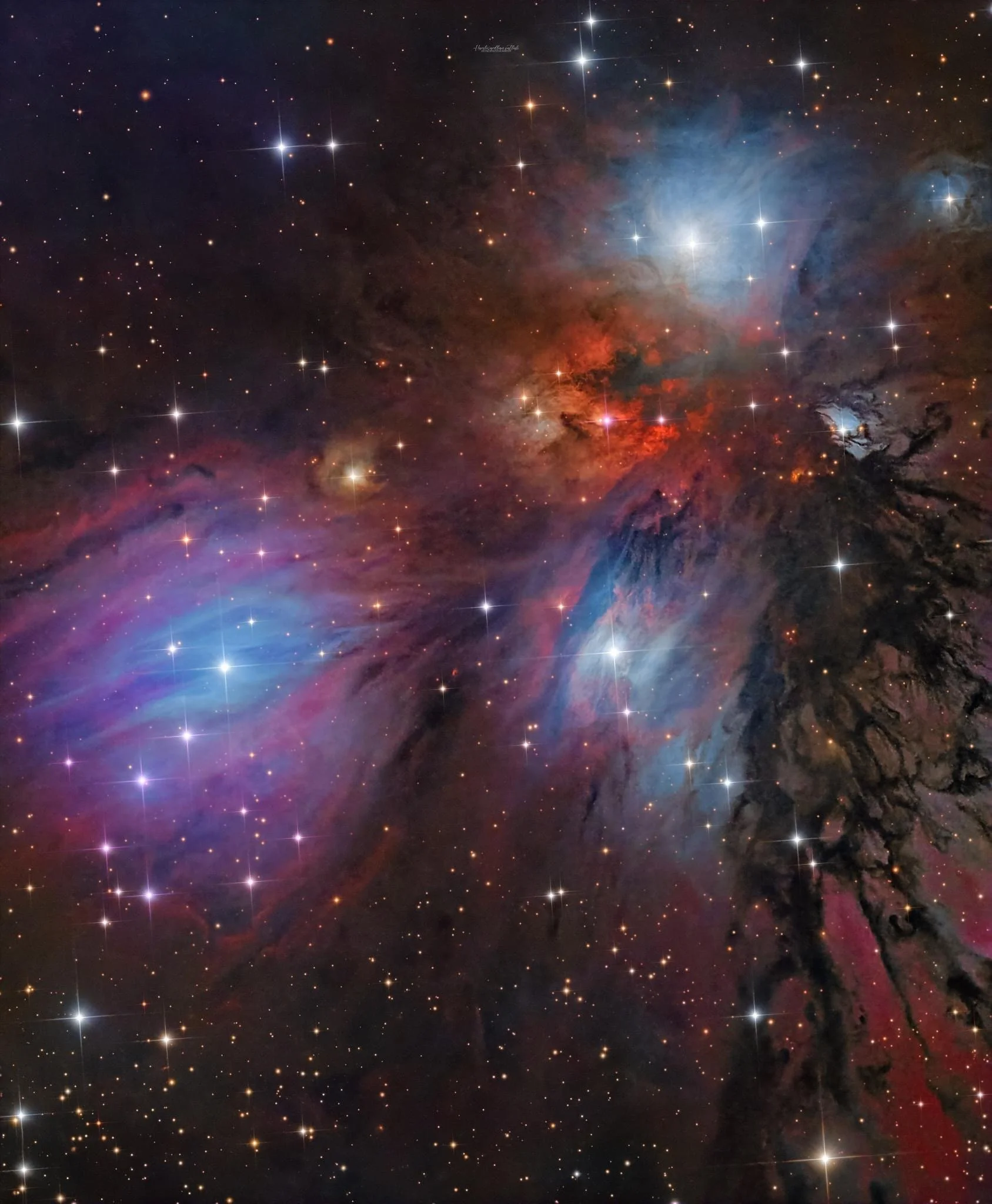
LDN 673 is a striking dark nebula located in the constellation Aquila, approximately 600 light-years away from Earth. This region of space is rich with dense molecular clouds, where interstellar dust blocks the light from the stars behind it, creating a dark silhouette against the backdrop of the Milky Way. LDN 673 is part of a larger complex known as the Aquila Rift, an area of intense star formation activity.
In this image, the intricate patterns of the dark nebula are beautifully contrasted with the dense star field surrounding it. The thick clouds of dust and gas are where new stars are born, and their dark, winding shapes create a mesmerizing view. Despite the challenging nature of imaging such faint objects, this photograph captures the mysterious beauty of LDN 673, offering a glimpse into the dynamic processes that govern star formation in our galaxy.
ShaRA#9 – The Antennaee Galaxies
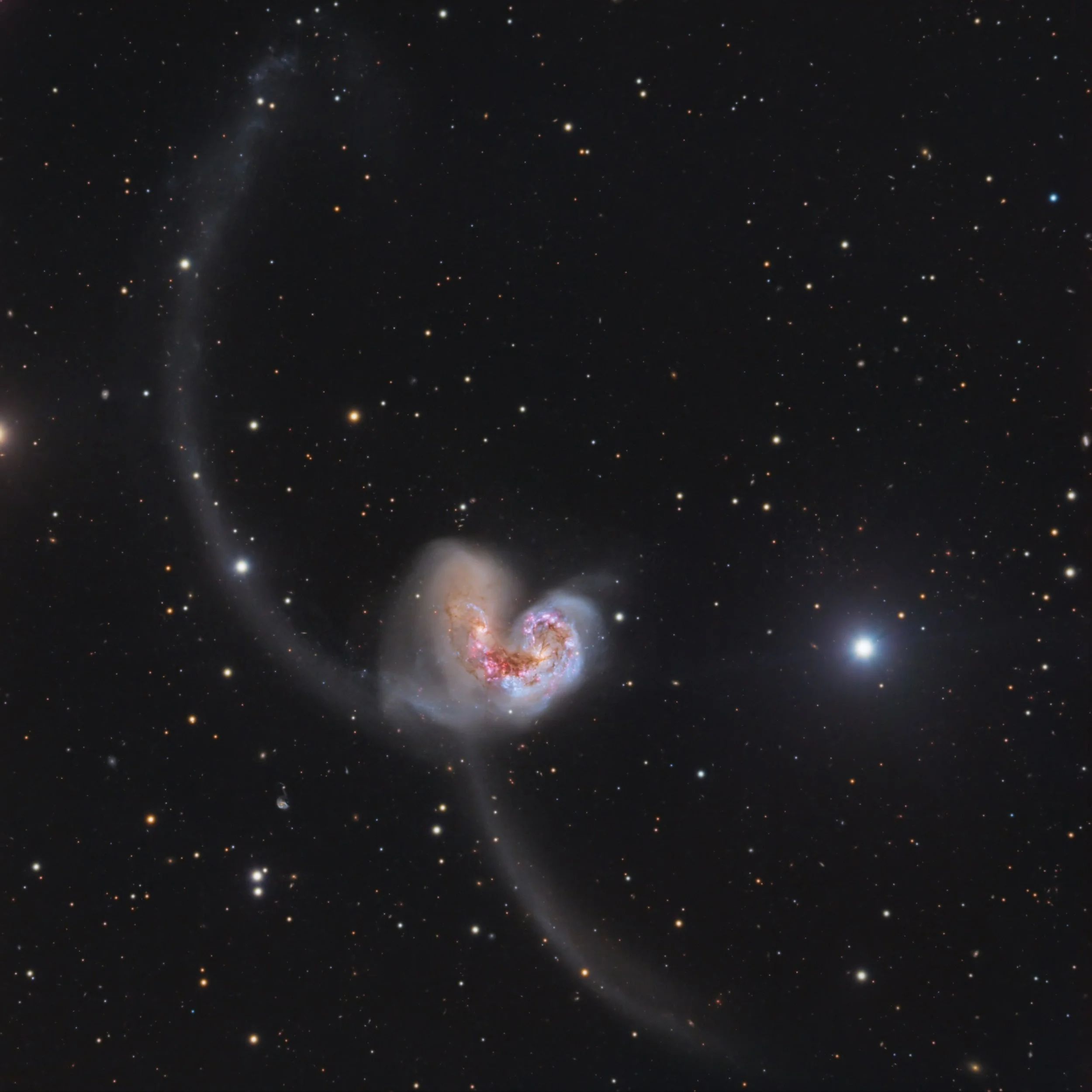
The Antennae Galaxies (NGC 4038 and NGC 4039) are a pair of interacting galaxies located about 45 million light-years away in the constellation Corvus. These galaxies are named for the long, antenna-like tidal tails of stars and gas that extend from the galactic cores, resulting from their dramatic collision and merging process. The Antennae Galaxies are in the midst of a significant starburst event, where the interaction has triggered the formation of millions of new stars, visible as bright blue clusters scattered throughout the galaxies.
This image of the Antennae Galaxies captures the chaotic beauty of the ongoing cosmic collision, highlighting the vibrant star-forming regions and the intricate tidal tails stretching into space. Although amateur astrophotography equipment may not match the resolution and detail of images taken by space telescopes like Hubble, the dedication and skill of amateur astronomers bring the wonder of these distant galaxies closer to home. The contrast between the dense galactic cores and the ethereal tidal streams showcases the dynamic and ever-evolving nature of the universe.
