

AAPOD2 Image Archives
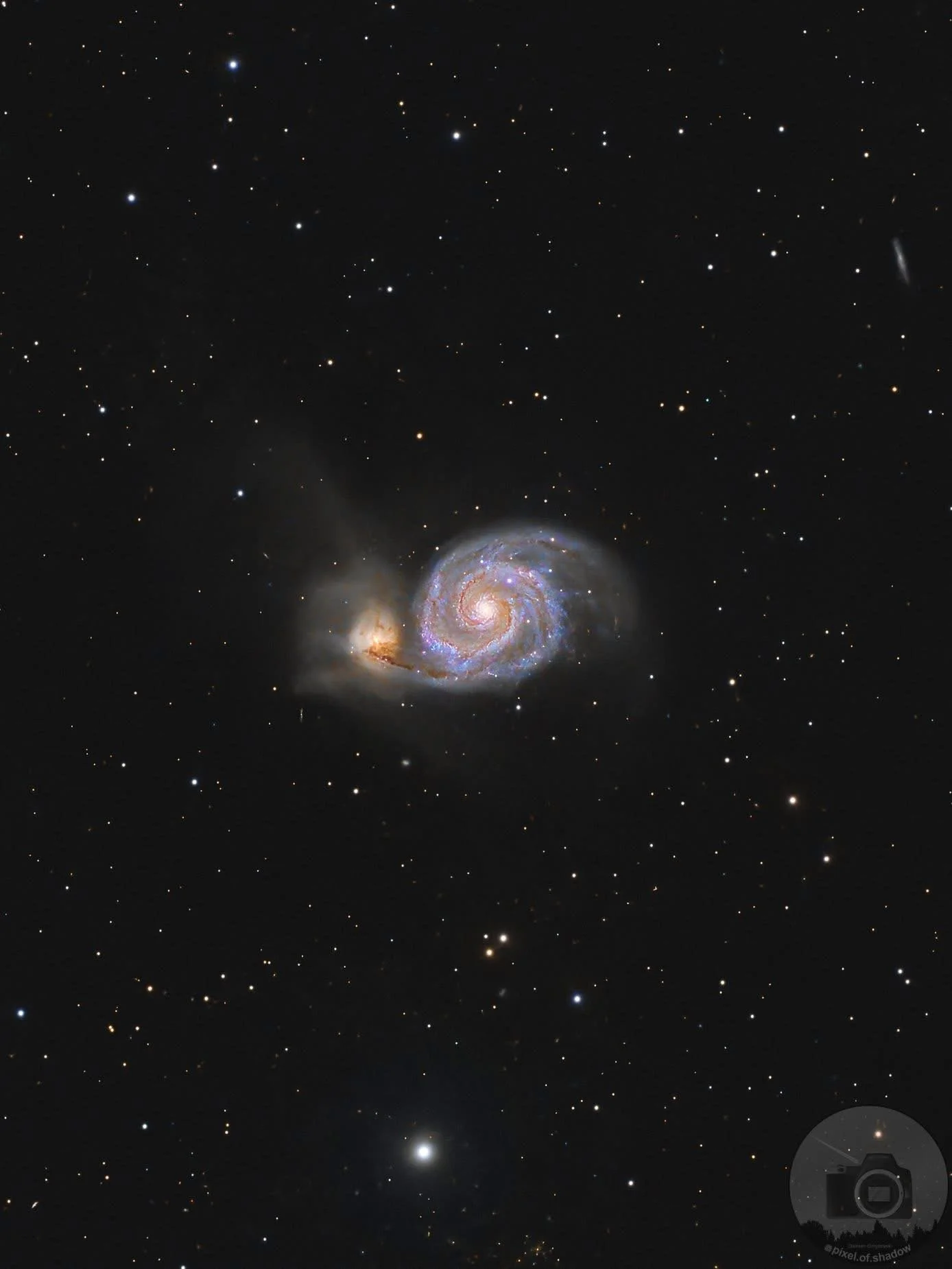
The Whirlpool Galaxy (M51)
Known as the Whirlpool Galaxy, M51 is one of the sky’s most iconic grand-design spirals, located about 31 million light-years away in the constellation Canes Venatici. Its sweeping spiral arms glow with clusters of young blue stars, pink hydrogen clouds, and dark lanes of interstellar dust, all shaped by a long gravitational interaction with its smaller companion galaxy, NGC 5195. Together, the pair form a striking cosmic portrait that has become a favorite target for both professional observatories and backyard astrophotographers.
Captured in extraordinary detail, this view of M51 reveals the turbulent beauty of galactic evolution in progress. Tidal forces between the two galaxies continue to trigger waves of star formation while subtly distorting their structures over millions of years. Although the Whirlpool Galaxy spans roughly 60,000 light-years across, its delicate spiral pattern remains visible even through modest telescopes, offering observers a glimpse into the dynamic processes that shape spiral galaxies throughout the universe.
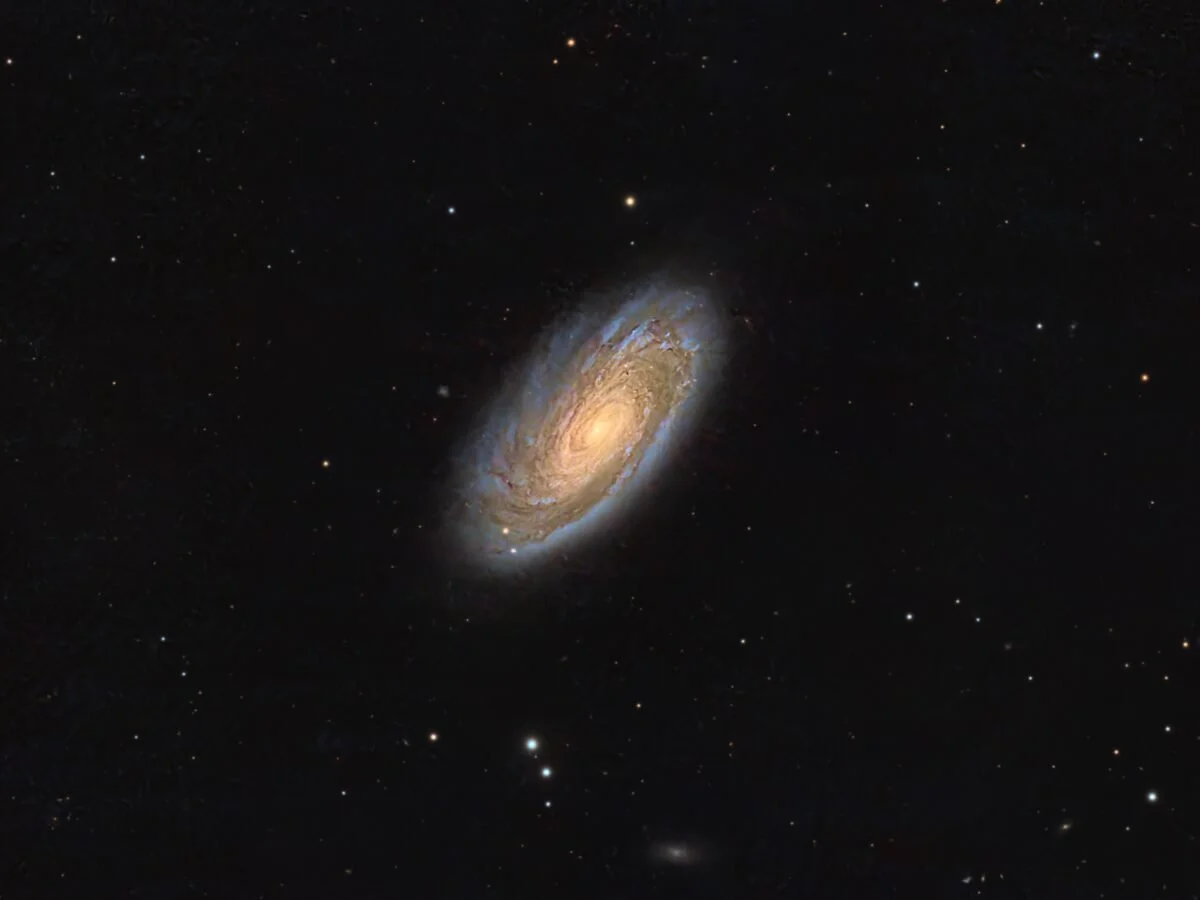
M88
Messier 88 (M88; NGC 4501) is a spiral galaxy, one of more than 2,000 galaxies in the Virgo Cluster. It’s about 50-60 million light years away from us in the constellation Coma Berenices. It’s inclined towards us at an angle of about 64 degrees, giving it a three-dimensional appearance. It is made up of about 400 billion stars, and more than 131,000 light years across. It’s relatively small on the sky, but that’s what this telescope specializes in! I included some Ha-filtered frames, which made a nice contribution to the image by subtly showing some red structures in the spiral arms near the core.
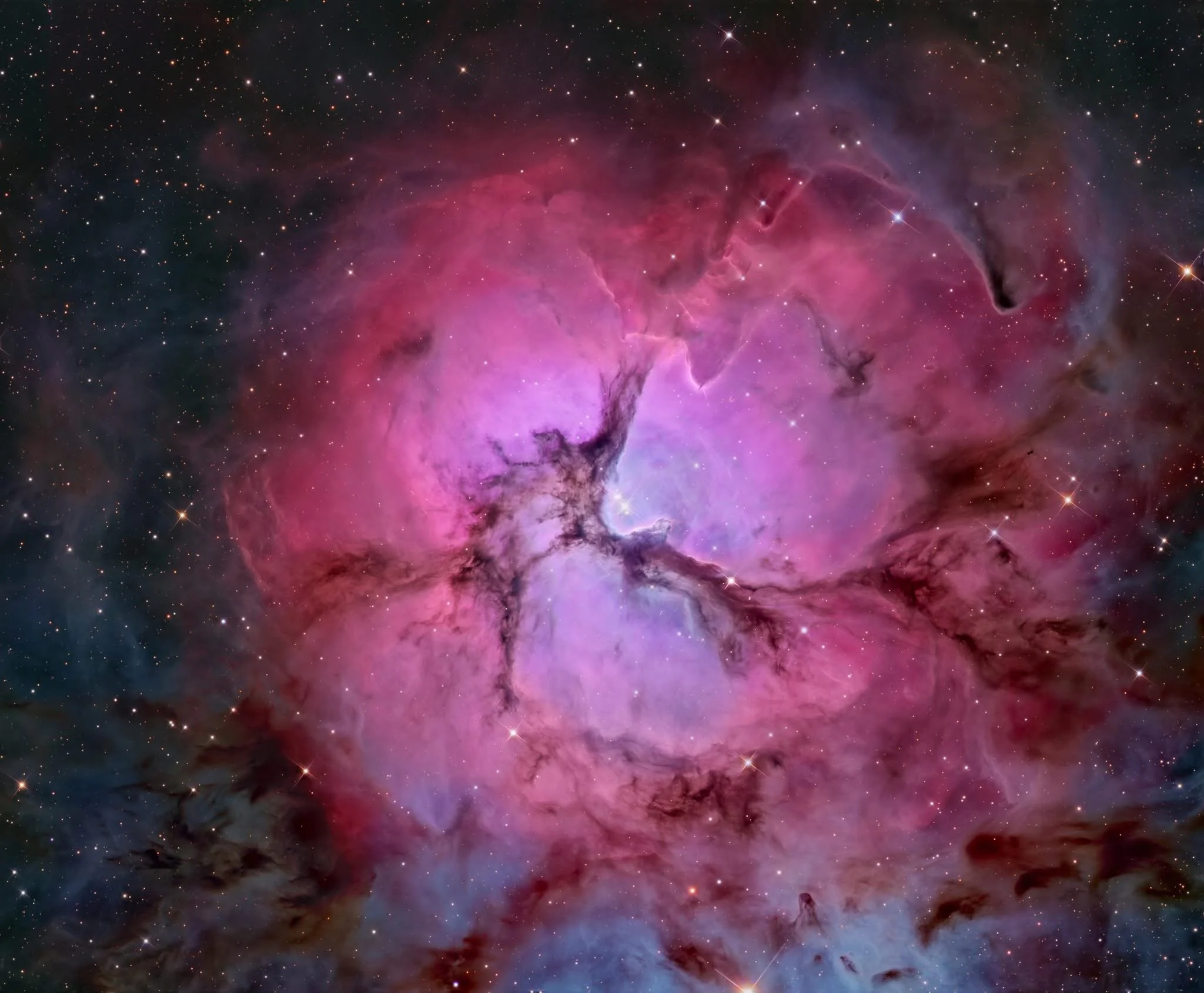
M20
A three-faced nebula — emission, reflection, and dark dust woven into a single stellar nursery
Messier 20, the Trifid Nebula (NGC 6514, Sharpless 30), is an H II region and embedded young stellar cluster in the constellation Sagittarius, lying within the Sagittarius–Carina Arm of the Milky Way along one of the richest star-forming corridors visible from Earth — as one of the most iconic and frequently imaged deep-sky objects in the southern sky, M20 is rarely seen at this scale, and the 9000 mm focal length of the ASA Astrosysteme AZ 1500 brings the nebula into close range, resolving the fine structure of the dust lanes, the texture of the ionisation fronts, and the embedded detail within the bright central cavity that wider-field treatments cannot reach
C/2025 R3 PanStarrs
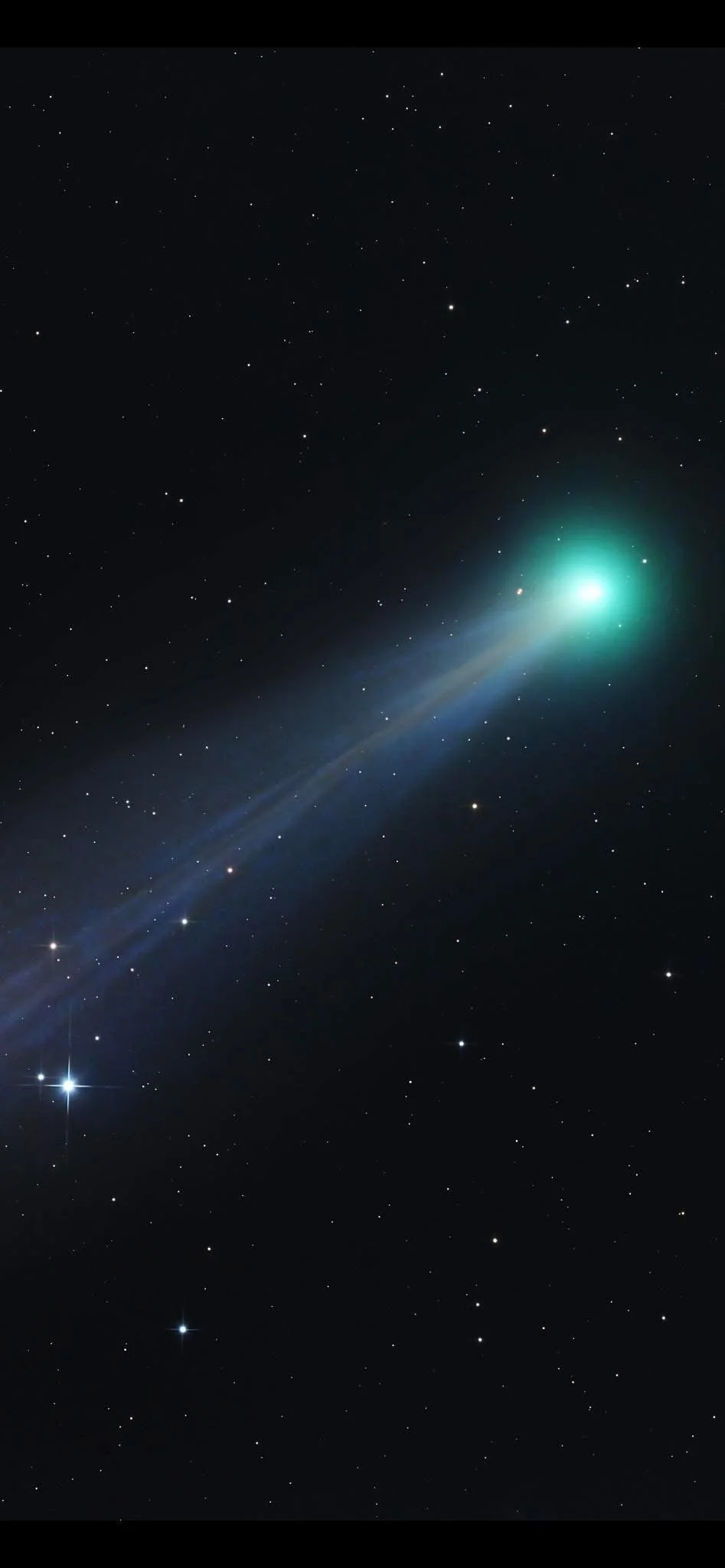
C/2025 R3 (Pan-STARRS) is a newly discovered long-period comet from the distant Oort Cloud that became one of the standout skywatching objects of 2026. First detected by the Pan-STARRS survey telescope in Hawaii on September 8, 2025, the comet swung through the inner Solar System in April 2026, passing just inside Earth’s orbit and briefly becoming visible to the naked eye under dark skies.
C 71
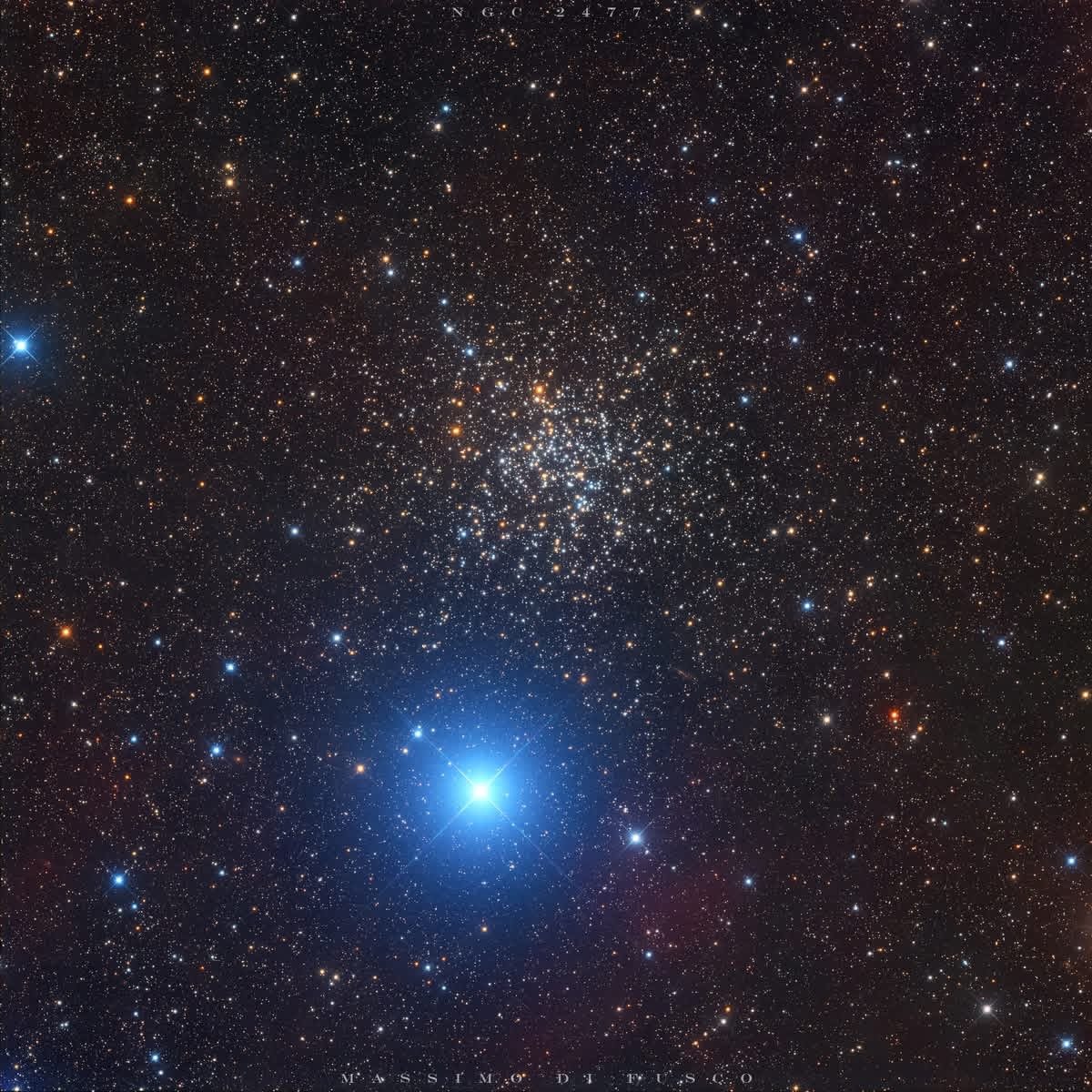
NGC 2477 (also known as C 71) is a brilliant open cluster in the constellation Poppa. It is a very compact object, in appearance most similar to a brilliant globular cluster, unless it is an object inside the Milky Way.
NGC 2477 is a rich and luminous cluster, consisting of a well-nourished star population; its distance is estimated to be around 4000 light years away and is therefore located probably in correspondence to a segment of Orion's Arm heading outward and perhaps intersecting the Perseus Arm.
IC 446 & IC 447 — A stellar nursery in Monoceros
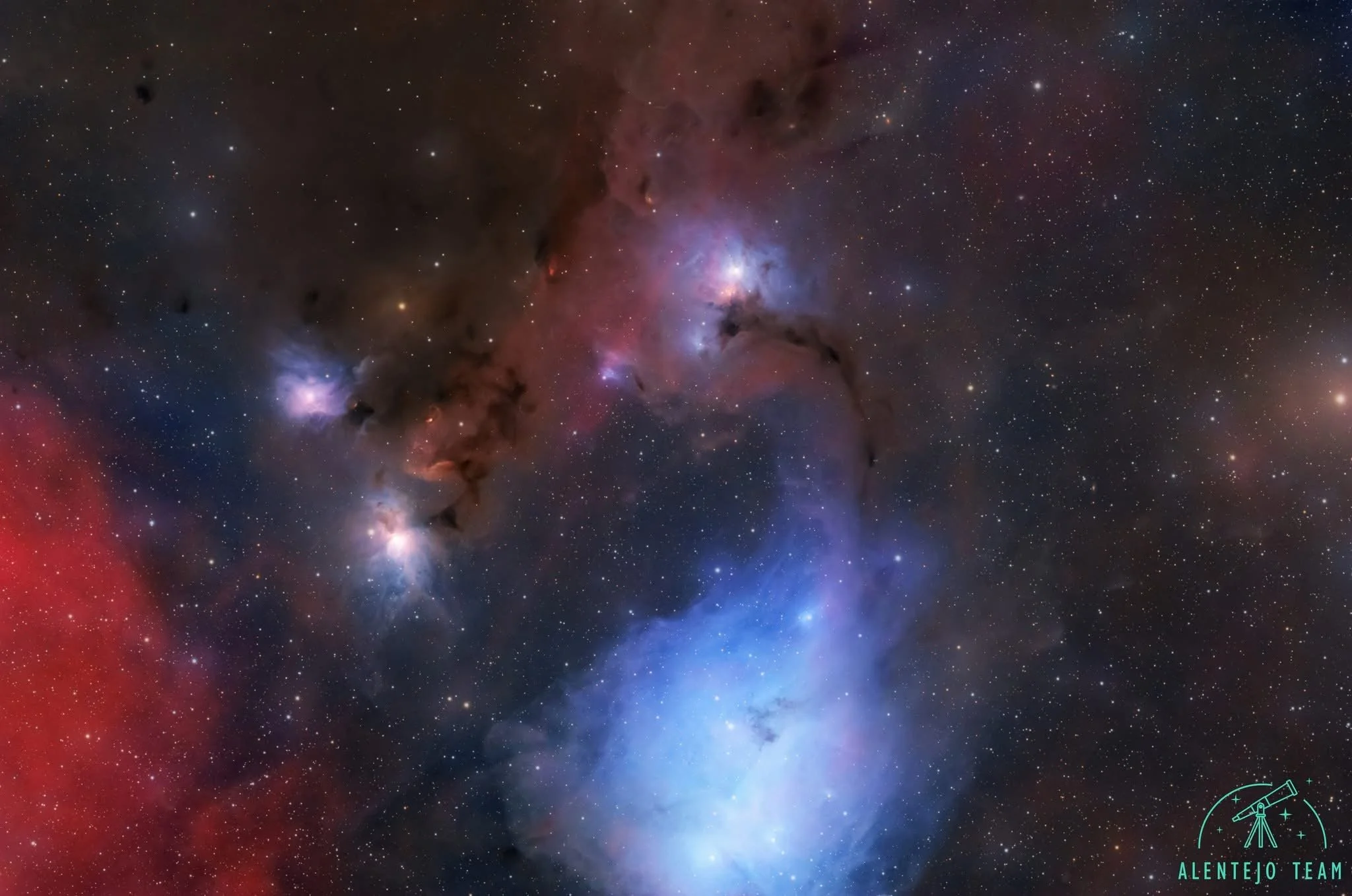
2,400 light-years away, two blue reflection nebulae bathe in the diffuse Hα emission of Sh2-266. At the heart of IC 446 (center of the frame), the Herbig Be star HD 259431 lights up its dust-bordered cavity and ejects small orange knots visible around it — Herbig-Haro objects, signatures of stars in active formation. IC 447, larger and more diffuse, spreads its broad cyan glow across the lower portion of the field.
Sh2-273
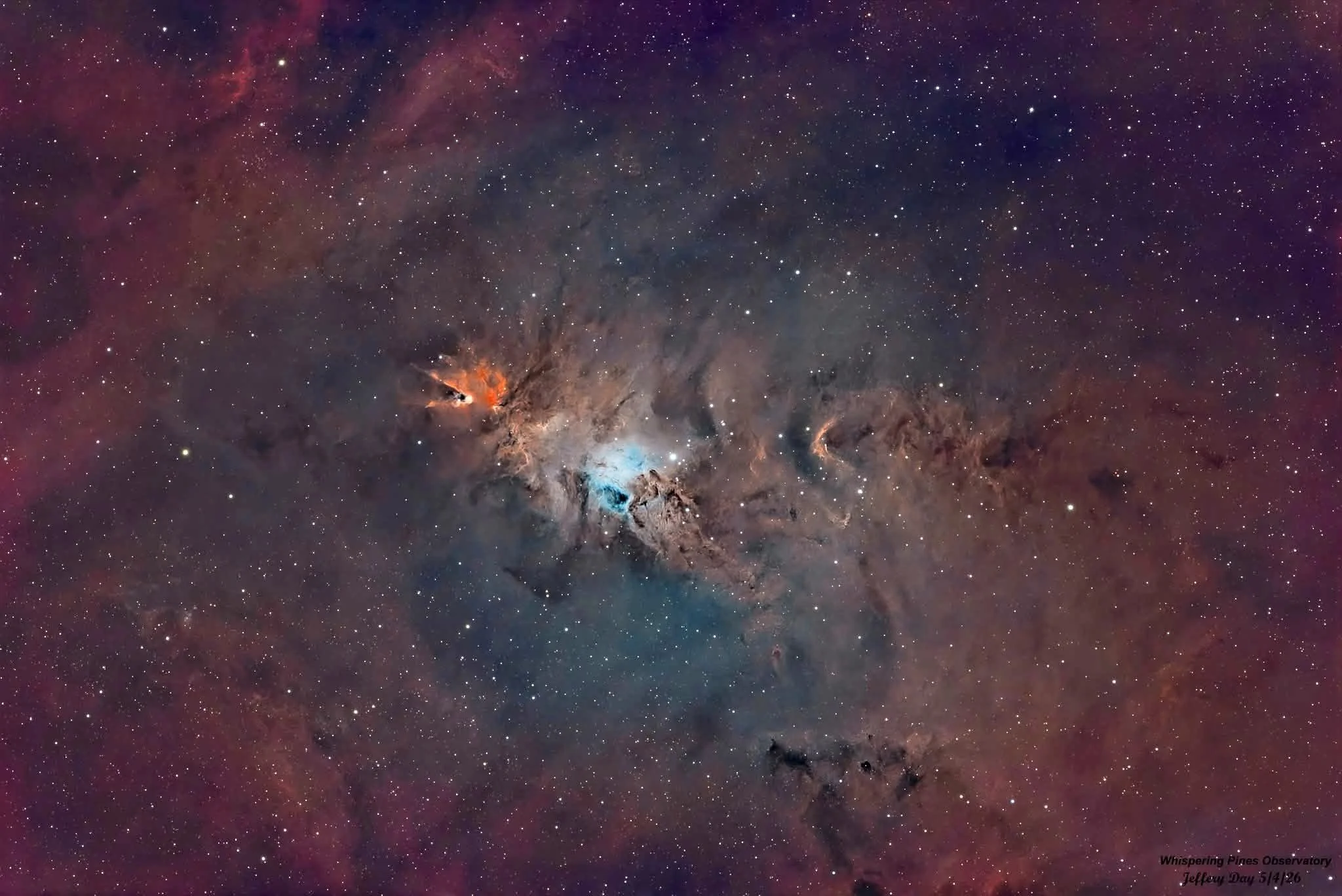
Sh2-273 is a large region and emission nebula located roughly 2,400–2,700 light-years away in the Monoceros constellation. As part of the NGC 2264 complex, it encompasses the famous Cone Nebula and the Christmas Tree Cluster. Sh2-273 is often specifically associated with the "Fox Fur Nebula" and is a vibrant, active star-forming region.