
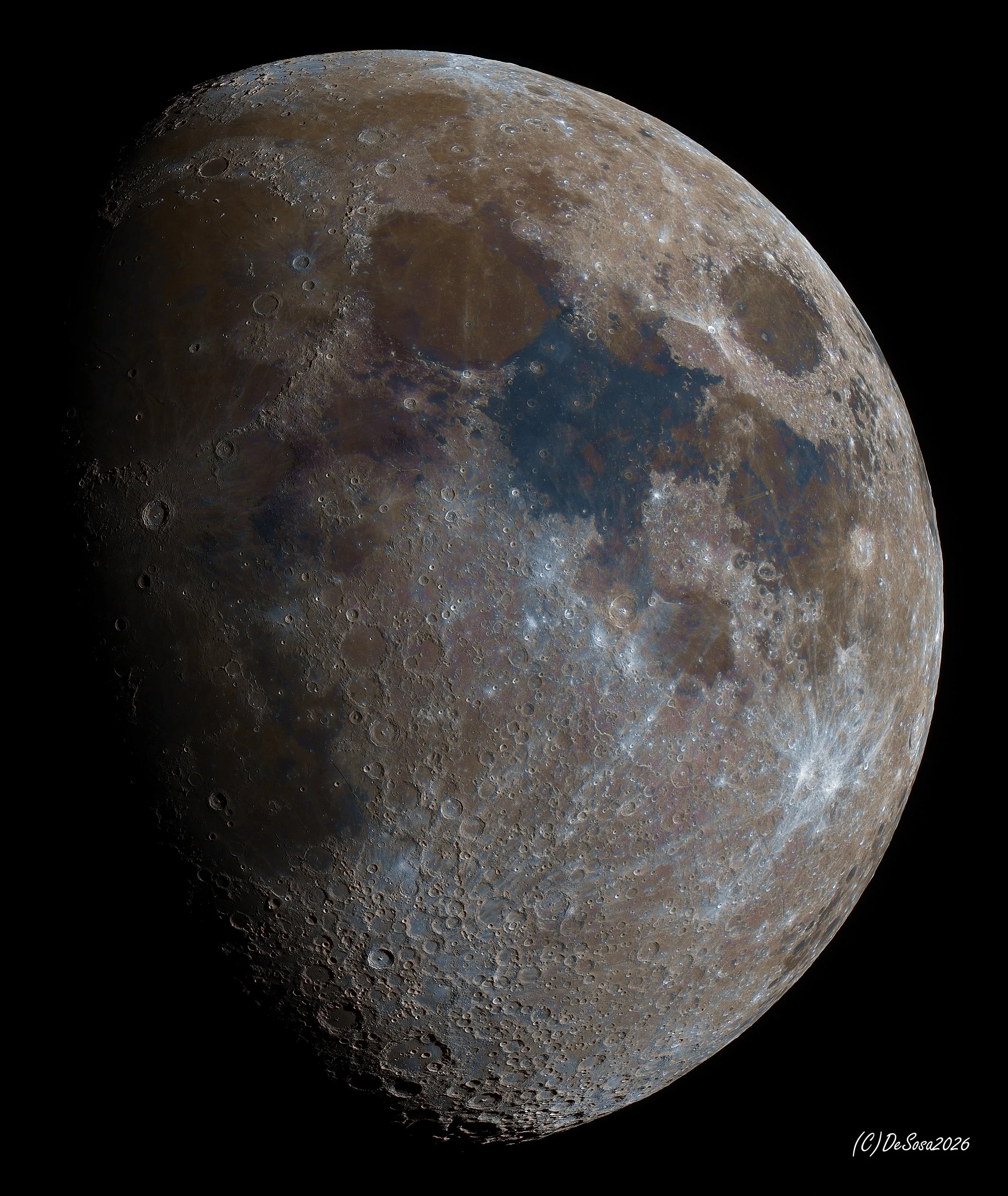
Description and Details: This color image have been generated using a color camera (ASI533C) for chrominance and a monochrome camera (ASI178MM) mosaic for luminance. The procesing technique follows:
- Take monochrome video with ASI178MM camera.
- Take color video with ASI533C camera.
- Create a high resolution image monochrome image (mosaic composed of 6 independent images).
- Create a color image.
- Process separatelly the high resolution monochrome image and the color image.
- Combine monochrome image as luminance and color image as chrominance. Adjust color RGB mixture, brighnesss and saturation as you like. Try not to be very agressive with color saturation for a more natural effect.
Despite appearances, the surface of the Moon has color and it is possible to capture it with a color or monochrome camera with filters. Each color is due to the large-scale presence of some type of mineral in the lunar crust, from basalts and iron oxides to titanium.
The color tones are very subtle, but real (it is not synthetic color), so during image processing the color saturation must be increased to make it visible, taking care of luminance as a source of detail and contrast.
Copyright: Jaime Fernandez
Share & Credit This AAPOD2 Feature
When you share this image on AstroBin, social media, forums, or your own website, please include a credit to AAPOD2 so viewers can discover where this feature came from.
Support AAPOD2 for free! Use Our AGENA ASTRO Affliate Link
AAPOD2 Title:
AAPOD2 Page Link: https://www.aapod2.com/blog/ilm7vzl8ih61smyln4mi2lypzl64v4
Submit Your Photo!