
AAPOD2 Image Archives
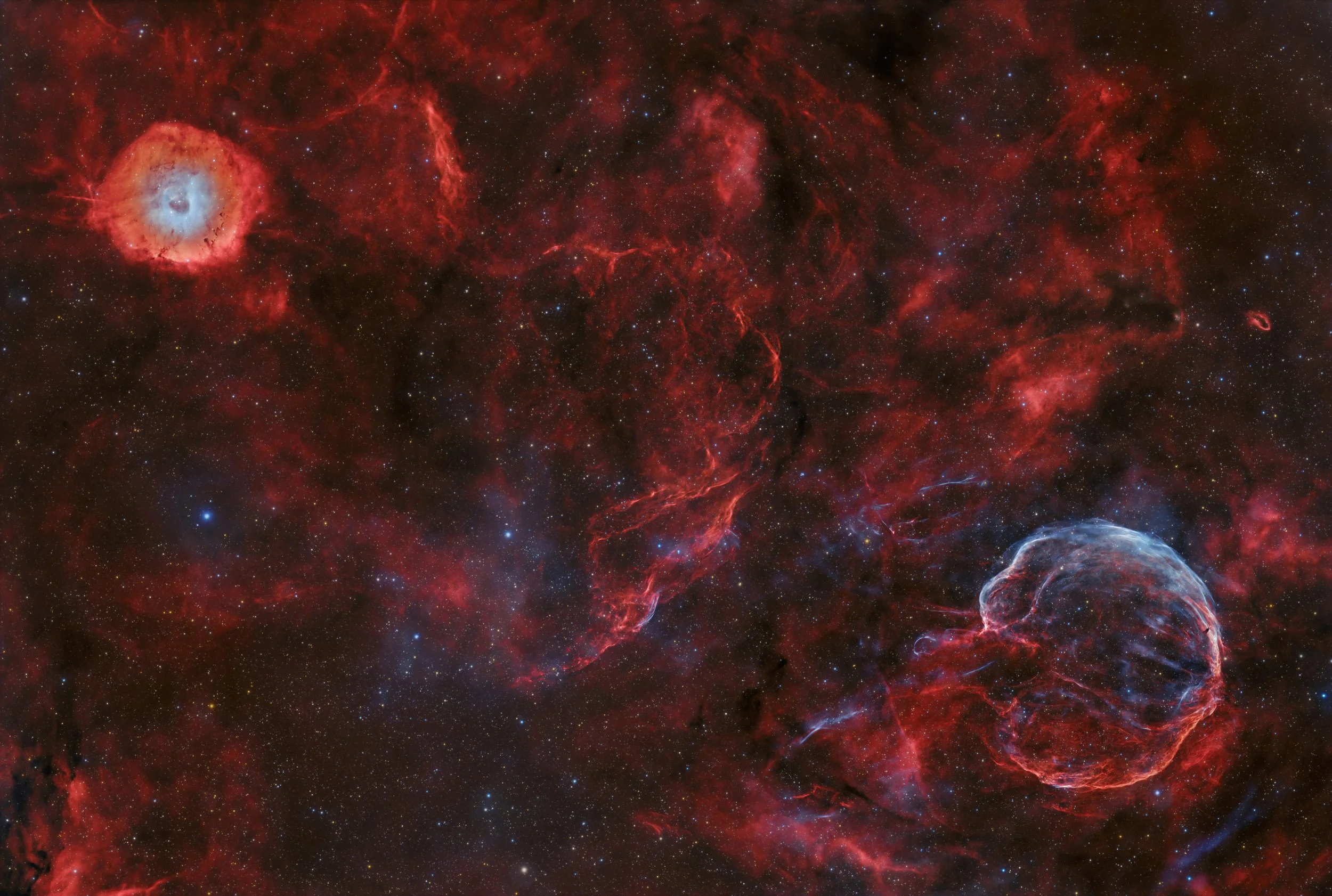
From Bloom (Sh2-170) to Garlic Head (Abell 85)
This sweeping widefield frames two fascinating but very different nebulae: Sh2-170, nicknamed the Little Rosette, and Abell 85 (CTB 1), often called the Garlic Head Nebula. Sh2-170 is an emission nebula whose rosy glow is powered by hot, young stars ionizing the surrounding hydrogen gas. Its compact, circular shape resembles a miniature version of the famous Rosette Nebula.
To its side lies Abell 85, a much older supernova remnant spanning about 100 light-years. Its faint filaments trace the shockwaves from a massive star that exploded thousands of years ago, leaving behind this ghostly bubble of energized gas. Capturing both objects in a single frame highlights the dramatic contrast between stellar birth and death in our galaxy.
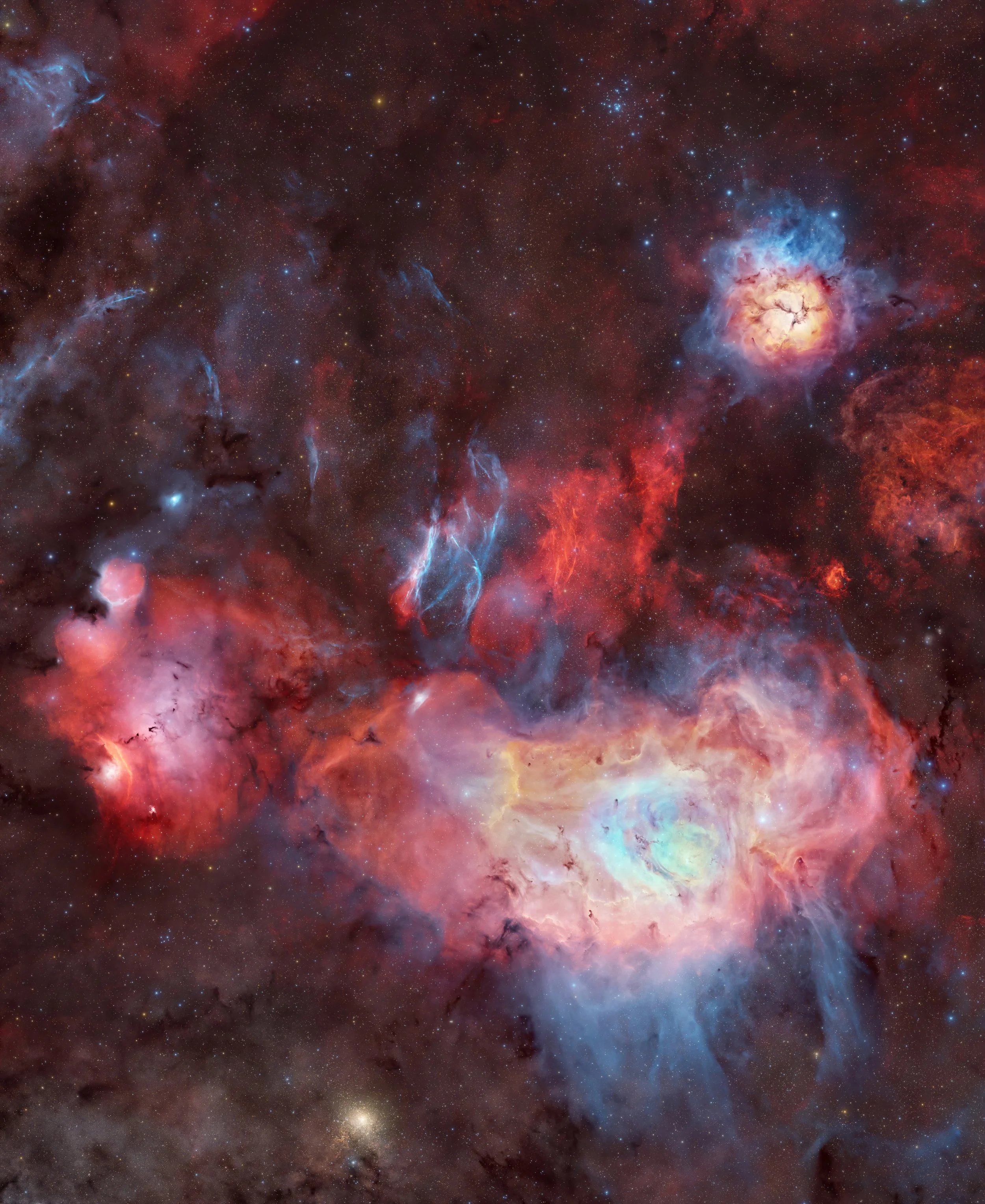
Where Stars Are Born and Die (M8, M20 & SNR G007.5-01.7)
This breathtaking wide-field view brings together two stellar nurseries and the ghost of a dying star. At the bottom right glows the Lagoon Nebula (M8), a massive H II region where new stars form from collapsing clouds of gas and dust. Above it lies the Trifid Nebula (M20), easily recognized by its dark dust lanes that divide its bright blue and red emission. Both regions are among the most active star-forming complexes in the Milky Way, lying some 4,000 to 5,000 light-years away in Sagittarius.
Threaded across the scene are faint, delicate filaments belonging to the supernova remnant SNR G007.5-01.7. Unlike the nebulae forging new suns, these wisps are the expanding remains of a massive star that ended its life in a cataclysmic explosion. This juxtaposition of creation and destruction highlights the cosmic cycle of stellar evolution, where the death of one star enriches the interstellar medium to seed the birth of many more.
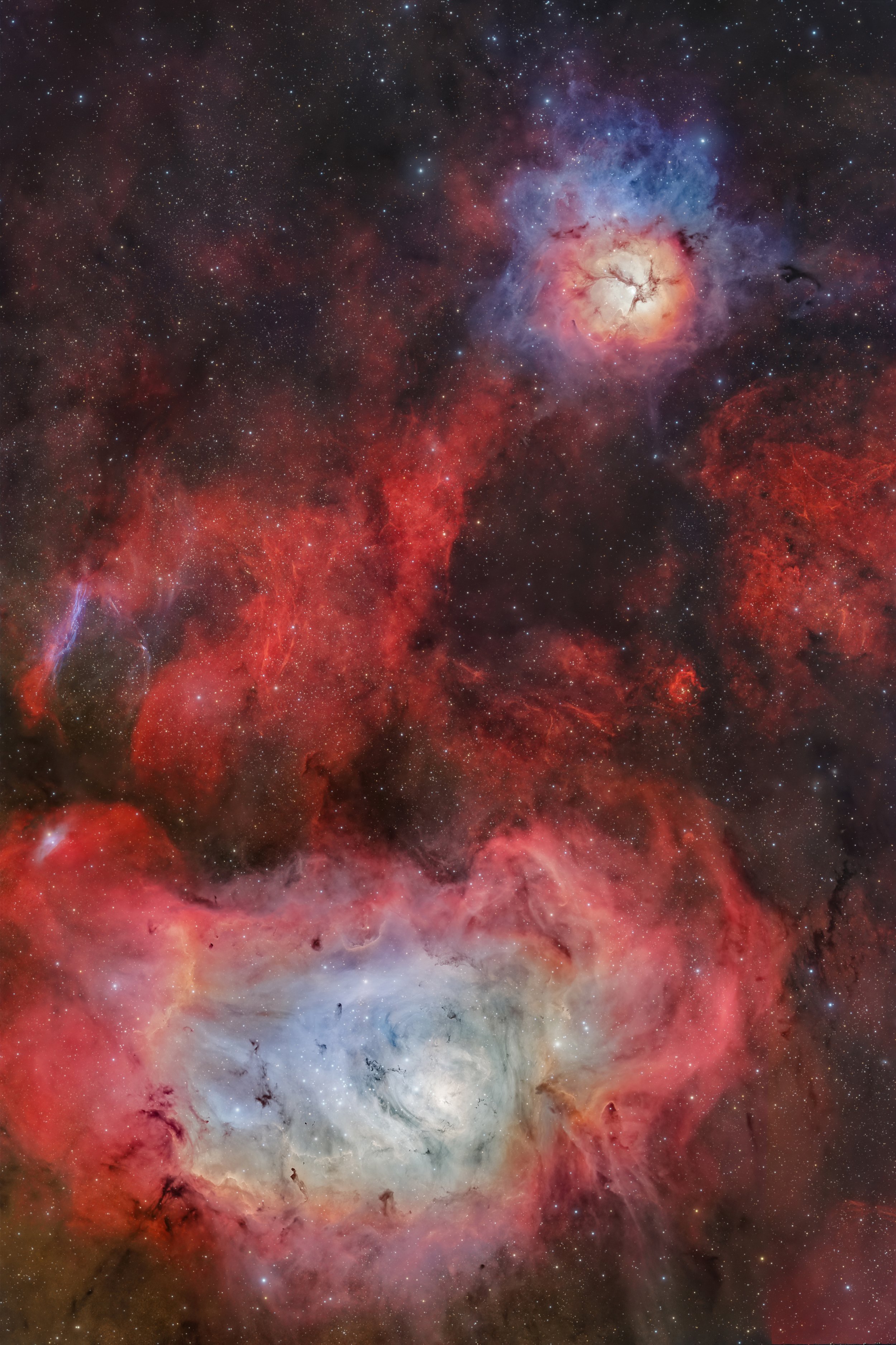
Stardust Odyssey in Sagittarius: From Lagoon (M8) to Trifid (M20)
The Lagoon Nebula (M8) and the Trifid Nebula (M20) are two of the most photogenic star-forming regions in the constellation Sagittarius. Separated by less than two degrees on the sky, they lie roughly 4,100 and 5,200 light-years away, respectively. M8 dominates the lower half of the frame, showcasing turbulent clouds of ionized gas, reflection nebulae, and embedded star clusters. At the top, M20 features a rare combination of emission, reflection, and dark nebulae, intersected by thick dust lanes.
This rendition combines LRGB data with narrowband emission mapped to a Foraxx-inspired palette, enhancing the contrast between ionized hydrogen, oxygen, and sulfur. The resulting image highlights the dynamic interplay of radiation and stellar winds shaping these regions, where stars are actively forming within dense molecular clouds.
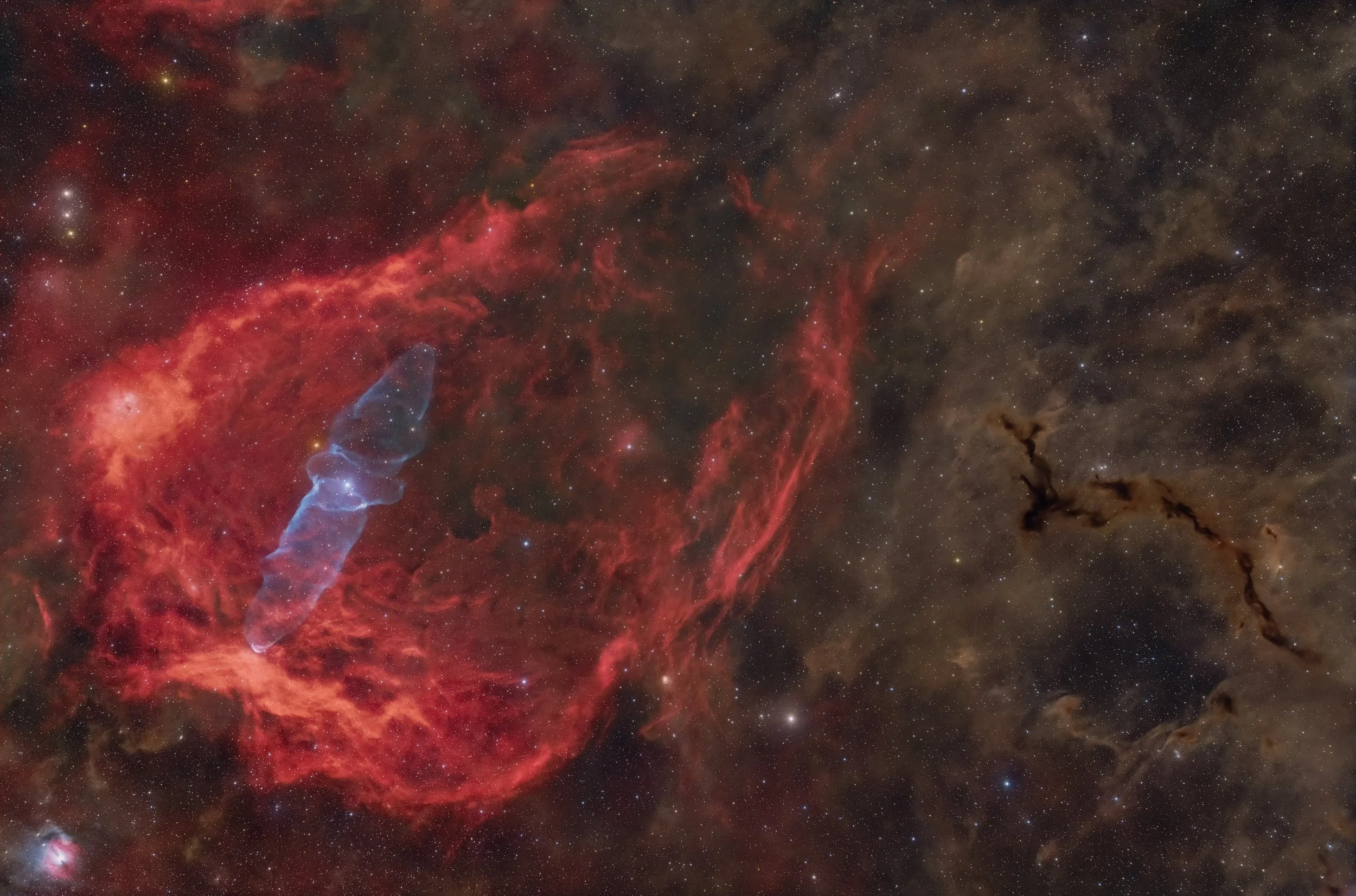
The Squid and the Seahorse: A Deep Dive into Cepheus
A meeting of light and shadow unfolds in this wide-field image from the Atlas Mountains of Morocco, revealing some of Cepheus’s most enigmatic structures. At the center of the glowing red Flying Bat Nebula (Sh2-129) lies the elusive Squid Nebula (Ou4), a faint bipolar outflow visible primarily in OIII that appears to swim through a sea of hydrogen gas. The Squid’s rare bluish arcs contrast spectacularly against the deep red ionization front of the surrounding nebula.
To the right, Barnard 150 — the Seahorse Nebula — winds its way through the dusty starfield as a silhouetted column of interstellar dust, marking an active cradle of young stars still hidden within. Completing the tableau is LBN 446, a reflection nebula that drapes the scene in soft starlight. Captured in a single frame thanks to a full-frame sensor and dark skies, this scene highlights the power of international collaboration and remote observatories to reveal cosmic vistas otherwise out of reach.
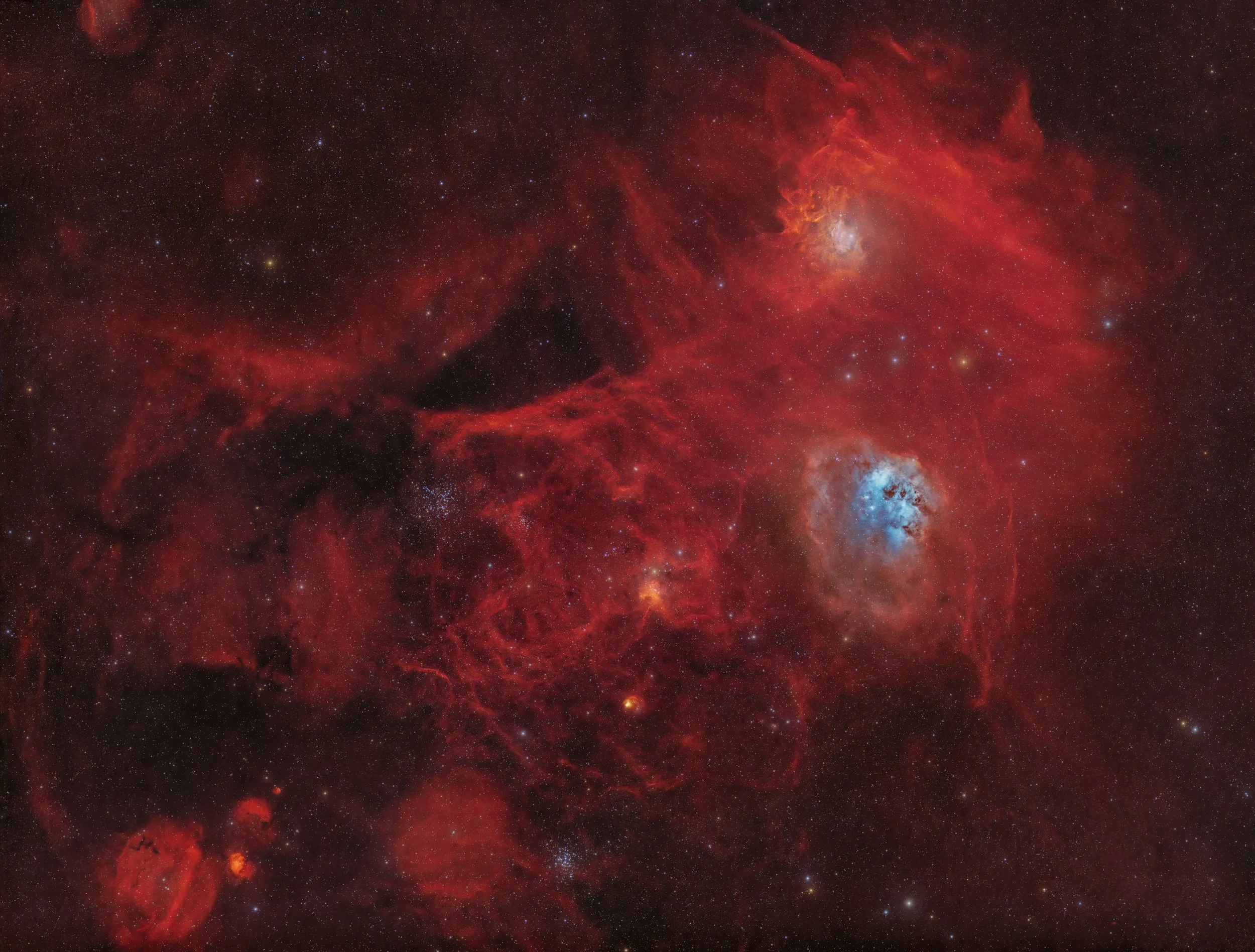
Auriga's Heartbeat: Nebulae and an Ancient Cluster
his vibrant wide-field image captures two prominent emission nebulae in the constellation Auriga: the Flaming Star Nebula (IC 405) and the Tadpole Nebula (IC 410). IC 405 glows with the intense light of the hot star AE Aurigae, which energizes surrounding hydrogen gas, creating a fiery appearance. Nearby, IC 410 houses the "tadpoles"—dense, dusty structures sculpted by stellar winds from the young cluster NGC 1893.
The image combines over 20 hours of integration using both narrowband and broadband filters. The result is a richly detailed view blending structure, color, and contrast—highlighting the dynamic interplay of ionized gases and star formation within these celestial clouds.
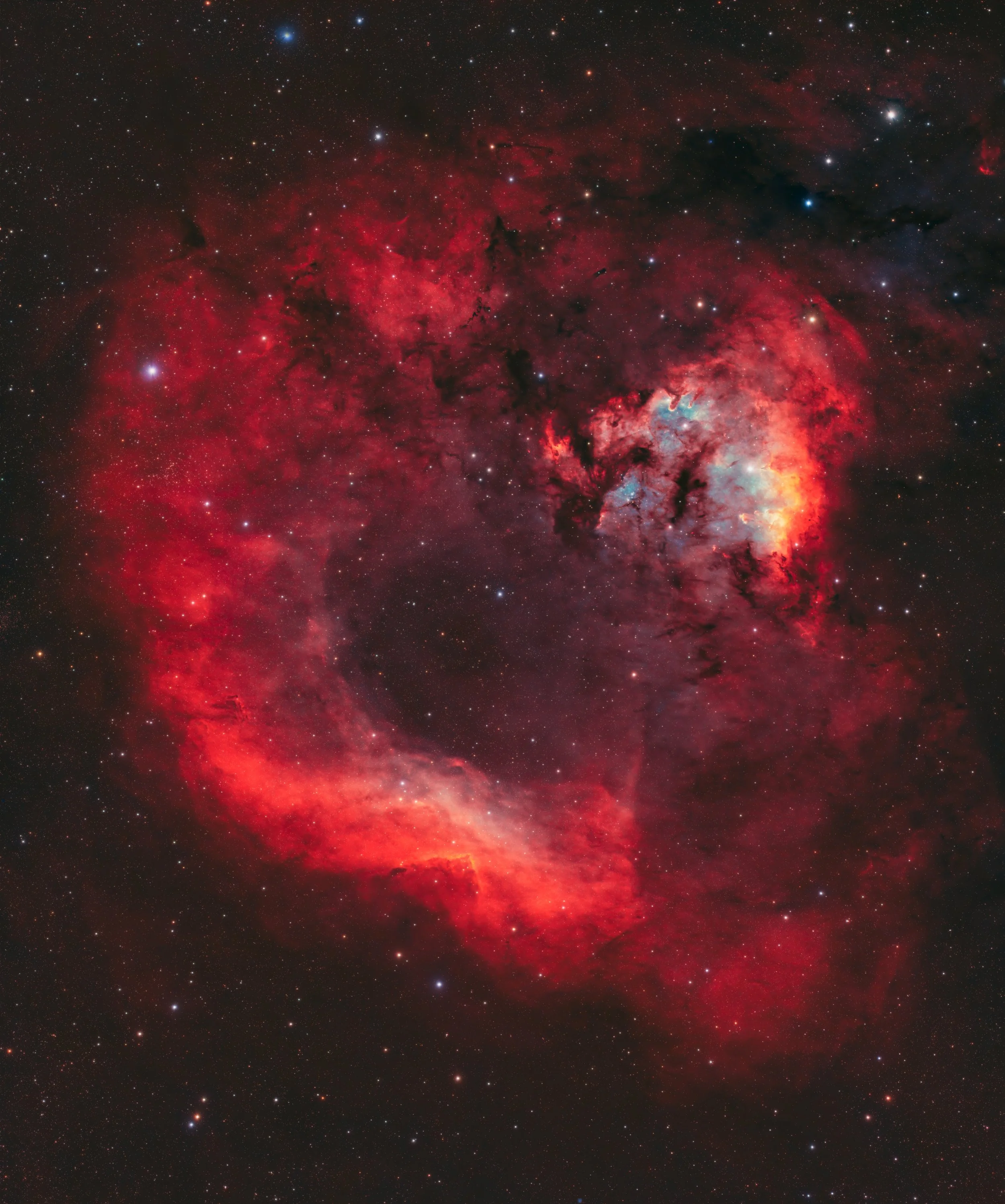
NGC 7822
NGC 7822, a celestial jewel nestled in the constellation Cepheus, beckons our gaze from a distance of approximately 3,000 light-years away. This stunning emission nebula is a testament to the relentless forces of cosmic creation, where colossal pillars of gas and dust stand as monolithic sentinels, nurturing the birth of new stars within their shadowy embrace. In this mesmerizing image, the photographer has adeptly captured the vibrant tapestry of NGC 7822, where the intense radiation from newborn stars sculpts and illuminates the surrounding nebular clouds, painting the scene with vivid hues of red and blue. This celestial vista serves as a poignant reminder of the intricate interplay between light and darkness in the cosmic theater, where stars are born from the depths of interstellar chaos, offering a glimpse into the ongoing epic of our ever-evolving universe.