

AAPOD2 Image Archives

NGC 1532 - a distorted edge-on barred spiral galaxy in Eridanus
NGC 1532 is a most unusual and beautiful galaxy. It is an edge-on barred spiral about 58 million light years away in the constellation of Eridanus.

Solar System
Image Description and Details :
Records of the Solar System that I performed in 2020With the exception of the Moon and Mars (as they would be too small), the other objects in the image are (approximately) proportional to their actual size.Sky-Watcher 203mm F/5 EQ5 reflector with Onstep, ASI 290MC, UV/IR Cut filter, Barlow Tele Vue 3x (Planets), Thousand Oaks Solar Filter (Sun).
Copyright: Maicon Lopes Nunes
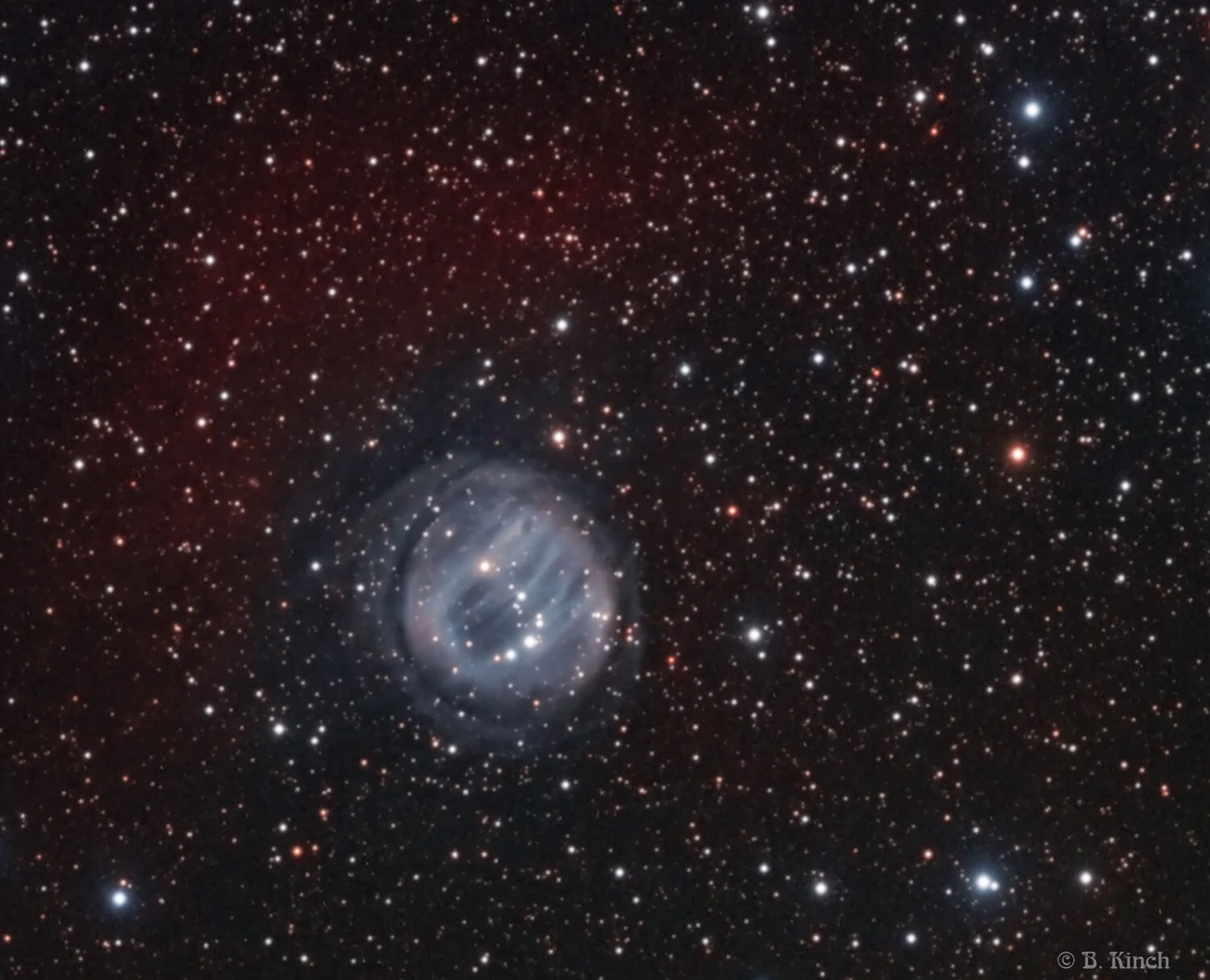
SH2-200
Image Description and Details :
This nebula was first discovered by the astronomer Stewart Sharpless in 1959 who included it in his catalogue of HII regions under the name of Sh2-200. In 1983, Sh2-200 was included in the HDW catalogue of possible planetary nebulae by the astronomers Herbert Hartl, Johann Dengel and Ronald Weinberger. However it wasn't confirmed to be a true genuine planetary nebula until 2017 when spectra was taken as part of professional observations. In 1987, further narrowband observations by Herbert Hartl and Ronald Weinberger detected a large faint outer halo extending further than the central shell.Imaging telescopes or lenses: Takahashi FSQ130EDImaging cameras: QSI 6120iMounts: Takahashi EM 400 Temma 2Guiding cameras: QHY CCD QHY 5 IIDates: Nov. 22 - Dec. 12, 2020Frames:Astrodon Ha 5nm: 45x1200" Astrodon OIII 5nm: 45x1200"Astrodon RGB: 3x30x120" Integration: 33 Hours
Copyright: Brendan Kinch

IC 434 - Horsehead Nebula
Image Description and Details :
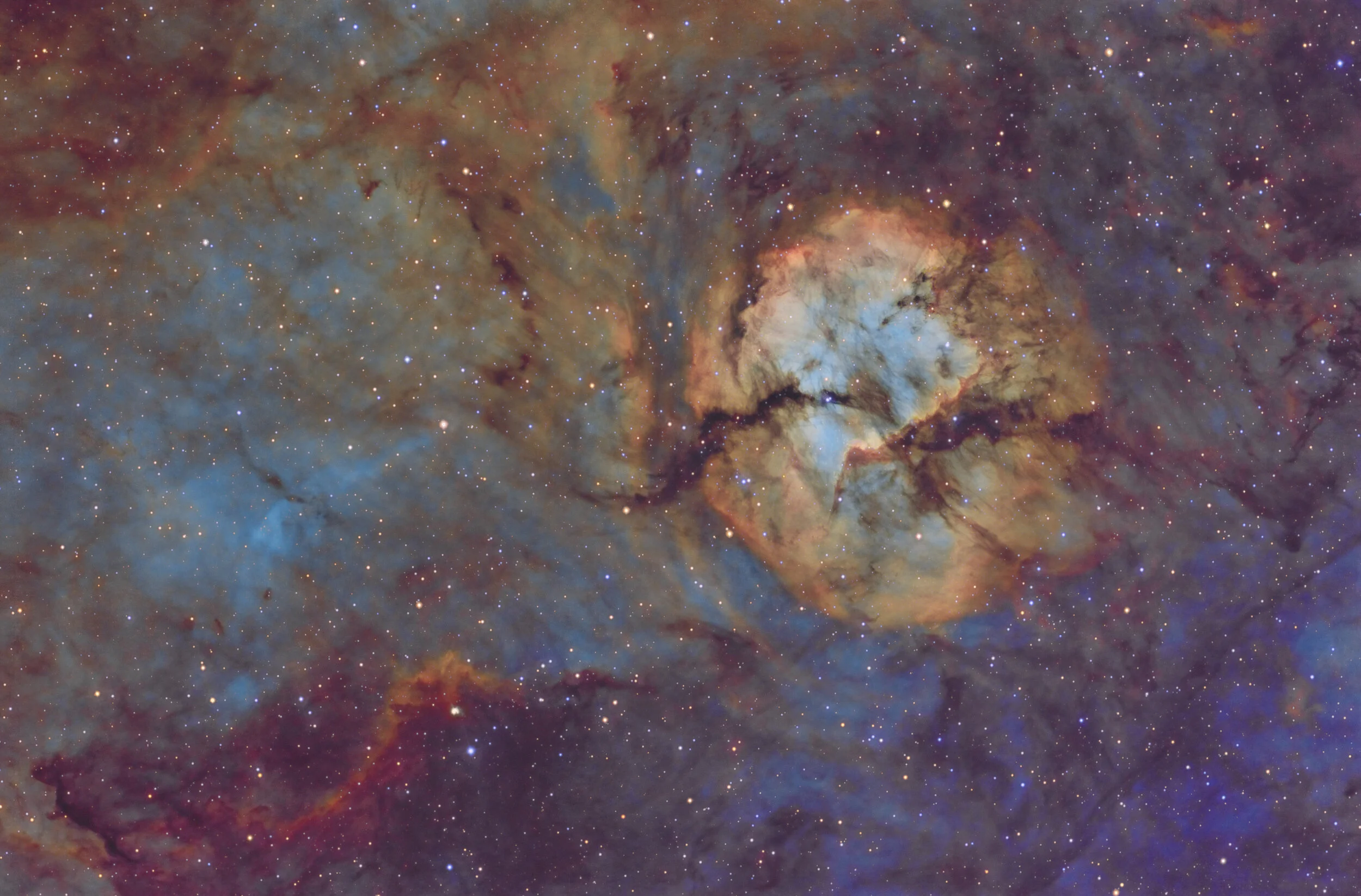
RECORDING DATA:Object: IC 434Recording date: November / December 2020Distance: 1,500 light yearsDiameter: 3 light yearsExposure: 75 x 300 sec. For RGB26 x 900 sec. For dual narrow bandTotal: 12.7 hoursCalibration: Darks / Flats / DarkFlatsMount: Skywatcher EQ6-R PROTelescope: Lacerta Fotonewton 250/1000Corrector: Lacerta GPU coma correctorFilter: Astronomik L2 UV-IR Block 2 ″Optolong filter L-eXtreme 2 ″Camera: QHY268c @ Gain 0/60 at -15 ° CGuiding: ZWO OAG with ASI 120mm-s and PHD2Software: APP / Photoshop CC
Copyright: Daniel Nimmervoll
The Great Orion Nebula and Running Man
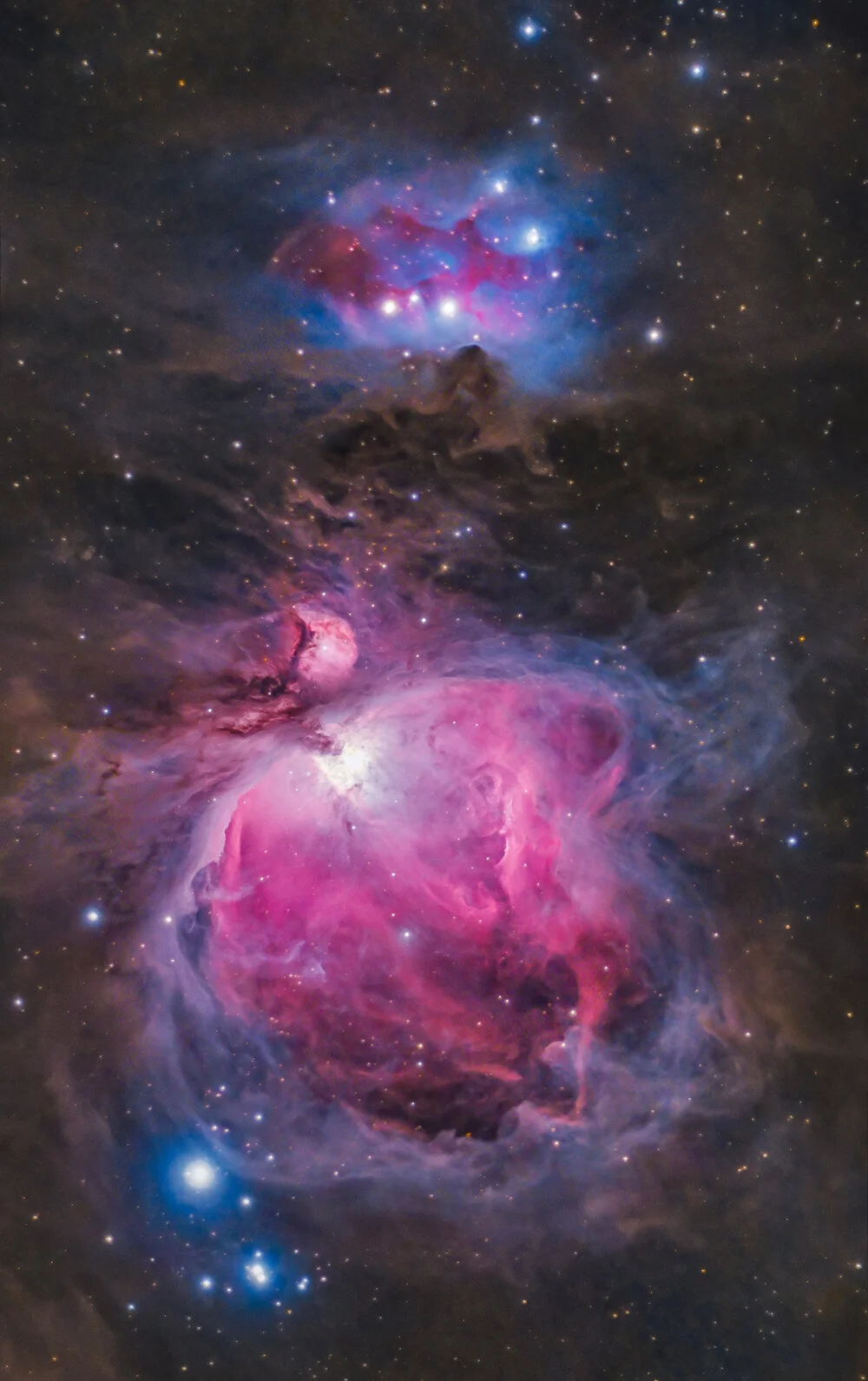
The Orion Nebula (also known as Messier 42, M42, or NGC 1976) is a diffuse nebula situated in the Milky Way, south of Orion's Belt in the constellation of Orion.
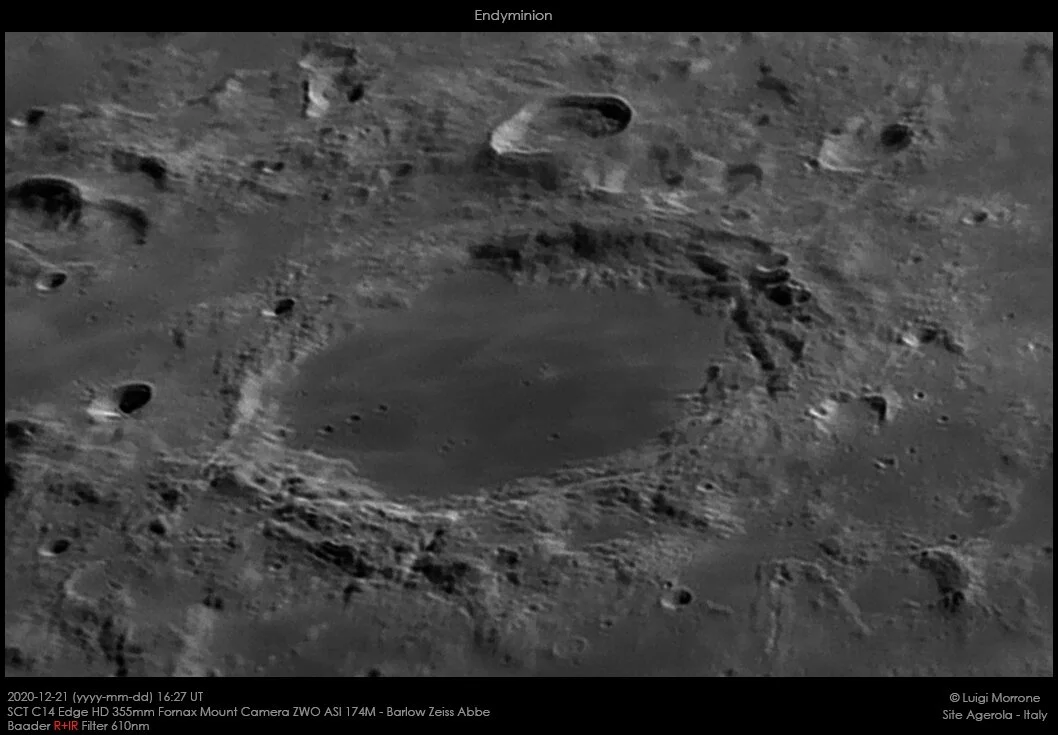
Lunar craters: Endymion & Hayn
Many interesting the crater Hayn located to the northeast limb of the Moon. The observation of the crater is affected by the libration phase and this limits its view.
C14 Edge HD, Fornax52 mount, ASI174 mono, Baader R+IR>610nn Barlow Zeiss.
https://www.astrobin.com/full/ue0hip/0/?nc=user
Agerola-Amalfitan-Coast-Italy
Copyright: Morrone Luigi
Planetary nebula KjPn 8 and Bubble Nebula
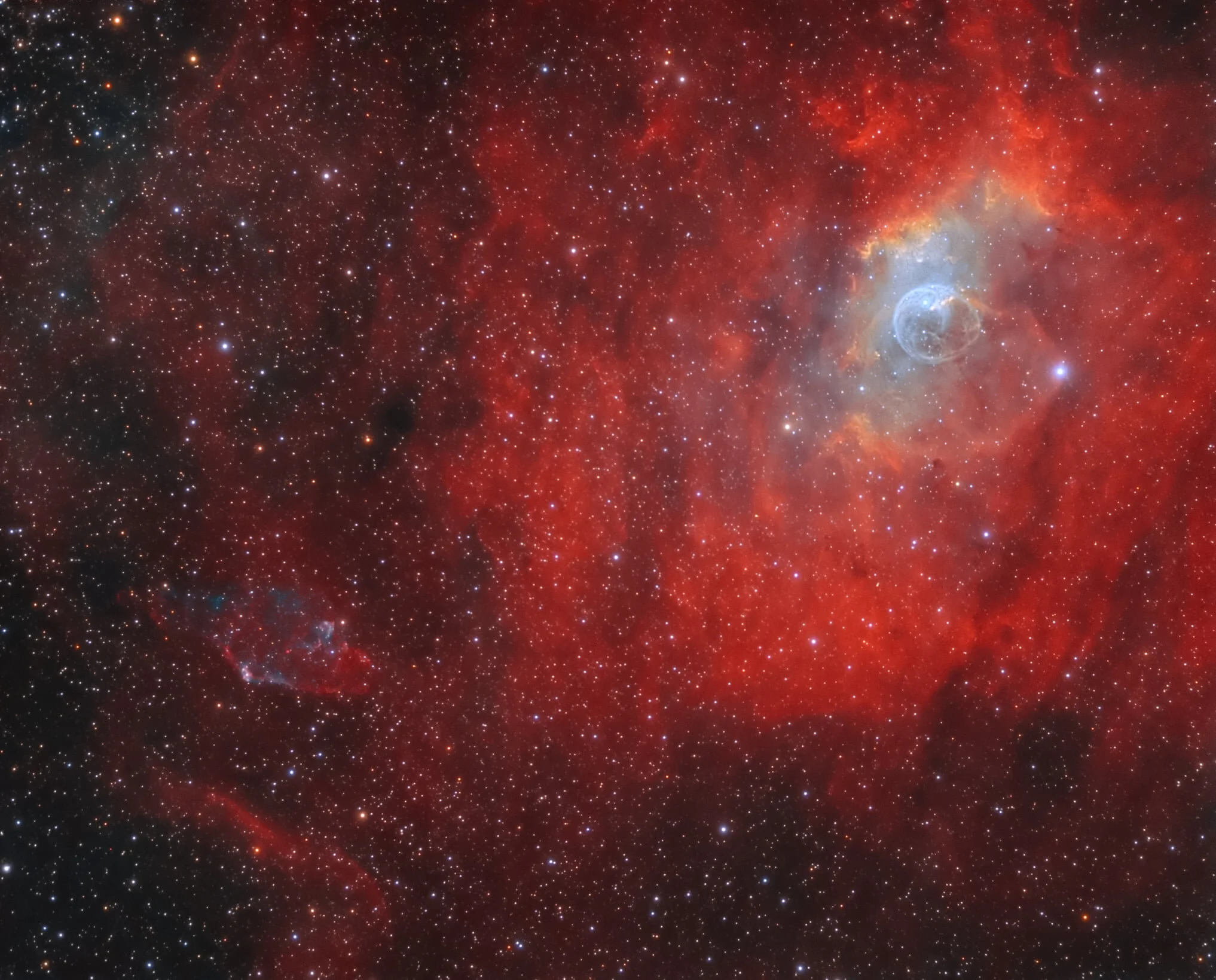
Planetary nebula KjPn 8 (PN G112.5-00.1, K3-89) and Bubble Nebula (NGC7635) in the constellation Cassiopeia.KjPn 8 (PN G112.5-00.1, K3-89) is a bipolar planetary nebula which was discovered by M.A.Kazaryan and Eh.S.Parsamyan in 1971 and independently by Kohoutek in 1972. It is one of the strangest and possibly most unique planetary nebulae in the sky. In my image, we see it on the left side of the frame below the center. Planetary nebula consists of a compact red core (apparent size is about 3–4 arcsec in diameter) surounded by a huge bipolar lobe structure that measures 12x5 arcminutes. There is the possibility that the two separate structures are two separate planetary nebulae formed from both members of a binary star system moving onto the planetary nebula phase within a few thousand years of each other.
This image taken over several nights in November 2020.R-channel - 20 x 150 sec. bin 1x1;G-channel - 20 x 150 sec. bin 1x1;B-channel - 20 x 150 sec. bin 1x1;Ha- 46 x 600 sec. bin 2x2;OIII- 74 x 600 sec. bin 2x2.Total integration time about 22:30 hours.
My setup: Telescope 8" Celestron Schmidt-Cassegrain (SCT) CPC800 GPS (XLT) on the equatorial wedge, focal reducer Starizona Night Owl 0.4х, Feq=864mm, camera Starlight Xpress Trius SX694, SX mini filter wheel, filters Astrodon LRGB E-series gen.2, Astrodon Ha 5nm, Astrodon OIII 3nm.Capture and processing software: MaxIm DL6, PHD2, PixInsight, StarTools, Photoshop CC, Zoner photo studio 14.North at the top.
Copyright: Boris Vladimirovich
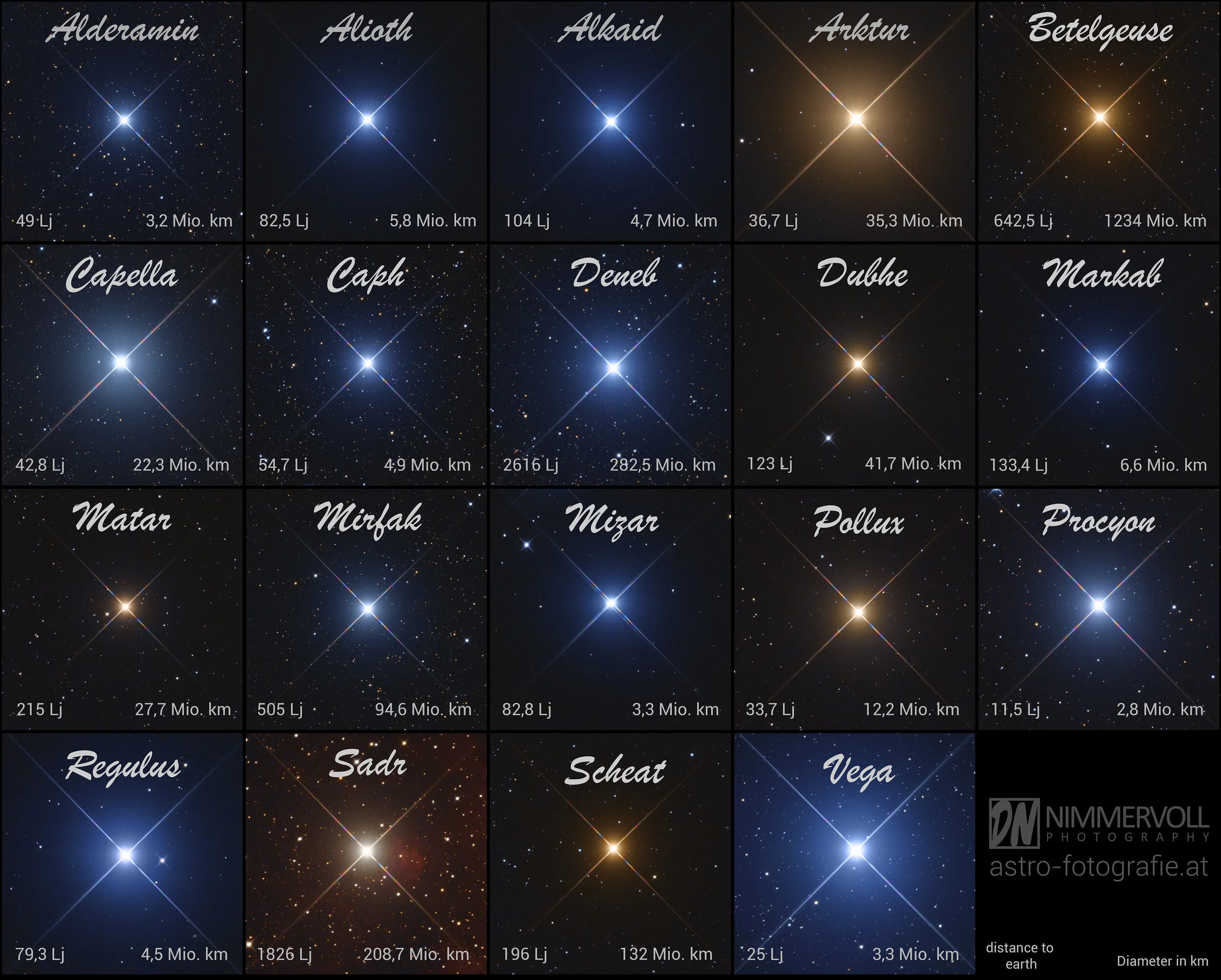
The night of the stars
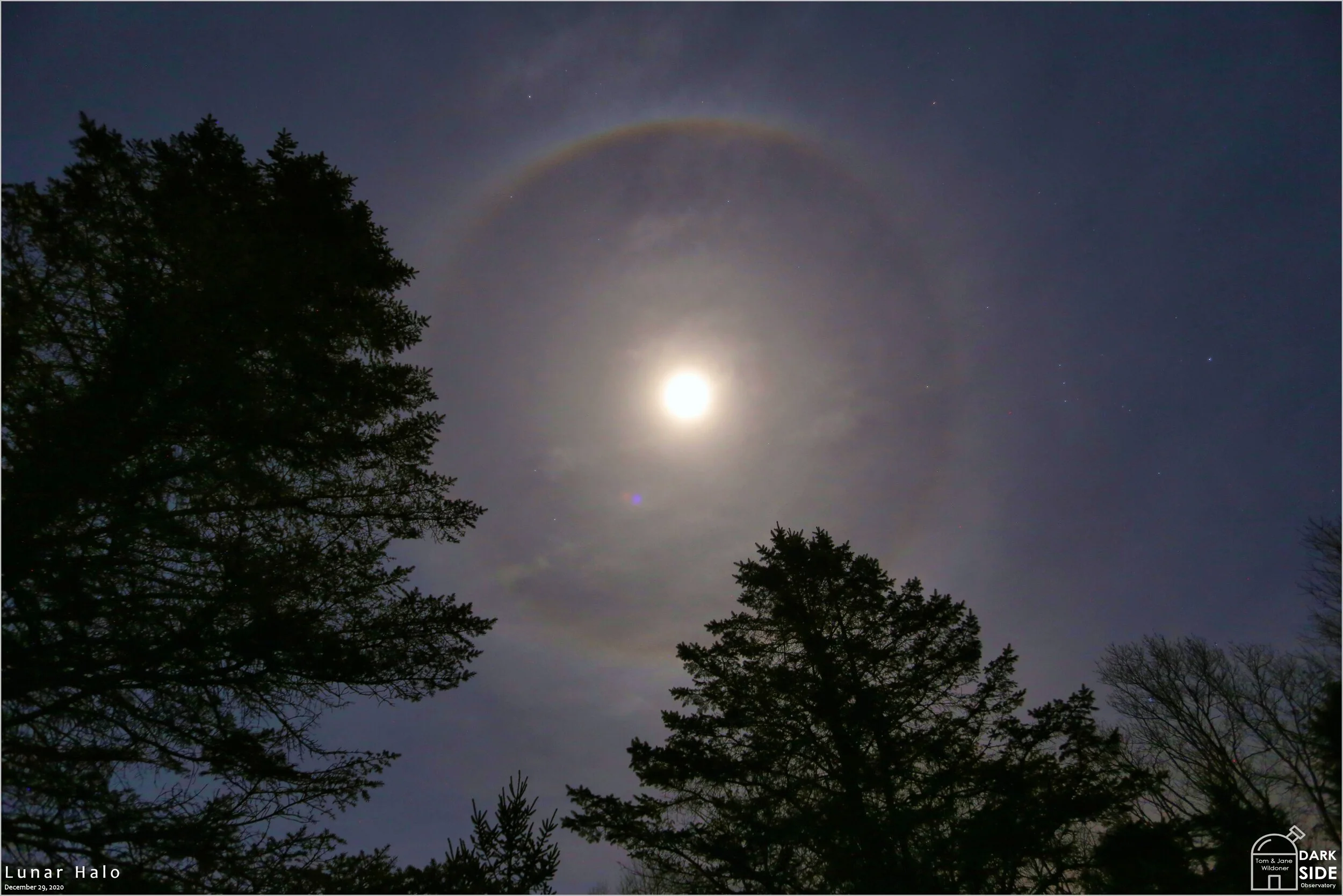
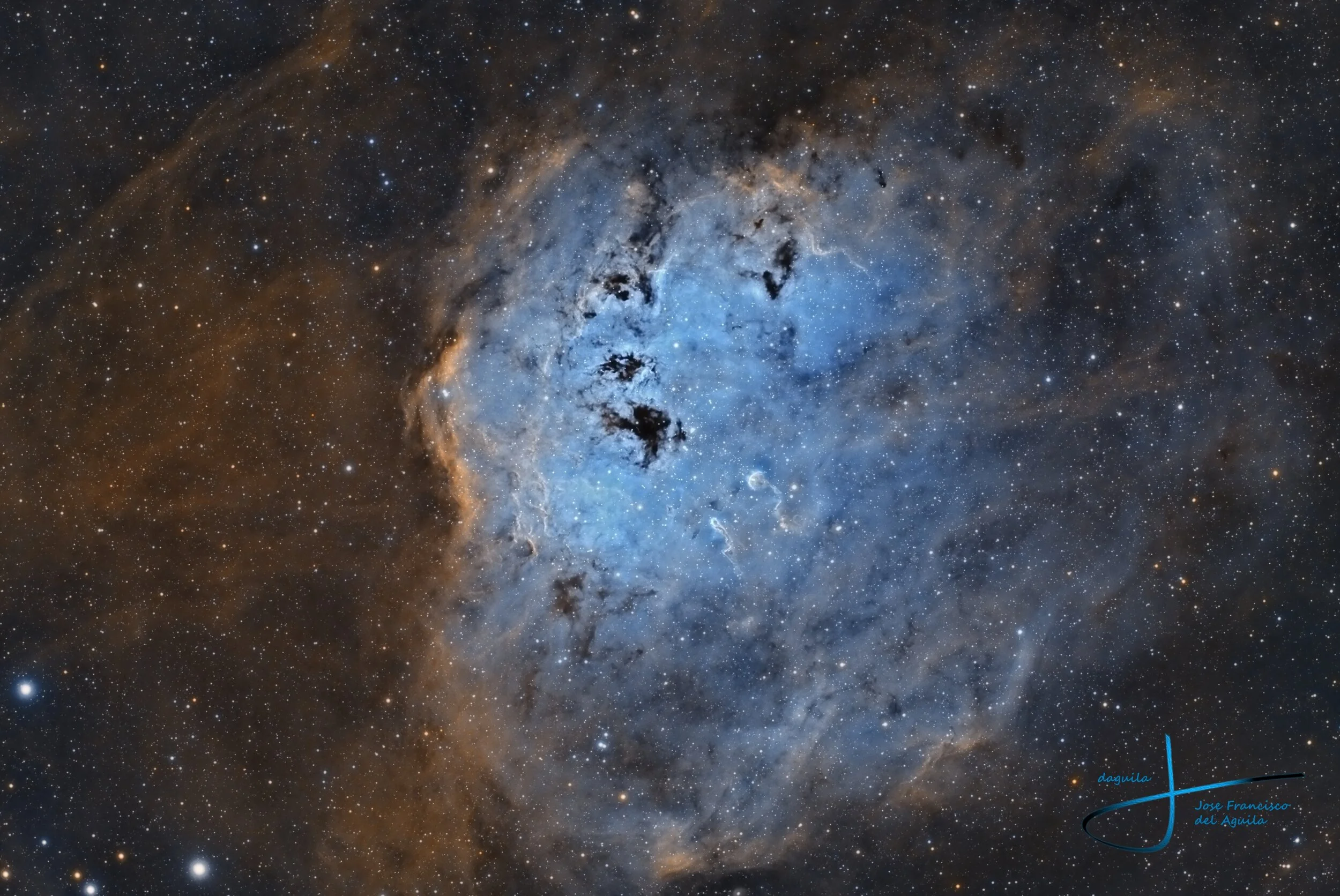
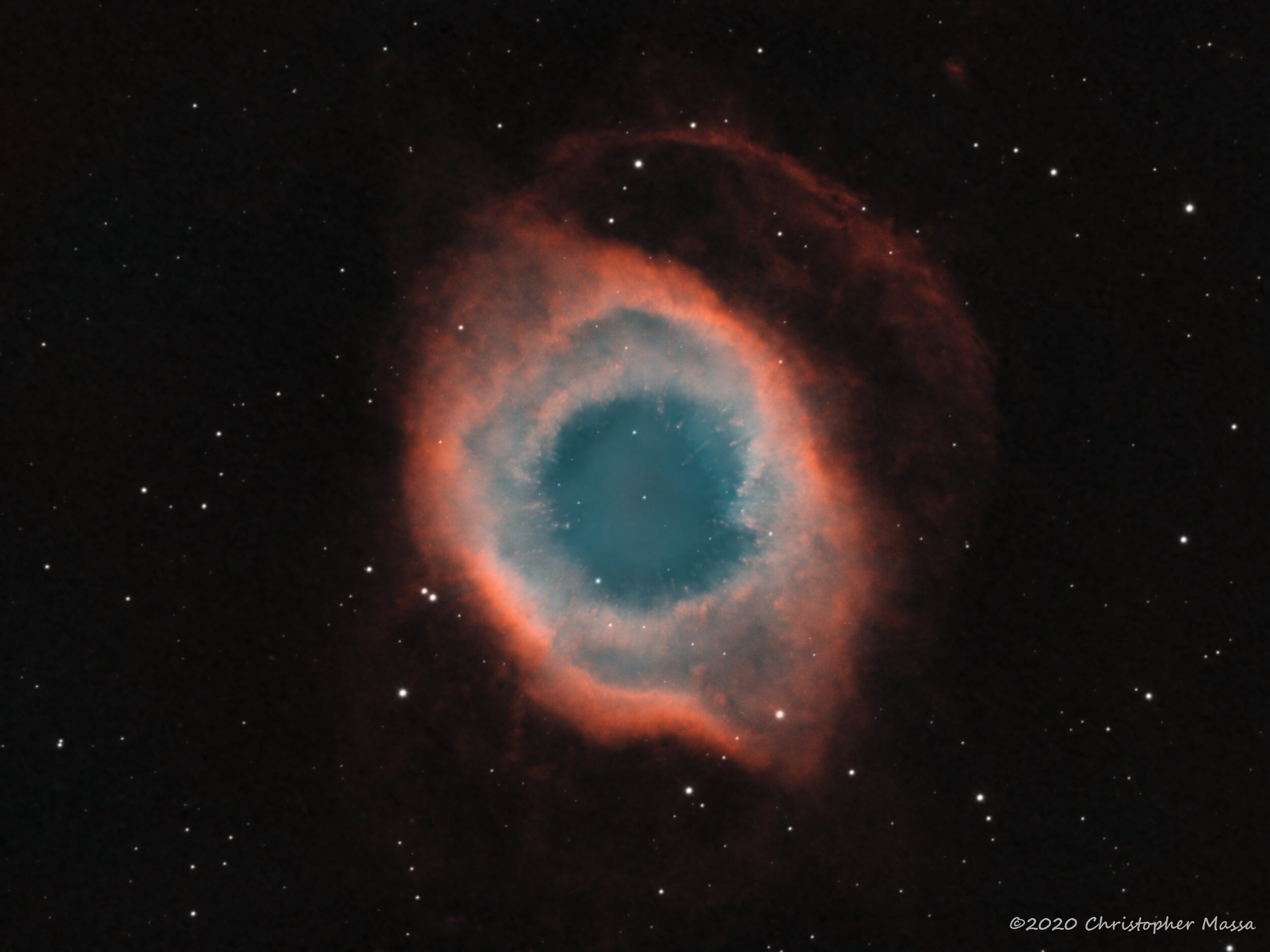
Image Description and Details : Exposure: per photo approx. 40 x 30 sec.Calibration: Darks / Flats / DarkFlatsMount: Skywatcher EQ6-R PROTelescope: Lacerta Fotonewton 250/1000Corrector: Lacerta GPU coma correctorFilter: Astronomik L2 UV-IR Block 2 ″Camera: QHY268c @ Gain 0 at -15 ° CGuiding: ZWO OAG with ASI 120mm-s and PHD2Software: APP / Photoshop CC
Copyright Information: Daniel Nimmervoll

Messier 36
Image Description and Details :
Equipment used:Eq6 hypertune gen2 by DarkFrame LtdAltair Astro 6" RCAstro physics CCDT67 reducerQHYCCD QHY163M Coldmos, cooled at -20°C7x1.25" StarlightXpress USB filterwheelBaader 1.25" LRGB filtersQHYCCD QHY5L-IIM guide cameraTS09OAG off axis guiderQHYCCD Polemaster
Software used:Eqmod, SGP - Sequence Generator Pro, Stellarium with StellariumScope, SharpCap for polar alignment.Location:
Bushey, bortle 7Date: 28.10.2020;5x180sec
Luminance2x180sec for each R, G and BTotal integration time: 33 minutesGain 100, Offset 70
Calibration and stacking in APP, processed in Photoshop CC 2020
Copyright Information: Emil Andronic Photography

A Skull and Two Galaxies
Image Description and Details :
A two panel mosaic of NGC 246 - the Skull Nebula, spiral galaxy NGC 255, and dwarf galaxy PGC2689.Image captured on my dual rig in Spain.Scopes: APM TMB LZOS 152 RefractorsCameras: QSI6120wsg8Mount: 10Micron GM2000 HPSBlue: 60x300"Green: 58x300"Lum: 85x300"Red: 61x300"Total Integration: 22 hours
Copyright Peter Goodhew
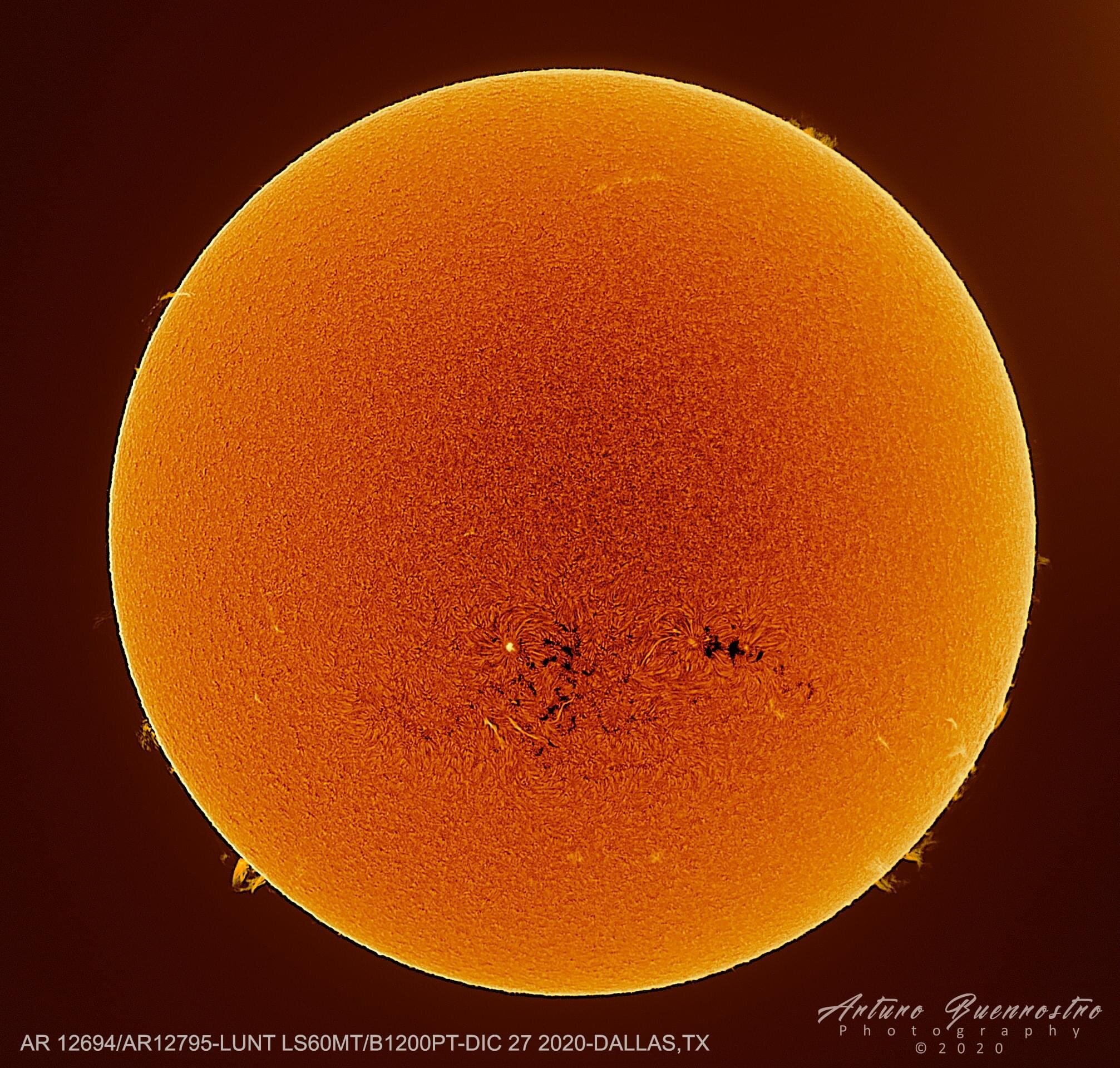
Sun from Dallas
AR 12794 and AR12795, 12/27/2020ZWO 178MMLunt 60MT/B1200 AlphaLunt 80mm engineering calcium k/B1200Processed in PIPP, deepskystacker, registax, photoshop.
Copyright Information: Arturo Buenrostro

flame star IC405 to the ′′ pond ′′ IC410,
From the flame star IC405 to the ′′ pond ′′ IC410, the celestial area in the Giffus is filled with ionized aluminum clouds, the original tone is dominated by red -- until a comet, C / 2020 M3 ATLAS, Dragging the short tail to break into here, bringing a piece of green.
In order to shoot the comet, QHY268C was specially adjusted to high gain mode, Gain 56, Offset 10, with a 100-second short exposure to prevent the comet from dragging. As a result, the comet was captured, but the camera hung up, the infinite card read out, and had to return to the factory for repair. Now, even the equatorial meter is starting to go crazy for unknown reasons.
It seems that the comet is really a broom star......
Location: Hebei Kangbo Galaxy Observatory
Taken on December 9-10, 2020
Telescope: 150 2.8 HNT
Camera: QHY268c
Equator: Eaton iOptron CEM70
Guide: QHYCCD OAG-M
Guide Star Camera: QHY5L-II-M
Number of sheets taken: 206
Single exposure: 100 seconds
Cumulative exposure: 5.7 hours
APT: APT
PixInsight, PhotoShop
Copyright: Steed Yu
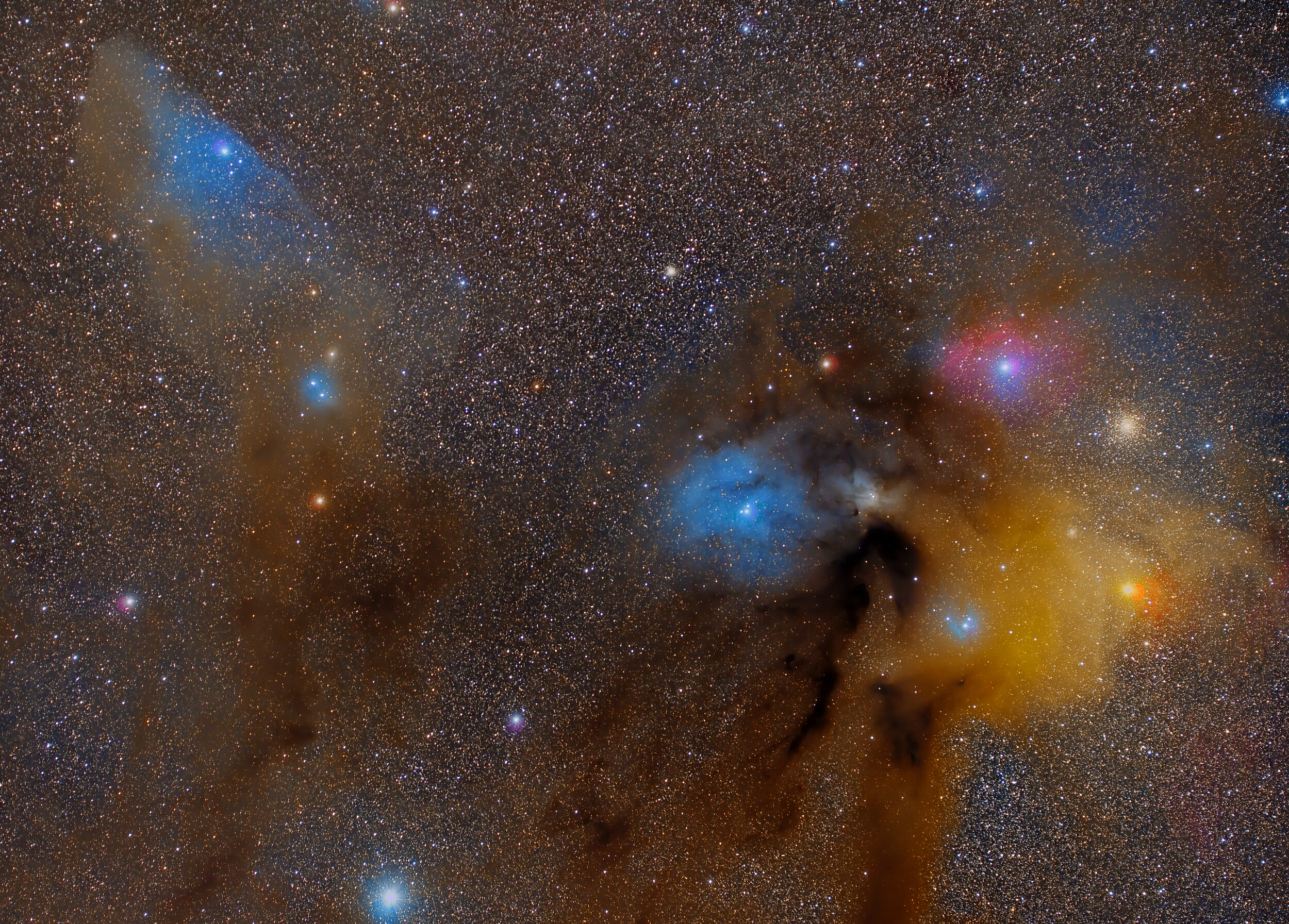
Rho Ophiuchi AND THE BLUE HORSE HEAD REGION
Image Description and Details :
Capture of images in the rural area of Monte Belo-MG - 32x5min on July 16, 2016 and in the rural area of São Romão-MG - 24x5min on July 13, 2018 with the Sigma 150mm Apo Macro DG-HSM F / 2.8 lens in F / 4 and Canon 5D Mark II camera - ISO 1600 - built-in piggy-back darks, flats and bias on the GSO RC 8 "telescope and NEQ6-pro mount.
Copyright Information: Irineu Felippe de Abreu Filho
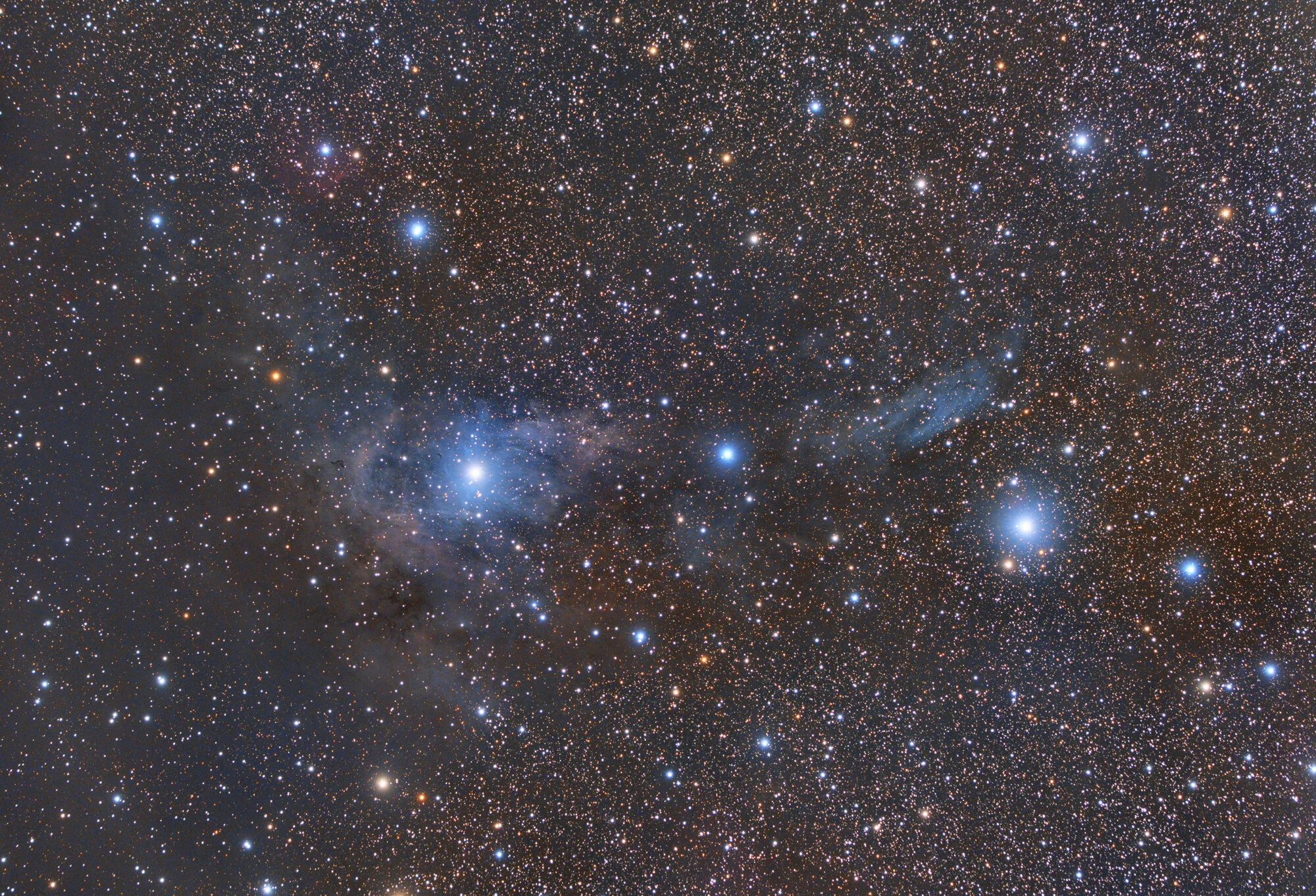
Van den Bergh 14 and 15 in Camelopardalis
Image Description and Details :
Scopes: CFF135 f6.7 and CFF105 f6Cameras: ZWO ASI6200MM-Pro and ASI2600MC-ProFilters: Chroma 50mm LUMMount: Astro-Physics 1100GTOLUM = 52x10minOSC = 50x10minTotal = 17hrs
Copyright Information: Joel Short
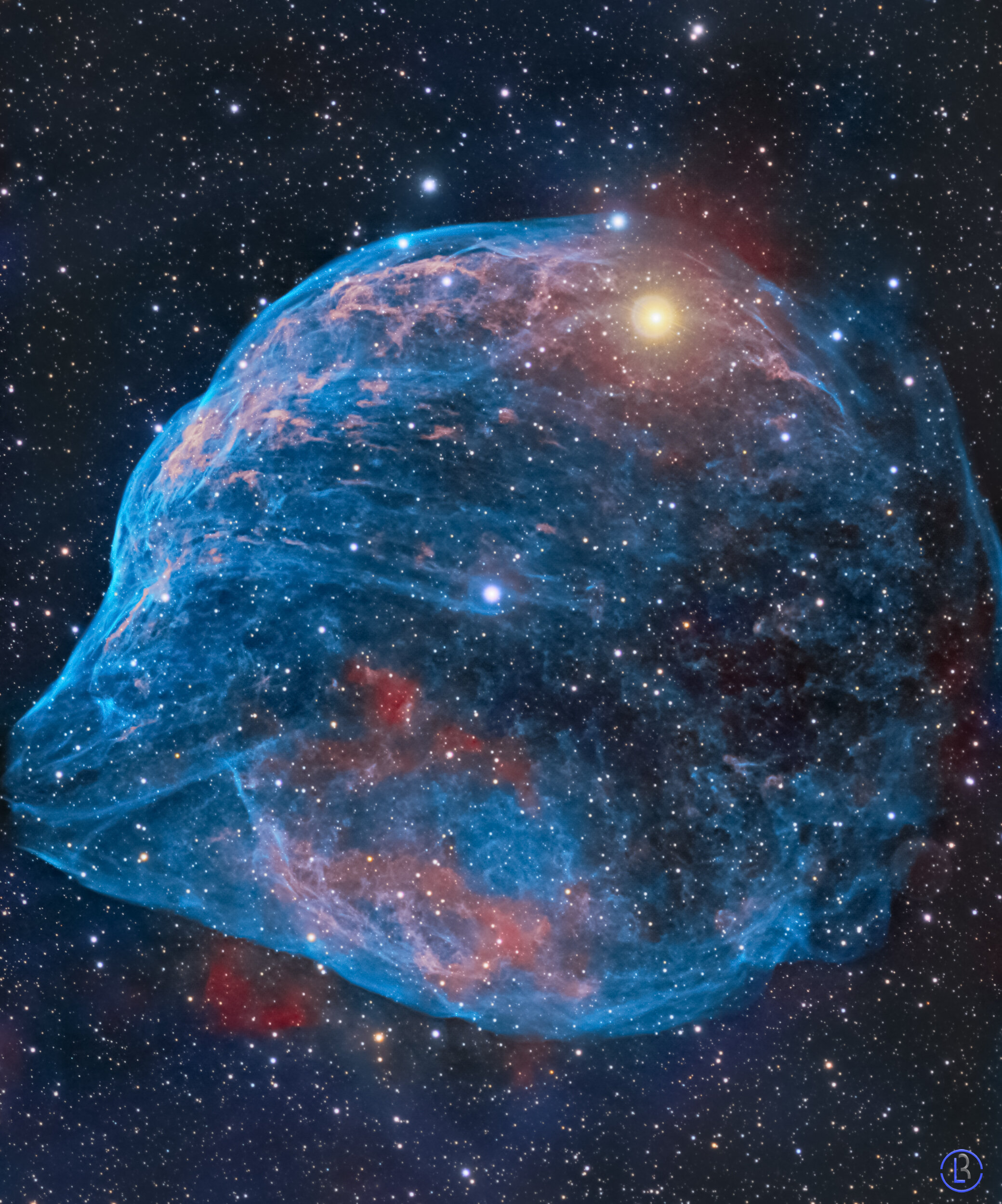
The Dolphin's head nebula - SH2-308
Image Description and Details :
This image was done from Obstech El Sauce in Chile with a TMB105/650 and a QHY22. This was a very hard processing, this nebula is very faint and the raw images were not fantastic. This is a processing done with HORGB filters and with the Oxygen layer in Luminance. More than 50h were needed to make this bubble shine around the area!
Copyright Information: Benjamin Lefèvre
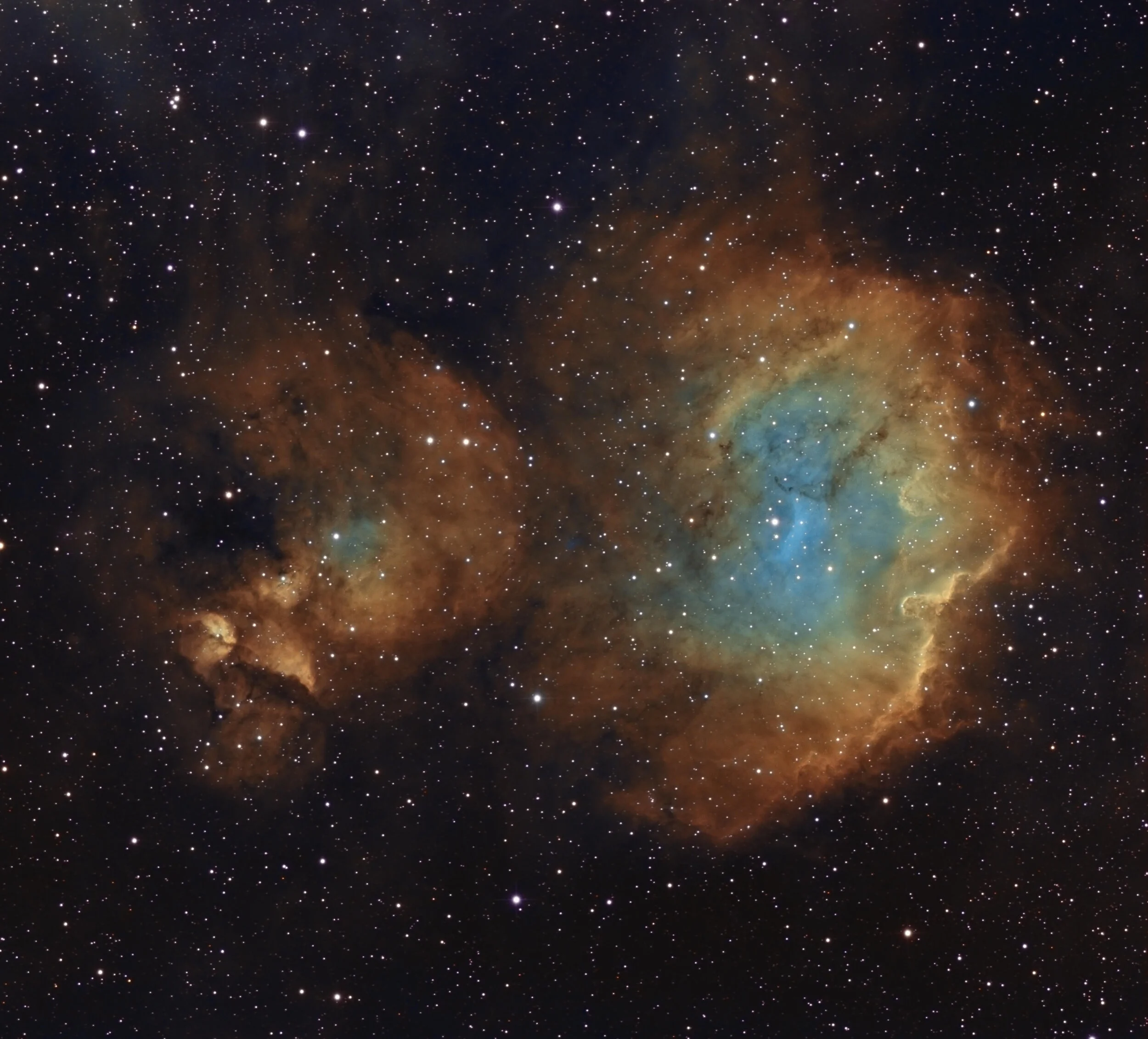
RCW 60
Image Description and Details :
RCW 60 is a rarely imaged nebula. Part of the Lambda Centaurus nebula complex (centered around RCW 62). This is actually 2 distinct nebulae at different distances: Gum 39 and Gum 40. RCW 60 is located around 13000 light years from Earth.Imaged in Narrow Band Hubble Palette SHO on our Officina Stellare RiDK 400 telescope at El Sauce (Obstech) in the Atacama Desert in Chile.
Ha, OIII, S2 13 hours each, 1200s exp. RGB stars 20x60s exp each channel.
Copyright Information: Mike Selby Image Processing: Mike Selby System controlled by Voyager from Leonardo OraziChile Team: Mike Selby , Stefan Schmidt, Leo Orazi, John Kasianowicz, Scott Johnson, Josh Balsam, Rick Stevenson