

AAPOD2 Image Archives
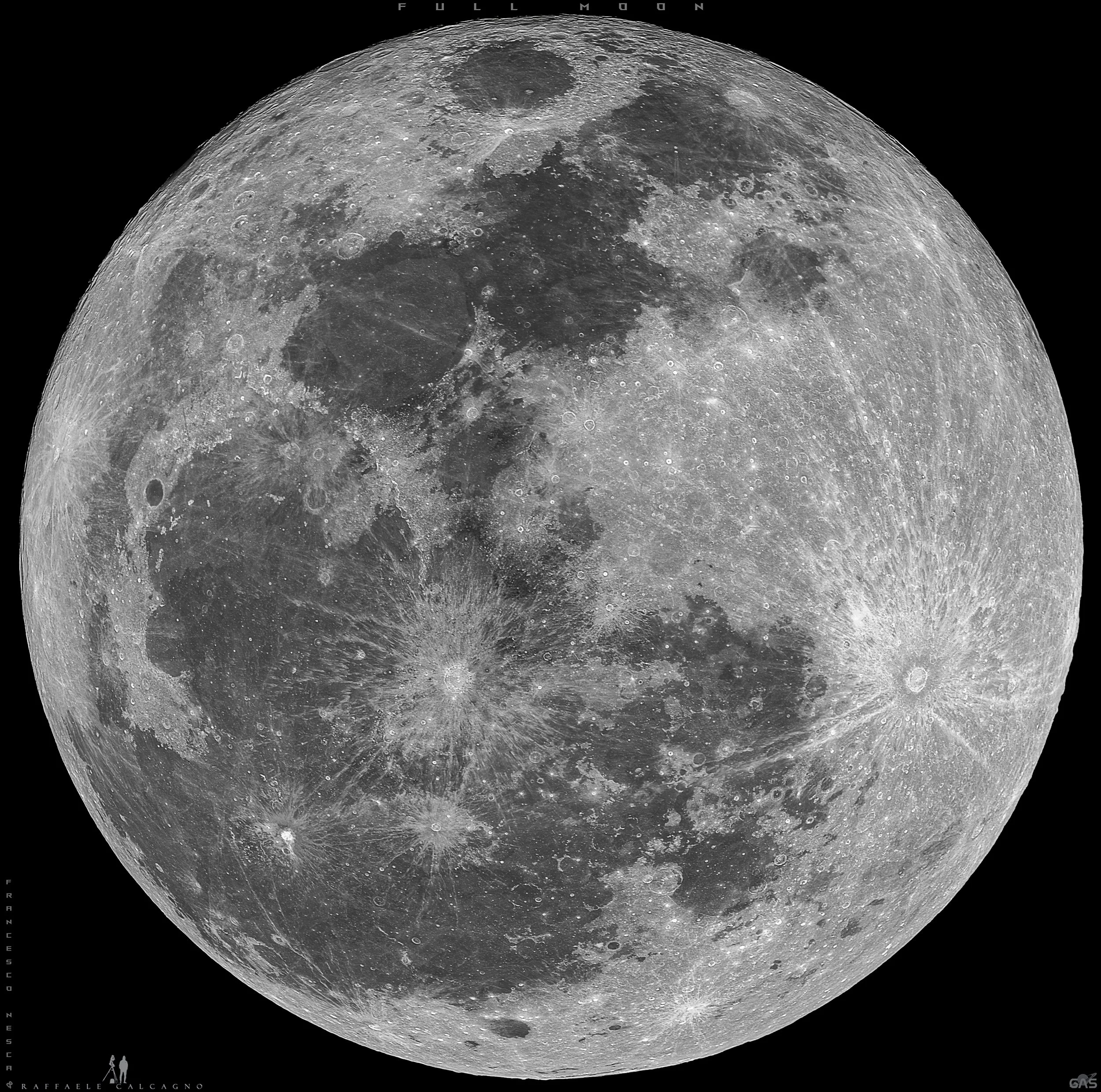
Full Moon
Captured from Faggiano, Italy, on July 29, 2026, this high-resolution lunar mosaic details the near side of Earth's Moon during the full phase. Acquired using an SVBONY MK127 telescope at its native 1,500 mm focal length paired with a ZWO ASI224 camera, the final image is a mosaic assembled from 30 individual video panels. To mitigate atmospheric distortion while target was positioned roughly 25 degrees above the horizon, 4,000 frames were recorded per panel at a 3.0 ms exposure time, from which the sharpest 1,500 frames were selected and stacked. The resulting composite showcases key geological structures with exceptional contrast and resolution, including dark, volcanic basalt plains (maria), heavily cratered highlands, and bright, extensive impact ejecta rays emanating from geologically young craters.
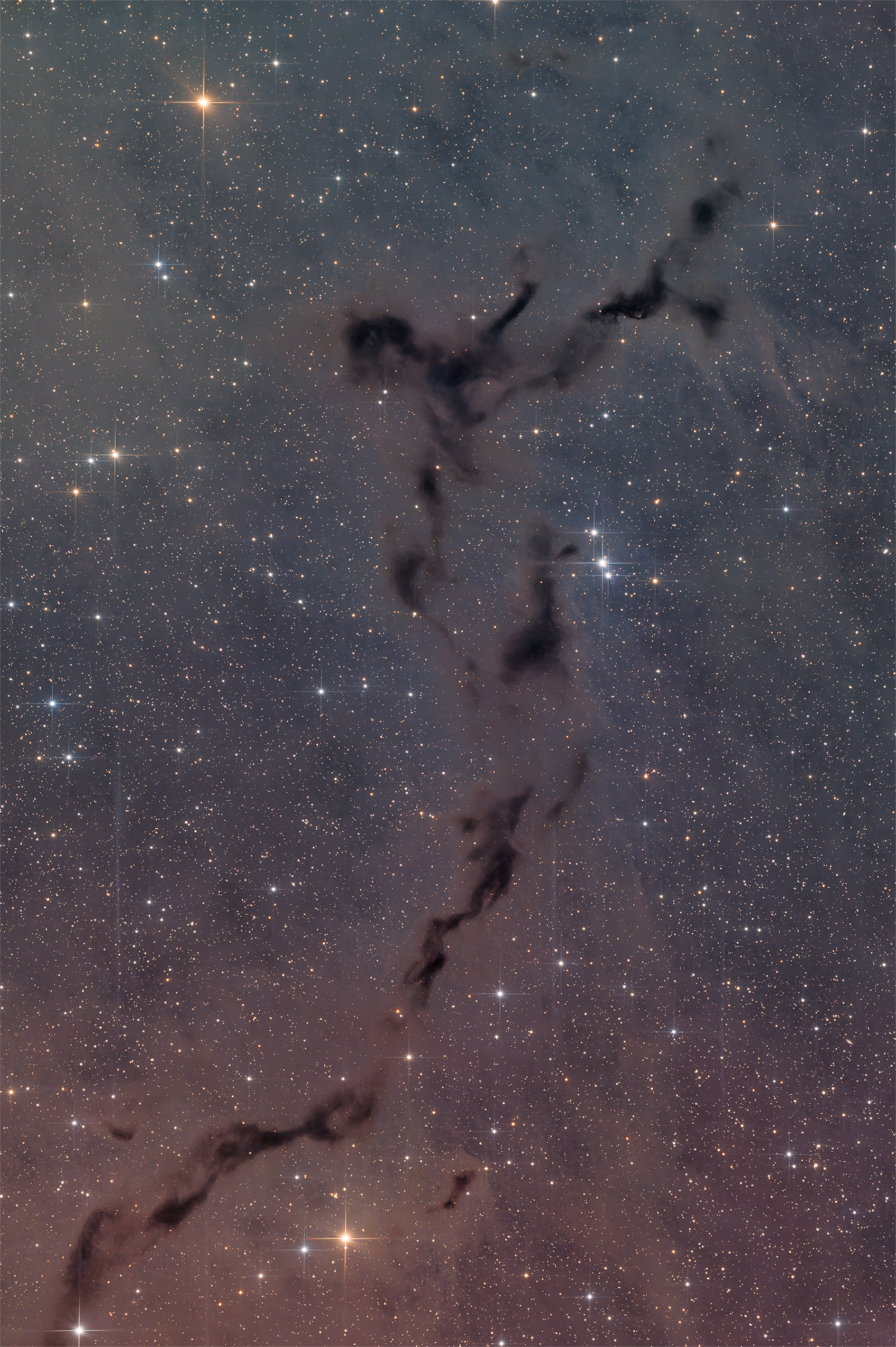
Seahorse nebula - Barnard 150
Captured under the dark Bortle 3 skies of Lanuéjols, France during the Nuits du Causse Noir 2026 event, Maxime Senes (Azathoth Pics) presents a striking view of the Seahorse Nebula (Barnard 150). Imaging with a personal telescope setup, Senes collected 59 unfiltered sub-exposures of 300 seconds each to reveal the intricate, dark dust lanes winding through this iconic cosmic silhouette.
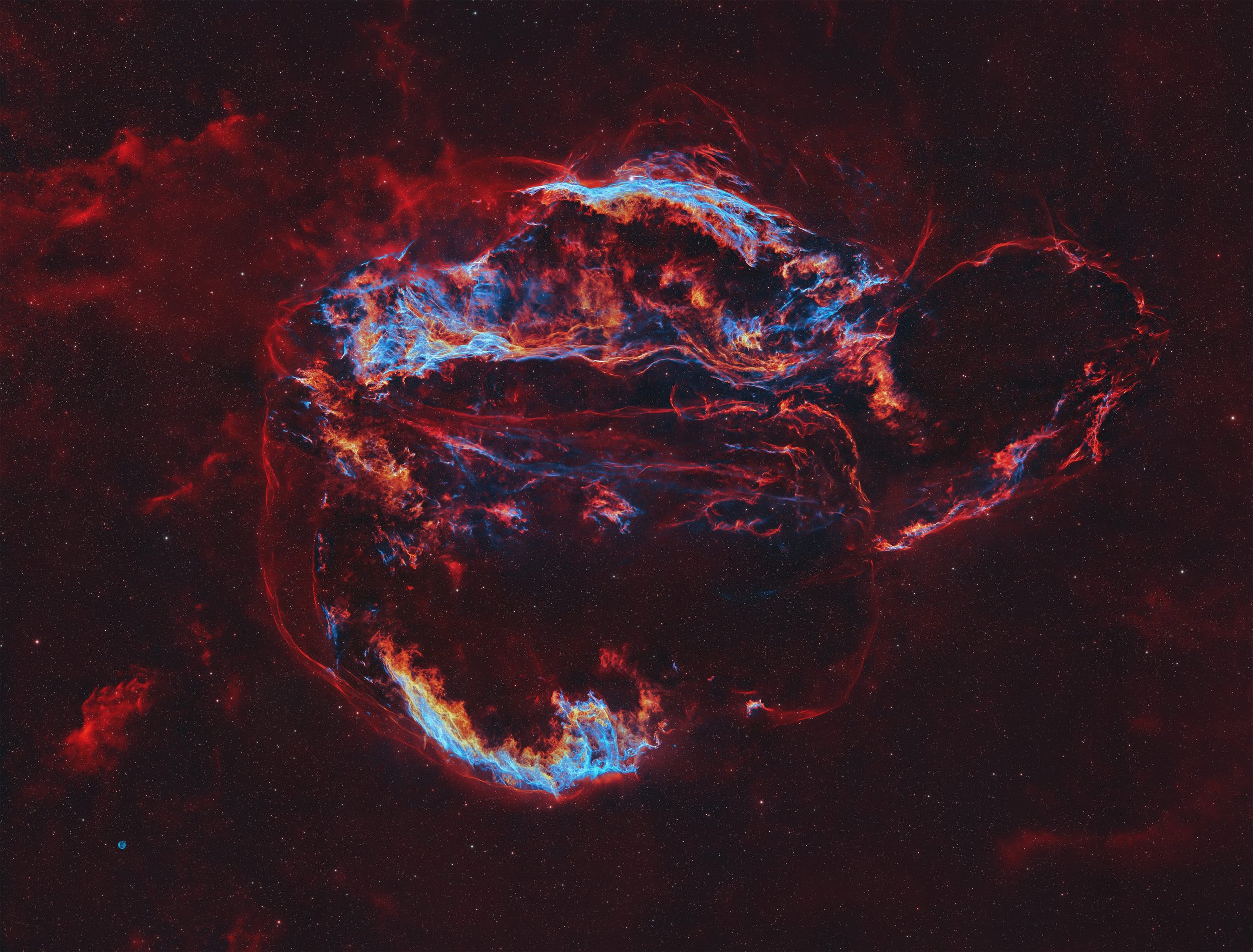
GigaVeil: 1 billion pixels, 300 hours, 35 panels, and 5 contributors on the Veil Nebula
The Veil Nebula is a massive, expanding supernova remnant—the expanding shell of ionized gas left behind when a star roughly 20 times the mass of the Sun exploded around 10,000 to 20,000 years ago—where high-velocity shockwaves collide with surrounding interstellar clouds to excite atoms of doubly ionized oxygen ($\text{OIII}$, glowing in vivid cyan) and hydrogen-alpha ($\text{H}\alpha$, glowing in deep red). Capturing this vast structure in uniform high resolution required a collaborative imaging project bringing together five astrophotographers across Delaware and Texas: Gavin Bent, Brian Nietfeld, Hunter Outten, Kaleb Jordan, and Stan Williams. Over more than 318 total hours of exposure time using a variety of focal lengths, filters, and optics, the team stitched together a 35-panel, 1-gigapixel mosaic that reveals intricate filamentary shock fronts, surrounding ambient hydrogen clouds, and faint nearby targets such as the rarely imaged planetary nebula PA28.
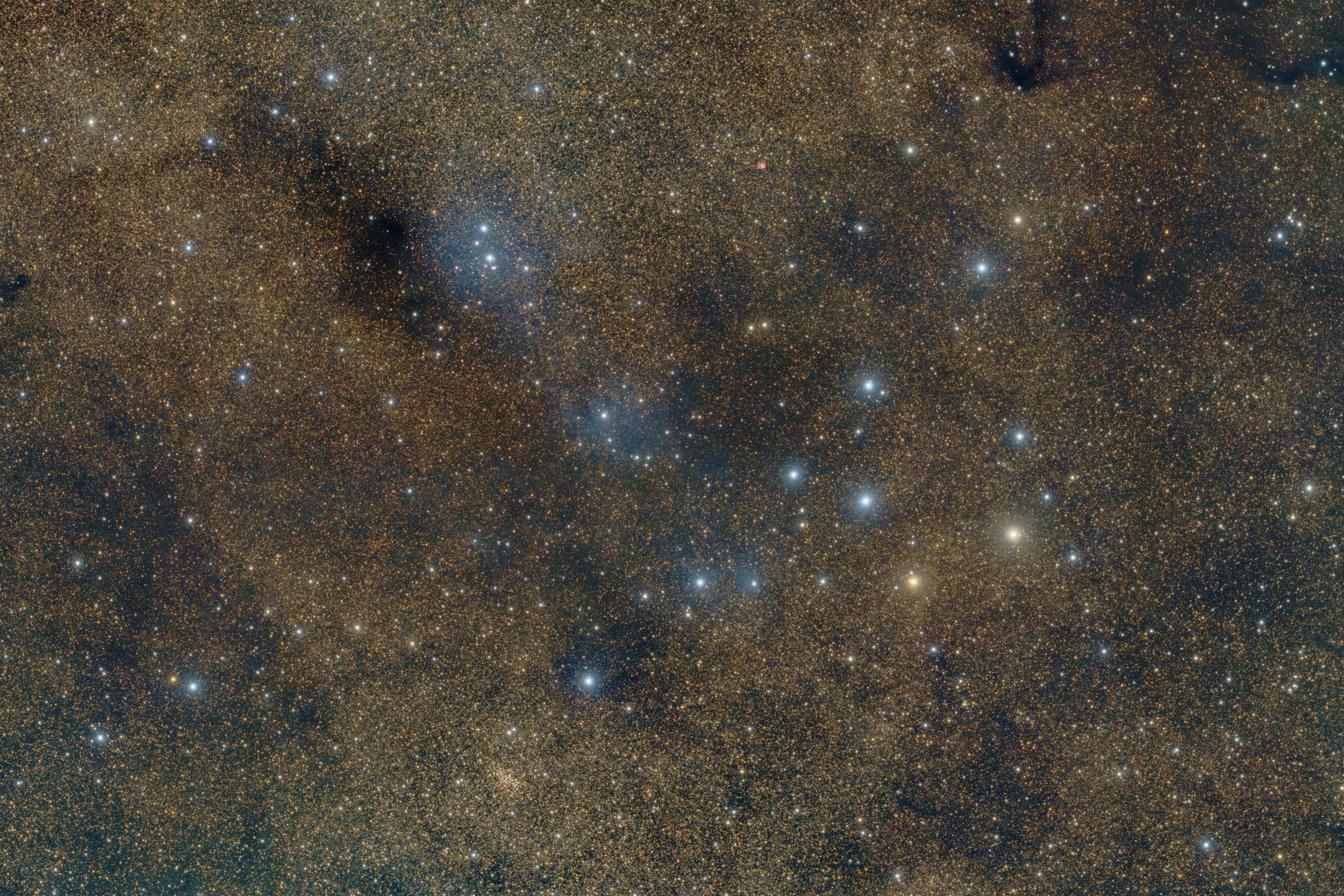
Collinder 399 - The Coathanger Cluste
A striking capture of Collinder 399—the Coathanger Cluster—standing out against the rich background of the Milky Way, showcasing vivid star colors taken from Buttwil, Switzerland. Though long thought to be an open cluster, modern astrometry reveals it is an chance alignment—an asterism—of ten main stars ranging from 230 to 1,300 light-years away. Its distinctive coat-hanger shape remains one of the northern sky's most delightful binocular targets.
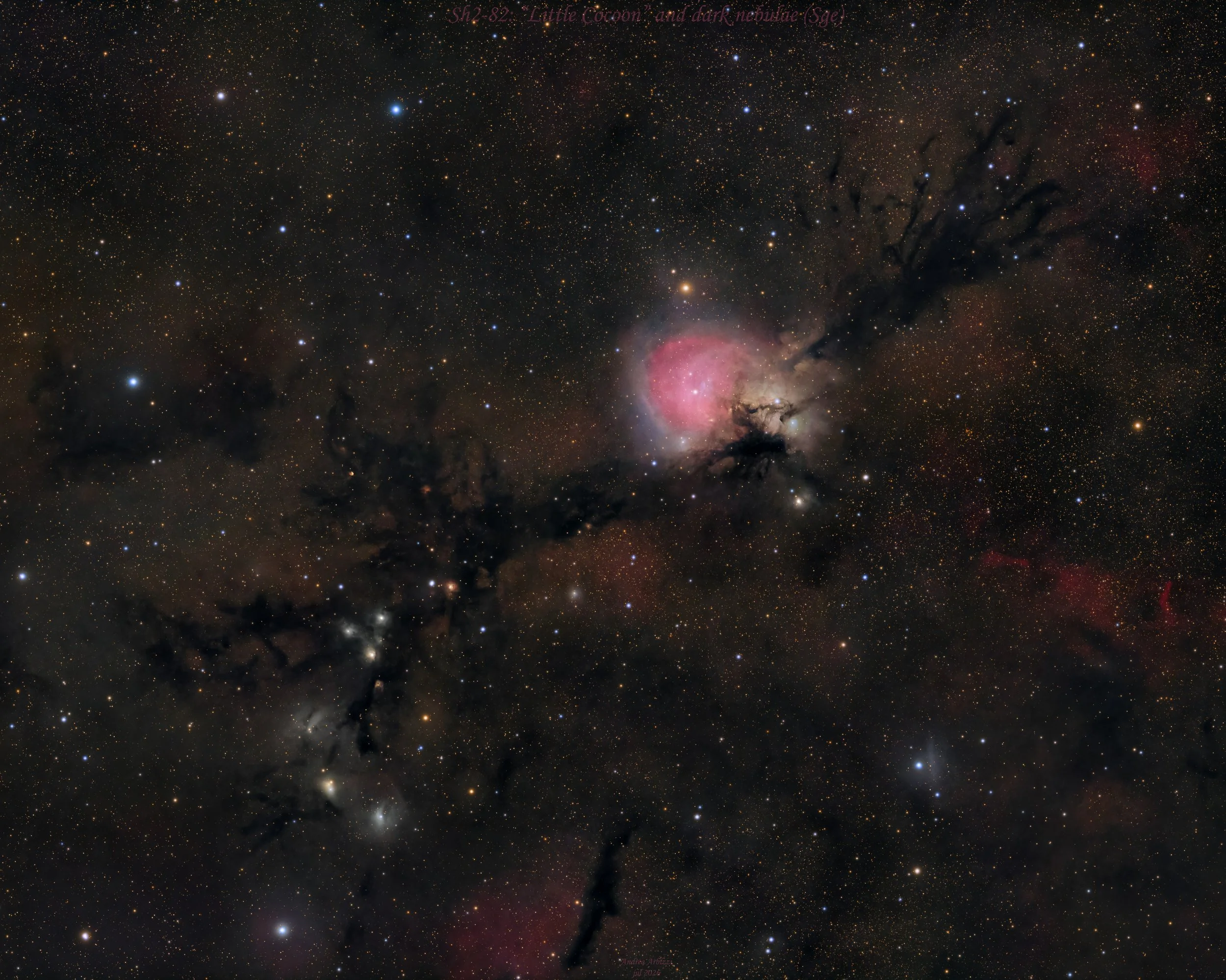
“Little Cocoon” and its dark nebulae
The "Little Cocoon" nebula, cataloged as SH2-82, is an active star-forming emission nebula embedded in a reflective region of dust and gas, set against the rich star clouds of the constellation Sagitta in the inner Milky Way. Glowing primarily via ionizing radiation from adjacent stellar activity, the nebula's vibrant core is framed by surrounding reflection dust and complex lanes of dark nebulae that obscure background starlight. Astrophotographic data captured across LRGB and narrow-band OIII wavelengths reveals intricate structural layers within these molecular clouds, highlighting the delicate interplay between hydrogen excitation, light scattering, and dense interstellar dust absorbing light across the region.
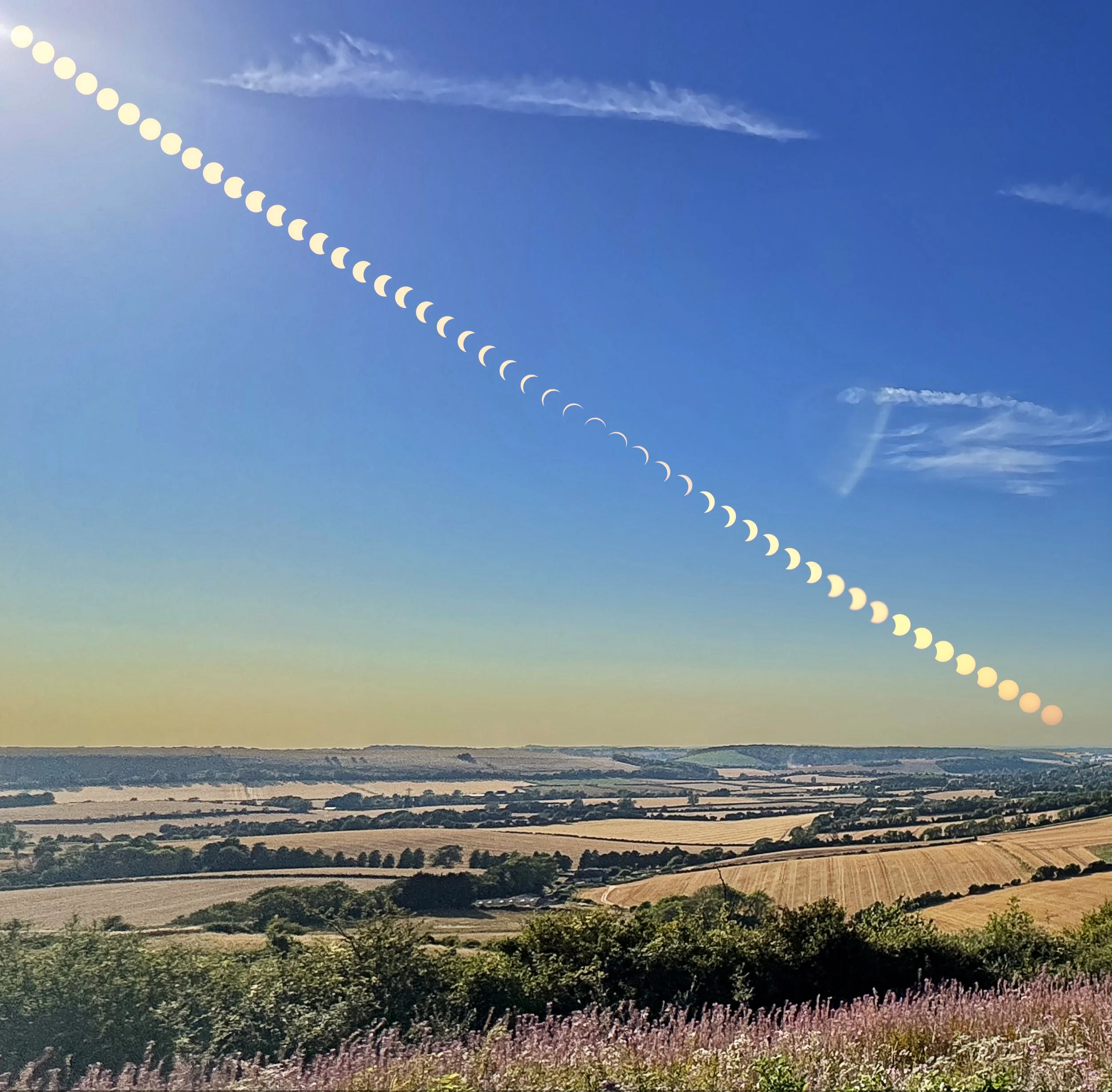
ECLIPSE LANDSCAPE
A unique composite captures the progression of the August 12, 2026 partial solar eclipse set against the countryside of Butser Hill in the South Downs, UK.
To properly balance the extreme brightness difference between the solar disk and the scenic foreground, this image was built using multiple exposures taken at various exposure lengths and ISO settings. Short, filtered exposures taken every 30 seconds across the 2.5-hour event captured the precise phases of the Sun, which were then composited onto a dedicated landscape exposure. This multi-exposure approach ensures both the fine detail of the Sun's path and the rich tones of the surrounding terrain remain perfectly exposed.
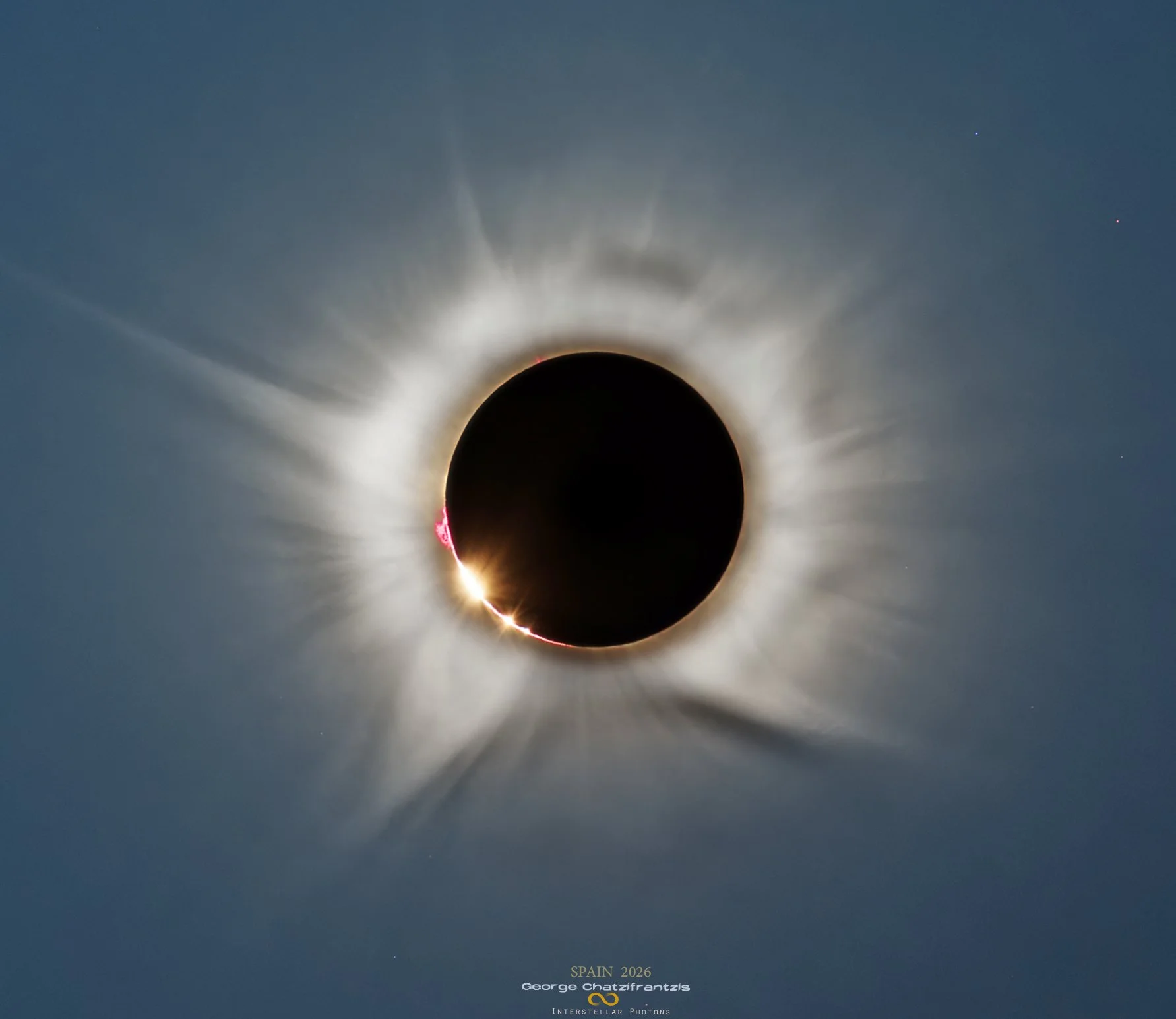
TOTAL SOLAR ECLIPSE 2026
During totality of the August 12, 2026 solar eclipse over Guadalajara, Spain, the moon completely covered the solar disk, revealing the majestic structure of the Sun's outer atmosphere.
To capture the vast dynamic range—from the intense brilliance of the solar prominences hugging the lunar limb to the delicate, faint streamers stretching far into the solar corona—this image was crafted using a composite of multiple exposures taken at varying exposure times and ISO settings. Blending these exposures allows the intricate details of the magnetic field lines frozen within the corona to shine through alongside the fiery, crimson prominences at the edge of the disk.
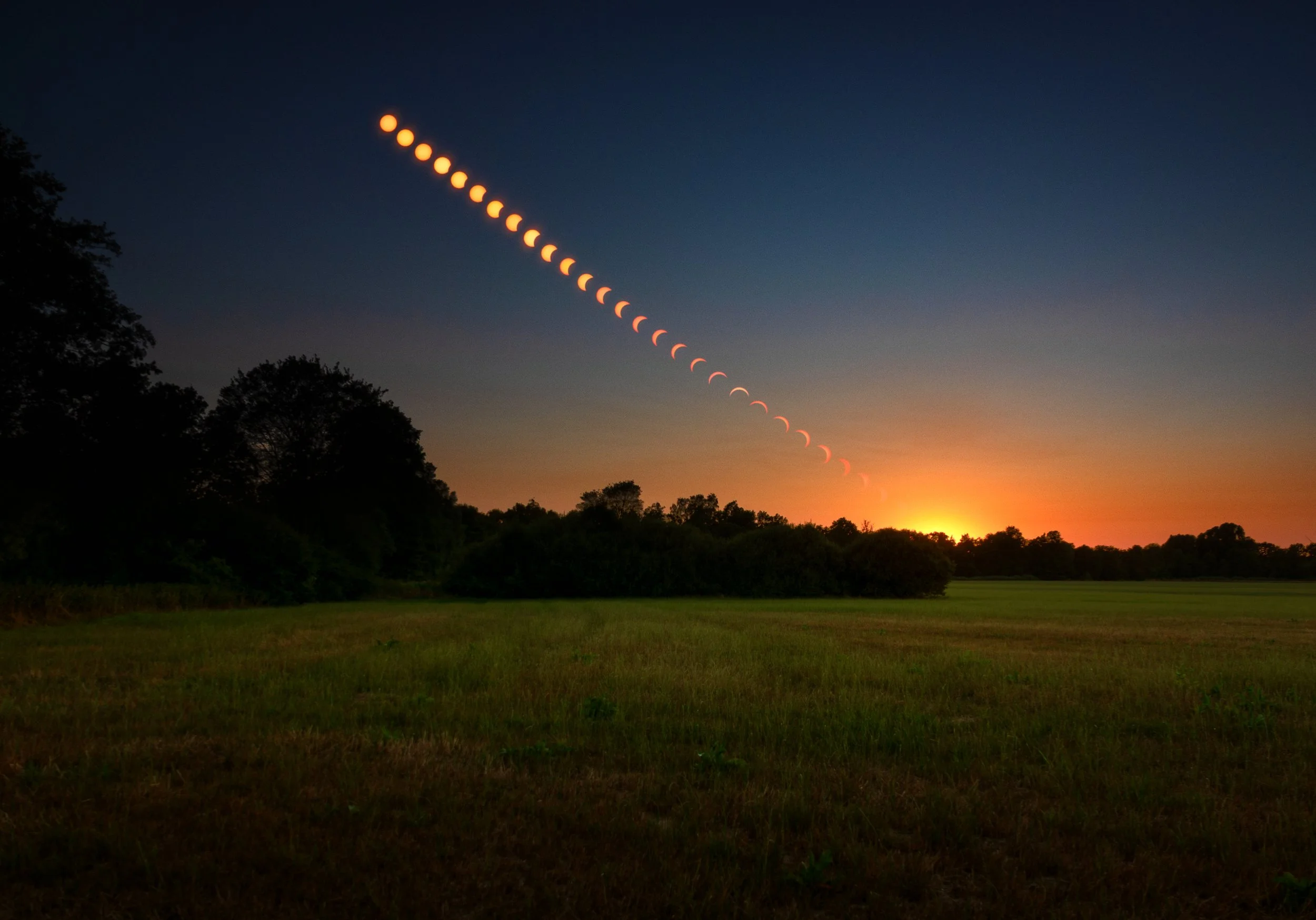
Sunset Eclipse
On August 12, 2026, a magnificent partial solar eclipse unfolded across Western Europe, reaching an impressive 87% maximum solar obscuration as viewed from Lüdinghausen, Germany. Captured by photographer Michel Kroll using a Sony RX10 IV with sequential exposures taken every three minutes, this composite image illustrates the lunar limb progressively occulting the solar photosphere as the Sun descended toward the horizon. Even without achieving full totality, an 87% reduction in solar irradiance drastically alters ambient light, while atmospheric extinction and Rayleigh scattering near the horizon shift the Sun's spectral output toward deep amber hues, casting an eerie, twilight-like illumination over the terrestrial landscape.
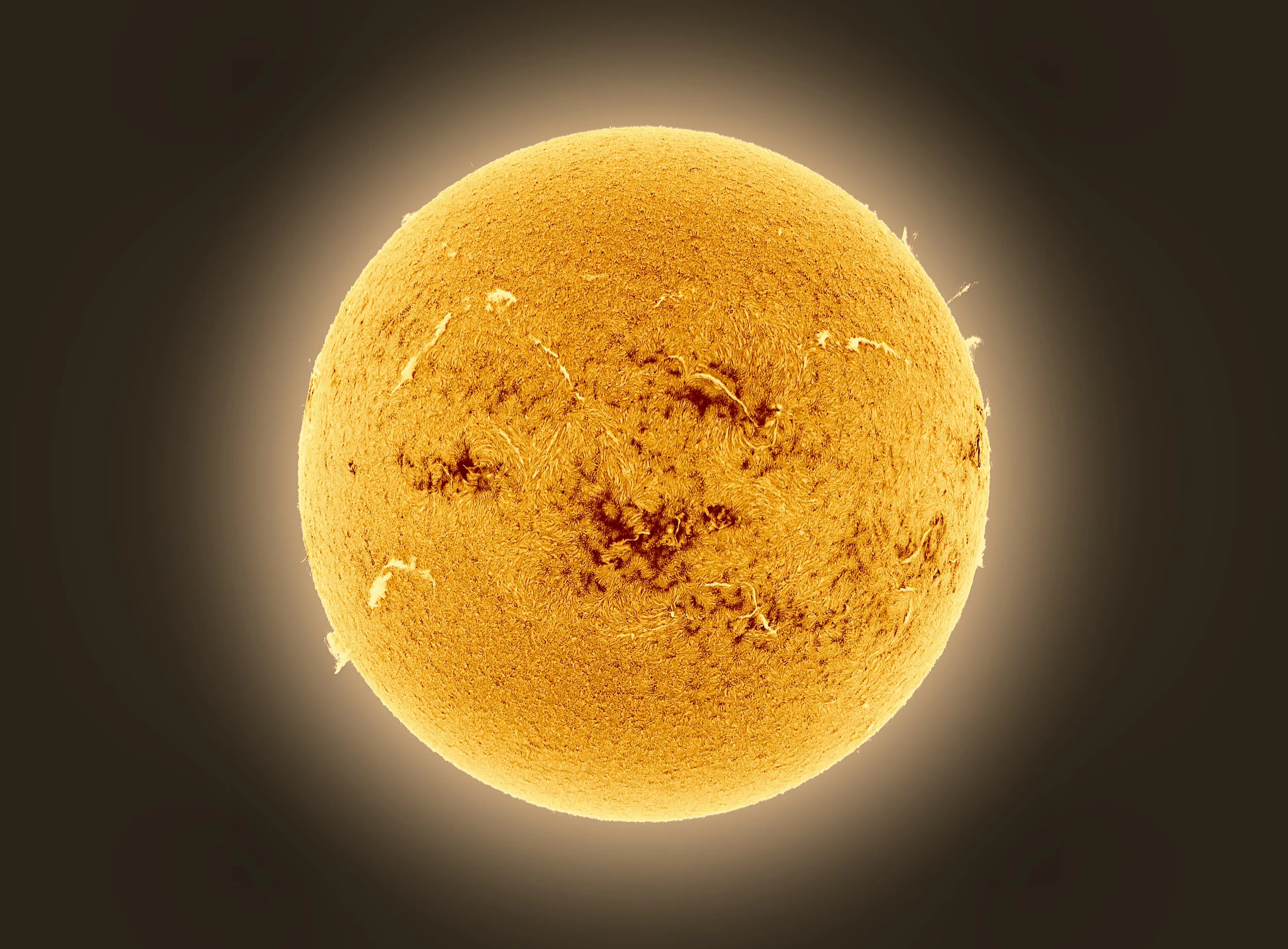
The Sun two weeks (July 27, 2026) before the total eclipse
Captured just two weeks ahead of the August 12 total solar eclipse, this striking full-disk H-alpha portrait highlights the Sun’s dynamic chromosphere in exceptional detail. A dense network of dark filaments spans across the solar disk, surrounded by brilliant active regions and prominent solar filaments extending from the limb.
Reconstructed from roughly 3,600 monochromatic frames, the image beautifully preserves the delicate fibrillar structures and complex magnetic pathways of our nearest star—promising a spectacular show for eclipse observers.
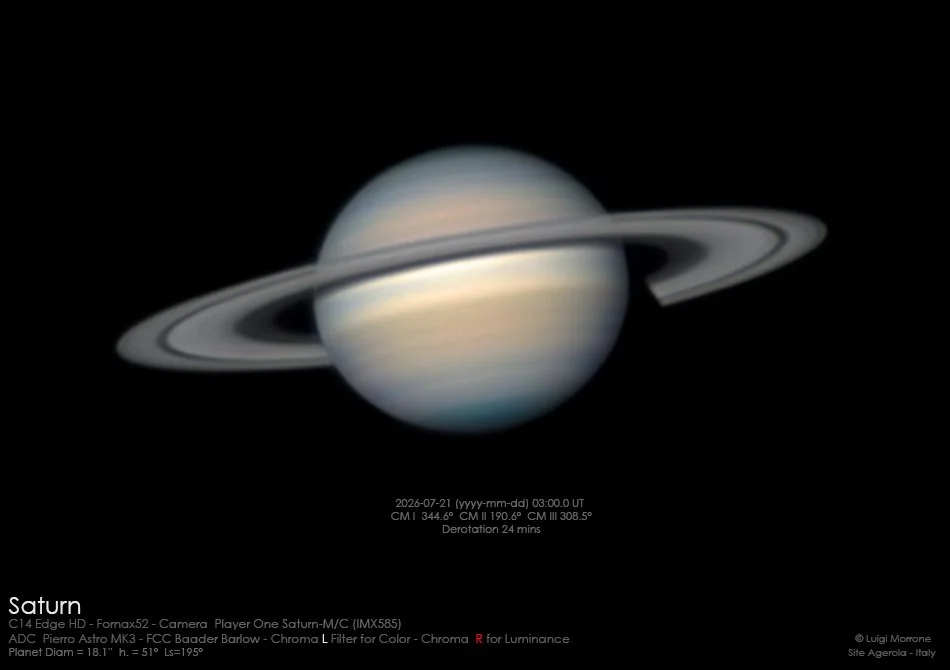
Saturn
Captured under steady Italian skies, this vivid high-resolution capture reveals Saturn's ring system as it gradually begins to tilt back into view. Following the nearly edge-on ring plane alignment of 2025, Earth's changing perspective offers a fresh look at the gas giant's southern hemisphere and subtle atmospheric details. The changing angle of Saturn's rings from our vantage point on Earth comes down to two main orbital factors: Axial Tilt and the 29.5-Year Orbit.
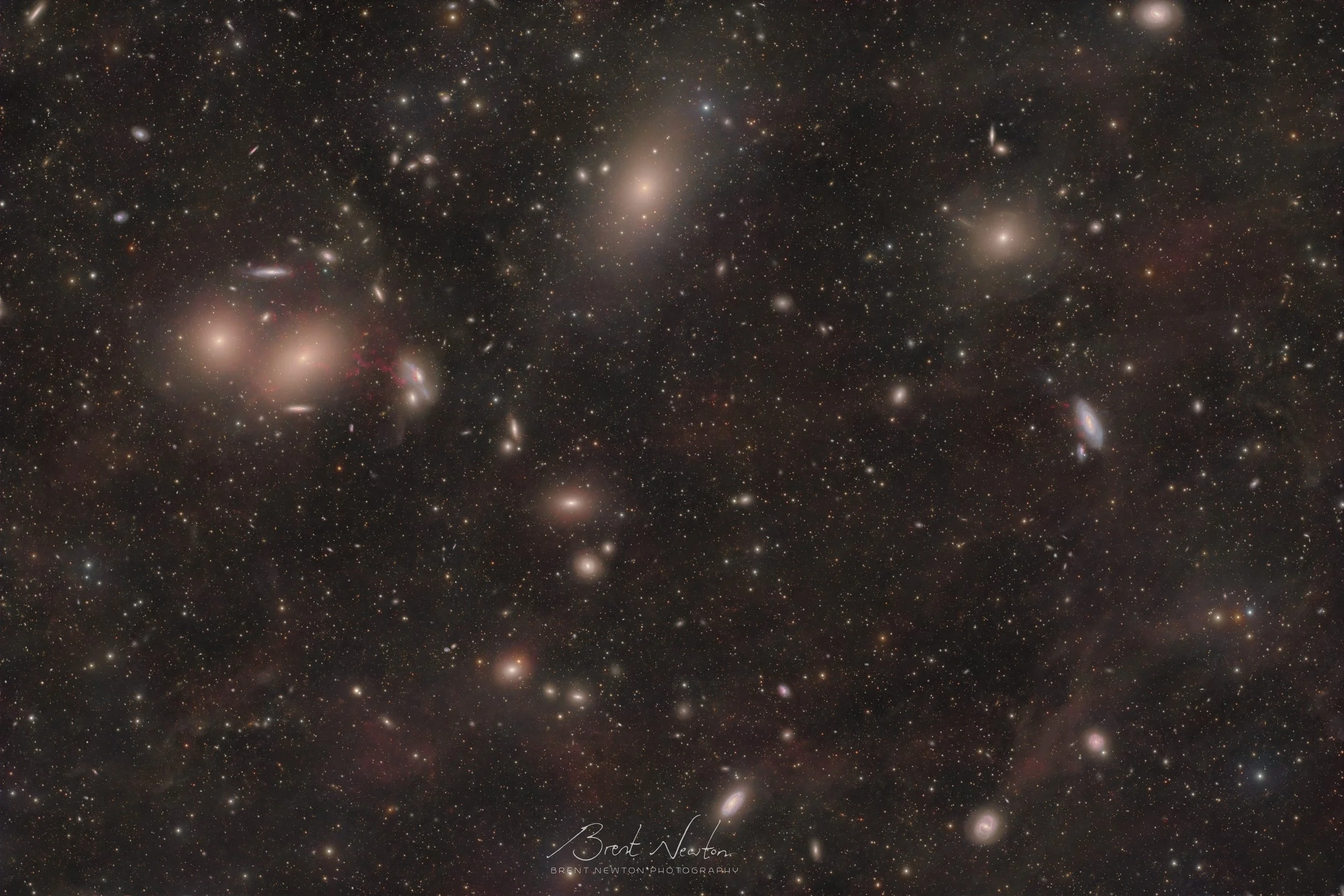
Markarian's Chain (LHRGB)
Markarian's Chain is a prominent, gently curved stretch of galaxies situated near the heart of the Virgo Cluster, approximately 50 to 55 million light-years away toward the constellation Virgo. Dominated by massive giant elliptical galaxies like M84 and M86 alongside interacting galactic pairs like "The Eyes" (NGC 4435 and NGC 4438), this dense structure forms a dynamic gravitational laboratory driven by tidal interactions and ram-pressure stripping as galaxies plunge through the intracluster medium. Deep narrowband and broadband imaging ($\text{LHRGB}$) reveals intricate extra-galactic ionized gas structures, including tenuous Hydrogen-alpha ($\text{H}\alpha$) bridges spanning between member galaxies, energetic relativistic jets from supermassive black holes like that of nearby M87, and faint diffuse foreground clouds across the intergalactic field.
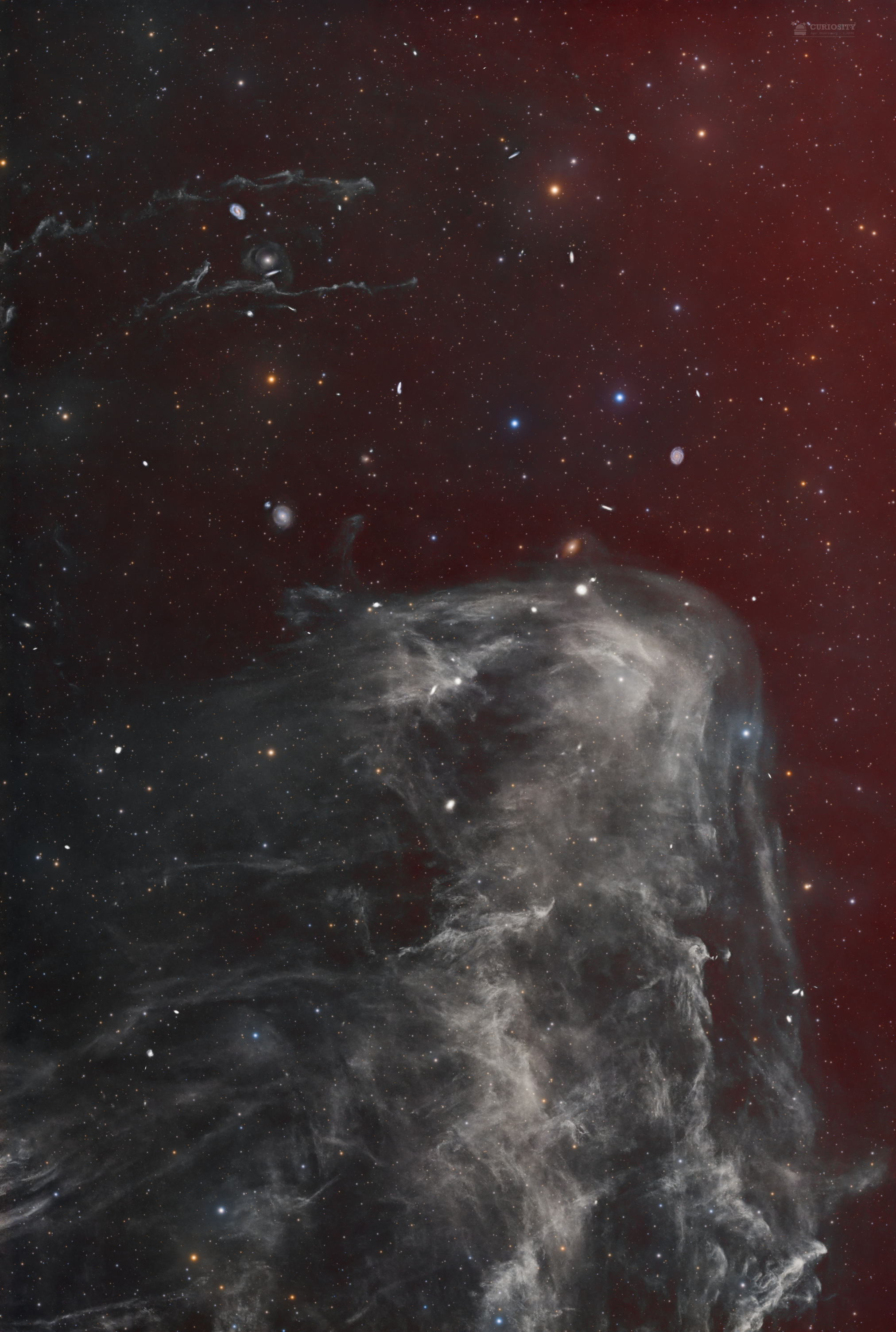
Layers of the Cosmos in Ursa Major
Layers of the Cosmos in Ursa Major presents a compelling multi-depth cosmic panorama, highlighting the complex interplay between galactic foreground structures and distant extragalactic deep space. Illuminated by the collective starlight of the Milky Way, delicate wisps of Integrated Flux Nebula (IFN)—high-latitude dust clouds floating far above our galaxy's plane—weave across the field alongside diffuse Hydrogen-alpha emissions from ionized interstellar gas. Embedded within and shining through these ghostly foreground filaments are numerous background galaxies millions of light-years away, demonstrating the incredible dynamic range and depth achievable through deep narrowband and broadband astrophotography.
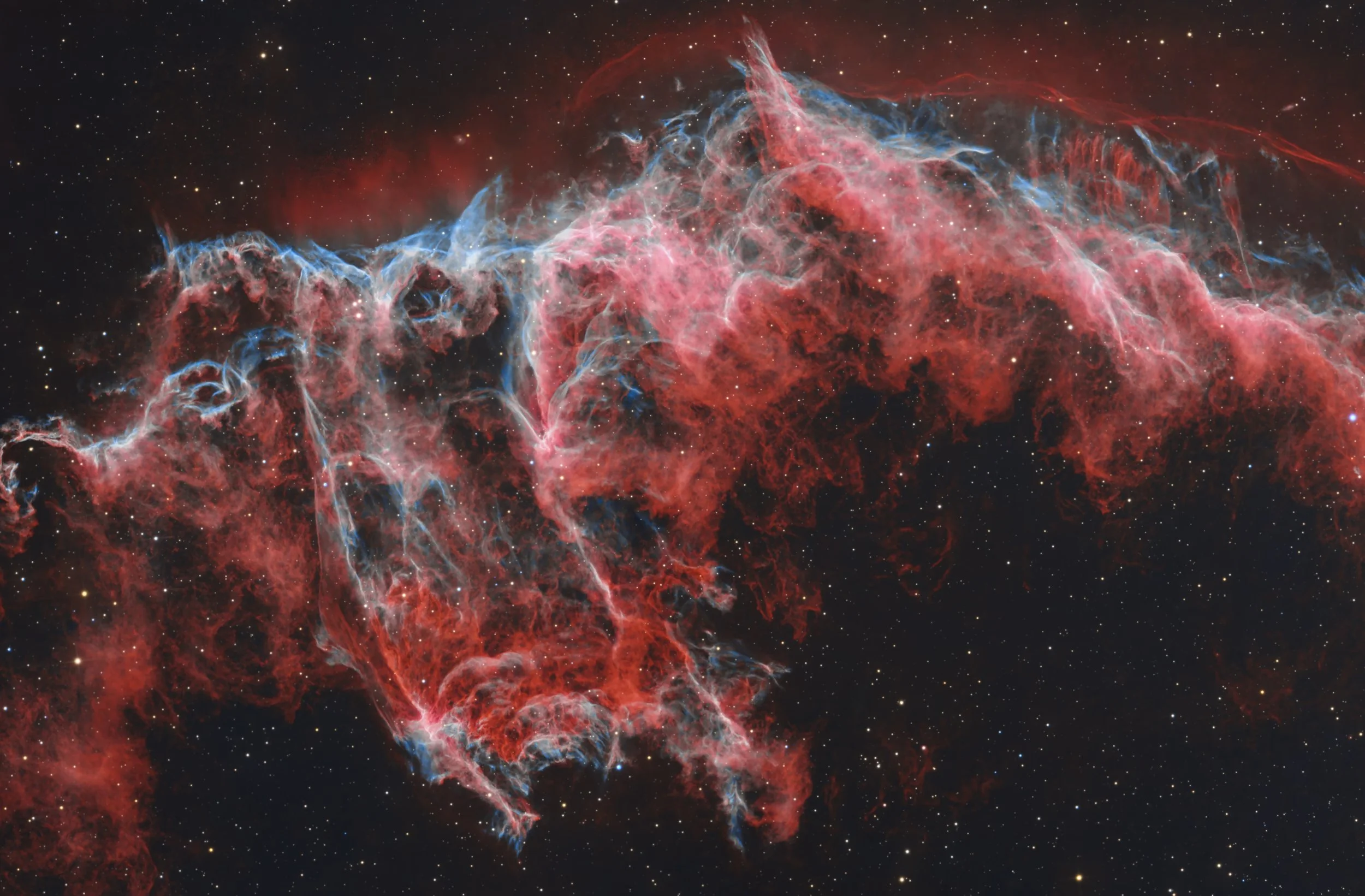
The Glancing Bat
NGC 6992, a prominent segment of the Eastern Veil Nebula within the larger Cygnus Loop, is an expanding supernova remnant located approximately 2,400 light-years from Earth in the constellation Cygnus. Originating from the catastrophic core-collapse explosion of a massive star between 10,000 and 20,000 years ago, this energetic shockfront continues to travel through the surrounding interstellar medium at speeds exceeding 1.5 million kilometers per hour. The intricate, web-like filaments visible across the structure are created as high-velocity shockwaves compress and heat diffuse interstellar gas, exciting atoms to produce vivid characteristic line emissions—most notably from ionized hydrogen, oxygen, and sulfur.
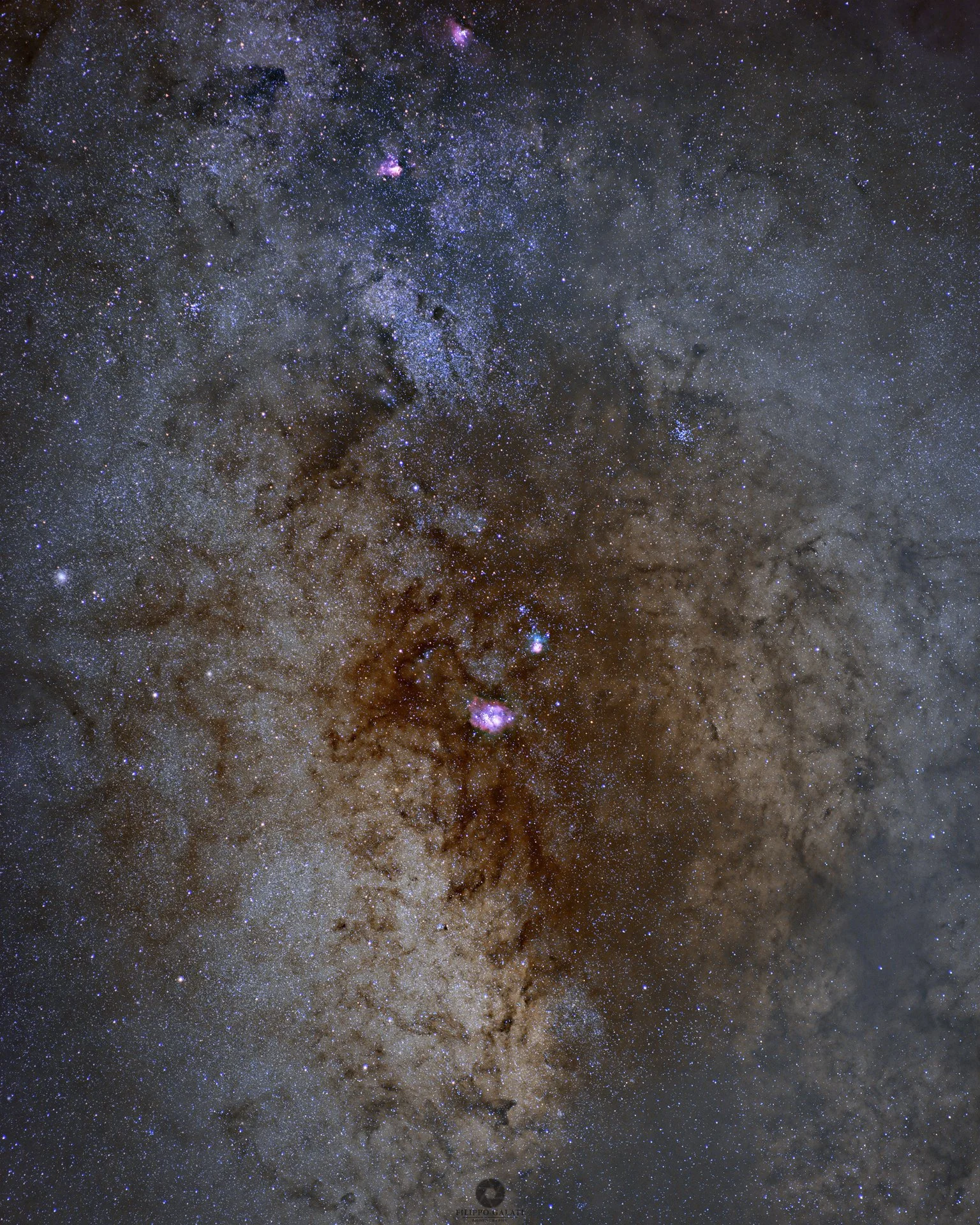
Into the Heart of Our Galaxy
Every tiny point of light in this image is a star within the Milky Way. Dominating the center of the frame is the most densely populated and visually spectacular region of our night sky: the Galactic Center, where billions of stars, vast clouds of interstellar gas, and intricate lanes of cosmic dust converge into an extraordinary celestial landscape.
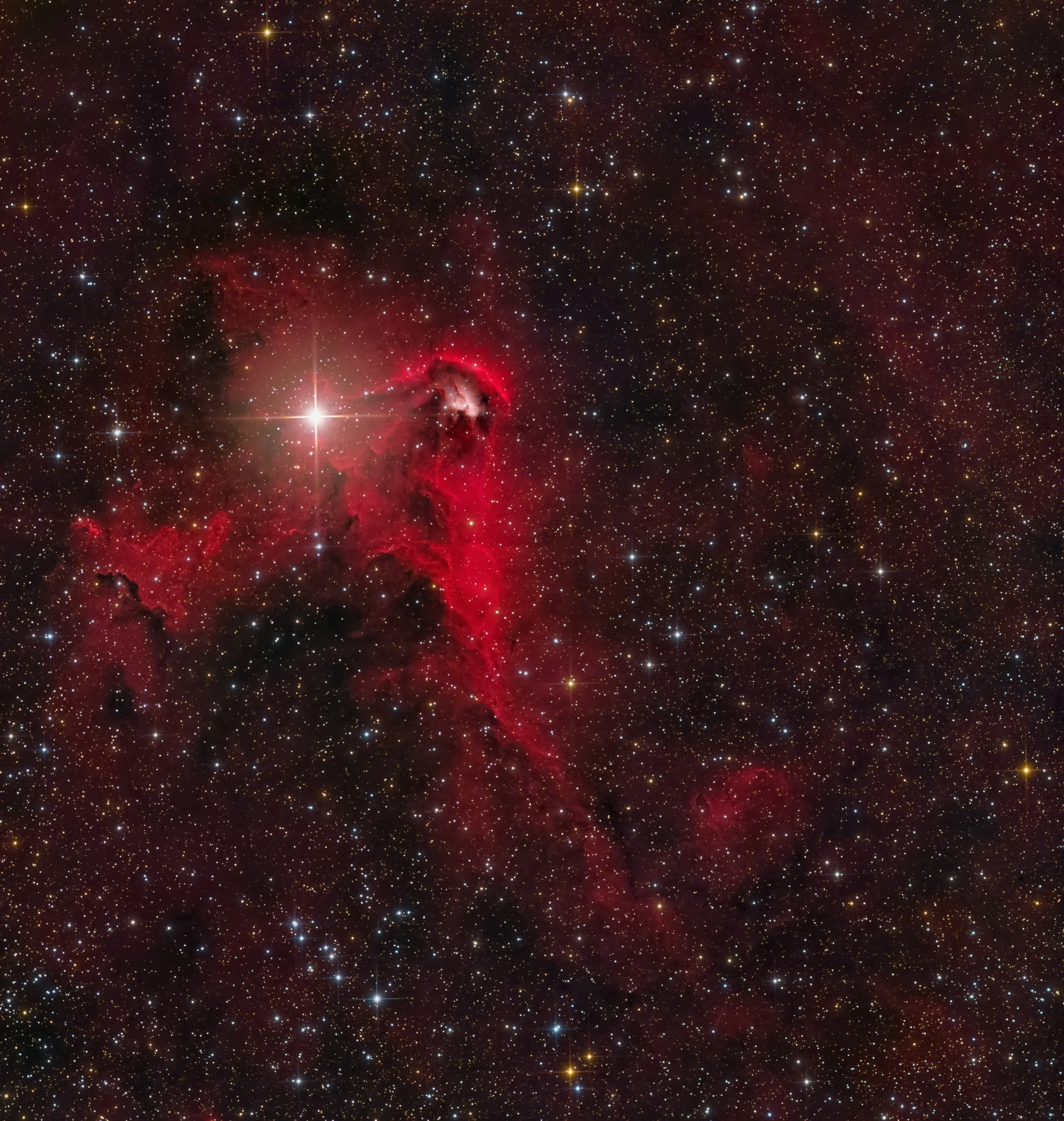
The Devil's Tower
This image shows RCW 85, a faint Hα emission nebula in Centaurus shaped by strong stellar winds and radiation from nearby massive stars. The bright ionisation rim and hollowed cavity reveal active stellar feedback, while a compact star‑forming core sits just behind the shock front. RCW 85 is rarely imaged, but long integration exposes its tower‑like structure and the subtle architecture of the gas being carved out by young stars.
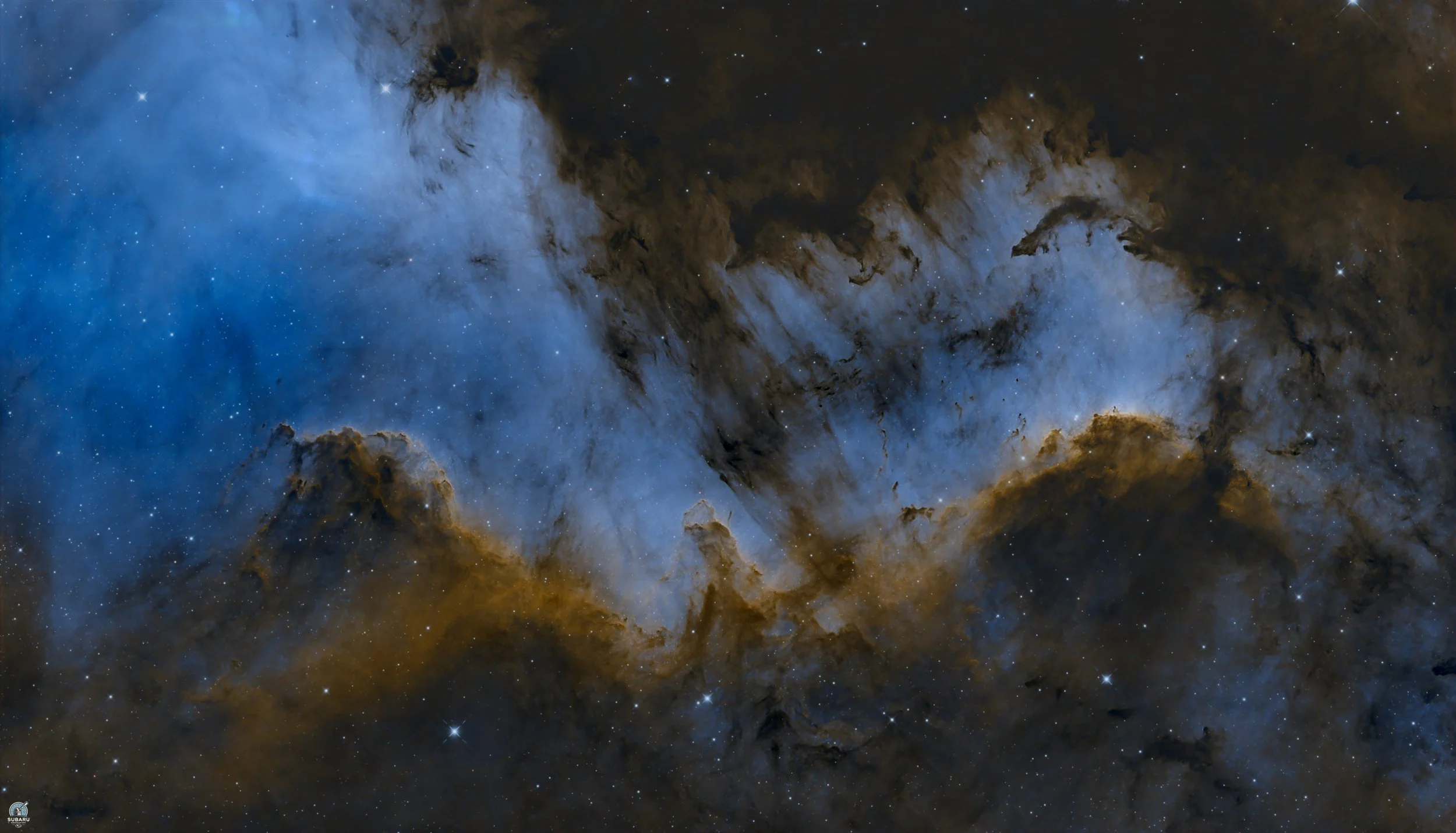
The Cygnus wall
This image presents a striking view of a dense star-forming region within a giant molecular cloud, where turbulent gas and dust sculpt intricate structures across interstellar space. Dark, opaque dust lanes absorb visible light from background stars, producing dramatic silhouettes against luminous clouds of ionized gas. The blue-white glow traces energetic radiation from nearby massive young stars, whose ultraviolet emission ionizes surrounding hydrogen and drives powerful stellar winds that erode and compress the nebula.
The complex network of pillars, ridges, and cavities reflects the dynamic interaction between gravity, radiation pressure, magnetic fields, and supersonic turbulence. Dense pockets within the molecular cloud may collapse under their own gravity, giving rise to new generations of stars. As stellar feedback continues to reshape the environment, the nebula evolves over millions of years, simultaneously destroying and creating the conditions necessary for future star formation.
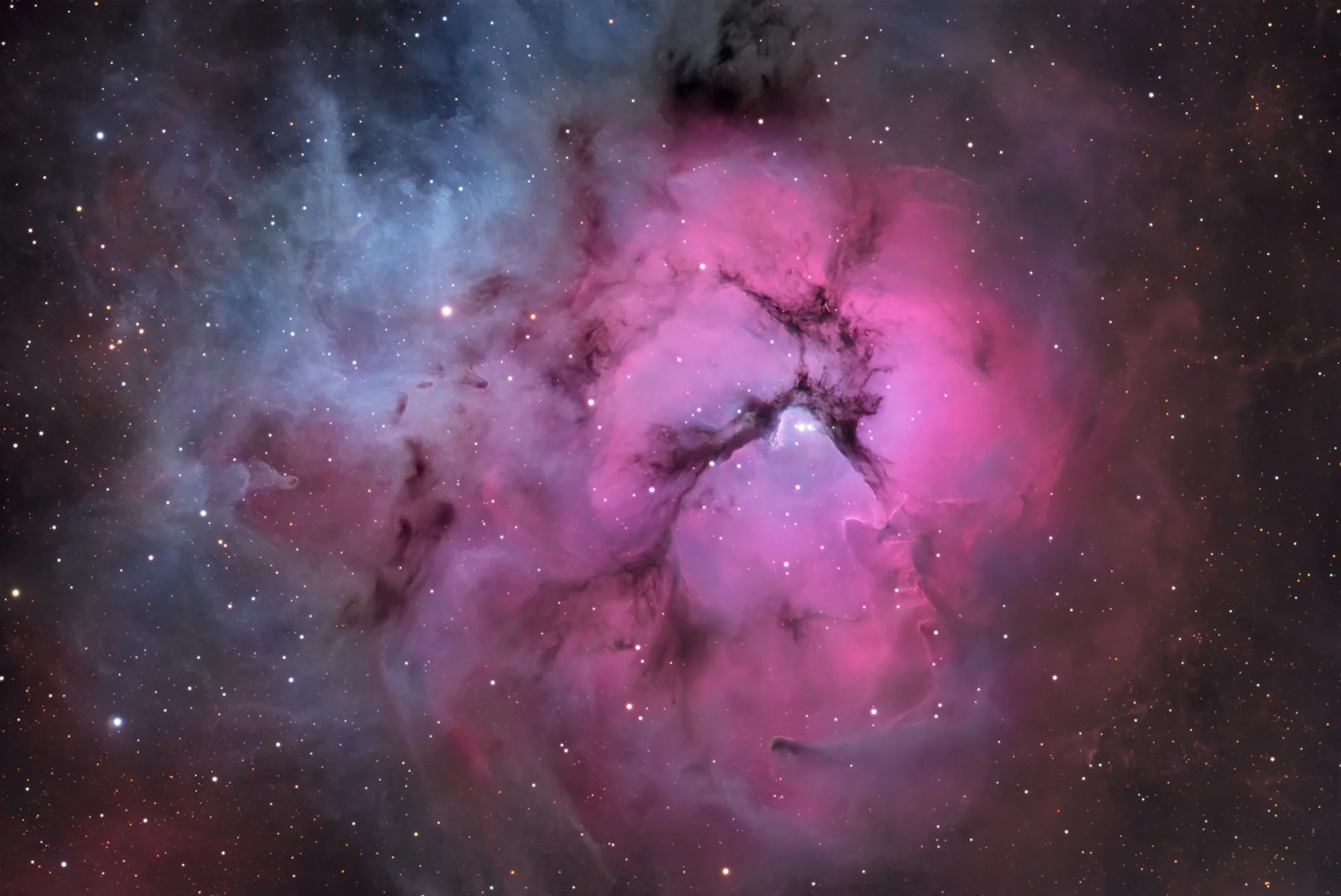
M20 Trifid Nebula
This high-contrast image of the Trifid Nebula (Messier 20) captures a dynamic star-forming region in the constellation Sagittarius, showcasing the complex interplay between young, massive stars and interstellar matter. The distinct tri-lobed emission region shines vividly in characteristic reddish-pink tones, powered by intense ultraviolet radiation from a central massive star that ionizes surrounding hydrogen gas (H II region). Adjacent to the emission nebula, brilliant blue reflection regions illuminate dusty clouds of fine silicate and carbonaceous grains that scatter starlight. Cutting through the bright core are striking dark absorption lanes—dense, opaque filaments of cosmic dust blocking background light, where cold molecular gas continues to collapse to seed future generations of stars.
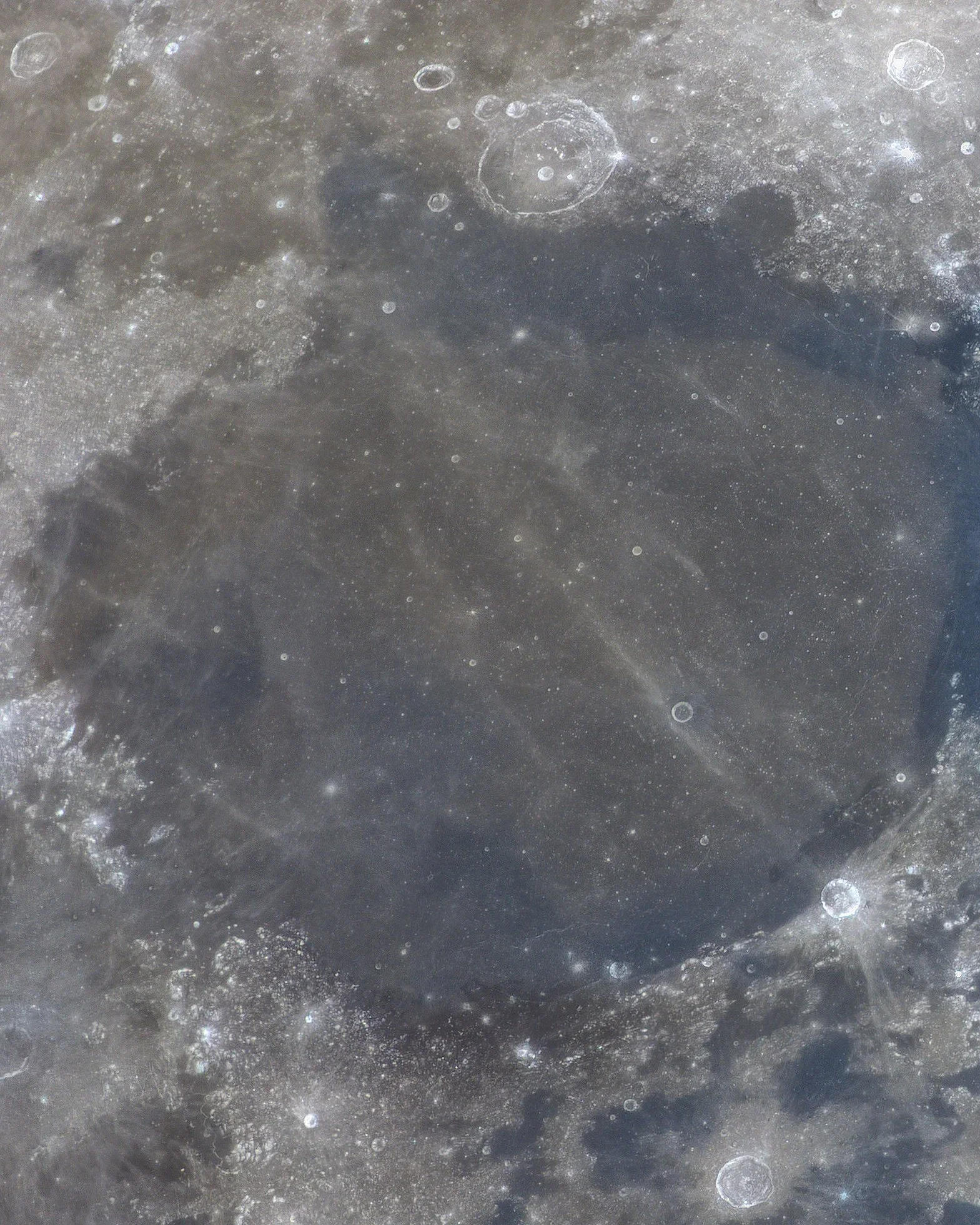
Sea of Serenity in mineral detail
This high-contrast mineral image of Mare Serenitatis (Sea of Serenity) captures the rich geological history of an ancient lunar impact basin flooded by volcanic basalt. The distinct tonal variations across the basaltic plains highlight regional differences in mineral chemistry, where darker, low-albedo deposits signify high concentrations of titanium dioxide and iron-rich minerals such as ilmenite and pyroxene. In contrast, bright impact features and crater rims—such as Posidonius and Bessel—display high-albedo ejecta blankets composed of pulverized, pristine silicate minerals like plagioclase feldspar (anorthosite) excavated from beneath the regolith, illustrating the interplay between volcanic effusion and impact cratering on the lunar surface.
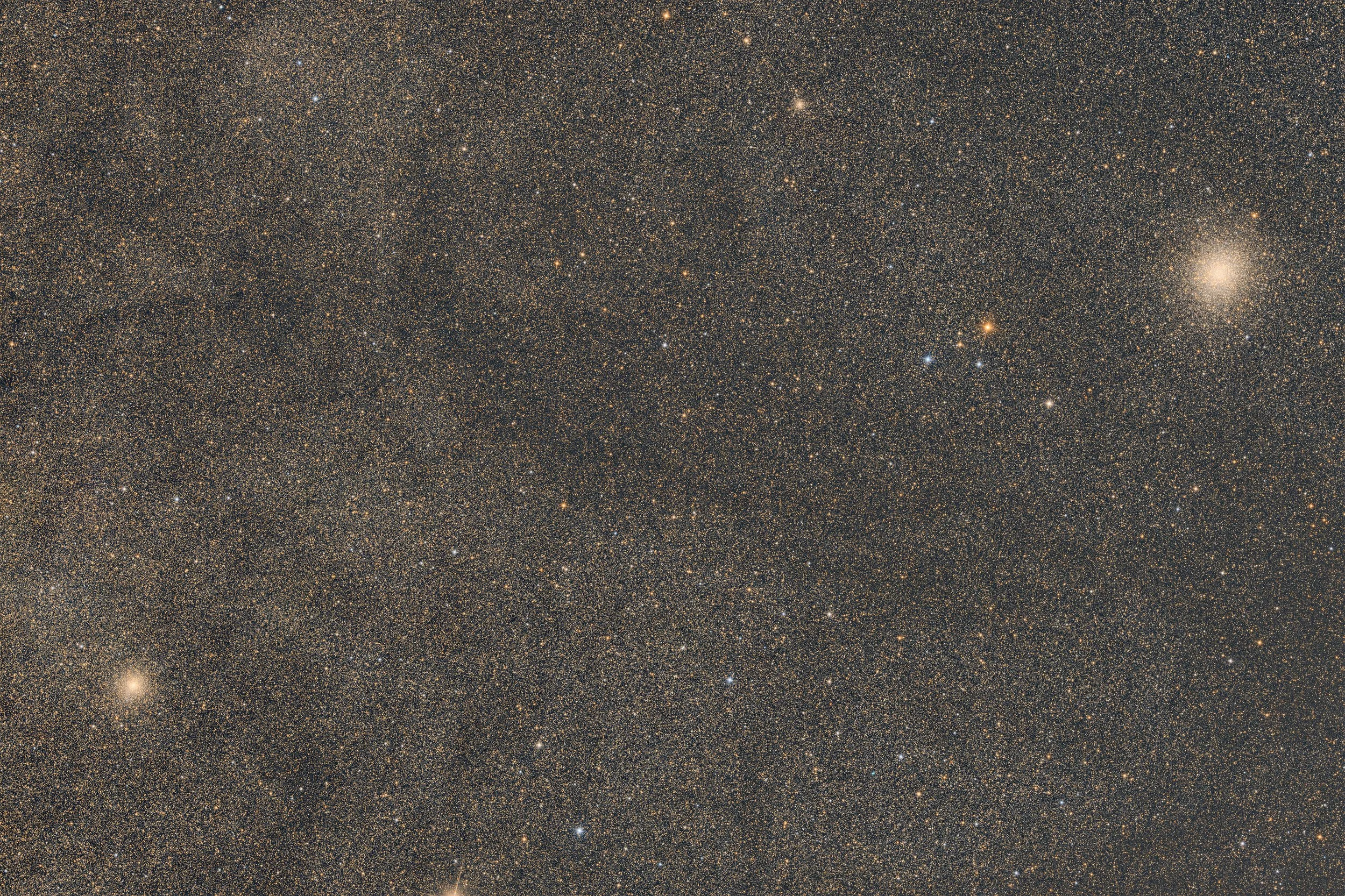
Clusters in a Sea of Stars – M22 + M28
This wide-field deep-sky image captures two of the southern sky's finest globular clusters, Messier 22 (M22) and Messier 28 (M28), set against the dense star fields of the Milky Way's central bulge in the constellation Sagittarius.
Located approximately 10,600 light-years away, M22 is one of the closest and brightest globular clusters to Earth, containing hundreds of thousands of ancient stars. Nearby lies M28, a more compact cluster located roughly 18,000 light-years away. Embedded across this field are several notable deep-sky objects, including the planetary nebulae NGC 6629, NGC 6644, and the intracluster planetary nebula GJJC 1, alongside numerous variable and carbon stars.
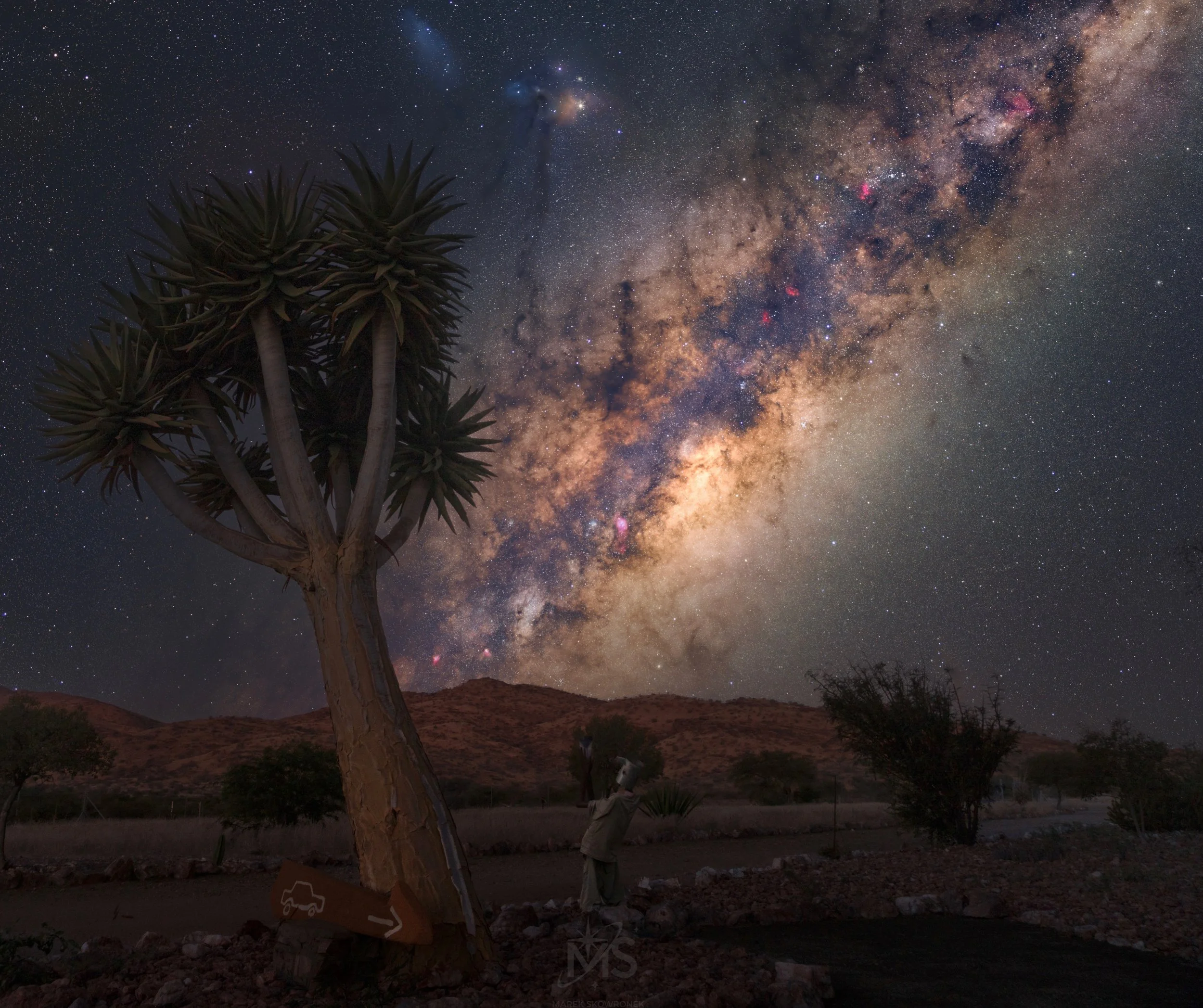
Kokerboom Under the Namibian Milky Way
Captured from the deep, dark skies of the Namib Desert at the Rooisand Desert Ranch in Namibia, this striking composite image highlights a native quiver tree (Aloe dichotoma) silhouetted against the core of the Milky Way. Known locally as the Kokerboom, these iconic desert aloe plants store water in their fleshy trunks to endure extreme heat and can live for hundreds of years.