

AAPOD2 Image Archives

Winter Orion
The Orion Complex encompasses a wealth of celestial phenomena, including the renowned Orion Nebula (Messier 42) at the heart of the Orion Molecular Cloud Complex. This captivating region, a stellar nursery teeming with newborn stars, emanates a vibrant glow that illuminates the surrounding cosmic landscape.
Nestled within the complex is the intricate Horsehead Nebula, a dark nebula silhouette against the brilliance of the emission nebula IC 434. The ethereal Flame Nebula, another jewel in Orion's crown, dances with the radiant light of nearby stars, creating a spectacle that mirrors the cosmic forces at play.
As we navigate through the Orion Complex, we encounter the intricate filaments of the Barnard's Loop, a vast and faint emission nebula that weaves its way through the cosmic expanse. The luminous stars of Orion's Belt, including the prominent Mintaka, Alnitak, and Alnilam, punctuate the celestial canvas, adding their brilliance to the cosmic narrative.
This composite image, a testament to the wealth of celestial wonders within the Orion Complex, beckons stargazers and astronomers alike to explore the rich diversity of our galactic neighborhood. Each nebula, star, and filament contributes to the celestial symphony that unfolds within the cosmic embrace of Orion, inspiring awe and contemplation of the majestic forces shaping our stellar surroundings.
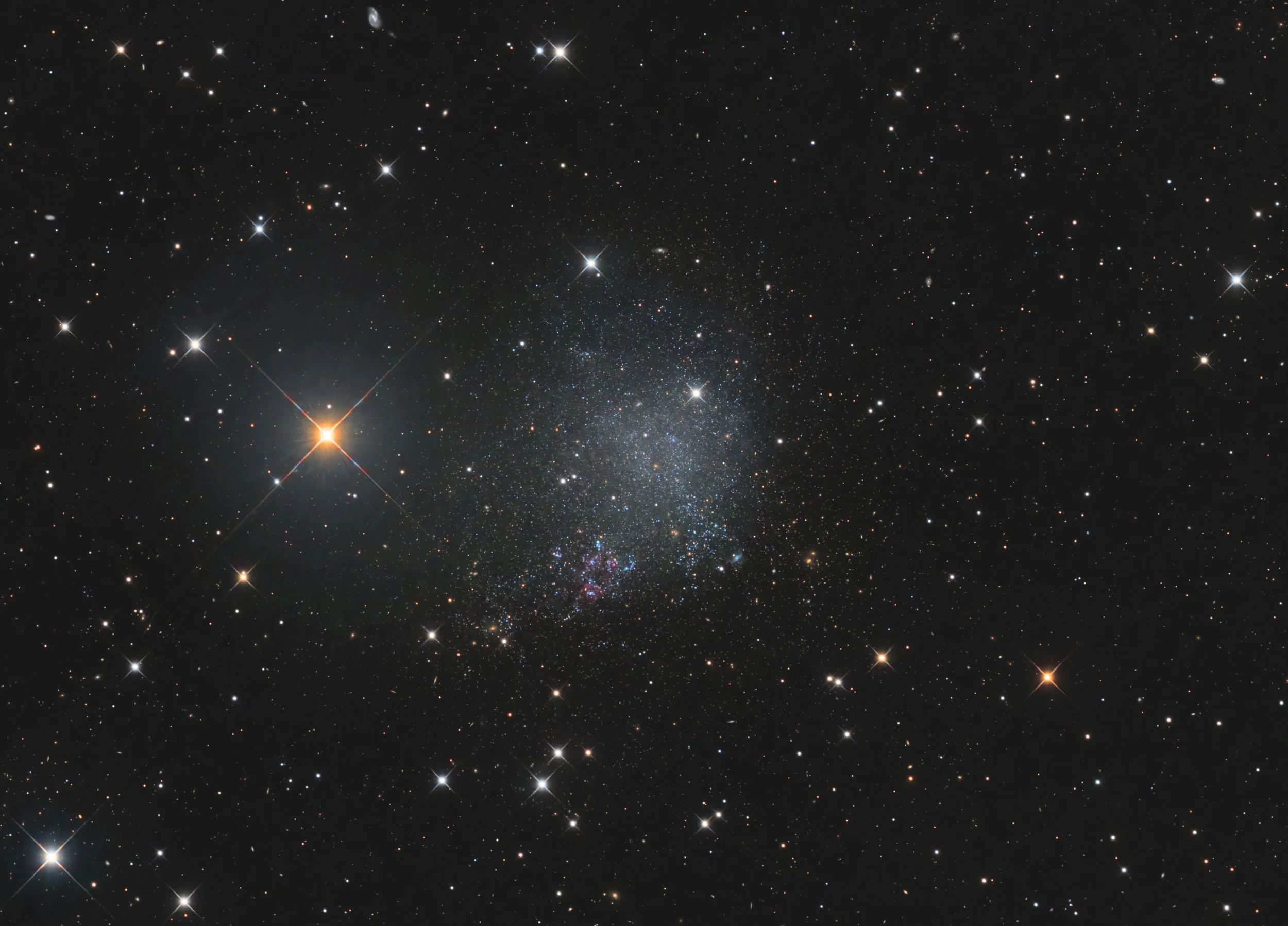
IC1613 - One of our neighbors
IC 1613, a member of the Local Group of galaxies, stands as a testament to the quiet resilience of celestial bodies that persist on the cosmic stage. Despite its diminutive size compared to its spiral and elliptical counterparts, IC 1613 emanates a serene glow that speaks of its independent journey through the cosmic wilderness.
Captured in this image is the gentle luminosity of IC 1613, a galaxy characterized by a sparseness of stars and a lack of prominent spiral arms. Its unassuming presence invites contemplation of the cosmic forces that shape galaxies, as it navigates the vast cosmic sea in relative seclusion.
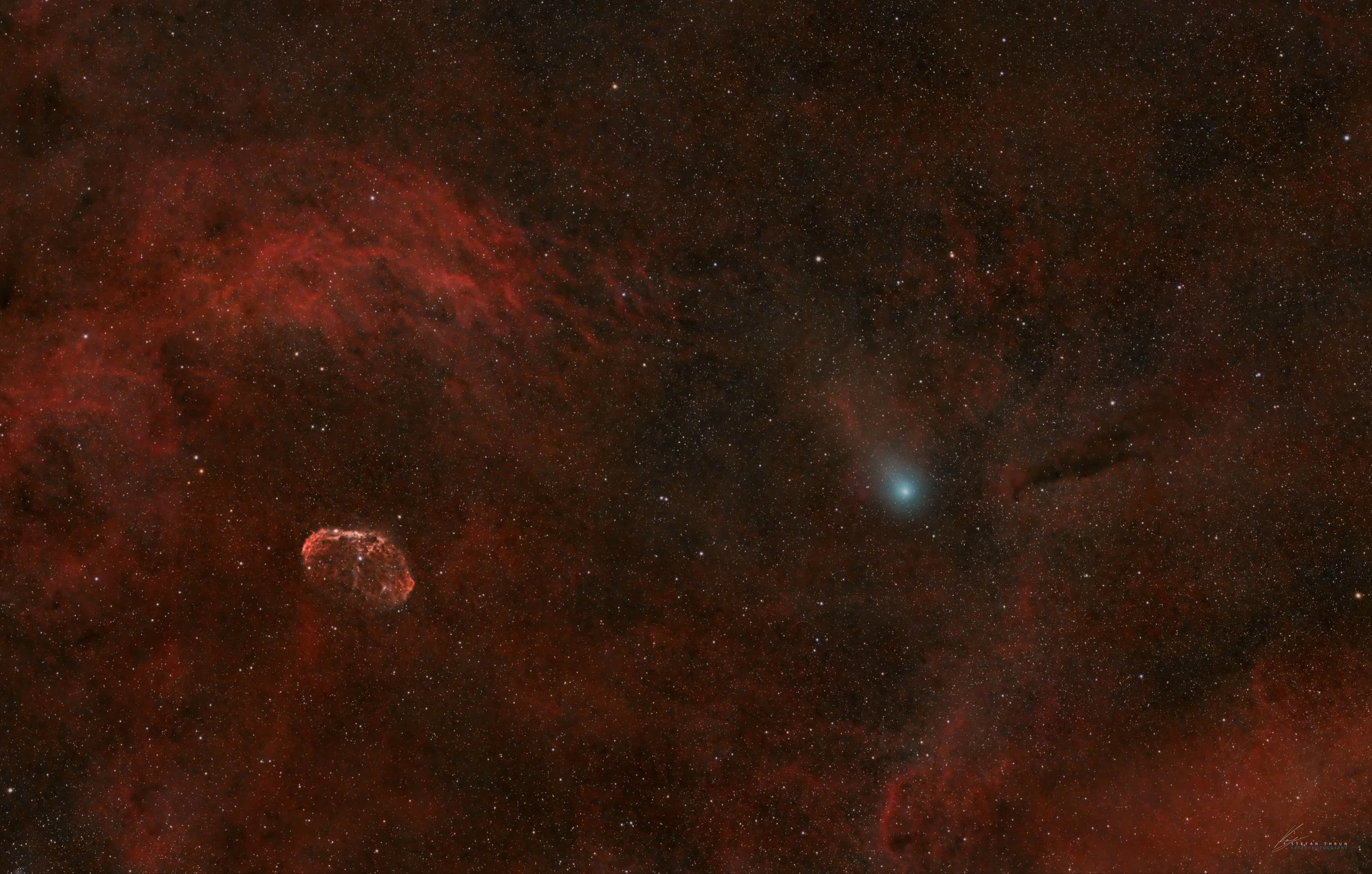
Comet 12P/Pons-Brooks
Comet 12/P, a periodic comet with an orbital period of about 70 years, has ventured from the outer reaches of our solar system to become a transient beacon in the night sky. This image captures its brilliant nucleus, enveloped in a delicate coma of gas and dust, as it reflects the Sun's light and paints a celestial brushstroke against the cosmic backdrop.
As the comet's trajectory brings it closer to Earth, it becomes a captivating sight for astronomers and sky gazers alike. The image showcases the dynamic nature of this celestial traveler, illustrating its evolution over time and highlighting the intricate details of its glowing tail, a testament to the solar wind's influence on its luminous display.

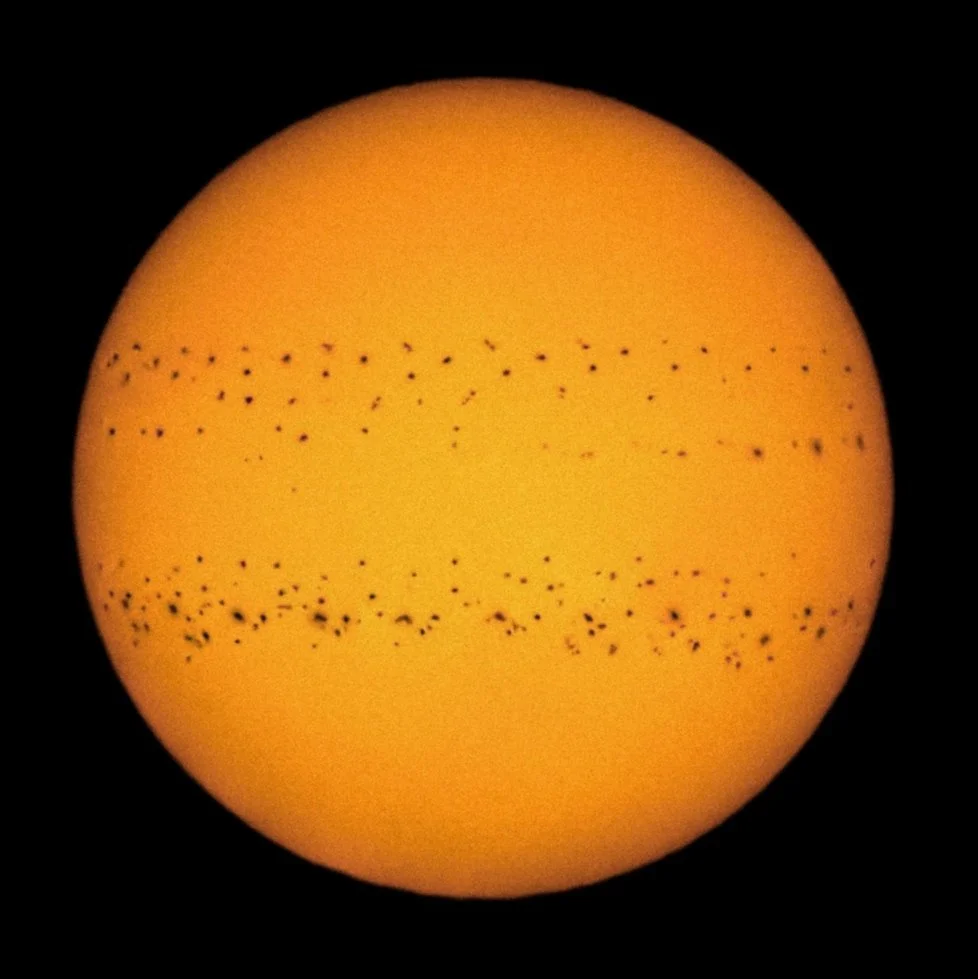
One- Month Sun Spots
As we examine at this month-long solar symphony, we gain a deeper appreciation for the Sun's role as the cosmic orchestrator, shaping the energy and life within our solar system. This image stands as a visual ode to the celestial dance that unfolds on the surface of our star, offering a glimpse into the captivating and ever-changing nature of the Sun's radiant presence.

Unveiling the Horsehead Nebula in IC 434
Delve into the cosmic canvas and witness the ethereal beauty of IC 434, where a celestial veil unveils the iconic Horsehead Nebula. This intricate region, nestled within the vastness of space, captivates observers with its enigmatic silhouette against the stellar backdrop.
IC 434, a designated dark nebula, hosts the Horsehead Nebula, a cosmic icon resembling the silhouette of a horse's head against the glow of the nearby emission nebula IC 434 itself. This striking interplay of light and shadow unfolds in the constellation Orion, a testament to the mesmerizing beauty that celestial phenomena can carve in the cosmic tapestry.
The Horsehead Nebula, a dense concentration of interstellar dust, obscures the brilliant glow of the background emission nebula, creating a celestial chiaroscuro. Illuminated by the nearby star Sigma Orionis, the delicate features of the Horsehead Nebula come to life, embodying the intricate dance between stellar radiation and the cosmic remnants scattered throughout the region.
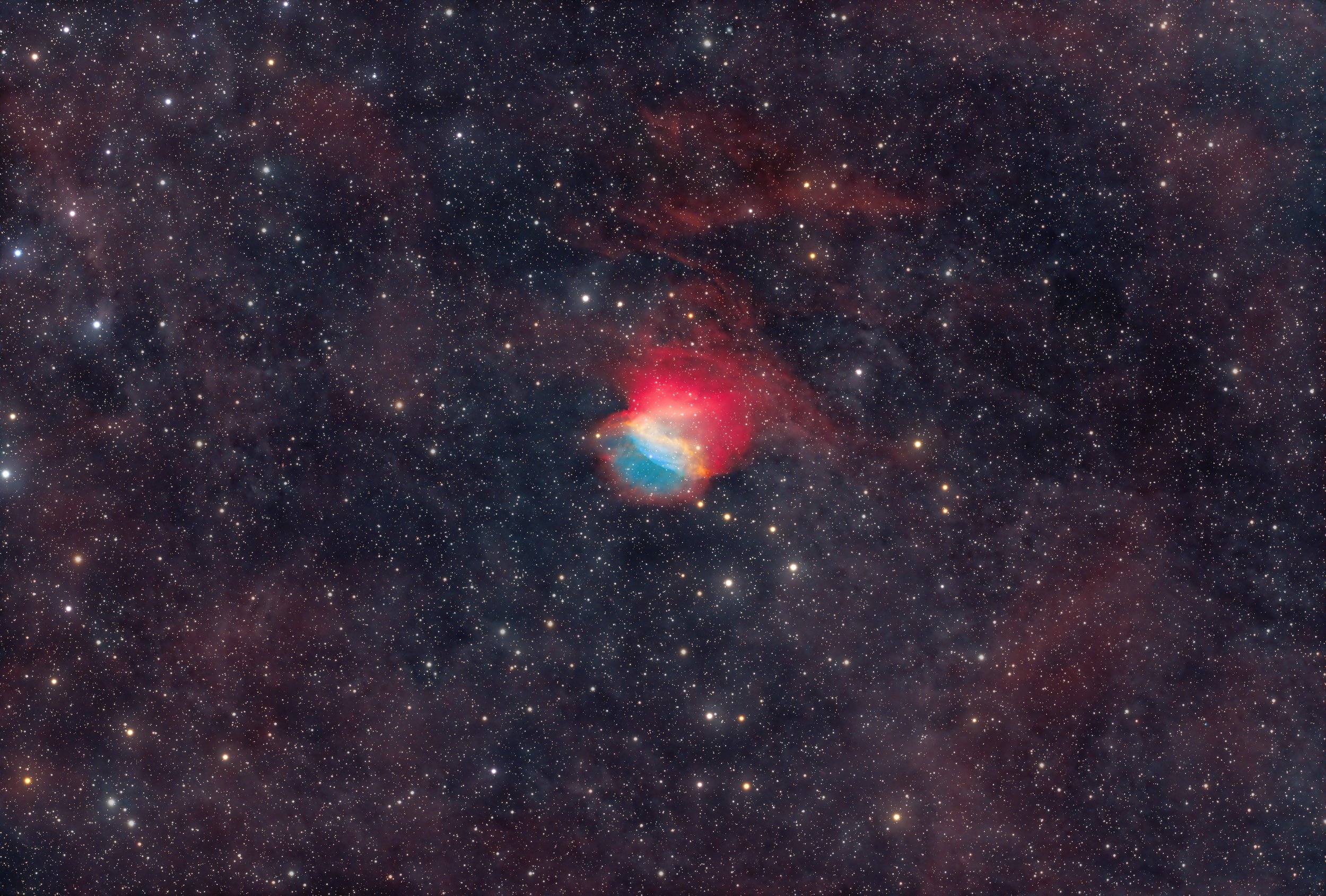
Sh2-174
Situated against the vast cosmic tapestry, Sh2-174 reveals itself as a region of ionized gas, its luminous glow painting a portrait of stellar activity within its nebulous embrace. Though the exact distance remains a cosmic secret, this celestial spectacle offers a glimpse into the intricate dance between interstellar elements and the stellar forces that shape the universe.
The ethereal hues of Sh2-174, likely fueled by the presence of ionized hydrogen, present a captivating display of cosmic alchemy. As astronomers peer into its radiant depths, they embark on a journey to unravel the mysteries concealed within this celestial ember, probing the secrets of starbirth and interstellar dynamics.
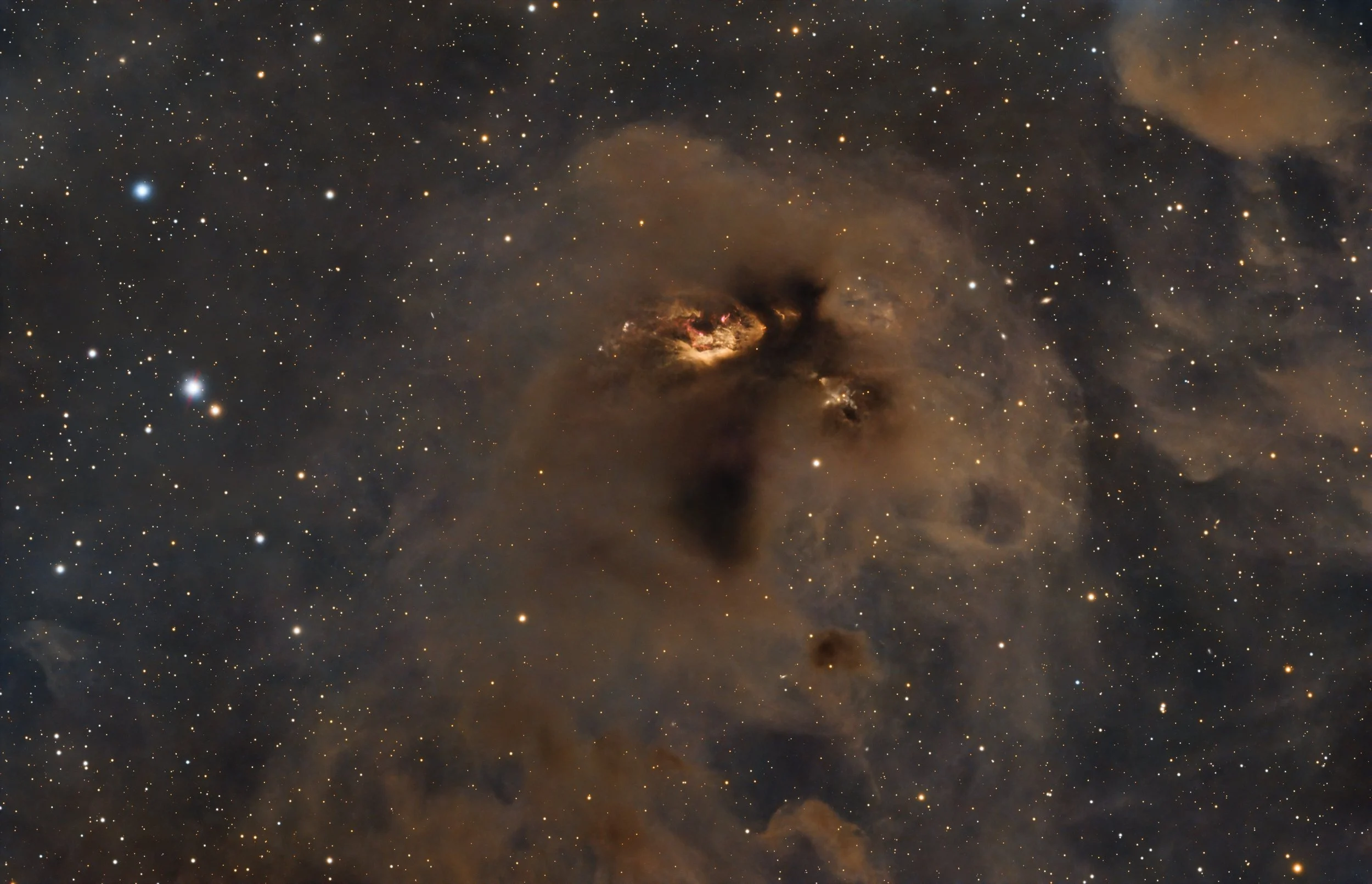
LDN 1551
Situated against the cosmic backdrop, Sharpless 239 emerges as a region of ionized gas and dust, delicately illuminated by the embrace of newborn stars. The celestial watercolor, adorned with wisps of hydrogen alpha and other cosmic pigments, weaves a tapestry that captivates the imagination.
While its exact distance remains a celestial mystery, Sharpless 239's radiant glow speaks of a tranquil ballet between interstellar gases and the stellar forge. As we contemplate the enchanting dance of light and matter, Sharpless 239 invites us to reflect on the cosmic poetry that unfolds within the quiet corners of our vast and wondrous universe.
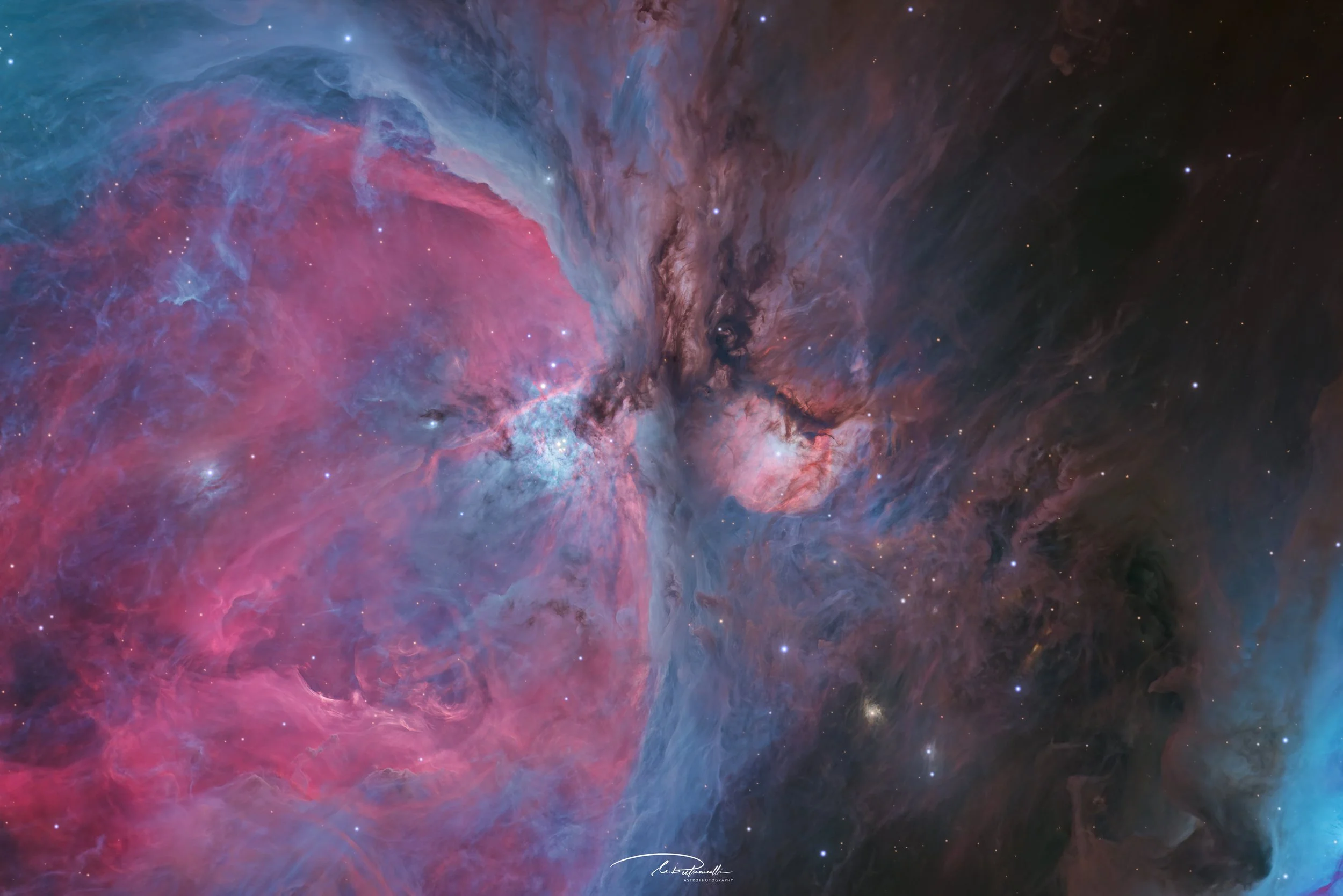
The heart of M42
Astronomers estimate the Orion Nebula's mass to be a staggering 2,000 times that of the Sun, attesting to the dynamic forces at play within this celestial crucible. As we peer into its radiant depths, we are granted a glimpse into the majestic theater of stellar genesis, where the cosmos weaves a tapestry of light and matter, perpetuating the cosmic dance of creation and destruction.
In the grand celestial symphony, the Orion Nebula stands as a beacon of brilliance, inviting us to marvel at the wonders of the universe and contemplate our place in the vastness of space.
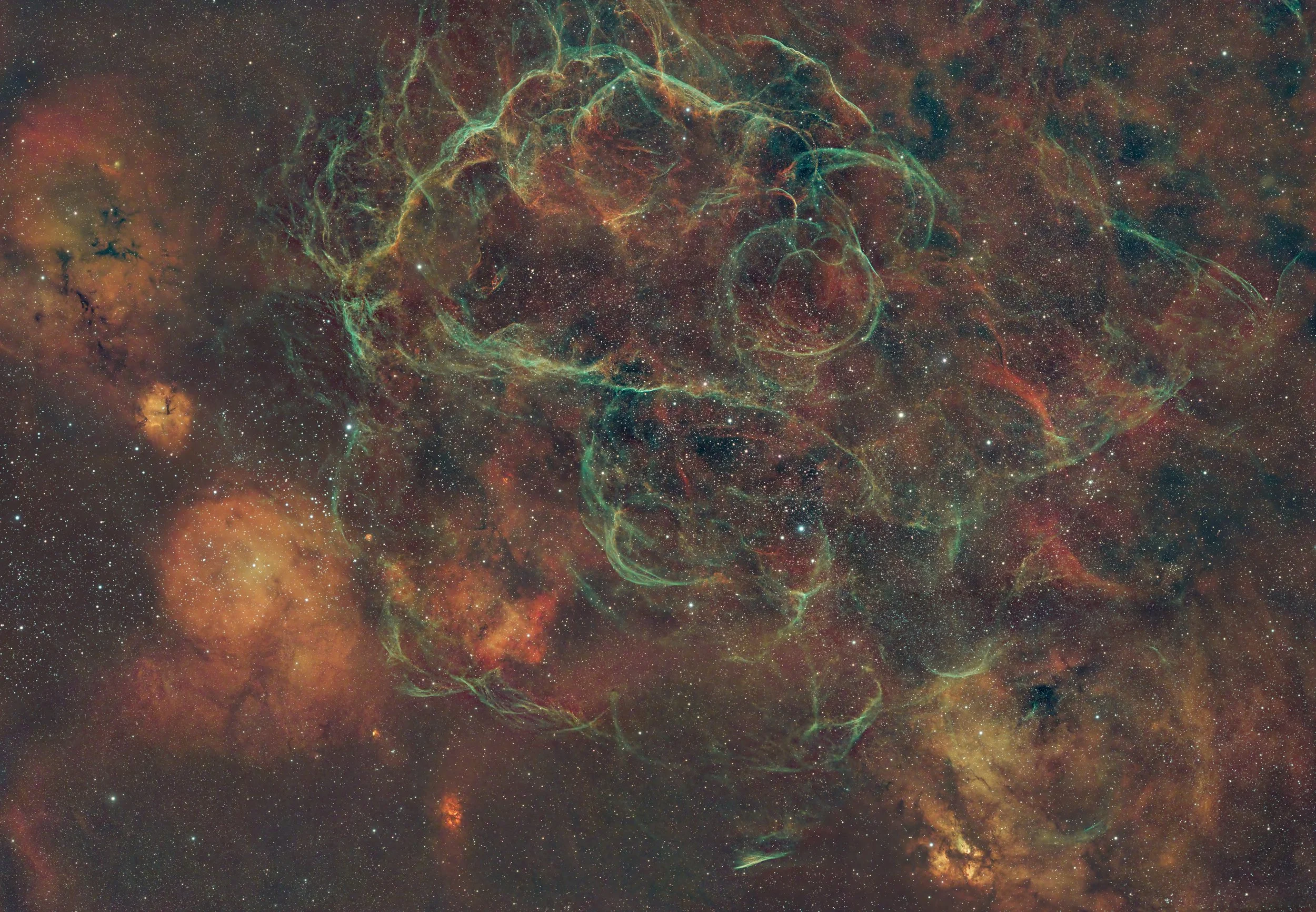
Vela Supernova Remnant
Vela Supernova Remnant, an astronomical masterpiece born from the cataclysmic explosion of a Type II Supernova 11,000 years ago. This expansive mosaic, a testament to the enduring spirit of cosmic exploration, unravels across the constellation Vela, showcasing the remnants of a stellar explosion primarily composed of hydrogen alpha and oxygen III.
A monumental project spanning two seasons and requiring the meticulous capture of 14 panels, this massive mosaic is the result of a laborious effort undertaken over 12 months. Nights filled with patience and frustration converged to shape this cosmic panorama, encompassing about 103 megapixels in total actual size. The mosaic captures the intricate details of the Vela Supernova Remnant, a testament to the powerful forces unleashed in the heart of the universe.
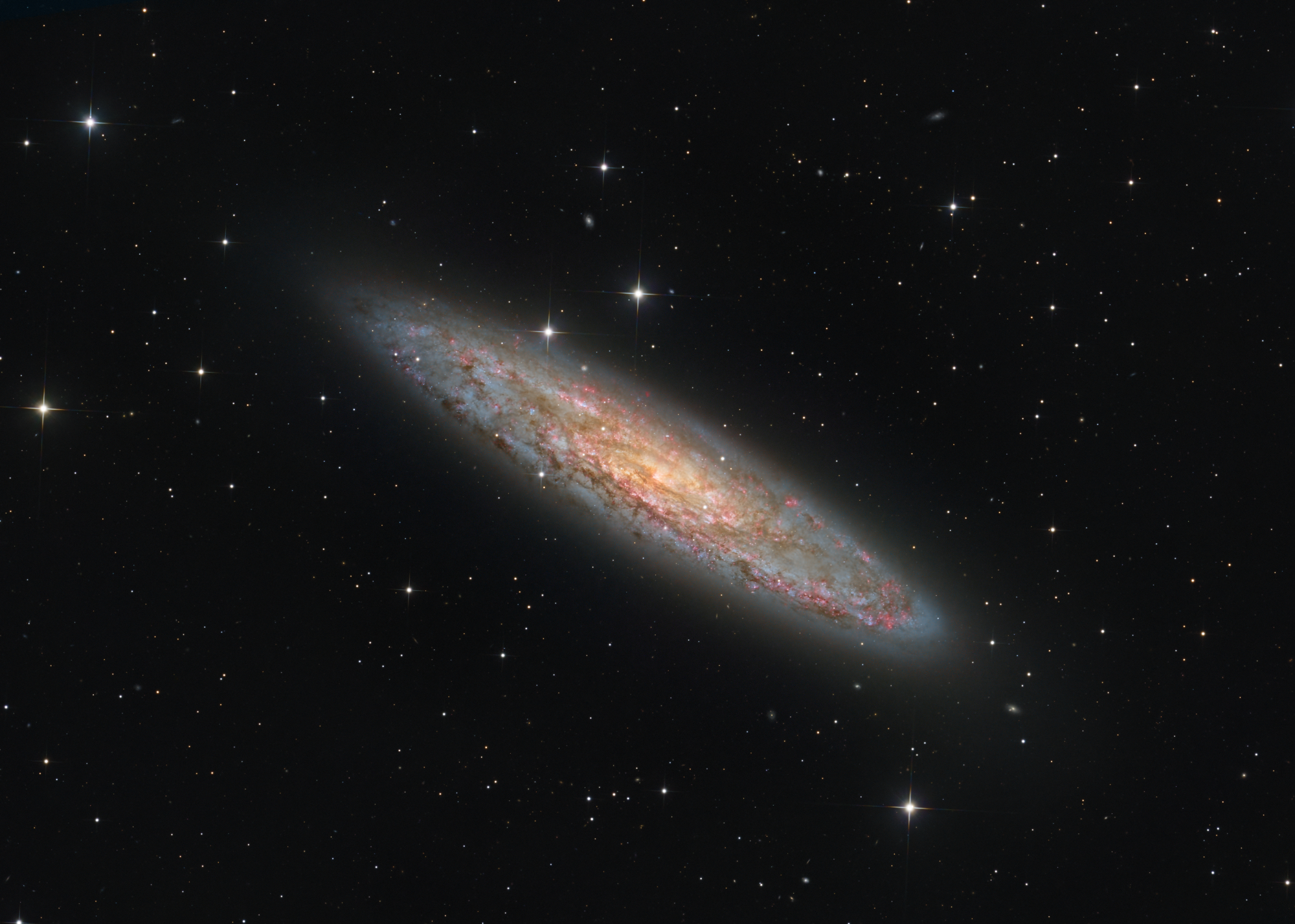
NGC 253 - an island of stars
This stunning image unveils the captivating beauty of the Sculptor Galaxy, NGC 253, captured against the pristine Namibian night sky.
NGC 253, also known as the Sculptor Galaxy, is a stellar showcase of star formation and cosmic activity, situated approximately 11.5 million light-years away from Earth.
Notable features within NGC 253 include its central stellar core, dynamic spiral arms, and regions of intense star birth, all set against the velvety backdrop of the Namibian night.
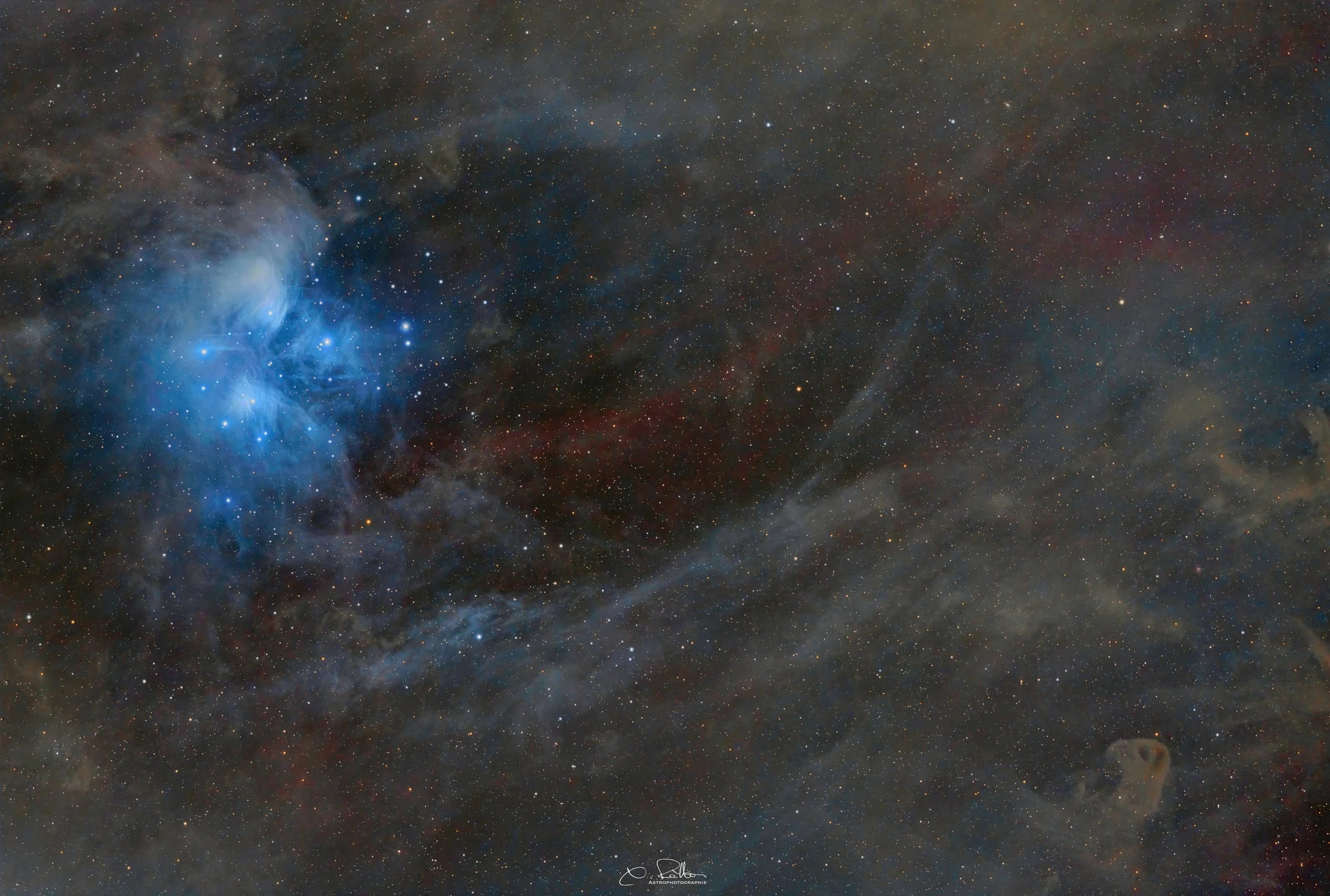
Seven Sisters rolling in the deep
In this wide-field view of the Pleiades, AKA Messier 45 (M45), the image not only presents a visual feast but also unveils several intriguing facts about this prominent open star cluster. Composed of hot, blue, and luminous stars, the Pleiades is a young cluster, estimated to be around 100 million years old. The association of these stars with a common origin in a molecular cloud showcases the dynamics of stellar birth and evolution within our cosmic neighborhood.
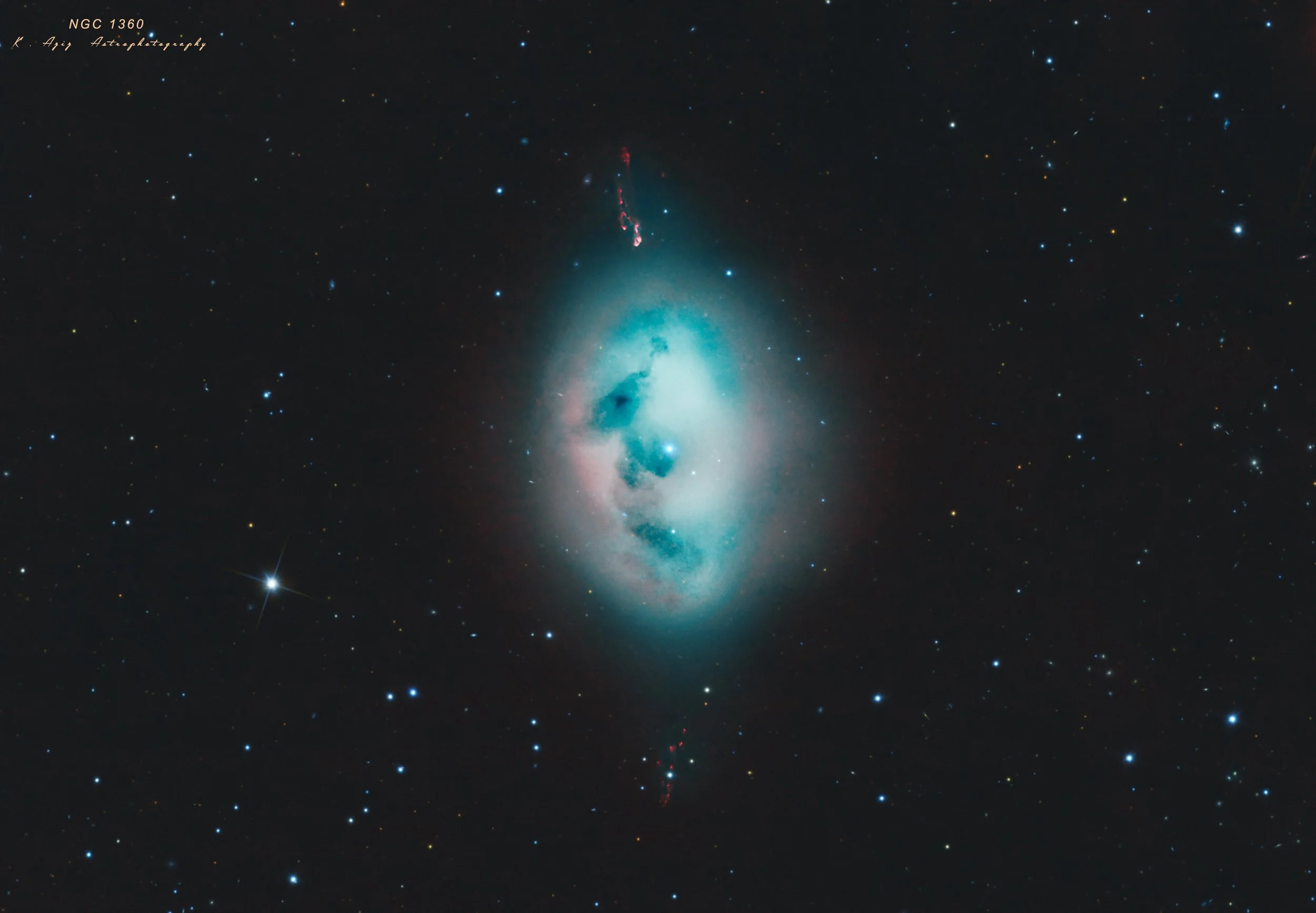
Robin’s Egg Nebula
NGC 1360 is interesting for several reasons:
First, it is one of the few planetary nebulae where an intense stellar magnetic field has been observed. Indeed, the central star of this nebula has an intense magnetic field observed and the fast wind is no longer present, which indicates that a reflux process has probably developed.
Secondly, the nebula shows an elongated morphology and almost without relief, with no apparent glossy edge, no clear inner boundary or central cavity. The absence of a central cavity explains and confirms the absence of fast stellar winds.
Third, This nebula presents a bipolar jet of matter from its host star.
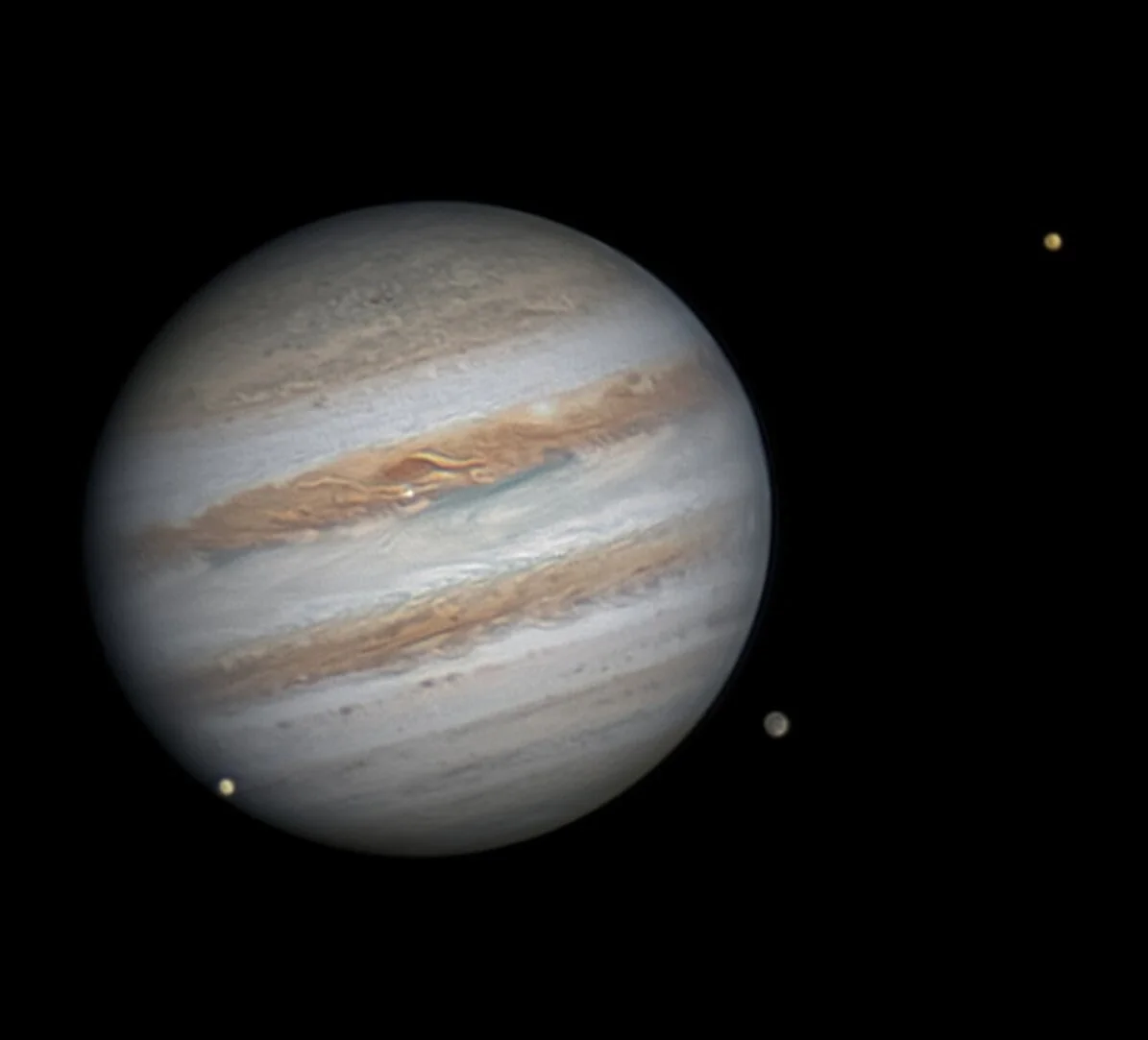
Jupiter, Europa, Io & Ganymede
Captured in this mesmerizing photo is a celestial ballet featuring three of Jupiter's four principal moons. The scene unfolds in the wake of the great red spot's transit, showcasing a region rife with turbulence and captivating details. This rare event, documented with precision and awe, offers a glimpse into the dynamic and ever-changing atmosphere of the gas giant.
The trio of moons, possibly including the Galilean satellites Io, Europa, and Ganymede, adds a celestial charm to the tumultuous aftermath of the great red spot's journey across Jupiter's surface. The turbulent backdrop paints a vivid cosmic canvas, inviting viewers to witness the intricate interplay of atmospheric elements in this dynamic region.
Observing and recording such a rare event fills the soul with wonder and amazement. The ethereal dance of Jupiter's moons amidst the turbulent atmosphere becomes a testament to the beauty and unpredictability of the cosmos. This celestial ballet, frozen in time, serves as a reminder of the ever-shifting nature of our solar system and the continuous spectacle of celestial wonders that unfold in the vastness of space.
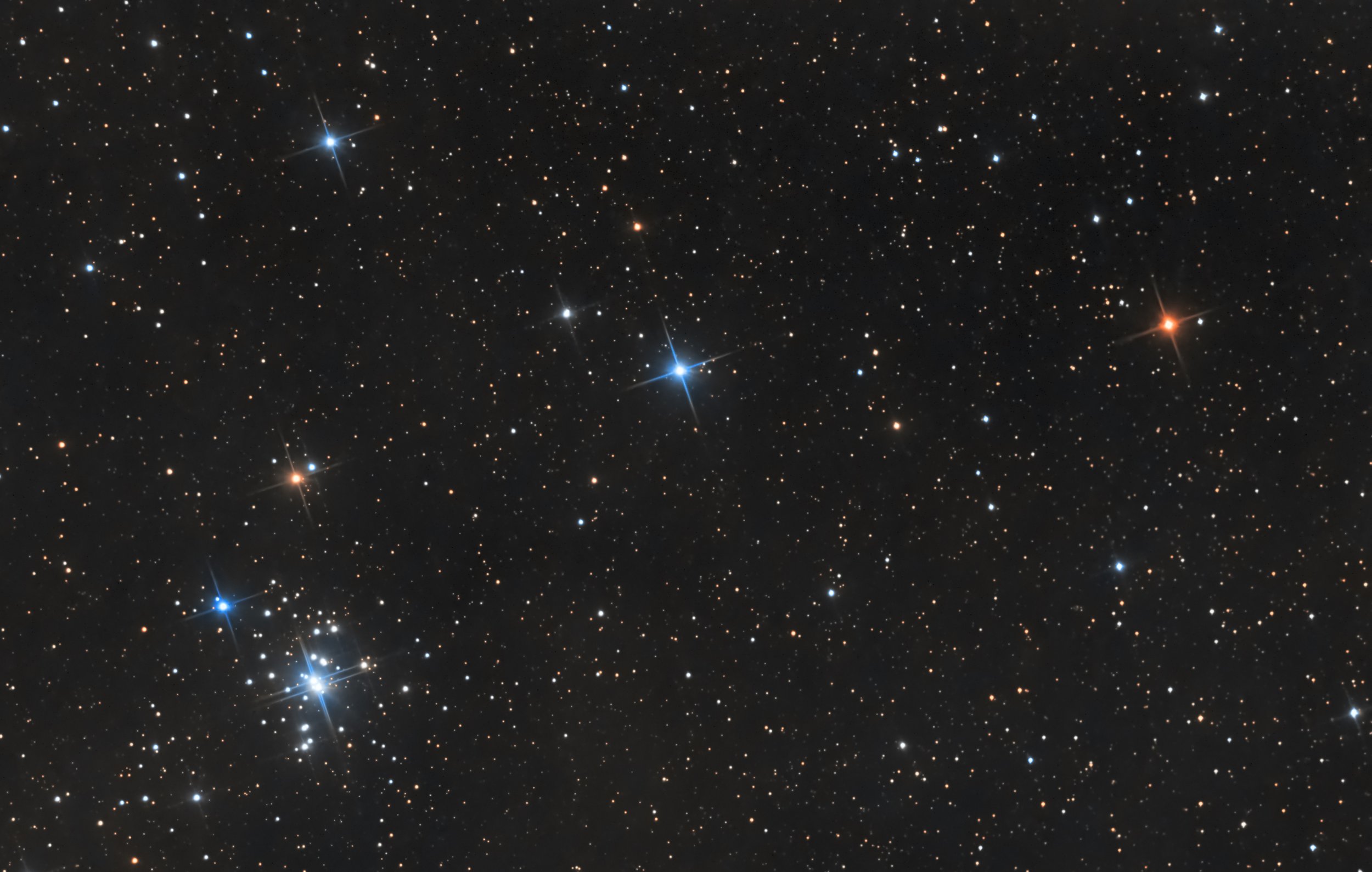
NGC 1502
Amidst the cosmic symphony that welcomes the dawn of a new year, NGC 1502 emerges as a celestial dance in the constellation Perseus. This open star cluster, bathed in the soft glow of interstellar dust, invites us to witness the beauty of stellar companionship and the intricate choreography of its member stars.
NGC 1502, a gem in the celestial realm, features a central concentration of stars forming a tight-knit cosmic ensemble. The cluster's ethereal glow, painted against the cosmic backdrop, encapsulates the essence of unity and shared radiance, much like the collective aspirations that accompany the onset of a new year.
As we gaze upon NGC 1502, we are drawn into a celestial revelry where stars, each with its unique brilliance, join in a dance of gravitational interplay. The stellar companionship within the cluster mirrors the spirit of collaboration and mutual support, resonating with the hopes and dreams that mark the beginning of a fresh cosmic chapter.
NGC 1502 becomes a metaphorical celestial ballroom, where stars twirl and pirouette in the vastness of space. This New Year, let us be inspired by the harmonious dance of NGC 1502, fostering connections, embracing unity, and embarking on a journey of shared brilliance under the cosmic expanse.

Burning Orion-Nebula m42
As we step into the pristine canvas of a new year, the celestial stage is set ablaze with the resplendent glory of M42, the Orion Nebula. This cosmic masterpiece, situated in the iconic Orion constellation, becomes a stellar beacon, symbolizing the promise of fresh beginnings and the awe-inspiring beauty of the cosmos.
M42, also known as the Great Orion Nebula, serves as a metaphorical firework display in the heavens, igniting the night sky with vibrant hues of ionized hydrogen and intricately woven tendrils of dust and gas. This astronomical spectacle, visible to the naked eye, captures the imagination with its stellar brilliance and complex interplay of cosmic forces.
As we celebrate the onset of the new year, the Orion Nebula becomes a cosmic time capsule, offering a glimpse into the stellar nurseries where new stars are born. The Trapezium Cluster at its heart, a gathering of young and energetic stars, mirrors the collective spirit of anticipation and excitement that accompanies the turning of the cosmic calendar.
Much like the burst of fireworks heralding the stroke of midnight, M42 encapsulates the grandeur of celestial creation and the cyclical nature of time. It beckons us to peer into the cosmic tapestry, where the threads of stellar birth and renewal intertwine, inviting contemplation and wonder as we embark on a new journey around the sun.
So, let the ethereal glow of M42 guide us into the new year, a celestial overture that inspires reflection, dreams, and the timeless appreciation of the universe's perpetual dance.
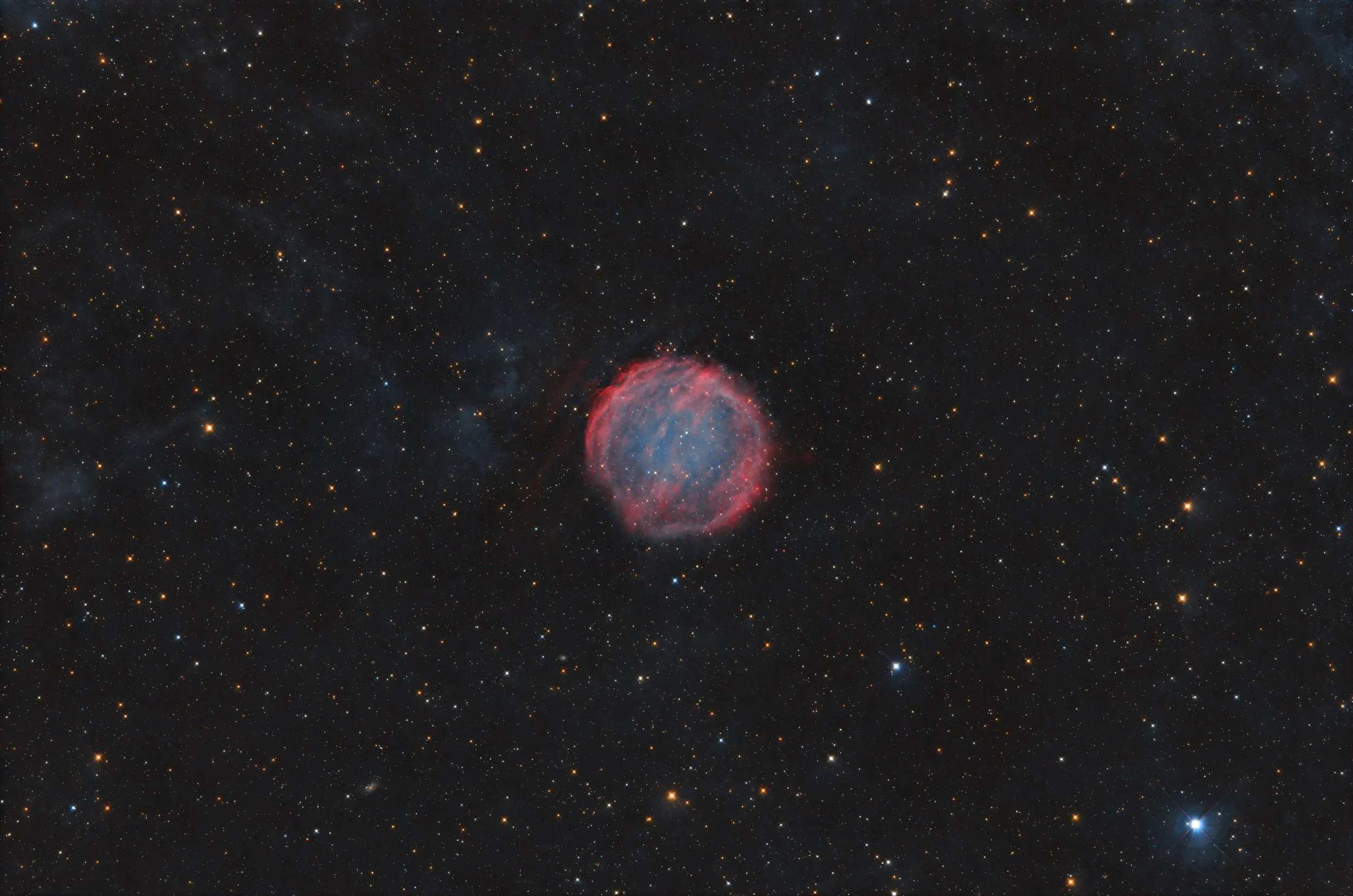
PuWe 1 or PN G158.9+17.8 in HOO with LRGB Stars
In the cosmic tapestry of New Year's Eve, PuWe 1, also known as PN G158.9+17.8, emerges as a celestial timepiece in the constellation Cassiopeia. This captivating planetary nebula, resembling an intricate hourglass suspended in the vastness of space, captures the essence of our earthly countdown to a new year.
The hourglass shape of PuWe 1 becomes a metaphor for the passage of time, each grain of celestial sand representing a moment in the cosmic journey. The central star, having exhausted its nuclear fuel, sheds its outer layers in a mesmerizing dance, creating the delicate structure that enchants astronomers and stargazers alike.
As we stand on the threshold of the new year, PuWe 1 invites us to reflect on the year that has passed, just as the sands of time gracefully slip through the celestial hourglass. The intricate details of this planetary nebula serve as a reminder that, much like the cosmic dance unfolding within PuWe 1, our own lives are part of a grand celestial ballet.
So, let us gaze into the cosmic hourglass of PuWe 1 on this New Year's Eve, appreciating the beauty of the celestial clockwork and embracing the promise of new beginnings as the clock strikes midnight in the cosmos.
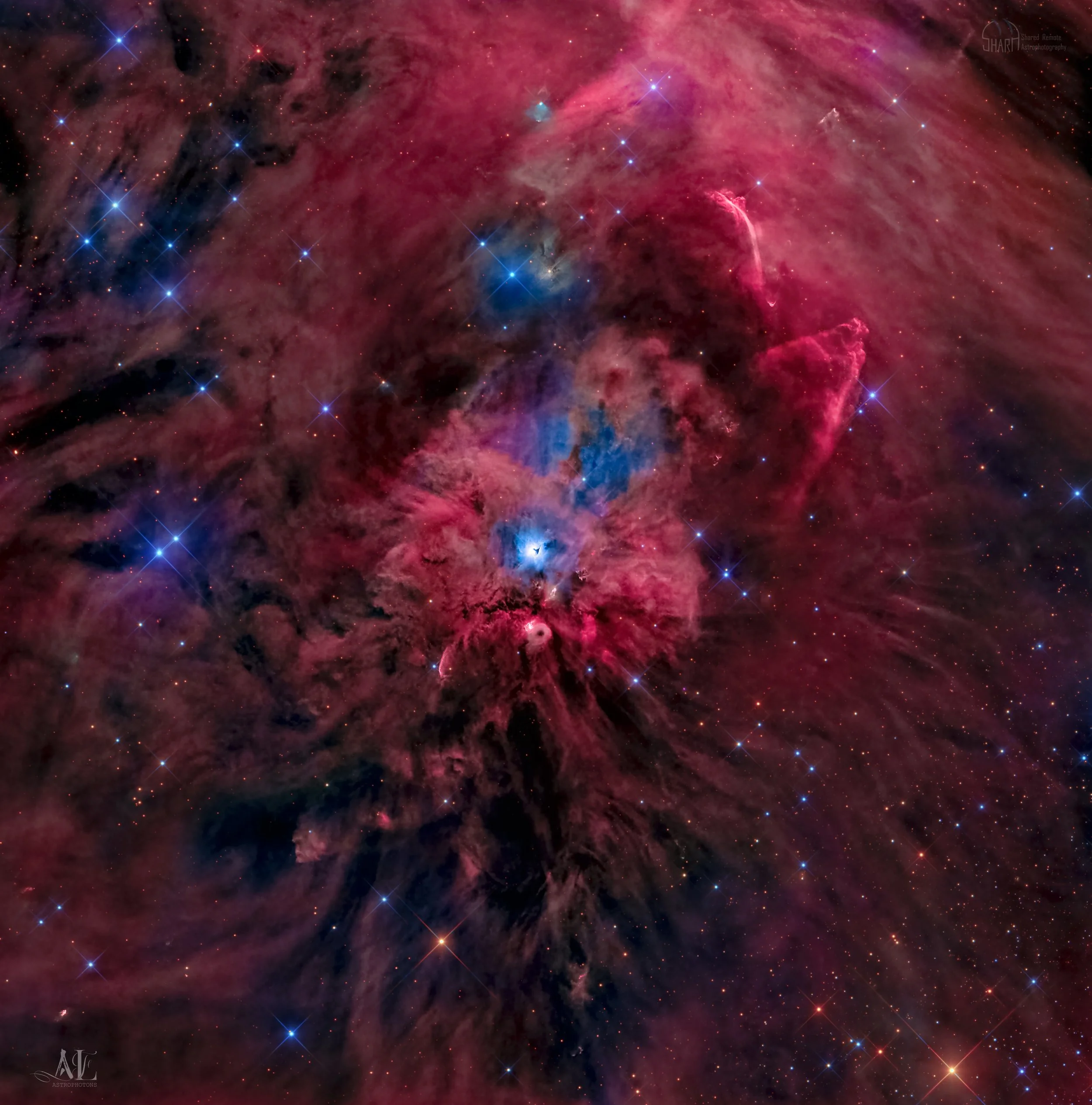
NGC 1999: The cosmic key hole
NGC 1999, nestled in the constellation Orion, unfolds its captivating features in this image. Renowned for the enigmatic "Dark Bay," a distinct dark patch within the nebula, NGC 1999 is a reflection nebula that stands out against the luminous backdrop of surrounding star-forming regions. The intricate interplay of colors, attributed to the scattering of starlight by fine dust particles, adds to the visual allure of this cosmic masterpiece.
At the heart of NGC 1999 lies the young stellar object V380 Orionis, a protostar that illuminates the surrounding dust and gas, contributing to the nebula's luminosity.
The Dark Bay within NGC 1999 is believed to be a dense region of dust and gas that intricately obscures background starlight, creating a visually striking contrast within the nebula. This unique feature adds to the intrigue of NGC 1999.
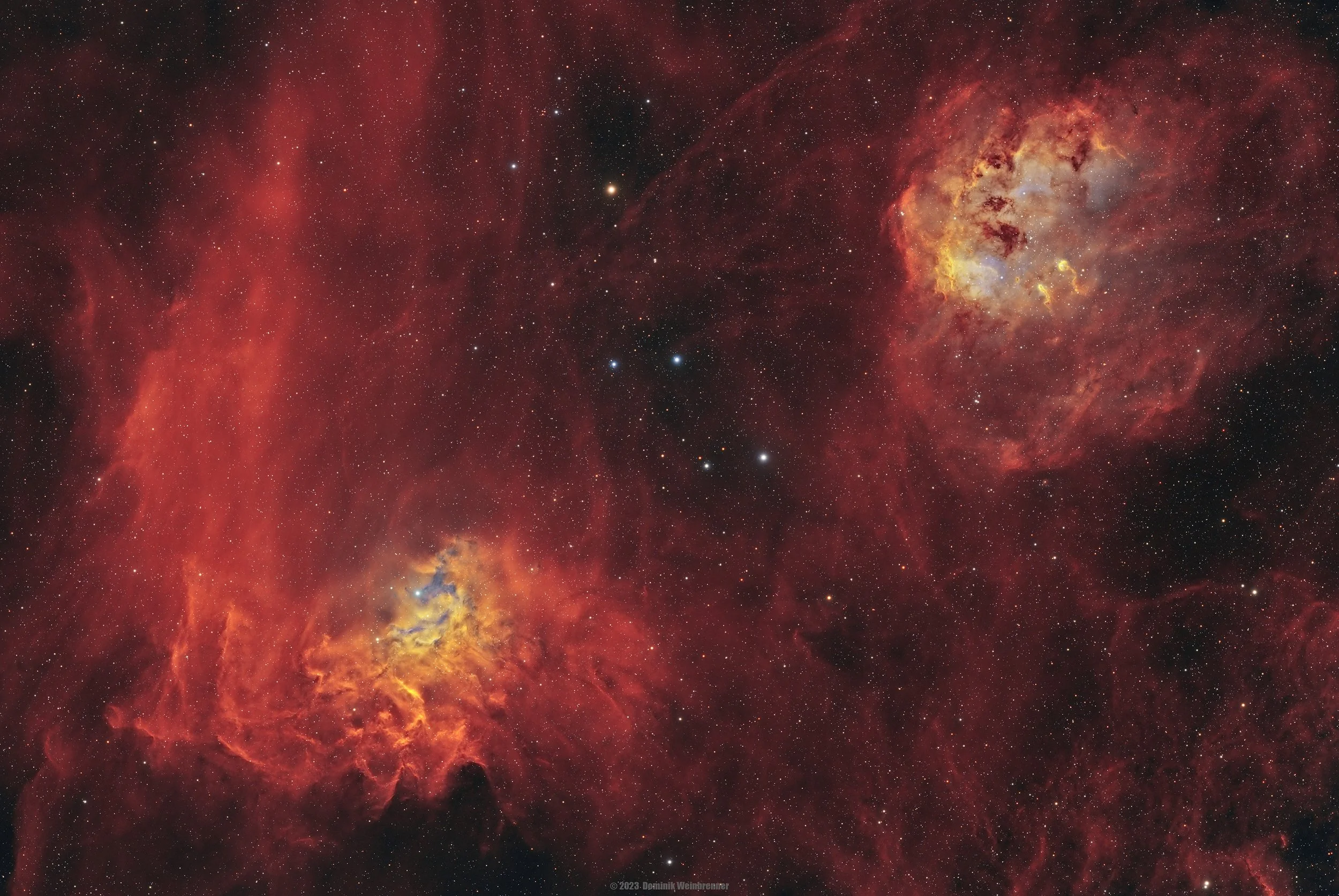
A Fire In Auriga
In this captivating bi-color image, the dynamic duo of IC 410 and IC 405 unfolds in the cosmic canvas, revealing the ionized gases captured through hydrogen alpha (Ha) and oxygen (OIII) filters. IC 410, also known as the Tadpoles Nebula, unveils its reddish hues, showcasing regions of intense star formation and ionized hydrogen. Meanwhile, IC 405, the Flaming Star Nebula, bathes in the greenish-blue glow of oxygen emissions.
The Tadpoles Nebula within IC 410 features elongated structures resembling tadpoles, sculpted by the powerful stellar winds and radiation emanating from massive stars within the nebula.
Illuminated by the runaway star AE Aurigae, IC 405 is believed to have been ejected from the Orion Trapezium Cluster millions of years ago, contributing to the unique dynamics of this cosmic region.

NGC 2736 Pencil Nebula in HOO
NGC 2736, also recognized as the Pencil Nebula. Situated in the Vela constellation, this elongated nebula is a remnant of a supernova explosion, showcasing intricate tendrils of ionized hydrogen and oxygen gases.
The hydrogen alpha emissions, depicted in red, highlight regions of intense star formation and energetic interactions. The oxygen emissions, represented in greenish-blue, offer insights into the nebula's chemical composition and the aftermath of the supernova explosion.
The Pencil Nebula is part of the larger Vela Supernova Remnant, an expansive shell of gas and dust resulting from the cataclysmic death of a massive star. This supernova event likely occurred thousands of years ago, and the Pencil Nebula serves as a testament to the transformative forces unleashed in such stellar explosions.
The delicate structure of the Pencil Nebula is sculpted by the shockwaves generated during the supernova explosion. These shockwaves compress and heat the surrounding interstellar material, giving rise to the nebula's intricate filaments and wisps.