

AAPOD2 Image Archives
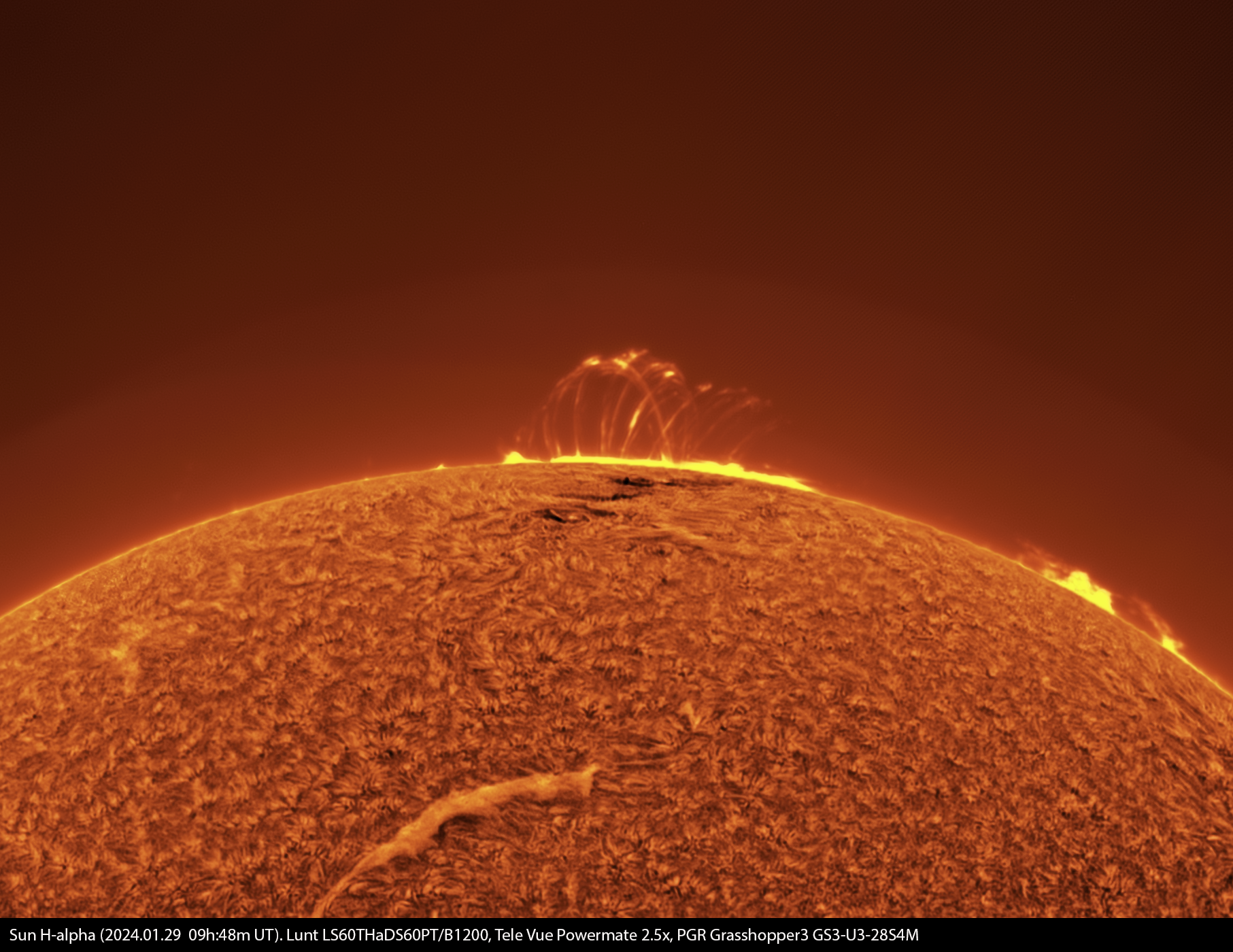
Loop prominence
In the dynamic theater of the solar atmosphere, a captivating image captures the intricate dance of a solar loop prominence, adding a dramatic flair to the ever-changing canvas of our sun. This celestial ballet unfolds in the chromosphere, where magnetic forces sculpt vast arches of hot, ionized gas that leap and twirl against the solar disk.
This particular solar loop prominence, suspended by magnetic fields, manifests as a luminous arc reaching out from the sun's surface. The image not only showcases the aesthetic beauty of this solar feature but also provides a glimpse into the underlying astrophysical processes at play. As charged particles traverse magnetic highways, their graceful choreography is frozen in time, revealing the intricate dynamics that shape the sun's outer layers. Observing such solar phenomena not only captivates the eye but also deepens our understanding of the sun's complex and ever-active nature, highlighting the delicate balance between gravitational forces and magnetic influences on our closest stellar neighbor.
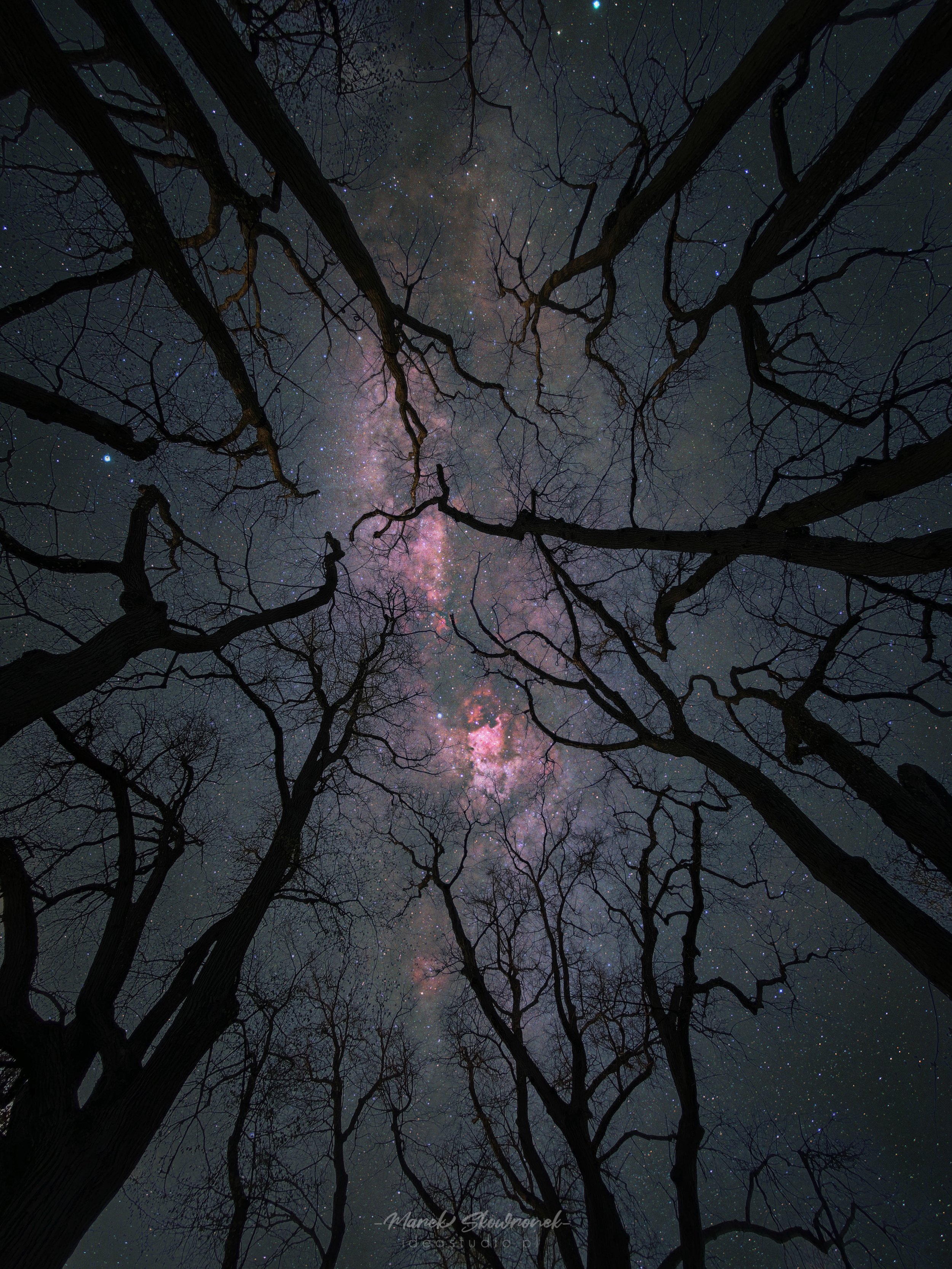
Old dried trees and this amazing view of the Cygnus constellation
In the quiet solitude of ancient, gnarled trees, a celestial spectacle unfolds as the Cygnus constellation graces the night sky with its timeless elegance. Against the backdrop of old, dried branches, this captivating view presents a harmonious blend of natural elements and cosmic beauty.
The Cygnus constellation, marked by the distinctive Northern Cross asterism, becomes a celestial companion to the weathered trees, casting its stellar glow amidst the earthly silhouette. The juxtaposition of the timeless landscape and the cosmic ballet above creates a scene that transcends epochs, inviting observers to marvel at the enduring interplay between the terrestrial and the celestial. As stargazers absorb the ethereal ambiance of this scene, they are reminded of the profound connection between the ancient narratives etched in terrestrial landscapes and the enduring allure of the cosmic realms above.

NGC 1977: “Running Man” nebula
In the cosmic ballet of the Orion Molecular Cloud Complex, the Running Man Nebula, designated NGC 1977, emerges as a celestial masterpiece that seamlessly blends elegance and dynamism. This intricate nebula, situated in the vicinity of the iconic Orion Nebula, captures the imagination with its wispy tendrils of gas and dust, resembling a celestial figure in perpetual motion.
As part of the larger Orion Complex, NGC 1977 is a reflection nebula illuminated by the luminosity of nearby stars. The interplay of stellar radiation with the surrounding cosmic medium results in the ethereal glow that characterizes this cosmic tapestry. In the cosmic theater, the Running Man Nebula invites observers to appreciate not only its aesthetic charm but also the astrophysical processes at play. As astronomers delve into the scientific intricacies of NGC 1977, they uncover insights into the complex dynamics of star formation and the interstellar environment, turning this celestial portrait into a gateway for both artistic appreciation and scientific exploration in the expansive canvas of the cosmos.
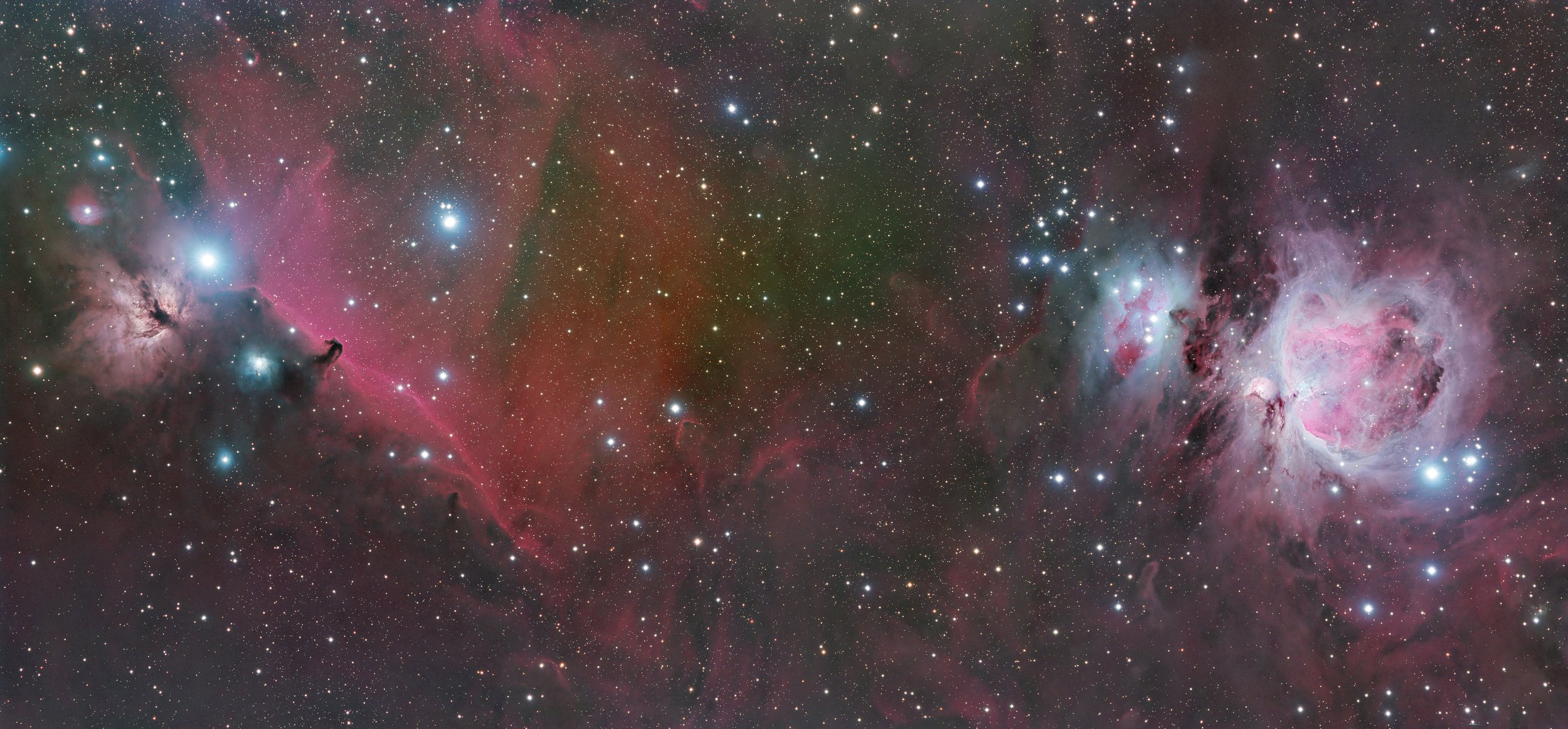
The sword of Orion in a 3 panel mosaic
In the celestial tapestry of Orion, the Sword of Orion unfolds in a captivating 3-panel mosaic, featuring the iconic Orion Nebula (M42), the Flame Nebula (NGC 2024), and the Horsehead Nebula (Barnard 33). The Orion Nebula (M42) takes center stage, a stellar nursery aglow with the radiant energy of young stars. Adjacent, the Flame Nebula (NGC 2024) adds its fiery glow, showcasing the dynamic interplay between stellar radiation and the surrounding cosmic medium. Completing the trio, the enigmatic Horsehead Nebula (Barnard 33) casts its shadow against the Orion Molecular Cloud Complex, a dark silhouette sculpted by cosmic forces. As observers delve into this 2-panel mosaic, they embark on a visual journey seamlessly intertwining the artistic allure of nebular landscapes with the scientific exploration of stellar birth and cosmic evolution.
This celestial diptych not only captivates the eye but also beckons the curious mind to explore the astrophysical intricacies embedded in the heart of Orion. As astronomers and stargazers navigate the cosmic expanse, the Sword of Orion stands as a testament to the harmonious convergence of artistic beauty and scientific inquiry in the realm of stellar landscapes.
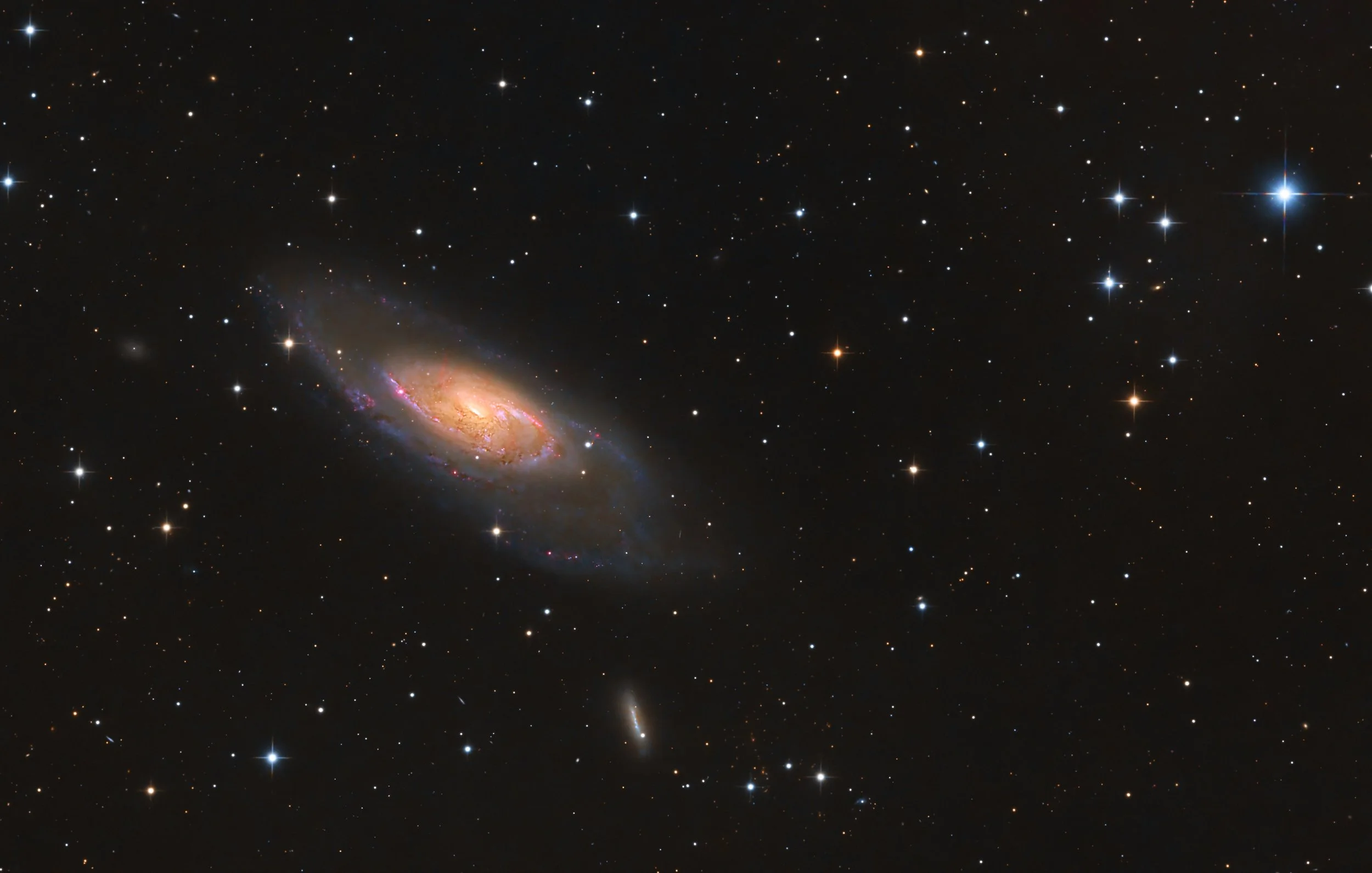
M106
In the astronomical tapestry of Canes Venatici, M106 emerges as a captivating spiral galaxy, beckoning the gaze of astronomers and stargazers alike. This celestial beauty, also known as NGC 4258, unveils its intricate spiral arms and luminous core in a display of cosmic grandeur. M106 belongs to the relatively nearby M94 Group of galaxies, adding to the cosmic richness of this corner of the universe.
Situated approximately 23.5 million light-years away, M106 offers a unique opportunity for scientific exploration. Astronomers have probed its core, discovering a supermassive black hole that fuels powerful jets emanating from the galactic center. The interplay of gravitational forces and cosmic phenomena within M106 provides a canvas for unraveling the mysteries of galactic dynamics and the profound influence of supermassive black holes on their cosmic surroundings. As observers peer into the depths of Canes Venatici, M106 stands as a celestial testament, blending artistic beauty with scientific inquiry in the realm of spiral galaxies.
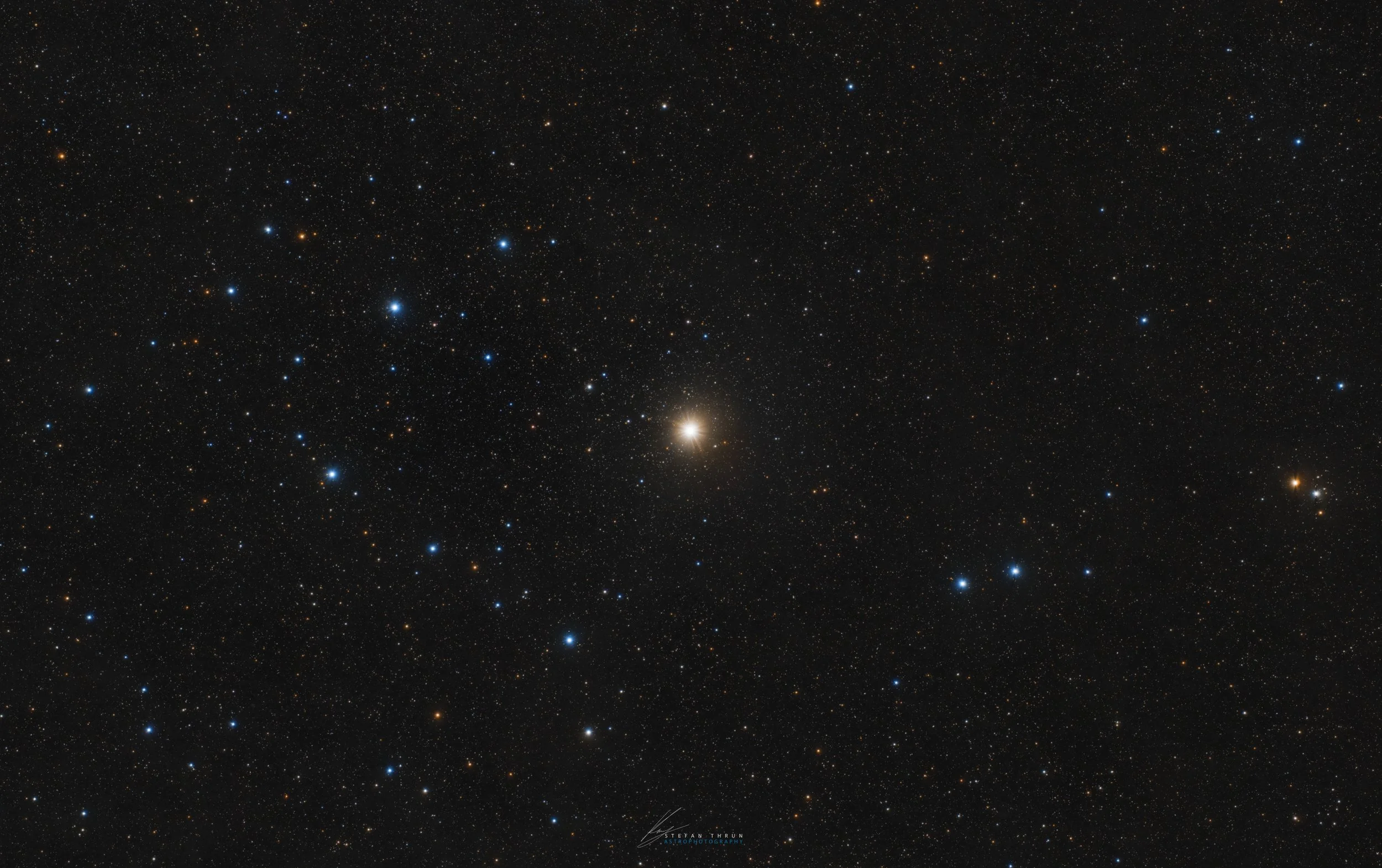
Alpha Persei Cluster
Within the celestial embrace of the Perseus constellation resides the Alpha Persei Cluster, a captivating open star cluster also known as the Perseus OB1 Association. Comprising a dazzling array of hot, luminous stars, this stellar ensemble serves as a celestial laboratory, offering astronomers valuable insights into the intricacies of star formation and the shared evolutionary trajectories of its brilliant members. Mirfak, the prominent Alpha Persei, commands attention as a radiant centerpiece, illuminating the surrounding stellar companions and contributing to the dynamic stellar tapestry that defines this cosmic gathering.
The Alpha Persei Cluster, with its diverse stellar population, invites observers to delve into the scientific nuances of its composition, revealing a harmonious interplay of varying star sizes and temperatures. This celestial dance, captured within the 2-panel mosaic, not only enchants the eye but also beckons the curious mind to explore the astrophysical intricacies embedded in the heart of Perseus. As astronomers and stargazers alike navigate the cosmic expanse, the Alpha Persei Cluster stands as a testament to the cosmic artistry and scientific fascination inherent in the study of open star clusters.
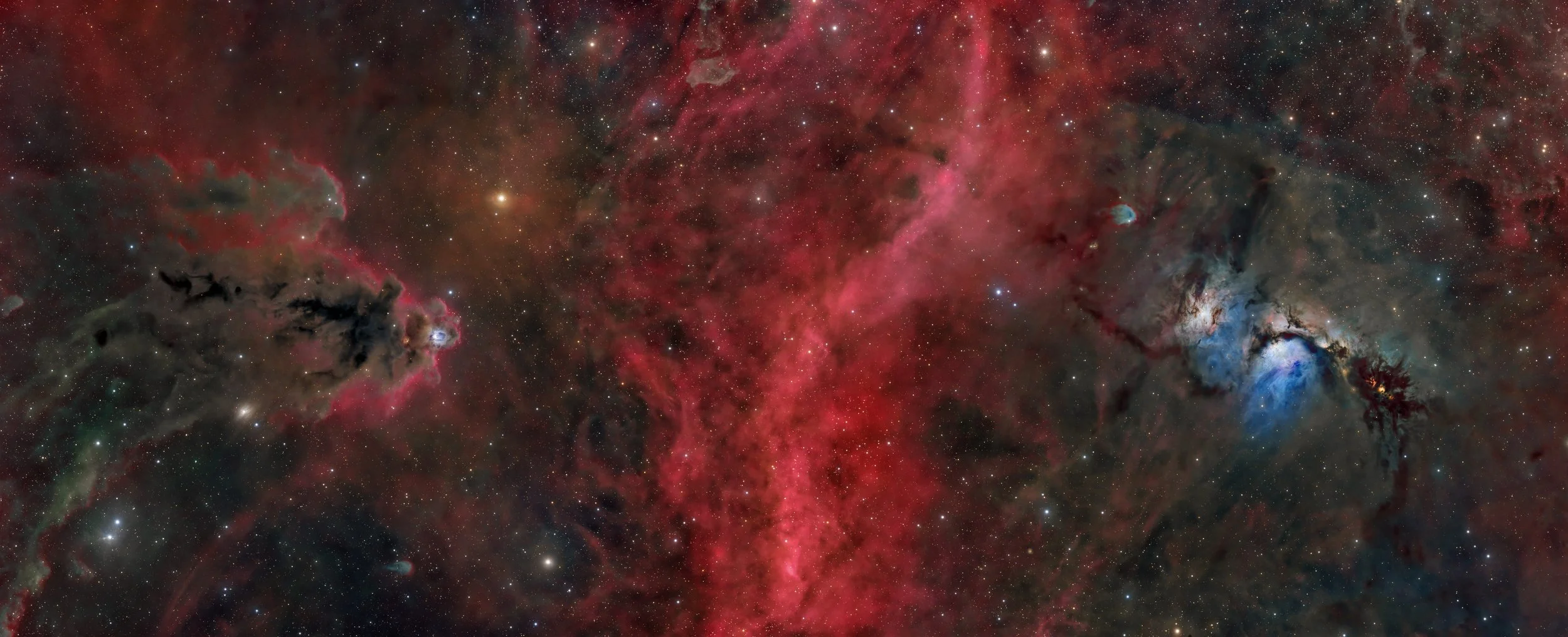
Standoff at the Border - Good Ghost, Bad Ghost - Two-Panel Mosaic
In the vast expanse of the night sky, a captivating 2-panel mosaic unveils the cosmic dialogue between LDN 1622, colloquially known as the Boogeyman Nebula, and the renowned Messier 78. On the left, the Boogeyman Nebula, a dark molecular cloud, draws the eye into the cosmic shadows where new stars quietly emerge, hidden from direct view but leaving an indelible mark on the celestial tapestry. The enigmatic interplay of light and shadow within LDN 1622 paints a cosmic portrait, enticing observers to explore the mysteries of stellar birth within its inky depths.
On the right, Messier 78 takes center stage—a reflection nebula illuminated by the borrowed radiance of nearby stars. Bathed in the scattered light of these celestial beacons, Messier 78 casts a luminous glow against the cosmic canvas. This celestial dance between darkness and brilliance, portrayed in the 2-panel mosaic, captures the essence of LDN 1622 and Messier 78, offering both a visual feast and an opportunity for scientific contemplation. As the observer navigates this cosmic juxtaposition, they are invited to appreciate the artistry of amateur astrophotography while delving into the scientific nuances that make these celestial entities captivating subjects in the realm of the night sky.
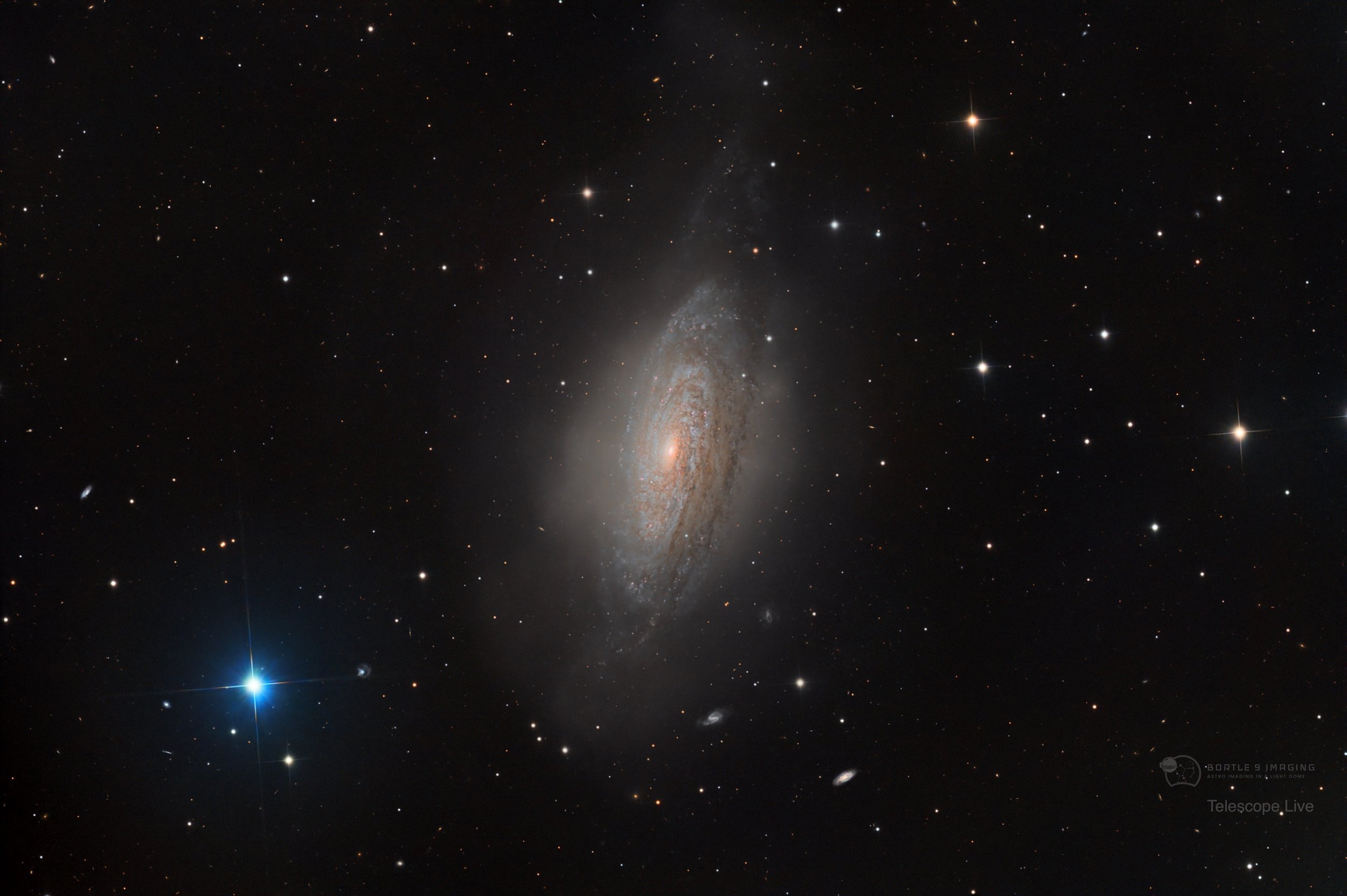
NGC 3521
NGC 3521, a captivating spiral galaxy residing some 26 million light-years away in Leo, showcases a mature spiral structure characterized by pronounced arms adorned with intricate dust lanes, a testament to the galaxy's advanced evolutionary stage. Notably, NGC 3521 stands out for its relatively low rate of star formation compared to peers, prompting astronomers to delve into the environmental and internal factors shaping its stellar populations.
At the heart of NGC 3521 lies a dense central bulge, a congregation of aging stars that bears witness to the galaxy's extensive cosmic journey. This feature offers a glimpse into the galactic spheroid's rich history and the complex interplay of astrophysical forces governing its stellar dynamics. As astronomers unravel the mysteries within NGC 3521, they navigate a scientific frontier, exploring the unique characteristics that define this spiral marvel and shedding light on the diverse pathways of galactic evolution in the cosmic tapestry.
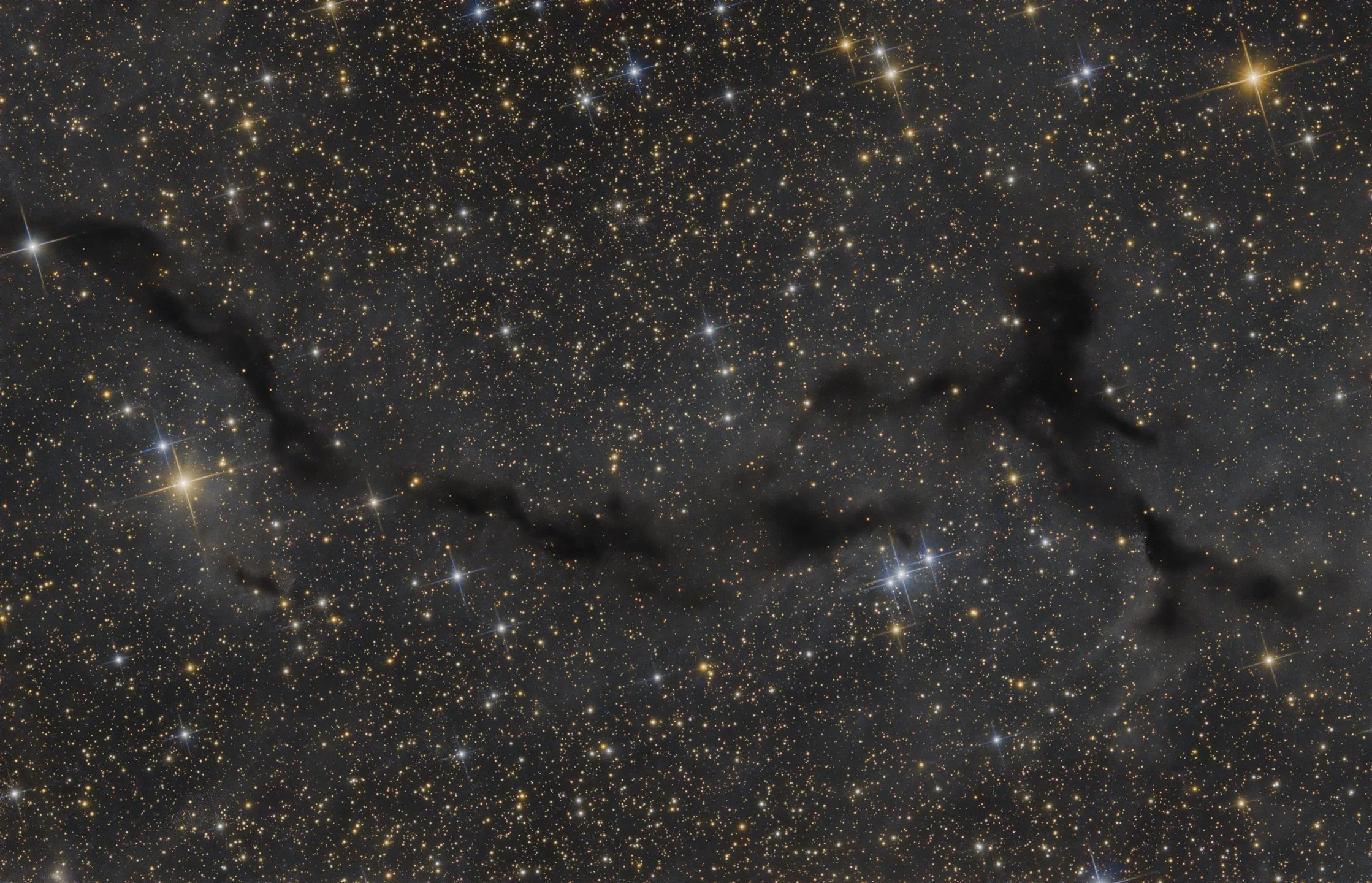
Barnard 150
Bernard 150, nestled within the expansive cosmic tapestry, stands as a testament to the dynamic processes shaping our galactic neighborhood. This astronomical structure, intricately detailed in this image, reveals a symphony of interstellar elements at play, including ionized gases, dark dust lanes, and the luminous glow of newborn stars.
The complexity of Bernard 150 extends beyond its visual appearance, as astronomers delve into the scientific intricacies of its formation and evolution. Stellar winds, radiation pressure, and gravitational interactions contribute to the ever-changing dynamics within the nebula, creating a celestial ballet that unfolds over cosmic timescales.
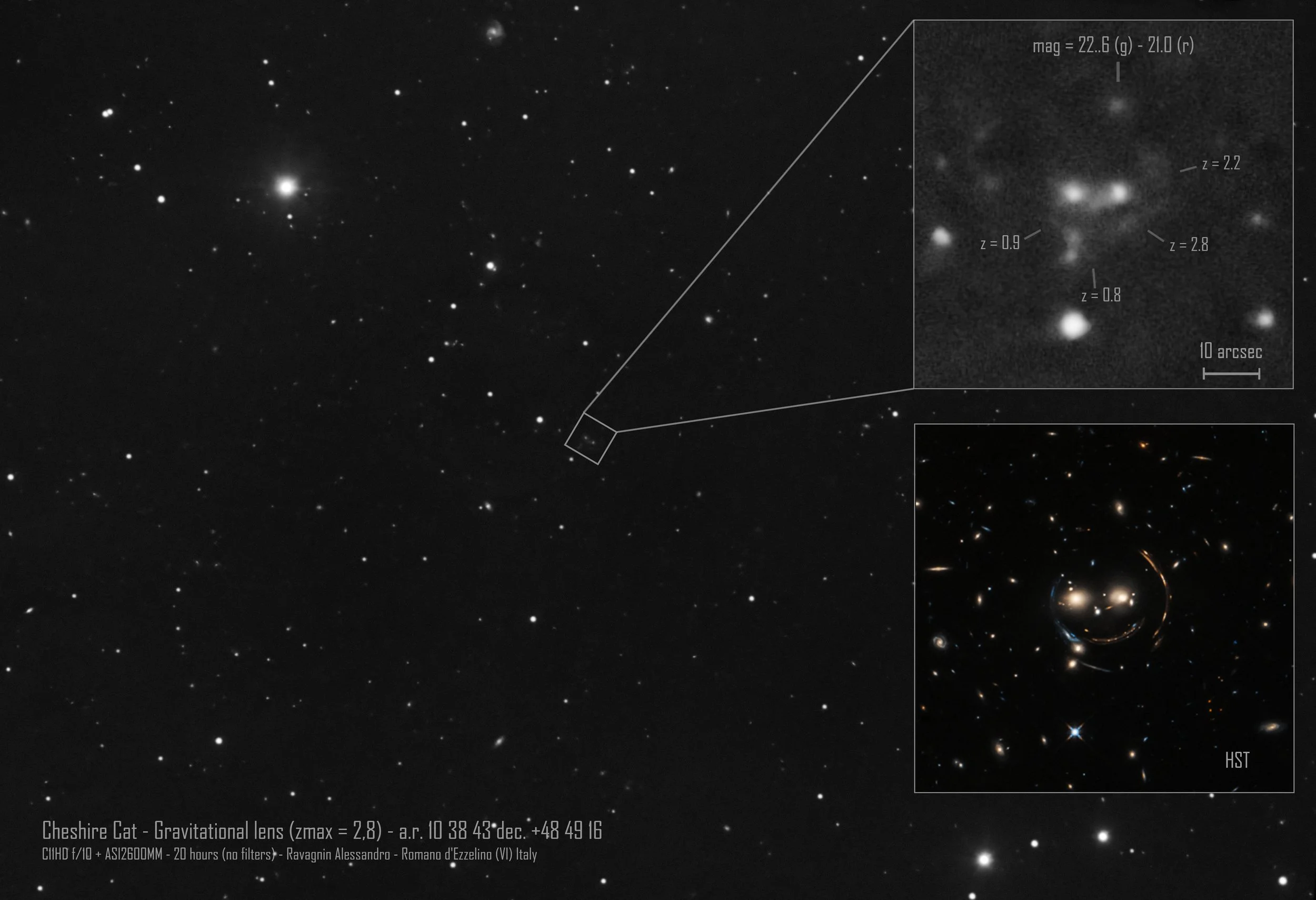
Cheshire Cat (gravitational lens)
The Cheshire Cat Gravitational Lens is a result of a cosmic dance between massive objects, where the gravitational pull of a foreground galaxy acts as a cosmic magnifying glass, bending and distorting the light from a more distant galaxy located behind it. This gravitational lensing phenomenon creates a captivating optical illusion reminiscent of the elusive grin of the Cheshire Cat.
The Cheshire Cat Gravitational Lens introduces observers to the concept of gravitational lensing—a gravitational phenomenon predicted by Einstein's theory of general relativity. This celestial cat's grin serves as a visual reminder of the profound influence of gravity on the paths that light takes through the vast expanse of space.

Dolphin Head Nebula (Sh2-308) : A Morocco-Chile connection
Sh2-308 emerges as a stellar nursery, where a symphony of ionized gas and dust paints a celestial portrait against the backdrop of Aquila's cosmic expanse. The nebula's intriguing moniker, the Dolphin Head Nebula, stems from its distinct shape, which bears a resemblance to the playful form of a leaping dolphin against the canvas of the night sky.
The Dolphin Head Nebula comes to life through the brilliance of newborn stars illuminating the surrounding interstellar medium. The interplay of light and shadow within the nebula's intricate structure weaves a tale of stellar birth and the ongoing dance of cosmic forces.
Situated approximately 5,000 light-years away, Sh2-308 stands as a testament to the vast and dynamic nature of our galactic neighborhood. As observers gaze upon this celestial dolphin, they are reminded of the boundless creativity at play in the cosmos, where nature's artistry manifests in the intricate details of a nebular realm.
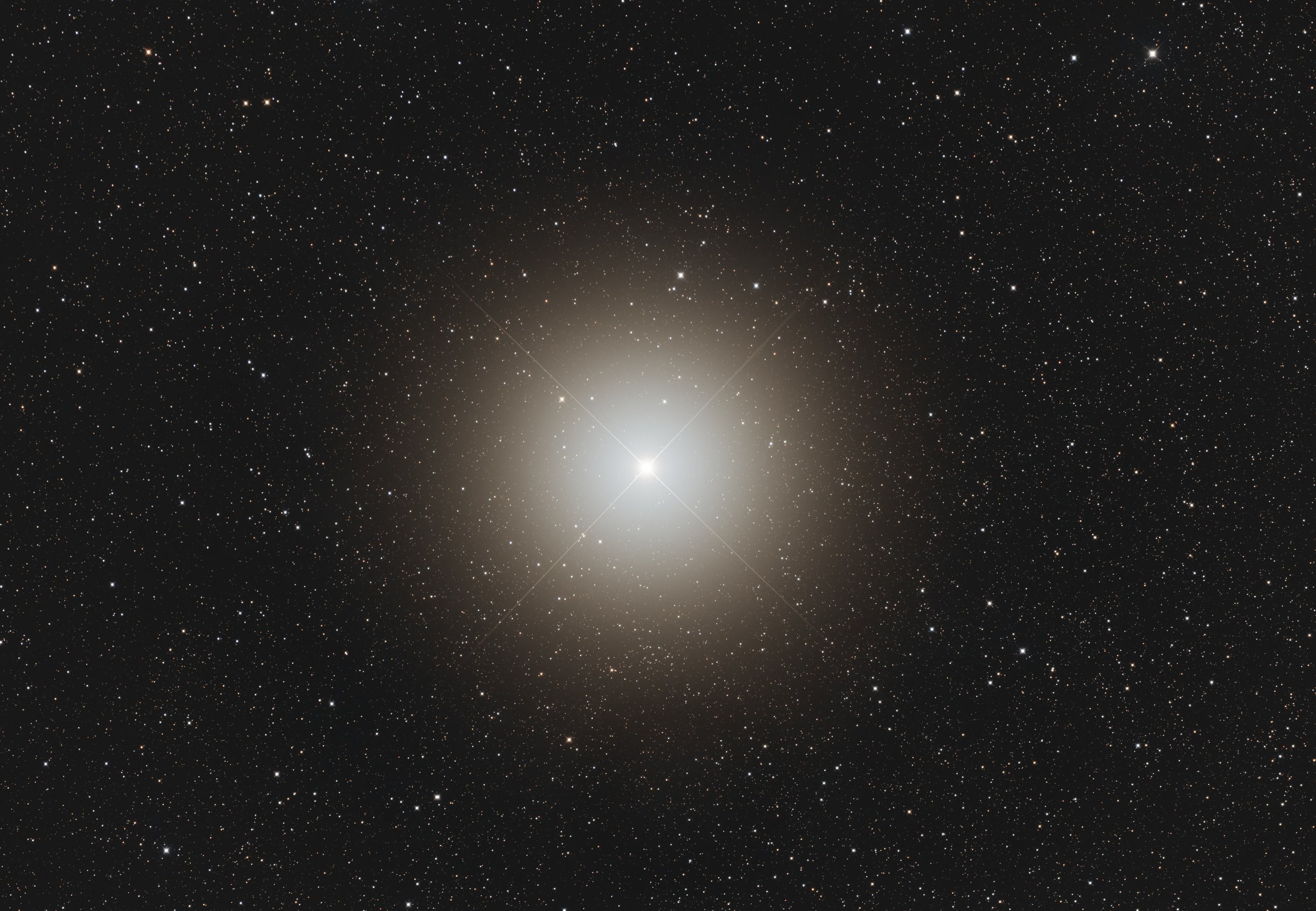
Capella
Capella, the sixth brightest star in the northern hemisphere, takes center stage in this celestial display. The Akira Fuji Effect, a natural occurrence resulting from the star's inherent brilliance and the hazy crystals in the atmosphere, bathes Capella in a radiant aura that sets it apart from both background and foreground stars. This ethereal glow adds a touch of cosmic poetry to the star's luminous presence.
The rapid temperature drop plays a pivotal role in creating the haze of crystals, forming a delicate celestial tapestry that emphasizes Capella's brilliance. As one of the most prominent stars in Earth's night sky, Capella captivates observers with its celestial radiance and unique atmospheric halo, a celestial dance between starlight and the elements.
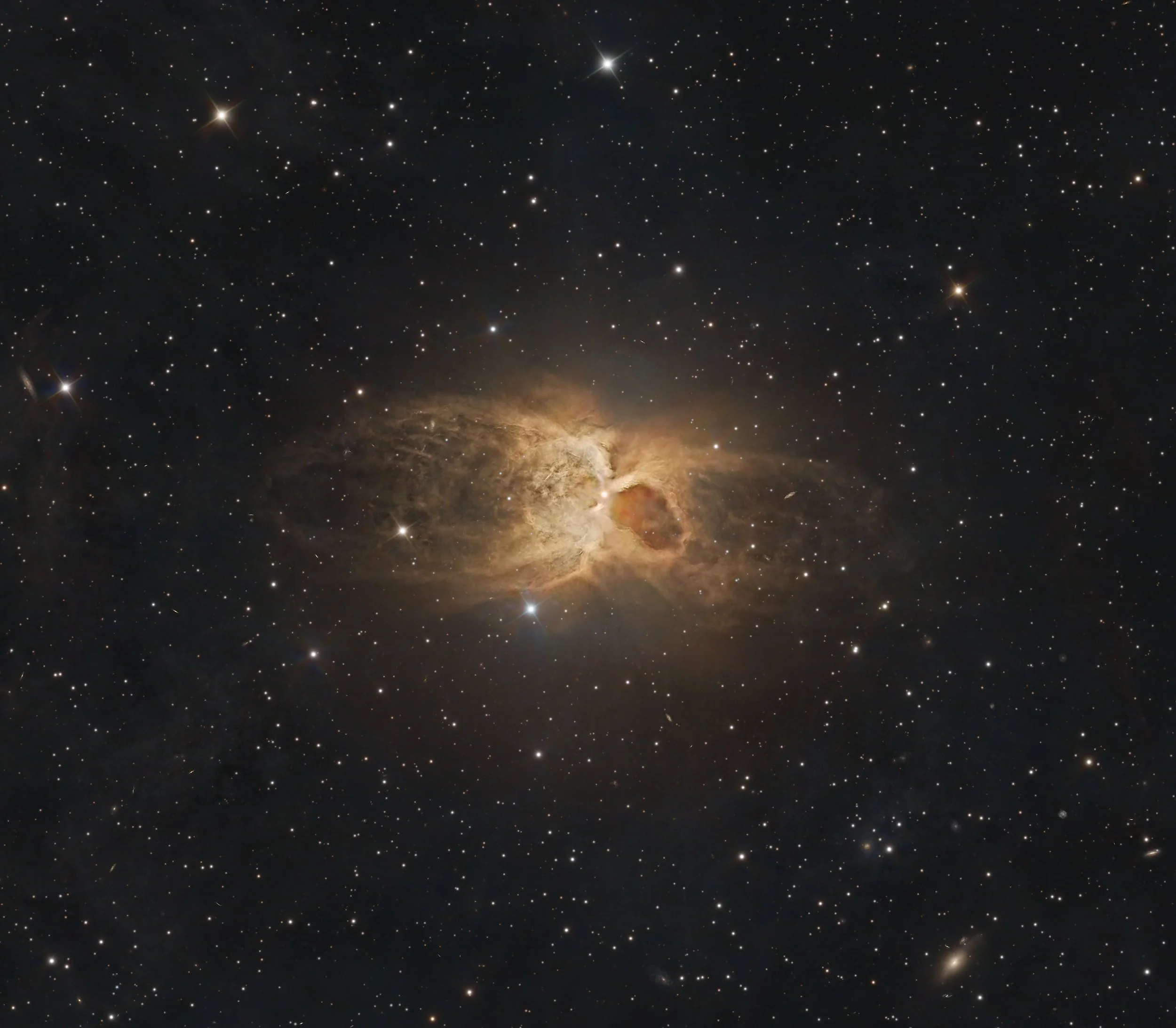
IC 2220 Toby Jug Nebula
C 2220's origin lies in the expelled cloud of gas and dust emanating from the red giant star HD 65750, nestled within the heart of the nebula. As the expelled material interacts with starlight, it creates a mesmerizing display of bi-conical structures that form the distinctive shape resembling an old English drinking vessel known as a Toby Jug.
Named by three discerning British astronomers, the Toby Jug Nebula stands out among its celestial counterparts for its unique hue. Unlike most reflection nebulae, IC 2220 dons a warm orange color, adding a touch of cosmic elegance to its whimsical appearance.
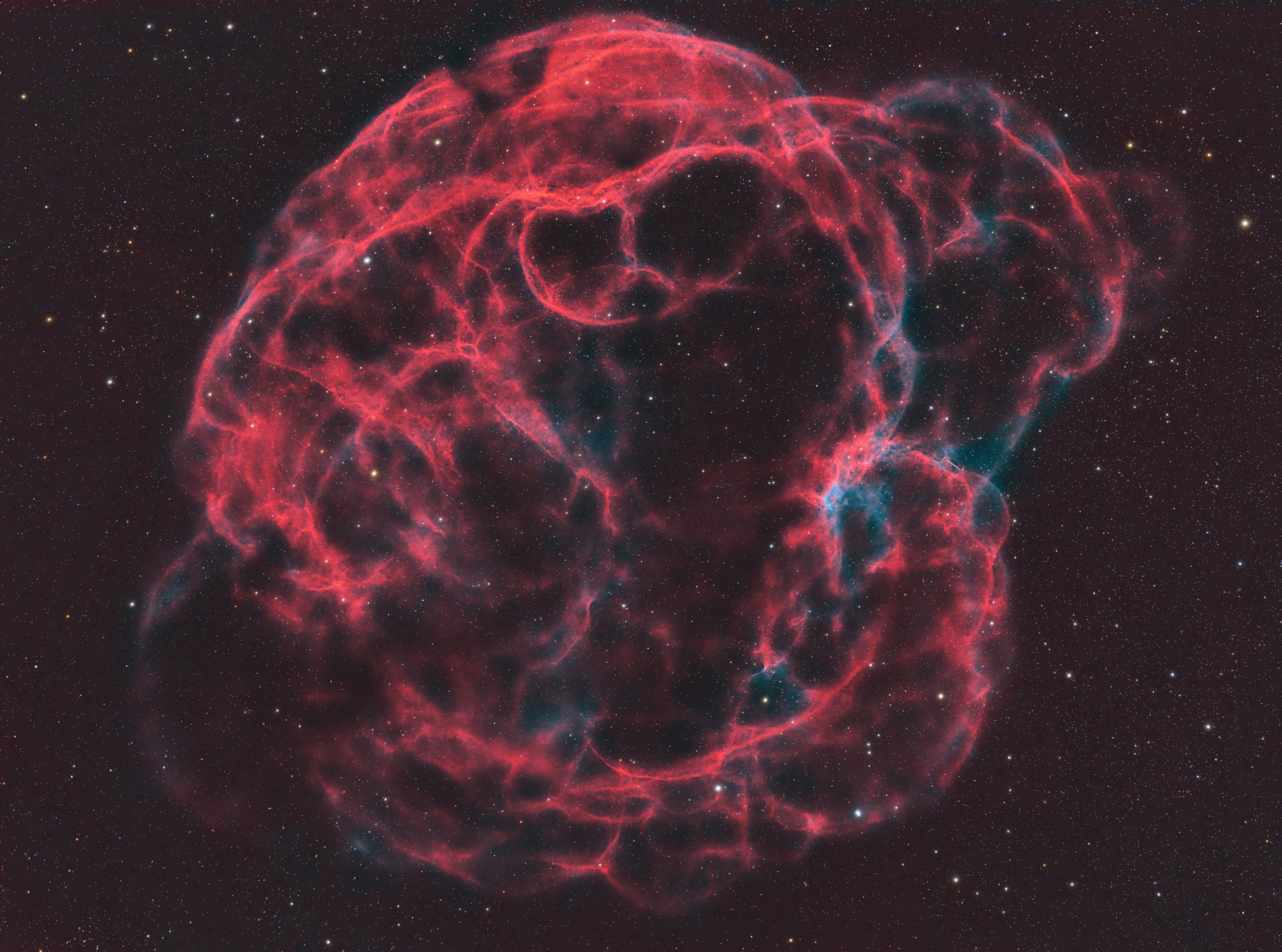
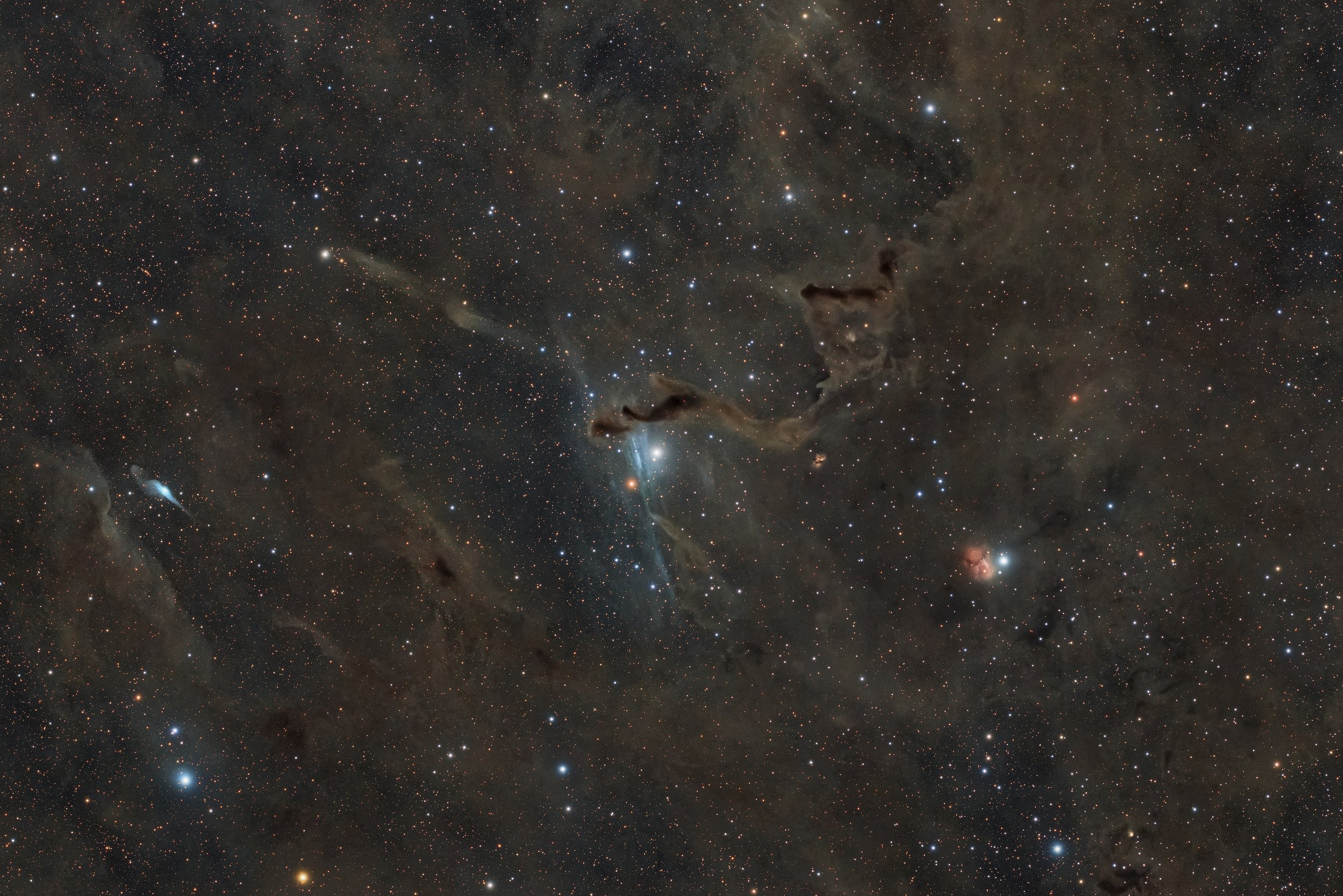
Spaghetti Nebula
Sh2-240, the Spaghetti Nebula, unfolds within the constellation Taurus, offering a celestial spectacle that defies earthly comparisons. This intricate emission nebula, illuminated by the energetic radiation of newborn stars, reveals delicate filaments resembling strands of celestial spaghetti, hence its evocative name.
In this cosmic kitchen, the Spaghetti Nebula serves as a testament to the dynamic interplay between stars and the interstellar medium. The tendrils of ionized gas and dust, intricately detailed in this image, showcase the ongoing cosmic processes that shape and mold the stellar nurseries within our Milky Way.

Southern Tadpoles
the enchanting Southern Tadpoles share the celestial stage with the stellar wonders NGC 3572 Gum37 and RCW54c. In this captivating ensemble, the Southern Tadpoles, officially cataloged as NGC 3786 and NGC 3788, elegantly intertwine with the celestial tapestry of star-forming regions, unveiling a harmonious display of cosmic beauty.
The larger of the tadpoles, NGC 3786, takes center stage with its graceful spiral structure reaching into the depths of space. Alongside it, NGC 3788, adorned with a distinctive tidal tail, weaves its own tale of gravitational interactions and cosmic evolution. Together, they form a celestial ballet that transcends the ordinary, inviting observers to witness the captivating interplay of galactic forces.
Adding to this cosmic symphony, NGC 3572 Gum37 and RCW54c emerge as stellar gems in the Hydra constellation. NGC 3572 Gum37, a dazzling star-forming region, illuminates the cosmic canvas with the brilliance of newborn stars, while RCW54c adds its ethereal glow to the celestial spectacle.
Situated approximately 150 million light-years away, the Southern Tadpoles, NGC 3572 Gum37, and RCW54c create a harmonious tableau that inspires awe and contemplation. This celestial convergence not only showcases the dynamic beauty of interacting galaxies but also celebrates the cosmic processes that give rise to new stars, perpetuating the ongoing dance of creation in the vast cosmic landscape.
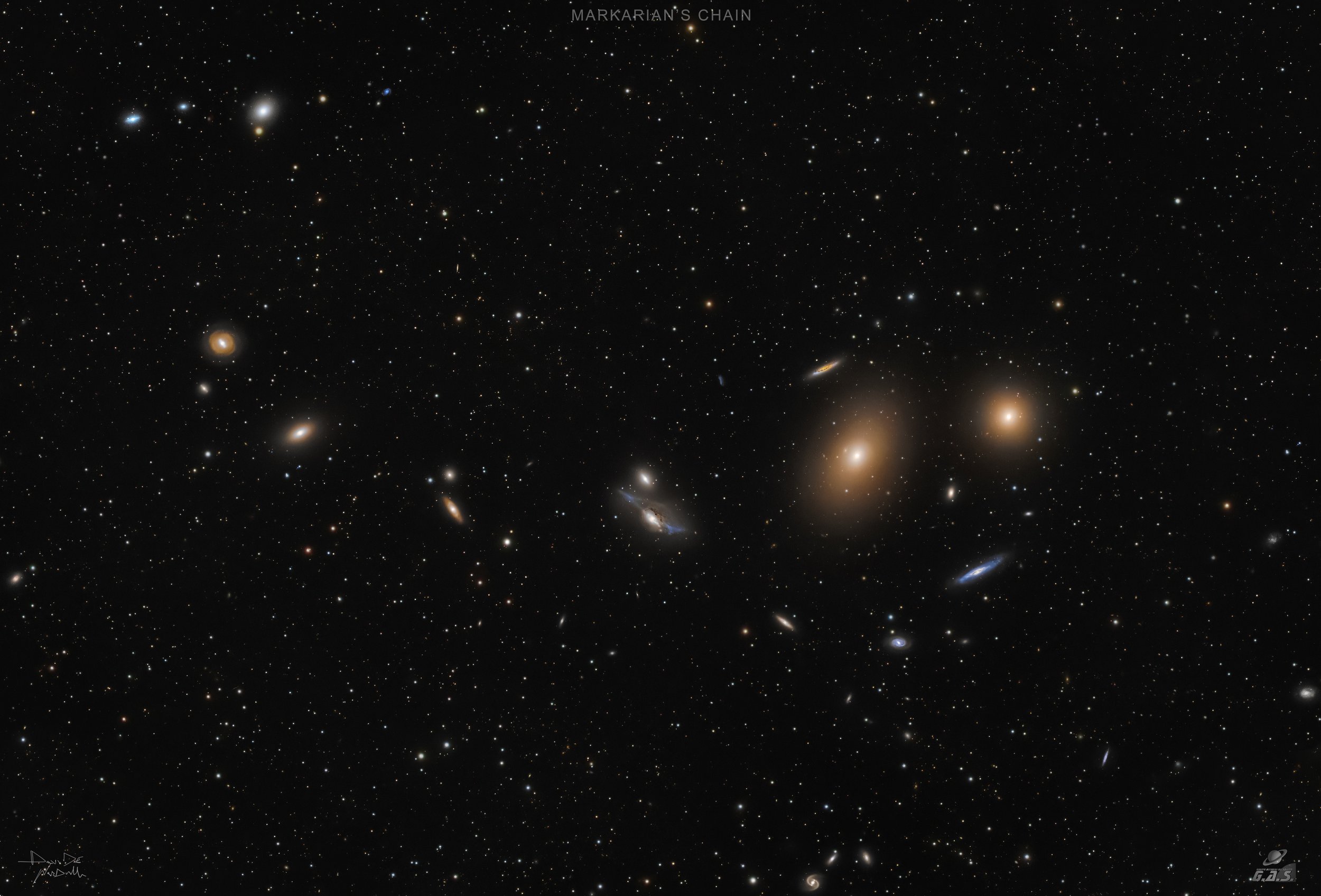
Markarian's Chain
Markarian's Chain, a prominent feature in the Virgo Cluster, is a gravitational ballet of galactic proportions. Comprising a series of interacting galaxies linked by the force of gravity, this cosmic necklace spans the Virgo Cluster's core, captivating astronomers and stargazers alike with its mesmerizing allure.
This RGB image captures the intricate details of the galaxies within Markarian's Chain, each one a celestial jewel with its unique shape and structure. The gravitational interactions between these galaxies have given rise to stunning tidal tails and bridges, a testament to the complex dynamics shaping their shared cosmic destiny.
Situated roughly 50 million light-years away, Markarian's Chain provides a remarkable glimpse into the rich galactic diversity present in the Virgo Cluster. As part of the larger Virgo Supercluster, this cosmic ensemble invites contemplation of the vast cosmic structures that govern the distribution of galaxies across the cosmos.

Omega Centauri Widefield
Omega Centauri, the jewel of the southern skies, commands attention with its brilliant display of millions of stars packed in a gravitational embrace. As the brightest and most massive globular cluster in our Milky Way, Omega Centauri unfolds its celestial grandeur against the backdrop of the galactic halo.
Intertwined with this stellar masterpiece are the Integrated Flux Nebulae, delicate filaments of interstellar dust and gas that subtly reflect the combined light of distant stars. These faint nebular structures, often challenging to observe, add a layer of complexity and depth to the cosmic tableau surrounding Omega Centauri.
Captured in this image is the dynamic dance of light and shadow, where the brilliance of Omega Centauri's stellar ensemble harmonizes with the soft luminosity of the Integrated Flux Nebulae. The interstellar filaments, gently illuminated by the collective glow of background stars, unveil a celestial ballet that speaks to the intricate connections between cosmic elements.
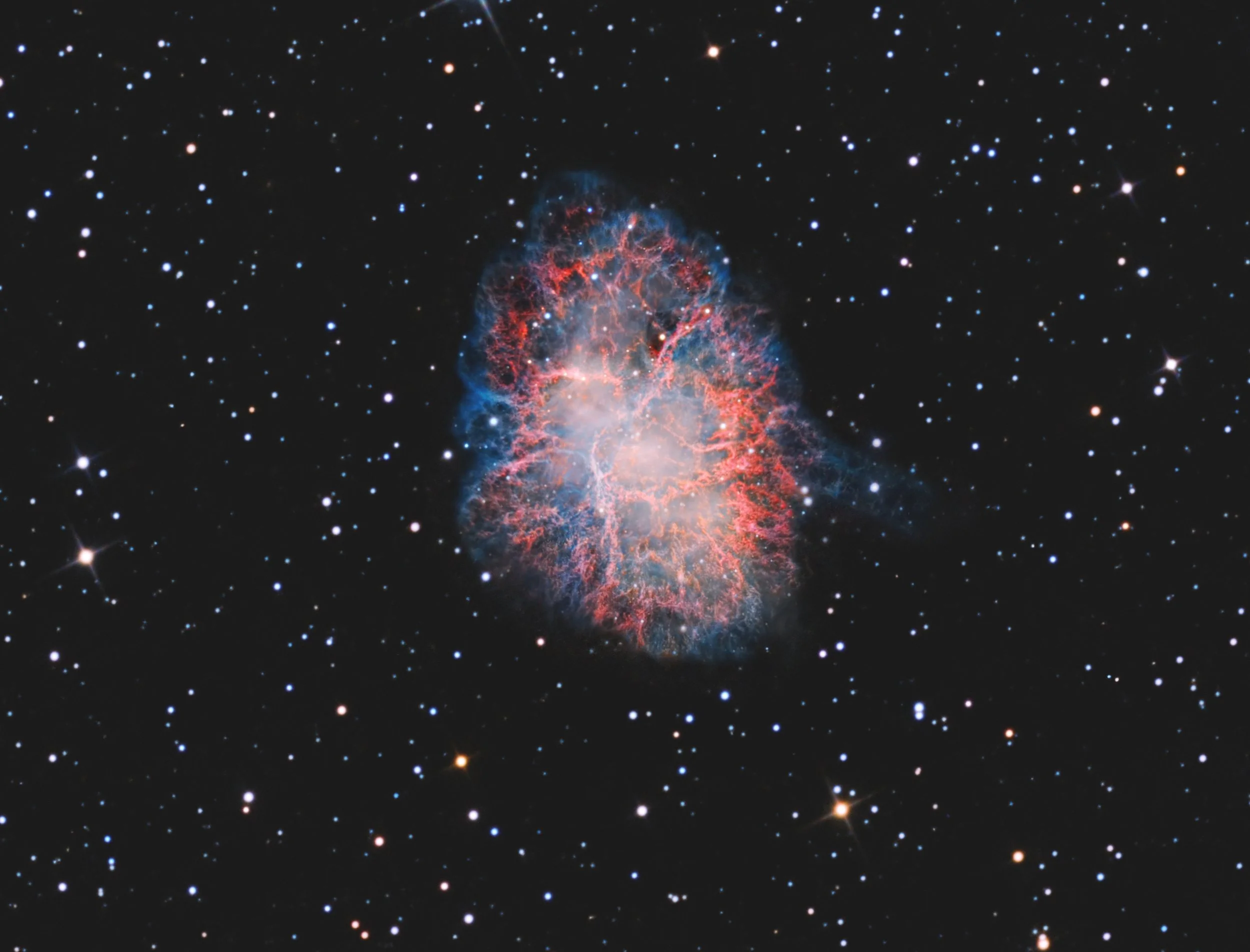
M1 - A supernova remnant
The iconic Crab Nebula, also known as M1, a celestial masterpiece captured in the vast expanse of the Taurus constellation. This intricate nebula, born from a spectacular supernova explosion witnessed by astronomers in the year 1054 AD, stands as a testament to the dynamic forces shaping our cosmic neighborhood.
M1, the first entry in Charles Messier's catalog of astronomical objects, emanates from the remnants of a massive star that met its explosive fate. Located approximately 6,500 light-years away, the Crab Nebula spans about 11 light-years in diameter, showcasing the aftermath of the stellar explosion.
In the heart of the Crab Nebula resides a pulsar—a rapidly rotating neutron star that emits beams of radiation akin to a celestial lighthouse. This pulsar, a mere 20 kilometers in diameter, powers the nebula's glow and serves as a cosmic time capsule, preserving the memory of the cataclysmic event that gave birth to this celestial wonder.
Captured through the lens of astronomical observation, this image of the Crab Nebula unravels the intricate filaments of ionized gas and energized particles, offering a glimpse into the cosmic forces at play. The Crab Nebula's ongoing expansion and evolution make it a captivating subject for astronomers studying the life cycles of stars and the dynamic nature of our universe.
As we explore the luminous tendrils of the Crab Nebula, we are reminded of the perpetual dance between destruction and creation in the cosmos, inviting us to contemplate the beauty that arises from the remnants of stellar demise.
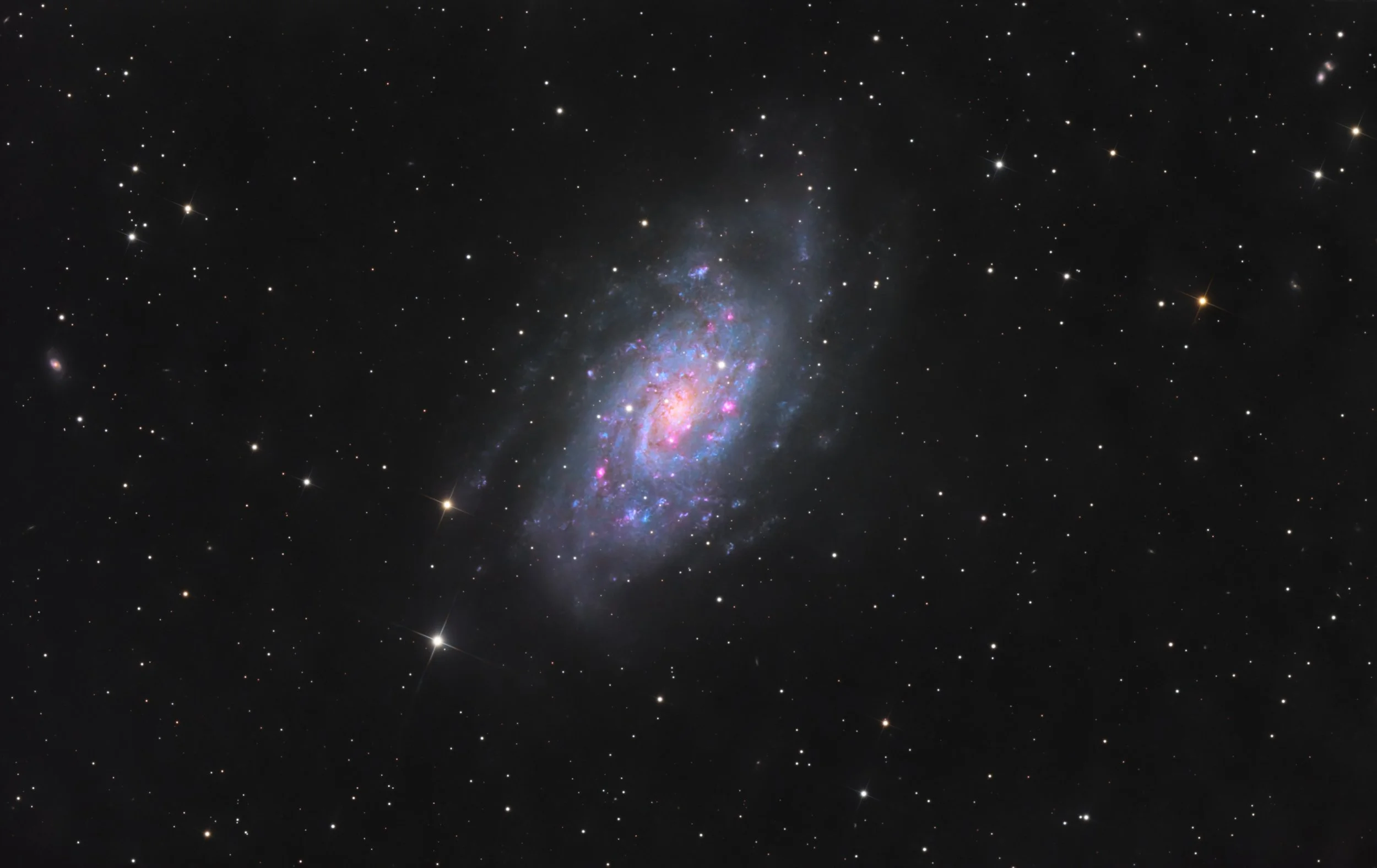
NGC 2403
NGC 2403, situated in the constellation Camelopardalis, is a spectacular spiral galaxy located approximately 8 million light-years away from Earth. This cosmic beauty spans about 50,000 light-years in diameter, making it roughly half the size of our Milky Way galaxy. NGC 2403 belongs to the M81 group, a small galaxy cluster that includes notable members such as Messier 81 and Messier 82.
This galaxy is renowned for its vibrant star-forming regions and features a considerable number of young, massive stars. NGC 2403 has been the subject of extensive astronomical observations and studies, providing valuable insights into the processes of star formation and galactic evolution. Its relatively close proximity to us makes NGC 2403 an ideal candidate for detailed astronomical investigations, contributing to our understanding of the broader cosmic landscape. As a member of the Local Group—a collection of galaxies that includes our own Milky Way—NGC 2403 adds to the rich tapestry of celestial wonders within our cosmic neighborhood.