

AAPOD2 Image Archives
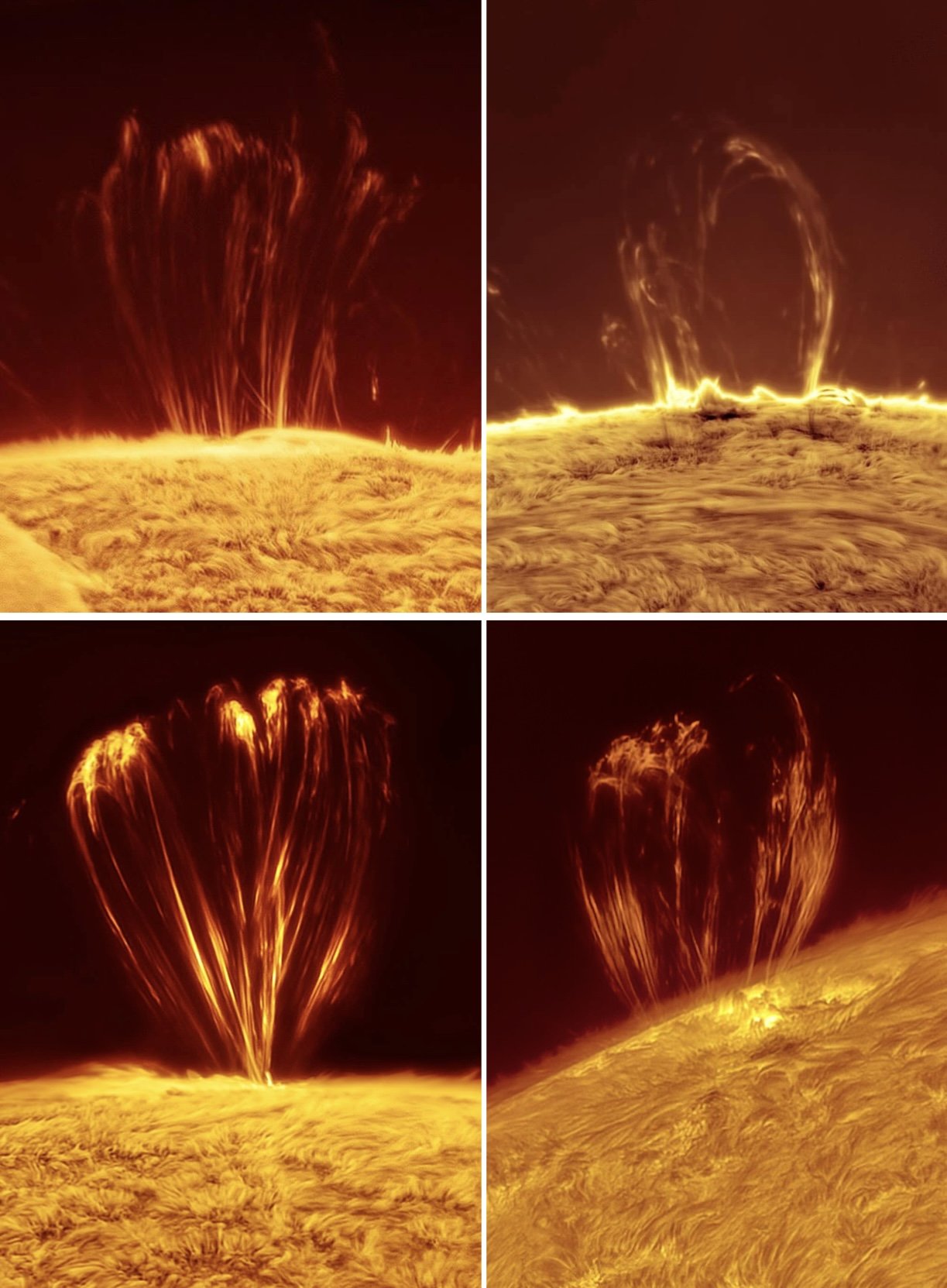
Coronal Loops in Hα – A Season of Solar Sculptures
This striking four-panel composite captures dynamic coronal loops seen on the edge of the Sun in hydrogen-alpha (Hα) light. These arching structures are vast magnetic fields channeling superheated plasma, each loop tracing the complex choreography of solar magnetism. Taken during the 2024–25 season from a private observatory in Mantova, the compilation showcases the Sun’s vibrant and ever-changing limb in exquisite detail.
Coronal loops are key features in solar activity and often precede or accompany solar flares. Each image freezes a moment in the Sun’s turbulent outer atmosphere, revealing plasma flows that span tens of thousands of kilometers. The fine structure of the chromosphere below adds rich context to these glowing arches, emphasizing the beauty and violence of our closest star.
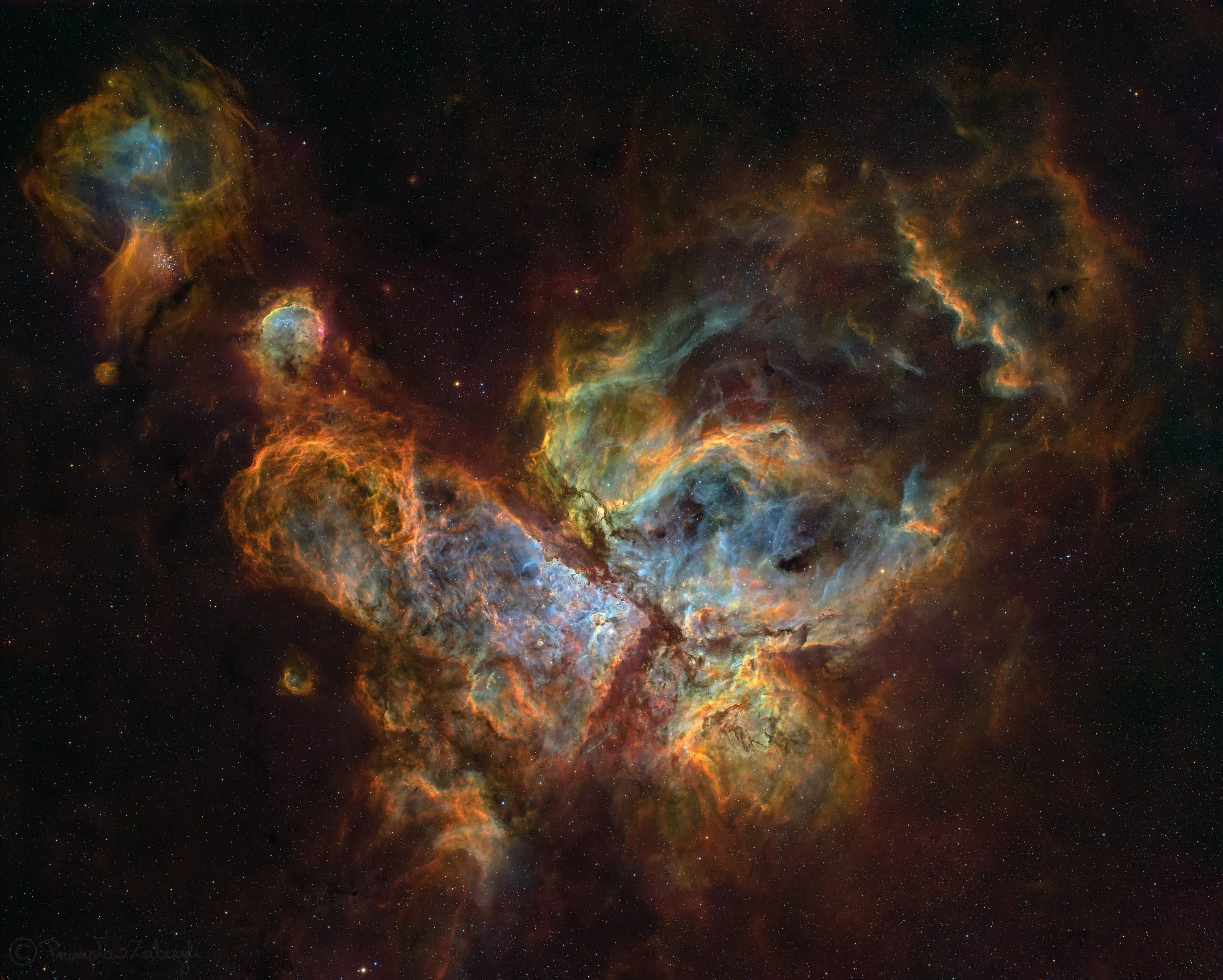
The Great Carina Nebula – A Celestial Masterpiece (NGC 3372)
One of the southern sky's grandest spectacles, the Carina Nebula (NGC 3372) blazes with energy in this high-resolution capture from Blesfontein, South Africa. Home to massive stars like Eta Carinae and sculpted by intense stellar winds and ultraviolet radiation, this immense cloud of ionized gas stretches over 300 light-years and serves as a stellar nursery where new suns are born in the shadows of dying giants.
Framed under pristine southern skies, this image showcases dramatic contrasts of glowing hydrogen clouds, dark dust pillars, and radiant young star clusters. The photographer also documented the journey to this remote site with a video, offering a behind-the-scenes look at the effort and wonder involved in capturing such a cosmic jewel.
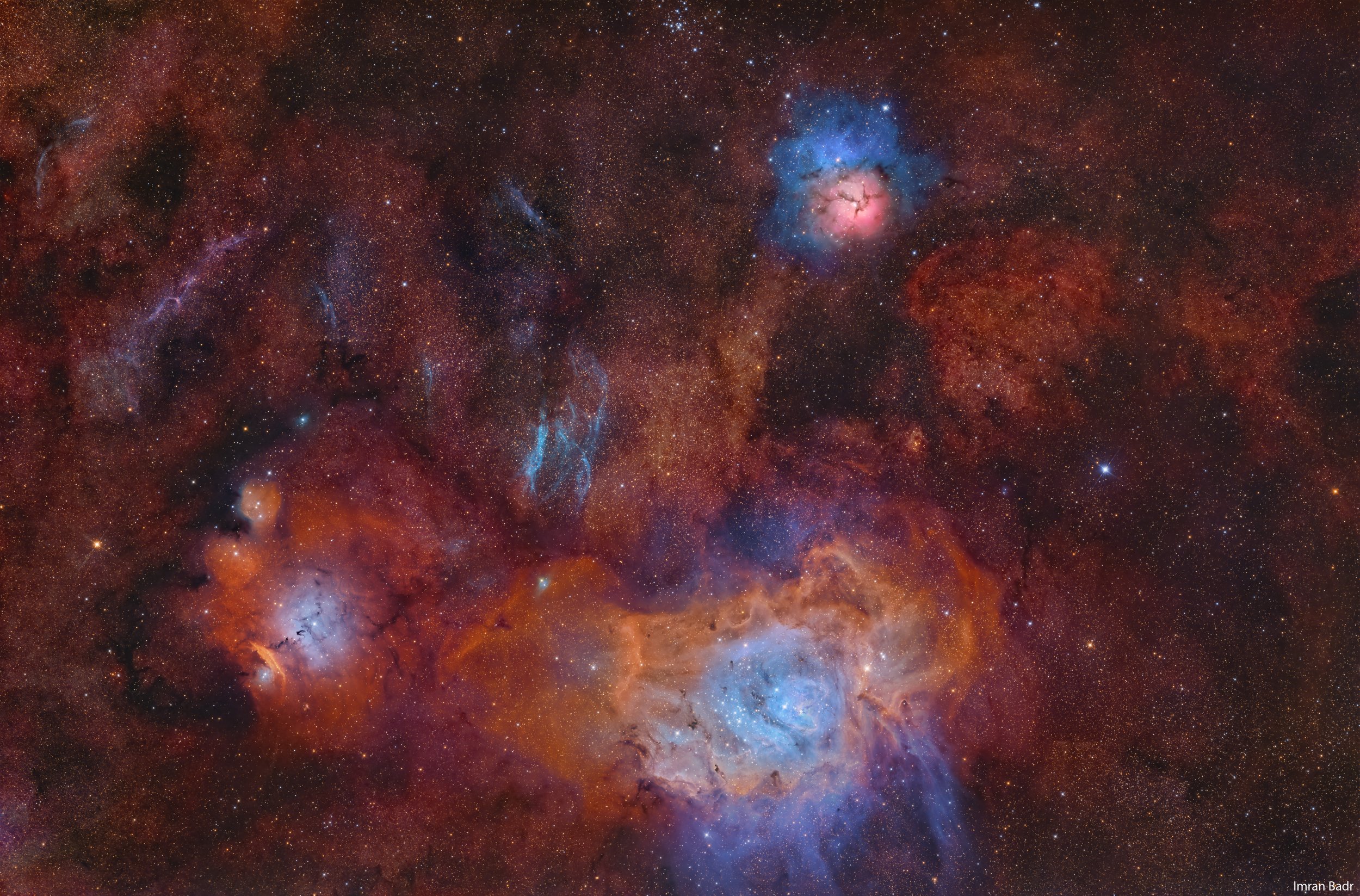
Lagoon, Trifid, and the Ghost of G007.5–01.7
This vibrant wide-field mosaic captures the rich H II region of Sagittarius, home to two of the most iconic star-forming regions in the night sky—the Lagoon Nebula (M8) and the Trifid Nebula (M20). Rendered in the SHORGB palette, the image highlights colorful emission structures: blue-green oxygen regions, sulfur filaments, and active hydrogen zones swirling around massive stars and dark dust lanes.
Ghosting faintly in the background is the elusive supernova remnant G007.5–01.7, an ancient stellar explosion now barely visible in optical wavelengths. Its faint blue filaments and arcs weave through the frame like a hidden fossil, adding depth and cosmic history to an already breathtaking stellar nursery.
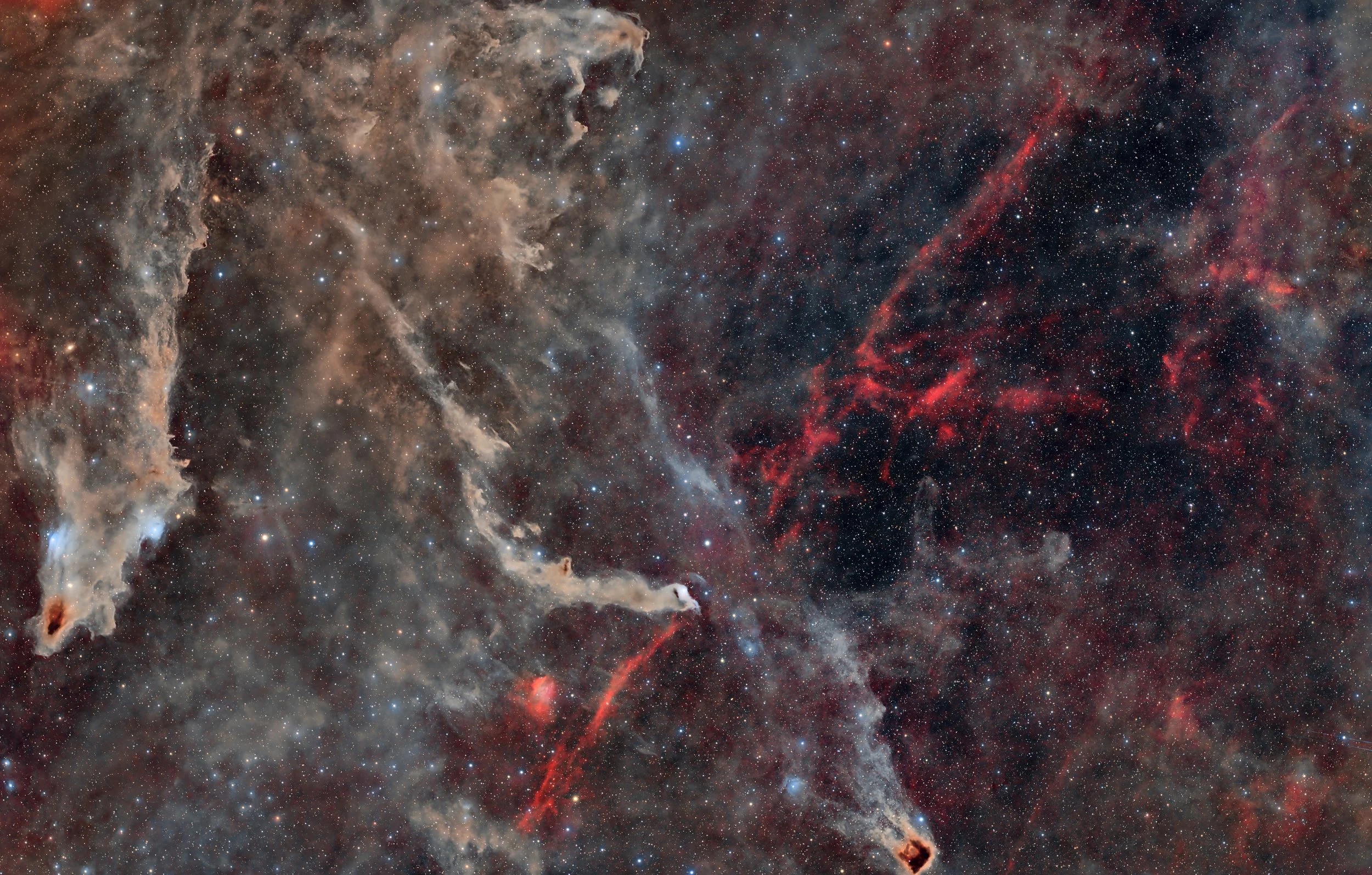
Wide-Field View of the Wolf's Cave Nebula Zone
This expansive wide-field image showcases the Wolf’s Cave region (LDN 1217 and LDN 1219) in the constellation Cepheus. Dominated by a dense network of dark nebulae and reflection clouds, the scene evokes the eerie appearance of a cave lurking in the cosmic dust. The “Wolf’s Cave” itself appears as a compact, obscured structure enshrouded in thick molecular clouds that block visible starlight, making this an ideal field to study star formation.
Surrounding the nebula, reflection zones faintly glow with scattered starlight from young stars embedded within the complex. The image’s rich color palette and intricate contrast between dark, dusty filaments and background stars highlight the turbulence and structure of our galaxy’s interstellar medium.
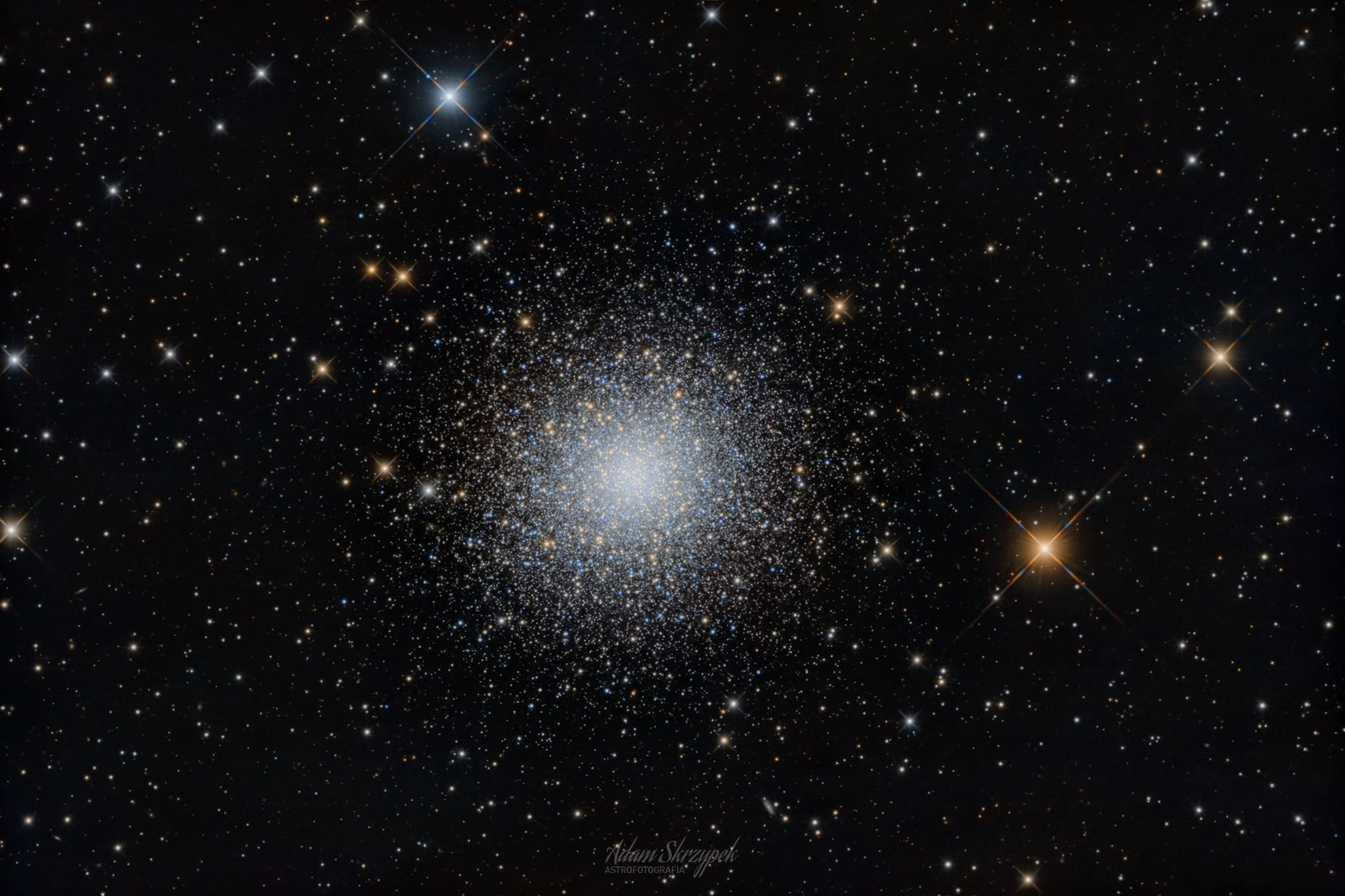
Messier 13 – The Great Hercules Cluster
Messier 13, or the Great Hercules Cluster, is a massive globular cluster located about 22,200 light-years from Earth in the constellation Hercules. This densely packed sphere of stars spans roughly 145 light-years in diameter and contains several hundred thousand ancient stars. Its brilliance and size make it a favorite target for both amateur and professional astronomers in the northern hemisphere.
With an age of approximately 11.65 billion years, M13 is among the oldest known structures in the Milky Way. Its core shines with densely concentrated stars, while its outskirts appear gradually more diffuse. This detailed image captures the varied star colors—ranging from cooler orange giants to hotter blue stars—emphasizing the cluster’s aged and evolved population.
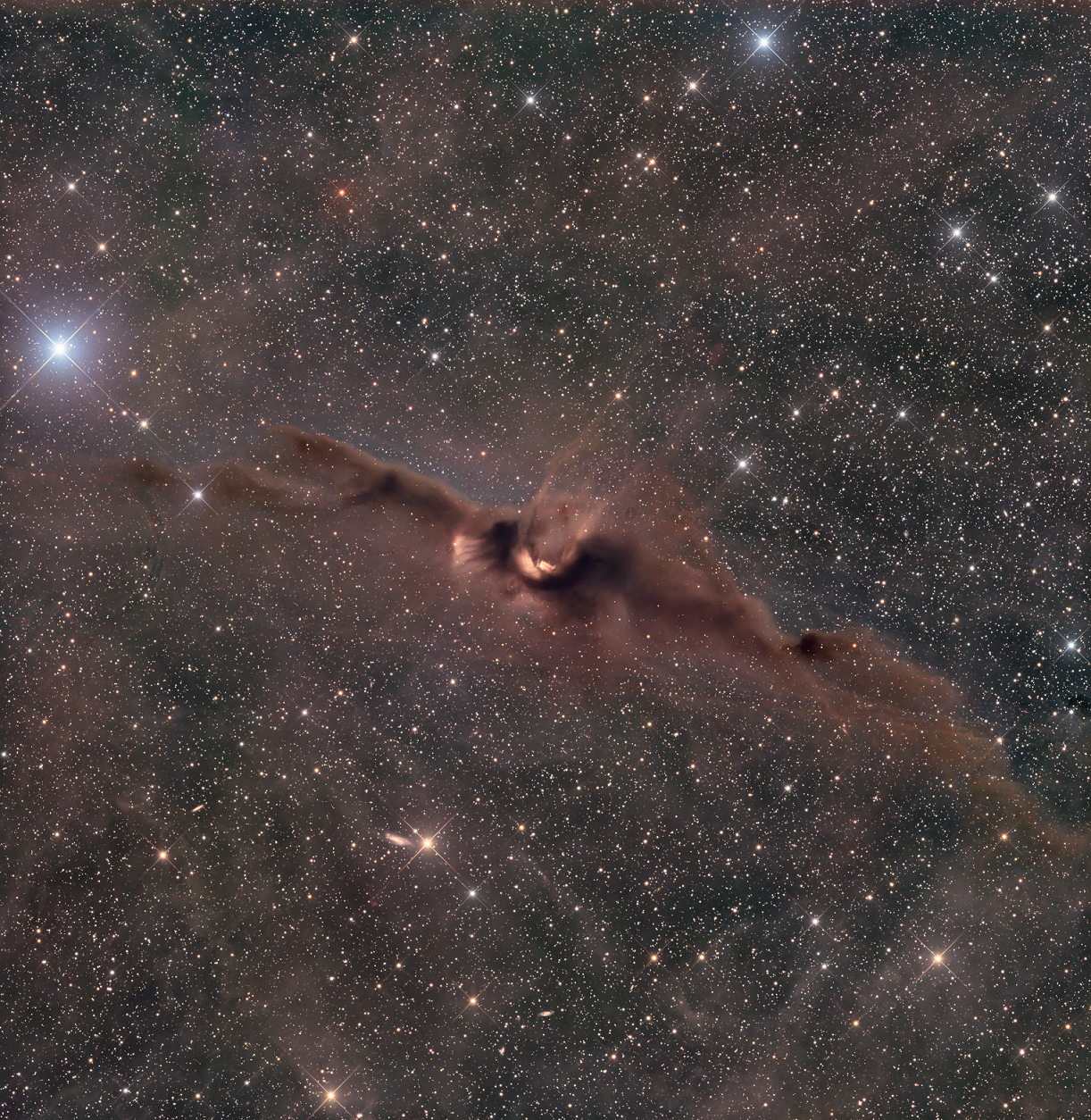
LDN 43 – A Dark Cloud in Serpens
LDN 43 is a dense dark nebula located in the constellation of Ophiuchus, near the Serpens-Ophiuchus boundary. This cloud of cold gas and dust obscures the starlight behind it, forming a stark silhouette against the rich star field of the Milky Way. Inside its opaque interior, young stellar objects are forming, hidden from optical view but revealed in infrared studies. These cosmic birthplaces are essential to understanding star formation in our galaxy.
This image was captured using high-quality RGB and Luminance data with Astrodon Gen1 and Gen2 filters, allowing for exceptional color balance and clarity. The use of Astrodon E-Series filters (Blue, Green, Red, and Gen2 Lum) helped isolate the true colors of the region and preserve faint background stars, while the luminance channel enhanced fine detail and contrast in the dark dust lanes.
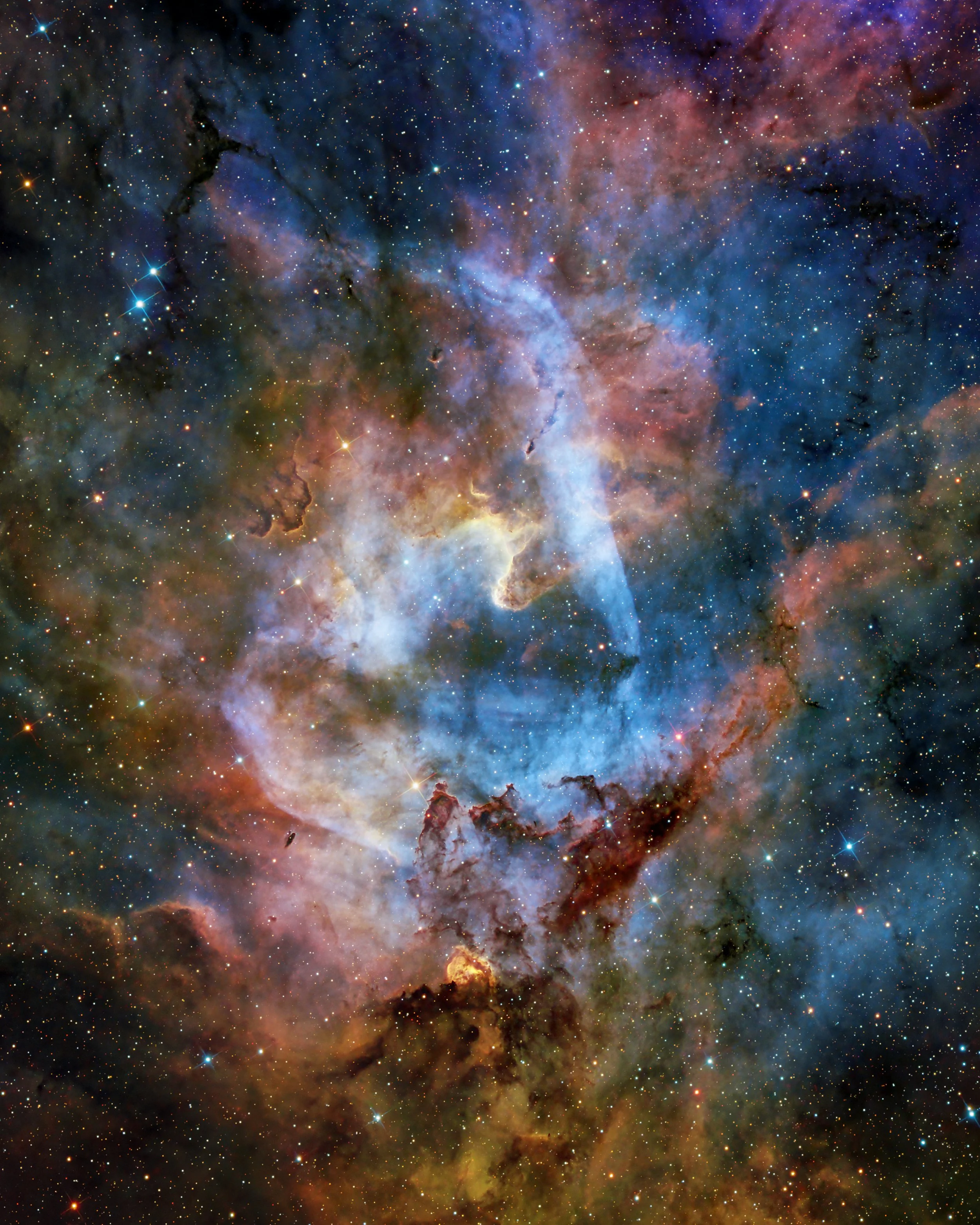
Sh2-132 – Central Region of the Lion Nebula
Sh2-132, often called the Lion Nebula, is a sprawling emission nebula located in the constellation Cepheus, roughly 10,000 light-years from Earth. The nebula’s intricate network of glowing gas and dark dust lanes forms the central “mane” and face of this cosmic lion, sculpted by stellar winds and radiation from massive stars within. In this narrowband image, ionized hydrogen (Ha), oxygen (OIII), and sulfur (SII) emissions combine to reveal the rich internal structure of this H II region, shaped by generations of stellar birth and death.
This deep integration, totaling over 65 hours of exposure, was captured from two locations in Hungary — Budapest and Tibolddaróc — using narrowband filters to isolate the glowing emissions. RGB data for stars was layered in to preserve natural color, providing a breathtaking glimpse into this active and chaotic star-forming region.
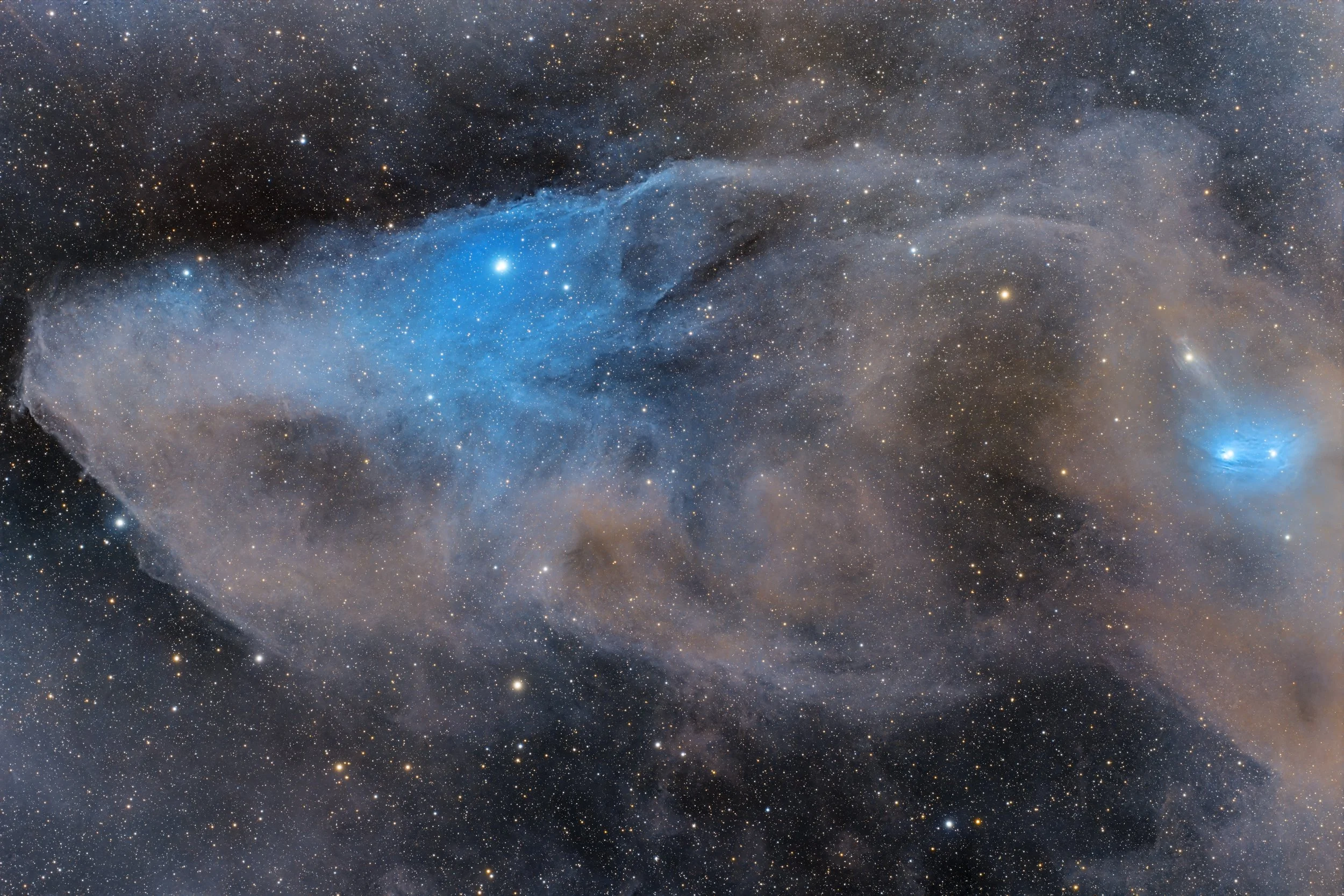
IC 4592 – The Blue Horsehead Nebula
IC 4592, known as the Blue Horsehead Nebula, is a reflection nebula in the constellation Scorpius, about 400 light-years from Earth. The deep blue glow arises from interstellar dust reflecting light from nearby hot, young stars — most prominently Nu Scorpii. This ethereal cloud’s equine shape gives the nebula its nickname and reveals the delicate structures often hidden within our galaxy’s dust lanes. Capturing it requires dark skies and long exposures to tease out its faint, expansive features.
This image was taken from Villanueva de Córdoba, Spain, a location known for its dark rural skies ideal for widefield astrophotography. The combination of excellent sky conditions and careful processing reveals not only the ghostly nebula but the broader complex of dark and reflective dust that envelops this region of the Milky Way.
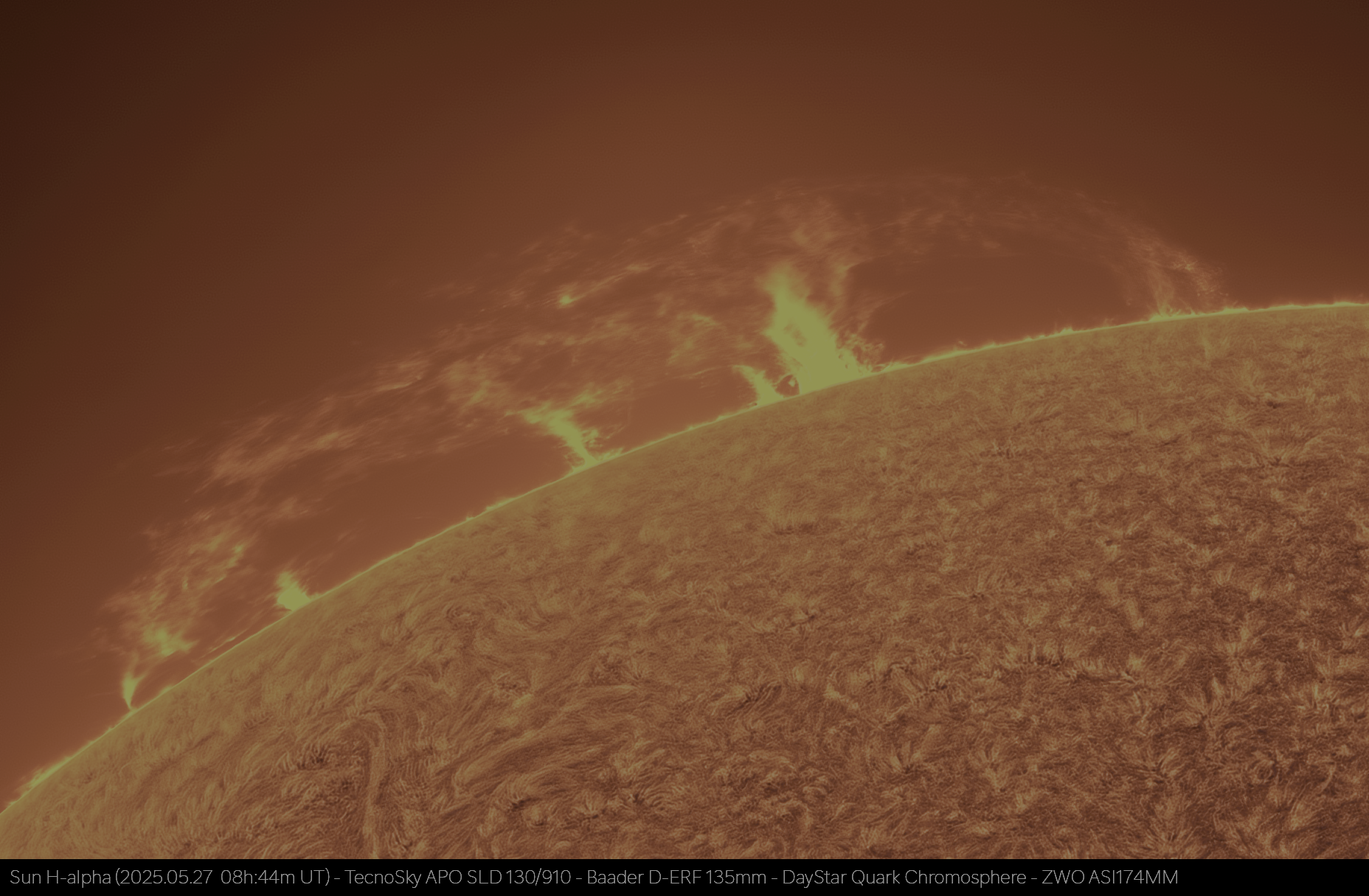
Rapidly Rising Flame – A Huge Solar Prominence
This dramatic solar prominence, captured on May 27, 2025, from Syracuse, Italy, showcases the immense power and beauty of our star. Prominences are vast arcs of plasma suspended above the Sun’s surface by magnetic fields. This one, estimated at over 150,000 kilometers in height, evolved rapidly and vanished within minutes — a fleeting but extraordinary event. Its shape and scale resemble a fireball erupting into space, a reminder of the Sun’s dynamic and volatile nature.
Captured using a high-resolution solar imaging setup — including a Tecnosky APO SLD 130/910 refractor and Daystar Quark Chromosphere filter — this image isolates the H-alpha wavelength, revealing intricate filaments of hydrogen gas rising into the solar corona. The precision of the ZWO ASI174MM camera and stability of the iOptron CEM70G mount made it possible to record this short-lived yet unforgettable moment in our solar system.
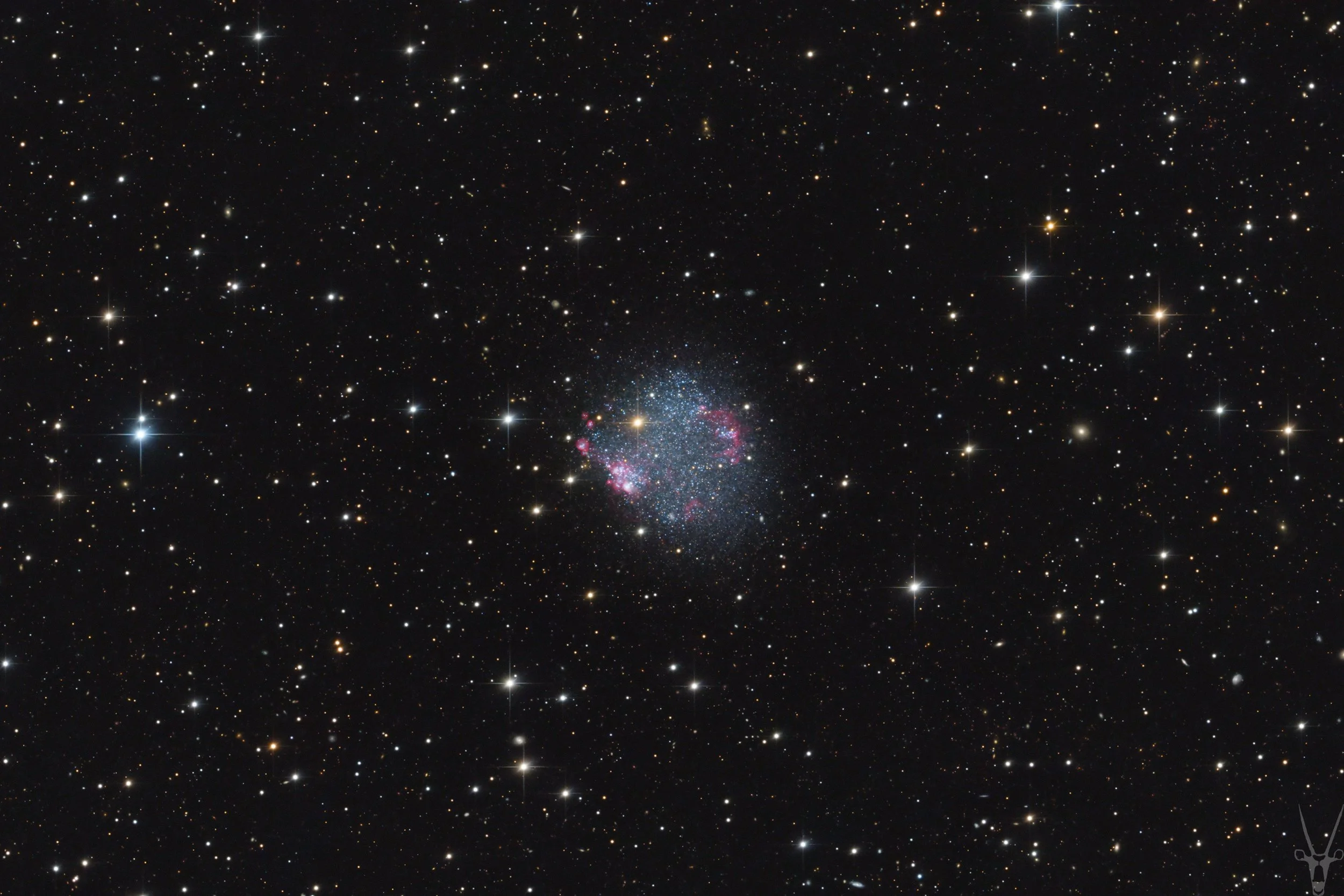
Sextans A – A Dwarf Galaxy on the Fringe
Sextans A is a faint, irregular dwarf galaxy located about 4.3 million light-years away in the constellation Sextans. As a member of the Local Group, this galaxy offers a glimpse into the early stages of galactic evolution. Its loosely bound stars and scattered clusters reflect an active star-forming history in an environment lacking the defined structure of spiral or elliptical galaxies. Sparse and dim, Sextans A is challenging to image, even under dark skies, due to its low surface brightness.
Captured from the exceptionally dark skies of Rooisand Desert Ranch, Namibia, this image brings out subtle regions of star formation and the soft glow of countless stars within the dwarf galaxy. The pristine southern location and long exposure times reveal details usually lost in light pollution, offering a rare look at this overlooked galactic neighbor on the edge of visibility.
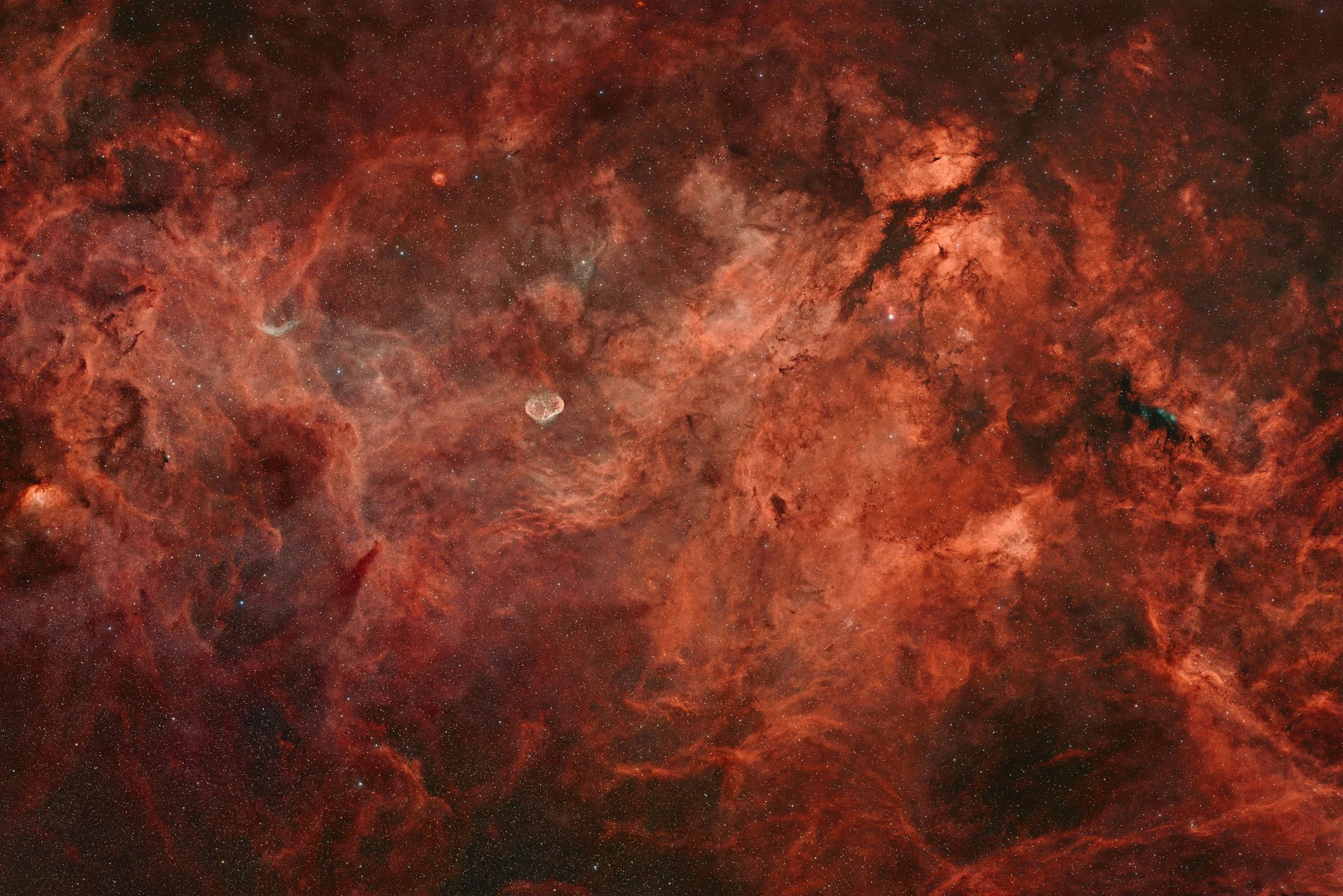
NGC 6888 and the Crescent’s Cosmic Neighborhood
NGC 6888, the Crescent Nebula, is a dramatic emission structure located about 5,000 light-years away in the constellation Cygnus. This glowing arc of ionized gas was sculpted by the powerful stellar winds of the massive Wolf-Rayet star WR 136, which is nearing the end of its life. The intricate details and shock fronts reveal the ongoing interaction between fast stellar winds and slower-moving material ejected in a previous red giant phase.
Captured from Osnabrück, Germany, this widefield image reveals not just the Crescent itself, but a richly textured region of surrounding nebulosity. Wisps of hydrogen-alpha glow intermingle with faint, complex OIII structures, painting a turbulent and dynamic portrait of this stellar nursery. This mosaic highlights both the power and fragility of massive star evolution as it unfolds against the background of the Milky Way.
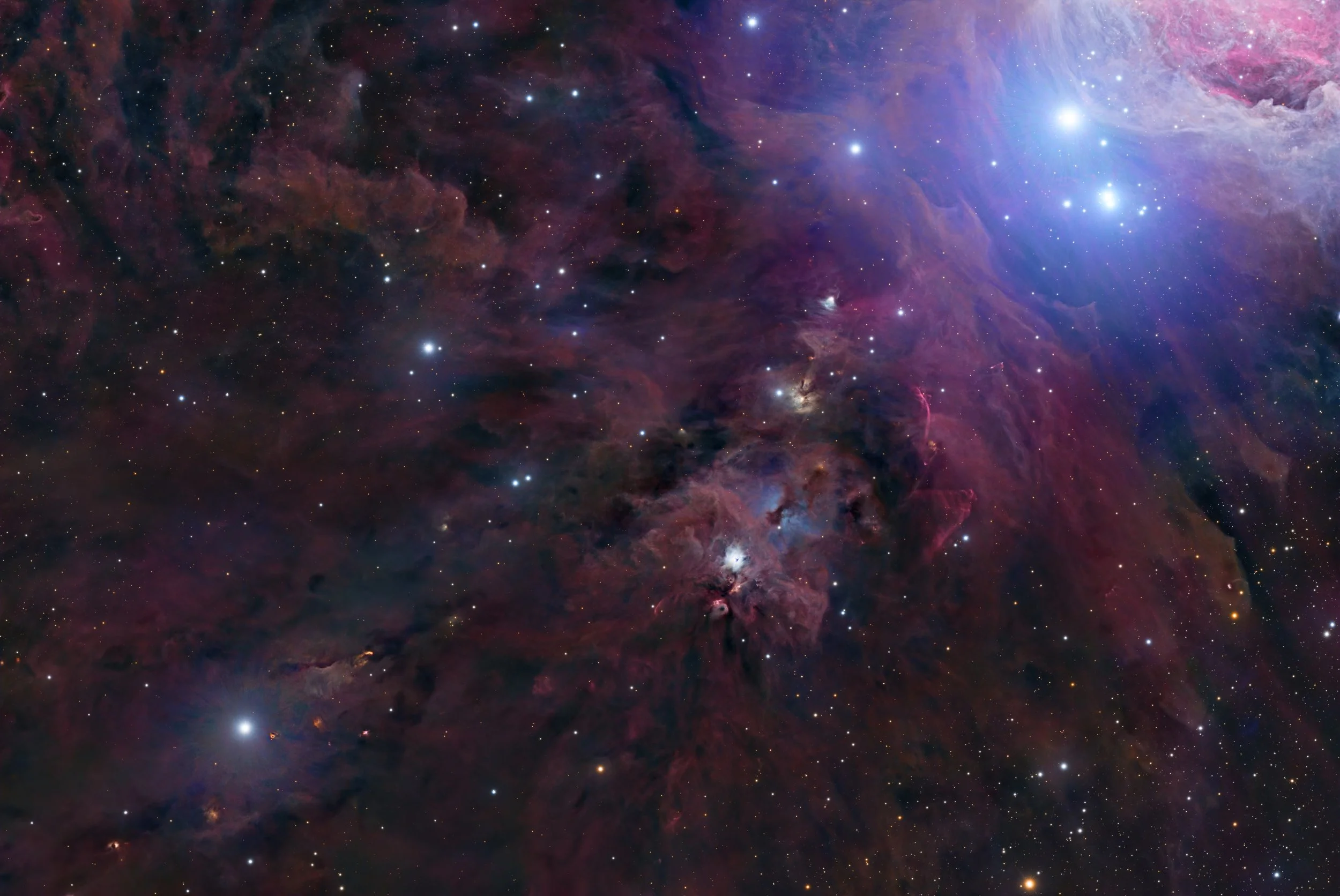
NGC 1999 and the Orion Molecular Complex: A Hole in the Sky
Near the heart of the Orion Molecular Complex lies NGC 1999, a bright reflection nebula famously marked by a dark, keyhole-shaped feature. Once thought to be a dense globule of cold dust, this void is now believed to be an actual hole—an empty cavity likely carved by energetic outflows from young stars. The surrounding region is rich in gas and dust, forming a stellar nursery where massive stars are actively shaping their environment through radiation and winds.
This deep image, taken from A Veiga, Spain, reveals the striking contrast between the nebula’s glowing wisps and the enigmatic darkness at its center. Surrounding NGC 1999 is the broader Orion Molecular Complex, a vast and intricate region filled with emission and reflection nebulae, dust filaments, and ongoing star formation. It is one of the most studied and visually captivating structures in the winter night sky.
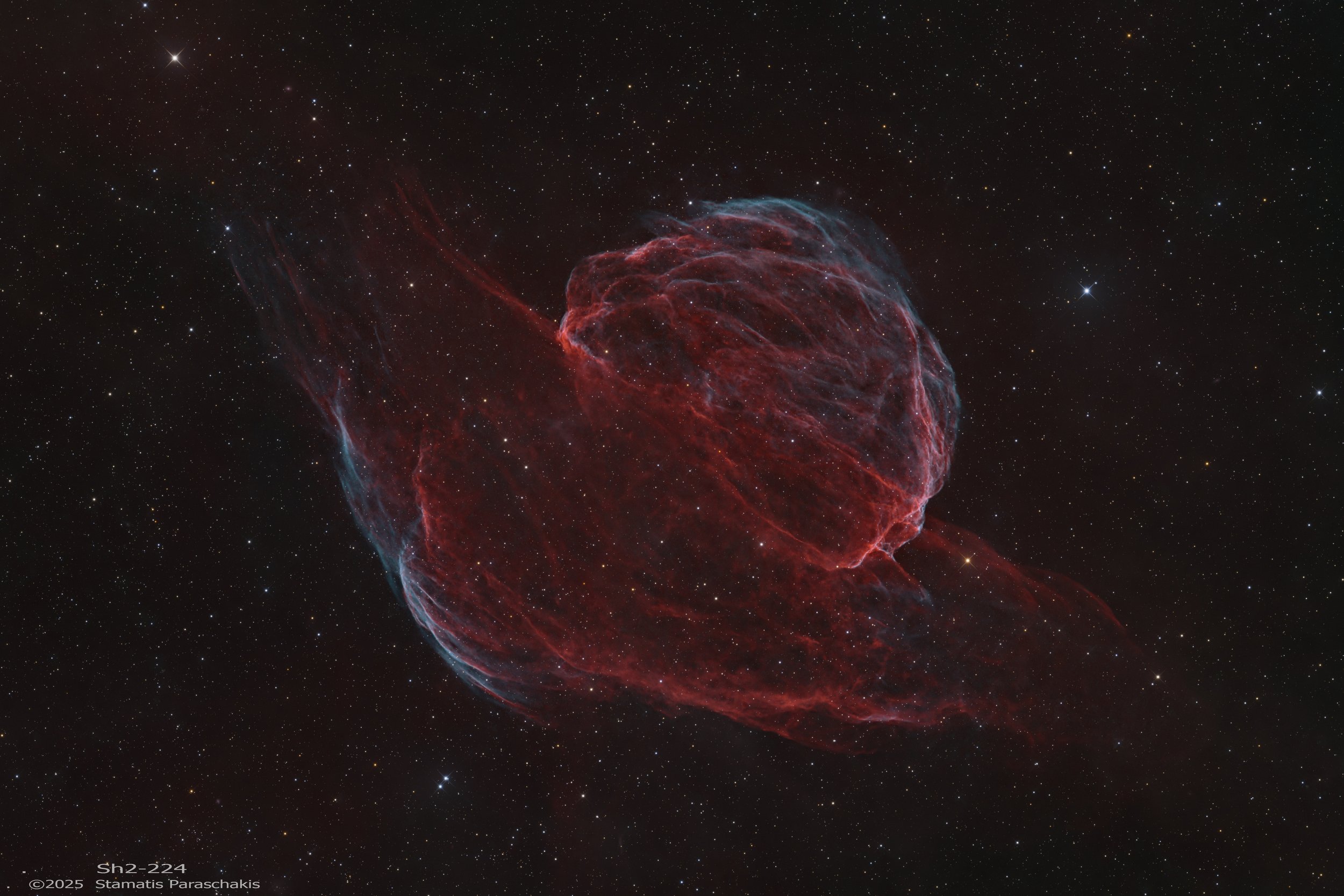
Sh2-224: A Twisted Remnant in Perseus
Sh2-224 is a rarely imaged supernova remnant located in the constellation Perseus, approximately 14,700 light-years away. Unlike the more symmetric remnants of stellar explosions, Sh2-224 presents a curious crescent shape, thought to result from the remnant’s shockwave expanding into an uneven interstellar medium. This interaction sculpts the glowing hydrogen filaments into arcs and tendrils that tell a story of cosmic turbulence.
Photographed from Athens, Greece, this deep-sky image captures the faint red glow of ionized hydrogen gas curving gracefully across the frame. The stark contrast between the delicate nebular structures and the dense backdrop of stars highlights the complex beauty of this rarely observed region. Supernova remnants like Sh2-224 offer astronomers a glimpse into the powerful feedback loops that govern star formation and galactic evolution.
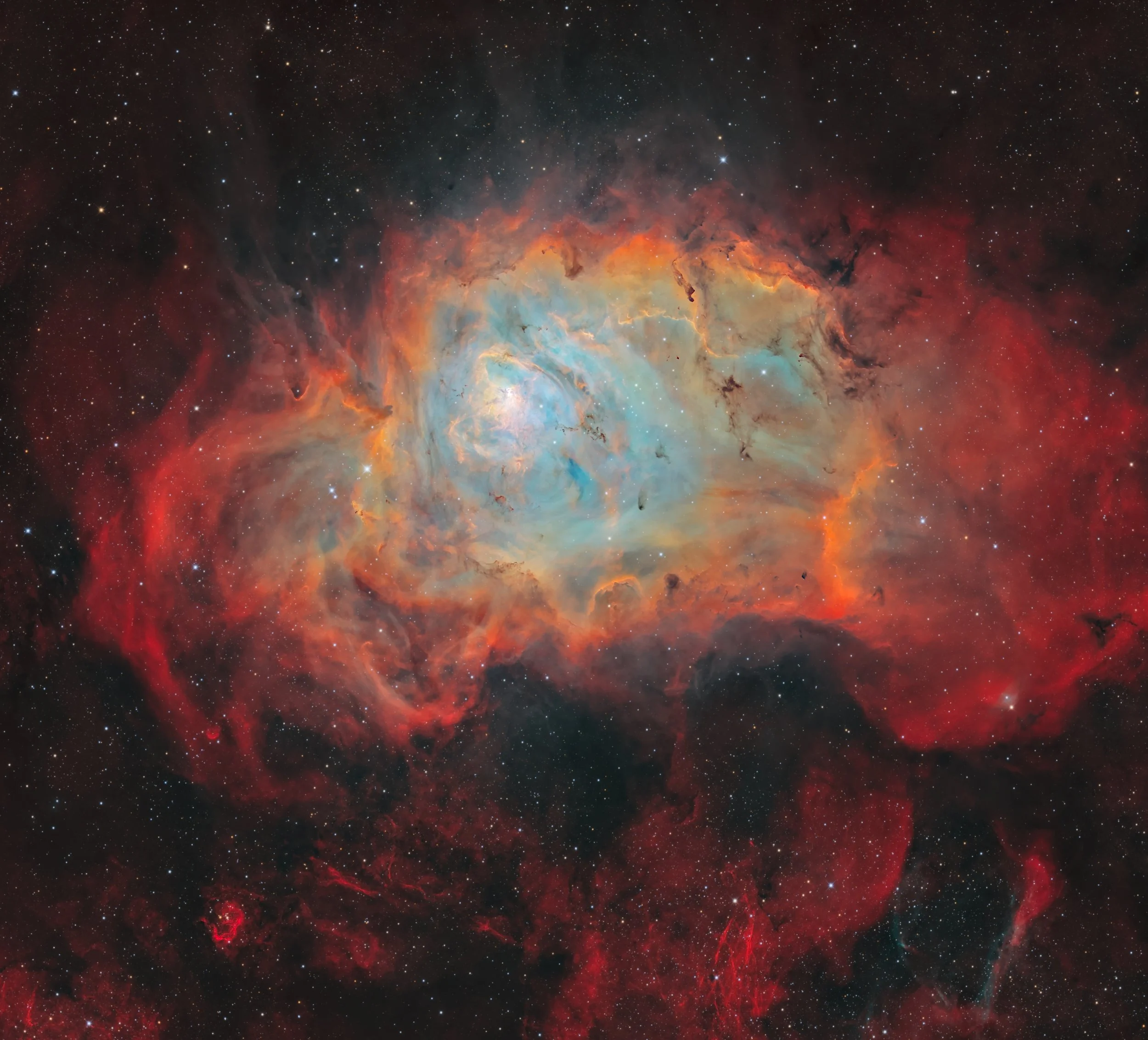
Colors of M8 in SHO: The Lagoon Reimagined
The Lagoon Nebula (Messier 8), a massive star-forming region about 4,000 light-years away in the constellation Sagittarius, comes alive in this striking narrowband SHO palette. Captured from Zapopan, Jalisco, Mexico, the image reinterprets natural colors using mapped emissions from sulfur (SII), hydrogen (Ha), and oxygen (OIII), bringing out fine structures in the gas and complex filaments that are often hidden in visible light views.
At the center, young energetic stars of open cluster NGC 6530 bathe the surrounding nebula in radiation, sculpting clouds and igniting the formation of new stars. The narrowband technique emphasizes the dynamic interplay of stellar winds and ionized gases, transforming this familiar target into a surreal cosmic landscape. The result is a celebration of both scientific precision and visual artistry.
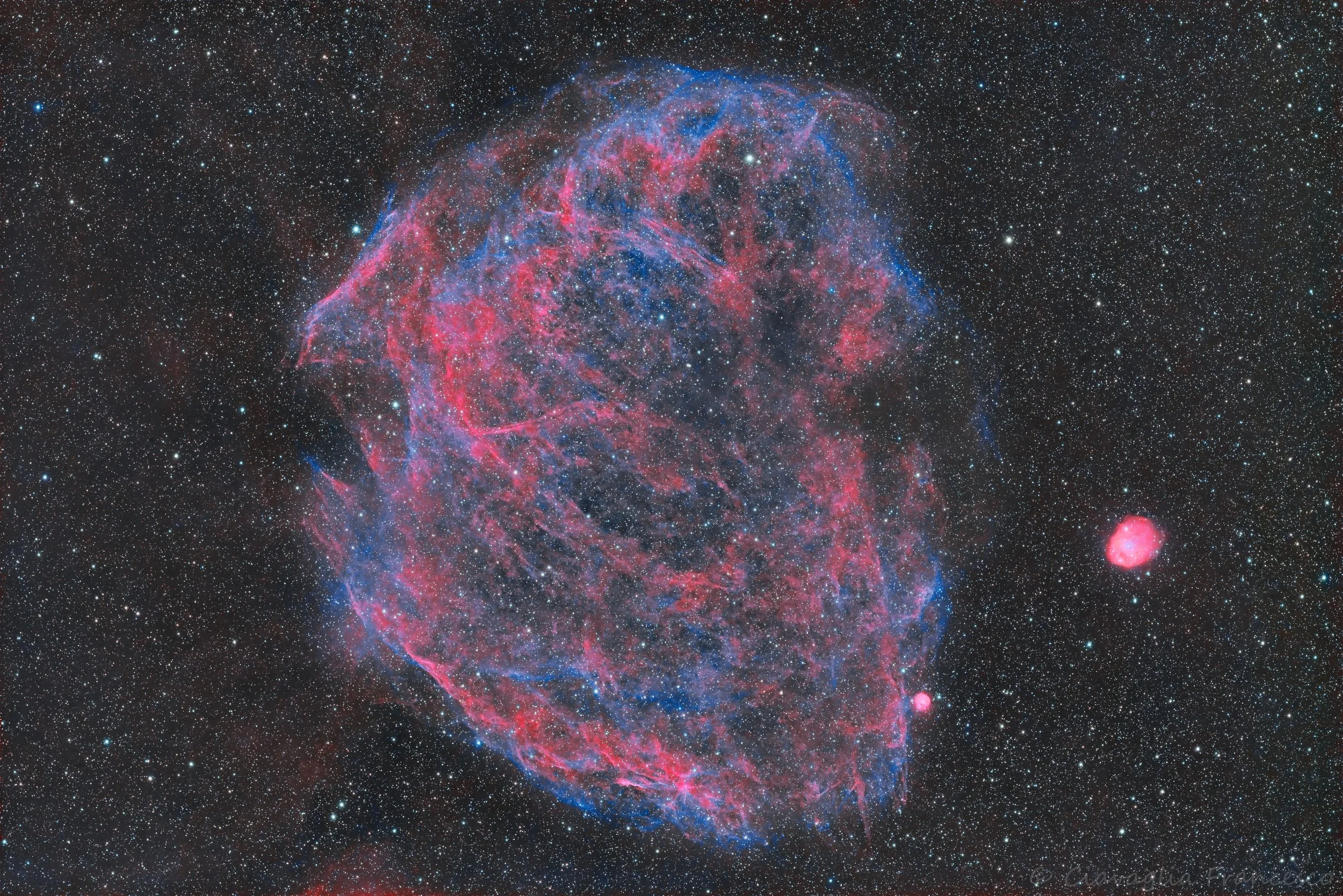
SH2-221: The Faint Supernova Remnant in Auriga
Often overlooked due to its faintness, SH2-221 is a supernova remnant nestled within the constellation Auriga, roughly 2,600 light-years away. This ethereal structure spans nearly 1.5 degrees across the sky—about three times the size of the full Moon—yet it remains challenging to observe due to its diffuse nature and low surface brightness. The glowing filaments and arcs visible in this deep image are composed primarily of ionized hydrogen gas, remnants of a star that exploded thousands of years ago.
Captured from Gualdo Tadino in Perugia, Italy, this image reveals the delicate and ghostly outlines of SH2-221 set against a richly textured star field. Long exposure and narrowband filters help isolate the nebula’s faint emission from the background, allowing the structure to emerge in dramatic detail. Observations like these continue to shed light on the dynamic processes that shape the interstellar medium long after a star’s explosive death.
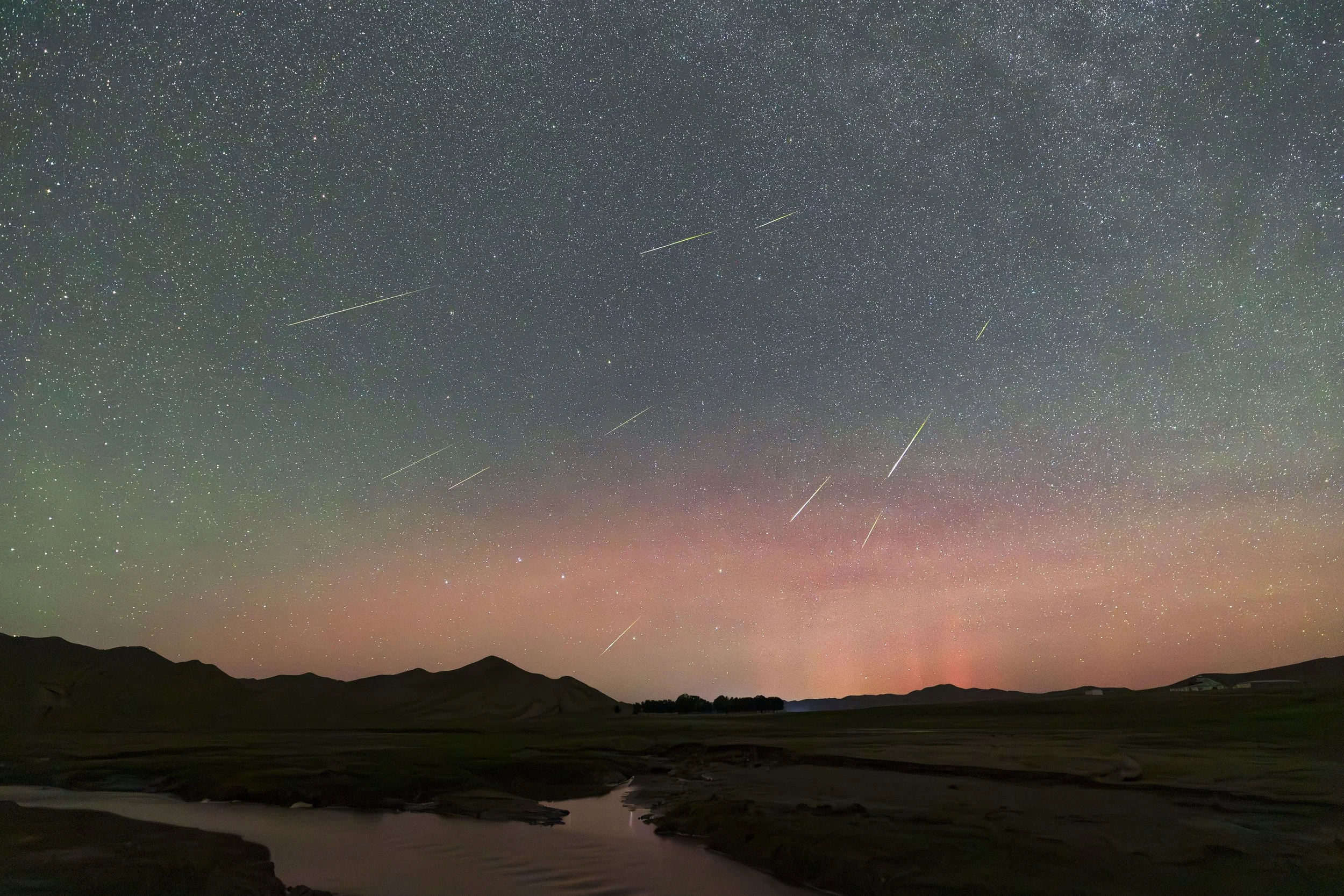
The Radiance Under the Night Sky
Langshan Reservoir in Urad Middle Banner is fed by several small streams, making it a scenic spot for night-sky photography. On a clear night, a group of friends and I drove there to capture the Perseid meteor shower. Suddenly, our aurora-forecast app alerted us that the KP index was rising. We checked NOAA’s aurora forecast and saw it could reach KP 7. We immediately scouted for a vantage point where meteors and aurora could share the same frame. We found a small creek to the north-northeast of the reservoir and began shooting. In the end, we recorded 11 meteors alongside brief, vibrant auroral pillars.
The final image showcases Perseids radiating from the right-upper corner of the frame, their trails echoing the green auroral glow below. A hint of pink aurora adds a rare, magical contrast to this combined celestial display.
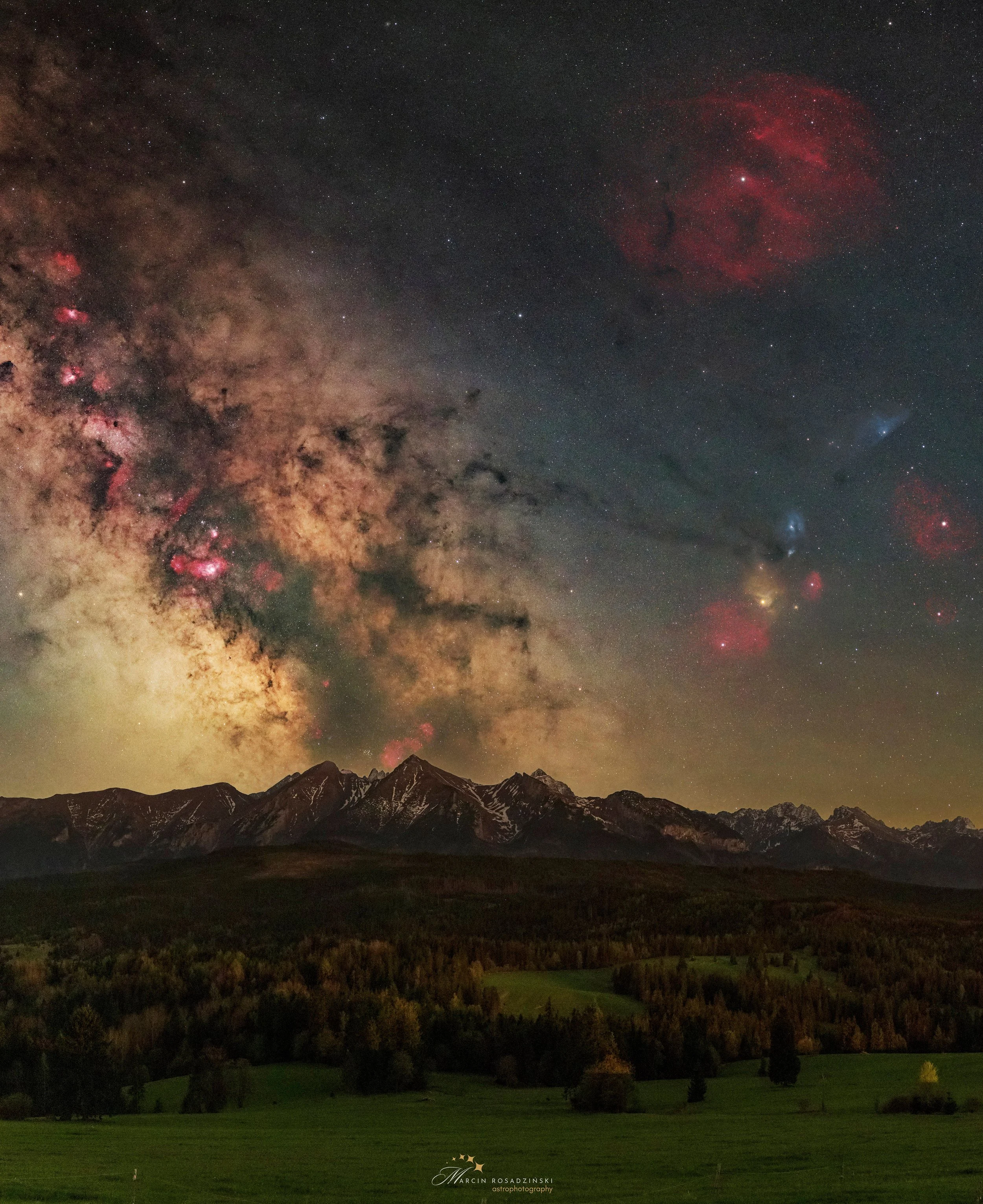
Milky Way over Tatra Mountain
Each year, astrophotographers from across Poland journey to the Łapszanka Pass in the Tatra Mountains to witness the breathtaking rise of the Milky Way’s galactic center. For many, it’s become more than a photographic destination—it’s a tradition. In this luminous image, captured from southern Poland, the summer Milky Way arches above the mountainous horizon, showcasing an intense concentration of glowing red hydrogen emission nebulae and intricate star fields.
Near the top right, the colorful Rho Ophiuchi cloud complex and the striking Zeta Ophiuchi nebula emerge vividly, enhanced by the addition of a hydrogen-alpha layer that accentuates their structure. This fragment of a larger mosaic—captured with a Canon R (astro-modified) and Sigma Art 50mm lens—combines three sky and three foreground panels for a seamless, immersive composition. Yet, despite its beauty, this cherished location faces the creeping threat of light pollution, casting doubt on the future visibility of these celestial wonders from Łapszanka.
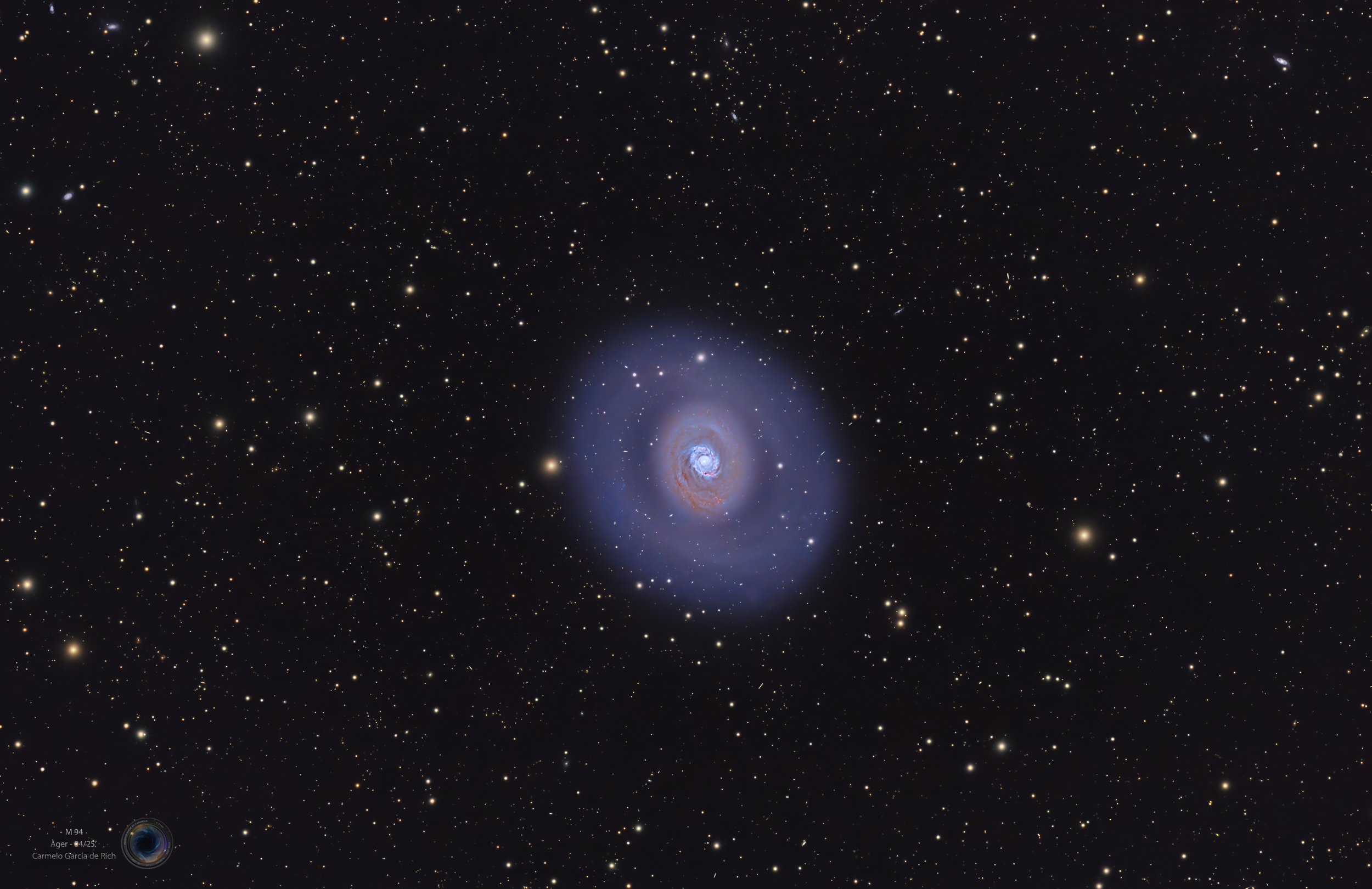
M94 - A Double Ring Galaxy
At the heart of the Canes Venatici constellation lies Messier 94, a striking spiral galaxy surrounded by faint, expansive outer rings of stars and dust. This galaxy is part of the M94 Group, an extended assembly of galaxies located roughly 13 million light-years away. Seen in remarkable clarity here, M94 reveals tightly wound spiral arms glowing with clusters of young, hot stars, while a smooth outer halo gives the galaxy its iconic eye-like appearance—earning it nicknames like the "Croc’s Eye" and "Cat’s Eye" galaxy.
Captured in Àger, Lleida, Spain this deep exposure highlights the faint, ghostly light of M94’s stellar halo, rarely visible in typical wide-field views. The subtle glow is likely the result of past galactic interactions or ongoing stellar migration in its outer regions. With sharp resolution and meticulous detail, the image provides a compelling view into both the structured inner disk and the wispy, nearly spherical envelope that gives M94 its unusual form.
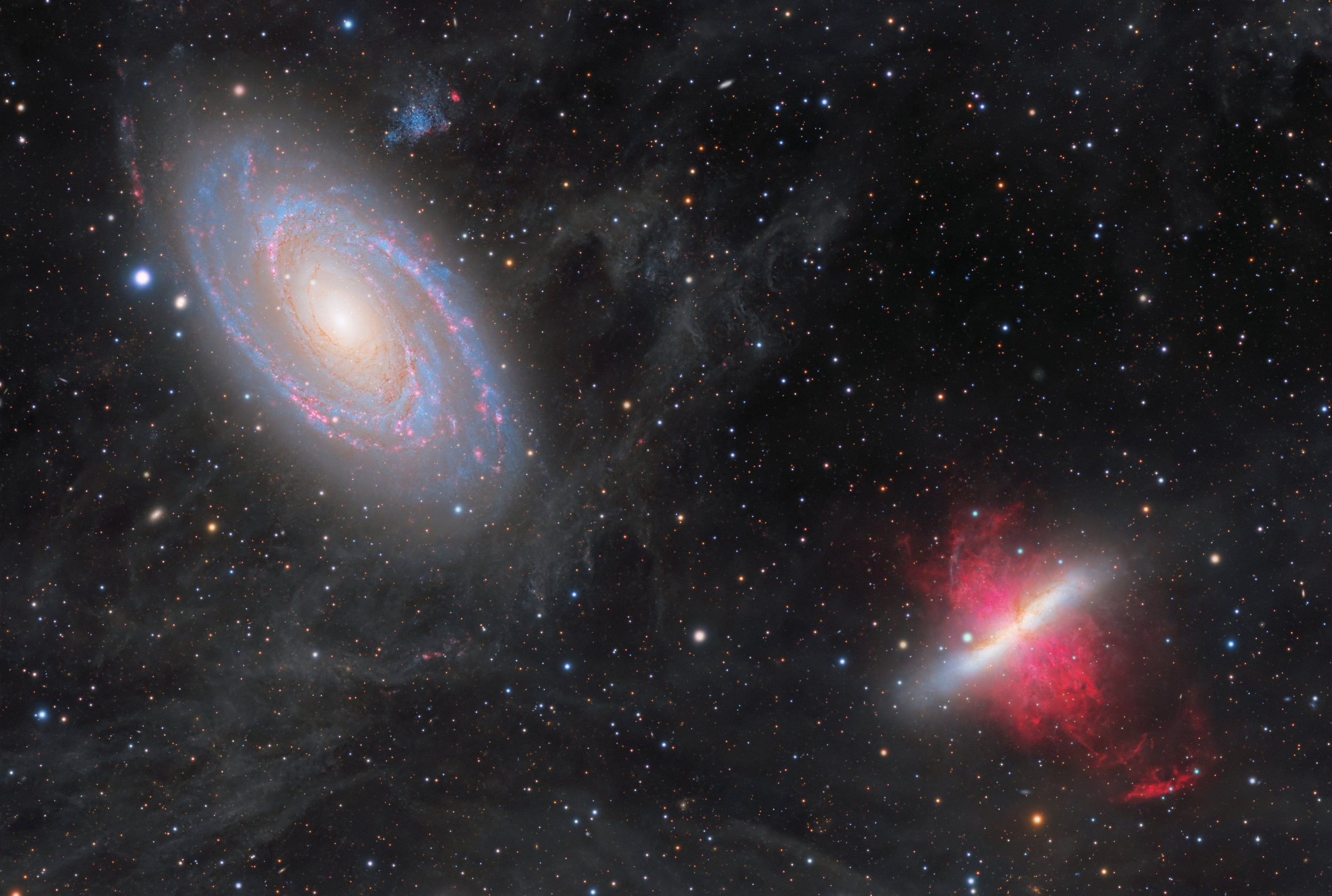
Hydrogen Stream & IFN Near M81 & M82
Two striking galaxies—Messier 81 (left) and Messier 82 (right)—shine in exquisite detail in this deep image of the Ursa Major galaxy group, captured collaboratively under the initiative of the Collaborative Amateur Telescope (CAT). Bode's Galaxy, M81, displays grand spiral arms laced with pink hydrogen emission regions and blue star-forming knots. In contrast, the Cigar Galaxy, M82, bursts with turbulent starburst activity, casting vivid red hydrogen-alpha filaments into the surrounding space. Faint wisps of the Integrated Flux Nebula (IFN) drift across the frame, subtly lit by the combined starlight of the Milky Way.
This collaborative image integrates data from five astrophotographers over multiple nights and locations, demonstrating the power of remote teamwork in amateur astrophotography. While M81 and M82 dominate the field, distant galaxies, quasars, and galactic cirrus enrich the cosmic backdrop. The CAT project, born from a spontaneous online collaboration, represents a new wave of grassroots astronomical imaging, uniting vision, effort, and passion to explore the deep sky in unprecedented depth.
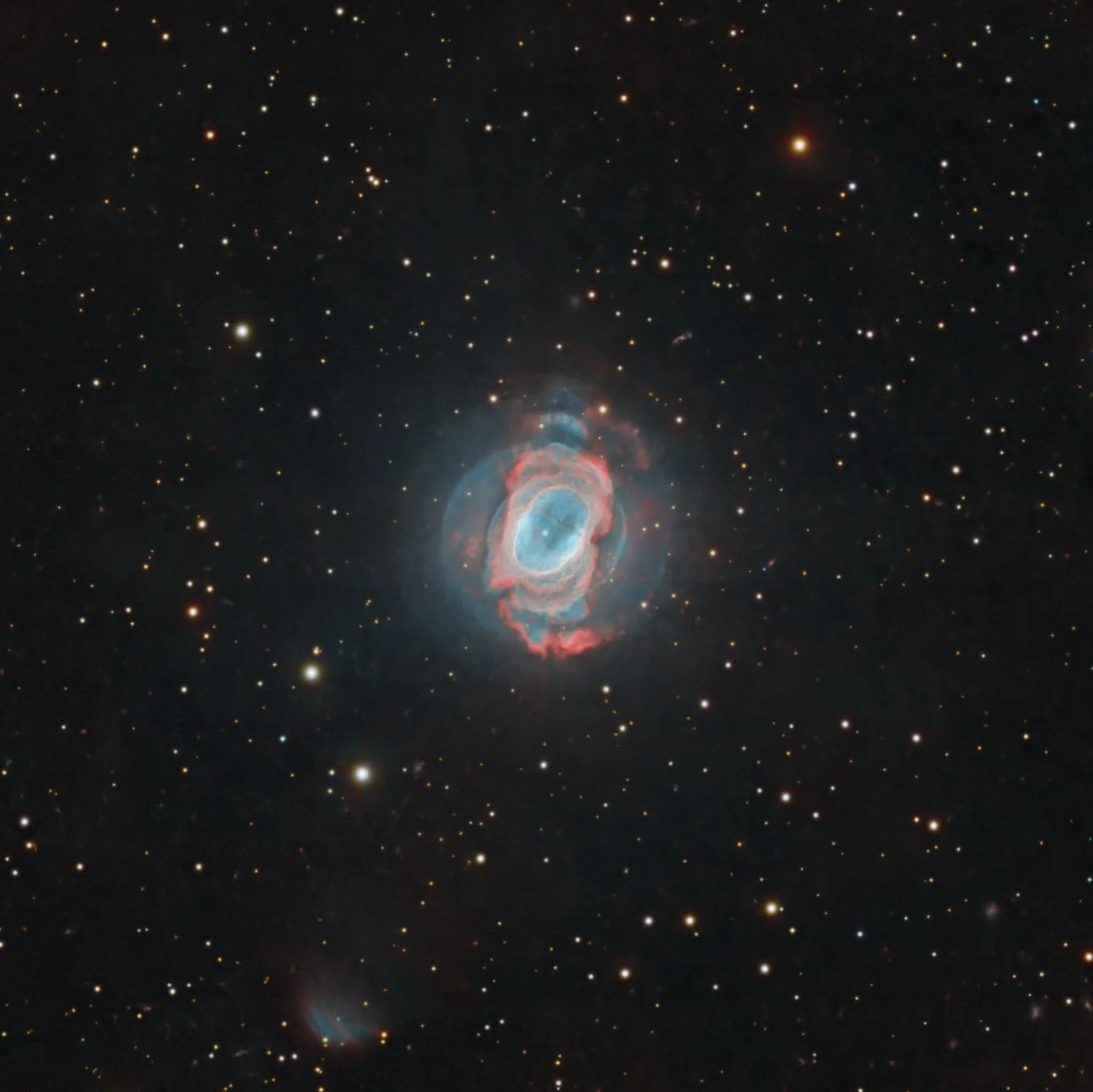
NGC 3132 Planetary Nebula with new PN discovery named Sel 1 - in HOO with RGB Stars
We would like to present this image, acquired in Obstech, Chile.
Title of the Object:
NGC 3132 Planetary Nebula with new PN discovery named Sel 1 - in HOO with RGB Stars
Description of the Object:
This image contains NGC 3132 and a newly discovered Planetary Nebula named Sel 1.
NGC 3132, also known as the Southern Ring Nebula, Eight-Burst Nebula, or Caldwell 74 is a striking planetary nebula located about 2,000 light-years away in the southern constellation Vela.
What you’re seeing is the glowing, expanding shell of gas ejected by a dying Sun-like star, now a white dwarf at its core. The nebula spans roughly 0.4 light-years across, yet appears just 1 arcminute wide in the sky — about 1/30th the width of the full Moon.
Despite its compact appearance, a considerable amount of detail can be revealed in long-exposure imaging.
In this image, the bright teal-blue core is rich in ionized oxygen (OIII), while the outer reddish arcs trace hydrogen-alpha emission (Hα). Faint dust lanes and overlapping shells show the chaotic beauty of this stellar farewell.
Recent JWST observations revealed that NGC 3132 is actually a binary star system, with a hidden second star playing a major role in shaping the nebula’s complex form over thousands of years.
Imaged in HOO RGB on Mike Selby's Planewave CDK 700 at Observatorio El Sauce, Chile.