

AAPOD2 Image Archives
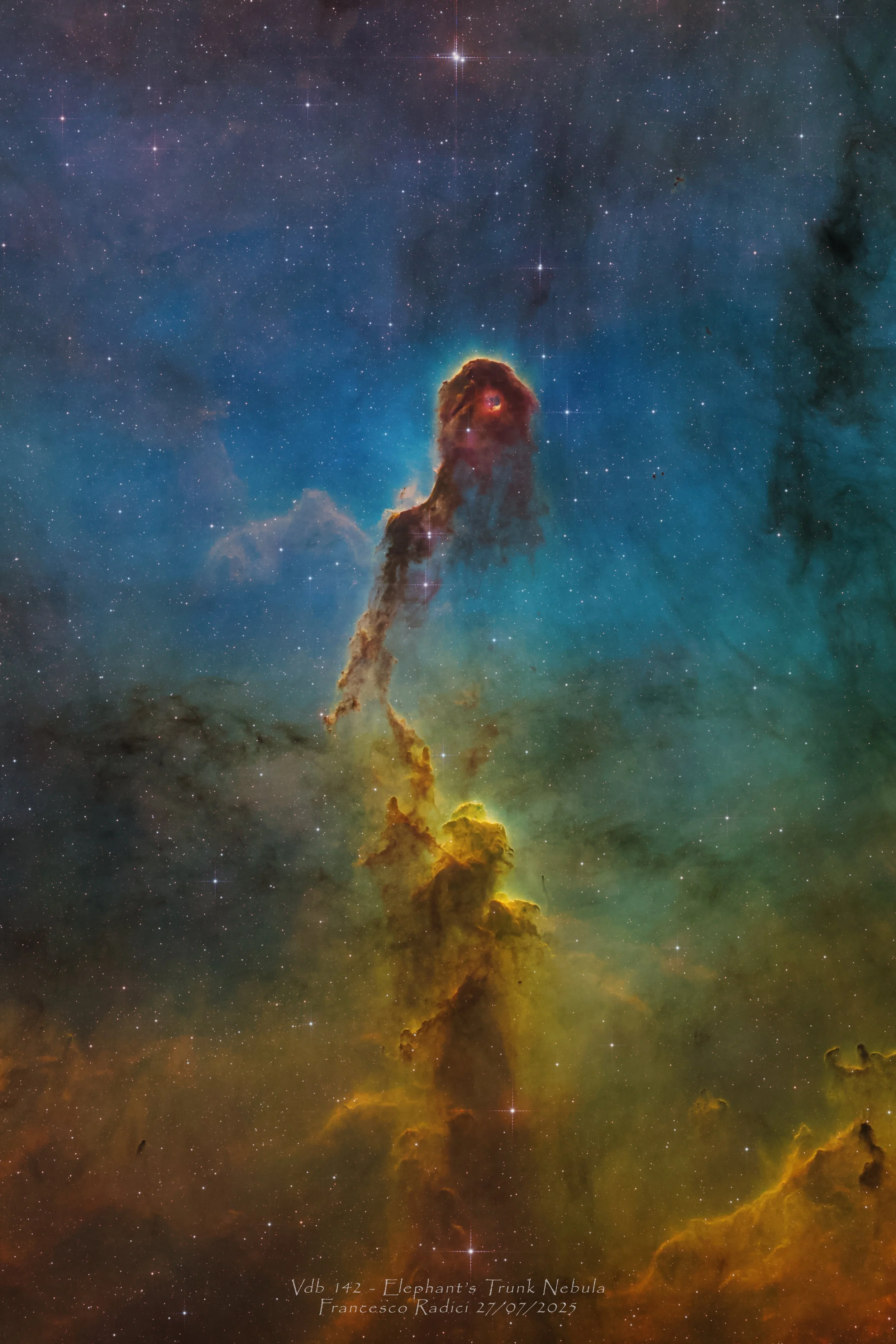
VdB 142 – The Elephant’s Trunk Nebula in a Bortle 6 Urban Sky
Even from a Bortle 6 urban sky, the Elephant’s Trunk Nebula emerges in stunning detail and color after more than 30 hours of exposure. Cataloged as VdB 142, this dense column of gas and dust winds through the emission nebula IC 1396, located roughly 2,400 light-years away in the constellation Cepheus. The glowing rim traces ionized gases shaped by the powerful radiation and stellar winds of nearby massive stars.
At the top of the “trunk,” bright-rimmed globules and embedded protostars signal active star formation. This narrowband composition highlights sulfur (red), hydrogen (green), and oxygen (blue) emissions, revealing dynamic layers and structures often lost under light-polluted skies. The result is a dramatic, high-contrast portrait that demonstrates what dedication and careful processing can achieve, even in less-than-ideal observing conditions.
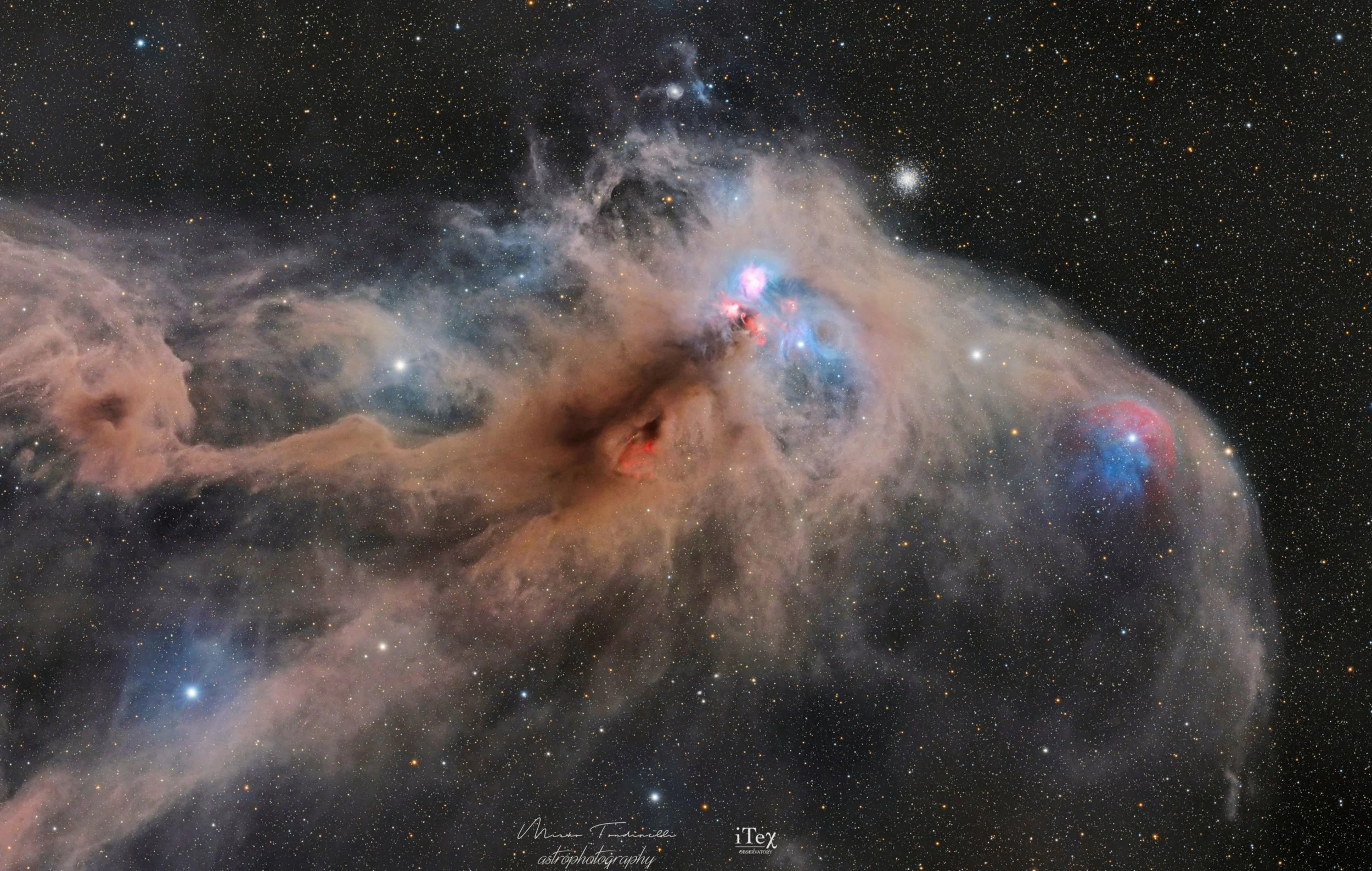
NGC 6729 and the Corona Australis Dust Complex
In this deep and detailed portrait, the Corona Australis region glows with a mixture of dark molecular clouds, reflection nebulae, and faint emission features centered around NGC 6729. The reddish filaments near the center trace hydrogen-alpha emission, while the blue patches reflect starlight from young stars embedded in their birth clouds. The entire complex is a rich star-forming region located about 430 light-years away.
Sweeping arcs of dust stretch across the frame, hinting at the turbulent processes that shape interstellar matter. Toward the right, the globular cluster NGC 6723 glitters through the haze, a stark contrast to the soft glow of nebulosity. This image was captured from Itex Observatory in Texas using narrowband and broadband filters to reveal the full complexity of this iconic southern sky region.
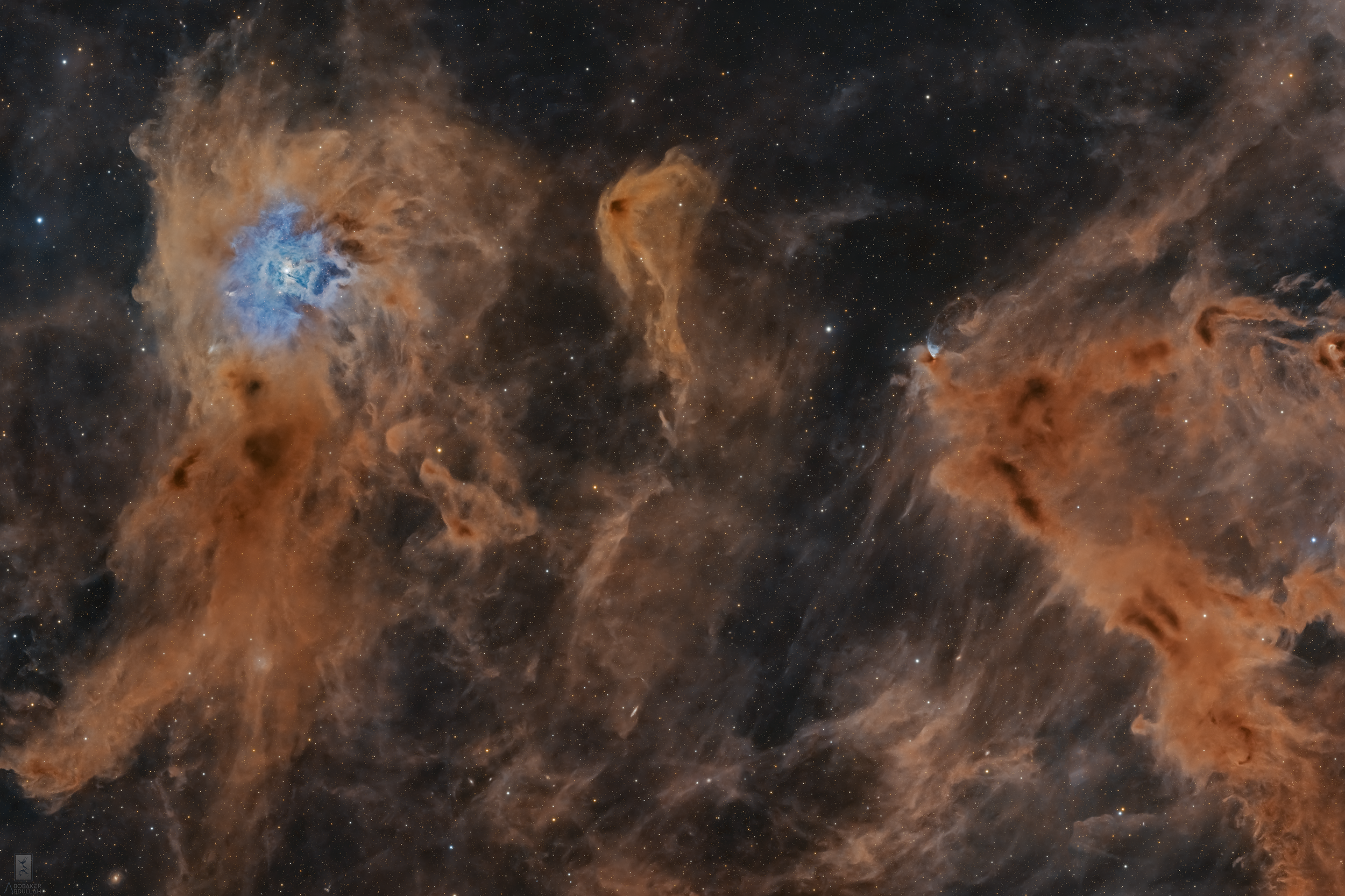
Iris in the Dust – LBN 1148 and NGC 7023
At left, the Iris Nebula (NGC 7023) glows with a striking blue hue, illuminated by a young star embedded in a dense reflection nebula. This brilliant bloom of starlight lies embedded within a vast expanse of interstellar dust belonging to the dark nebula complex LDN 1148. These cosmic clouds are part of the Cepheus Flare region, located around 1,300 light-years away in the constellation Cepheus.
Surrounding the Iris is a sweeping tapestry of obscuring dust that both scatters starlight and conceals distant background stars. On the right side of the frame, twisted tendrils of LDN 1148 weave into complex shapes, suggesting turbulence and motion sculpted by magnetic fields and stellar winds. This deep wide-field view reveals the delicate interplay between light and shadow across one of the sky’s most photogenic dark nebula regions.
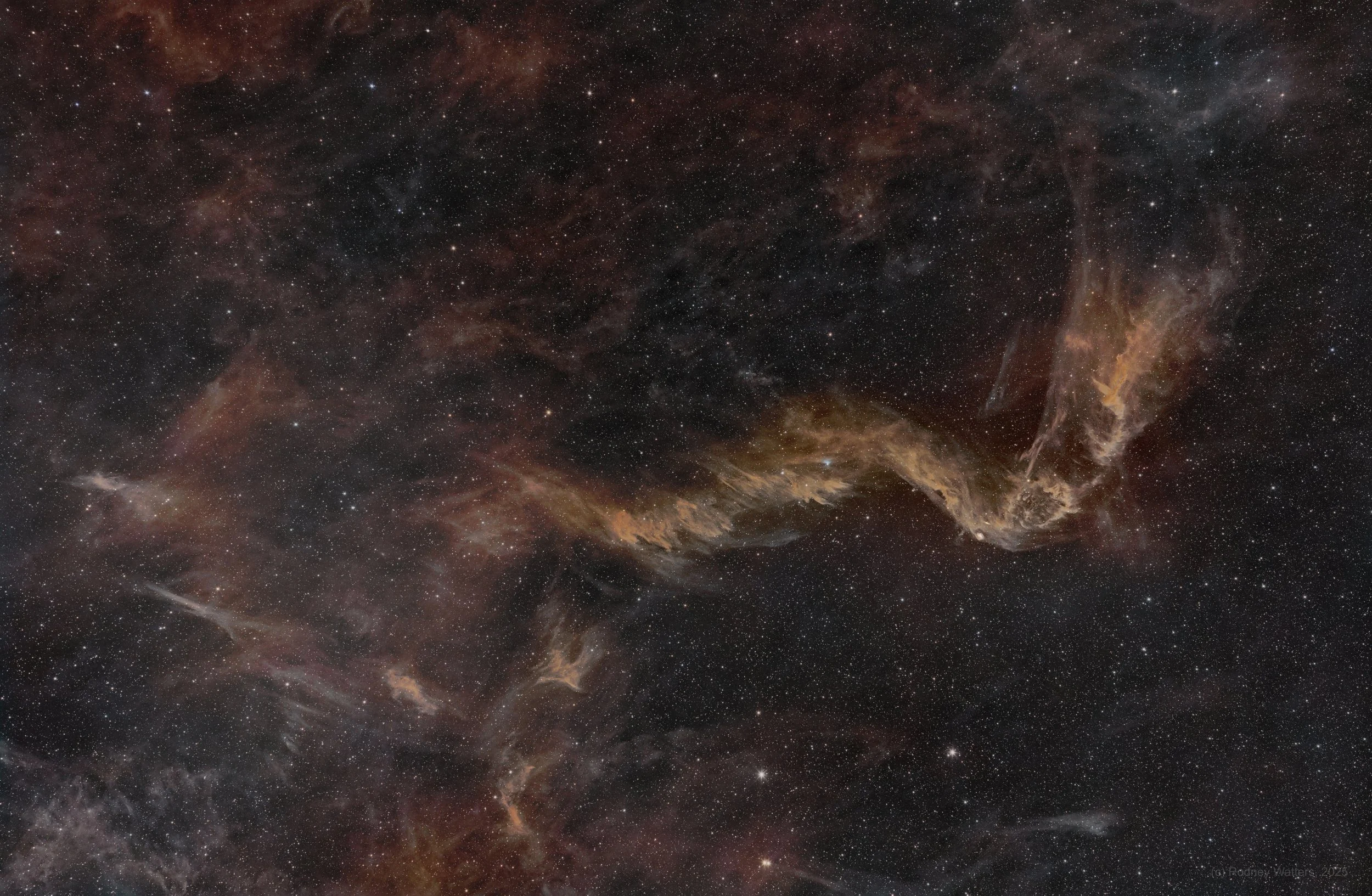
The Southern Celestial Serpent – Interstellar Cirrus in the Deep South
Winding like a ghostly dragon through the southern sky, this faint interstellar cloud complex, nicknamed the Southern Celestial Serpent, was captured in remarkable detail over 33 hours of exposure. These wispy tendrils belong to an Integrated Flux Nebula (IFN), a diffuse structure composed of dust and gas not directly illuminated by nearby stars but instead faintly glowing from the combined starlight of the Milky Way itself.
This elusive serpent is one of the southern sky's most delicate features, requiring exceptionally dark skies and long integration times to reveal. Unlike traditional nebulae found within the galactic plane, IFNs like this one reside high above it, reflecting the galaxy's integrated light. Their complex filaments are thought to be remnants of ancient interstellar matter, shaped by magnetic fields and stellar winds over millions of years.
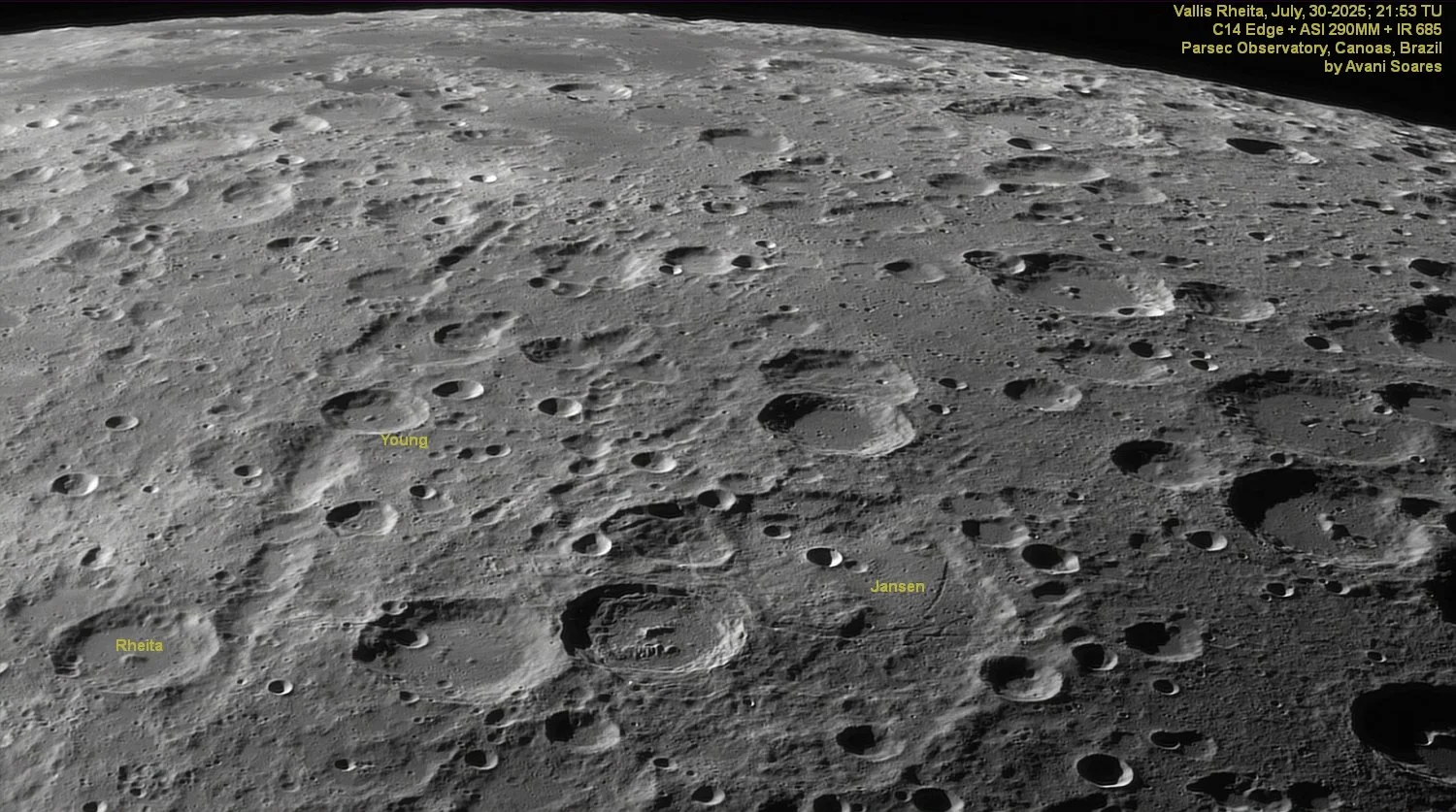
Vallis Rheita – Impact-Sculpted Lunar Valley from Brazil
Captured from Parsec Observatory in Canoas, Brazil, this high-resolution lunar mosaic showcases Vallis Rheita—one of the Moon's longest impact valleys—stretching across the southeastern quadrant of the near side. Labeled craters such as Rheita, Young, and Jansen mark the valley’s rugged path, each a witness to the Moon’s violent history. The image was acquired on July 30, 2025, using a C14 Edge telescope paired with an ASI 290MM camera and IR 685 filter.
Vallis Rheita measures 445 km long and up to 30 km wide, narrowing to 10 km at its southeastern tip. It likely formed during the same catastrophic event that created Mare Nectaris, when immense ejected debris rained down, carving out a chain of craters and valleys. One theory suggests the valley was gouged by mountainous fragments hurled from the impact site, while another posits a fractured pre-existing structure expelled as a crustal flow. Rheita is the second-largest such valley on the Moon’s near side, only surpassed by Vallis Snellius, which shares its radial alignment to Mare Nectaris.
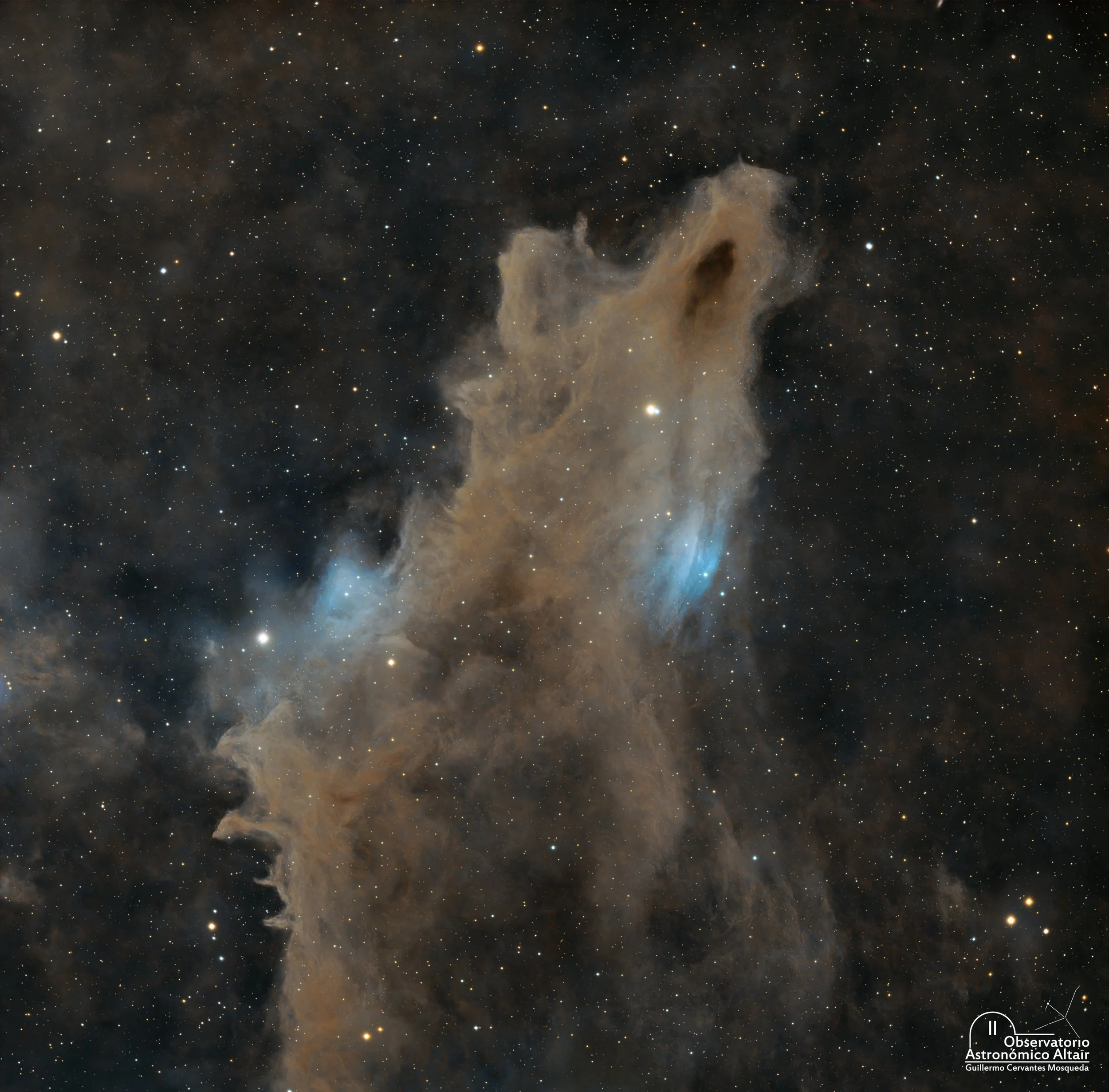
LDN 1235 – The Shark Nebula from Baja California
Rising like a ghostly form in the dark recesses of the Cepheus constellation, LDN 1235—also known as the Shark Nebula—prowls the sky in this deep-sky portrait from Rancho Corral Falso, Baja California, Mexico. Composed of cold, dense interstellar dust, this dark nebula blocks background starlight while subtly reflecting that of embedded and nearby stars, particularly the blue ones on its flank.
The Shark Nebula is part of a vast complex of dark nebulae and molecular clouds cataloged by Lynds. Though it appears opaque, careful long-exposure imaging reveals its intricate details and faint blue reflection zones. These regions indicate that the nebula isn't entirely devoid of light, some of the starlight escapes scattering, allowing us to witness its haunting shape against the cosmic backdrop.
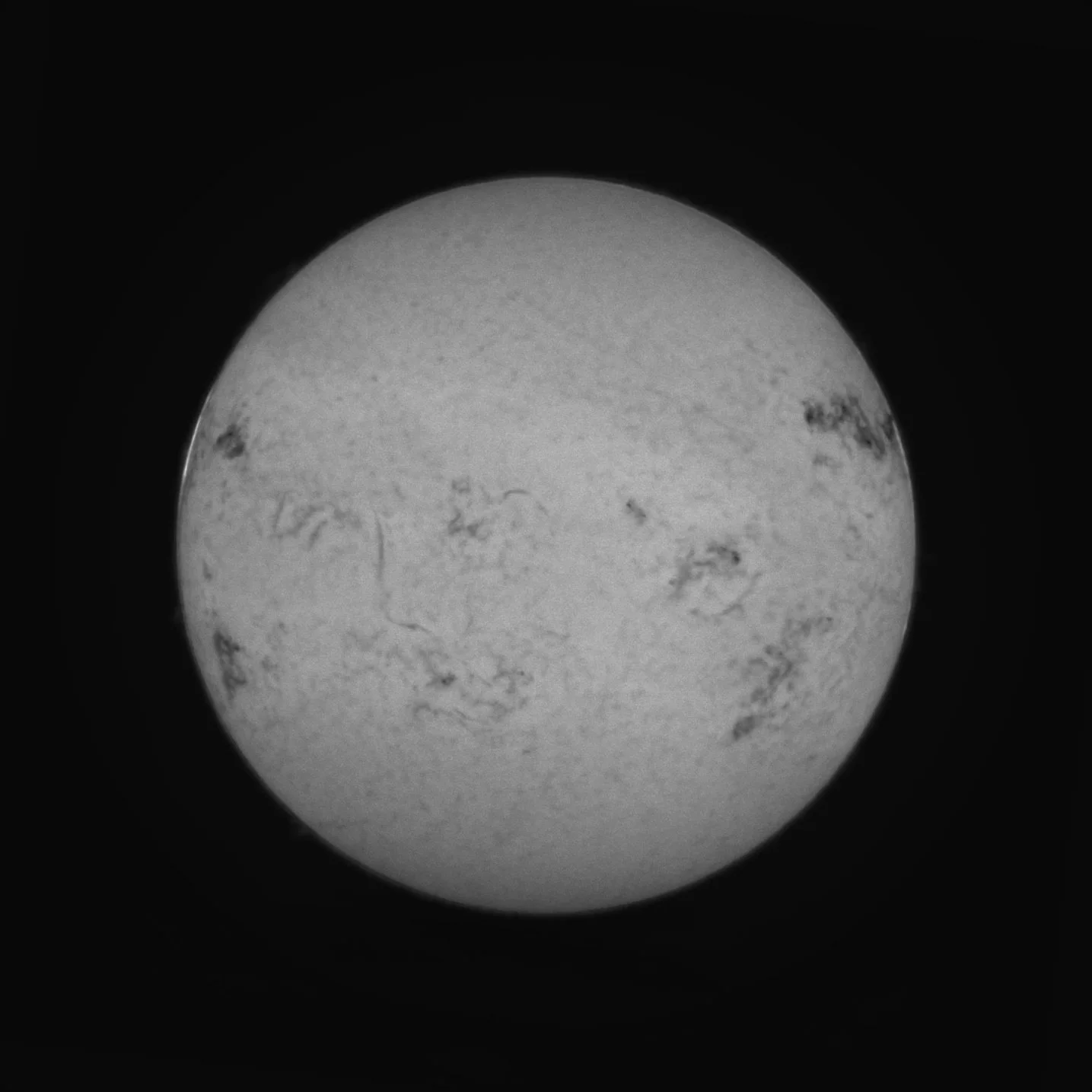
The Sun in Helium-I 7065 Ångström — A Rare Full Disk View
This image captures the full disk of the Sun in the elusive Helium-I 7065 Å wavelength, a rarely imaged spectral line that lies in the far red part of the spectrum. Using a spectroheliograph, several high-resolution scans were carefully acquired, stacked, and processed to subtract the continuum and isolate the faint helium signal.
While the 10830 Å and 5875.6 Å (D3) helium lines are more commonly targeted, imaging the Sun in He I 7065 is exceptionally rare due to the line's subtlety and the high technical demands involved. This may be the first known full-disk image of the Sun in this band, revealing delicate filamentary structures and activity regions otherwise hidden in more conventional wavelengths. The result is a novel glimpse into solar dynamics through an uncommon helium filter.
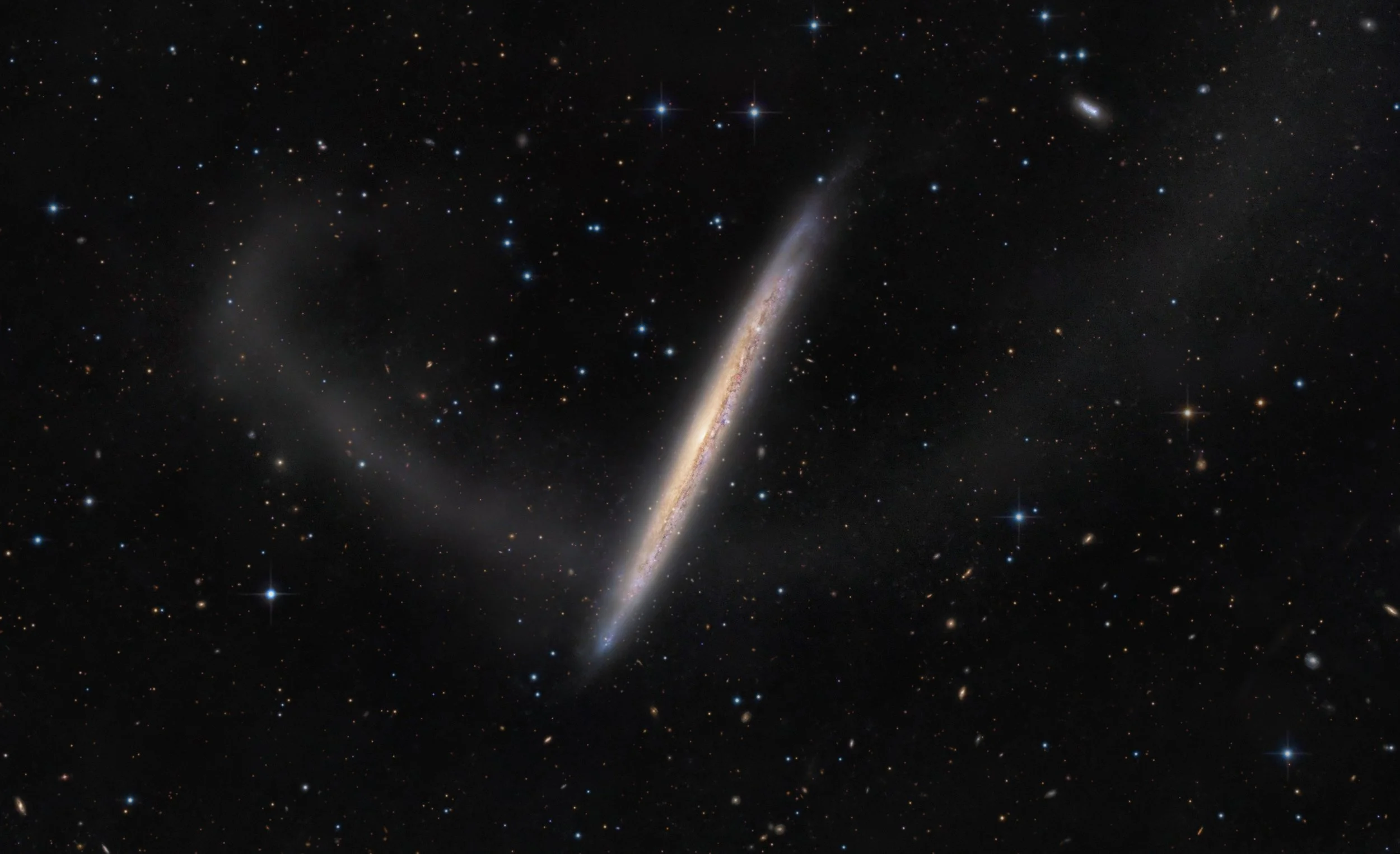
NGC 5907 – The Splinter Galaxy and its Ghostly Arc
Appearing razor-thin against the cosmic backdrop, NGC 5907 slices through the constellation Draco in this deep LRGB image. Also known as the Splinter Galaxy, this elegant spiral lies approximately 50 million light-years away and is seen almost perfectly edge-on. Its warped disk and faint tidal features suggest a turbulent history, an ongoing gravitational dance with a long-disrupted satellite galaxy.
Arcing delicately around NGC 5907 is a spectacular stellar stream, the ghostly remnant of that merger. Composed of stars flung out by tidal forces, this faint loop of light is rarely visible in amateur images. Capturing such a structure requires exceptional sky conditions and long integration times, making this view both scientifically valuable and visually arresting.
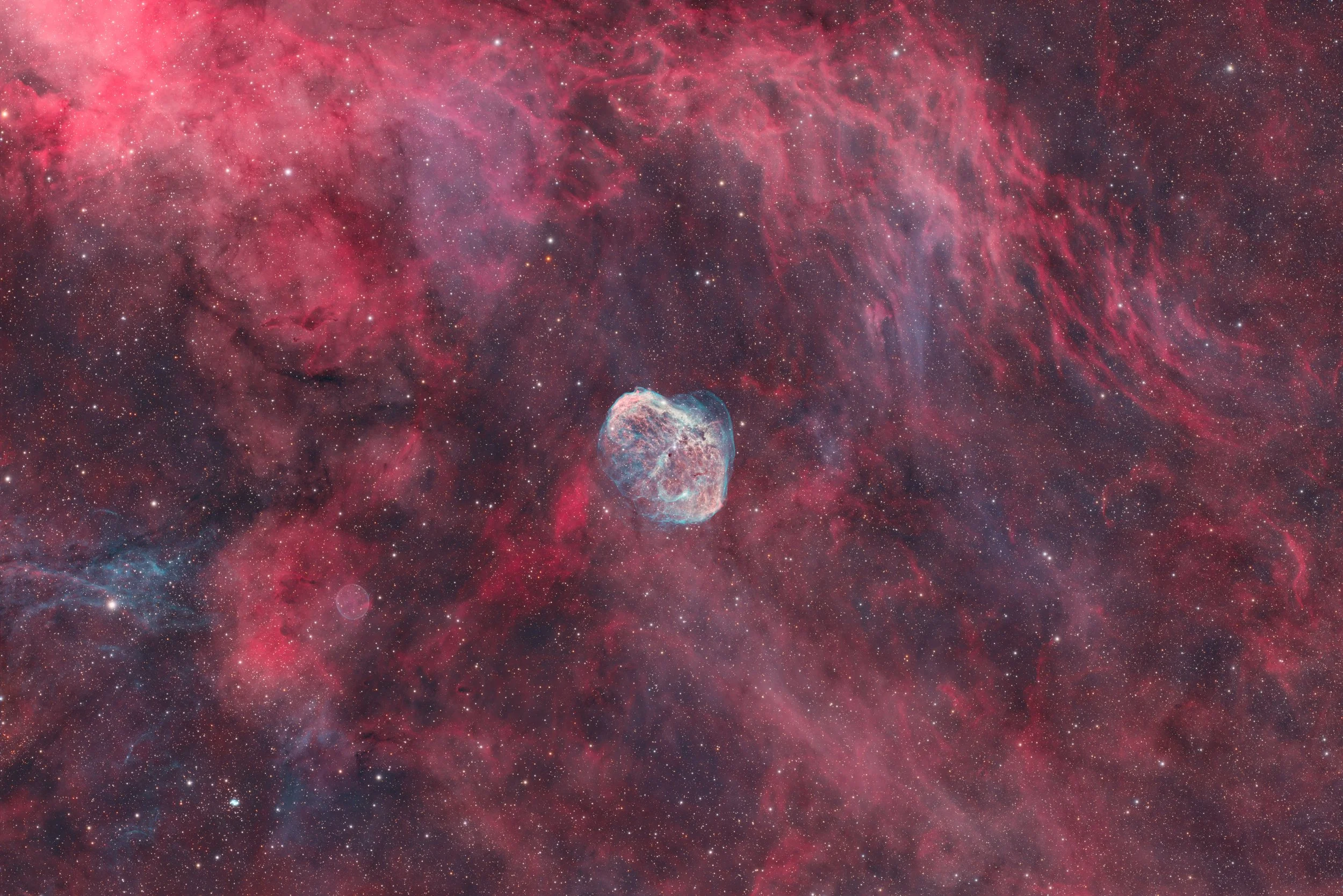
NGC 6888 – The Crescent Nebula
NGC 6888, also known as the Crescent Nebula, glows brilliantly in this wide-field image captured in RGB and hydrogen-alpha (Ha). The hydrogen emission dominates the surrounding region, revealing the intricate filaments and shock fronts generated by the powerful stellar winds of its central Wolf-Rayet star, WR 136. Surrounding the nebula is a faint OIII bubble envelope, adding an additional layer of depth and structure.
In this image, you can also spot the “Soap Bubble Nebula” (PN G75.5+1.7), a small, nearly perfect spherical shell discovered only a few years ago. It appears like a tiny soap bubble suspended in space, making it a unique feature within the same field of view.

NGC6543 under a Starlight sky
One of the most structurally complex planetary nebulae known, NGC 6543, popularly called the Cat’s Eye Nebula, lies about 3,300 light-years away in the constellation Draco. At its heart is a dying star that has expelled its outer layers into intricate shells of glowing ionized gas. This image captures not only the iconic teal core but also the fainter filamentary halos that extend well beyond its central nebula, likely the result of episodic mass loss over thousands of years.
Remarkably, the nebula is set against a starfield studded with faint galaxies, including a prominent spiral below it. These background galaxies provide a cosmic depth to the frame, contrasting the relatively nearby planetary nebula with structures billions of light-years away. This portrait is a powerful reminder of the beauty and scale of celestial evolution.
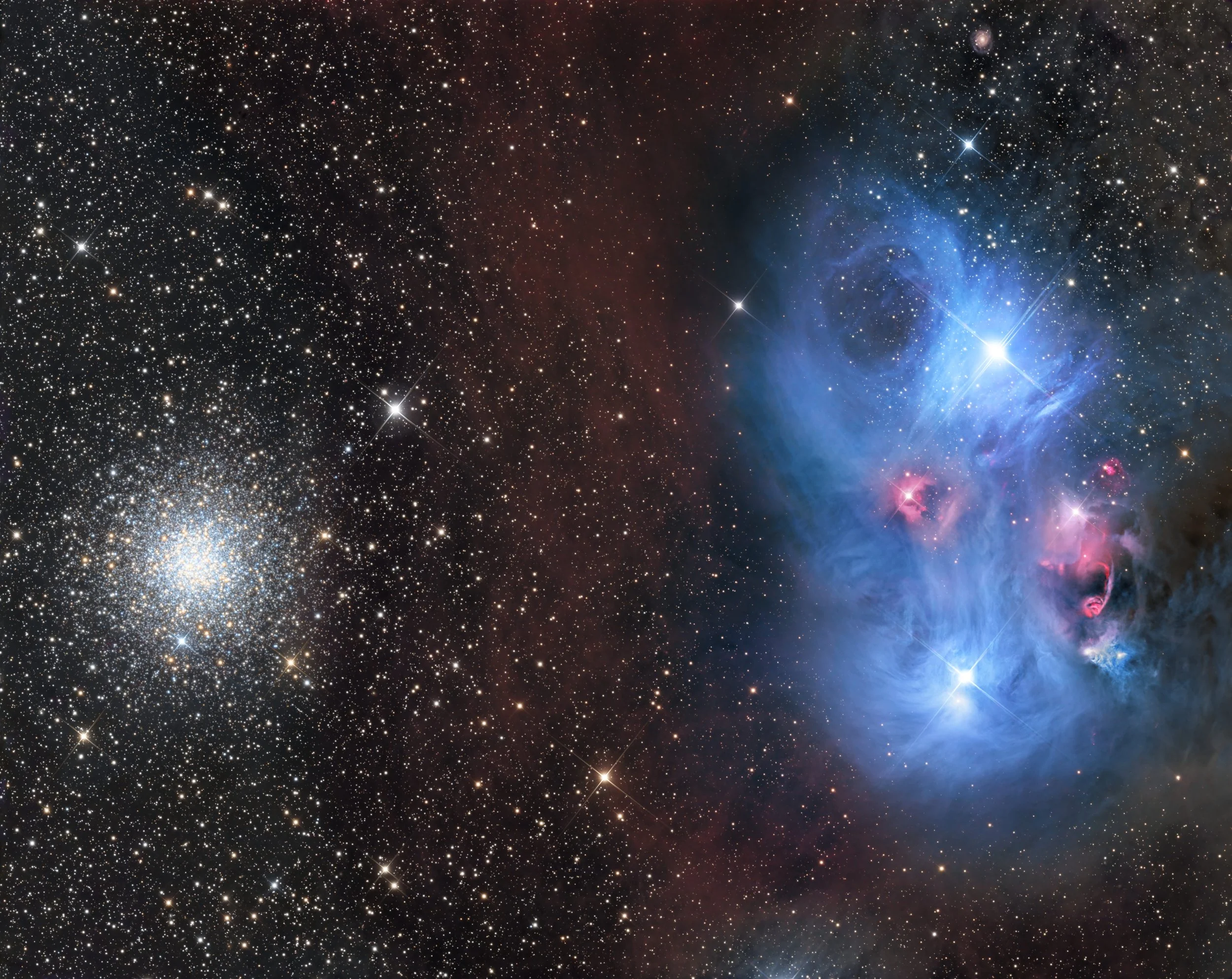
NGC 6723 From Calm to Chaos: A Cosmic Contrast
This deep-sky portrait from the constellation Corona Australis juxtaposes two contrasting yet co-located cosmic marvels: the dense globular cluster NGC 6723 on the left, and the vibrant blue reflection nebulae NGC 6726, NGC 6727, and IC 4812 on the right. The globular cluster lies about 28,000 light-years away, densely packed with hundreds of thousands of ancient stars in a roughly spherical formation.
To the right, the nebulae reside much closer, only about 400 light-years from Earth. Their blue color is produced as starlight scatters off interstellar dust, most prominently from the bright stars R and T Coronae Australis. These young stars are still surrounded by the remnants of the clouds from which they formed. Embedded regions of reddish-pink emission and twisting dark dust lanes add further complexity to the scene. This image was built up over 49 hours of exposure using RGB and H-alpha filters to capture both the fine reflection details and subtle emission structures.
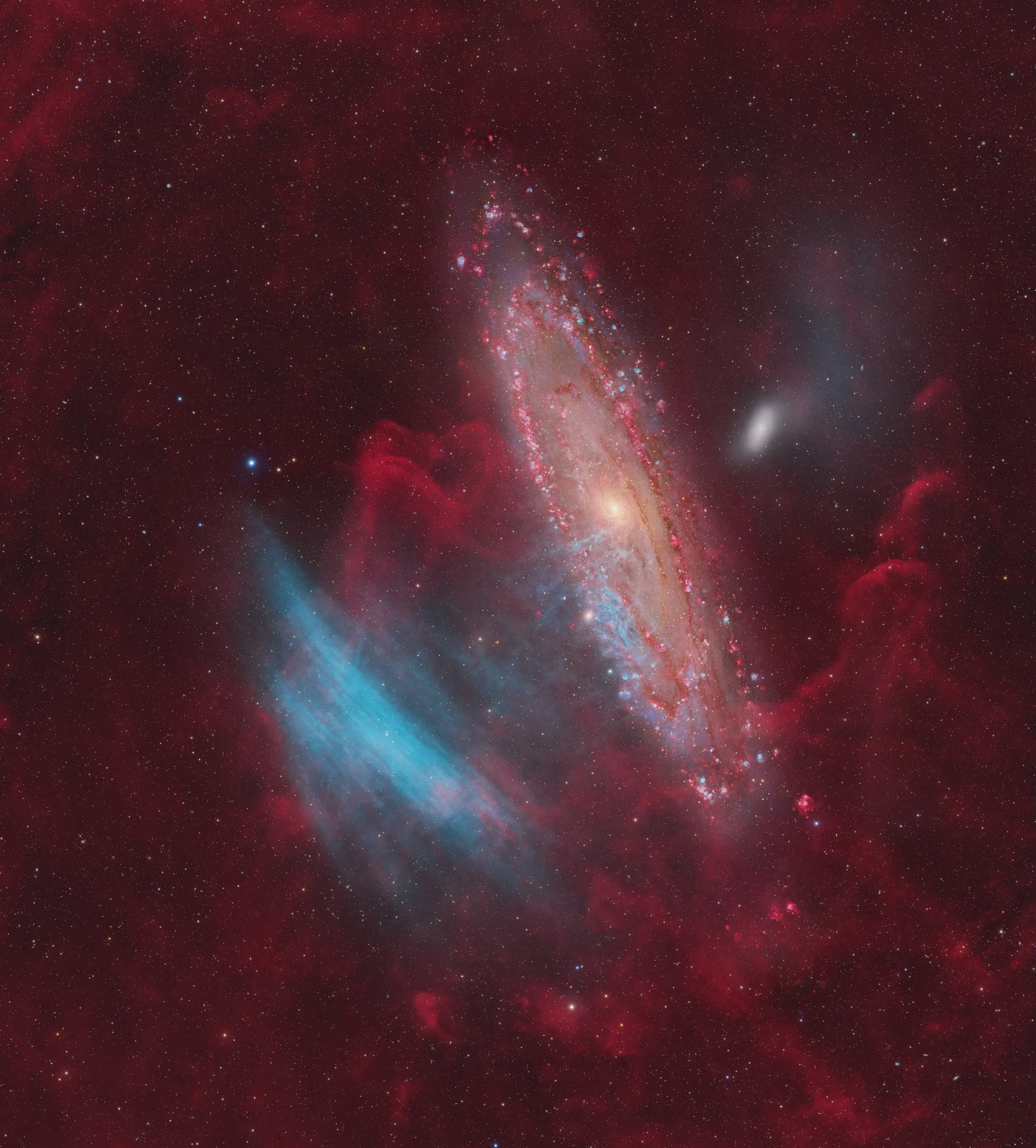
Unveiling the M31 mystery - Introducing Ghost Planetary Nebulae
This extraordinary wide-field view of the Andromeda Galaxy (M31) reveals more than just our nearest large galactic neighbor. Cutting across the frame is a strange blue arc—SDSO 1—now recognized as the first member of a new class of celestial objects: Ghost Planetary Nebulae (GPNe). SDSO 1 lies within our own Milky Way and represents a shock wave driven by the remnants of a faint, fast-moving planetary nebula. Though the central star is nearly invisible, its supersonic motion—estimated at Mach 7—creates a glowing bow shock and trailing wake of expelled gas, rendered here in brilliant detail.
What was once thought to be diffuse Hα background is now revealed to be part of a high-velocity interaction. The ghostly tail is composed of material ejected from the nebula, lighting up as it collides with the interstellar medium. Without this interaction, the nebula would remain entirely hidden—its material now too diffuse to detect directly. This image not only highlights Andromeda’s grandeur, but also captures a fleeting and final phase in the life of a star, offering new insights into stellar evolution and galactic archaeology.
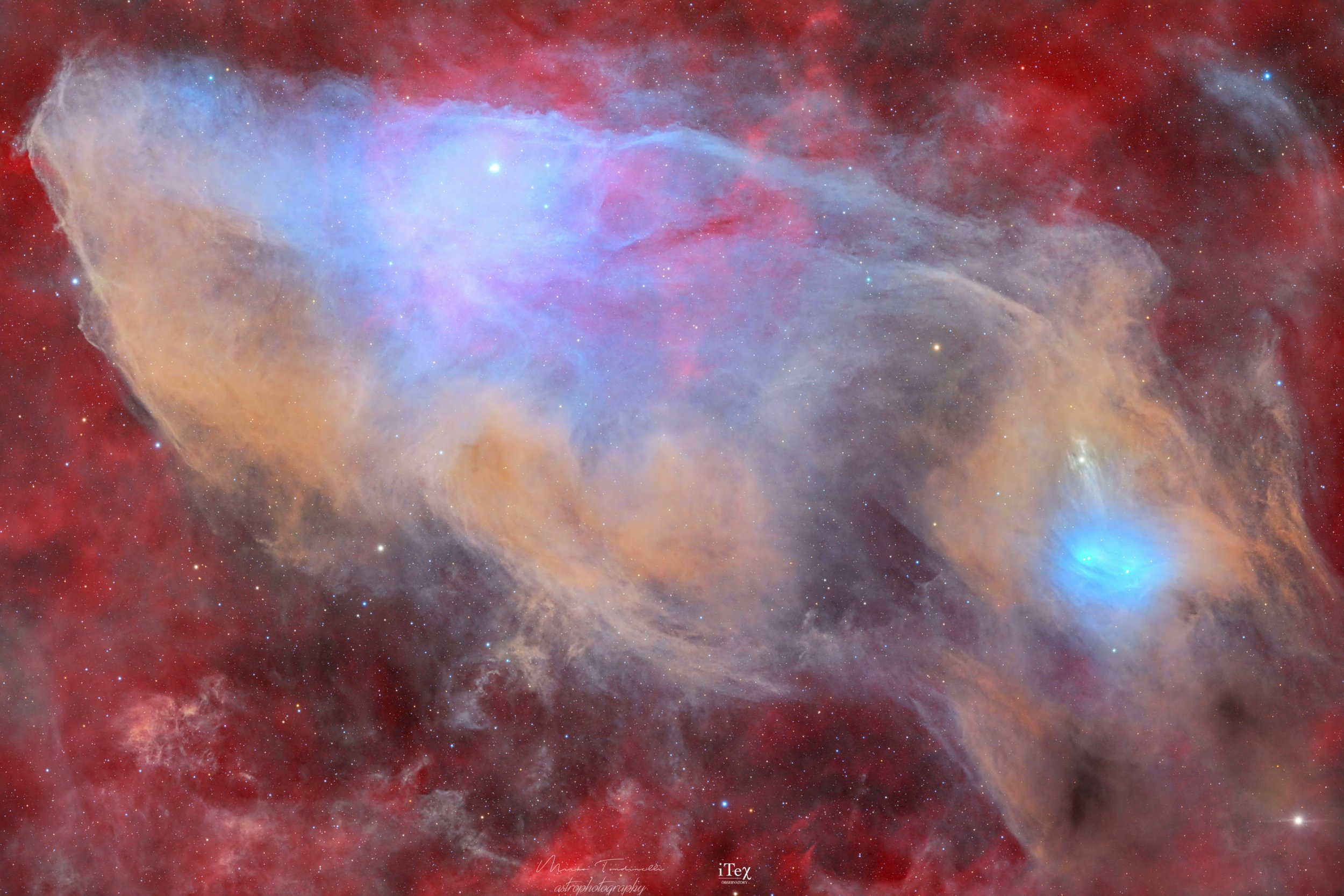
IC 4592 – The Blue Horsehead Reflection Nebula
IC 4592, often called the Blue Horsehead Nebula, is a striking reflection nebula located in the constellation Scorpius. The blue glow comes from starlight scattered by fine interstellar dust, particularly from the bright star Nu Scorpii embedded near the nebula’s "eye." This image captures the delicate interplay of colors, cool blues from reflection, warm browns from cosmic dust, and crimson wisps of hydrogen emission from the surrounding region.
The intricate structure and pastel hues visible here were made possible by a HaLRGB imaging technique, which enhances subtle hydrogen emission while preserving the true colors of dust and starlight. IC 4592 lies around 400 light-years away and spans over 10 light-years across, making it one of the more expansive and complex reflection nebulae in our celestial neighborhood. Its resemblance to a horse's head is more abstract than that of its more famous namesake in Orion, but no less mesmerizing.
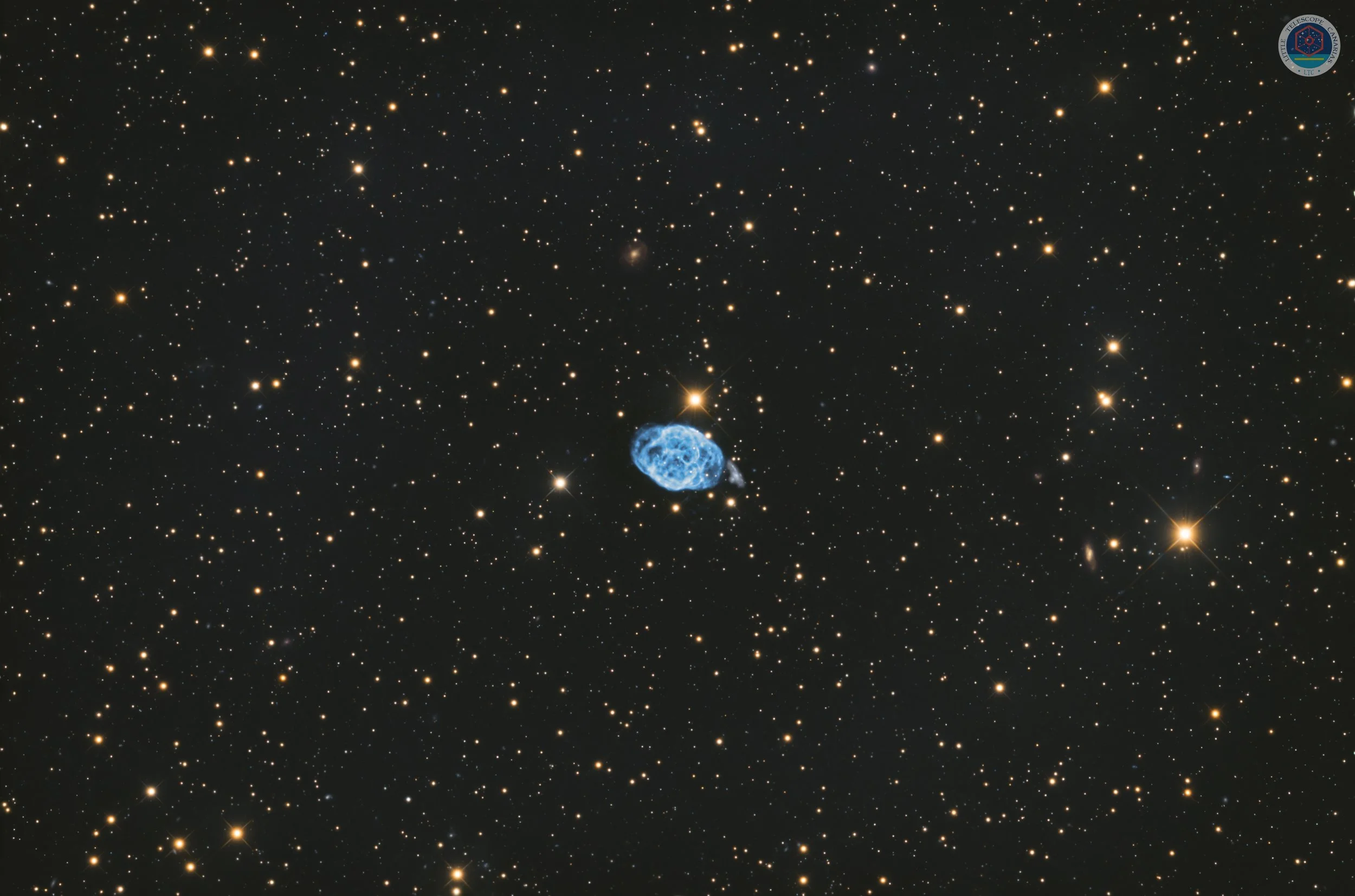
Abell 72 – Planetary Nebula
Floating quietly in the constellation Delphinus, Abell 72 is a faint planetary nebula and one of the lesser-known entries in George Abell’s 1966 catalog. Its delicate structure and low surface brightness make it a challenging target for astrophotographers and visual observers alike. The nebula marks the remains of a Sun-like star in its final evolutionary stages, having shed its outer layers and exposed its hot, ultraviolet-emitting core.
Appearing here as a delicate blue shell against a dense starfield, Abell 72 spans nearly two arcminutes across. Its rounded, bubble-like structure reveals subtle inner details when captured with long exposures and careful image calibration. The glowing gas is primarily ionized oxygen (OIII), giving it its distinct blue hue. Despite its ghostly appearance, this fading stellar envelope tells a vivid story of transformation and cosmic recycling.
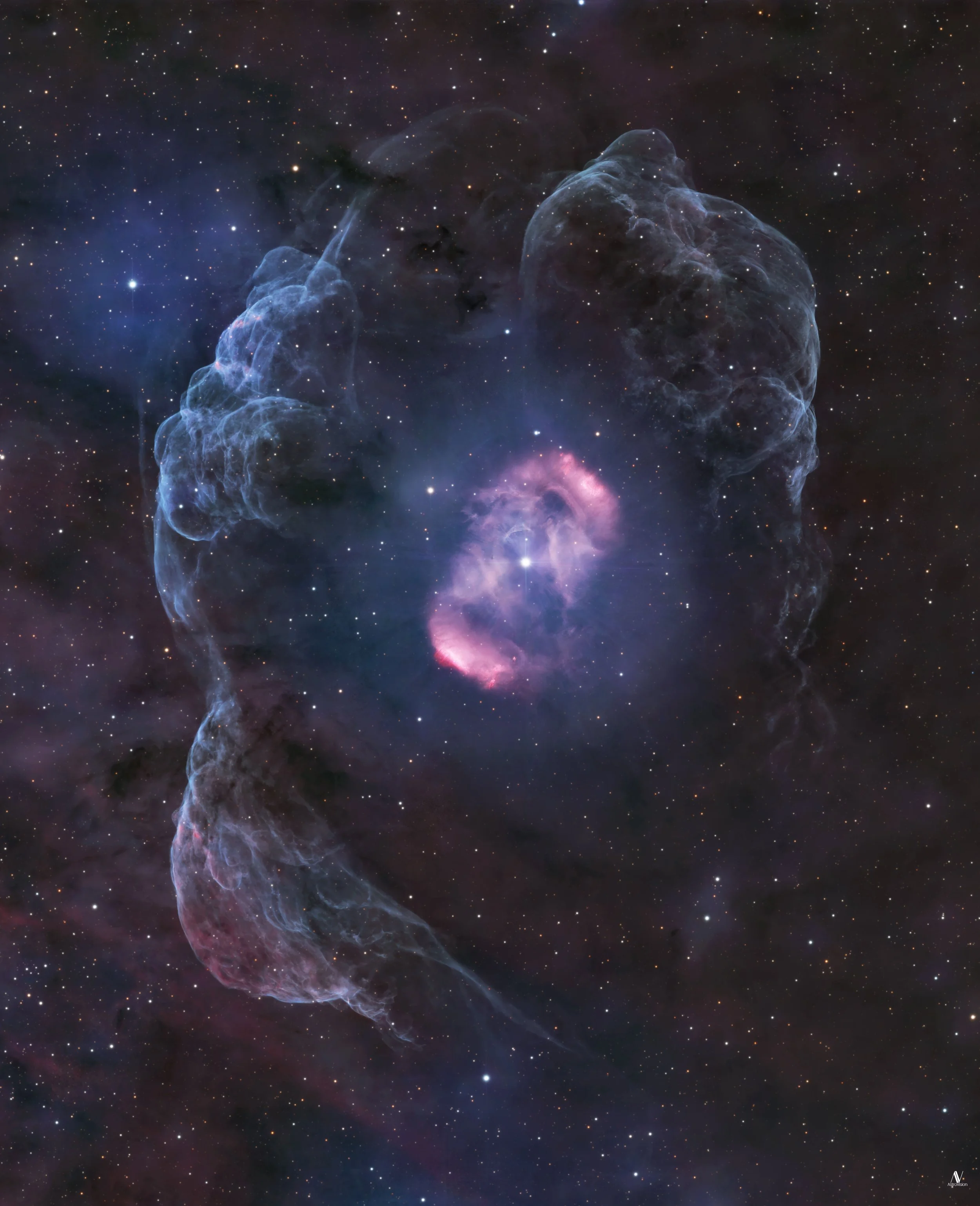
Ngc 6164 and Ngc 6165
Nestled 4,200 light-years away in the southern constellation Norma (historically La Règle), the paired emission nebulae NGC 6164 and NGC 6165 stretch outward from the massive O-type star HD 148937, forming a striking bipolar structure reminiscent of a cosmic flame or dragon’s breath. The brighter, compact central region is enveloped by faint, curving tendrils of ionized gas, which are sculpted by powerful stellar winds and past mass ejections.
The surrounding nebulosity likely resulted from HD 148937 undergoing unstable outbursts during its short, turbulent lifetime. At the heart of the image, hydrogen-alpha emission glows in magenta hues, while oxygen-rich filaments shimmer in shades of blue, revealing the complexity of this rarely imaged stellar outflow. Deep, narrowband exposures and refined processing were required to capture the delicate structure and faint outer arcs of this extraordinary object.
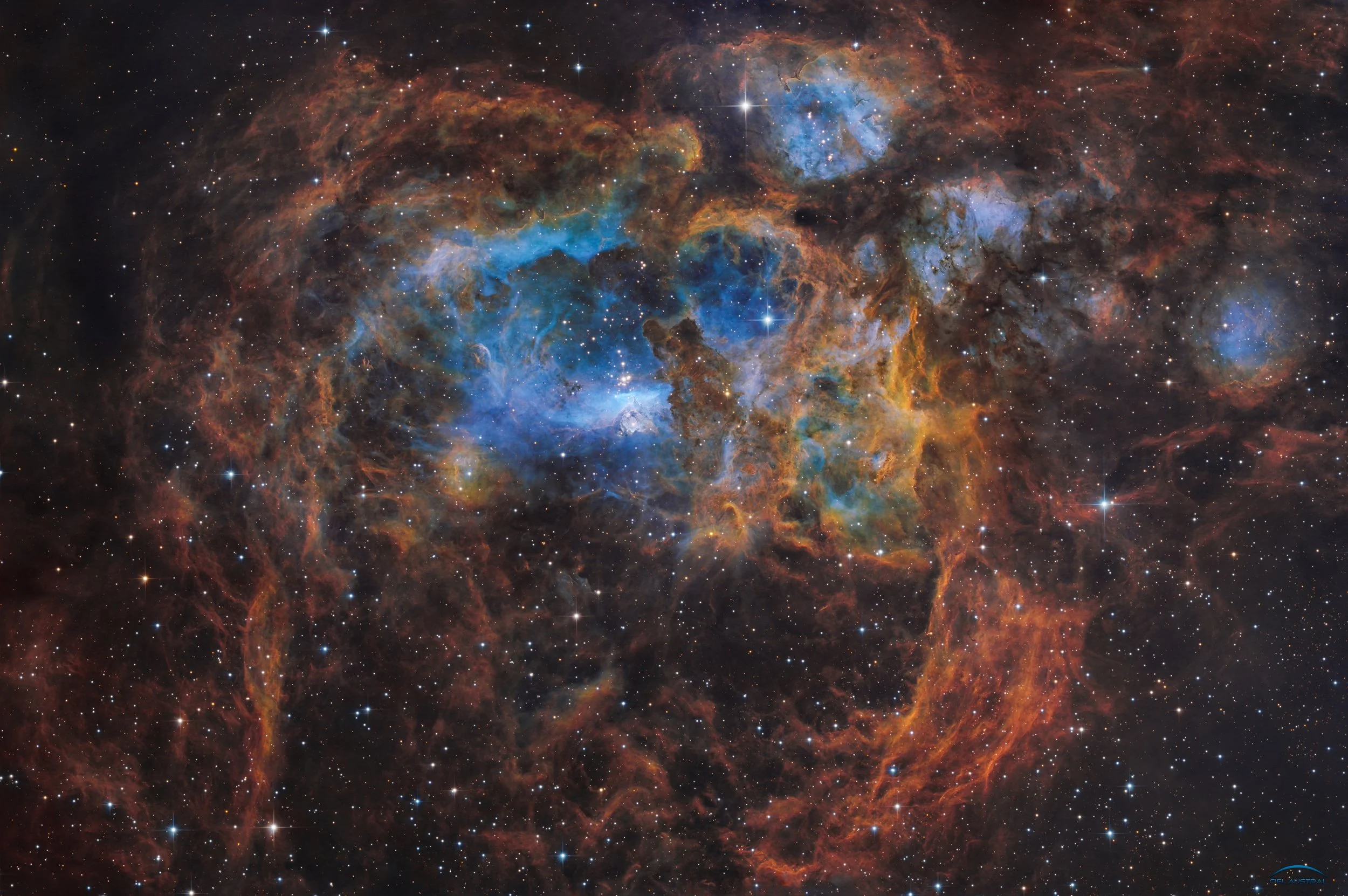
NGC 6357, the Lobster Nebula in SHO
In this remarkable first light image from the newly commissioned TI45 450mm telescope, the complex star-forming region NGC 6357, also known as the Lobster Nebula—unfolds in stunning SHO detail. Captured at f/4 using a Moravian C3 camera mounted on a PlaneWave L500, the image showcases the intense emission from sulfur (red), hydrogen (green), and oxygen (blue) with a narrowband palette, revealing a turbulent environment of glowing gas, dark dust pillars, and emerging star clusters. At the heart of the nebula lies the open cluster Pismis 24, home to some of the most massive stars known in our galaxy.
Spanning nearly 400 light-years across in the constellation Scorpius and located about 5,500 light-years away, NGC 6357 is a hotbed of stellar birth, shaped by the fierce winds and radiation of its young, massive stars. This 71-hour integration represents not just an astrophotographic milestone for the instrument's debut but a deep dive into the raw power of stellar feedback sculpting the interstellar medium.
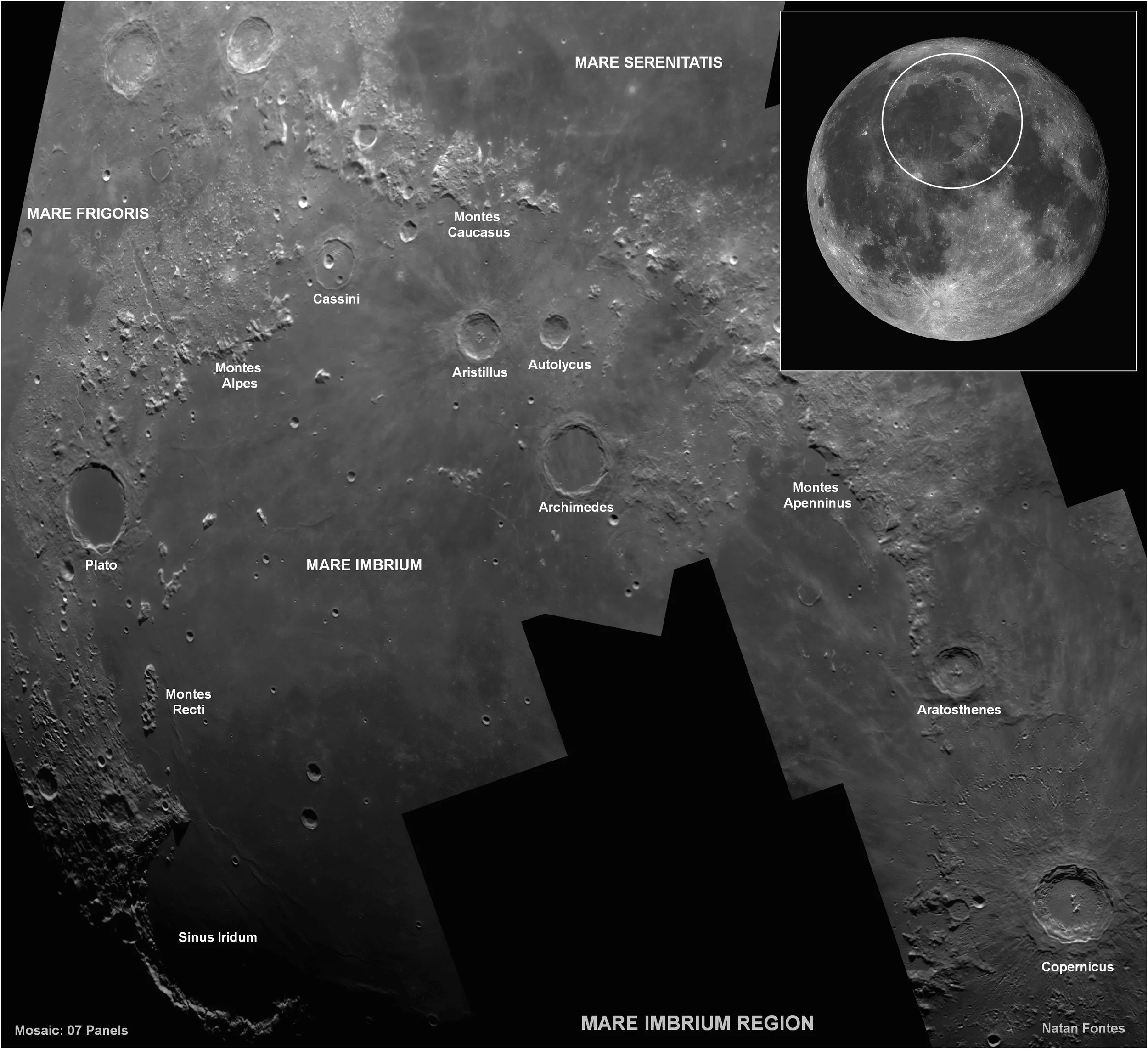
Mosaic of the Mare Imbrium Region
This sharply detailed 7-panel lunar mosaic showcases the expansive Mare Imbrium region, one of the Moon’s most prominent and scientifically significant impact basins. The lava-flooded plains are surrounded by dramatic features such as the Montes Alpes and Montes Apenninus mountain ranges, along with the distinctive craters Plato, Archimedes, Aristillus, and Autolycus. Toward the right, the powerful ray system of Copernicus crater is clearly visible, while Sinus Iridum and other features round out the mosaic's western edge. A full lunar disc inset in the top right marks the imaged area for reference.
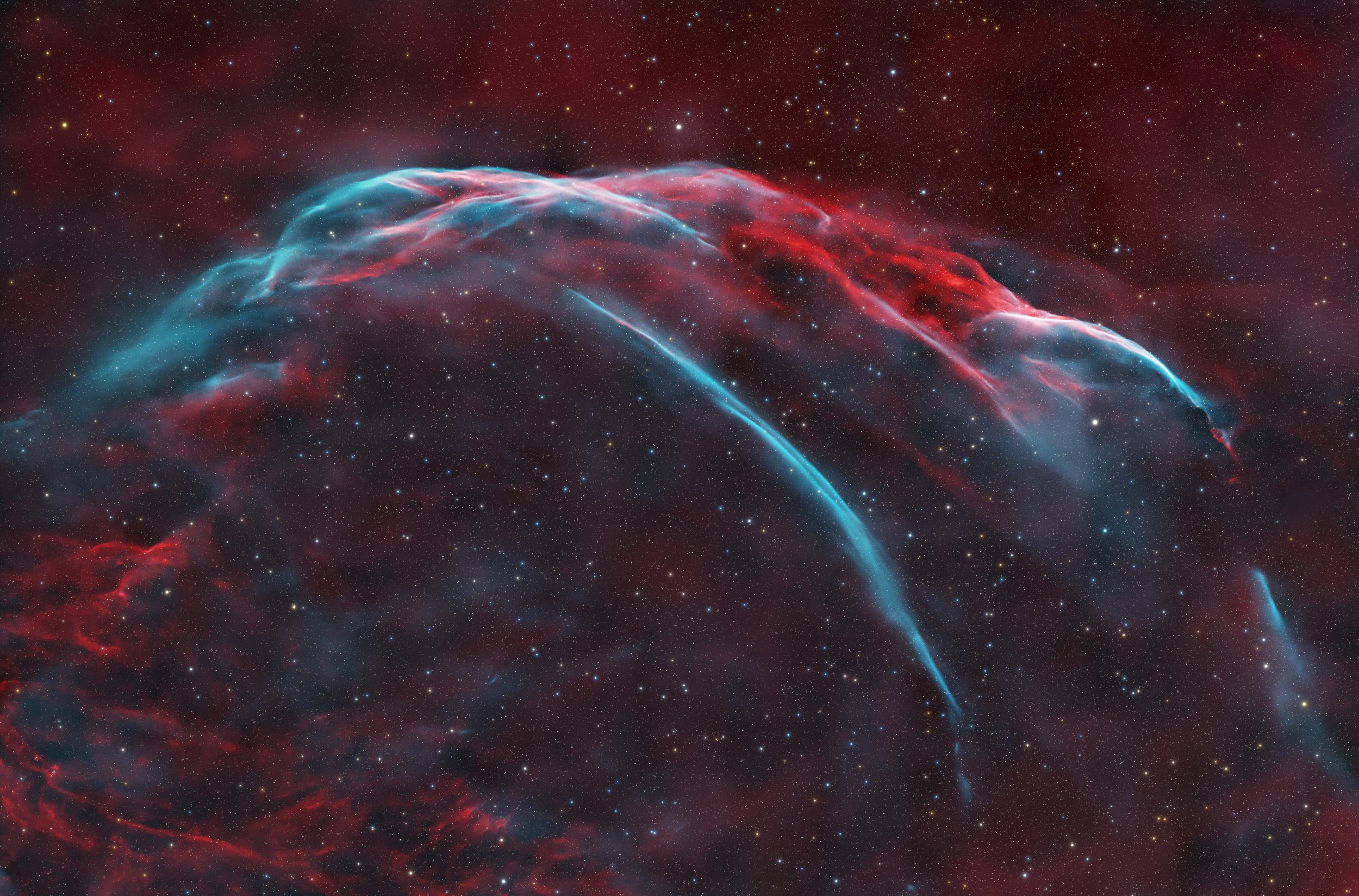
Filamentary Remains of Sh2-91 in Cygnus
This ethereal arc of glowing gas marks part of the supernova remnant Sh2-91, located in the rich star fields of the constellation Cygnus. Likely the result of a massive star that exploded tens of thousands of years ago, the remnant stretches across space in tangled, luminous filaments of ionized hydrogen (red) and oxygen (blue-green). Though not as well-known as the Veil Nebula, Sh2-91 is believed to be part of the same vast Cygnus Loop complex, now fading into the interstellar medium.
Captured in exquisite detail, this deep exposure reveals the shock fronts sweeping through the surrounding interstellar material. The arcing structure and radiant hues convey the immense energy of the original explosion, now diffused across light-years of space.
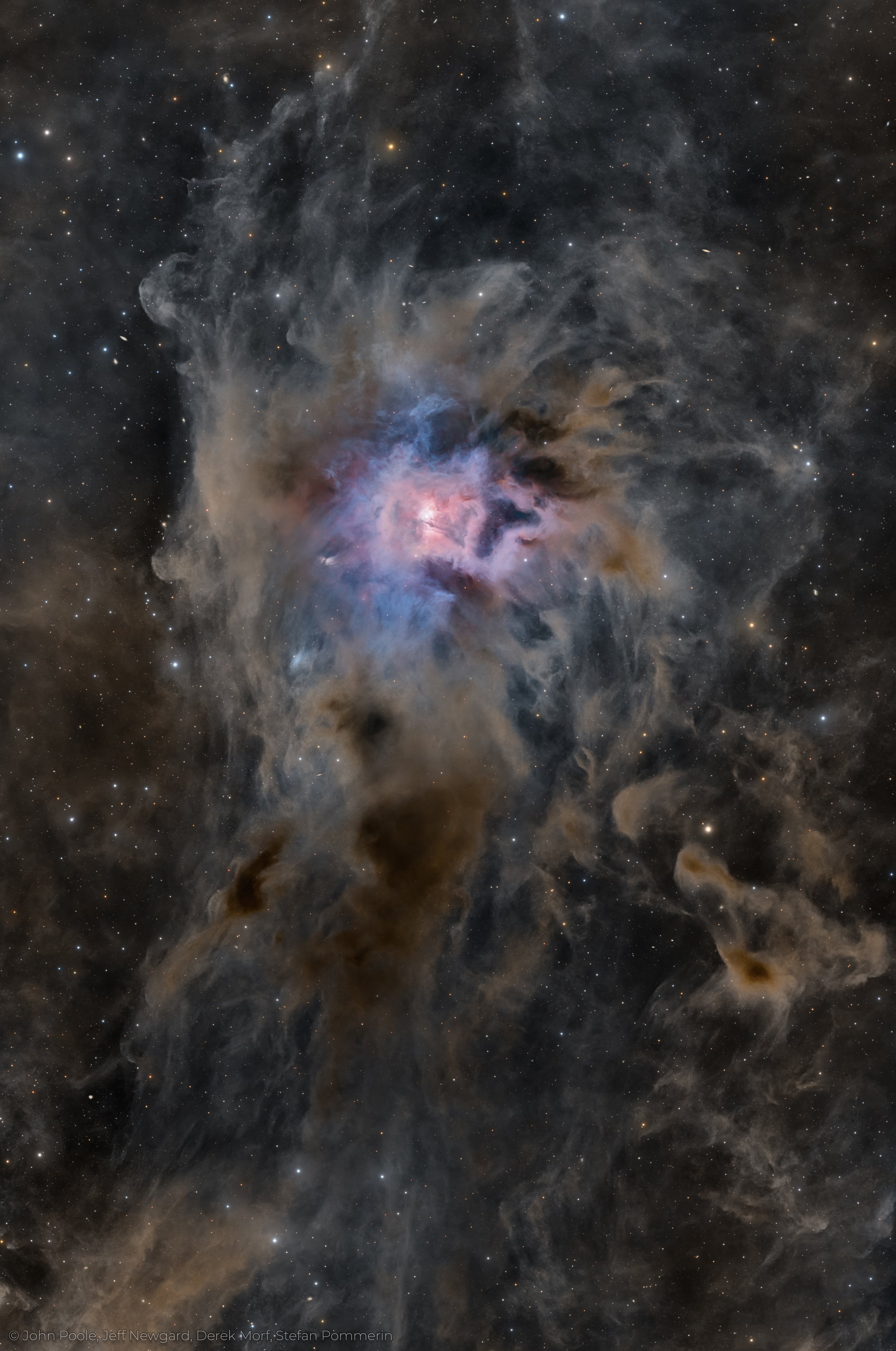
The Iris Nebula in a Field of Cosmic Dust
Nestled 1,300 light-years away in the constellation Cepheus, NGC 7023, also known as the Iris Nebula, is a striking example of a reflection nebula. Illuminated by a hot, young star at its center, the surrounding interstellar dust scatters the starlight, producing the soft blue glow seen in this image. The intricate network of dark tendrils, shaped by magnetic fields and turbulent motion, testifies to the dynamic nature of the interstellar medium.
Captured in June 2025 by the Game Shark Collective, John Poole, Jeff Newgard, Derek Morf, and Stefan Pommerin—this deep image reveals not just the core of the Iris but also the vast, faint molecular dust clouds that envelop it. With exceptional detail and contrast, the nebula appears to bloom from within a cocoon of cosmic smoke, highlighting the complex interplay between light and matter in star-forming regions.
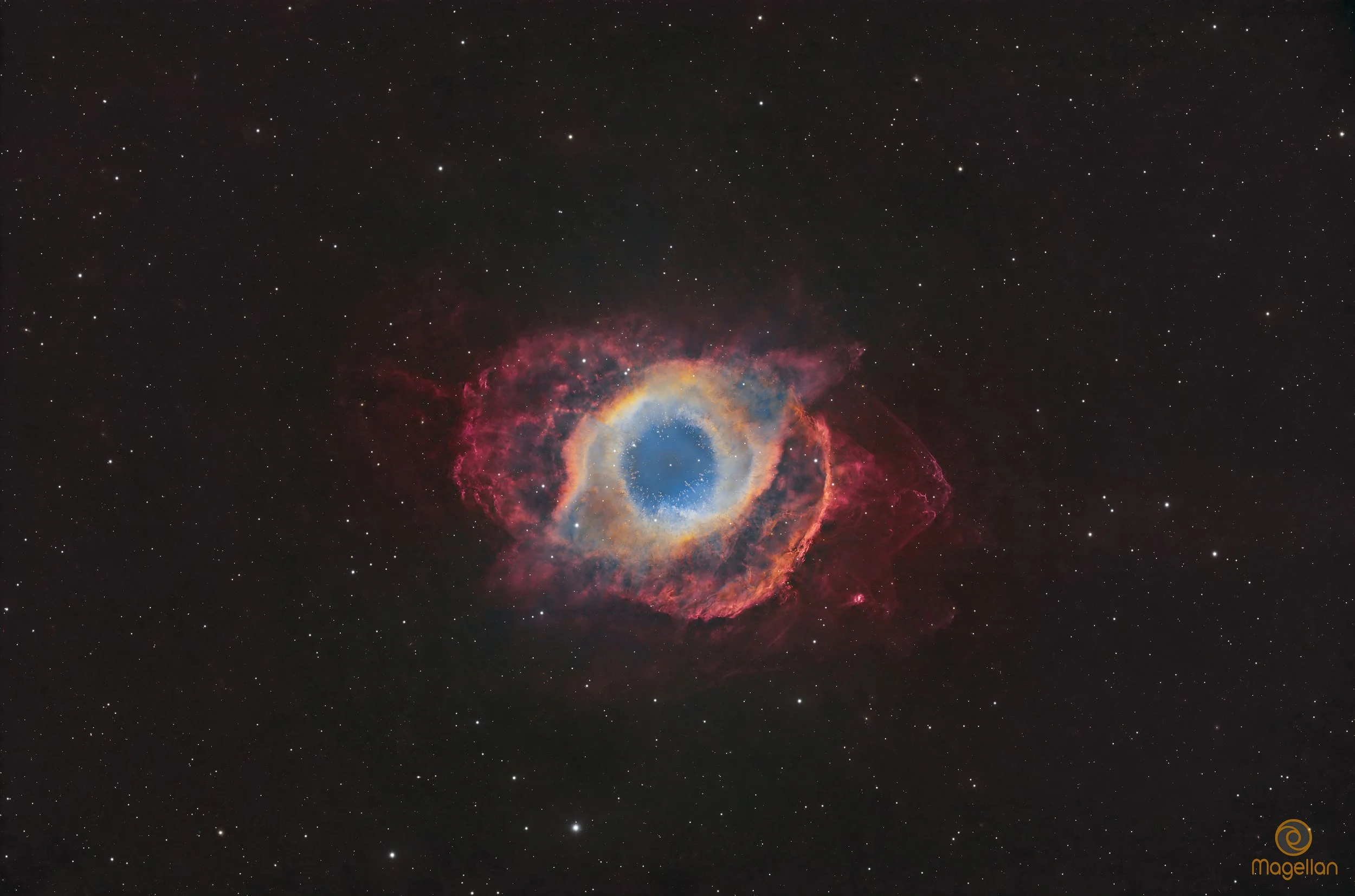
Deep View of the Helix Nebula
NGC 7293, better known as the Helix Nebula, is a planetary nebula located approximately 655 light-years away in the constellation Aquarius. Often nicknamed the “Eye of God” for its shape, the Helix represents the final stages in the life of a Sun-like star, as it sheds its outer layers into space. The exposed stellar core, a white dwarf, remains at the center, illuminating the surrounding gases in vivid emission.
This image is a deep and highly detailed view composed of more than 115 hours of integration: 289 exposures in H-alpha, 186 in SII, 180 in OIII (each 600 seconds), and shorter RGB exposures to preserve color fidelity. The resulting composite reveals intricate filaments of ionized gas and the faint outer halo, rarely captured in such clarity. The contrast between the bright inner ring and the extended tendrils of gas adds striking dimensionality to this iconic object.