

AAPOD2 Image Archives
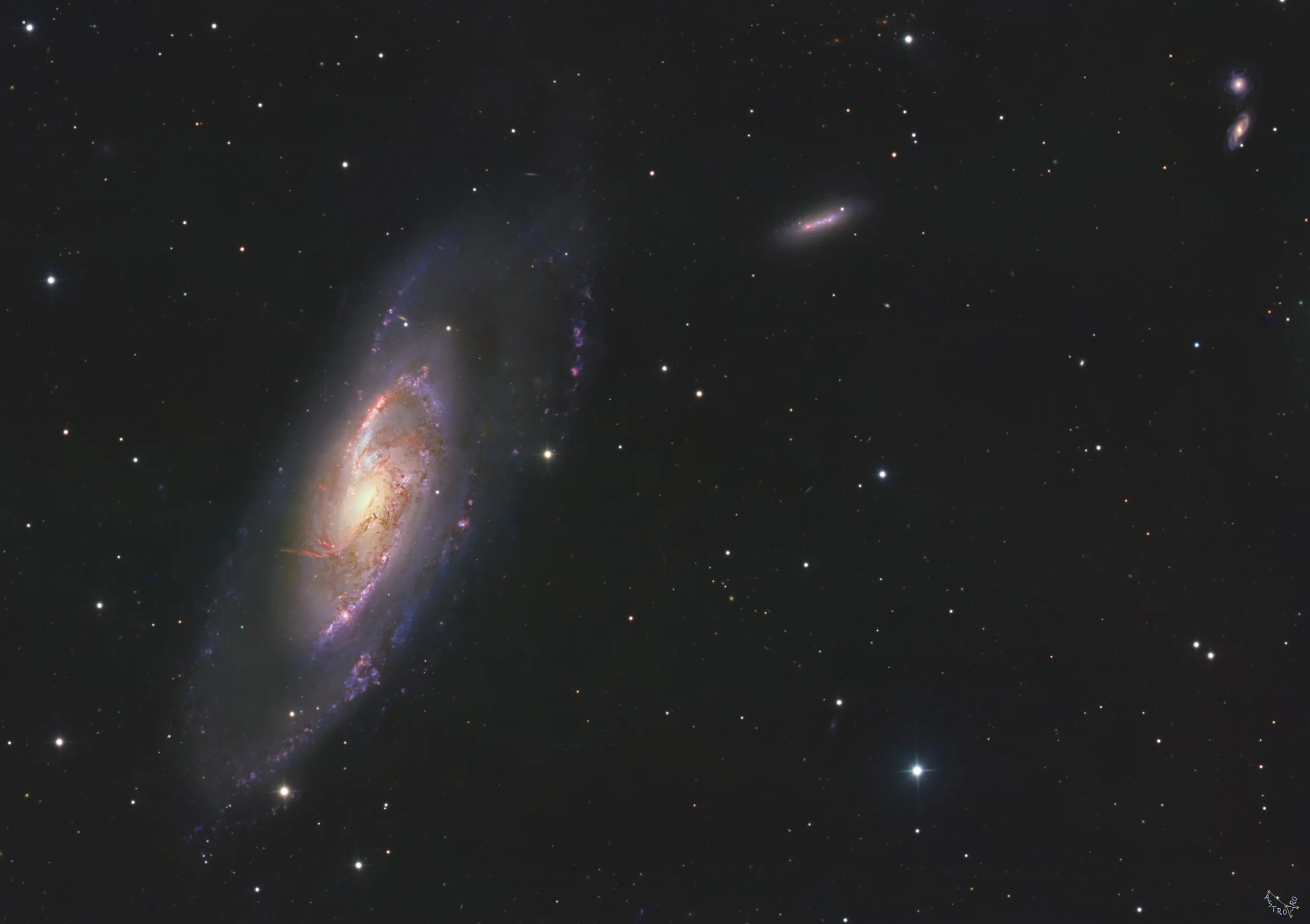
M106 and the Canes II Group
Messier 106, a bright spiral galaxy in Canes Venatici, lies about 23 million light-years away and dominates the small local galaxy group known as Canes II. Its striking structure includes tightly wound spiral arms and a bright, active nucleus powered by a supermassive black hole. Radio and X-ray observations suggest that jets of material are being ejected perpendicular to the galaxy’s disk, producing faint wisps of emission often associated with Seyfert activity.
This deep image, captured from South Portugal, reveals several companion galaxies scattered across the frame, along with intricate dust lanes and a vivid galactic core. Taken using an Astrosib RC 400 on a DDM85 mount with a Moravian C4 CMOS camera, the final image combines precise tracking and post-processing using PixInsight and Photoshop to showcase the structure and surroundings of this energetic galaxy system.
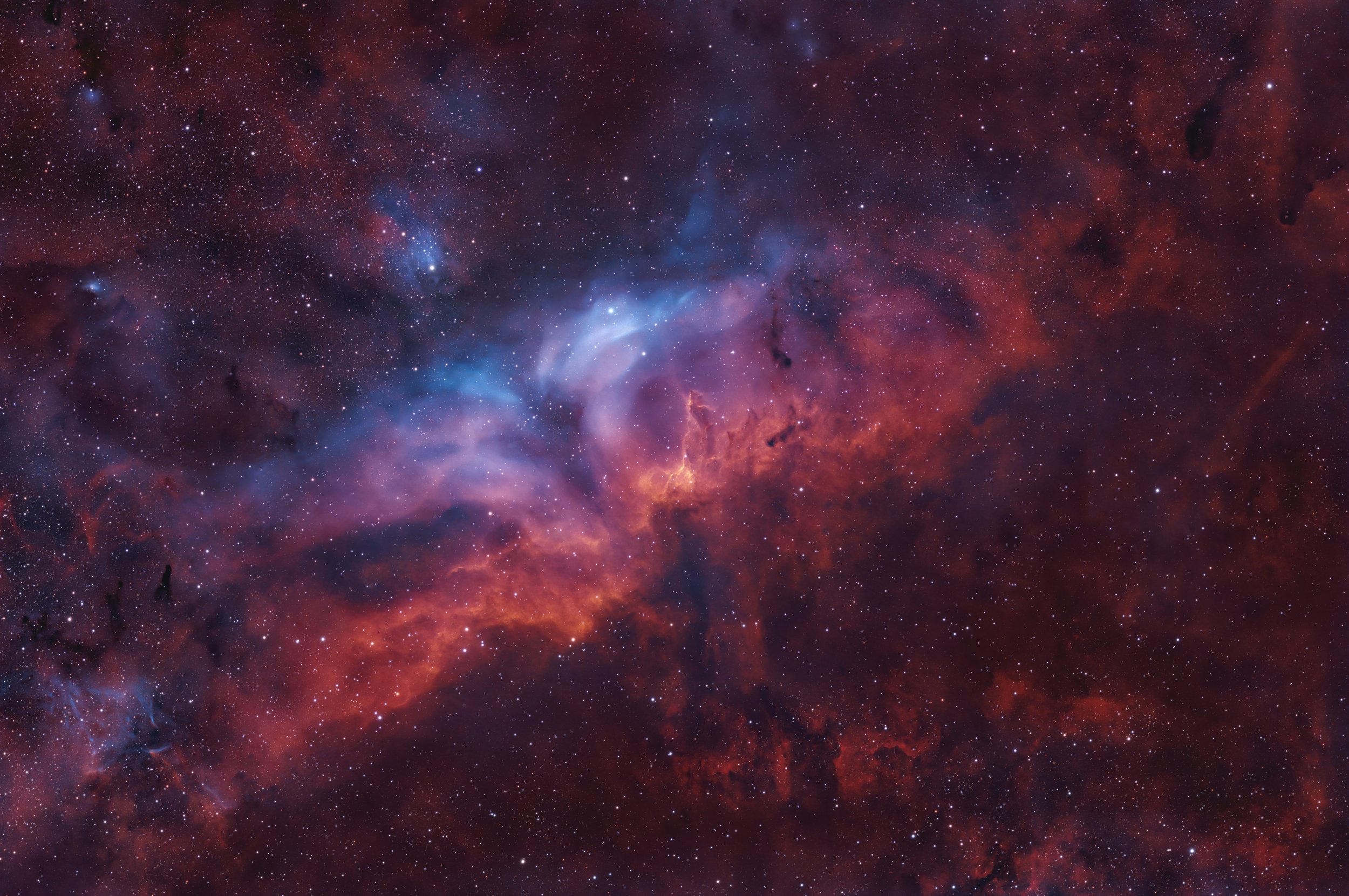
Sh2-34: Faint Emission Waves in Aquila
Sharpless 34, or Sh2-34, is a sprawling and faint emission nebula located in the constellation Aquila, roughly 4,500 light-years from Earth. This expansive region is part of a large complex of hydrogen gas energized by the intense ultraviolet radiation from nearby hot, young stars. Though rarely imaged due to its subtle structure and low surface brightness, Sh2-34 presents a tapestry of interwoven filaments and diffuse ionized gas, painted in rich hues of red by hydrogen-alpha emission.
The nebula is thought to be a remnant of past stellar activity, possibly shaped by the powerful winds and supernovae of OB-type stars. Its complex morphology and vast reach across the Milky Way’s plane make it a fascinating subject for deep-sky astrophotography, especially in narrowband filters that reveal the intricate structures otherwise invisible to the human eye.
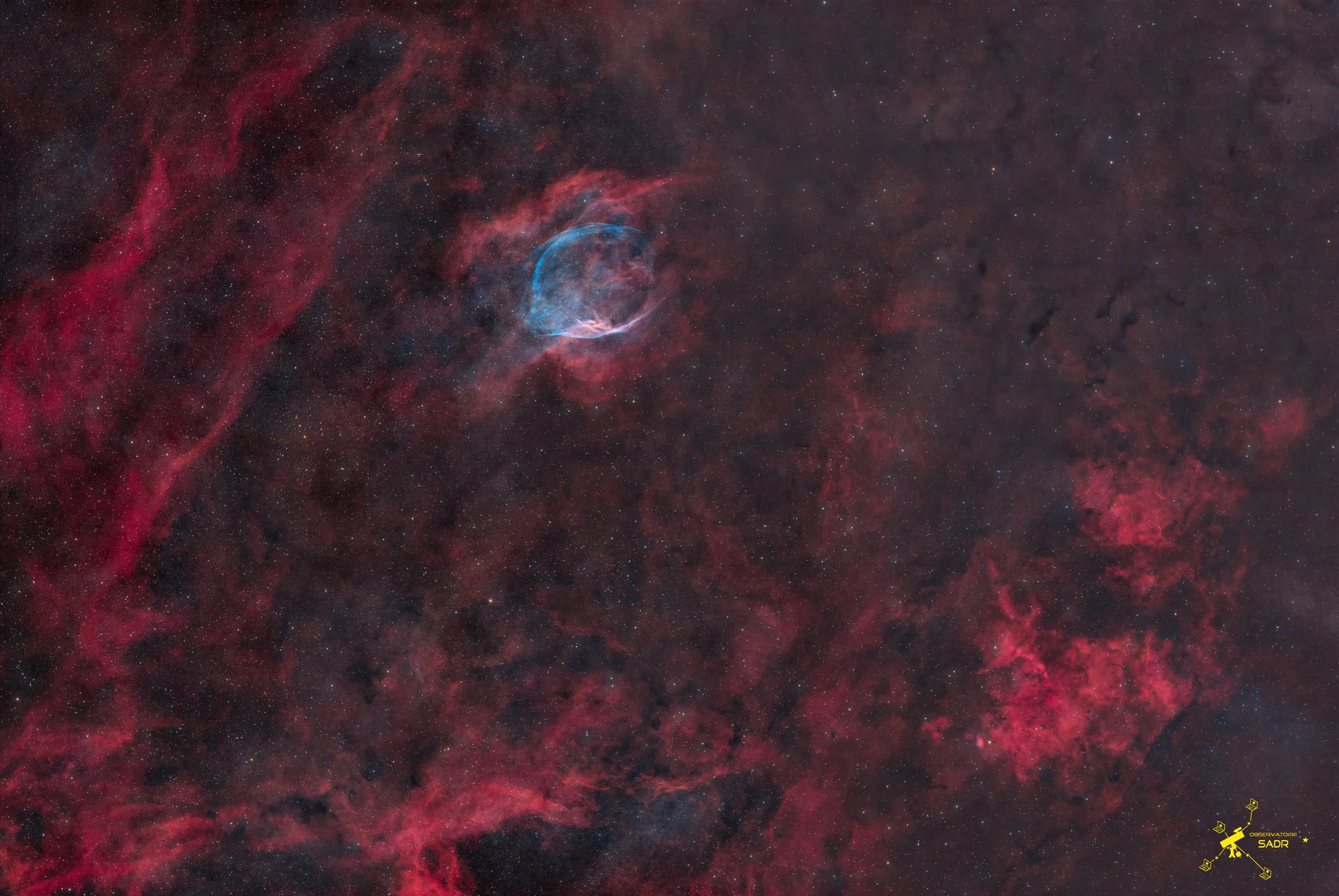
RCW104
Floating like a cosmic jellyfish amid a sea of glowing gas and dust, RCW 104 surrounds a dying star located roughly 9,000 light-years away in the constellation Norma. At the heart of this stunning nebula is the Wolf–Rayet star WR 75, a massive stellar remnant shedding its outer layers through intense stellar winds. The bubble-like structure is formed as these winds collide with surrounding material, energizing the gas and sculpting the vibrant nebular shell.
This wide-field portrait, taken from the dark skies of the SADR Observatory in Chile, reveals not only the turquoise-blue bubble of RCW 104 but also the expansive background of red hydrogen-alpha filaments that dominate the surrounding region. The sharp contrast between the cool, turbulent winds of the Wolf–Rayet star and the dense, glowing hydrogen of the interstellar medium makes this a compelling glimpse into the final stages of stellar evolution.
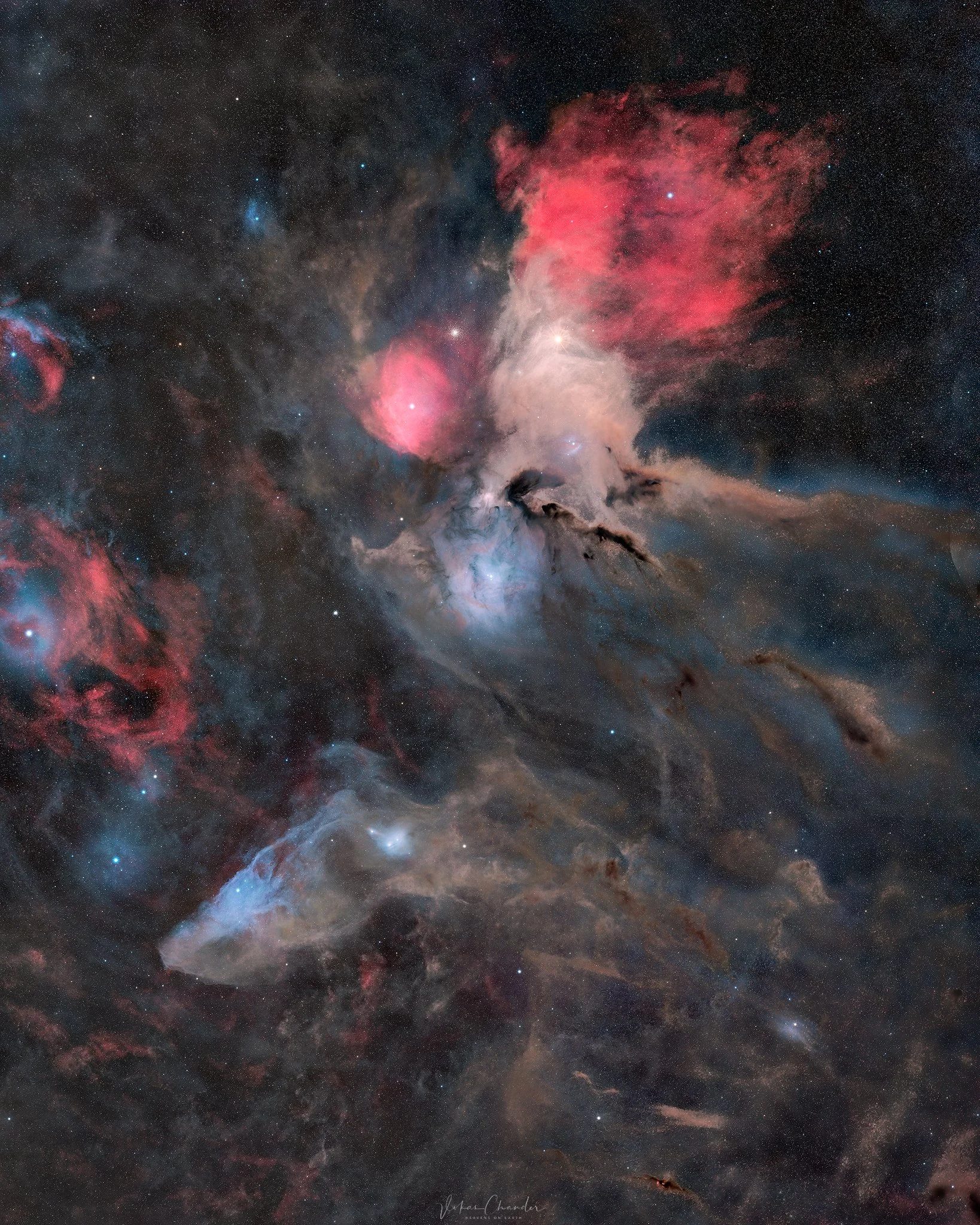
Rho Ophiuchi and the Blue Horsehead
One of the most colorful and photogenic regions in the night sky, the Rho Ophiuchi cloud complex is a rich interplay of dark dust, glowing gas, and young stars. Located about 400 light-years from Earth in the constellation Ophiuchus, this molecular cloud hosts both reflection nebulae and emission nebulae. The bright blue glow around the star Rho Ophiuchi results from starlight scattering off fine dust particles, while the red regions reveal areas where hydrogen gas is ionized by ultraviolet radiation from hot stars.
Captured over 50 hours at Deep Sky Chile, this mosaic blends RGB and H-alpha exposures to reveal the fine structure and subtle hues of the region, from the vibrant reds near Sh2-27 and IC 4604 to the sweeping brown dust lanes and pockets of star formation. The view includes multiple well-known objects like Antares, M4, and the blue reflection nebula IC 4603, all intertwined within the dusty folds of this dynamic star-forming environment.
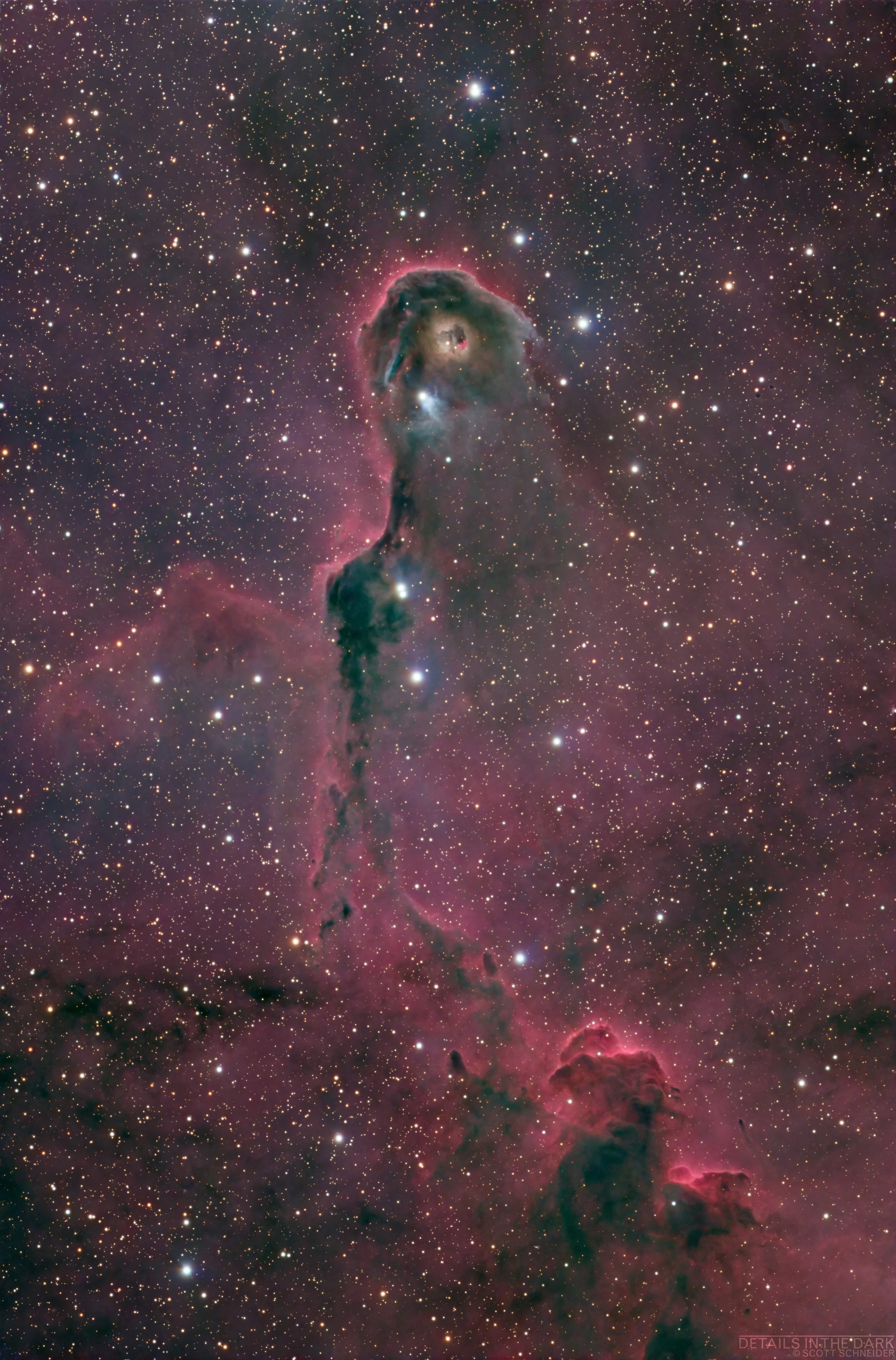
IC 1396 - The Elephant's Trunk (LRGB)
Towering in the constellation Cepheus, the Elephant’s Trunk Nebula is a dense concentration of gas and dust sculpted by stellar winds and radiation from nearby massive stars. Designated IC 1396A, this dark, sinuous formation is part of the much larger emission region IC 1396, located roughly 2,400 light-years from Earth. The nebula glows from ionized hydrogen illuminated by the star HD 206267, while young protostars still forming inside the cloud drive subtle outflows that shape its intricate structure.
This deep LRGB image, captured from Frosty Acres Ranch during the Golden State Star Party in California, reveals fine detail in the nebula’s dusty ridges and glowing pink edges. Star formation is active within the trunk, with Herbig-Haro objects and infrared sources nestled within the obscured regions. The contrast between the dark globule and its luminous surroundings makes this one of the most recognizable star-forming pillars in the night sky.
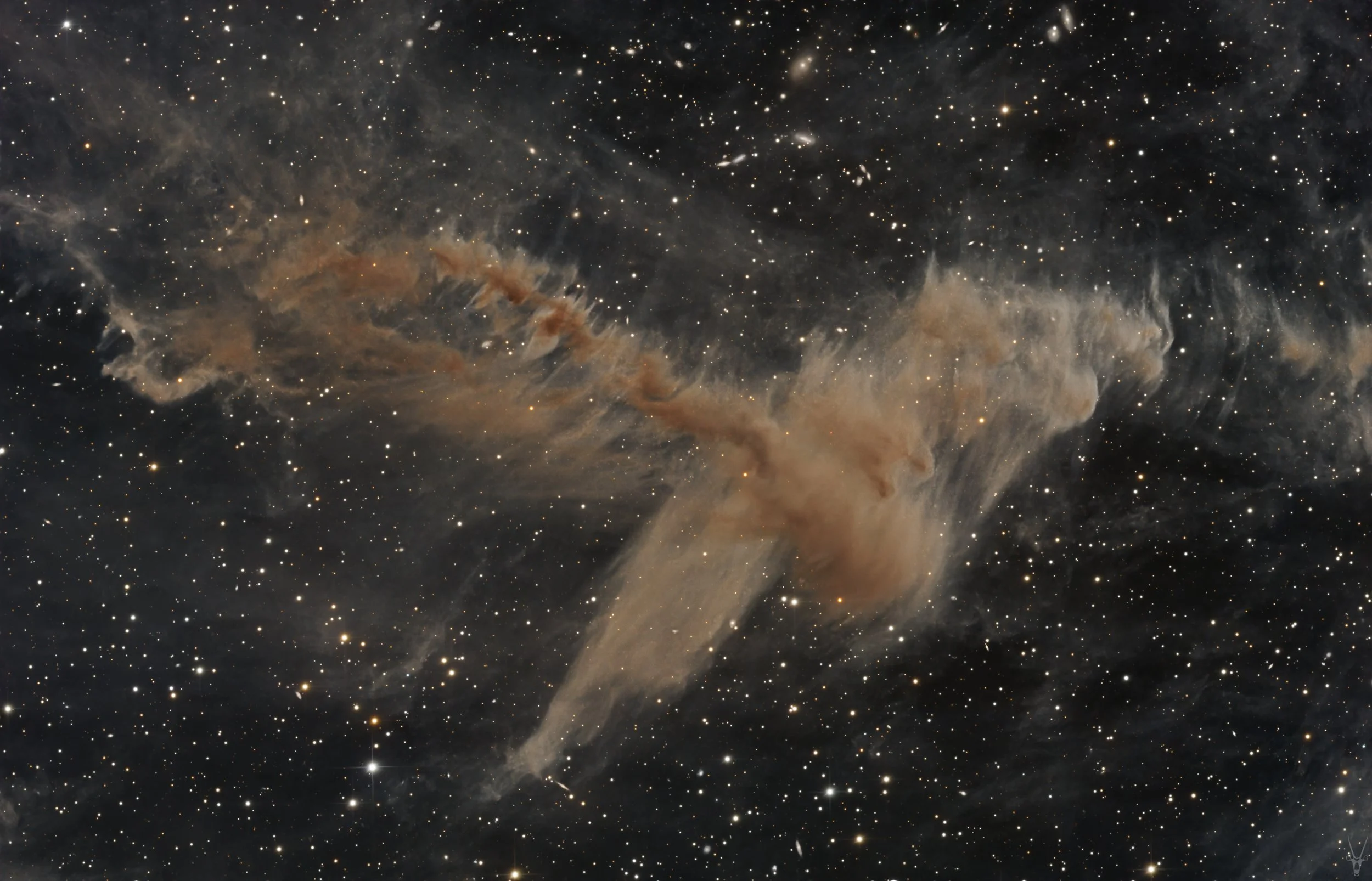
The Soaring Eagle of Apus
Delicate filaments of interstellar dust drift across this striking high-resolution image of galactic cirrus, catalogued as TGU H1972. Located in the southern constellation Apus, the Bird of Paradise, this rarely imaged cloud lies far from the galactic plane and glows faintly in reflected starlight. Its shape bears a striking resemblance to a soaring eagle with outstretched wings, earning it an evocative nickname among astrophotographers.
Galactic cirrus, also called integrated flux nebulae, are composed of fine dust particles illuminated by the combined light of the Milky Way’s stars. Though often overlooked due to their subtle glow, these wisps trace the structure of the interstellar medium in our galaxy's halo. First noticed in a wider-field view, this section was later revisited at longer focal length to reveal the intricate detail of the dusty structure drifting quietly in space.
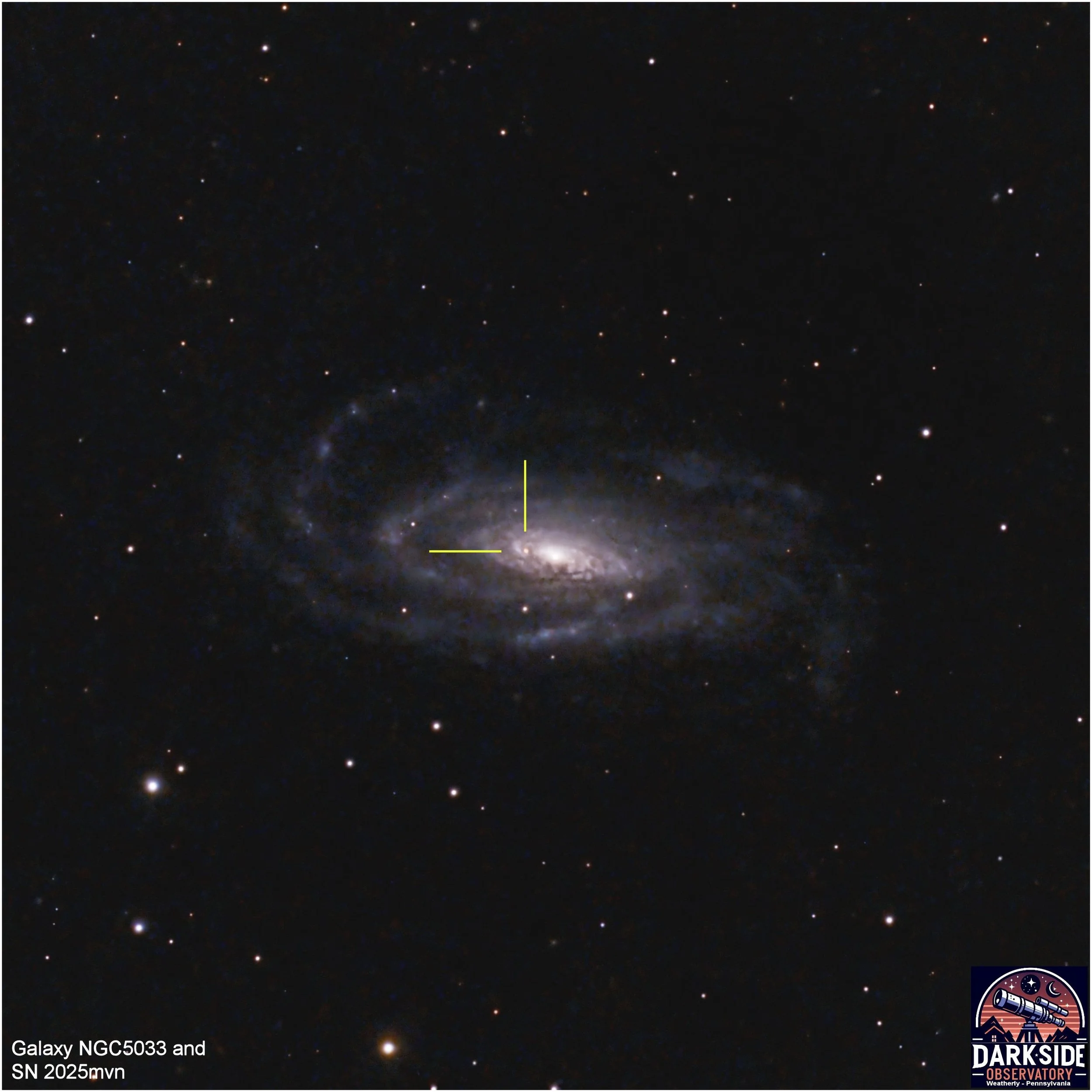
Supernova 2025mvn in Galaxy NGC 5033
A new stellar explosion lights up spiral galaxy NGC 5033 in this image taken from Weatherly, Pennsylvania, USA. Designated SN 2025mvn, the supernova appears just off-center within the galaxy's brilliant core, marked by yellow crosshairs. NGC 5033 lies about 40 million light-years away in the constellation Canes Venatici and is noted for its active nucleus and prominent spiral structure.
Captured under Bortle Class 4 skies at Dark Side Observatory, the image reveals the galaxy’s luminous arms stretching outward, with the transient supernova outshining many of the surrounding stars. Events like SN 2025mvn help astronomers study the life cycles of massive stars and calibrate cosmic distances, making every supernova discovery a significant one in our quest to understand the universe.
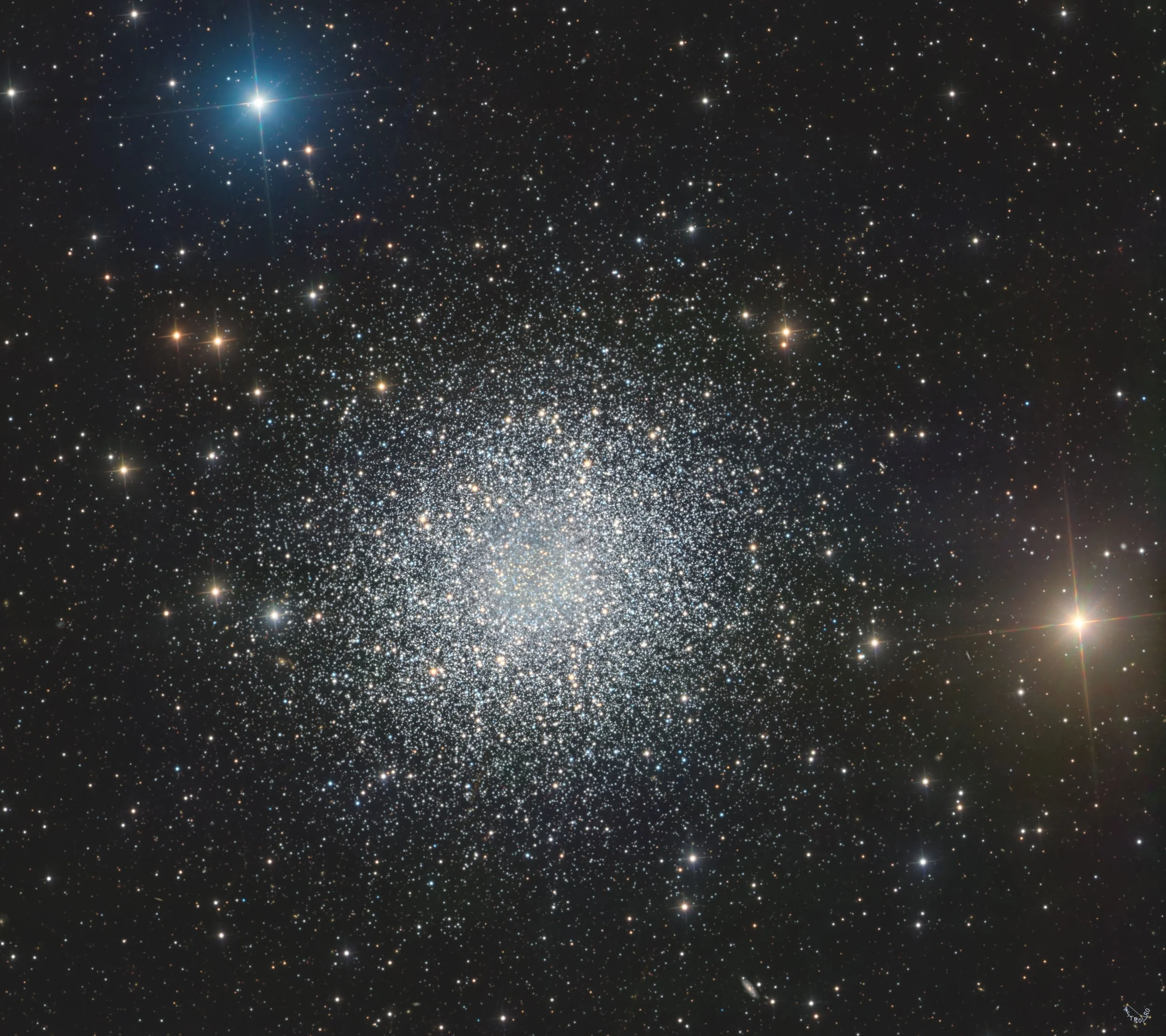
M13: The Great Hercules Cluster in LRGB
Messier 13, also known as the Great Hercules Cluster, is one of the finest globular clusters visible from the Northern Hemisphere. Located approximately 22,000 light-years away in the constellation Hercules, this vast stellar swarm contains several hundred thousand stars packed into a region about 145 light-years across. Many of its stars are ancient, dating back over 11 billion years.
This deep LRGB image was captured over 17 hours and 50 minutes, revealing the dense, bright core and intricate halo of stars that extend outward into the surrounding field. Blue-tinged horizontal branch stars and cooler red giants are easily visible. The Great Cluster continues to be a popular target for both visual observation and astrophotography, showcasing the grandeur of stellar evolution in our galaxy’s halo.
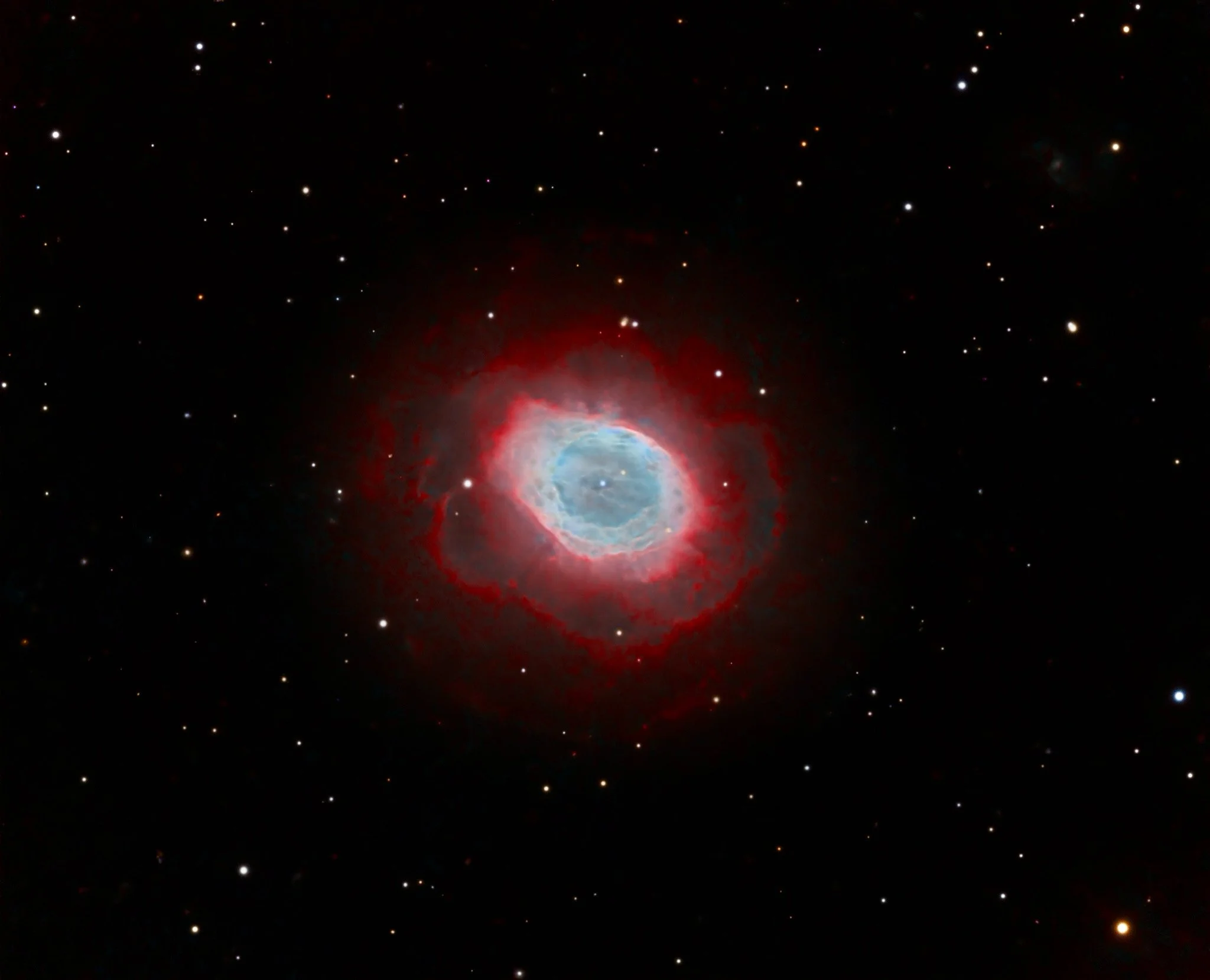
The Ring Nebula in Deep Narrowband
From a dark-sky site in Novara, Italy, this high-resolution narrowband image captures the famous Ring Nebula (M57) in remarkable detail. Located about 2,300 light-years away in the constellation Lyra, M57 is a planetary nebula, the glowing shell of ionized gas ejected by a dying Sun-like star. The well-known central ring glows in blue-green hues from doubly ionized oxygen (OIII), while deep hydrogen-alpha (Hα) imaging reveals an extended reddish halo of previously ejected material.
This image is the result of nearly 29 hours of total exposure, with 13 hours and 40 minutes in Hα and 15 hours and 15 minutes in OIII, using individual 900-second subframes. The data unveils delicate filamentary structures in the nebula’s outer regions, offering insight into the star’s complex mass-loss history and interaction with the interstellar medium.
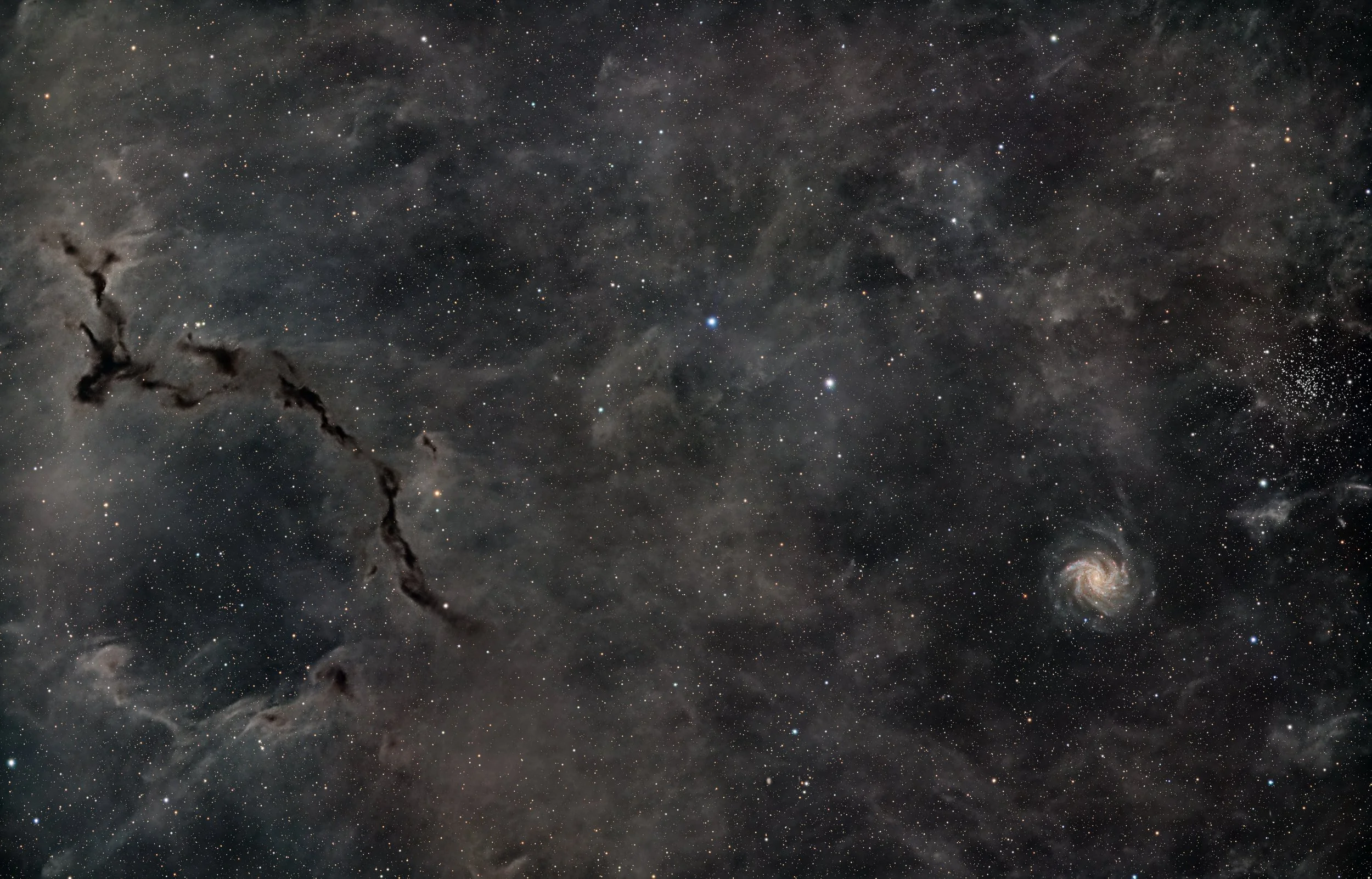
Fireworks Galaxy, Seahorse Nebula, and NGC 6939
This wide-field image beautifully frames three distinct astronomical objects in the constellation Cepheus. Near the center-right lies the Fireworks Galaxy (NGC 6946), a face-on spiral galaxy located about 22 million light-years away and known for its frequent supernova activity, ten have been recorded there in just the past century. Just above it, to the right, sparkles the open star cluster NGC 6939, a dense collection of young stars roughly 3,800 light-years from Earth.
On the left side of the image, the dark, snake-like shape of the Seahorse Nebula (LDN 1251) winds through the faint glow of the Integrated Flux Nebula (IFN), a tenuous mix of dust and gas reflecting starlight from our galaxy. The scene is a compelling blend of deep-sky structure and scale, bridging the contrast between nearby galactic cirrus and distant stellar metropolises.

M83: The Southern Pinwheel Galaxy
M83 (NGC 5236), also known as the Southern Pinwheel Galaxy, is a striking barred spiral galaxy in the constellation Hydra, located approximately 15 million light-years away. Spanning about 55,000 light-years in diameter, this galaxy features prominent spiral arms, rich in young blue stars and regions of active star formation traced by glowing hydrogen. It is among the brightest nearby galaxies and a popular visual target in southern skies.
Its central region is especially active, containing a compact core surrounded by starburst activity. Observers have recorded at least six supernovae in M83, reflecting its intense stellar life cycle. The fine detail visible in the spiral arms and nucleus showcases M83’s role as a laboratory for studying galactic dynamics and stellar evolution in a nearby grand design spiral.
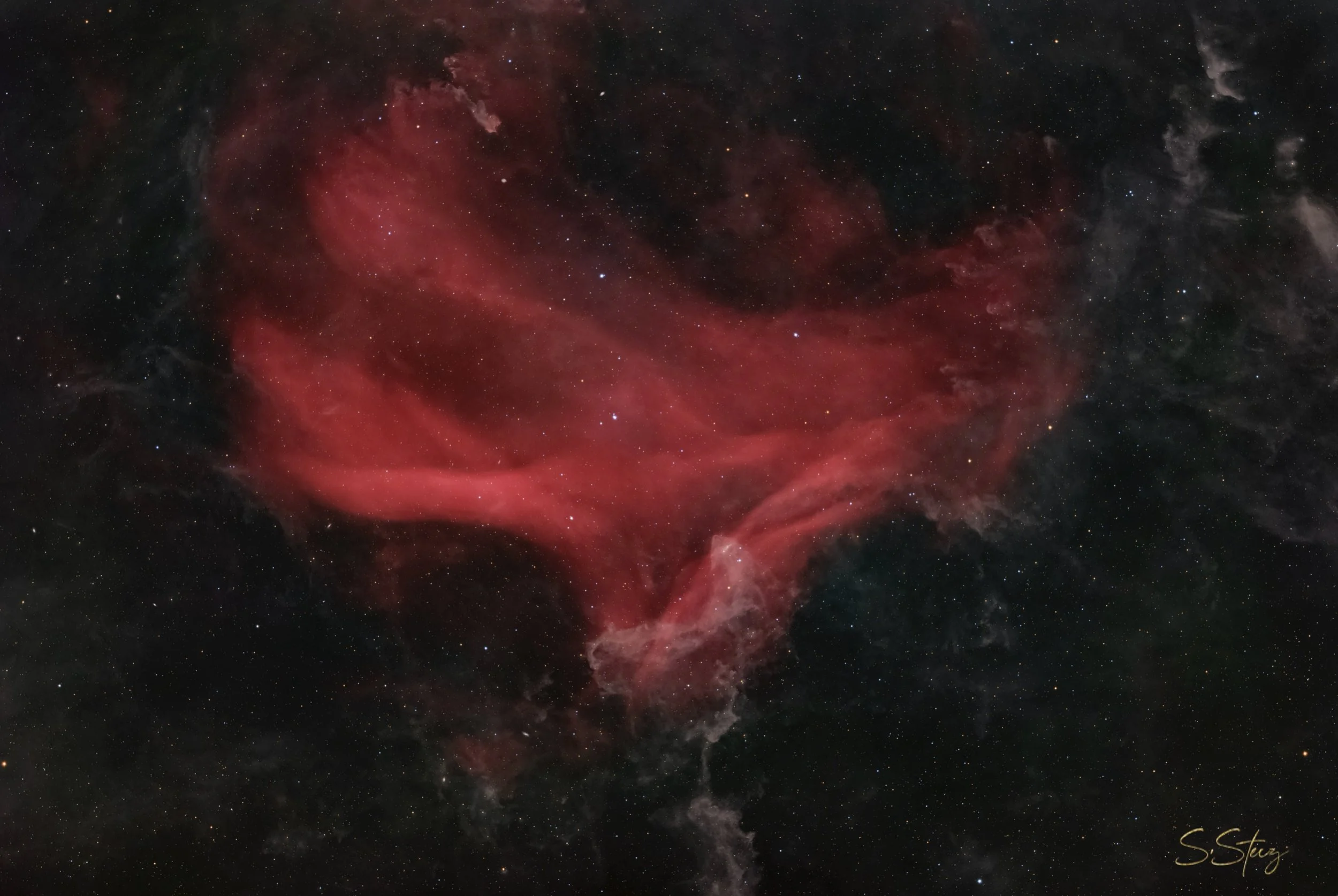
Veil of Lacerta LBN437
Also cataloged as LBN 437, this elegant cloud of glowing gas and dust is part of a large molecular complex in the constellation Lacerta. Often referred to as the “Veil of Lacerta” due to its flowing, gossamer-like appearance, the nebula spans several light years and is composed primarily of hydrogen alpha emission, shown here in rich red tones. Wispy dark filaments and faint reflection components weave through the field, adding depth to the otherwise diffuse structure.
LBN 437 lies at the edge of the Lacerta OB1 association, a region populated by young, hot stars that illuminate the surrounding interstellar medium. Though faint and often overlooked, this nebula rewards long exposures with a surprisingly intricate interplay of ionized gas and dark dust, delicately sculpted by stellar winds and radiation.
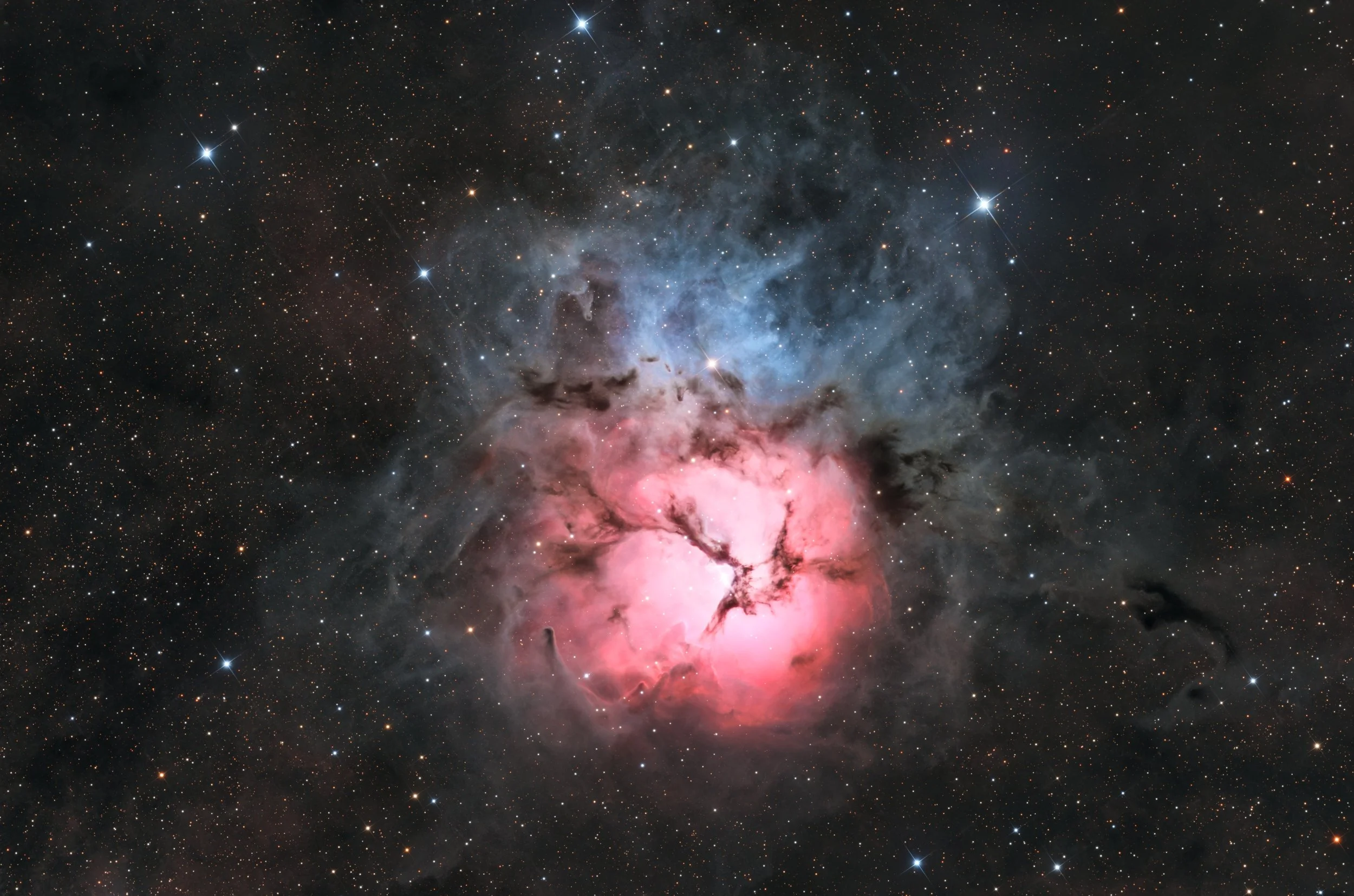
The Trifid
Located approximately 5,000 light years away in the constellation Sagittarius, the Trifid Nebula (M20) is a rare combination of three distinct nebula types in one region: emission (red), reflection (blue), and dark (silhouetted against the background glow). The striking red glow comes from ionized hydrogen gas energized by ultraviolet radiation from young, massive stars, while the blue haze reflects starlight off interstellar dust.
The nebula's signature dark lanes appear to divide it into three lobes, giving it the name "Trifid." These dust structures are part of active star-forming regions where gravity and turbulence shape dense clouds. This natural color image beautifully captures the balance between structure and chaos in one of the galaxy’s most photogenic nurseries.
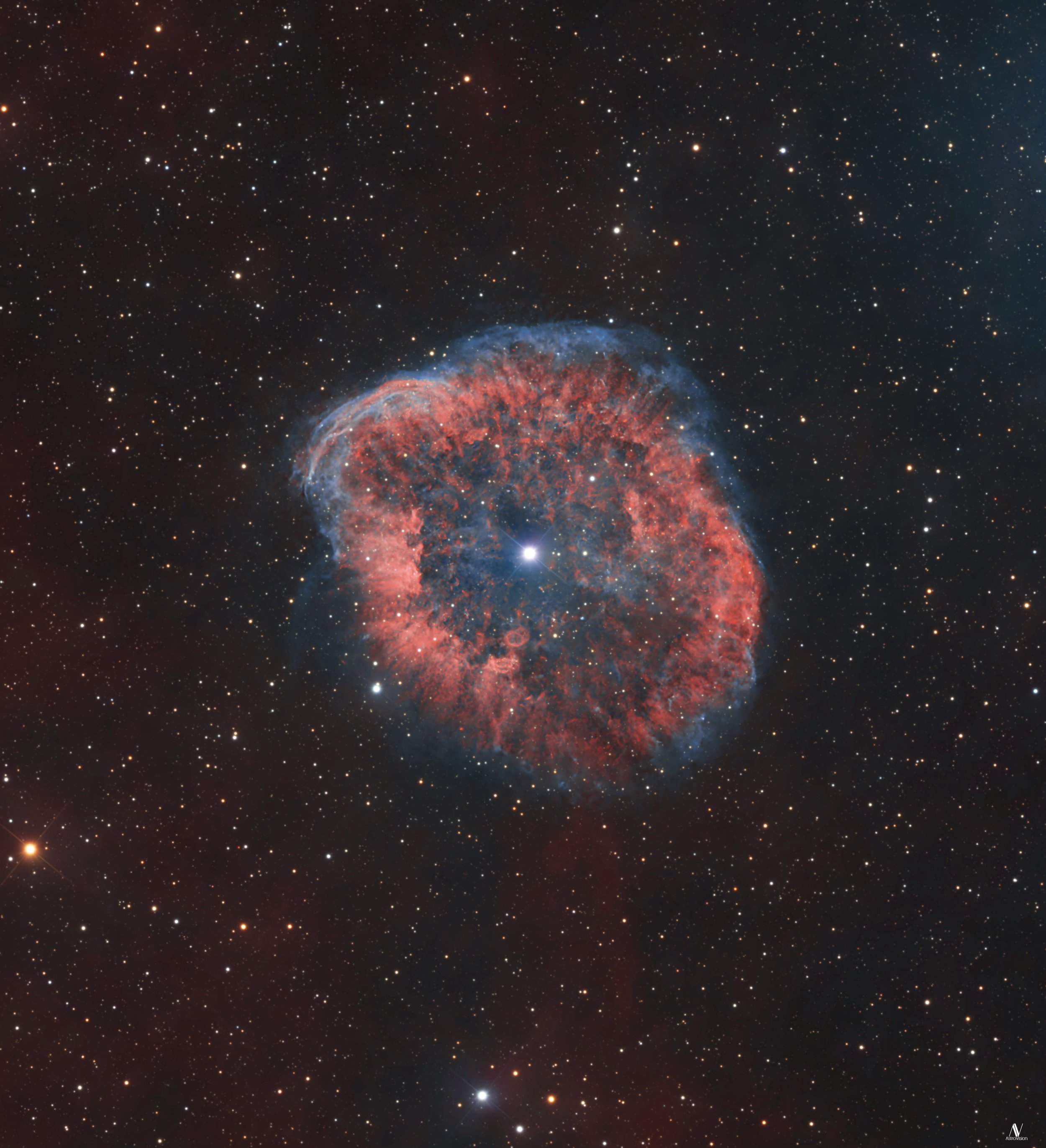
RCW 58: A Shell Around WR 4
RCW 58 is a dramatic emission nebula formed by the powerful stellar winds of the Wolf-Rayet star WR 4, located roughly 13,000 light years away in the constellation Carina. These winds expel the star’s outer layers into surrounding space, carving out the distinctive filamentary bubble seen in this image. The glowing gases are primarily hydrogen and oxygen, energized by intense ultraviolet radiation from the central star.
Captured using a personal telescope setup and the ZWO ASI 6200MM camera, this image represents 156 hours of exposure in a modified HOO-RVB palette. The red filaments trace ionized hydrogen, while the blue highlights areas of doubly ionized oxygen. Wolf-Rayet nebulae like RCW 58 are short-lived stages in the evolution of massive stars, providing a glimpse into the final, unstable phases before a potential supernova.
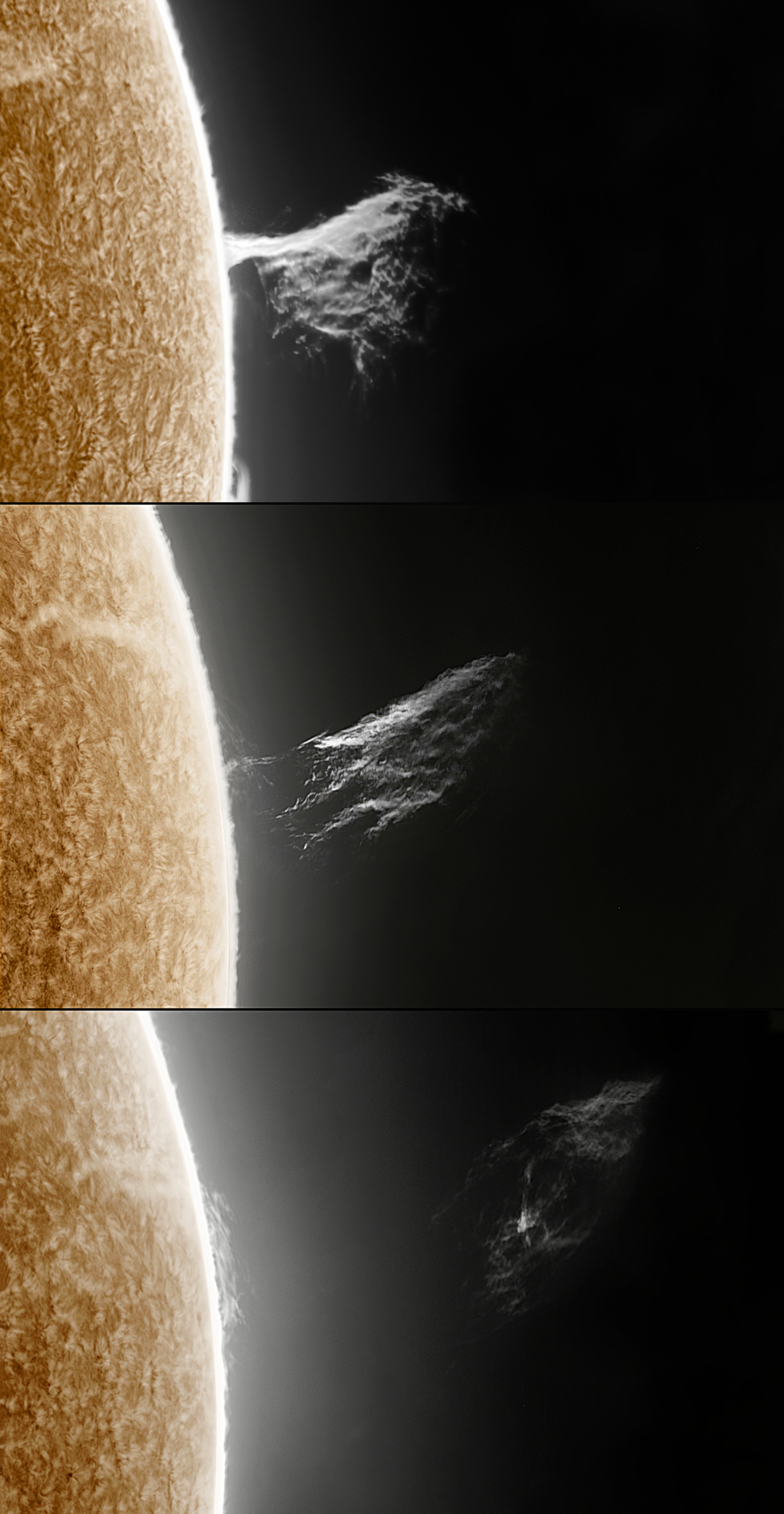
Colossus CME
A dramatic evolution of a massive solar prominence that erupted from the Sun’s limb. Towering over 300,000 kilometers above the chromosphere, this colossal plasma structure offered a vivid display of solar activity and dynamic magnetic forces at work.
The image sequence documents three key stages of the event:
• June 28, 05:47 UTC – The prominence appeared stable, resembling a massive, tree-like arch rising from the solar surface.
• June 29, 06:02 UTC – The structure began to stretch and detach, signaling the start of an outbound eruption.
• June 29, 16:56 UTC – The prominence had fully lifted away from the Sun, transforming into a faint, wispy cloud as it rapidly disintegrated and expanded into the heliosphere.
This event likely culminated in a Coronal Mass Ejection (CME), sending charged particles into space at incredible speeds. It's a powerful reminder of the Sun’s ever-changing, dynamic nature.
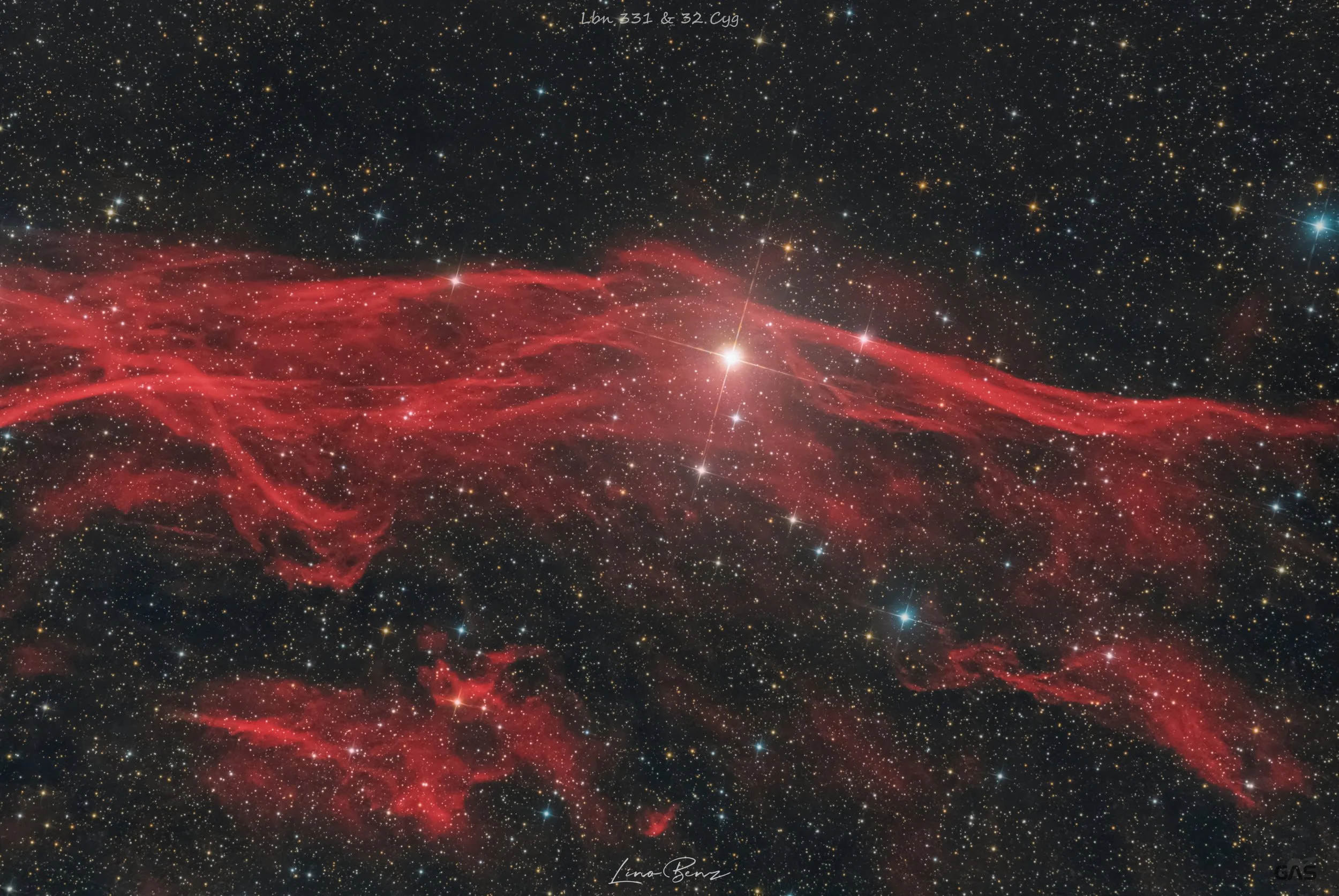
LBN 331 Silk Veil Nebula
This glowing ribbon of hydrogen gas is LBN 331, a faint emission nebula in the constellation Cygnus. The brilliant star near the center is 32 Cygni, a wide binary system made up of a hot B-type star and a cooler K-type supergiant. The system lies between 1,100 and 1,174 light years away and is silhouetted dramatically against the glowing strands of ionized gas.
The bright arcs are part of a vast network of nebulosity in the Cygnus region, shaped by stellar winds and radiation from massive stars. Hydrogen-alpha emission gives the nebula its vivid red color. This field is a small section of the expansive Cygnus Loop, an area filled with remnants of ancient supernovae and glowing filaments. The contrast between the sharp starlight of 32 Cygni and the delicate arcs of interstellar gas highlights the richness of the Milky Way’s summer sky.
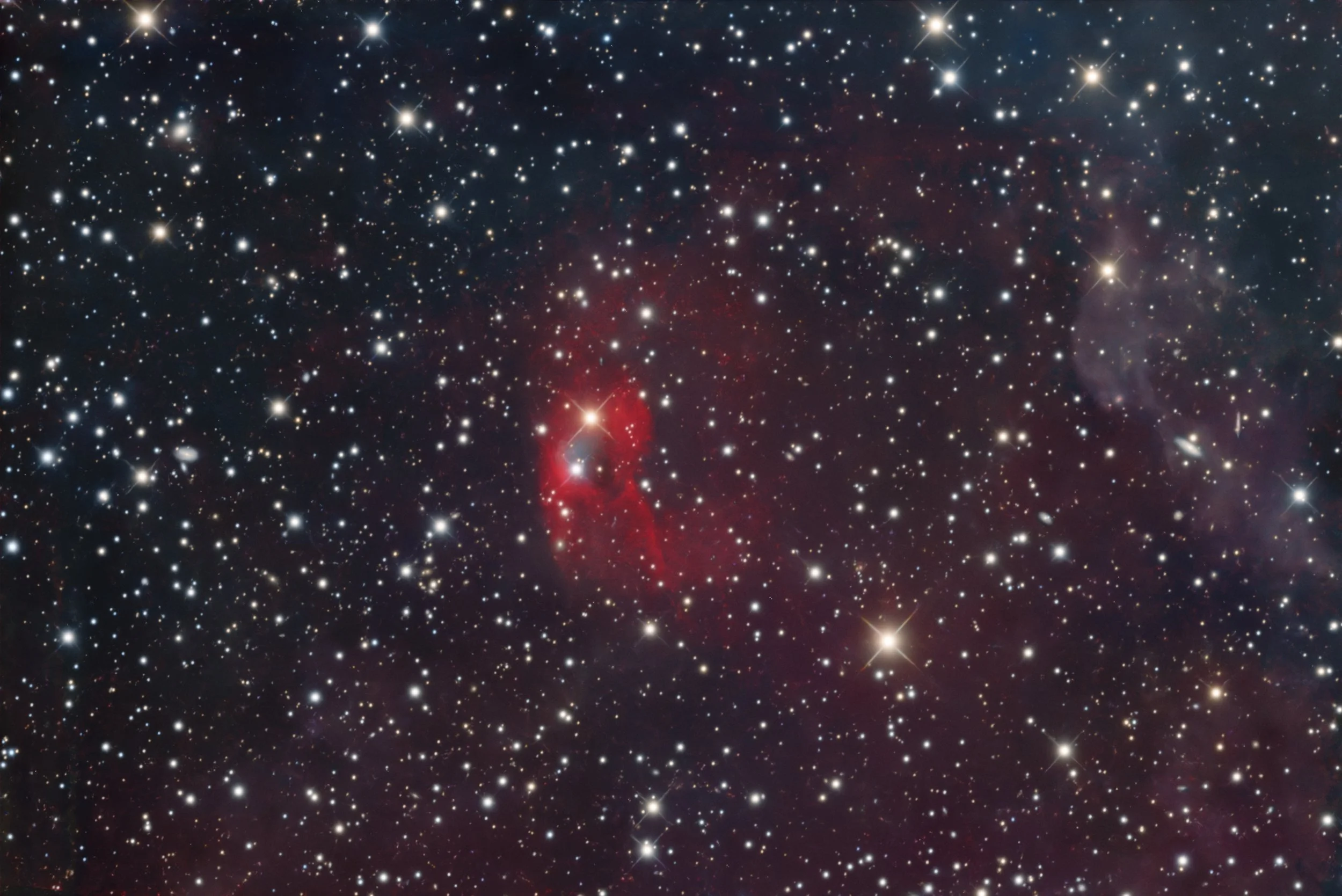
Discovery of a Bow Shock around Cataclysmic Variable Star LS Pegasi
A newly revealed bow shock surrounds LS Pegasi, a well-studied cataclysmic variable (CV) star in the constellation Pegasus. This reddish arc of emission was discovered through deep imaging and analysis of archival H-alpha and OIII data, confirming early suspicions from wide-field sky surveys. The emission structure seen here is a bow shock — a shell of material shaped by the motion of the star through the interstellar medium.
LS Pegasi has been known as a variable star since 1935, but it wasn’t until 1988 that it was classified as a CV, a system where a white dwarf accretes matter from a companion. In August 2020, amateur astronomer Dana Patchick detected subtle nebulosity around LS Pegasi using VTSS and SHASSA data, leading to targeted observations and the confirmation of this shock feature. The discovery contributes to a growing list of CVs with extended emission structures, suggesting mass-loss events or wind interactions that persist on large scales.
Venus Overcast in Infrared and Ultraviolet
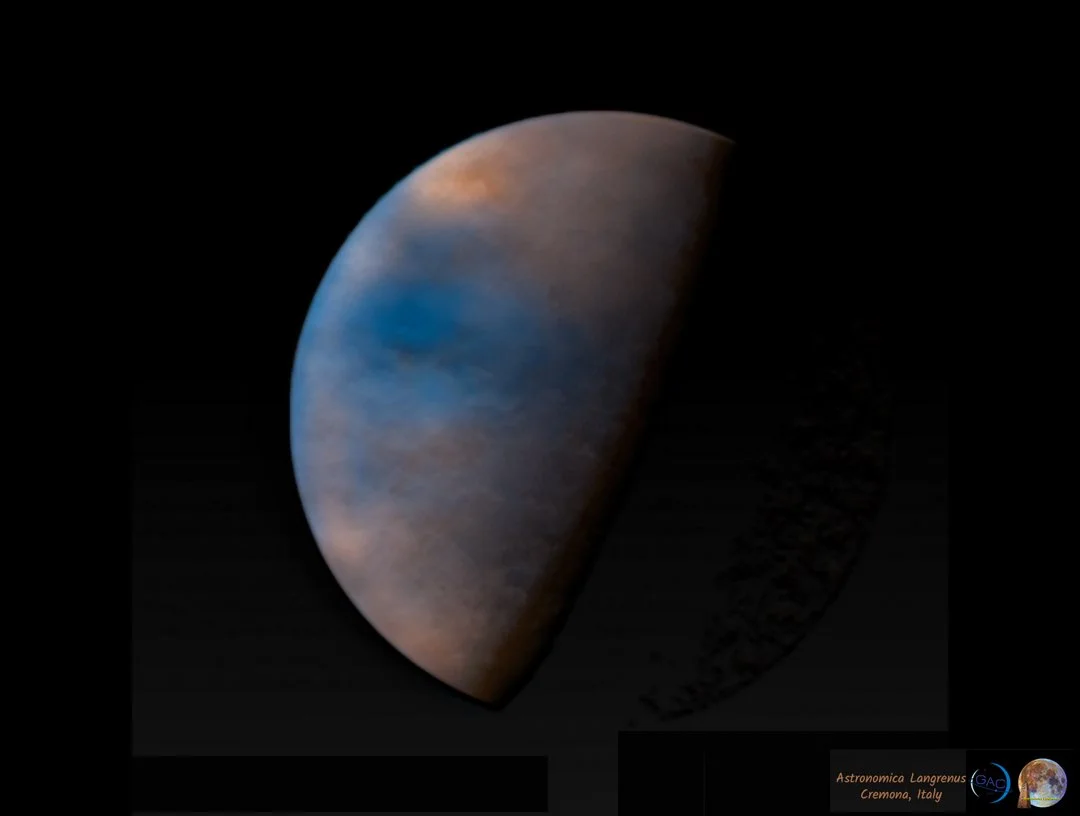
Venus, often called Earth's sister planet, is perpetually shrouded in a dense atmosphere of carbon dioxide and sulfuric acid clouds. This striking false-color image, captured from Cremona, Italy, reveals its thick cloud layers using infrared and ultraviolet filters. The result shows intricate atmospheric features normally hidden from optical telescopes. Subtle cloud structures become visible here due to the blending of two separate spectral ranges: deep infrared, which penetrates lower cloud levels, and ultraviolet, which highlights high-altitude cloud tops.
The image was acquired on June 26, 2025, using a 255 mm F/20 Maksutov Rumak telescope and a ZWO ASI 462 Mono camera. Frames were captured with IR-pass and UV-pass filters, stacking 28,000 out of 35,000 frames in infrared at 250 fps and 3,000 out of 5,000 in ultraviolet at 30 fps. The final composition is presented in IR-IR-UV channels to simulate a color view of Venus's invisible atmosphere.
The OIII Falls - Sh2-91
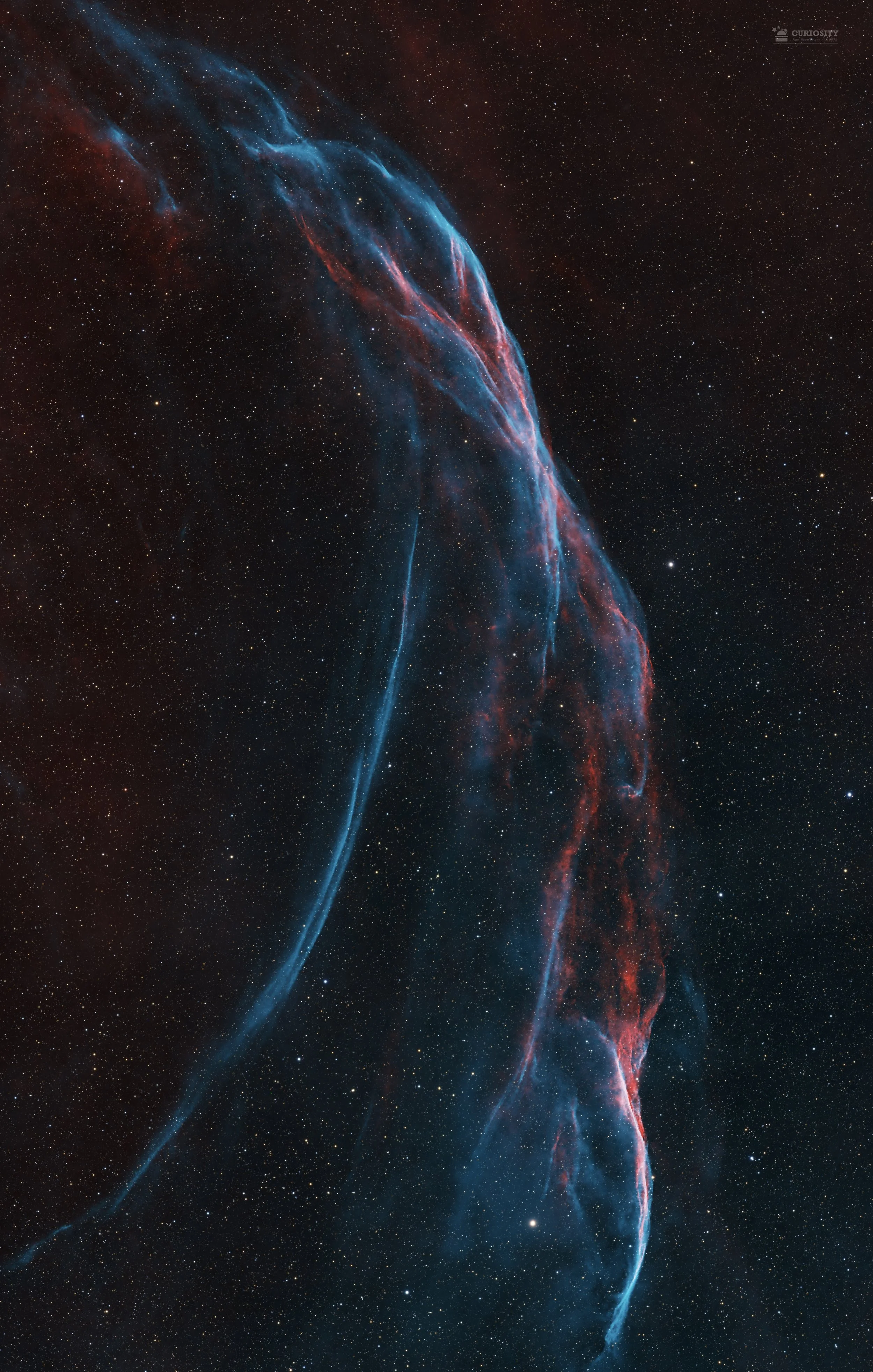
H2-91 is especially remarkable in the OIII emission line, which reveals a sinuous, glowing arc tracing the shock front where the expanding blast wave from the supernova continues to plow through the interstellar medium. The ionized oxygen, energized by the remnant’s shock, emits strongly in blue-green light, producing the elegant structure reminiscent of a cascading cosmic waterfall—hence the nickname “The OIII Falls.”
Capturing this image has required 19h of exposure in Ha and OIII filters, plus 1.5h of exposure in R, G and B filters for the stars. Total exposure time has been about 40h.
M31 with Hydrogen-Alpha from Kraków and Lublin
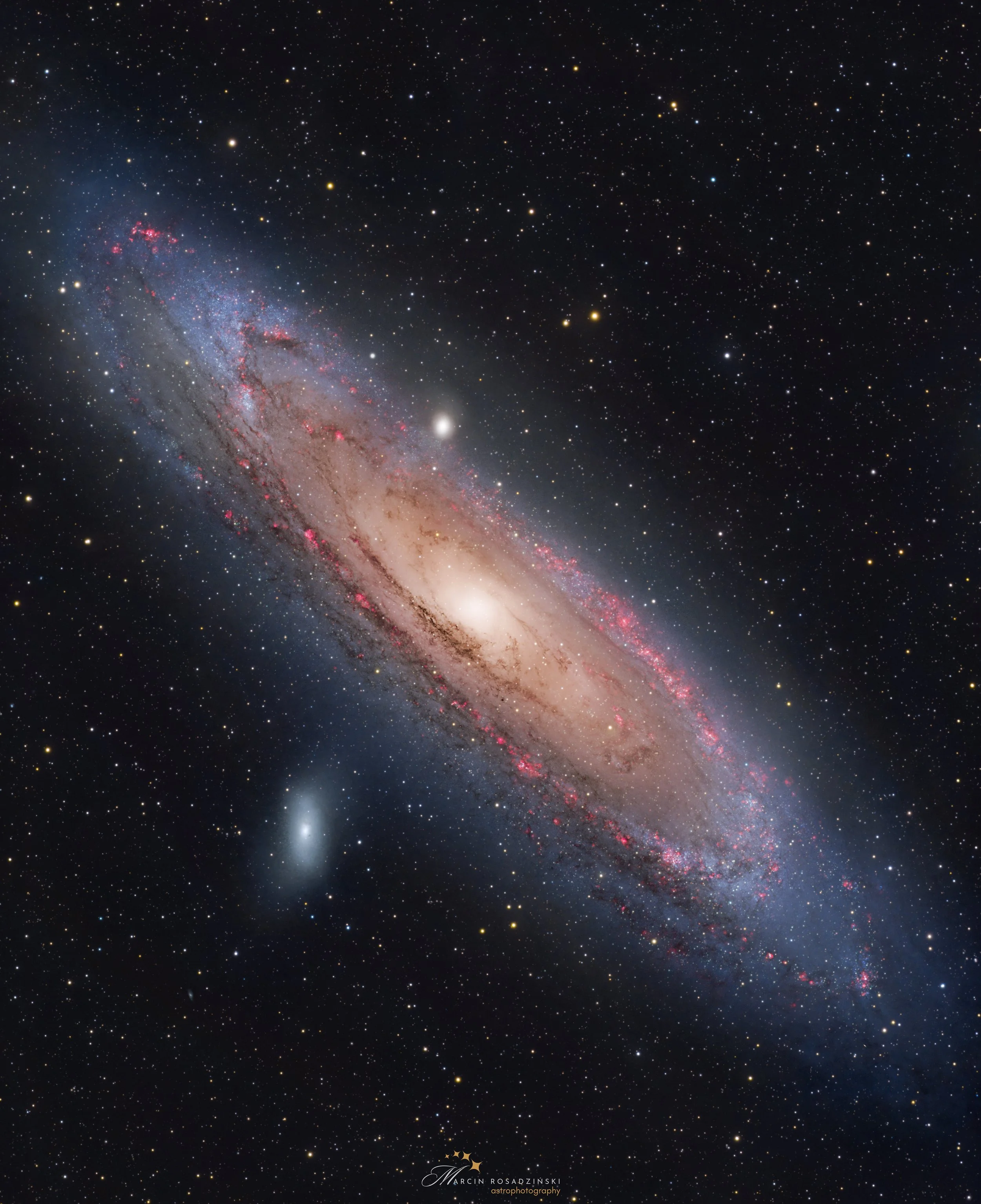
The Andromeda Galaxy, also known as M31, is our nearest large galactic neighbor, lying about 2.5 million light-years away in the constellation Andromeda. This striking portrait combines broadband LRGB data with Hydrogen-Alpha (Ha) to reveal not just the classic sweeping spiral structure but also the delicate reddish glow of HII regions scattered throughout the galaxy’s disk. These Ha regions highlight zones of active star formation, most prominent in the spiral arms, where cold gas and dust collapse into new stars.
Data for this image were collected from two sites in Poland: Kraków and Lublin, under varying conditions that required careful calibration and integration. The total exposure time amounts to approximately 80 hours, allowing for an exceptionally clean and detailed view of both faint outer structure and fine internal features. The small elliptical galaxy M32 can be seen just above the bright core of M31, while the larger, fuzzier companion M110 lies below the disk, slightly offset.