

AAPOD2 Image Archives
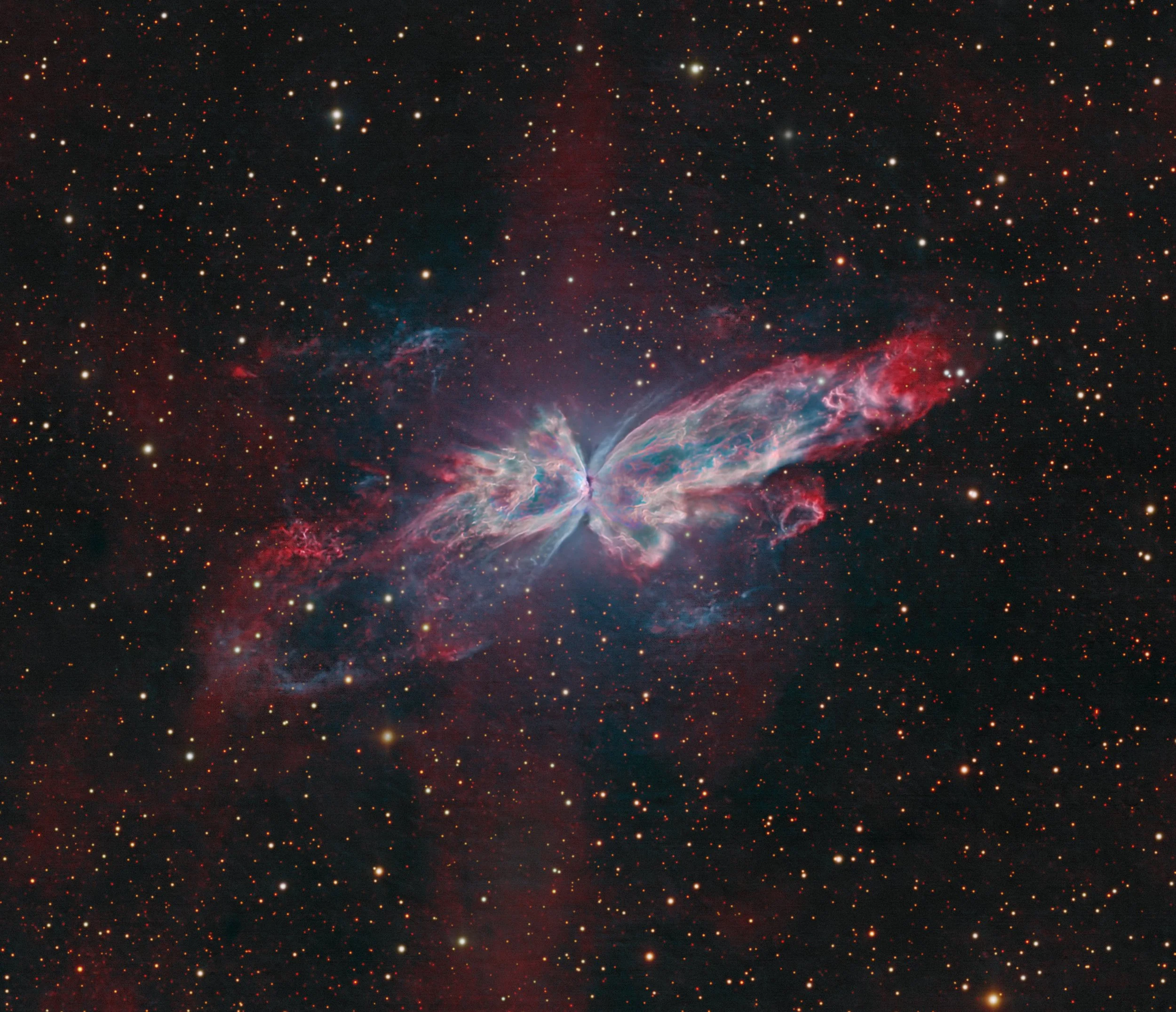
NGC 6302 – The Butterfly Nebula Unfolds
Unfolding like celestial wings, NGC 6302—commonly called the Butterfly Nebula—captures the dramatic final stages of a sun-like star’s life. This bipolar planetary nebula spans over two light-years and is located in the constellation Scorpius, roughly 3,800 light-years from Earth. Its vibrant wings are composed of material violently ejected from the dying star at its center, which remains hidden behind a dense torus of dust.
Captured over 52 hours with Chroma filters, this image blends 9 hours of luminance with 13 hours each of Ha and OIII, and 8 hours per channel of RGB. The result reveals the exquisite structure of ionized gas sculpted by stellar winds—an intricate canvas of motion and light, glowing in hues of red and blue as the nebula races outward into interstellar space.
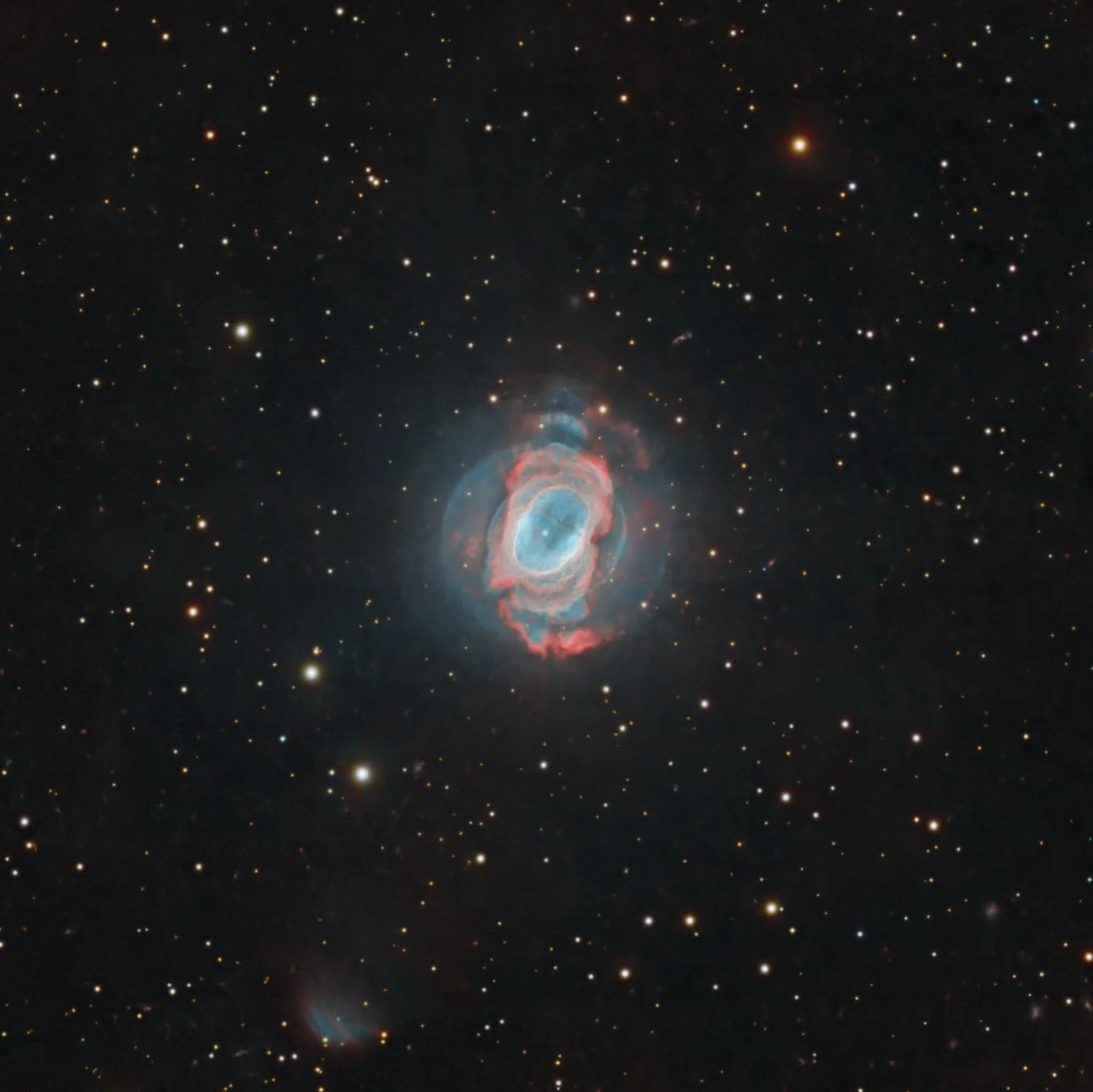
NGC 3132 Planetary Nebula with new PN discovery named Sel 1 - in HOO with RGB Stars
We would like to present this image, acquired in Obstech, Chile.
Title of the Object:
NGC 3132 Planetary Nebula with new PN discovery named Sel 1 - in HOO with RGB Stars
Description of the Object:
This image contains NGC 3132 and a newly discovered Planetary Nebula named Sel 1.
NGC 3132, also known as the Southern Ring Nebula, Eight-Burst Nebula, or Caldwell 74 is a striking planetary nebula located about 2,000 light-years away in the southern constellation Vela.
What you’re seeing is the glowing, expanding shell of gas ejected by a dying Sun-like star, now a white dwarf at its core. The nebula spans roughly 0.4 light-years across, yet appears just 1 arcminute wide in the sky — about 1/30th the width of the full Moon.
Despite its compact appearance, a considerable amount of detail can be revealed in long-exposure imaging.
In this image, the bright teal-blue core is rich in ionized oxygen (OIII), while the outer reddish arcs trace hydrogen-alpha emission (Hα). Faint dust lanes and overlapping shells show the chaotic beauty of this stellar farewell.
Recent JWST observations revealed that NGC 3132 is actually a binary star system, with a hidden second star playing a major role in shaping the nebula’s complex form over thousands of years.
Imaged in HOO RGB on Mike Selby's Planewave CDK 700 at Observatorio El Sauce, Chile.
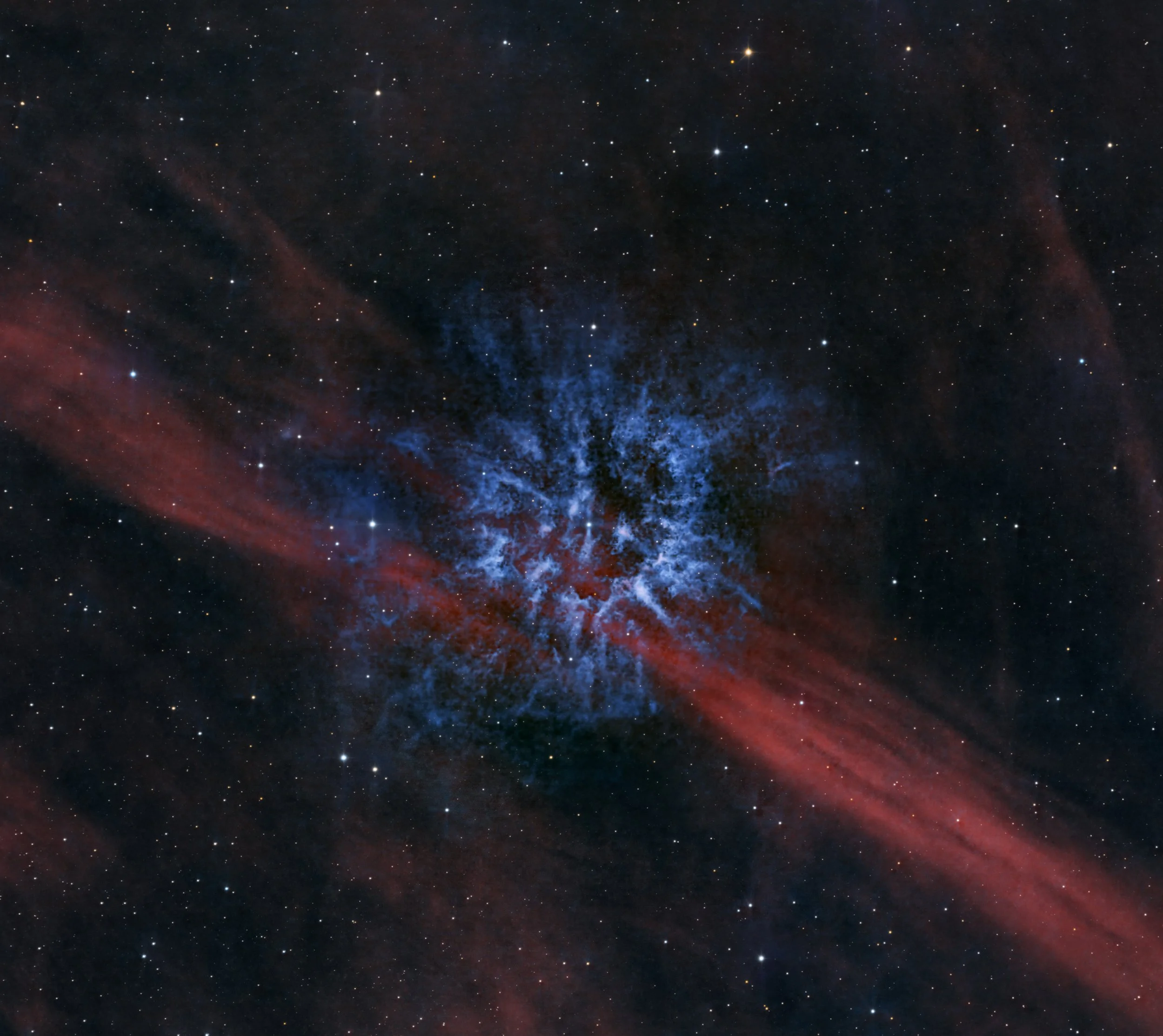
WR 8 - Rarely imaged Wolf Rayet star in HOO with RGB stars
WR 8 is a rarely imaged Wolf-Rayet star located in the southern constellation of Puppis. Wolf-Rayet stars are massive, evolved stars that undergo intense stellar winds, shedding their outer layers and enriching the surrounding interstellar medium with heavy elements. WR 8 belongs to this rare class, characterized by high surface temperatures and strong emission lines, particularly in ionized hydrogen (Hα) and oxygen (OIII).
Captured from the dark skies of Observatorio El Sauce, Chile, this image combines narrowband HOO data with RGB stars to preserve the natural colors of the field. The nebula surrounding WR 8 is shaped by powerful stellar winds interacting with previous ejecta, creating a complex structure of ionized gas. These turbulent regions are key to understanding the life cycles of massive stars and their impact on galactic evolution. The detailed exposure reveals intricate filaments and expanding shells, emphasizing the dynamic processes occurring in this rarely studied system.
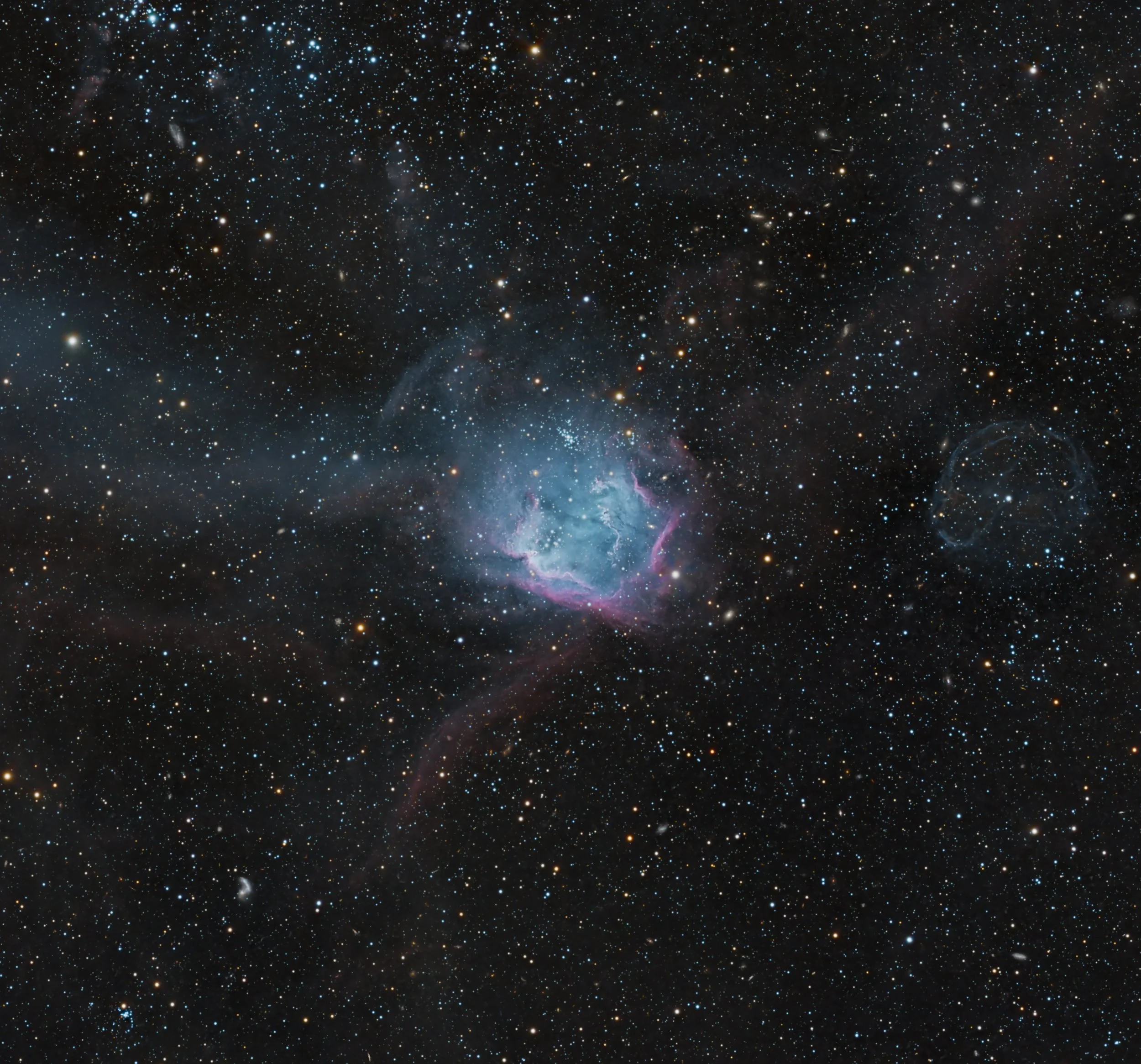
NGC 602
NGC 602 is a striking open cluster nestled within the Small Magellanic Cloud (SMC), a satellite galaxy of the Milky Way located some 200,000 light-years away. This vibrant cluster, surrounded by the emission nebula N90, is illuminated by young, massive stars that have recently formed within the dense clouds of gas and dust. The intense ultraviolet radiation from these hot stars sculpts and ionizes the surrounding material, creating a dynamic, glowing environment rich with cosmic activity.
There is what appears to be a faint planetary nebula, possibly identified as SMC-B Bru 2-165, nestled within this stellar nursery. Planetary nebulae represent the final stages in the life cycle of medium-sized stars, where the outer layers are ejected, leaving a hot, dense core.
The SMC itself offers a unique window into stellar evolution, given its low metallicity and proximity. Capturing such delicate and rare features in this image highlights the interplay of star formation, destruction, and the rich tapestry of phenomena present within this neighboring galaxy.
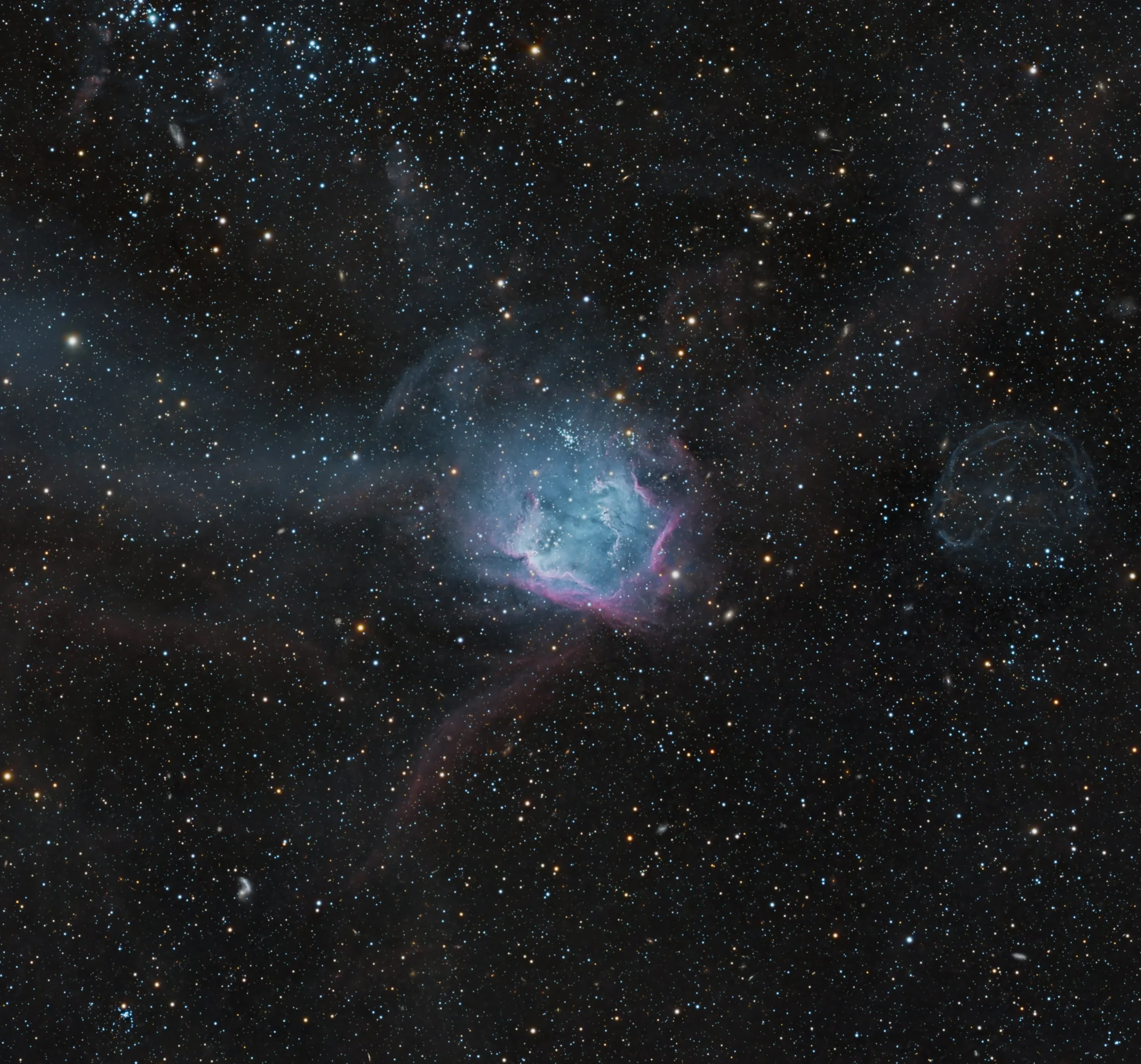
NGC 602
Nestled 200,000 light-years away in the Small Magellanic Cloud, the young star cluster NGC 602 lights up the surrounding nebula N90 with its brilliant and energetic stars. Among them is the exceptionally hot O3 star Sk 183, one of the brightest stars fueling this luminous star-forming region. The intense radiation from these massive blue stars carves out cavities in the nebula, shaping swirling regions of ionized gas and dust.
Curiously, a faint, small structure resembling a planetary nebula also appears nearby, possibly identified as SMC-B Bru 2-165. This could hint at earlier stellar generations in this vibrant region, where new stars are born within rich molecular clouds.
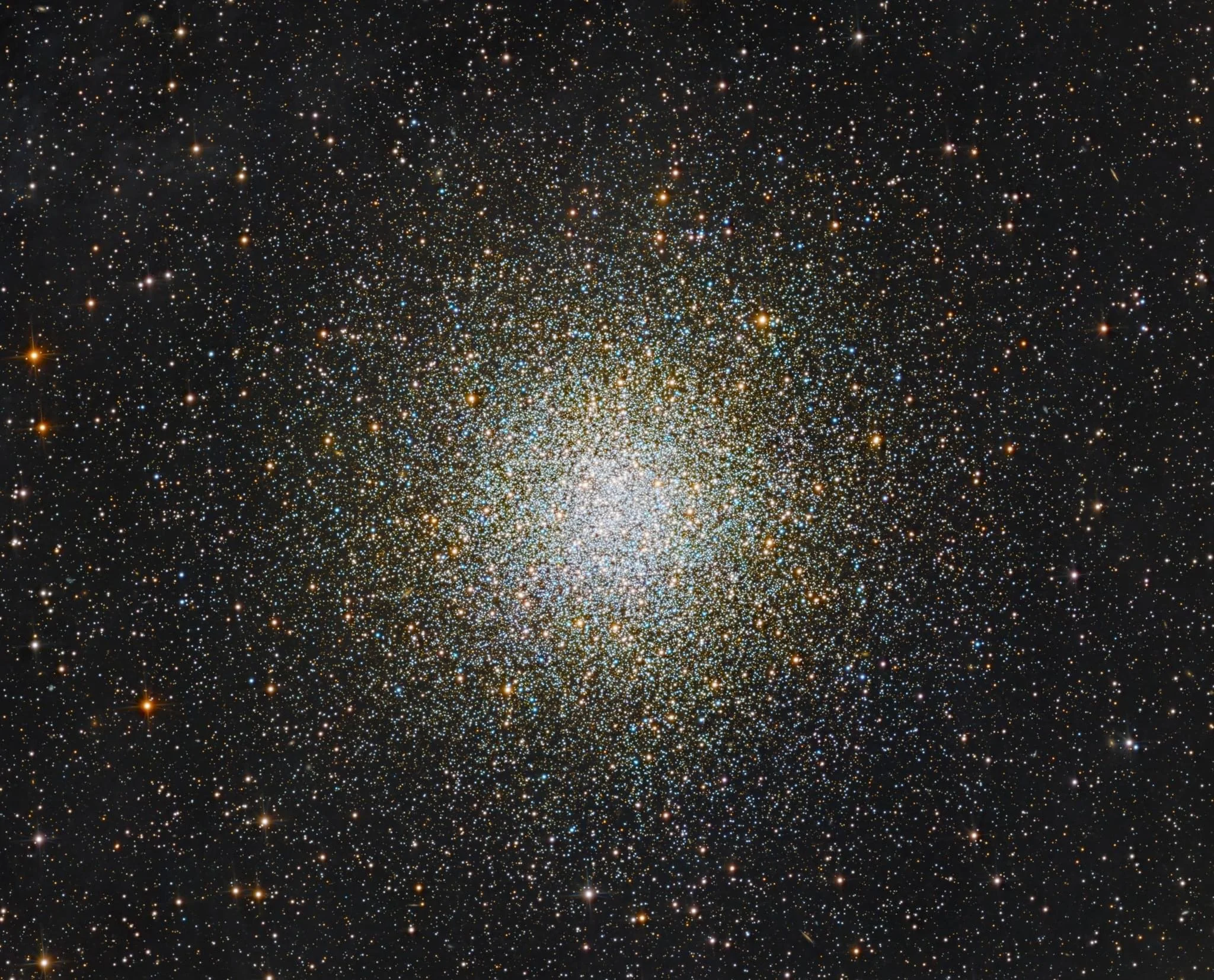
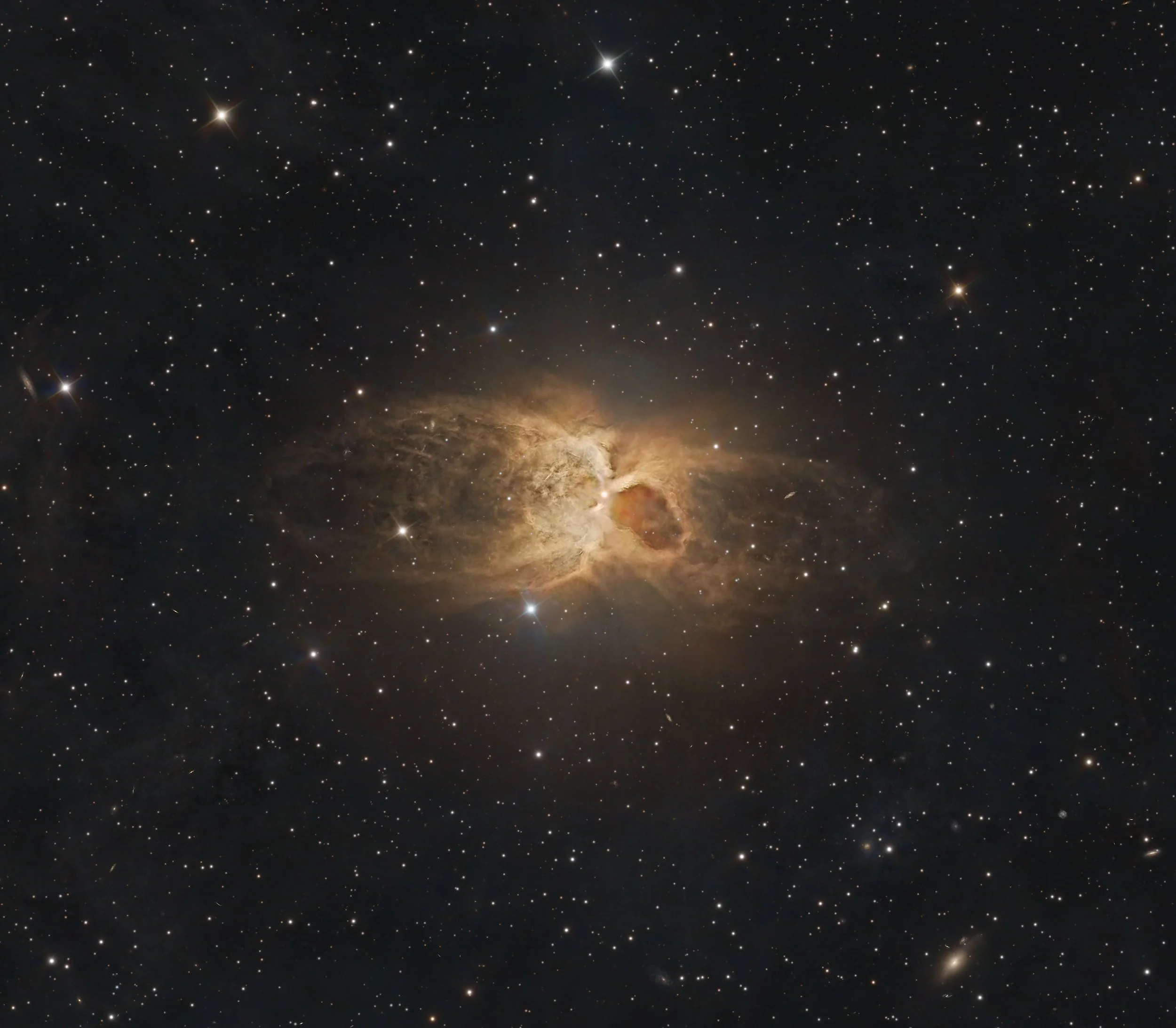
IC 2220 Toby Jug Nebula
C 2220's origin lies in the expelled cloud of gas and dust emanating from the red giant star HD 65750, nestled within the heart of the nebula. As the expelled material interacts with starlight, it creates a mesmerizing display of bi-conical structures that form the distinctive shape resembling an old English drinking vessel known as a Toby Jug.
Named by three discerning British astronomers, the Toby Jug Nebula stands out among its celestial counterparts for its unique hue. Unlike most reflection nebulae, IC 2220 dons a warm orange color, adding a touch of cosmic elegance to its whimsical appearance.
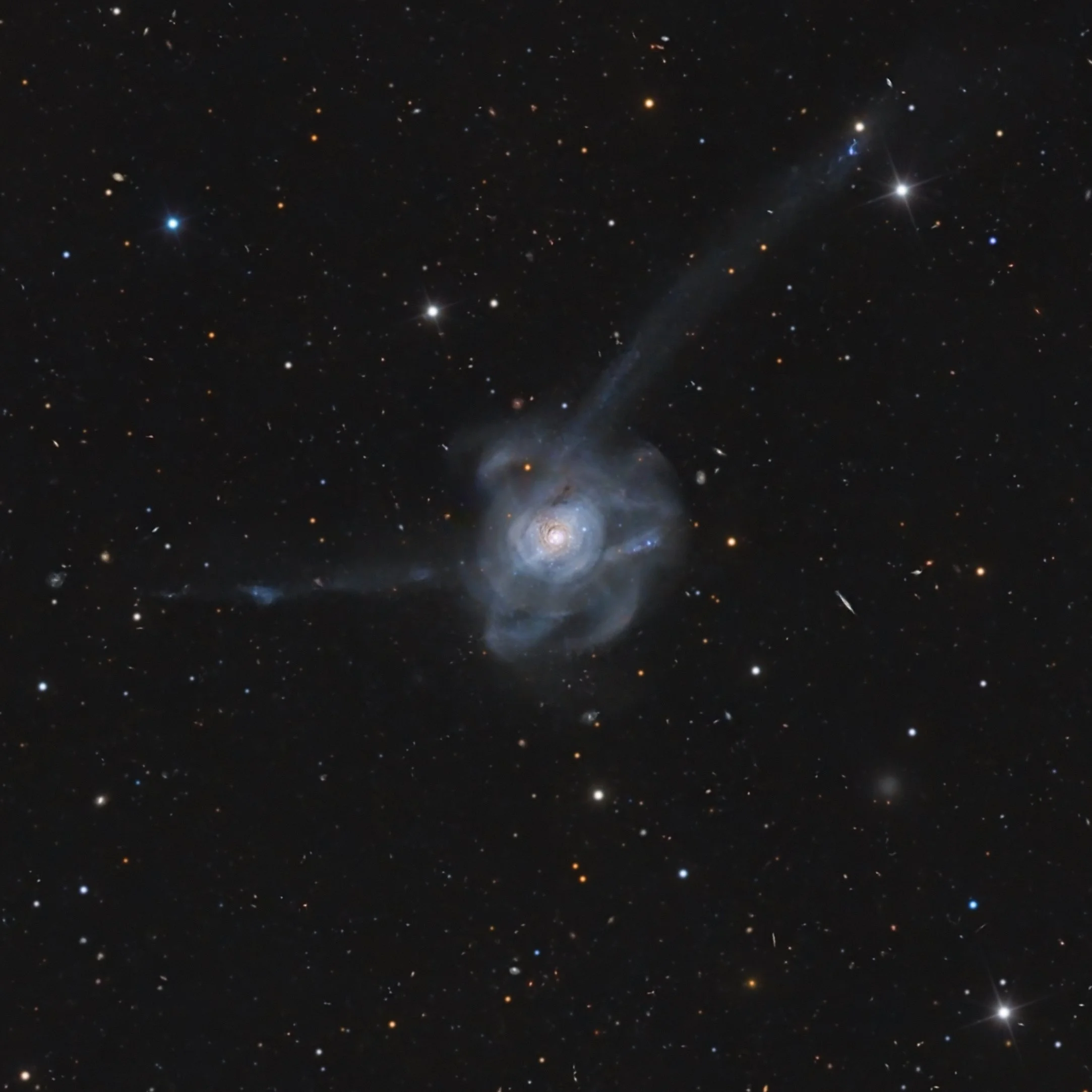
NGC 7252 Atoms For Peace Galaxy
NGC 7252 is a lenticular galaxy 220 million light years away in the constellation Aquarius.
The galaxy is nicknamed the “Atoms “for Peace galaxy because its stars form loop-like structure (tidal tails) that resemble a diagram of electrons orbiting an atomic nucleus. Similar to the logo used by the United States in the 1950’s to promote its Atoms for Peace campaign.
The galaxy is the result of a merger of two galaxies over a billion years ago.

NGC 2626
Image Description and Details : It has components of reflection nebula, emission nebula and dark (absorption) nebula which makes it both challenging and cool. It is located in Vela approximately 4200 light years from Earth.
The reflection nebula is primarily illuminated by a B1 star (CD-40 4432) and is ionized by the O8 quadruple star system HD 73882.
Imaged in LRGB on the Planewave CDK 700 at Observatorio El Sauce, Chile.
Image Data Acquired and preprocessed by: Mike Selby at throughlightandtime.com
Processed using Pixinsight and Photoshop.
Copyright: Mike Selby and Gowri Visweswara

Ngc1808
NGC 1808 is a barred spiral galaxy located 40 million light years from Earth in the constellation of Columba.
While most spiral galaxies are flat disks this one has spumes of dust and gas on its outer spiral arms. The unusual shape may have been caused by a proximate encounter with another galaxy (NGC 1792). This is supported by the amount of gas moving towards the nucleus of NGC 1808 which has triggered a very high level of new star formation. The galaxy is classified as a starburst galaxy, but the heavy amount of gas and dust tends to obscure the starburst regions in ground based images. Of interest in this deep image is the resolution of the faint outer arms and star streams.
Imaged in LRGB on our CDK 1000 at Observatorio El Sauce, Obstech, Chile.
Deconvolved with RC Astro Blurxterminator Beta version.
Image Processing: Mike Selby and Mark Hanson
NGC 7377
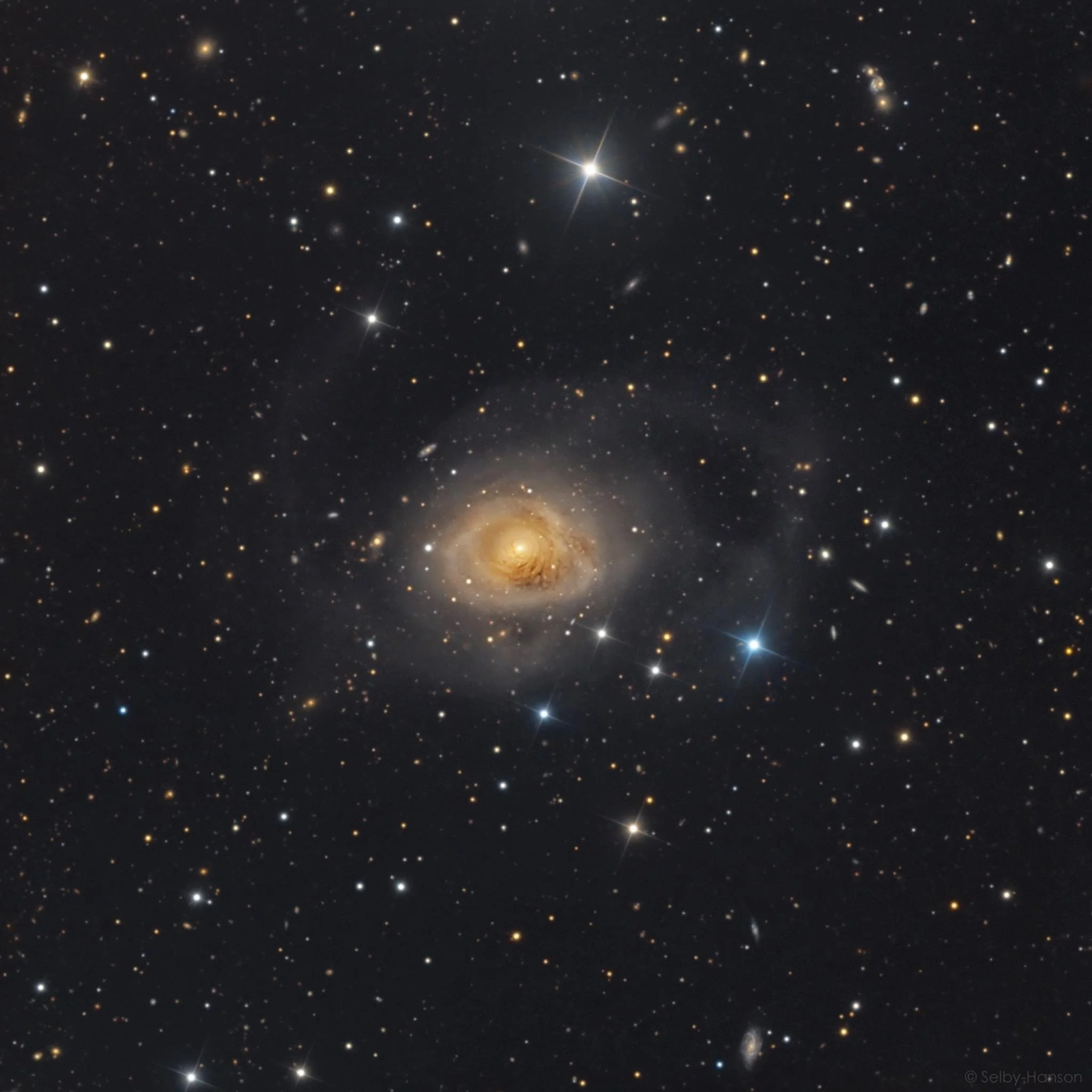
NGC 7377 is located 100 million light years away in Aquarius. It is relatively small in the apparent field of view and has been very rarely imaged. It has been variously classified as lenticular and spiral. As seen in this image there is a spiral structure evident and faint out stretched arms. It is more probable that this is a spiral transitioning to a lenticular galaxy. The spiral structure has a heavy dust content and is quite dense towards the central portion of the galaxy. The overall shape of the galaxy indicates possible past interaction with another galaxy. Imaged in LRGB on our Planewave CDK 1000 at Observatorio El Sauce, Chile.
Image Processing: Mike Selby and Mark Hanson
Inside The South Celestial Serpent
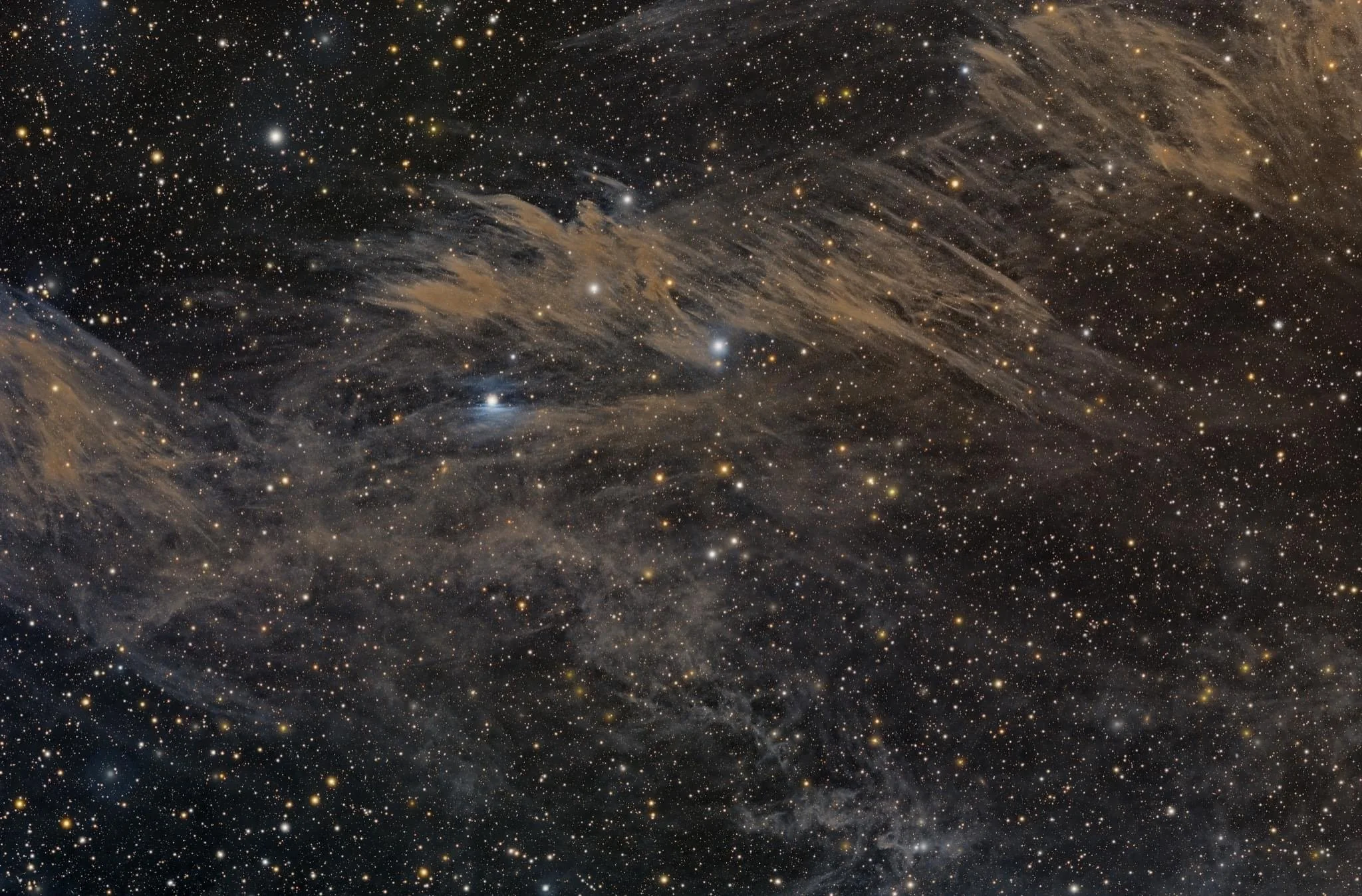
The South Celestial Serpent is a large integrated flux nebula (IFN). IFN are composed of diffuse dust particles, hydrogen and carbon monoxide and other elements. Unlike reflection nebula’s which are lit by proximate stars, IFN are illuminated by the glow of the Milky Way Galaxy and are much fainter than most reflection nebulae. IFN were only identified quite recently in great part due to improvements in the sensitivity of imaging sensors. They are very prominent in the direction of both the north and south celestial poles. The large IFN nebula close to the south celestial pole is MW9 and is commonly termed the South Celestial Serpent.
Imaged in RGB on our RH 350 at Observatorio El Sauce, Chile.
Image Processing: Mike Selby and Mark Hanson
VDB 123 and Serpens Reflection Nebula
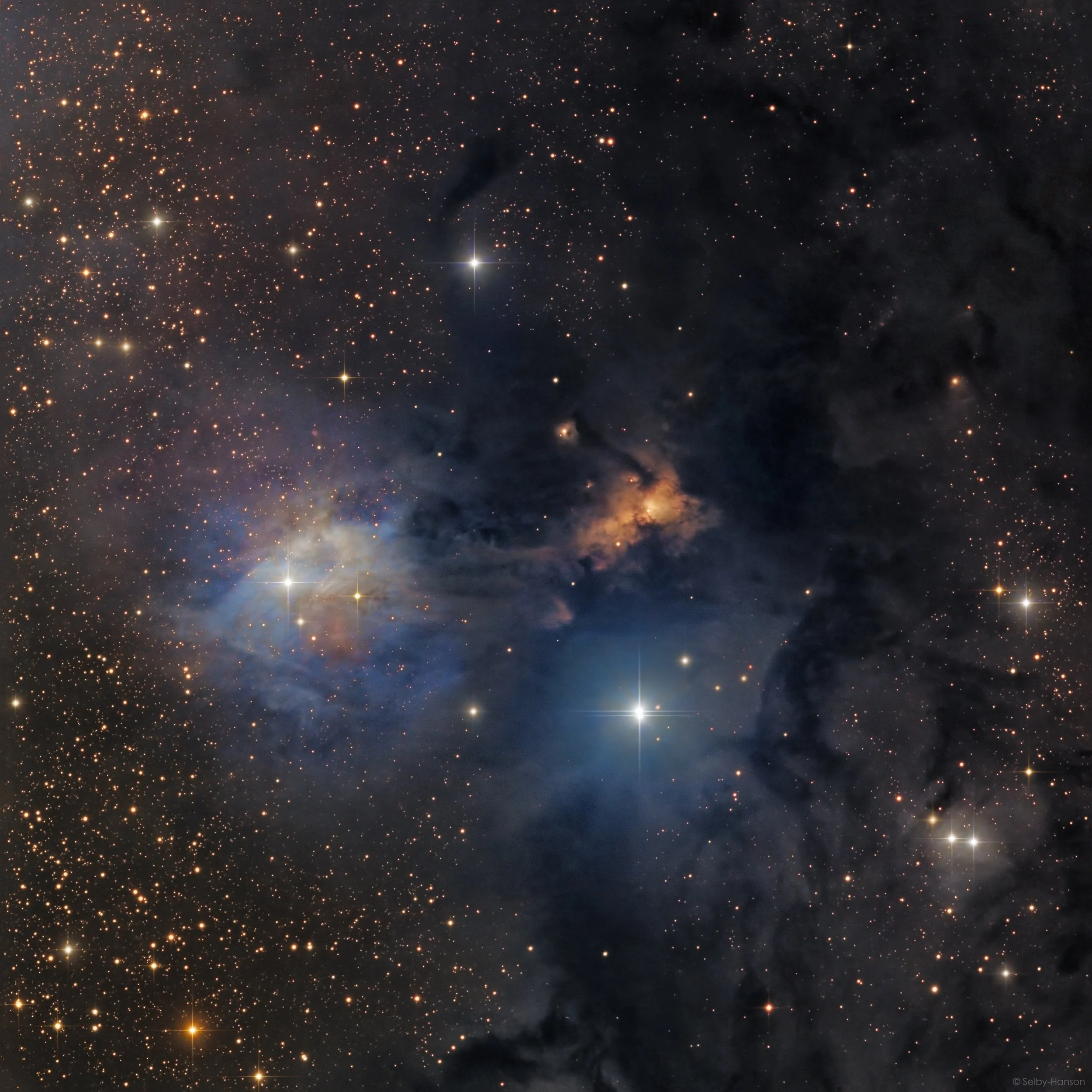
Image Description and Details : VDB 123 is a reflection nebula in Serpens embedded in the Serpens Dark Cloud. It is illuminated by HD 170634 a magnitude 9.75 blue star.
Standing out in contrast to VDB 123 is a bright region of orange nebulosity, the Serpens reflection nebula.
Imaged in LRGB on our PlaneWave CDK 1000 at Observatorio El Sauce, Chile.
Image Processing: Mike Selby and Mark Hanson
Integration Time: L 16 hours RGB 5.5 hours each.
Copyright: Mike Selby/Mark Hanson
M83
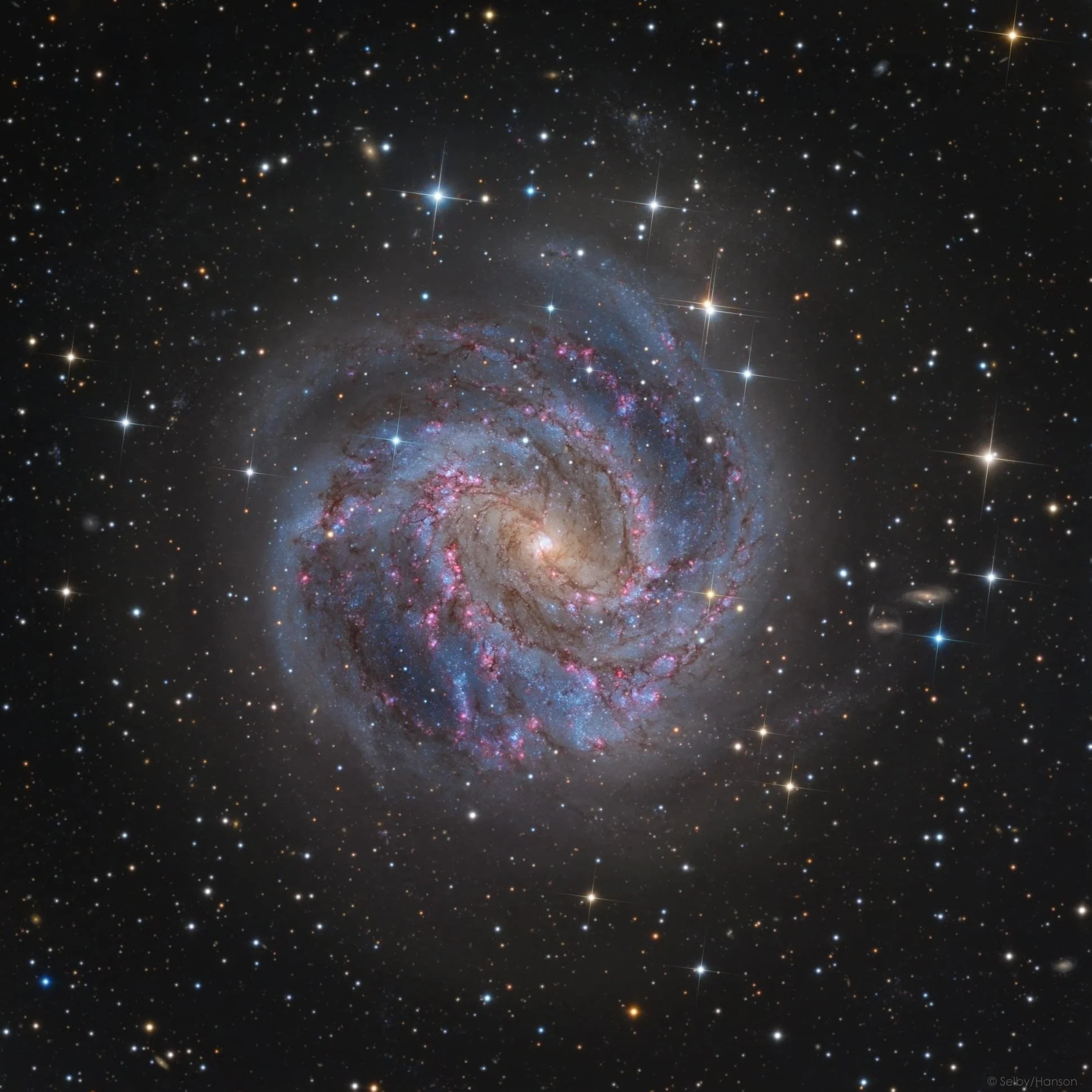
One of the highlights of the Southern sky, M83 is often referred to as the Southern Pinwheel. It is a colorful barred spiral starburst galaxy located only 15 million light years away in Hydra.
M83 has an unusual double nucleus and houses a super massive black hole at its center apparently surrounded by an asymmetric disc of stars. It has also been the home of at least six observed supernovae and nearly 300 supernovae remnants have been identified.
Imaged in LRGB and H alpha on our PlaneWave CDK 1000 at Observatorio El Sauce, Chile.
Copyright: Mike Selby and Mark Hanson
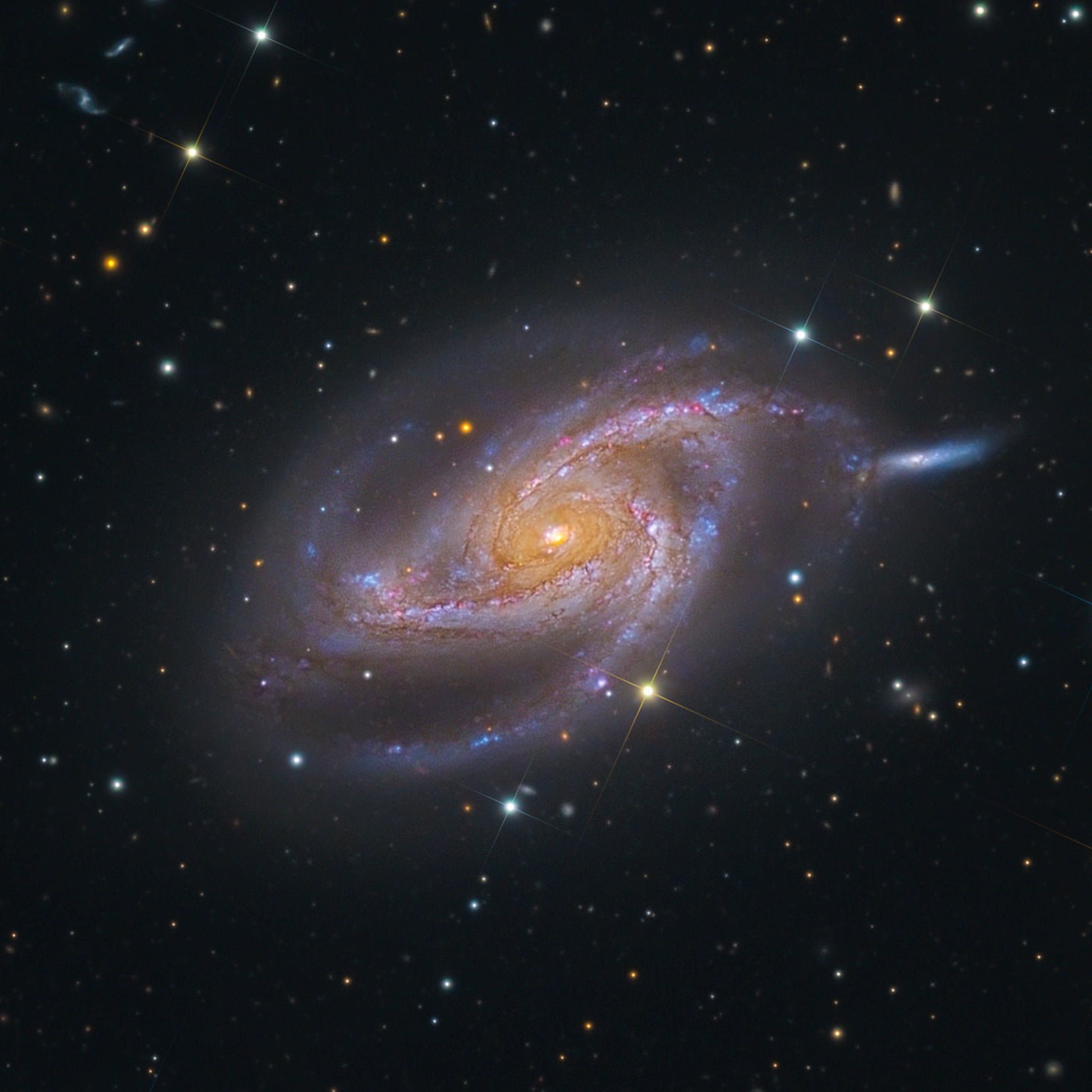
NGC 5054 “Gem in Virgo”
NGC 5054 is a beautiful spiral galaxy in the Virgo constellation. The galaxy is small in the field of view at an apparent 4×2’. The galaxy has an irregular shape with two of the arms bending back around the galaxy. This small but relatively bright galaxy and allows a reasonable amount of detail and color to come through. This is amazing when you consider that the light from this galaxy has been travelling for 82 million years towards us. The dust lanes are quite evident, as are the star forming areas of the two major spiral arms. These are within the bluish regions of the arms. Its irregular shape suggests a possible interaction in the past.
The background is littered with hundreds of small galaxies. You can go to website to see wider version.
Imaged in LRGB on a Planewave CDK 1000 at El Sauce, Obstech, Chile
Integration Time: 28 hours
Copyright: Mark & Mike
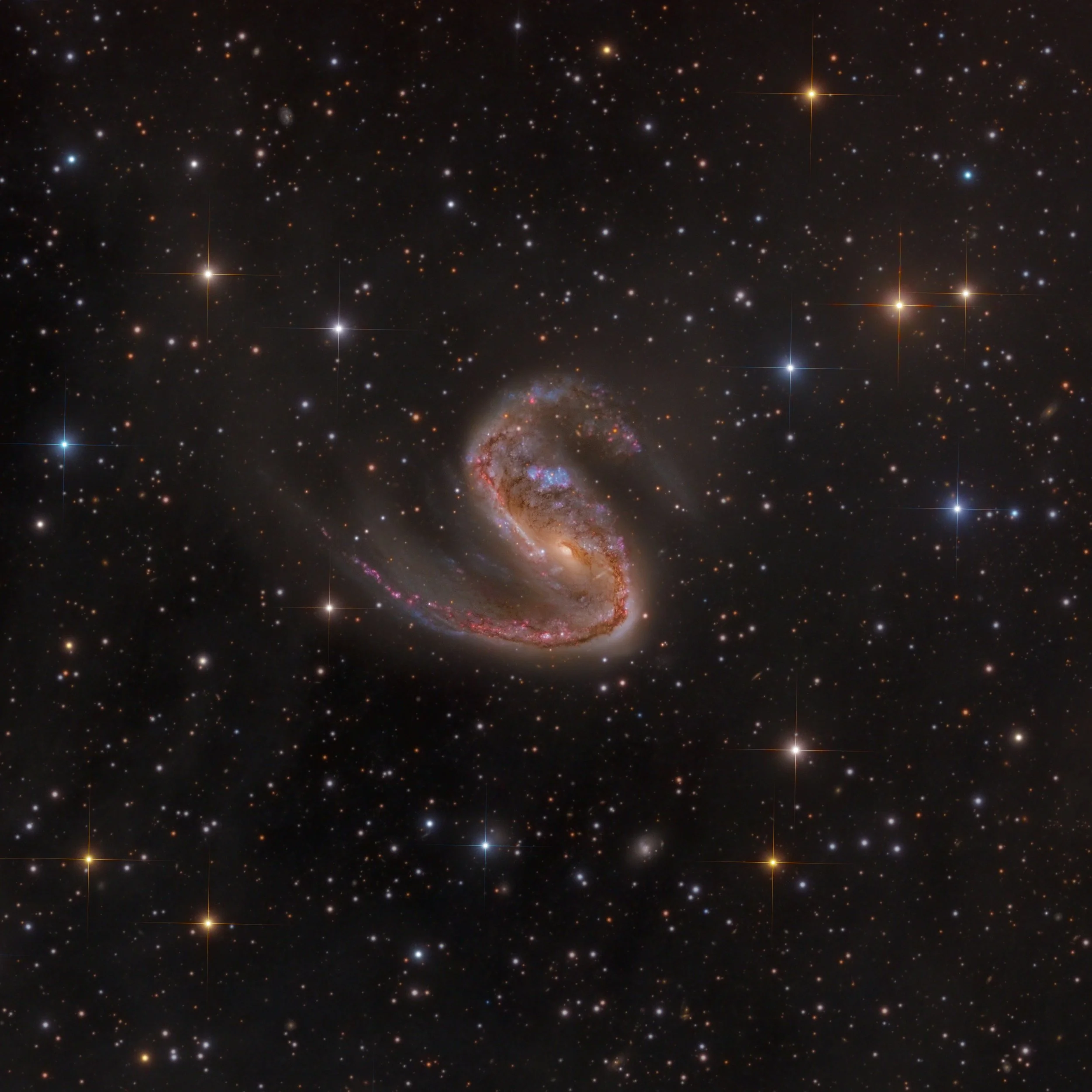
NGC 2442
Image Description and Details :
NGC 2442 is located around 50 million light-years away in the constellation of Volans. The galaxy is 75,000 light-years wide and has quite an peculiar shape featuring two dusty spiral arms extending from a central bar that gives it a hook-like appearance. Given its appearance it is often referred to as “The Meat Hook Galaxy.” The galaxy’s distorted shape is most likely the result of a close encounter with a smaller galaxy some time in the past. A considerable amount of IFN is present in the field proximate to the galaxy and the image shows faint star streams at the ends of the arms of the galaxy.Imaged in LRGB and H alpha OTA CDK 1000 Luminance, RGB and H alpha. Additional RGB RiDK 500.Imaged at Observatorio El Sauce, ChileIntegration time: 47 hoursImage Processing: Mark Hanson and Mike Selby
Copyright: Mark Hanson_Mike Selby
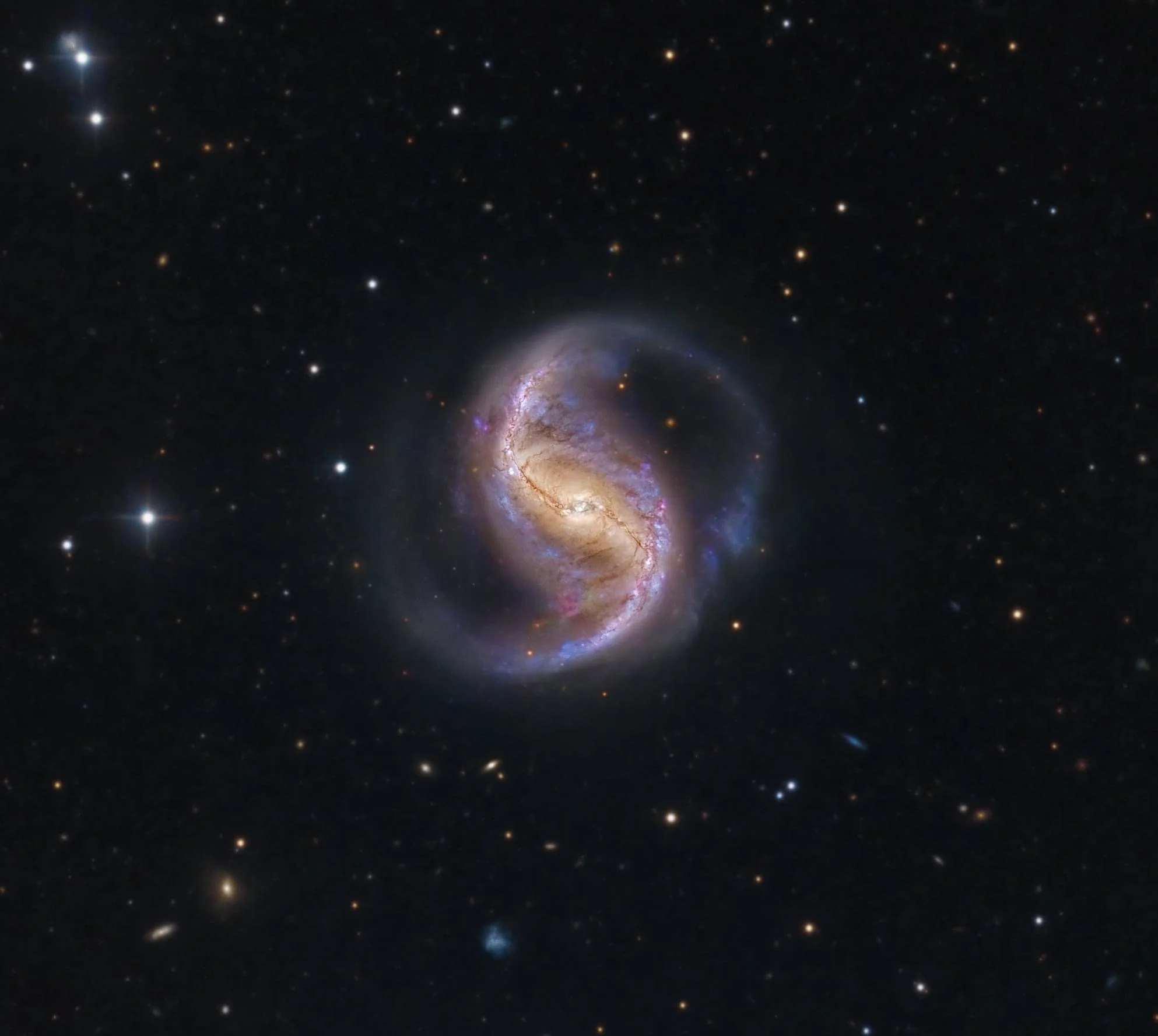
ngc 986
NGC 986 is a barred spiral galaxy in the constellation of Fornax, located about 56 million light-years away. It is a small target and is not imaged often. The galaxy contains two large, extended and slightly warped arms that begin at each end of the central bar.
Young blue stars are spread through the arms and the core of the galaxy glows with star formation surrounded by numerous dust lanes.
Imaged in LRGB at El Sauce, Obstech, Chile on our CDK 1000
Image Processing: Mike Selby
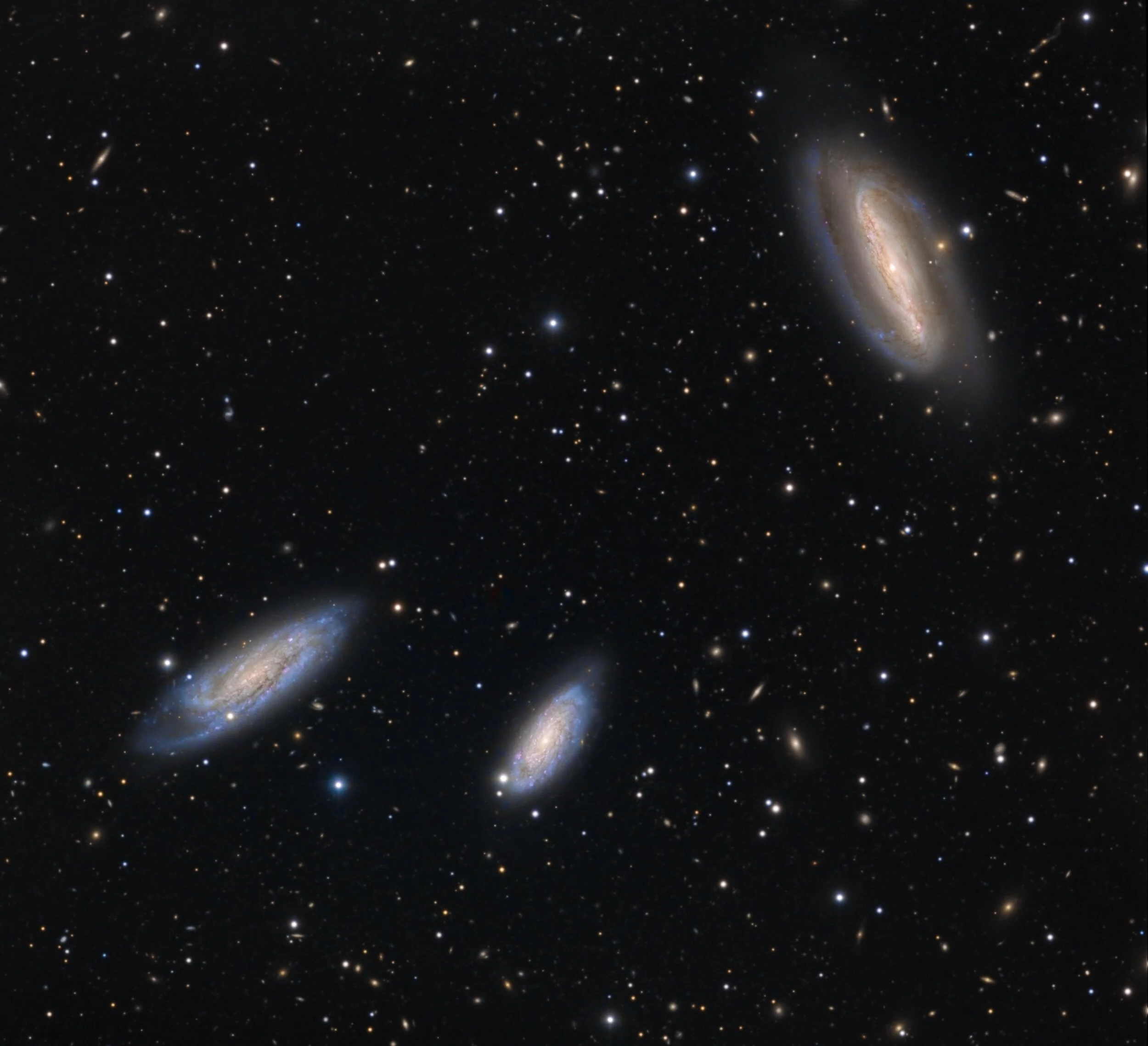
NGC 7582 NGC 7590 NGC 7599
Image Description and Details :
NGC 7582, 7590 and 7599 are an interacting group of galaxies situated 70 million light years away in the constellation of Grus.
Studies in indicate the existence of faint H I bridges between the galaxies.
NGC 7582 at the top right is the brightest galaxy of this trio. It is of interest as it exhibits the characteristics of both a starburst and a Seyfert II spiral galaxy. The starburst activity is quite intense but is localized to several regions.
In 1996 a study indicated that NGC 7582 appears to have two rather than a single nuclei indicating a merger with another galaxy sometime in the distant past.
Imaged in LRGB on our CDK 1000 at El Sauce, Obstech, Chile
Image Processing: Mike Selby
System Control Software : Voyager by Leo Orazi
Integration Time: L 16 hours 900s exp RGB 4 hours each 900s
Copyright: Mike Selby
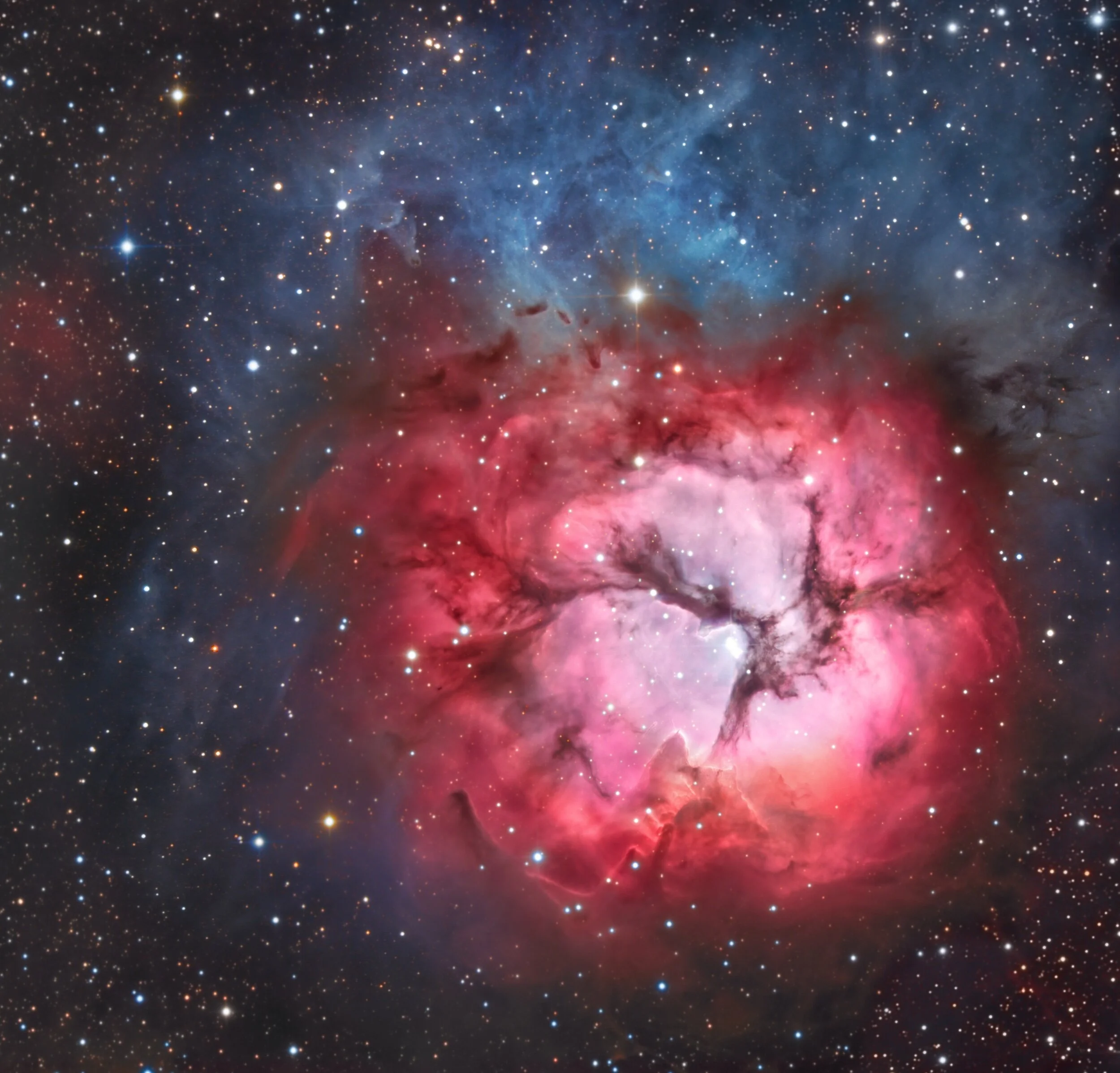
M20
Close up of M20 the Trifid Nebula. Located 9000 light years away in Sagittarius Trifid is a star forming nebula. It is a very popular subject for astrophotographers. This image was taken with our RiDK 700 in LRGB Hydrogen Alpha and Oxygen III to provide a detailed close up of the Nebula and surrounding gas clouds.
Imaged at El Sauce, Obstech, Chile
Image Processing: Mike Selby
System Control Software: Voyager by Leo Orazi.
Copyright: Mike Selby
