
AAPOD2 Image Archives
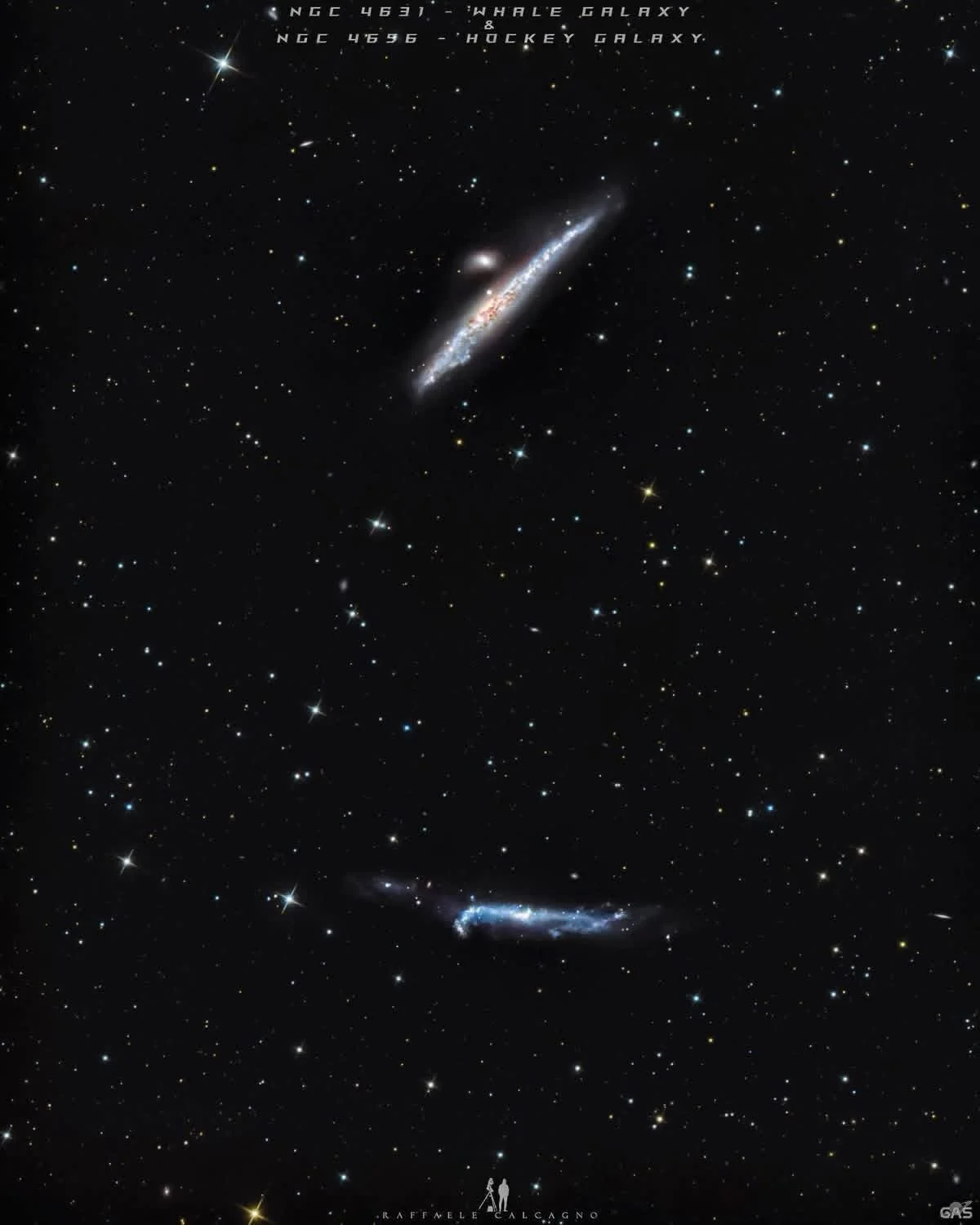
Whale & Hockey Stick Nebula
Whale Galaxy (NGC 4631), and Hockey Stick Galaxy (NGC 4656), are two interacting galaxies in the Canes Venatici constellation, about 25-30 million light-years from Earth. NGC 4631 is an edge-on spiral galaxy with a diameter of about 80,000 light-years and intense star-forming regions, while NGC 4656, irregular and distorted, shows signs of gravitational interactions with its companion. Both are part of a group that also includes the dwarf elliptical galaxy NGC 4627, located near NGC 4631.
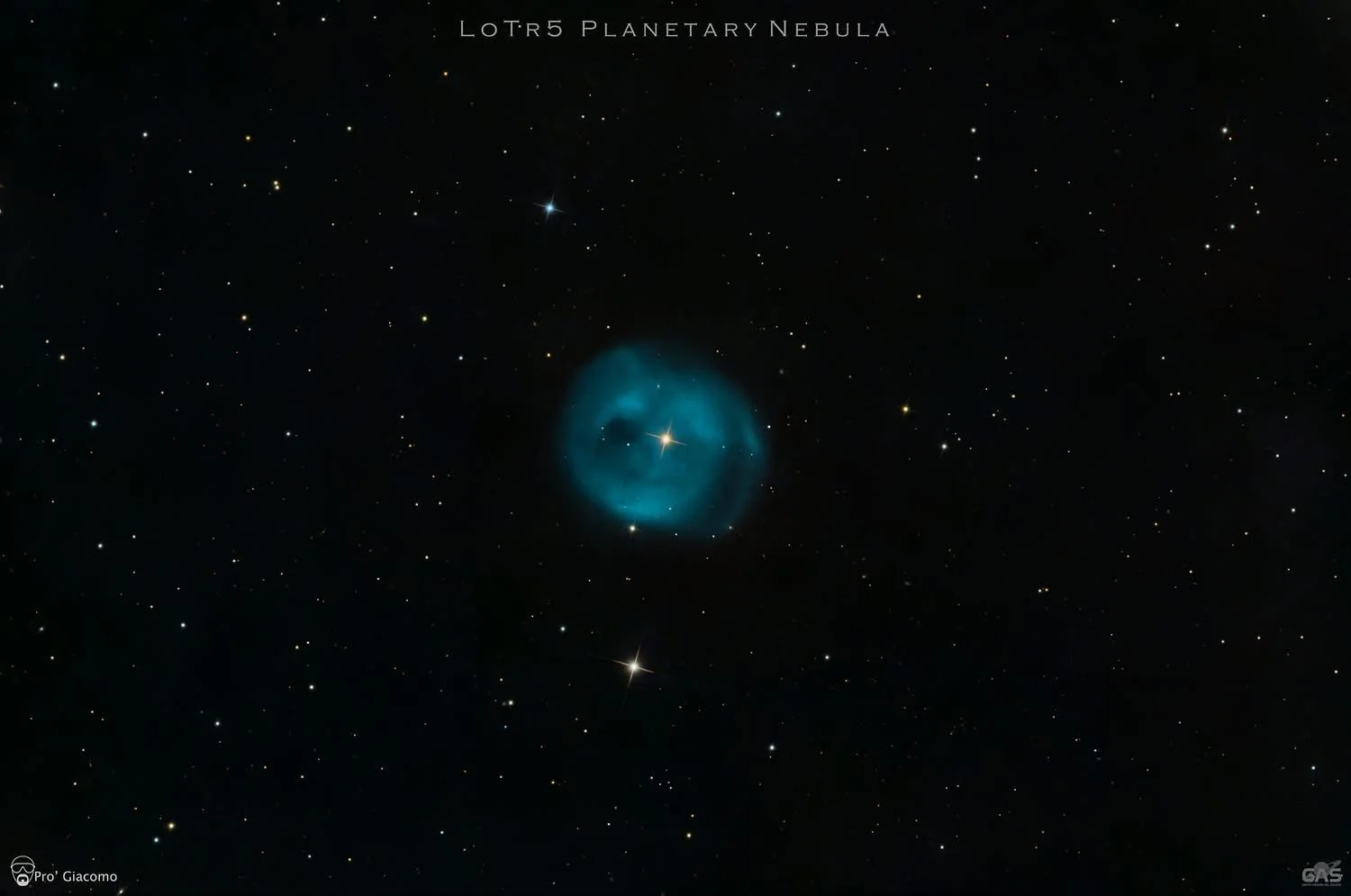
LoTr 5
LoTr 5
The nebula, more commonly referred to as LoTr 5, short for Longmore-Tritton 5, was discovered in 1980 by AJ Longmore and SB Tritton, who found it on photo slabs taken at the Schmidt telescope in the UK.
This is a large and weak planetary nebula in the constellation of Chioma di Berenice, about 1,650 light years away
In 2018 it had the highest galactic latitude of any known planetary nebula, located only 1.5 degrees from the galactic North Pole.
LoTr 5 is one of the largest known planetary nebulae, with a radius of 1.8 light years, emits mainly light at a wavelength of 500.7 nm, corresponding to a double ionized oxygen line.
It is noted that LoTr 5's central system has been binary since 1983. At the centre is an evolutionary G-type star (IN Comae Berenices) which is often classified as a giant or subgiant star, as well as an O-type hot-white subnana or dwarf that is responsible for ionization of the nebula.
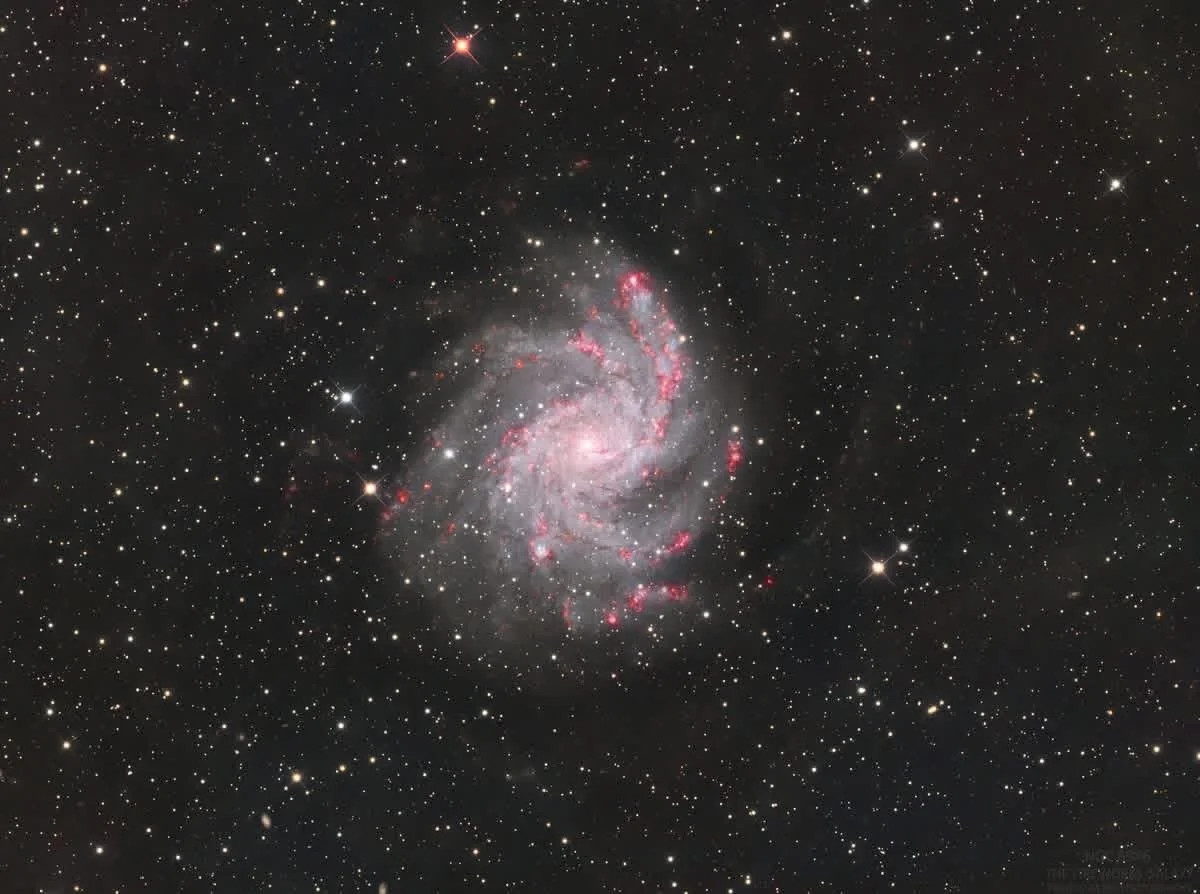
NGC 6946 - The Fireworks Galaxy
NGC 6946 is a face‑on intermediate spiral galaxy lying about 25 million light‑years away, positioned along the border of Cepheus and Cygnus. Although partially dimmed by Milky Way dust, its structure remains striking: a compact, bright nucleus, loosely wound spiral arms, and abundant gas and dust that fuel vigorous star formation. The galaxy’s inner regions show evidence of a double‑barred structure that channels material toward the core, supporting its classification as an active starburst system. Over the past century, astronomers have recorded ten supernovae exploding within its disk, an unusually high number for a single galaxy. These repeated stellar detonations, combined with its energetic star‑forming activity, are the reason NGC 6946 earned the nickname the Fireworks Galaxy. It also hosts unusual features such as the Red Ellipse, dark nebulous lanes, and the enigmatic Hodge’s Complex, making it one of the most dynamic and intriguing nearby spirals
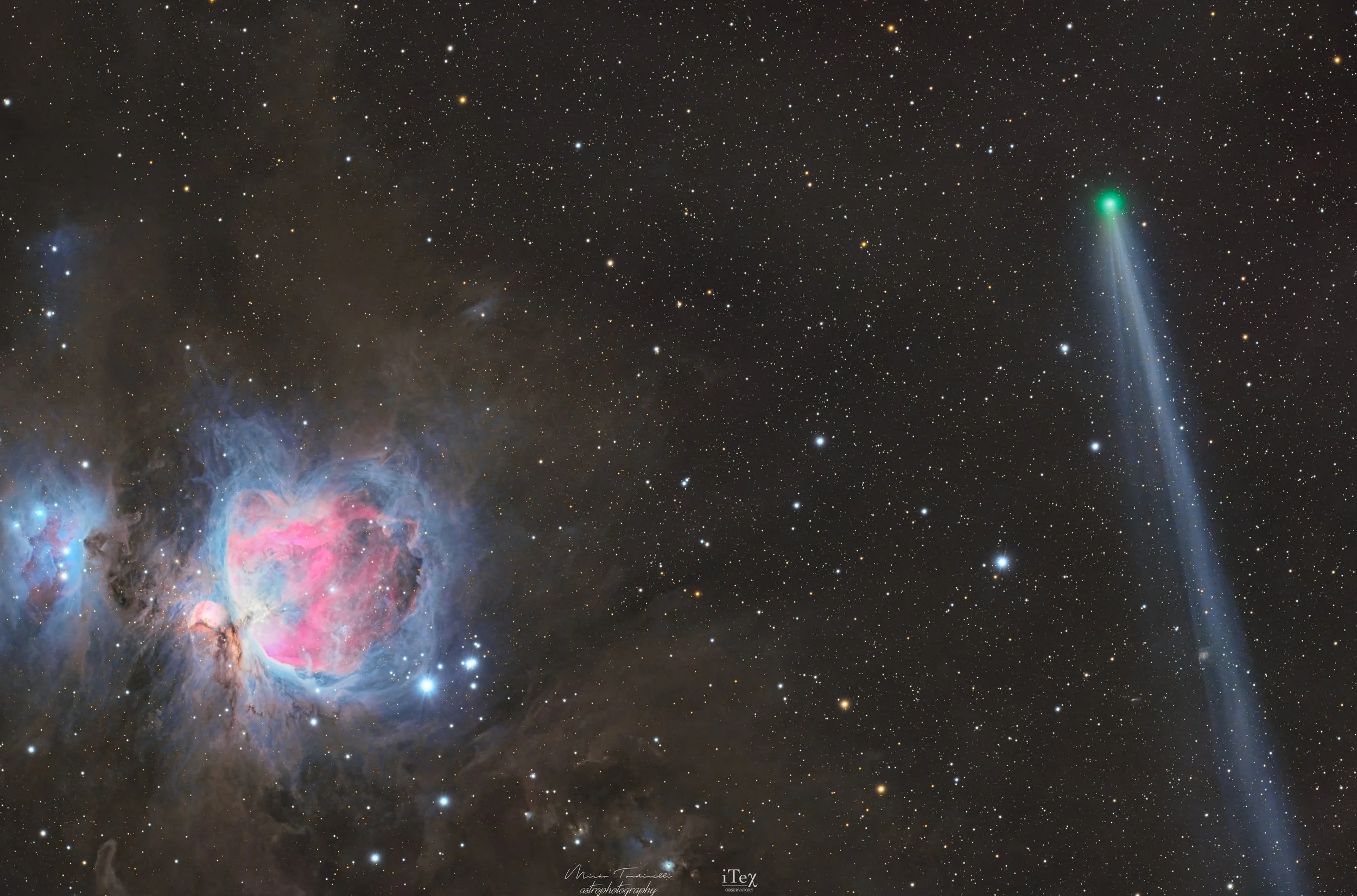
The comet encounters the Orion Nebula
Comet C-2025 R3 (PANSTARRS) quickly intersected with the magnificent M42 Nebula
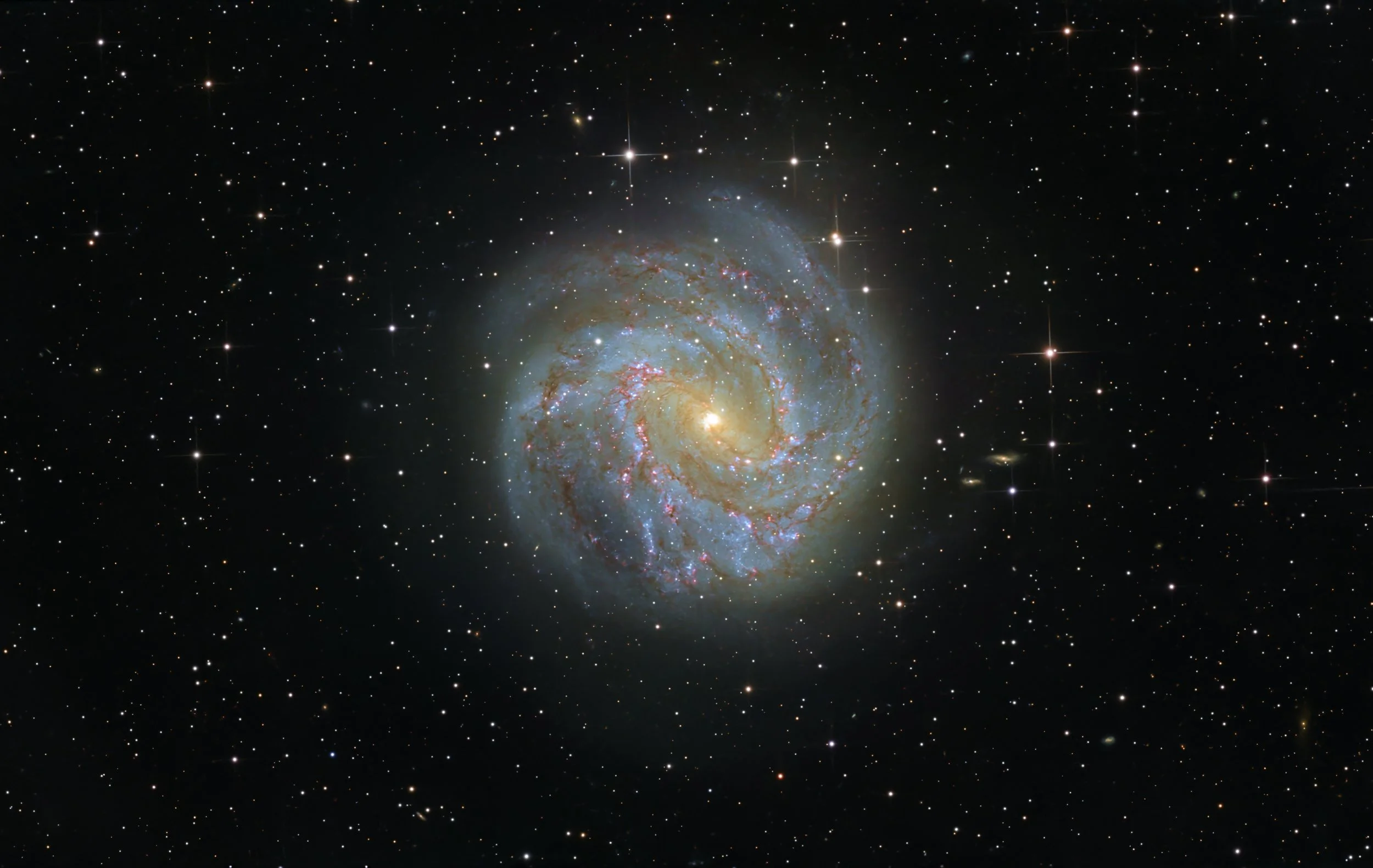
M83 Southern Pinwheel Galaxy
Messier 83, often called the Southern Pinwheel Galaxy, is one of the most photogenic and technically rewarding spiral galaxies in the southern sky. Located approximately 15 million light-years away in the constellation Hydra, it serves as a premier example of a barred spiral galaxy viewed nearly face-on. M83 is celebrated for its well-defined spiral arms, which are heavily populated by vibrant HII regions (magenta-hued star-forming nebulae) and clusters of young, blue stars. The central bar structure is prominent, funneling gas toward the nucleus and fueling an intense "starburst" of activity. Deep imaging often reveals a complex network of dark dust lanes that weave through the inner core and out into the expansive, sprawling arms.
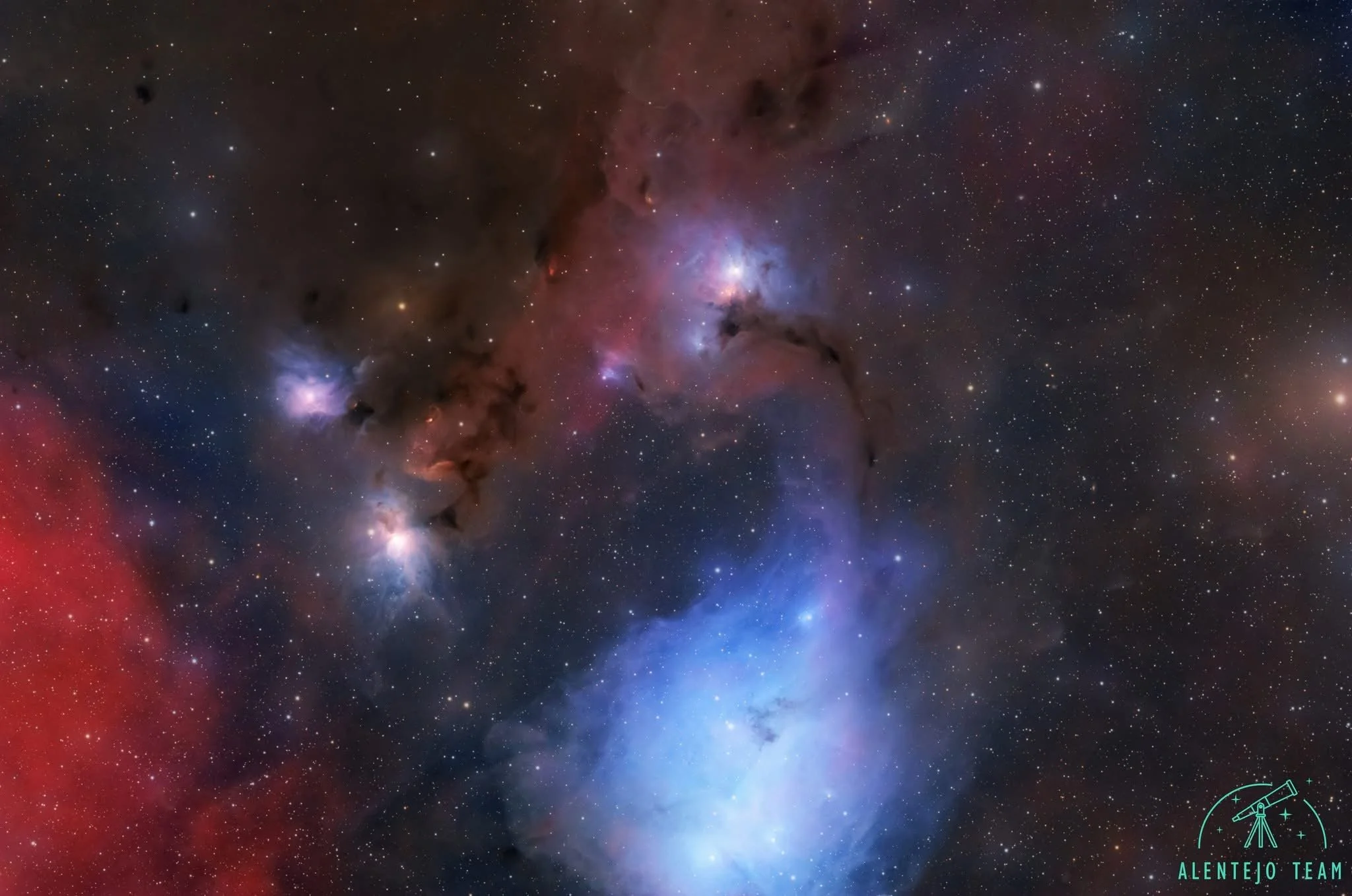
IC 446 & IC 447 — A stellar nursery in Monoceros
2,400 light-years away, two blue reflection nebulae bathe in the diffuse Hα emission of Sh2-266. At the heart of IC 446 (center of the frame), the Herbig Be star HD 259431 lights up its dust-bordered cavity and ejects small orange knots visible around it — Herbig-Haro objects, signatures of stars in active formation. IC 447, larger and more diffuse, spreads its broad cyan glow across the lower portion of the field.
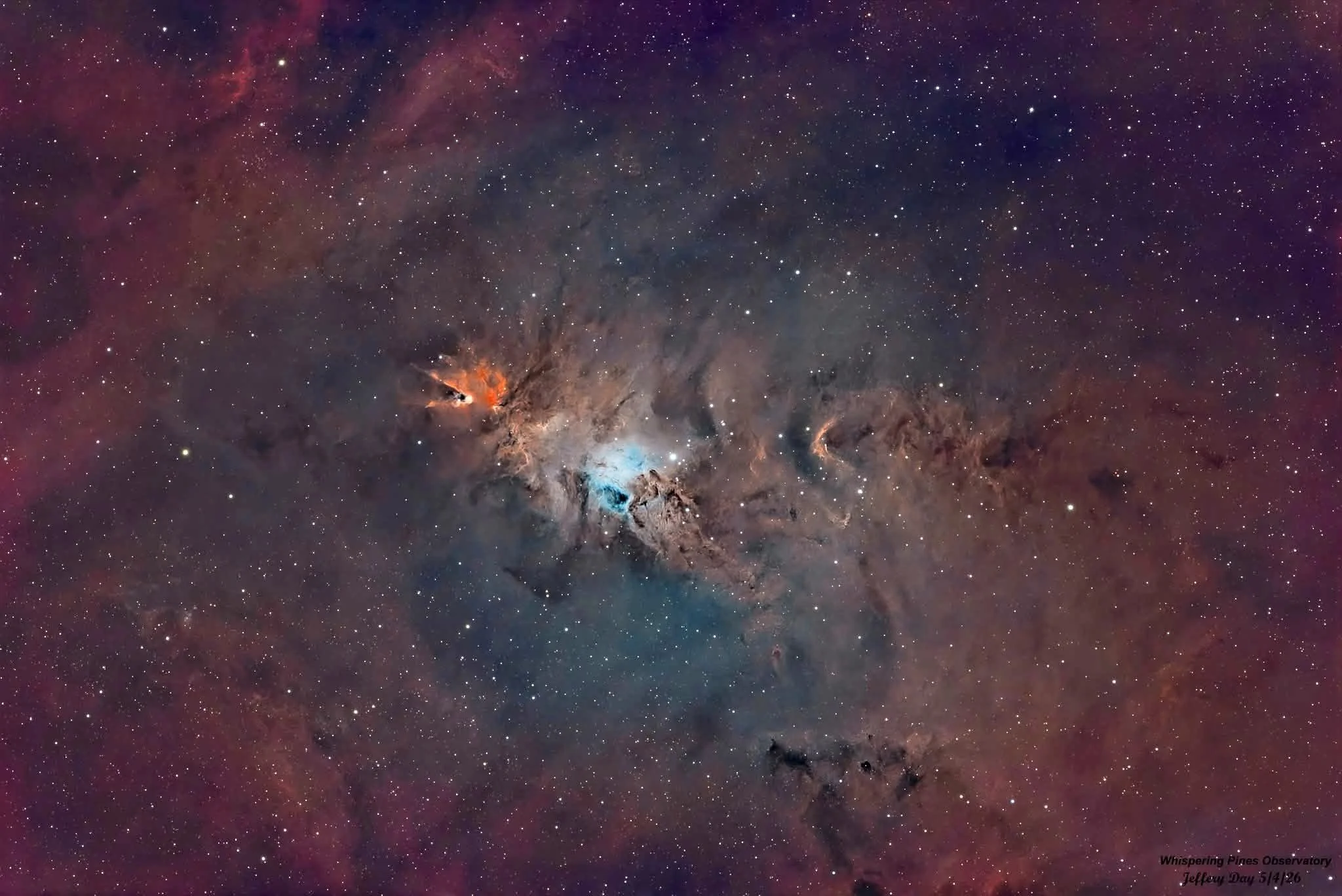
Sh2-273
Sh2-273 is a large region and emission nebula located roughly 2,400–2,700 light-years away in the Monoceros constellation. As part of the NGC 2264 complex, it encompasses the famous Cone Nebula and the Christmas Tree Cluster. Sh2-273 is often specifically associated with the "Fox Fur Nebula" and is a vibrant, active star-forming region.
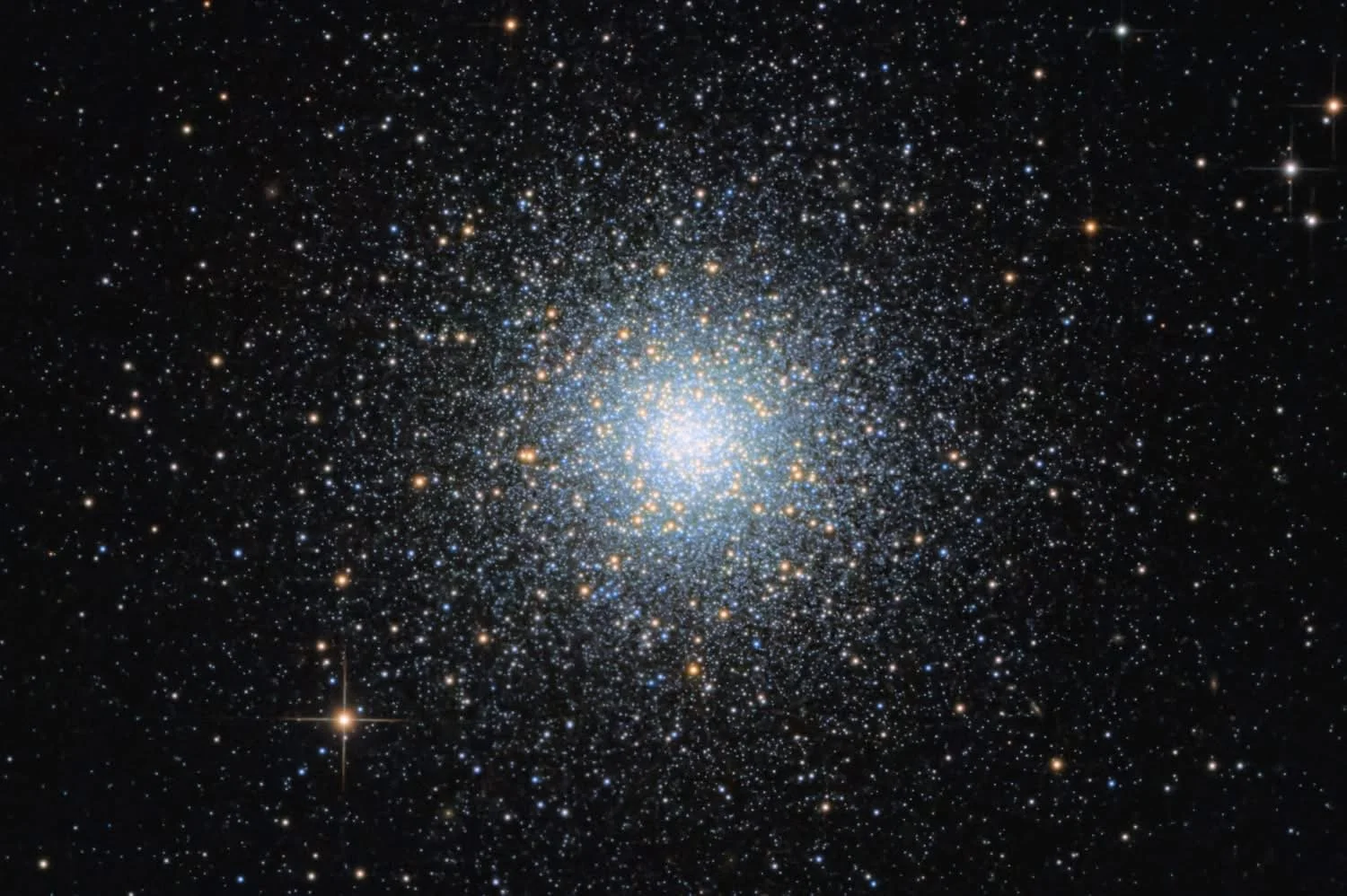
M3 - Globular Mass in Hounds
Messier 3 (M3) is a large, bright globular star cluster in the constellation Canes Venatici, containing over 500,000 stars and notable for its high number of variable stars (over 274). Located about 34,000 light-years away, it's an ancient cluster, estimated to be around 11.4 billion years old
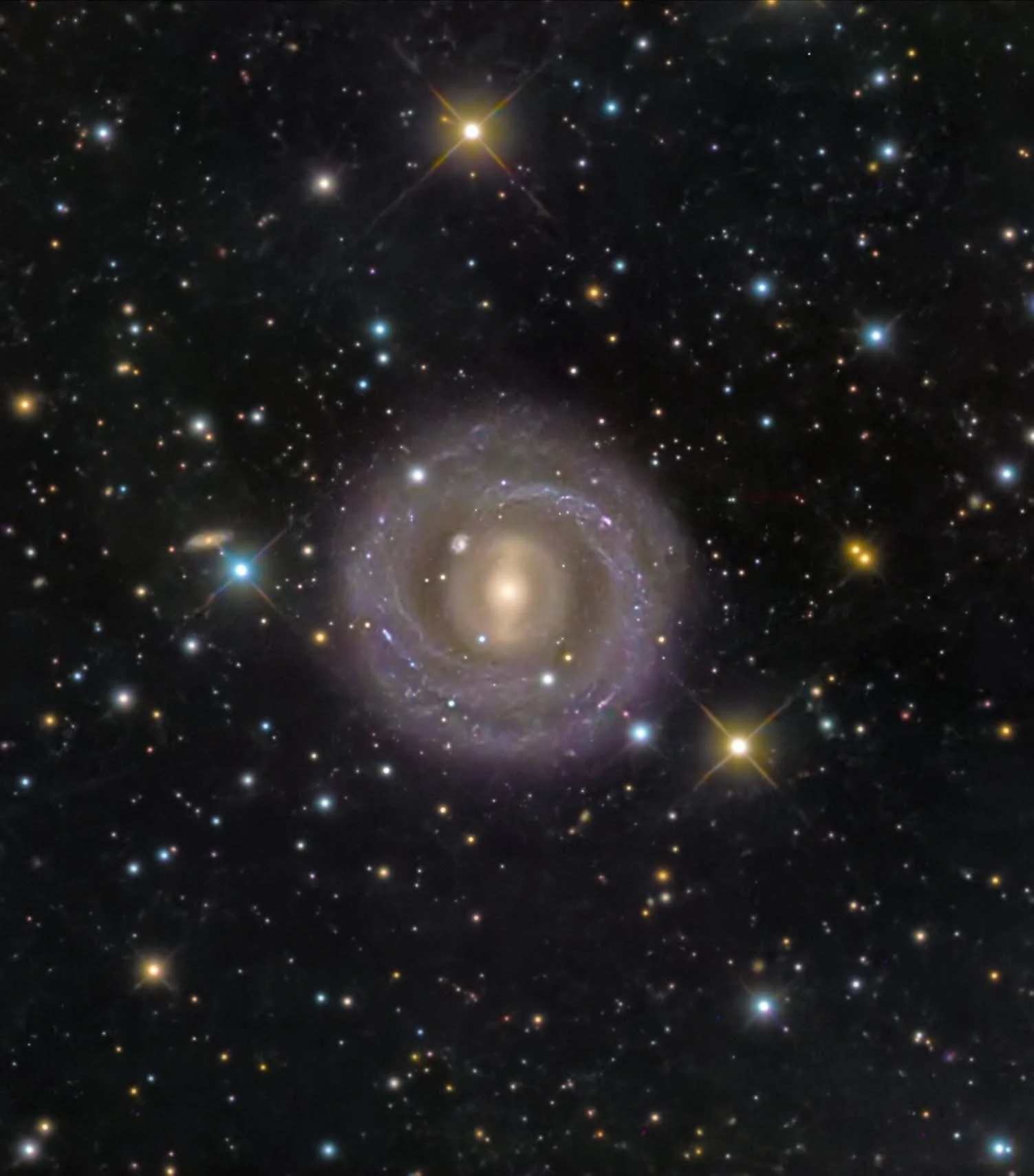
NGC 5701
NGC 5701 is a barred spiral galaxy located in the constellation Virgo. Discovered by William Herschel in 1786, it lies approximately 95 million light-years from Earth. The galaxy has an apparent magnitude of about 11.4.
NGC 5701 is notable for its bright central bar and well-defined outer ring structure, features commonly associated with barred spiral galaxies.
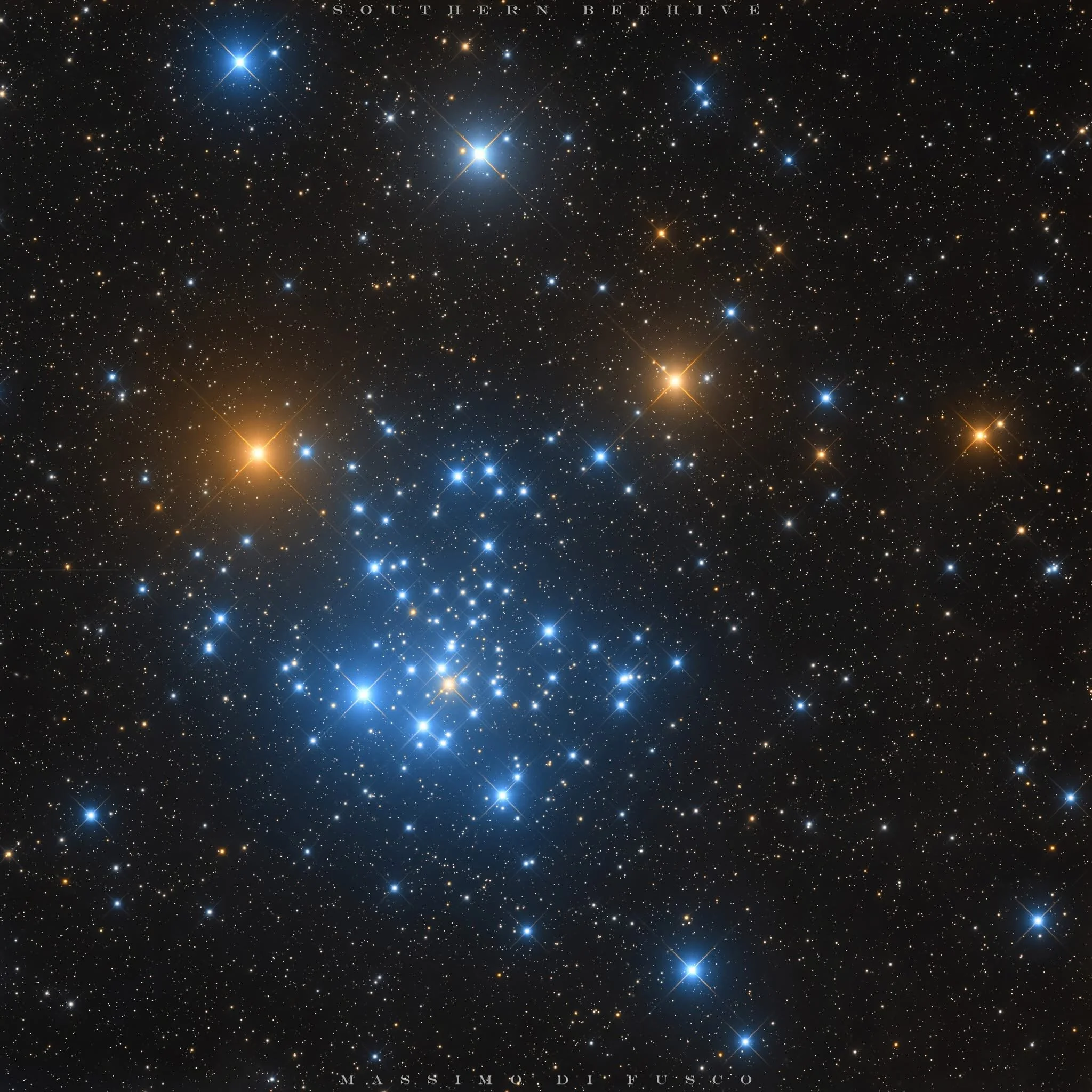
Ngc2516
NGC 2516 (also known as C 96) is a highly concentrated open cluster visible in the southern constellation of Carena.
NGC 2516 is a very luminous cluster, the distance of which is estimated to be around 1330 light years and is therefore located within the Orion Arm, a short distance from the boundaries of the great Gum Nebula.
NGC 2516 has about a hundred certain members, some of which are giant stars: in fact there are some orange giants, a red giant irregular variable, and other stars; similar to the central part of the Nativity cluster, NGC 2516 appears to show typical signs of the mass segregation phenomenon, while the Distribution of components is irregular, with some dark bands less dense.
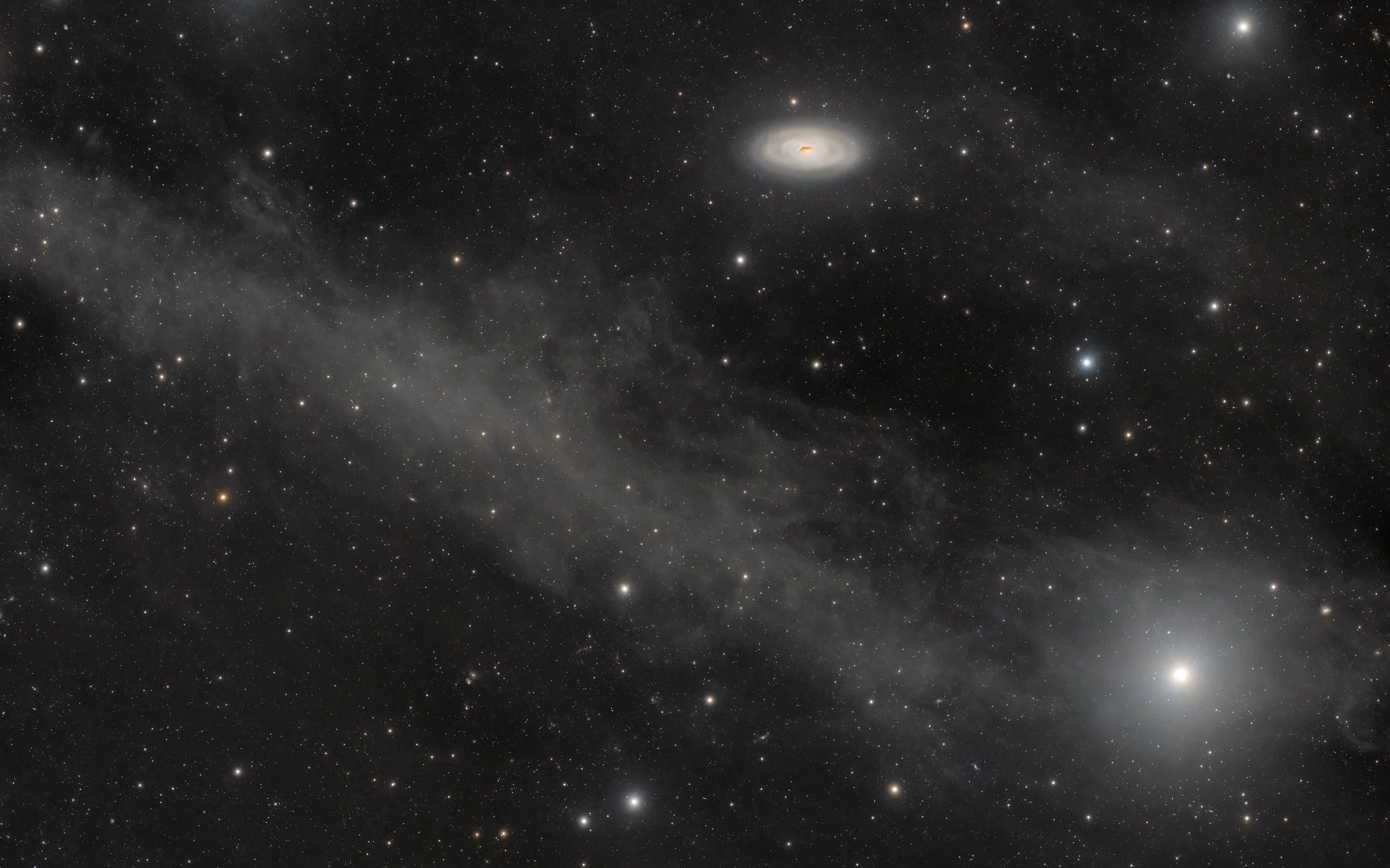
Messier 64 with IFN
Messier 64 (Black Eye Galaxy), located ~17 million light-years away in Coma Berenices, showing its prominent dust lane caused by counter-rotating gas. Surrounding it is Integrated Flux Nebula (IFN), a foreground galactic cirrus illuminated by the diffuse light of the universe.
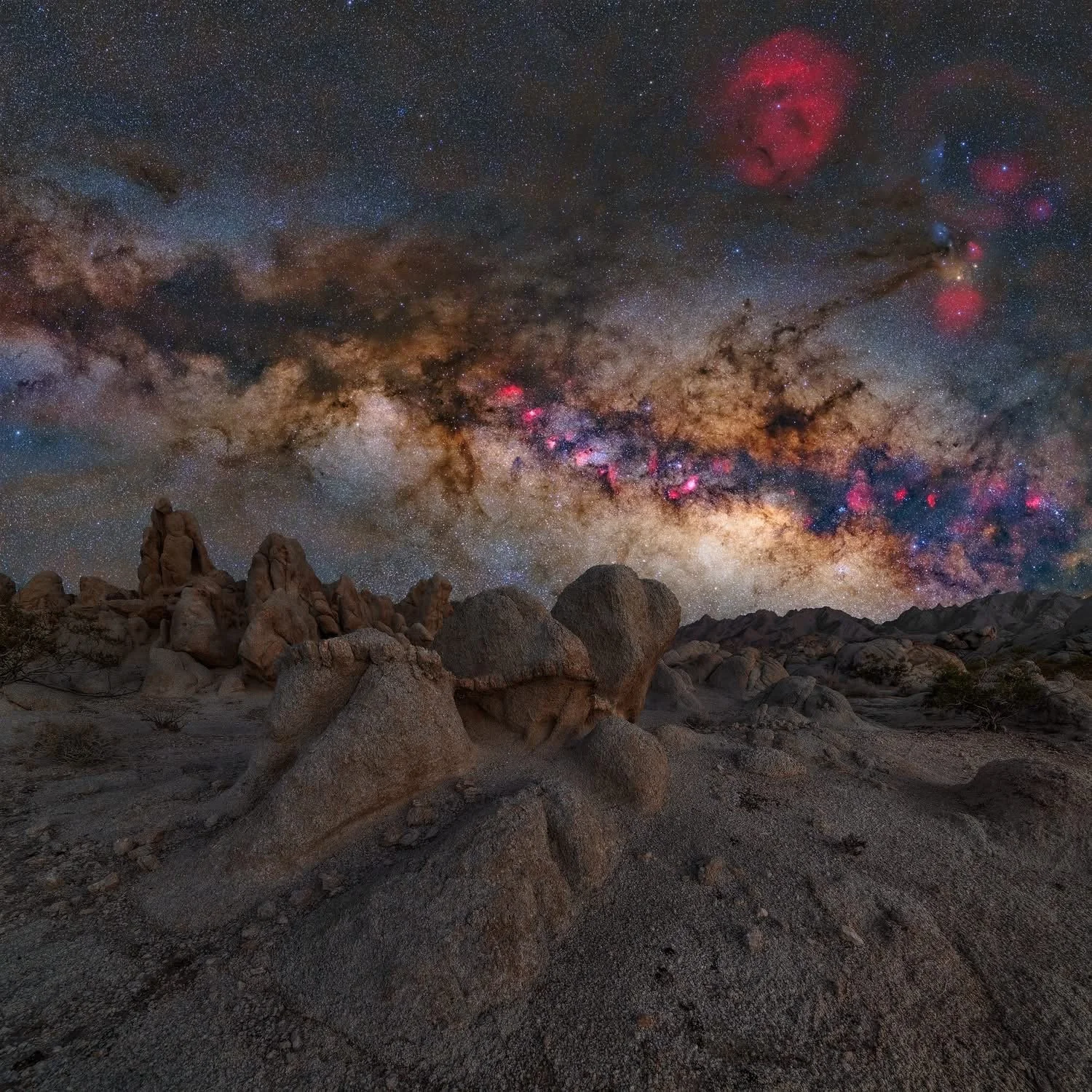
“The Rise”
In a remote corner of Joshua Tree National Park, a small stone dragon gazes upward as the Milky Way rises above the distant mountains.
Sculpted by aeons of wind and weather, the dragon blends seamlessly into its surroundings, its earthy tones echoed in the galaxy’s golden star fields and reddish-brown clouds of cosmic dust.
While scorpions are among the most feared creatures of the desert, the celestial scorpion glowing on the right side of the frame is a far more welcome presence. This vibrant region of the night sky seems to fascinate the silent dragon as it keeps watch beneath the turning heavens.
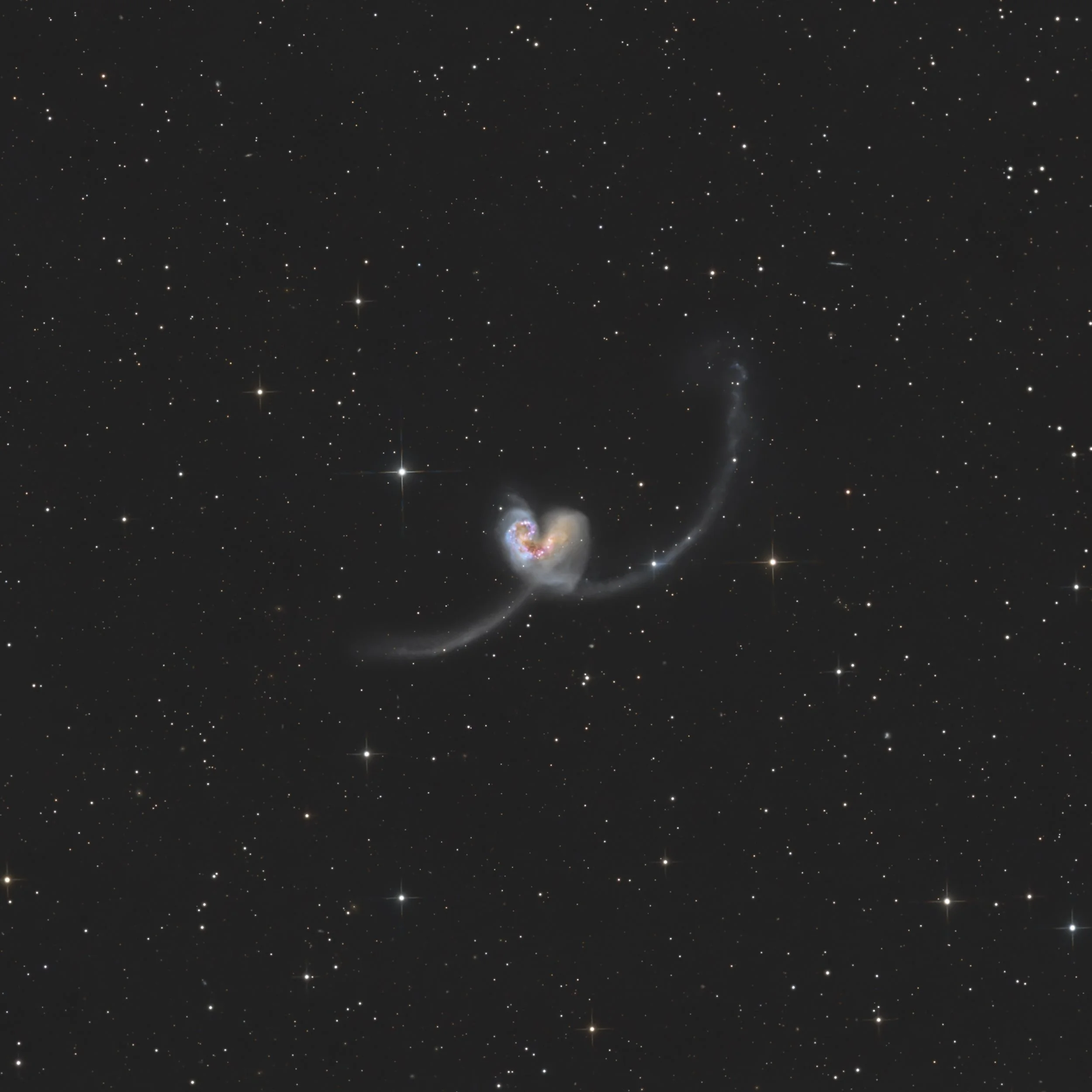
The Antennae Galaxies - NGC 4038 and 4039
The Antennae Galaxies are among the most spectacular objects in the deep sky. Located about 45 million light-years away in the constellation Corvus, they are the result of an ongoing collision between two spiral galaxies, known as NGC 4038 and NGC 4039.
Their nickname comes from the long, luminous structures shaped like antennae that extend on either side of the system. These “antennae” are actually tidal tails, formed by the intense gravitational interaction between the two galaxies. As they draw closer, their stars, gas, and dust are violently disturbed, creating these stretched and elegant shapes.
This galactic collision does not occur in total chaos: stars rarely collide directly due to the enormous distances between them. However, clouds of gas are strongly compressed, triggering intense star formation activity. The Antennae Galaxies thus act as a true cosmic laboratory where thousands of new stars are born, often grouped into very bright stellar clusters.
Observed in detail by telescopes such as the Hubble Space Telescope, these galaxies provide astronomers with a valuable glimpse of what the future of our own galaxy, the Milky Way, might look like when it collides with the Andromeda Galaxy in several billion years.
Eventually, the Antennae Galaxies will fully merge to form a single large galaxy, likely elliptical in shape. This process, although violent on a cosmic scale, is actually a fundamental mechanism in the evolution of galaxies in the universe.
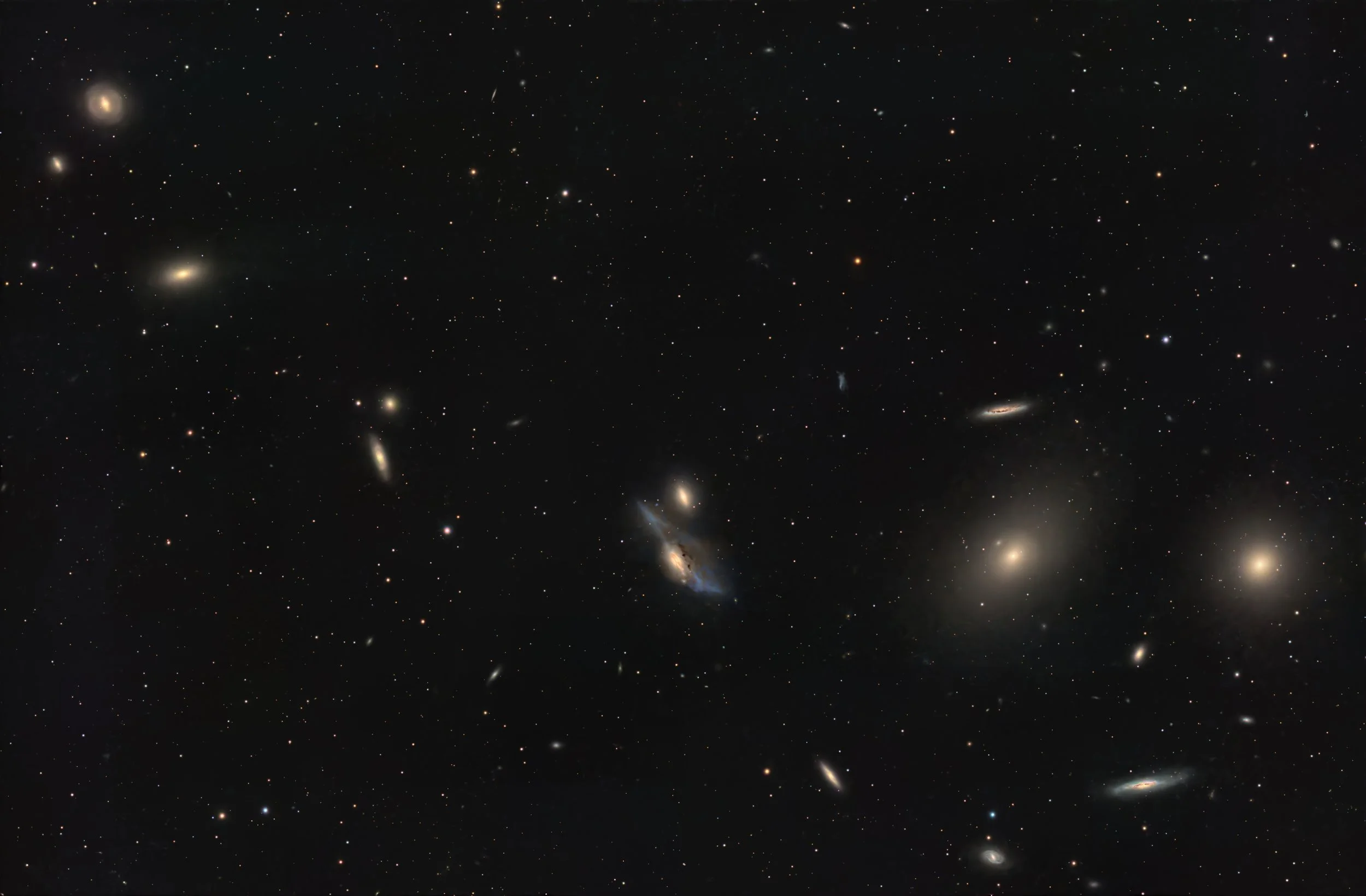
Markarian’s Chain
Markarian’s Chain is the name of the curved chain of galaxies that arcs through this image. This chain is part of the Virgo Galaxy Cluster, the centre of which is about 54 million light years away. The Virgo Cluster contains about 1,500 galaxies and is estimated to have a total mass of about 10 quadrillion times the Sun’s (1 quadrillion = 1 million billion). This image captures just a small portion of the Virgo cluster. I also imaged this chain of galaxies in a much wider fieldalmost a decade ago.
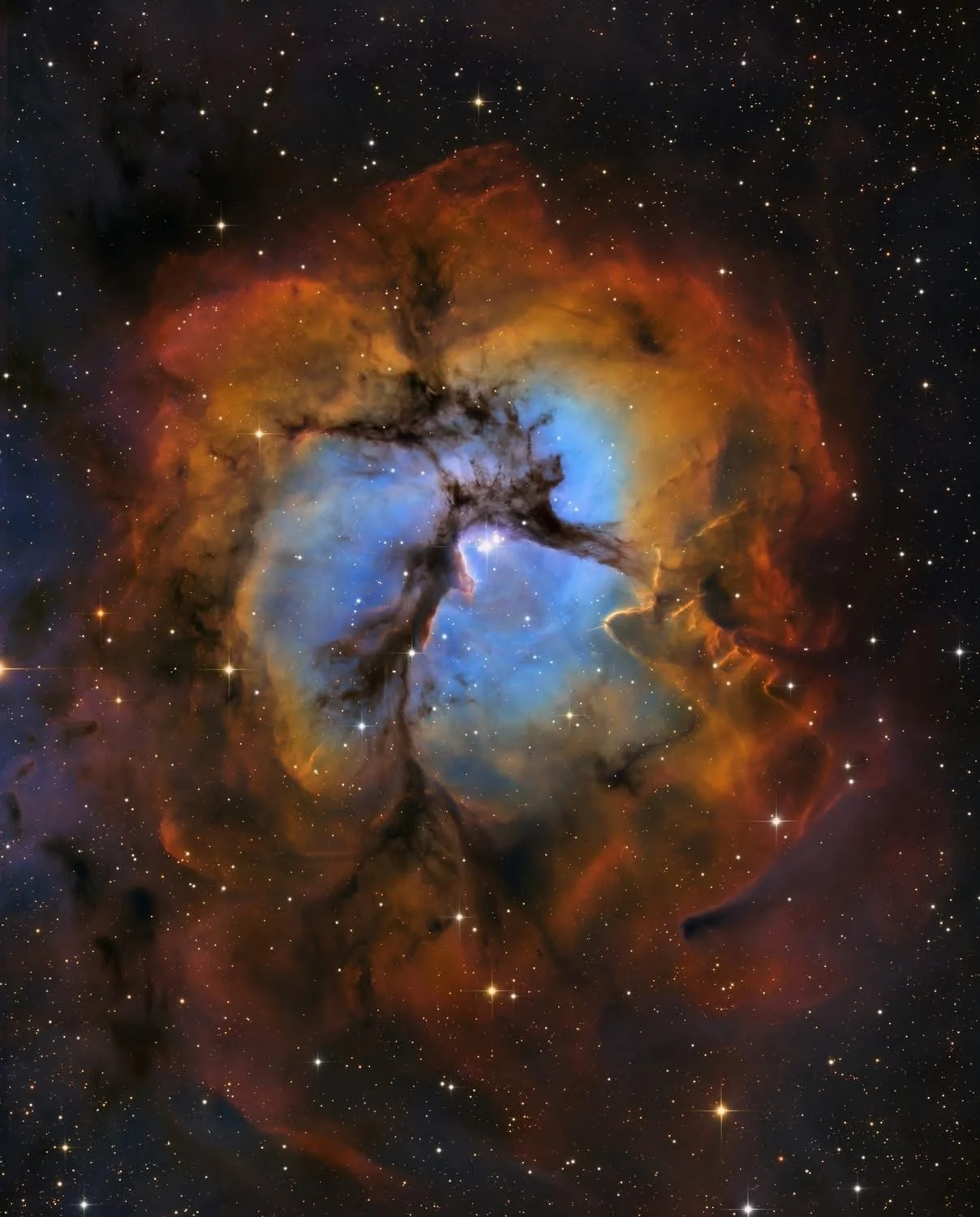
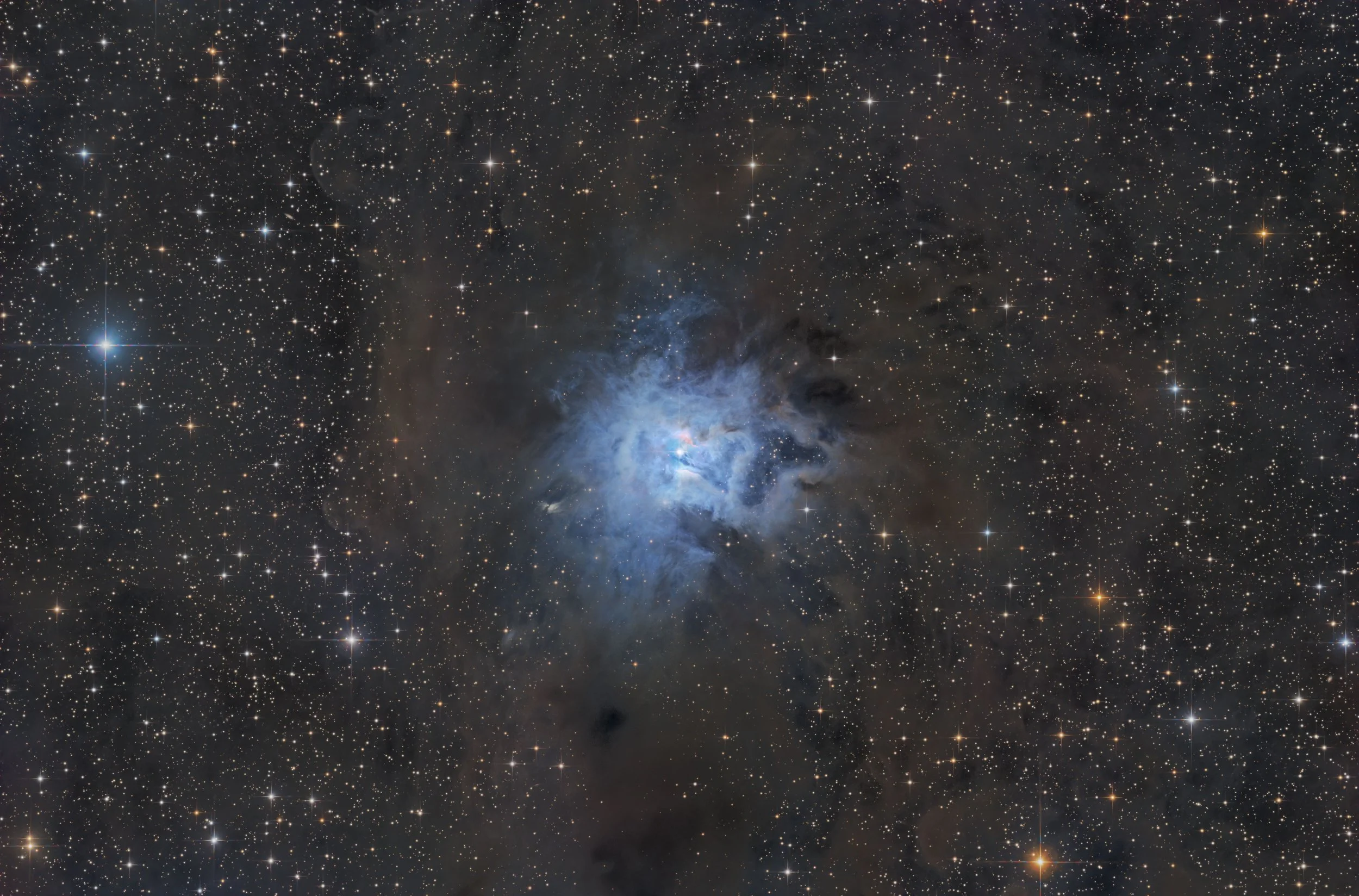
NGC 7023
The Iris Nebula is a wisp of bluish dust nestled within the dark veils of Cepheus.
Illuminated by the star HD 200775, it does not shine of its own accord; rather, it whispers the light, diffusing it like a cosmic secret.
A cold cloud shaped by the physics of grains and photons, it nonetheless appears to our eyes as a celestial flower—fragile, almost shy—suspended between science and dream.
Newtonian 250/1000, Poseidon MM camera, Astronomik Deep Sky LRGB filters—all mounted on an EQ8-R.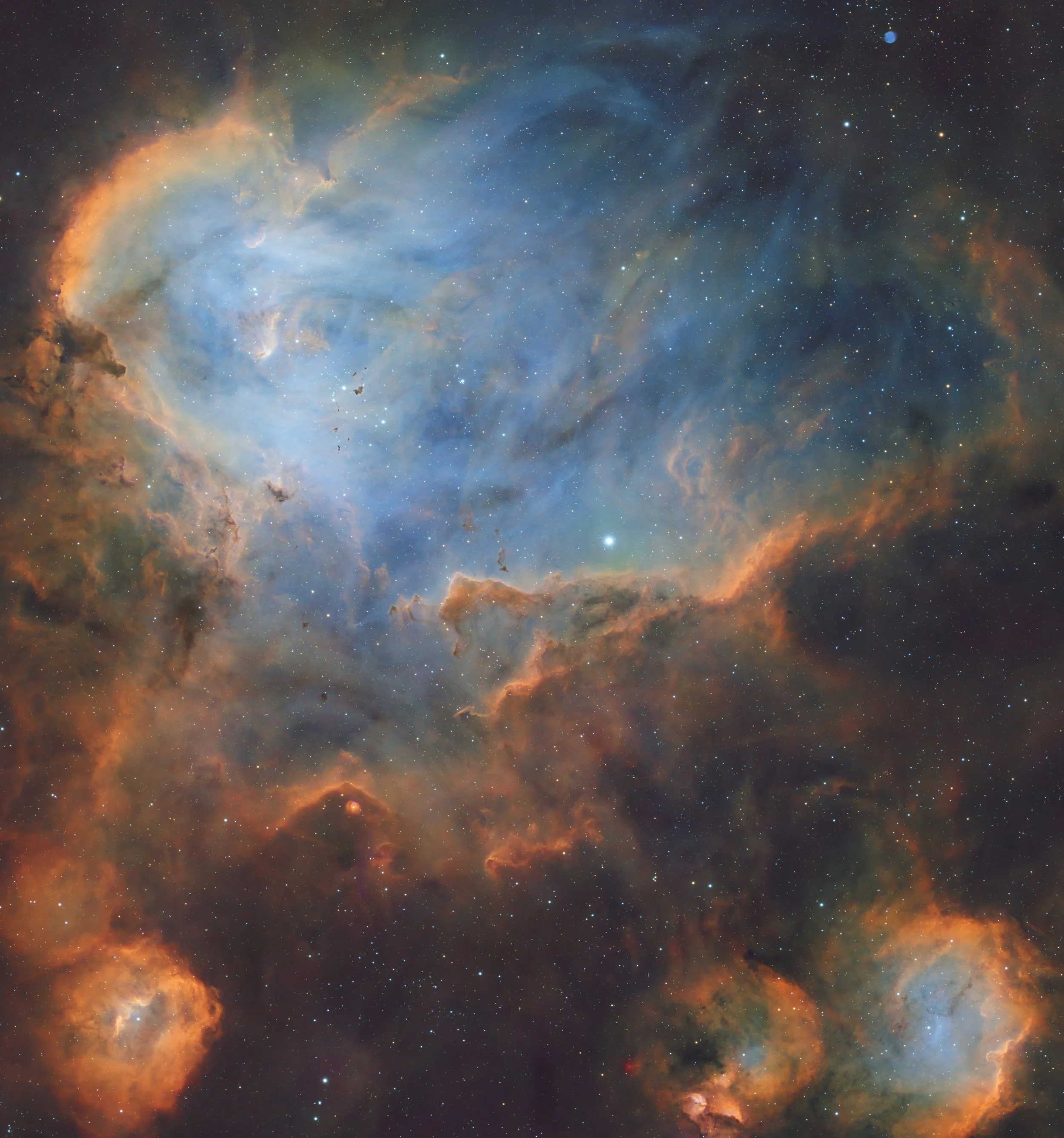
IC2944
The IC 2944 nebula, commonly known as the Running Chicken Nebula, is undoubtedly one of the most captivating targets in the night sky. The Hubble Palette (SHO) remains my preferred choice for this object for good reason: it dramatically enhances the contrast of the cosmic dust, reveals exquisite details within the dark Bok globules, and even captures a faint planetary nebula tucked into the upper right field of view. This entire region is truly a rich tapestry of stunning structures.
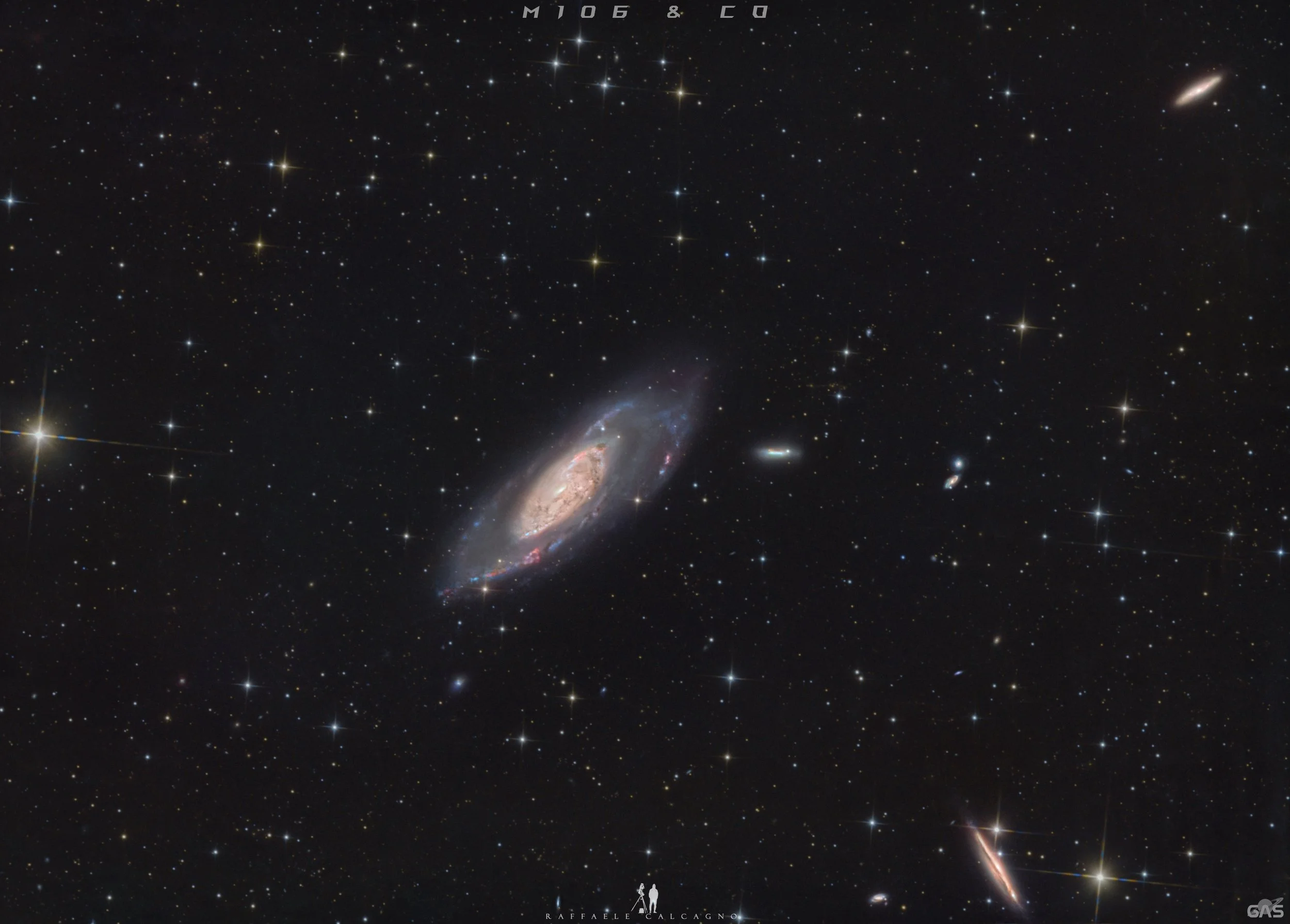
M106 & CO.
M106 Galaxy (NGC 4258), a spiral galaxy located in the constellation Canes Venatici, is a breathtaking sight. With its well-defined spiral arms and bright core, M106 spans about 30,000 light-years in diameter and lies approximately 23.5 million light-years from Earth. It is a fascinating galaxy, known for its active nucleus and the presence of a supermassive black hole at its center.
But M106 is not alone in this frame: the field is dotted with countless other galaxies. Beyond the most prominent ones—such as NGC 4217, NGC 4226 (bottom right), NGC 4248, NGC 4252 (adjacent to the right of M106), and NGC 4220 (top right)—there are many more, fainter galaxies populating the background. I noticed them during the image processing. Every tiny bright dot, no matter how small, could be a distant galaxy, millions or even billions of light-years away, each with its own unique story and characteristics.
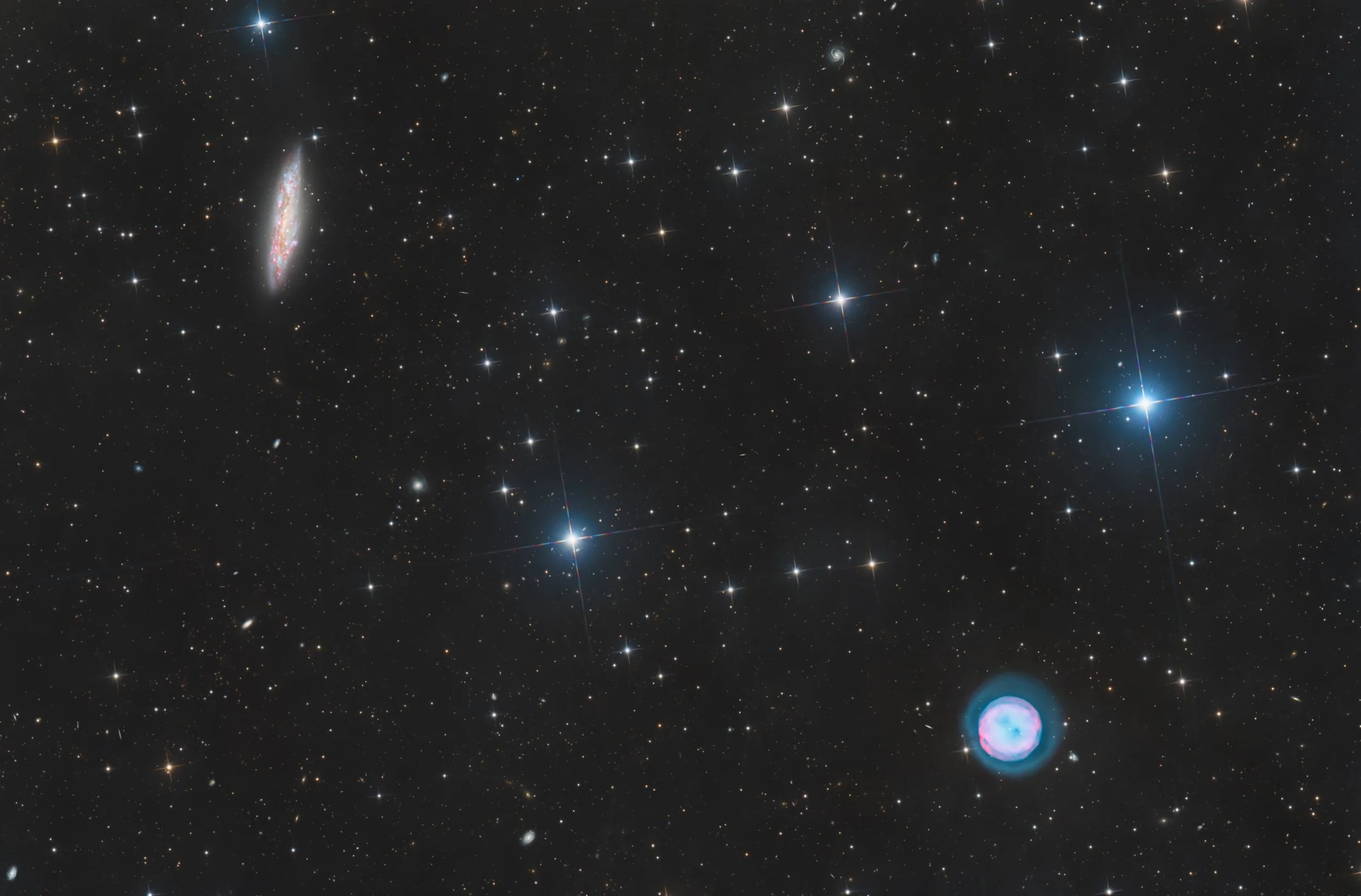
M108 and M97 LRVB HOO
Description and Details:
This iconic duo in Ursa Major features M108, a barred spiral galaxy seen edge-on, alongside M97, the well-known Owl Nebula.
The data was captured in LRGB complemented with Ha and OIII to bring out the full richness of the planetary nebula. Its brightness particularly surprised me, as it is already clearly visible even in the LRGB data alone.
A continuum subtraction was applied to the Ha and OIII channels to better isolate the emission signal while preserving a natural look. The galaxy also reveals an interesting and different aspect in these wavelengths.