
AAPOD2 Image Archives
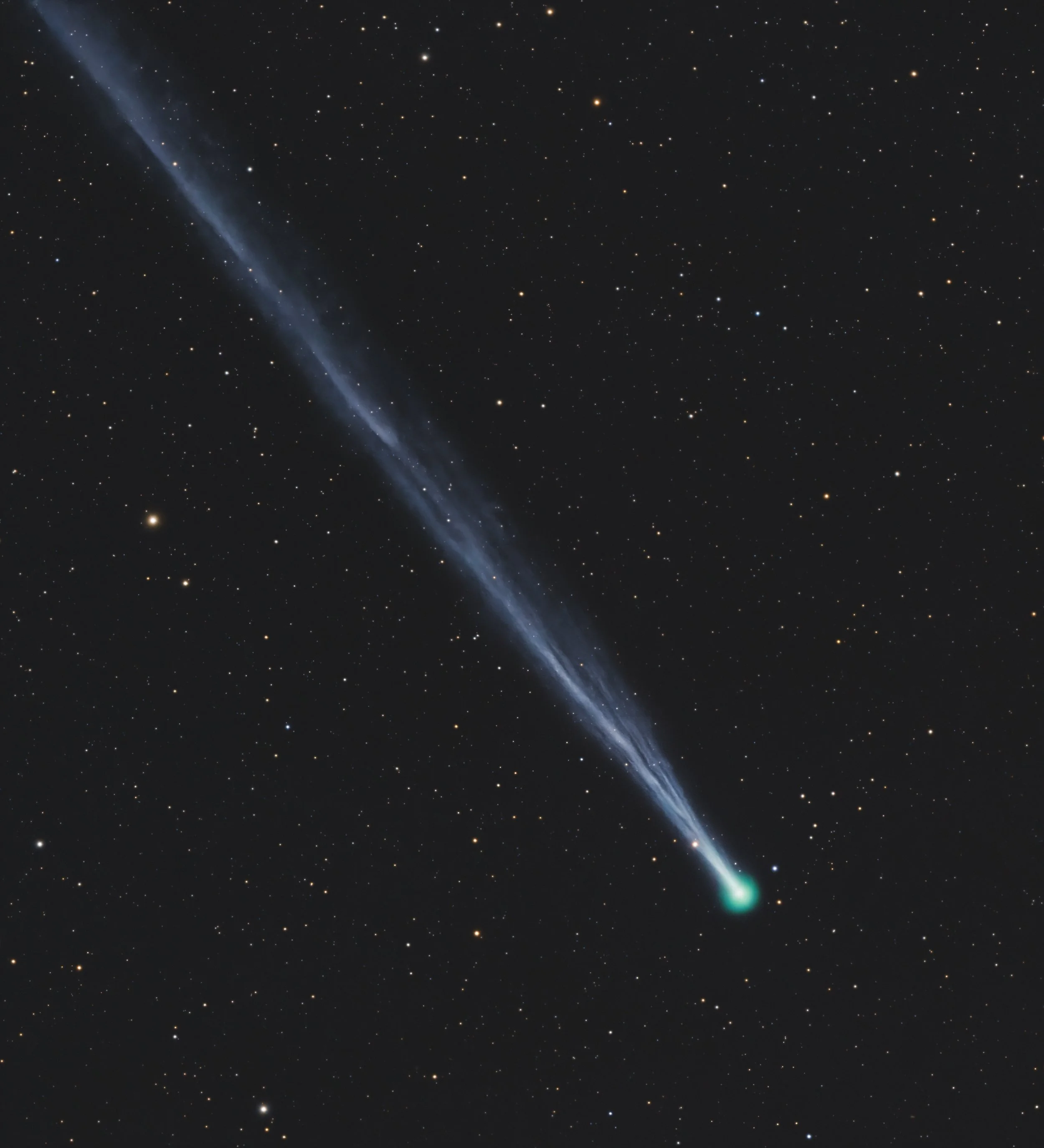
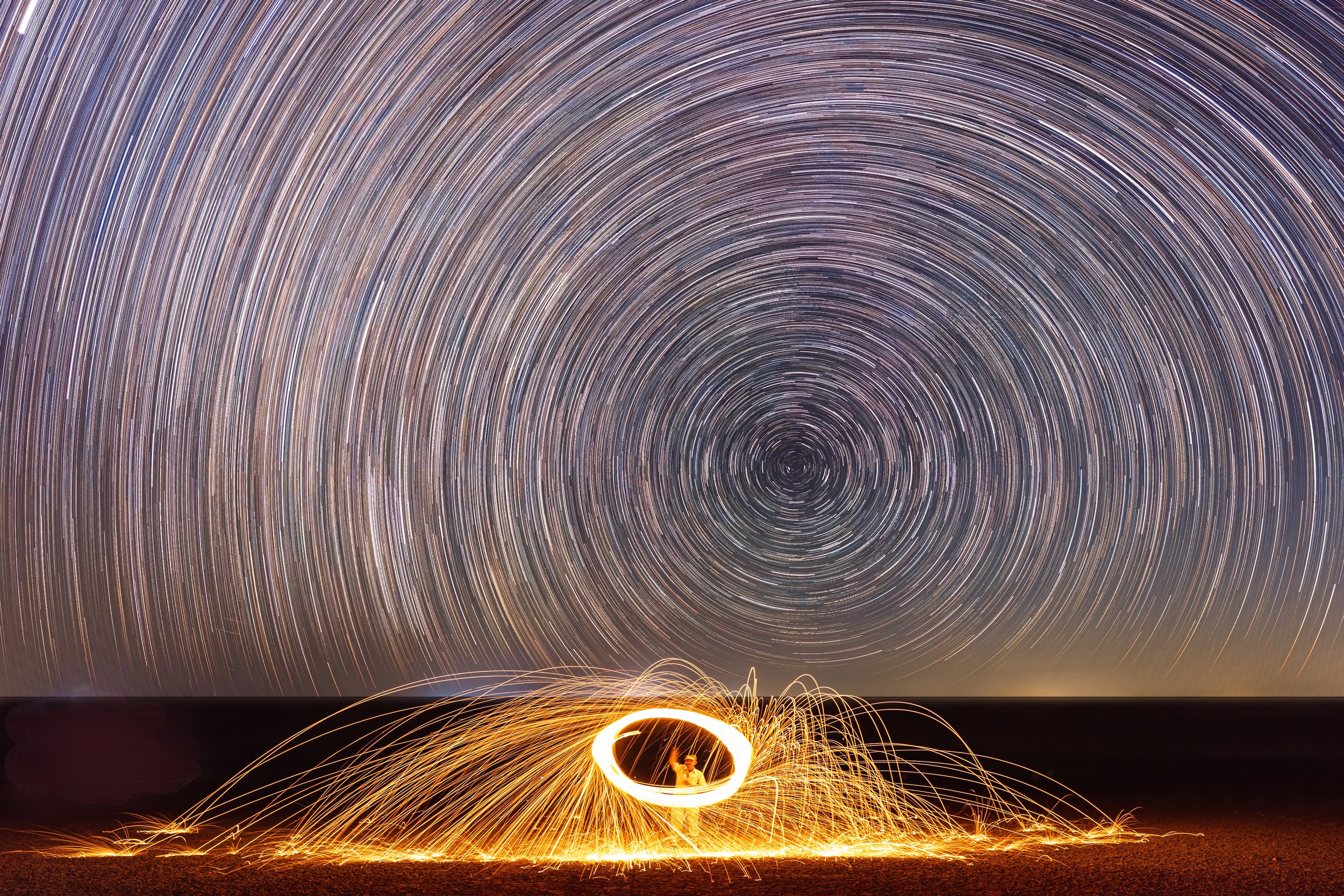
Wondrous Heave
Created during a session of Milkyway Saga, this frame captures the silent motion of the night sky through star trails, with a moment of creative expression on Earth.
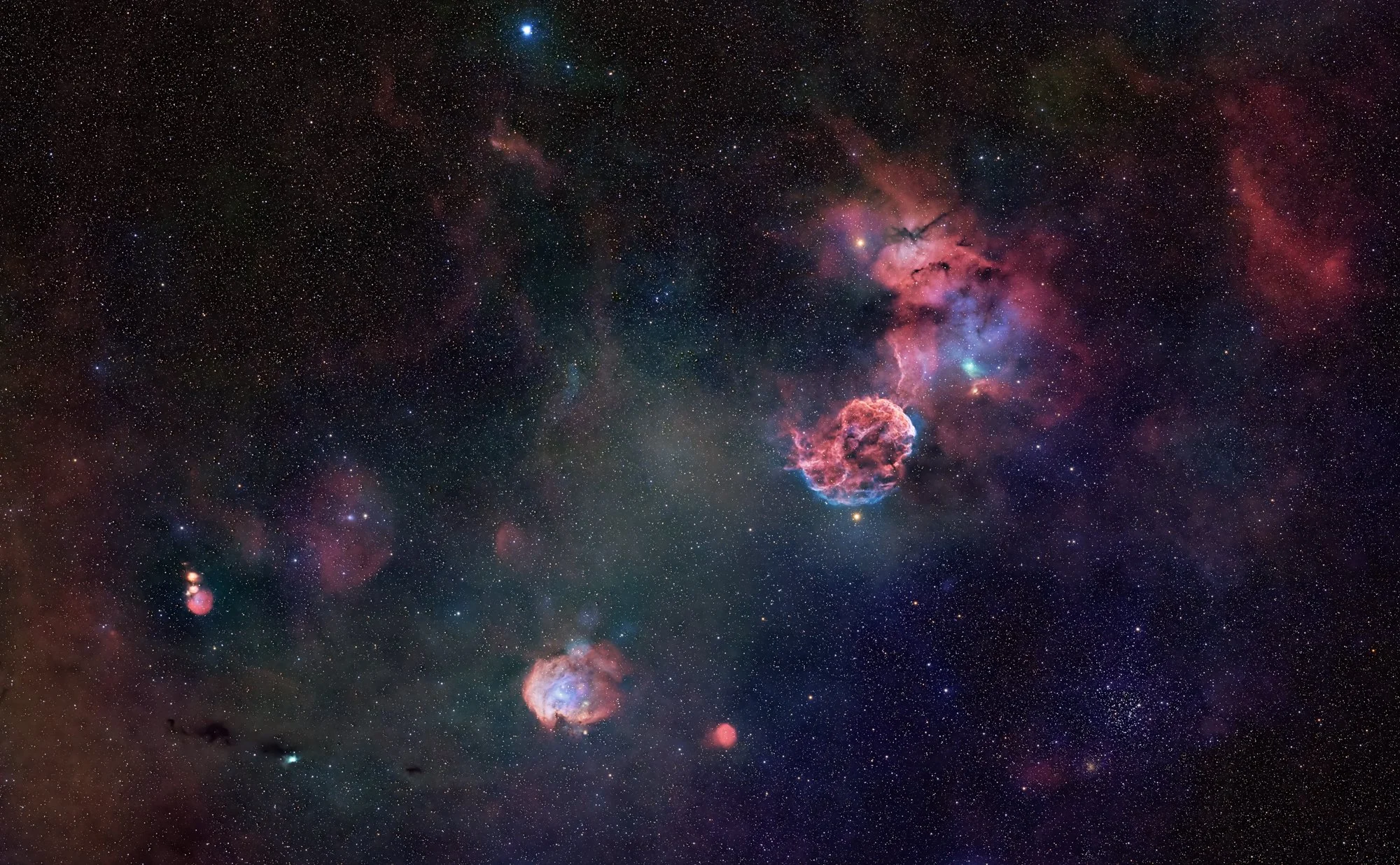
Jellyfish and Monkey head nebulas
Description and Details: Near the upper right is the Jellyfish Nebula (IC 443), the remains of a supernova that exploded occurred when a massive star approached the end of its life and exploded between 30,000 and 35,000 years ago leaving behind a neutron star and an expanding shell of ionized gasses that is estimated to be around 70 light years across. Its glowing, wispy shape comes from the expanding shockwave crashing into surrounding gas.
In the lower left is the Monkey Head Nebula (NGC 2174), a large cloud of gas about 6,400 light-years away where new stars are actively forming. The bright cluster inside it, NGC 2175, is made up of young stars that are lighting up the surrounding nebula.
The Jellyfish Nebula itself is closer, at about 5,000 light-years away.
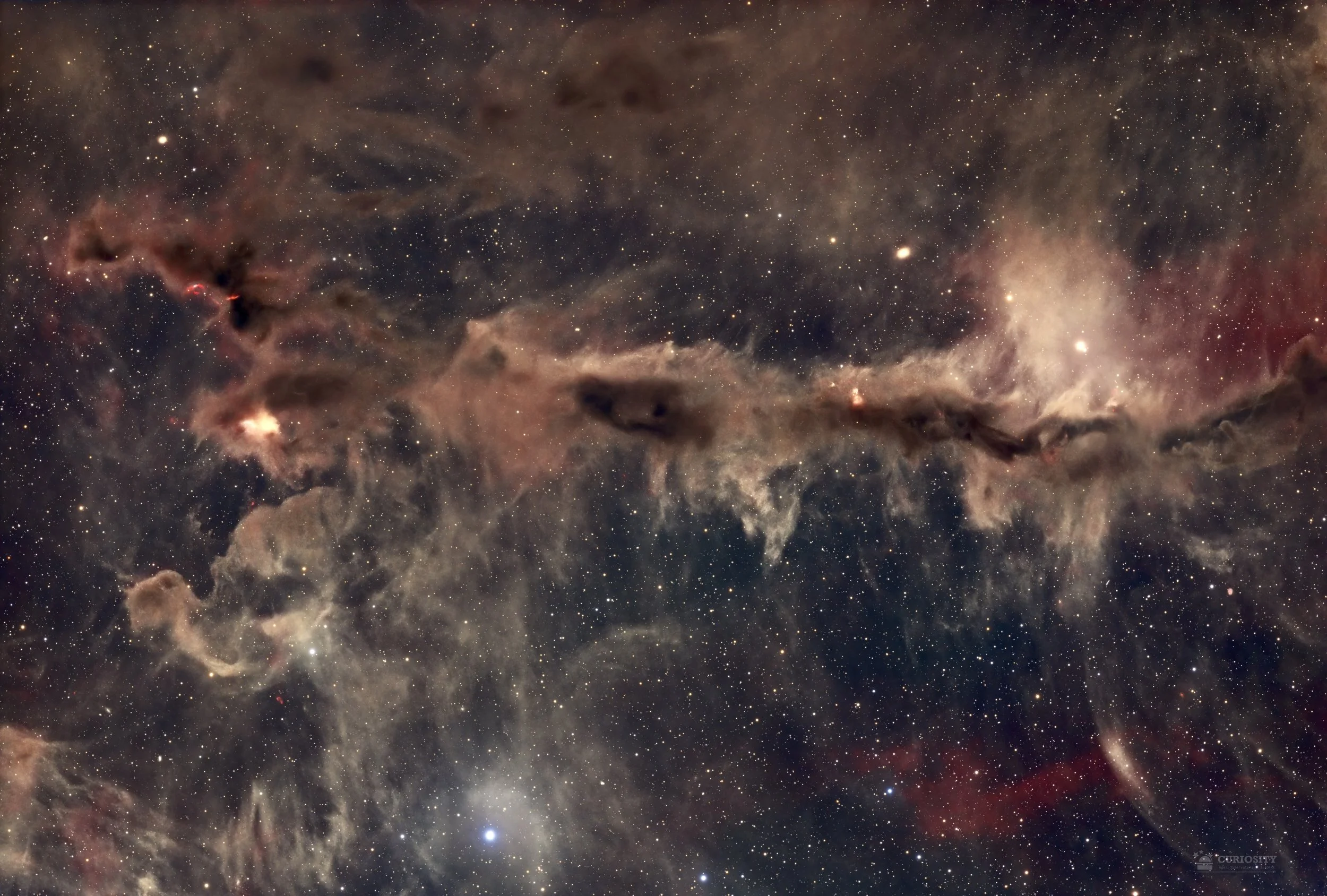
The Dark Scorpion in Taurus - Barnard 216
Description and Details: Barnard 216 (B216) is a dark nebula located in the constellation of Taurus, at an approximate distance of ~450 light-years. It is part of the Taurus Molecular Cloud complex, one of the nearest and most extensively studied star-forming regions.
B216, together with B213, B217, and B218, forms an extended absorption structure where dense dust obscures the background stellar field.
In addition to broadband data, Hα emission has been integrated, revealing faint ionized hydrogen that appears as a red glow and provides additional context to the surrounding interstellar medium.
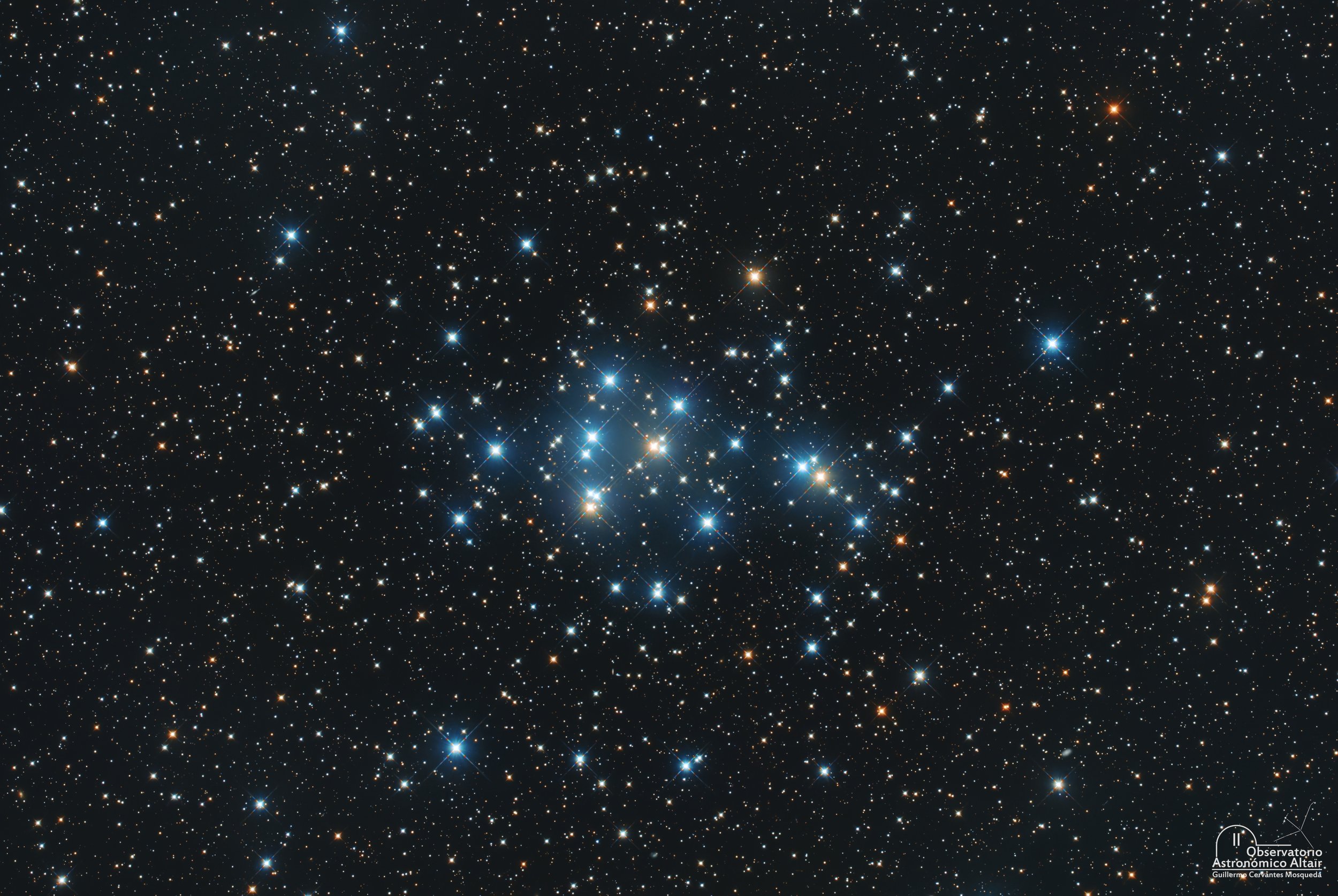
M44: The Beehive Cluster
One of the nearest and brightest open star clusters in the night sky, the Beehive Cluster, also known as Messier 44, has been admired since antiquity as a faint hazy patch visible to the naked eye in the constellation Cancer. Located about 575 light-years away, this sprawling collection contains several hundred stars loosely bound by gravity, all formed from the same giant molecular cloud roughly 600 million years ago. Through binoculars or a small telescope, that soft glow resolves into a rich swarm of suns, giving the cluster its enduring nickname and making it one of the sky’s most inviting deep-sky treasures.
The Beehive offers more than simple visual charm, serving as a nearby laboratory for studying stellar evolution in a shared environment. Its stars span a range of masses and brightnesses, while the cluster’s age places it in an important middle stage between younger open clusters and older, more dispersed stellar groups. Framed against the darker background of interstellar space, M44 reminds us that stars are often born together in luminous families, slowly drifting apart over cosmic time as the galaxy reshapes their once-crowded home.
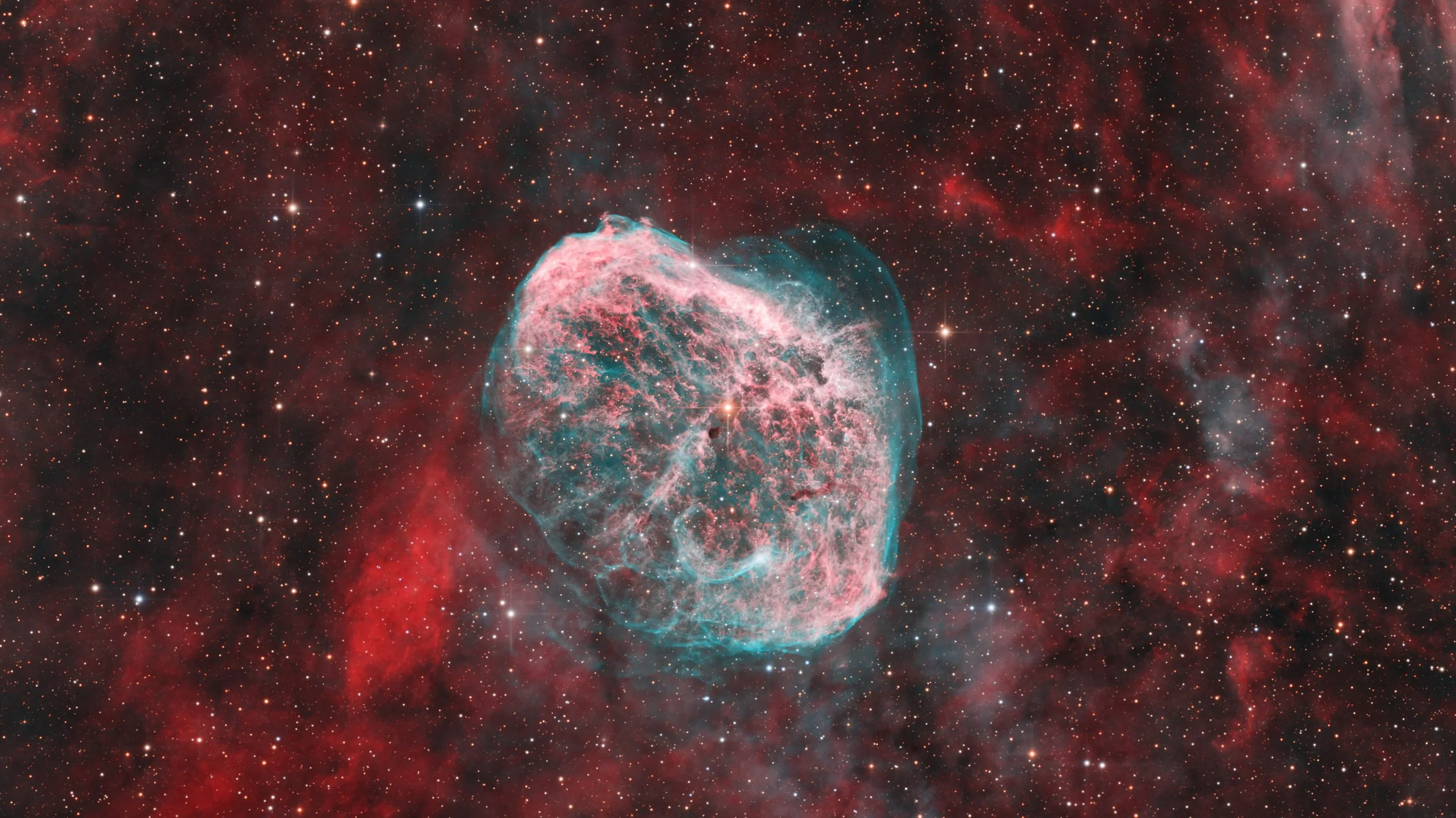
Crescent Nebula
Crescent Nebula (NGC 6888)
Blown into space by the fierce stellar winds of a massive Wolf-Rayet star, the Crescent Nebula, cataloged as NGC 6888, is a glowing shell of ionized gas in the rich starfields of Cygnus. Roughly 5,000 light-years away, this emission nebula marks a brief and violent phase in the life of a star nearing its explosive end. The nebula’s intricate arcs and filaments formed as fast, energetic winds from the central star slammed into slower material ejected earlier in its evolution, compressing the gas into the luminous, sculpted bubble seen here.
Often imaged in narrowband light, the Crescent Nebula reveals a dramatic contrast between hydrogen, oxygen, and sulfur emissions, highlighting both its delicate internal texture and chaotic outer shock fronts. These glowing tendrils trace the interaction between stellar outflows and the surrounding interstellar medium, offering a striking look at how massive stars reshape their cosmic neighborhoods long before they end as supernovae. In both science and beauty, NGC 6888 stands as a vivid reminder that even a star’s final chapters can create structures of extraordinary complexity.
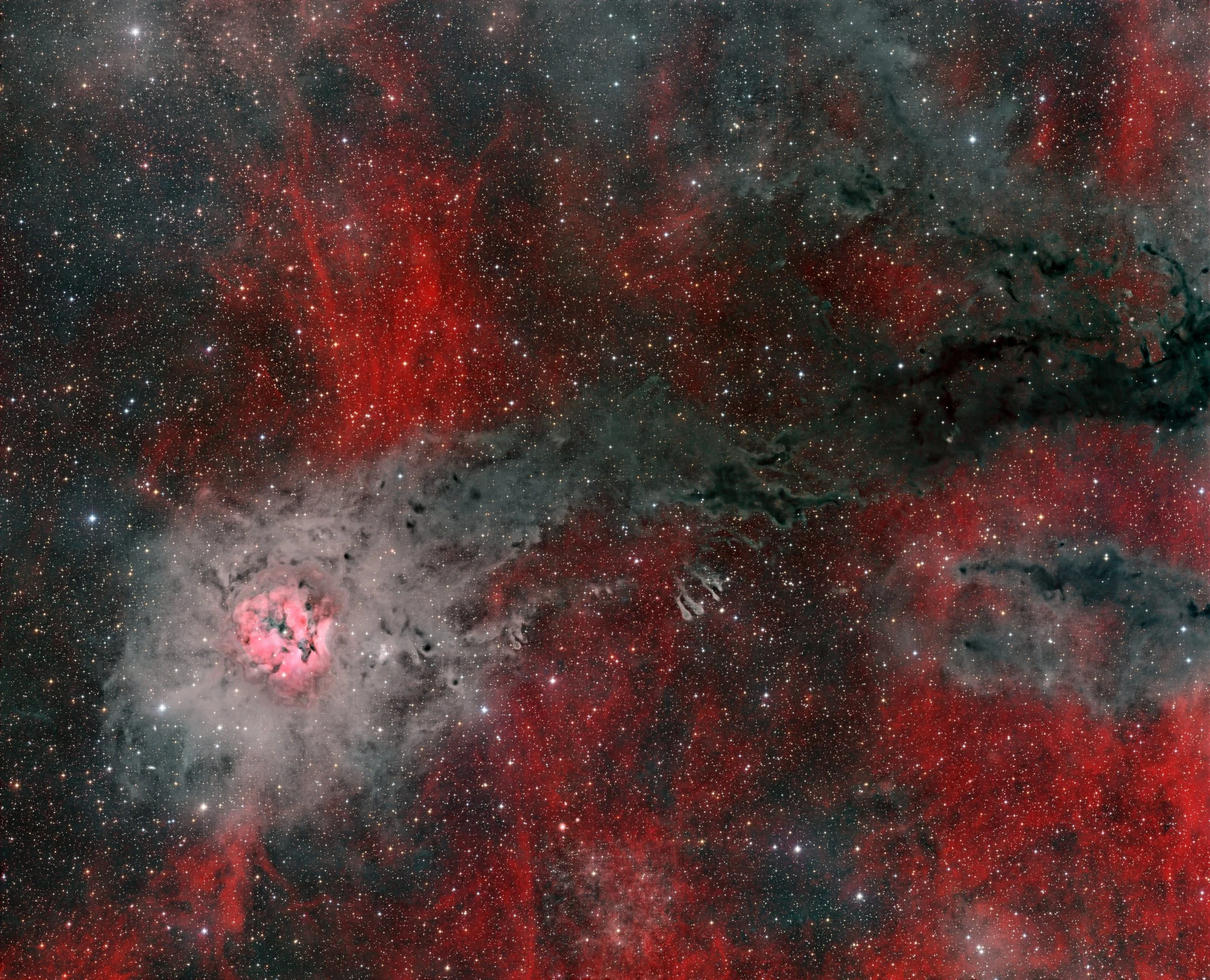
Cocoon Nebula and Tail
The cocoon nebula, also known as IC 5146, is classified as both an emission and reflection nebula. Located in the constellation of Cygnus the Swan it is approximately 4000 light years away from the gravity well. The central star that illuminates the nebulosity was formed approximately 100,000 years ago.
The nebula itself is about 15 light years across. Its location from our vantage point is close to the open star cluster NGC 7209 in Lacerta and open cluster M 39 in Cygnus. The dark lane of dust within the nebulosity is classified as Bernard 168 and is responsible for the “tail”.
This is a region of active star formation with hundreds of young stellar objects being identified; which occurs in both the reflection and emission areas of the nebula. One of the most massive young stars identified is approximately 14 times the mass of our sun.
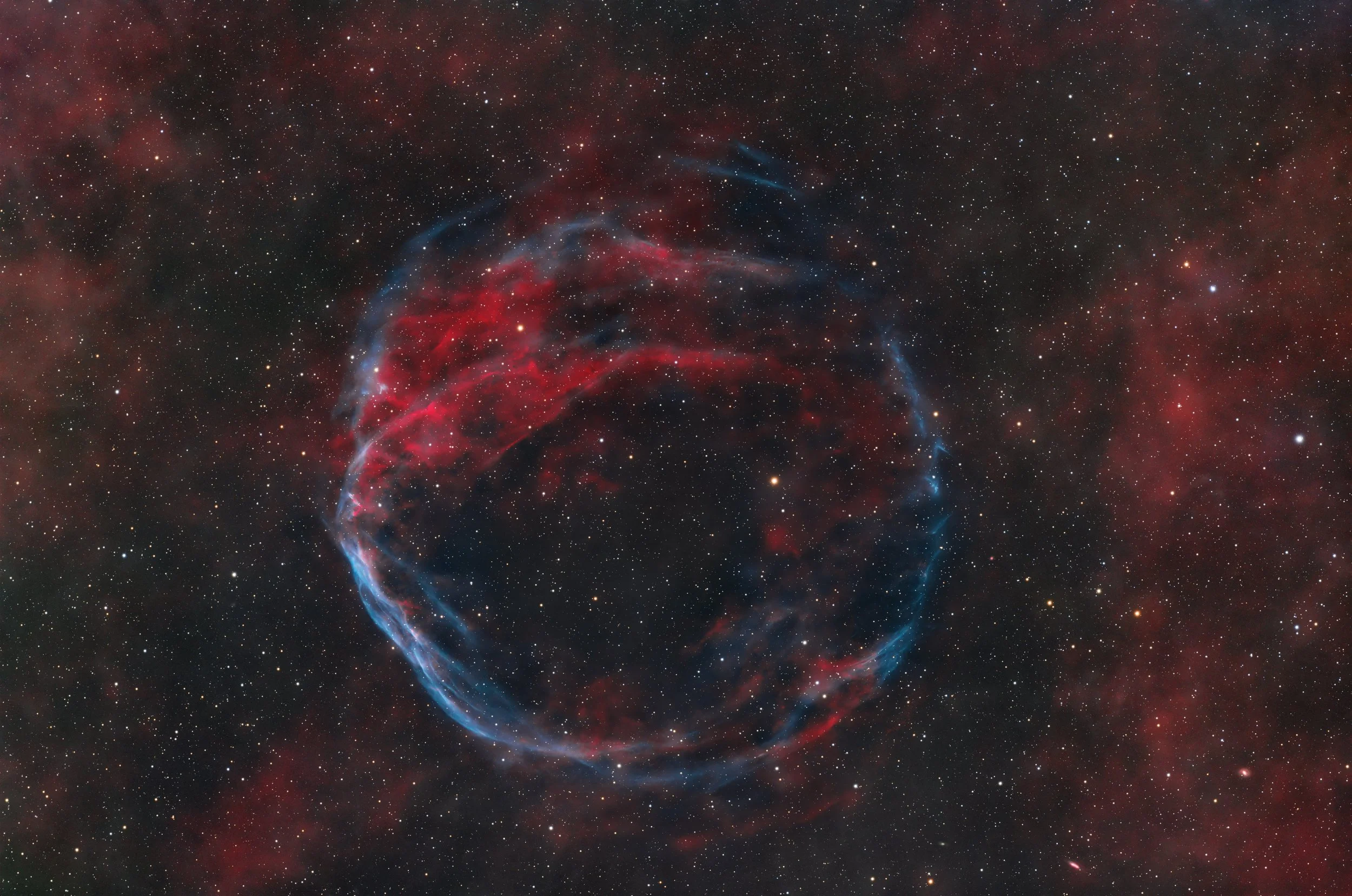
SNR G181.1+9.5
SNR G181.1 is an extremely faint supernova remnant located in the constellation Auriga. Born from the explosion of a massive star, this expanding cloud of gas interacts with the surrounding interstellar medium, revealing delicate filamentary structures mainly visible in Ha and OIII emission. Its very low surface brightness makes it a challenging target, requiring long hours of integration to unveil its subtle details.
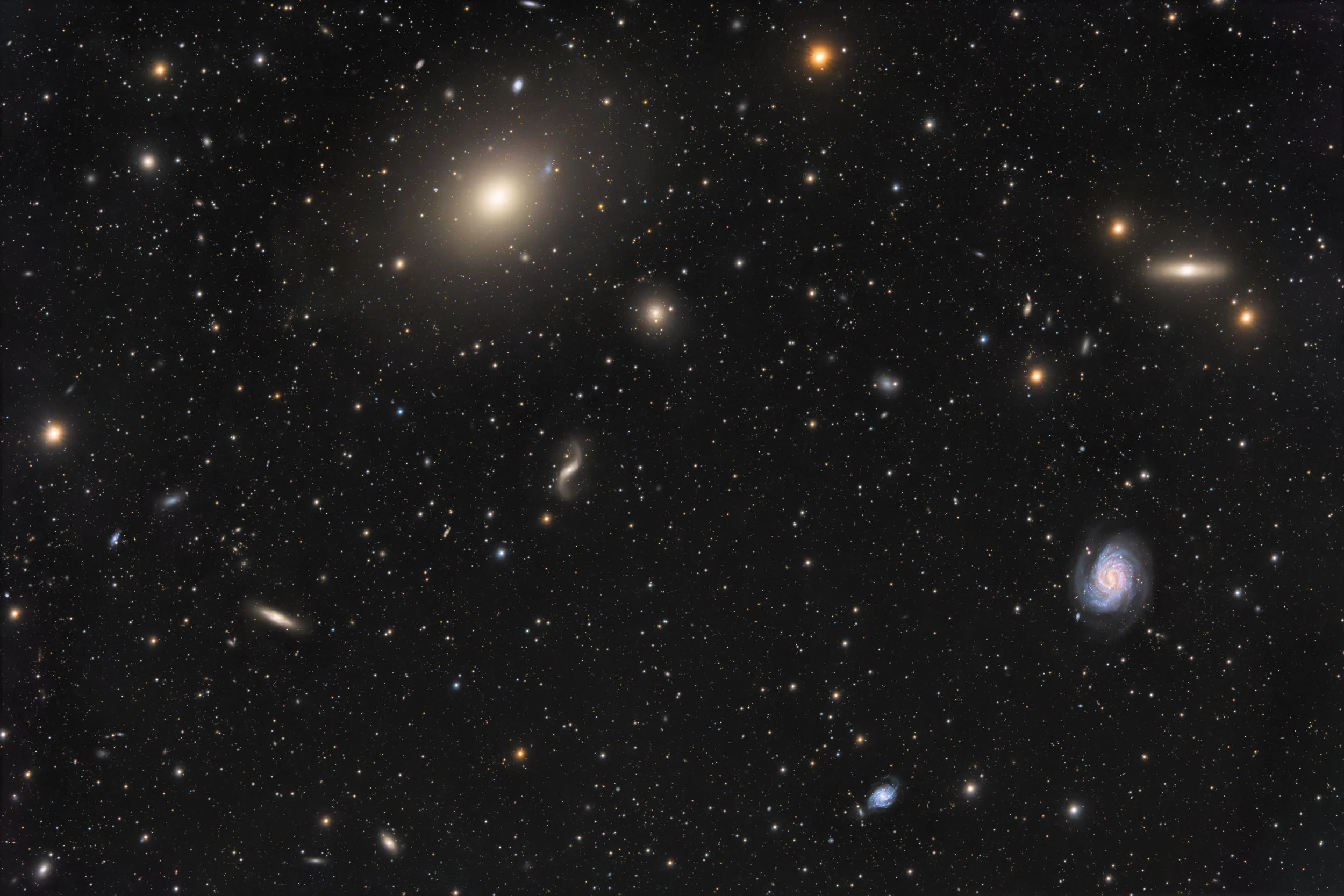
Virgo cluster: South region
The Virgo Galaxy Cluster is the nearest large galaxy cluster to our own Local Group, a vast gathering of more than a thousand galaxies bound together by gravity in the direction of the constellation Virgo. Lying about 55 million light-years away, it forms the heart of the larger Virgo Supercluster and offers one of the clearest nearby views of how galaxies assemble on the grandest scales. Dominated by giant ellipticals such as M87, along with spirals, lenticulars, and countless dwarf galaxies, the cluster reveals a rich variety of galactic forms shaped by both their internal evolution and the intense gravitational environment they inhabit.
Seen in deep wide-field images, the Virgo Cluster becomes a cosmic metropolis where galaxies crowd the frame in every direction, each island universe carrying billions of stars. Interactions between member galaxies, along with the cluster’s immense halo of hot X-ray emitting gas and dark matter, influence how stars form and how galaxies change over time. Streams of stripped material, distorted shapes, and subtle halos around the brightest members all hint at a long history of collisions and mergers. For observers and imagers alike, the Virgo Cluster is both a stunning visual tapestry and a nearby laboratory for exploring the structure and evolution of the universe itself.
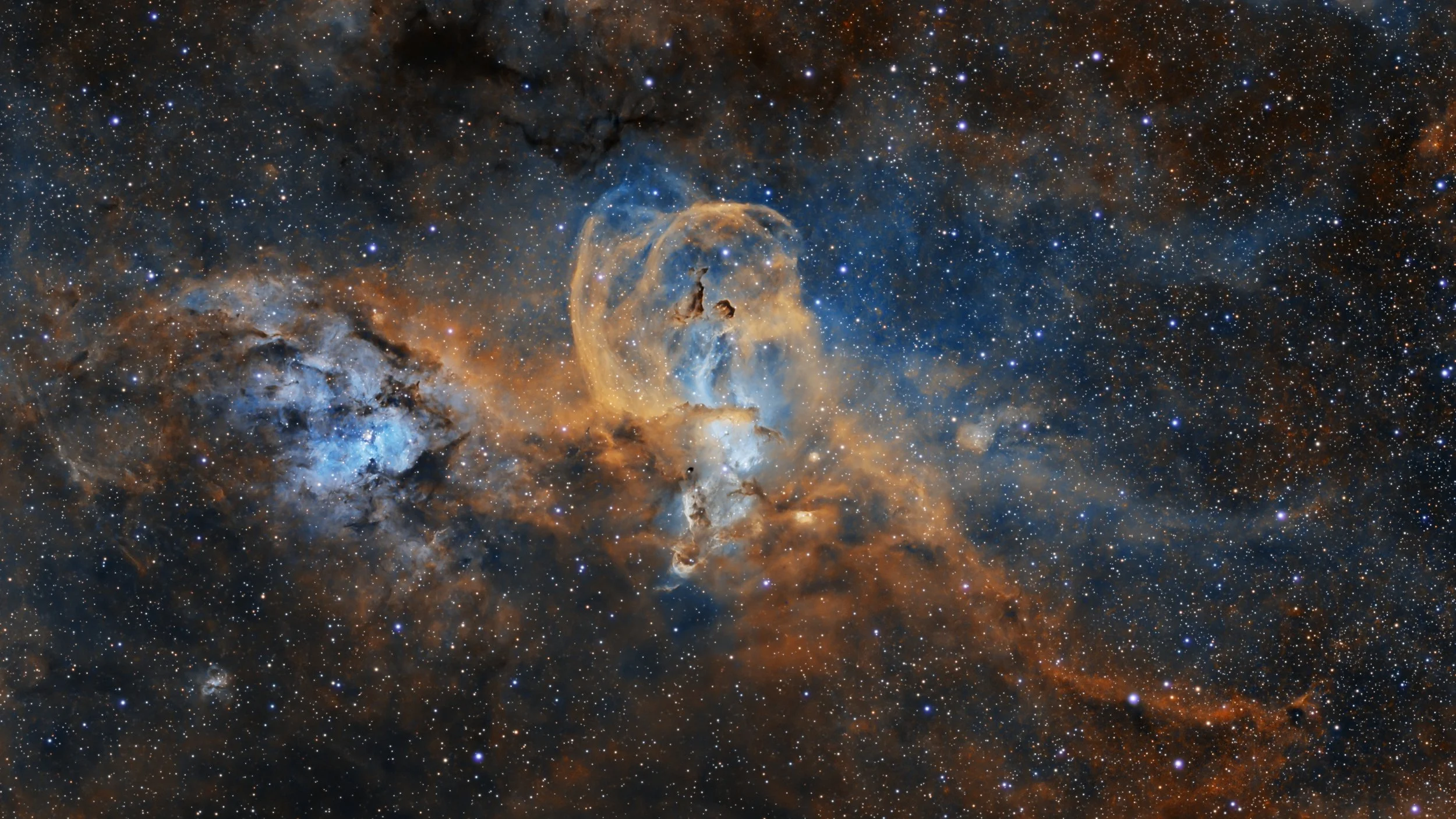
NGC 3576 Statue of Liberty Nebula
Rising in the southern skies of Carina, the Statue of Liberty Nebula is a striking star-forming region whose silhouette has inspired its popular nickname. Cataloged as NGC 3576, this bright emission nebula glows from intense ultraviolet radiation produced by hot, young massive stars embedded within its core. Those energetic stars ionize surrounding hydrogen gas, causing the nebula to shine in rich reds, while darker dust lanes carve dramatic structure through the luminous cloud. Its towering central ridge and flowing arcs of gas create the impression of a robed figure holding a torch, making this celestial landmark one of the most visually evocative nebulae in the southern Milky Way.
Beyond its iconic appearance, NGC 3576 is an active stellar nursery where gravity, radiation, and stellar winds are shaping the next generation of suns. Dense knots of gas and dust are collapsing into protostars, while powerful outflows from newly formed stars sculpt cavities and pillars throughout the region. Located roughly 9,000 light-years away, the nebula offers a vivid glimpse into the complex processes that govern star birth on a galactic scale. In deep images, its intricate filaments and glowing layers reveal both the raw energy and delicate beauty of a region where stars are still emerging from the interstellar dark.
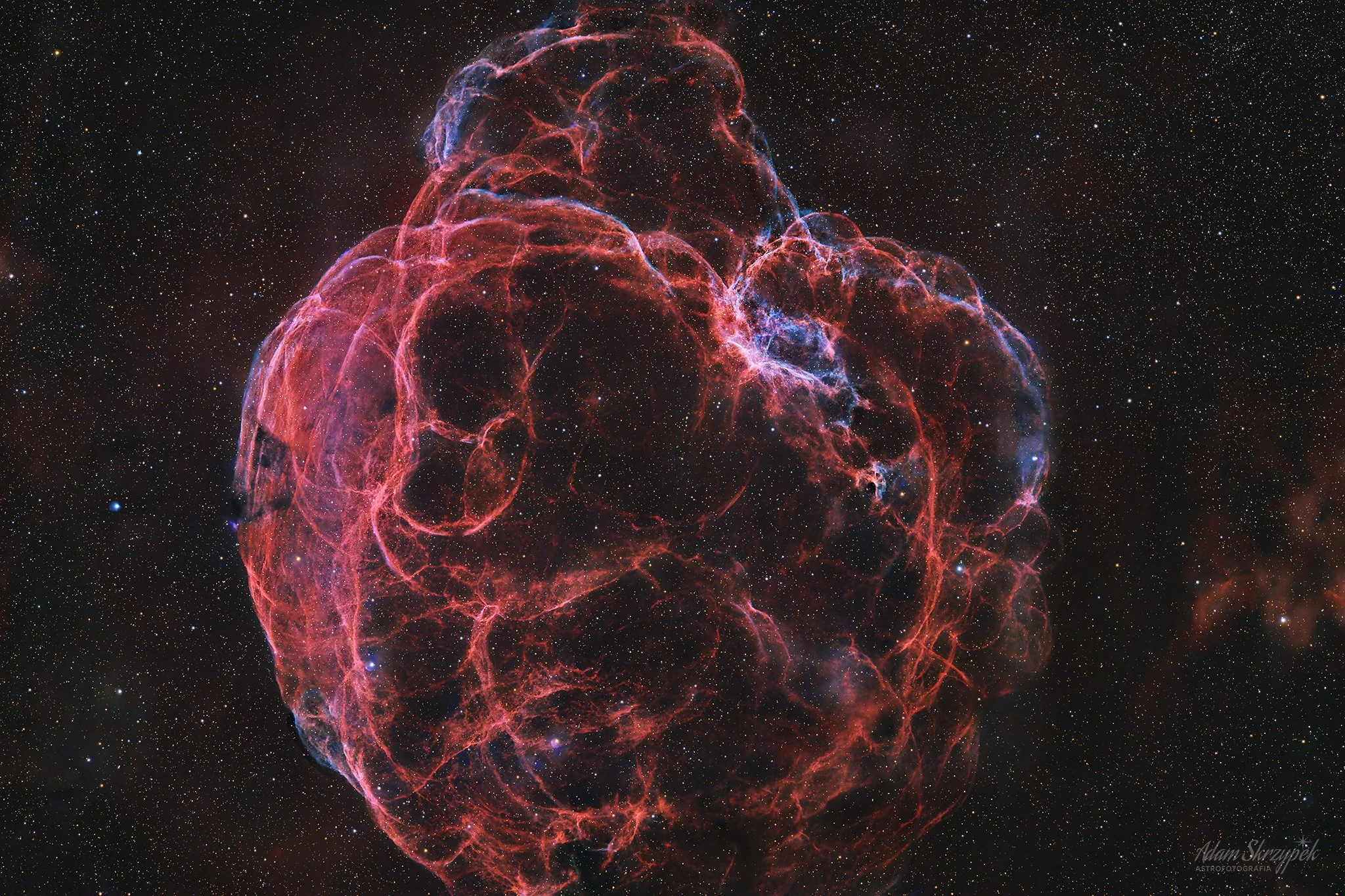
Spaghetti Nebula SH2-240
The Spaghetti Nebula, also known as Simeis 147, is a striking supernova remnant located in the constellation Taurus, about 3,000 light-years from Earth. This nebula is the result of a star that exploded in a violent supernova event, shedding its outer layers into space. The remnants form an intricate web of glowing filaments and gas, stretching across a vast region of the sky. The nebula’s name, "Spaghetti," comes from the long, tangled, and thread-like structure of its filaments, which resemble strands of pasta. These filaments are composed of ionized gas, primarily hydrogen and oxygen, and their brilliant colors reflect the intense radiation emitted as the gas is heated by the shockwaves from the supernova explosion.
The Spaghetti Nebula is an excellent example of the delicate balance between destruction and creation in the universe. The supernova explosion that formed it not only marked the death of a massive star but also enriched the surrounding interstellar medium with heavier elements, which will later go on to form new stars and planets. Scientists study remnants like the Spaghetti Nebula to understand the life cycle of stars and how these cataclysmic events contribute to the cosmic ecosystem. By observing the nebula in multiple wavelengths, including X-rays and radio waves, astronomers can gain a deeper understanding of the mechanisms behind supernovae and their role in shaping the interstellar medium.
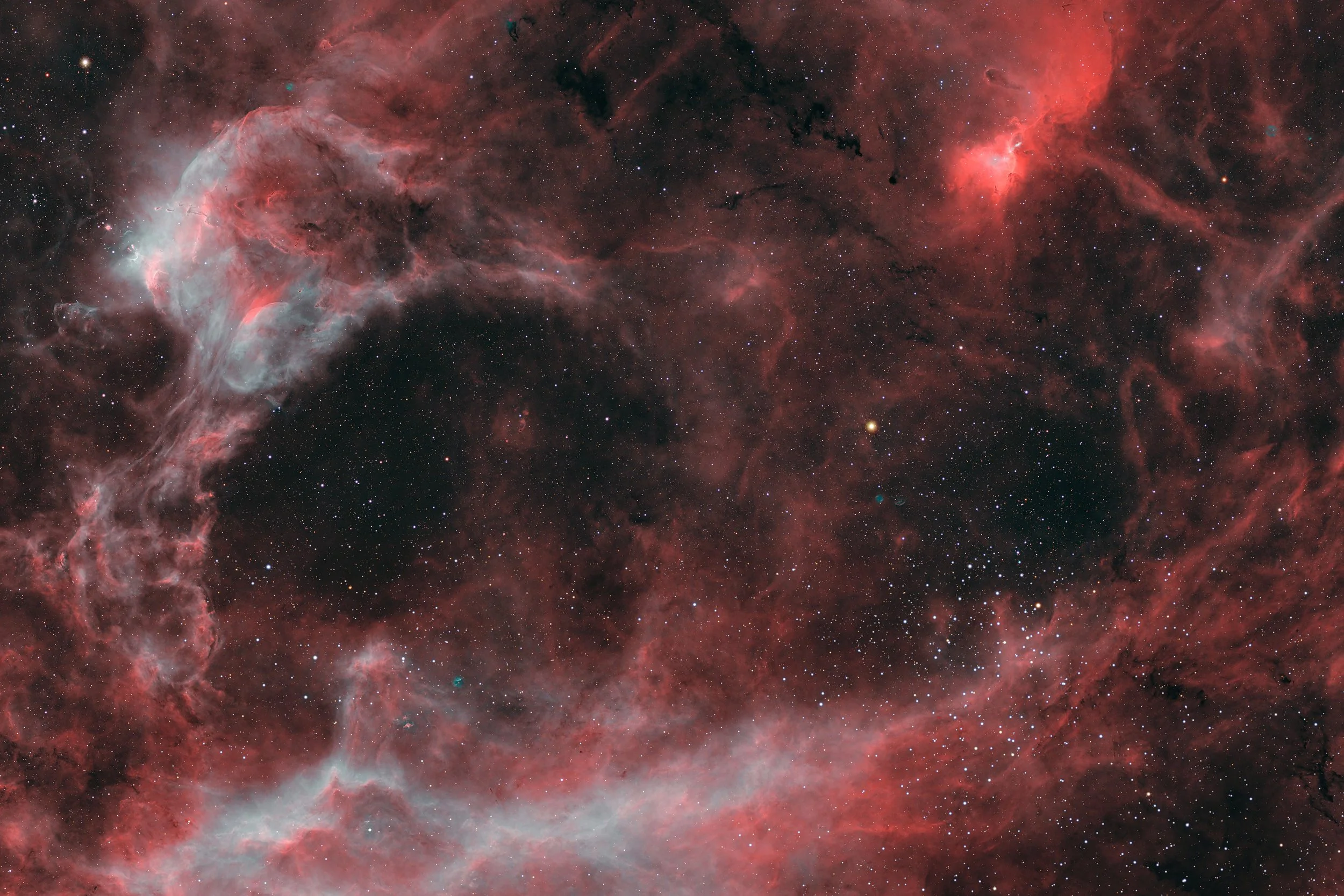
NGC3572 nebula and NGC3532
NGC 3572, also known as the "Star Forming Nebula," is a stunning emission nebula located in the southern constellation of Centaurus. This intricate nebula spans roughly 6,000 light-years from Earth and is part of a larger molecular cloud complex known for its active star formation. The nebula is composed of gas and dust, illuminated by the intense ultraviolet radiation from young, hot stars at its core. These stars are still in their early stages of development, and the surrounding nebula is a rich environment for the formation of new stars. NGC 3572 is a dynamic region where the interplay of ionized gases and stellar winds creates intricate structures, such as gas pillars and filaments, that further enhance its ethereal beauty.
Astronomers study NGC 3572 to gain insight into the processes of star birth and evolution. The nebula's complex chemical composition provides valuable clues about the early stages of stellar life and the way stars interact with their environment. Observations of NGC 3572 in various wavelengths, from visible light to infrared and radio waves, help astronomers understand how young stars influence the surrounding nebula and how those interactions lead to the creation of new generations of stars. As one of the most active stellar nurseries in the Milky Way, NGC 3572 serves as a natural laboratory for studying the intricate processes that shape the cosmos.
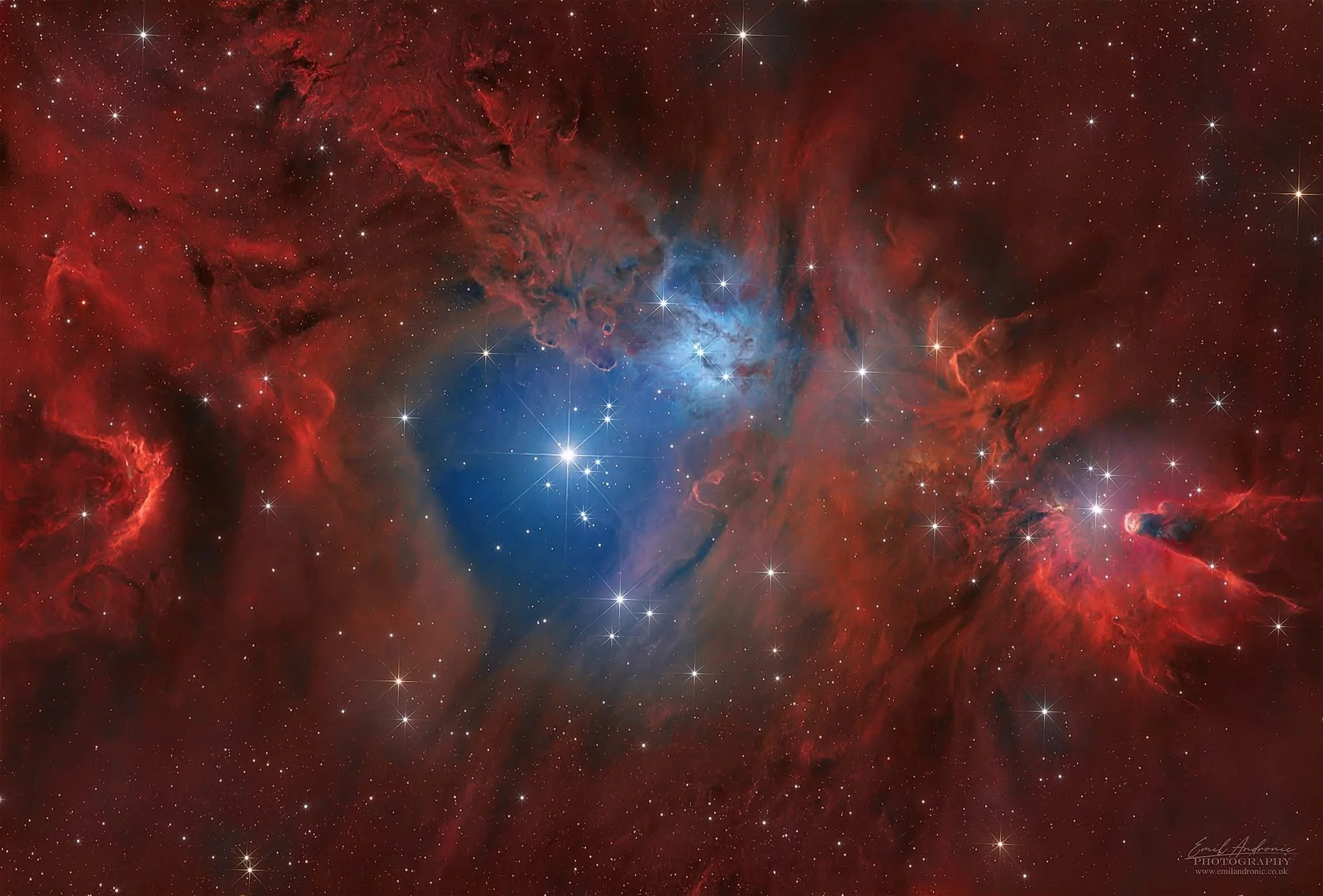
Cone and Fox Fur Nebula
Cone and Fox Fur Nebula
The Cone Nebula and Fox Fur Nebula are two prominent features within a vast star-forming complex officially designated as NGC 2264. Located approximately 2,700 light-years away in the constellation Monoceros (the Unicorn), these nebulae are part of a massive nursery of gas and dust where new stars are being born.
The Cone Nebula is a dark, pillar-like structure of cold molecular hydrogen and dust spanning about 7 light-years in length.
Its conical shape is formed by the erosion of the surrounding gas cloud by intense radiation and stellar winds from young, hot stars.
The Fox Fur Nebula is an emission and reflection nebula named for its intricate, filamentary textures that resemble the head of a red fox stole.
The red areas are caused by hydrogen gas being ionized by ultraviolet radiation from hot, young stars and the blue areas are reflection nebulae created by dust scattering the light from these same stars.
The nebula is heavily influenced by the bright variable star S Monocerotis, which sits nearby and helps illuminate the surrounding gas.
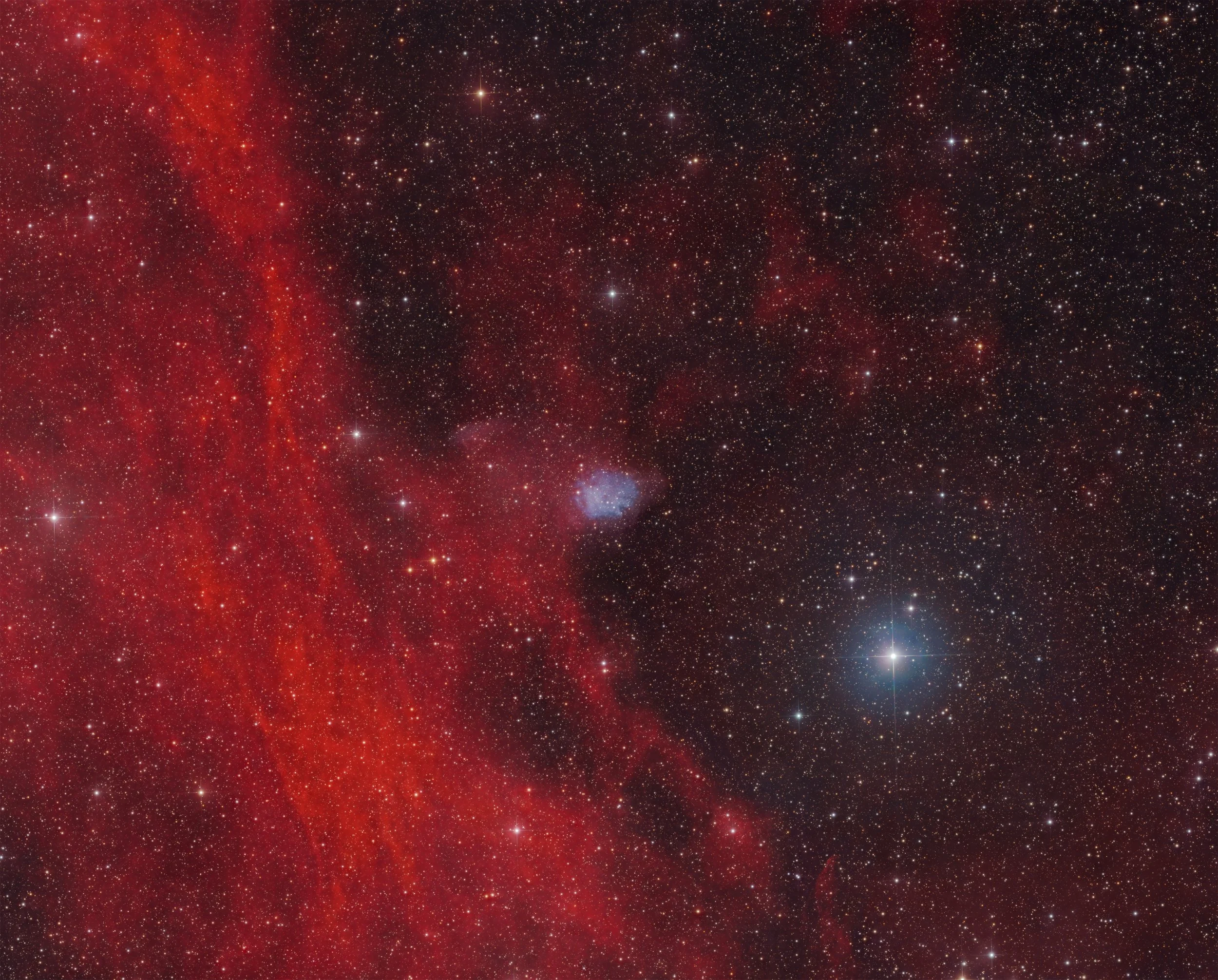
Kyanite Nebula
Shapiro-2, nicknamed the Kyanite Nebula, is a newly discovered planetary nebula in Centaurus. I originally discovered the nebula in 2024 through a wide-field [O III] survey effort of the southern Galactic plane, and it was registered to the HASH PNe database. This image was obtained in collaboration with Mark McComiskey, fully revealing the Kyanite Nebula’s morphology and PN nature for the first time.
The nebula was first identified as a faint ionized oxygen shell, with an associated central star (CSPN), most likely a hot subdwarf from its corrected G magnitude, visible in the Dark Energy Camera Plane Survey. The corresponding Gaia source of the CSPN measured its distance of approximately 2500 parsecs, or ~8150 light-years, from Earth. The Kyanite Nebula spans ~1.8 parsecs, or ~5.9 light-years, extensive for a typical planetary nebula, indicating that it is in the late stages of its evolution. This is in line with its diffuse structure and extremely faint nature. Using equations to model PN expansion from Ogle et al. 2025, and considering typical PNe initial expansion velocities, its age is estimated to be 23000-46000 years.
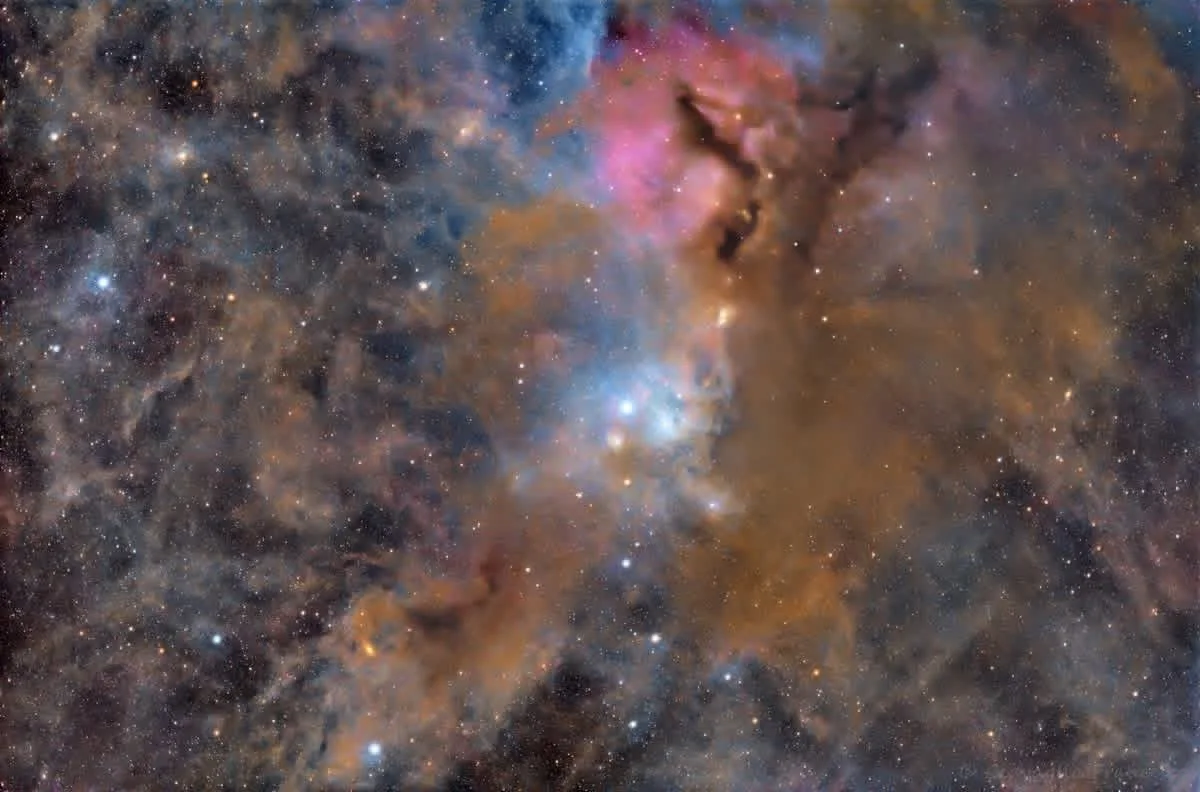
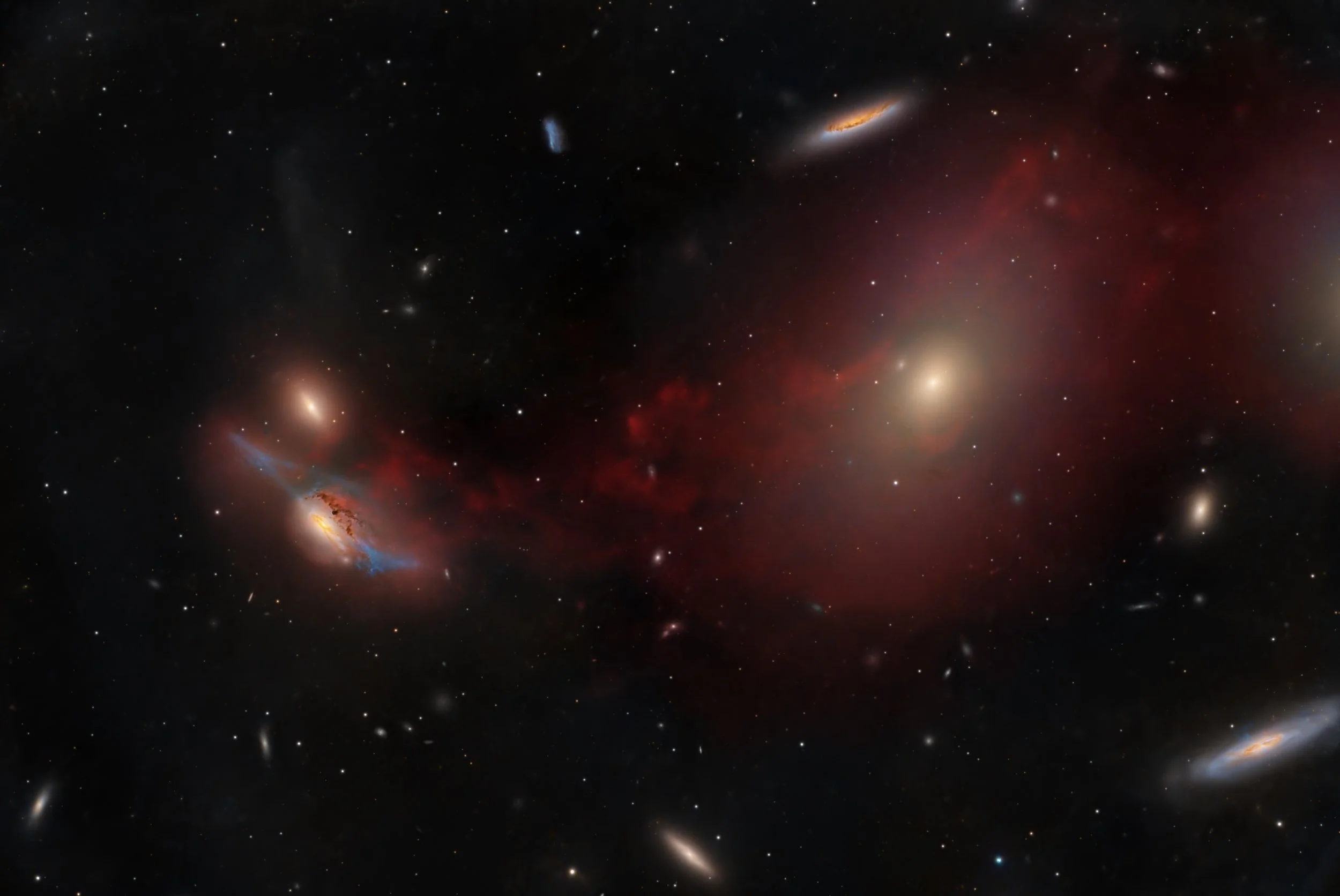
Tidal Scars in Virgo
The intertwined galaxies NGC 4435 and NGC 4438 form one of the most dramatic interacting pairs in the Virgo Cluster. Often called “The Eyes,” their close encounter has left NGC 4438 heavily warped, its once-orderly spiral structure stretched into chaotic lanes of dust and streams of stars. By contrast, NGC 4435 appears more compact and relatively undisturbed, though it too bears subtle signs of gravitational stress. This cosmic interaction, unfolding over millions of years, offers a vivid snapshot of how galaxies evolve through encounters—reshaping their structure, triggering star formation, and redistributing gas and dust.
Hovering nearby in the same crowded cluster environment is Messier 86 (M86), a massive elliptical galaxy plunging through the intracluster medium at high speed. Its motion generates vast streams of hot gas detectable in X-ray wavelengths, evidence of ongoing interactions not just with neighboring galaxies but with the cluster itself. Together, Messier 86 and the “Eyes” galaxies illustrate the dynamic, often violent nature of galaxy clusters, where gravity, motion, and environment combine to sculpt the universe on grand scales.
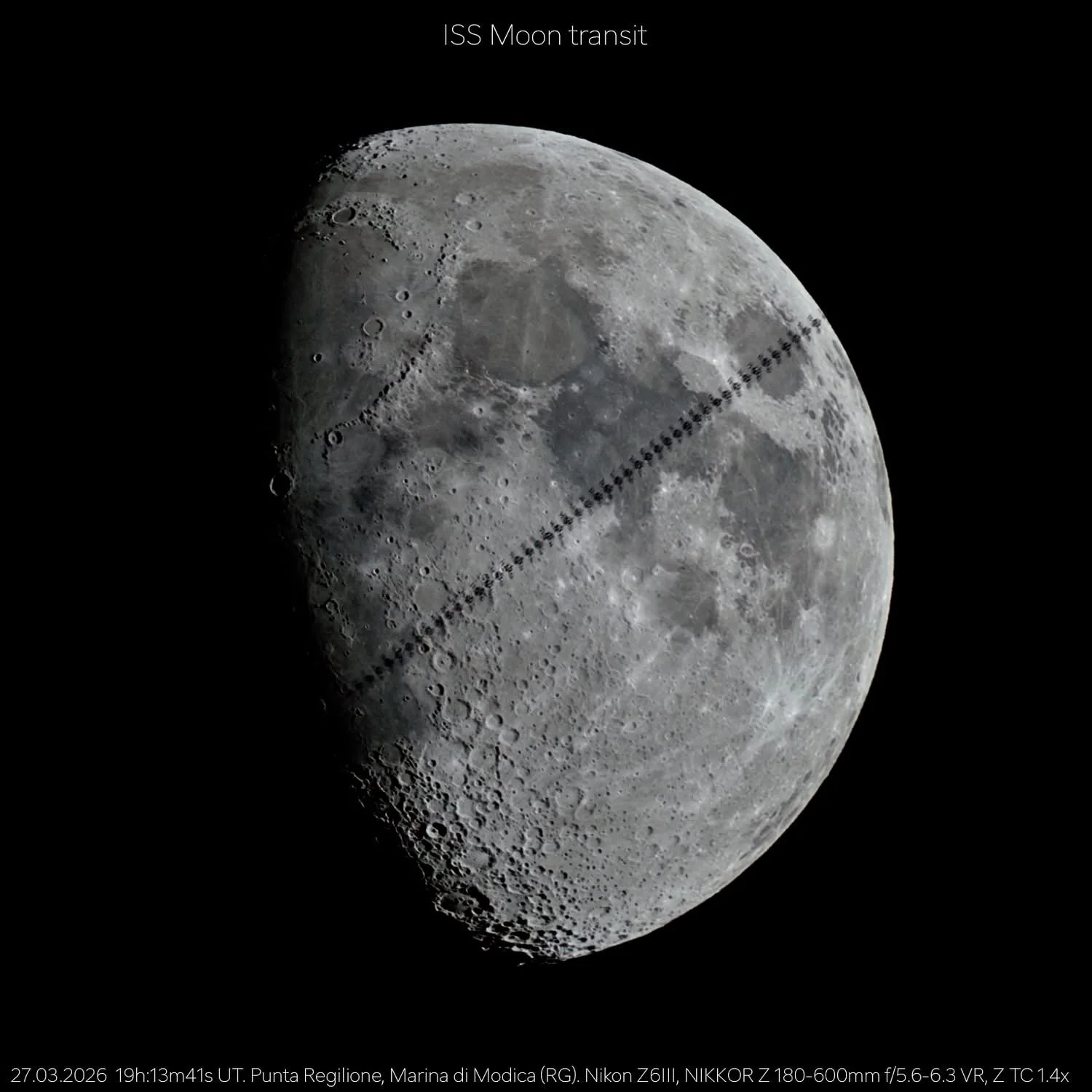
The ISS transits the Moon
Punta Regilione, Marina di Modica (RG), 27.03.2026 19h:13m:41s UT
Nikon Z6III, NIKKOR Z 180-600mm f/5.6-6.3 VR, Z TC 1.4x
Copyright: Salvo Lauricella
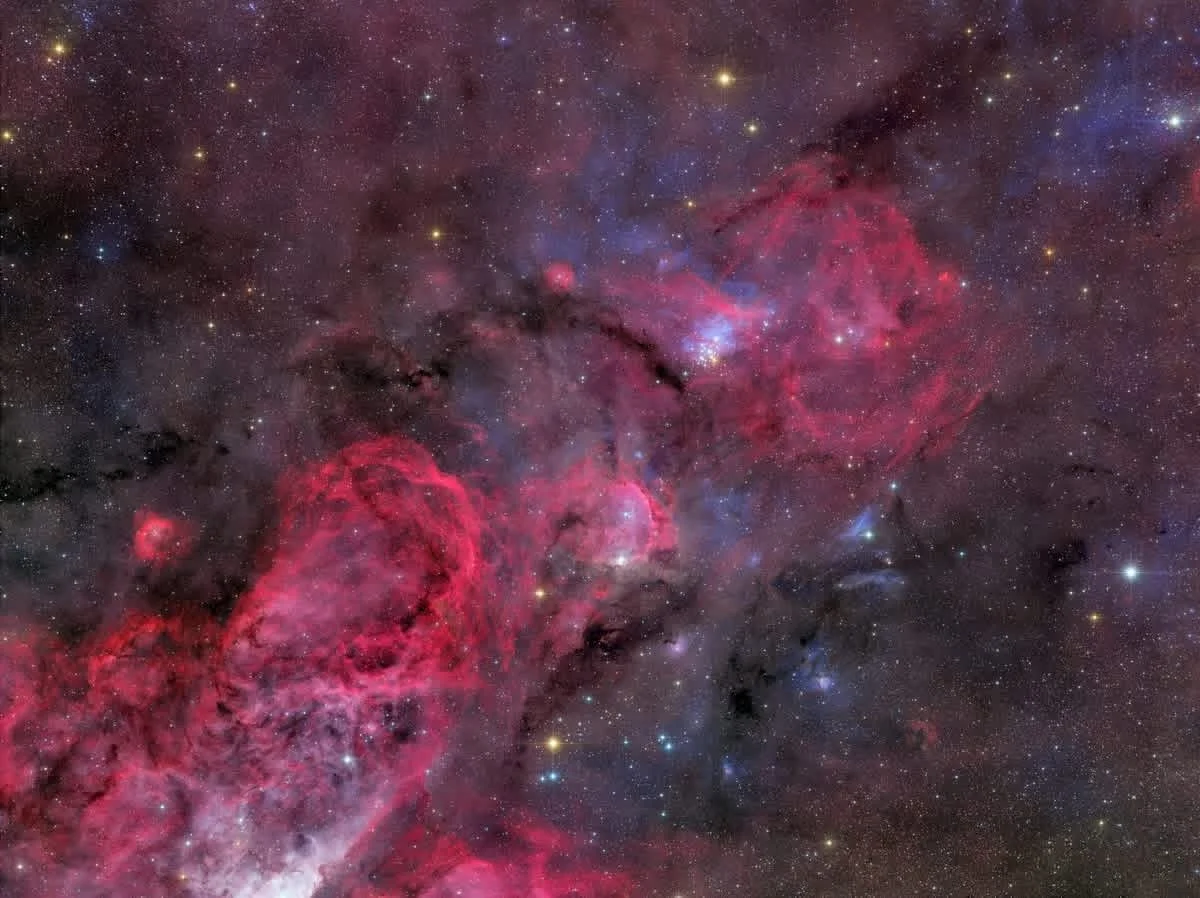
From NGC3324 to 3293
From 3324 to 3293
Here is another one from the ASA600 Ultrawidefield. I was always fascinated by this region obove the Eta Carina nebula as it is so colorful and has a lot of interresting objects like WR23 the Gabriella Mistral nebula the cluster NGC3293 and lots of relection nebulosity.
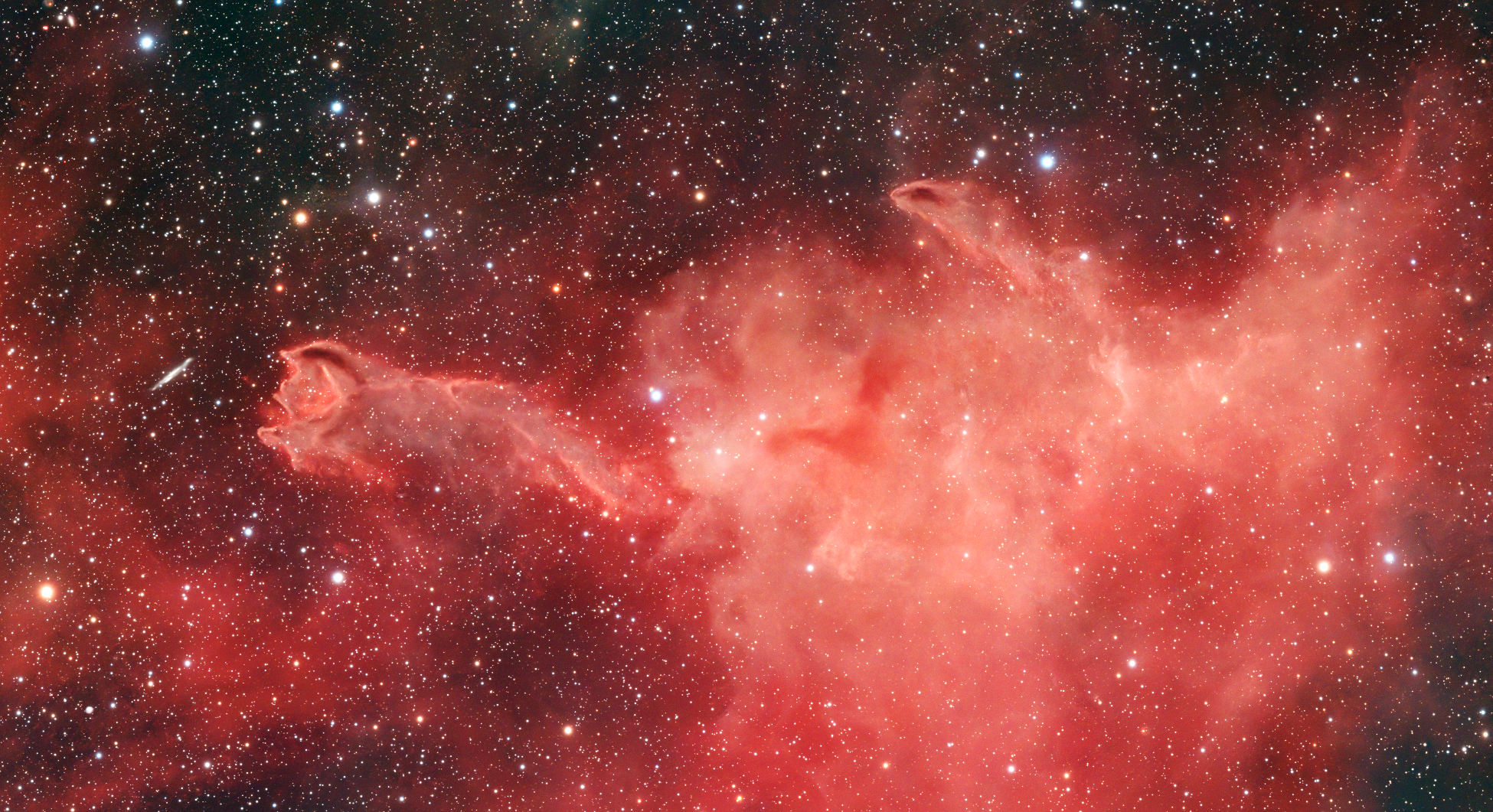
CG4 and Gum Nebula - The World Eater
The striking cometary cloud CG4 drifts along the edge of the vast Gum Nebula, one of the largest known emission nebulae in the sky. Located in the southern constellation Vela, CG4 is part of a population of small, dense clouds known as cometary globules—compact knots of gas and dust shaped by intense radiation and stellar winds from nearby massive stars. Its rounded “head” and long streaming tail give it the appearance of a cosmic comet, earning it the popular nickname “God’s Hand.” The dense head of the globule spans about 1.5 light-years across, while its faint tail stretches for several light-years through surrounding interstellar space.
The Gum Nebula itself is an enormous shell of glowing hydrogen gas spanning hundreds of light-years, likely created by ancient supernova explosions and the winds of massive stars. Radiation from these energetic stars sculpts nearby clouds like CG4, compressing their dense cores while gradually eroding their outer layers. Inside some cometary globules, gravity may trigger the collapse of gas to form new stars, meaning these sculpted structures can become small stellar nurseries. CG4 therefore represents a fascinating snapshot of cosmic interaction—where powerful stellar forces shape delicate clouds and may ultimately spark the birth of new suns within the sprawling environment of the Gum Nebula.
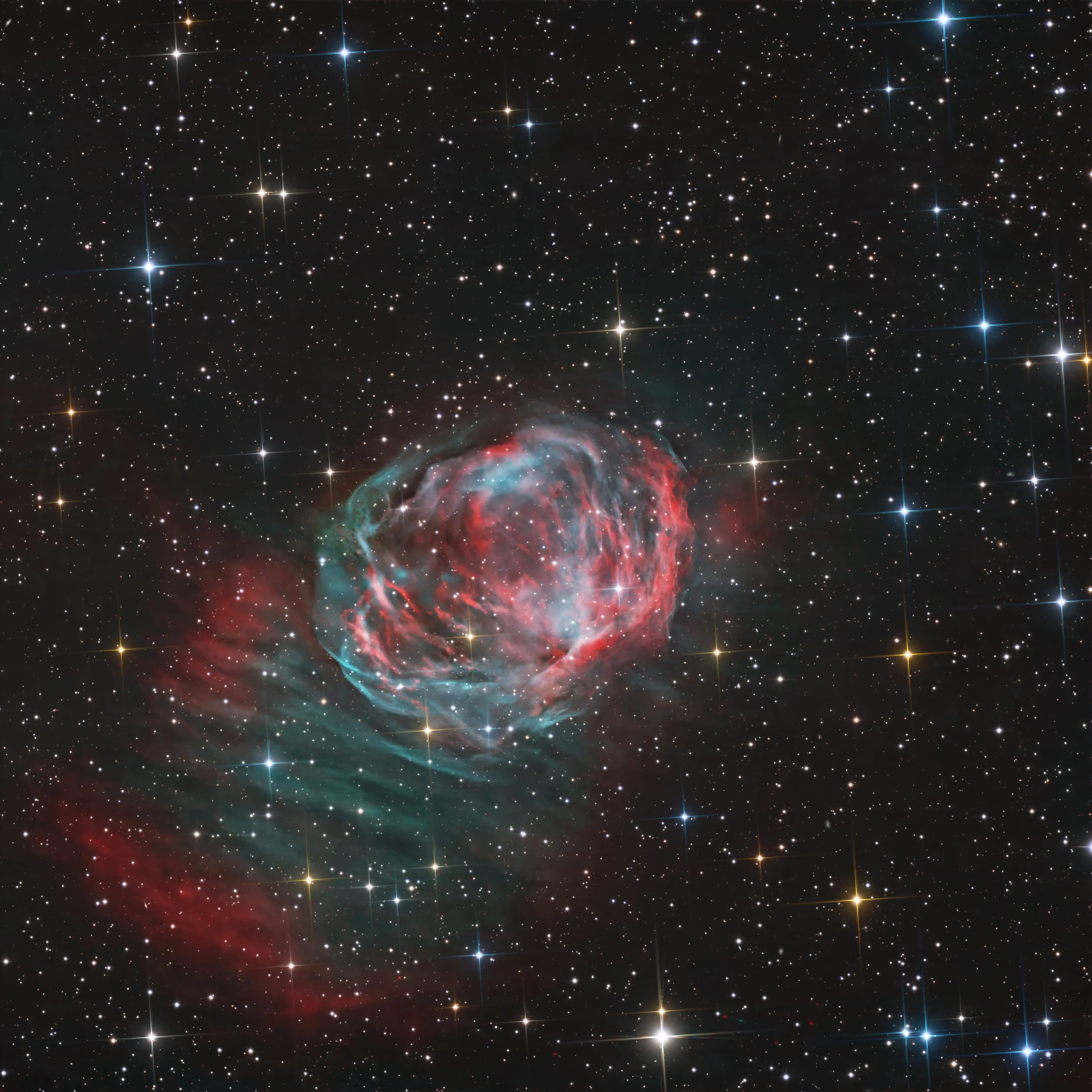
Abell 21 The Medusa Nebula - Not Your Everyday PN
The ghostly Abell 21, often called the Medusa Nebula, drifts through the constellation Gemini about 1,500 light-years from Earth. Its nickname comes from the delicate network of glowing filaments that resemble the serpentine hair of the mythological Medusa. These intricate strands trace the expanding shell of gas expelled by a dying Sun-like star thousands of years ago. Because the nebula has grown so large over time—spanning nearly four light-years across—its light is extremely faint, making it a challenging but rewarding target for deep-sky imaging.
The wispy structure of Abell 21 reveals the complex interaction between the expanding stellar debris and the surrounding interstellar medium. Shock waves and turbulence stretch the gas into twisting filaments that glow softly in hydrogen and oxygen emission. At the center lies the faint stellar remnant, a hot white dwarf whose intense ultraviolet radiation energizes the surrounding gas and keeps the nebula shining. Over the next tens of thousands of years, the Medusa Nebula will continue to dissipate into space, gradually mixing its enriched material back into the galaxy and contributing to the raw ingredients for future generations of stars and planets.