

AAPOD2 Image Archives

M3
M3, located in the constellation Canes Venatici, is a stellar marvel approximately 33,900 light-years from Earth. This globular cluster boasts a dense concentration of stars, with estimates ranging from 500,000 to over a million stars packed within a region spanning about 180 light-years.
At an estimated age of around 11.4 billion years, M3 predates many other celestial objects in its vicinity, including our own Sun. Its stellar population contains a diverse array of stars, from ancient red giants to younger main-sequence stars. Studying the chemical composition of these stars provides astronomers with valuable insights into the early stages of galaxy formation and the evolution of stellar populations over cosmic time.
M3's position in the sky allows for detailed observations and analysis, making it a key target for astronomers studying stellar dynamics, stellar evolution, and the structure of globular clusters. By measuring the brightness and colors of individual stars within M3, scientists can infer properties such as stellar ages, masses, and chemical compositions, shedding light on the processes that govern the formation and evolution of stars within dense stellar environments. As researchers continue to unravel the secrets of M3, this globular cluster remains a beacon of discovery, offering a window into the distant past of our galaxy and the broader universe beyond.
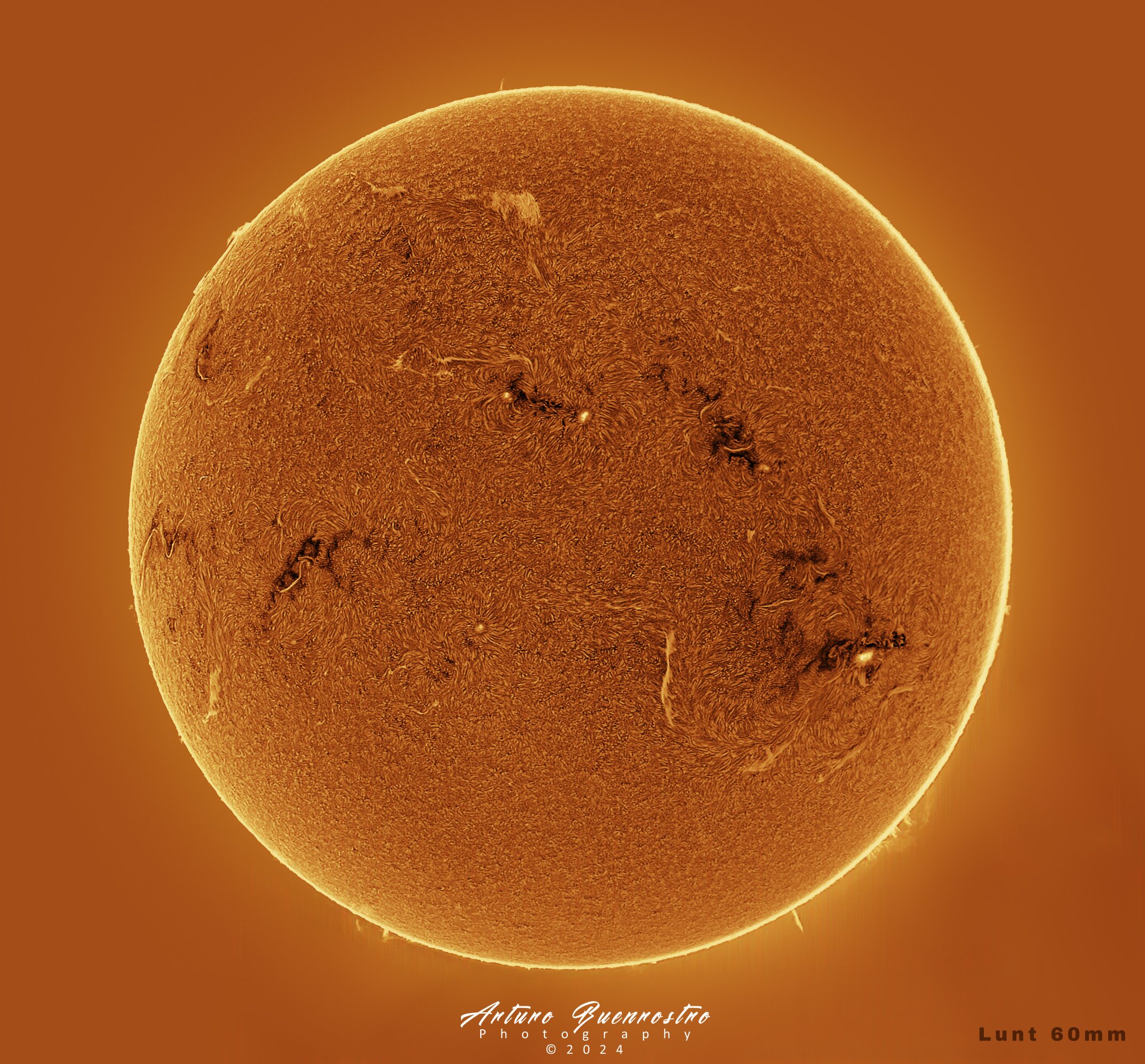
The Sun from Texas
In 2024, as solar enthusiasts eagerly await the peak of the solar cycle, the allure of capturing the Sun's mesmerizing landscape draws attention to the unique beauty inherent in each photograph. With every lens directed towards the Sun, photographers and observers alike are treated to an ever-changing canvas of solar activity, highlighting the dynamic nature of our celestial neighbor. As we marvel at the Sun's intricate dance of light and shadow, we embrace the enchantment of solar photography, where each image serves as a testament to the unparalleled magic of our solar system's central star. Moreover, the anticipation of the 2024 eclipse adds another layer of excitement, particularly for those in Texas, where the combination of favorable weather conditions and vast open spaces promises an unparalleled viewing experience. As the Lone Star State prepares to witness this celestial spectacle, the stage is set for an unforgettable encounter with the wonders of the cosmos.
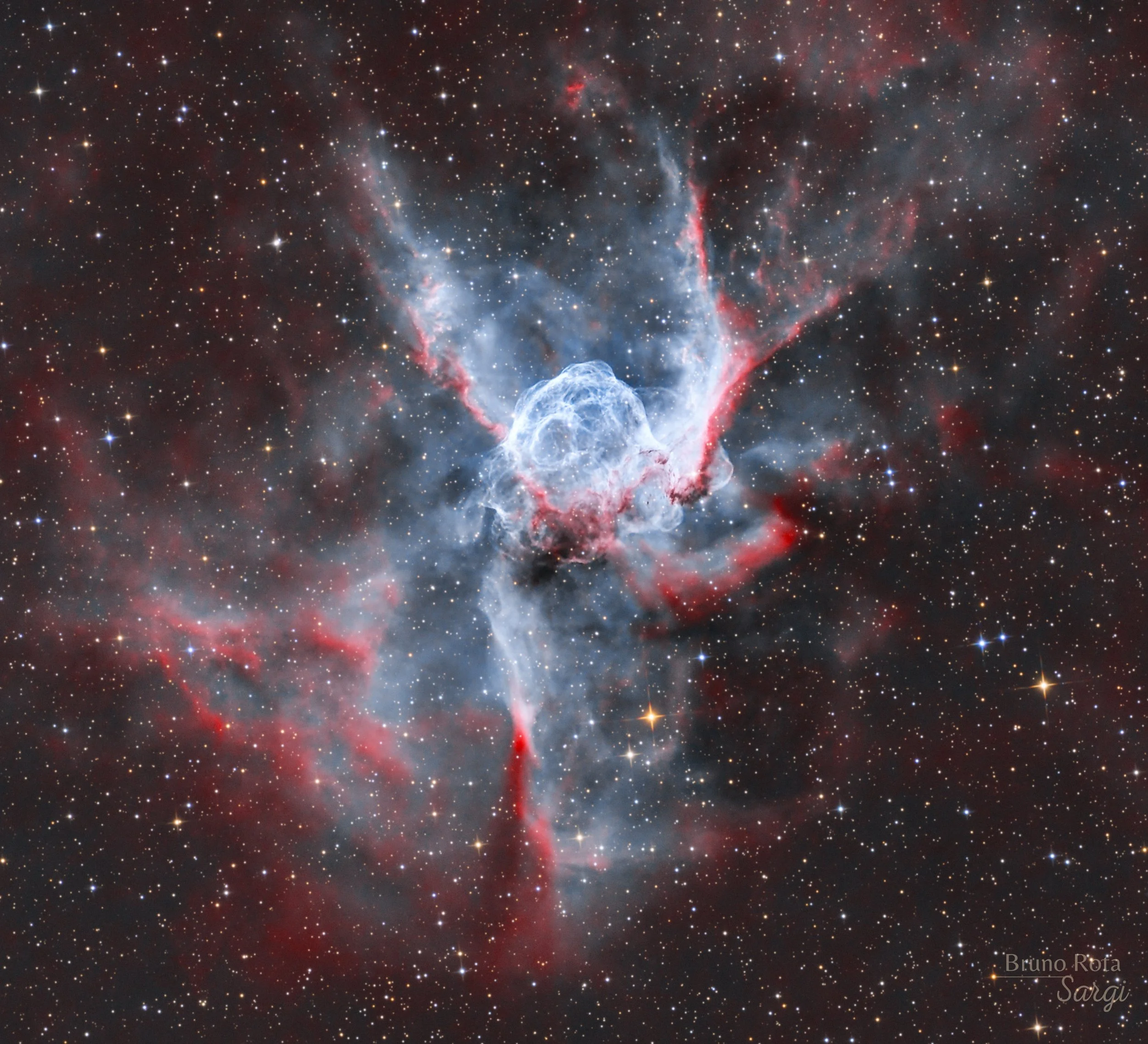
Thor's Helmet Nebula (NGC 2359)
Thor's Helmet Nebula, also known as NGC 2359, stands as a cosmic marvel in the constellation Canis Major, approximately 15,000 light-years away from Earth. Named for its striking resemblance to the legendary headgear of the Norse god Thor, this celestial spectacle captivates astronomers and stargazers alike with its intricate structure and vibrant hues.
At the heart of Thor's Helmet Nebula lies a massive Wolf-Rayet star, a rare and luminous type of star nearing the end of its life cycle. This stellar powerhouse expels stellar winds with tremendous force, sculpting the surrounding nebula into intricate filaments and shockwaves. The result is a breathtaking display of cosmic artistry, with delicate tendrils of gas and dust illuminated by the intense radiation of the central star.
Thor's Helmet Nebula offers astronomers a unique opportunity to study the complex interplay between massive stars and their surrounding interstellar medium. Through meticulous observation and analysis, scientists seek to unravel the mysteries of stellar evolution and the dynamics of galactic ecosystems. As Thor's Helmet Nebula continues to inspire wonder and fascination, it serves as a reminder of the boundless beauty and grandeur of the universe, inviting us to explore its depths and unlock its secrets.
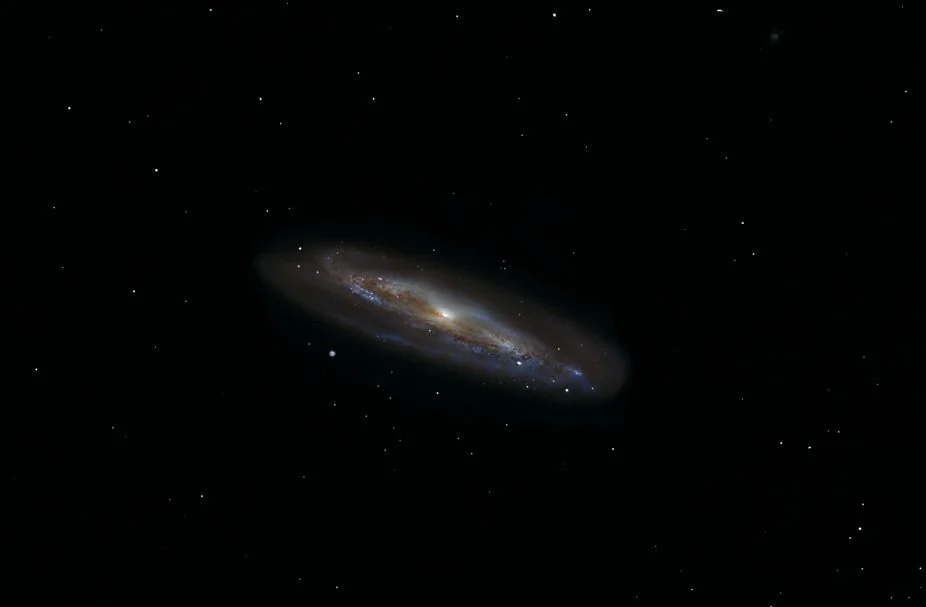
M98, the blue young stars nursery
M98, a mesmerizing spiral galaxy residing in the constellation Coma Berenices, stands as a testament to the elegance and complexity of cosmic structures. Situated approximately 44 million light-years away from Earth, this celestial beauty captivates astronomers with its graceful arms and intricate features.
As a member of the Virgo Cluster of galaxies, M98 boasts a prominent central bulge surrounded by sweeping spiral arms adorned with bright knots of star formation. These arms, delicately intertwined with dust lanes, weave a mesmerizing tapestry across the galactic disk, offering a glimpse into the dynamic processes at play within this stellar metropolis.
M98's allure extends beyond its visible features, as astronomers study its morphology and stellar populations to unravel the mysteries of galactic evolution. From the dynamics of star formation to the interactions with neighboring galaxies, M98 serves as a cosmic laboratory for understanding the intricate dance of matter and energy in the universe. As scientists continue to probe its depths, M98 continues to inspire awe and wonder, reminding us of the boundless beauty and complexity of the cosmos.
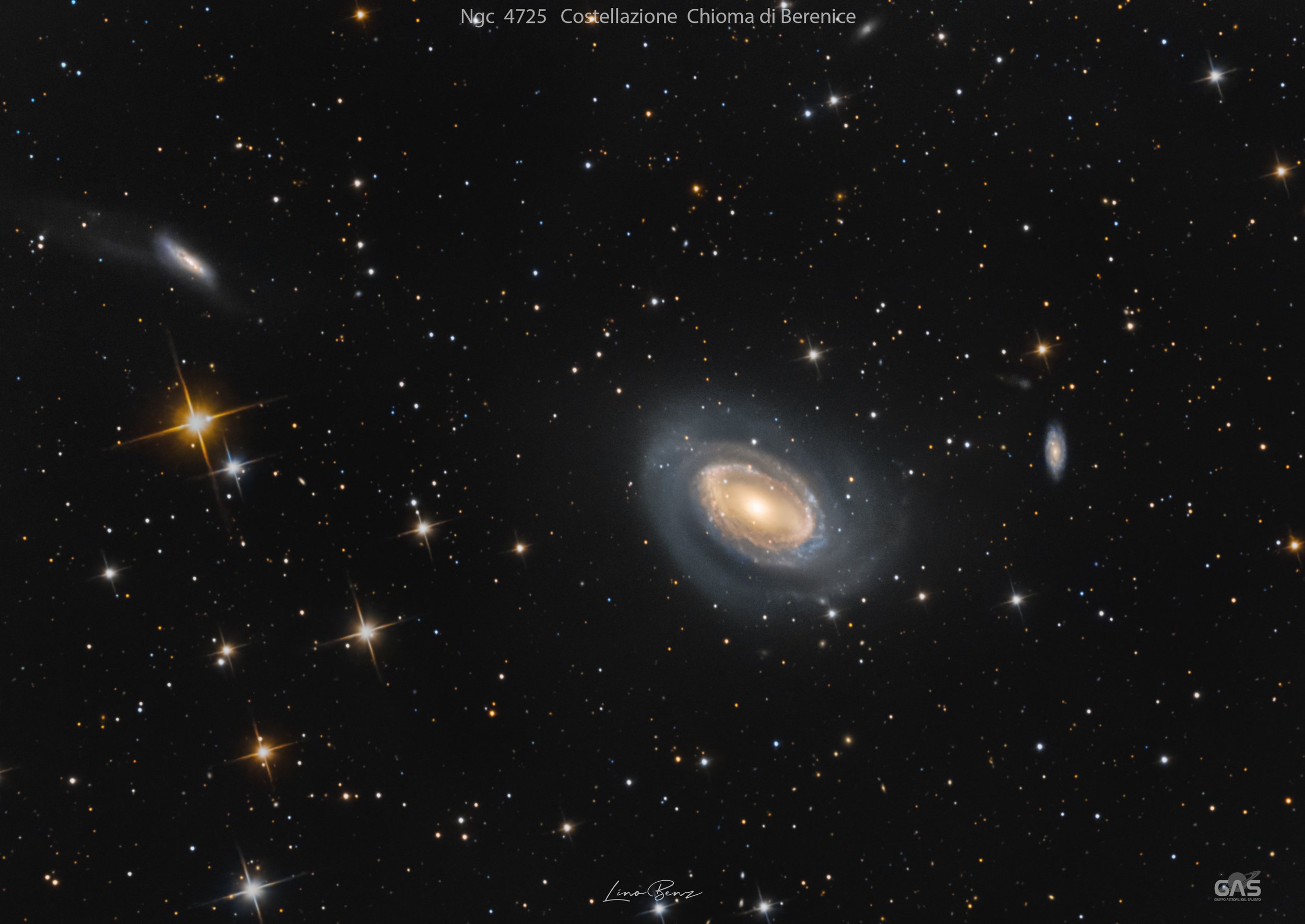
Ngc 4725
NGC 4725, a resplendent barred spiral galaxy nestled in the constellation Coma Berenices, beckons astronomers with its graceful arms and intricate structure. Approximately 41 million light-years away from Earth, this celestial beauty offers a captivating glimpse into the dynamics of galactic evolution.
Adorning the nucleus of NGC 4725 is a prominent central bar structure, extending outward like a cosmic spine. From this bar, elegant spiral arms spiral outward, adorned with bright knots of stellar activity and intricate dust lanes. Amidst this cosmic tapestry, defraction spikes—radiating outward from bright stars in the image—create striking patterns, reminiscent of cosmic fireworks.
Yet, beyond its visible features lies NGC 4725's enigmatic beauty, offering insights into the fundamental processes that shape the evolution of spiral galaxies. From the dynamics of star formation to the mysteries of galactic morphology, NGC 4725 serves as a cosmic laboratory, inviting astronomers to unravel its profound mysteries. As scientists delve deeper into its depths, NGC 4725 continues to captivate with its celestial splendor, illuminating the wonders of the universe and our place within it.
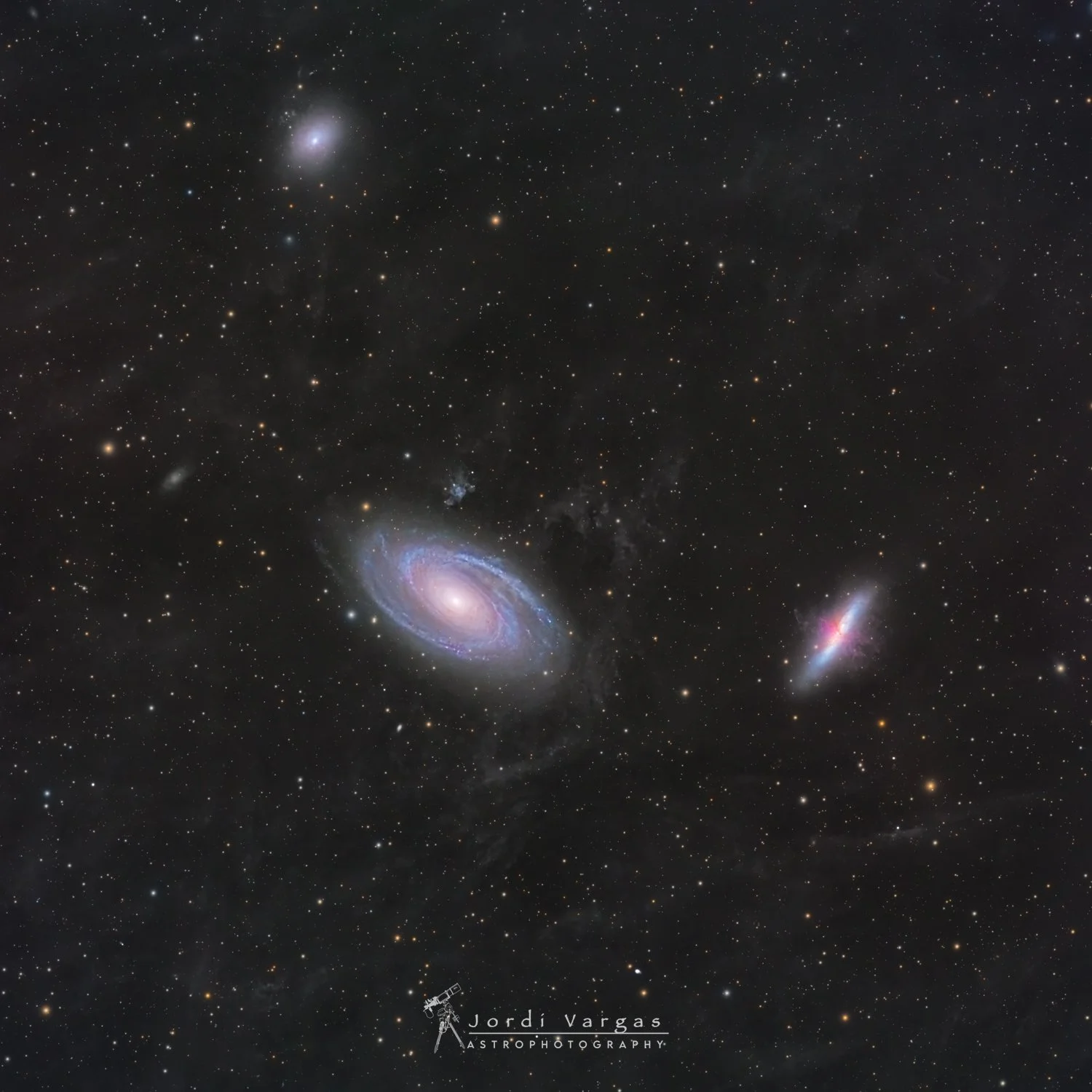
M81 & M82 IFN
M81, also known as Bode's Galaxy, and its neighbor M82, the Cigar Galaxy, form a captivating duo in the constellation Ursa Major. These galaxies, located approximately 12 million light-years away from Earth, offer astronomers a glimpse into the dynamic processes of galactic evolution.
M81, a grand spiral galaxy, boasts tightly wound arms adorned with bright knots of star formation. In contrast, M82, an irregular galaxy, exhibits a chaotic structure characterized by intense bursts of star formation and dramatic outflows of gas and dust. Together, these galaxies present a striking contrast in their appearance and evolutionary paths.
In addition to M81 and M82, the image also captures the faint glow of Integrated Flux Nebulae (IFN), subtle structures of interstellar dust illuminated by the combined light of distant stars. These ethereal wisps serve as a backdrop to the majestic galaxies, adding depth and dimension to the cosmic tableau.
As astronomers delve into the mysteries of M81, M82, and the surrounding IFN, they uncover insights into the processes of galactic interaction, star formation, and the cosmic recycling of elements. Through meticulous observation and analysis, these celestial wonders continue to inspire awe and wonder, inviting us to explore the vast depths of the universe and unravel its profound mysteries.

LDN1622 HaLrvb
LDN 1622, colloquially known as the Boogeyman Nebula, resides within the constellation of Orion, shrouded in mystery and cosmic intrigue. This dark nebula, characterized by its dense clouds of dust and gas, stands as a testament to the relentless forces of gravity and stellar evolution that shape the cosmos.
In this captivating HaLRGB composition, LDN 1622 emerges from the depths of space, revealing its enigmatic beauty against a backdrop of shimmering stars. The haunting glow of hydrogen alpha emissions illuminates the intricate tendrils of dust, casting an otherworldly aura that evokes a sense of cosmic foreboding.
Amidst the cosmic darkness of LDN 1622, vibrant RGB stars punctuate the celestial canvas, adding contrast and depth to the scene. These stellar beacons, born from the same cosmic material as the nebula itself, serve as reminders of the intricate interplay between light and shadow in the vast expanse of the universe.
As astronomers peer into the heart of LDN 1622, they uncover the secrets of stellar birth and the dynamic processes that govern the formation of galaxies and star systems. Through meticulous observation and scientific inquiry, LDN 1622 offers valuable insights into the cosmic forces that shape the evolution of the cosmos, enriching our understanding of the universe and our place within it.
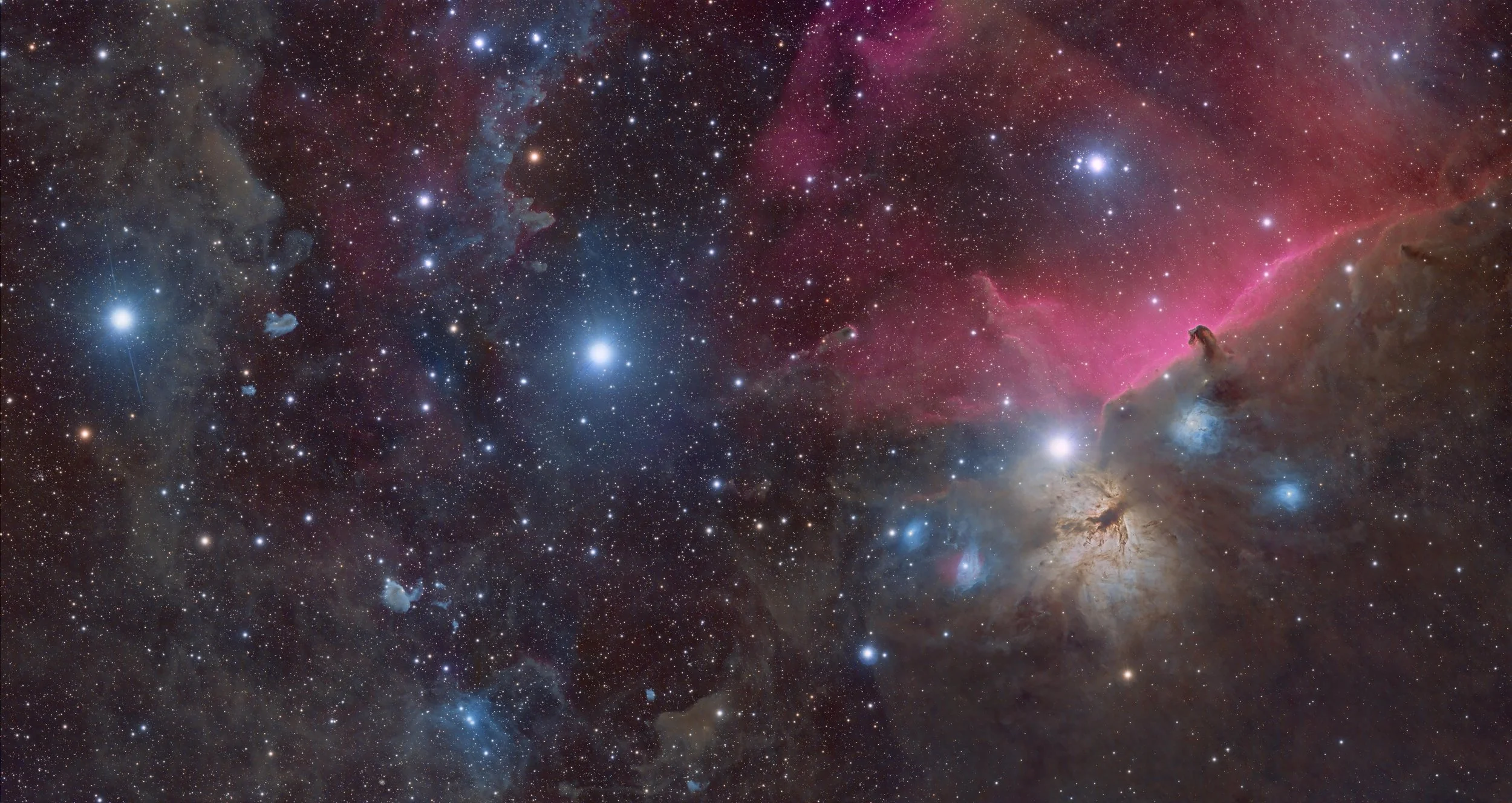
The Three Kings or The Three Sisters - Orion's Belt Mosaic - HaLRGB
he Three Kings, also known as The Three Sisters, refer to the three bright stars that form Orion's Belt, an iconic asterism in the constellation Orion. This celestial trio, comprised of the stars Alnitak, Alnilam, and Mintaka, has captivated stargazers for centuries with its prominent position in the winter sky.
In this stunning mosaic, The Three Kings are immortalized in a breathtaking HaLRGB composition, showcasing the intricate beauty of Orion's Belt against a backdrop of cosmic wonders. The mosaic captures the ethereal glow of hydrogen alpha emissions, revealing the intricate structure of the surrounding nebulae and star-forming regions.
As the centerpiece of the Orion constellation, The Three Kings hold a prominent place in ancient mythology and cultural lore, symbolizing power, courage, and guidance. Their enduring presence in the night sky serves as a reminder of the timeless beauty and majesty of the cosmos, inspiring awe and wonder in all who gaze upon them.
Through the lens of scientific inquiry and artistic expression, The Three Kings mosaic invites observers to embark on a celestial journey, exploring the depths of space and uncovering the mysteries of the universe. Whether observed from Earth's surface or captured in stunning astrophotography, The Three Kings continue to illuminate the night sky, guiding humanity's quest for knowledge and understanding of the cosmos.
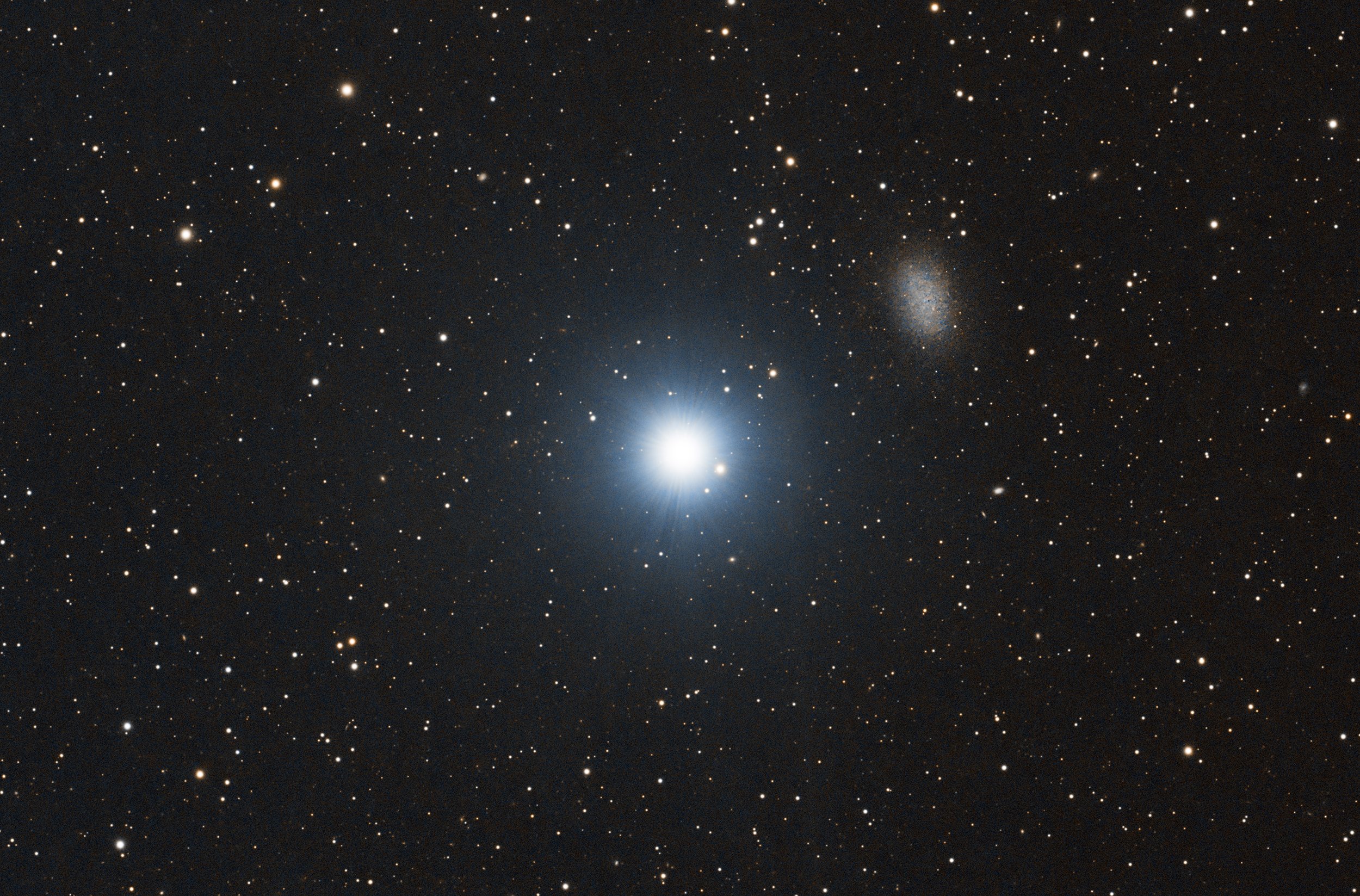
Regulus and Leo1
Regulus, the brightest star in the constellation Leo, reigns as a beacon of celestial brilliance amidst the cosmic tapestry of the night sky. Situated approximately 79 light-years away from Earth, this blue-white giant star captivates observers with its luminous presence and regal splendor.
As the heart of the celestial lion, Regulus holds a prominent position in the mythology and cultural lore of many civilizations. Its name, derived from the Latin word for "little king," underscores its significance as a royal star in the celestial kingdom. In ancient times, Regulus marked the beginning of the zodiacal sign Leo, symbolizing strength, courage, and leadership.
Accompanying Regulus in its celestial domain is Leo I, a dwarf spheroidal galaxy located about 820,000 light-years away from Earth. This satellite galaxy, discovered in 1950, orbits the Milky Way within the gravitational embrace of the Leo constellation. Despite its modest size and luminosity, Leo I offers astronomers valuable insights into the dynamics of galaxy formation and the distribution of dark matter within the universe.
Together, Regulus and Leo I stand as celestial companions, illuminating the cosmic landscape with their beauty and majesty. Whether observed with the naked eye or through the lens of a telescope, these celestial entities inspire wonder and awe at the grandeur of the universe and the mysteries that lie beyond.
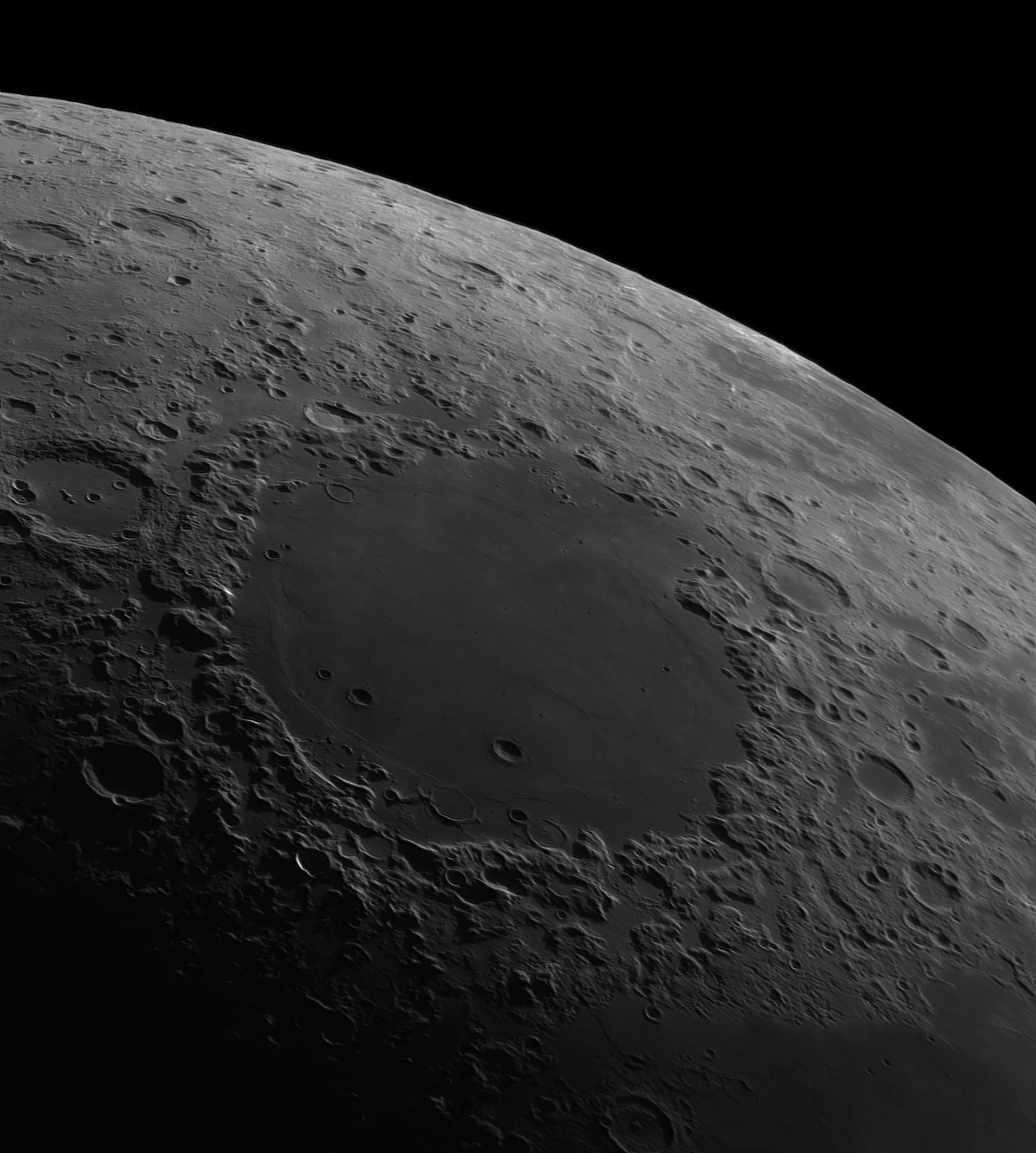
Mare Crisium
Mare Crisium, or the "Sea of Crises," stands as a prominent lunar feature, captivating observers with its vast expanse of ancient lava plains. Located on the northeastern edge of the Moon's near side, Mare Crisium is one of the most recognizable lunar mare, or "seas," visible from Earth.
This lunar basin, formed billions of years ago by volcanic activity, spans approximately 555 kilometers (345 miles) in diameter and is enclosed by a rugged ring of mountainous terrain. Within Mare Crisium's dark volcanic plains, ancient impact craters punctuate the surface, offering a glimpse into the Moon's tumultuous history of asteroid and meteoroid bombardment.
Detailed observations of this lunar seascape provide valuable insights into the Moon's volcanic history and the processes that have shaped its surface over billions of years.
Through the lens of scientific inquiry, Mare Crisium emerges not only as a geological wonder but also as a testament to the dynamic forces that have shaped the lunar landscape. Studying this lunar feature enriches our understanding of the Moon's complex geology and its place in the broader context of planetary science.

Belt of Venus and Sleeping Buddha
The Belt of Venus, a captivating atmospheric phenomenon, graces the twilight skies with its ethereal beauty. This optical phenomenon occurs during the transition between day and night, painting the eastern horizon with delicate hues of pink and purple.
Named after the Roman goddess of love and beauty, the Belt of Venus owes its enchanting appearance to the scattering of sunlight by atmospheric particles. As the Sun sets below the horizon, its rays illuminate the upper layers of Earth's atmosphere, casting a soft pinkish glow on the sky opposite the setting Sun. Below this rosy band lies the Earth's shadow, known as the "dark band" or "shadow band," adding depth and contrast to the celestial spectacle.
The Belt of Venus serves as a visual reminder of the interconnectedness of Earth, atmosphere, and cosmos, captivating observers with its transient beauty. Whether observed from a mountain peak or a tranquil shoreline, this celestial phenomenon inspires wonder and awe at the ever-changing tapestry of the twilight sky. Through the lens of science and artistry, the Belt of Venus illuminates the beauty and mystery of our planet and its place in the cosmos.
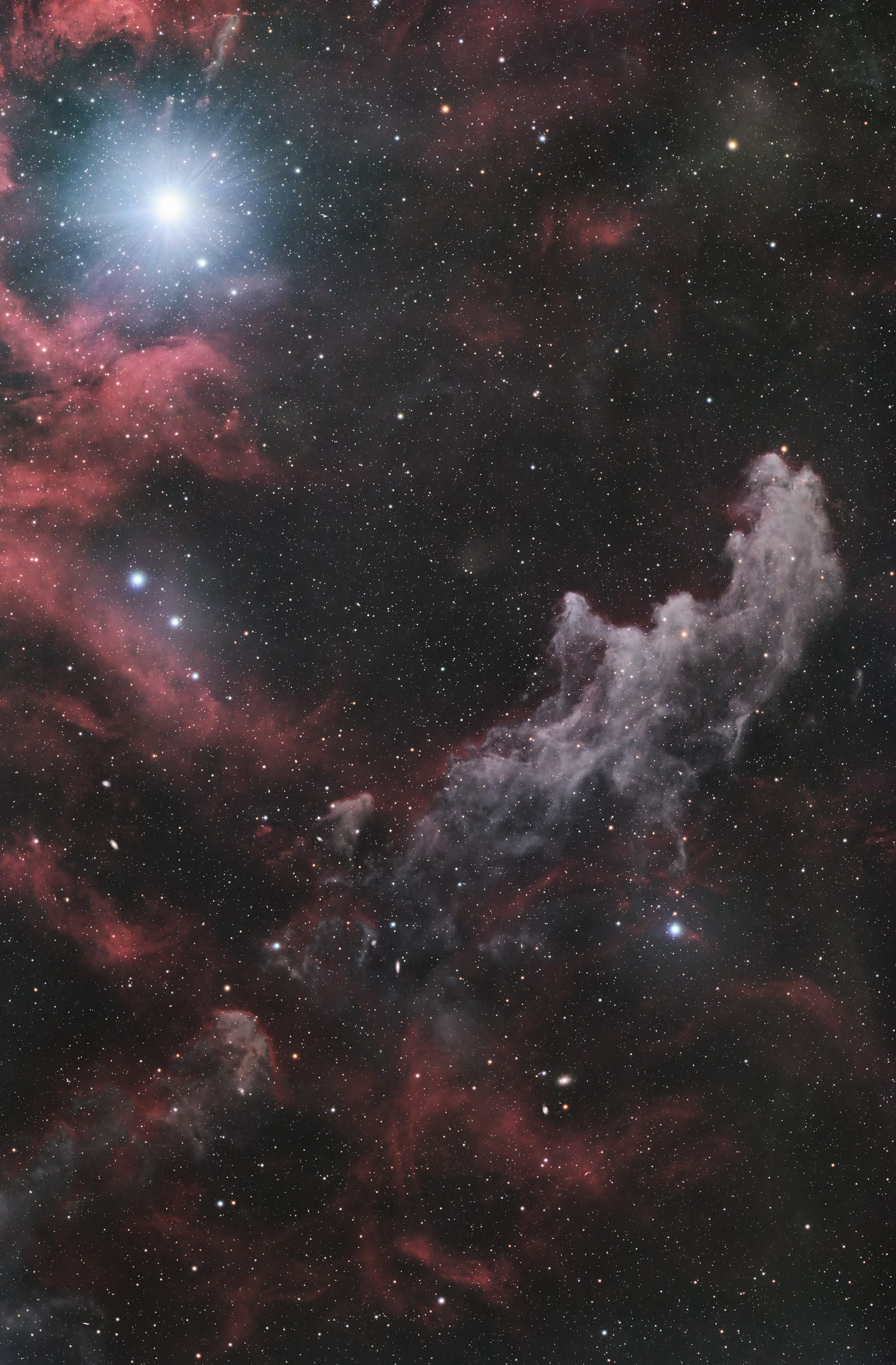
Witch Head Nebula and Rigel - Ic 2118
The Witch Head Nebula, a striking interstellar apparition, adorns the night sky with its eerie silhouette in the constellation Orion. This enigmatic nebula, officially cataloged as IC 2118, owes its haunting appearance to the interplay of starlight and cosmic dust, giving rise to its distinctive witch-like profile.
Situated about 900 light-years away from Earth, the Witch Head Nebula is illuminated by the brilliant star Rigel, one of the brightest stars in the constellation Orion. Rigel's intense ultraviolet radiation energizes the surrounding hydrogen gas, causing it to fluoresce and emit a ghostly blue glow. Meanwhile, the dark tendrils of dust within the nebula absorb and scatter the starlight, casting eerie shadows that evoke the image of a witch's profile against the cosmic canvas.
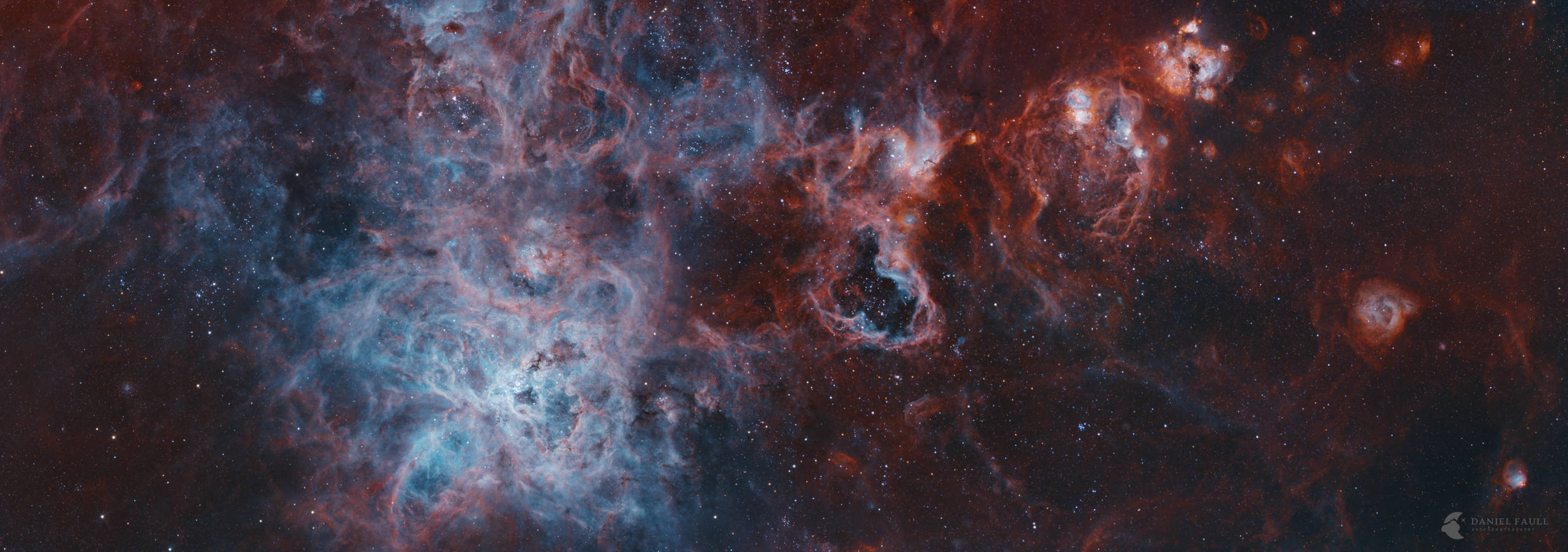
Tarantula Nebula
The Tarantula Nebula, also known as 30 Doradus, stands as a celestial marvel within the confines of the Large Magellanic Cloud, a satellite galaxy of our Milky Way. This colossal stellar nursery spans over 600 light-years and dazzles observers with its vibrant colors and intricate structures.
At the heart of the Tarantula Nebula lies the massive star cluster R136, home to some of the most massive and luminous stars known to science. These young, hot stars ionize the surrounding hydrogen gas, causing it to glow with an ethereal brilliance that permeates the nebula's expanse. Amidst the cosmic chaos of the Tarantula Nebula, new stars are born in a dazzling display of stellar birth and evolution.
The Tarantula Nebula serves as a cosmic laboratory, offering astronomers insights into the processes of star formation and the dynamics of massive star clusters. Its proximity to Earth and its sheer size make it a prime target for scientific study, providing valuable data that enhances our understanding of the lifecycle of stars and the evolution of galaxies. As we gaze upon the Tarantula Nebula, we are reminded of the beauty and complexity of the cosmos, inspiring wonder and awe at the vastness of the universe and the mysteries that lie within.
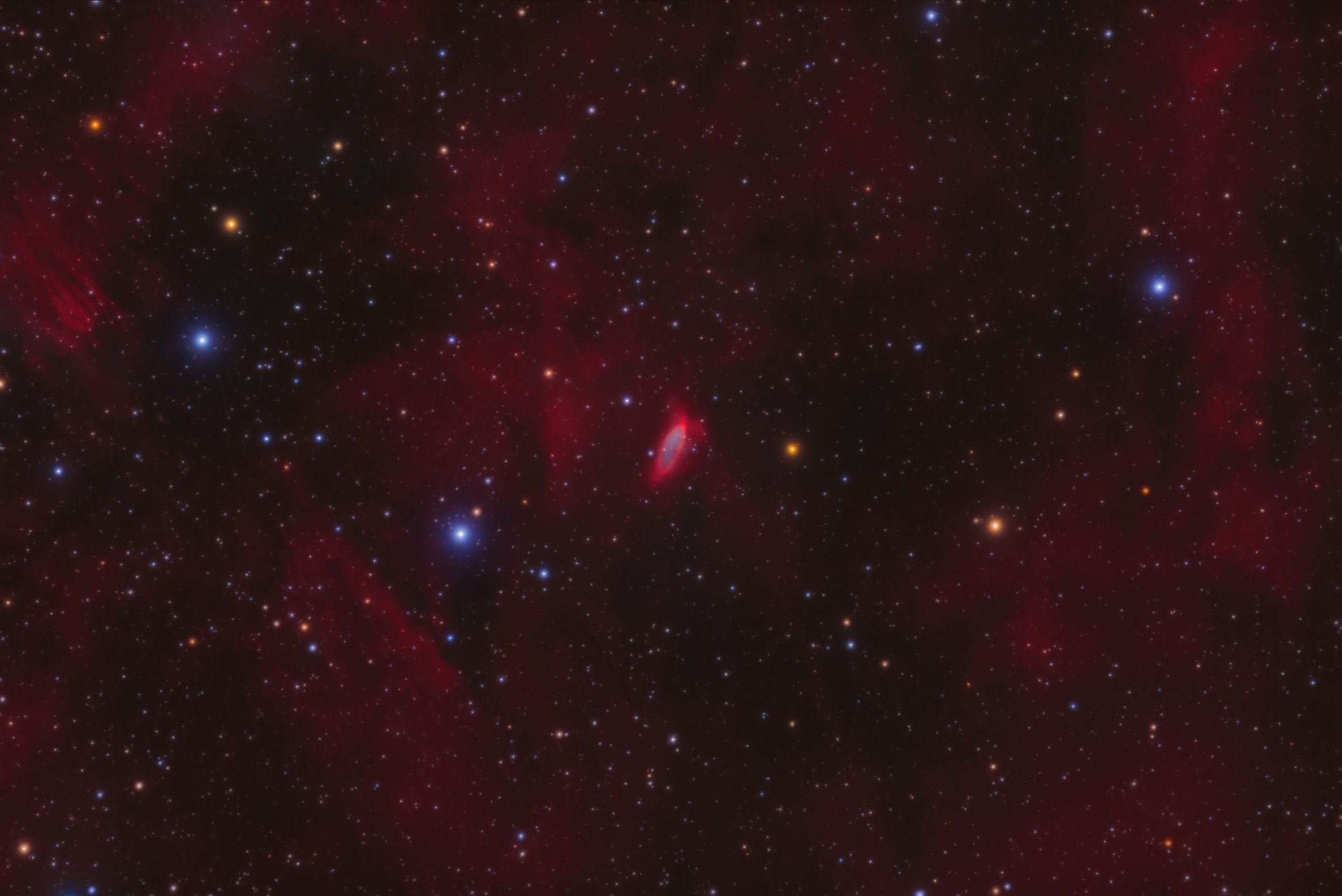
NEW DISCOVERY: Strottner-Drechsler 33
New Discovery!
This first colour image of the probable planetary nebula StDr33 (PNG 201.6+03.9) shows a bright ring-shaped structure surrounding a whitish central star.
The central star is probably a close binary system in which two stars orbit each other. This is likely also the reason why the central star does not have the typical blue colour, as the spectral colours of both stars mix to a white-yellow. A total of 99 hours 25 minutes total integration (HaOIIIRGB)
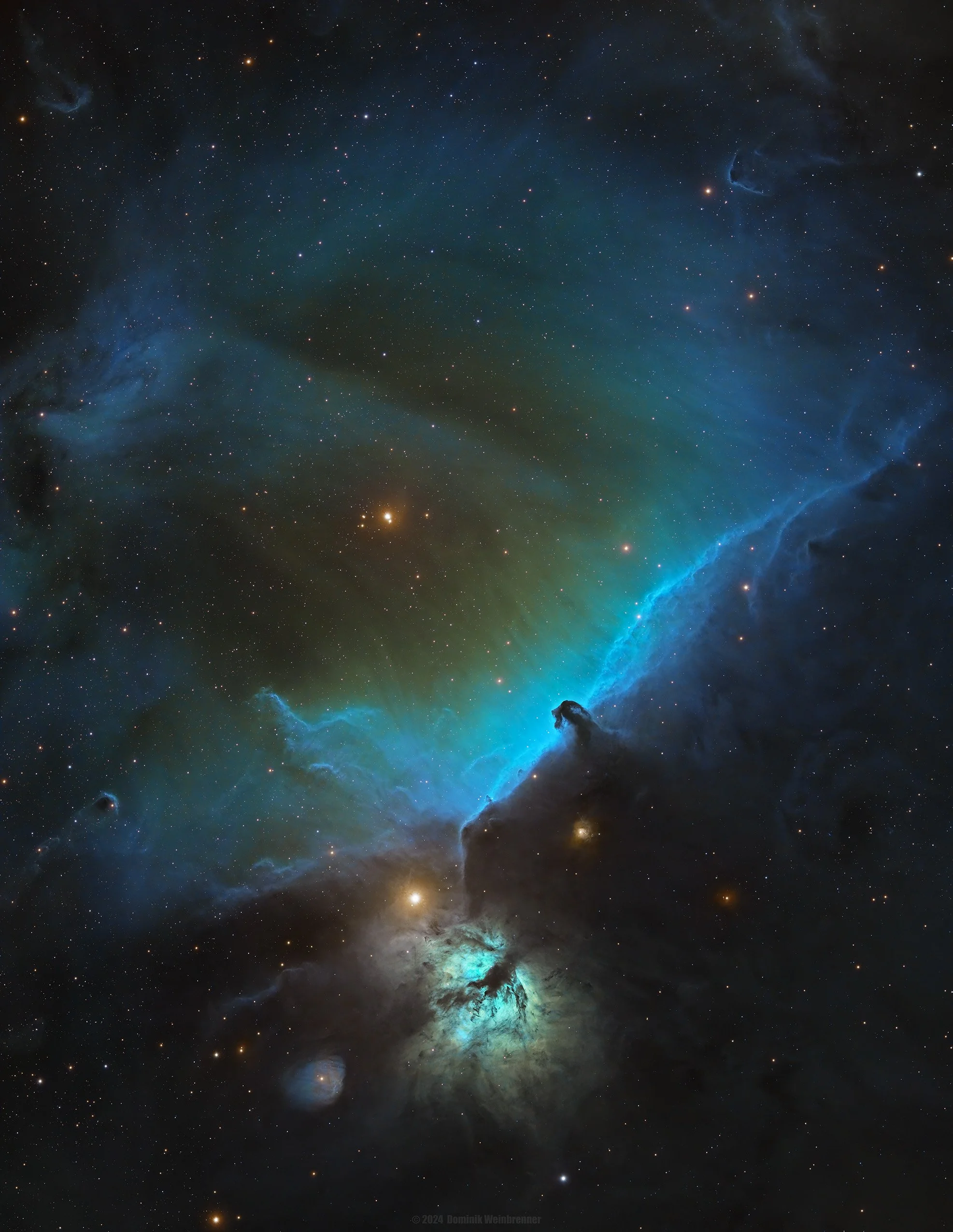
Horsehead in OHS
The Horsehead Nebula, also known as Barnard 33, stands as an iconic silhouette against the backdrop of the Orion Molecular Cloud Complex. This dark nebula, situated in the constellation Orion, captivates the imagination with its distinctive shape resembling that of a horse's head, immortalized against the glowing backdrop of the emission nebula IC 434.
Located approximately 1,500 light-years away from Earth, the Horsehead Nebula owes its striking appearance to the interplay of cosmic dust and starlight. The dark dust clouds obscure the light from background stars, creating a stark contrast against the vibrant emissions of nearby hydrogen gas. Despite its haunting beauty, the Horsehead Nebula serves as more than just a celestial spectacle; it also serves as a stellar nursery, where new stars are born amidst the cosmic clouds.

Sunspot AR3576
Sunspots, dark blemishes on the surface of the Sun, offer a fascinating glimpse into the dynamic processes occurring within our nearest star. These cooler regions, caused by intense magnetic activity, punctuate the solar surface, creating intricate patterns that evolve over time.
Sunspots are often associated with solar flares and coronal mass ejections, powerful eruptions of energy and matter that can impact space weather and Earth's magnetic field. By studying sunspots, astronomers can gain valuable insights into the Sun's magnetic field and its influence on solar activity.
The number and distribution of sunspots follow an 11-year cycle known as the solar cycle, reflecting the waxing and waning of solar magnetic activity. During periods of high solar activity, sunspot numbers increase, while during periods of low activity, sunspots become scarce.
Despite their diminutive size compared to the vastness of the Sun, sunspots play a significant role in shaping the solar environment and are key indicators of the Sun's ever-changing nature. Studying these enigmatic features not only enhances our understanding of solar dynamics but also contributes to our ability to forecast space weather and its potential impacts on technology and infrastructure here on Earth.

NGC 1491 and PN Ou1
Nestled within the constellation of Perseus, NGC 1491 emerges as a celestial masterpiece, showcasing the intricate beauty of stellar birth and evolution. This emission nebula, illuminated by the energetic radiation of newborn stars, paints a vibrant portrait against the backdrop of the cosmic expanse.
At the heart of NGC 1491 lies a stellar nursery, where dense clouds of gas and dust collapse under their own gravity, giving birth to new generations of stars. The intense ultraviolet radiation emitted by these young stars ionizes the surrounding gas, causing it to glow with ethereal hues of red and blue. NGC 1491 serves as a stellar crucible, where the forces of creation sculpt the cosmic landscape, offering astronomers a window into the dynamic processes shaping our galaxy.
PNOU1: Exploring the Cosmic Mysteries in the Veil Nebula
PNOU1, nestled within the intricate filaments of the Veil Nebula, presents a fascinating glimpse into the aftermath of stellar death. This planetary nebula, born from the remnants of a dying star, showcases the intricate dance of gas and dust as it expands into the surrounding interstellar medium.
As the outer layers of the progenitor star are expelled into space, they form a luminous shell of ionized gas, illuminated by the fading light of the central remnant. PNOU1 represents a fleeting cosmic moment, a testament to the life cycle of stars and the transformative power of stellar winds and supernova explosions. Studying PNOU1 provides astronomers with valuable insights into the final stages of stellar evolution and the complex dynamics of interstellar matter, enriching our understanding of the cosmic tapestry woven across the vastness of space.
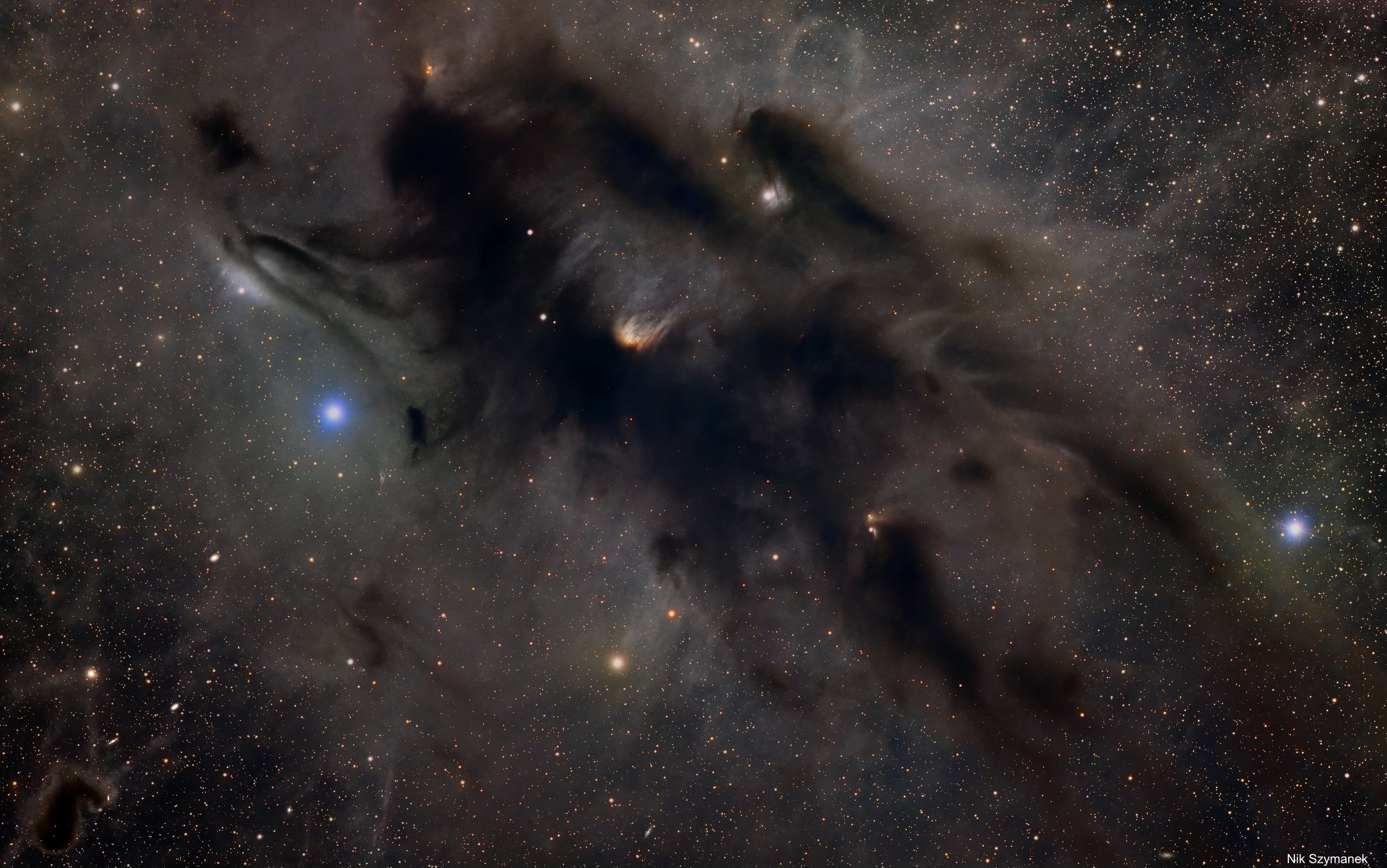
IC 2087 and Taurus Molecular Cloud
IC 2087 stands as a shadowy sentinel amidst the celestial expanse, a dark nebula shrouded in mystery and intrigue. Located within the boundaries of the constellation Taurus, this enigmatic cosmic cloud serves as a cosmic veil, obscuring the light of distant stars and revealing the intricate interplay of cosmic dust and gas.
As a dark nebula, IC 2087 offers astronomers a unique opportunity to study the processes of star formation and the dynamics of interstellar matter. Within its dense folds of dust and gas, new stars may be slowly emerging, their faint light struggling to pierce the veil of darkness. While its secrets remain largely hidden from view, IC 2087 beckons the curious gaze of astronomers, inviting them to unravel the mysteries of cosmic evolution and the birth of stars within the vastness of the cosmos.
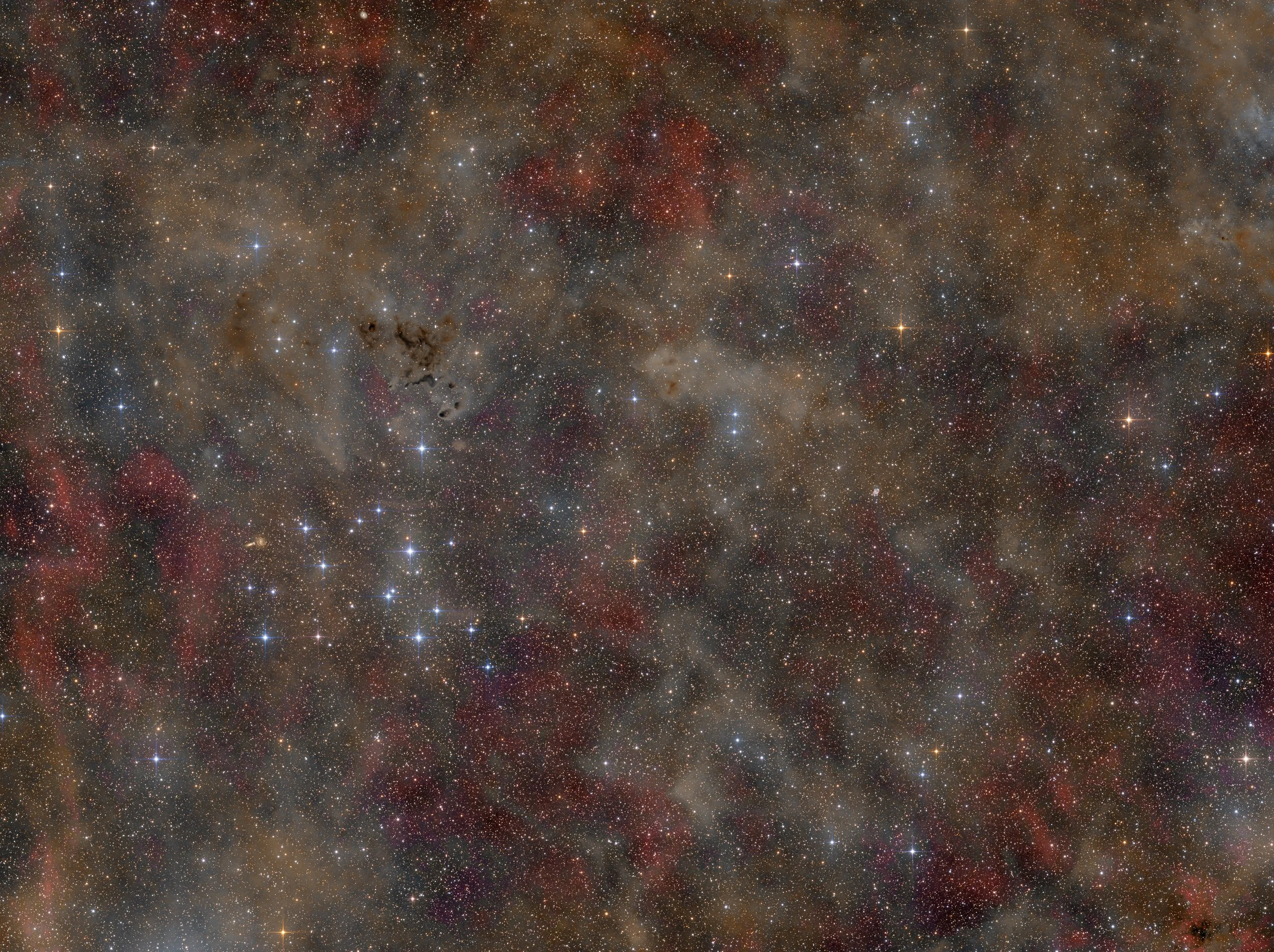
Not Your Father's M39
Nestled within the constellation of Cygnus, M39 emerges as a stellar oasis amidst the celestial expanse, offering a captivating glimpse into the beauty and diversity of the cosmos. Comprising a collection of approximately 30 to 40 stars, this open star cluster presents a dazzling array of stellar luminosity against the dark backdrop of space.
At a distance of about 800 light-years from Earth, M39 serves as a stellar laboratory for astronomers, providing valuable insights into the formation and evolution of stars within our Milky Way galaxy. Its relatively young age of around 300 million years adds to its scientific allure, as researchers study the intricate dynamics of stellar birth and development within this celestial gathering. As observers peer into the heart of M39, they are invited to contemplate the vastness of the cosmos and the countless wonders that await exploration beyond the confines of our terrestrial realm.

Barnard's Merope IC349, inside Merope NGC1435 in the Pleiades
Amidst the cosmic tapestry of the Pleiades star cluster, the ethereal beauty of Barnard's Merope, designated IC 349, unfolds as a delicate nebular veil draped around the celestial jewel Merope. This intricate scene captures the interplay of interstellar dust and starlight, creating a celestial spectacle that graces the Pleiades with a touch of cosmic elegance.
IC 349, a reflection nebula, mirrors the radiant glow of Merope, one of the Seven Sisters within the Pleiades cluster. The nebular veils, illuminated by the star's brilliance, add a subtle celestial adornment, enhancing the visual richness of this stellar ensemble. As astronomers gaze upon Barnard's Merope, they witness not only the aesthetic charm of interstellar dust but also the scientific significance embedded in the delicate dance between starlight and cosmic particles. This cosmic tableau serves as a testament to the intricate relationships within star clusters, offering a glimpse into the astrophysical processes that shape and adorn our celestial surroundings.