

AAPOD2 Image Archives
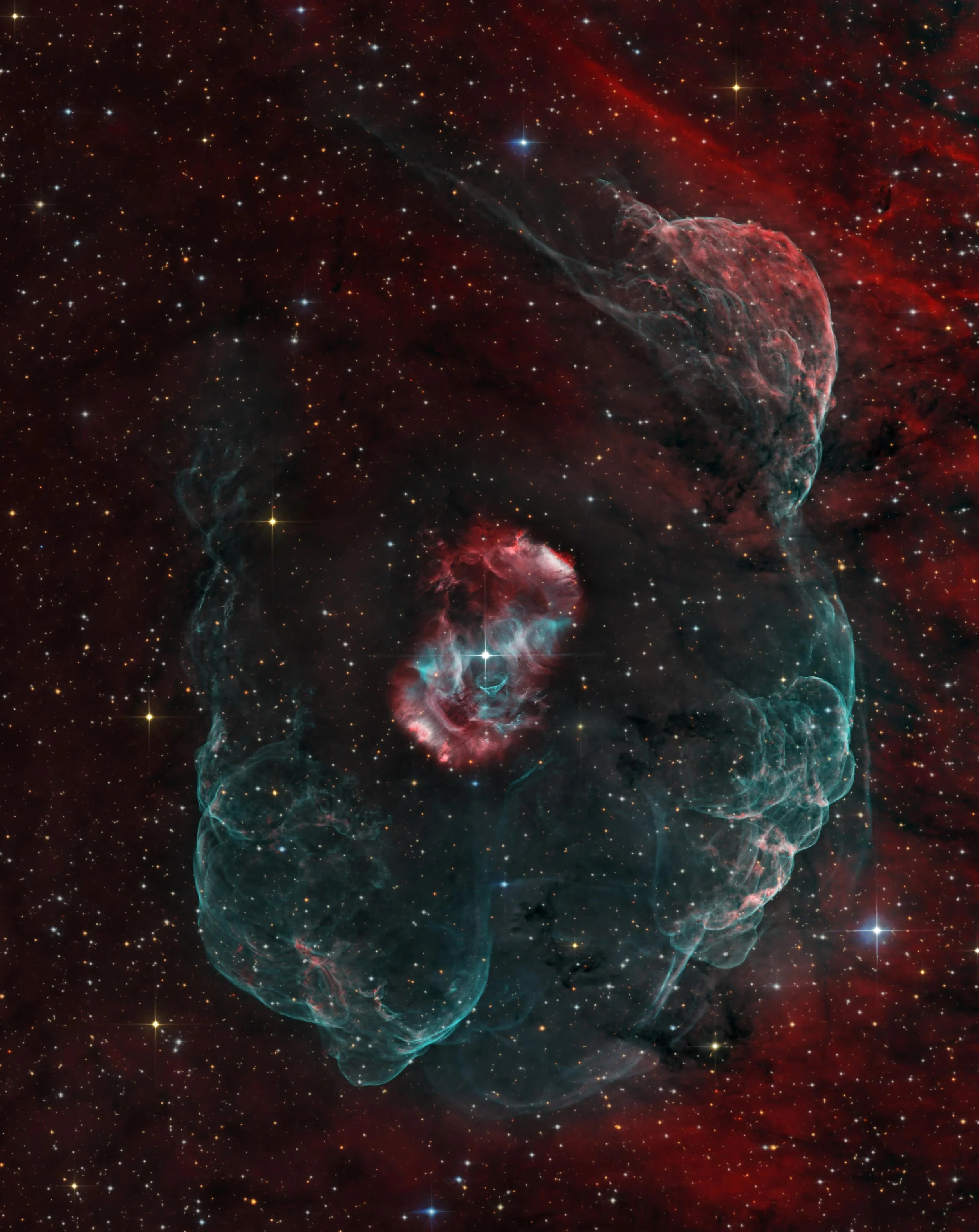
NGC 6164/6165 — The Dragon’s Egg Nebula
NGC 6164, often referred to as the Dragon's Egg Nebula, is a striking bipolar emission nebula located approximately 4,200 light-years away in the southern constellation Norma. Spanning roughly 4 light-years across, this cosmic structure is characterized by its intricate, reverse-S shaped glowing lobes created by high-speed stellar winds streaming outward at speeds up to 8 million kilometers per hour. Expanding beyond its bright central core is a faint, majestic outer halo of gas, thrown into interstellar space by explosive outbursts thousands of years ago.
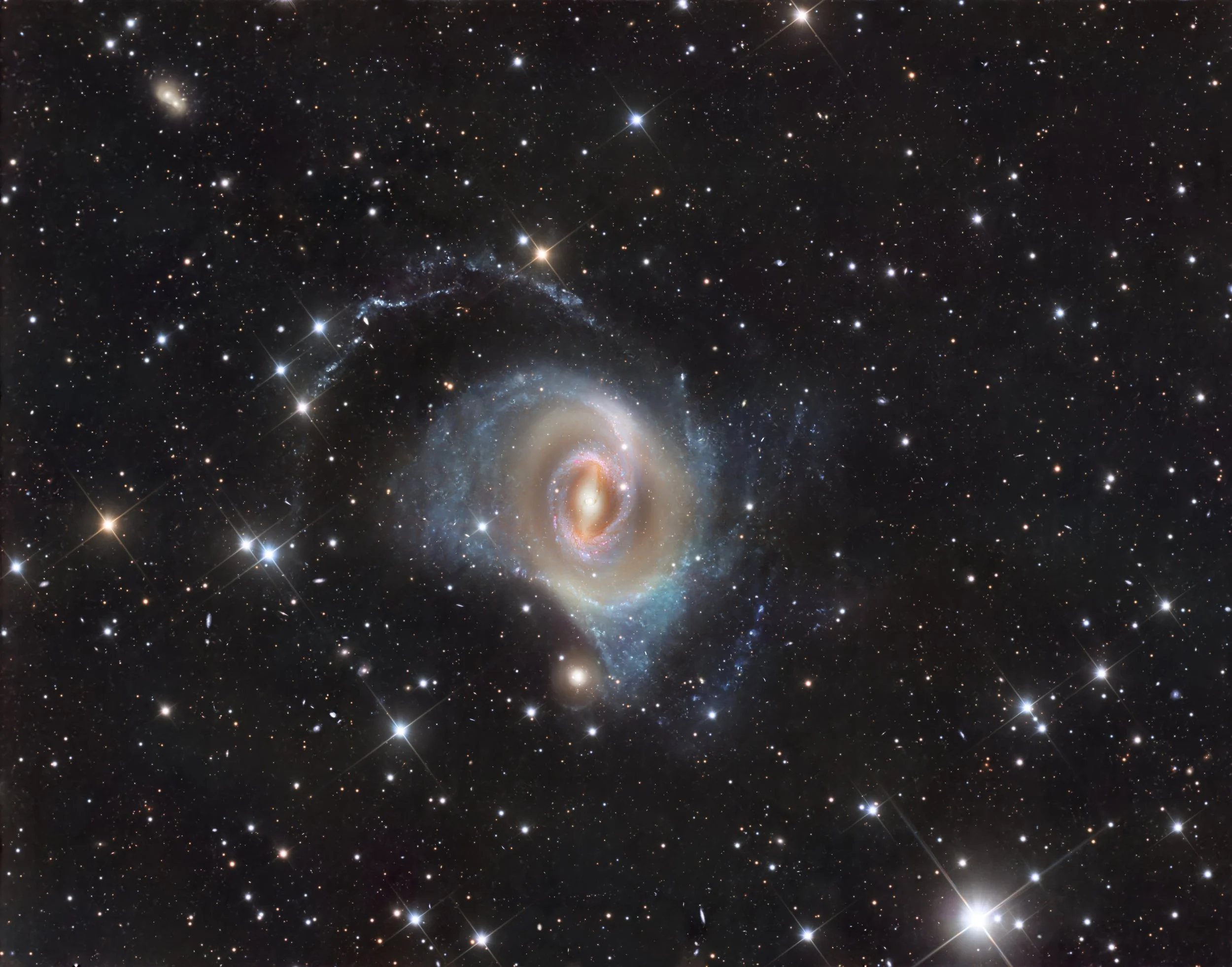
NGC 1512 and Companion Galaxy NGC 1510
NGC 1512 is a nearby barred spiral galaxy whose bright central core feeds a wide ring of active star formation, visible here as pink H-alpha knots embedded in sweeping blue spiral arms. The galaxy’s prominent bar channels gas inward, helping sustain ongoing stellar birth in its nucleus, while the faint outer arms reveal delicate dust lanes and clusters of young, hot stars. Just below the main galaxy sits its compact companion, NGC 1510, whose gravitational influence is helping to trigger and reshape this extended star-forming structure.
Captured on January 17, 2026 from Rio Hurtado, Chile, this image highlights both the scientific and aesthetic beauty of galactic interaction. The surrounding star field adds depth and scale, emphasizing how these two galaxies are caught in a slow cosmic dance that unfolds over hundreds of millions of years. Subtle tidal features and asymmetries hint at past encounters, offering a snapshot of how gravity sculpts galaxies and sparks new generations of stars.
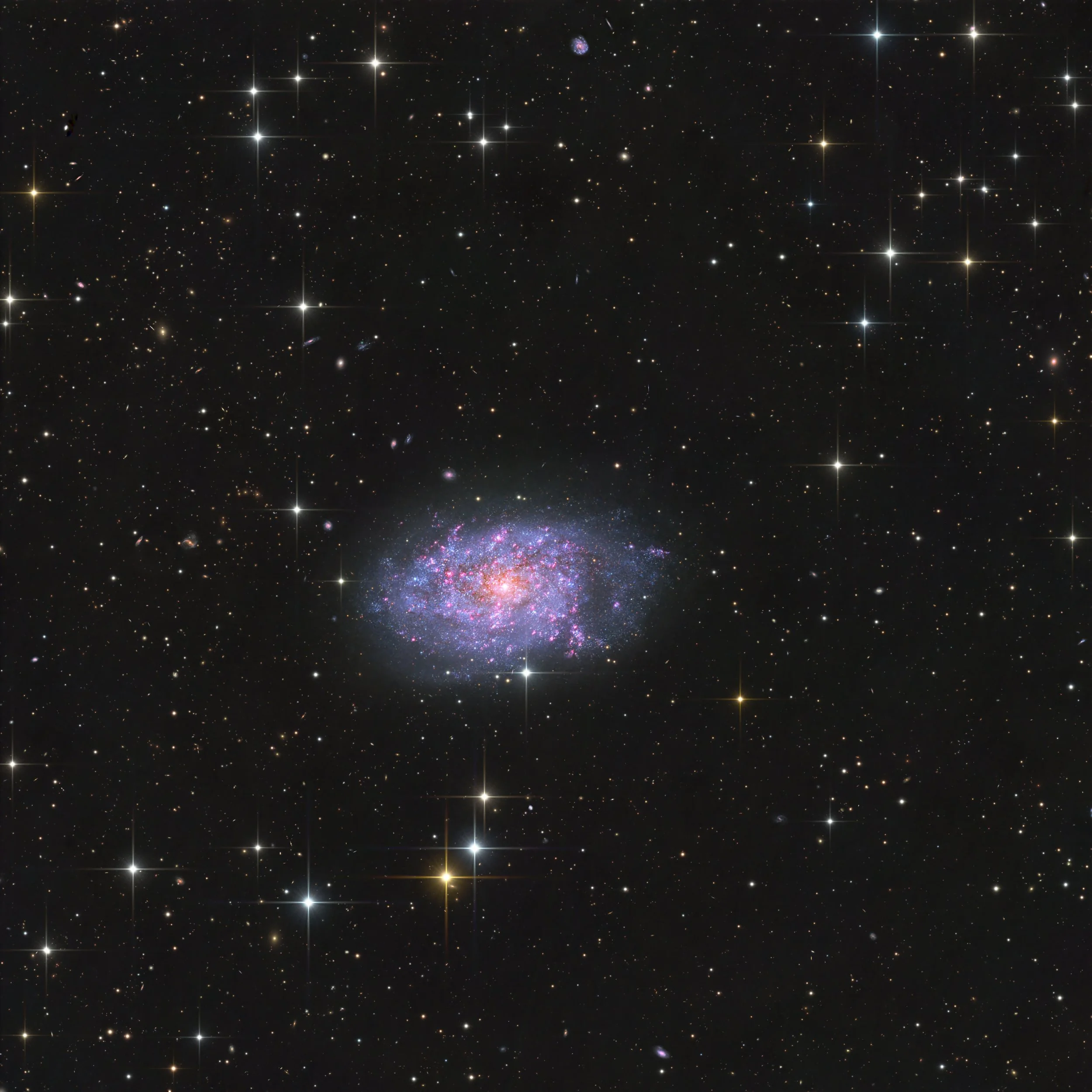
NGC 7793
NGC 7793 is a flocculent spiral galaxy in the constellation Sculptor and a prominent member of the nearby Sculptor Group, located roughly 12 million light-years from Earth. Unlike grand-design spirals with well-defined arms, NGC 7793 shows a patchy, loosely organized structure shaped by widespread star formation rather than strong density waves. Its bright core is surrounded by scattered knots of pink Hα emission, marking active stellar nurseries embedded within a diffuse blue disk of young stars, while older stellar populations dominate the smoother outer regions.
This image, captured remotely from Rio Hurtado, Chile, highlights the galaxy’s delicate balance between order and chaos. The faint, extended halo fades gently into a dense background of Milky Way stars and distant galaxies, emphasizing the isolation of NGC 7793 within intergalactic space. Subtle color contrasts reveal the interplay of hot, newly formed stars and cooler, evolved populations, offering a detailed view of star formation processes in a relatively low-mass spiral galaxy.
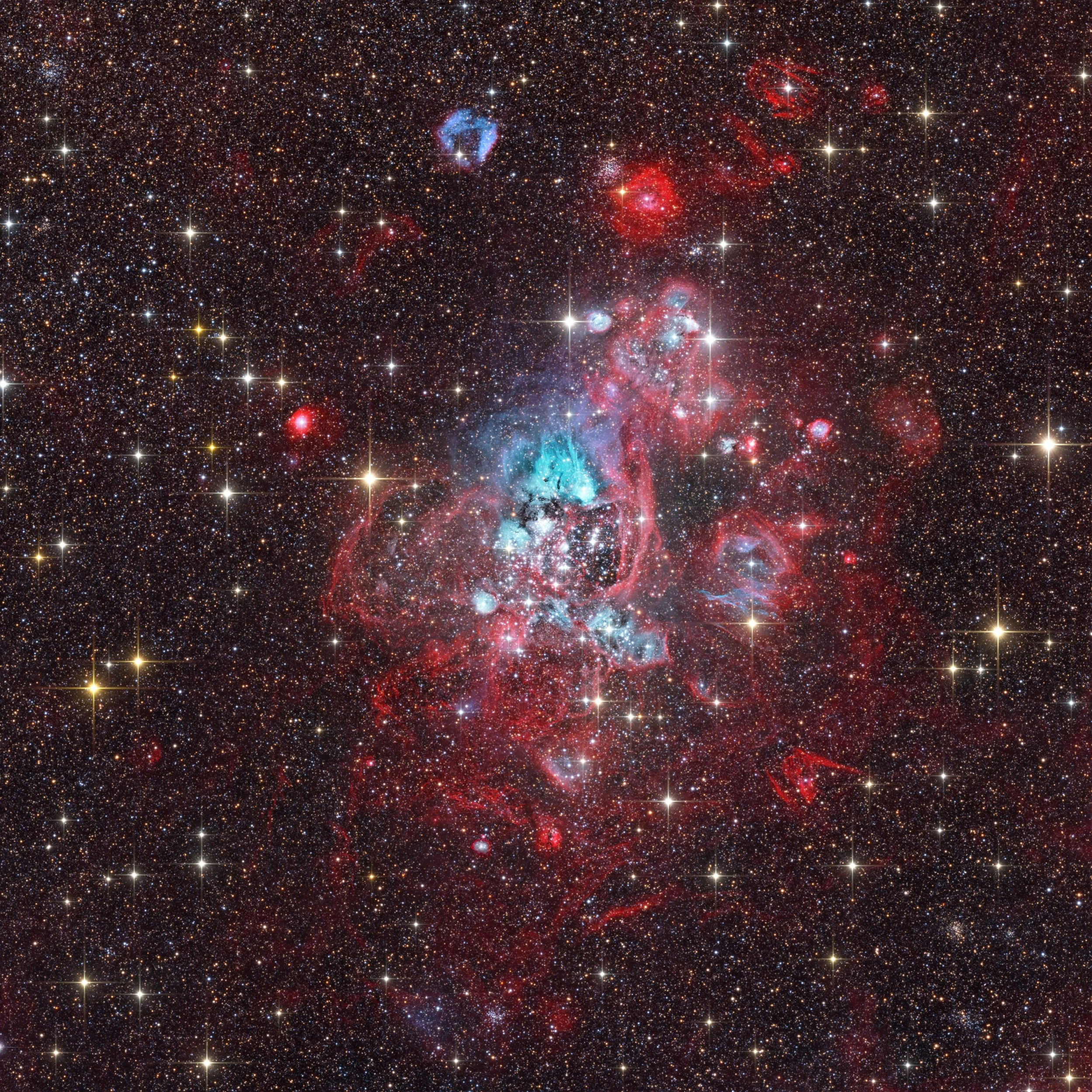
N44 and the Superbubble in the Large Magellanic Cloud
N44 is a massive emission nebula in the Large Magellanic Cloud, a satellite galaxy of the Milky Way about 160,000 light-years away. Spanning nearly 1,000 light-years across, this turbulent region glows with energized hydrogen gas sculpted by powerful stellar winds. Near its center lies a vast cavity known as a superbubble, carved out by intense radiation and multiple supernova explosions from clusters of young, massive stars.
The intricate structures of N44 reveal the interplay between star birth and stellar destruction, with bright knots of blue-green oxygen and red hydrogen tracing the expanding shock fronts. This delicate balance of energy and gas recycling makes N44 a vivid laboratory for understanding how galaxies sustain new generations of stars.
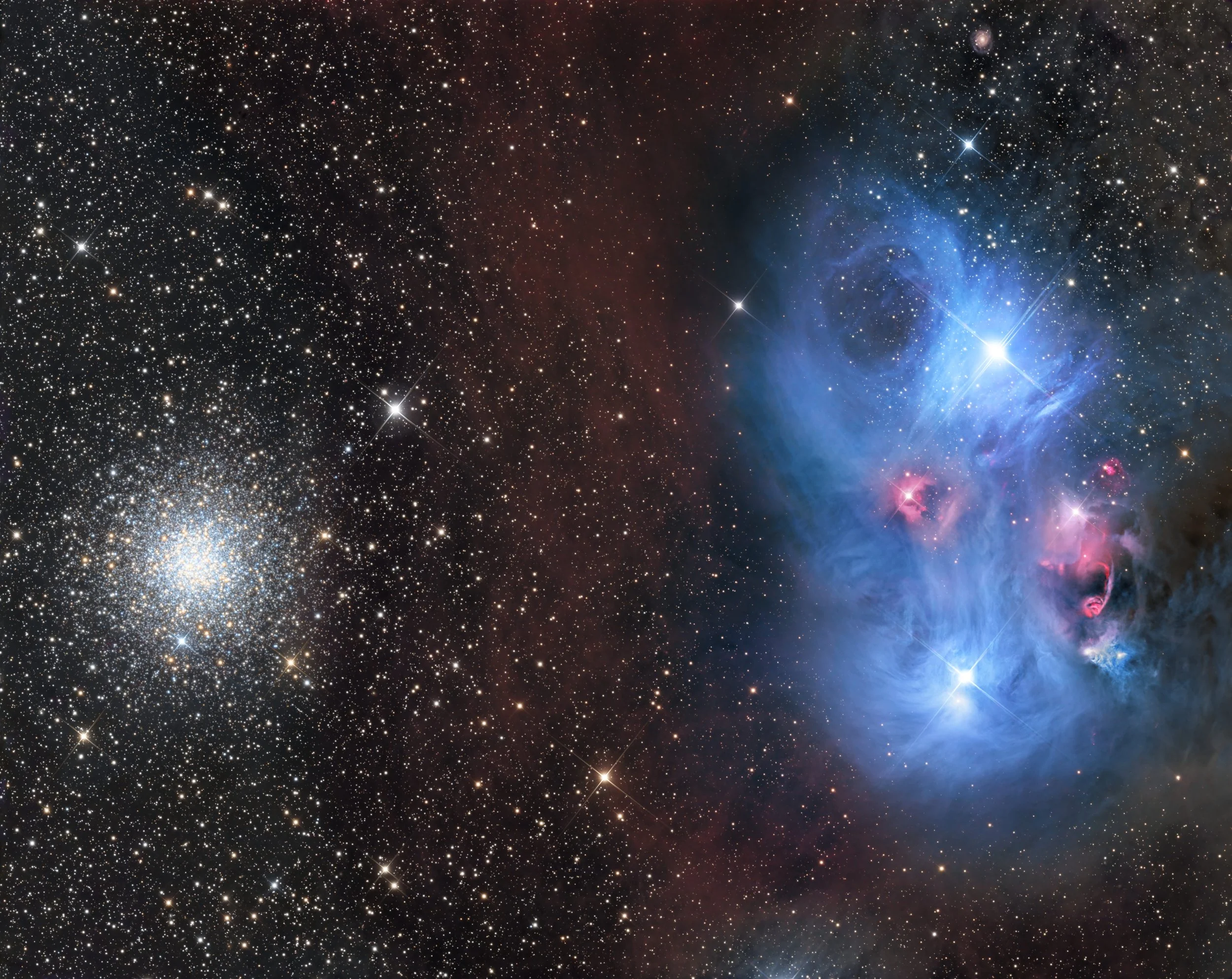
NGC 6723 From Calm to Chaos: A Cosmic Contrast
This deep-sky portrait from the constellation Corona Australis juxtaposes two contrasting yet co-located cosmic marvels: the dense globular cluster NGC 6723 on the left, and the vibrant blue reflection nebulae NGC 6726, NGC 6727, and IC 4812 on the right. The globular cluster lies about 28,000 light-years away, densely packed with hundreds of thousands of ancient stars in a roughly spherical formation.
To the right, the nebulae reside much closer, only about 400 light-years from Earth. Their blue color is produced as starlight scatters off interstellar dust, most prominently from the bright stars R and T Coronae Australis. These young stars are still surrounded by the remnants of the clouds from which they formed. Embedded regions of reddish-pink emission and twisting dark dust lanes add further complexity to the scene. This image was built up over 49 hours of exposure using RGB and H-alpha filters to capture both the fine reflection details and subtle emission structures.
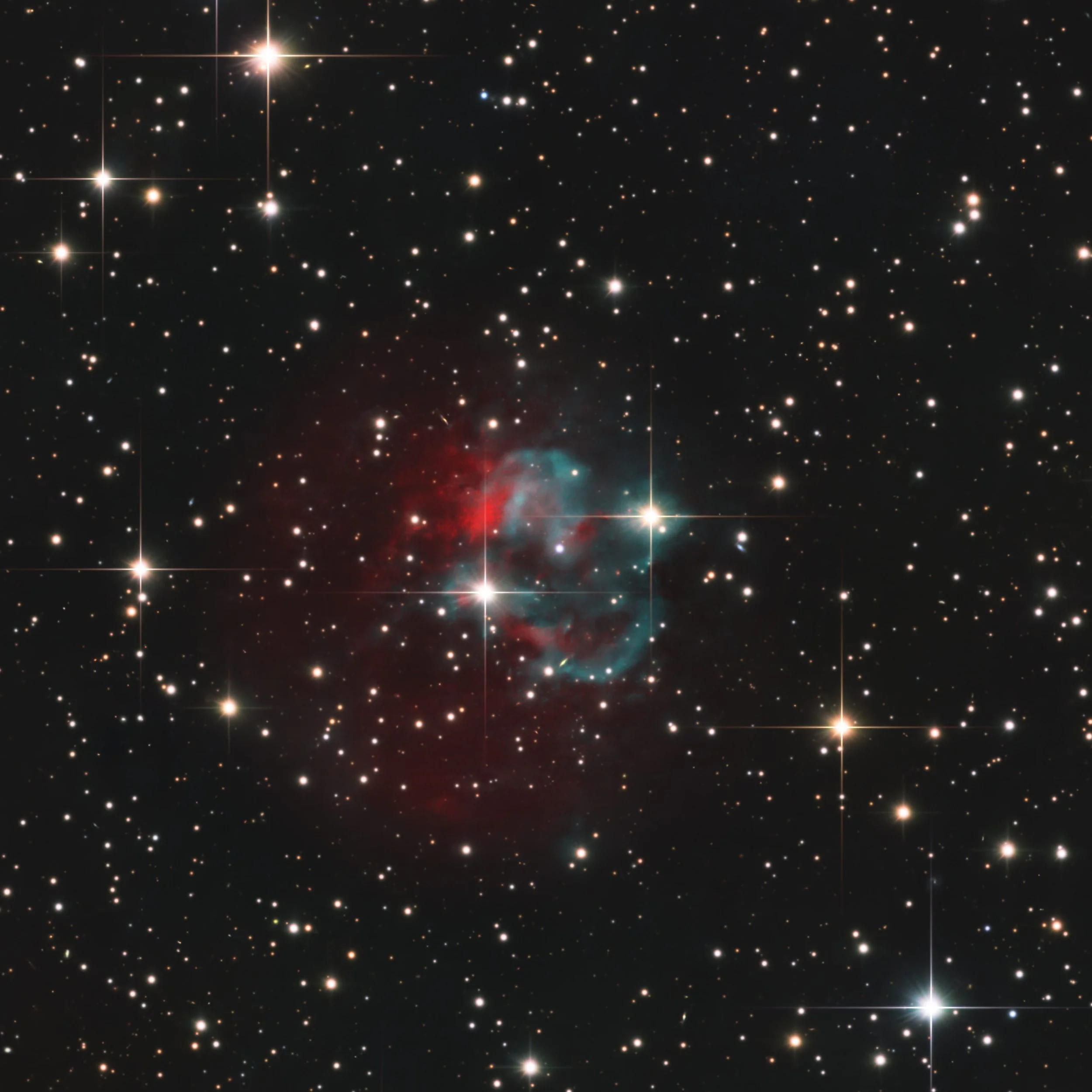
New Discovery of Faint Nebulosity Around a Cataclysmic Variable Star
Amid a rich starfield, faint red and teal wisps of ionized gas swirl around ASASSN-19ds, a cataclysmic variable (CV) star centered between two brighter foreground stars. This rare nebulosity, revealed through over 55 hours of deep exposure, marks an extraordinary discovery. CVs seldom show extended emission, making this a significant find. The intricate structure and color separation suggest a mix of ionized hydrogen (Hα, red) and oxygen (OIII, teal), hinting at complex interactions from past outbursts or surrounding interstellar material.
The image was part of a collaboration between Daniel Stern, Jon Talbot, and Dana Patchick, and the discovery was formally analyzed in a recent academic paper by Dr. Howard Bond (arXiv:2506.11306). Taken from Chile with a CDK-24 telescope, the data reveal subtle filaments and diffuse structures often missed in shorter exposures. This observation adds a rare specimen to the catalog of nebulae associated with CVs and contributes valuable insight into the life cycles of these energetic binary systems.
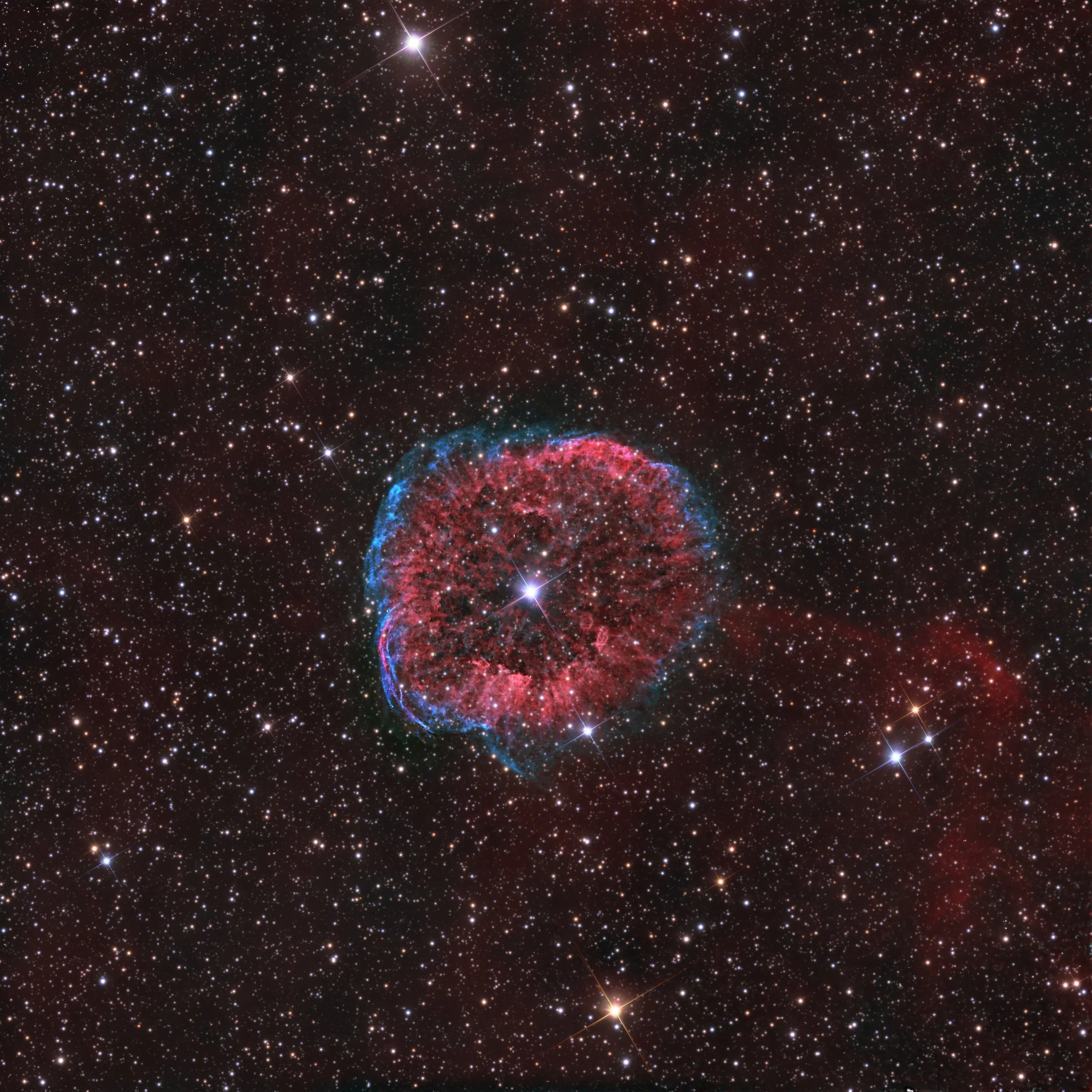
RCW-58 Cosmic Flower
RCW 58 is a striking emission nebula surrounding the Wolf-Rayet star WR 40, located in the constellation Carina. This nebula is a stellar wind-blown bubble formed by the intense radiation and powerful outflows from WR 40, a massive, evolved star nearing the final stages of its life. The surrounding filaments and arcs of ionized gas are the remnants of material ejected by the star in previous evolutionary phases, shaped by its violent stellar winds.
Wolf-Rayet stars like WR 40 are rare and extremely hot, with surface temperatures exceeding 100,000 K. Their strong winds create intricate nebular structures such as RCW 58, which glows brightly in hydrogen-alpha (Hα) and oxygen-III (OIII) emissions. These regions serve as laboratories for studying the late evolution of massive stars before they ultimately end their lives in a supernova explosion. Observing RCW 58 in narrowband filters reveals detailed shock structures and interactions between the ejected material and the surrounding interstellar medium, offering insight into the final turbulent stages of stellar evolution.

Sh2-308: The Dolphin-Head Nebula
Sh2-308, also known as the Dolphin-Head Nebula, is a striking bubble of ionized gas in the constellation Canis Major, located approximately 4,500 light-years from Earth. This delicate structure is the result of intense stellar winds emanating from a massive Wolf-Rayet star at its center, sculpting the surrounding material into a luminous shell. The faint blue glow is dominated by oxygen-III emissions, which shine brightly in the ultraviolet light of the central star.
Captured from Rio Hurtado, Chile, using a remote commercial observatory, this view reveals the ethereal beauty of Sh2-308’s expanding shell. Spanning nearly 60 light-years, the nebula is a transient structure in the cosmos, lasting only a few tens of thousands of years. Its intricate shape and soft glow provide a unique glimpse into the life cycle of massive stars and the dynamic processes that shape the interstellar medium.
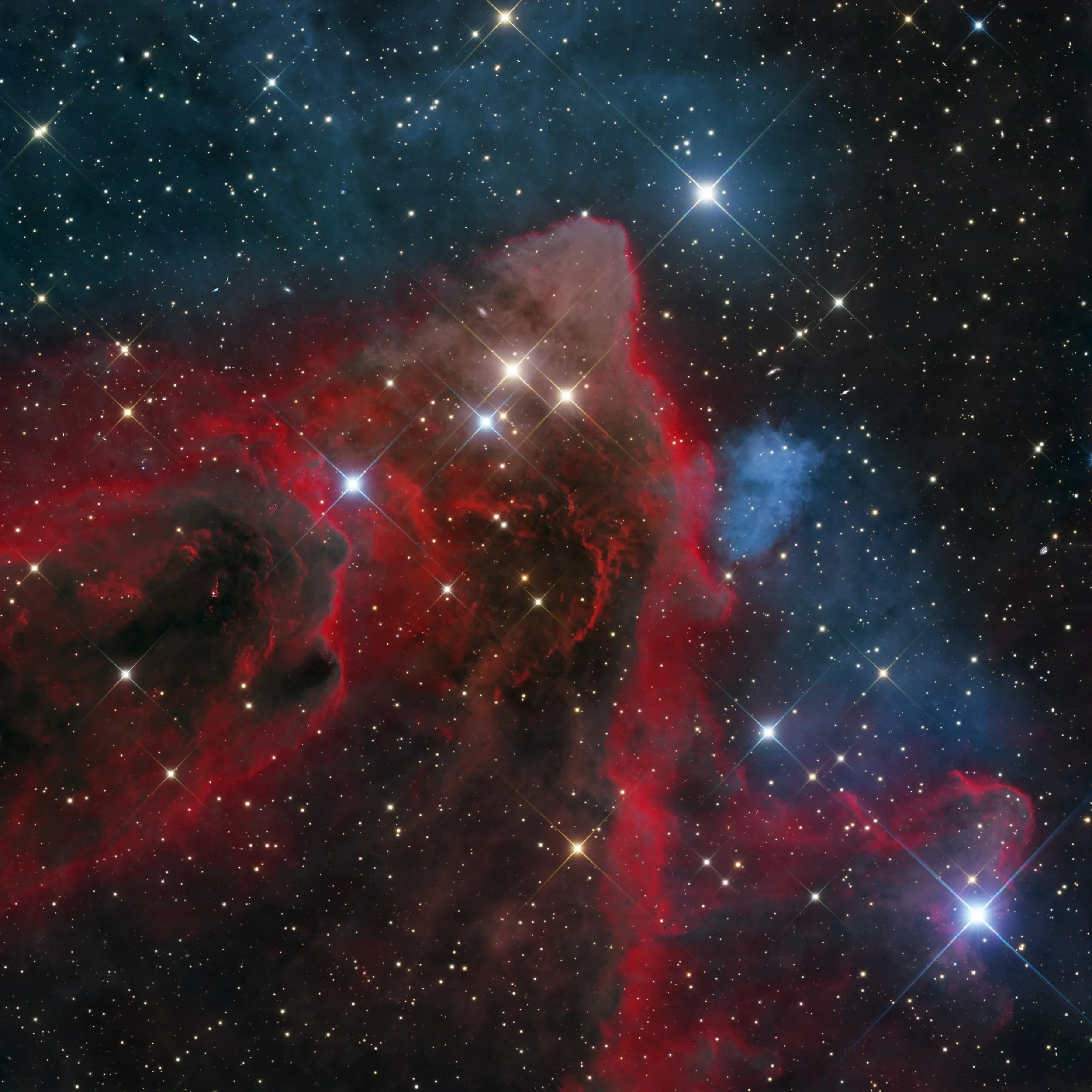
SH2-278
Nestled in the constellation Orion, SH2-278 is a captivating emission nebula that tells a story of star birth and interstellar artistry. The nebula is dominated by glowing hydrogen-alpha emissions, painting vibrant red hues across the region. Complementing this are stunning blue regions, indicative of reflection nebulae—dust clouds illuminated by the scattered light of nearby stars.
In the left center of the image, delicate structures known as Herbig-Haro objects make an appearance. These rare features are formed when streams of ionized gas from newborn stars collide with surrounding clouds of gas and dust, creating intricate, luminous jets. SH2-278 is a testament to the dynamic processes shaping the cosmos, offering a glimpse into the beauty and complexity of our universe.

Hades SNR
The Hades Supernova Remnant (SNR), an impressive testament to amateur astronomy, is the third largest SNR ever discovered by non-professionals. This massive structure, located in the constellation Auriga, spans an incredible region of the sky and serves as a profound reminder of the violent stellar events that shape our universe.
Characterized by intricate filaments and diffuse clouds of gas, the Hades SNR reveals the remnants of a colossal supernova explosion that occurred thousands of years ago. The faint yet expansive nature of this SNR made it a challenging target to detect, underscoring the dedication and skill of the amateur astronomers who brought it to light. Their discovery adds a significant piece to the puzzle of our galaxy's history, illustrating the critical contributions of amateur astronomers to the field of astrophysics.
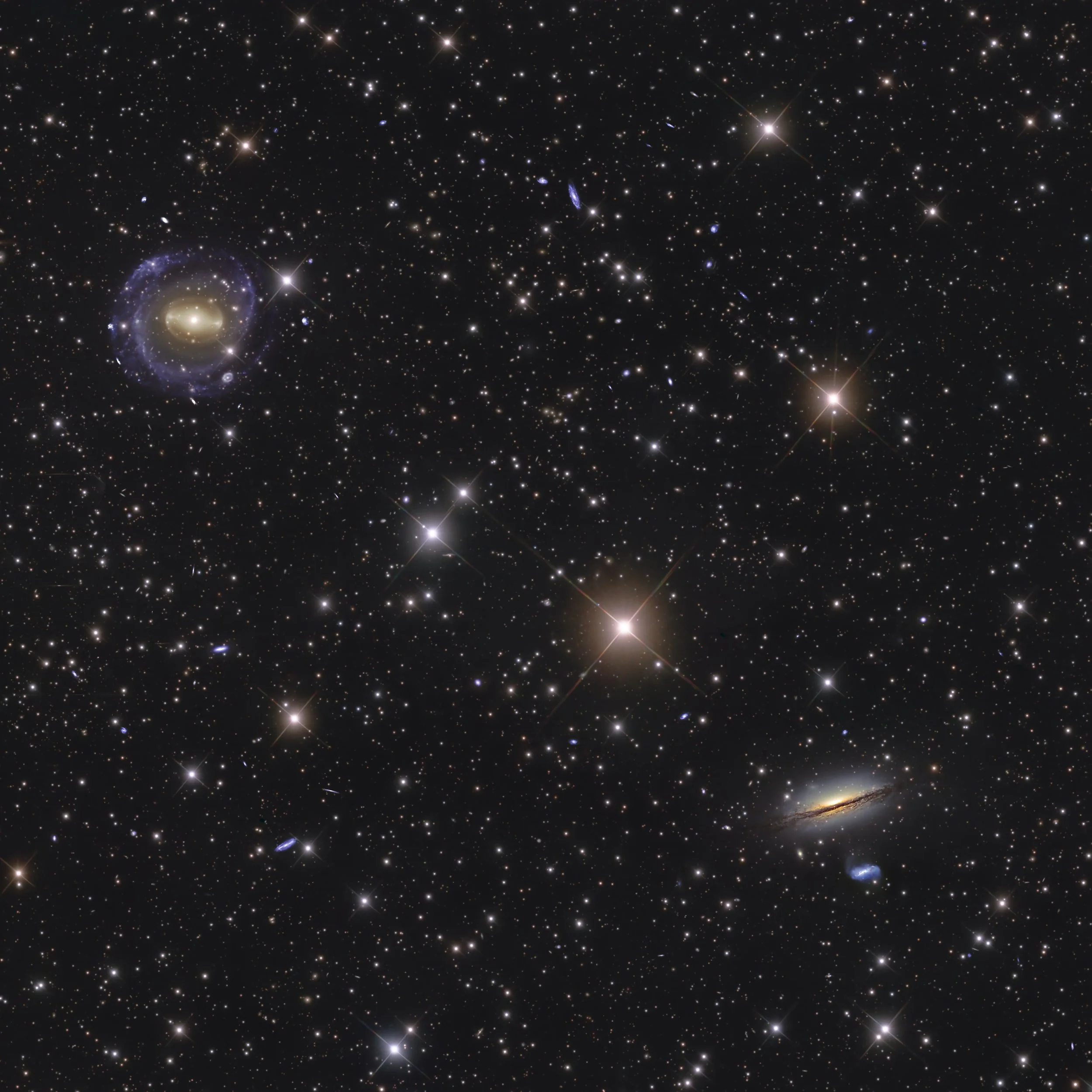
NGC 5078 & NGC 5101
NGC 5078 and NGC 5101 are two captivating galaxies located in the constellation Hydra. NGC 5078 is an edge-on spiral galaxy, characterized by its flattened disk structure and prominent dust lanes that obscure part of its starlight. It exhibits a bright central bulge surrounded by a diffuse stellar halo, making it an intriguing object for astrophotography and scientific study. NGC 5101, on the other hand, is a barred spiral galaxy with a distinctive central bar structure that extends through its disk. It showcases intricate spiral arms adorned with regions of star formation, adding to its visual allure and scientific significance.
Both galaxies offer astronomers valuable insights into the processes of galaxy formation and evolution. Studying their morphology, stellar populations, and dynamics can provide clues about the underlying mechanisms driving the formation of stars and the assembly of galaxies over cosmic time. Additionally, the proximity of these galaxies allows for detailed observations and analyses, contributing to our broader understanding of the universe's vast tapestry of celestial objects.
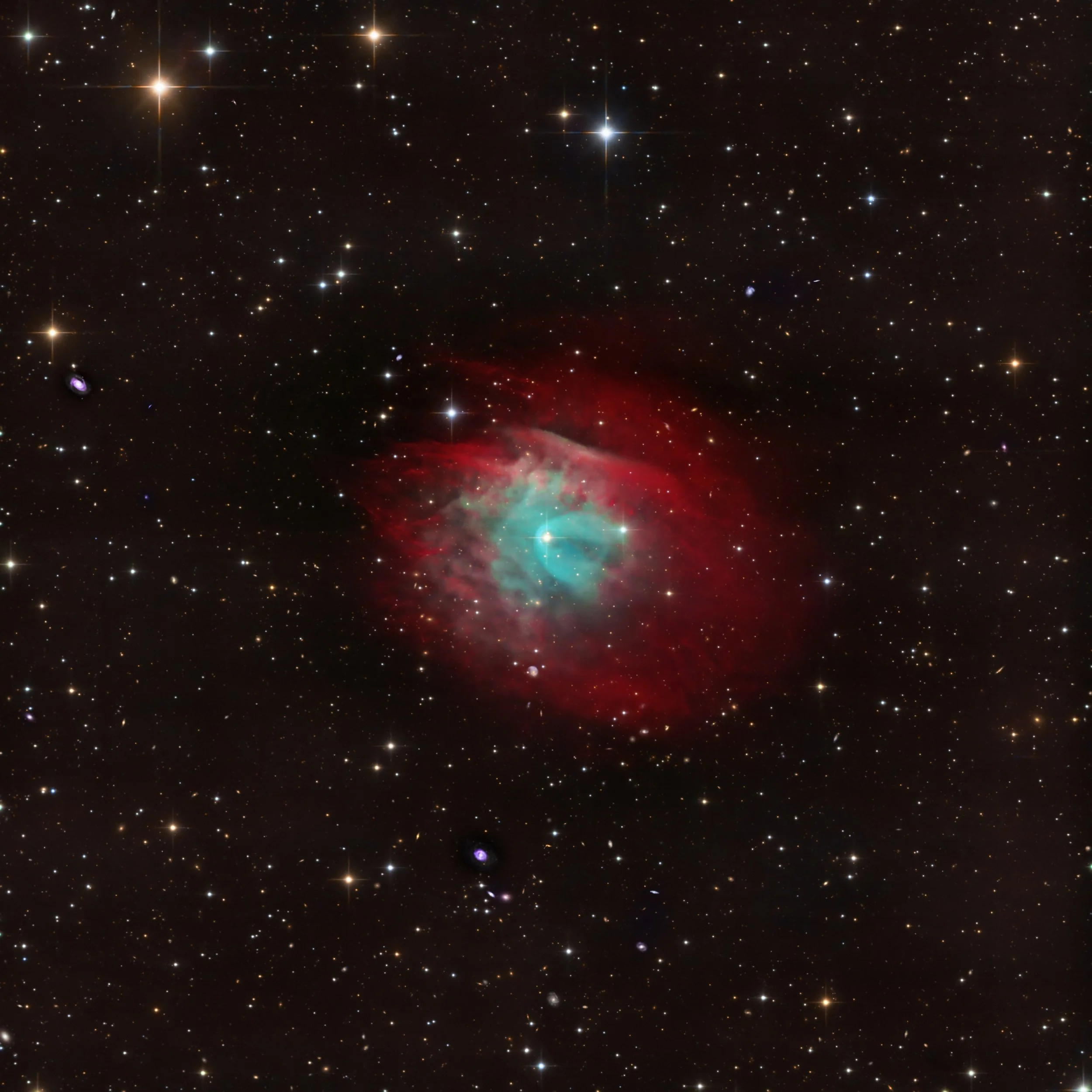
Abell 35
Abell 35 is a planetary nebula situated in the constellation of Hydra. This intricate shell of ionized gas is the result of a dying star's outer layers being expelled into space, illuminated by the central white dwarf star. Its distinct structure and intricate patterns offer insights into the late stages of stellar evolution. Abell 35's existence aids astronomers in unraveling the complex processes that occur when stars near the end of their lifecycles, enriching the cosmos with elements and showcasing the dynamic nature of the universe.
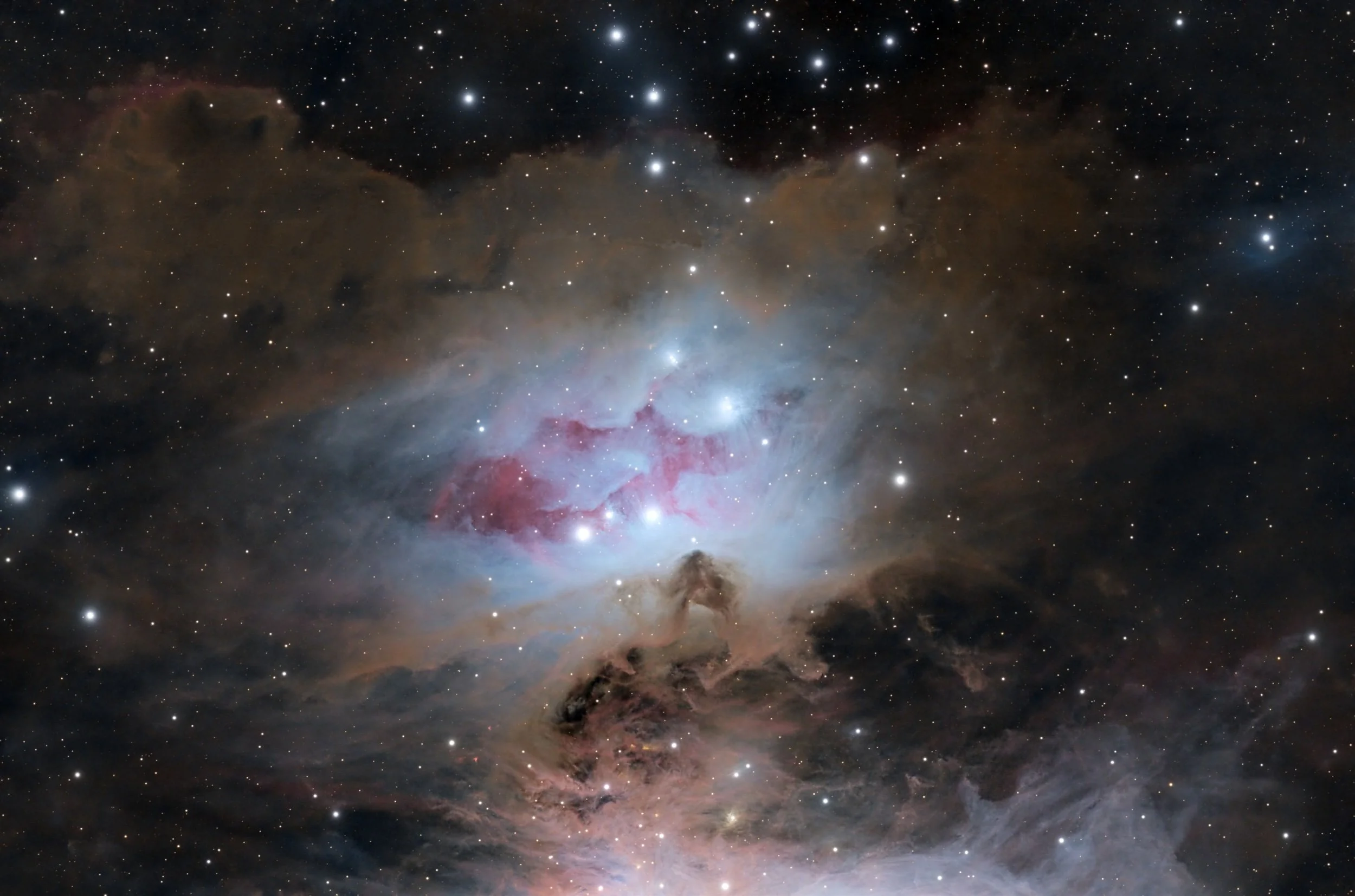
Running Man NGC 1975
Image Description and Details : There is a grouping of reflection nebulae in Orion - NGC 1977, NGC 1975, and NGC 1973 - usually overlooked in favor of the substantial glow from the nearby stellar nursery better known as the Orion Nebula. Found along Orion's sword just north of the bright Orion Nebula complex, these reflection nebulae are also associated with Orion's giant molecular cloud about 1,500 light-years away, but are dominated by the characteristic blue color of interstellar dust reflecting light from hot young stars.
Running Man
Starry Nights Ranch, Basinger FL (Bortle 3)
Takahashi TOA-130NFB with guiding
iOptron CEM70G
ASI2600MC
57 x 300 seconds
20 Darks
20 Flats
20 Flat Darks
Data acquisition: NINA
Data processing: Pixinsight
Copyright: Copyright:Daniel Stern