

AAPOD2 Image Archives
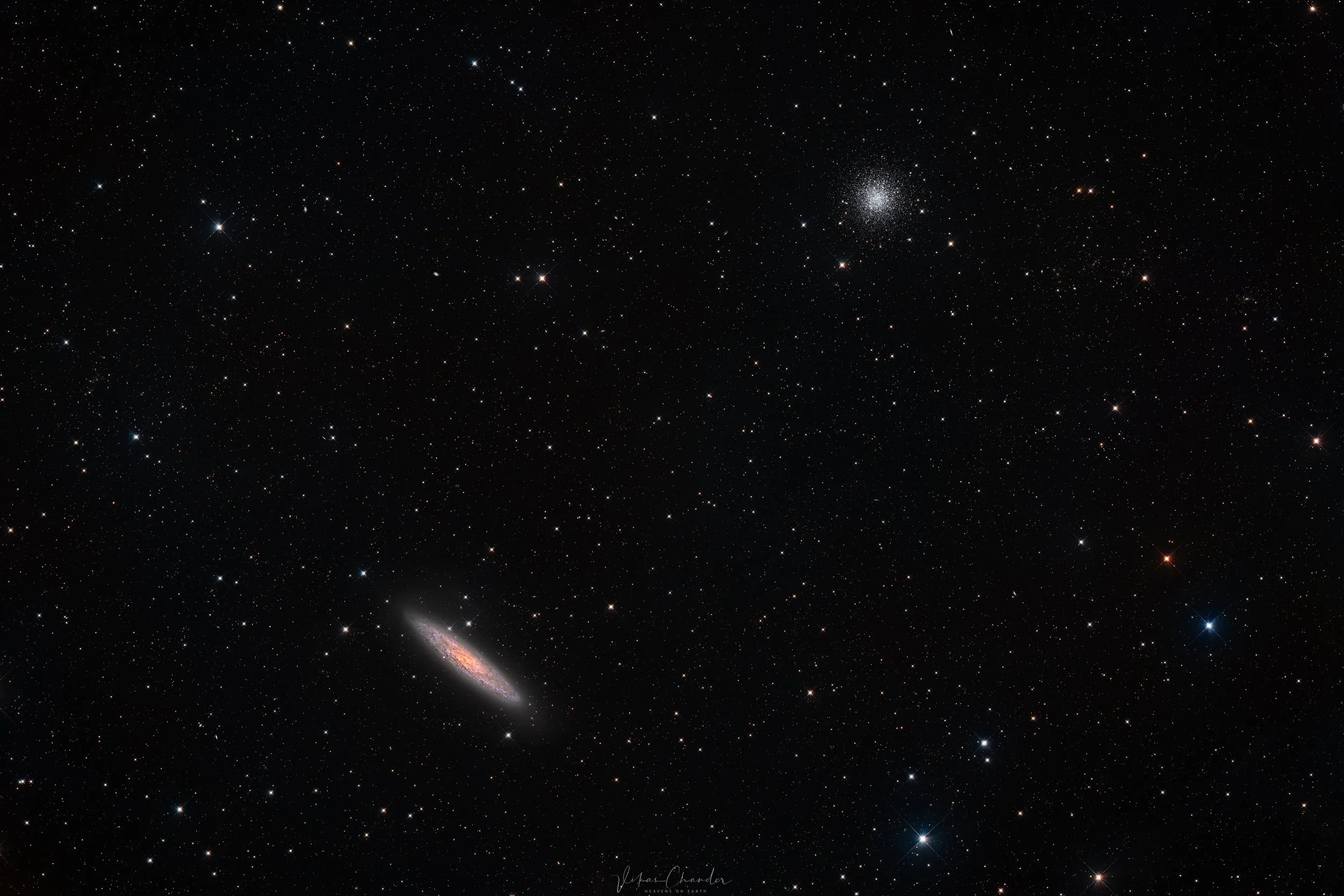
NGC 253 and NGC 288 in Sculptor
Set against the sparse star fields of the southern sky, this image pairs two very different residents of the Sculptor constellation. At lower left lies NGC 253, the Sculptor Galaxy, an edge-on spiral roughly 11 million light-years away. Its warm, mottled disk reveals lanes of interstellar dust and regions of active star formation, giving the galaxy a textured, almost turbulent appearance as it stretches across the frame.
Near the upper right is NGC 288, a compact globular cluster bound to the halo of the Milky Way at a distance of about 29,000 light-years. Composed of hundreds of thousands of ancient stars, it appears as a dense, spherical swarm with a granular core, sharply contrasting the elongated form of NGC 253. Captured from Deep Sky Chile under dark southern skies, the image highlights both the nearby relics of our own galaxy and a dynamic spiral beyond, sharing the same line of sight yet separated by vast cosmic distances.
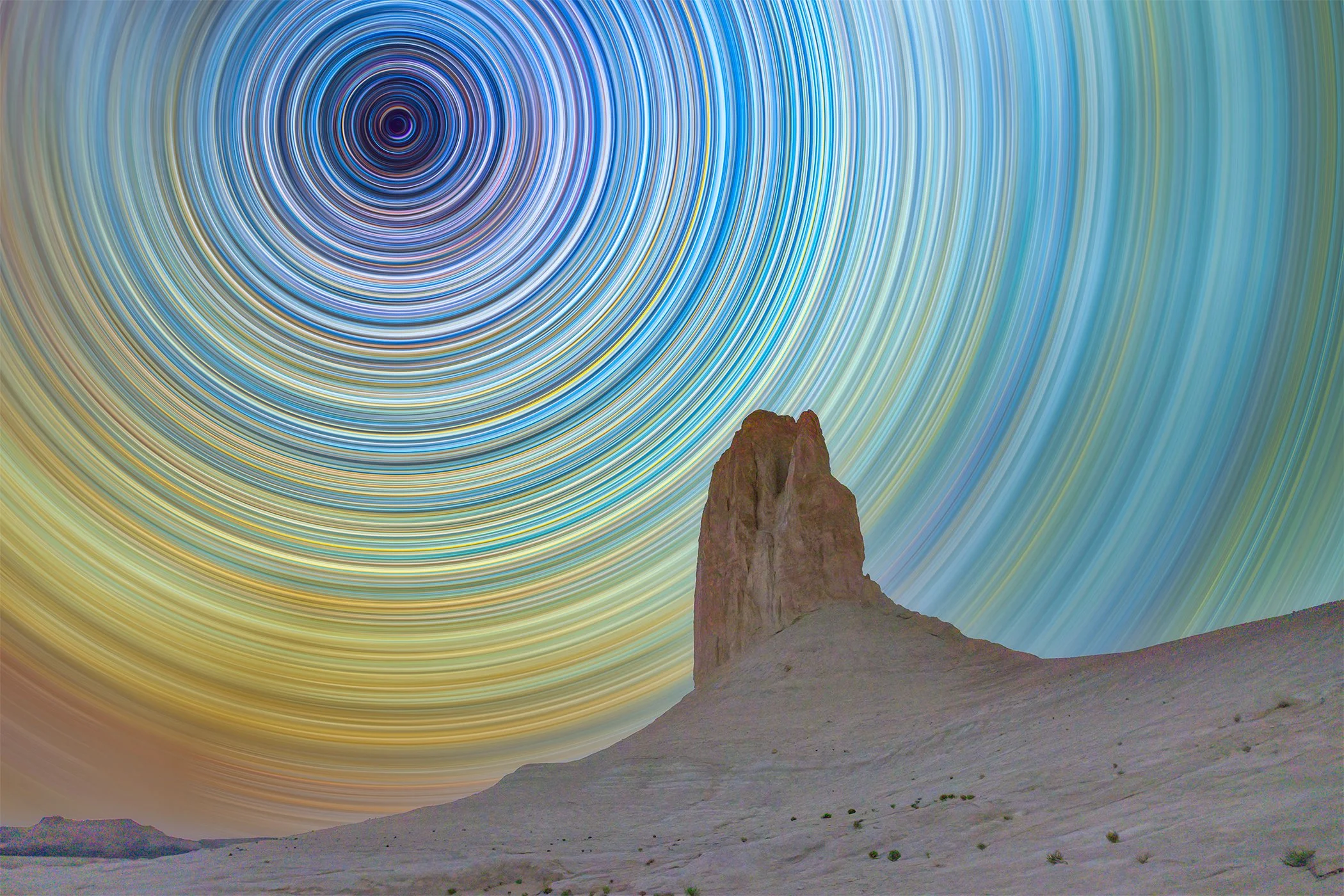
Perfect Circles Above Kyzylkyp Tiramisu Canyon
This long-exposure star trail composition from the vibrant Kyzylkyp Tiramisu Canyon reveals an extraordinary display of concentric circular arcs centered on the north celestial pole. The near-mathematical precision of these rings comes from the steady rotation of Earth, which causes the stars to trace out perfectly nested circles across the sky. The result is a powerful reminder of the exactness of our universe. Even across hours of exposure, the sky maintains a level of consistency and stability that allows these seamless and almost mechanical patterns to emerge.
The rich palette of colors in the trails is produced by the stars themselves. Blue and white arcs originate from hotter young stars, while yellow and amber streaks come from cooler, older stars burning at lower temperatures. Together they form a natural spectrum that sweeps across the sky, surrounding the towering canyon monolith and creating a vivid contrast between our rotating heavens and the ancient rock below.
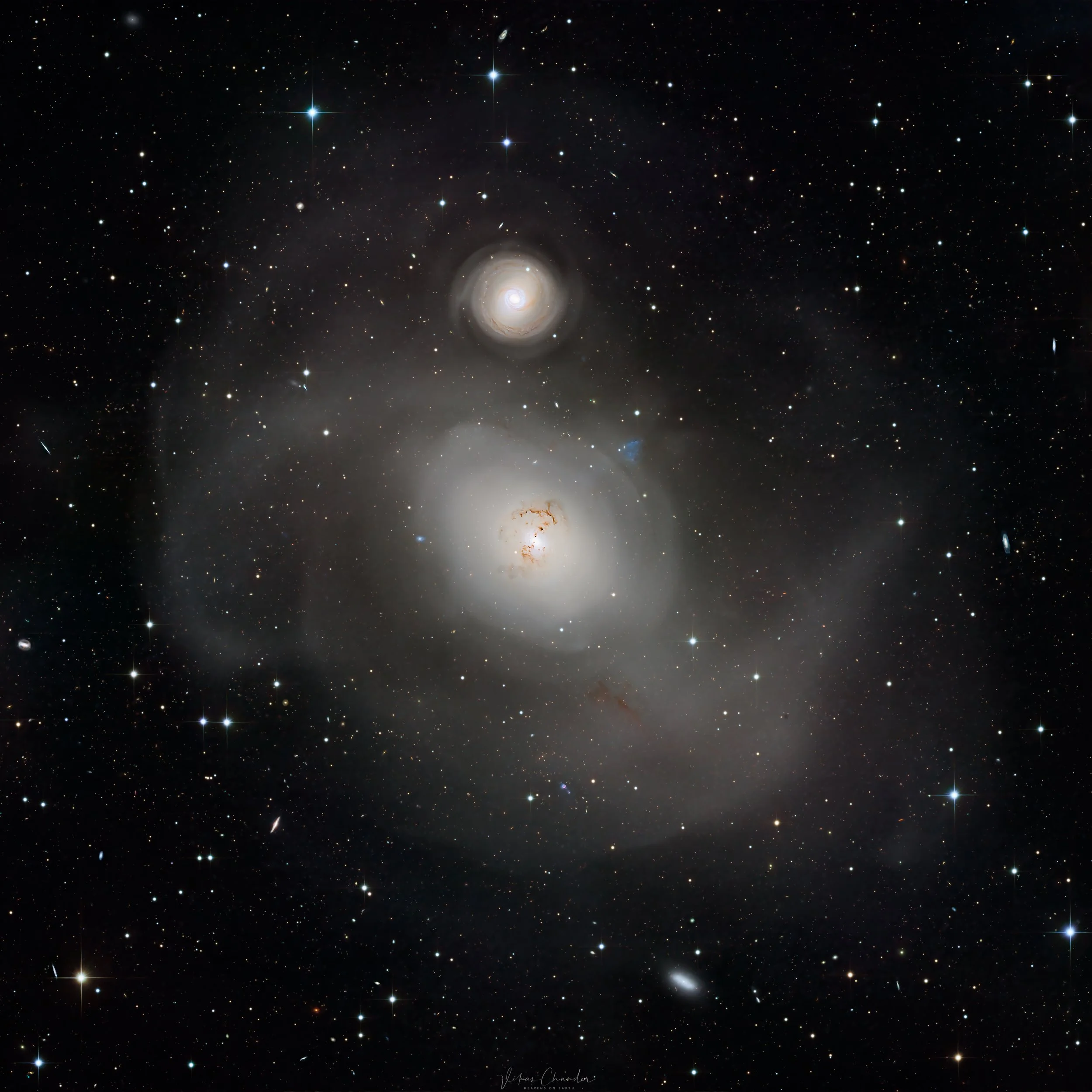
Fornax A and B Galaxies
Fornax A and Fornax B are two distinct galaxies within the Fornax Cluster, a compact assembly of galaxies located about 62 million light-years from Earth. Fornax A, a massive elliptical galaxy, dominates the field with its extended radio lobes, while Fornax B, a smaller companion, adds contrast to this dynamic galactic neighborhood. The image reveals fine structural details and subtle intergalactic features, providing a glimpse into the complexity of this nearby galaxy cluster.
This deep exposure was captured with a Planewave CDK 24-inch telescope and a Moravian C5A-100 mono camera. LRGB and OIII data were obtained through Chroma filters with exposures totaling 44 hours and 30 minutes (Luminance: 208 × 120 s, Red: 208 × 120 s, Green: 207 × 120 s, Blue: 202 × 120 s, OIII: 102 × 600 s). Observations were conducted using a Planewave L-600 mount at Obstech Observatory, and the dataset was processed using NINA and PixInsight for precise calibration, alignment, and combination.
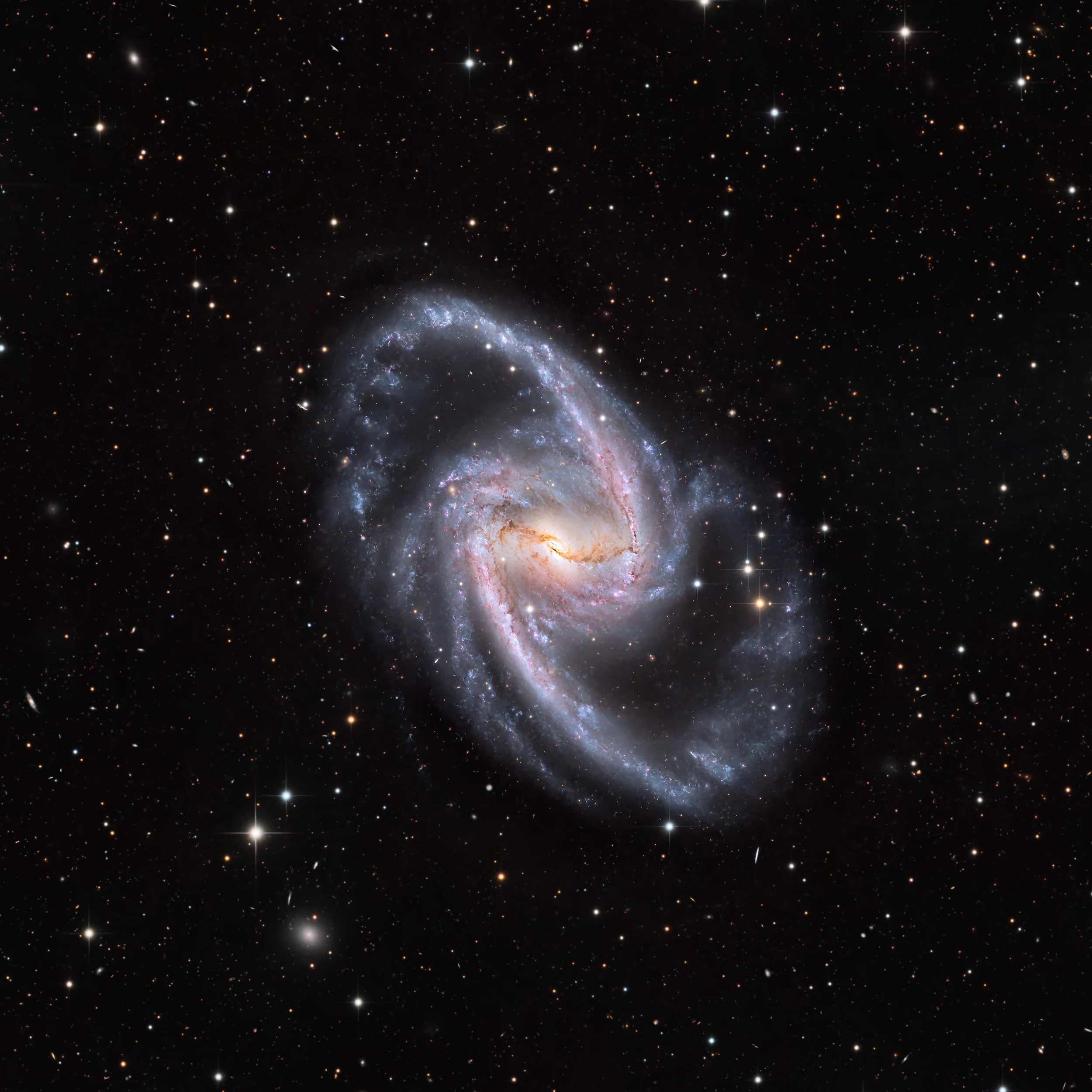
NGC 1365
Known as the Great Barred Spiral Galaxy, NGC 1365 lies about 56 million light-years away in the constellation Fornax. This magnificent island universe spans over 200,000 light-years, making it one of the largest and most striking barred spirals in the sky. Prominent dust lanes cut across its glowing arms, which are rich in hydrogen emission and sites of active star formation. The bright central bar channels gas inward, fueling both stellar birth and a supermassive black hole at the galaxy’s core.
This deep view reveals the galaxy’s dynamic structure in remarkable detail, from red star-forming regions to the subtle extensions of its faint outer arms. Astronomers study NGC 1365 as a textbook example of barred spiral evolution, providing clues to how bars drive galactic growth and transformation over cosmic time.
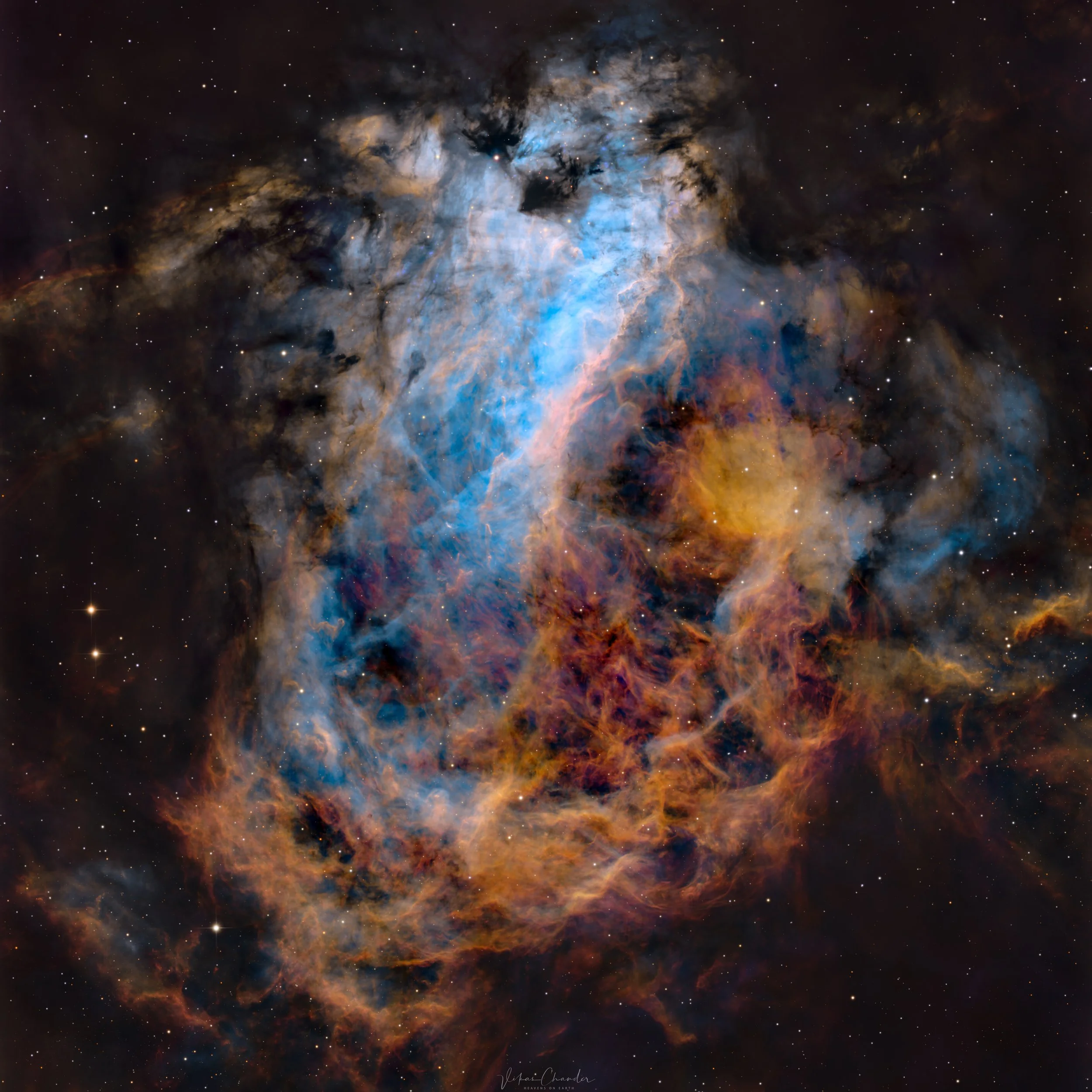
Radiant Wings of the Swan Nebula
The Swan Nebula, also known as M17 or the Omega Nebula, is a massive star-forming region located about 5,000 light-years away in the constellation Sagittarius. This detailed image reveals its turbulent clouds of ionized hydrogen gas, sculpted into intricate filaments and arcs by the intense ultraviolet radiation and stellar winds from newborn massive stars. The bright blue areas trace regions rich in oxygen, while gold and orange hues highlight sulfur and hydrogen emissions, captured here in a narrowband palette that brings out the nebula’s complex structure.
This view showcases M17’s luminous core embedded in vast dark dust lanes that both obscure and shape the surrounding emission. The Swan Nebula spans about 15 light-years across and is one of the brightest and most massive H II regions in our galaxy, making it a favorite target for both professional and amateur astronomers. The interplay of light and shadow within the nebula offers a striking glimpse into the chaotic, beautiful environments where stars are born.
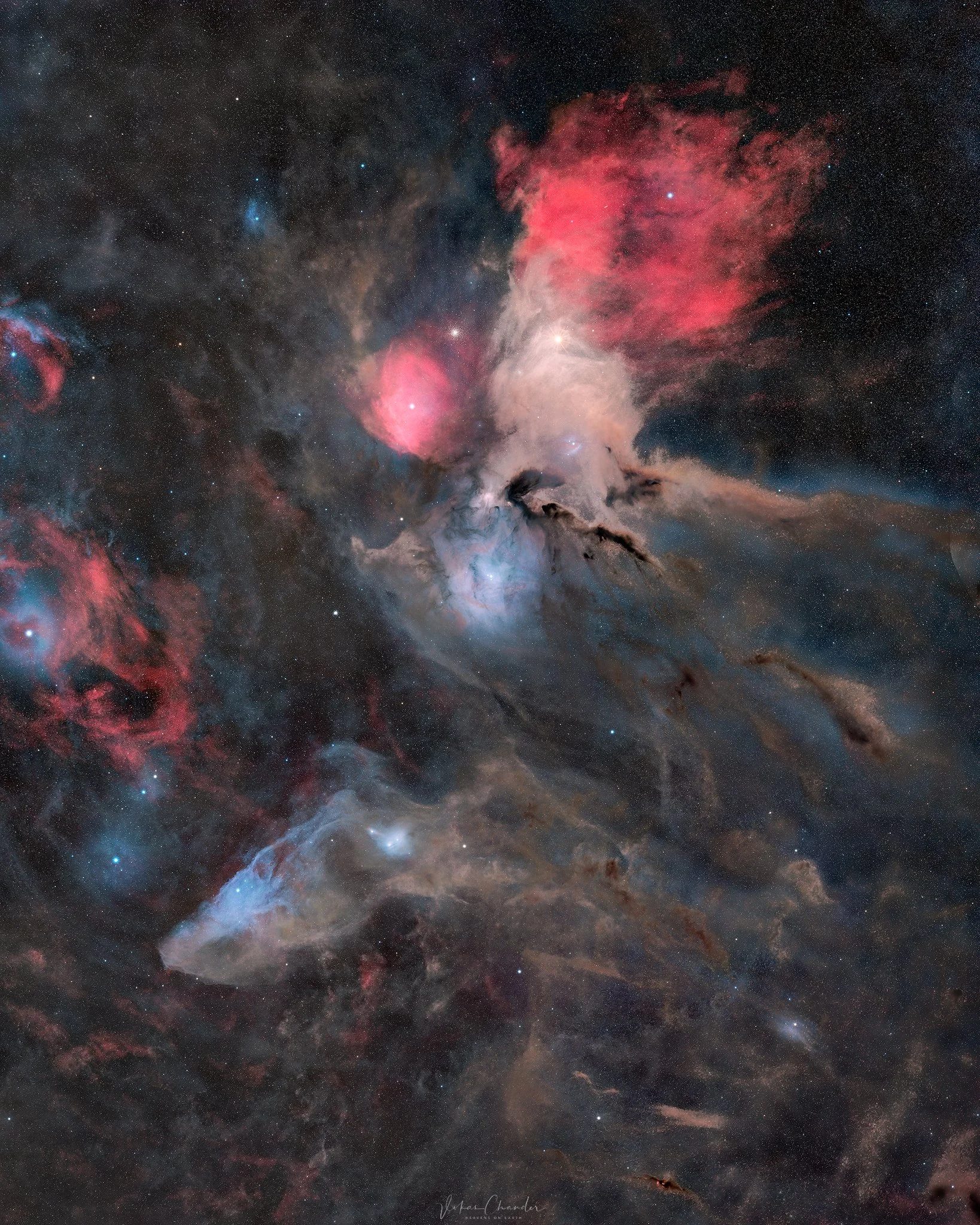
Rho Ophiuchi and the Blue Horsehead
One of the most colorful and photogenic regions in the night sky, the Rho Ophiuchi cloud complex is a rich interplay of dark dust, glowing gas, and young stars. Located about 400 light-years from Earth in the constellation Ophiuchus, this molecular cloud hosts both reflection nebulae and emission nebulae. The bright blue glow around the star Rho Ophiuchi results from starlight scattering off fine dust particles, while the red regions reveal areas where hydrogen gas is ionized by ultraviolet radiation from hot stars.
Captured over 50 hours at Deep Sky Chile, this mosaic blends RGB and H-alpha exposures to reveal the fine structure and subtle hues of the region, from the vibrant reds near Sh2-27 and IC 4604 to the sweeping brown dust lanes and pockets of star formation. The view includes multiple well-known objects like Antares, M4, and the blue reflection nebula IC 4603, all intertwined within the dusty folds of this dynamic star-forming environment.
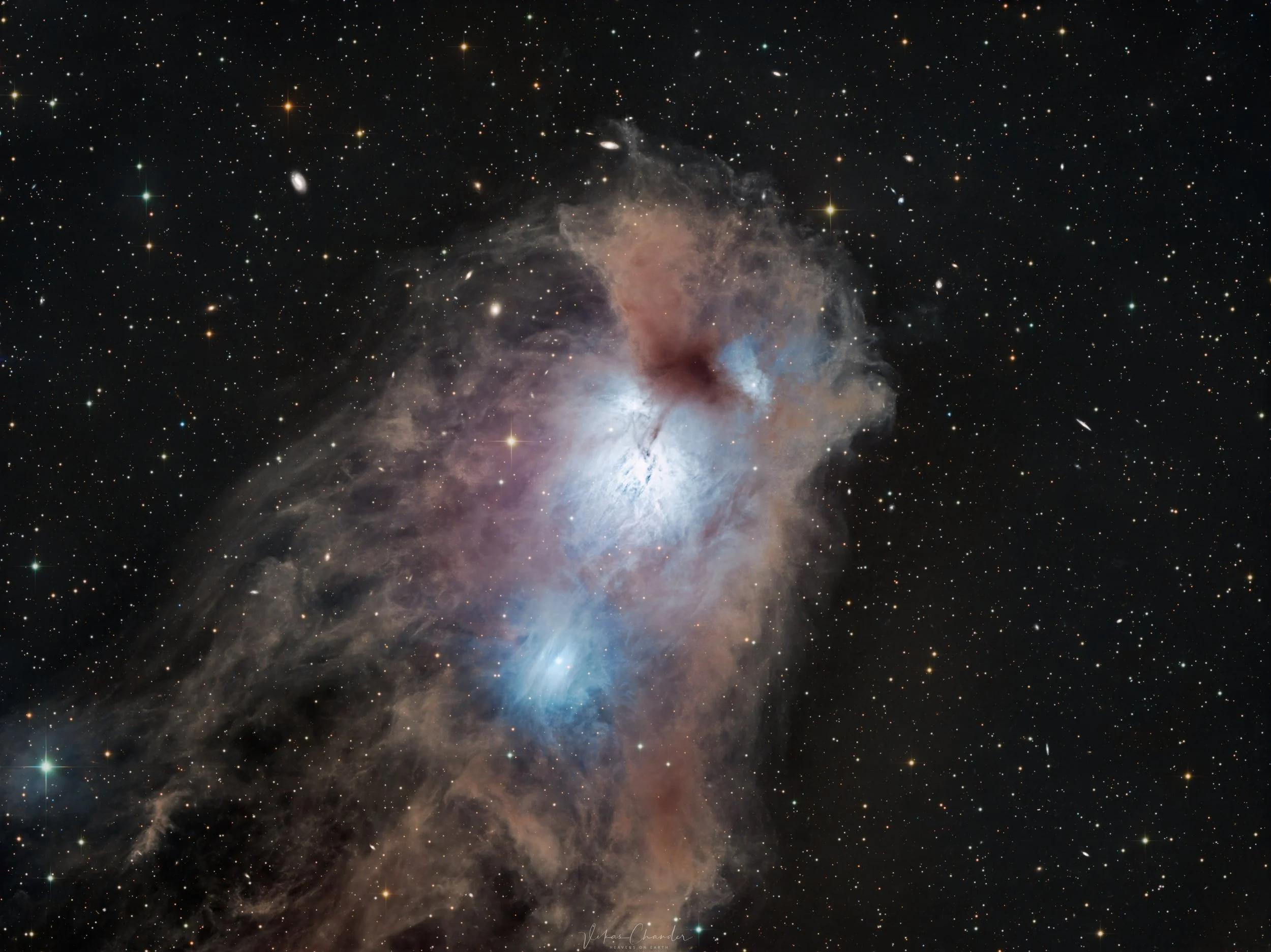
NGC 5367 – Reflection Nebula in Centaurus
NGC 5367 is a stunning blue reflection nebula embedded in a dark cloud complex in the constellation Centaurus, around 2,000 light-years from Earth. Illuminated by young stars still forming within, the nebula’s dusty filaments scatter starlight in vivid hues of blue and purple. The intricate structure of glowing gas and dark obscuring lanes hints at the dynamic processes of star formation underway in this region of space.
In this deep image, the dusty environment is rendered in exquisite detail, with subtle pink and brown tones blending into the background of stars and distant galaxies. The glowing heart of the nebula contrasts sharply with the shadowy dust lanes that appear to ripple outward, giving the scene a three-dimensional feel. This reflection nebula is part of a larger molecular cloud complex, providing a beautiful yet fleeting window into the turbulent nursery of newborn stars.
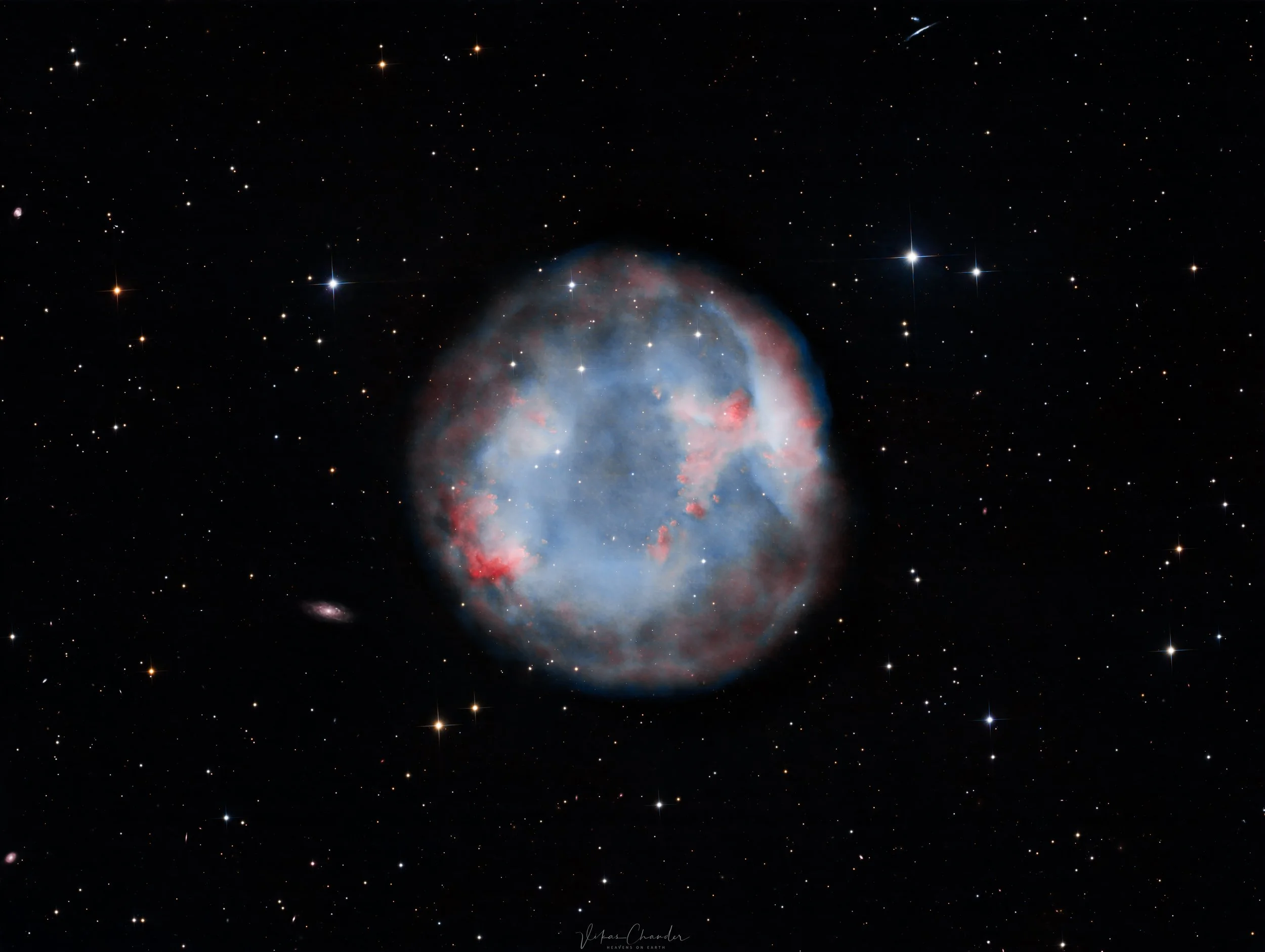
Abell 7 – A Ghost of Ancient Starlight
Abell 7 is a faint and rarely imaged planetary nebula located in the constellation Lepus, approximately 1,800 light-years from Earth. With a nearly spherical shell stretching about 8 light-years across, it represents the final exhalation of a dying star. Though the nebula itself is a youthful 20,000 years old, its central white dwarf is an ancient relic—estimated to be around 10 billion years in age—making this cosmic structure a quiet echo of stellar history.
Revealing the subtle structure and delicate textures of Abell 7 required nearly 70 hours of imaging time, captured through narrowband filters to isolate and enhance the emission from ionized gases. The result is a ghostly, intricate portrait of a star’s last breath, suspended in the darkness of space like a fading memory from the galaxy’s early days.
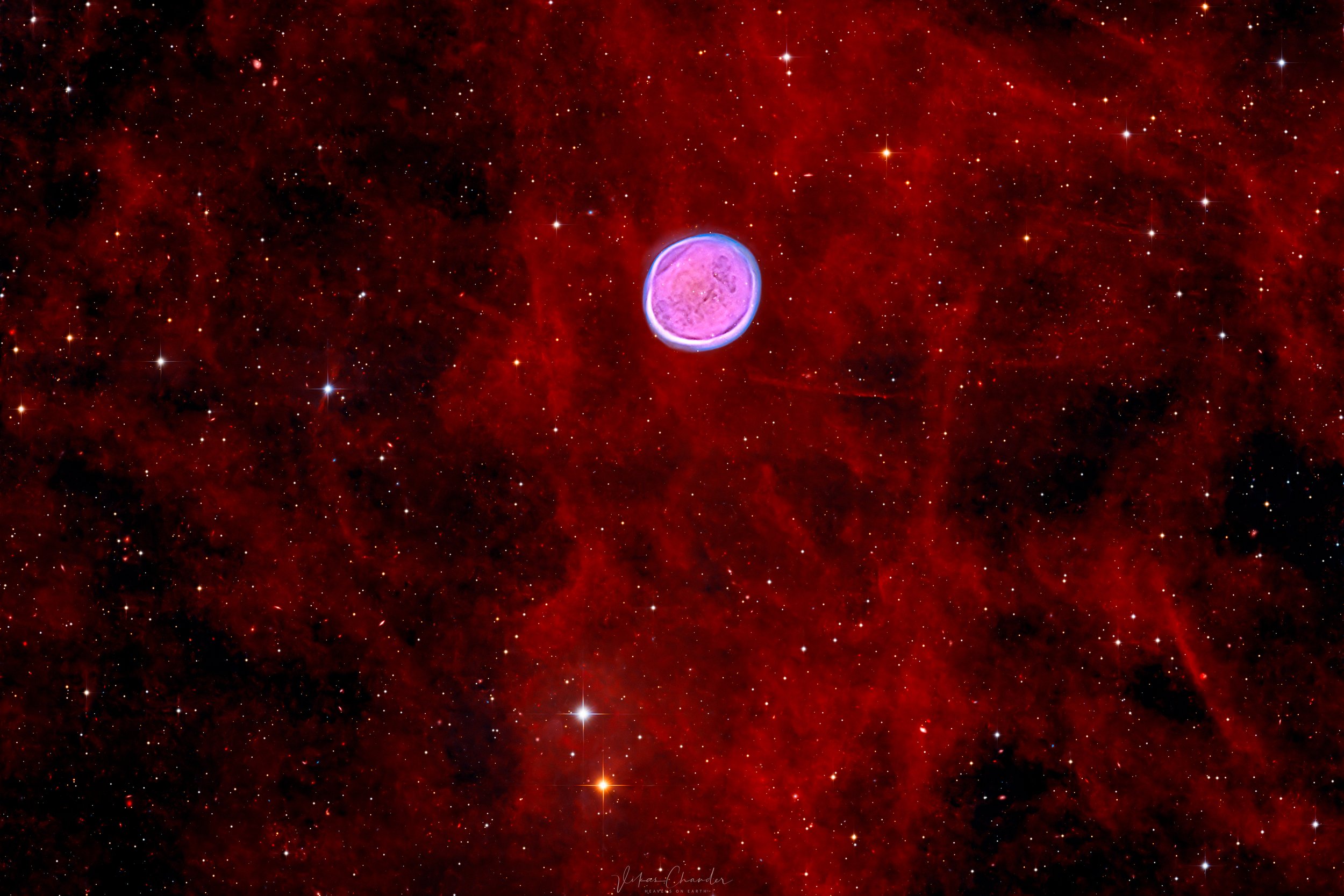
The Southern Owl Nebula
This extraordinary bubble swimming in a glowing red sea of hydrogen may appear supernatural and mysterious to most, but it is a familiar astronomical object, a planetary nebula. Planetary nebulae are created by the ejected and expanding gas of a dying star and although they are brilliant and intriguing objects in the initial stages of formation, these bubbles fade away as their constituent gas moves away and the central stars grow dimmer.
Like all planetary nebulae, the Southern Owl Nebula, (scientific name ESO 378-1), is relatively short-lived, lasting only a few tens of thousands of years, compared to a typical stellar lifetime of several billion years. Located in the constellation of Hydra (The Female Water Snake), it’s informal name relates to its visual cousin in the Northern Hemisphere, M97 or the Owl Nebula.
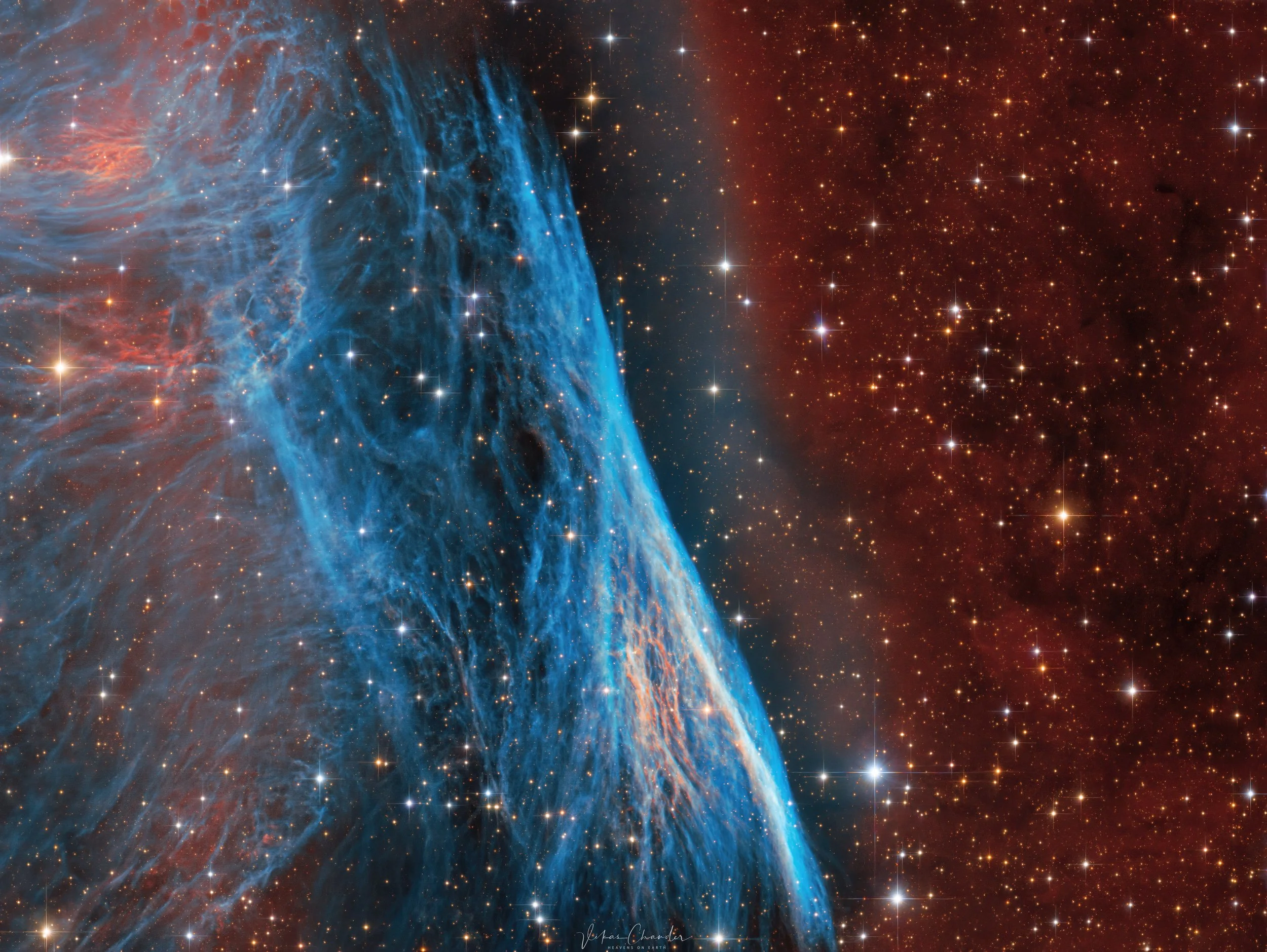
The Pencil Nebula
The Pencil Nebula (NGC 2736), a brilliant filamentary structure in the Vela Supernova Remnant, is a striking testament to the power of a stellar explosion that occurred nearly 11,000 years ago. Situated 800 light-years away in the constellation Vela, this nebula is a fragment of the vast shockwave created when a massive star met its violent demise in a supernova.
Captured in a combined LRGB and SHO palette, this image unveils the intricate layers of ionized gas sculpted by the expanding remnant:
LRGB (Luminance, Red, Green, Blue) brings out the natural star colors and depth, emphasizing the nebula’s place within the galactic starfield.
Sulfur-II (SII) in deep reds and oranges reveals cooler, ionized gas pockets shaped by the passage of the shockwave.
Hydrogen-alpha (Hα) in golden yellows highlights the vast, ionized filaments weaving through the nebula.
Oxygen-III (OIII) in striking blue-greens traces the hotter, high-energy regions, marking areas where the supernova's blast wave continues to excite the surrounding interstellar medium.
Spanning nearly 5 light-years across, the Pencil Nebula moves at an astonishing speed of 650,000 km/h (400,000 mph) as it carves through space. The sharply defined, curving filaments contrast against more diffuse, wispy structures, a visual representation of the turbulent forces at play in this cosmic relic.
This multi-channel imaging approach reveals the nebula’s complex structure in unprecedented detail, showcasing the raw power of stellar death and the ongoing interactions that shape the interstellar medium. Over millennia, the nebula will continue to fade, dispersing its enriched materials into space, seeding the next generation of stars in a never-ending cycle of cosmic evolution.
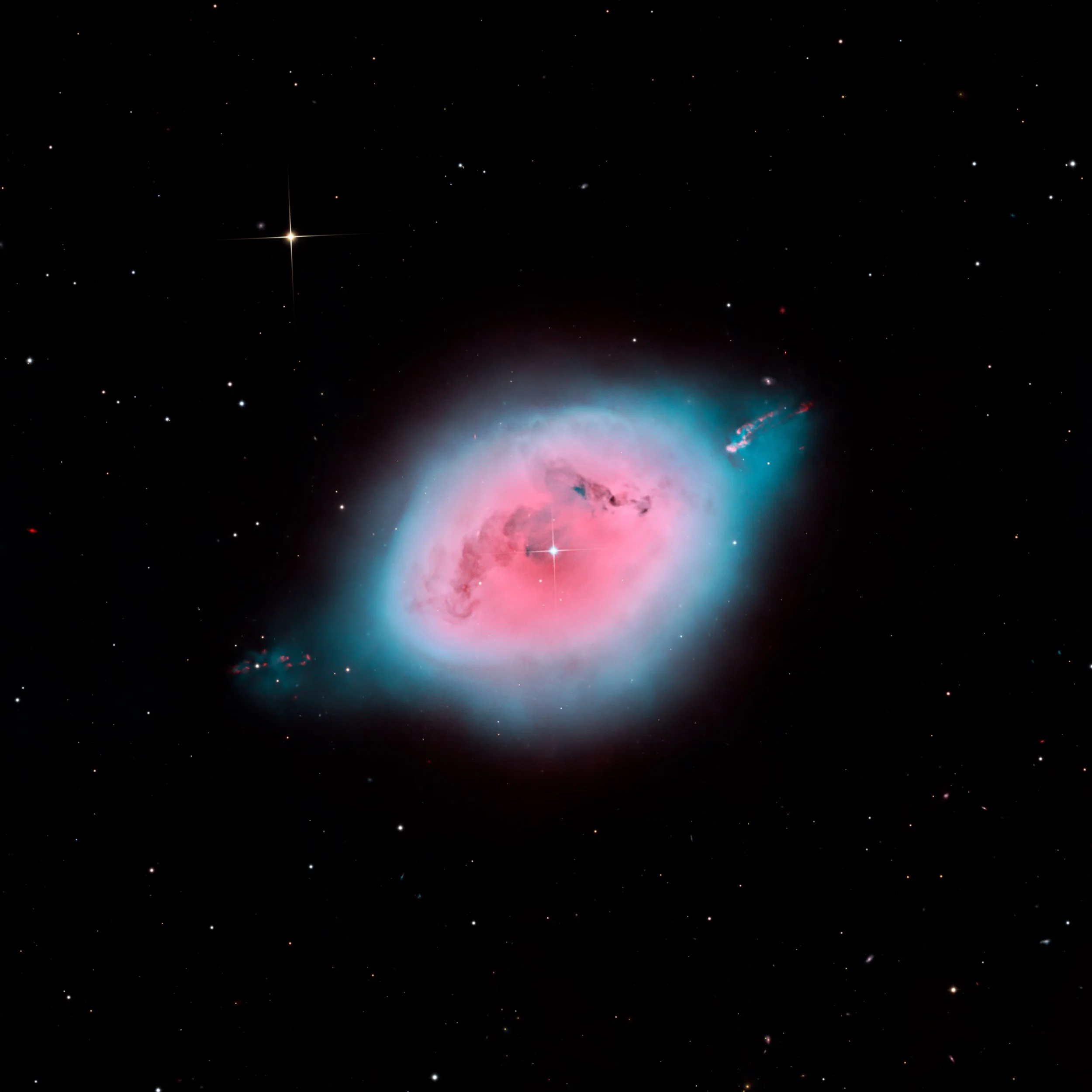
NGC 1360: The Robin’s Egg of the Cosmos
Delicate and luminous, the Robin's Egg Nebula (NGC 1360) graces the constellation Fornax, offering a perfect symbol for New Year’s Day. Like the fragile egg it resembles, this planetary nebula represents new beginnings and infinite potential—a celestial reminder of the opportunities the year ahead holds.
Its soft blue glow comes from ionized gas, ejected by a dying star at its center, creating an elegant elliptical shape. This quiet transformation reflects the cycles of life and time, as one chapter ends and another begins.
Just as a robin’s egg protects the promise of new life, NGC 1360 invites us to look forward with hope and wonder, embracing the beauty and possibility of a fresh start under the vast expanse of the cosmos.
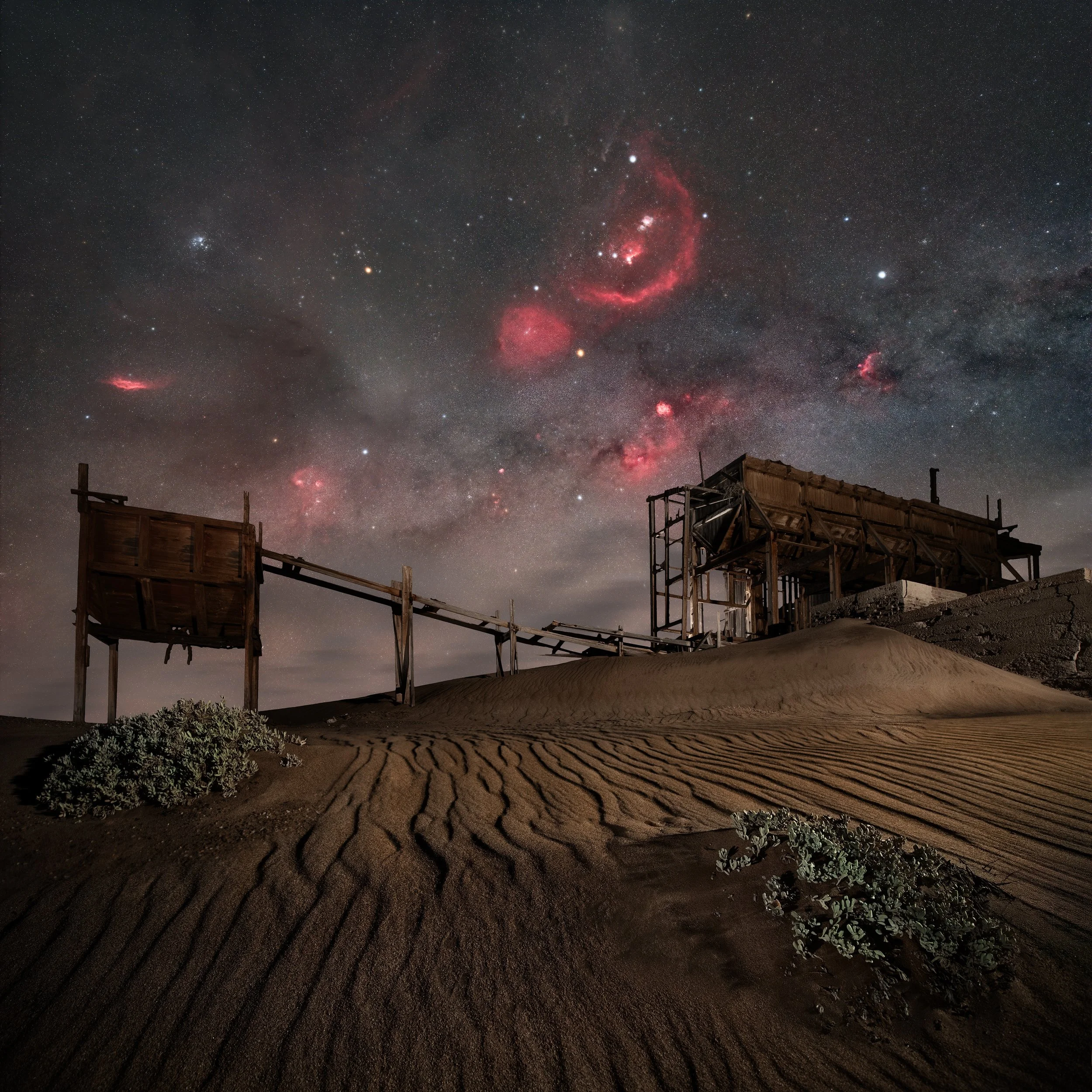
The Diamonds of Bogenfels
Location (was image taken with remote scope?): Namibia.
Image Description and Details: The mining ghost town of Bogenfels lies in the Sperrgebiet in South West Namibia. Sperrgebiet translated from German means the restricted area. The Sperrgebiet is an active diamond mining zone and one risks getting shot if not having the proper credentials and permits to enter the area. In times past the German colonizers had set up diamond mining towns and what we see here is a decrepit washing plant in which diamonds were separated from the soil they were excavated from. The diamonds on the ground are since long gone but the ones in the skies above, remain.
Resolved in the sky we see clockwise, from the Pleiades Star Cluster to the Taurus asterism with its dust clouds, and on to the Witch head Nebula. The distinctive Orion Molecular complex with the Horsehead nebula and the Barnard’s loop take center stage.
The Seagull Nebula appears further right before we loop back to the Rosette and Christmas tree Nebula and onward to the Flaming star Nebula before completing the circle at the California Nebula. Whew!

Sl7 Dark Nebula
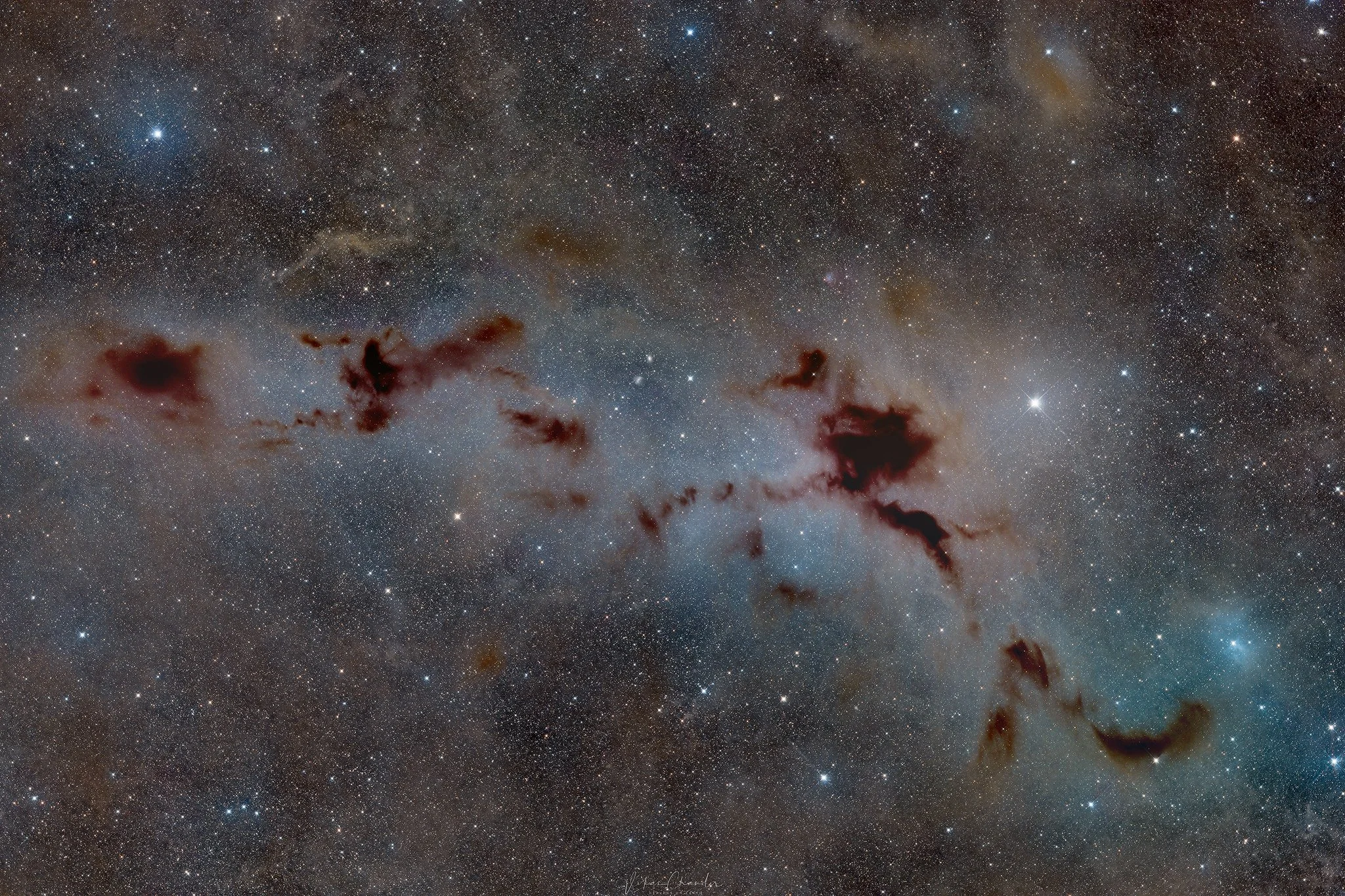
SL7 is a dark nebula, a region of space so dense with interstellar dust that it obscures the light from stars and other objects behind it. Located in the Milky Way, dark nebulae like SL7 are fascinating to astronomers because they are the birthplaces of stars. These dense molecular clouds provide the raw materials for star formation, with gravity pulling the gas and dust together until nuclear fusion ignites a new star.
In this image, the dense, dark silhouette of SL7 stands out against the backdrop of the Milky Way, blocking the light from more distant stars. The intricate structures and variations in density within the nebula are visible, offering a glimpse into the complex processes at play in these stellar nurseries. Observing and studying dark nebulae like SL7 helps astronomers understand the early stages of star formation and the conditions that lead to the birth of stars and planetary systems.


Gum 15
Gum 15, nestled within the expansive reaches of the Carina Nebula in the southern skies, emerges as a celestial crucible of stellar birth and evolution. This emission nebula, also known as RCW 33, is situated approximately 7,500 light-years from Earth, within the vibrant tapestry of the Milky Way galaxy.
At the heart of Gum 15 lies a bustling stellar nursery, where dense clouds of gas and dust coalesce under the influence of gravity to give birth to new generations of stars. The intense radiation emitted by these young stars illuminates the surrounding nebula, casting it aglow with vibrant hues of pink and red, amidst the dark tendrils of dust that pervade the region.
Gum 15 offers astronomers a unique opportunity to study the processes of star formation in action. Through meticulous observation and analysis, scientists seek to unravel the intricate dynamics of this cosmic cauldron, shedding light on the fundamental processes that govern the birth and evolution of stars throughout the universe. As humanity delves deeper into the mysteries of Gum 15, it serves as a reminder of the boundless beauty and complexity of the cosmos, inspiring wonder and awe in all who contemplate its celestial splendor.
The Sting Ray Nebula
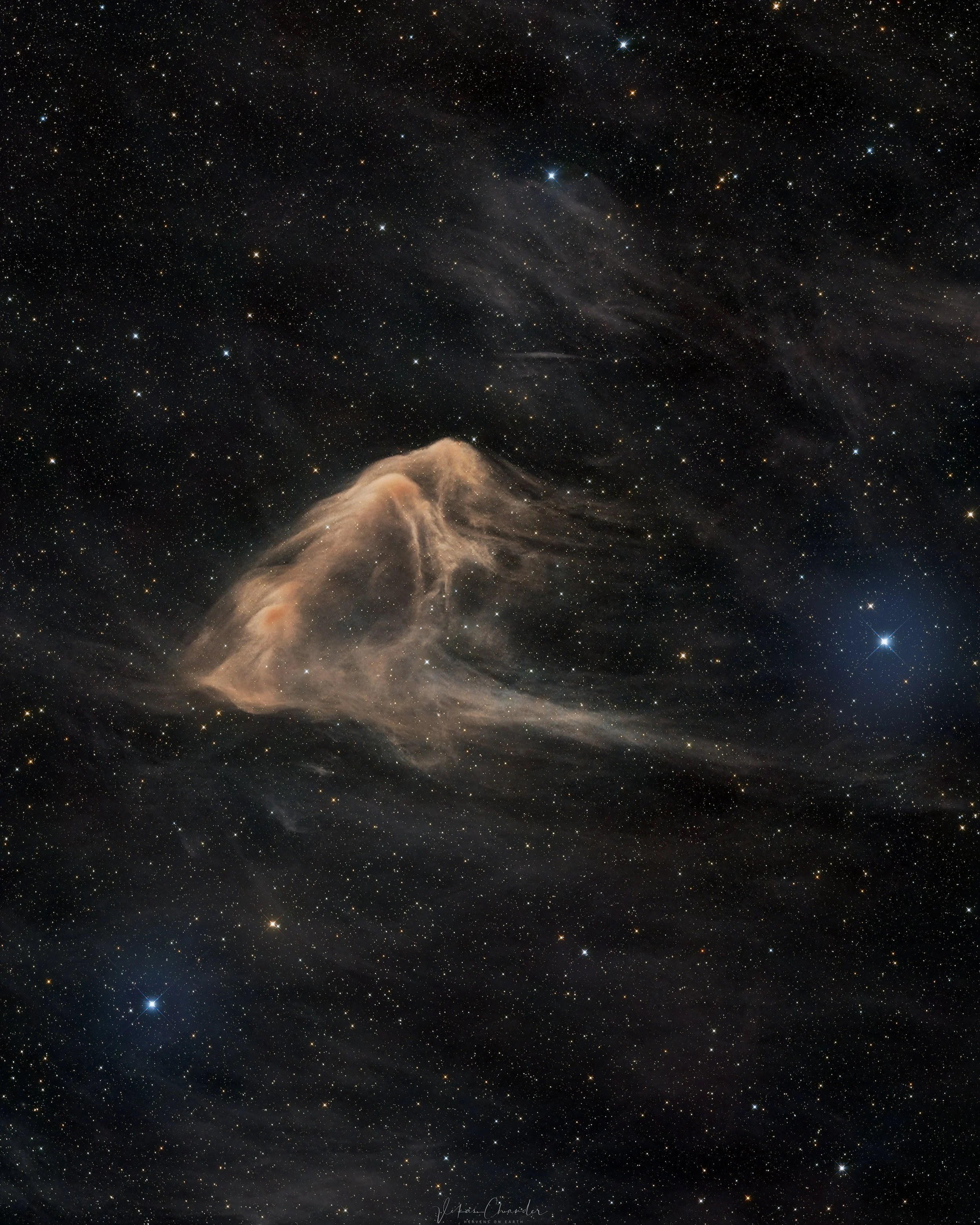
The Sting Ray Nebula, also known as Hen 3-1357, is a young planetary nebula located in the direction of the southern constellation Ara. What makes this celestial wonder particularly intriguing is its unique shape, resembling the graceful wings of a stingray. Formed from the outer layers of a dying star that has shed its material into space, the nebula showcases intricate patterns of ionized gas and dust, illuminated by the central, hot remnant of the star. The Sting Ray Nebula is relatively young on astronomical timescales, providing astronomers with a valuable opportunity to study the early stages of planetary nebula formation. Its captivating structure and youthful appearance make it a compelling subject for amateur astronomers and a source of scientific fascination in the exploration of stellar evolution.

The Unknown Whaler
In a remarkable capture taken near the Lighthouse of Pelican Point, an abandoned shipwreck took center stage against the backdrop of the remote landscape. However, it was the captivating beauty of the Milky Way that truly stole the show. With the celestial band of the Milky Way arching across the night sky, this cosmic display unveiled the intricate structure of our galaxy, a stunning tapestry of stars, dust, and gas. As the Milky Way's faint glow illuminated the shipwreck, the scene became a fusion of science and art, reminding us of our place in the vast cosmos and the profound connections between the universe and the stories of human history
The Praying Mantis
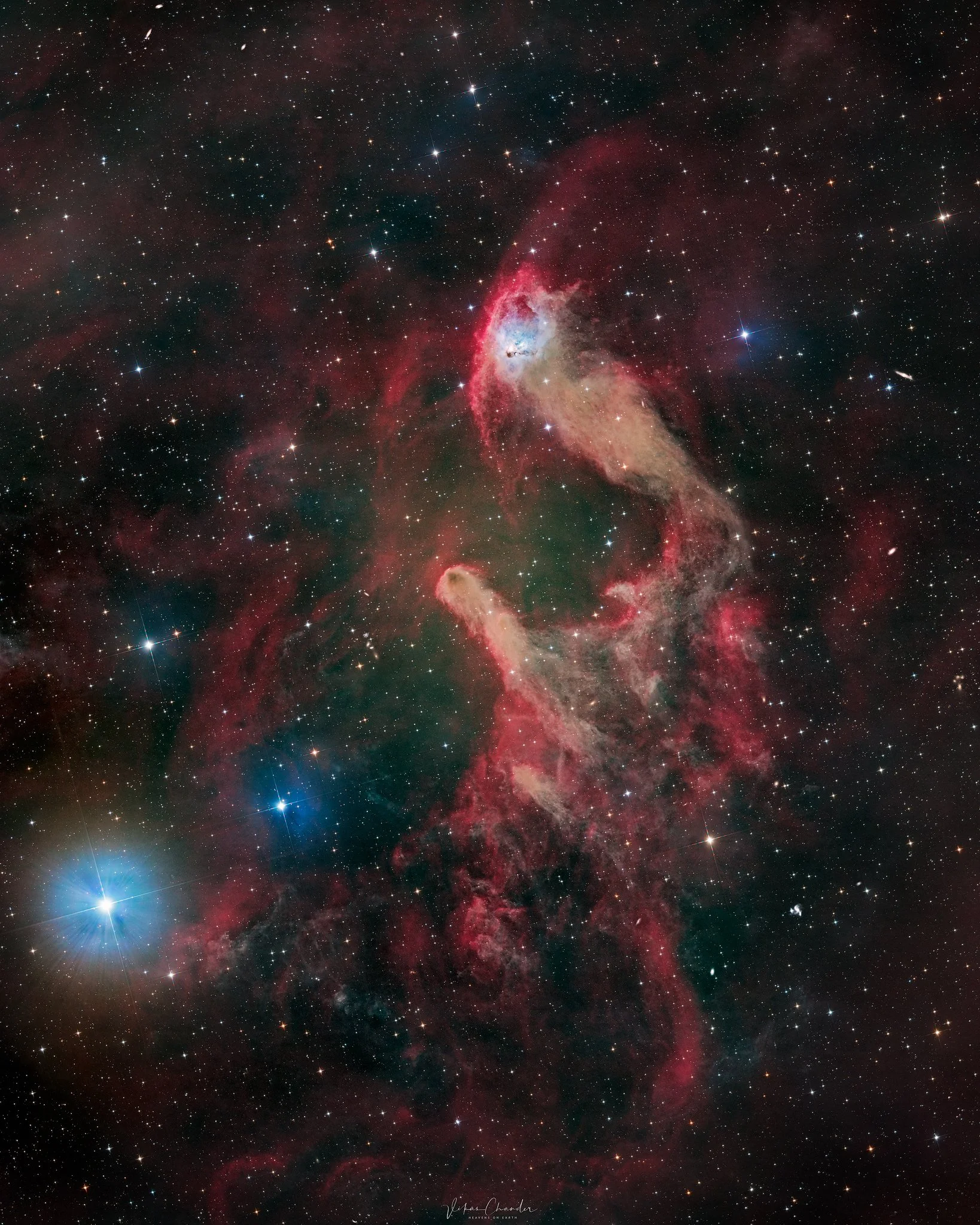
Image Description and Details : Just above the witch in the sky hovers a praying mantis…..
It fascinates the mind that our ancestors chose to name many objects in the sky based on animals and some of the names which come to mind are the Scorpion, the Bear and even a Dragon. Continuing in the same vein and keeping to traditions, in my mind’s eye I see NGC 1788 as a Praying Mantis. That it lies in close proximity to IC 2118, the Witch Head nebula gives it an even more sinister character. The star Beta Eridani / Cursa shines brightly creating a strong halo while the ionised hydrogen gases in the region contrast it in bright red emissions. The blues from the reflection nebulae and the dust in the region all combine together to form a rich smörgåsbord of color….
Telescope: Takahashi E160ed
Camera: Zwo 6200mm pro
Mount: Software Bisque Paramount Mx+
Observatory : Deep Sky Chile
L = 101 x 300s = 8h25m
R= 101 x 300s = 8h25m
G= 101 x 300s = 8h25m
B= 101 x 300s = 8h25m
Ha = 101 x 600s = 16h50m
Total integration = 50h30m
Acquisition Software = Voyager Advanced
Processing Software = PixInsight
Copyright: vikas chander
Orion
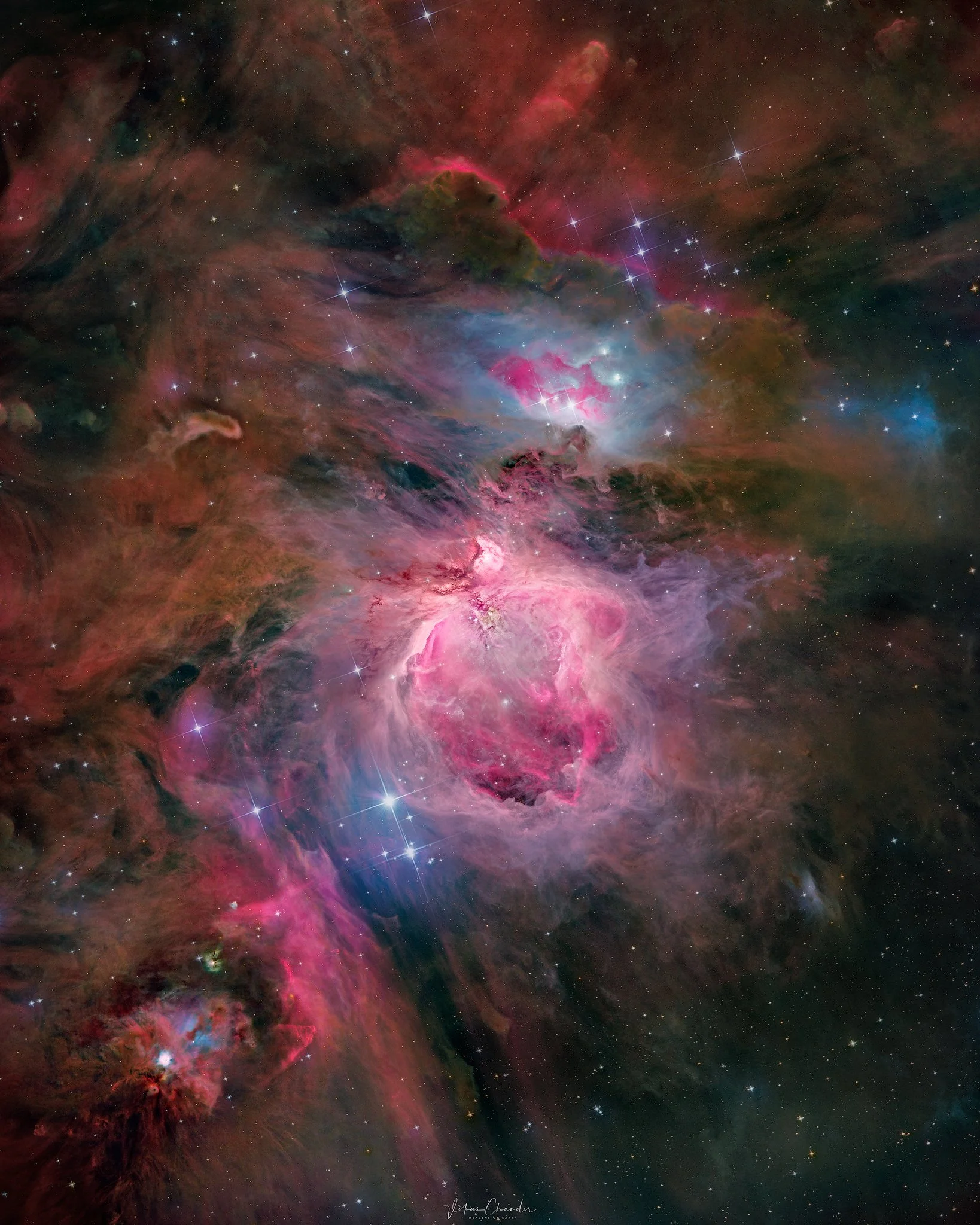
The Orion Nebula is a vast and colorful cloud of gas and dust located in the constellation Orion. It is one of the most famous and easily recognizable nebulae in the sky, and is often referred to as the "Great Nebula in Orion" or the "Orion Nebula Cluster".
Difficult to process but done well here, is the Orion Nebula Trapezium, a group of four young hot stars located within the center of the Nebula. The stars, which are known as Theta-1 Orionis A, B, C, and D, are some of the most massive and luminous stars in the Orion Nebula, and are thought to be less than a million years old.