

AAPOD2 Image Archives
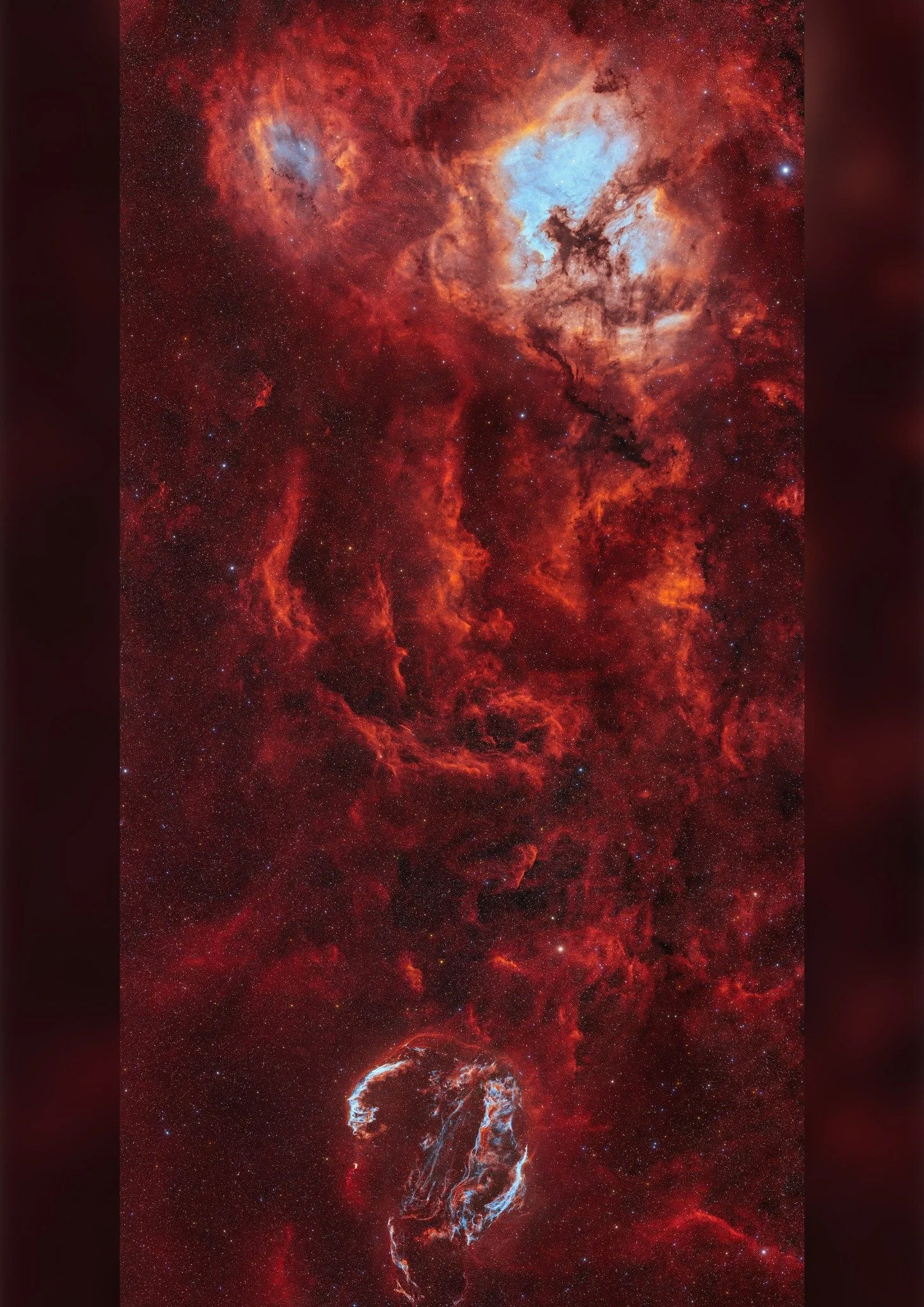
North American Nebula to Swan
Located about 2,600 light-years away in the constellation Cygnus, the North America Nebula (NGC 7000) is one of the largest and most recognizable star-forming regions in the northern sky. Its distinctive shape resembles the North American continent, with dark clouds of cosmic dust outlining familiar features such as the Gulf of Mexico and the eastern seaboard. The nebula's crimson glow comes primarily from hydrogen gas energized by intense ultraviolet radiation from nearby young, massive stars hidden within the surrounding stellar nursery.
Beneath its striking appearance lies a vast complex of gas and dust spanning more than 100 light-years. Within these dense molecular clouds, gravity continues to sculpt new generations of stars, while stellar winds and radiation carve intricate pillars, ridges, and cavities throughout the region. Rich in both scientific significance and visual beauty, the North America Nebula offers a remarkable glimpse into the processes that transform cold interstellar material into the stars and planetary systems of the future.
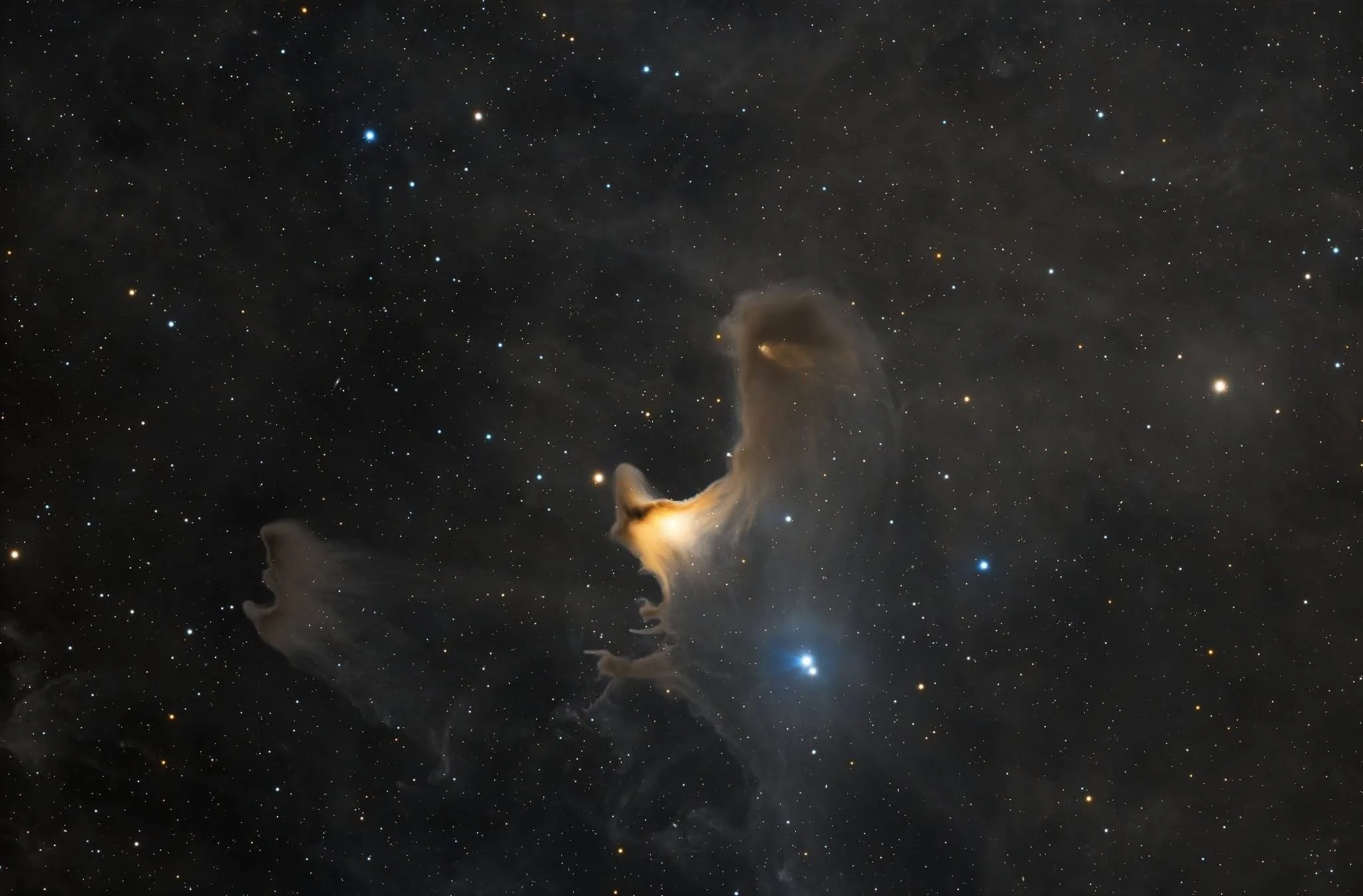
VdB 141
VdB 141 — the Ghost Nebula — is one of those targets that rewards patience. Rather than loud emission or bright color, it’s all about subtle dusty structure and reflected starlight. Located in Cepheus, this object is a reflection nebula illuminated by nearby young stars, with dark molecular dust carving out the distinctive “ghostly” appearance that gives it its name. The flowing wisps and layered dust lanes almost feel alive, with new details appearing the longer you stare at it. This one was a fun challenge because preserving the faint dusty texture without crushing or over-processing it was the whole game. Definitely a target that feels more atmospheric than dramatic—and that’s exactly what makes it special.
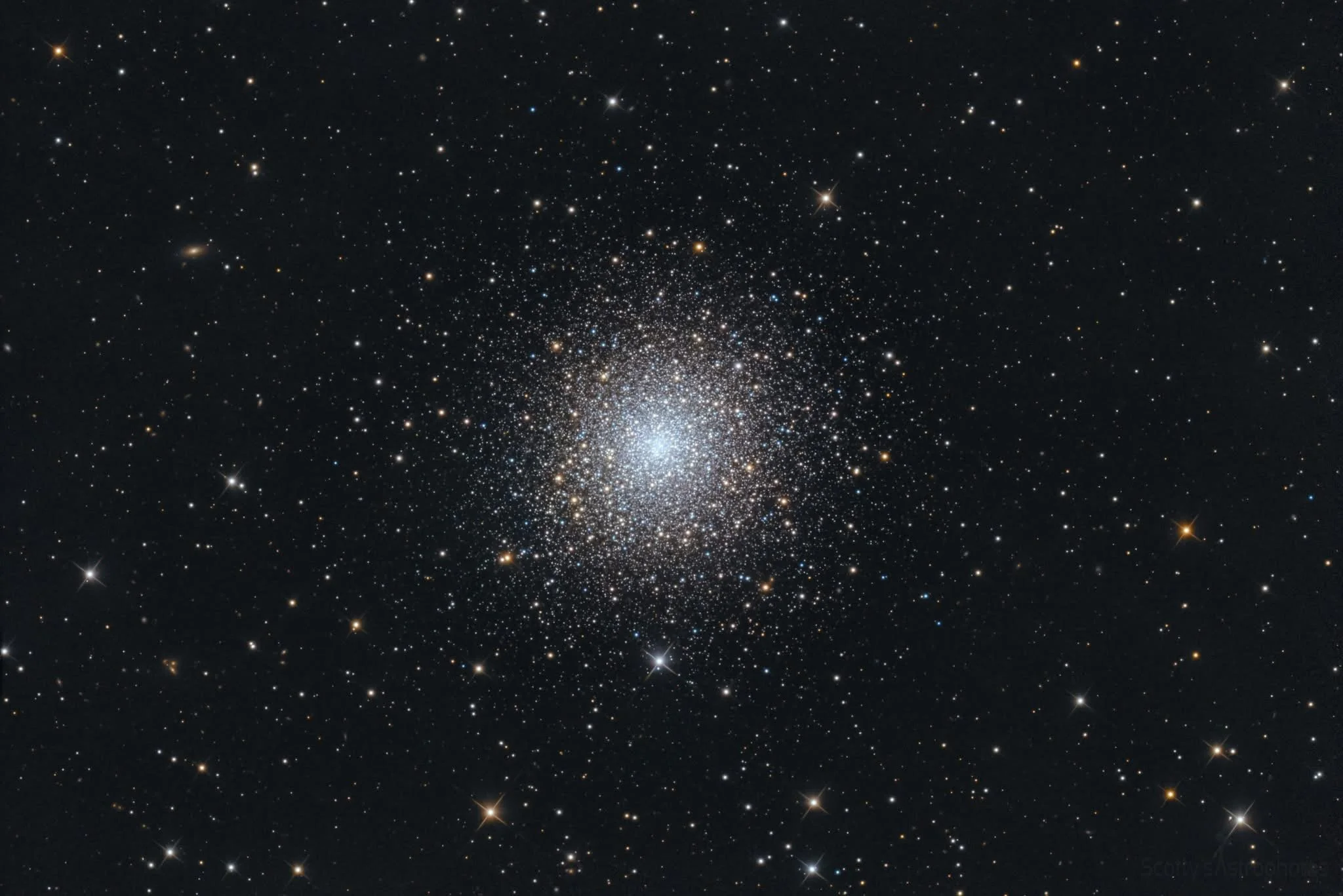
M92
M92 is one of the oldest and most brilliant globular clusters in the Milky Way, located about 27,000 light-years away in the constellation of Hercules. Containing roughly 300,000 tightly packed stars within a sphere about 100 light-years across, this ancient stellar city shines at magnitude 6.3 and can be glimpsed with the naked eye from dark-sky locations. Though often overshadowed by the nearby and more famous M13, M92 is nearly as impressive, displaying a dense, concentrated core and a rich population of stars that formed more than 13 billion years ago.
The stars of M92 are remarkably poor in heavy elements, indicating that the cluster formed during the earliest epochs of our galaxy's history, before successive generations of stars enriched the cosmos with heavier materials. This pristine composition, combined with its great age, makes M92 an important laboratory for studying stellar evolution and the formation of the Milky Way. High-resolution observations from the Hubble and James Webb Space Telescopes reveal a dazzling swarm of ancient suns packed so closely together that a hypothetical planet within the cluster would see thousands of bright stars illuminating its night sky.
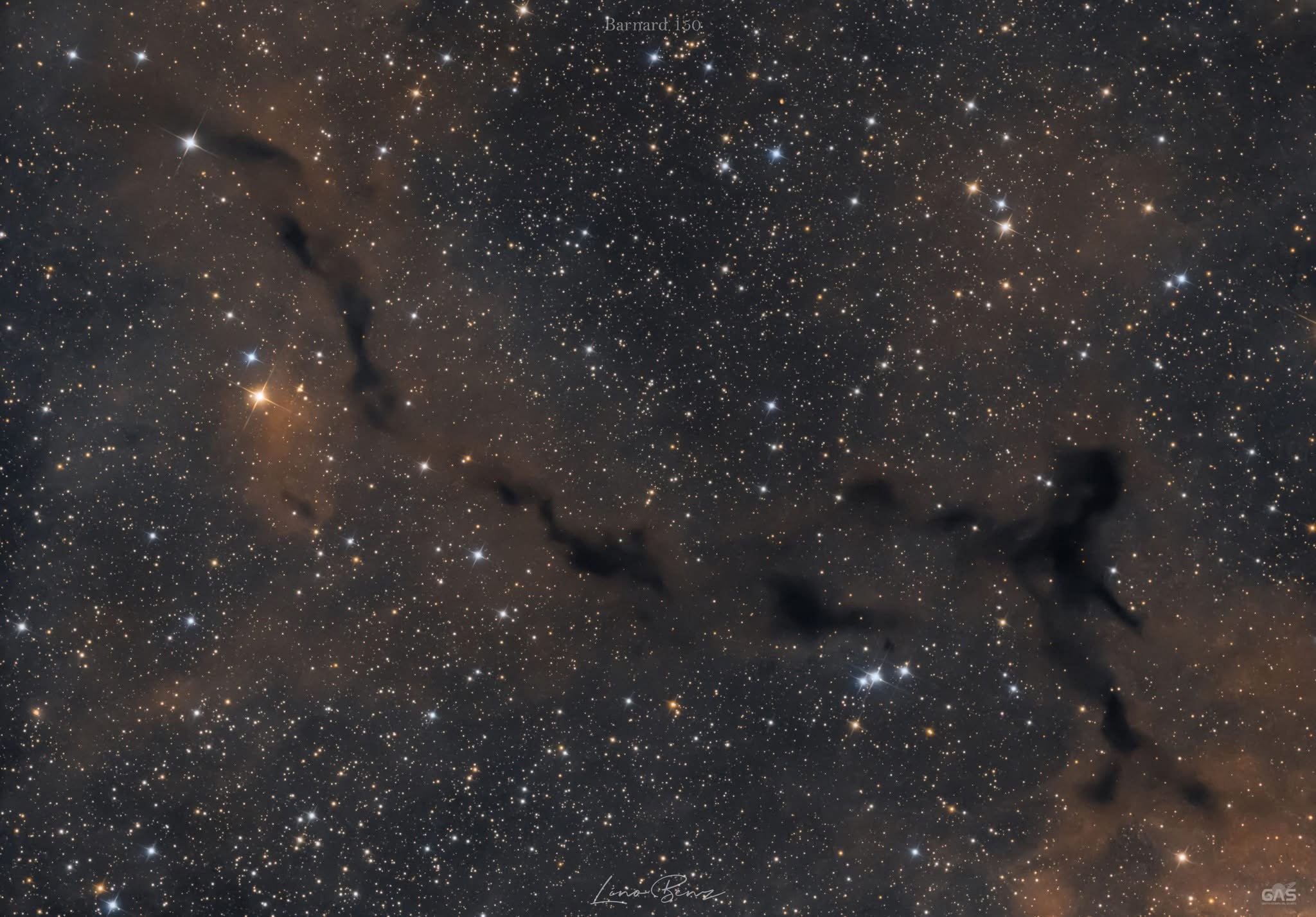
Barnard 150
Barnard 150 (also known as LDN 1082) is a famous dark nebula located in the northern constellation of Cepheus, approximately 1,200 light-years from Earth. This fascinating astronomical object is universally nicknamed the Seahorse Nebula. It extends across the sky for about 1 degree, a size comparable to that of two full moons placed side by side. Within the dark filament are three exceptionally dense dust nuclei (cataloged as LDN 1082 A, B, and C). These nuclei are veritable stellar cradles where gravity is collapsing matter to give birth to new stars, visible only in the infrared.
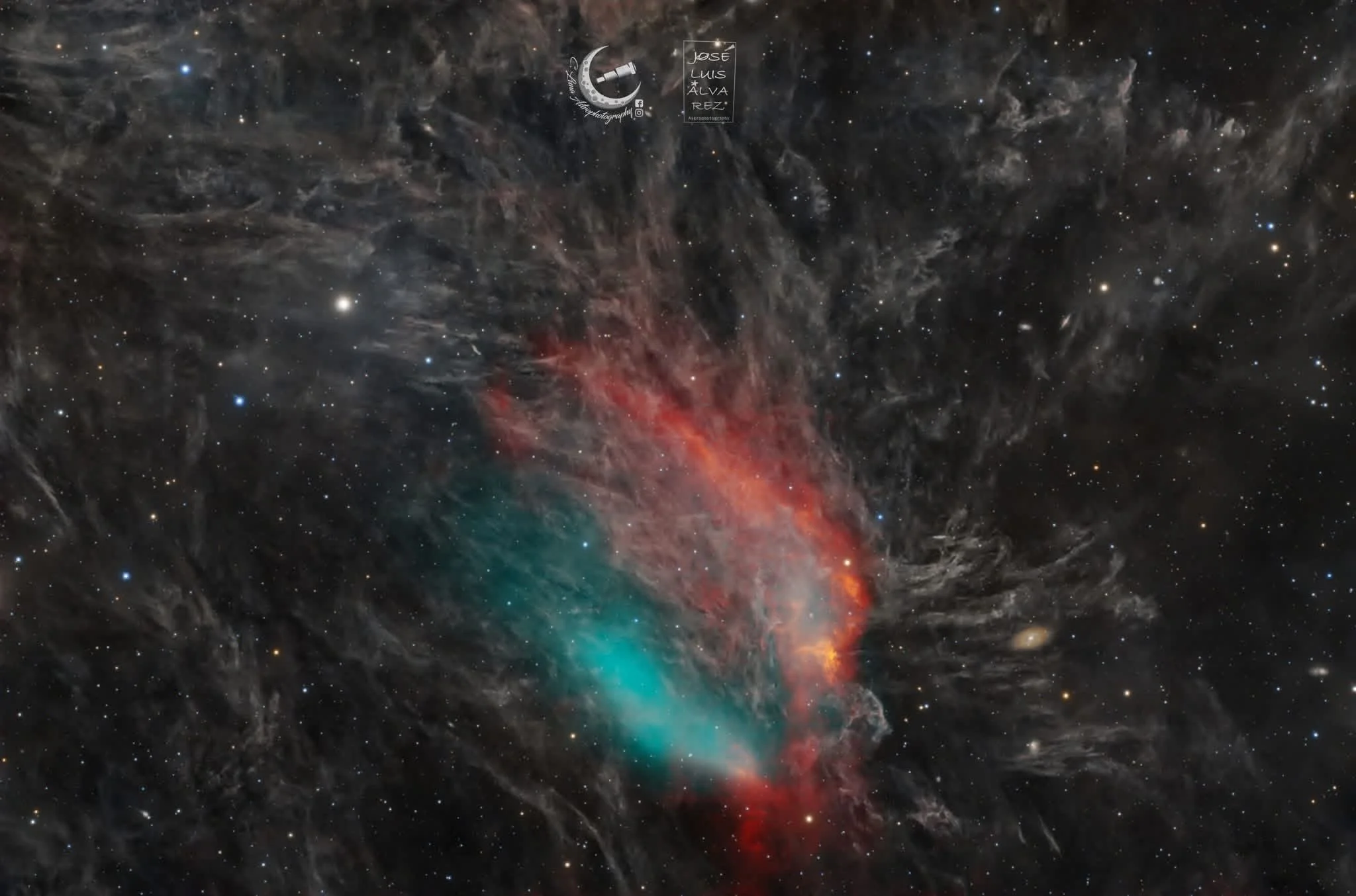
Vulcano Nebula
Vulcano Nebula, located in the Big Dipper constellation. Close to the Bode and Cigar Galaxies -M81 & M82-, among remnants of stardust -IFN-, this extremely faint nebula is hidden within it.
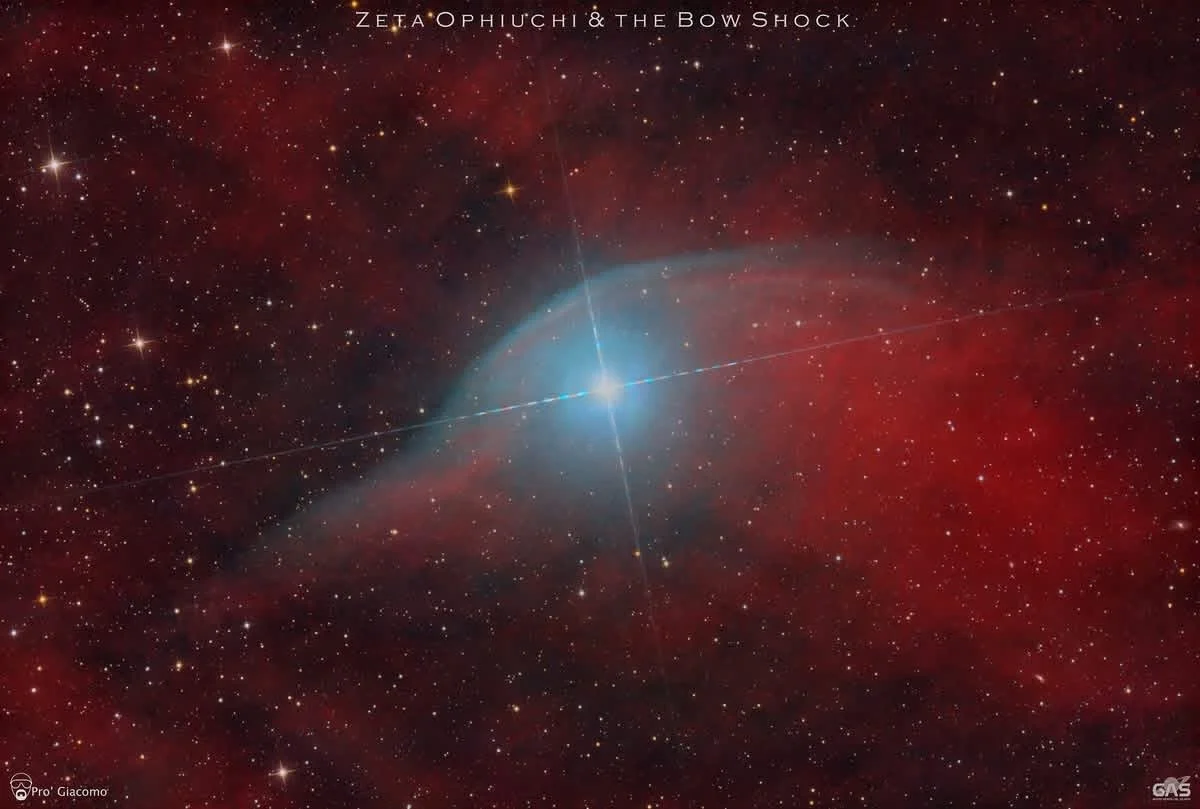
Zeta Ophiuchi & the Bow Shock
Zeta Ophiuchi & the Bow Shock
Zeta Ophiuchi is the third brightest star in the constellation Ofiucus; with magnitude +2.54, it is a main sequence blue star located 440 light years from Earth, with a mass 20 times greater than that of the Sun.
Like the stars of its class, it emits matter through large amounts of stellar winds, at a speed of 1600 km/s. Part of this interstellar material is ionized by star radiation, resulting in the Sh2-27 emission nebula.
Zeta Ophiuchi is a star from a complex past, likely expelled from her birthplace by a powerful star explosion.
Previous observations have shown that Zeta Ophiuchi was once in a close orbit with another star, before being ejected at about 160,000 kilometers per hour when this companion was destroyed by a supernova explosion over a million years ago.
The Zeta Ophiuchi leak produces this kind of shock wave called bow shock due to its strong stellar wind that precedes it, compressing and heating the dusty interstellar material and modeling the compression wave.
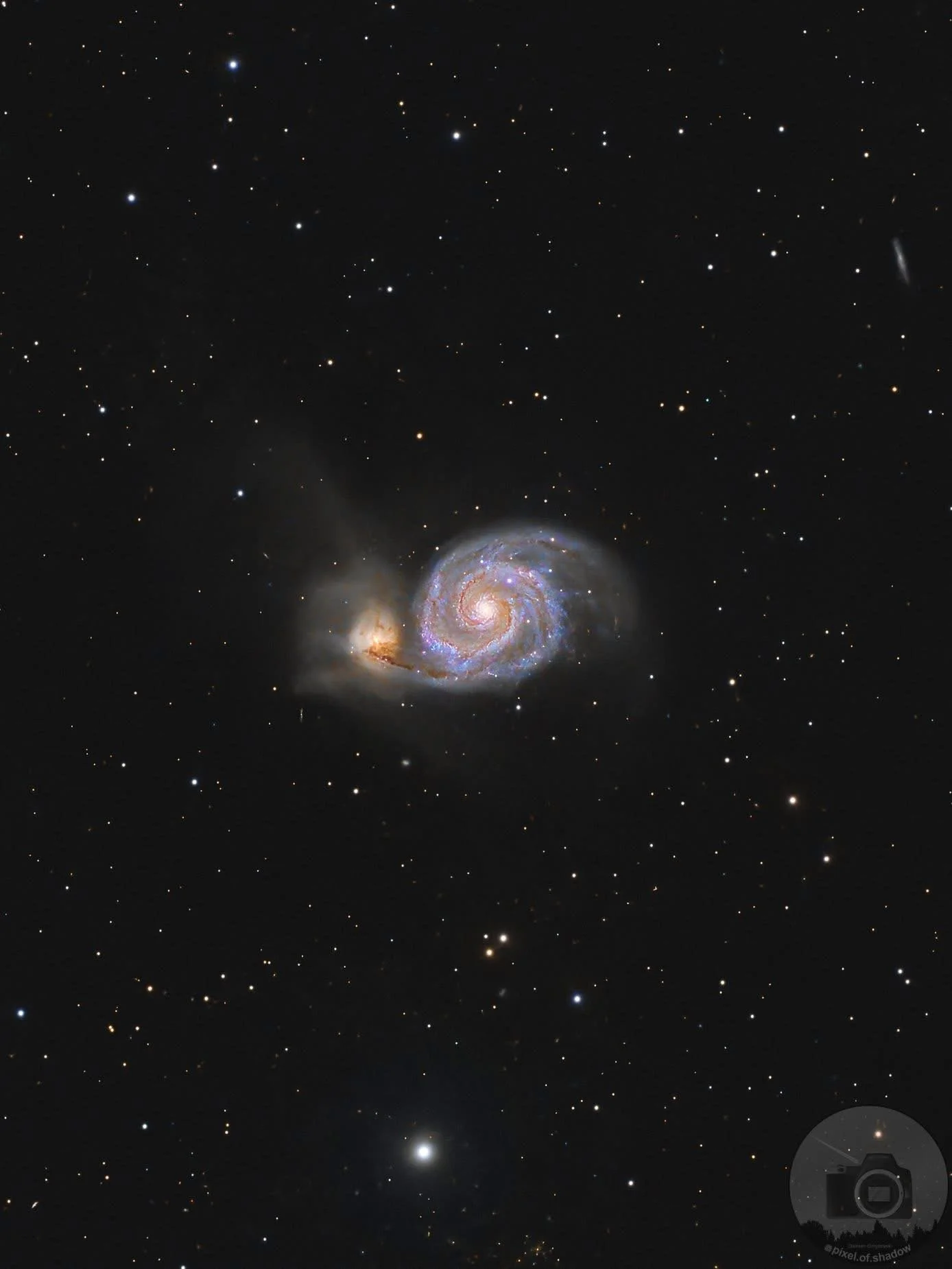
The Whirlpool Galaxy (M51)
Known as the Whirlpool Galaxy, M51 is one of the sky’s most iconic grand-design spirals, located about 31 million light-years away in the constellation Canes Venatici. Its sweeping spiral arms glow with clusters of young blue stars, pink hydrogen clouds, and dark lanes of interstellar dust, all shaped by a long gravitational interaction with its smaller companion galaxy, NGC 5195. Together, the pair form a striking cosmic portrait that has become a favorite target for both professional observatories and backyard astrophotographers.
Captured in extraordinary detail, this view of M51 reveals the turbulent beauty of galactic evolution in progress. Tidal forces between the two galaxies continue to trigger waves of star formation while subtly distorting their structures over millions of years. Although the Whirlpool Galaxy spans roughly 60,000 light-years across, its delicate spiral pattern remains visible even through modest telescopes, offering observers a glimpse into the dynamic processes that shape spiral galaxies throughout the universe.
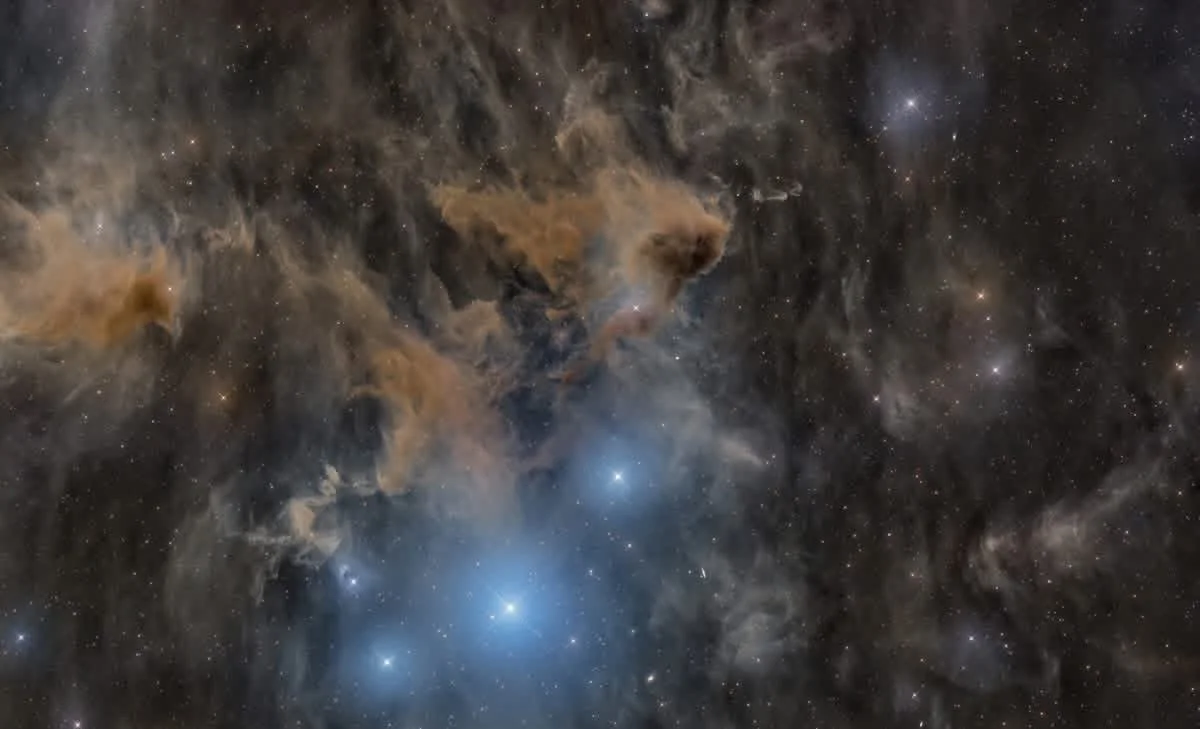
LDN134
The stunning complex LDN 134 – LDN 169 – LDN 183, along with the faint glowing nebulae LBN 10-11-15, lies near the constellations of Libra and Ophiuchus, around 325–340 light-years from Earth. These are among the closest interstellar clouds to us.
Dark nebulae are immense clouds of gas and dust that block the light of background stars, creating dramatic cosmic shadows. Despite spanning only a few light-years, this compact region offers a fascinating glimpse into the cold interstellar medium.
One of the highlights is LDN 183, an extremely cold cloud (~10K) where future low-mass stars may eventually form.
Bright stars from Serpens, including μ Serpentis and β Serpentis, shine through and around the clouds, enhancing the incredible depth and contrast of this celestial landscape.
NGC 3344 - Spiral Galaxy in Leo Minor
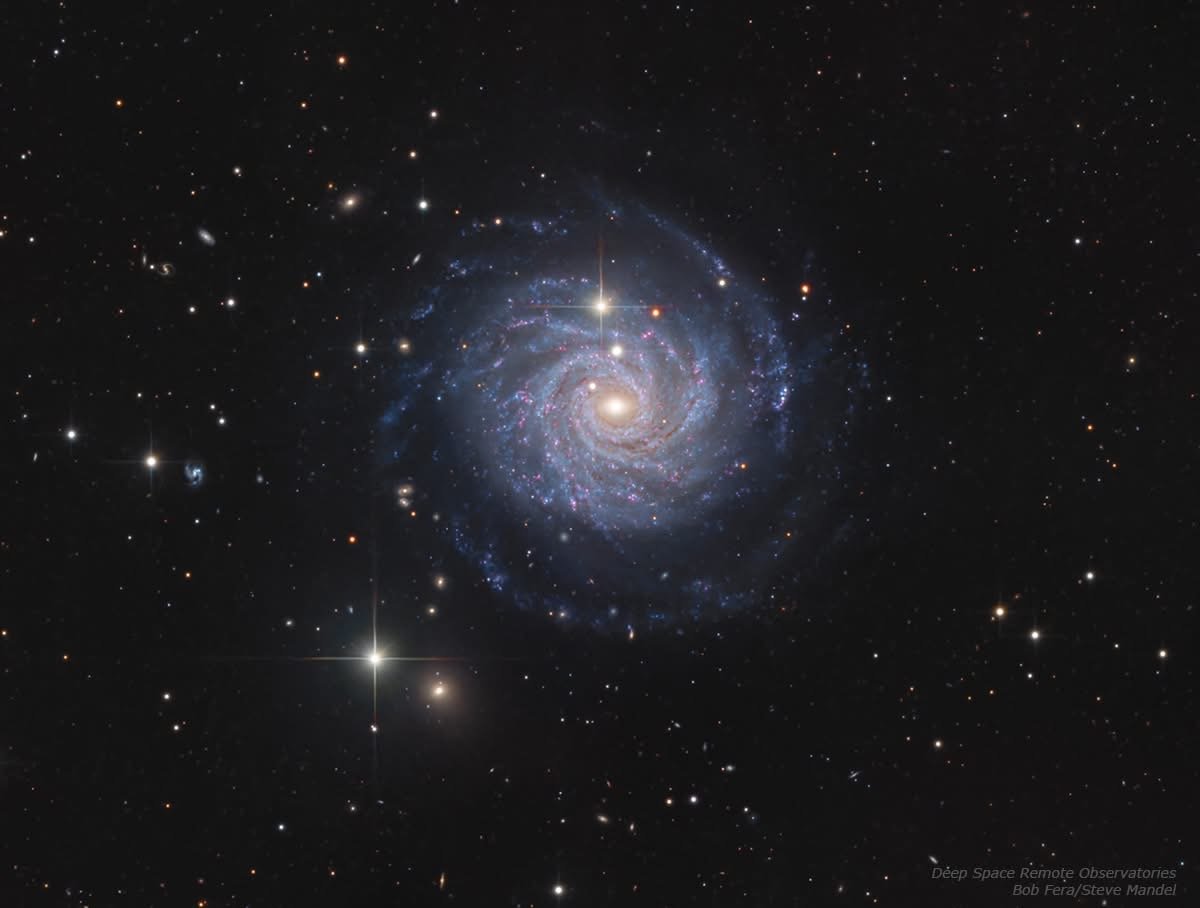
In the quiet northern constellation of Leo Minor lies NGC 3344, a graceful face-on spiral galaxy about 25 million light-years from Earth. Its delicate, tightly wound arms sparkle with clusters of young blue stars while a faint inner ring encircles the glowing core, giving the galaxy a layered appearance that has earned it the nickname “Sliced Onion Galaxy.” Though smaller than the Milky Way, NGC 3344 is rich in star formation and offers astronomers an unusually clear view of spiral structure thanks to its near-perfect orientation toward Earth.
NGC 4725 & CO.
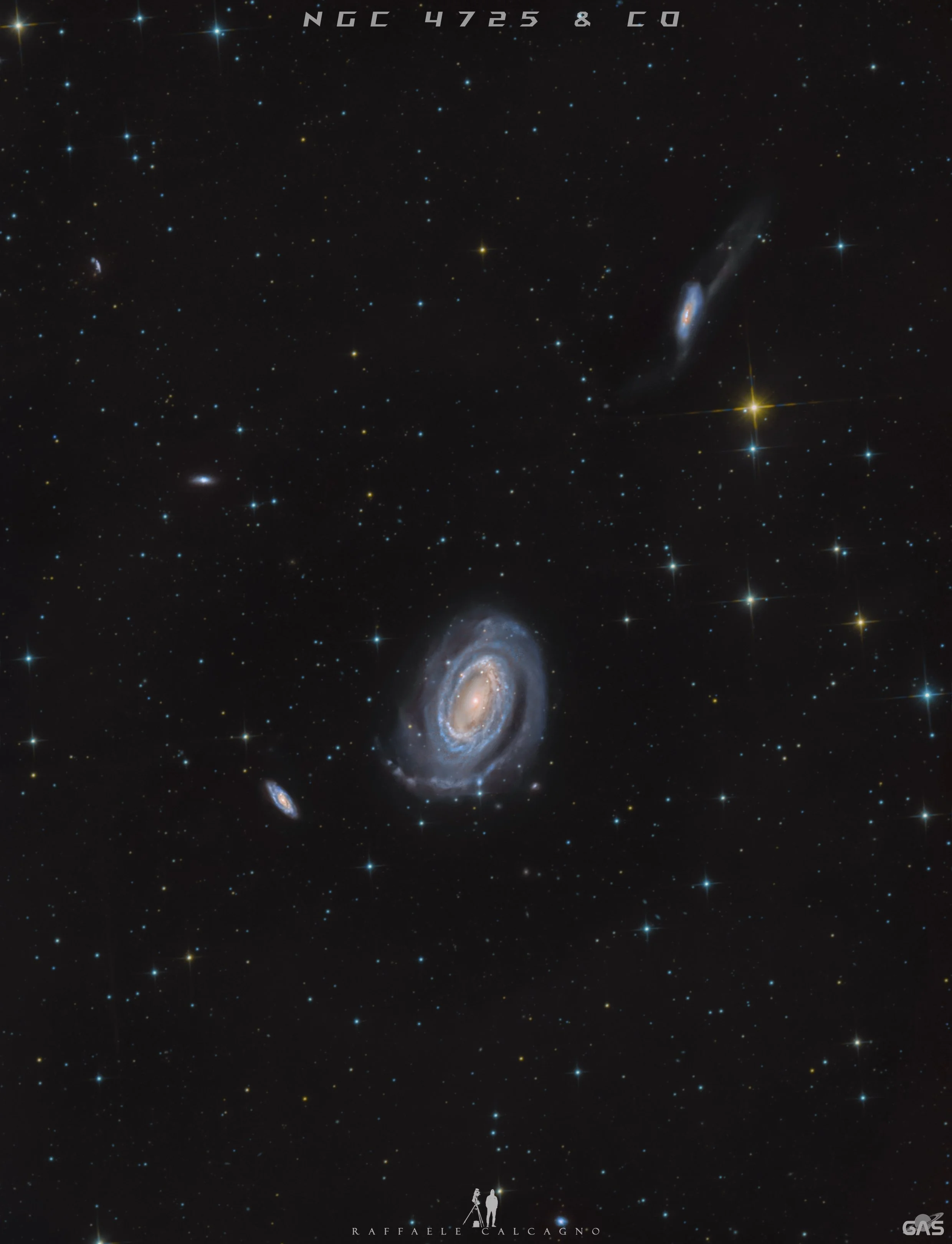
In this image the protagonist is NGC 4725, a barred spiral galaxy in the constellation Coma Berenices, about 40 million light-years away from us. Its structure features a single well-defined spiral arm. The shot also shows other galaxies in the NGC 4725 Group, including NGC 4712 at the bottom, a lenticular galaxy, and NGC 4747 at the top, an irregular galaxy. NGC 4725 hosts an active gala
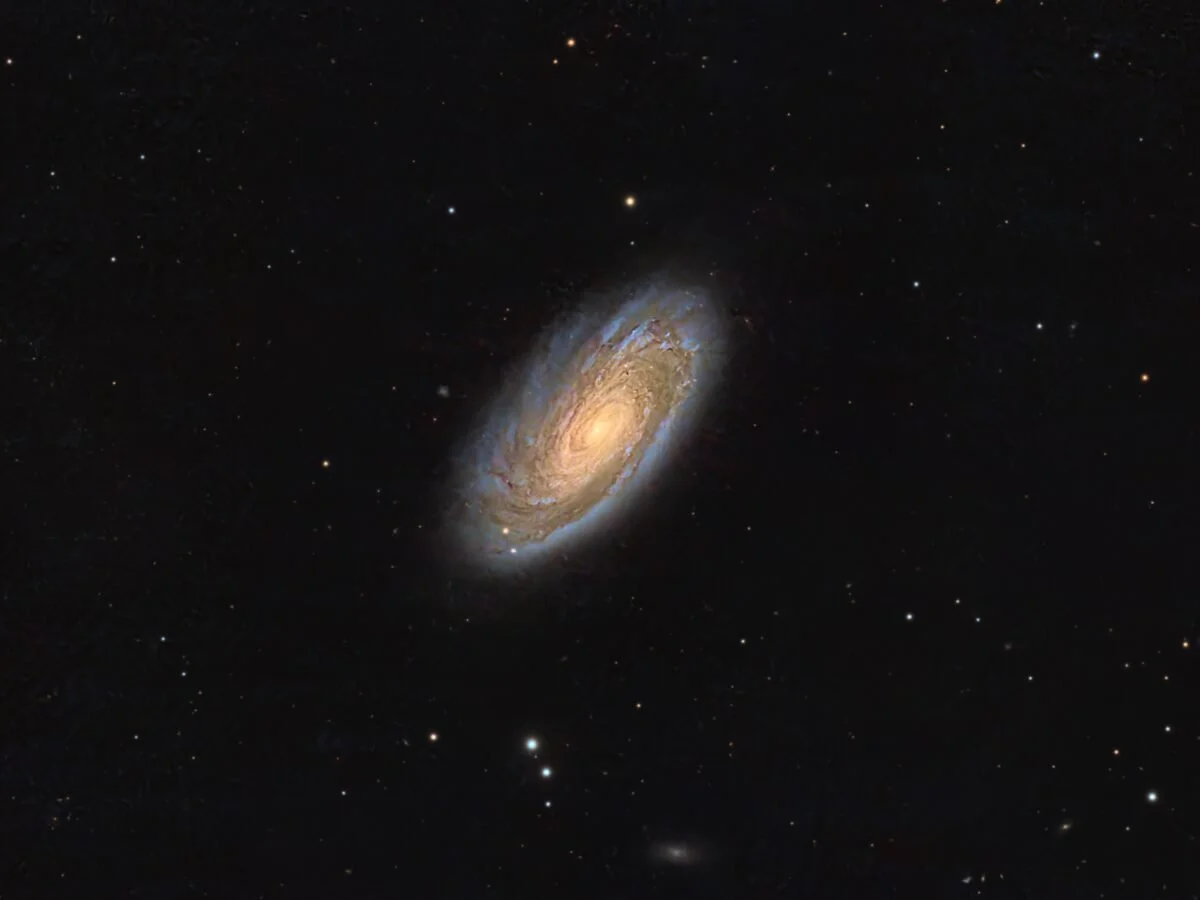
M88
Messier 88 (M88; NGC 4501) is a spiral galaxy, one of more than 2,000 galaxies in the Virgo Cluster. It’s about 50-60 million light years away from us in the constellation Coma Berenices. It’s inclined towards us at an angle of about 64 degrees, giving it a three-dimensional appearance. It is made up of about 400 billion stars, and more than 131,000 light years across. It’s relatively small on the sky, but that’s what this telescope specializes in! I included some Ha-filtered frames, which made a nice contribution to the image by subtly showing some red structures in the spiral arms near the core.
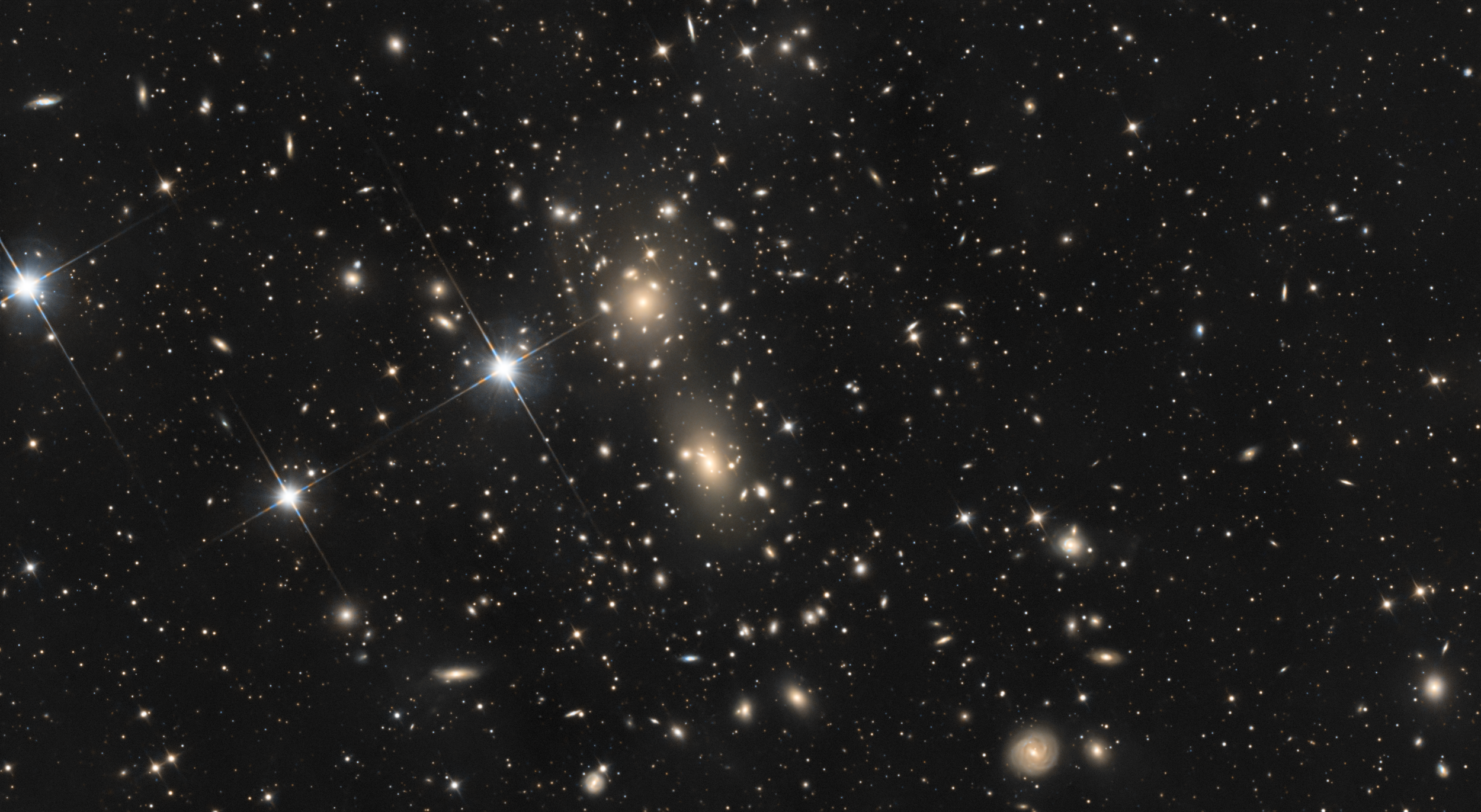
Abel 1656
2 paragraph snippet for aapod2 on Abel 1656
Known as the Coma Cluster, Abell 1656 is one of the richest galaxy clusters in the night sky, containing more than 1,000 identified galaxies packed into a region over 20 million light-years wide. Located roughly 320 million light-years away in the constellation Coma Berenices, this immense gathering of galaxies is dominated by giant elliptical systems such as NGC 4874 and NGC 4889, surrounded by countless smaller galaxies scattered across the frame like distant islands of light.
Abell 1656 also played a major role in the discovery of dark matter. In the 1930s, astronomer Fritz Zwicky studied the motions of galaxies within the cluster and found they were moving far too quickly to be held together by visible matter alone.
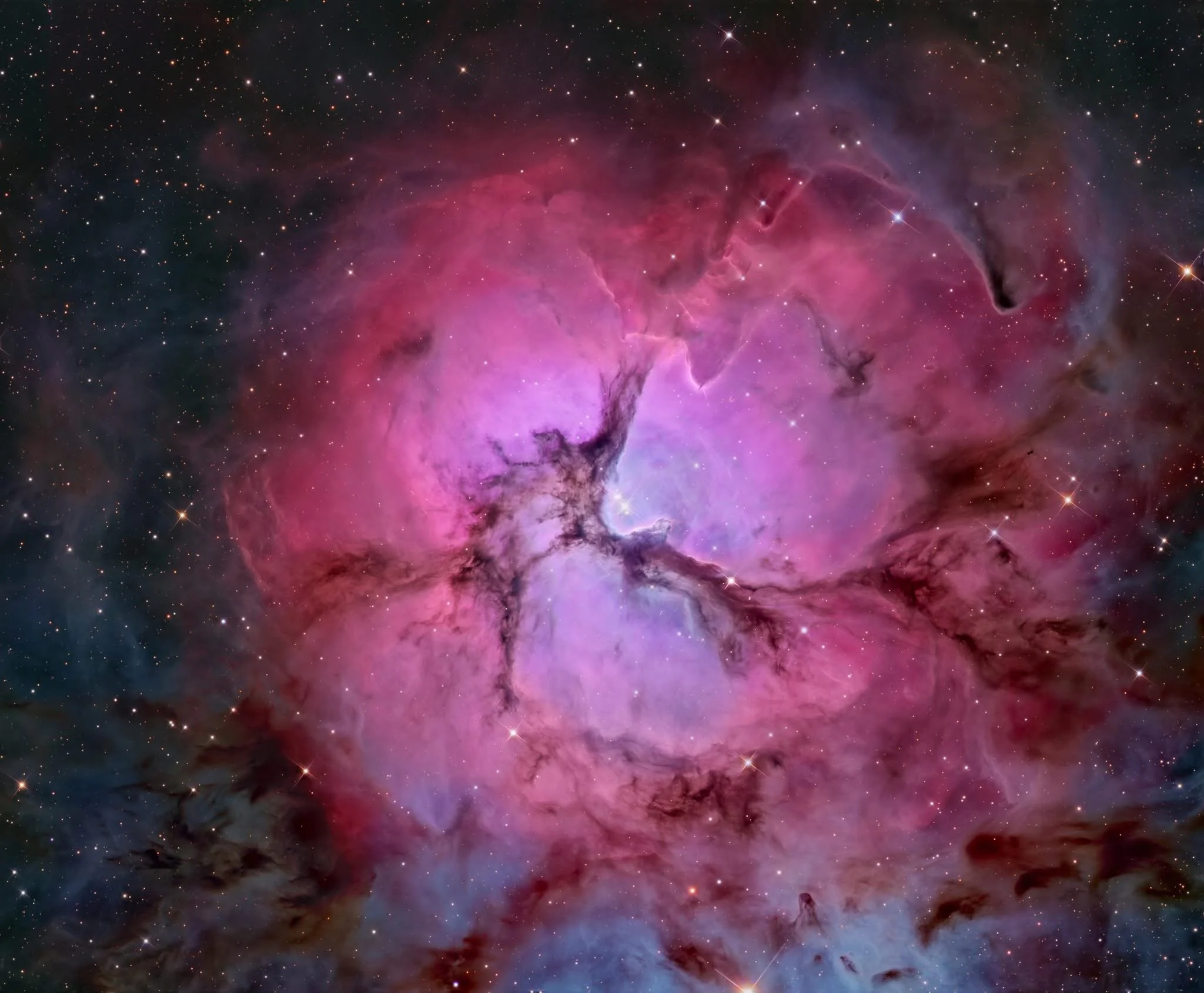
M20
A three-faced nebula — emission, reflection, and dark dust woven into a single stellar nursery
Messier 20, the Trifid Nebula (NGC 6514, Sharpless 30), is an H II region and embedded young stellar cluster in the constellation Sagittarius, lying within the Sagittarius–Carina Arm of the Milky Way along one of the richest star-forming corridors visible from Earth — as one of the most iconic and frequently imaged deep-sky objects in the southern sky, M20 is rarely seen at this scale, and the 9000 mm focal length of the ASA Astrosysteme AZ 1500 brings the nebula into close range, resolving the fine structure of the dust lanes, the texture of the ionisation fronts, and the embedded detail within the bright central cavity that wider-field treatments cannot reach
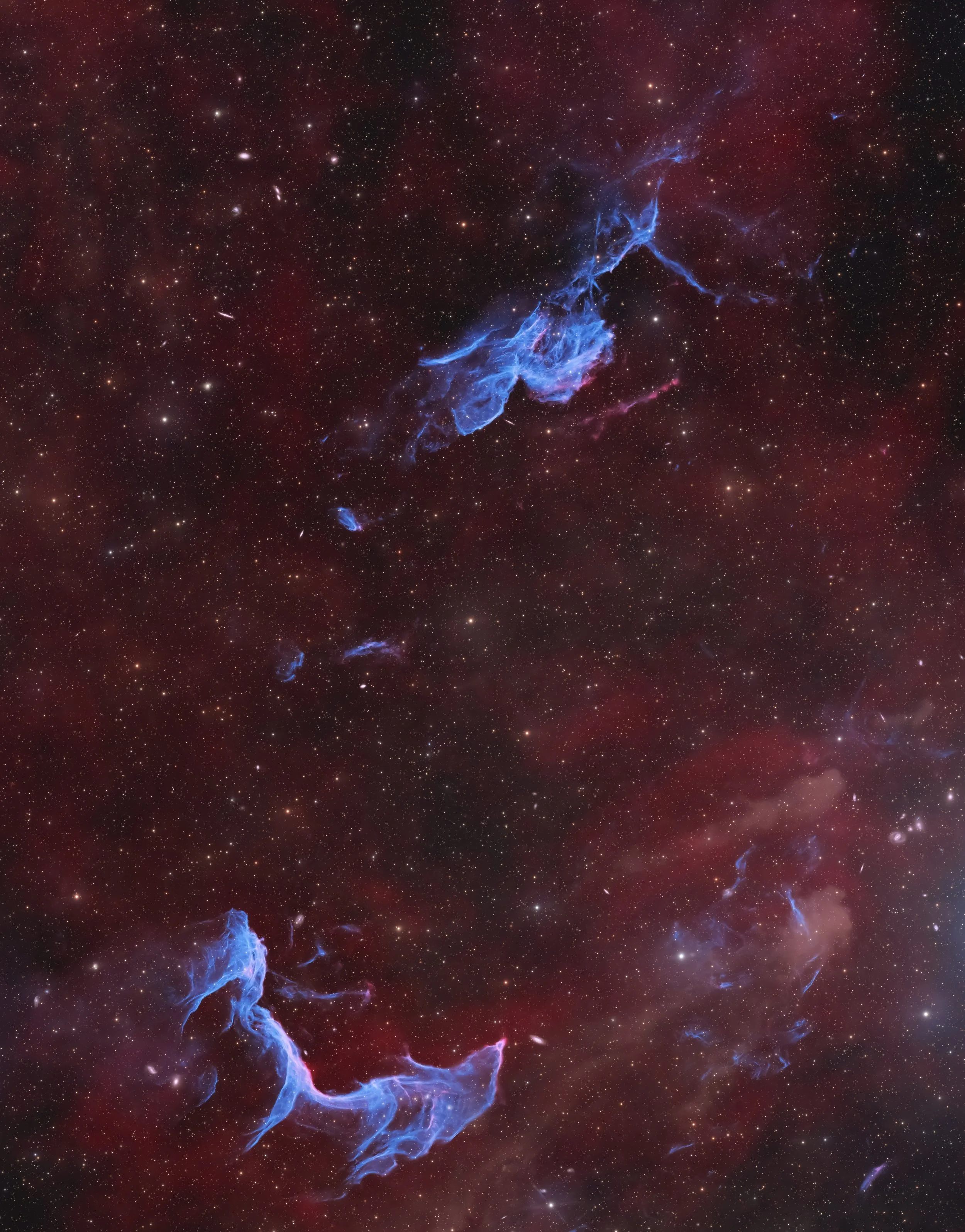
SNR G296.5 + 10.0 and New PN discovery LMoBoTo 1
G296.5+10.0, often nicknamed the “Siren Nebula”, is a large and extremely faint supernova remnant located in the southern skies. Shaped by the shockwave of a stellar explosion interacting with the surrounding interstellar medium, its delicate filaments and fragmented shell reveal the violent aftermath of a star that ended its life thousands of years ago.
C/2025 R3 PanStarrs
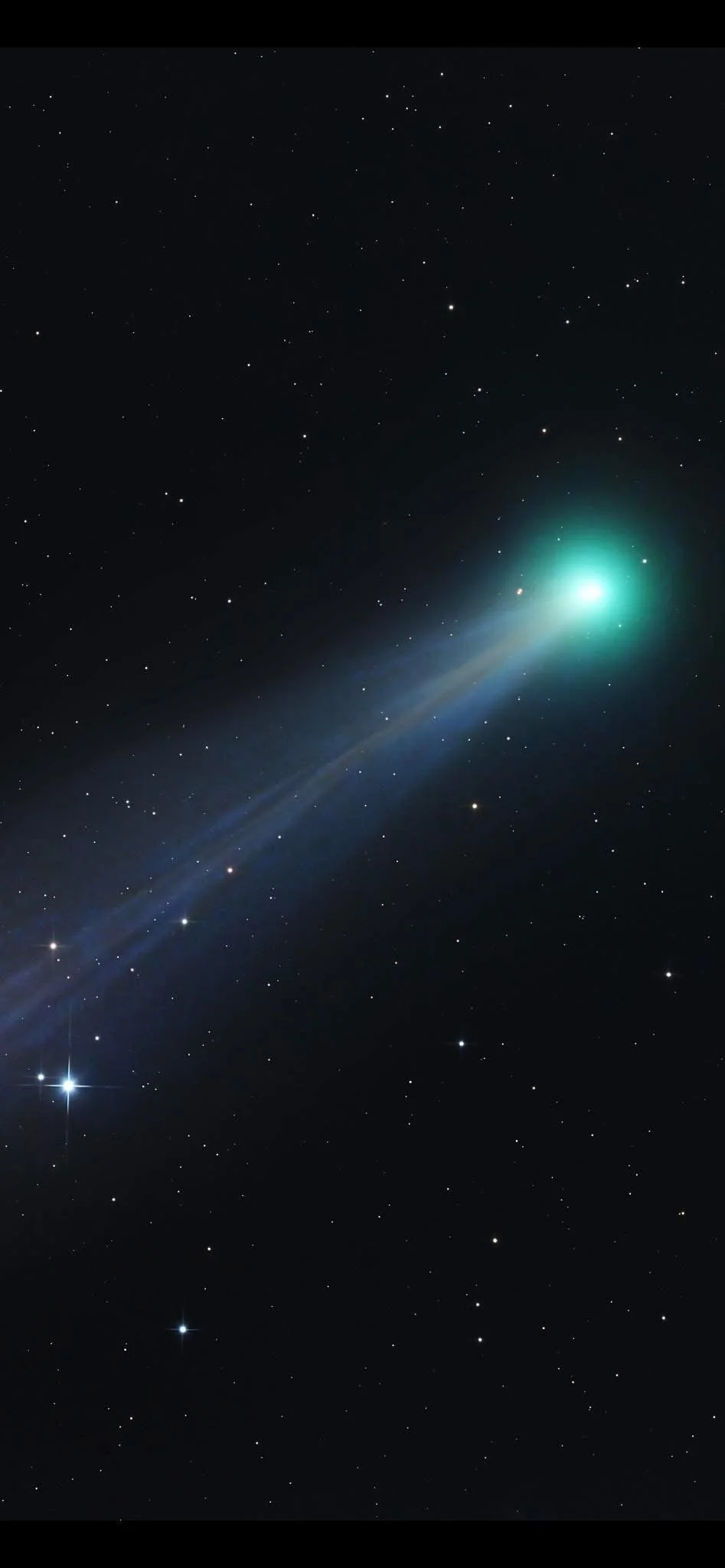
C/2025 R3 (Pan-STARRS) is a newly discovered long-period comet from the distant Oort Cloud that became one of the standout skywatching objects of 2026. First detected by the Pan-STARRS survey telescope in Hawaii on September 8, 2025, the comet swung through the inner Solar System in April 2026, passing just inside Earth’s orbit and briefly becoming visible to the naked eye under dark skies.
C 71
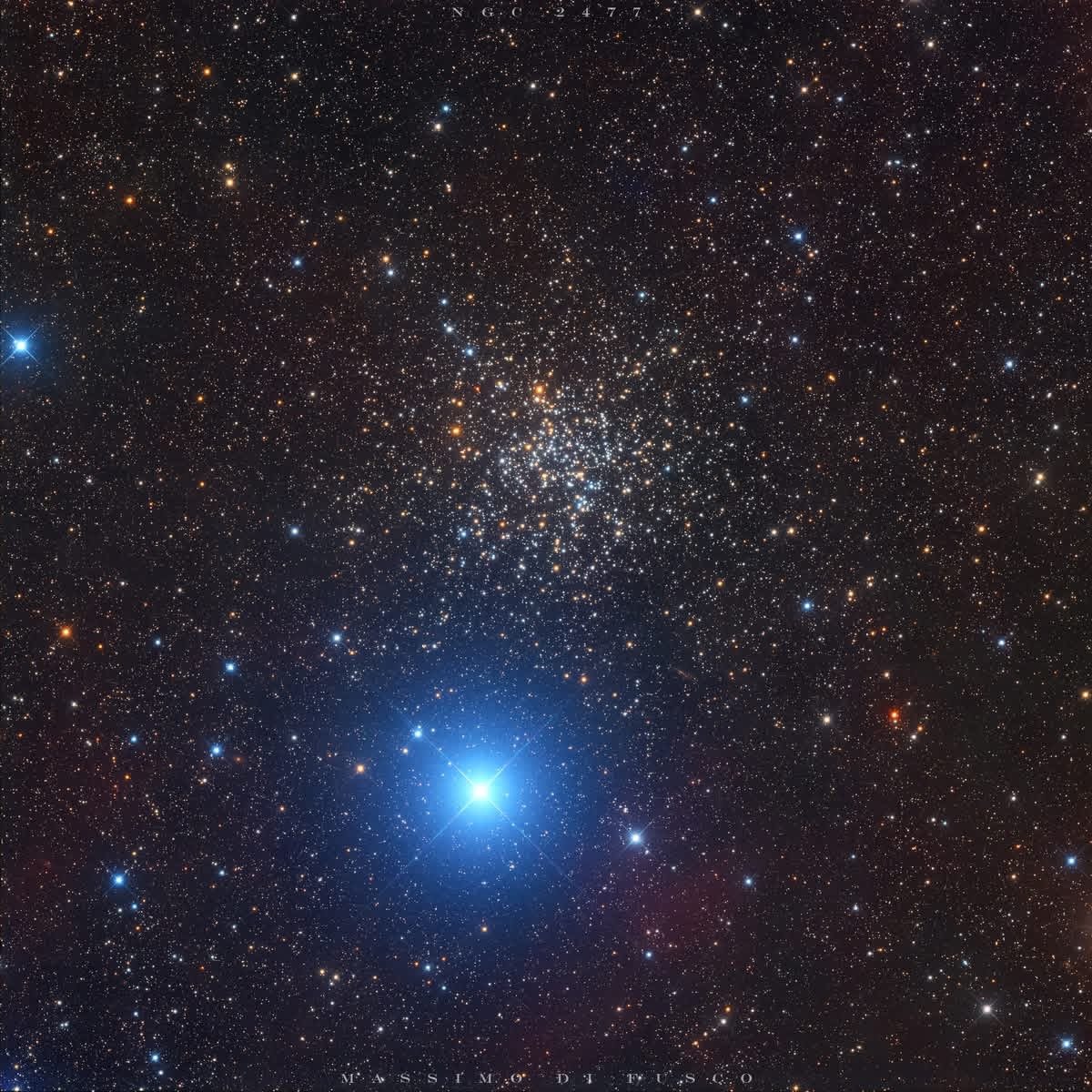
NGC 2477 (also known as C 71) is a brilliant open cluster in the constellation Poppa. It is a very compact object, in appearance most similar to a brilliant globular cluster, unless it is an object inside the Milky Way.
NGC 2477 is a rich and luminous cluster, consisting of a well-nourished star population; its distance is estimated to be around 4000 light years away and is therefore located probably in correspondence to a segment of Orion's Arm heading outward and perhaps intersecting the Perseus Arm.